Home-Style Braised Bamboo Shoot Beef Noodle Soup
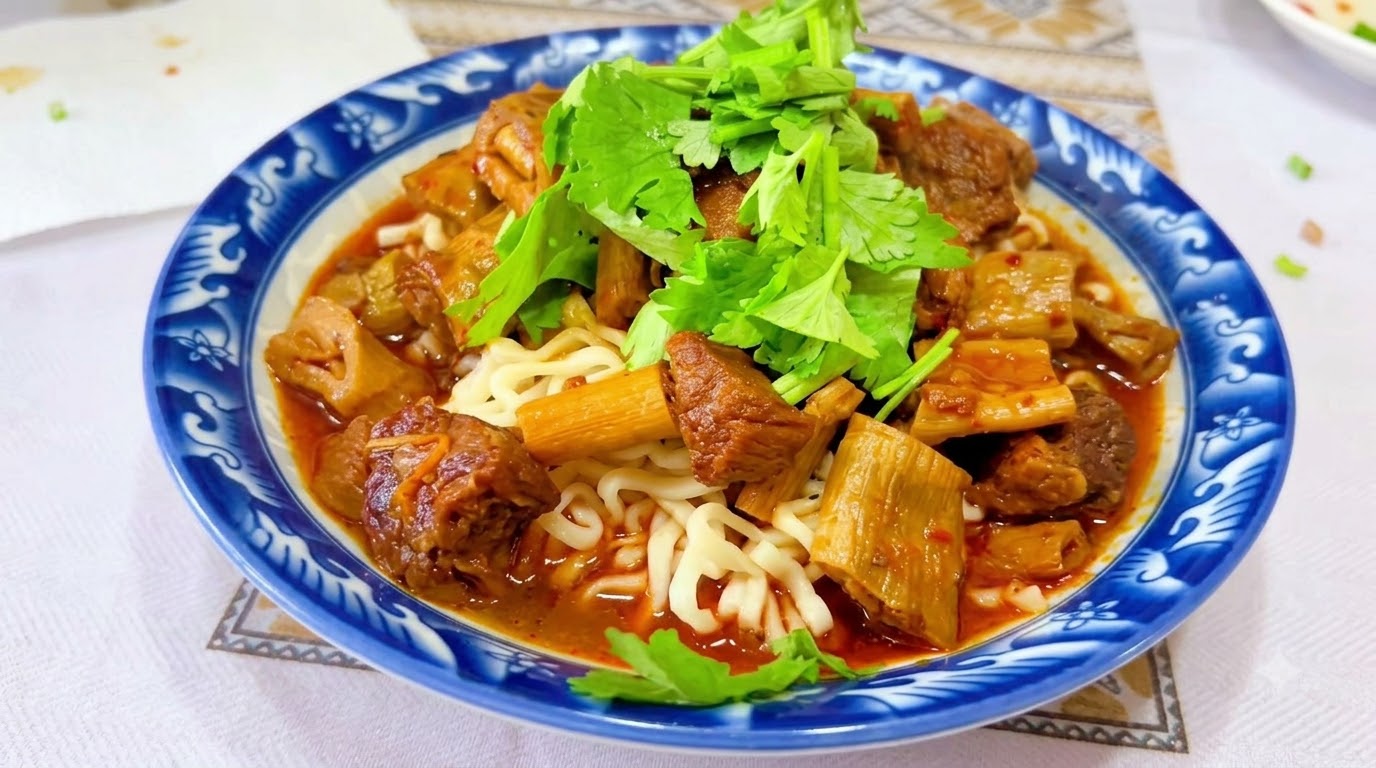
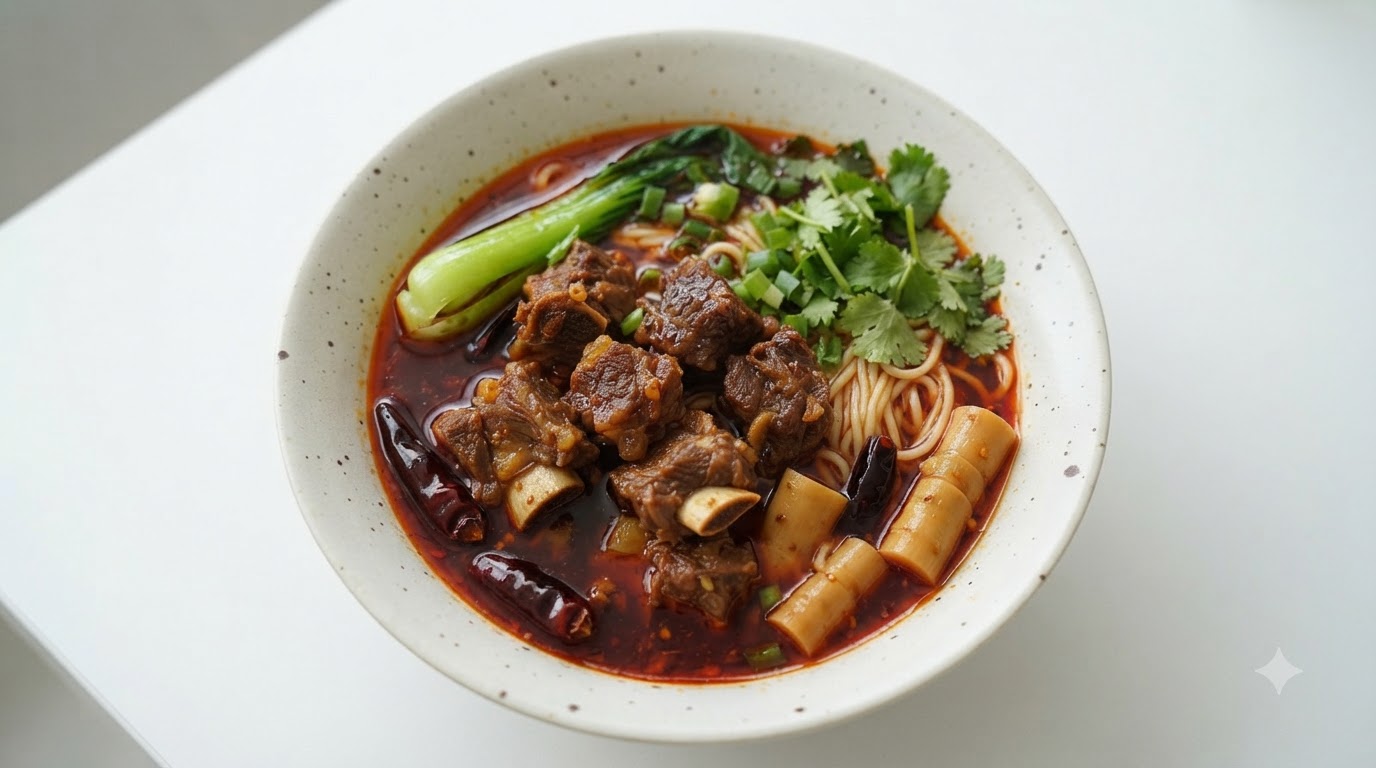
A rich, spicy Sichuan-inspired beef noodle soup featuring tender braised beef chunks, earthy bamboo shoots, and vibrant chili oil over silky noodles.
This home-style braised bamboo shoot beef noodle soup brings together deeply comforting textures and bold, fiery flavors. Combining long-soaked dried bamboo shoots with well-blanched beef simmered in a fragrant chili bean paste broth, it represents the heart of hearty Chinese comfort cooking. Every element, from the aromatic spice base to the fresh vegetable garnish, is designed to create a deeply satisfying meal.
Ingredients
- 500 g beef chuck or brisket
- 100 g dried bamboo shoots
- 200 g thin wheat noodles
- 1 head bok choy
- 3 tbsp doubanjiang broad bean paste
- 2 tbsp chili powder
- 3 cloves garlic
- 3 slices ginger
- 2 stalks scallions
- 2 pieces star anise
- 3 pieces dried red chilies
- 1 tsp chicken bouillon
- 1 tsp salt
- 1 tbsp light soy sauce
- 1 tbsp dark soy sauce
- 15 g rock sugar
- 1 tbsp Sichuan peppercorn oil
- 1 tsp vinegar
- to taste pickled peppers
- to taste fresh cilantro
Instructions
- 1Boil the dried bamboo shoots
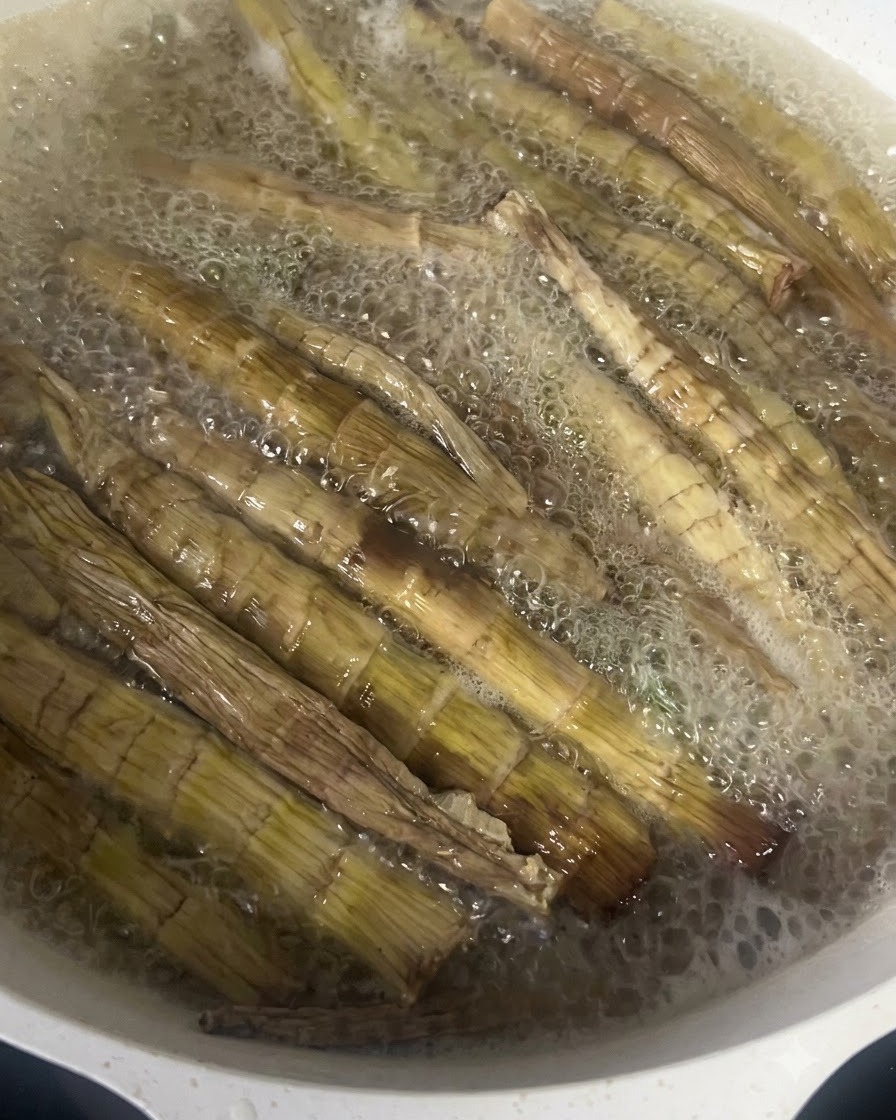
Place the soaked dried bamboo shoots into a white pan filled with water and bring it to a boil. Allow them to cook in the bubbling water for half an hour to soften their texture and reduce any bitter taste.
Tip: Make sure the water covers all the bamboo shoots evenly while boiling. - 2Scoop out the blanched beef
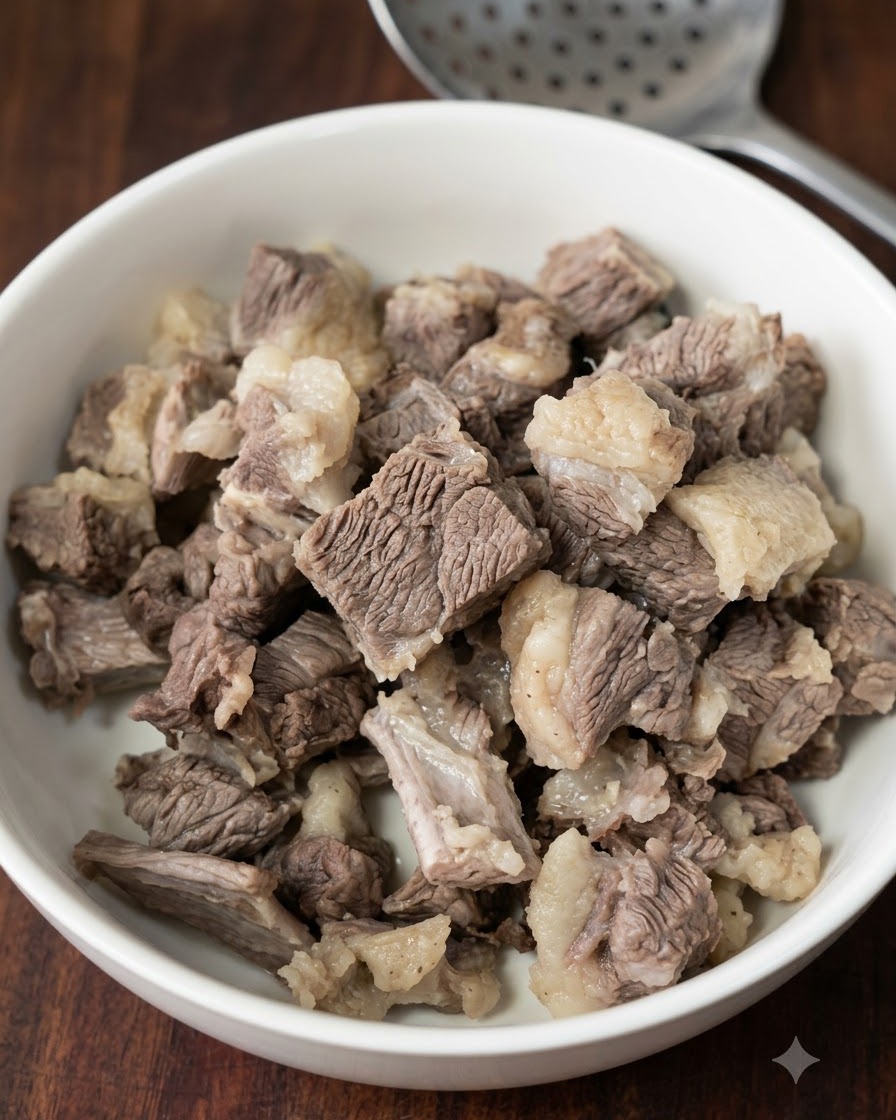
Use a metal slotted spoon to lift the pre-blanched pieces of beef out of the boiling water and transfer them into a clean white bowl. This removes excess impurities and prepares the meat for stir-frying.
Tip: Drain the beef well to prevent excess water from cooling down your pan later. - 3Fry the aromatics and whole spices
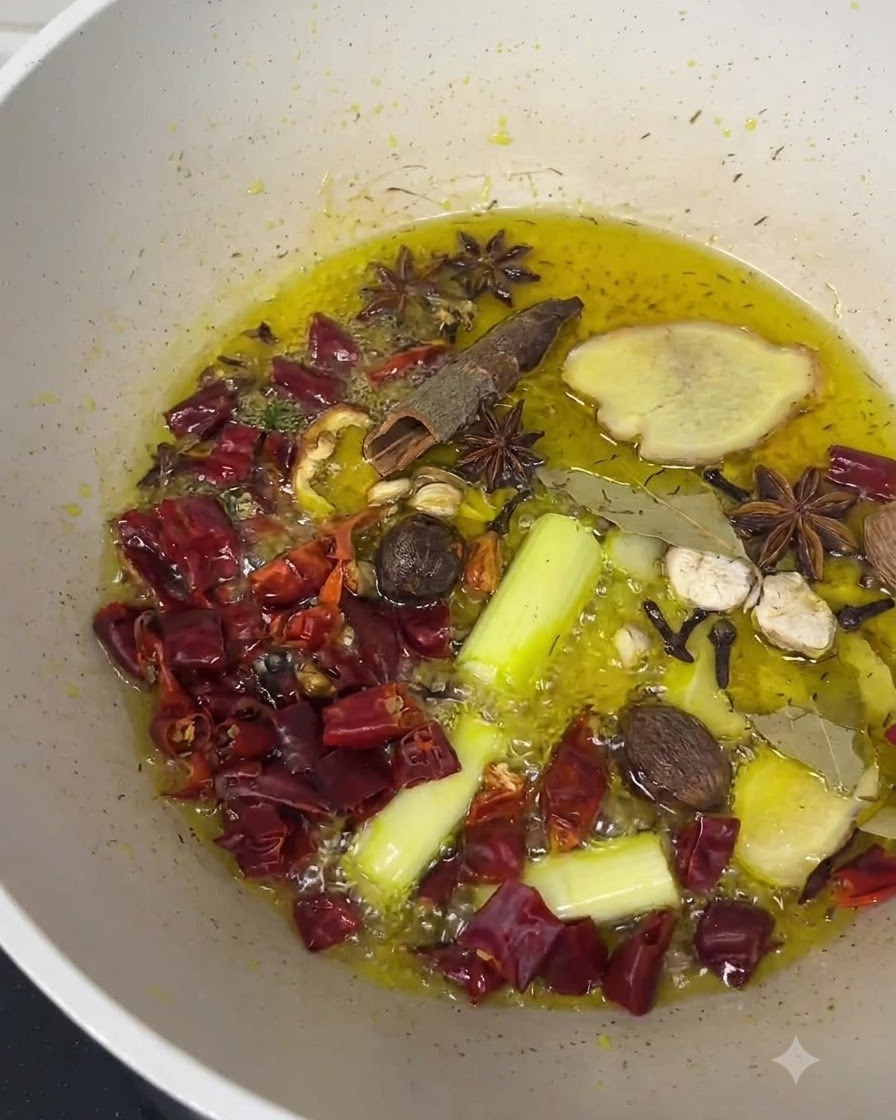
Add scallions, ginger, garlic, and whole dry spices into a pan with hot oil. Stir fry them to release their rich fragrances into the oil before adding the pastes.
Tip: Keep the heat at medium to avoid burning the dry spices while they fry. - 4Add doubanjiang bean paste
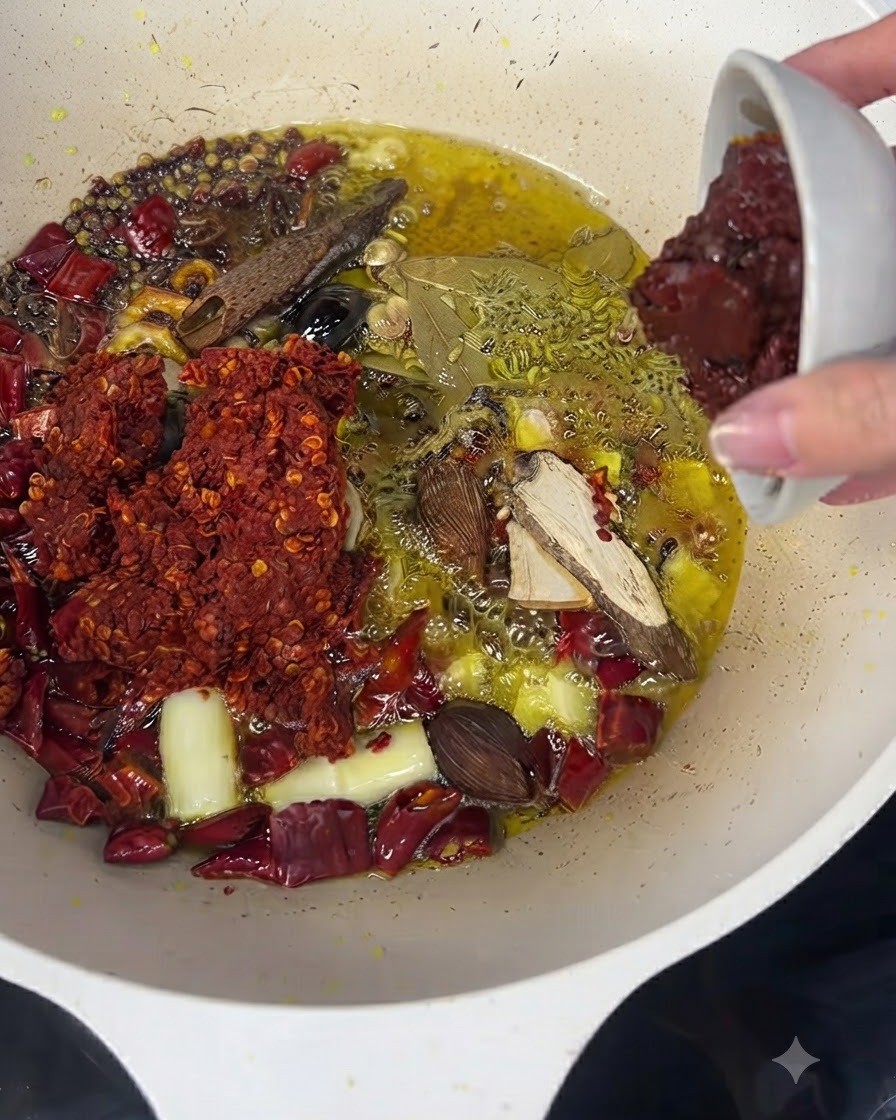
Pour in soaked chili powder and a scoop of dark red doubanjiang (broad bean paste) from a small bowl directly into the sizzling spice mixture.
Tip: Adding the bean paste at this stage allows it to fry in the oil and develop a deep red color and savory flavor. - 5Stir fry the spice paste mixture
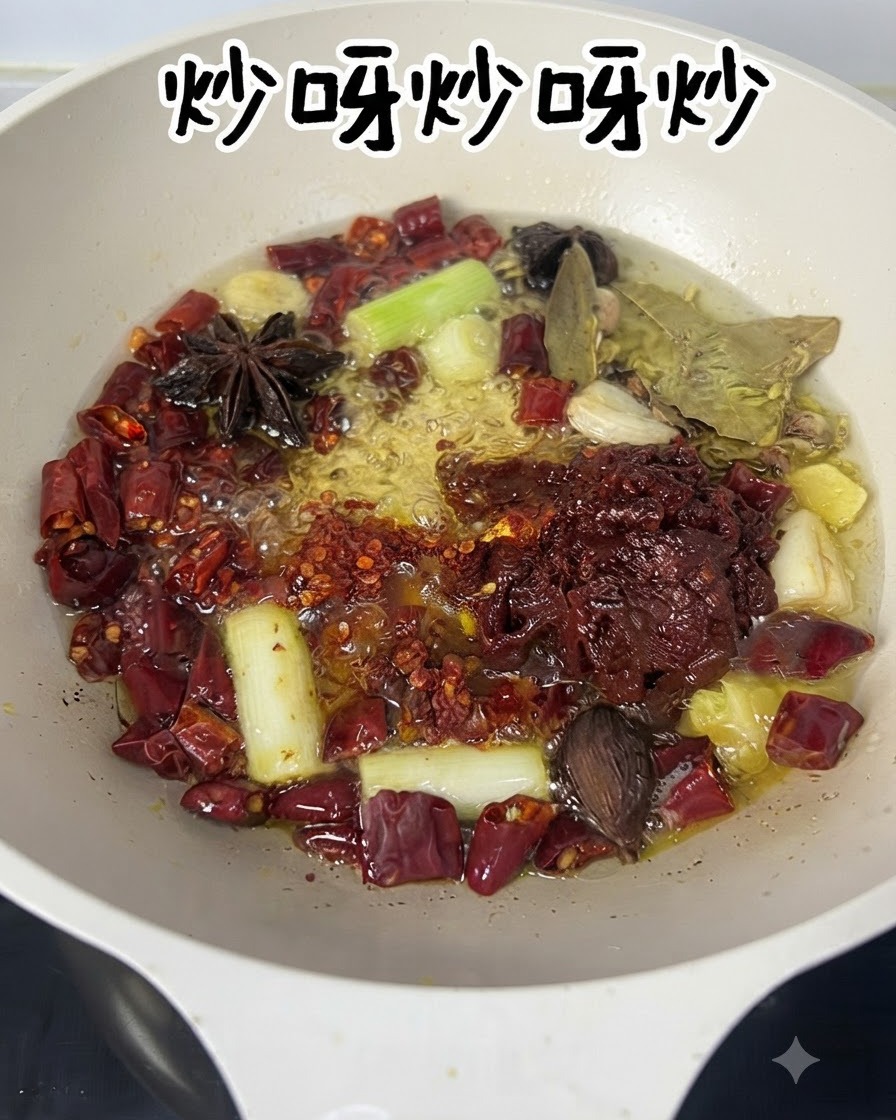
Stir fry the spices, chili powder, and bean paste thoroughly together until the moisture evaporates and the oil turns a rich, vibrant red.
Tip: Stir continuously so the paste does not stick to the bottom of the pan. - 6Add the blanched beef
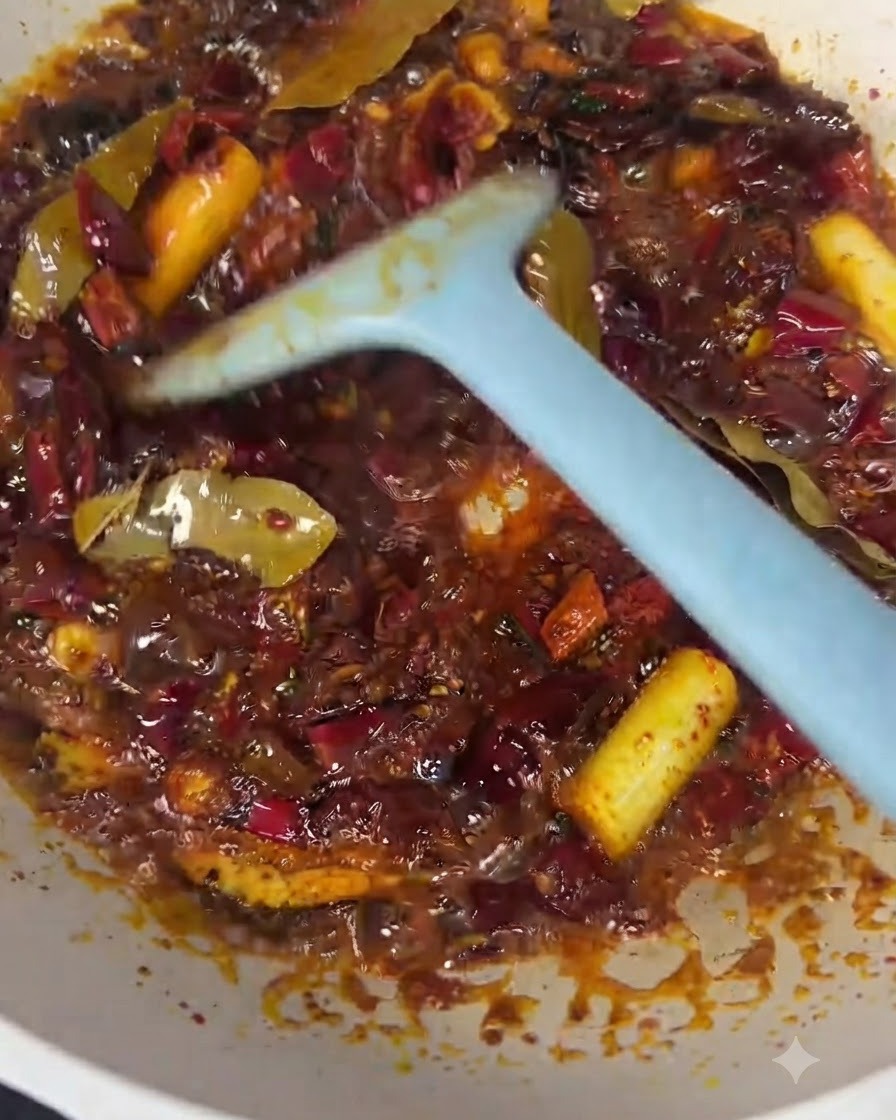
Add the previously blanched beef chunks into the pan containing the rich red chili oil and aromatic spice mixture. Stir fry everything evenly together so the beef coats well.
Tip: Ensure the beef is evenly mixed with the red oil base before adding any liquids. - 7Add hot water to the beef
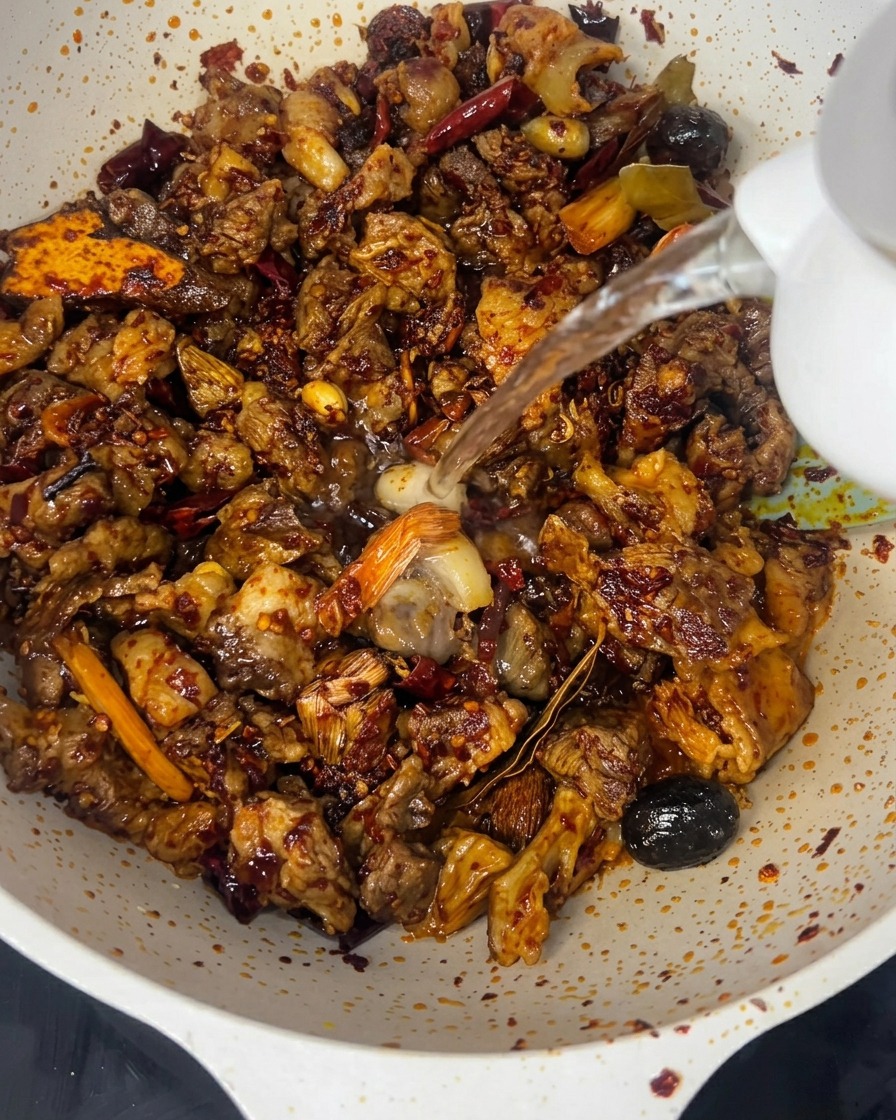
Pour hot water from a kettle directly into the wok over the stir-fried beef and spice mixture, creating the flavorful base for the soup.
Tip: Always use hot water instead of cold water when simmering meat to prevent the meat fibers from contracting and turning tough. - 8Season the beef broth
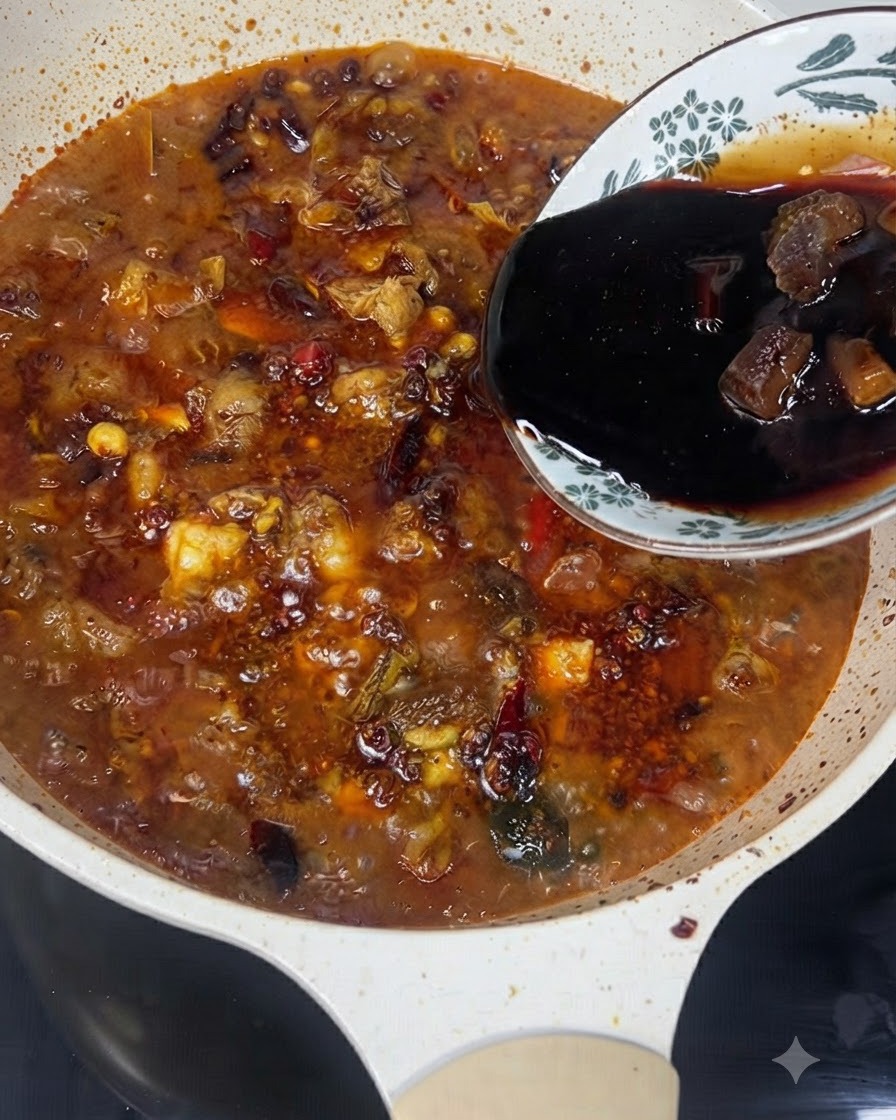
Pour a bowl of mixed dark liquid seasonings, including soy sauces and other flavorings, into the simmering beef and broth.
Tip: Mix your liquid seasonings together in a separate bowl beforehand to ensure even distribution when added to the pot. - 9Cover and simmer the beef
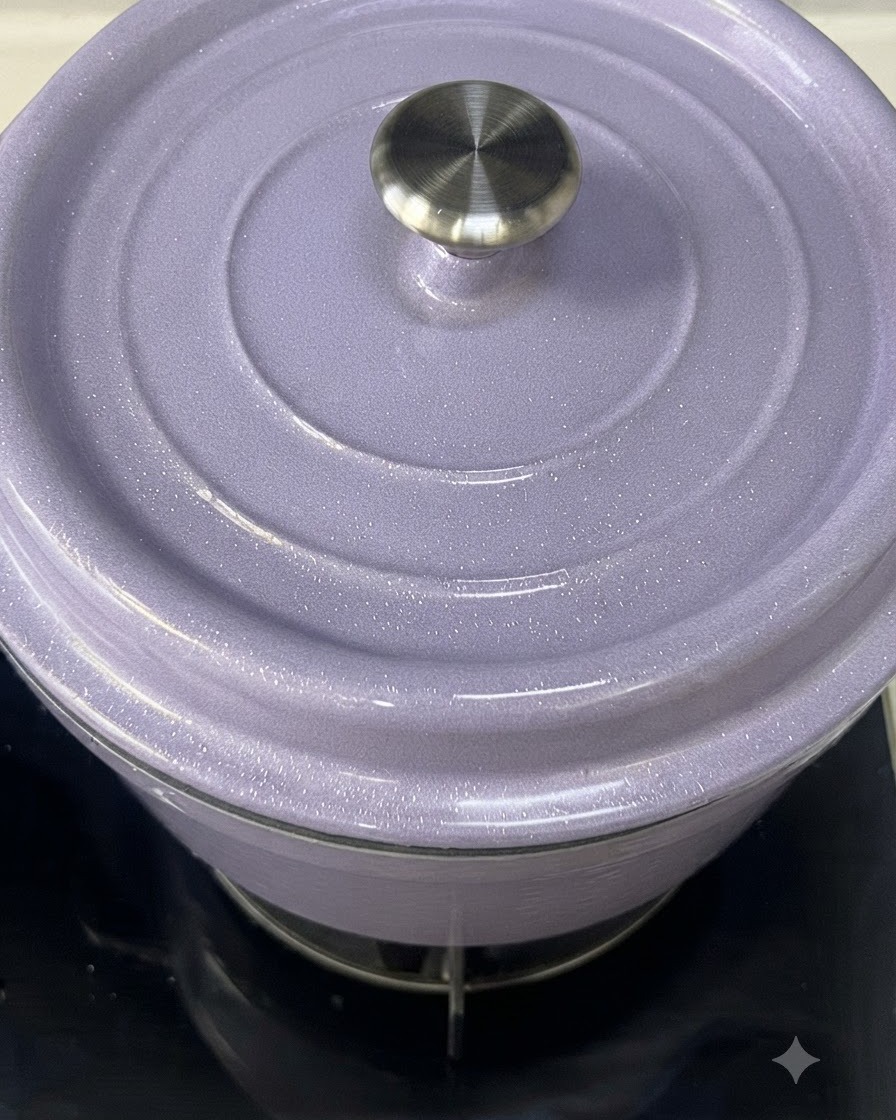
Place the lid securely onto the light purple enameled cast iron pot to trap the heat and moisture, allowing the beef to stew properly.
Tip: Ensure the lid has a tight seal to maintain consistent internal pressure and temperature during the stewing process. - 10Add soaked bamboo shoots
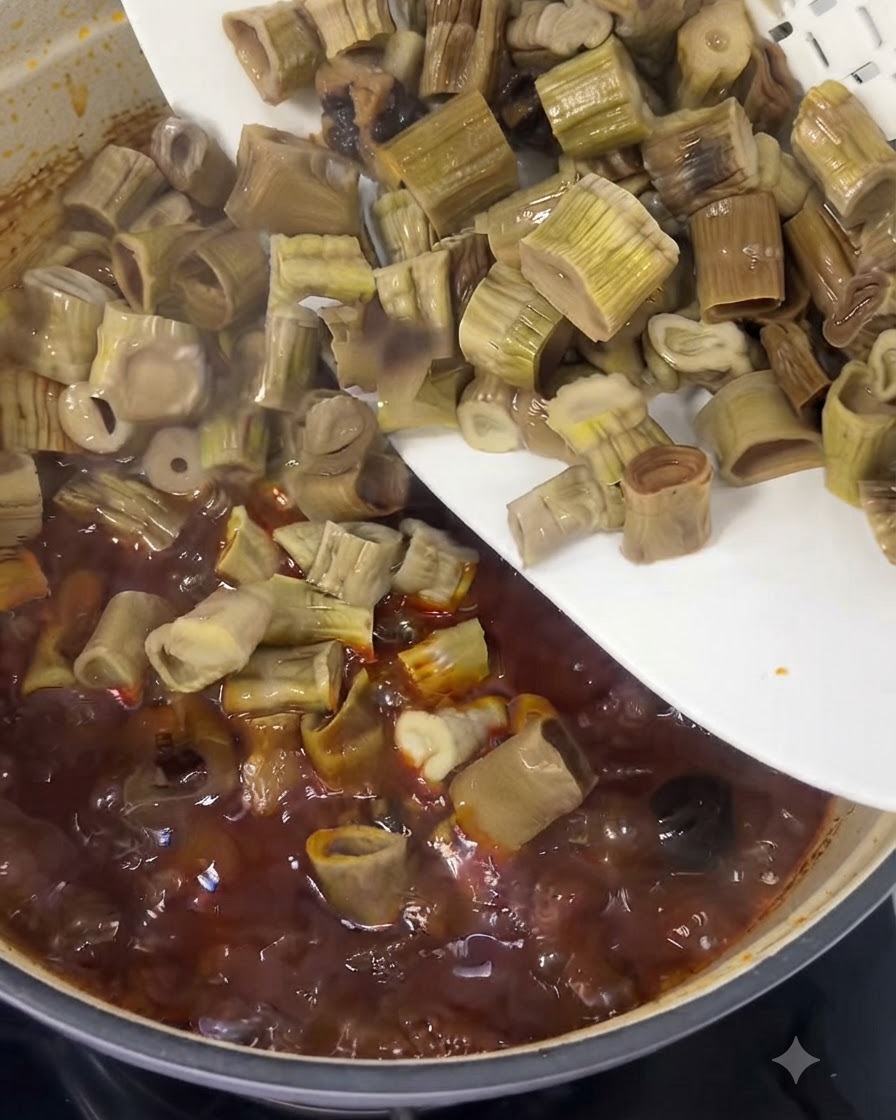
Add the pre-soaked and chopped bamboo shoots from a white plate directly into the simmering red beef stew.
Tip: Make sure the bamboo shoots are thoroughly soaked and boiled beforehand to remove any raw bitterness before adding them to the stew. - 11Boil noodles and greens
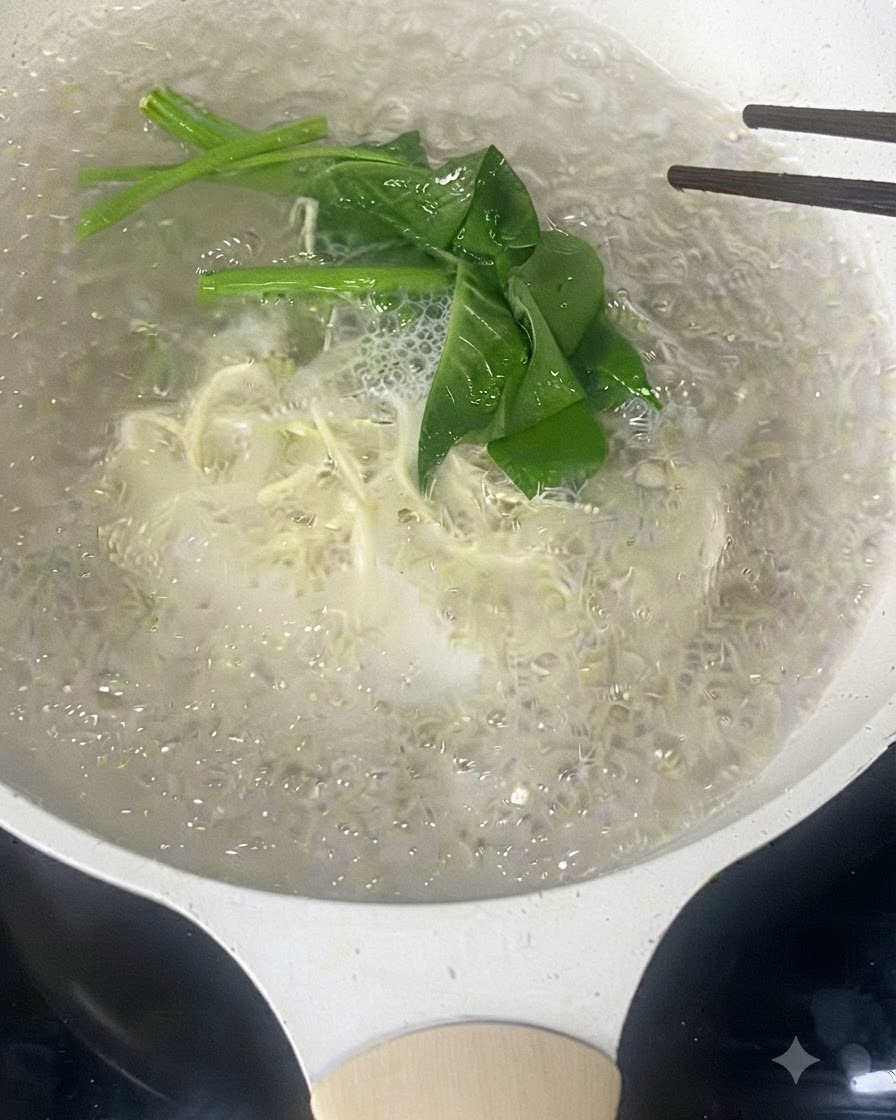
Use chopsticks to gently stir thin white noodles and green leafy vegetables as they cook together in a pot of boiling water.
Tip: Do not overcook the noodles; keep them slightly firm so they maintain their texture when combined with the rich beef stew.