Rich Tonkotsu Ramen
Chashu and Soft-Boiled Egg
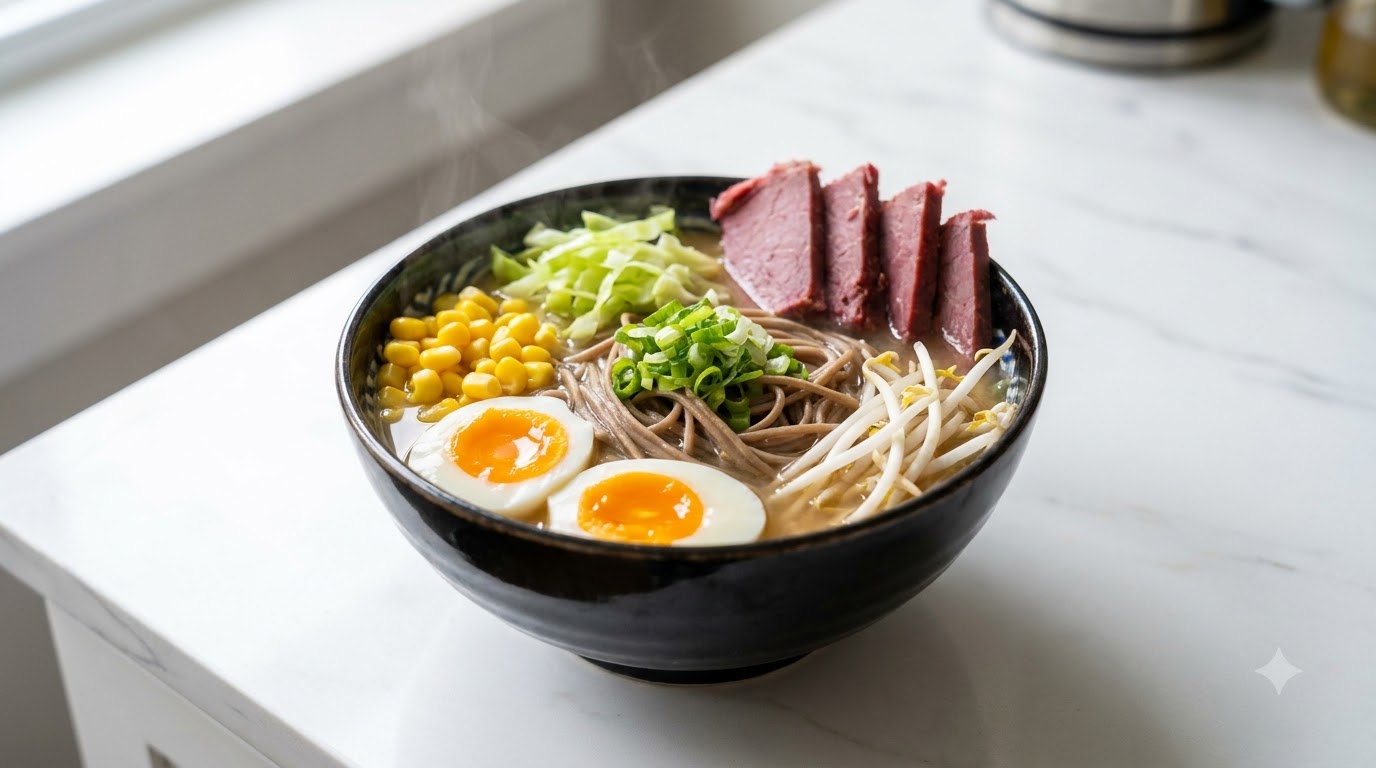
Make rich restaurant quality tonkotsu ramen at home featuring tender rolled chashu pork and jammy soft boiled eggs in a milky bone broth.
Tonkotsu ramen is the ultimate comfort food built on a foundation of meticulously simmered pork bones that yield a rich opaque broth. Paired with savory rolled chashu and perfectly cooked soft boiled eggs every element of this dish reflects a dedication to authentic culinary craftsmanship and deep comforting flavors.

Ingredients
- 1.5 kg pork leg bones and trotters
- 1 kg pork belly
- 4 eggs
- 4 servings ramen noodles
- to taste salt
- as needed dark liquid marinade
- 1 piece fresh ginger
- as needed fresh green vegetables
- 1 sheet noriseaweed
- as needed fresh green scallions
Instructions
- 1Blanch the pork bones and trotters
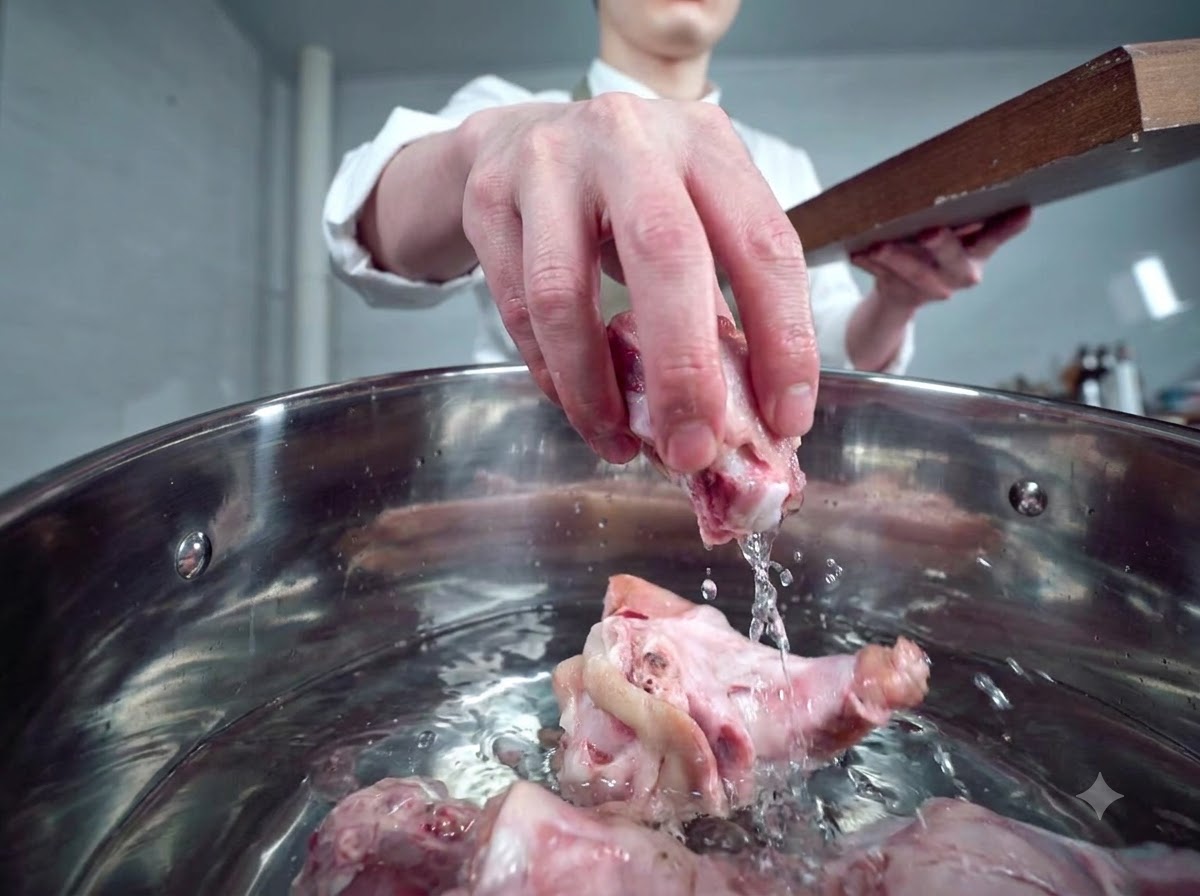
Place the raw pork bones and trotters into a pot of cold water to begin blanching, which effectively draws out the blood and impurities before simmering.
Tip: Always start with cold water to ensure impurities release gradually into the water. - 2Rinse the blanched bones
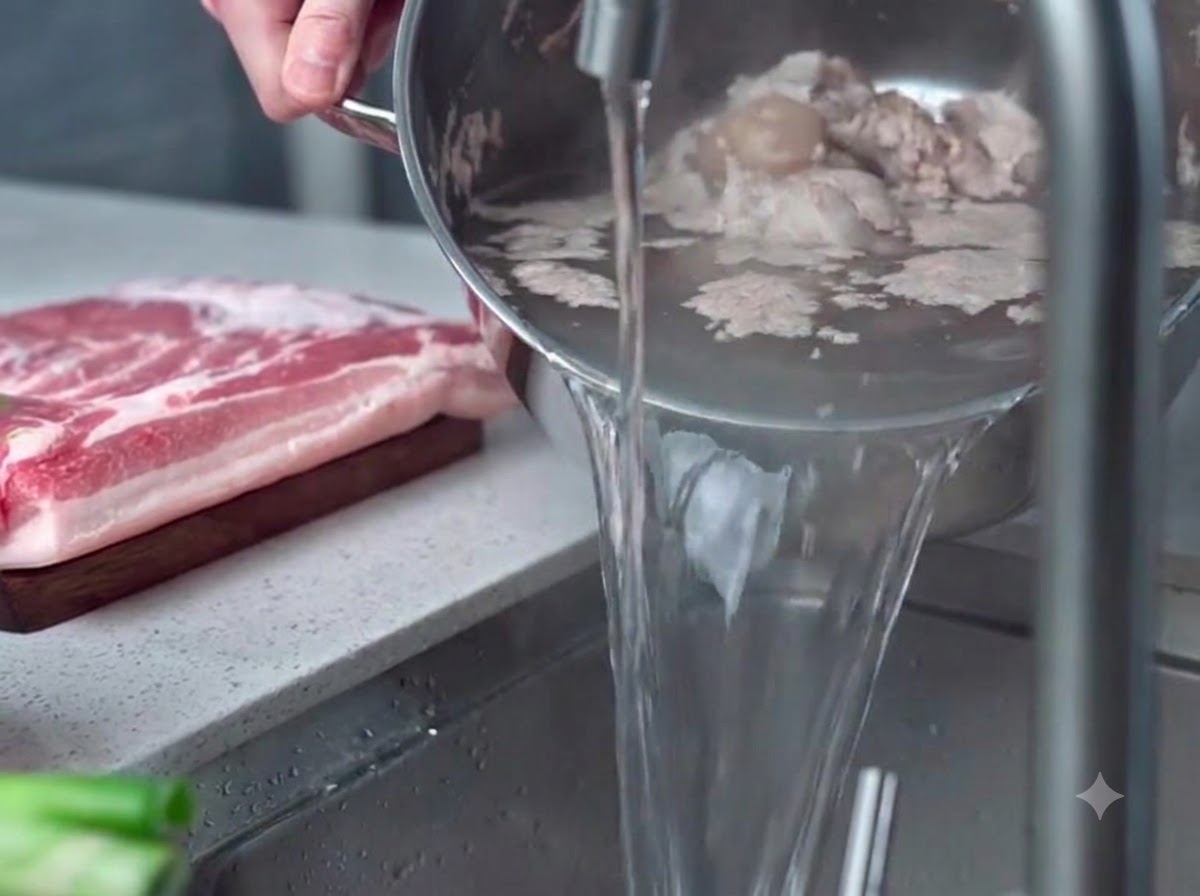
Pour out the water and rinse the blanched pork bones and impurities thoroughly with clean, warm water to ensure a clean soup base.
Tip: Use warm water for rinsing so the meat doesnt seize up or contract abruptly. - 3Simmer for soup base
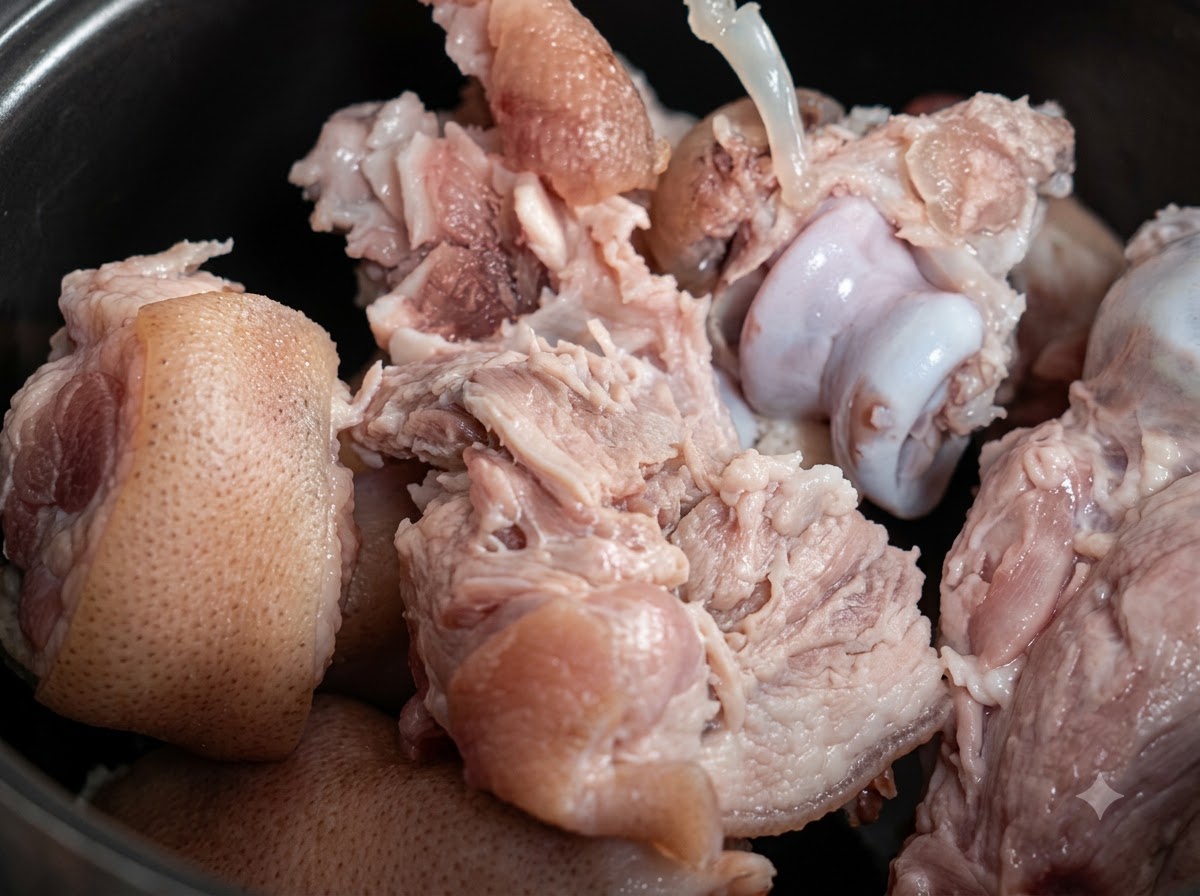
Simmer the cleaned pork bones slowly over low heat in a pot to fully extract the rich essence and flavors from the meat and bones.
Tip: Keep the heat low to maintain a gentle simmer, which prevents the broth from becoming cloudy. - 4Sear the pork skin with a blowtorch

Use a kitchen blowtorch to carefully sear the skin of the raw pork belly to eliminate any remaining impurities and hair follicles.
Tip: Move the flame evenly across the skin surface to avoid burning it in one spot. - 5Season the pork belly with salt
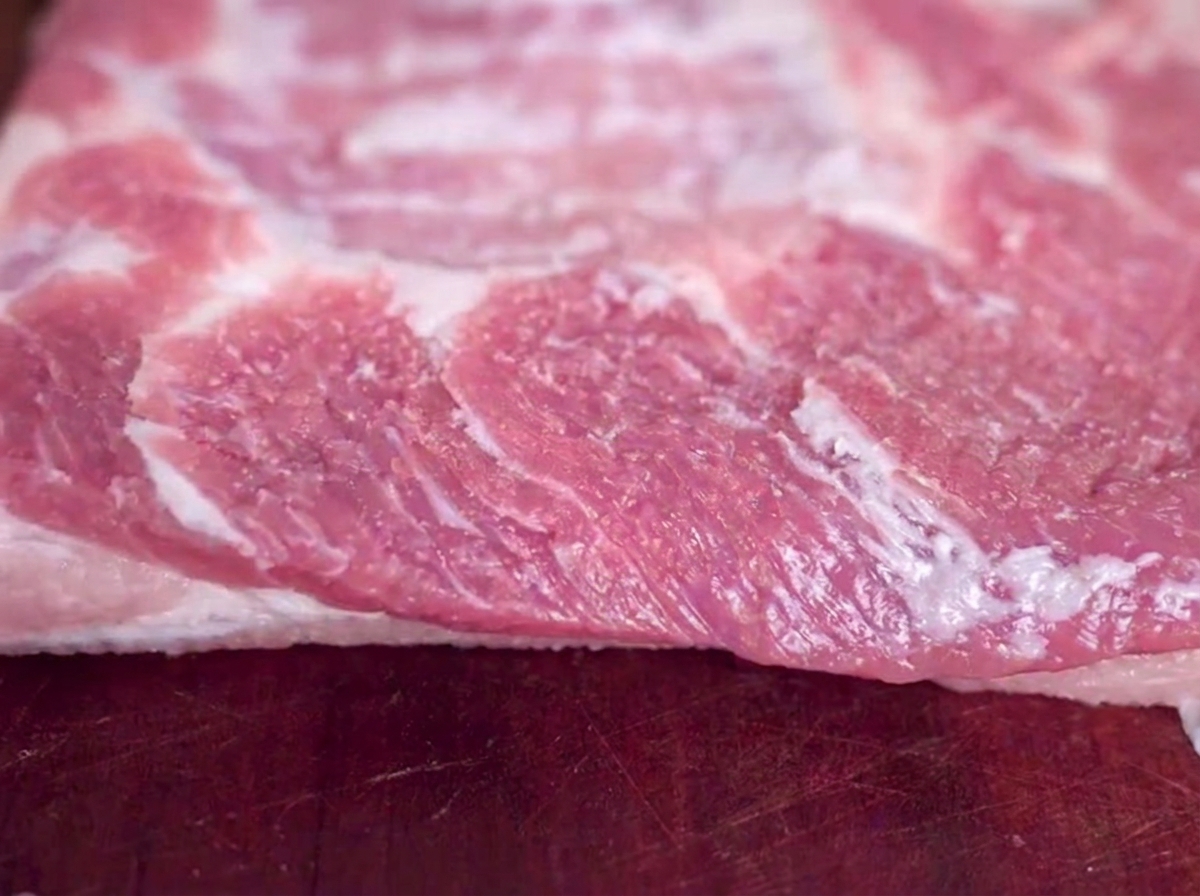
Sprinkle salt evenly over the surface of the prepared raw pork belly and gently rub it in to begin the seasoning process.
Tip: Rub the salt uniformly into all parts of the meat for even curing. - 6Tie the rolled pork belly
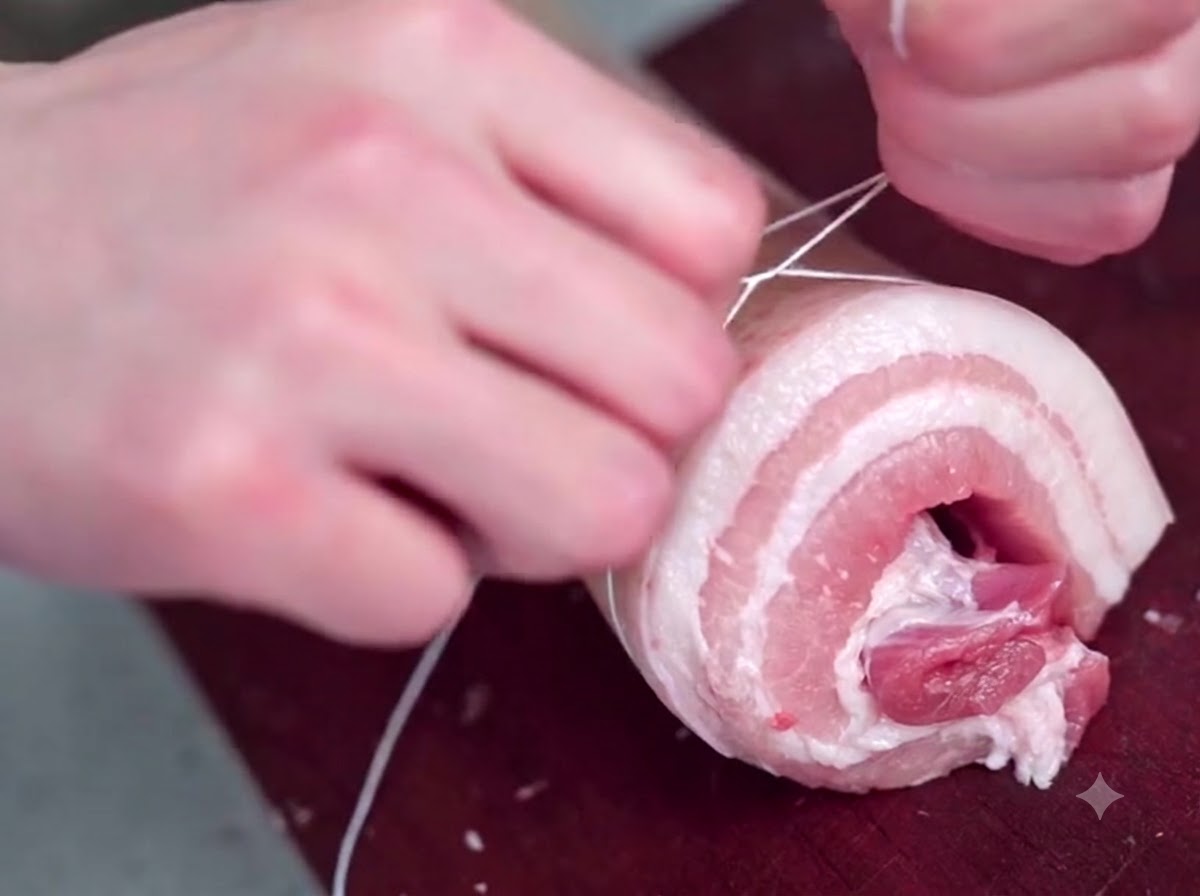
Roll up the seasoned pork belly and tie it tightly with butchers twine to maintain its cylinder shape during braising.
Tip: Remember not to roll it too tight so the interior can still absorb flavors properly. - 7Marinate the Pork Belly
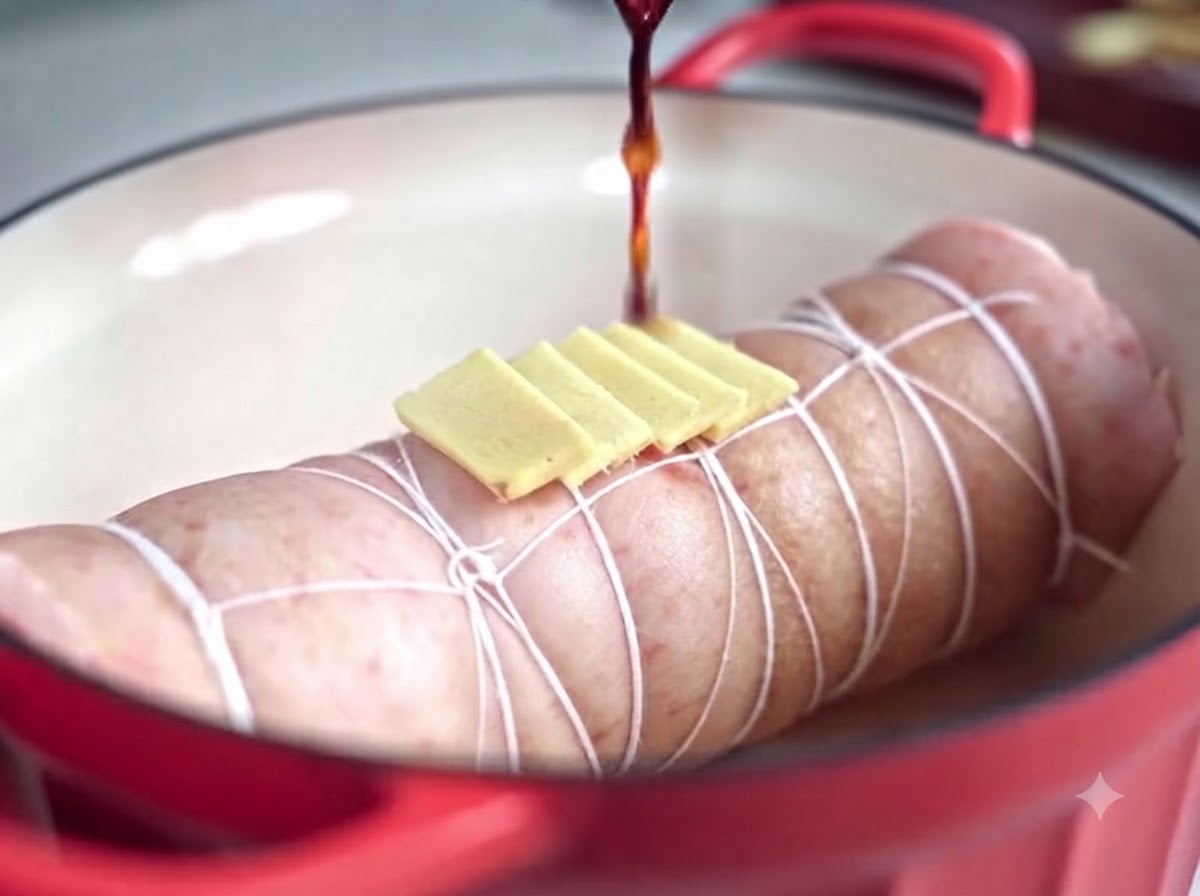
Place the tied pork belly roll into a pot along with ginger slices then slowly pour a rich dark liquid marinade over it. Ensure the liquid evenly covers or surrounds the meat so it absorbs the complex blend of flavors during the resting phase.
Tip: Make sure the marinade is well blended for an optimal balance of savory and sweet notes. - 8Pierce the egg shell

Use a thin pin to carefully poke a tiny hole in the bottom of each raw egg shell. This allows expanding air to escape during boiling, preventing the shells from cracking and making peeling much easier later.
Tip: Poke only the rounded base of the egg where the air pocket is located. - 9Boil the eggs

Lower the prepared eggs gently into a pot of actively boiling water. Cook them for the precise duration needed to achieve a soft-boiled consistency with a runny, jammy yolk.
Tip: Lower the eggs gently with a spoon to avoid cracking them against the bottom of the pot. - 10Shock in ice water

Immediately transfer the boiled eggs from the hot water into a large bowl filled with ice water. This rapid cooling halts the cooking process instantly and shrinks the egg slightly inside the shell for easy peeling.
Tip: Leave the eggs in the ice bath for at least 10 minutes until completely chilled. - 11Marinate the soft-boiled eggs
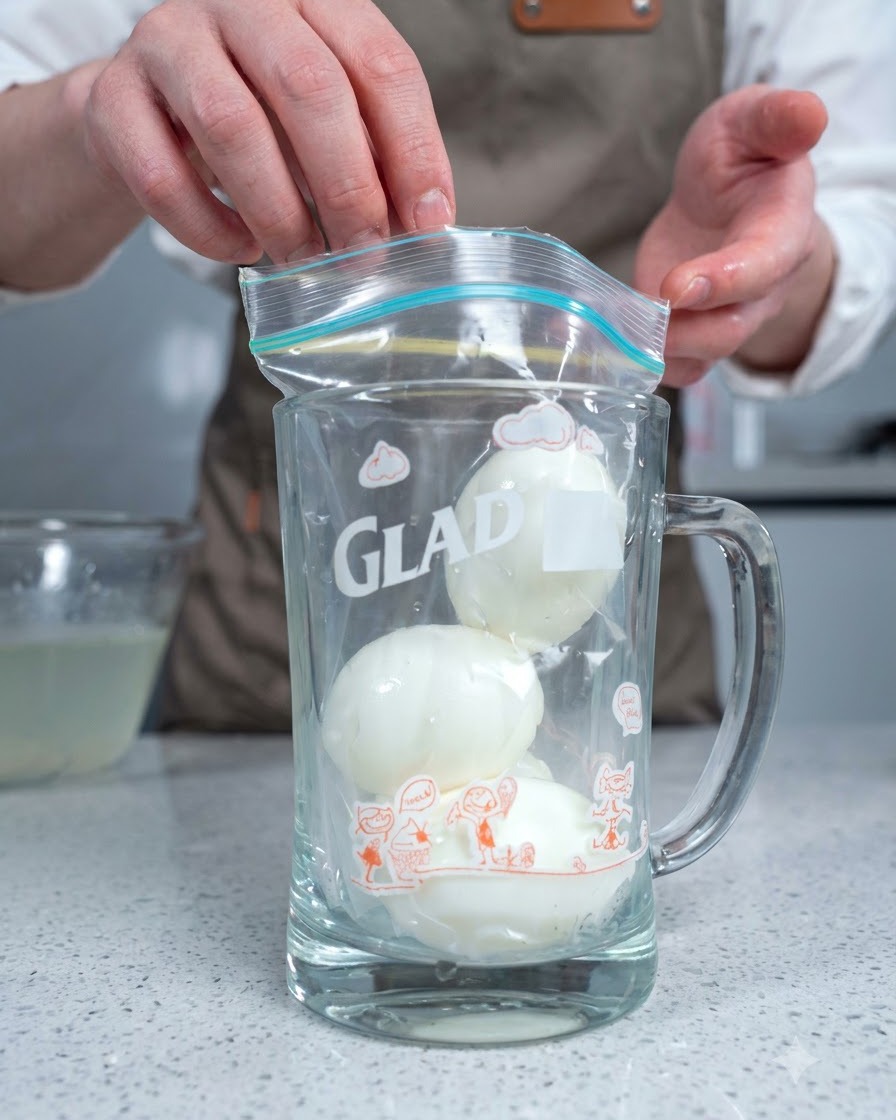
Gently place the peeled soft-boiled eggs into a container or jar filled with a savory dark soy marinade. Ensure the eggs are fully submerged so they absorb the rich flavor evenly.
Tip: Use a small piece of paper towel pressed over the top to keep the eggs fully submerged in the liquid. - 12Transfer the pork to a jar
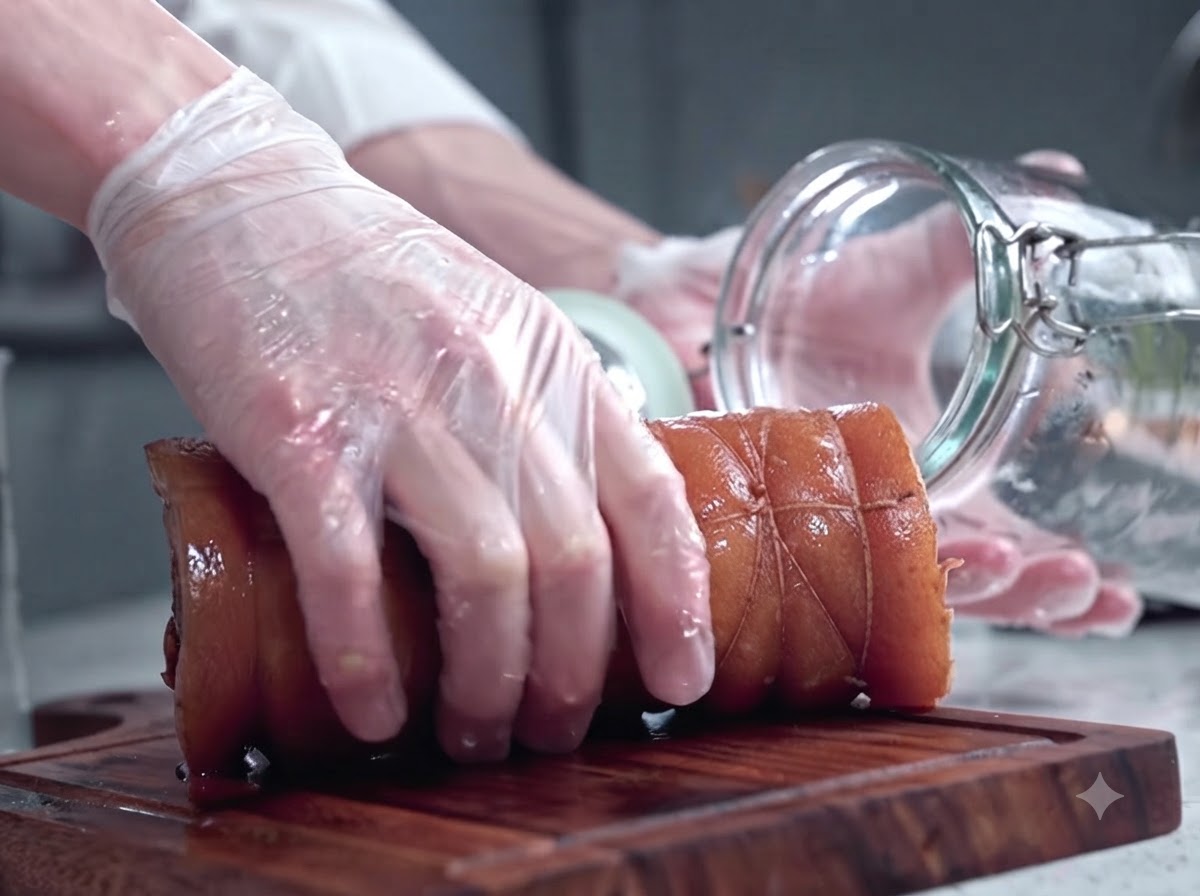
Carefully place the cooked and tied pork belly roll into a large, clean glass jar. Preparing it in a deep container ensures the meat can be fully submerged in the marinade for even flavor absorption.
Tip: Choose a jar that closely fits the pork roll to minimize the amount of marinade needed to completely cover the meat. - 13Slice the chashu pork
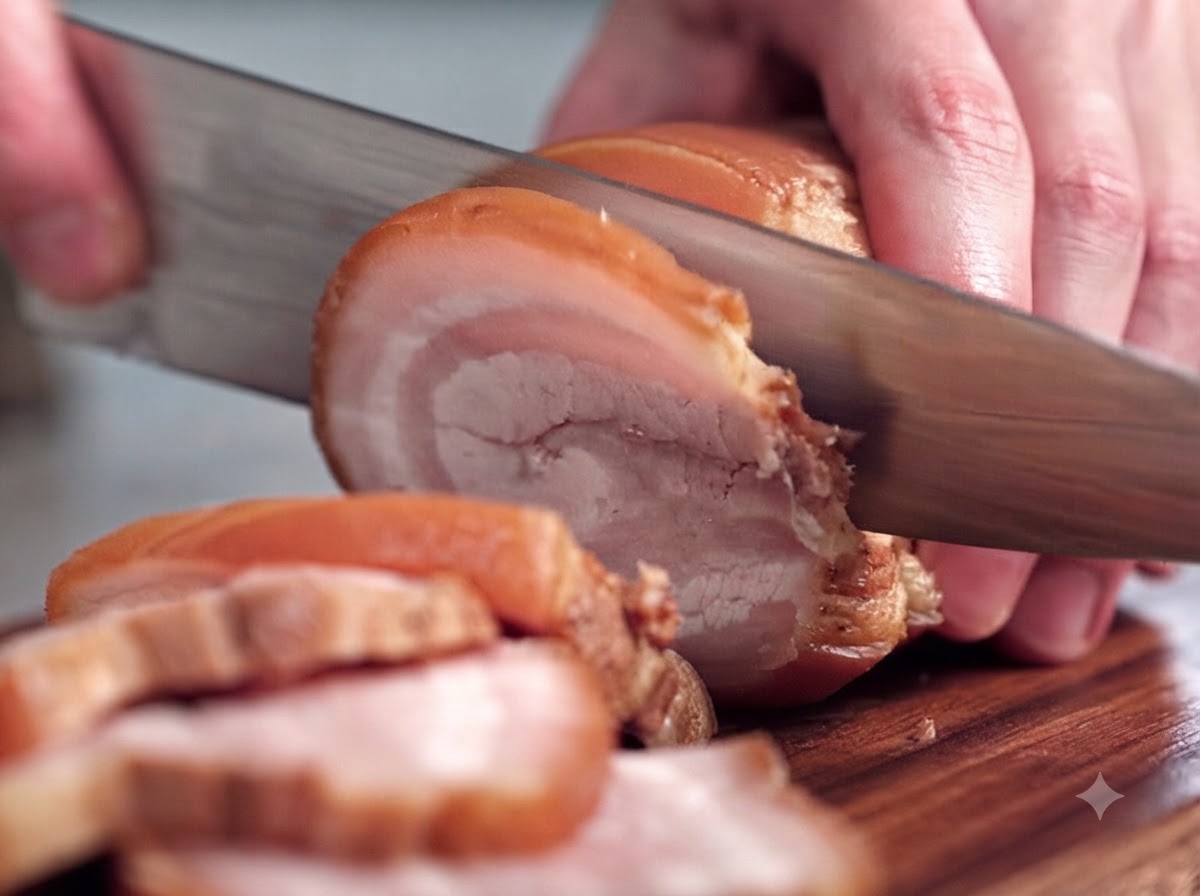
Using a sharp knife, carefully slice the marinated chashu pork roll into thick, even rounds. The slow cooking and permeation of flavors make the meat incredibly tender, so cut gently to keep the slices intact.
Tip: Chilling the pork roll in the refrigerator before slicing will help the meat firm up, making it much easier to achieve clean cuts without it falling apart. - 14Sear the Chashu Slices

Take the prepared chashu pork slices and use a culinary blowtorch to carefully sear the cut surfaces. Apply direct flame until the surface fat slightly melts and develops a lightly charred, aromatic crust.
Tip: Move the flame steadily across the surface to caramelize the fats without burning the meat. - 15Boil the pork bone broth
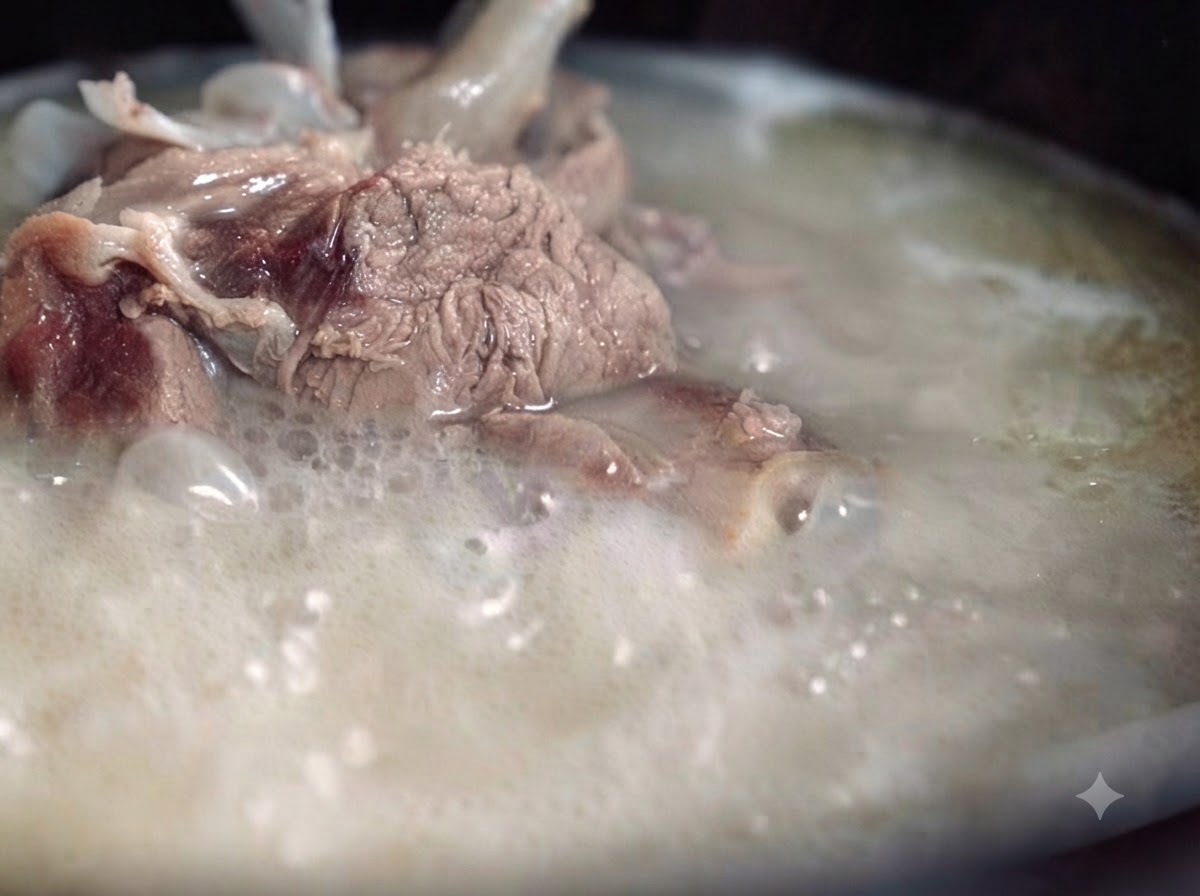
Maintain a rapid, rolling boil for the pork bone broth in the pot. This continuous, vigorous boiling is crucial as it helps emulsify the fat and collagen extracted from the meat and bones, developing the signature rich and milky texture of the soup.
Tip: Do not reduce the heat to a gentle simmer; a strong boil is necessary to achieve the creamy, opaque consistency. - 16Garnish with fresh greens
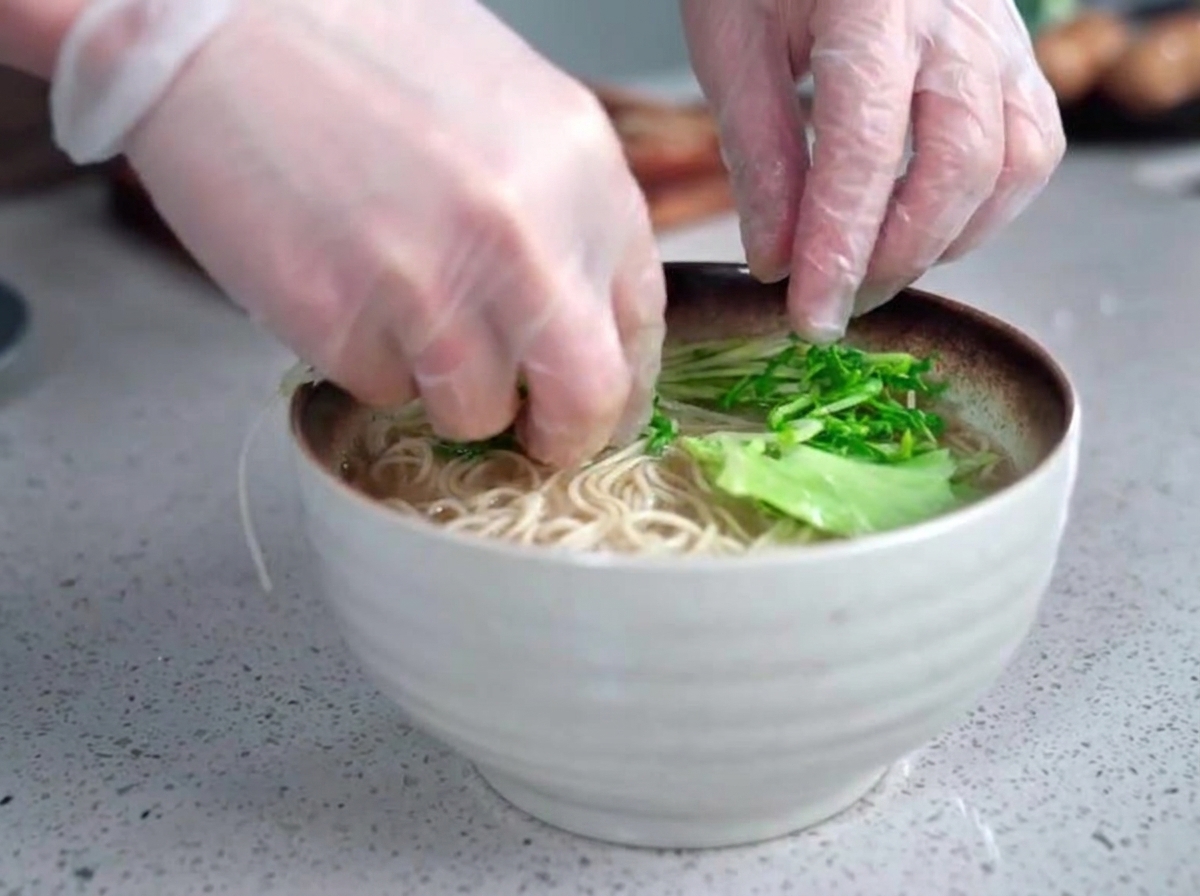
Gently place fresh green vegetables into the hot bowl of ramen noodles and broth. The greens not only add a vibrant pop of color but also provide a crisp, refreshing contrast that perfectly balances the rich and heavy flavors of the soup.
Tip: Add the fresh greens right at the end just before serving so they gently wilt in the hot broth while retaining their crunch. - 17Assemble and Garnish the Ramen
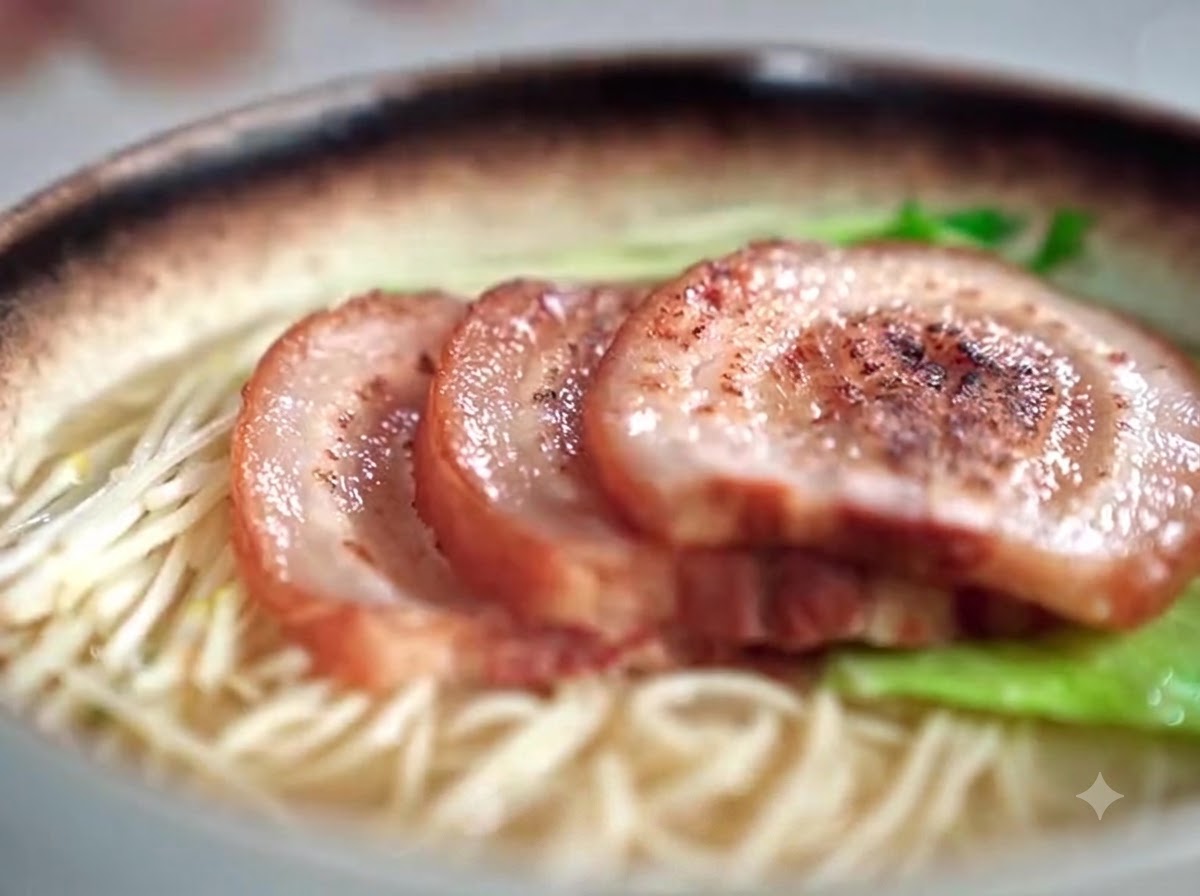
Arrange the expertly seared chashu slices neatly over the top of the hot ramen noodles and broth. Complete the bowl by adding the marinated soft-boiled eggs alongside fresh greens for a comforting late-night meal.
Tip: Layer the ingredients carefully to create an inviting presentation that balances warmth, texture, and rich aromas.