American BBQ Smoked Wagyu Brisket (Stone Axe MB 6-7)
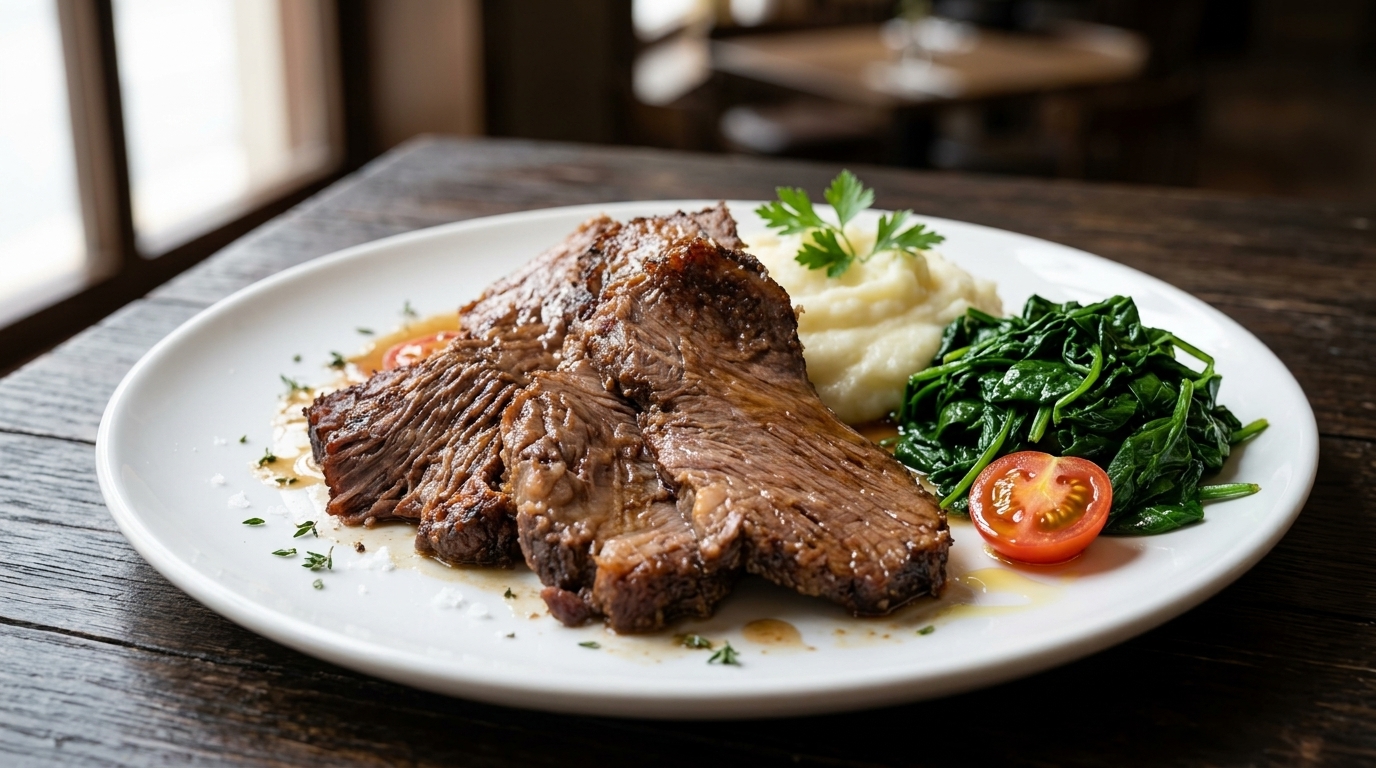
Master the art of Texas-style BBQ with this Stone Axe Wagyu brisket, featuring a dark peppery bark, a deep smoke ring, and melt-in-your-mouth marbling.
Smoked brisket is the holy-grail of American barbecue, and using Stone Axe Wagyu elevates it to a luxury experience. The high marbling of the MB 6-7 score ensures a buttery texture that traditional brisket lacks. This method focuses on a classic salt and pepper Dalmatian rub, allowing the natural richness of the beef and clean hardwood smoke to take center stage.
Ingredients
- 1 whole Stone Axe Wagyu brisket (MB 6-7)
- 12 cup coarse sea salt
- 12 cup 16-mesh black pepper
- 1 cup apple cider vinegar
- 12 cup water
Instructions
- 1Trim the brisket fat
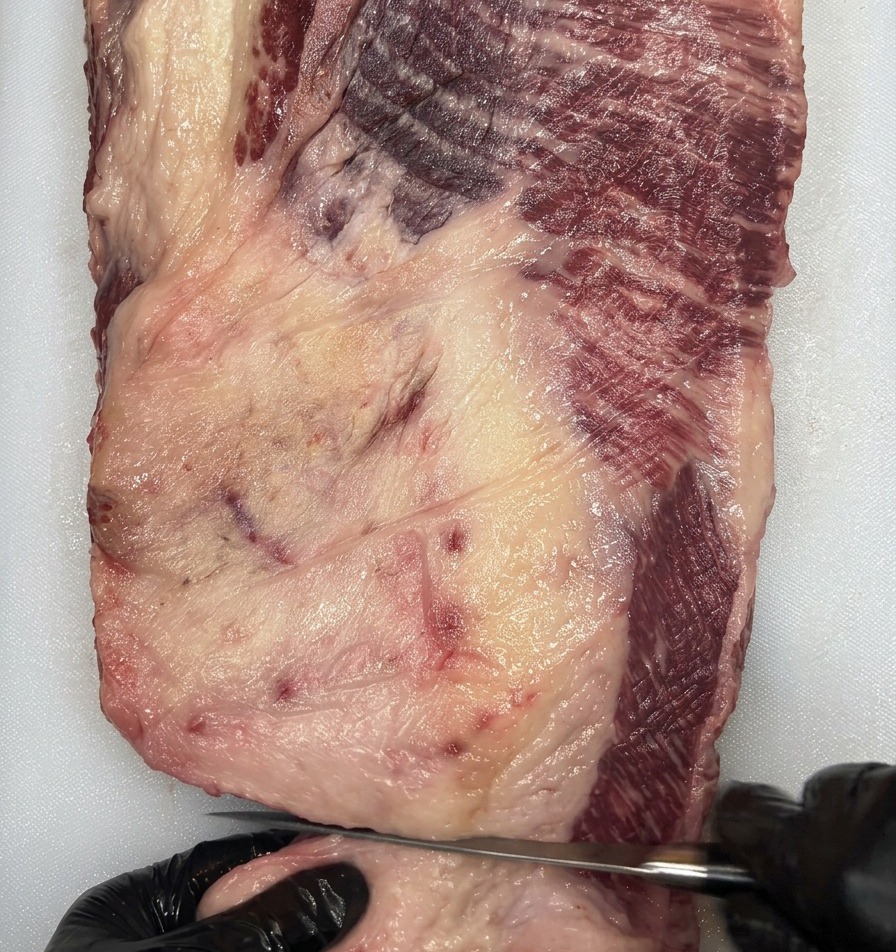
Using a sharp knife, carefully trim the excess hard fat from the surface of the Stone Axe Wagyu brisket. Aim to leave a thin, even layer of fat approximately one quarter inch thick which will render down and keep the meat juicy during the smoking process while removing large, tough pieces that will not melt.
Tip: For easier trimming, keep the brisket in the refrigerator until the moment you are ready to cut because cold fat is firmer and easier to slice through cleanly. - 2Season the brisket
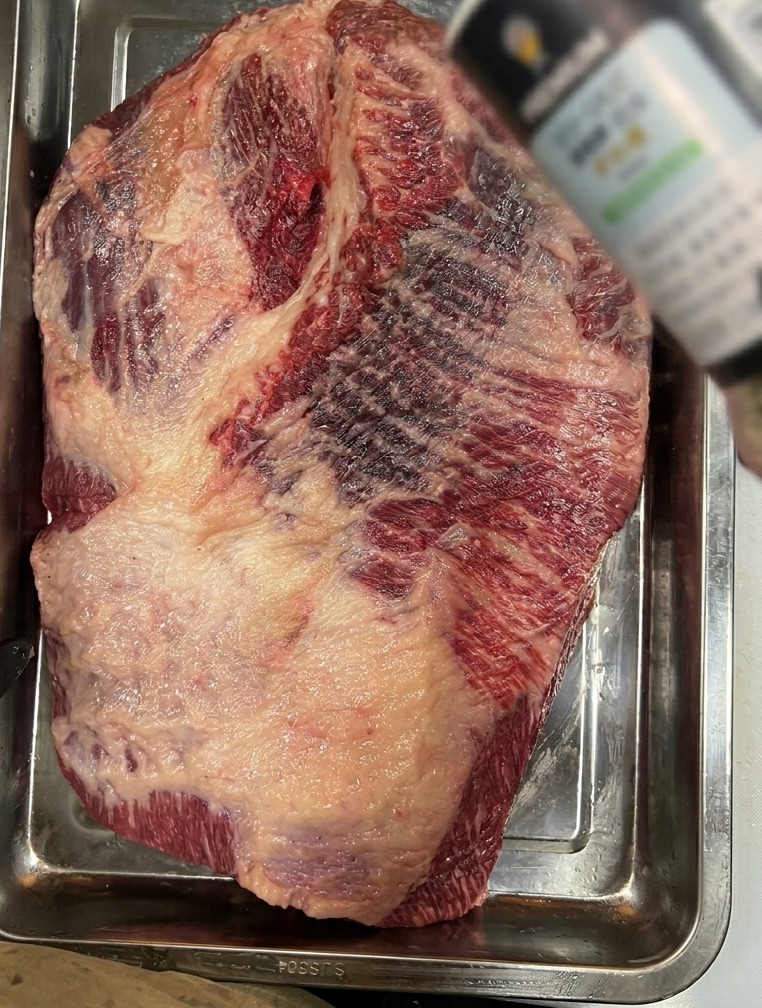
Begin by generously seasoning the surface of the raw Stone Axe Wagyu brisket with sea salt. Ensure the seasoning is spread evenly across the entire cut of meat to help build a savory crust and enhance the natural flavors of the high-quality beef.
Tip: Hold your seasoning hand high above the meat to achieve a more uniform distribution of salt across the large surface area. - 3Season with black pepper
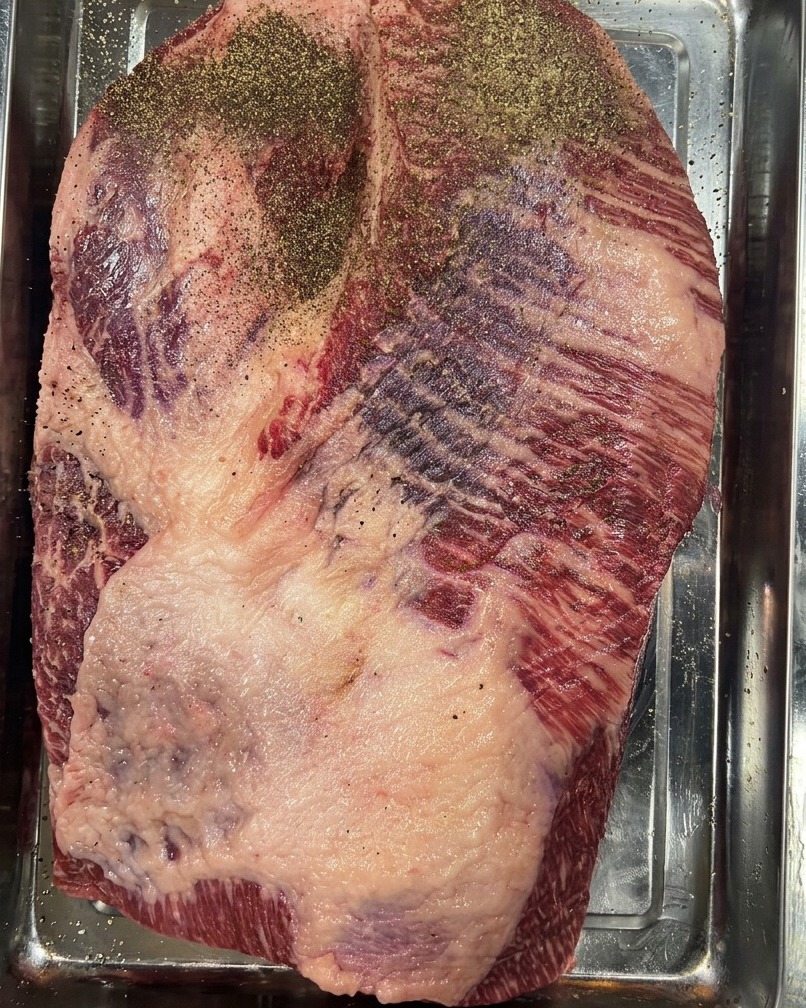
Apply a generous layer of coarsely ground black pepper over the salted brisket. This creates the foundation for a classic BBQ bark, adding a sharp, savory crust that balances the rich, fatty marbling of the Wagyu beef.
Tip: Use 16-mesh black pepper if possible; the coarse texture provides a better surface area for smoke to cling to, resulting in a superior bark. - 4Rub in the seasoning
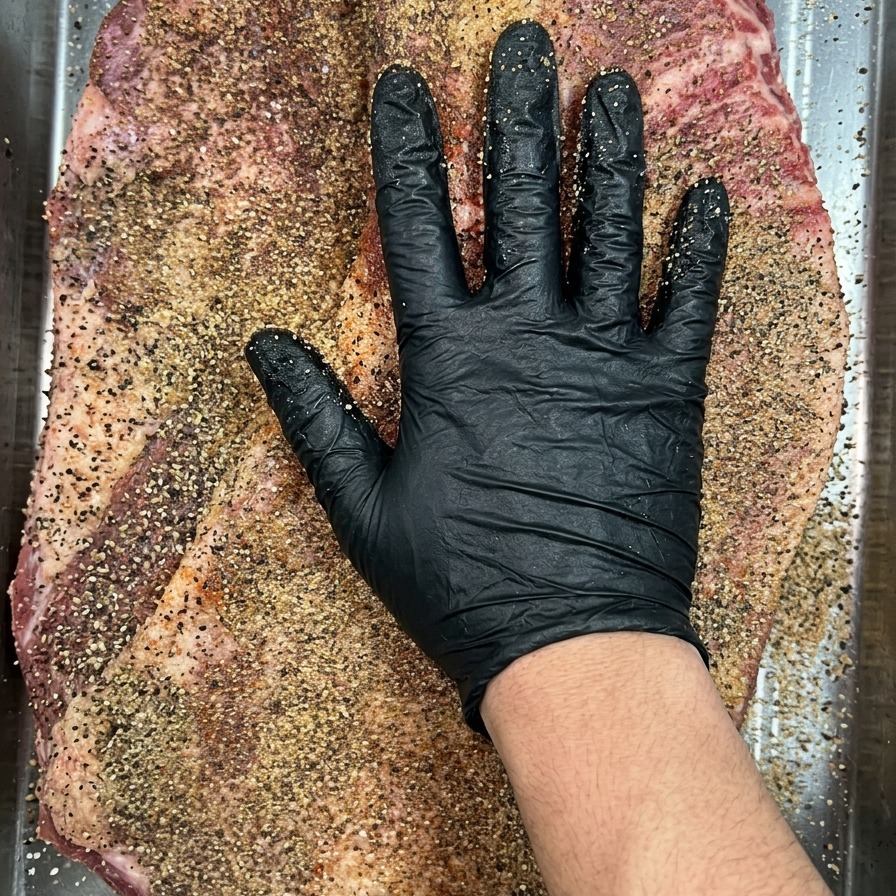
With gloved hands, firmly press and rub the pepper into the meat surface. This ensures that the spices adhere well and helps the salt penetrate the meat, preventing the seasoning from falling off during handling or while in the smoker.
Tip: Do not forget to season and rub the sides and edges of the meat to ensure complete flavor coverage and an even bark all around. - 5Monitor internal temperature
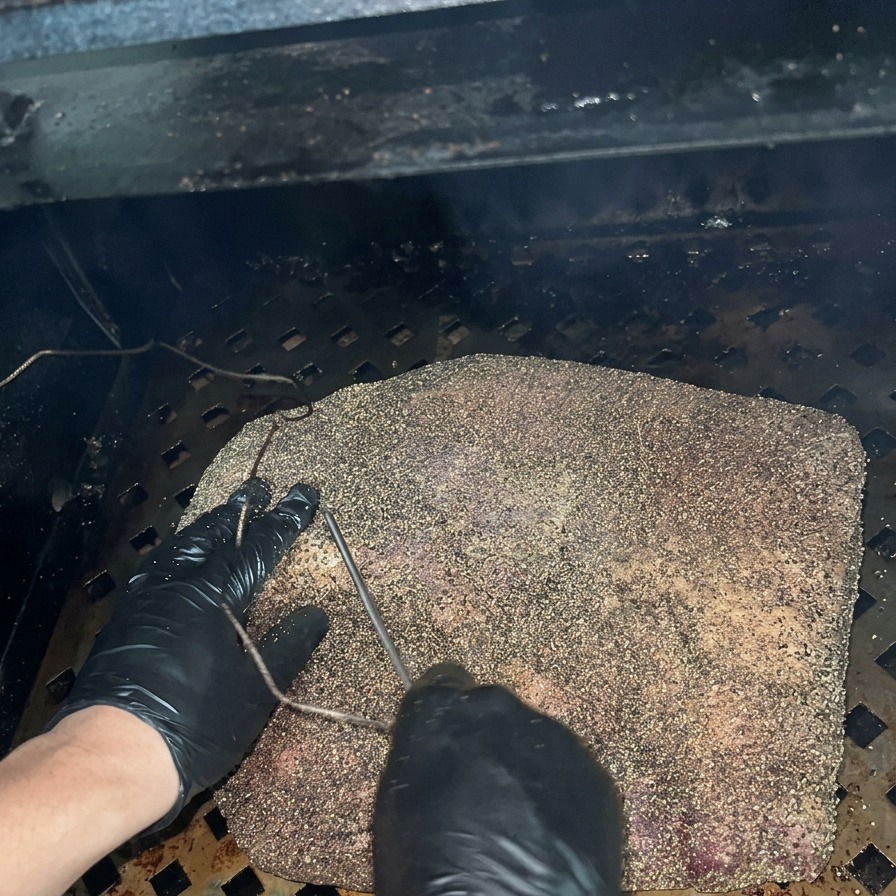
Once the brisket is in the smoker, insert a digital temperature probe into the thickest part of the meat. This allows you to track the internal temperature in real-time, ensuring you know exactly when to move to the next stage of the cook.
Tip: Make sure the probe is centered in the muscle and not touching large fat deposits, which can give an inaccurate temperature reading. - 6Spritz for moisture
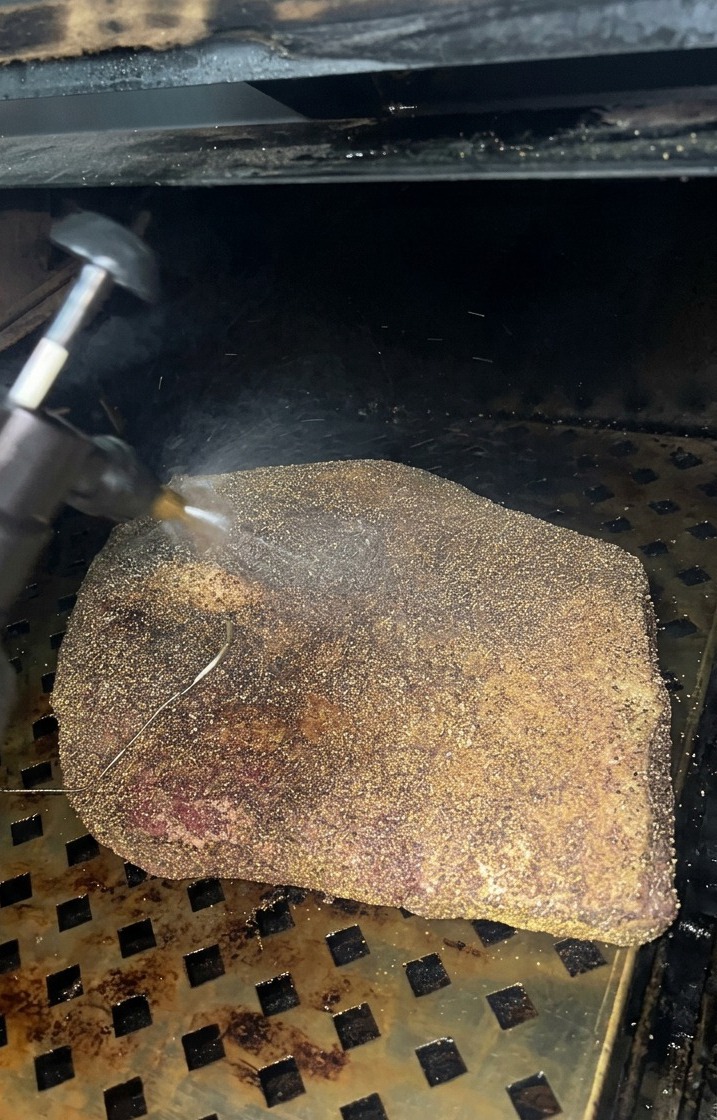
Periodically spray the surface of the brisket with apple cider vinegar using a spray bottle. This helps to keep the meat moist during the long smoking process and aids in the development of a deep, flavorful bark.
Tip: Only start spritzing after the bark has solidified on the meat so that the liquid does not wash away your dry rub seasoning. - 7Wrap the brisket in foil
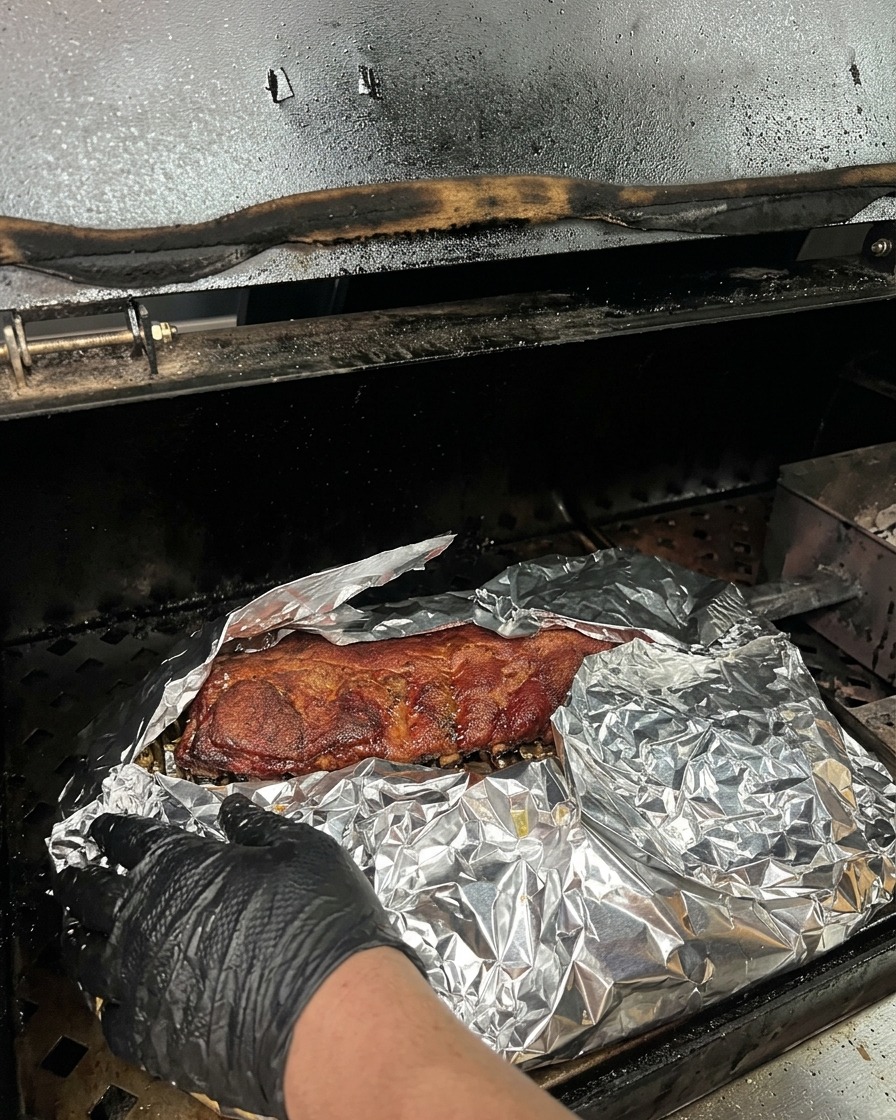
When the brisket has reached the desired color and the internal temperature stalls, wrap it tightly in aluminum foil or butcher paper. This technique, known as the Texas Crutch, locks in moisture and helps the meat finish cooking efficiently by preventing evaporative cooling.
Tip: Ensure the foil wrap is very tight to prevent excessive steaming, which can sometimes soften the bark more than desired. - 8Perform the final temp check
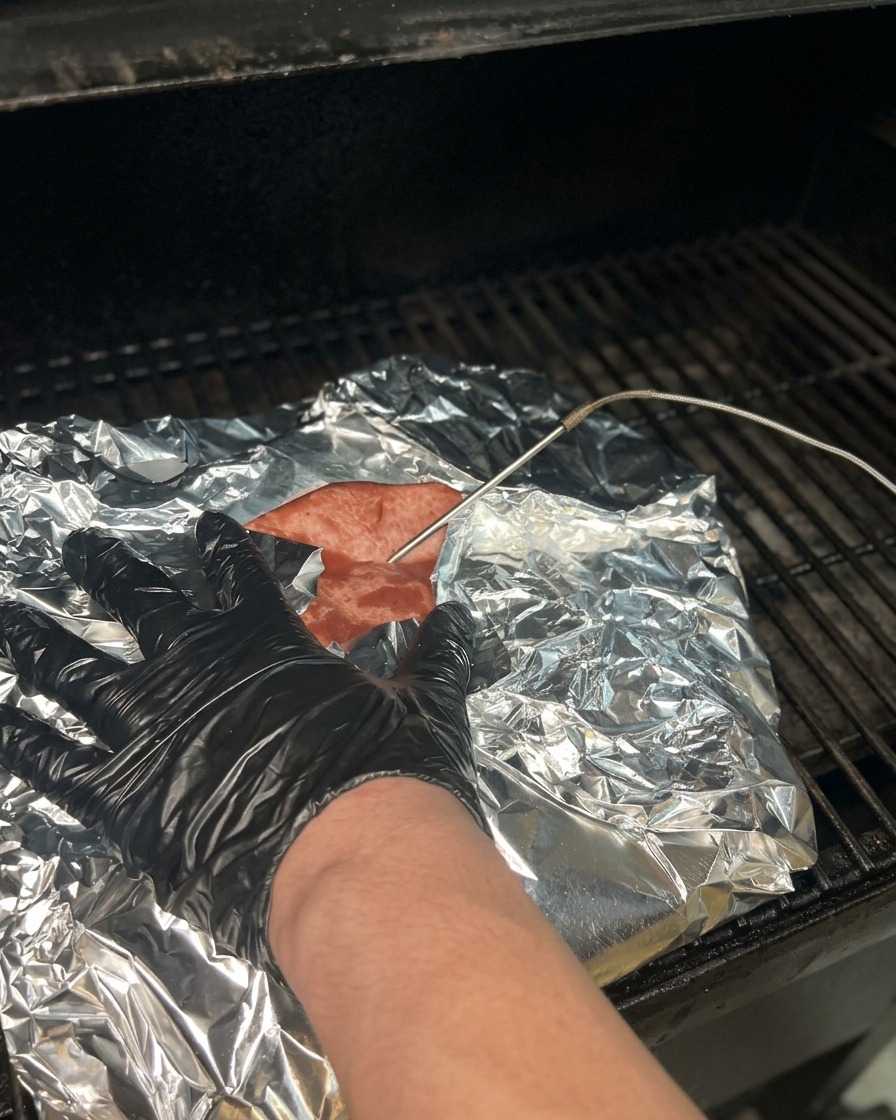
Insert the temperature probe through the foil into the brisket to verify it has reached the target internal temperature, typically around 203 degrees Fahrenheit. The probe should slide into the meat effortlessly, indicating it is tender and ready.
Tip: Always judge the meat by how it feels; the probe should feel like it is sliding into room temperature butter when the brisket is done. - 9Unwrap the rested brisket
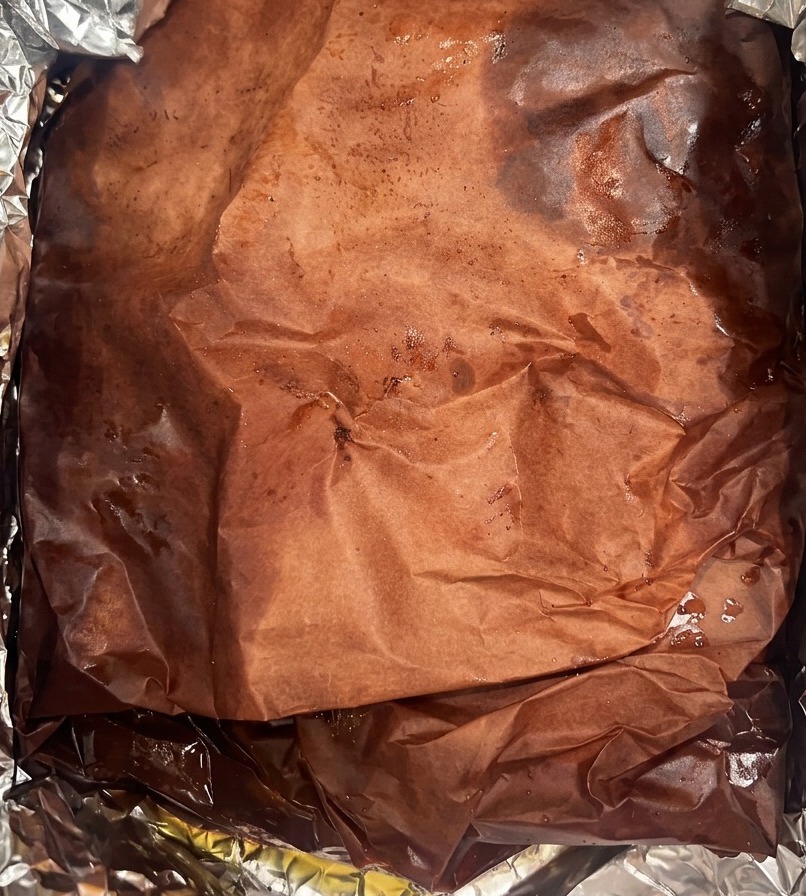
After the brisket has finished its long rest, carefully unwrap it from the paper or foil. The wrap should be saturated with rendered fat and juices, a sign that the meat has retained its moisture throughout the slow-smoking and resting process.
Tip: Be careful when unwrapping, as the trapped steam and juices inside the butcher paper can still be very hot. - 10Slice against the grain
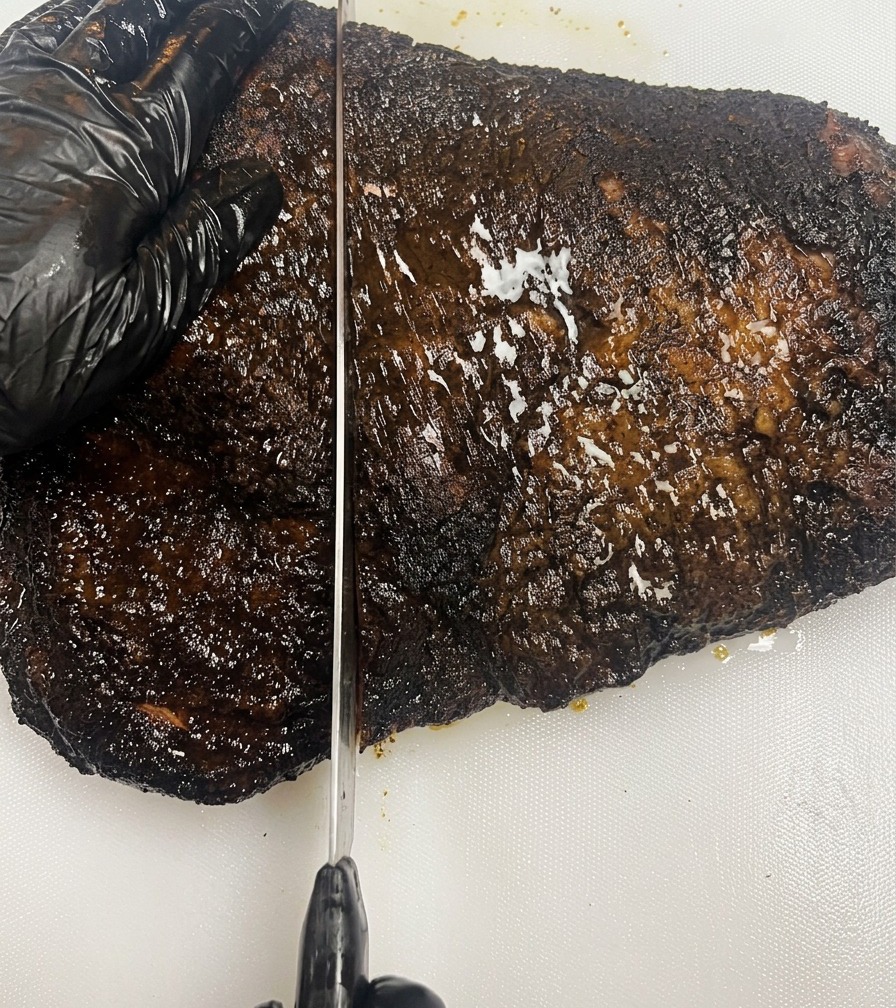
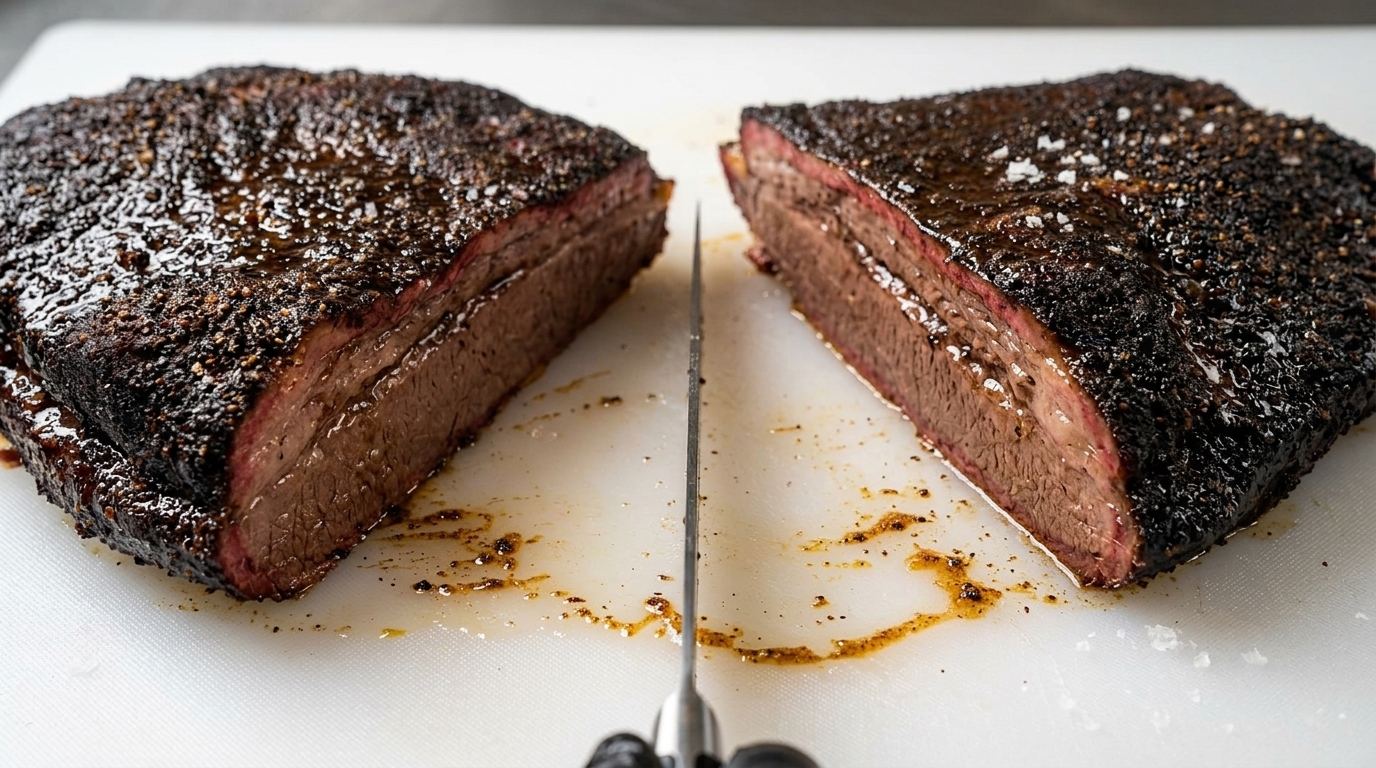
Using a sharp slicing knife, cut the brisket against the grain into thick, uniform pieces. You should see a deep mahogany bark on the outside and a vibrant pink smoke ring just beneath the surface, with juices glistening on every cut.
Tip: Only slice what you plan to serve immediately to prevent the rest of the brisket from drying out too quickly.