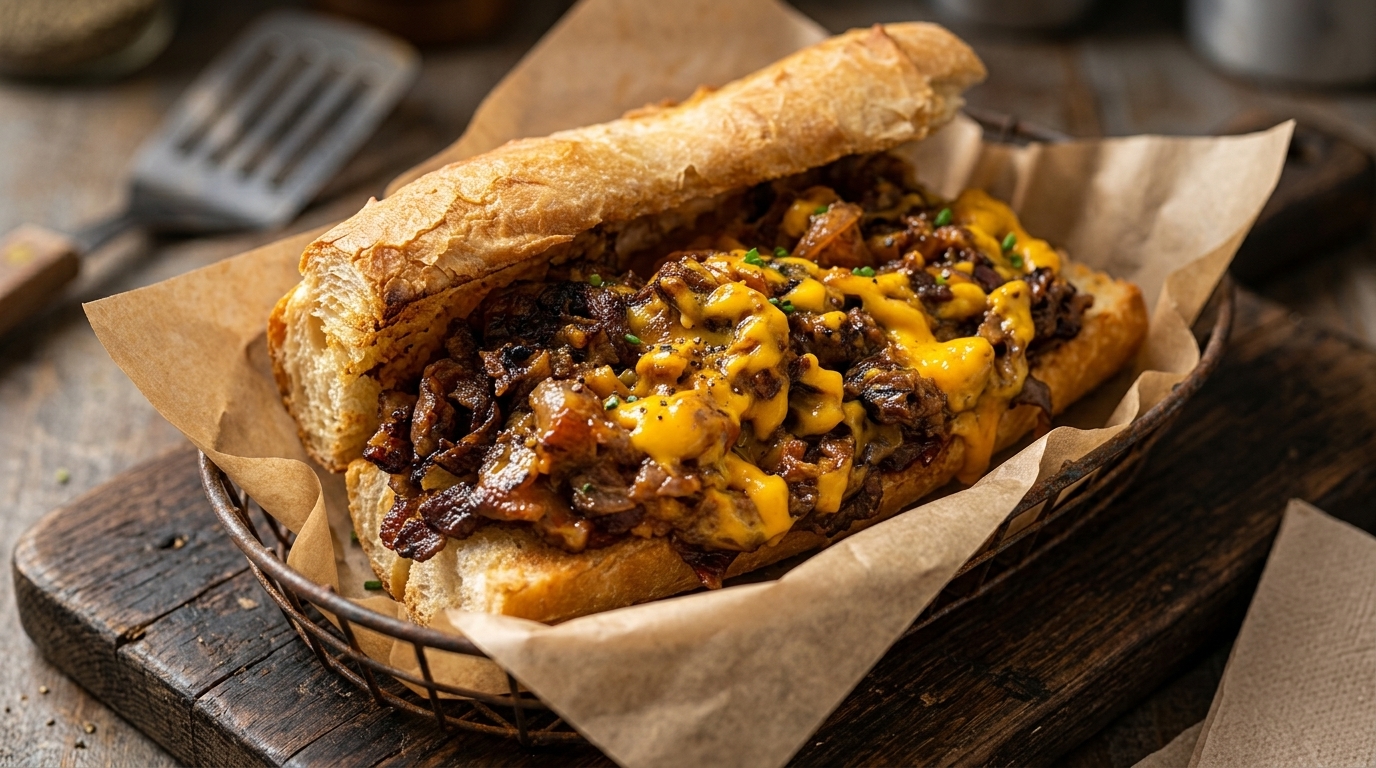
Low-Temperature Roasted Beef Brisket
Cajun-Paprika Bark
Master the art of patience with this ultra-tender beef brisket. A five-hour low-temperature steam roast creates a delicate texture finished with a perfectly charred spice crust.
The hallmark of a great brisket is the transformation of tough fibers into succulent and tender perfection. By using a mustard binder and a robust blend of Cajun spice with smoky paprika and garlic this recipe builds a professional grade bark. The secret lies in the dual stage cooking process which starts with a long moist low temperature roast followed by a high heat finish to caramelize the exterior.
Ingredients
- 2.5 kg beef brisket
- 14 cup yellow mustard
- 2 tbsp coarse salt
- 1 tbsp fennel seeds
- 1 tbsp black peppercorns
- 1 tbsp Cajun powder
- 1 tbsp Paprika powder
- 1 tbsp garlic sea salt powder
- 2 tbsp olive oil
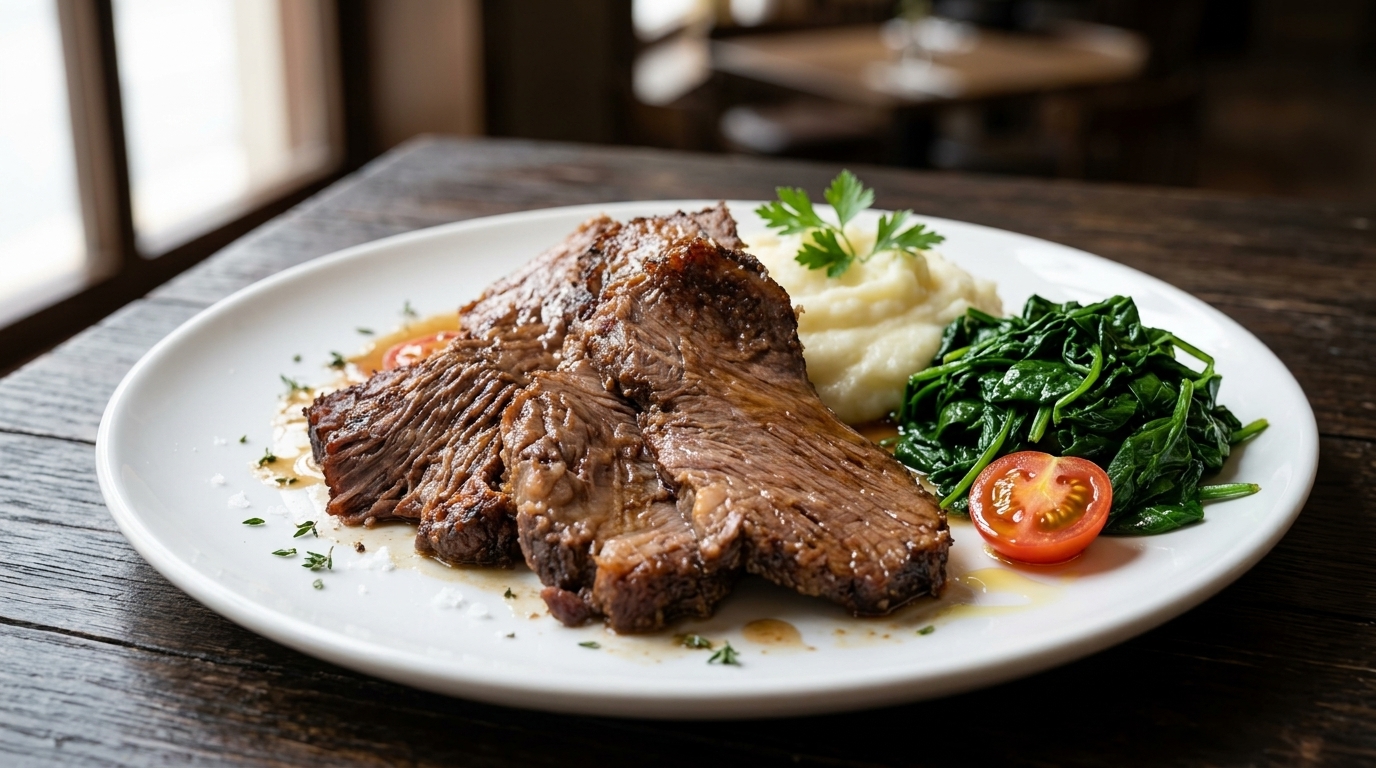
- optional mashed potatoes for serving
- optional sautéed spinach for serving
Instructions
- 1Apply the mustard binder
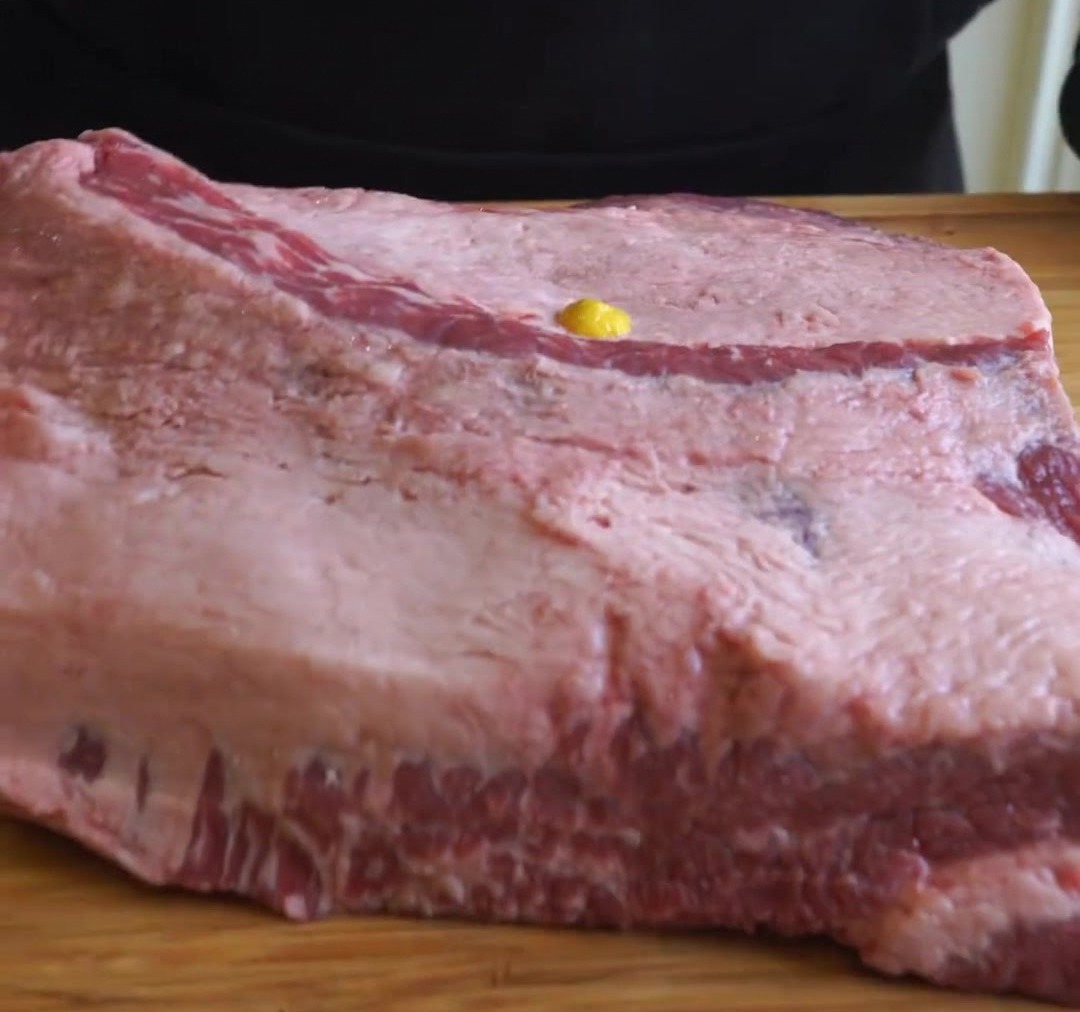
Squirt a generous amount of yellow mustard onto the surface of the raw brisket. The mustard acts as a binder, helping the salt and subsequent spice rub stick to the meat, and it also contributes to the development of a flavorful crust during the long roasting period.
Tip: The strong mustard taste will cook off, leaving only a subtle tang that enhances the richness of the beef. - 2Coat with mustard and salt
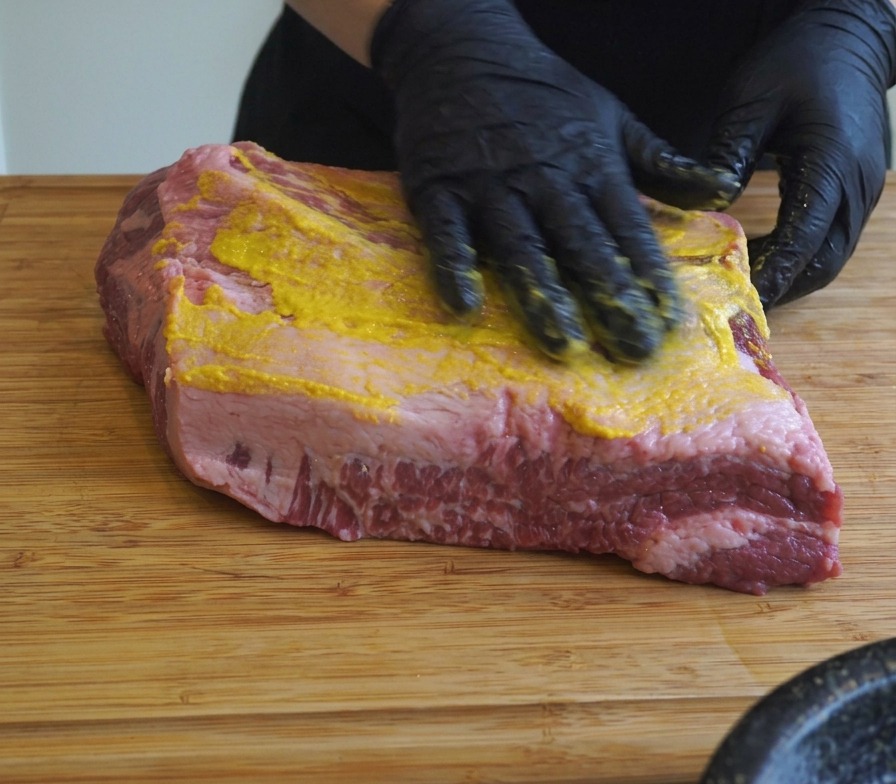
Use your hands to spread the mustard evenly across the top and sides of the brisket. Once the meat is fully coated, sprinkle coarse salt over the surface. The salt will help draw out moisture and season the meat deeply as it prepares for the spice rub.
Tip: Ensure the layer of mustard is thin and even to provide the best surface for the dry spices to adhere to. - 3Blend the spice rub
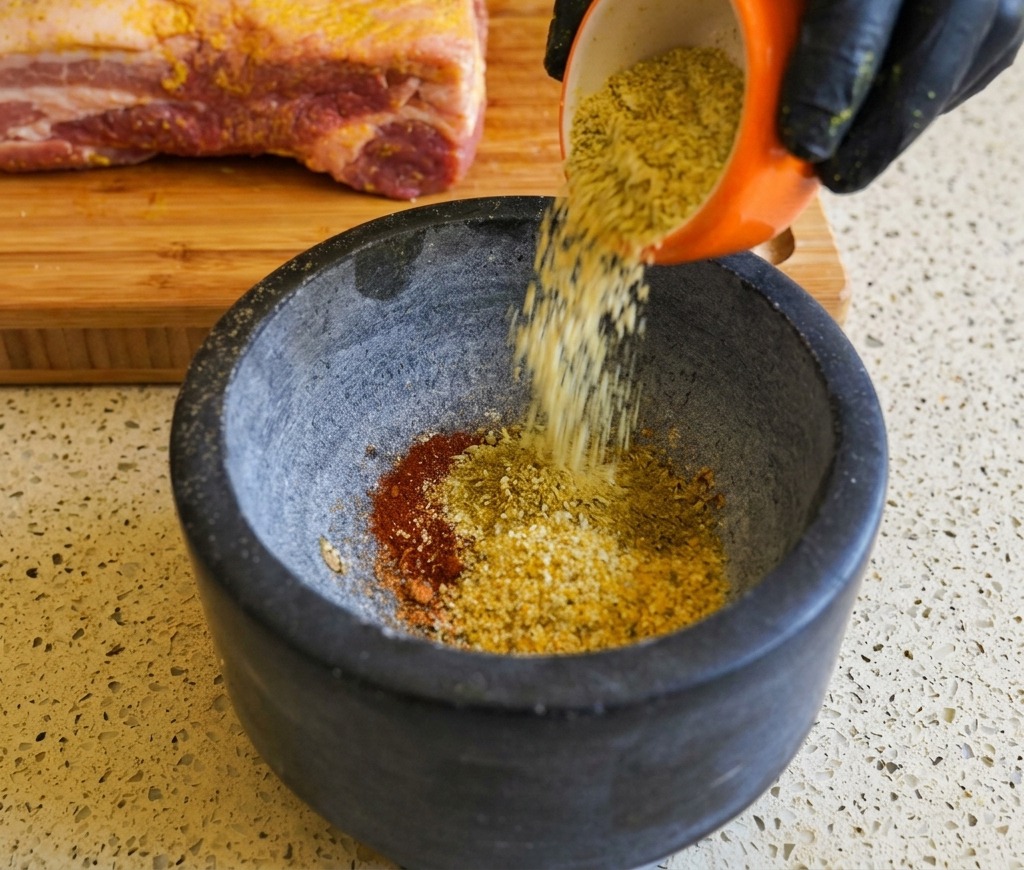
Combine the Paprika, Cajun powder, and garlic sea salt in a stone mortar. Use the pestle to blend these ingredients into a uniform, fine dry rub. This spice mixture is the key to developing a smoky, complex flavor profile on the exterior of the brisket.
Tip: If you prefer a coarser texture, you can add whole peppercorns and fennel seeds to the mortar and crush them yourself. - 4Apply olive oil
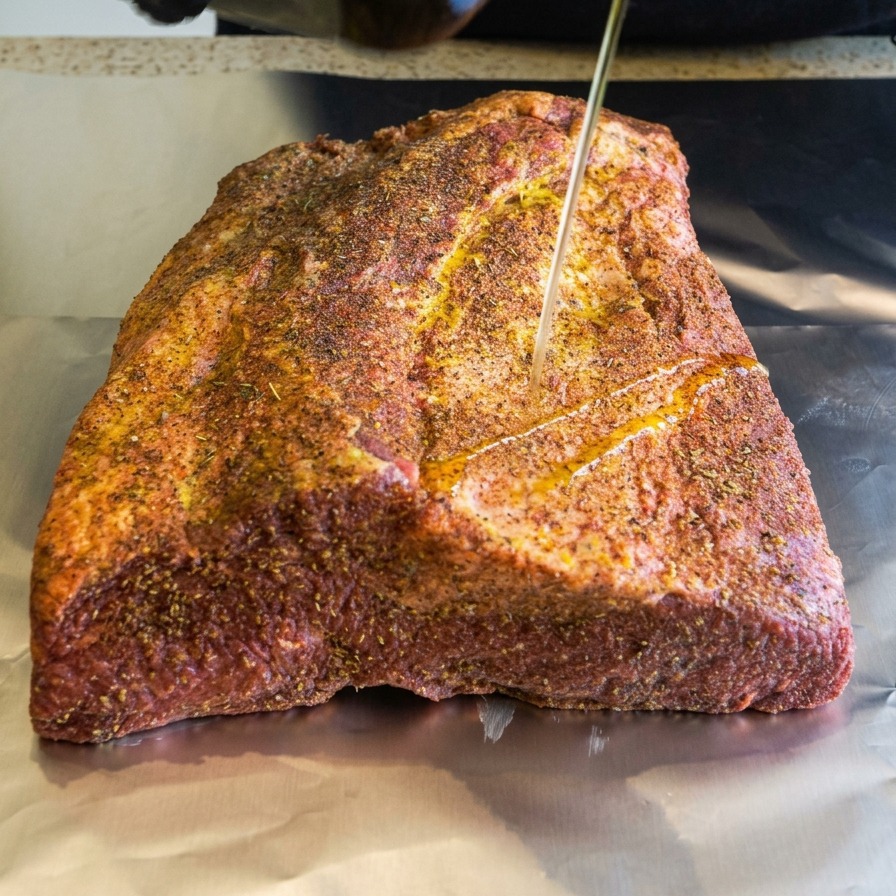
Transfer the seasoned brisket to a sheet of aluminum foil and drizzle it with olive oil. The oil helps the heat penetrate the spices and meat more effectively while also keeping the exterior moist during the initial stages of low-temperature baking.
Tip: Use just enough oil to lightly coat the surface; too much may cause the spice rub to slide off. - 5Wrap the brisket in foil
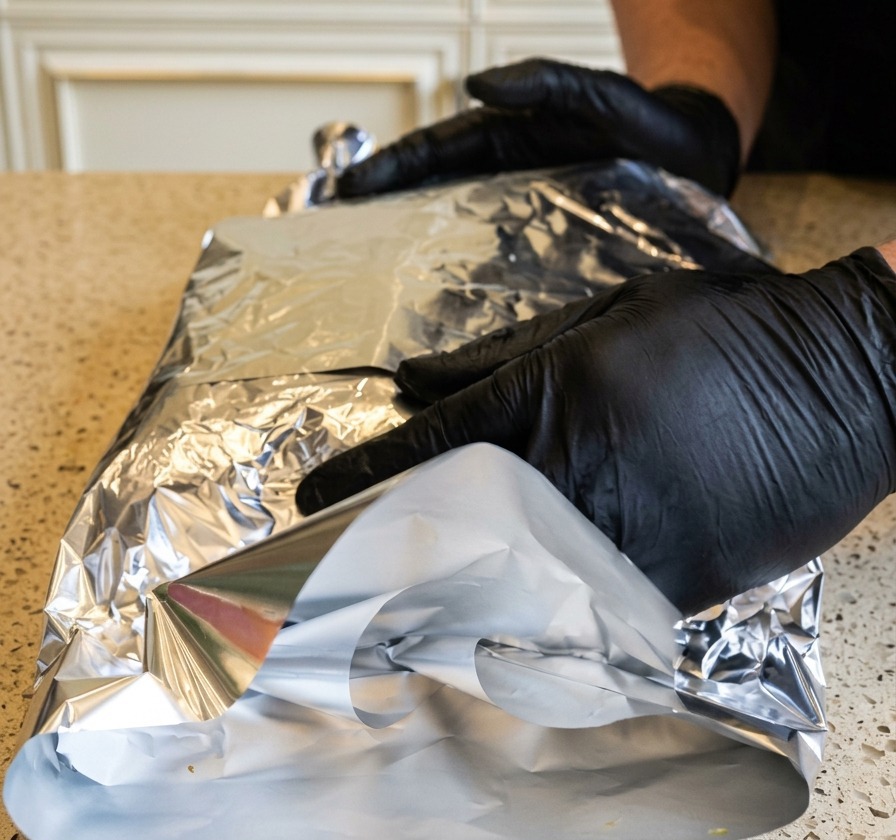
Place the seasoned beef brisket onto a large sheet of heavy-duty aluminum foil. Carefully wrap the meat, folding the edges tightly to create a secure seal. This ensures that moisture is trapped inside, allowing the brisket to steam in its own juices for maximum tenderness during the long roasting process.
Tip: Make sure the seal is tight to prevent any flavorful juices or fat from leaking out onto the oven rack. - 6Place brisket in the oven
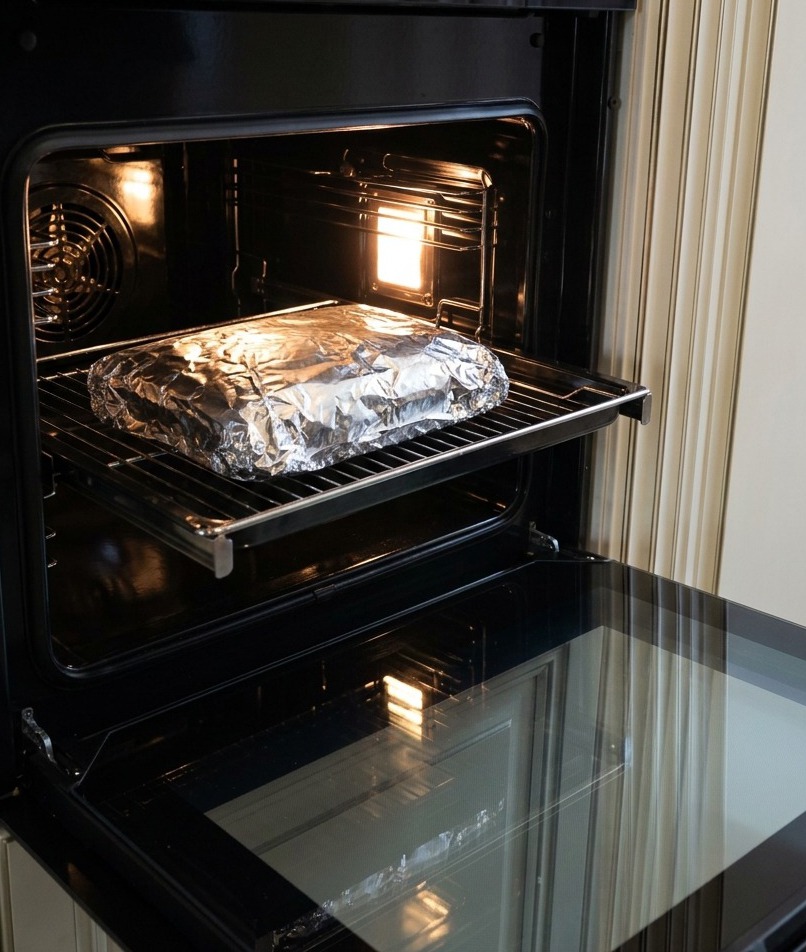
Carefully slide the foil-wrapped package onto the wire rack in your preheated oven. Position it in the center to allow for even heat circulation. The steam ovens consistent environment will slowly break down the briskets tough fibers over the next several hours.
Tip: Using a rack instead of a baking sheet allows the hot air to circulate under the meat, ensuring it cooks evenly from all sides. - 7Set the low temperature program
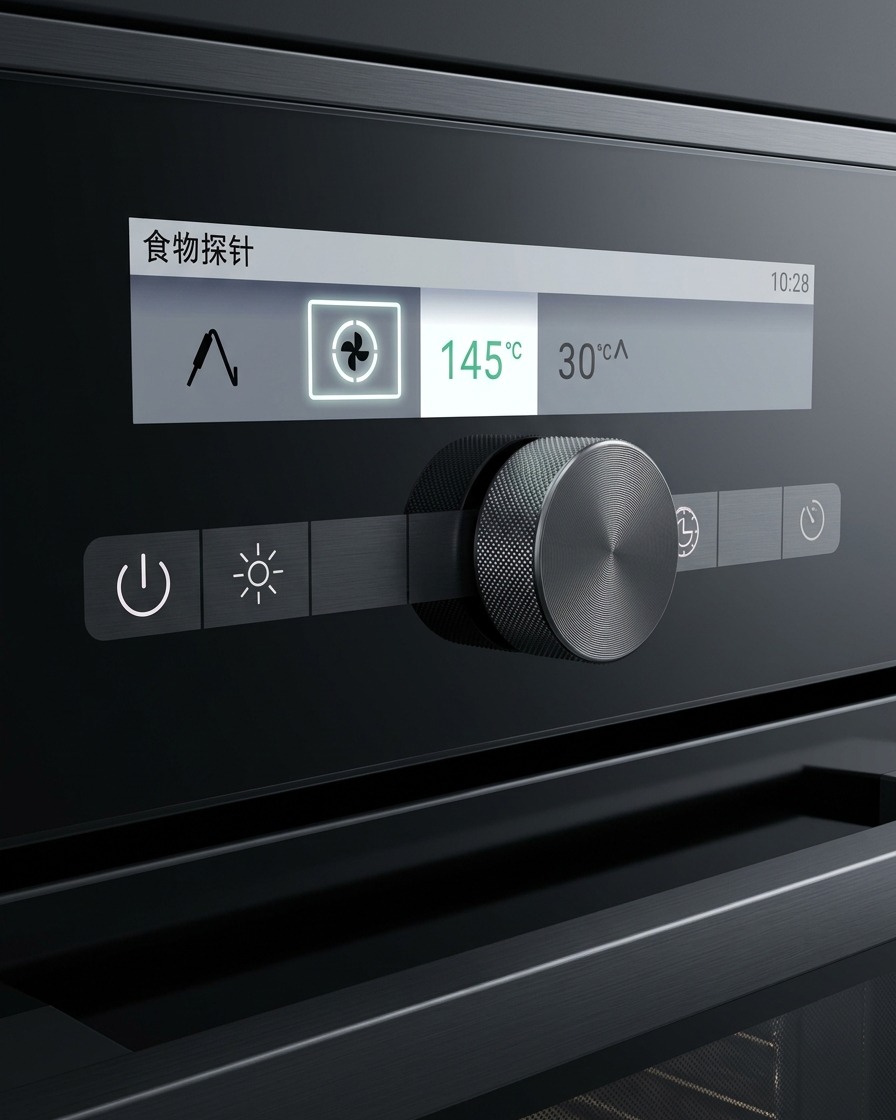
Use the oven control panel to select the low temperature baking mode. Set the oven temperature to 145C. Insert the meat probe into the thickest part of the brisket and set the target internal temperature to 85C. This precise control ensures the meat becomes soft and delicate without drying out.
Tip: Always insert the probe into the center of the thickest part of the meat and avoid large pockets of fat for the most accurate reading. - 8Remove the brisket from the oven
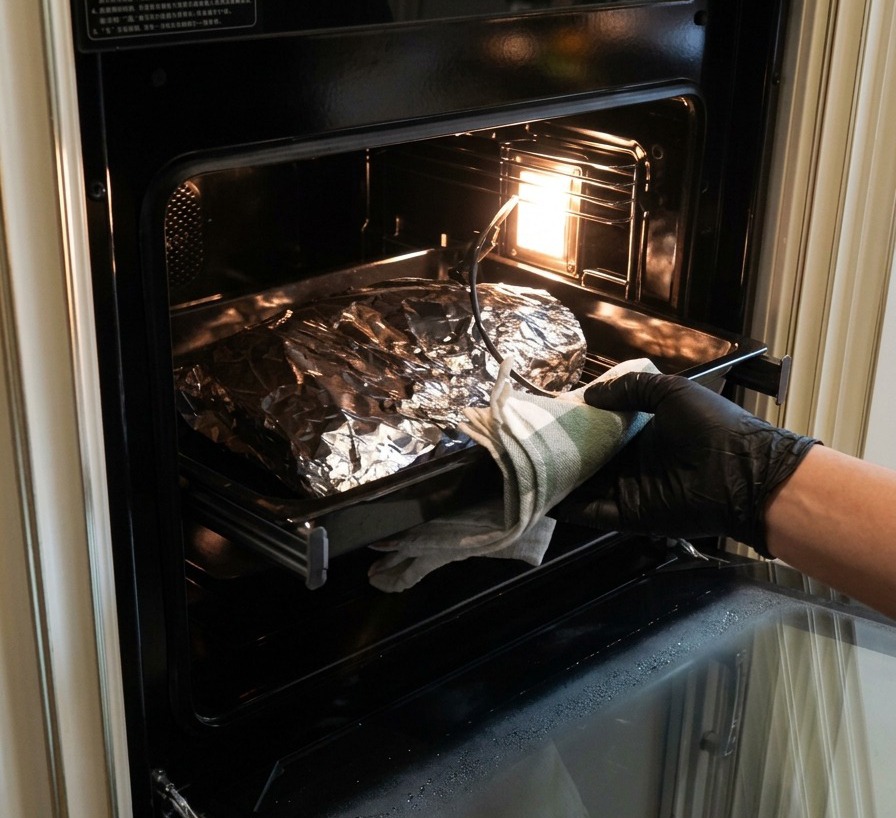
After slow-roasting the brisket for five hours at 145°C, carefully remove the baking tray from the oven using a kitchen towel. Ensure the internal temperature probe has reached 85°C, which indicates that the beef is now perfectly tender and ready for the final coloring stage.
Tip: Handle the tray with extreme care as it will be very hot, and be mindful of any hot juices that may have collected inside the foil. - 9Increase heat for final browning
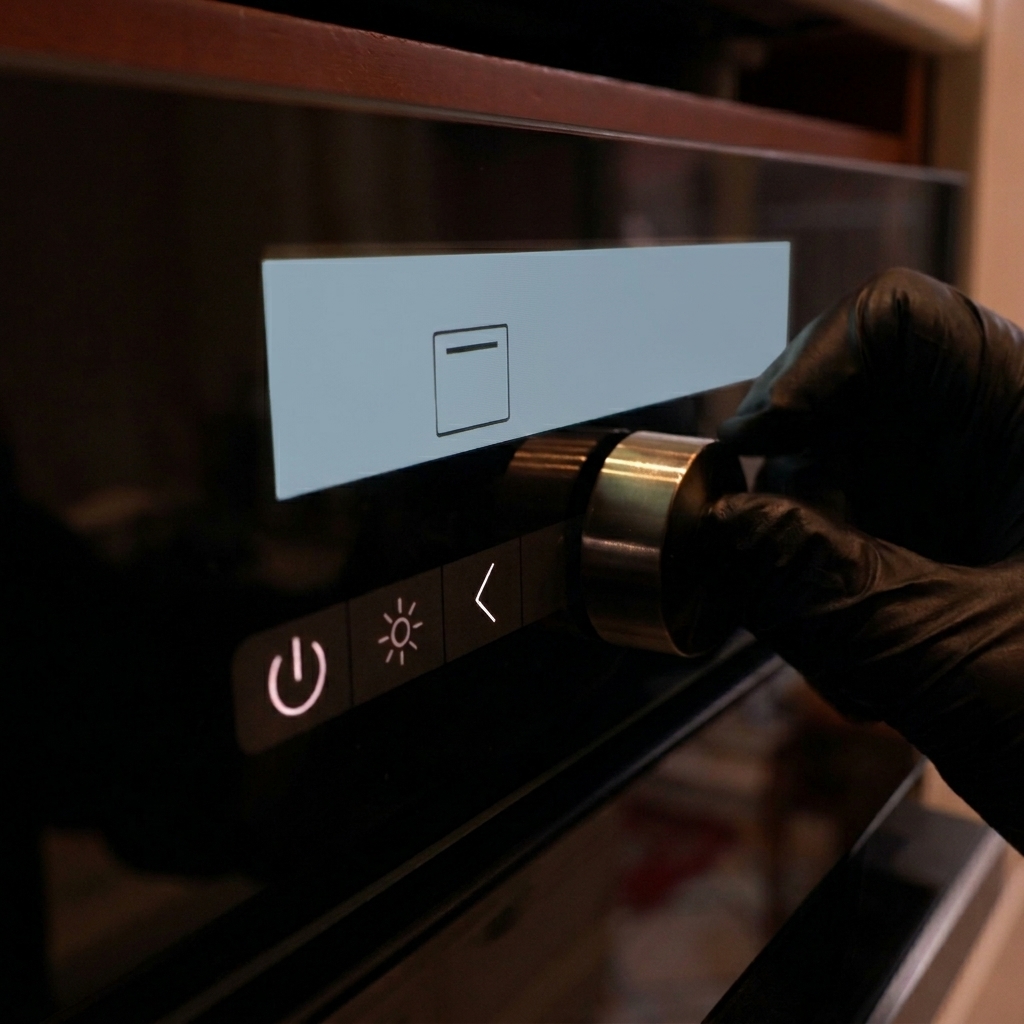
Once the brisket reaches its target internal temperature, remove it from the oven and carefully peel back the foil. Adjust the oven temperature to 170°C. This high-heat finish is critical for roasting the surface until it is charred and crispy, creating the flavorful bark.
Tip: Watch the meat closely during this final stage—the sugar in the spices can go from perfectly charred to burnt very quickly. - 10Finish the final roast
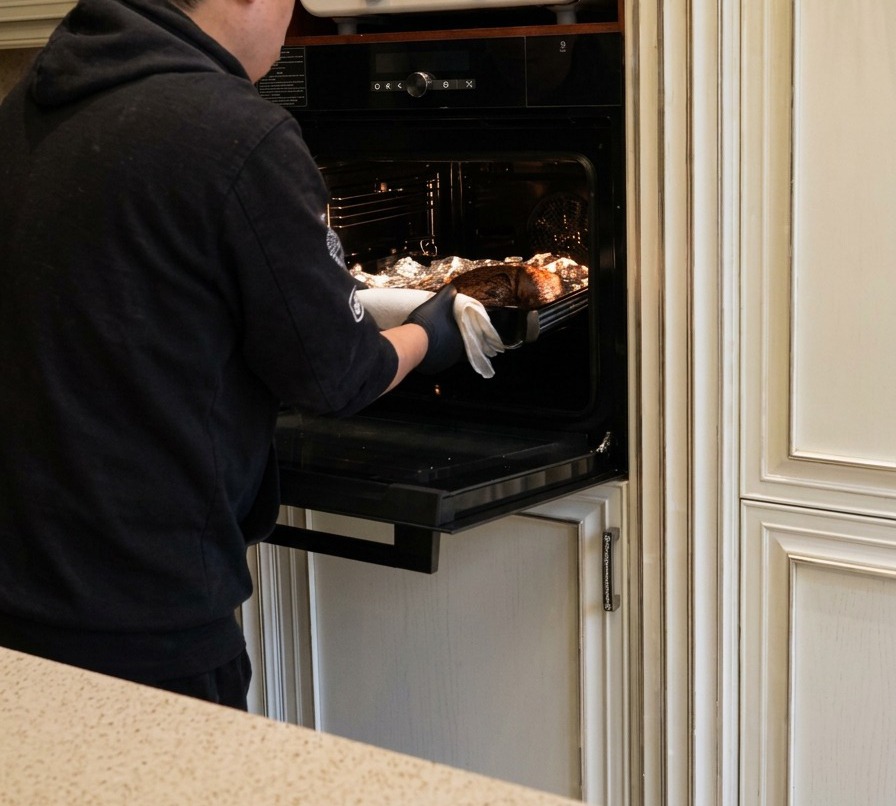
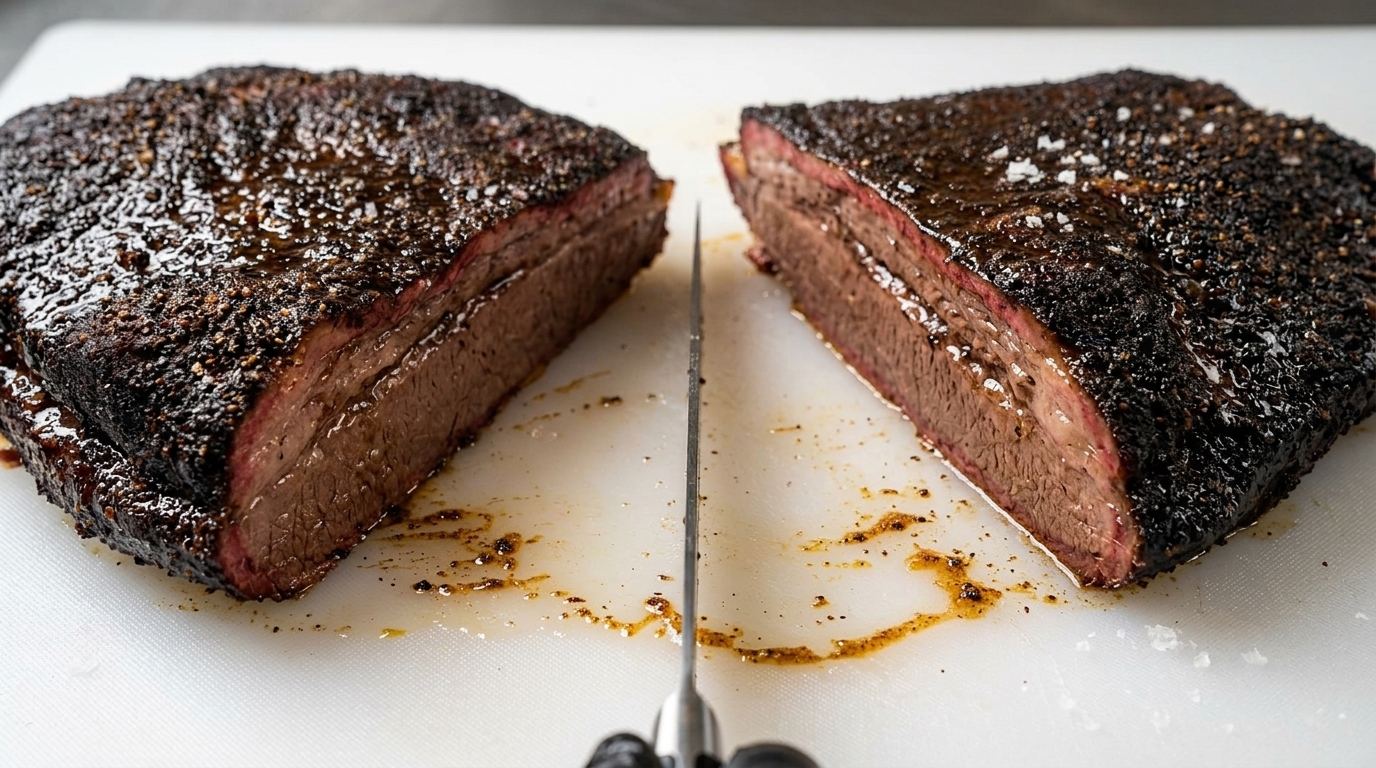
Once the brisket is unwrapped and the oven temperature is increased to 170°C, roast it briefly until the surface is deeply charred and browned. This final high-heat stage creates a crispy, flavorful exterior bark while the interior remains incredibly tender.
Tip: Keep a close eye on the meat during these final minutes to achieve a perfect char without burning the spices. - 11Verify tenderness and serve
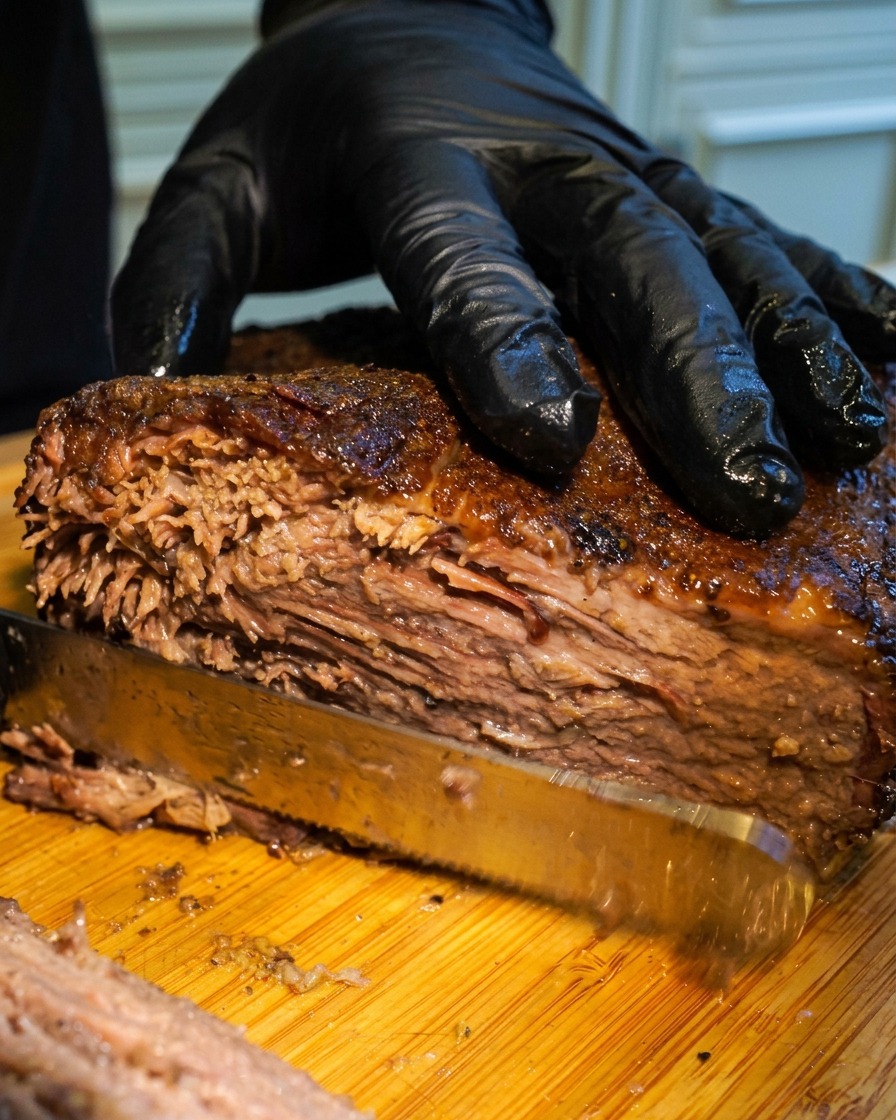
Slice the brisket against the grain and lift a piece to check its quality. The meat should be exceptionally moist and have a slight elasticity, demonstrating that the low-temperature cooking has released the deliciousness of the beef without losing its juices.
Tip: Always slice against the grain to ensure the meat is as tender as possible when chewed.