Creamy Lemon Salmon Pasta
Fresh Dill
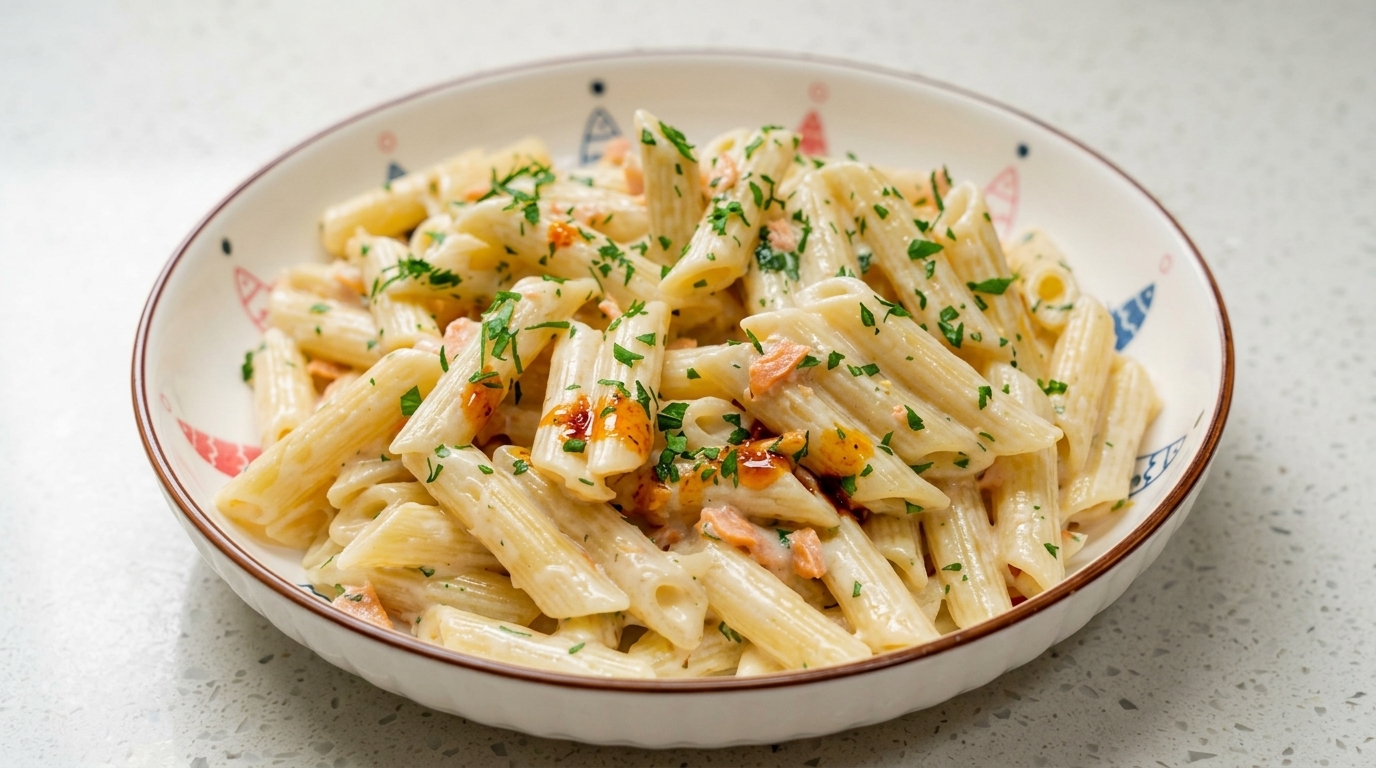
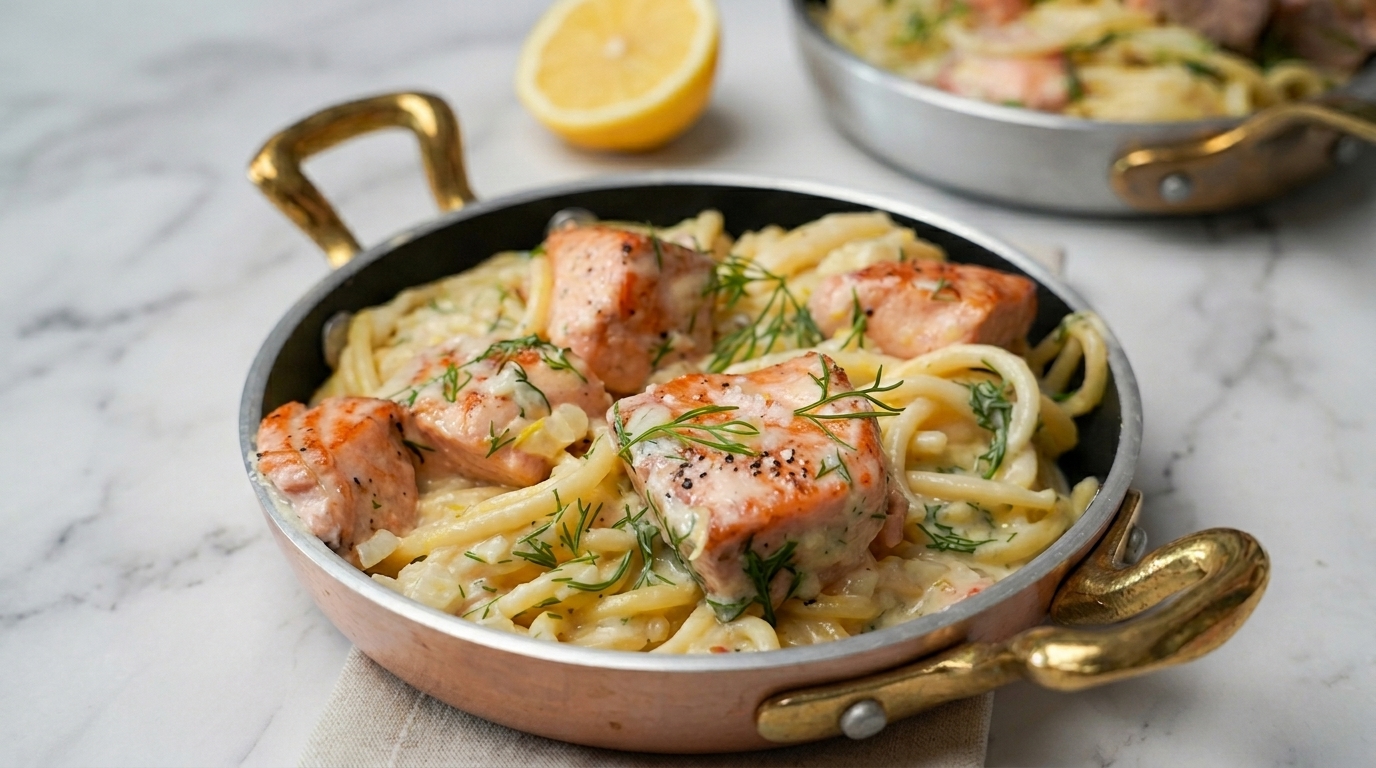
Indulge in pan-seared salmon cubes tossed in a silky, lemon-infused cream sauce with fresh dill—a restaurant-quality pasta dish made simple for the home cook.
Creamy salmon pasta is a modern Western classic that perfectly balances rich textures with bright, aromatic notes. This version uses pan-seared salmon cubes to maximize flavor, finished with fresh lemon zest and dill for a refreshing contrast to the decadent cream. It is a comforting yet elegant meal that celebrates the harmony of fresh seafood and simple techniques.
Ingredients
- 400 g fresh salmon fillet
- 250 g linguine or spaghetti
- 200 ml heavy cream
- 1 medium white onion
- 3 cloves garlic
- 1 piece lemon
- 60 ml dry white wine
- 2 tbsp olive oil
- 50 g Parmesan cheese
- 1 bunch fresh dill
- to taste salt
- to taste black pepper
Instructions
- 1Prepare the salmon cubes
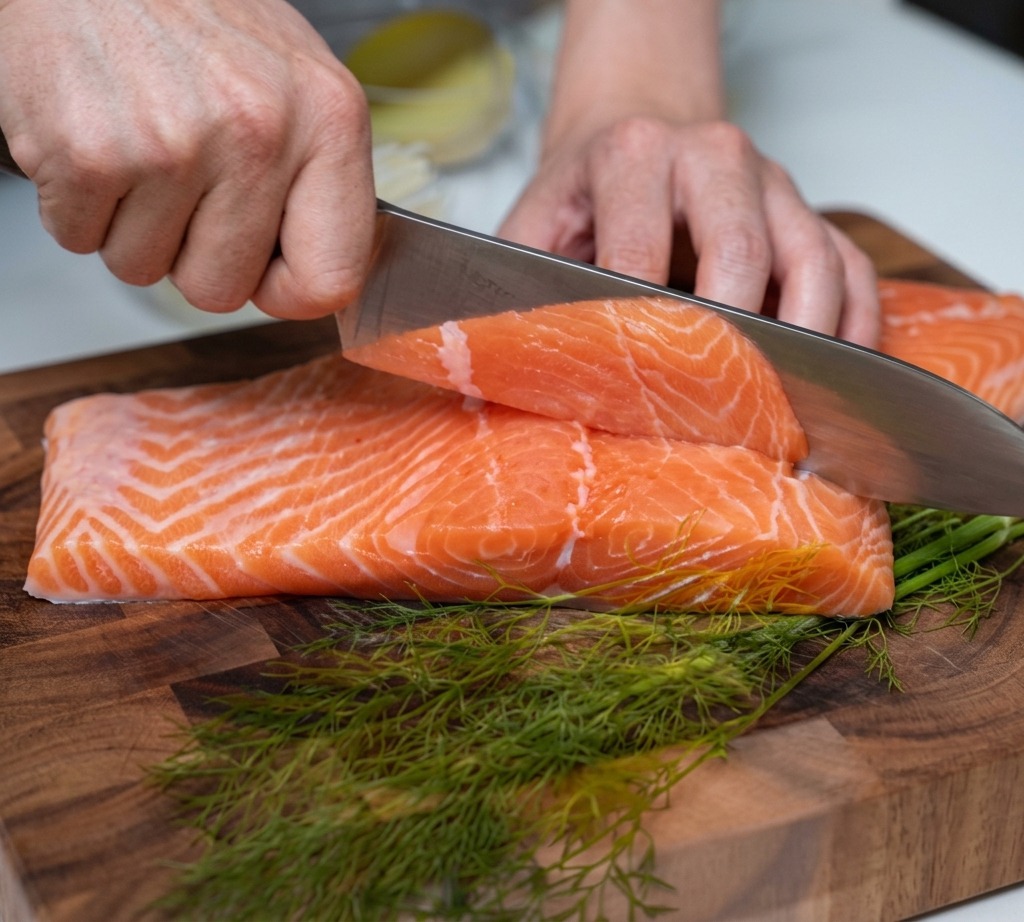
Start by cutting the fresh salmon fillet into even, bite-sized cubes. Slicing the fish into cubes instead of keeping it as a whole fillet allows each piece to absorb the seasoning more effectively and ensures even cooking in the pan later.
Tip: Use a very sharp chef knife to get clean cuts without tearing the delicate flesh of the salmon. - 2Season the salmon cubes
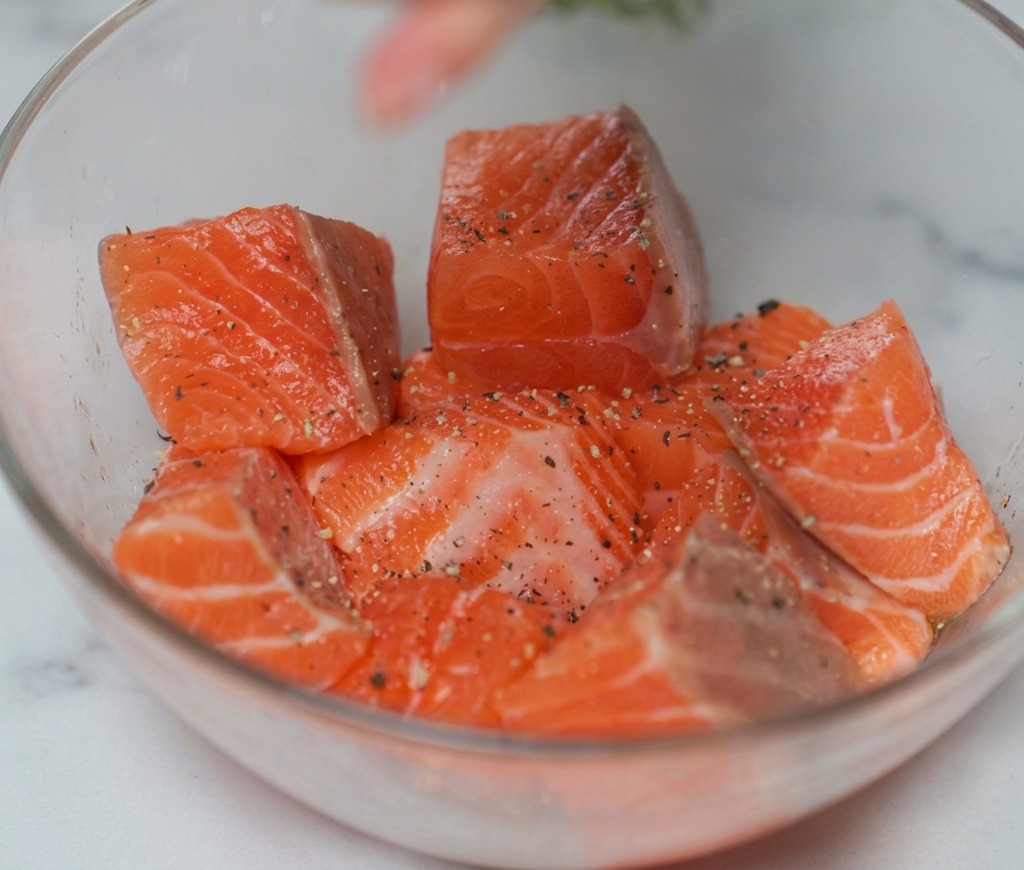
Place your fresh salmon cubes into a glass bowl and season them with a sprinkle of salt and some freshly ground black pepper. This initial layer of seasoning is essential for building a savory base that will complement the rich cream sauce later.
Tip: Freshly ground pepper provides a much more vibrant and spicy aroma compared to pre-ground pepper. - 3Add a splash of lemon
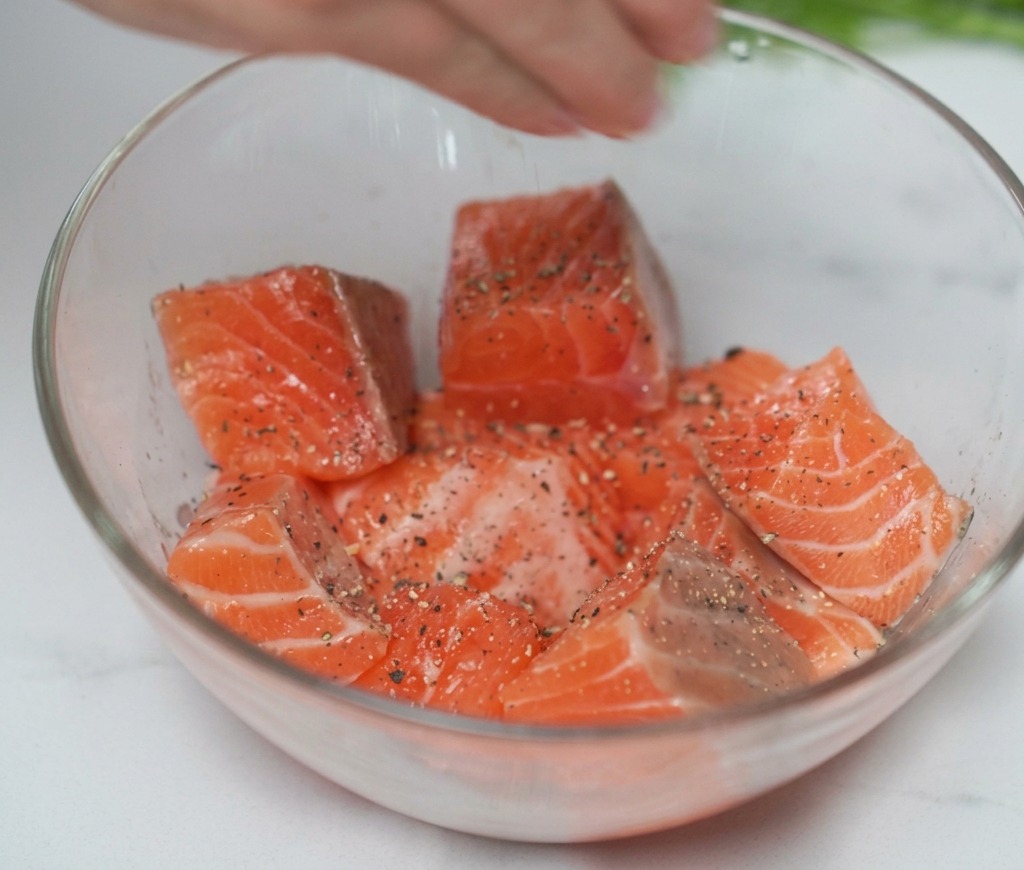
Squeeze the juice from a fresh lemon over the seasoned salmon cubes. The acidity helps to brighten the overall flavor and acts as a quick marinade, ensuring the fish is fragrant and perfectly balanced before it hits the pan.
Tip: Rolling the lemon under your palm against the counter before cutting will help it release more juice. - 4Dice the onion
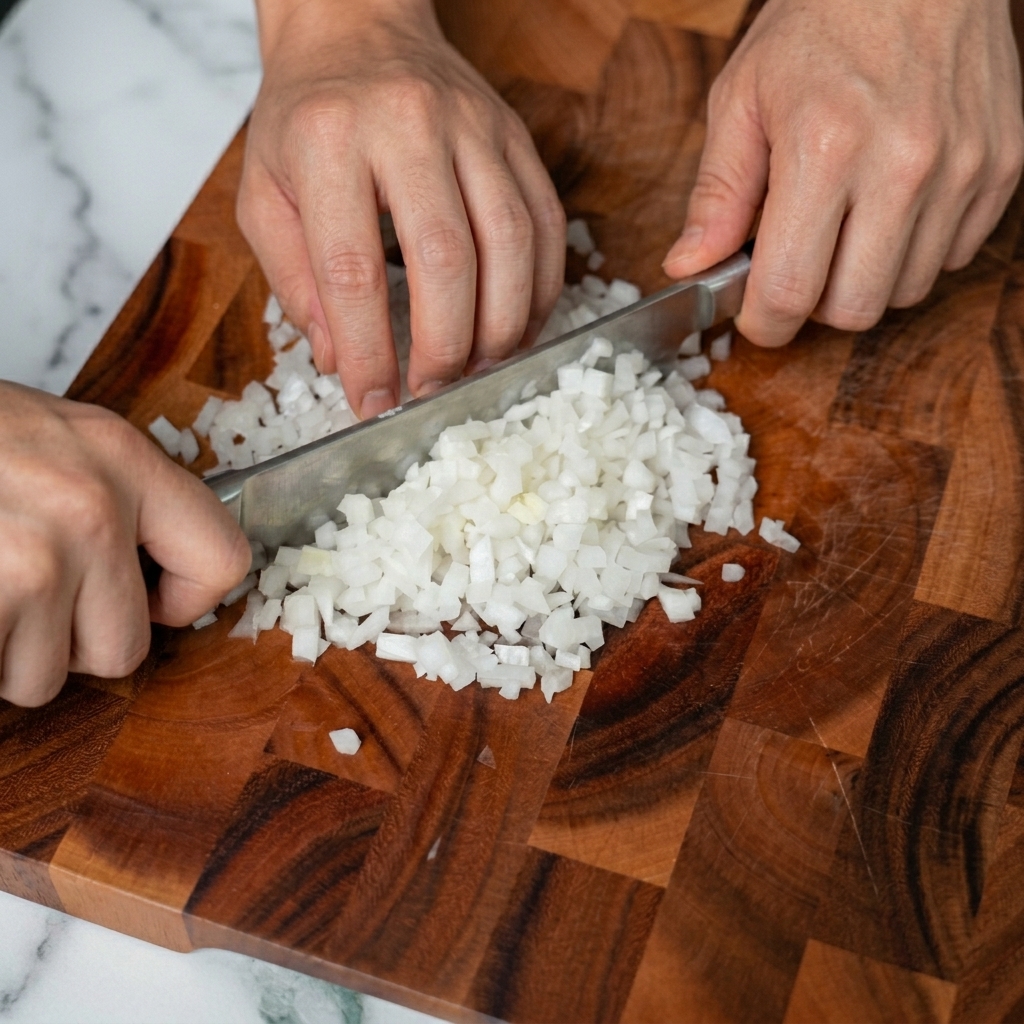
Peel and finely dice a white onion on a clean wooden cutting board. Small, uniform pieces will cook more quickly and blend seamlessly into the final cream sauce, providing a sweet foundation of flavor for the dish.
Tip: Keep the root end intact while dicing to hold the onion layers together, making the process safer and more efficient. - 5Mince the garlic
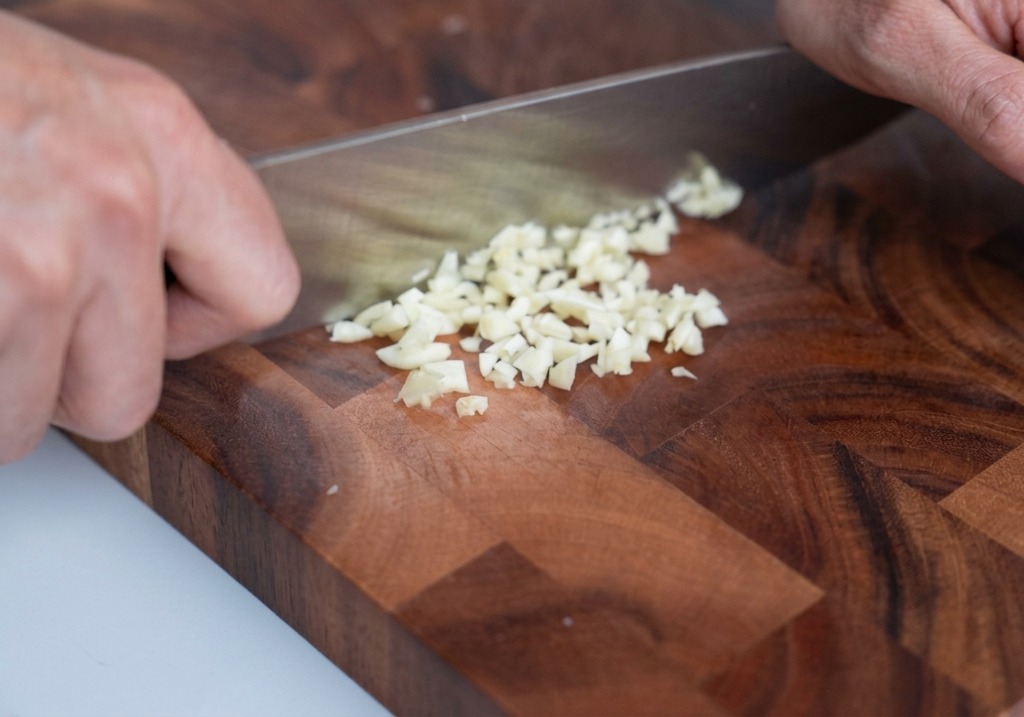
Take several cloves of garlic and mince them finely on your cutting board. Mincing the garlic small allows it to soften quickly and release its essential oils, infusing the cream sauce with a delicate and aromatic flavor.
Tip: Crushing the cloves with the flat side of your knife first makes it much easier to peel and mince them. - 6Chop the fresh dill
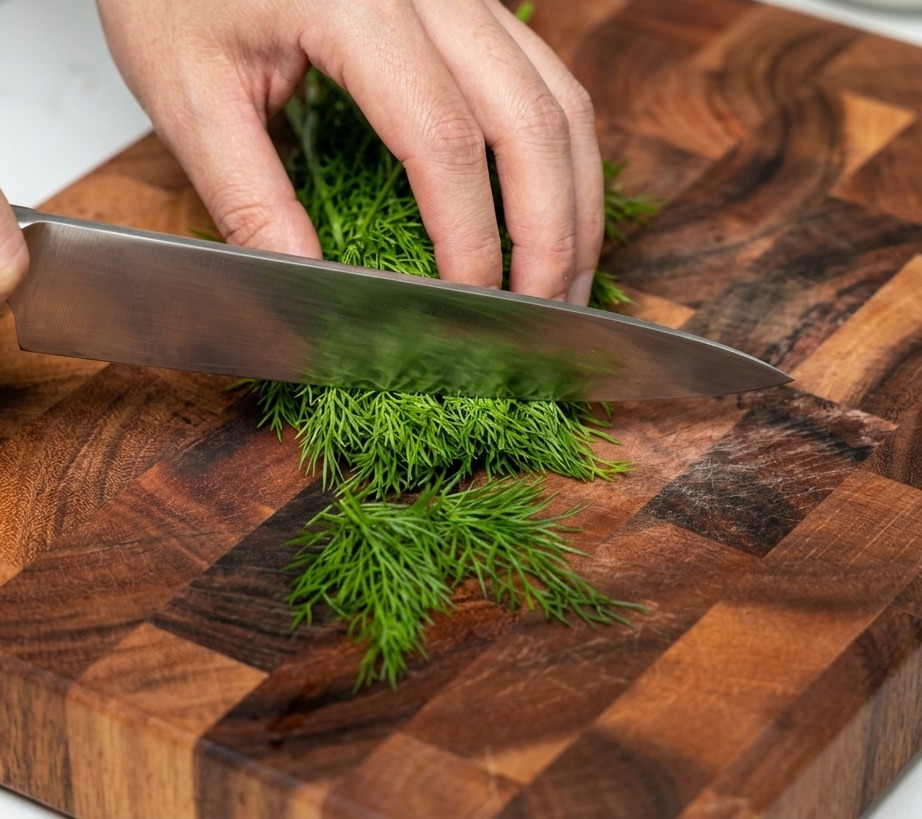
Finely chop a bunch of fresh dill. This herb is the classic partner for salmon, offering a sweet, grassy aroma that cuts through the creaminess of the dish and adds a beautiful touch of green.
Tip: Use only the feathery leaves and very thin stems; the thicker stems can be quite tough in a pasta sauce. - 7Sear the salmon
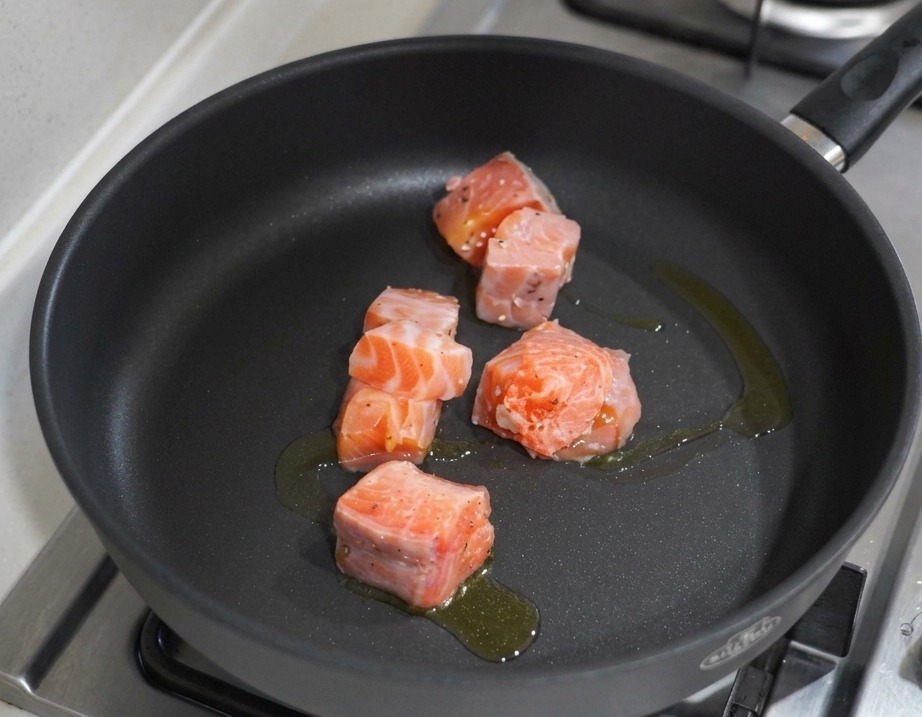
Heat a splash of olive oil in a non-stick pan over medium-low heat. Place the seasoned salmon cubes in the pan and sear them until the undersides are golden brown and crispy. Work in batches if necessary to avoid crowding the pan.
Tip: Do not move the salmon too much once it hits the pan; letting it sit undisturbed for a minute or two is key to developing that perfect golden crust. - 8Sauté the aromatics
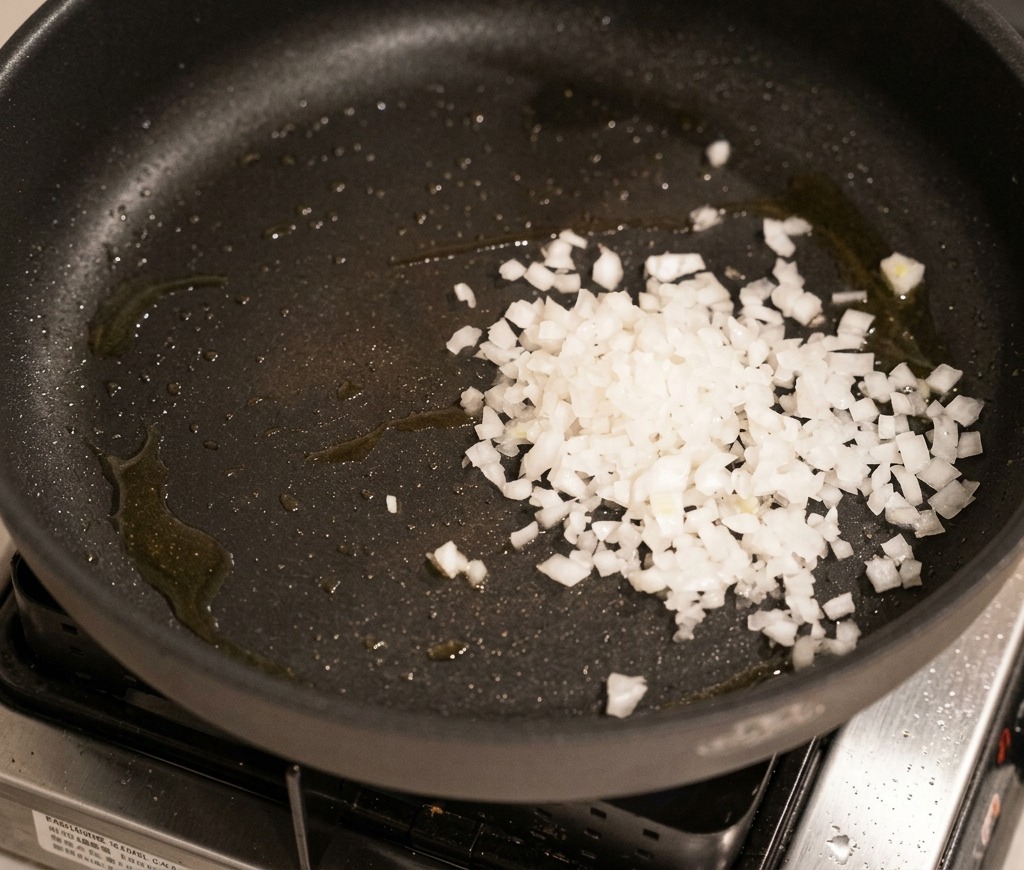
After removing the seared salmon, do not wash the pan. Use the remaining oil and salmon essence to sauté the diced onions over low heat. Cook them gently until they become translucent and soft, drawing out their natural sweetness.
Tip: Cooking on low heat prevents the onions from browning too quickly, ensuring they soften properly without becoming bitter. - 9Add the garlic
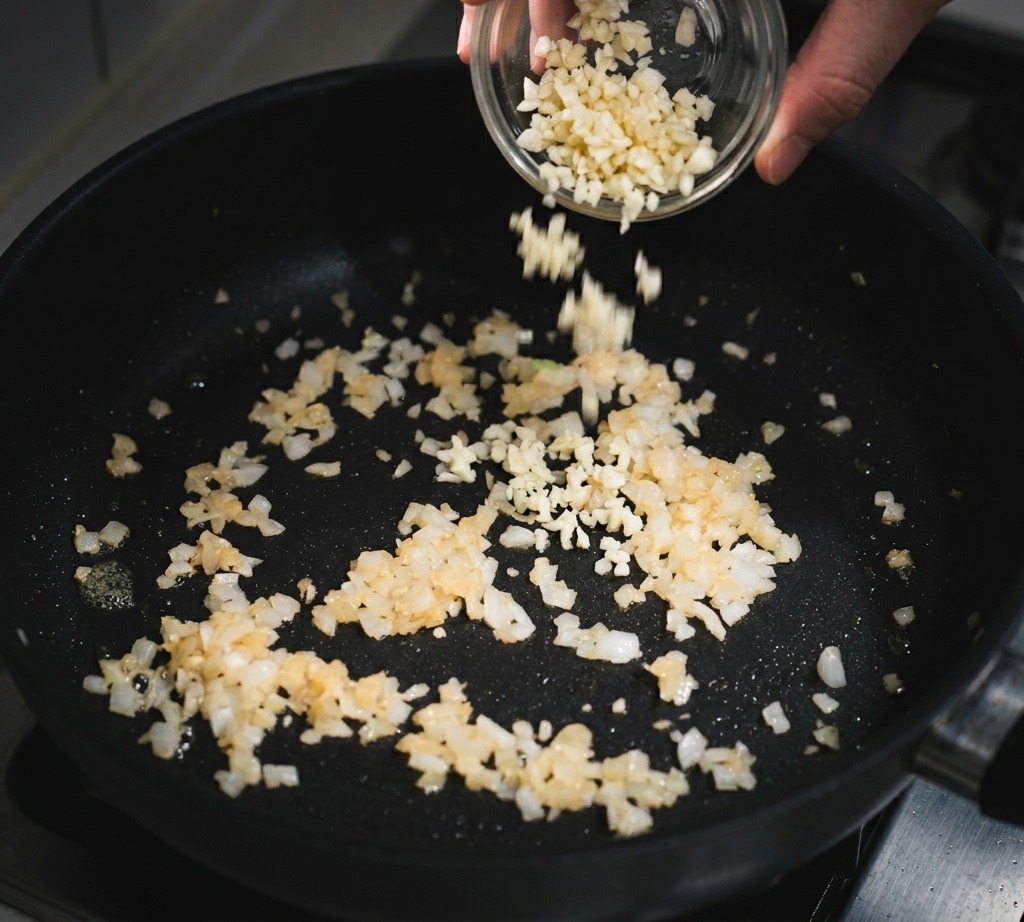
Add the minced garlic to the pan with the softened onions. Stir them together for about a minute or until the garlic becomes fragrant. Be careful not to burn the garlic, as it can turn bitter and ruin the sauce if overcooked.
Tip: Add the garlic only after the onions are soft, as garlic cooks much faster and can burn while youre waiting for the onions to finish. - 10Deglaze with white wine
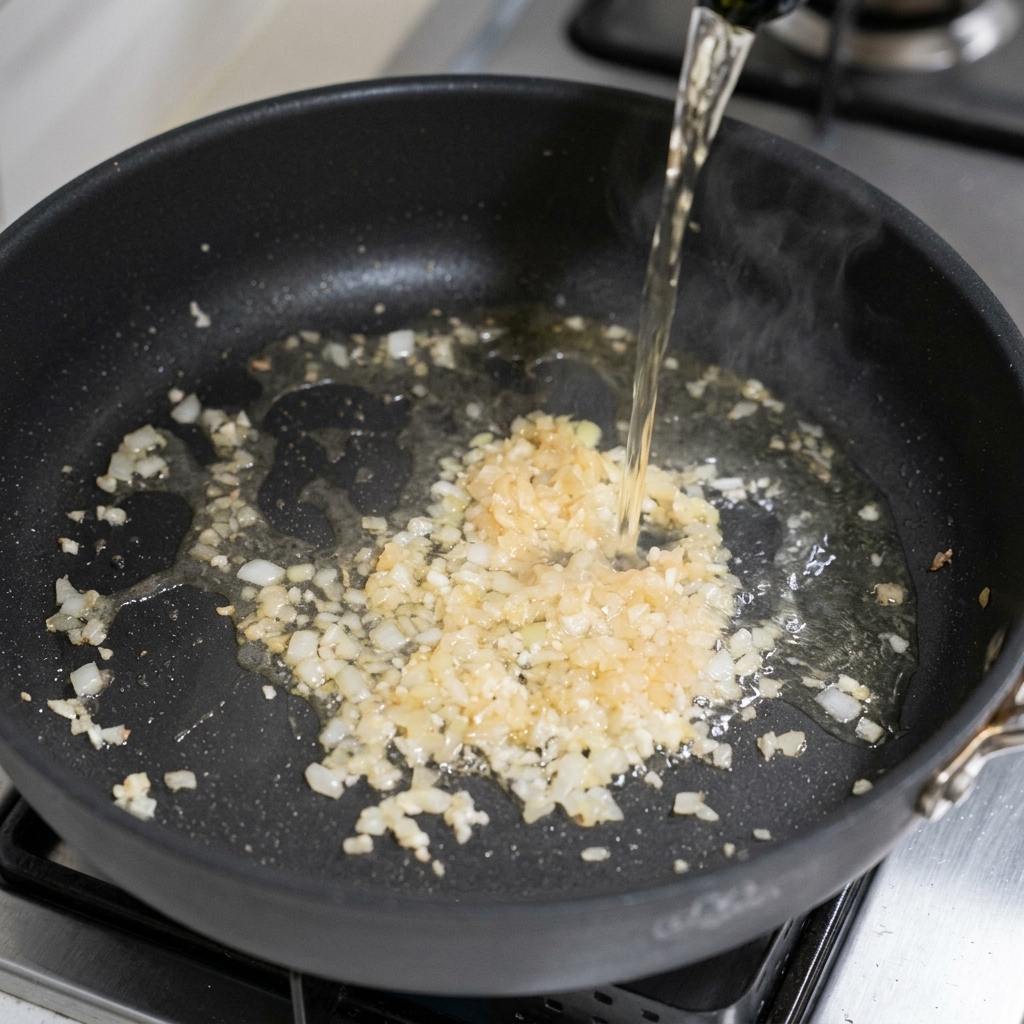
Pour a splash of white wine into the pan to deglaze the surface. Use a spatula to scrape up any browned bits stuck to the bottom of the pan—these bits are packed with concentrated flavor. Allow the wine to simmer until the alcohol aroma evaporates.
Tip: Use a dry white wine like Pinot Grigio or Sauvignon Blanc for a clean, acidic profile that balances the richness of the cream sauce. - 11Form the cream sauce base
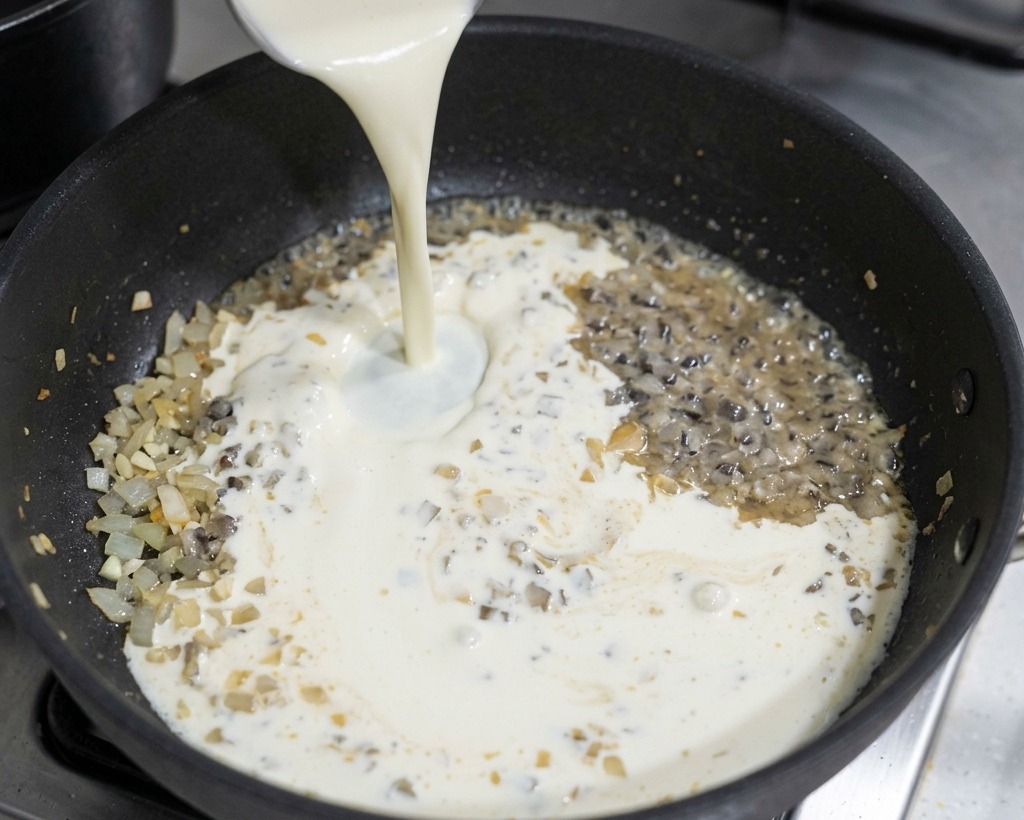
Pour the heavy cream into the pan with the sautéed onions and white wine. Stir gently to combine the ingredients as the sauce begins to thicken. Season with a little more salt and pepper to build the flavor profile of the base.
Tip: Keep the heat on medium-low to ensure the cream thickens gradually without boiling over or curdling. - 12Add the cooked linguine
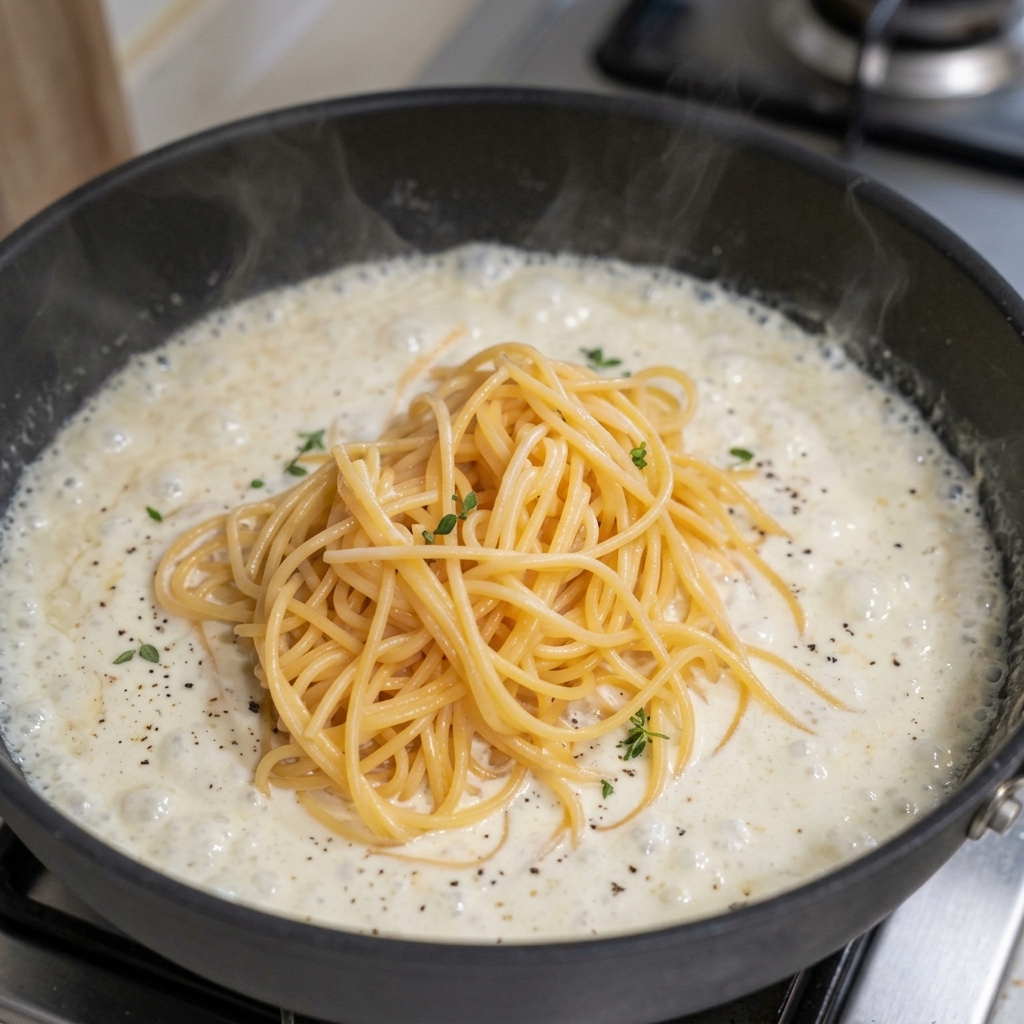
Once the cream sauce is bubbling and has reached a slightly thickened consistency, add your al dente linguine directly into the pan. Toss the pasta thoroughly to ensure every strand is well-coated in the rich sauce.
Tip: If the sauce becomes too thick after adding the pasta, add a splash of reserved pasta water to reach your desired consistency. - 13Add fresh lemon zest
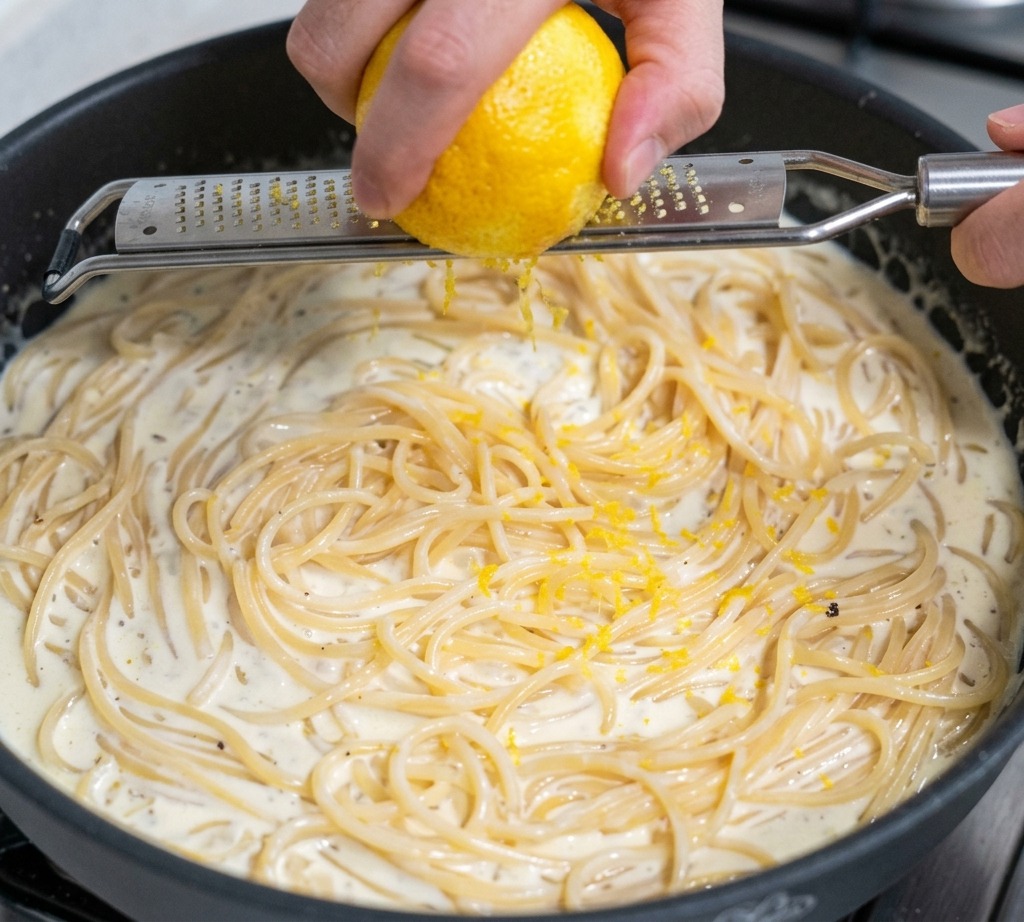
Grate fresh lemon zest directly over the pasta in the pan. The zest provides a bright, citrusy aroma that perfectly complements the richness of the cream and the savory flavor of the salmon.
Tip: Be careful to only grate the yellow outer layer of the lemon; the white pith underneath is bitter and should be avoided. - 14Incorporate the seared salmon
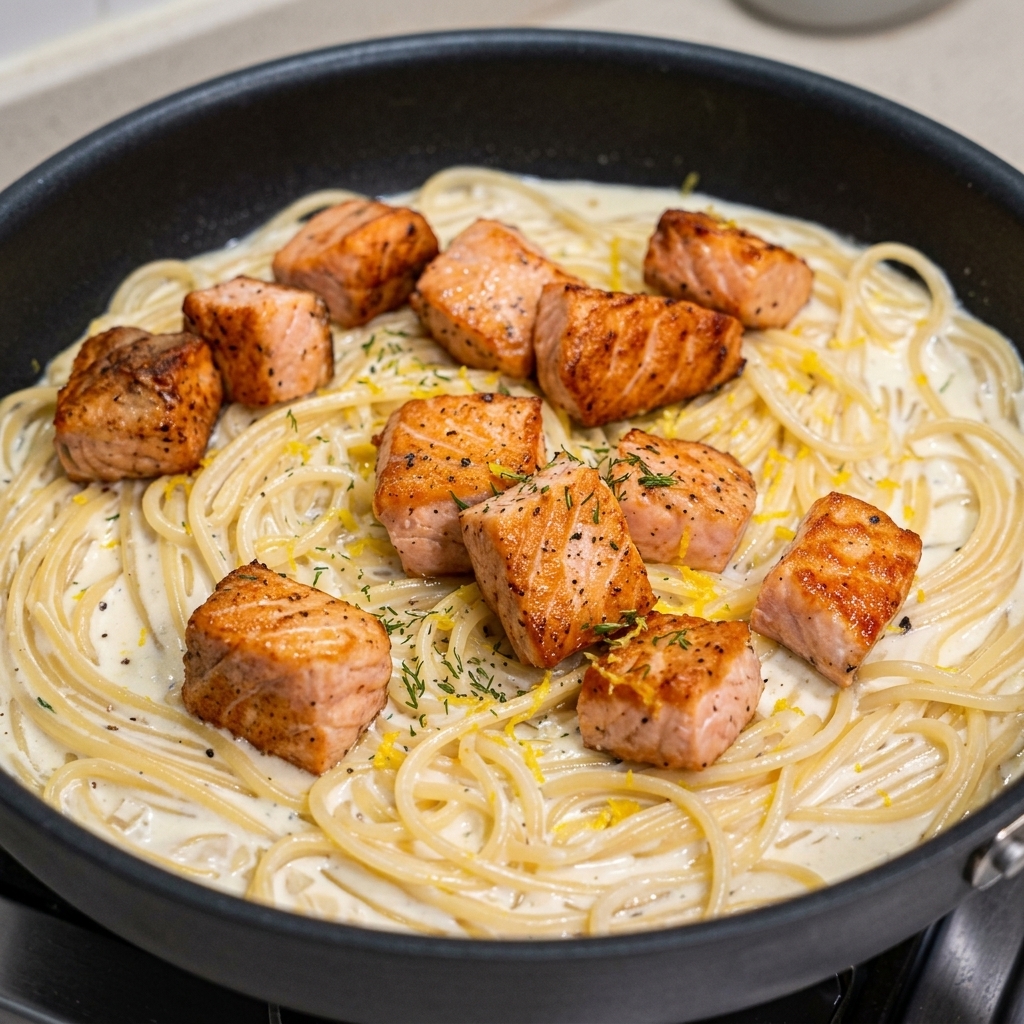
Return the golden-brown seared salmon cubes to the pan, placing them gently on top of the cream-coated pasta. Stir lightly to distribute the pieces without breaking the delicate fish.
Tip: Wait until the very end to add the salmon back so it stays crispy on the outside while remaining tender inside. - 15Grate fresh Parmesan cheese
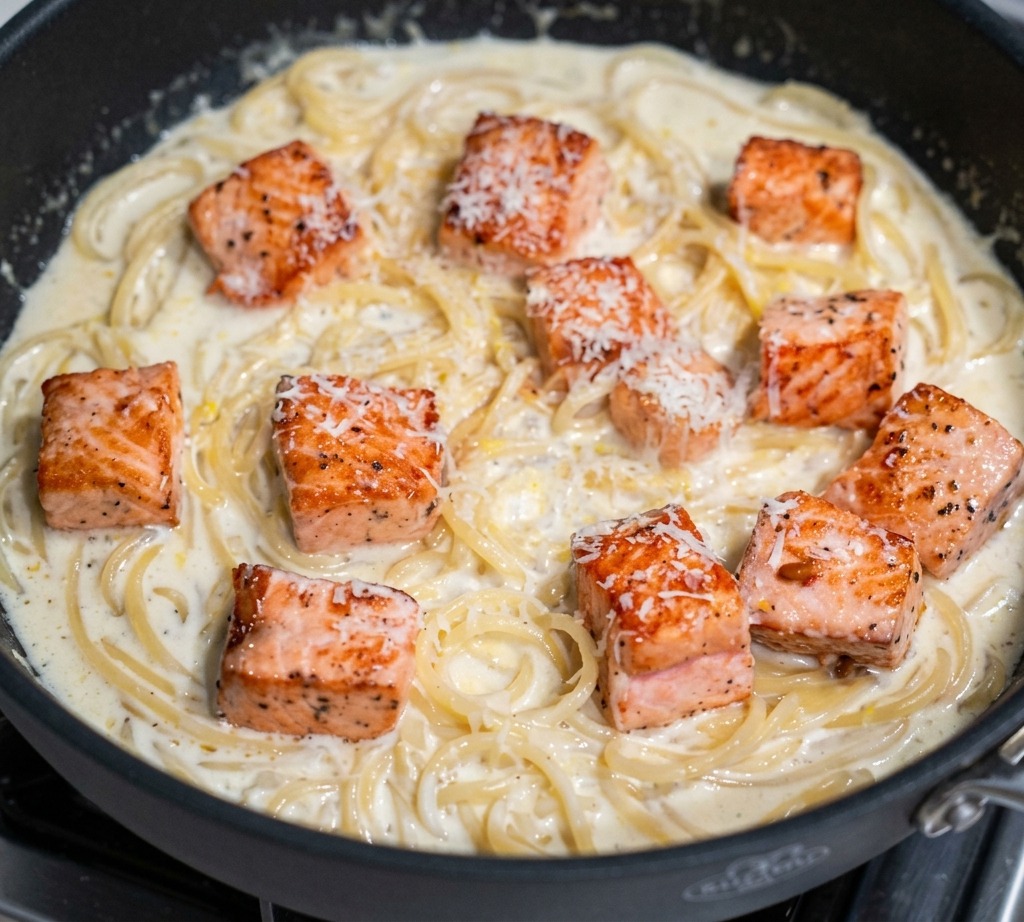
Finish the dish by grating a generous amount of fresh Parmesan cheese over the salmon and pasta. The cheese will melt into the sauce, adding a savory depth and a slightly salty, nutty finish.
Tip: Always use a block of high-quality Parmesan and grate it fresh for the best melting texture and flavor. - 16Garnish with fresh dill
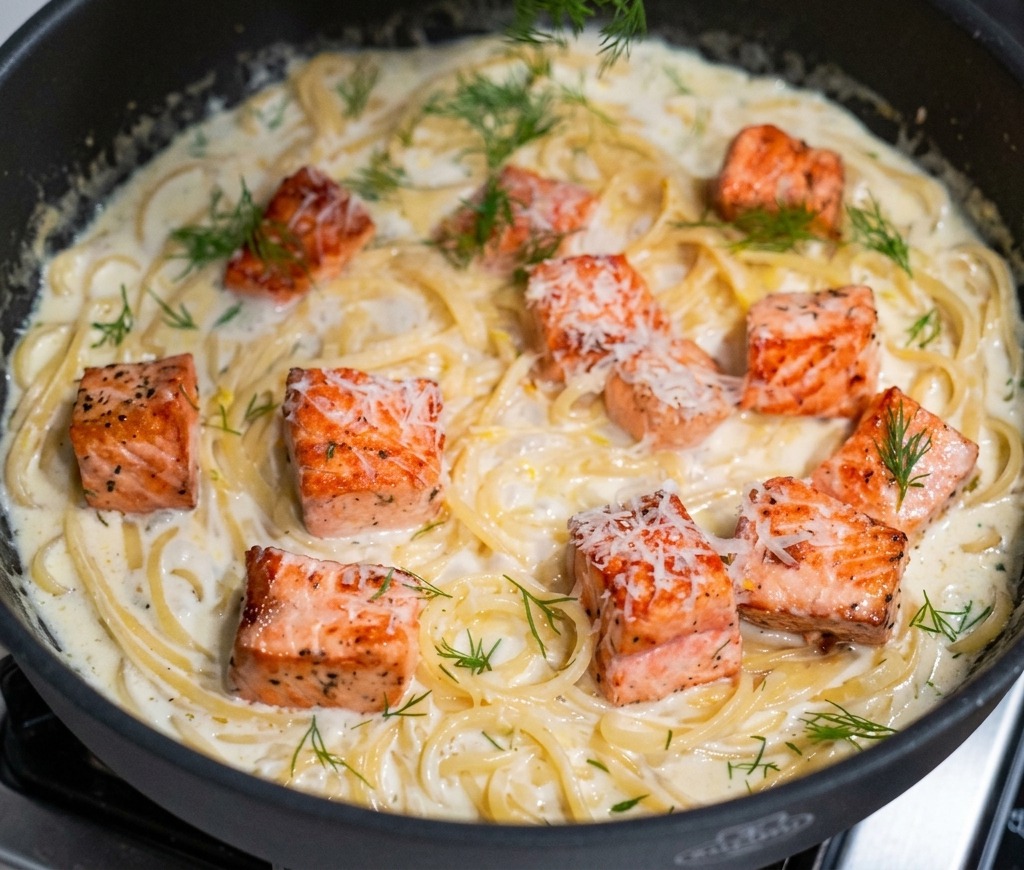
Sprinkle a handful of freshly chopped dill over the entire pan. Dill is the ideal herb pairing for salmon, providing a fresh, aromatic finish that rounds out the creamy pasta dish.
Tip: If dill is not available, fresh parsley or chives can be used as a substitute for a similar burst of color and freshness.