Low-Fat Salmon & Kimchi Spicy Cream Pasta
Onsen Egg
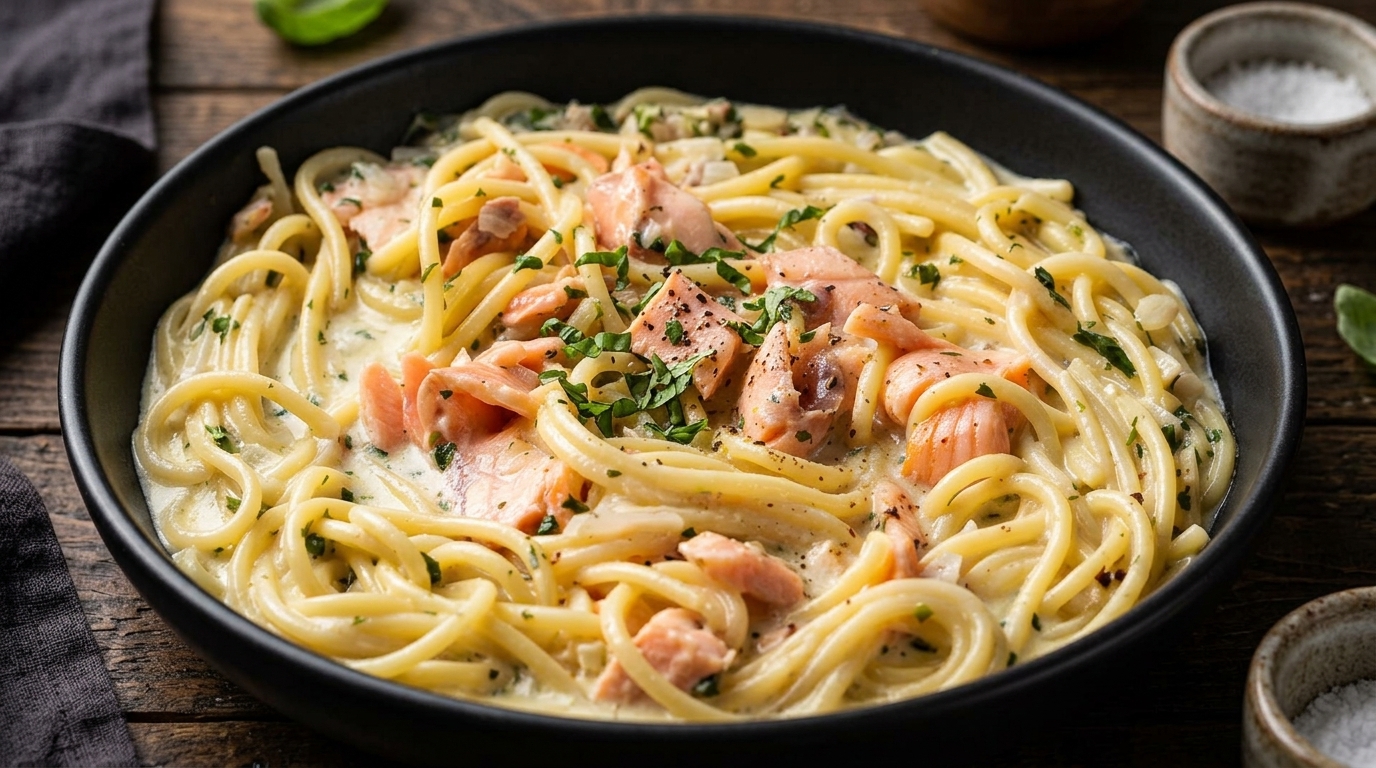
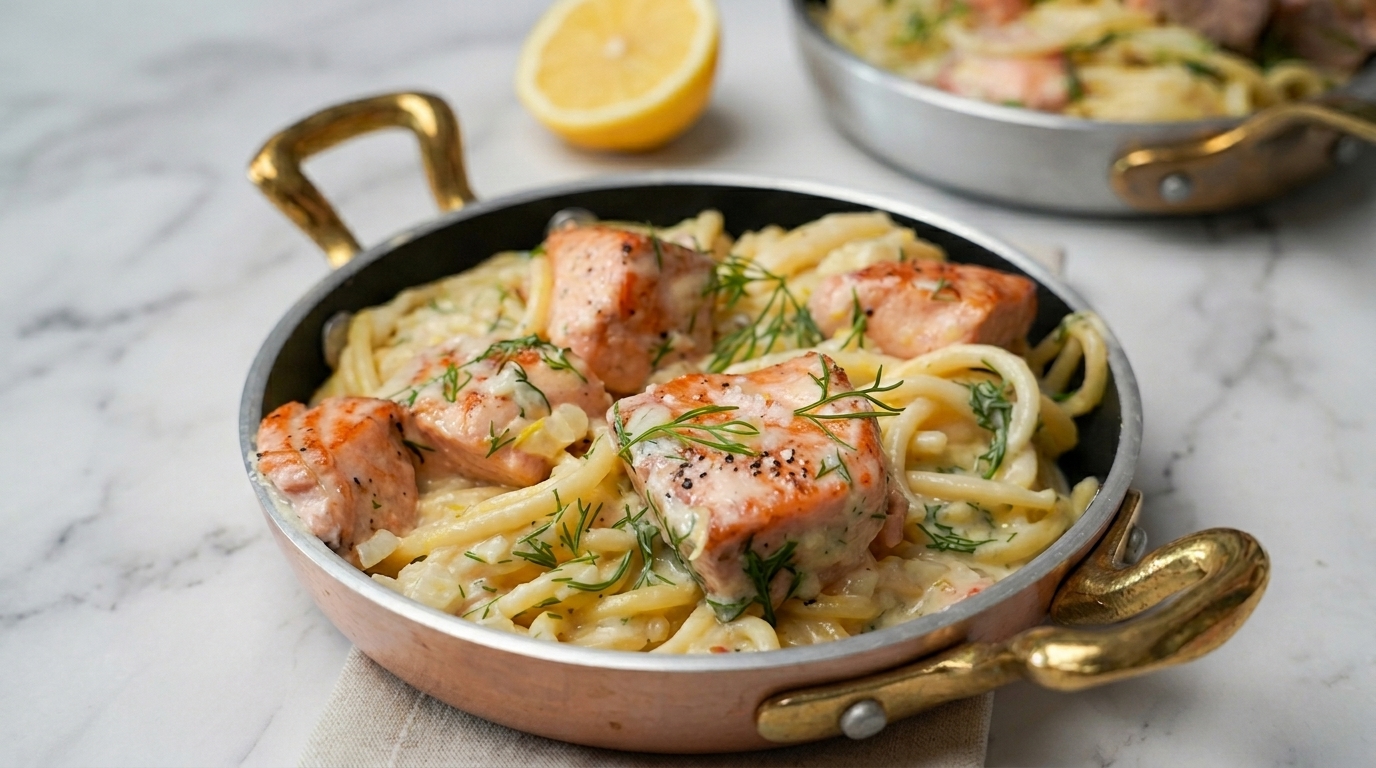
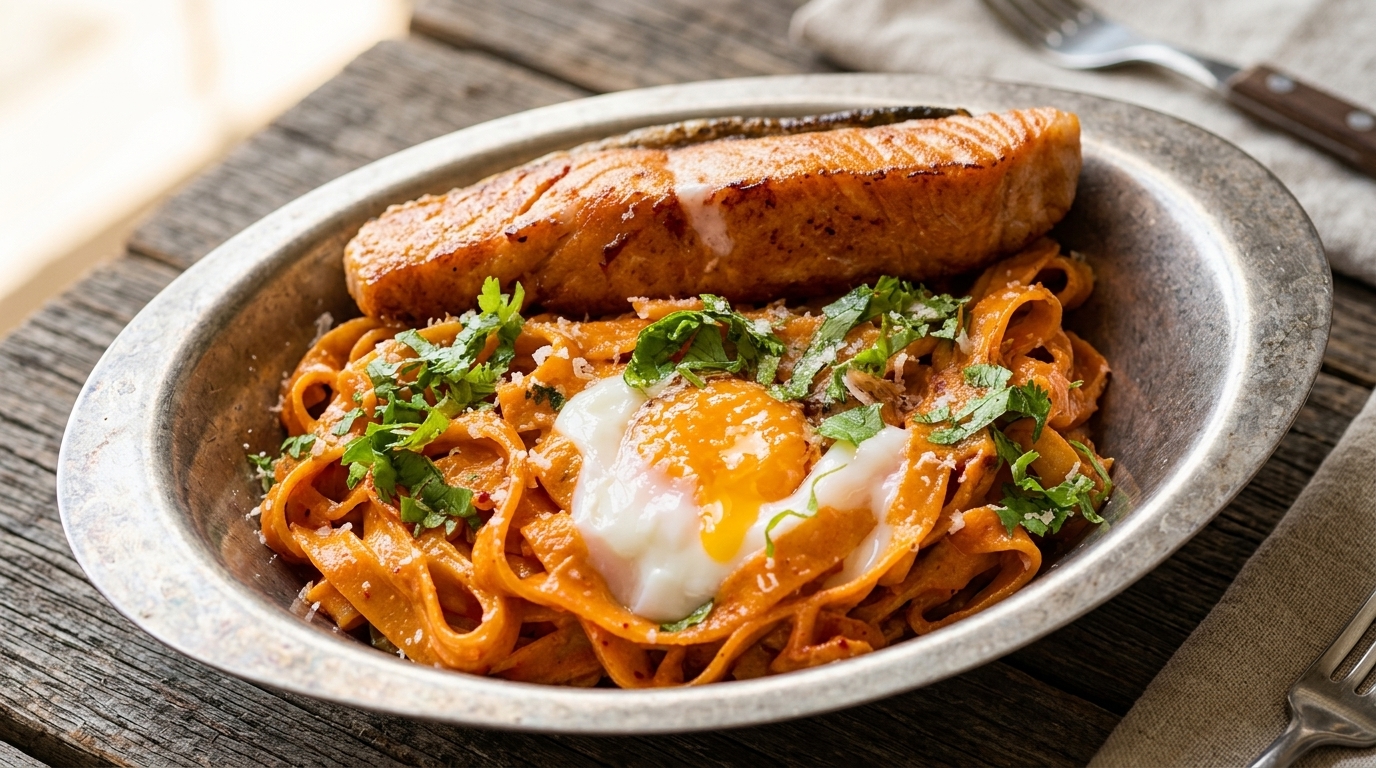
A light fusion of buttery seared salmon and tangy kimchi tossed in a silky gochujang cream sauce and topped with a luxurious runny onsen egg
This dish is a creative fusion of Korean flavors and Italian technique utilizing fermented kimchi and gochujang to cut through the richness of the salmon. By substituting much of the heavy cream with milk we achieve a velvety texture that is significantly lighter than traditional cream-based pastas. The addition of a soft-boiled onsen egg provides a naturally rich finish that perfectly coats every ribbon of fettuccine.
Ingredients
- 1 fillet salmon cite: 1
- 200 g fettuccine pasta cite: 1
- 14 cup red onion, finely chopped cite: 1
- 12 cup fermented kimchi, chopped cite: 1
- 1 tbsp Korean chili paste (gochujang) cite: 1
- 12 cup milk cite: 1
- 2 tbsp light cream cite: 1
- 1 tsp smoked paprika cite: 1
- 12 tsp garlic powder or garlic salt cite: 1
- to taste black pepper cite: 1
- 1 pasteurized egg (for onsen egg) cite: 1
- to taste fresh cilantro cite: 1
- optional fresh cheese, grated cite: 1
Instructions
- 1Prep the aromatics
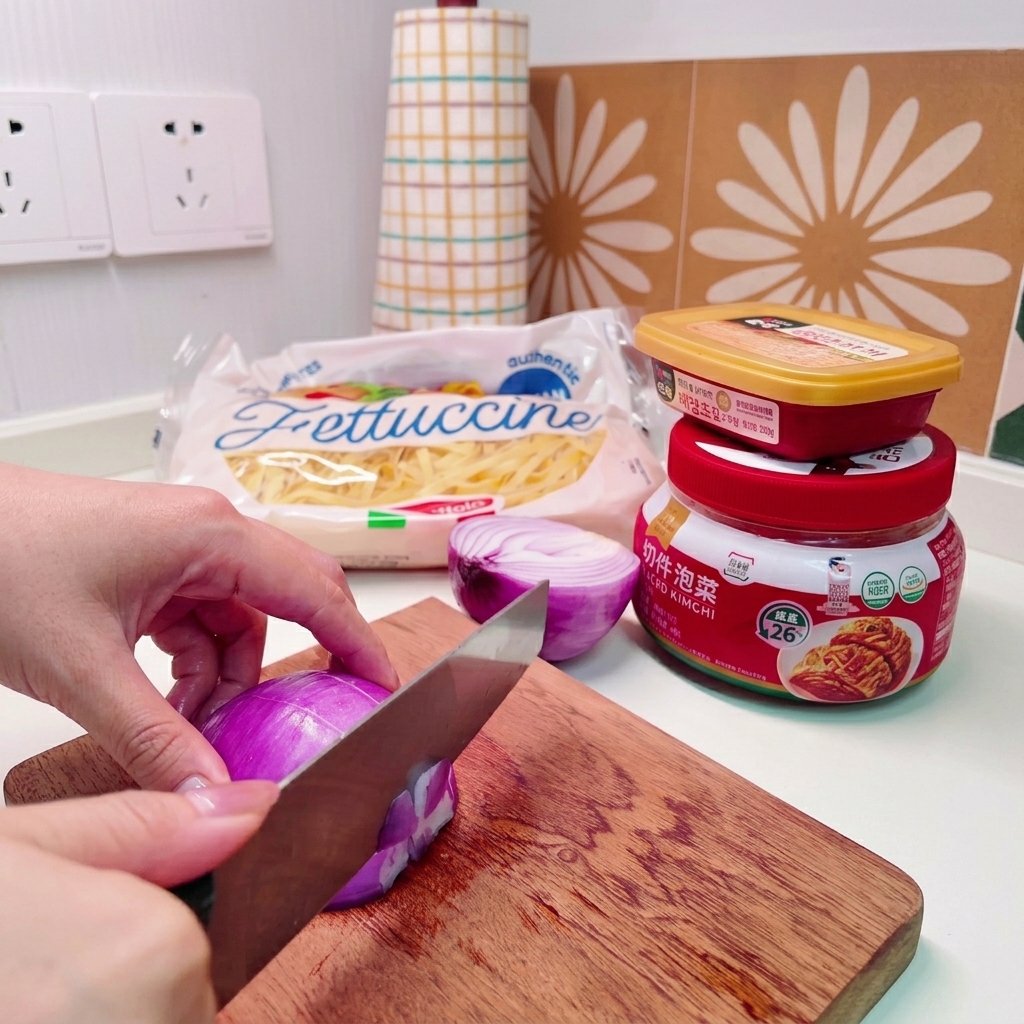
Begin by finely chopping the red onion. Using a sharp chefs knife, slice the onion into small, uniform pieces on a wooden cutting board. This will ensure the onion cooks evenly and distributes its flavor throughout the pasta sauce.
Tip: Keep the root end of the onion intact while slicing to hold the layers together, making it easier to dice safely. - 2Chop the kimchi
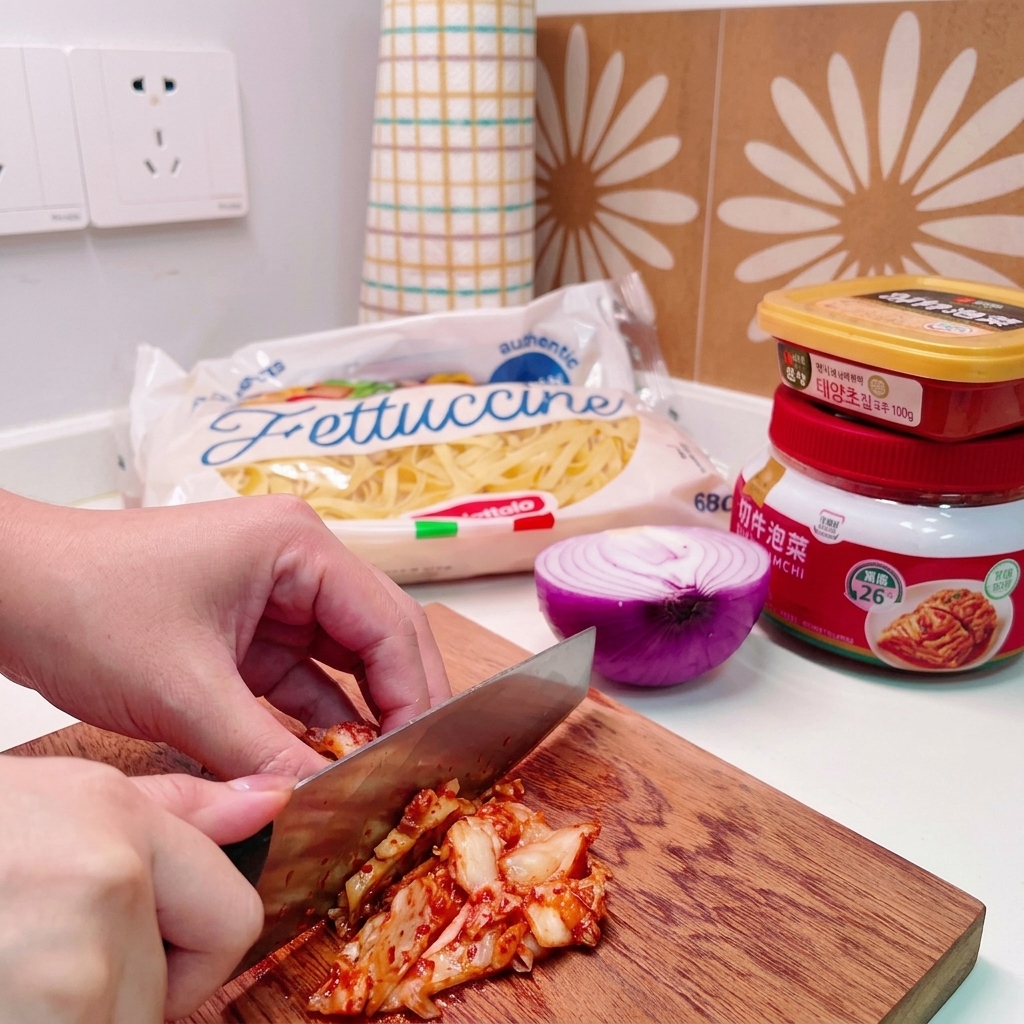
Take the fermented kimchi and chop it into small, bite-sized bits. The kimchi adds a unique tang and spicy kick to the cream sauce, balancing the richness of the salmon and milk mixture.
Tip: If your kimchi is very juicy, give it a light squeeze before chopping to prevent too much liquid from thinning out your sauce later. - 3Prepare the spicy cream sauce
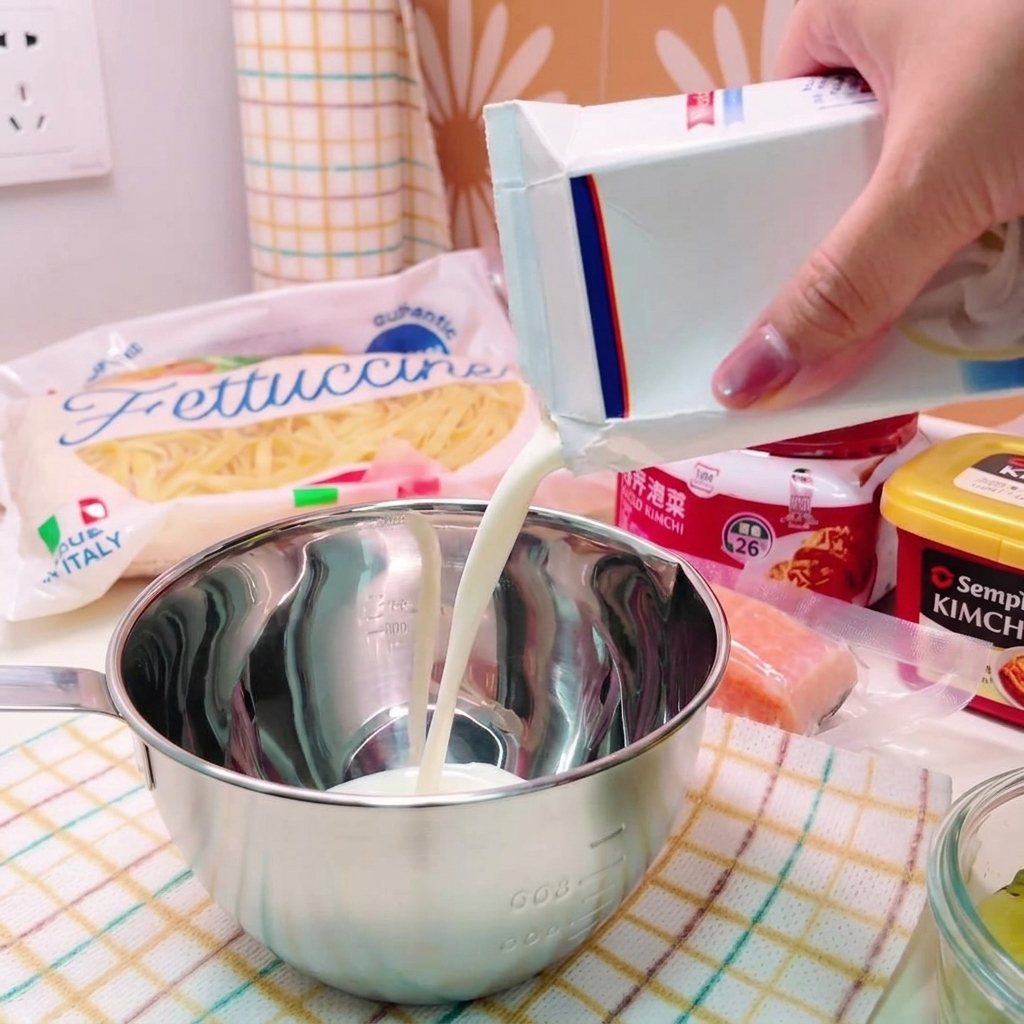
In a stainless steel mixing bowl, combine the Korean chili paste (gochujang), black pepper, smoked paprika, and garlic powder. Pour in the milk and a small amount of light cream, whisking them together until the paste is fully dissolved and the sauce is smooth.
Tip: To keep the calories low as planned, use a higher ratio of milk to light cream. - 4Sear the salmon
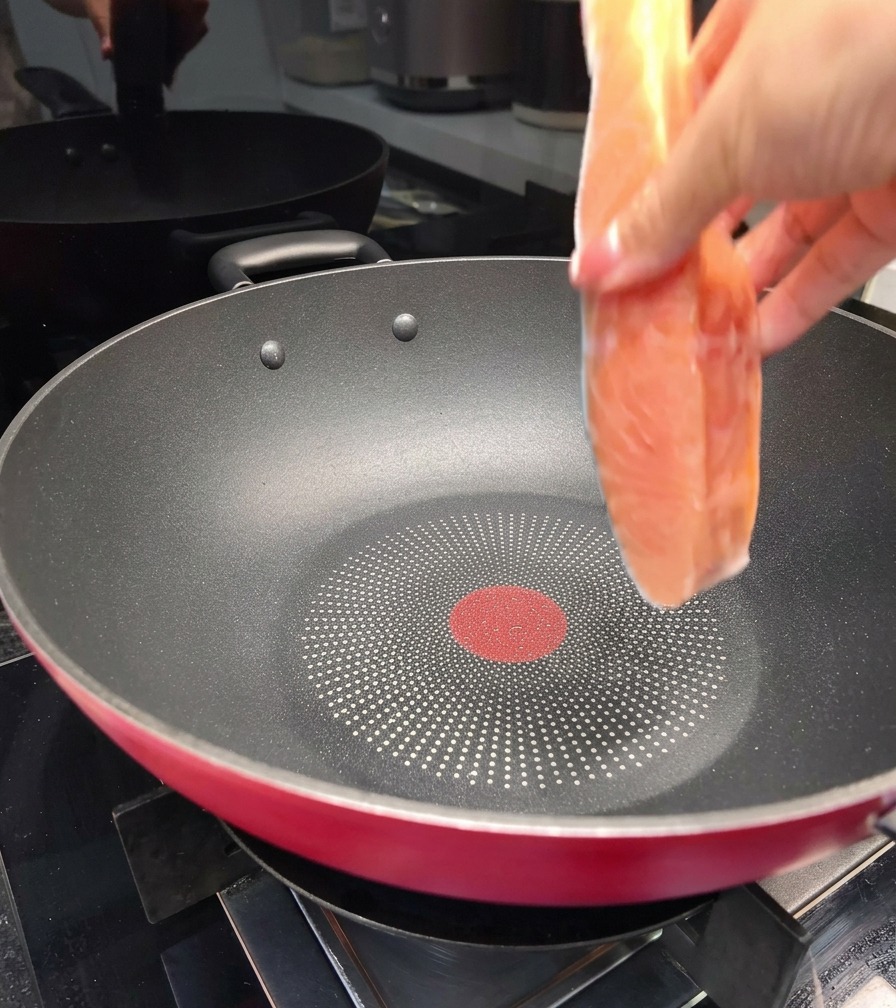
Heat a non-stick frying pan over medium-high heat. Once hot, place the salmon fillet into the dry pan, skin-side down. Sear the fish until it is fully cooked through and the skin is crispy, then remove it from the pan and set it aside.
Tip: Dont wash the pan after removing the salmon; the remaining oils will add extra flavor when you stir-fry the vegetables. - 5Boil the pasta
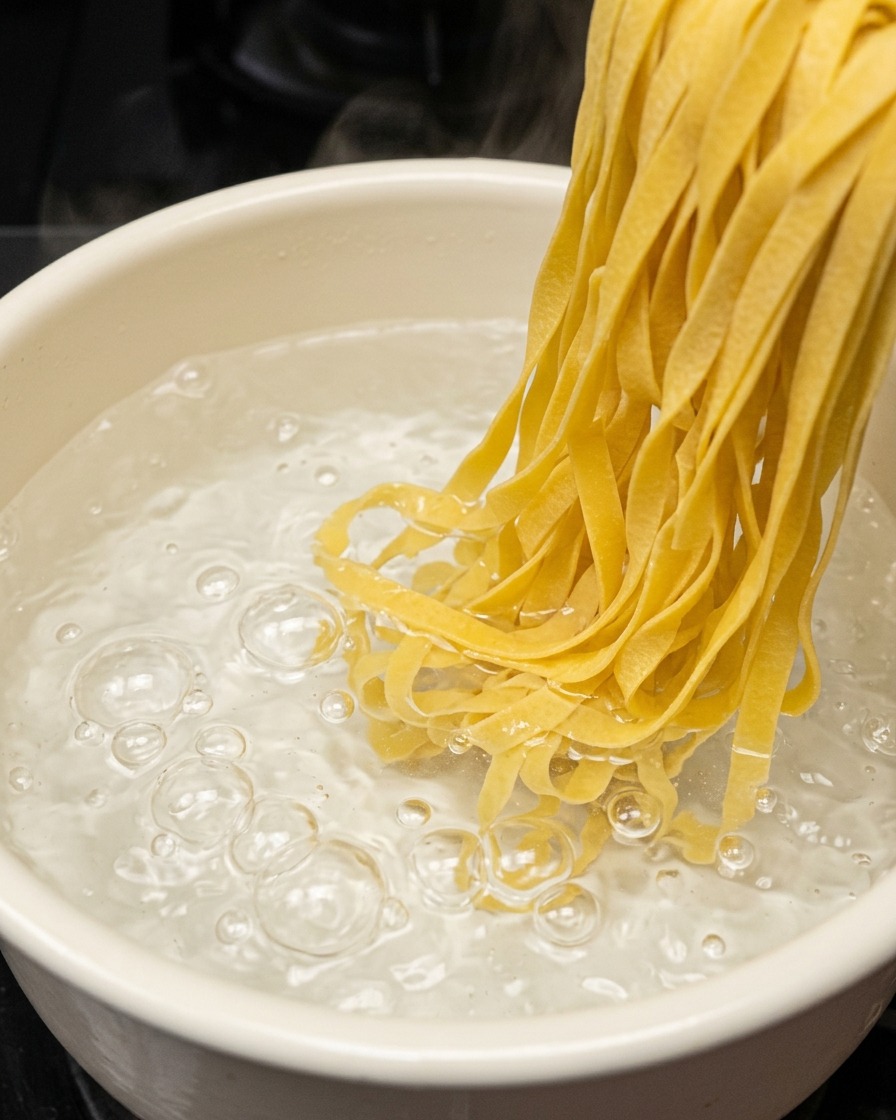
Bring a pot of water to a rolling boil and add a generous pinch of salt. Add the dry fettuccine pasta ribbons to the water and cook according to the package instructions until al dente.
Tip: Save a small cup of the pasta boiling water before draining; it can be used to loosen the sauce later if it becomes too thick. - 6Sauté the aromatics
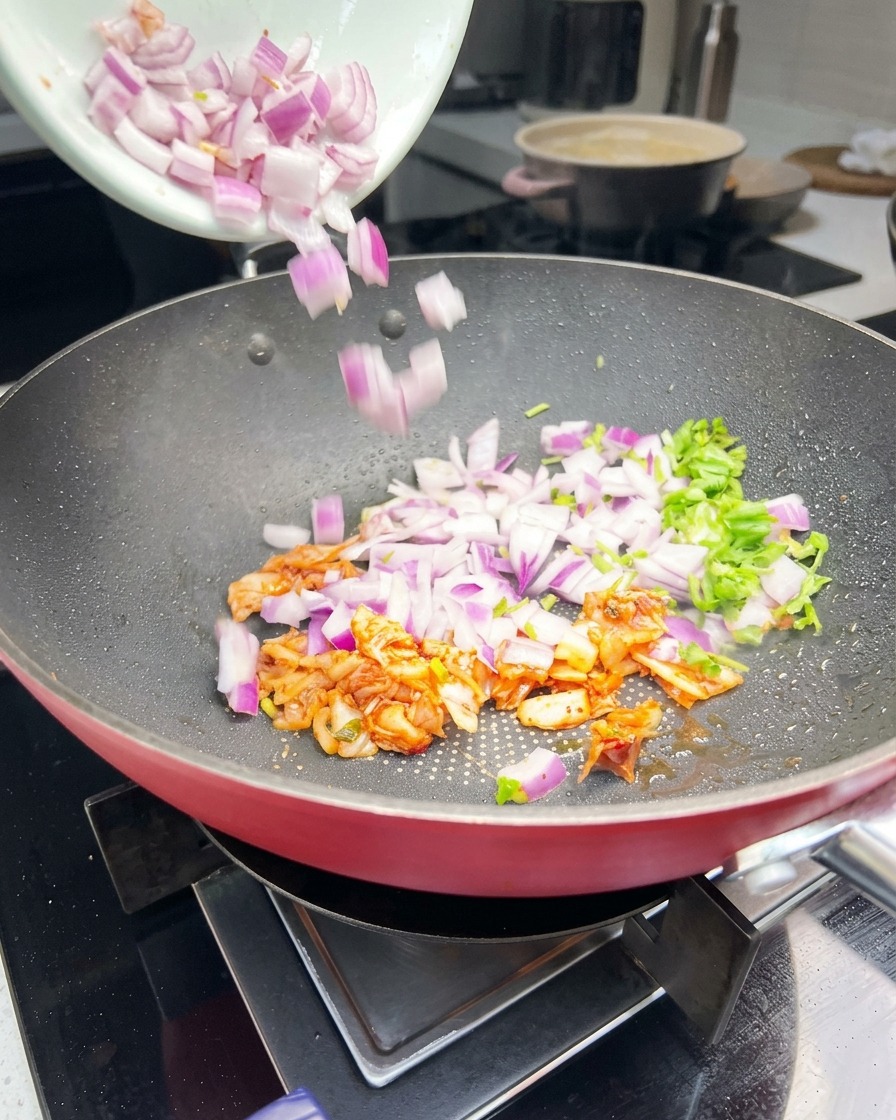
Using the same pan you used for the salmon, toss in the chopped red onions, cilantro, and kimchi. Stir-fry them together in the residual salmon juices until the onions are translucent and the mixture is fragrant.
Tip: If the pan seems too dry, add a tiny splash of water or oil to help the vegetables soften without burning. - 7Simmer the spicy cream sauce
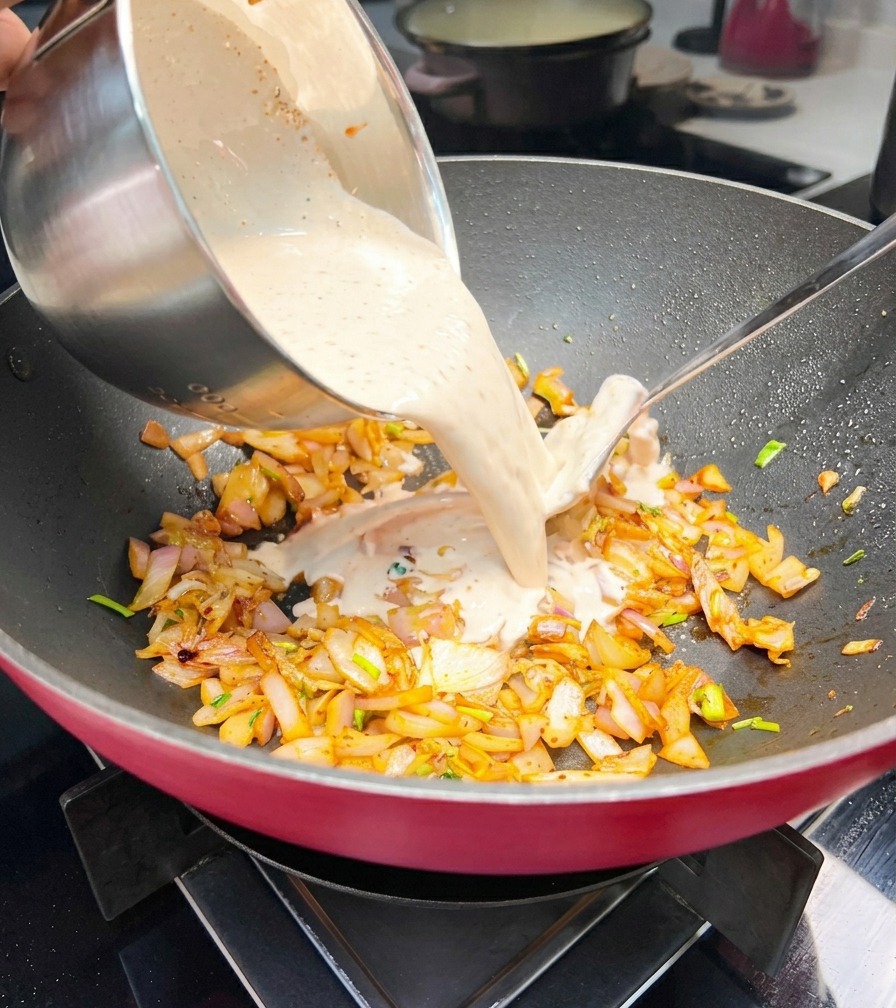
Pour the prepared sauce mixture—a blend of light cream, milk, and Korean chili paste—into the pan over the sautéed onions and kimchi. Stir the mixture gently over medium heat until it begins to bubble and the flavors meld into a rich, creamy pink base.
Tip: Using a combination of milk and light cream helps keep the dish lower in calories while still achieving a smooth, velvety texture. - 8Incorporate the pasta
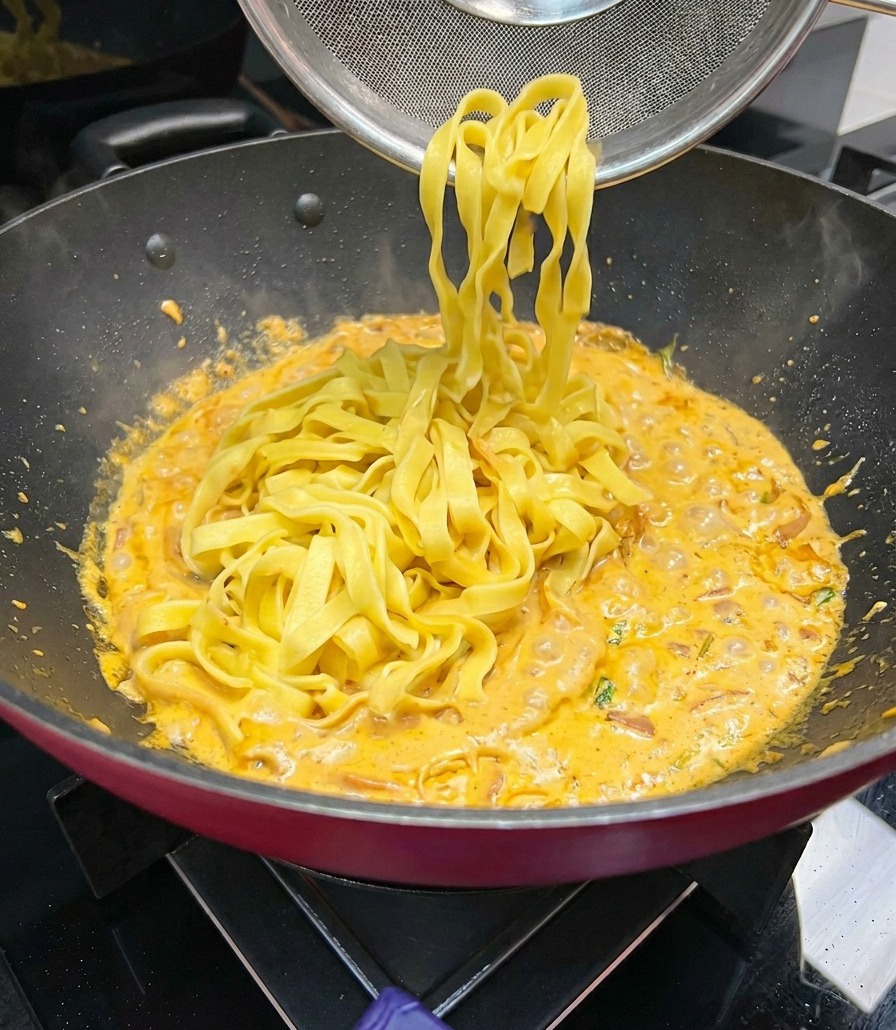
Add the freshly boiled pasta ribbons directly into the bubbling cream sauce. Toss the noodles thoroughly to ensure every strand is evenly coated in the spicy sauce, allowing it to simmer for a minute so the pasta absorbs the savory flavors.
Tip: Adding a small splash of pasta cooking water can help the sauce emulsify and cling better to the noodles. - 9Garnish with an onsen egg
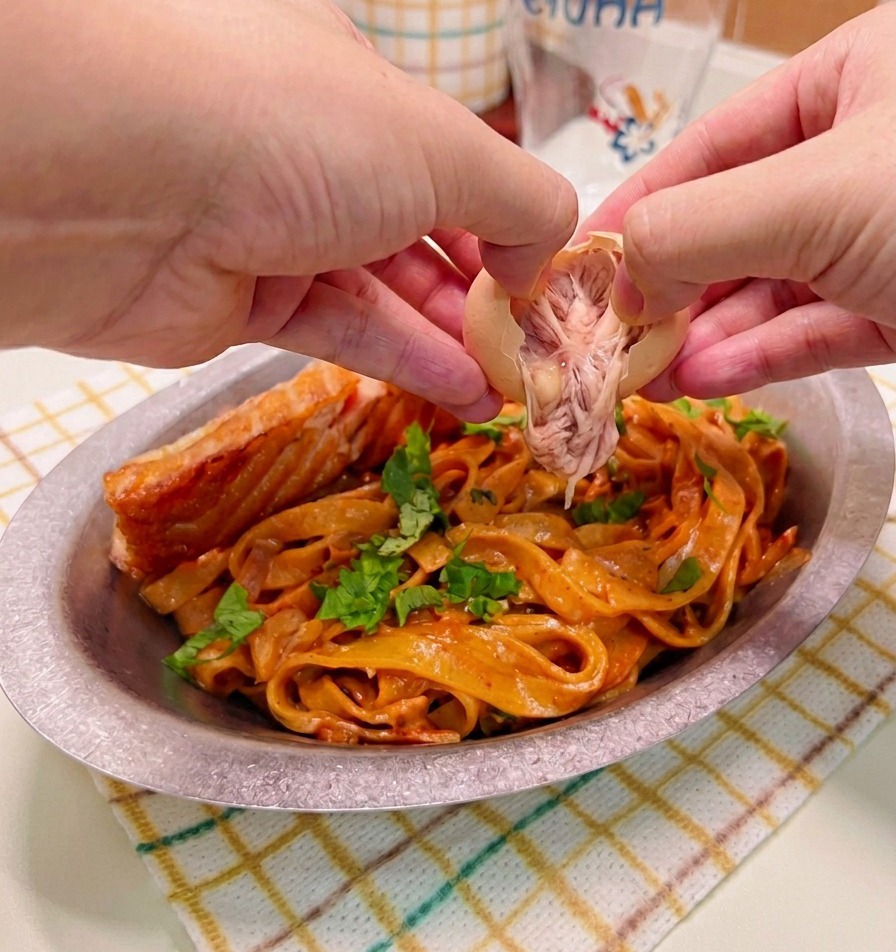
Carefully crack and place a soft-boiled onsen egg onto the center of the plated salmon and pasta. The delicate, runny yolk acts as an additional rich sauce that adds a luxurious depth to the dish when broken open and mixed in.
Tip: For a perfect onsen egg, soak it in boiled water with the heat turned off for exactly eight minutes, ensuring it is completely submerged.