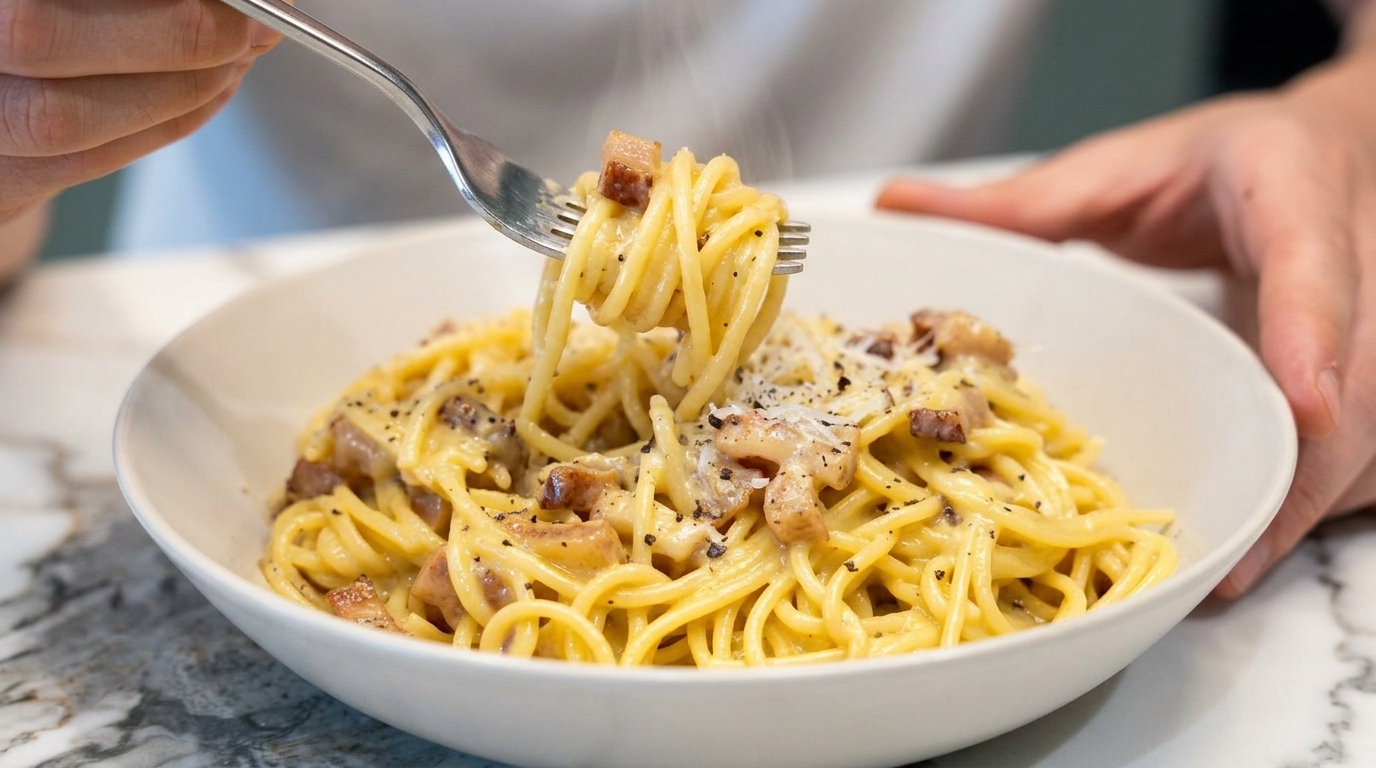
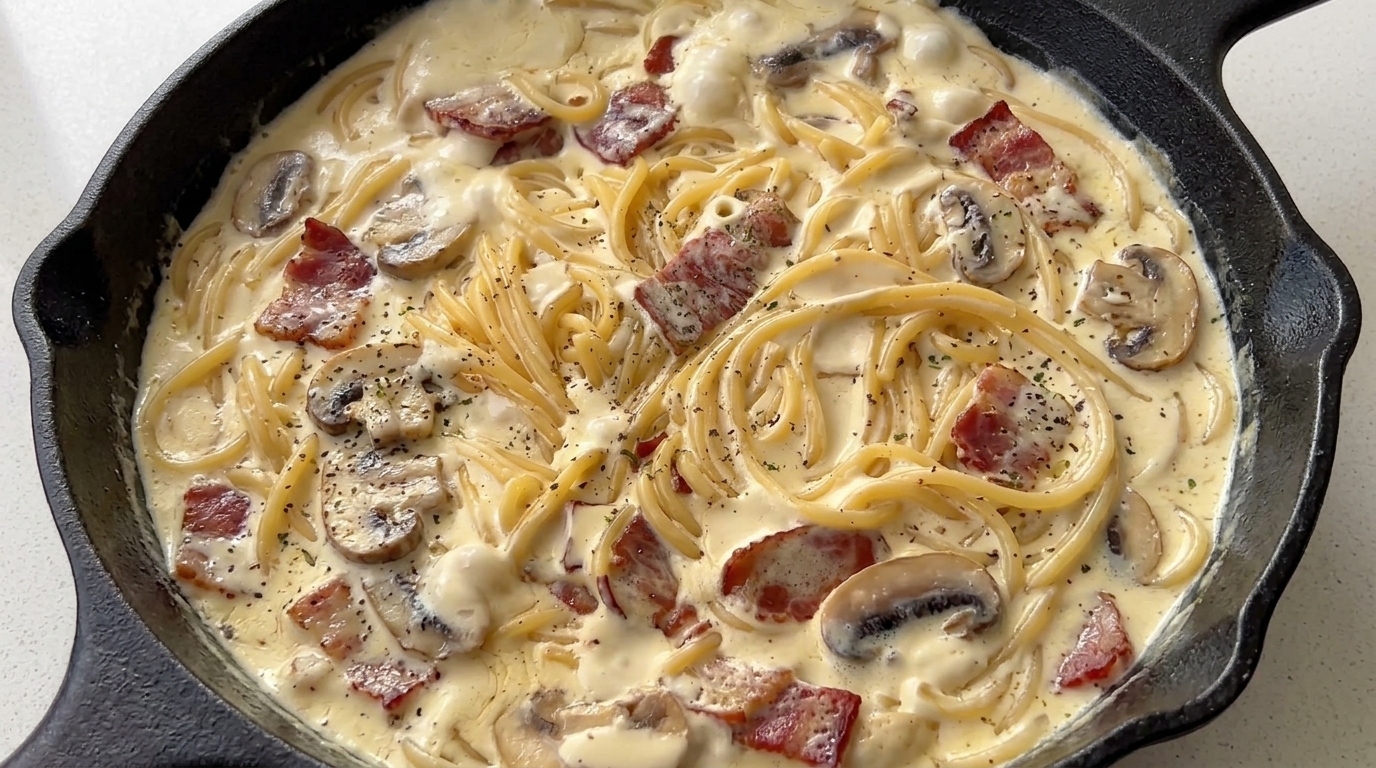
Creamy Spaghetti Carbonara
Crispy Bacon
A luxurious take on the Roman classic featuring a velvety egg yolk sauce, smoky bacon, and a hint of butter for a restaurant-quality finish in under 20 minutes.
While traditional Italian carbonara relies strictly on guanciale and pecorino, this popular Western variation uses accessible bacon and a touch of butter for added silkiness. The key to its success lies in the emulsification process, where starchy pasta water and tempered egg yolks create a glossy, golden coating without the need for heavy cream.
Ingredients
- 200 g spaghetti
- 3 egg yolks
- 100 g bacon, sliced
- 50 g grated parmesan or pecorino cheese
- 12 onion, diced
- 2 cloves garlic, minced
- 10 g butter
- 1 tbsp olive oil
- 1 bay leaf
- to taste black pepper
- to taste salt
- optional chopped green onions and microgreens
Instructions
- 1Prepare the aromatic pasta water
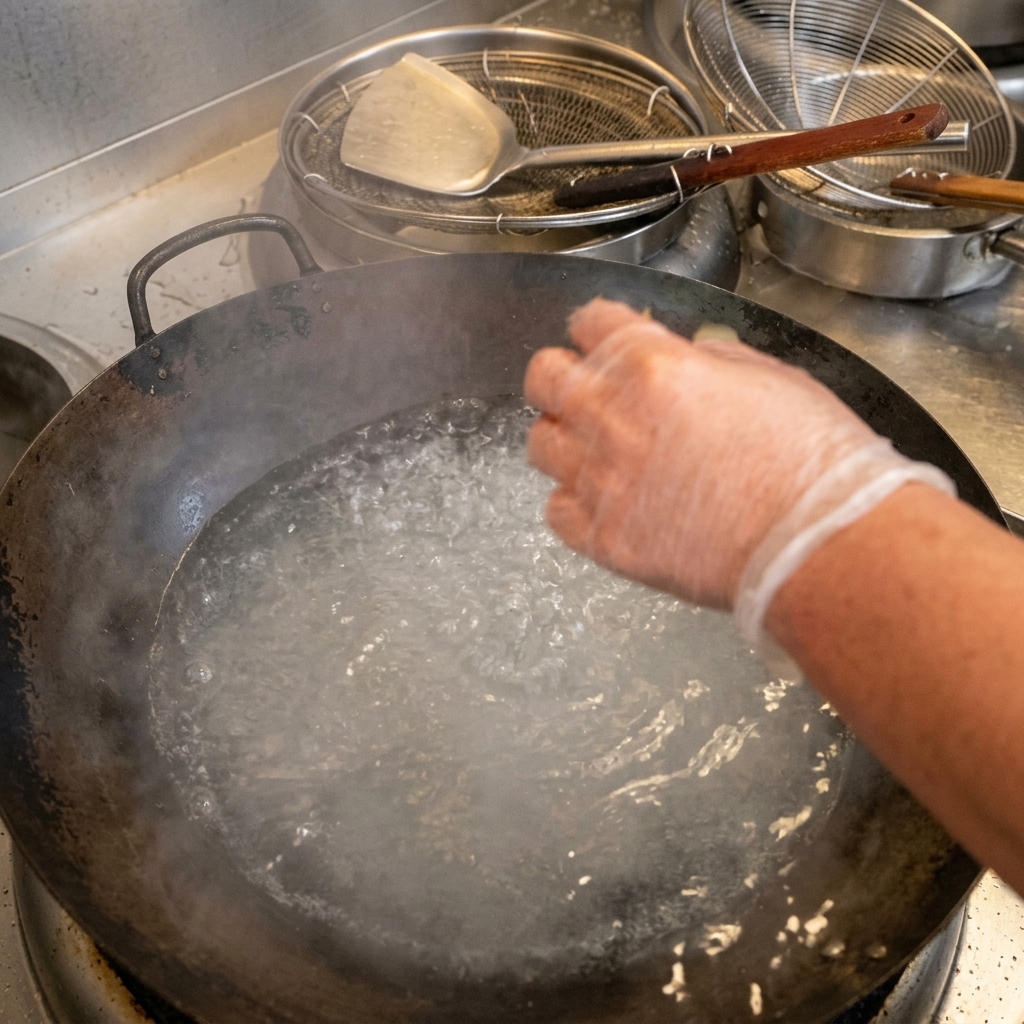
Bring a pot of water to a rolling boil over medium-high heat. Add in a pat of butter, a pinch of salt, and a bay leaf to build a flavorful base for cooking the pasta.
Tip: Adding aromatics and salt to the water ensures the pasta absorbs flavor as it rehydrates and cooks. - 2Boil the pasta
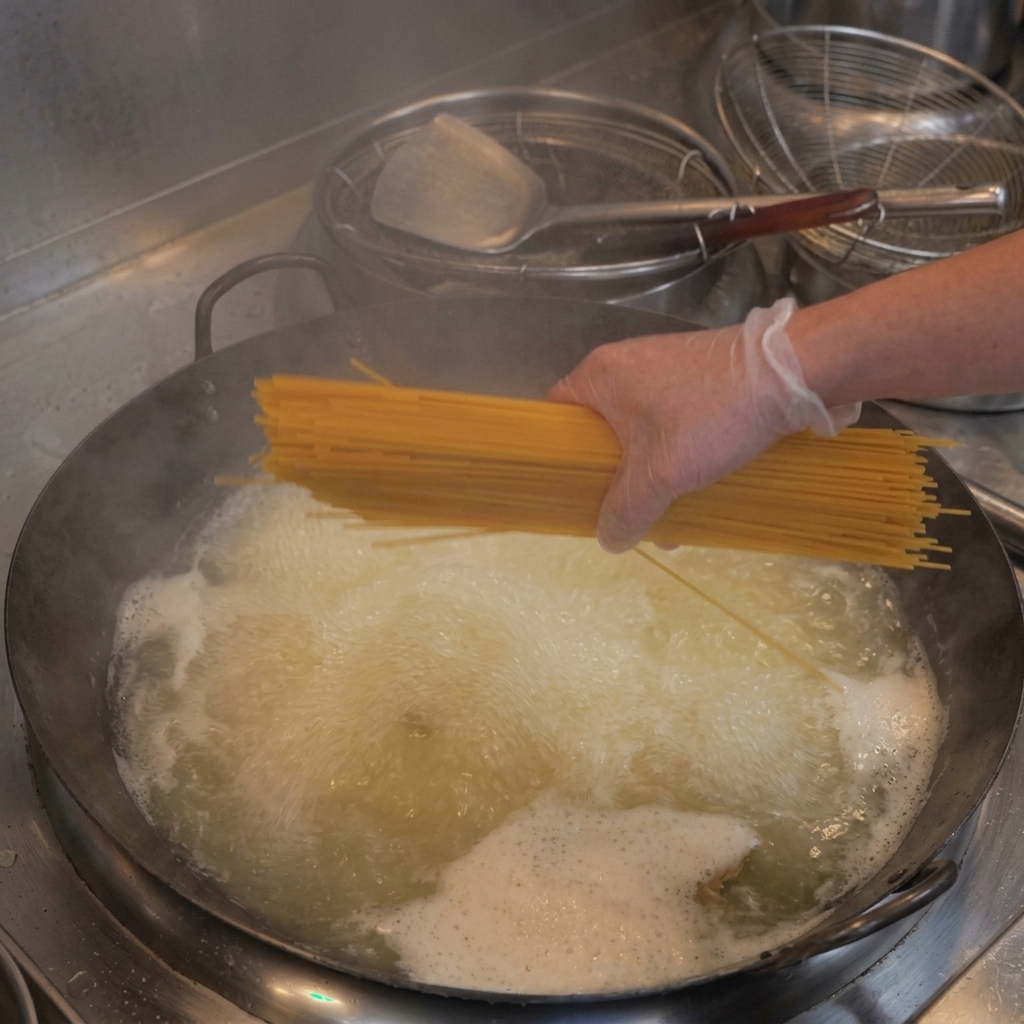
Take your dry spaghetti and fan it out evenly around the edge of the boiling water. As the submerged ends soften, gently push the rest of the pasta down until it is fully covered. Boil on low heat for about 8 minutes until al dente.
Tip: Fanning the pasta prevents the strands from sticking together in a clump when they first hit the hot water. - 3Combine eggs and cheese
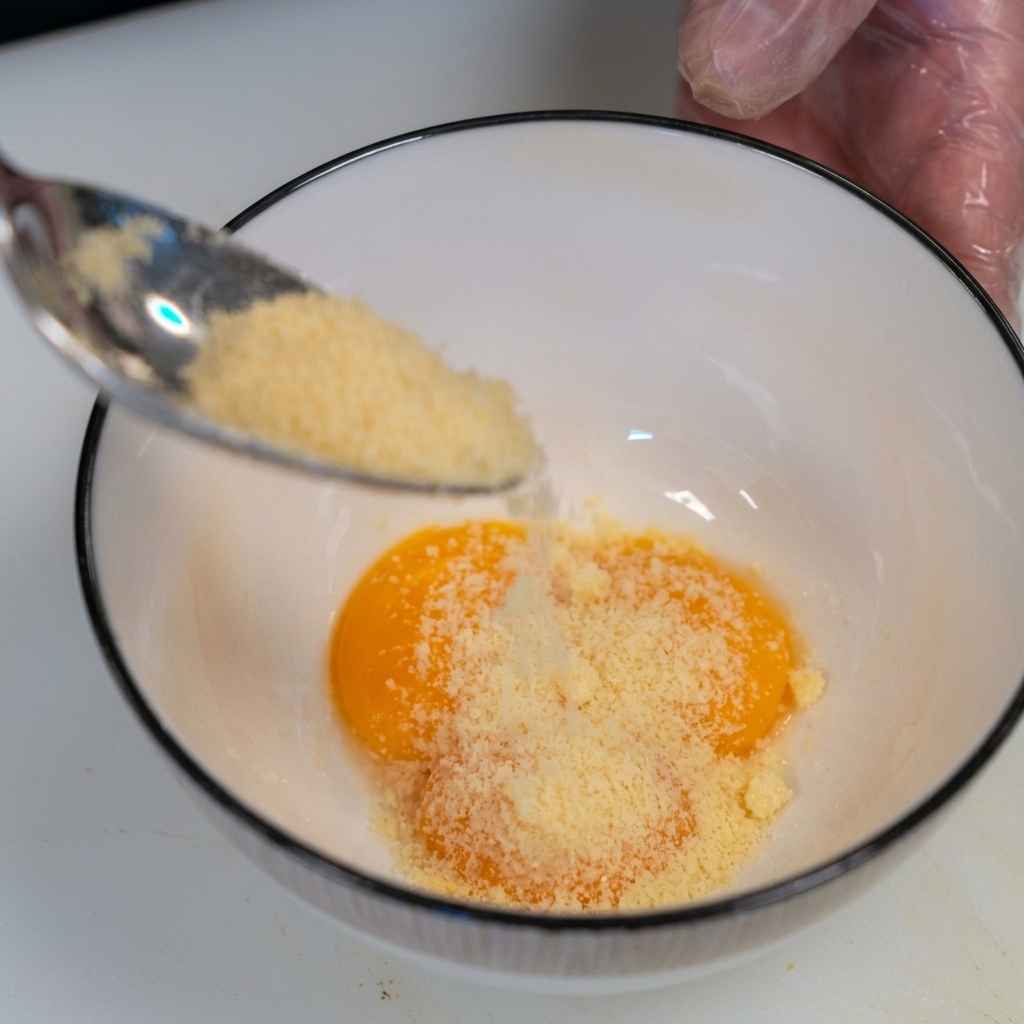
Place the fresh yolks into a clean bowl and pour the grated cheese over them. This step prepares the rich flavor base for the dish.
Tip: Ensure no egg white remains attached to the yolks for the best texture. - 4Blend the emulsion base
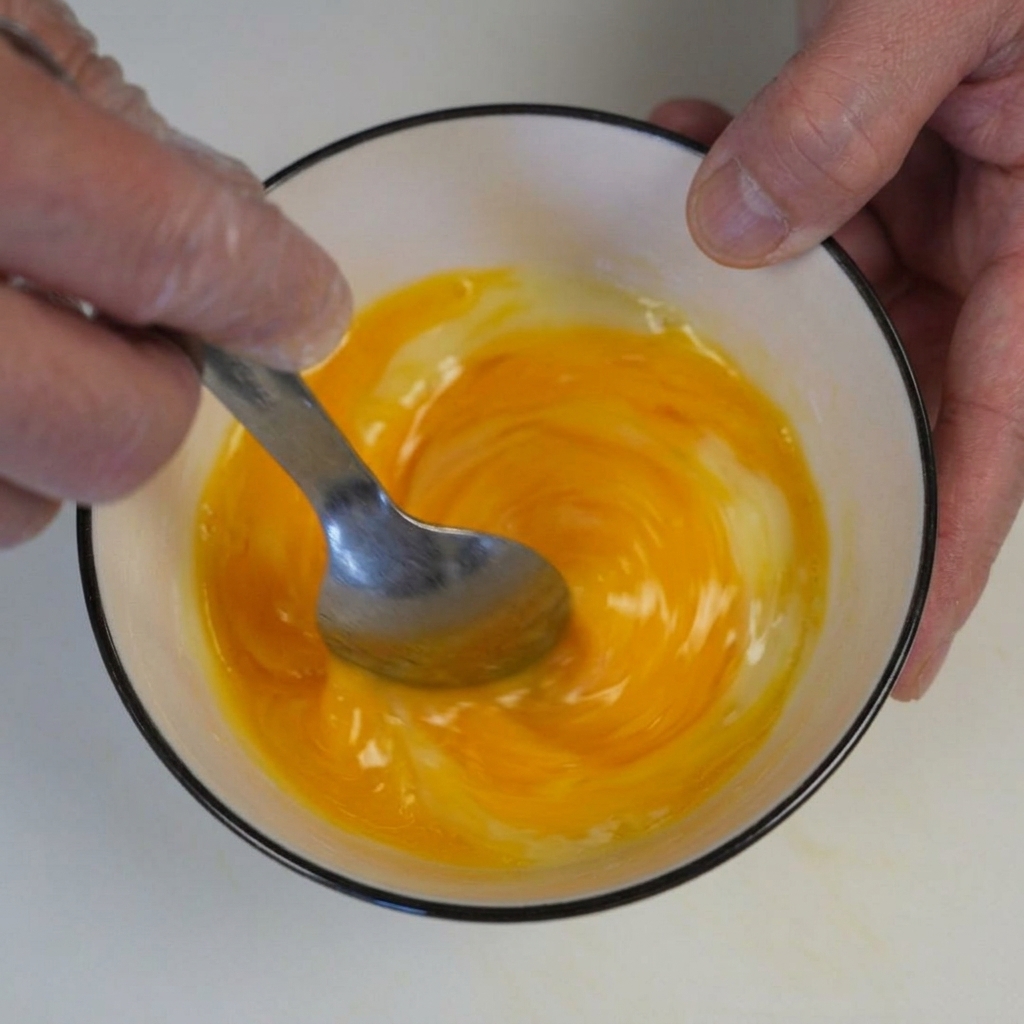
Stir the bowl vigorously until the ingredients form a thick and smooth paste. Set this mixture aside at room temperature while you cook the meat.
Tip: Using room temperature eggs allows them to blend easily without clumping. - 5Heat the pan
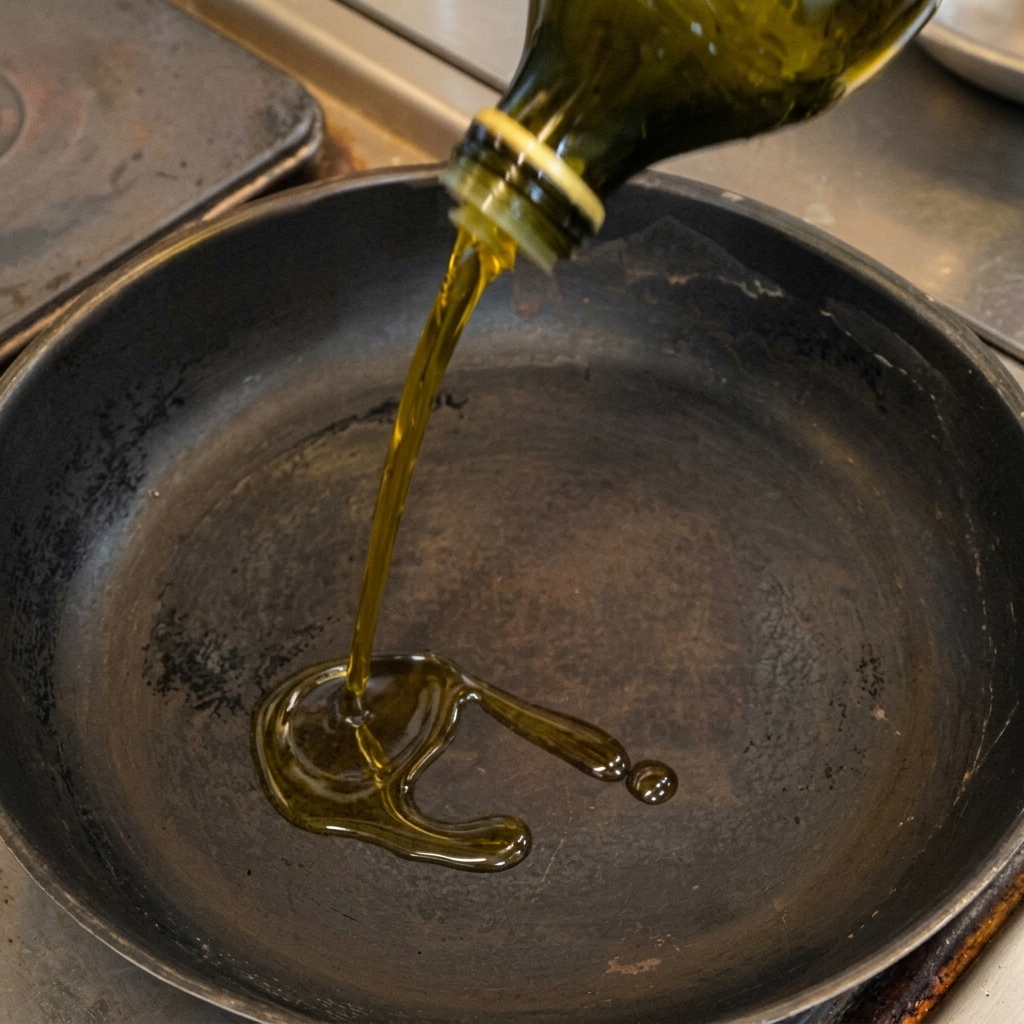
Place a frying pan over low heat and pour in a light drizzle of olive oil. This small amount of oil will help kickstart the cooking process for the bacon before it releases its own fat.
Tip: Keep the heat low so the oil doesnt smoke and the upcoming ingredients cook gently without burning. - 6Render the bacon fat
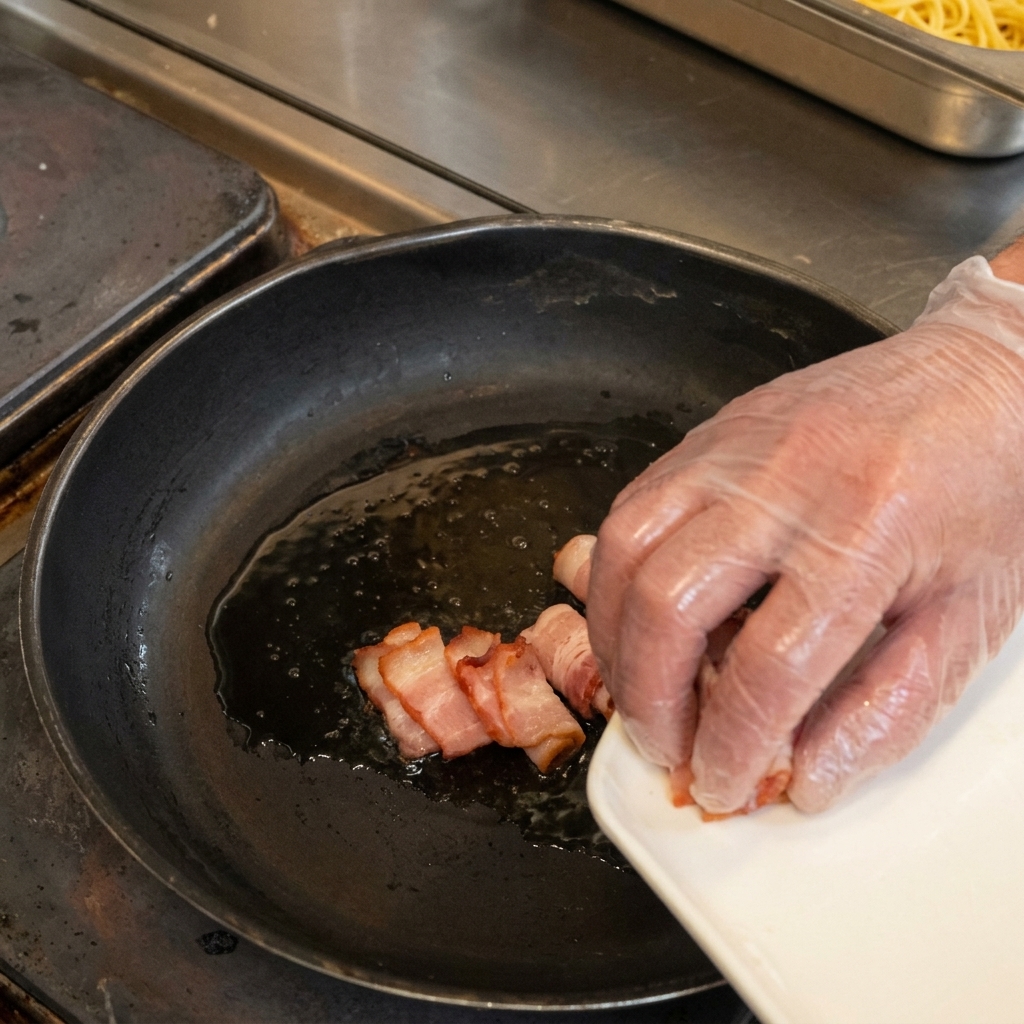
Transfer the sliced bacon into the oiled pan. Fry the pieces slowly over low heat, allowing the fat to render out completely while the bacon turns crispy and golden brown.
Tip: Starting bacon in a relatively cool pan and rendering it slowly prevents burning and yields the crispiest texture. - 7Sauté the aromatics
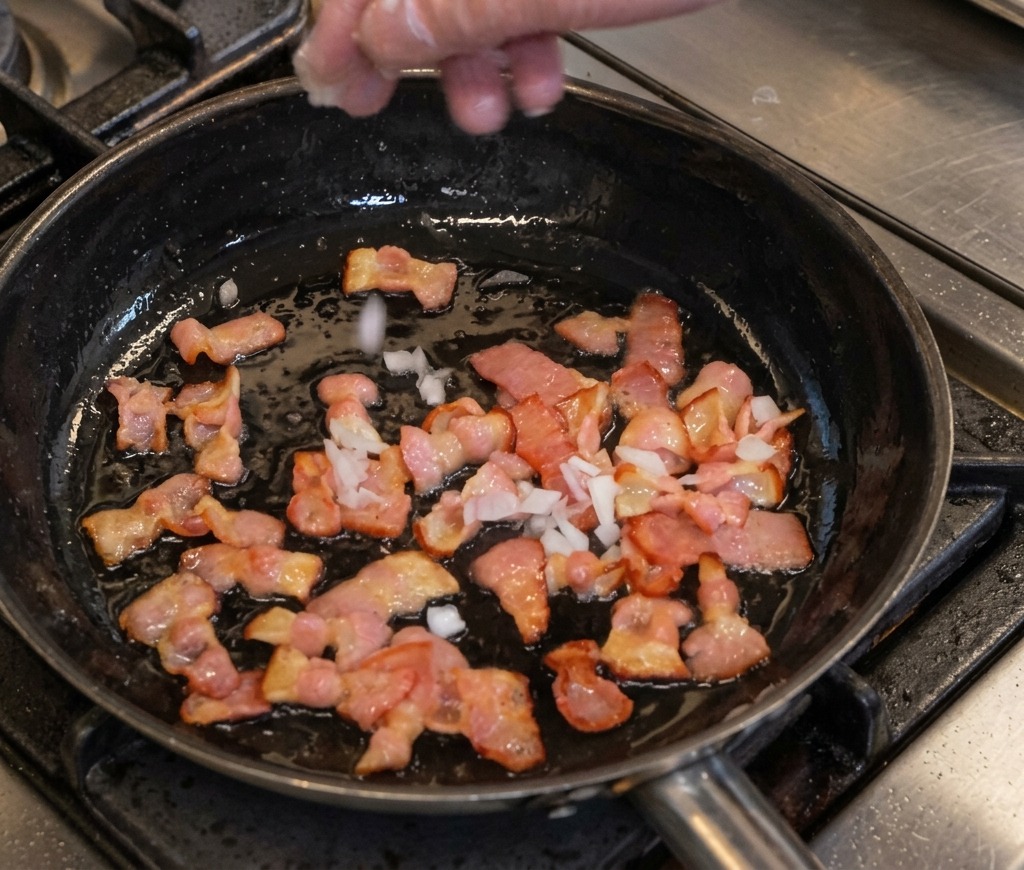
Once the bacon has rendered its fat, add diced onions and minced garlic to the pan. Sauté over low heat until the mixture turns golden brown and fragrant.
Tip: Cooking the onions and garlic in the bacon fat enhances the overall flavor profile of the dish. - 8Season with black pepper
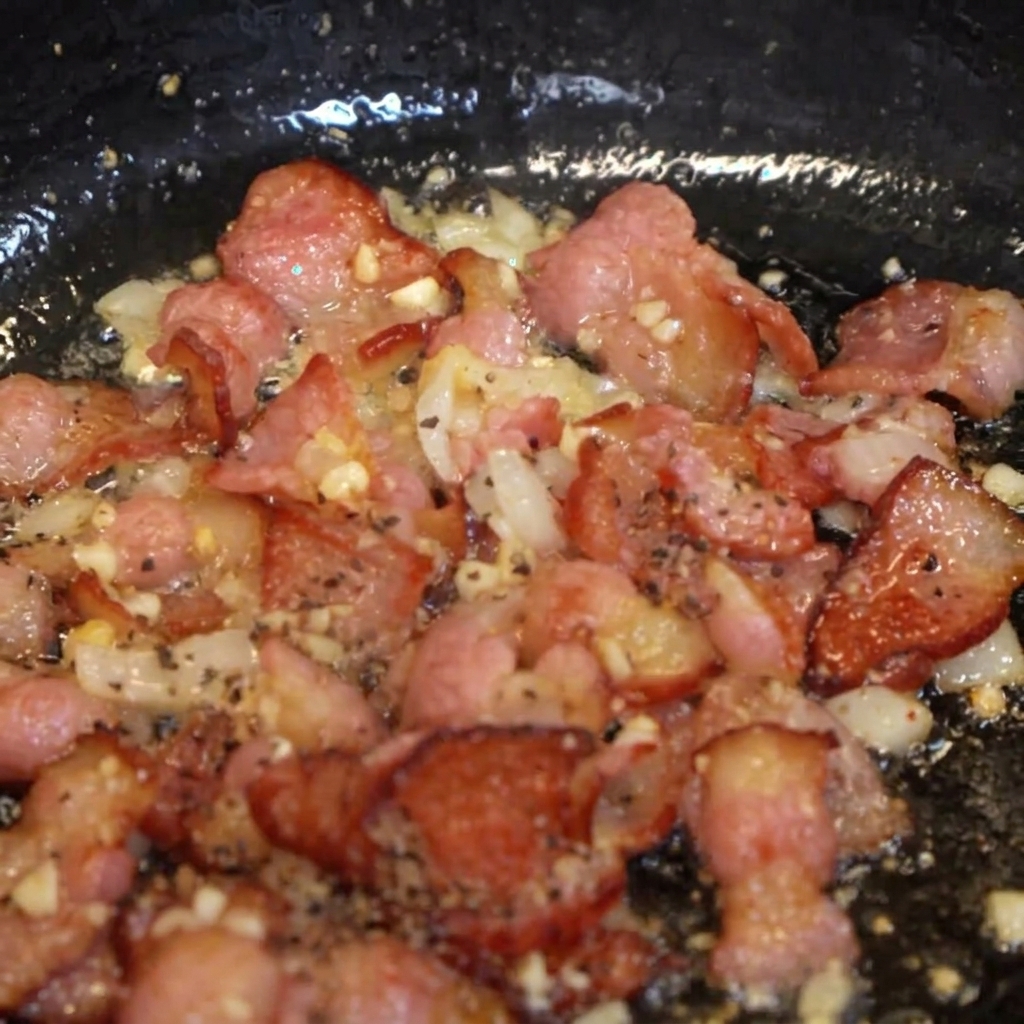
Sprinkle freshly crushed black pepper over the cooked bacon and aromatics. Stir well to combine, letting the heat release the peppers essential oils.
Tip: Freshly cracked black pepper provides a sharper, more intense flavor compared to pre-ground pepper. - 9Add pasta water
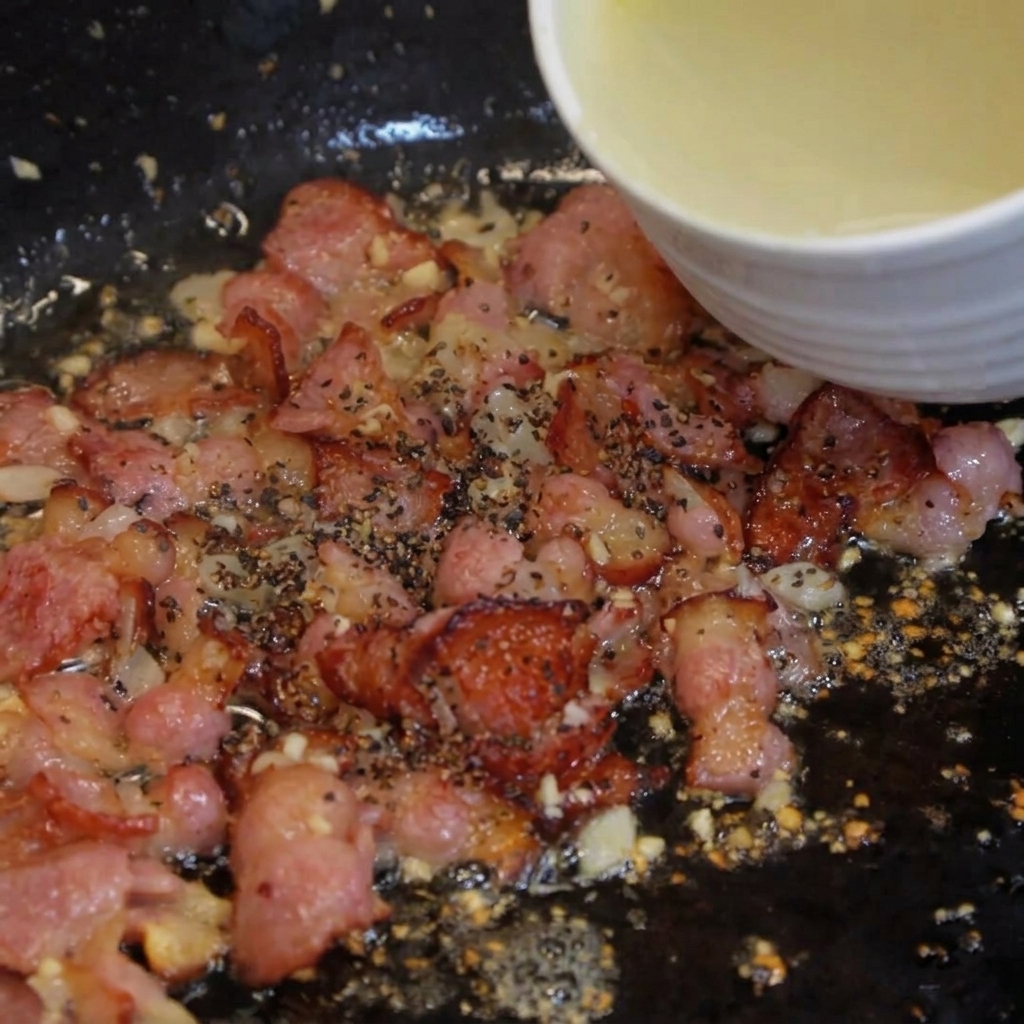
Pour a small ladle of the starchy pasta cooking water into the pan with the bacon and onions. This starchy water will help emulsify the final sauce, making it rich and creamy.
Tip: Always reserve some pasta water before draining your pasta; its the secret to a perfect sauce consistency. - 10Add the pasta
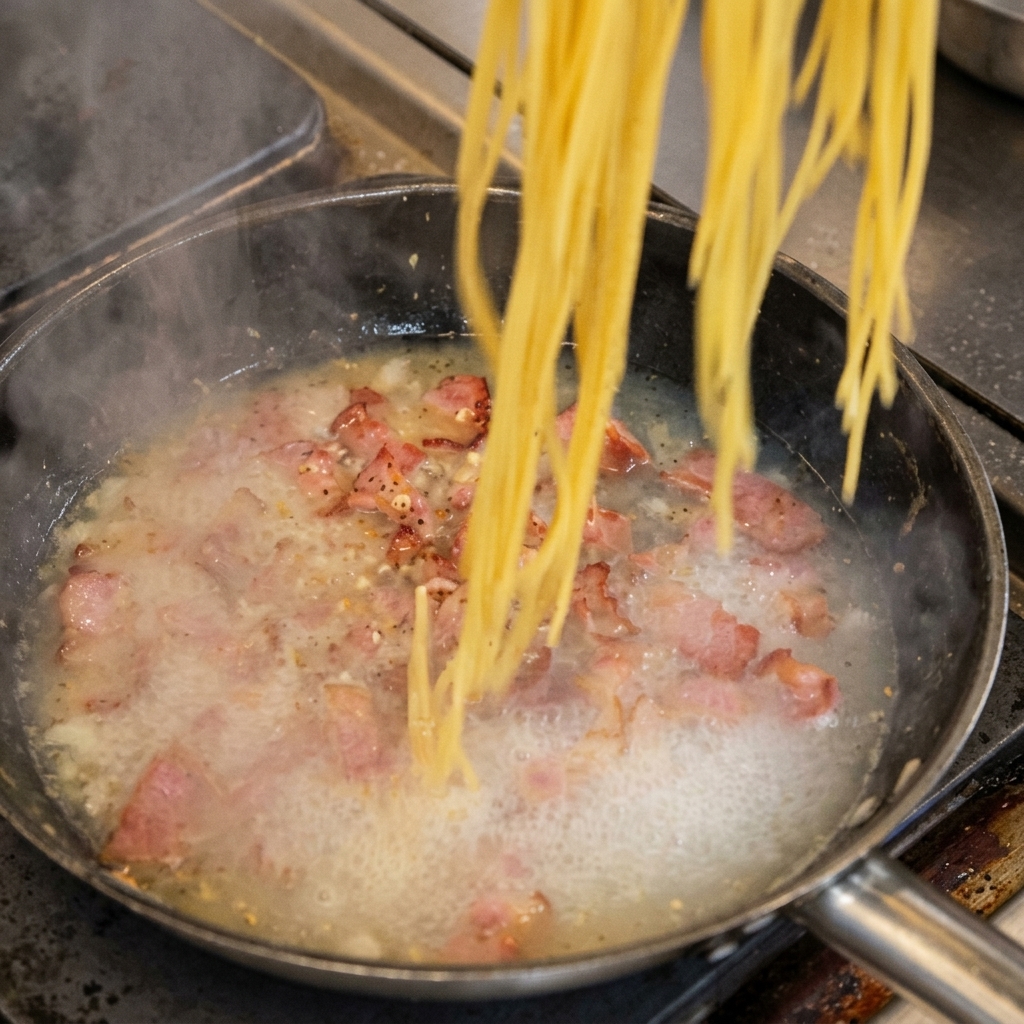
Transfer the cooked spaghetti directly into the pan. Allow the pasta to finish cooking slightly in the bacon and onion mixture, absorbing all those delicious flavors.
Tip: Transferring the pasta directly helps bring over a little extra starchy water, which further aids in building the sauce. - 11Pour the yolk mixture
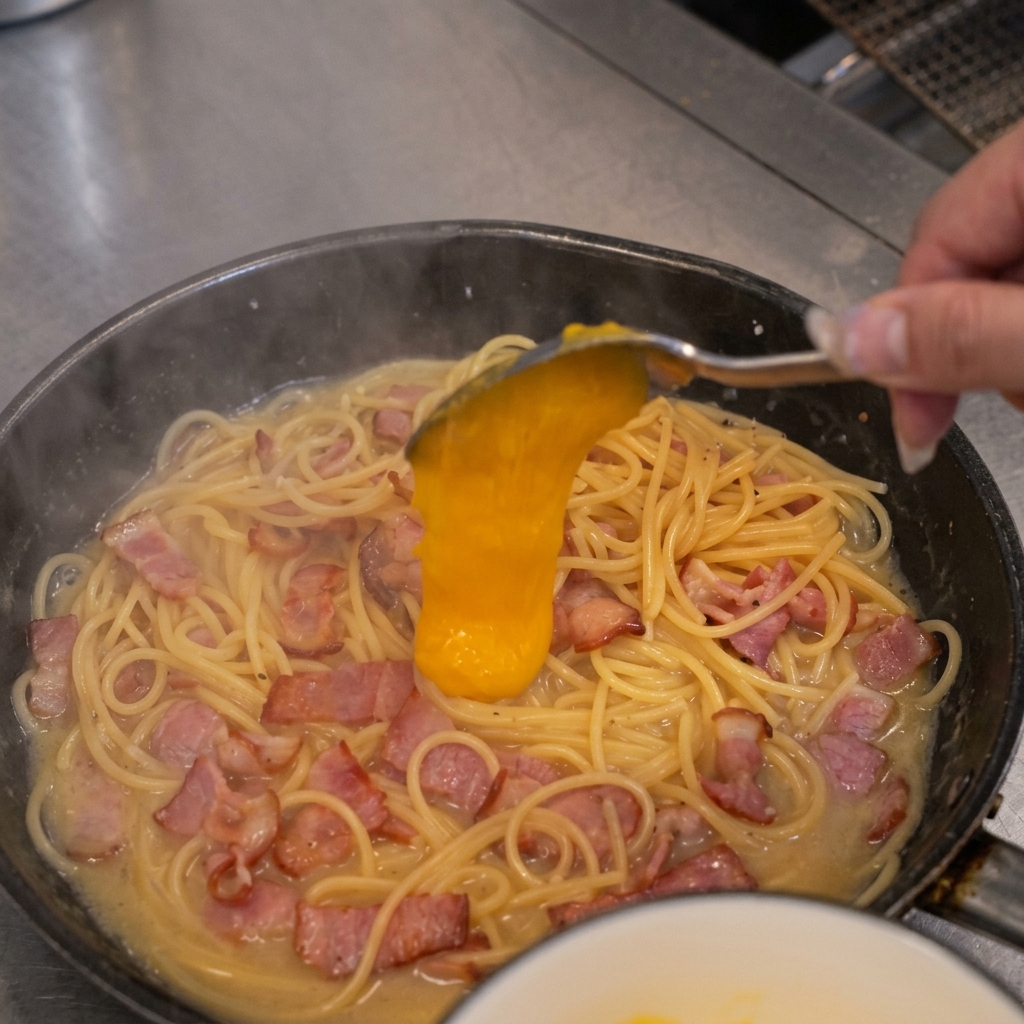
Remove the pan completely away from the stove burner. Pour the reserved cheese and yolk paste directly over the warm noodles and meat.
Tip: Taking the pan away from direct heat is mandatory to avoid scrambling the eggs. - 12Toss to create the sauce
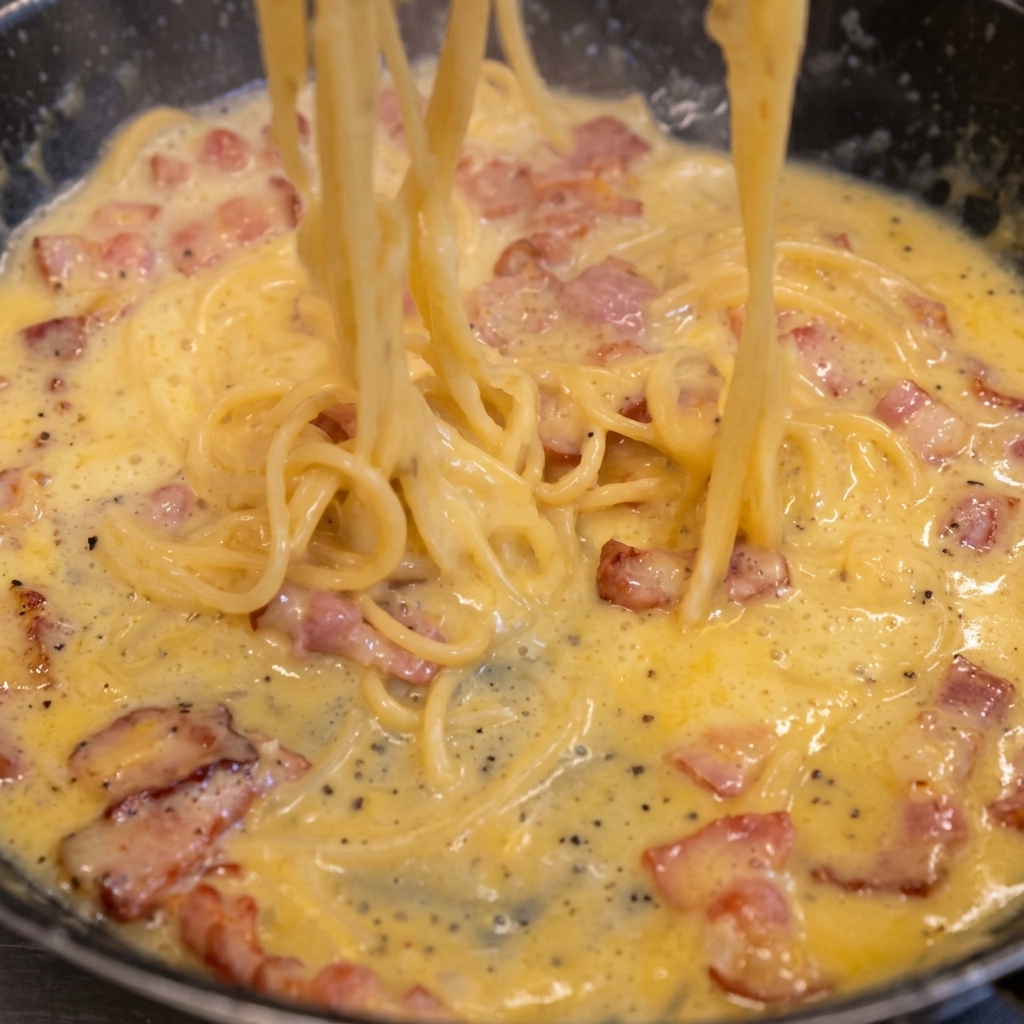
Mix everything continuously so the residual warmth melts the cheese and thickens the liquid into a silky coating. Pour in a tiny splash of reserved water if it seems too thick.
Tip: Constant motion prevents scrambling and forces the fat and water to bind perfectly. - 13Garnish with green onions
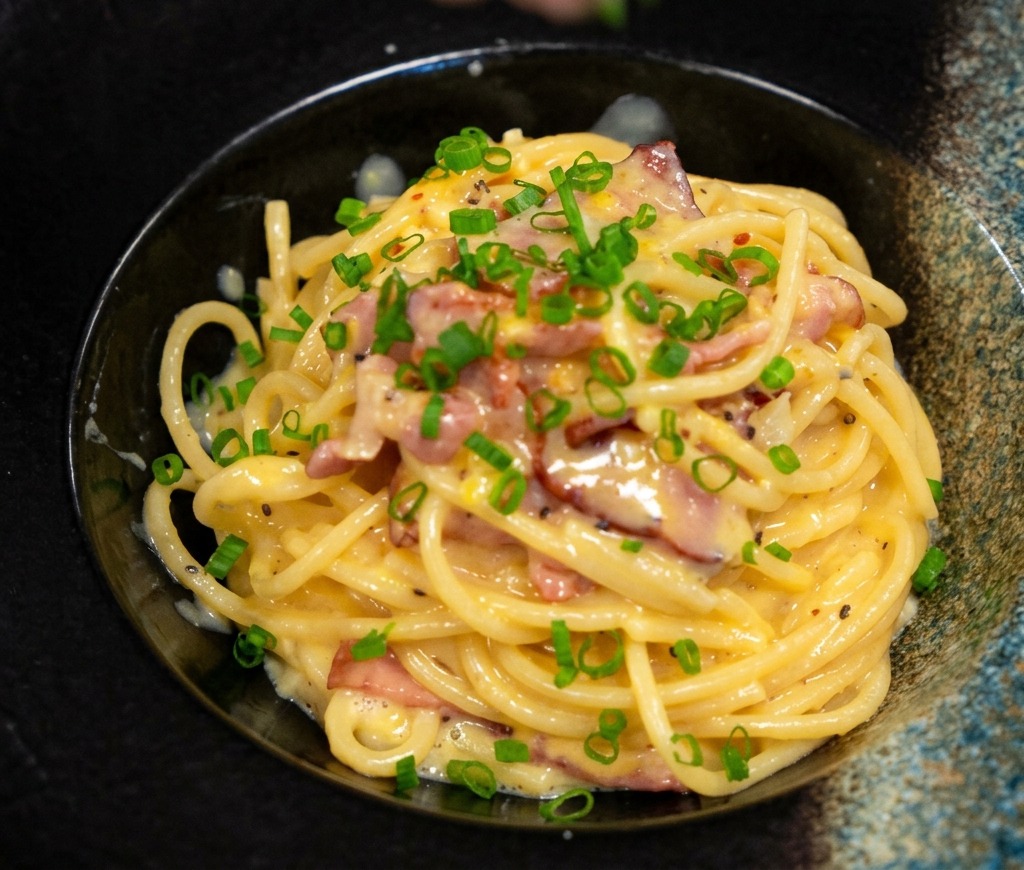
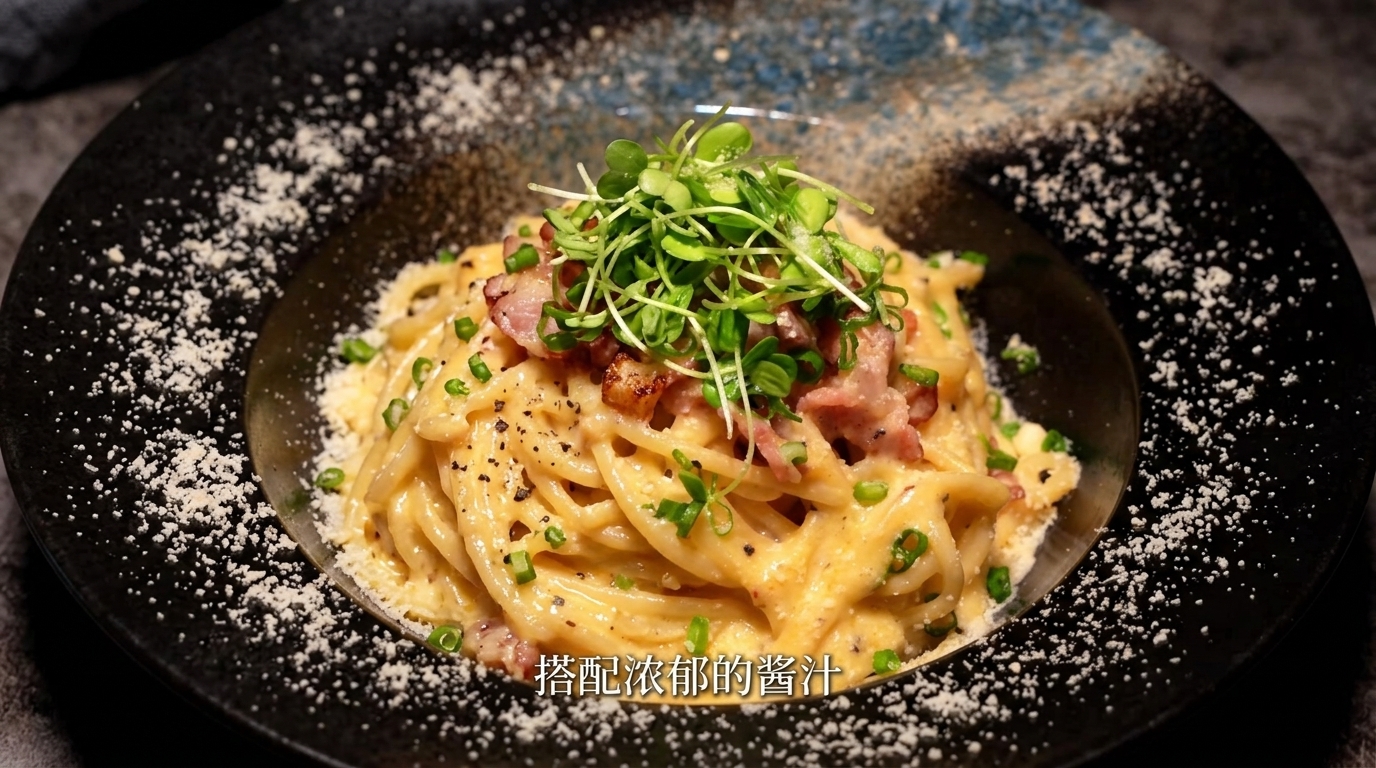
Carefully transfer the creamy pasta into a serving bowl, twisting it to create an elegant mound. Sprinkle a handful of finely chopped green onions over the top for a pop of color and a mild, fresh bite to cut through the richness.
Tip: Use a carving fork or tongs to twist the pasta inside a ladle before transferring it to the bowl for a professional, restaurant-style presentation. - 14Finish with grated cheese
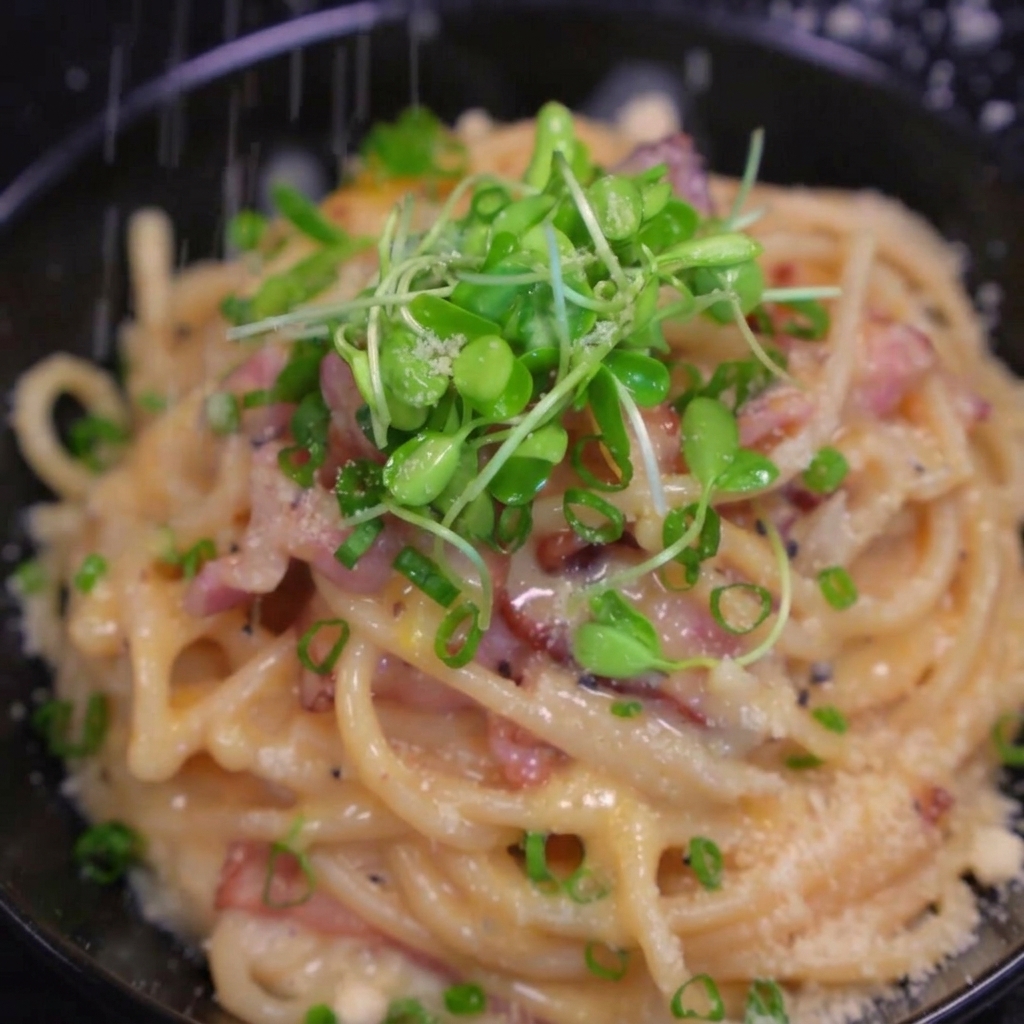
Finish the dish by grating an extra layer of fresh cheese directly over the warm pasta. As the delicate cheese shavings hit the hot pasta, they will slightly melt, adding an extra layer of savory flavor and completing the presentation.
Tip: Pecorino Romano or Parmigiano-Reggiano are the traditional and best choices for grating over this style of dish.