Authentic Roman Spaghetti Carbonara
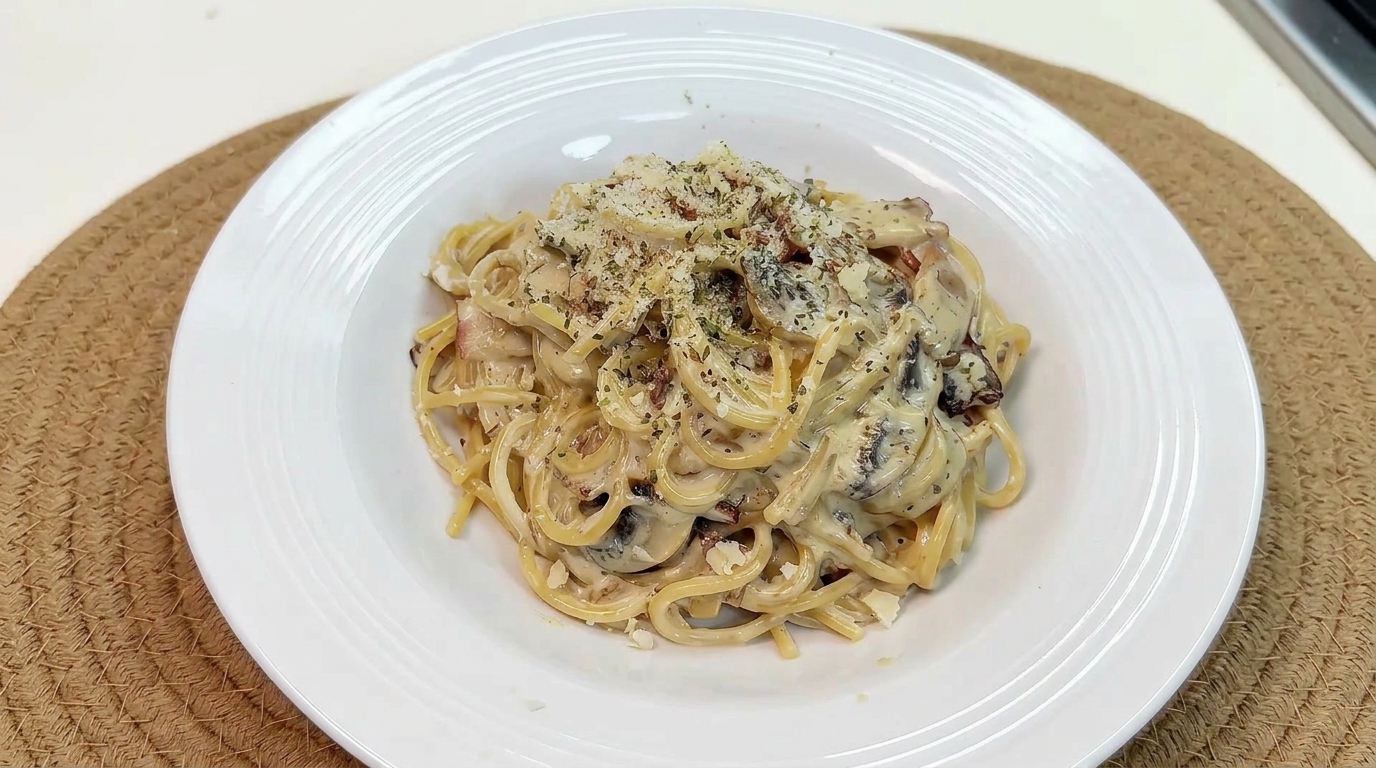
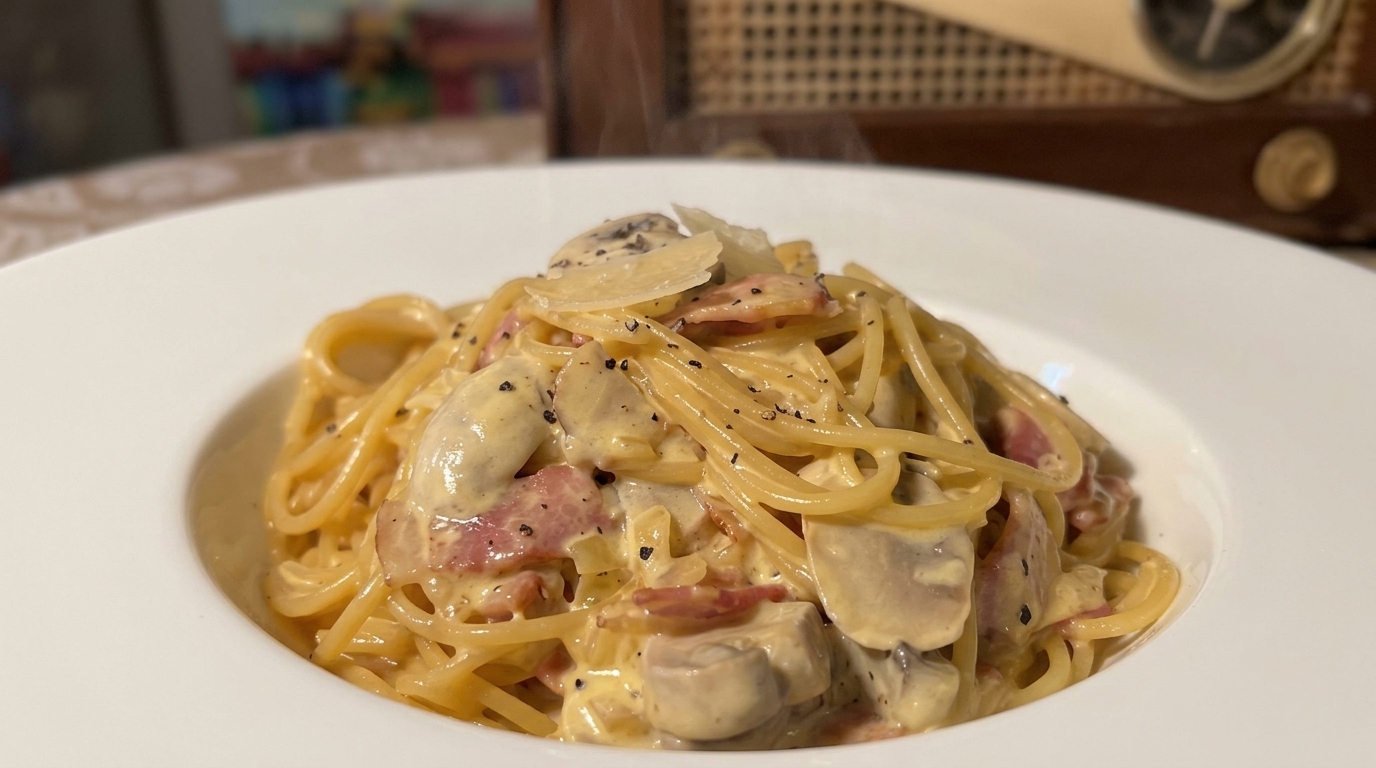
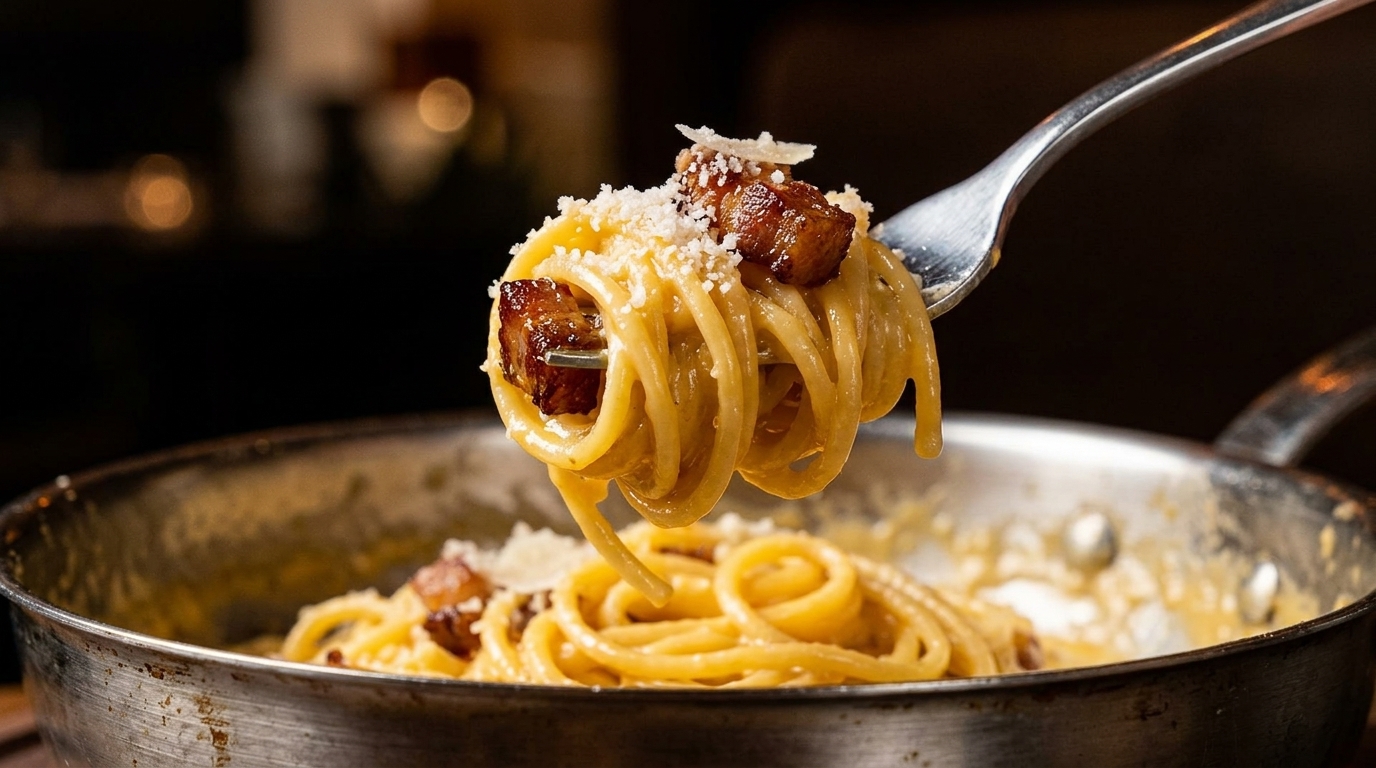
The definitive Roman spaghetti carbonara — a silky, rich emulsion of eggs, Pecorino Romano, and starchy pasta water, studded with crispy, savory guanciale.
True carbonara requires no cream. This iconic Roman dish relies on a masterclass in technique, where the residual heat of the pasta transforms raw eggs and cheese into a luxurious, glossy sauce. And as tradition demands, always use guanciale—never bacon! Grab a fork and celebrate this classic: Cin cin!
Ingredients
- 400 g dry spaghetti
- 200 g guanciale
- 4 whole eggs
- 100 g Pecorino Romano or Parmesan cheese
- to taste black pepper
- to taste salt (for pasta water)
Instructions
- 1Boil the pasta
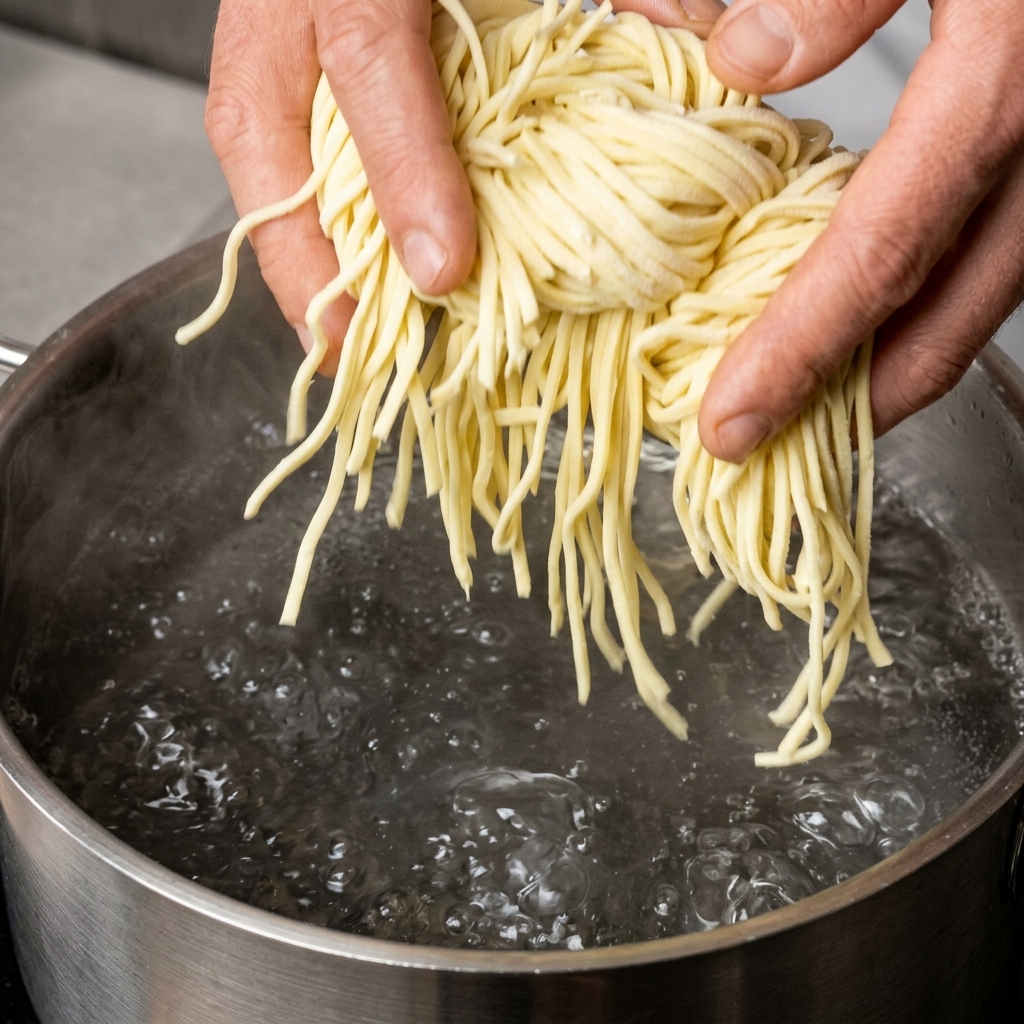
Bring a large pot of generously salted water to a rolling boil over high heat. Gently lower the pasta into the pot, allowing the submerged ends to soften slightly so the rest of the noodles can be easily eased underwater without breaking them. Stir gently but frequently during the first minute to prevent sticking.
Tip: Never snap your spaghetti in half! Letting it naturally soften in the hot water ensures you get long, perfect strands for twirling. - 2Crack the eggs
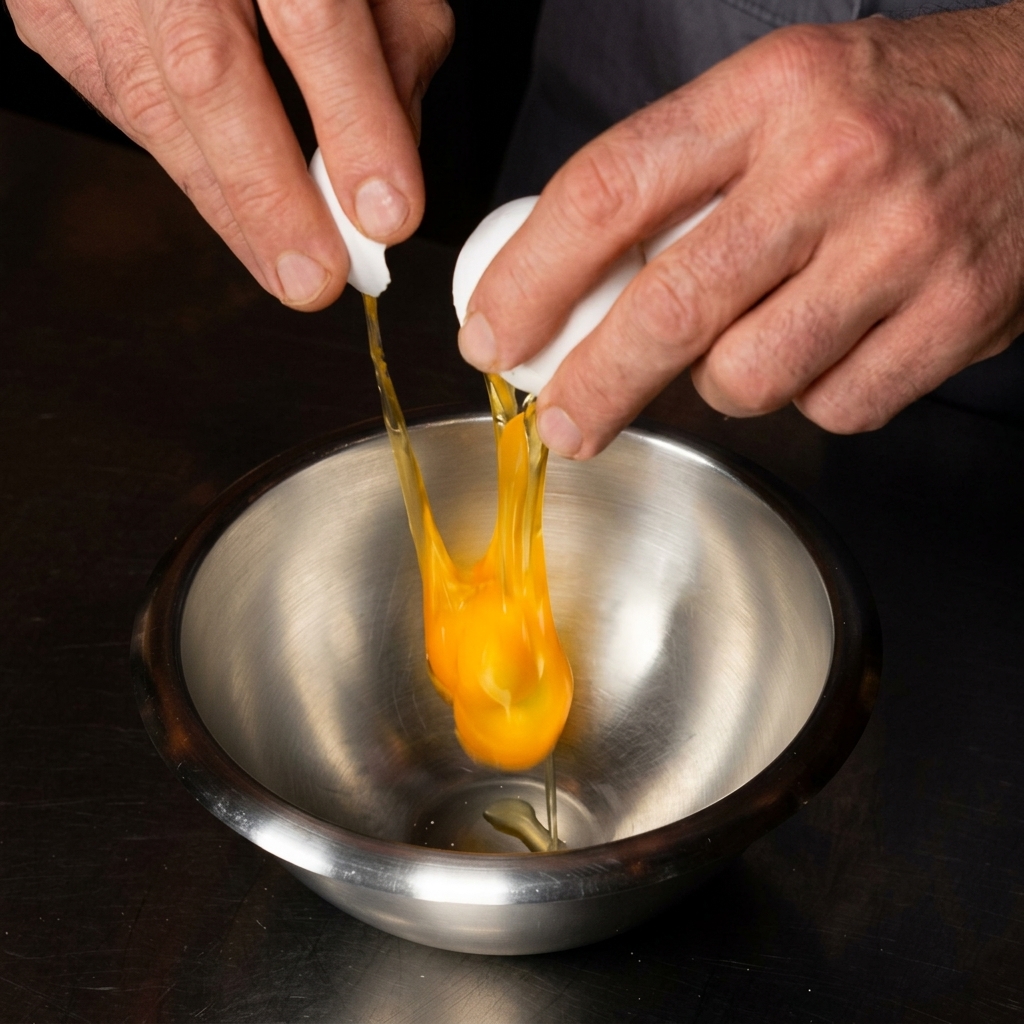
Crack the fresh whole eggs directly into a large stainless steel mixing bowl. Ensure no eggshells fall into the bowl.
Tip: Using room temperature eggs will help them emulsify better with the cheese. - 3Add the grated cheese
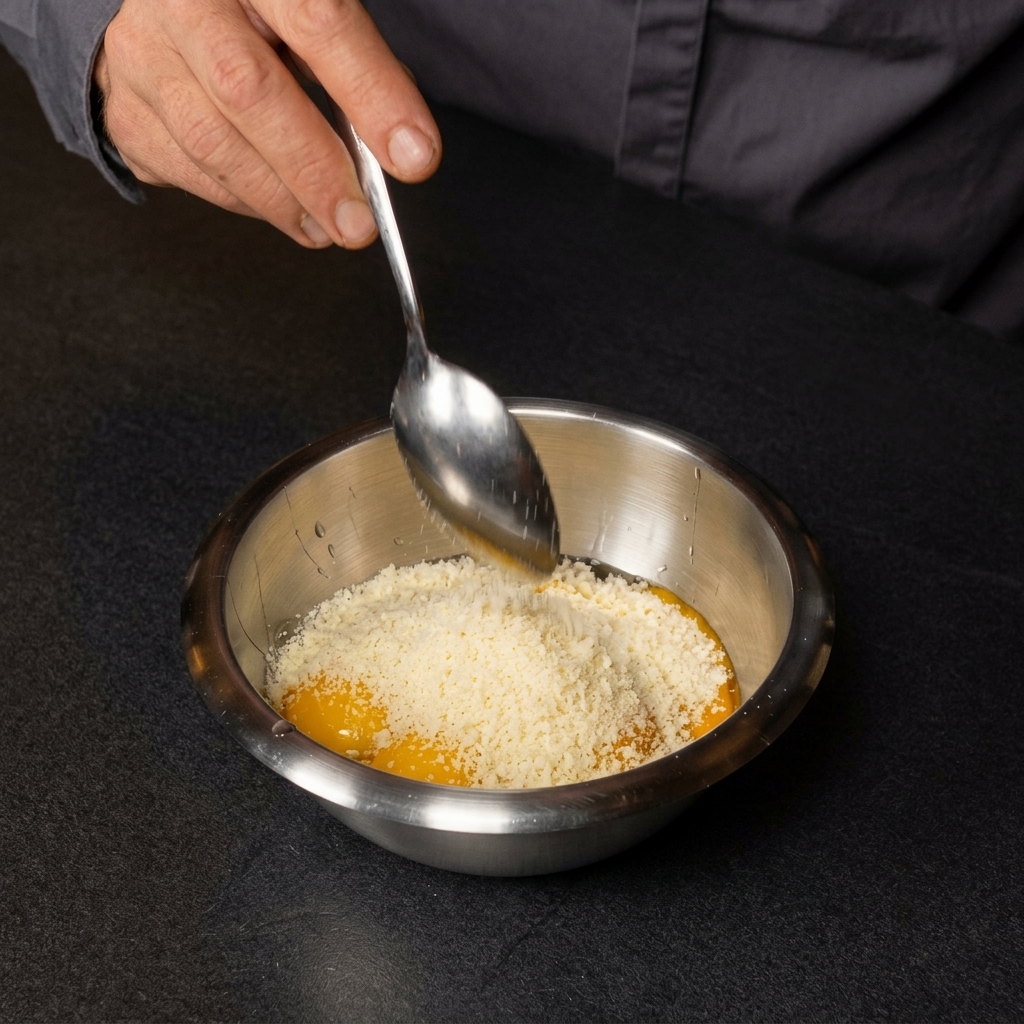
Add a generous amount of finely grated cheese, such as Pecorino Romano or Parmesan, to the bowl containing the raw eggs.
Tip: Grate the cheese as finely as possible to ensure it melts smoothly into the eggs without clumping. - 4Whisk into a paste
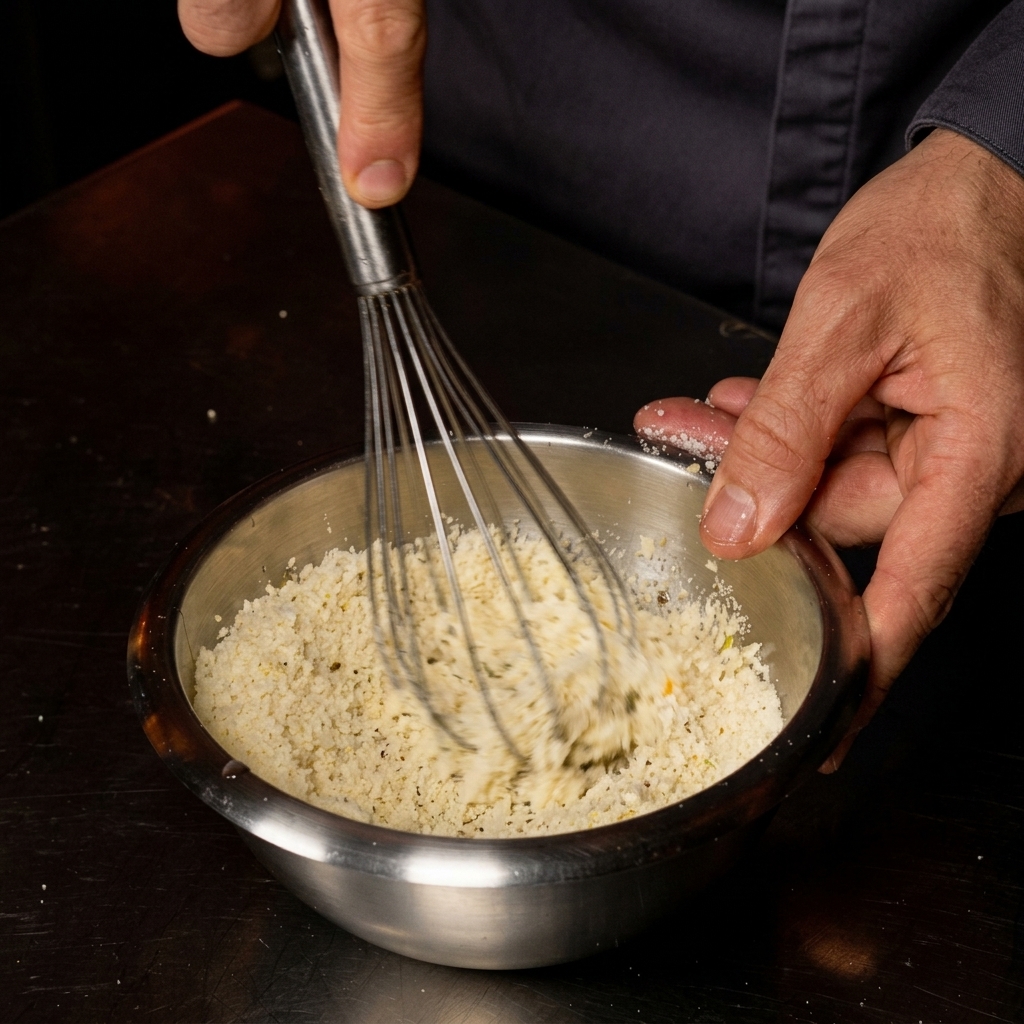
Vigorously whisk the eggs and grated cheese together until completely combined. Continue beating until the mixture forms a smooth, thick, and creamy paste.
Tip: If the mixture is too thick, wait until the pasta is cooked and add a small splash of starchy pasta water to loosen it up. - 5Render the Guanciale
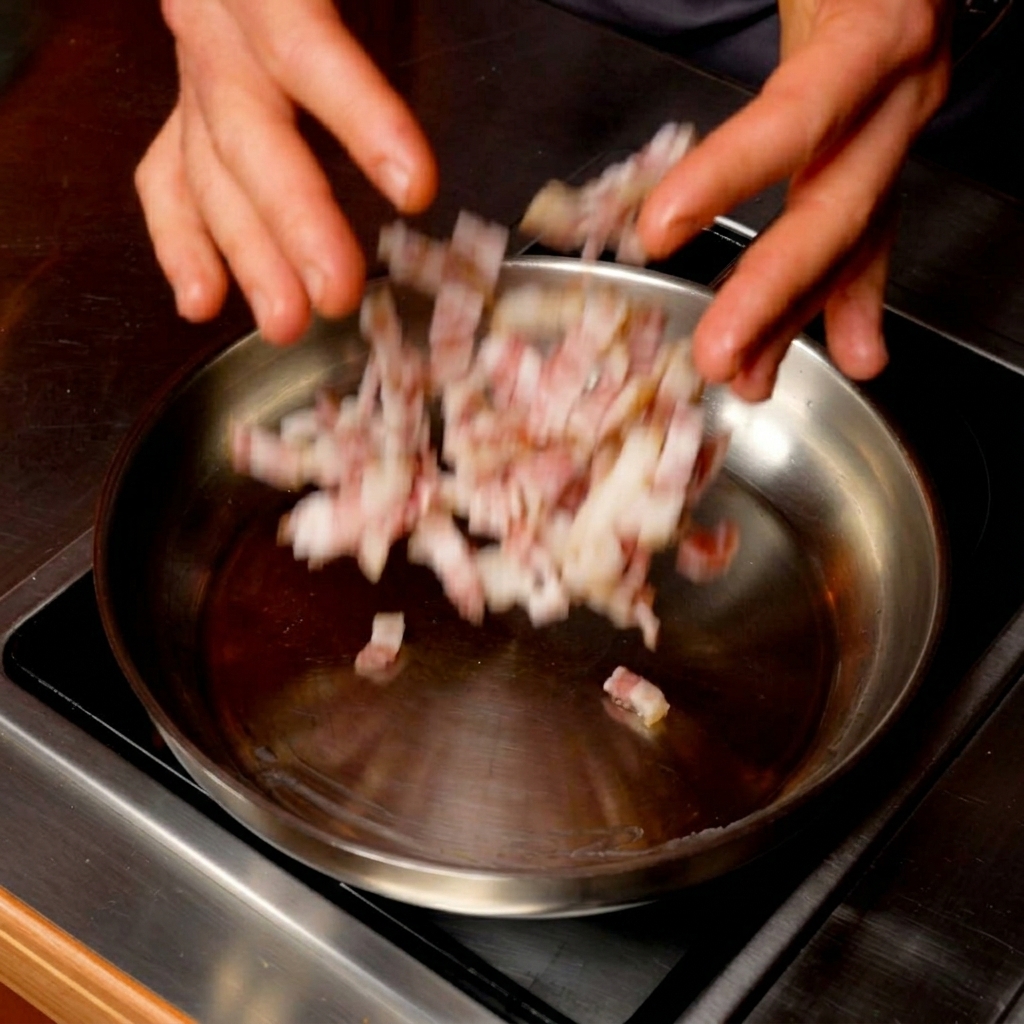
Add the sliced strips of guanciale into a stainless steel skillet. Cook over medium-low heat to slowly render out the fat, allowing the meat to fry in its own oils until it becomes crispy and the edges are browned.
Tip: Start with a cold pan. As the pan heats up gradually, it will help extract the maximum amount of flavorful fat without burning the meat. - 6Remove the crispy guanciale
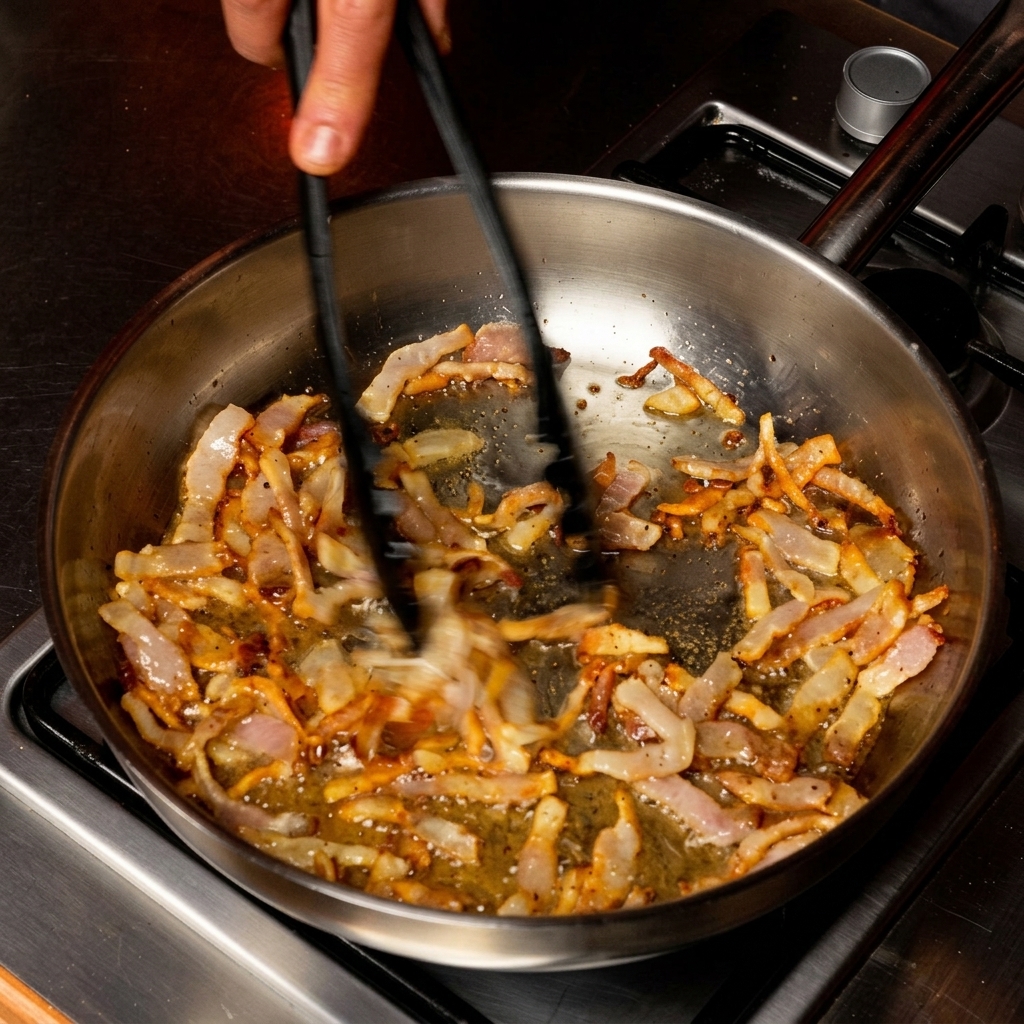
Using tongs or a slotted spoon, carefully remove the cooked, crispy pieces of guanciale from the pan and set them aside in a small bowl. Leave the rendered liquid fat behind in the skillet, as this will become the flavorful base for your sauce.
Tip: A slotted spoon is ideal for lifting the meat out while letting all the valuable oil drip right back into the skillet. - 7Transfer pasta to the pan
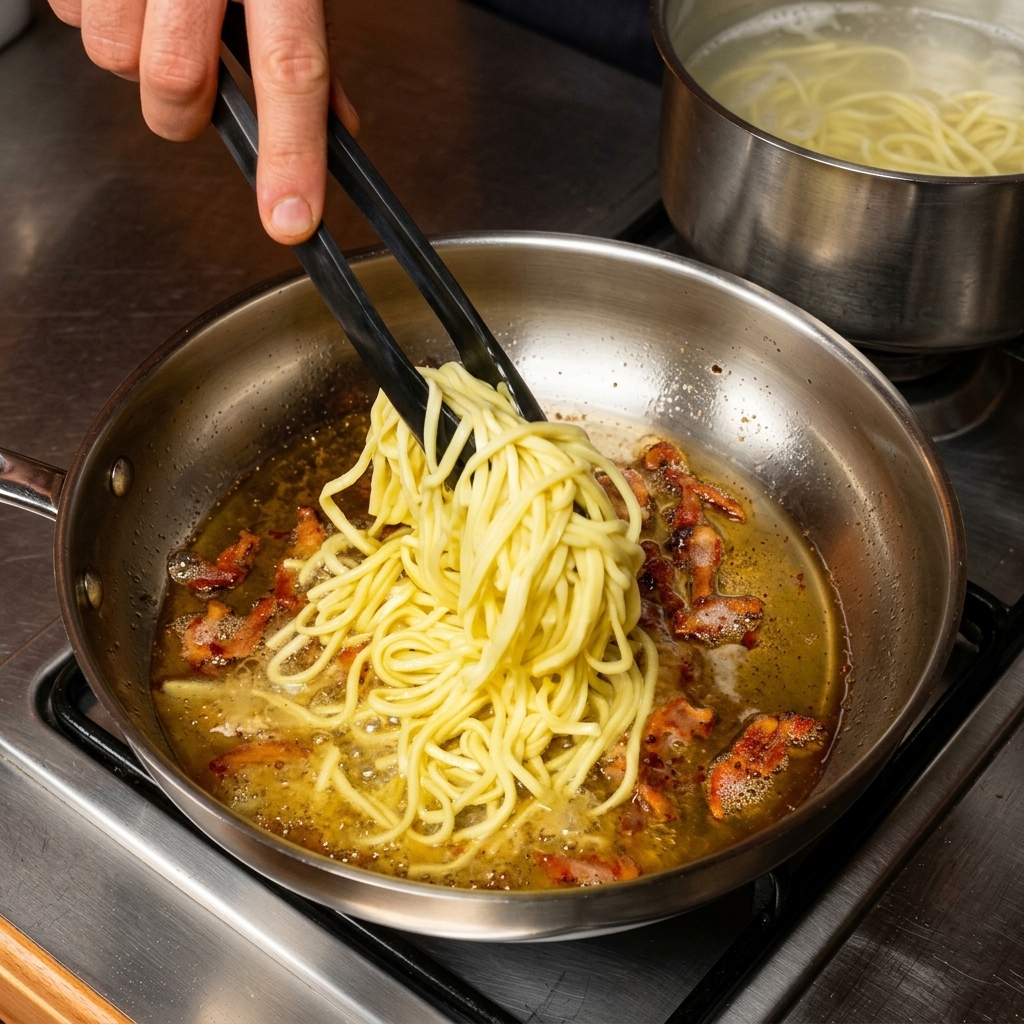
Using a pair of tongs, transfer the boiled spaghetti noodles directly from the cooking water into the skillet containing the hot, rendered guanciale fat. Do not discard the pasta water, as the starchy liquid that clings to the noodles will help emulsify the sauce.
Tip: Transferring the pasta directly instead of using a colander ensures you retain essential starchy water, which is key for building a creamy, cohesive sauce. - 8Add Pasta Water
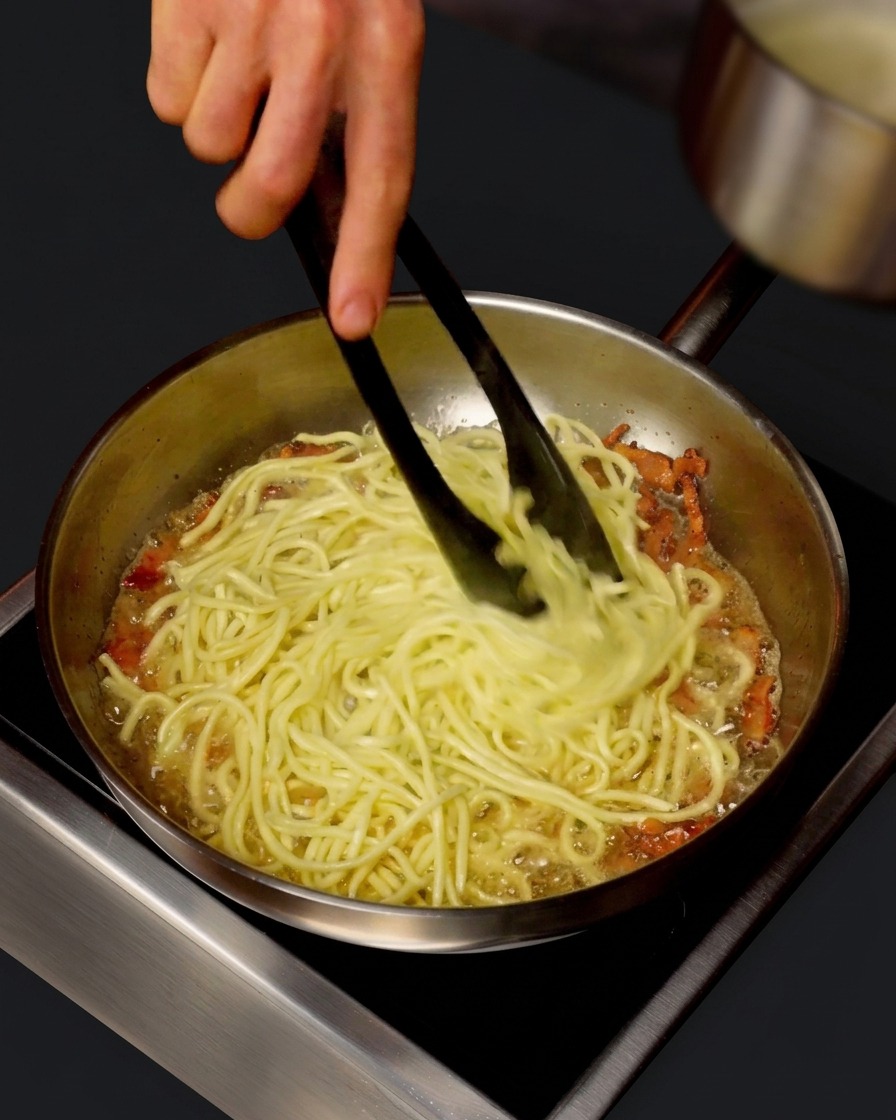
Pour a ladle of the hot, starchy pasta cooking water into the skillet with the noodles. Continue to toss the pasta over the heat. The starchy water will combine with the rendered fat to start forming a foundational emulsion for the final dish.
Tip: Pasta water is liquid gold! Always save a cup before draining your pasta. The starches in the water are essential for binding the fat and cheese into a creamy sauce. - 9Add the Egg and Cheese Mixture
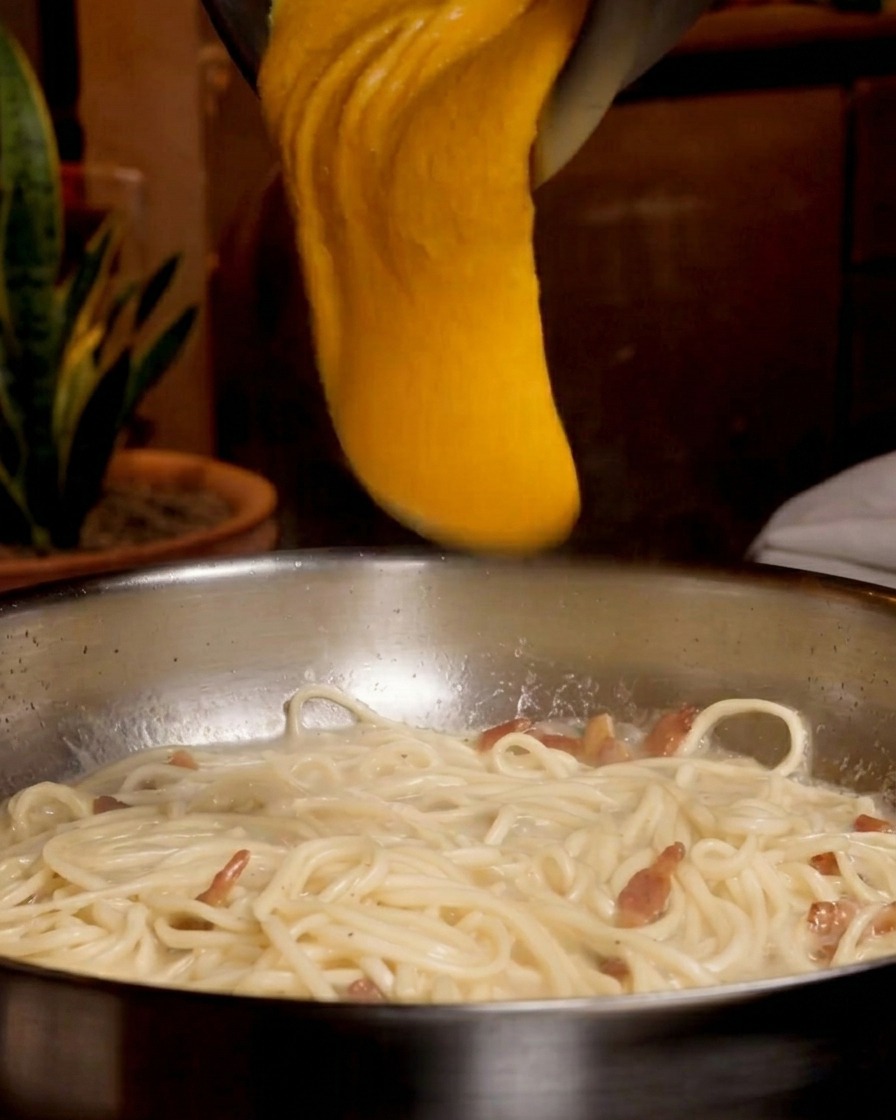
Remove the skillet from the heat entirely to prevent the eggs from scrambling. Pour the thick, bright orange egg yolk and cheese mixture directly over the hot pasta.
Tip: Crucial step: make sure the pan is off the heat before adding the egg mixture. If the pan is too hot, youll end up with scrambled eggs instead of a silky sauce. - 10Emulsify the Carbonara Sauce
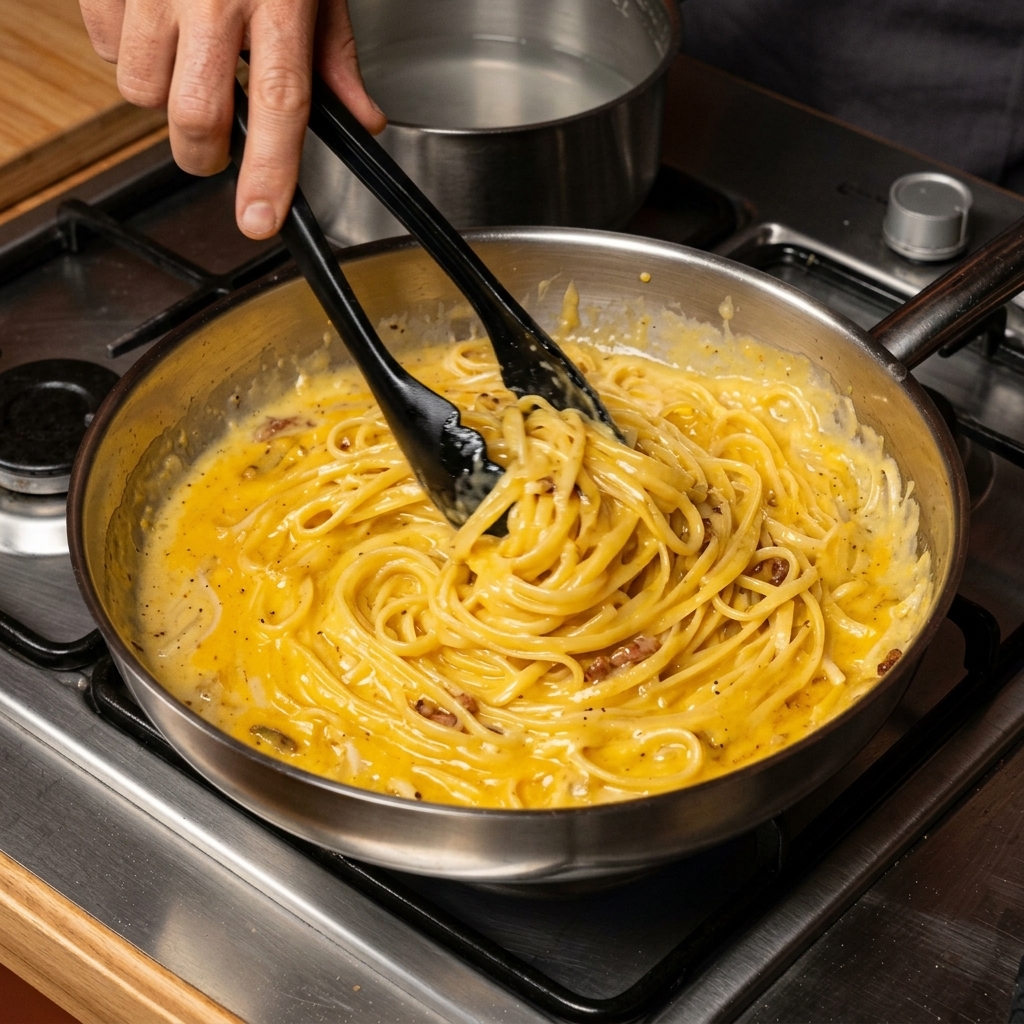
Vigorously toss and stir the pasta with tongs. The residual heat from the noodles will gently cook the egg mixture, while the starchy pasta water and rendered pork fat emulsify with the eggs and cheese to create a rich, glossy, and creamy sauce that perfectly coats every strand of spaghetti.
Tip: If the sauce seems too thick or clumps up, add a splash of reserved hot pasta water to loosen it up and keep tossing until glossy. - 11Incorporate grated cheese
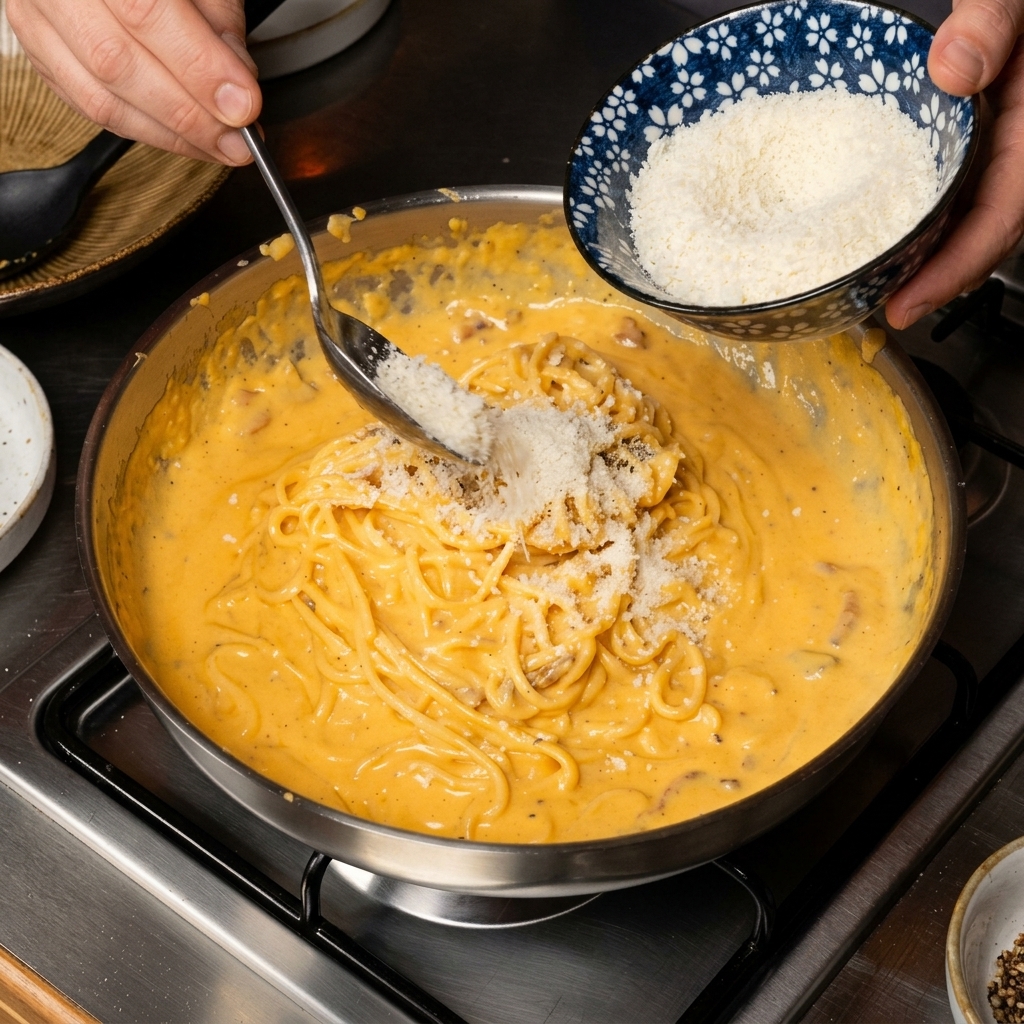
Sprinkle a generous layer of freshly grated cheese over the warm, sauce-coated pasta in the pan. Toss vigorously to melt the cheese into the emulsion, ensuring a silky, rich coating on every strand of spaghetti.
Tip: Always remove the pan from the heat before adding the cheese to prevent it from clumping or breaking the sauce. - 12Top with Crispy Guanciale
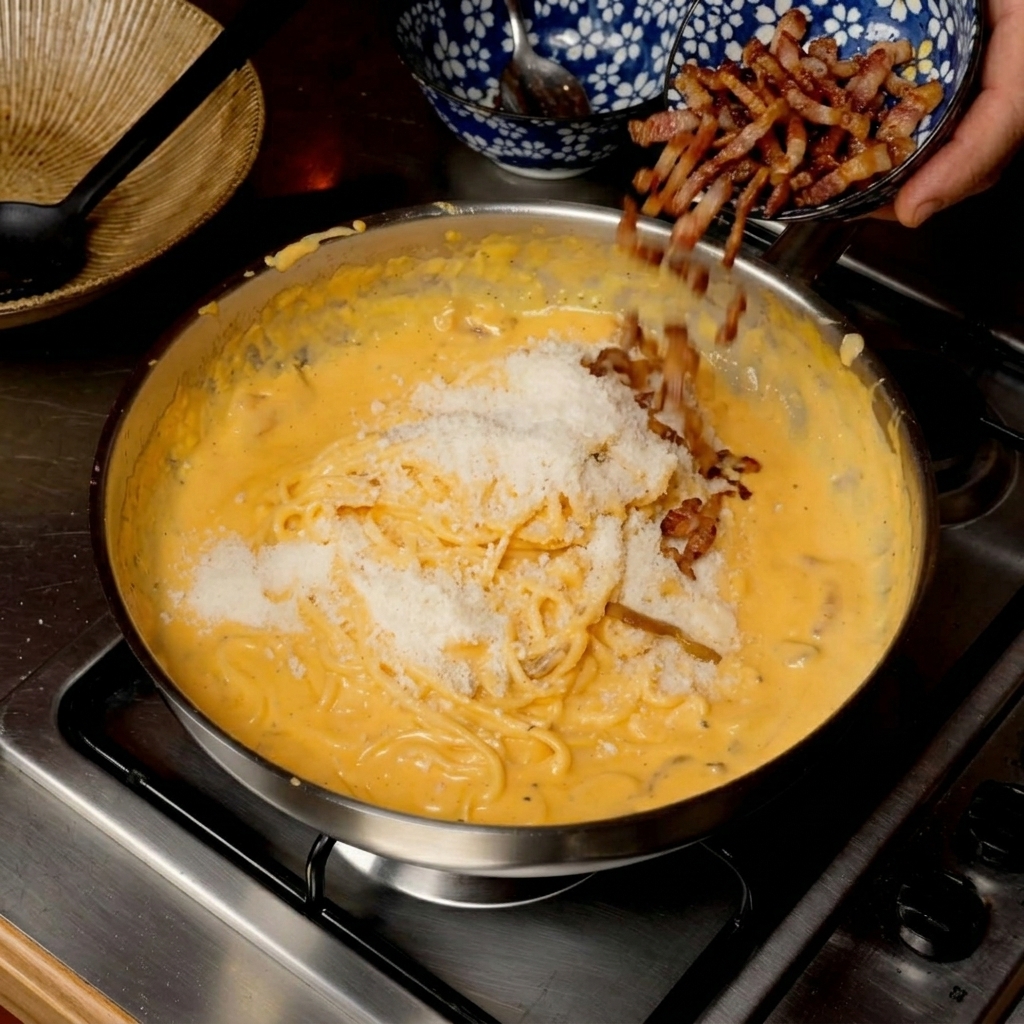
After tossing the pasta to create a smooth, emulsified sauce, pour the reserved crispy guanciale pieces over the top of the dish. Stir them in gently or leave them as a topping for maximum texture.
Tip: Adding the crispy guanciale at the very end ensures that it retains its satisfying crunch and doesnt become soft in the sauce.