Classic Spaghetti alle Vongole (Garlic Clam Pasta)
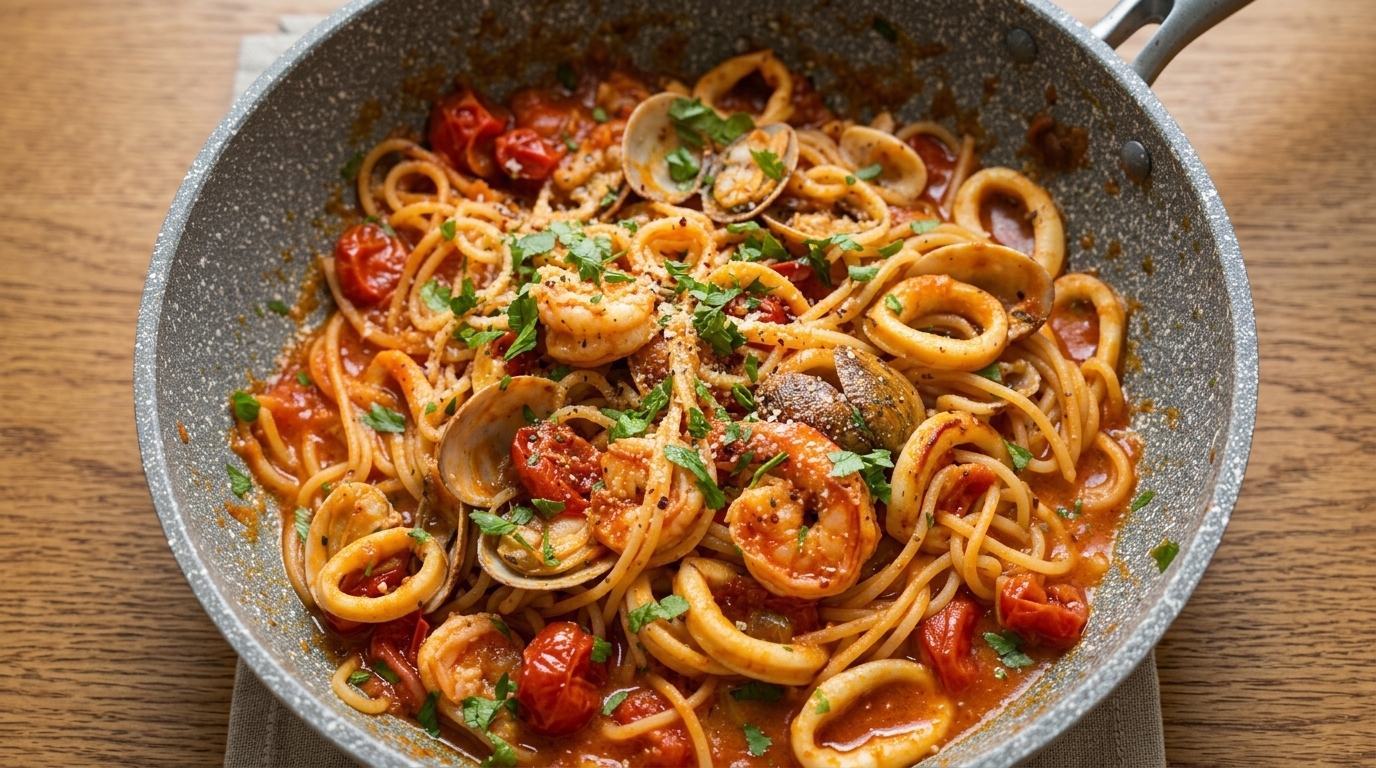
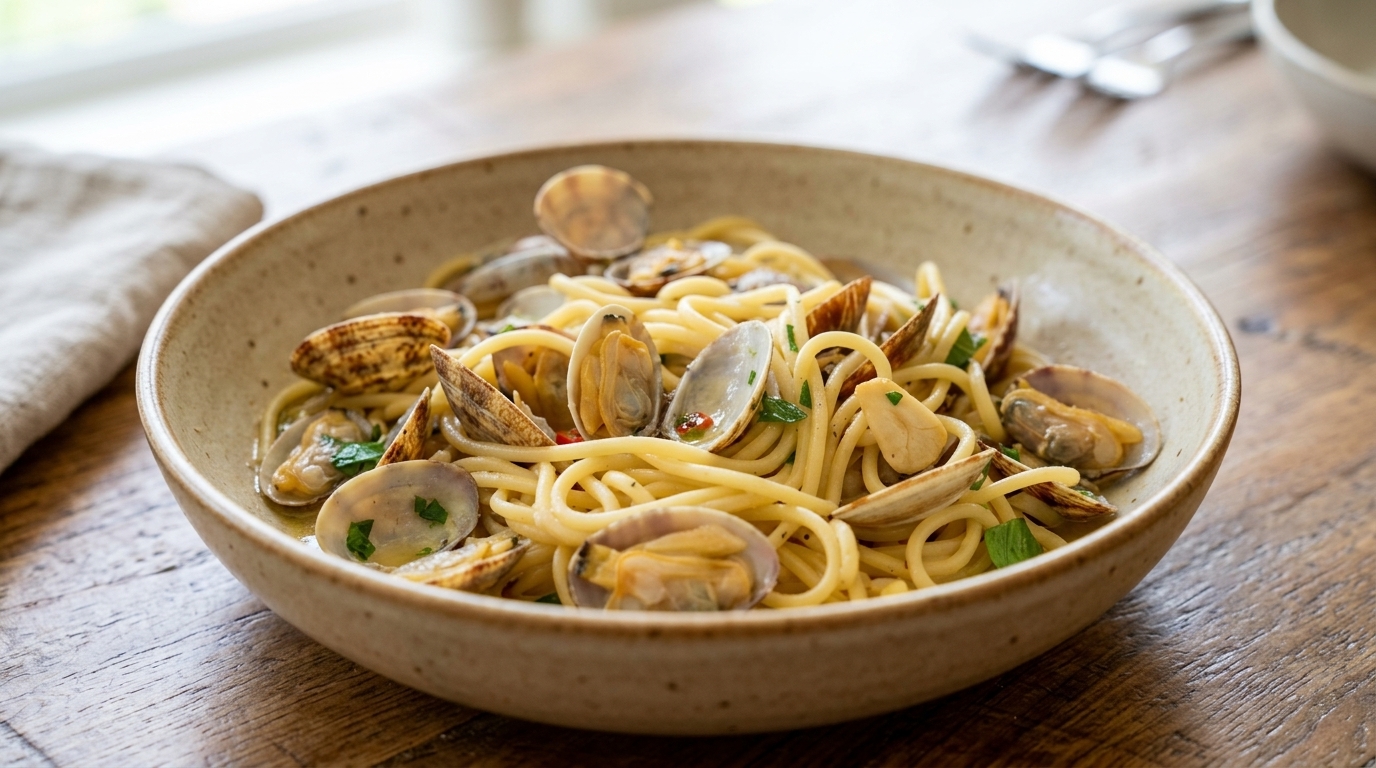
A refreshing and authentic Spaghetti Vongole featuring fresh clams steamed in white wine, tossed with garlic, a hint of chili, and al dente pasta in a light, briny broth.
Originating from Naples, Spaghetti alle Vongole is a masterpiece of Italian culinary minimalism. It relies on just a few high-quality ingredients, allowing the sweet, briny flavor of fresh clams to shine through a delicate emulsion of olive oil, starchy pasta water, and dry white wine.
Ingredients
- 1 kg fresh raw clams
- 300 g dry spaghetti
- 3 cloves garlic
- 1 small red chili pepper
- 1 bunch fresh parsley
- 3 tbsp olive oil
- 100 ml dry white wine
- 1 small piece butter
- to taste salt
- to taste black pepper
Instructions
- 1Soak the clams
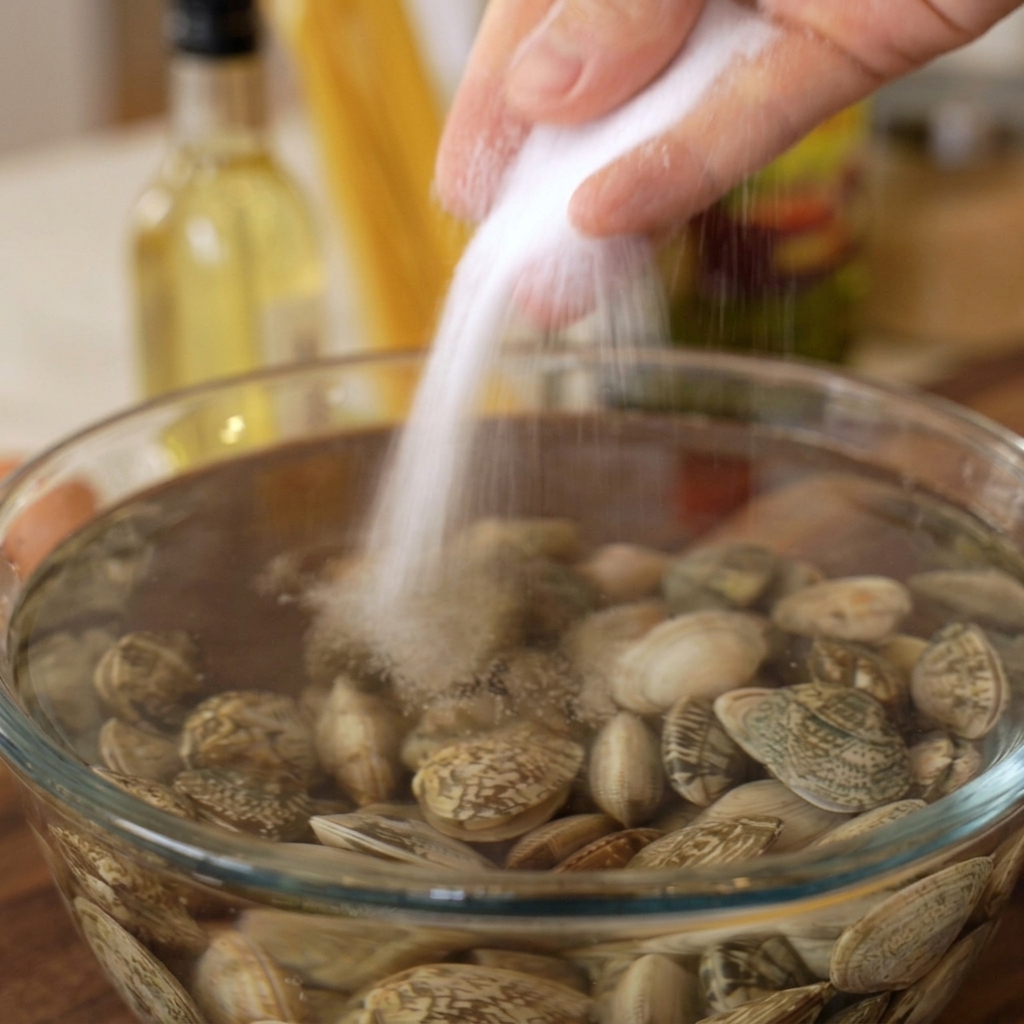
Place the fresh raw clams into a large glass bowl filled with cold water. Generously sprinkle salt over the water and let the clams soak for a while so they can spit out any trapped sand and impurities.
Tip: Simulate seawater by adding enough salt; this encourages the clams to open up and filter out the sand more effectively. - 2Prep the garlic
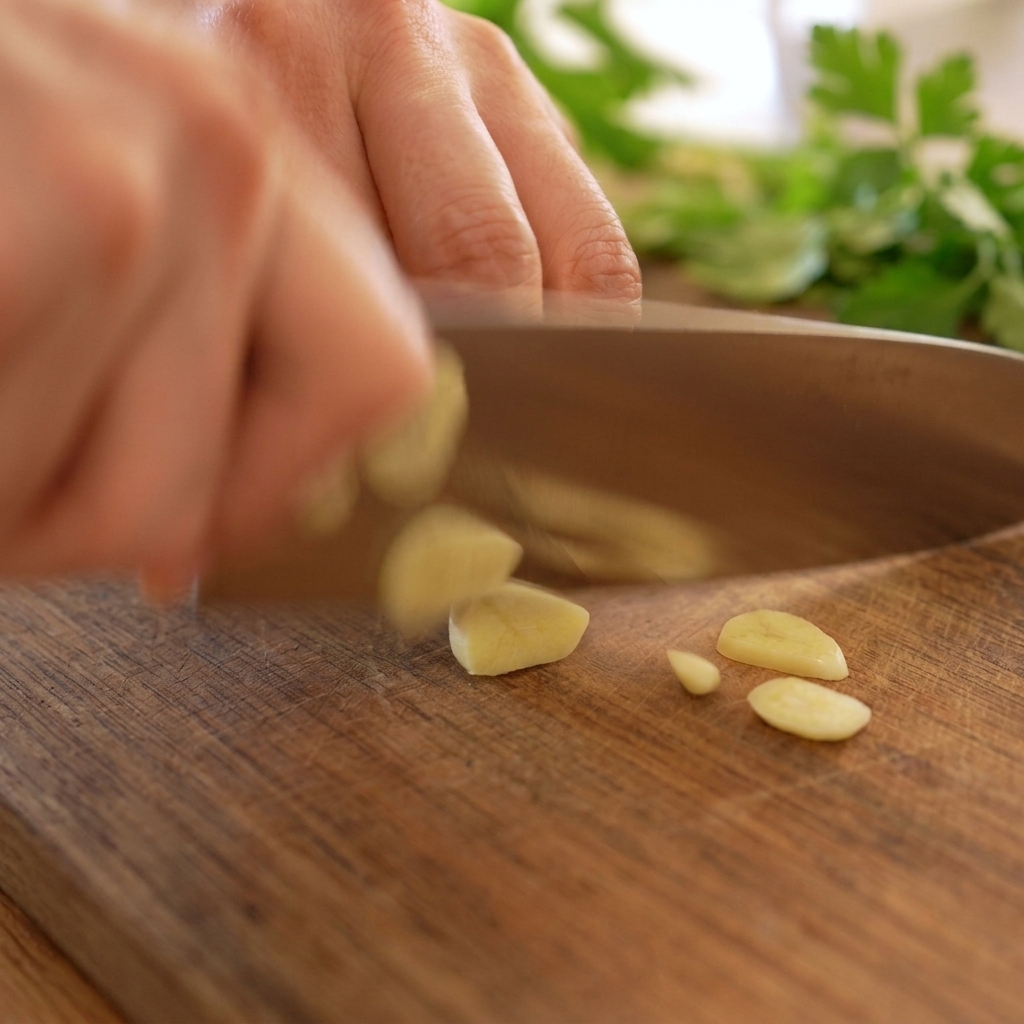
Peel the fresh garlic cloves and roughly slice them on a wooden cutting board. The sliced garlic will provide the foundational aromatic base for the pasta sauce.
Tip: Slicing rather than mincing helps prevent the garlic from burning too quickly when it hits the hot oil later. - 3De-seed the chili
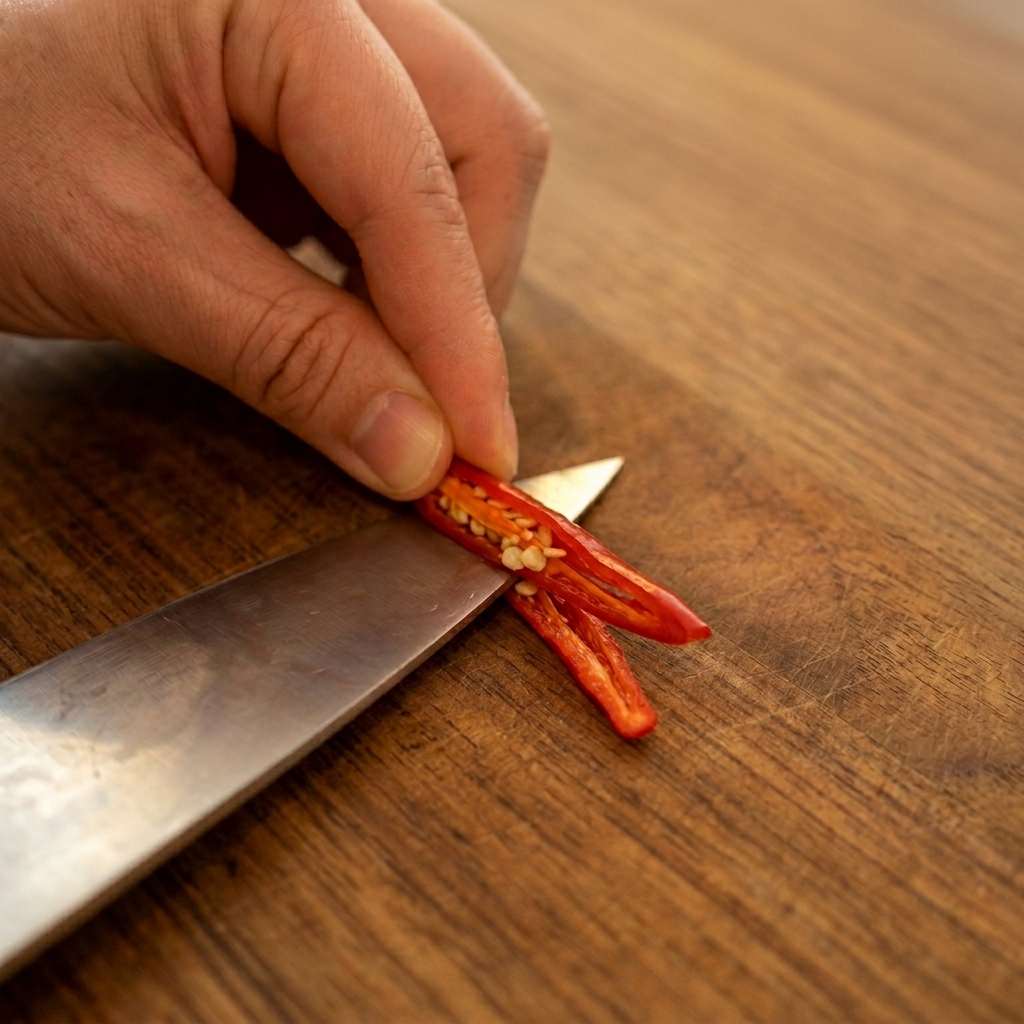
Take a small red chili pepper and slice it in half lengthwise. Use the edge of your knife to carefully scrape out and discard the seeds. This imparts a gentle heat to the dish without overpowering the delicate flavor of the clams.
Tip: Removing the seeds also improves the final texture of the dish by eliminating any hard, woody bits. - 4Chop the parsley
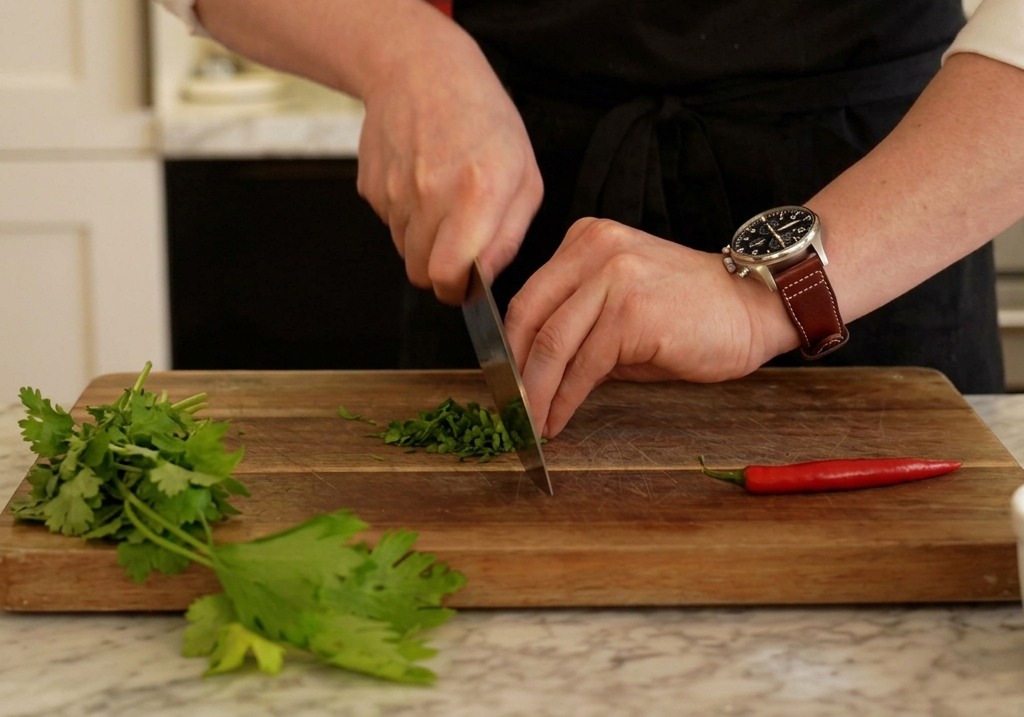
Gather a bunch of fresh green parsley and finely chop it on your cutting board. This bright herb will be used both for seasoning the dish during cooking and as a fresh garnish right before serving.
Tip: Ensure your knife is sharp so it cleanly slices through the parsley leaves rather than crushing them, which can make them dark and mushy. - 5Rinse the soaked clams
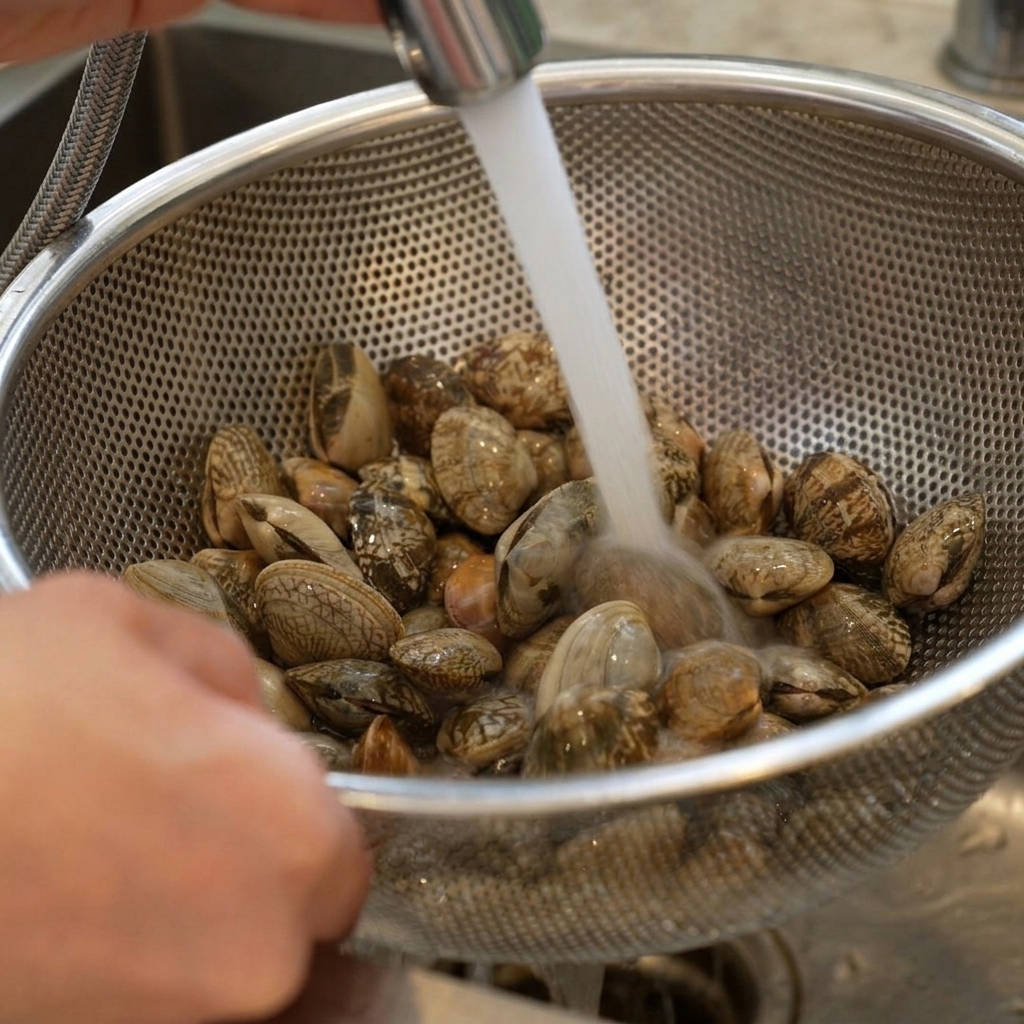
Once the clams have finished their saltwater soak and purged their sand, transfer them to a metal mesh strainer. Rinse them thoroughly under cold running tap water to wash away any remaining grit on the outside of their shells.
Tip: While rinsing, discard any clams that have broken shells or that remain wide open and refuse to close when tapped. - 6Boil the pasta
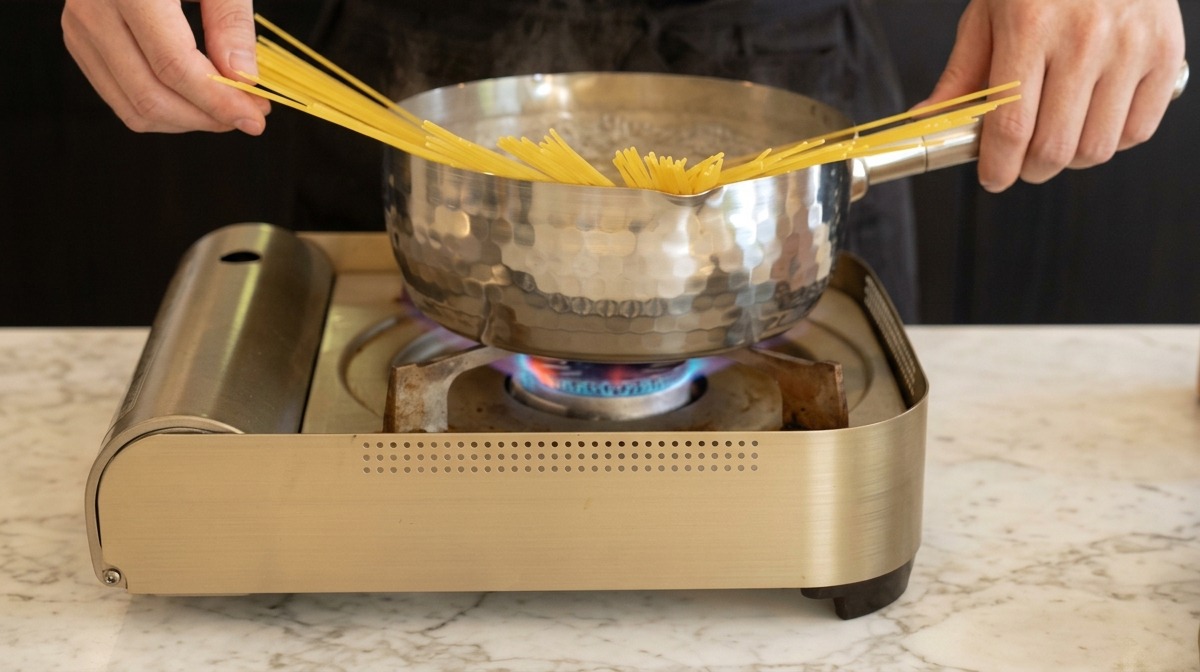
Bring a pot of generously salted water to a rolling boil. Submerge the dry spaghetti noodles into the water. Cook the pasta for about nine minutes, aiming for al dente, as it will continue to cook slightly when tossed in the clam broth.
Tip: Do not break the spaghetti. Gently push the noodles down into the water as the submerged ends begin to soften and bend. - 7Sauté the aromatics
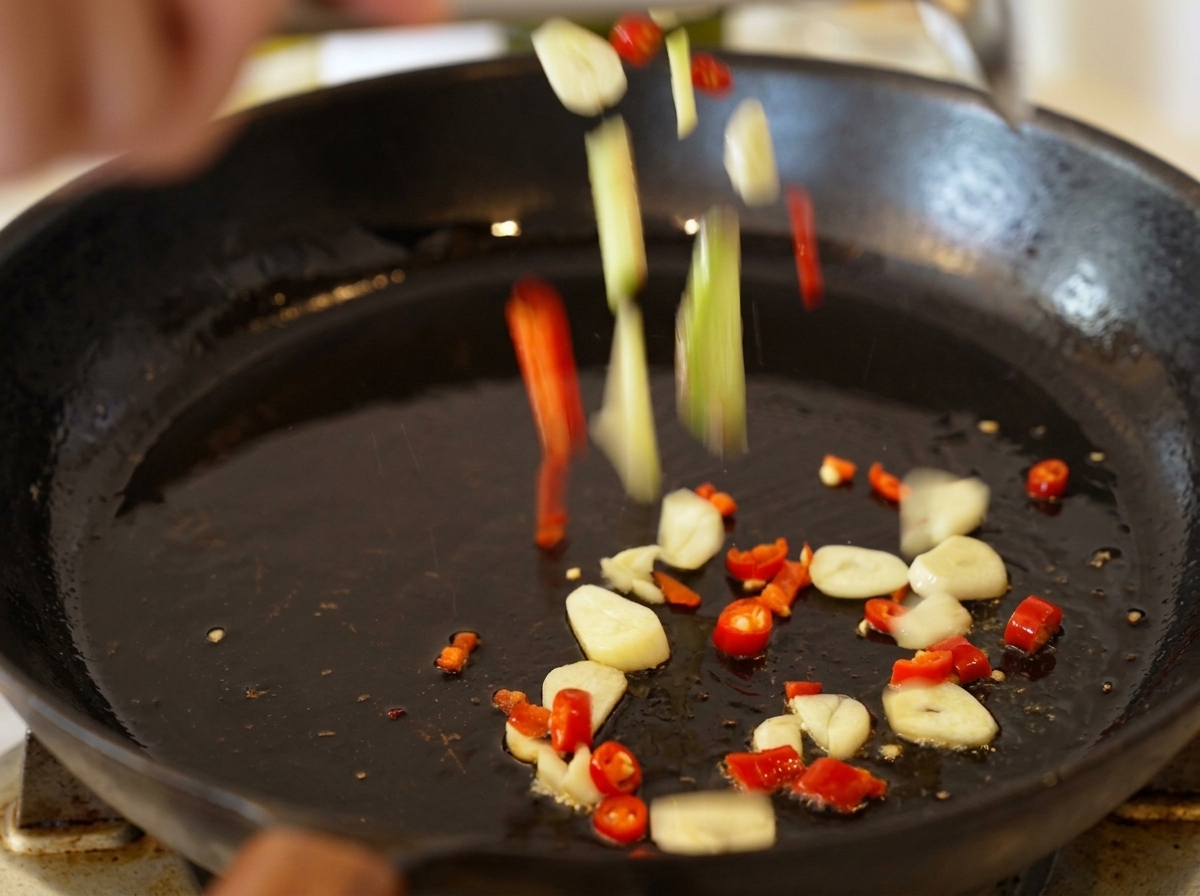
Add a generous drizzle of olive oil to a cold or slightly warm skillet, then turn the heat to low. Toss in the sliced garlic and chopped red chili, sautéing them gently until they become highly fragrant. Taking your time with this step allows the oils to infuse deeply with the aromatic flavors and a subtle hint of heat.
Tip: Always sauté garlic over low heat. High heat can easily burn the garlic, causing the entire dish to take on an unpleasant bitter flavor. - 8Add the clams
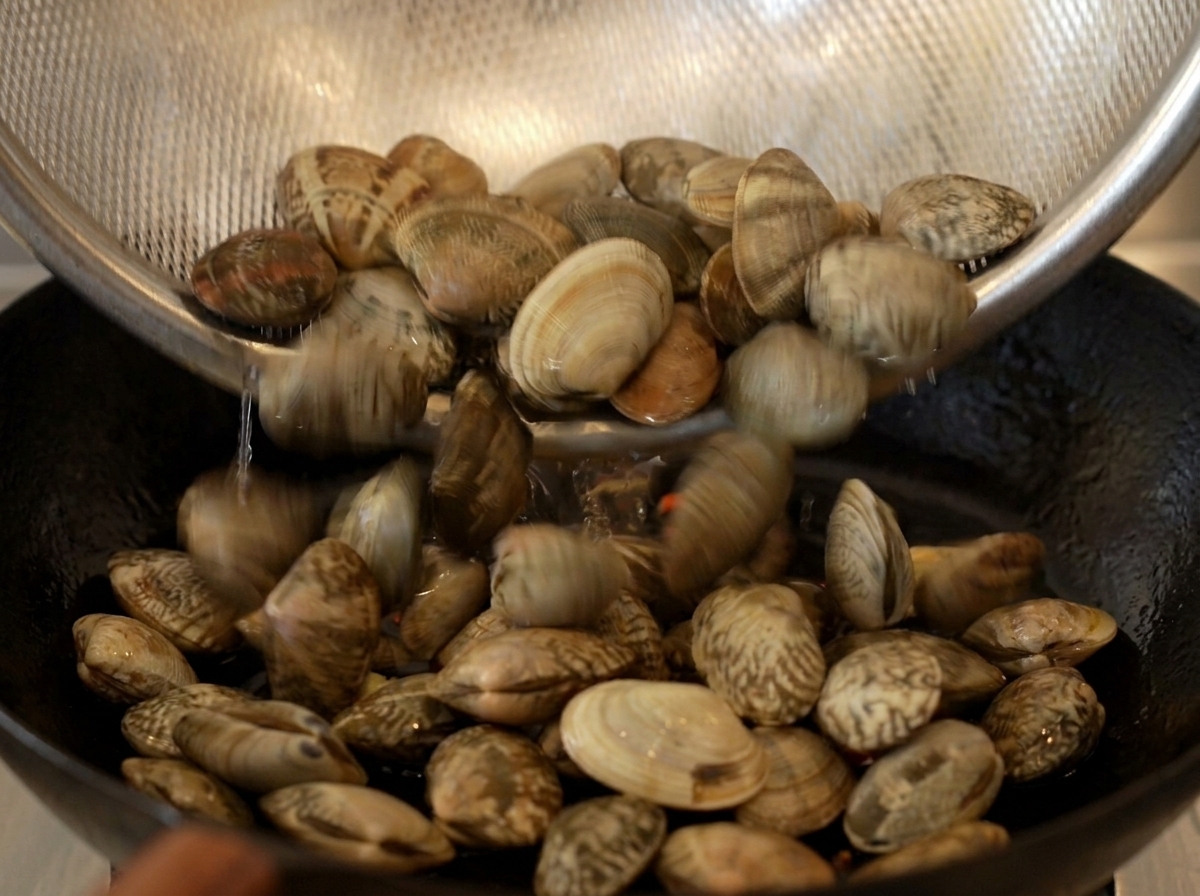
Turn the heat up to maximum and immediately pour all of the cleaned clams into the hot skillet. Keep the heat on high to maintain the temperature of the pan and ensure the clams begin cooking right away.
Tip: A very hot skillet is essential here so the clams immediately begin to sizzle and steam rather than boil slowly. - 9Pour in white wine
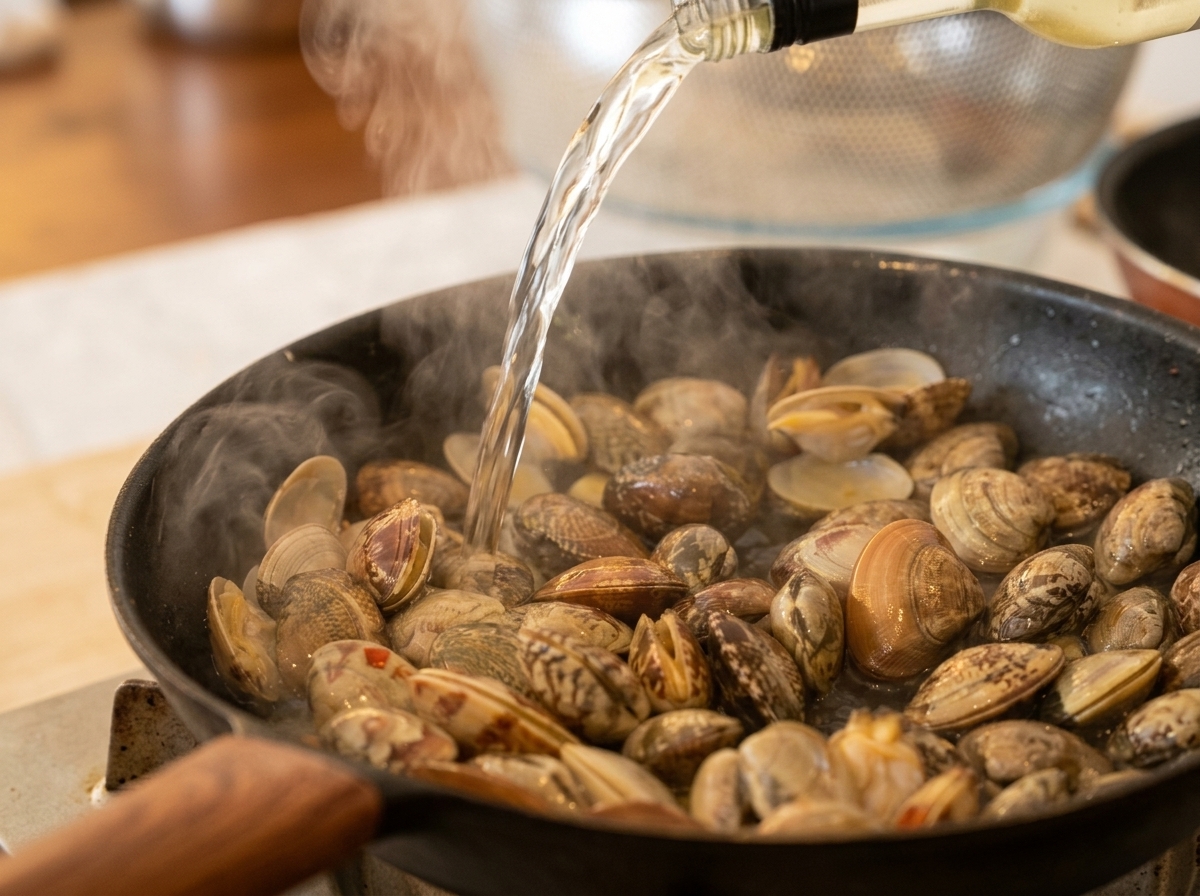
Pour the dry white wine directly into the hot skillet over the clams. The wine will rapidly steam and simmer, deglazing the pan and infusing the clams with a bright, savory depth of flavor.
Tip: Use a dry white wine rather than a sweet one to maintain the proper savory balance of the pasta dish. - 10Remove excess clams
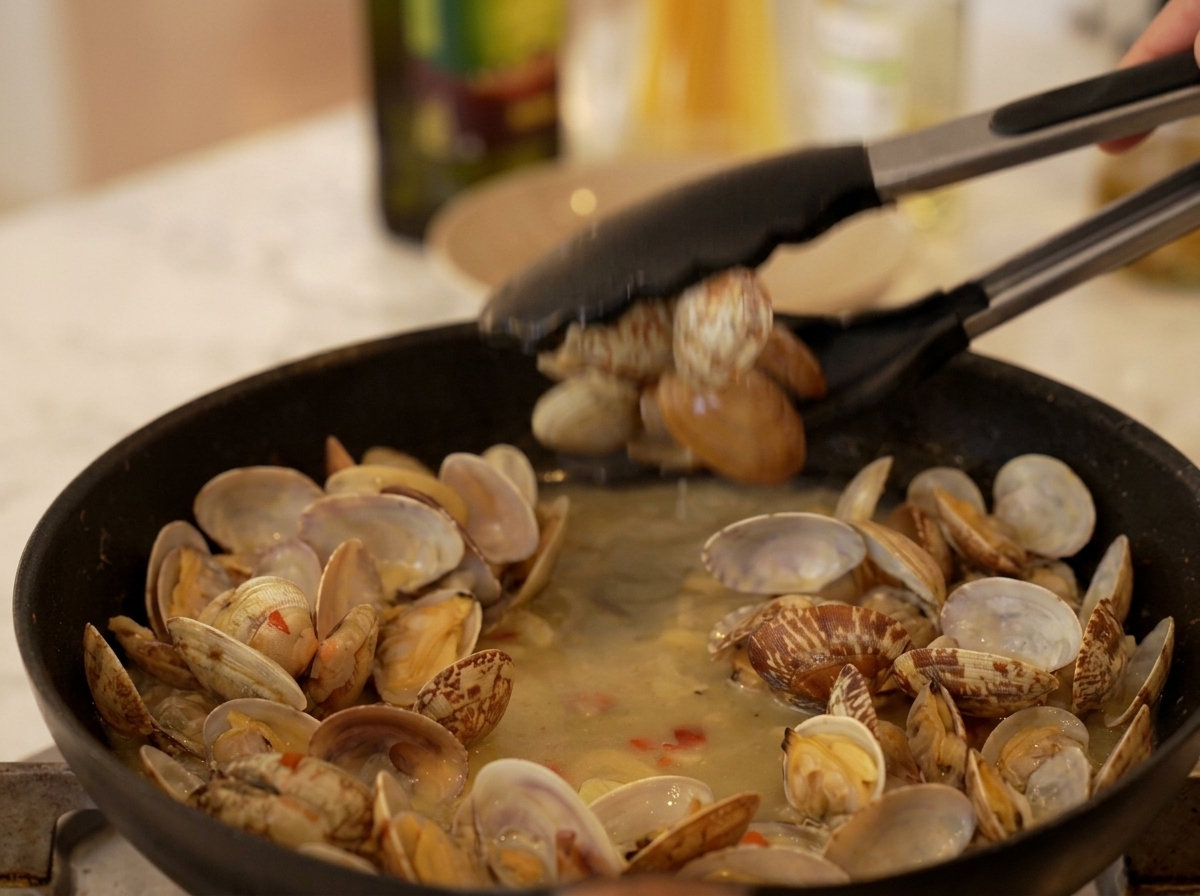
As soon as the clams have opened their shells, use tongs to remove some of them from the skillet. This prevents the delicate clam meat from overcooking and frees up essential space in the pan to easily toss the pasta.
Tip: Do not cook the clams too long; remove them right after they pop open to keep the meat tender and plump. - 11Combine pasta and clams
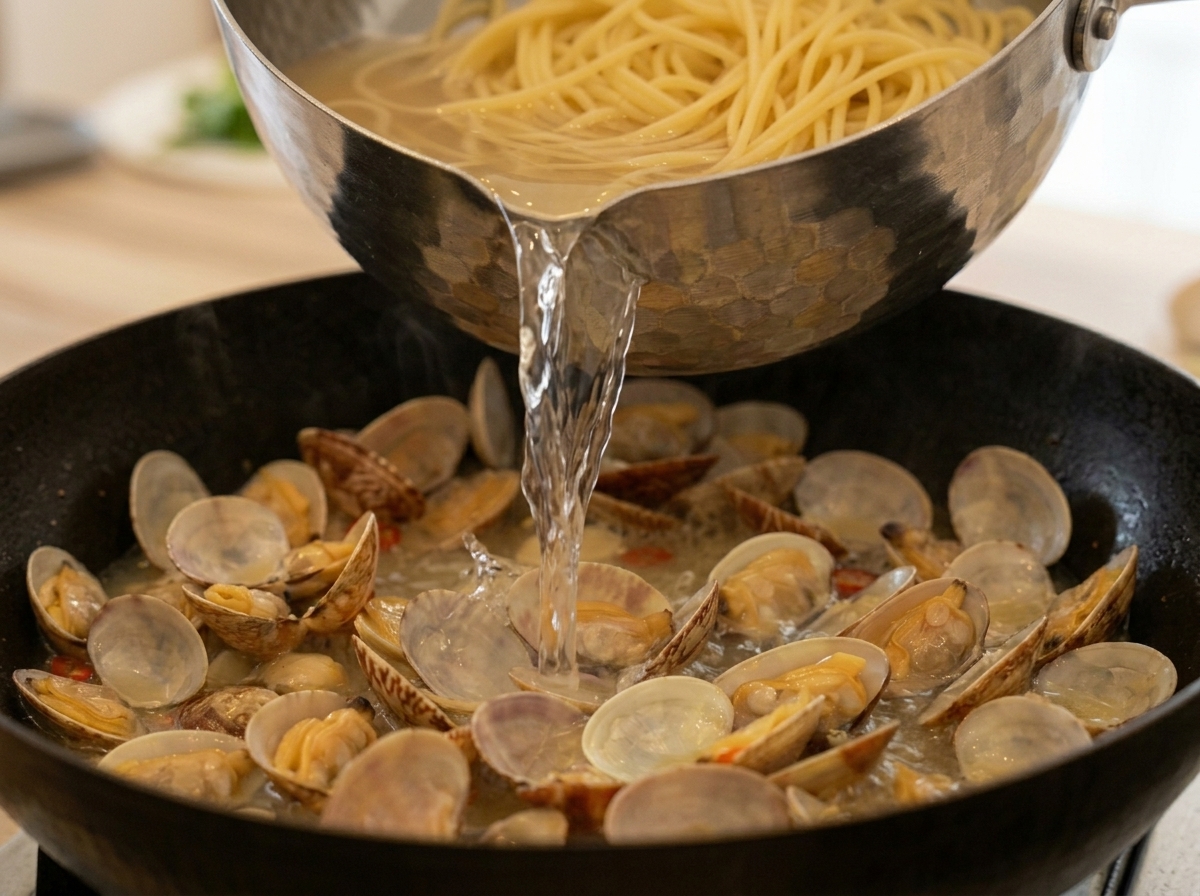
Transfer the slightly al dente spaghetti directly from its boiling pot into the skillet with the remaining clams. Ladle in a little bit of the starchy pasta water as you go to help emulsify and bind the sauce together.
Tip: Transferring the pasta directly from the water brings along precious starches that mix with the oil and wine to create a cohesive, glossy sauce. - 12Season the pasta
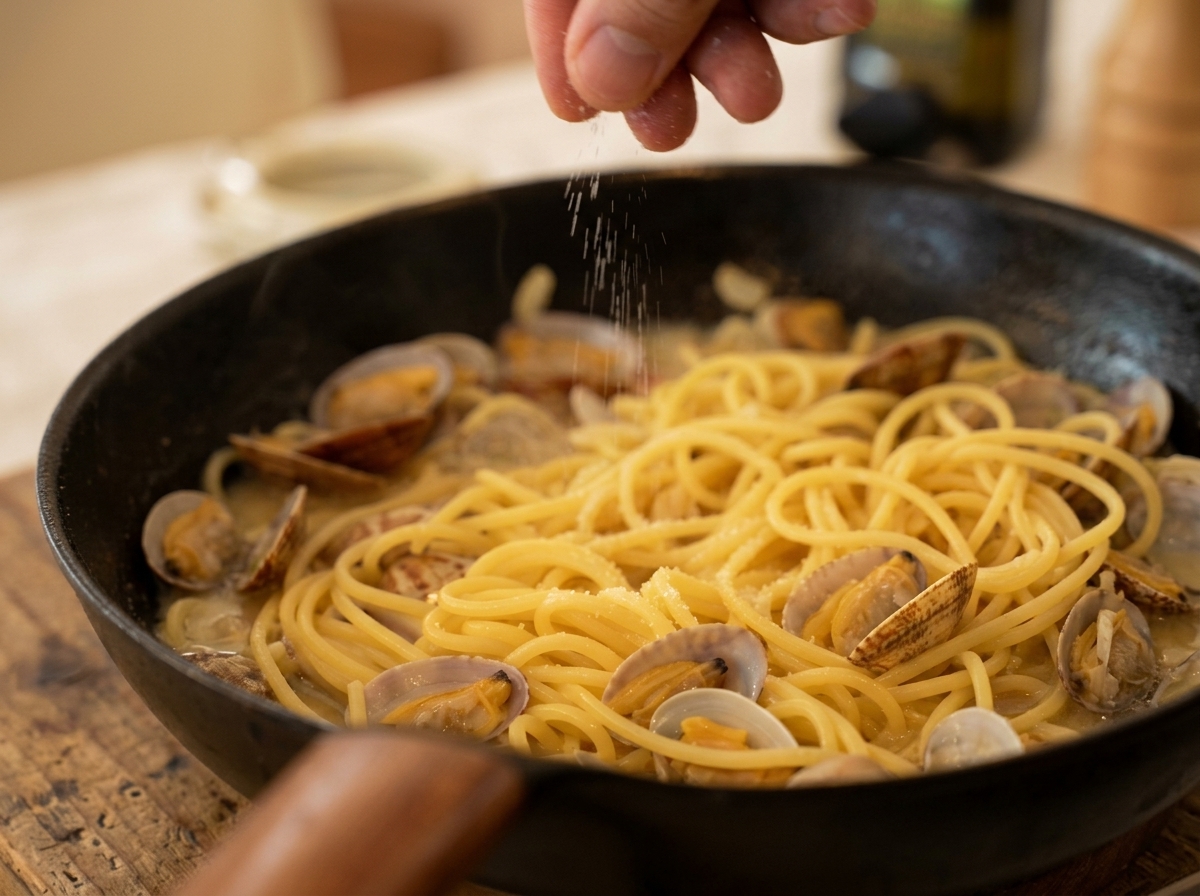
Season the dish with freshly ground black pepper and a pinch of salt if needed. Always make sure to taste the pasta first, as the clams naturally release their own briny, salty juices into the broth during cooking.
Tip: Be cautious with the salt. The natural clam juices and the salted pasta water already add a significant amount of seasoning. - 13Add a touch of butter
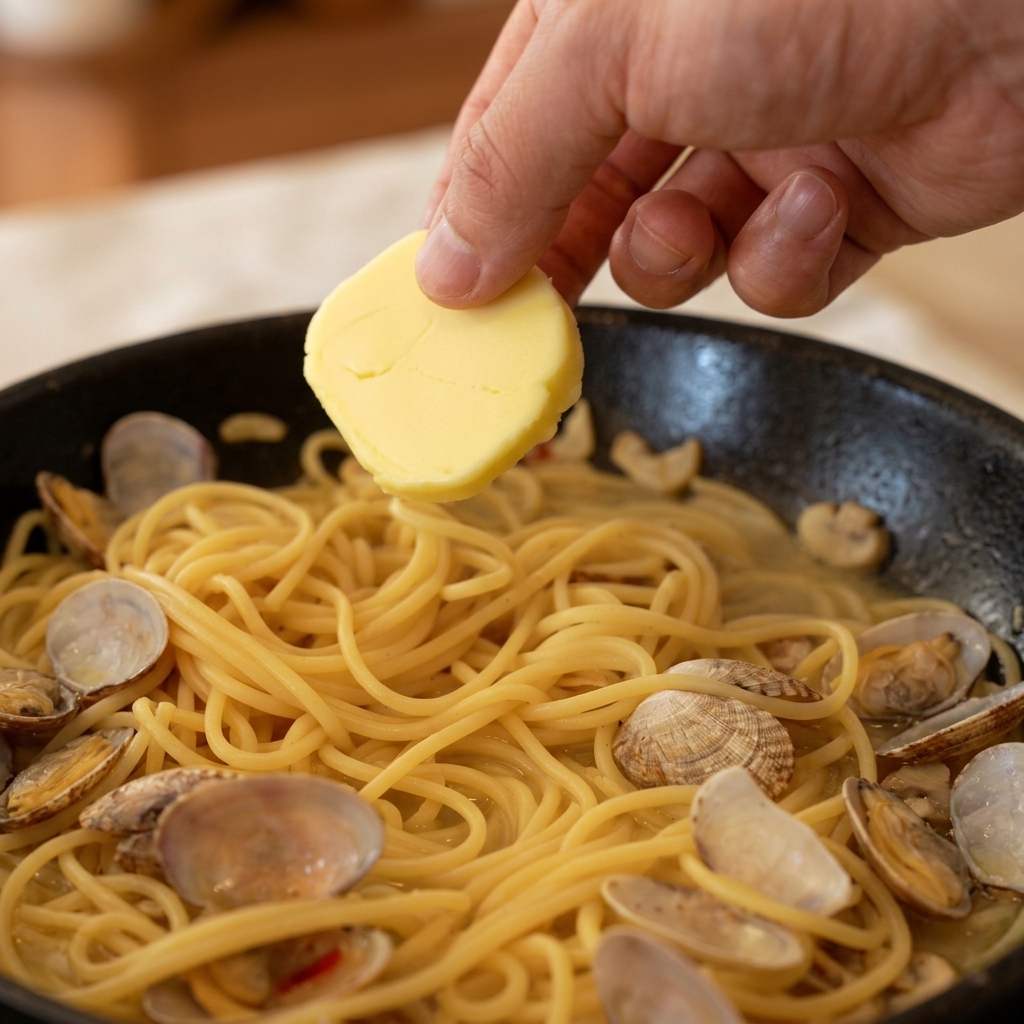
As the cooking comes to an end, drop a small piece of cold butter directly into the pan. Allow it to melt into the hot pasta and stir gently; this enriches the broth and gives the overall flavor a softer, more velvety finish.
Tip: Adding cold butter at the very end of cooking helps emulsify the pan juices into a glossy, cohesive sauce. - 14Toss with fresh parsley
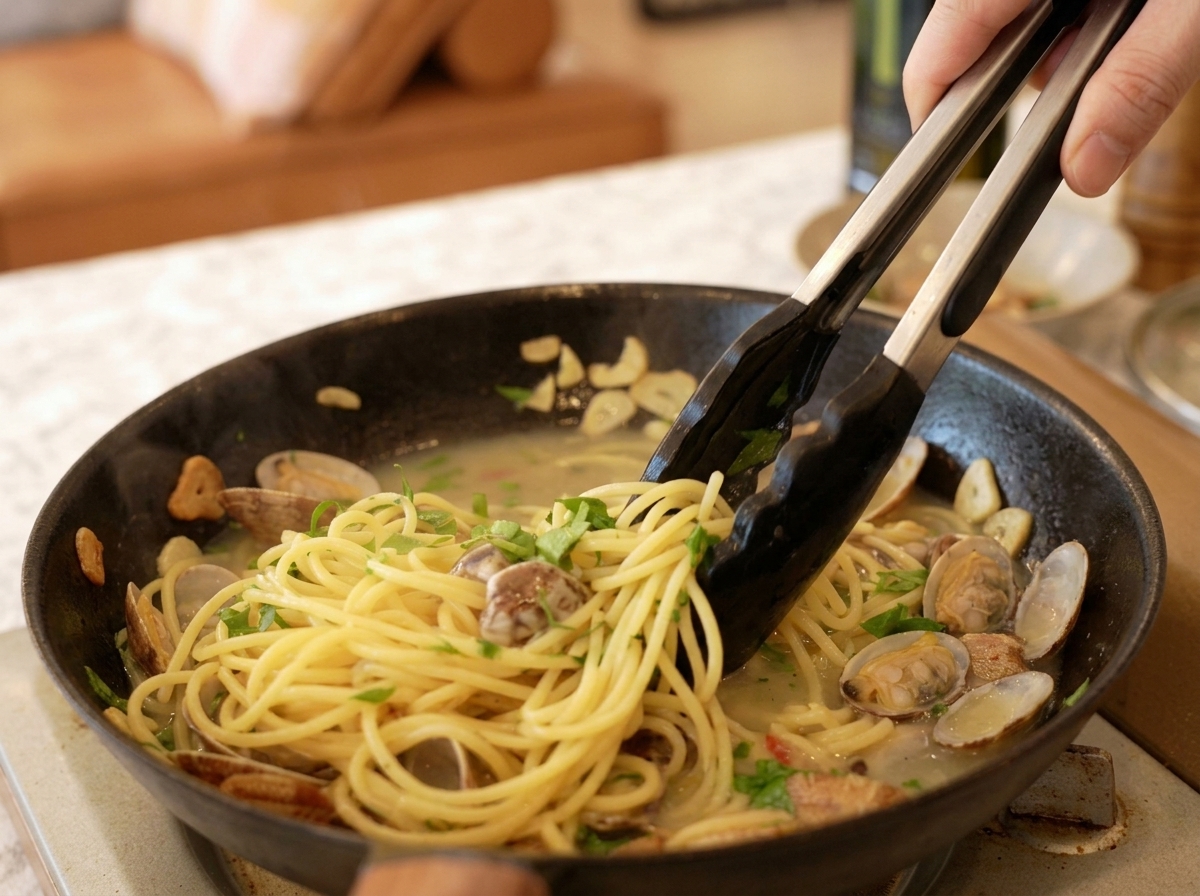
Sprinkle a generous handful of finely chopped fresh parsley over the dish. Use tongs to vigorously toss the spaghetti and clams together in the pan, ensuring the herbs release their fresh aroma and the noodles are perfectly coated.
Tip: Tossing the pasta quickly incorporates air and helps the starch from the pasta water bind the remaining liquids together. - 15Plate and serve
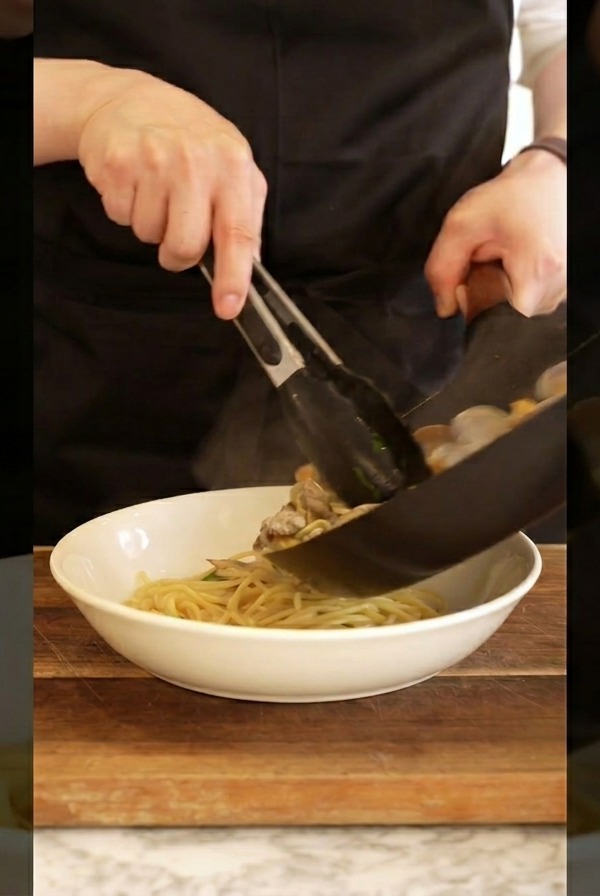
Remove the skillet from the heat. Using your tongs, twirl the spaghetti and carefully transfer it into a deep serving bowl. Spoon the remaining clams and flavorful pan broth directly over the top of the pasta. Serve immediately while piping hot.
Tip: Twirling the pasta with tongs inside a ladle or directly in the pan before transferring helps create a neat, restaurant-quality presentation.