Dried Pollock Head
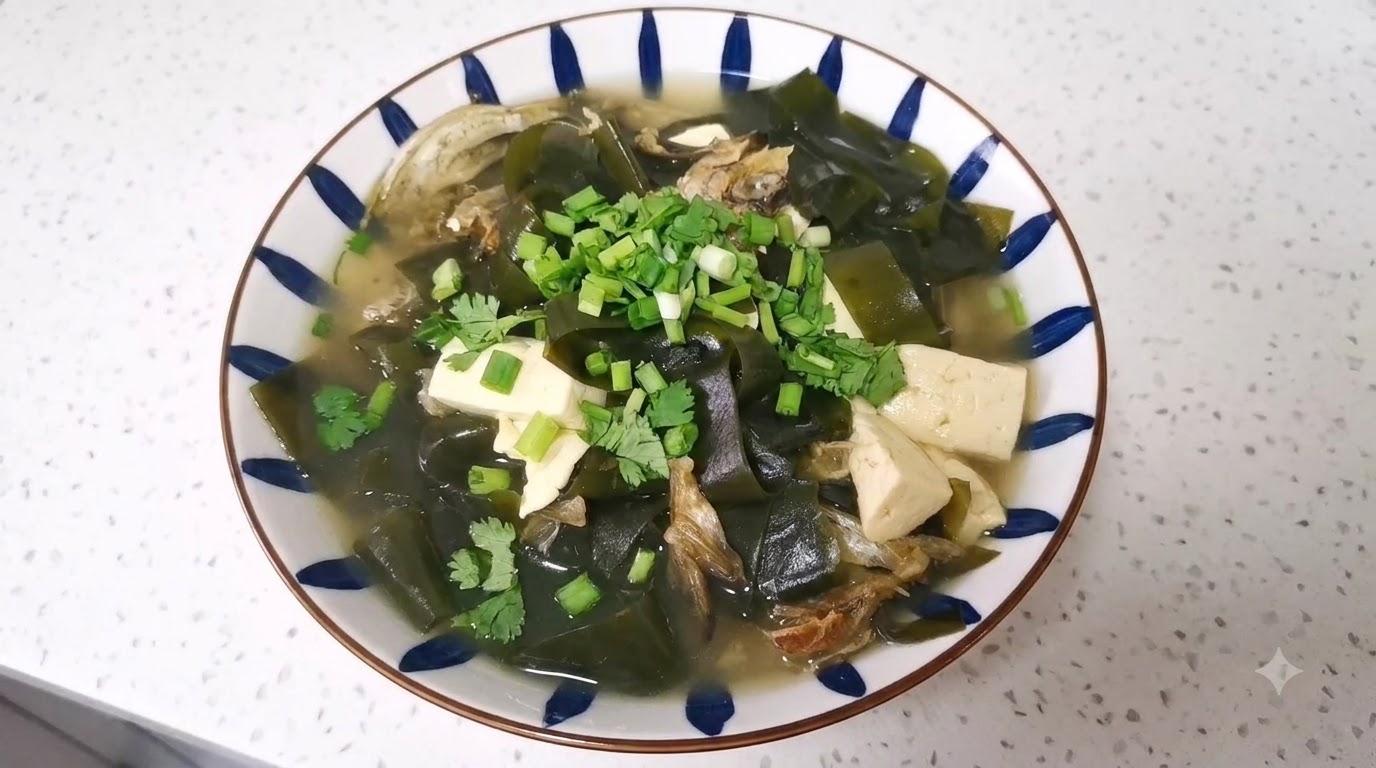
Tofu Seaweed Soup
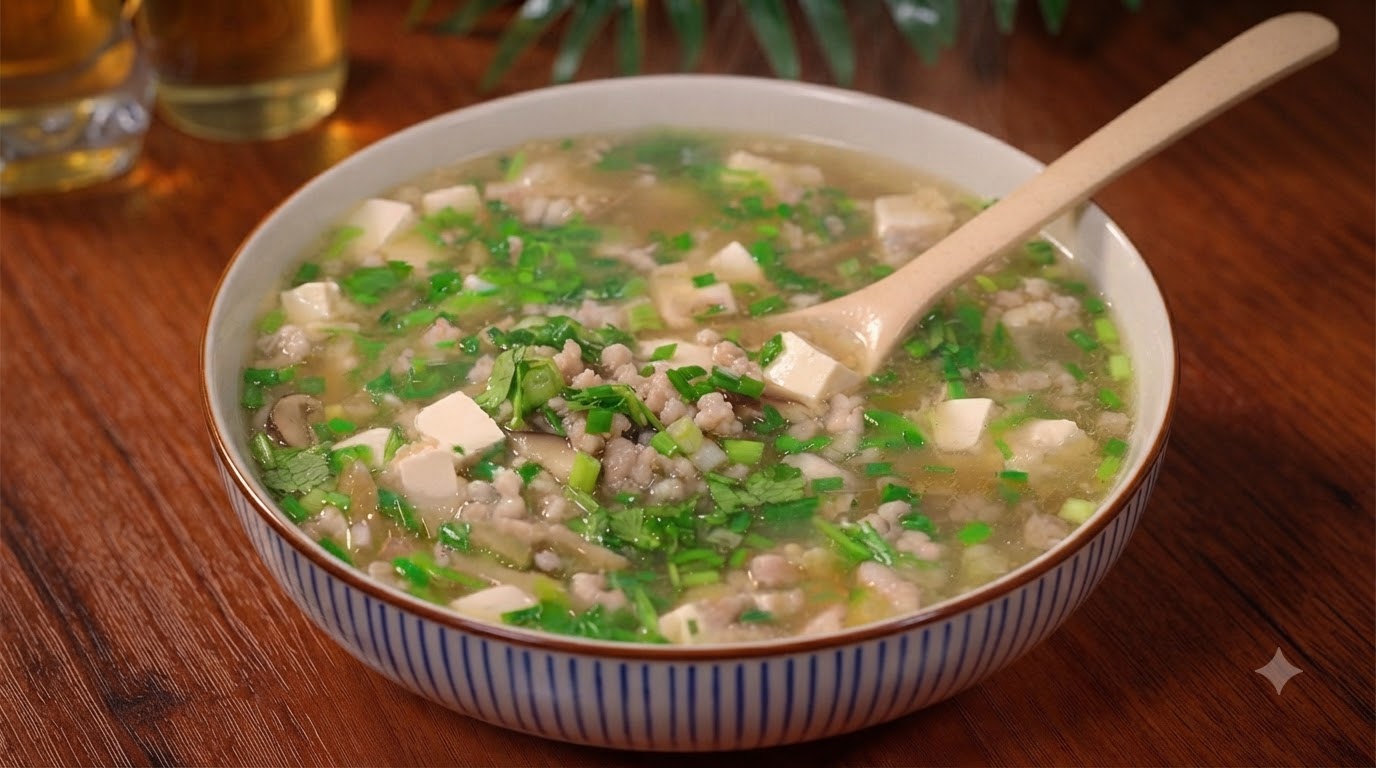
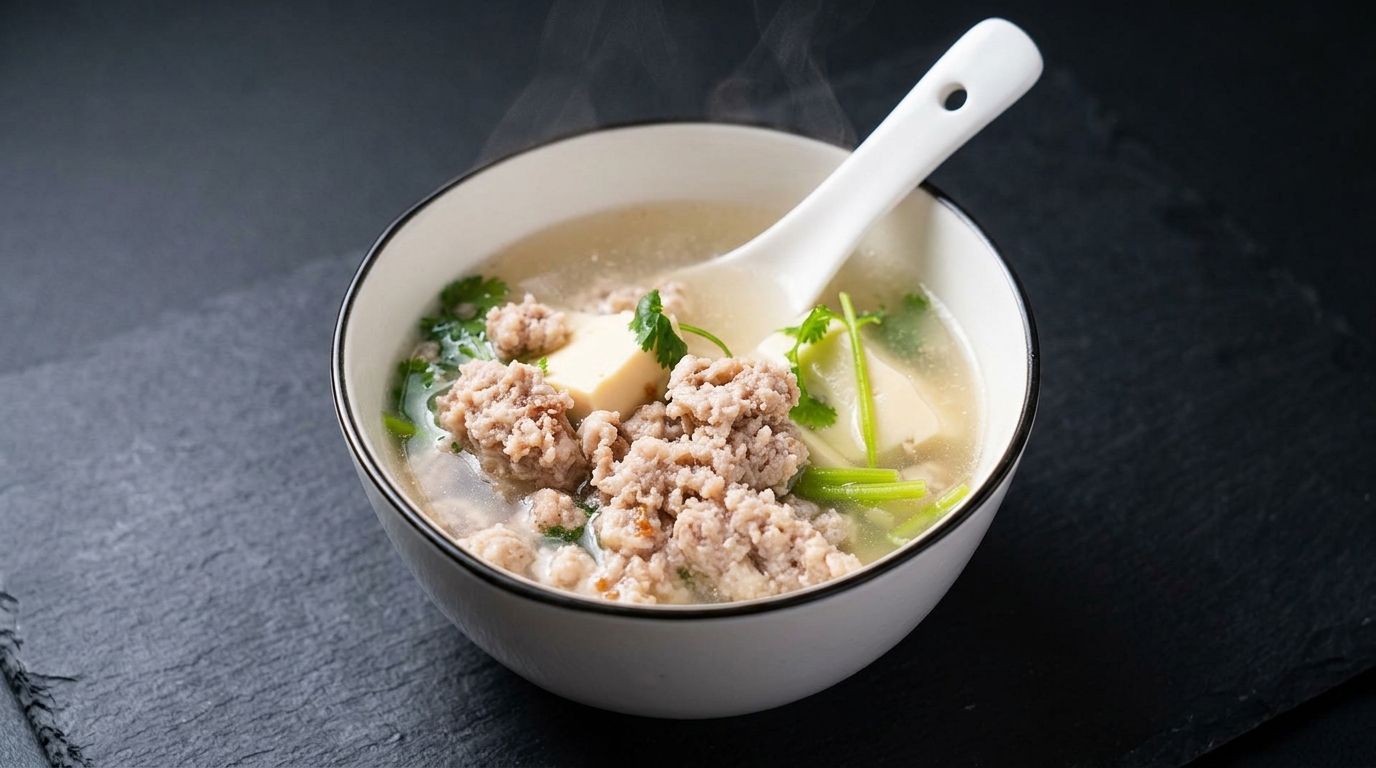
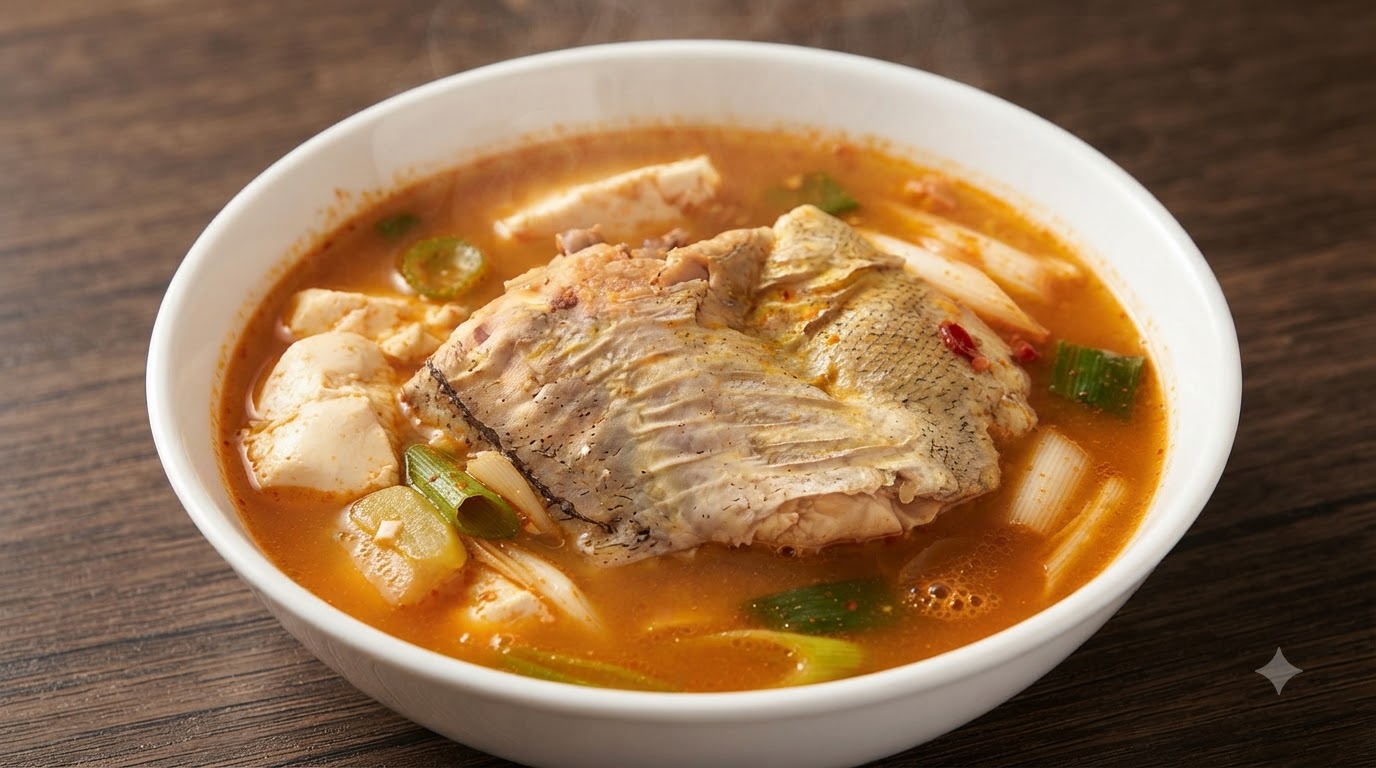
A deeply savory and comforting soup built on a clean broth of dried pollock heads. Soft tofu and tender seaweed make this a nourishing, umami-rich bowl.
Dried pollock is celebrated in many Asian cuisines for its rich, concentrated umami flavor and restorative properties. Utilizing the heads to create a base broth results in a remarkably clean and savory soup. Combined with silken tofu and hydrating seaweed, this dish is wonderfully healing, straightforward to prepare, and incredibly comforting on a cold day.
Ingredients
- 2-3 whole dried pollock heads
- 1 block tofu (cubed)
- 1 cup dried seaweed (rehydrated)
- 1 tbsp dashi powder
- to taste salt
- 4 cups cold water
- to taste scallions (chopped)
- to taste cilantro (chopped)
Instructions
- 1Clean the dried fish heads
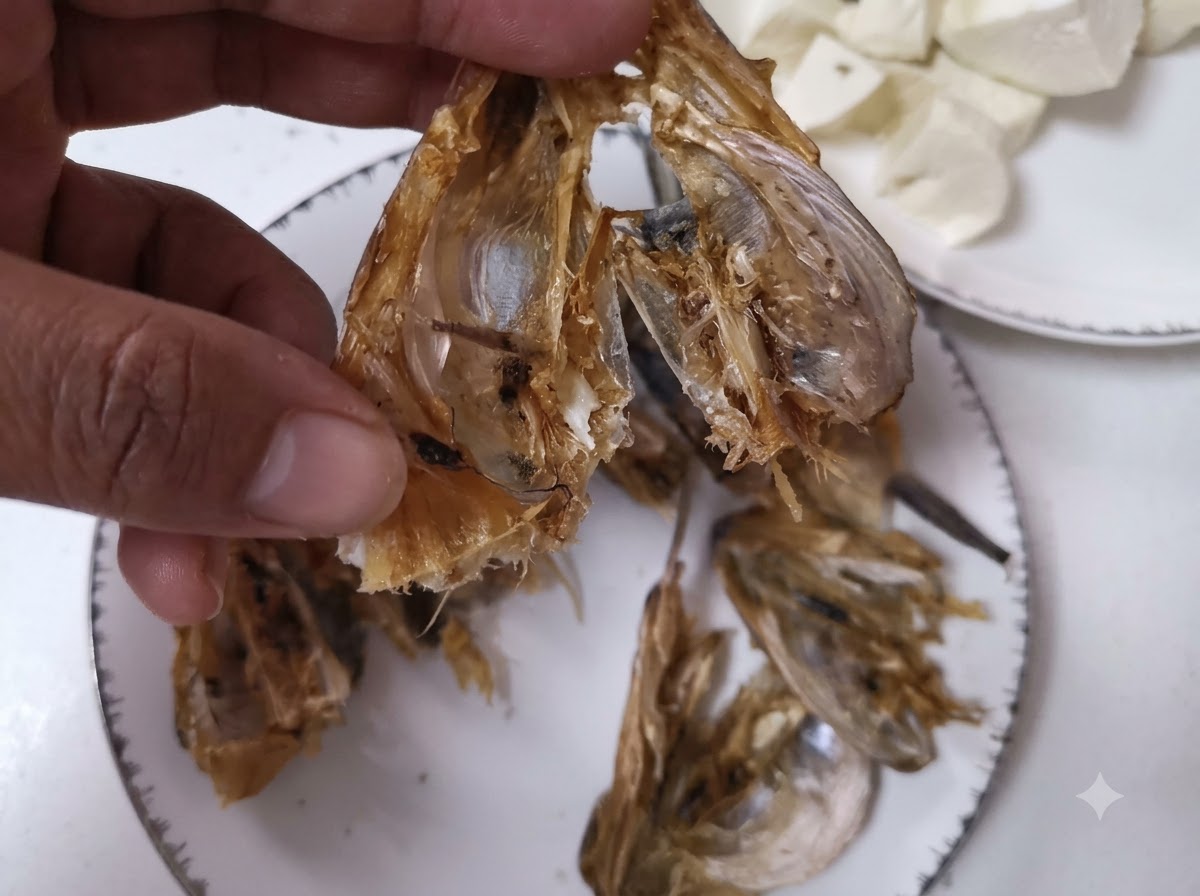
Carefully cut open the dried fish heads with a knife to thoroughly remove the gills and any internal debris. Cleaning them properly is essential to eliminate any bitter tastes or impurities before boiling.
Tip: Make sure to scrape away all dark membrane and gills completely for a clean-tasting broth. - 2Wash the fish heads
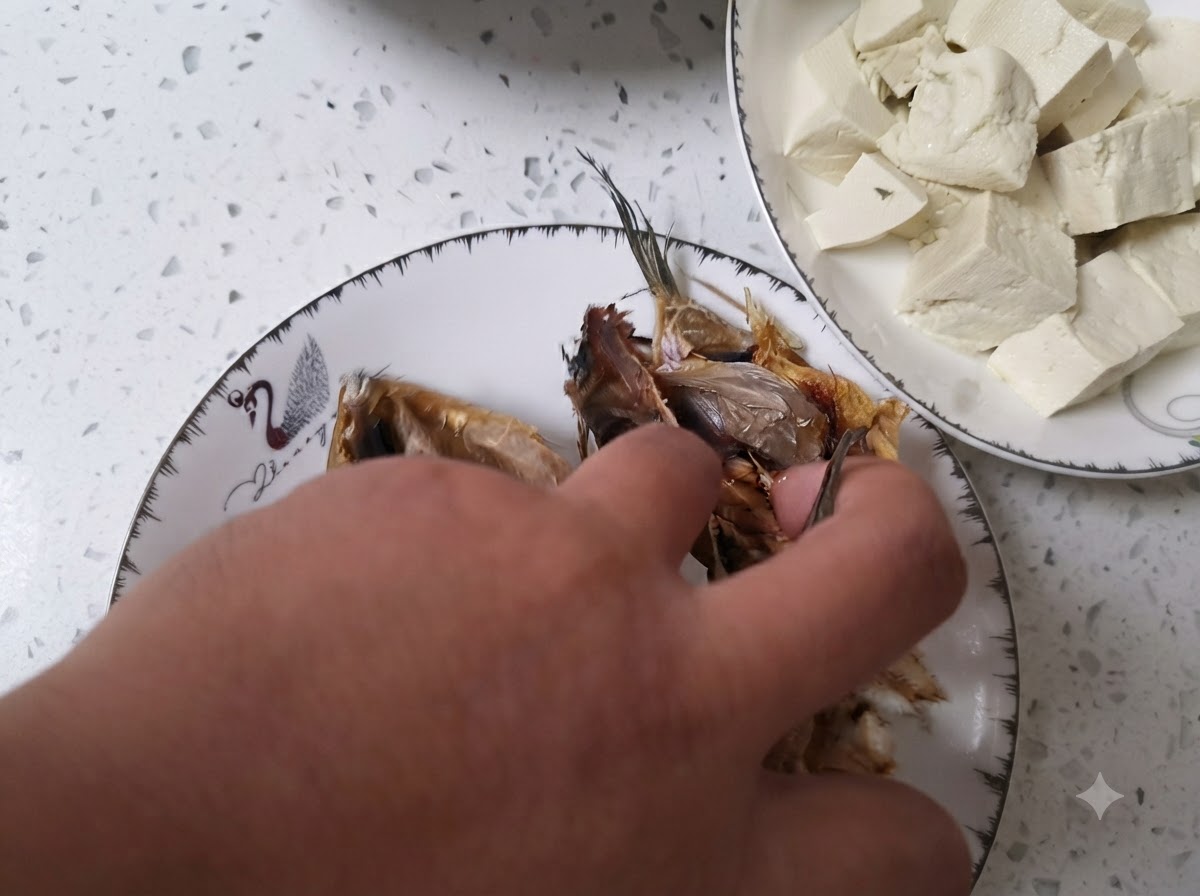
Submerge the cleaned dried fish heads into a bowl of clear water and rinse them thoroughly. This removes any remaining small particles or loose debris from the cleaning process.
Tip: Change the water if necessary to ensure the fish heads are completely clean before cooking. - 3Start boiling the fish heads
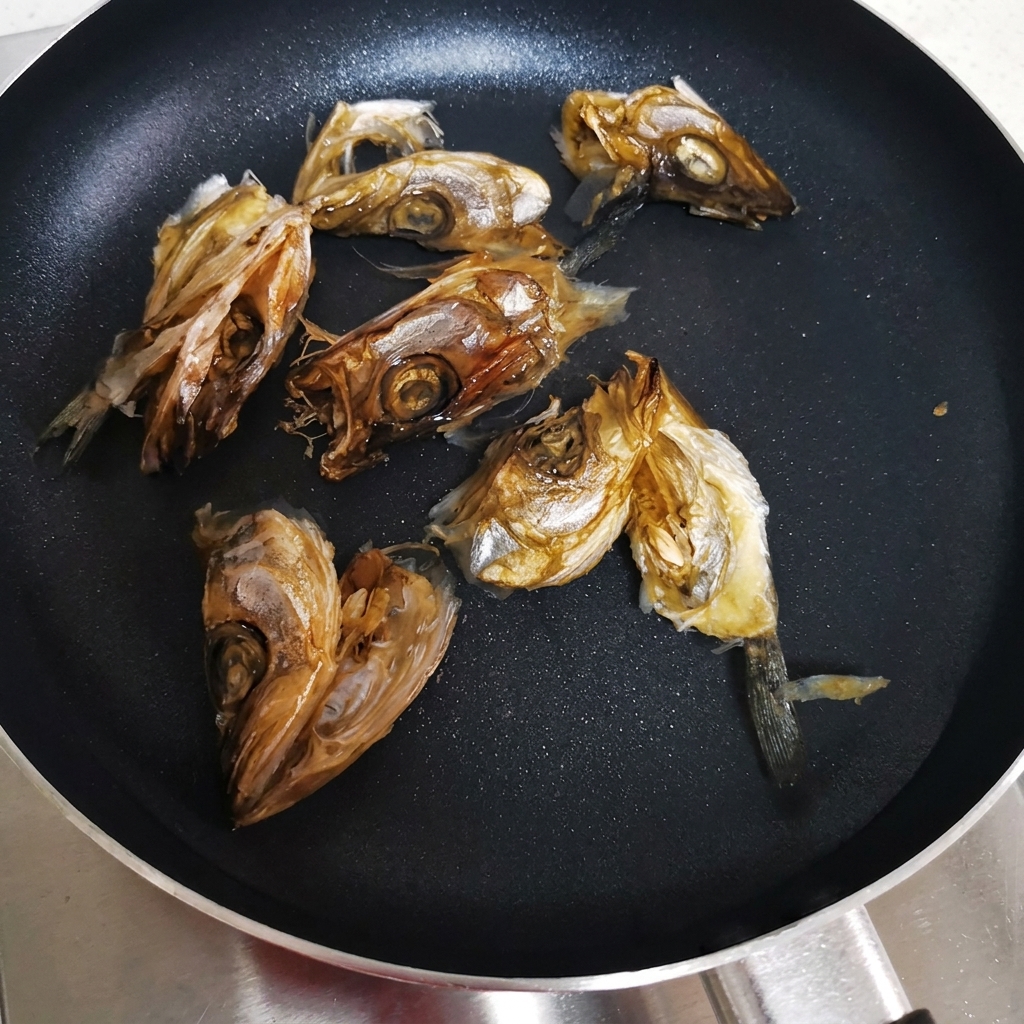
Arrange the cleaned dried fish heads into a cooking pan filled with cold water to begin making the soup base. Starting with cold water allows the flavors to extract gradually as the temperature rises.
Tip: Always use cold water for dried seafood broths to build a deeper, cleaner flavor profile. - 4Add cubed tofu
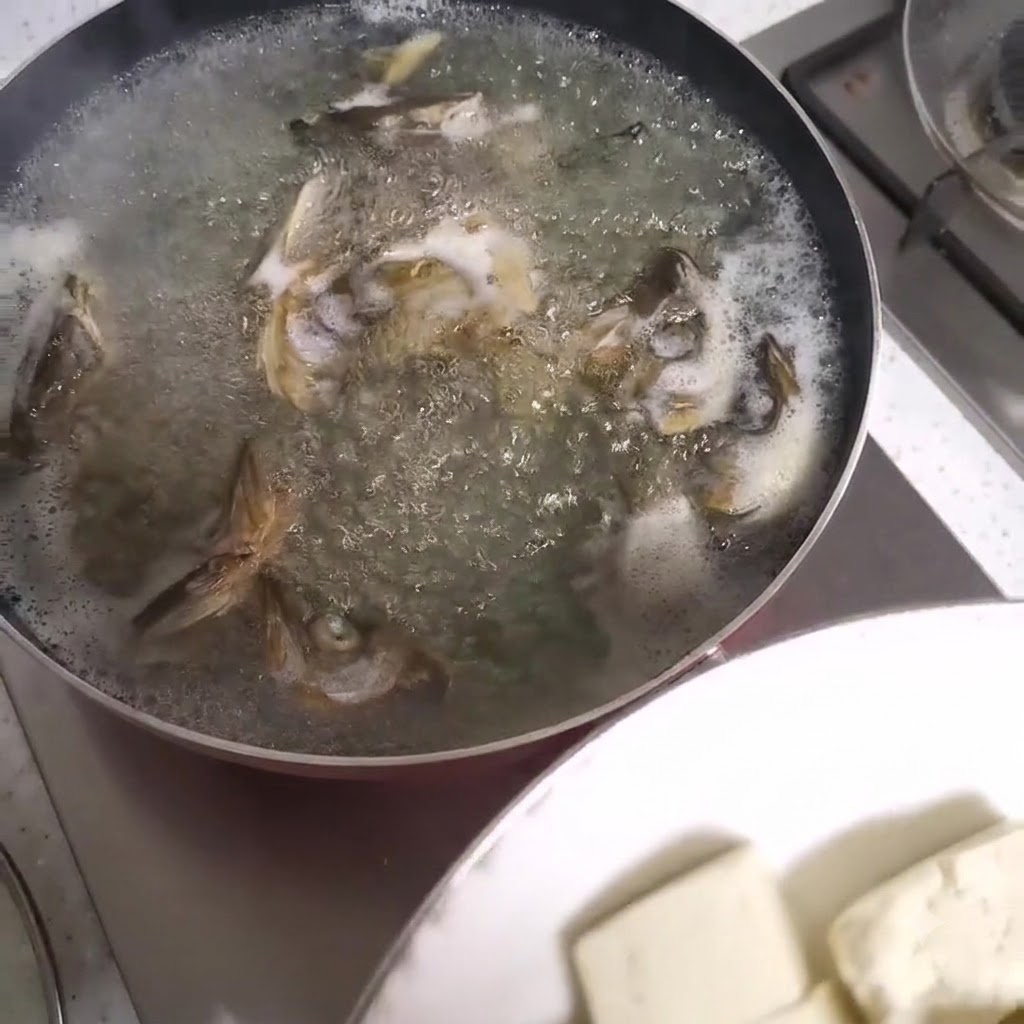
Gently drop the freshly prepared cubed tofu pieces into the actively boiling pot of fish head soup. The tofu will absorb the rich flavors of the broth while cooking.
Tip: Add the tofu gently to avoid breaking the soft cubes in the boiling liquid. - 5Add seaweed pieces
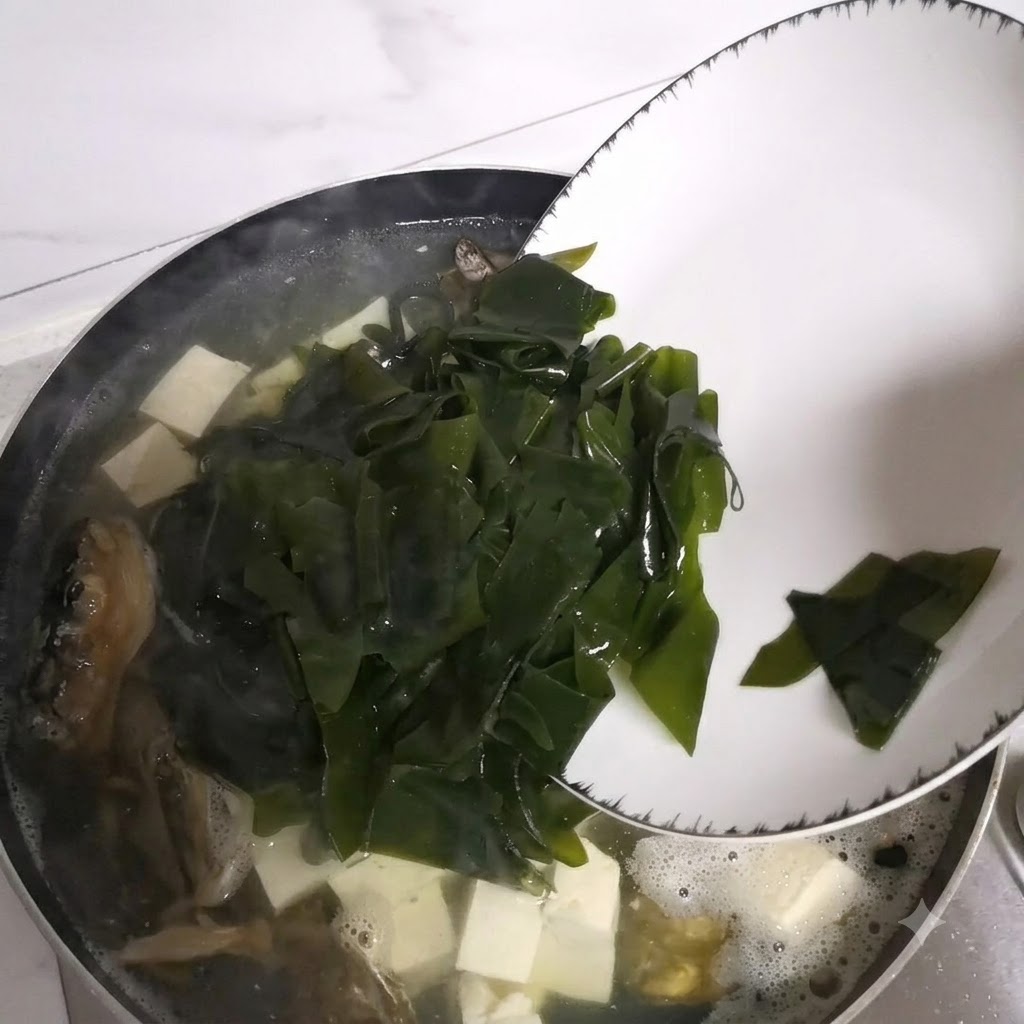
Pour a generous amount of prepared seaweed pieces from a white plate directly into the simmering pot containing the fish heads and tofu. Seaweed adds an essential umami depth and savory ocean flavor to the soup.
Tip: Ensure the seaweed is evenly distributed into the broth so it rehydrates and cooks uniformly. - 6Season with dashi powder
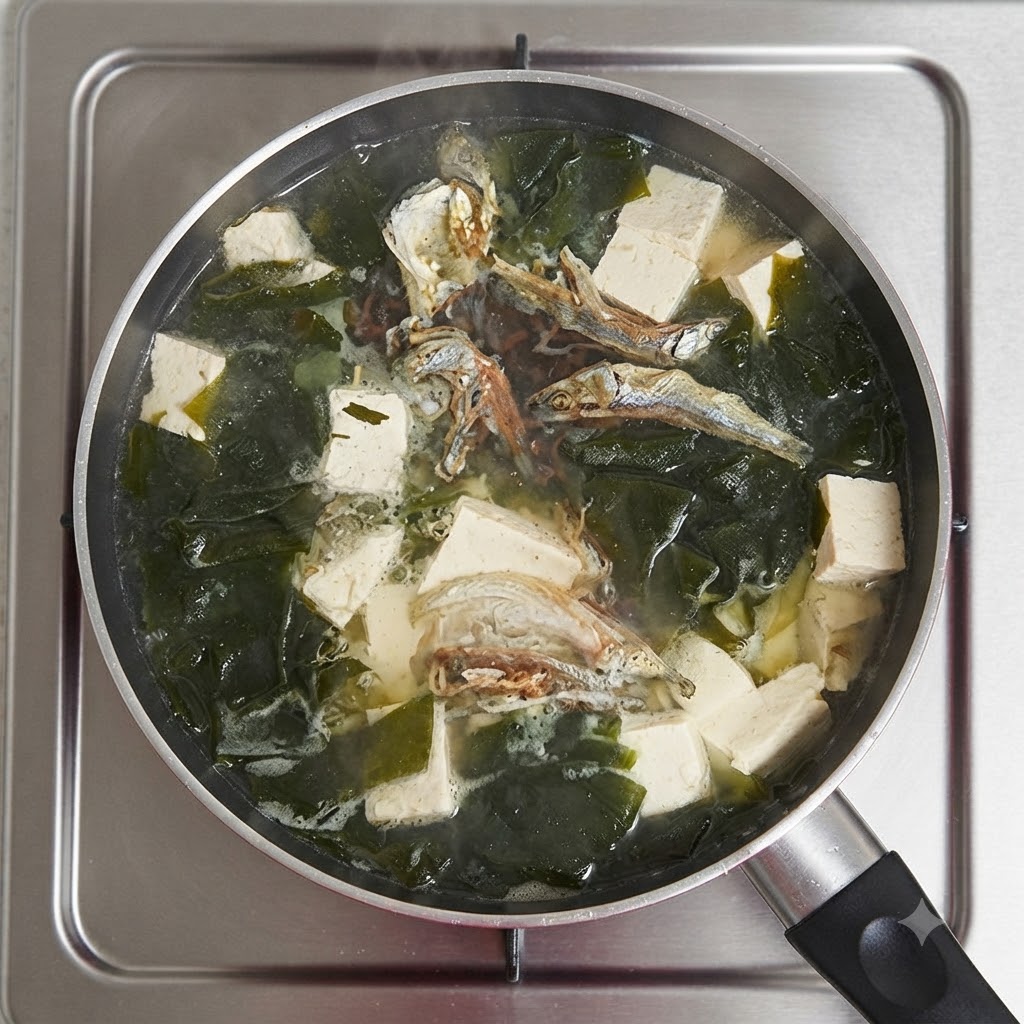
Add dashi powder seasoning directly into the simmering soup pot to enhance the savory umami taste of the broth. Stir well to dissolve the seasoning completely.
Tip: Add seasoning gradually and taste the broth to achieve your preferred balance of flavor. - 7Season with salt
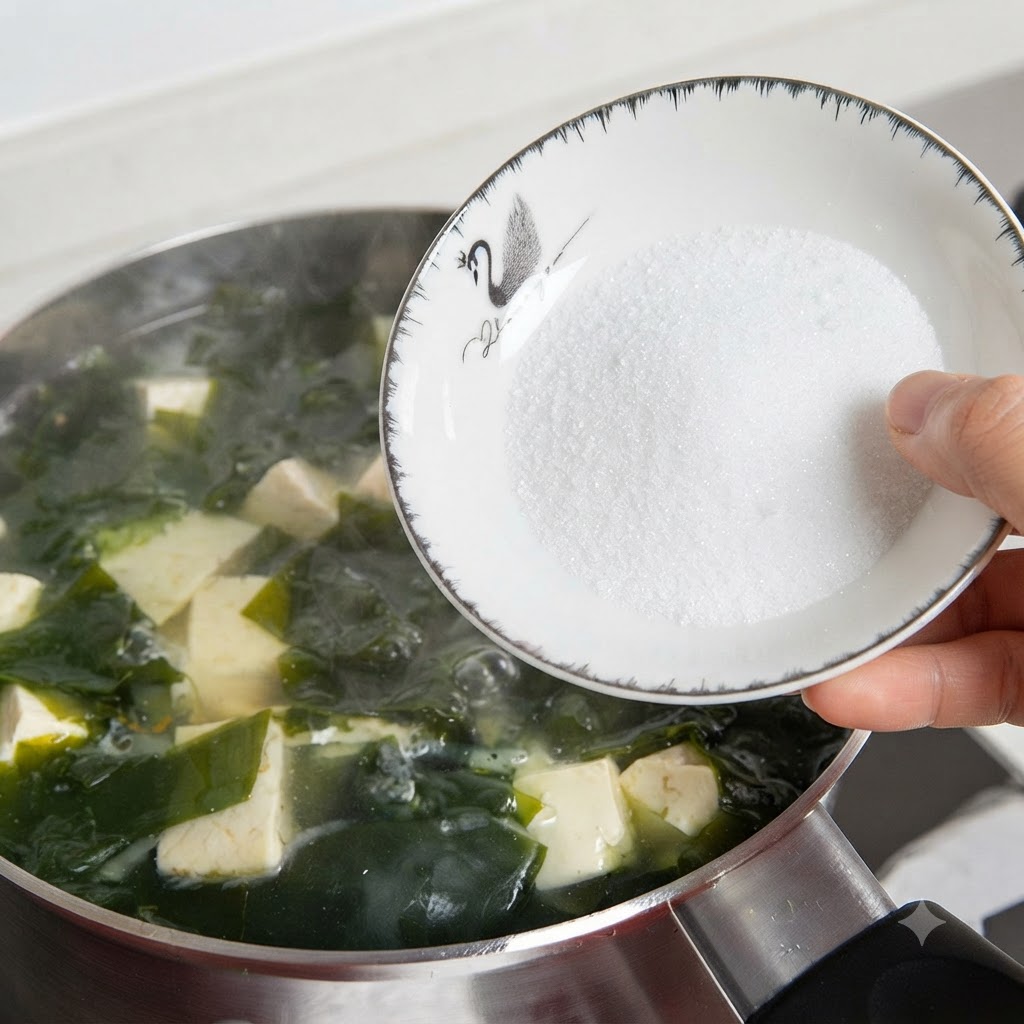
Add an appropriate amount of salt to the simmering pot of seaweed and tofu soup to enhance and balance the savory flavors of the broth.
Tip: Add salt gradually and taste the broth before adding more to prevent it from becoming overly salty.