Authentic Ichiran-Style Tonkotsu Ramen (Pork Bone Broth)
Master the legendary creamy white pork broth with this 6 hour Ichiran style recipe featuring thin straight noodles and the secret soul sauce seasoning base.
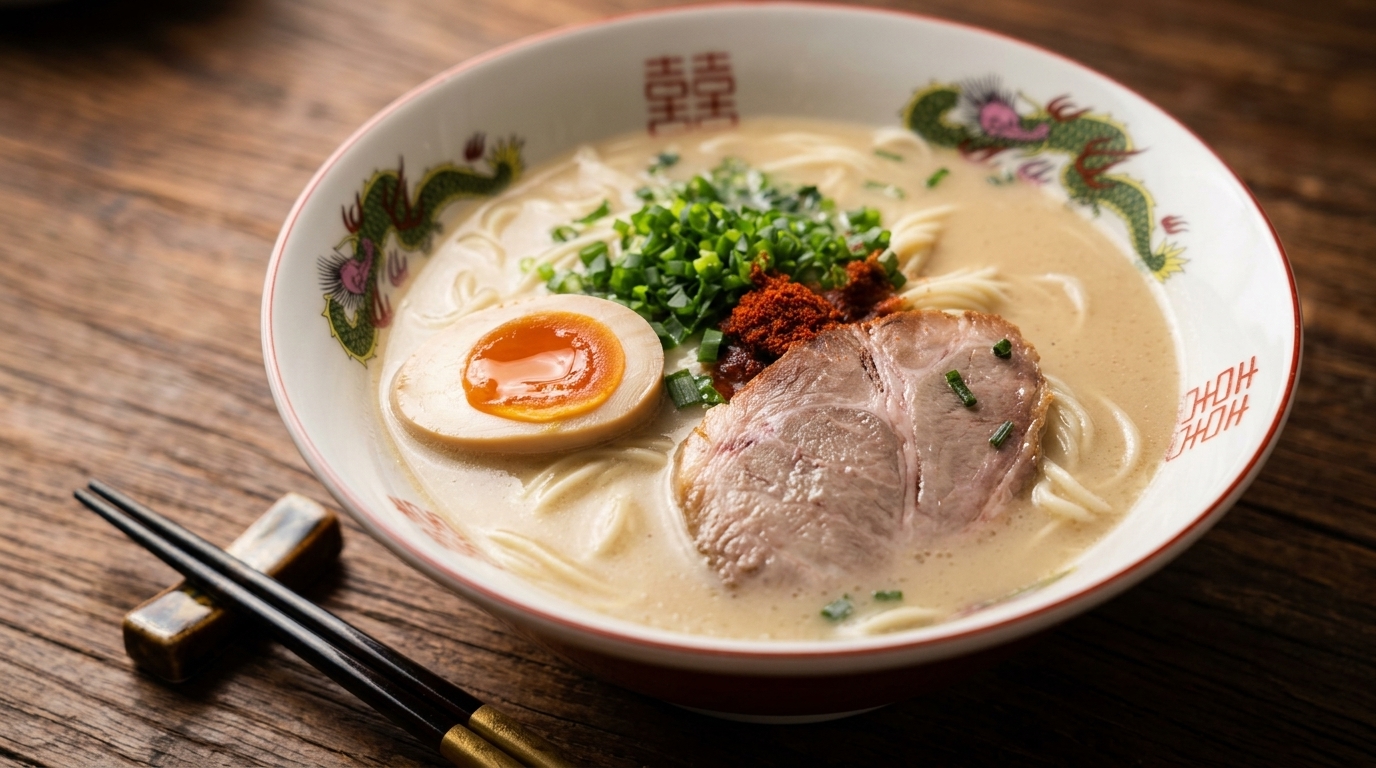
Tonkotsu ramen originated in Fukuoka, but Ichiran made its specific creamy broth and customizable experience famous worldwide. This version focuses on the Hakata-style white emulsion, achieved through a vigorous 6-hour boil of various pork bones. The hallmark of the dish is the balance between the rich, fatty broth and the sharp, umami-rich seasoning sauce.
Ingredients
- 3 kg pork bones (leg bones, spinal bones, and back bones)
- 2 pieces pig trotters
- 14 head cabbage
- 1 onion
- 1 apple
- 1 potato
- 2 bulbs garlic
- 50 g ginger
- 1 carrot
- 2 pieces dried kombu
- 5 dried shiitake mushrooms
- 100 ml Thai fish sauce
- to taste salt and MSG
- 1 tbsp pork lard (per serving)
- 400 g thin ramen noodles
- optional chashu pork slices, soft-boiled egg, scallions, and red chili paste
Instructions
- 1Blanch and Clean the Bones
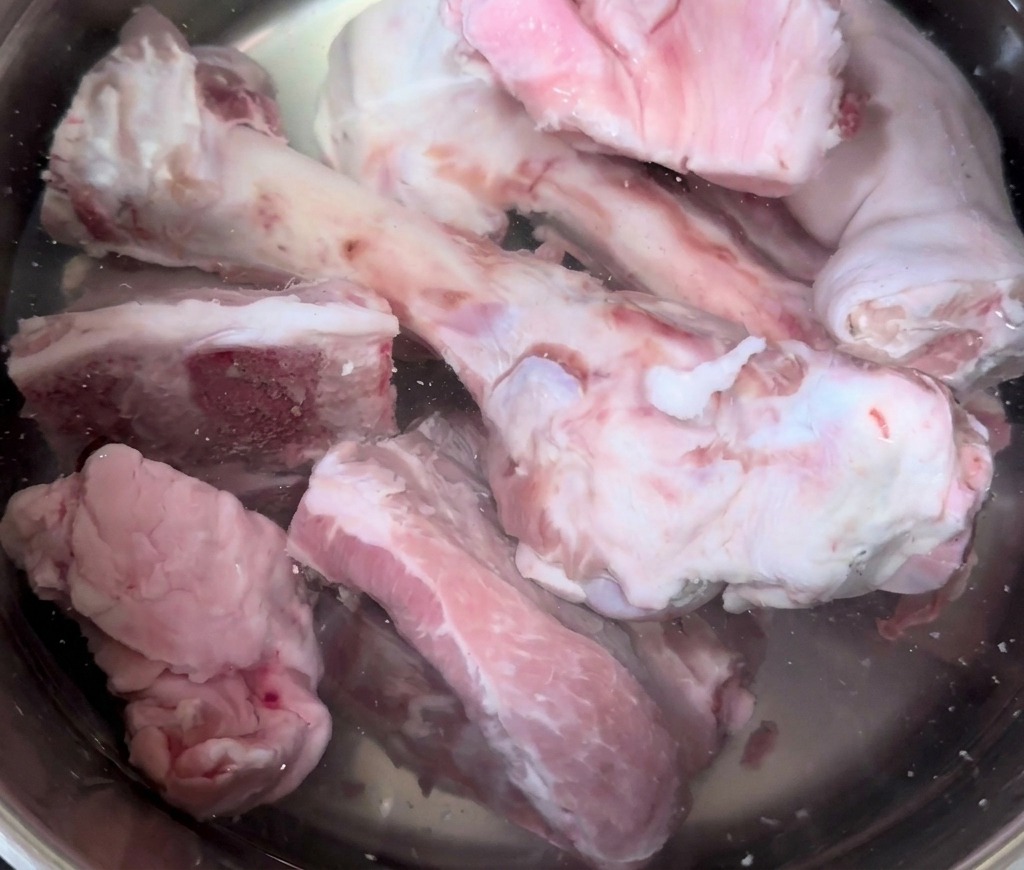
Place the pork leg bones, spinal bones, and trotters into a large stockpot and cover with cold water. Starting with cold water is essential for drawing out marrow impurities. Bring to a boil to prepare for the first skimming.
Tip: Ensure the bones are fully submerged to allow for even heat distribution and effective skimming later. - 2Prepare vegetables and aromatics
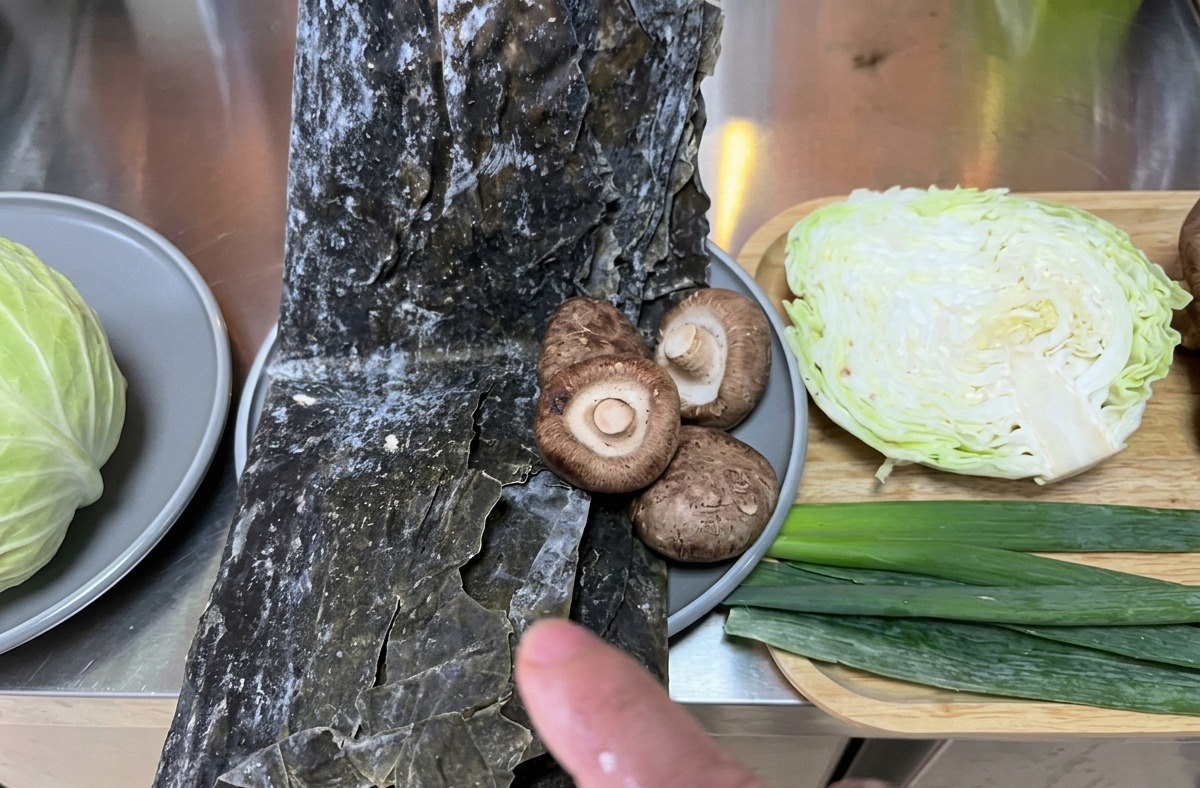
Gather and prepare the fresh vegetables that will give the Tonkotsu broth its characteristic sweetness and depth. This includes cabbage, onions, apples, potatoes, garlic, ginger, and carrots. These ingredients balance the richness of the pork fat with natural sugars and aromatic complexity.
Tip: Wash all vegetables thoroughly, as they will simmer for several hours to infuse the broth with flavor. - 3Soak the kombu and mushrooms
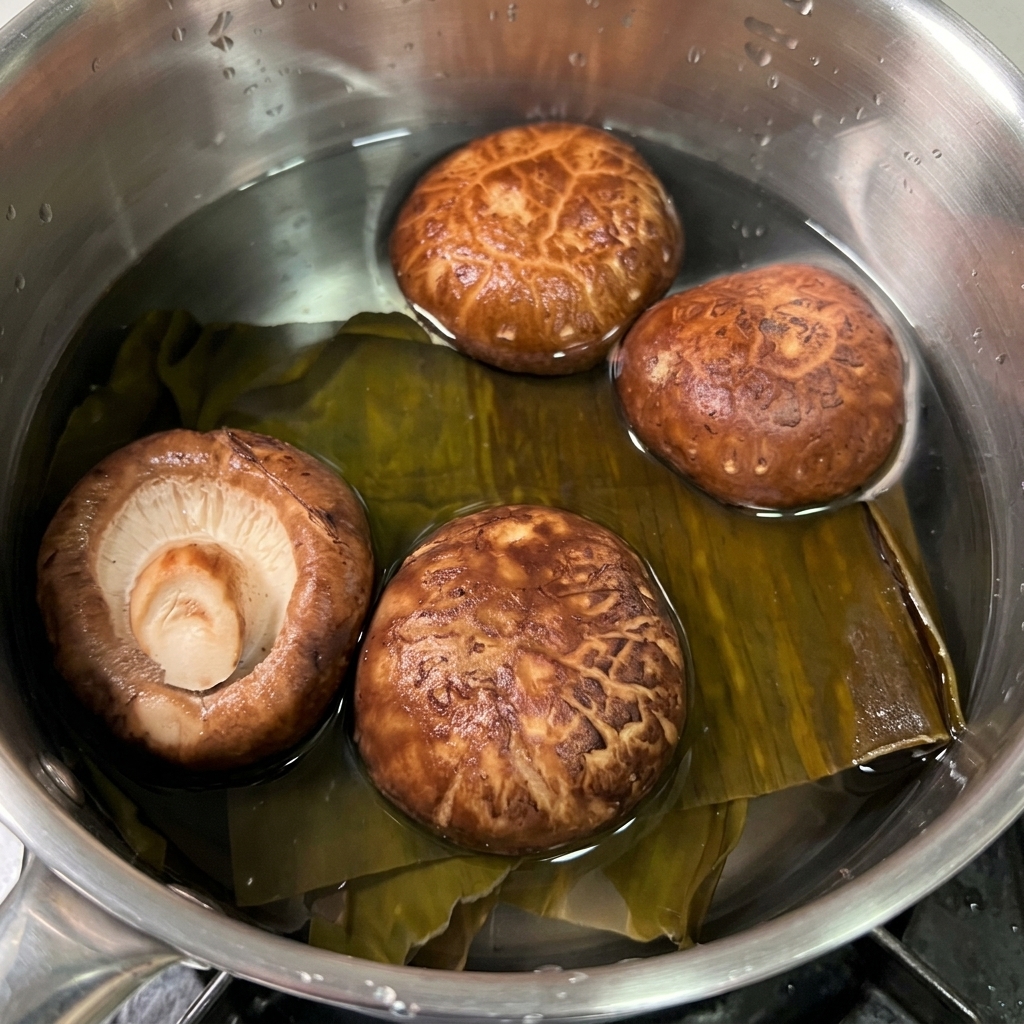
Place the dried kombu seaweed and whole shiitake mushrooms in a small pot filled with cold water. Let them soak for six hours to rehydrate and release their deep umami flavors. This soaking liquid will serve as a concentrated seasoning base for the main bone broth.
Tip: After soaking, simmer the liquid at 60 degrees Celsius for ten minutes to maximize flavor extraction without creating bitterness. - 4Skim the blood foam
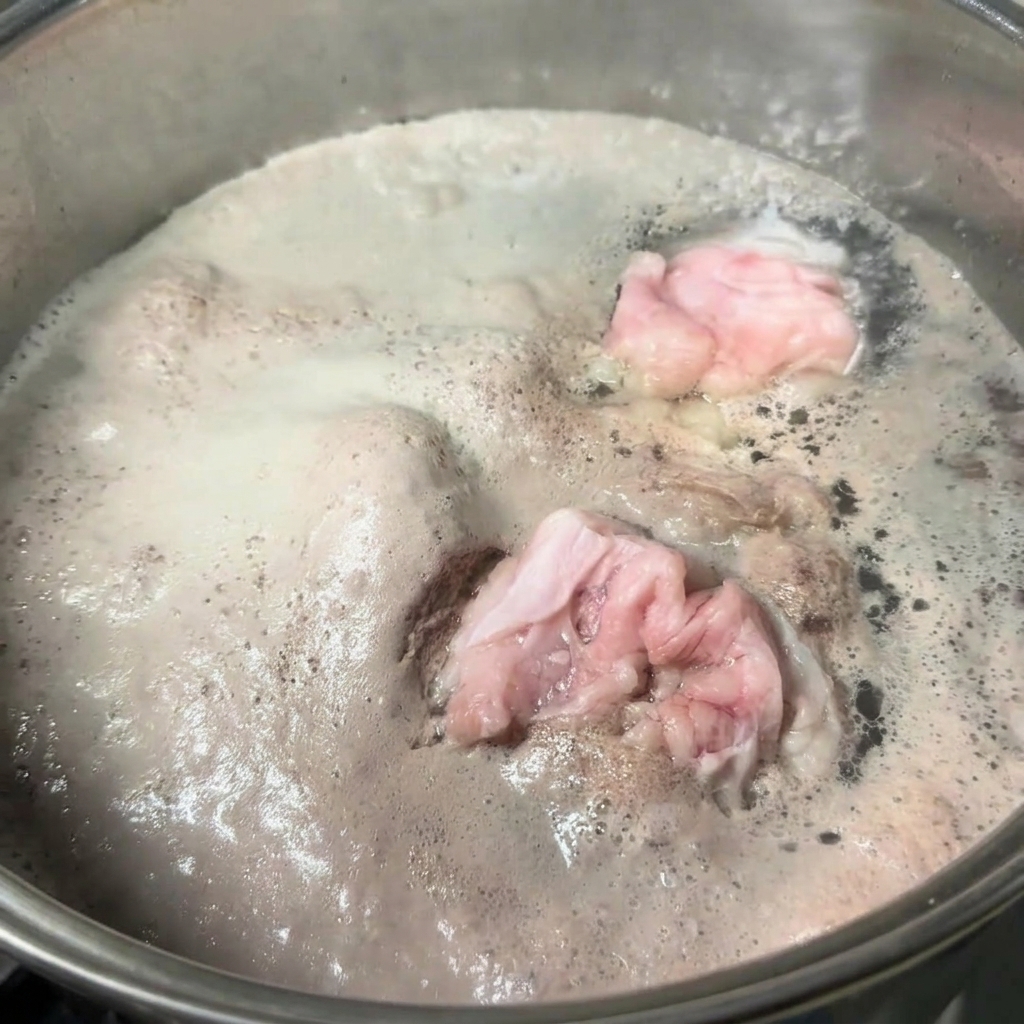
Bring the pot of bones and water to a vigorous boil. As it begins to bubble, a thick layer of dark grey foam and impurities will rise to the surface. Use a spoon or a fine mesh strainer to carefully skim off this foam. Removing these impurities is essential for achieving a clean, fragrant broth without any gamey odors.
Tip: Keep the heat high during this initial boil to force all the blood and impurities out quickly, making them easier to remove in one go. - 5Add vegetables to the broth
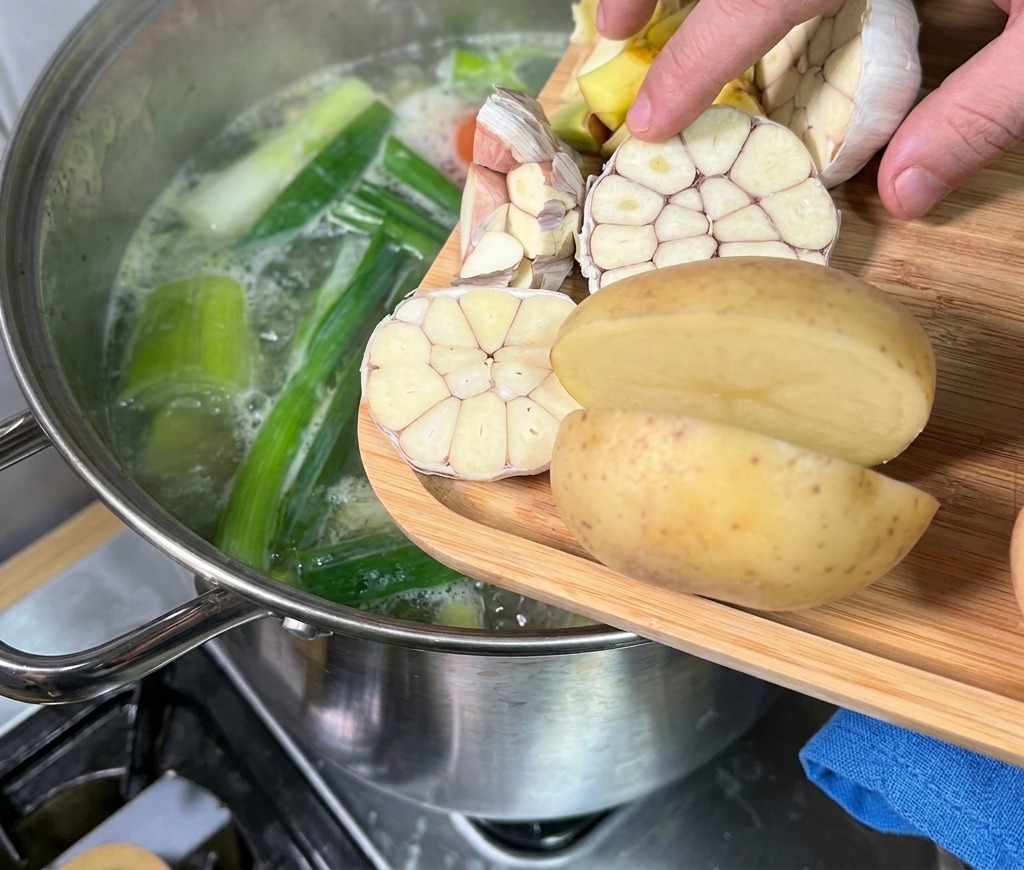
After 2.5 hours of boiling, add the cabbage, halved onions, apples, potatoes, garlic bulbs, ginger slices, and carrots. These ingredients are vital for balancing the heavy pork fats with natural sweetness and aromatic depth.
Tip: Halving the garlic bulbs and onions helps release their internal juices more quickly during the long simmer. - 6Strain in the umami liquid
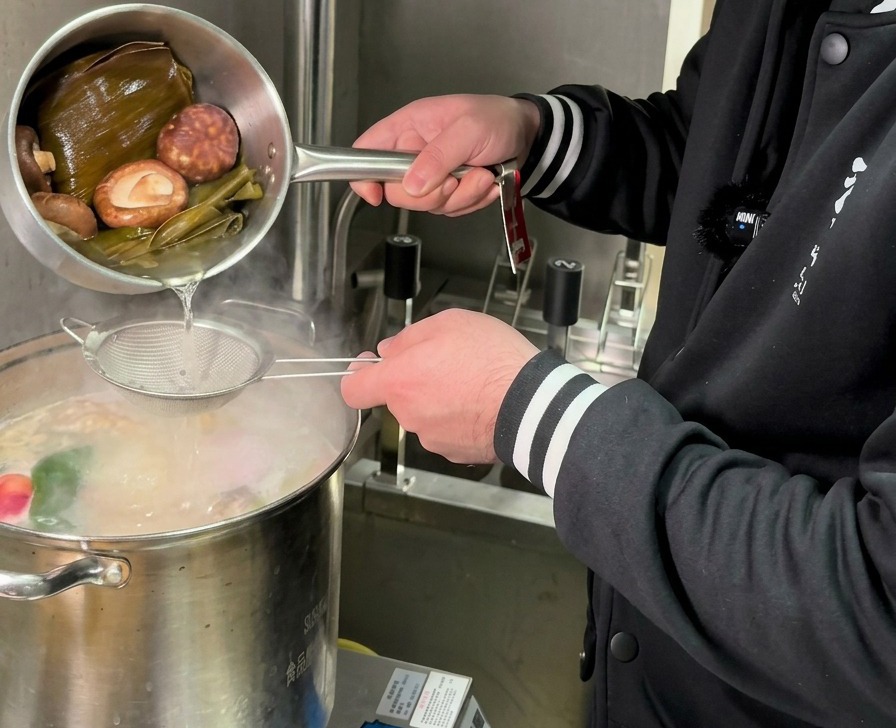
Pour the liquid from the soaked kombu and shiitake mushrooms through a fine-mesh strainer into the large stockpot. This adds a concentrated layer of umami that perfectly complements the rich pork flavors. The solids can be reserved for a secondary soak to extract every bit of flavor.
Tip: Using a fine strainer ensures that no small bits of mushroom or seaweed grit enter the smooth and creamy Tonkotsu broth. - 7Season the base sauce
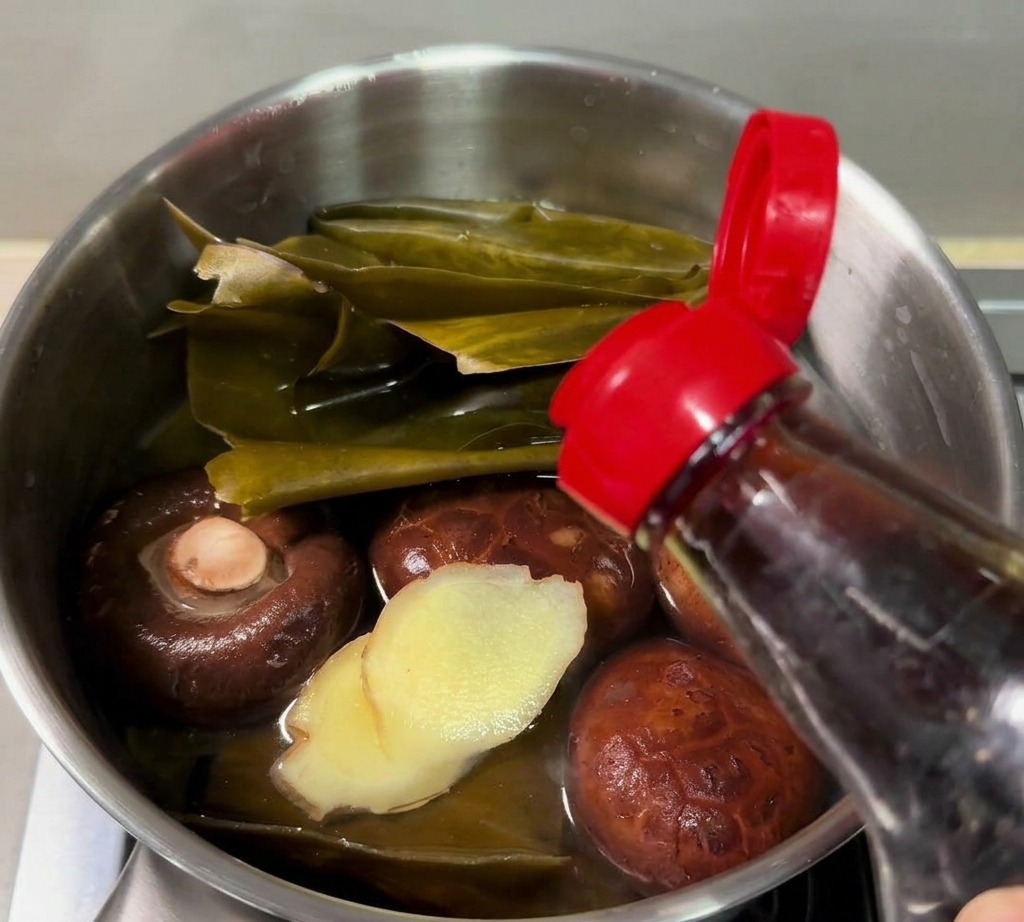
In a separate small pot, combine the soaked shiitake mushrooms, kombu, and thin slices of ginger. Pour in the Thai-style fish sauce along with a generous amount of salt and MSG. Simmer this mixture on the lowest possible heat to extract the maximum umami from the ingredients, creating the concentrated seasoning base.
Tip: Low heat is key here; you want to steep the flavors out of the aromatics without boiling the liquid away too rapidly. - 8Strain the seasoning sauce
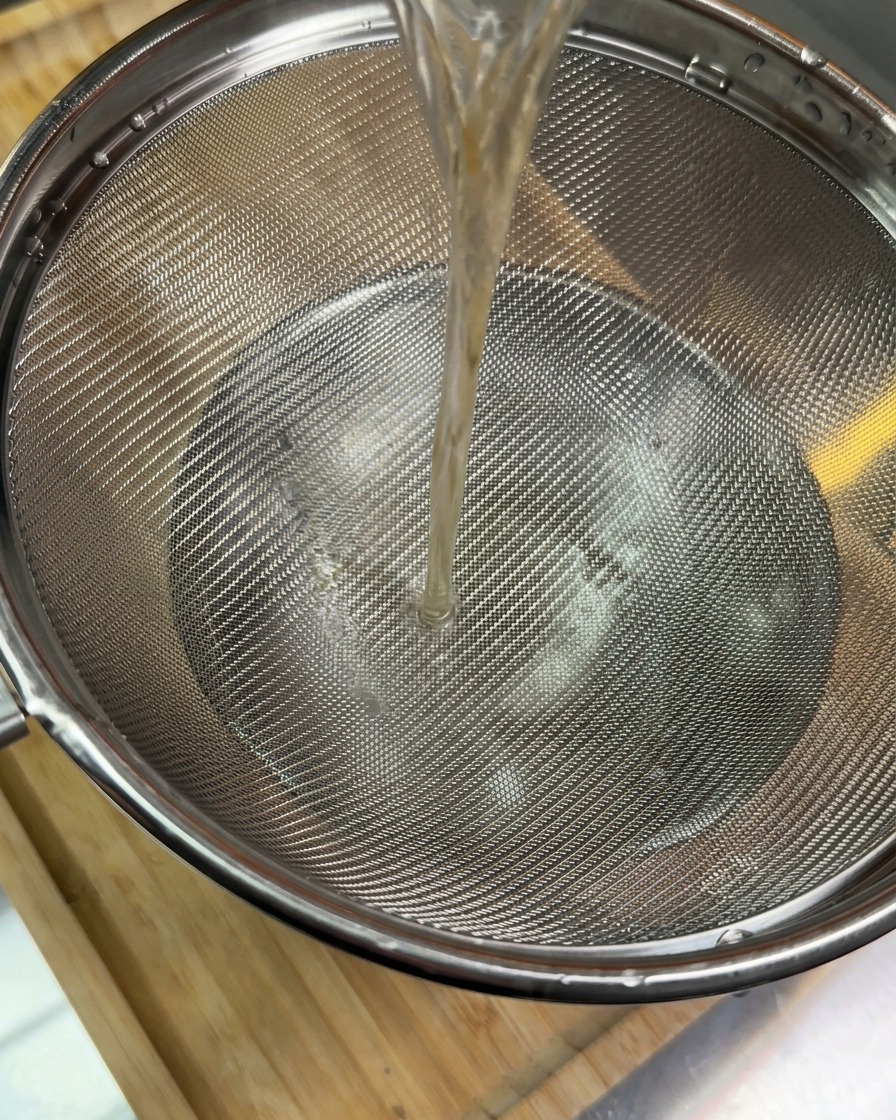
Once the seasoning liquid has finished simmering and the flavors have fully melded pour it through a fine mesh sieve into a clean bowl or pot. This removes the spent mushrooms ginger and kombu leaving you with a clear dark brown soul sauce that provides the salty savory backbone of the ramen.
Tip: Do not discard the mushrooms and kombu yet as you can re-soak them in cold water to make a secondary dashi for other dishes. - 9Check the broth consistency
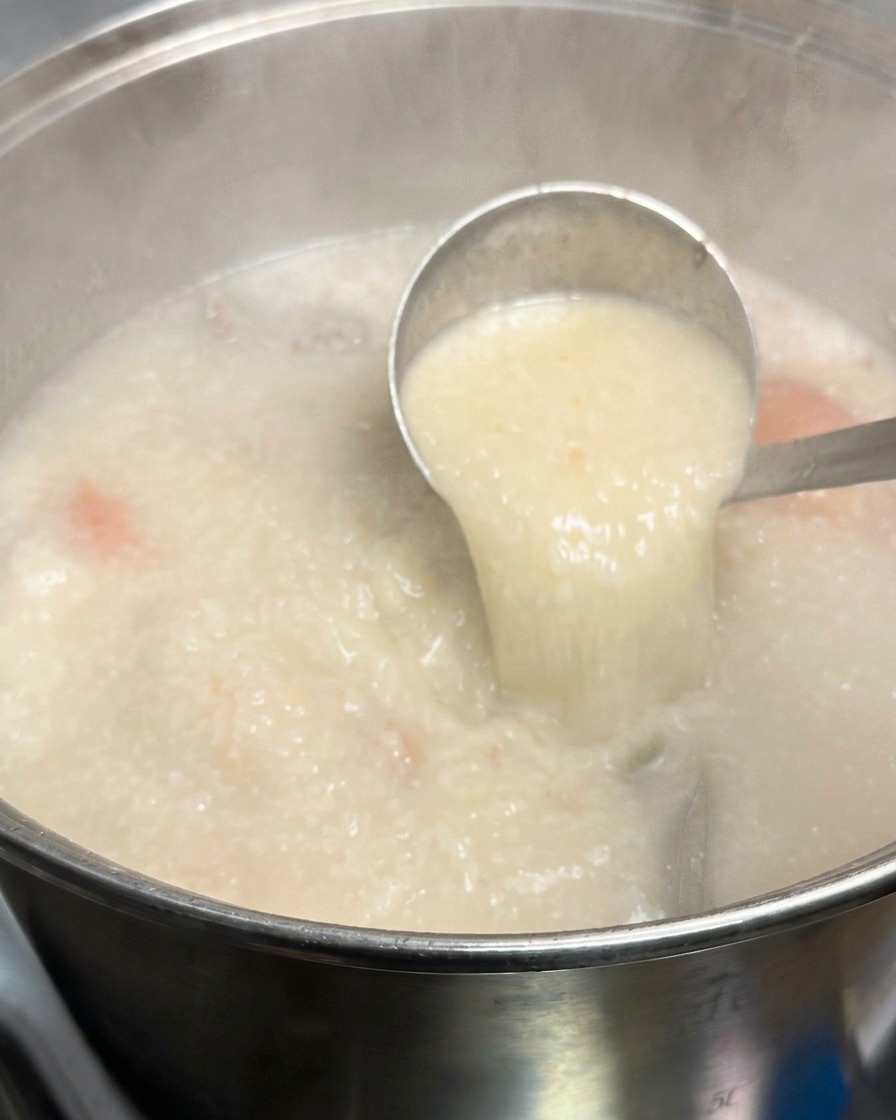
After about six hours of boiling the pork bones should have released all their collagen and fat creating a thick creamy and milky white broth. Use a ladle to scoop up some of the liquid to ensure it has reached the desired level of opacity and richness before moving on to assembly.
Tip: If your broth is not white enough keep it at a rolling boil for another hour as the high heat and movement are what emulsify the fats into the water. - 10Prep the assembly pot
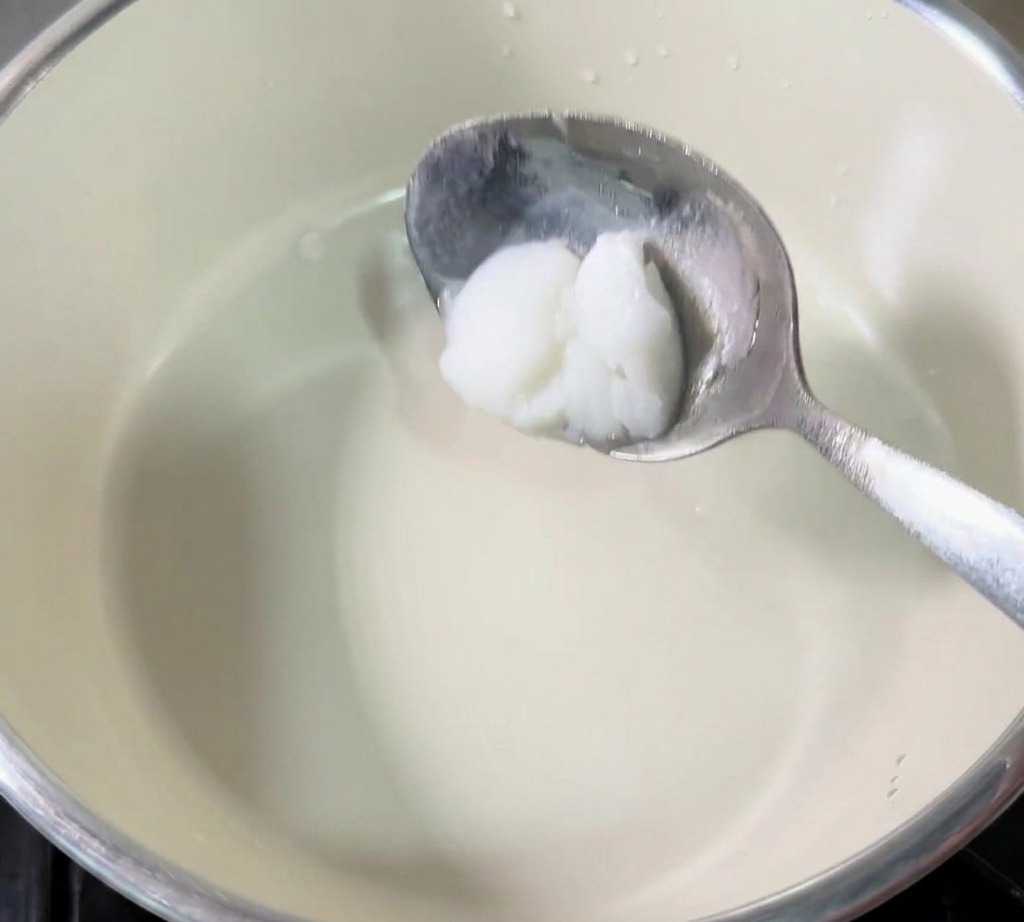
To assemble the final soup, start by placing a spoonful of white solid lard into a clean small pot. This extra fat adds the signature richness and silky mouthfeel found in commercial Ichiran-style ramen, ensuring the broth feels indulgent on the palate.
Tip: Using high-quality pork lard is best, but you can also use the fat skimmed from the top of the broth if you prefer. - 11Combine and filter the soup
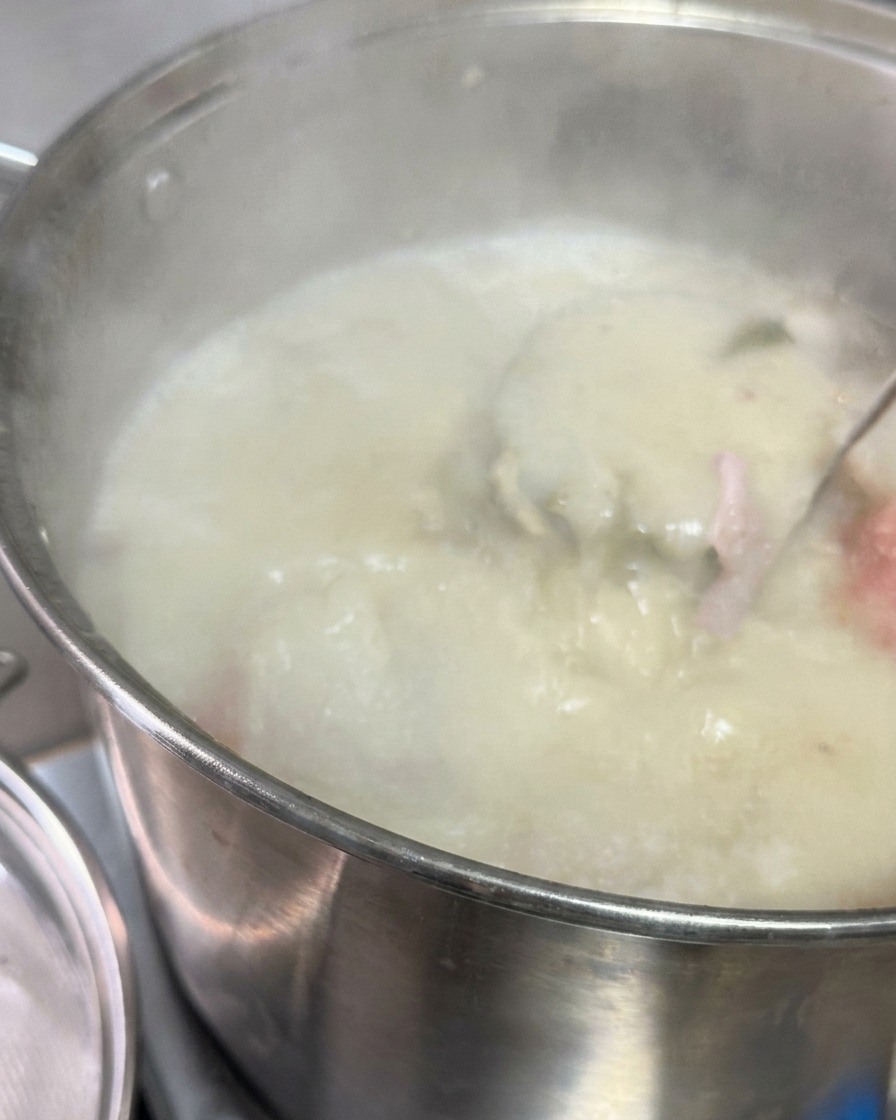
Add a portion of the prepared seasoning sauce to the pot with the lard, then pour the hot tonkotsu broth through a sieve directly into the pot. Filtering the broth at this final stage removes any tiny bone fragments or vegetable bits, resulting in a perfectly smooth and professional soup base.
Tip: Make sure the broth is boiling hot when you pour it; this ensures the lard melts instantly and integrates perfectly with the seasoning. - 12Pre-warm the ramen bowl
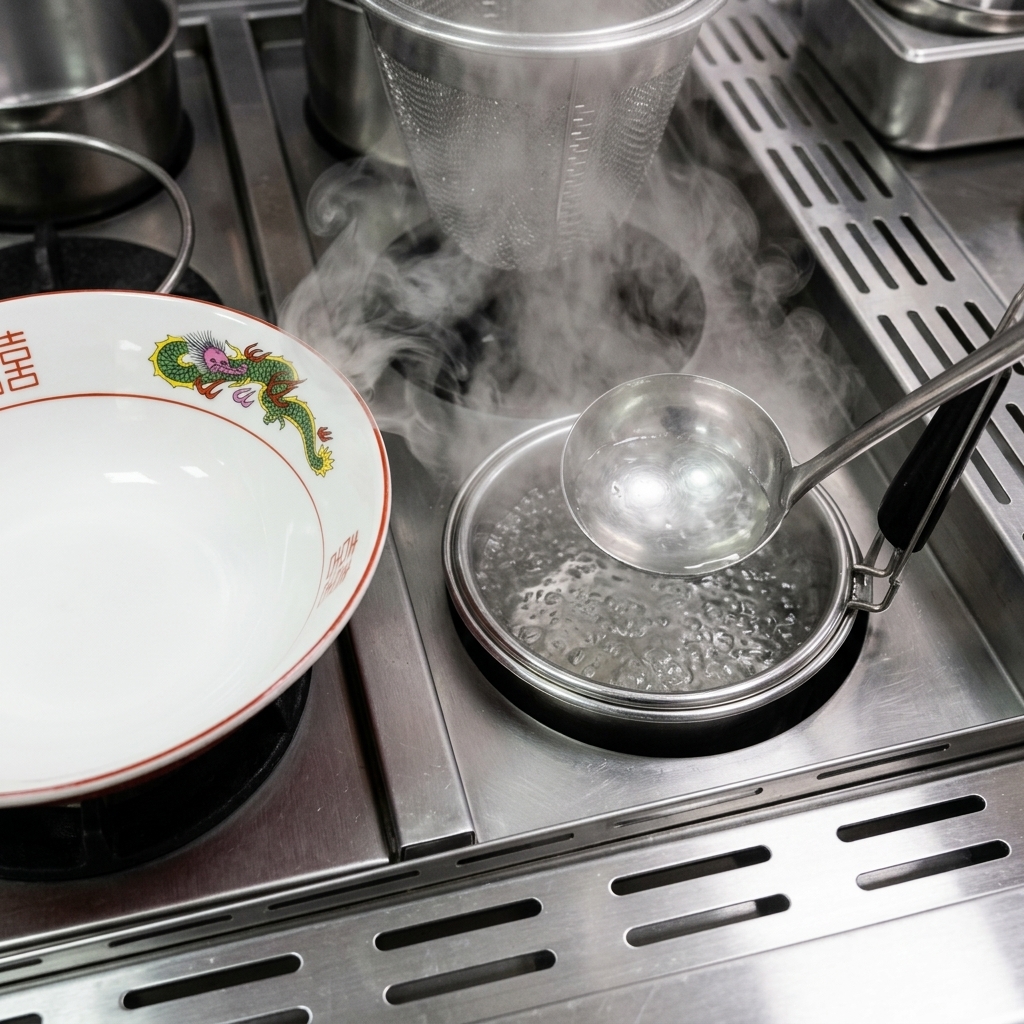
Pour hot boiling water into your ceramic ramen bowl and let it sit for a moment. Pre-warming the vessel is a standard culinary technique that ensures the soup stays steaming hot from the first sip to the last, preventing the rich pork fats from cooling too quickly.
Tip: Use the water from the noodle boiler to save time, then discard it immediately before adding the soup and noodles. - 13Cook and drain the noodles
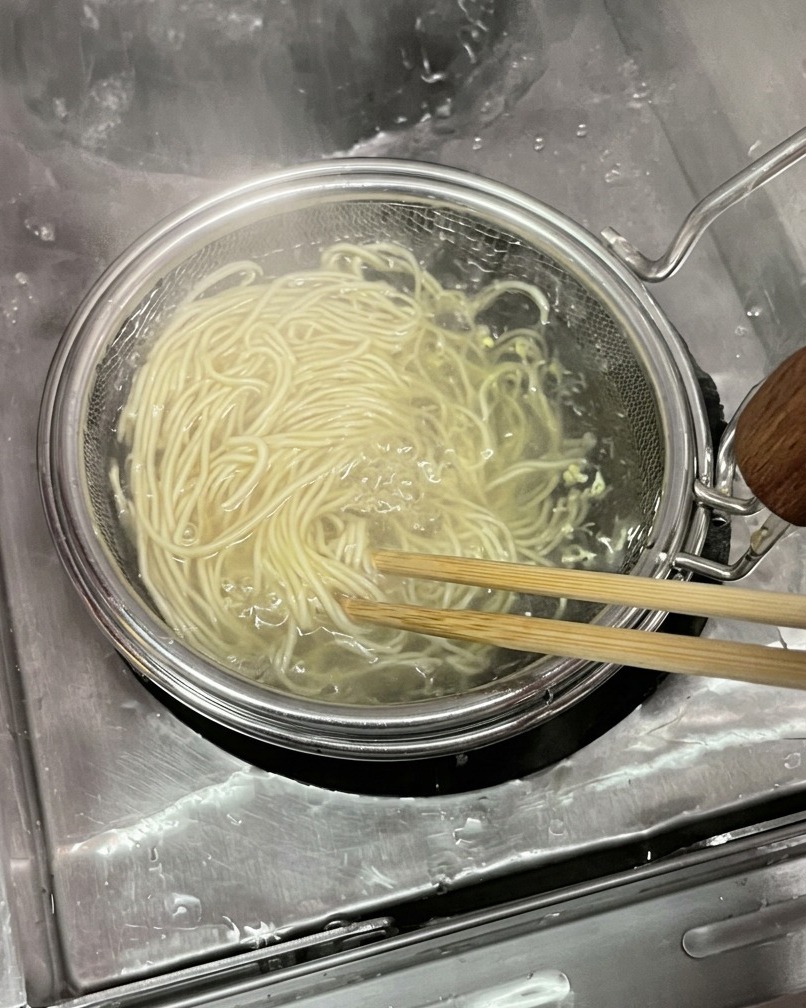
Boil the thin ramen noodles in a deep mesh strainer, stirring with chopsticks to keep the strands separate. Once they reach a firm katame texture, lift the strainer and shake it vigorously several times. Removing every drop of excess water prevents the rich tonkotsu broth from becoming diluted.
Tip: Thin noodles cook extremely fast, usually in under 60 seconds. Keep them slightly firm as they will soften further once submerged in the hot soup. - 14Assemble and Garnish
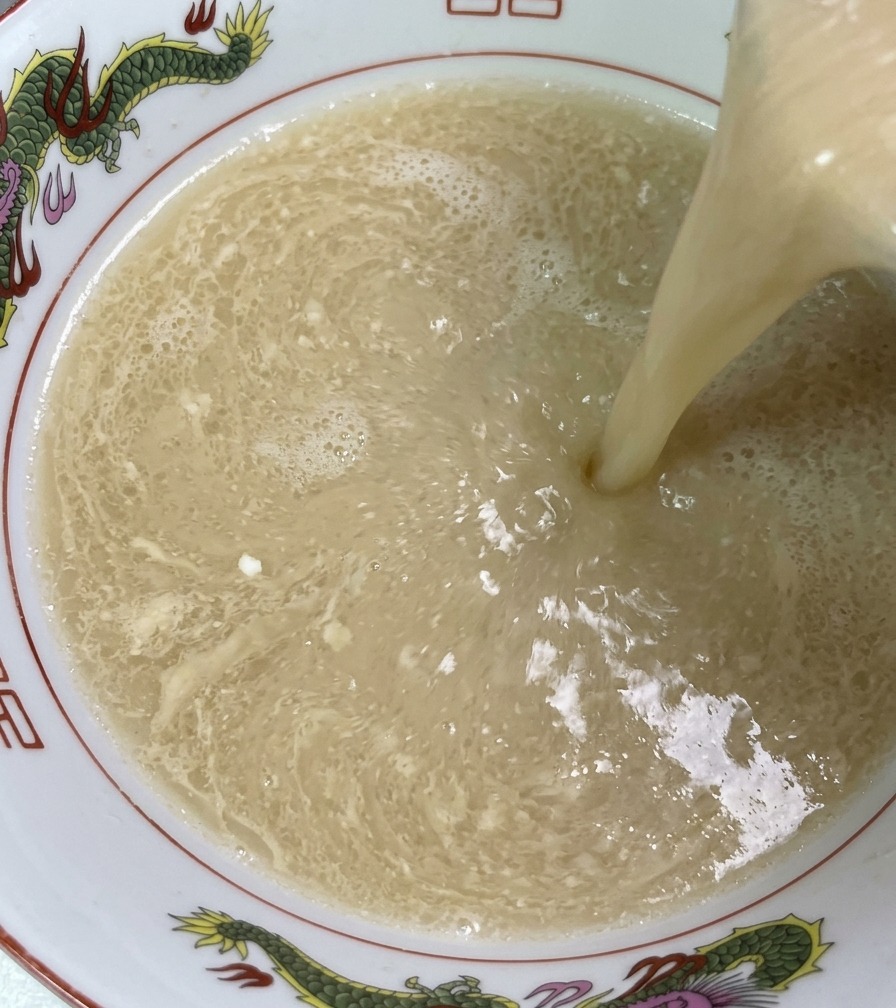
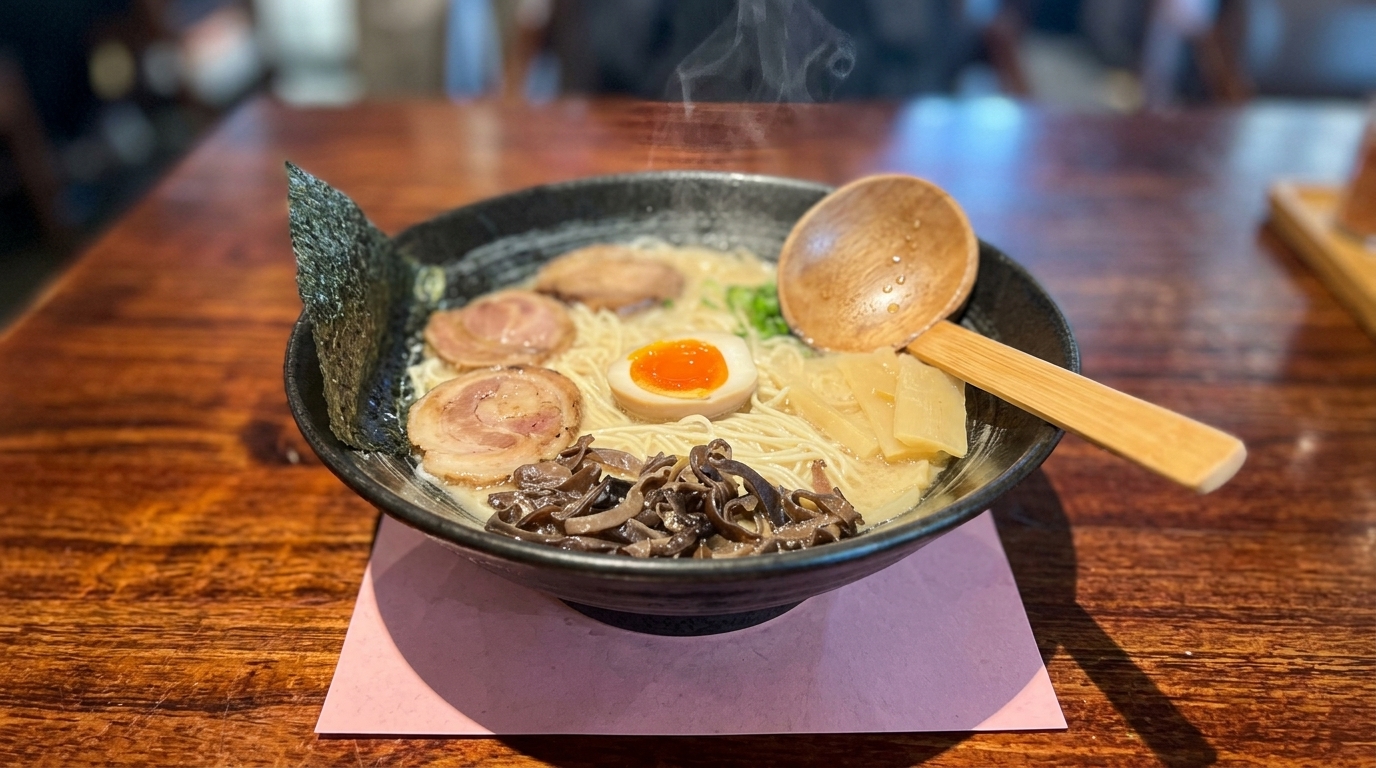
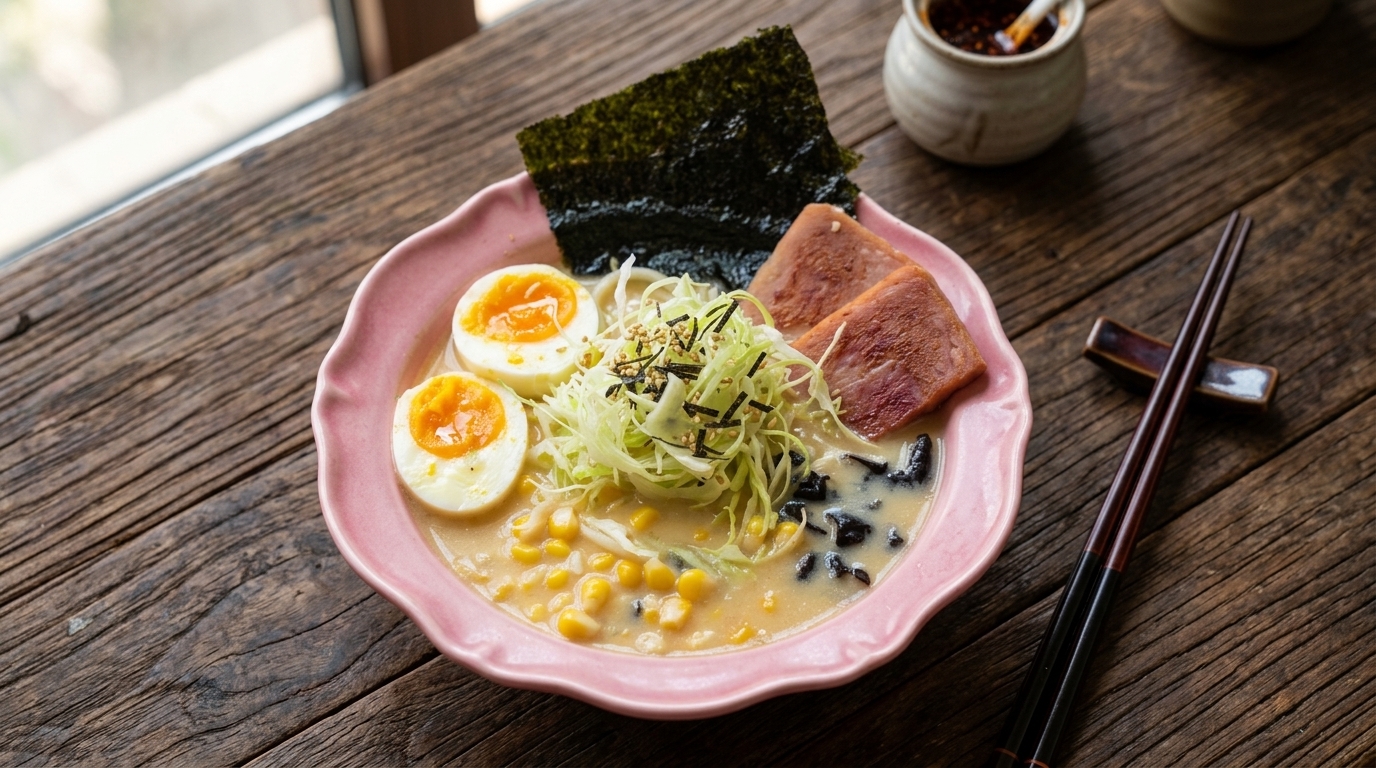
Pour the boiling, creamy tonkotsu broth into the pre-warmed bowl containing the seasoning and lard. Add the cooked noodles and finish by plating with chashu, a soft-boiled egg, scallions, and the signature red chili paste.
Tip: Pouring from a slight height helps create a light foam on the surface, which is a hallmark of a well-prepared, creamy Tonkotsu broth.