Authentic Hakata Tonkotsu Ramen Broth
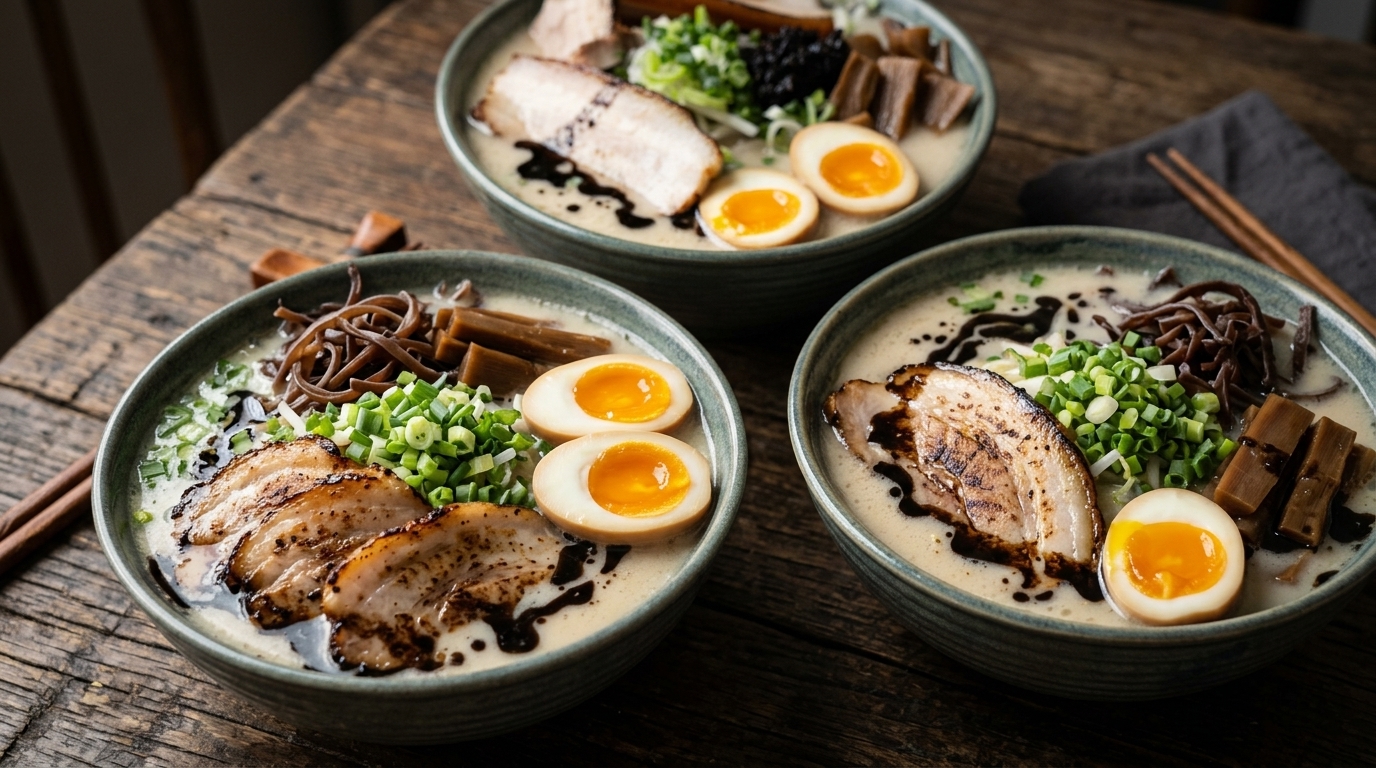
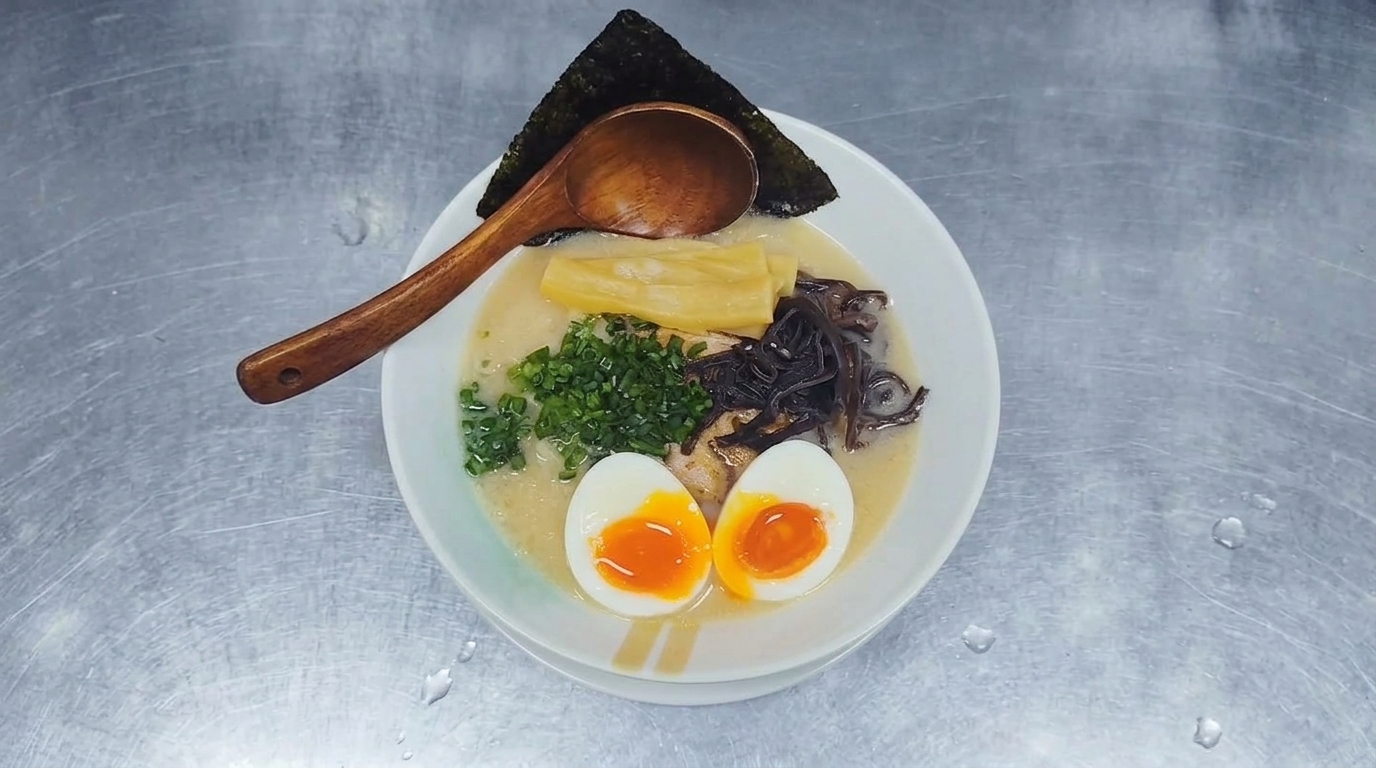
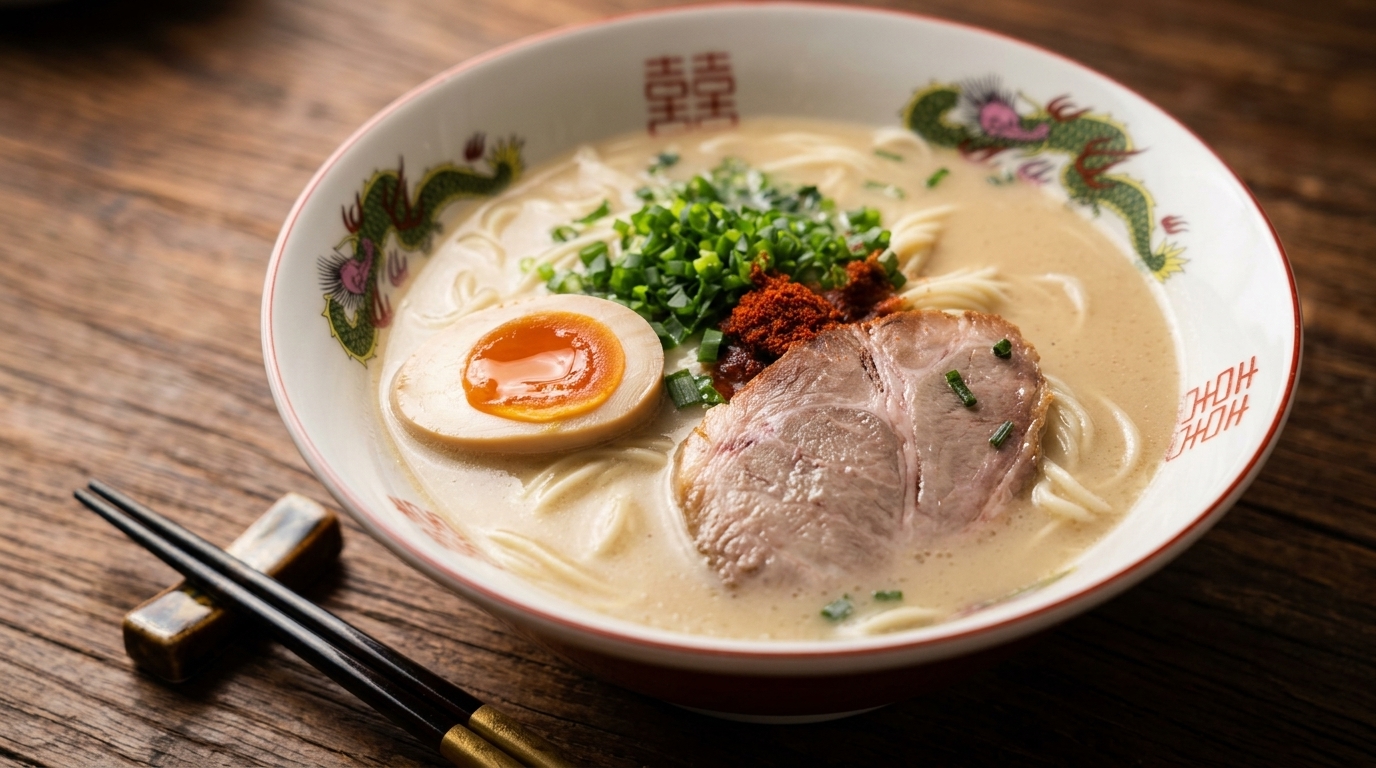
Master the art of Hakata-style tonkotsu ramen with this 12-hour collagen-rich pork broth, achieving a perfect 8 Brix concentration for a signature creamy mouthfeel.
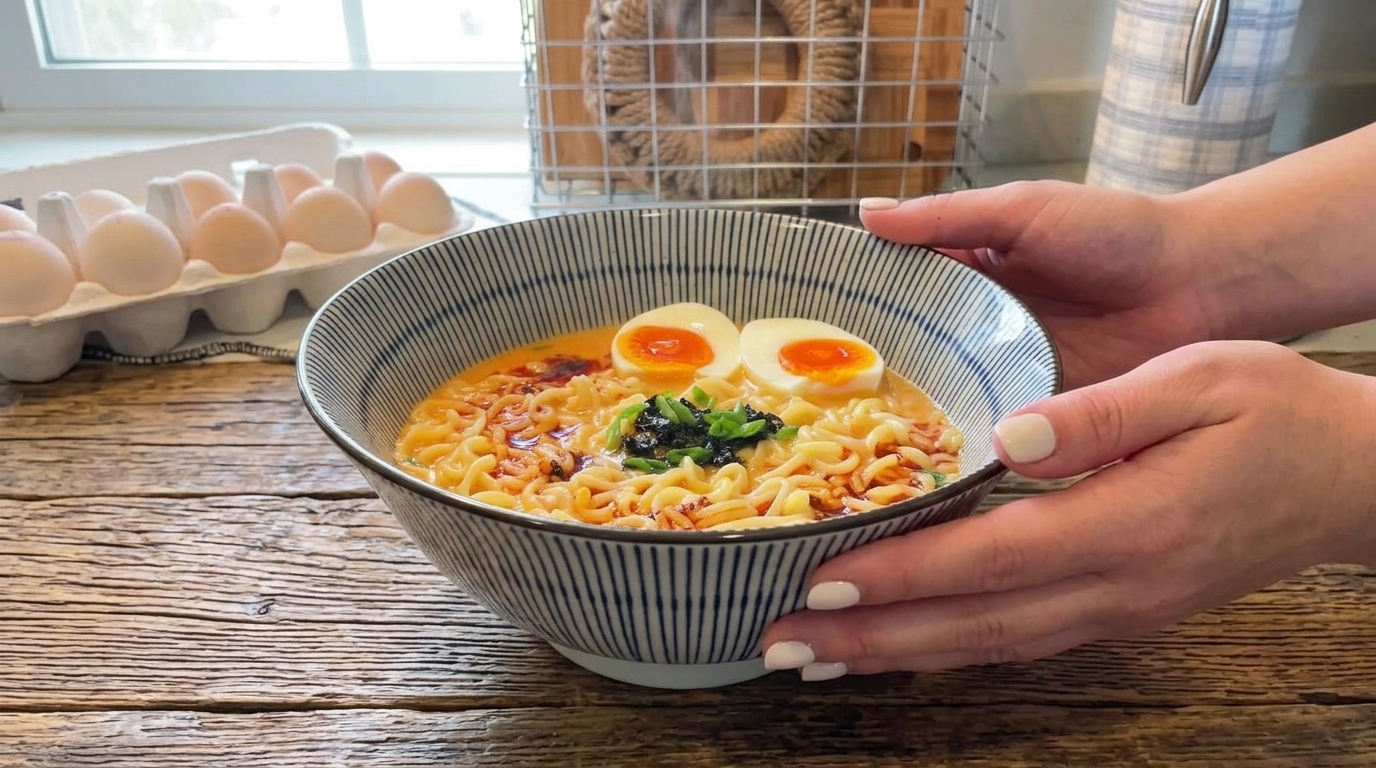
Hakata Tonkotsu is the soul of Fukuoka ramen culture, famous for its opaque milky white soup. Unlike lighter broths, this version relies on a high heat rolling boil to emulsify pork fats and marrow into a luxurious silky liquid. It is a labor of patience that rewards the cook with deep savory complexity.
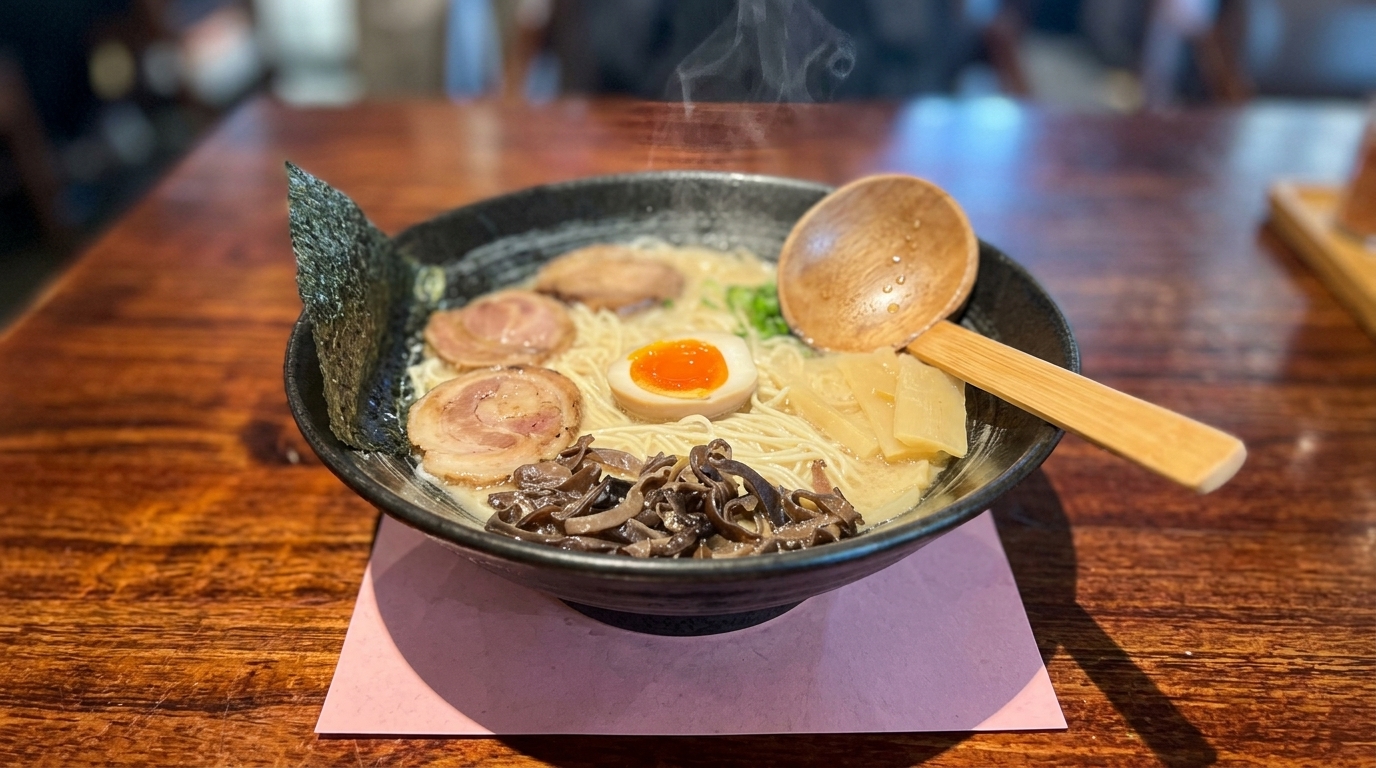
Ingredients
- 3 kg pork knuckle bones
- 2 kg pork trotters
- 10 L water
- optional chashu pork slices
- optional marinated soft-boiled eggs
- to taste wood ear mushrooms
- to taste nori seaweed
- to taste bamboo shoots
Instructions
- 1Prepare the pork bones
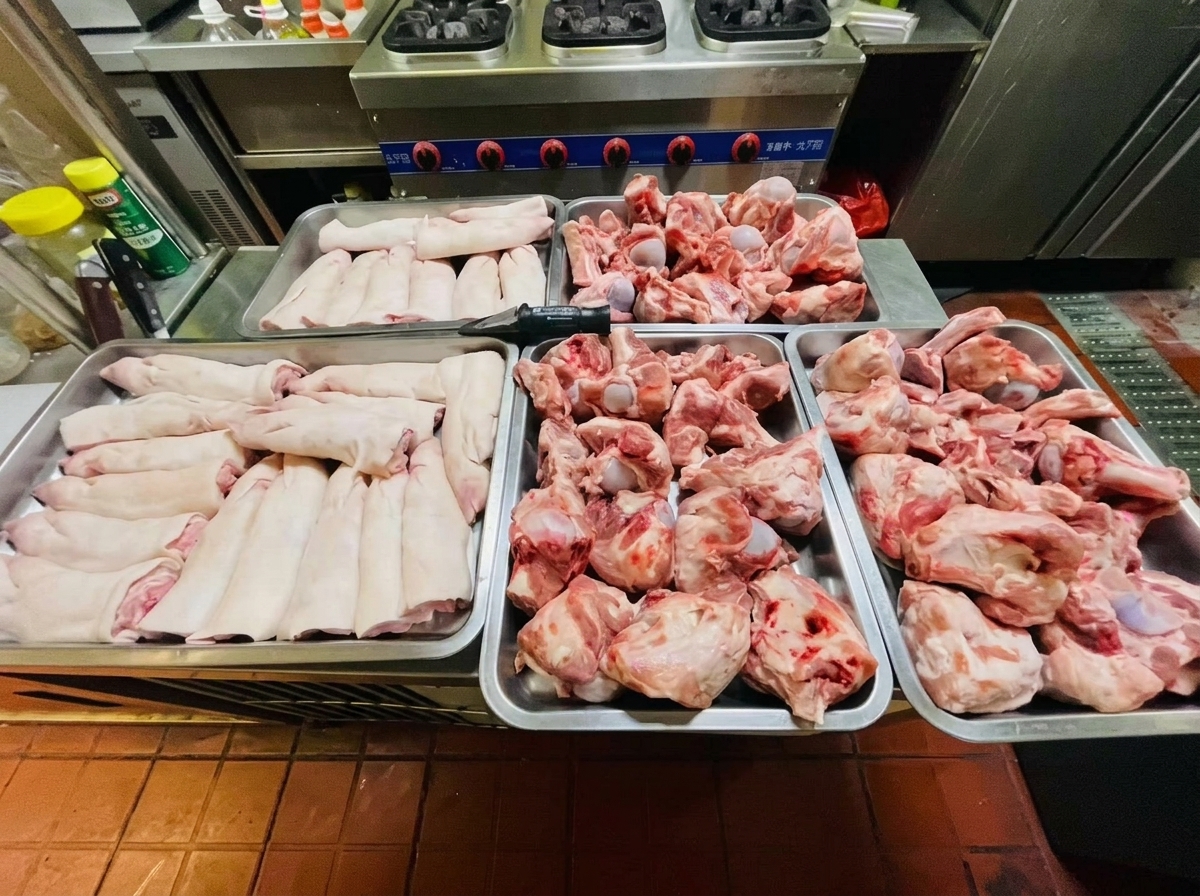
Begin by organizing your raw pork bones on clean trays. For an authentic Tonkotsu broth, use a combination of marrow-rich knuckle bones and collagen-heavy pork trotters. This variety of bones provides both the deep savory flavor and the signature gelatinous texture required for a rich soup.
Tip: If time allows, soak the bones in cold water for an hour before starting to help draw out excess blood for a whiter broth. - 2Blanch the pork bones
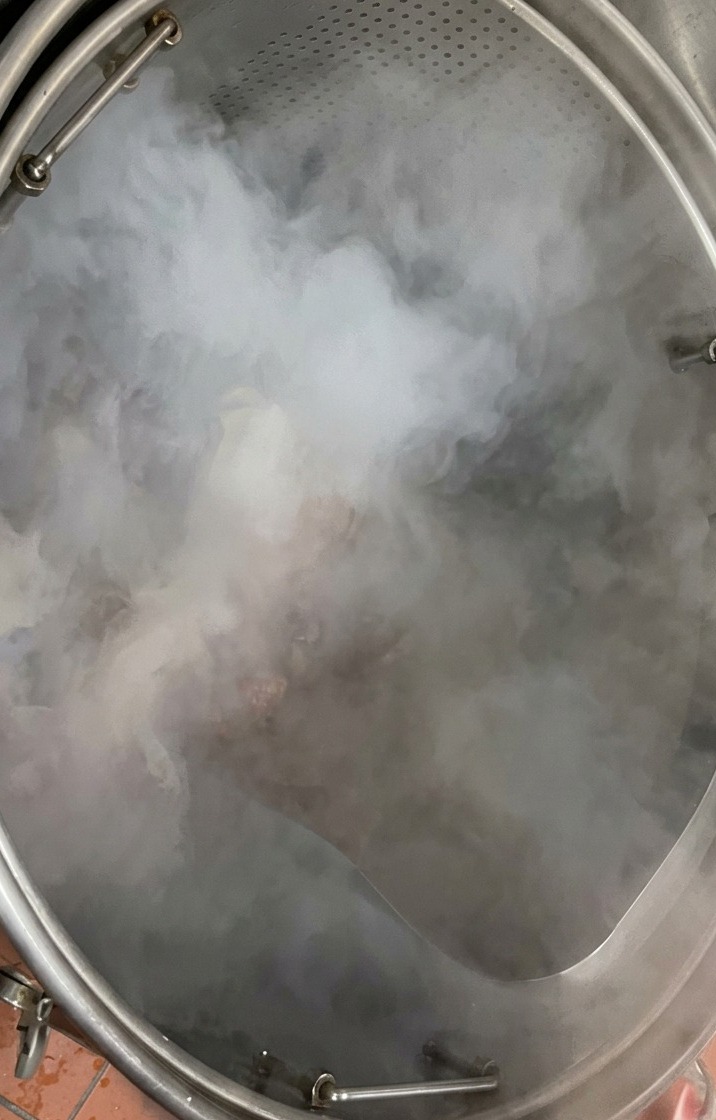
Begin by placing the raw pork bones into a large industrial pot of boiling water. This blanching process is essential to draw out blood and impurities from the bones, which ensures the final ramen broth remains clean and white rather than grey or cloudy.
Tip: Make sure the water is at a rolling boil before adding the bones to quickly sear the exterior and lock in the marrow for later extraction. - 3Stir the bones during blanching
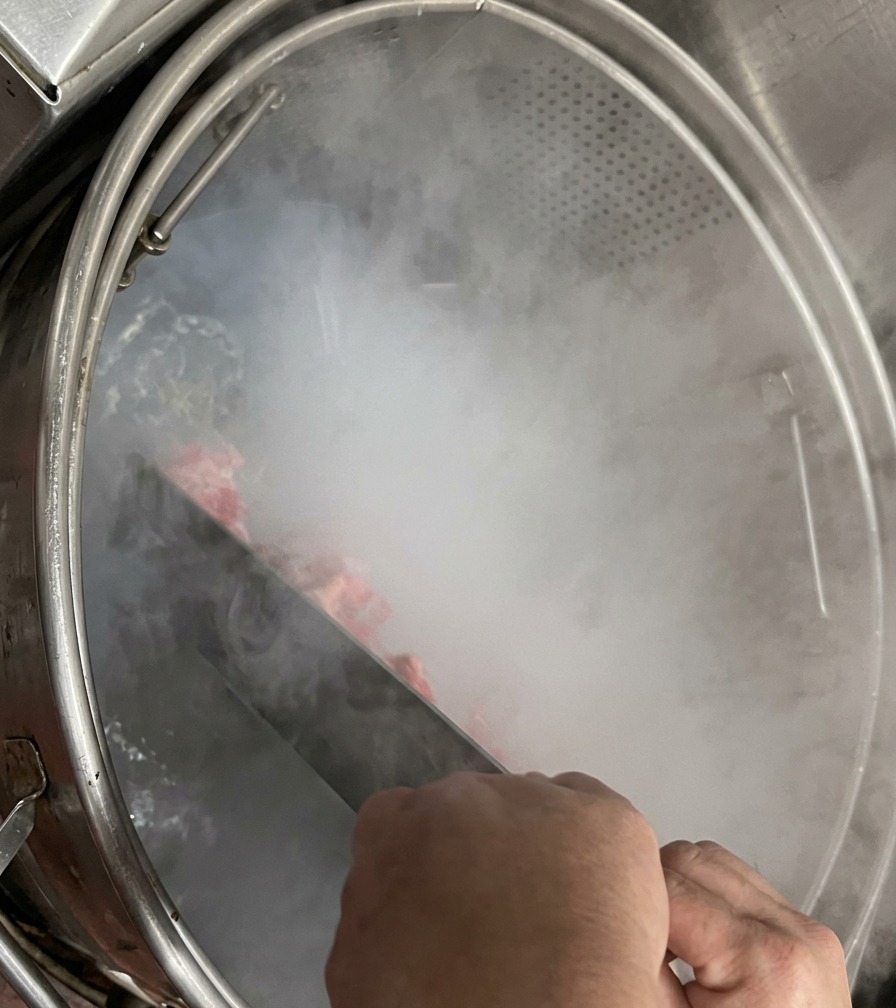
Use a large metal paddle to stir the bones as they boil. Constant movement helps loosen any stubborn debris and ensures that all bone surfaces are evenly exposed to the boiling water for a thorough cleaning.
Tip: Keep the heat high during this stage; you want the impurities to rise to the surface as foam so they can be easily drained later. - 4Prepare the main boil
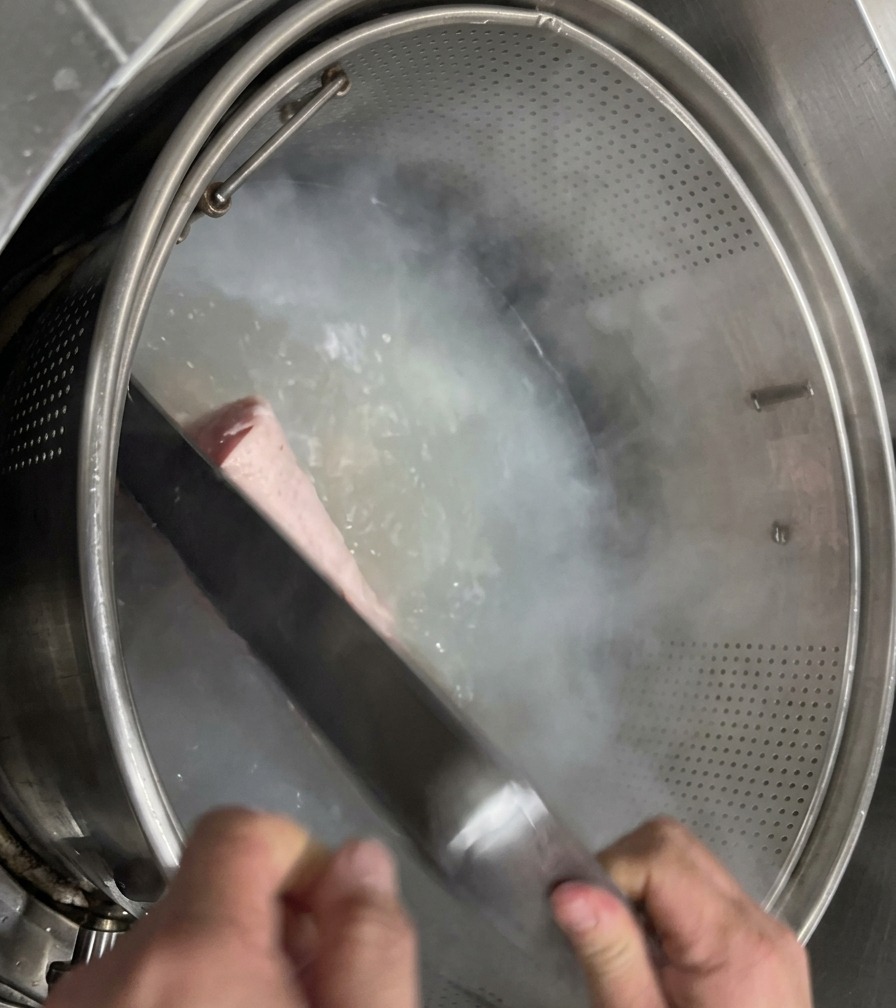
After the initial cleaning, place the large, blanched pork trotters into a metal basket within the boiling vat. Trotters are rich in collagen, which is the key ingredient for creating the gelatinous, creamy mouthfeel characteristic of Hakata-style broth.
- 5Build the broth base
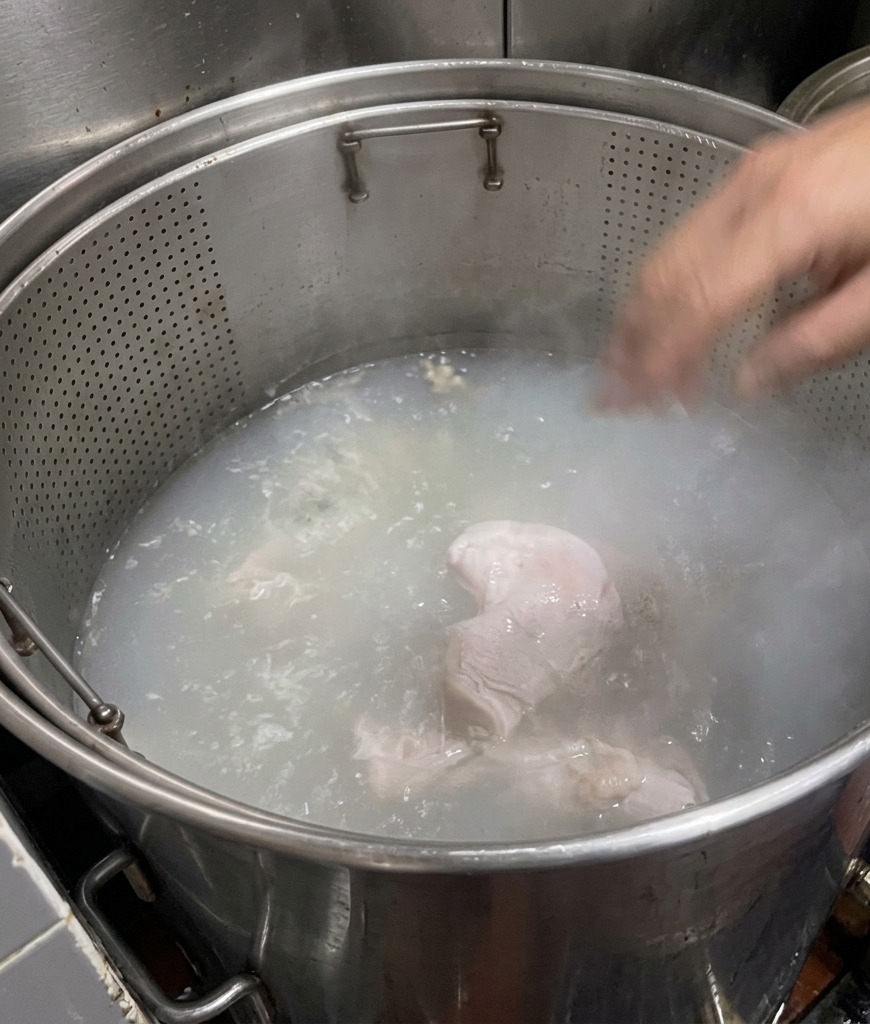
Add the remaining pork bone pieces into the vigorously boiling water. As the bones cook at high heat, the water will begin to turn a milky, cloudy white, indicating that the fats and marrow are successfully emulsifying into the liquid.
Tip: Maintain a rolling boil throughout this process. If the water only simmers, the fat wont emulsify and the broth wont achieve its signature creamy texture. - 6Measure the broth concentration
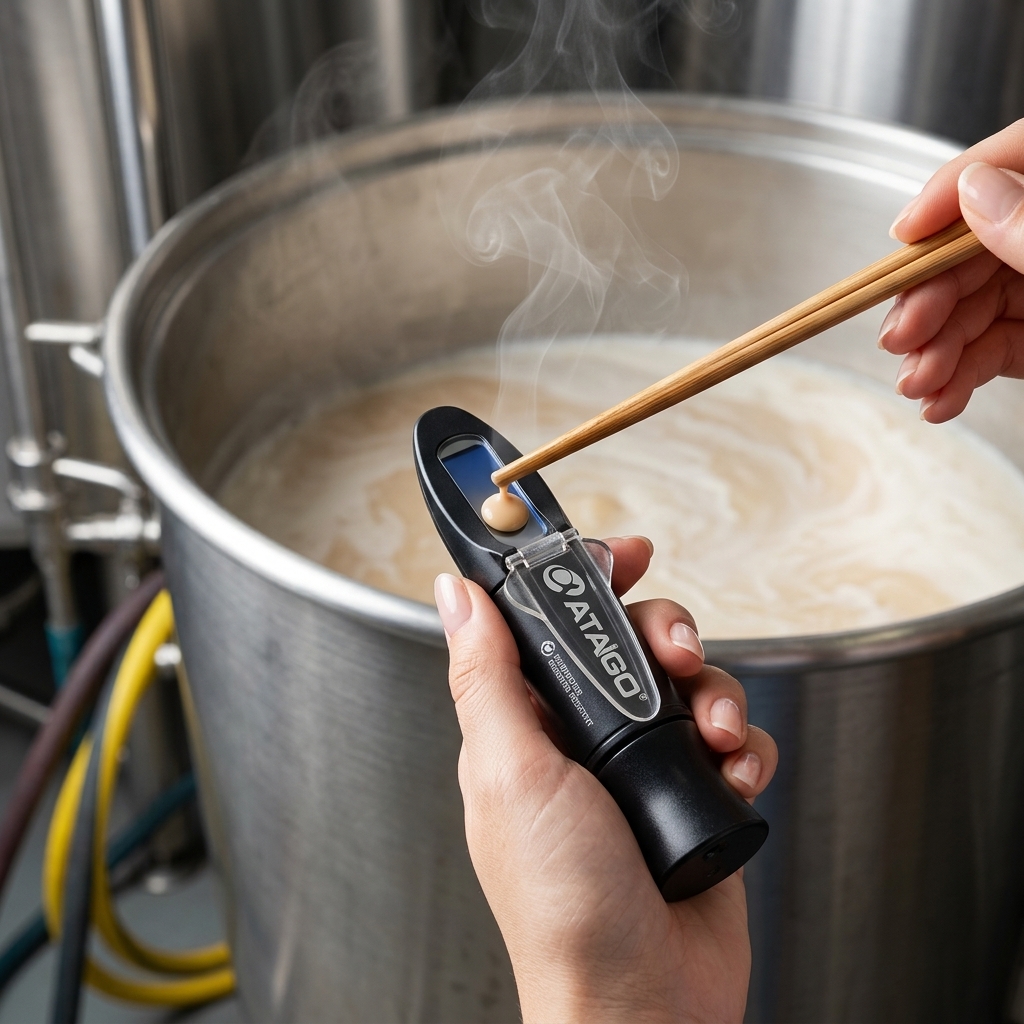
As the broth boils down, use a handheld refractometer to check the Brix level, which measures the concentration of dissolved solids. Use a pair of chopsticks to place a few drops of the hot, milky liquid onto the prism. This ensures the broth reaches the perfect level of richness before serving.
Tip: Keep your refractometer calibrated with distilled water periodically to ensure your concentration readings stay accurate. - 7Monitor the broth concentration
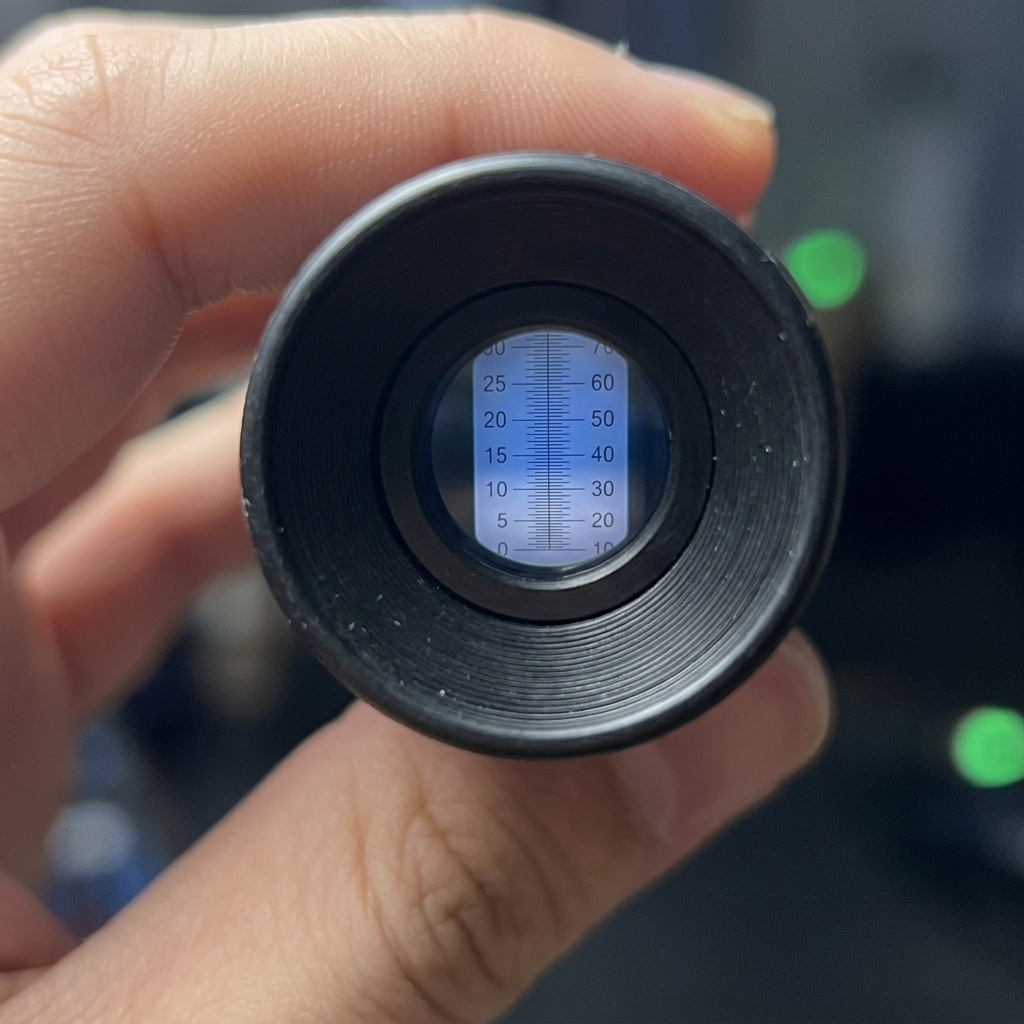
Periodically check the richness of the soup using a refractometer. At the eight-hour mark, the broth should reach a concentration of 5 degrees on the Brix scale, indicating a solid foundation of dissolved solids and flavor.
Tip: Always wipe the refractometer lens clean between tests to ensure you are getting an accurate reading of the broth density. - 8Check for final concentration

Use a refractometer to measure the final concentration of the Tonkotsu broth. After twelve hours of boiling, the measurement line should reach the target of eight degrees on the Brix scale, indicating the soup has achieved the perfect rich and creamy consistency.
Tip: Consistency is key for Hakata-style ramen; ensure the broth reaches exactly eight Brix for that signature mouthfeel. - 9Verify bone softness
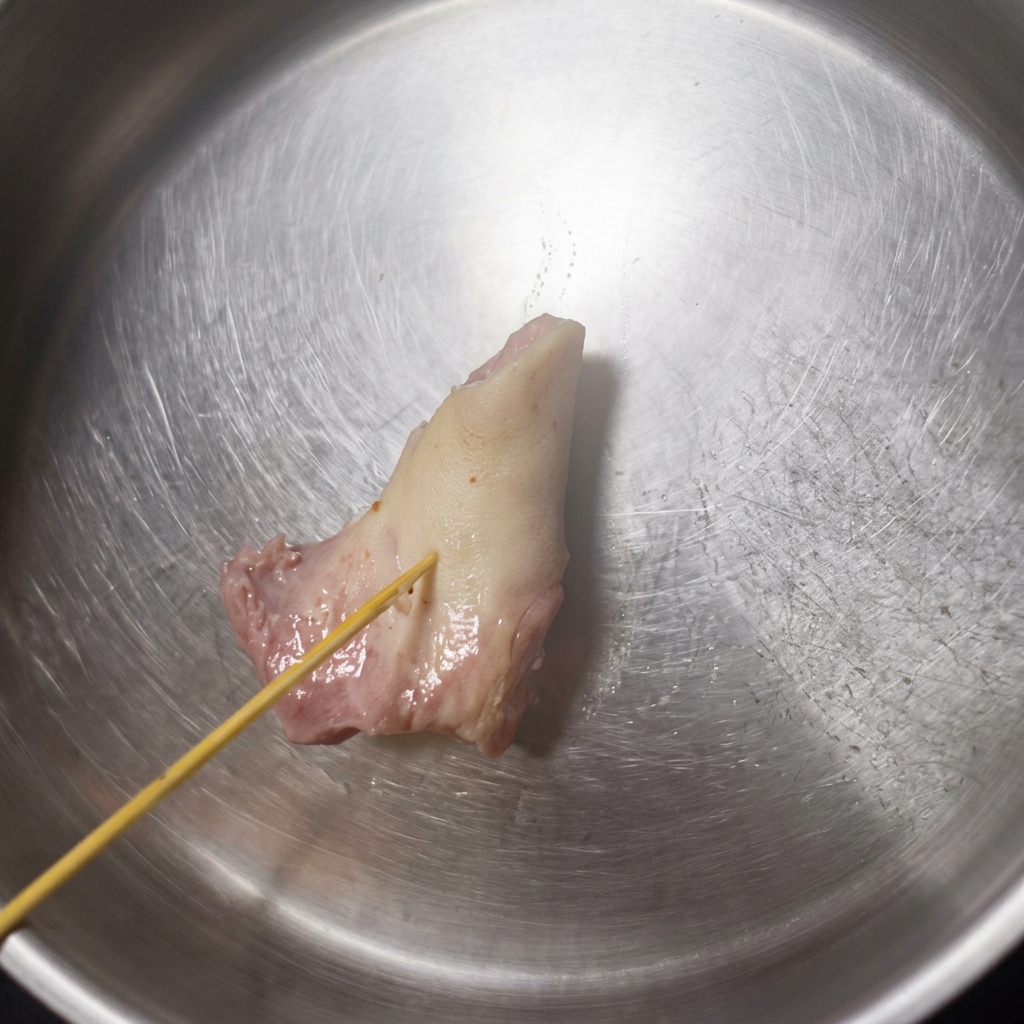
Check the condition of the pork bones after the long boiling process. Press a wooden skewer into a bone; it should break apart easily, signifying that the marrow has been fully extracted and the bones have completely softened.
Tip: If the bones are still hard they have not given up all their flavor yet; keep simmering until they crumble easily.