Authentic Japanese Chashu Pork
Ramen
Master the art of melt-in-your-mouth Japanese chashu pork. Pork belly is tightly rolled, seared, and slow-braised in a savory soy-mirin broth until tender.
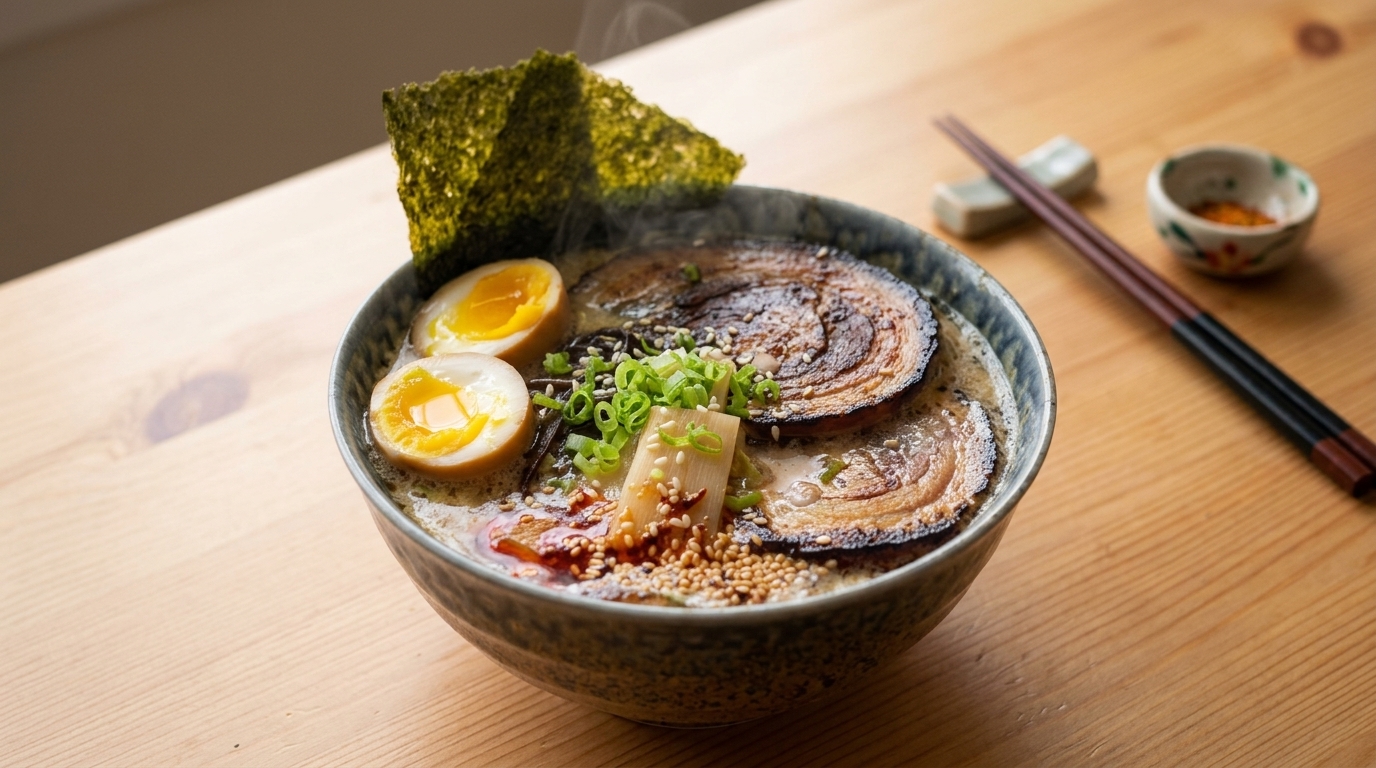
A bowl of ramen is only as good as its toppings, and chashu is undoubtedly the star. This traditional rolled pork belly is seared for a deep Maillard crust, then slow-simmered in a sweet and savory soy-based broth. Leaving it to marinate overnight in the fridge is the secret to perfect slices that hold their shape before being torched to caramelized perfection.
Ingredients
- 1 whole pork belly (approx. 1 kg)
- to cover water
- 3 stalks green onions
- 1 piece ginger
- 12 cup mirin
- 12 cup cooking wine (sake)
- 12 cup soy sauce
- 1 tsp garlic powder
- 1 large piece rock sugar
- optional soft-boiled eggs (for marinating)
- to serve ramen noodles and tonkotsu broth
- to taste bamboo shoots, nori, and chili oil
Instructions
- 1Trim the pork belly
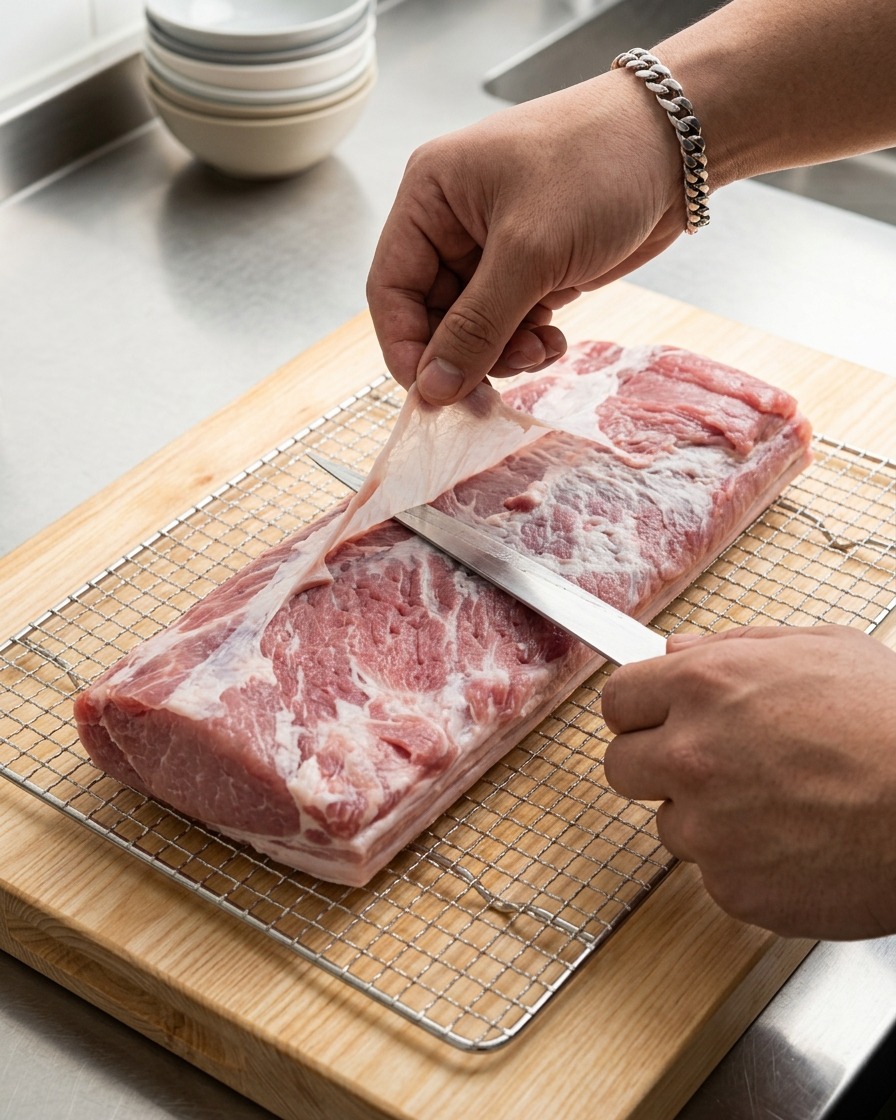
Place the whole piece of pork belly on a clean cutting board. Using a sharp knife, carefully slice off any uneven or excessively thick portions from the surface to ensure a uniform shape. This helps the meat roll up neatly and cook evenly.
Tip: Save the trimmed pieces of pork belly for making stir-fries or mincing for other dishes. - 2Pierce the meat
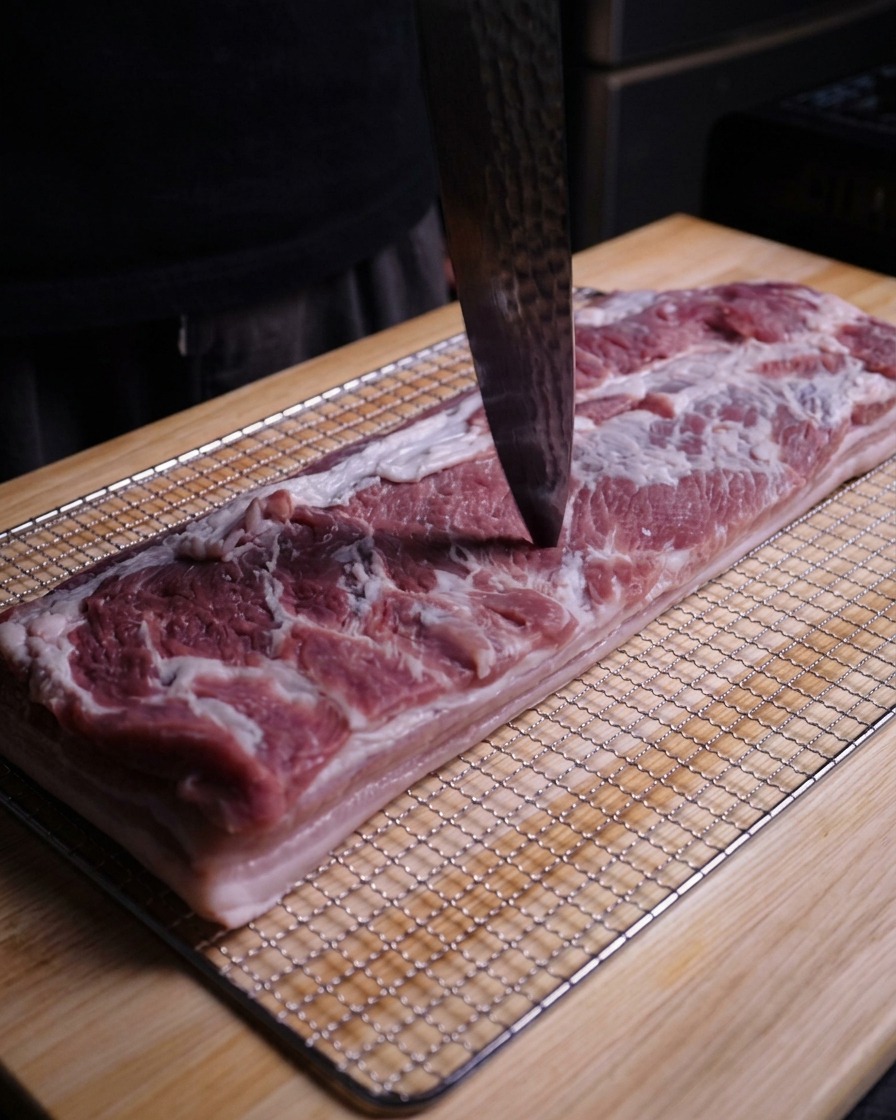
Use the tip of a chefs knife to repeatedly poke holes all over the surface of the pork belly. Piercing the meat allows the marinade and braising liquid to penetrate deeply, ensuring every bite of the chashu is packed with flavor.
Tip: Be careful not to pierce all the way through the meat, just deep enough to open up the surface. - 3Roll the pork belly
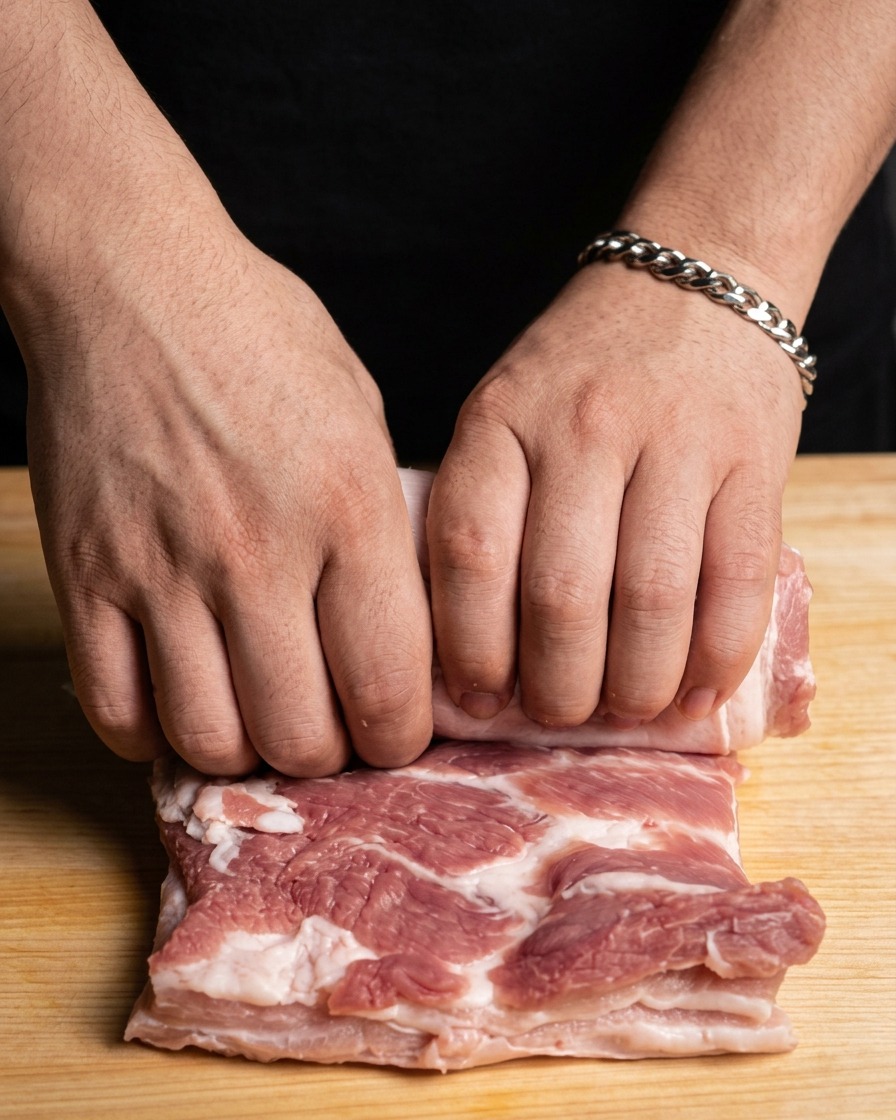
Starting from one of the long edges, use both hands to roll the pork belly onto itself as tightly as possible, forming a neat cylindrical shape. A tight roll ensures the chashu holds its classic round shape after cooking and slicing.
Tip: Rolling it tightly will yield a beautiful exterior and protect the interior of the meat while braising. - 4Tie the meat securely
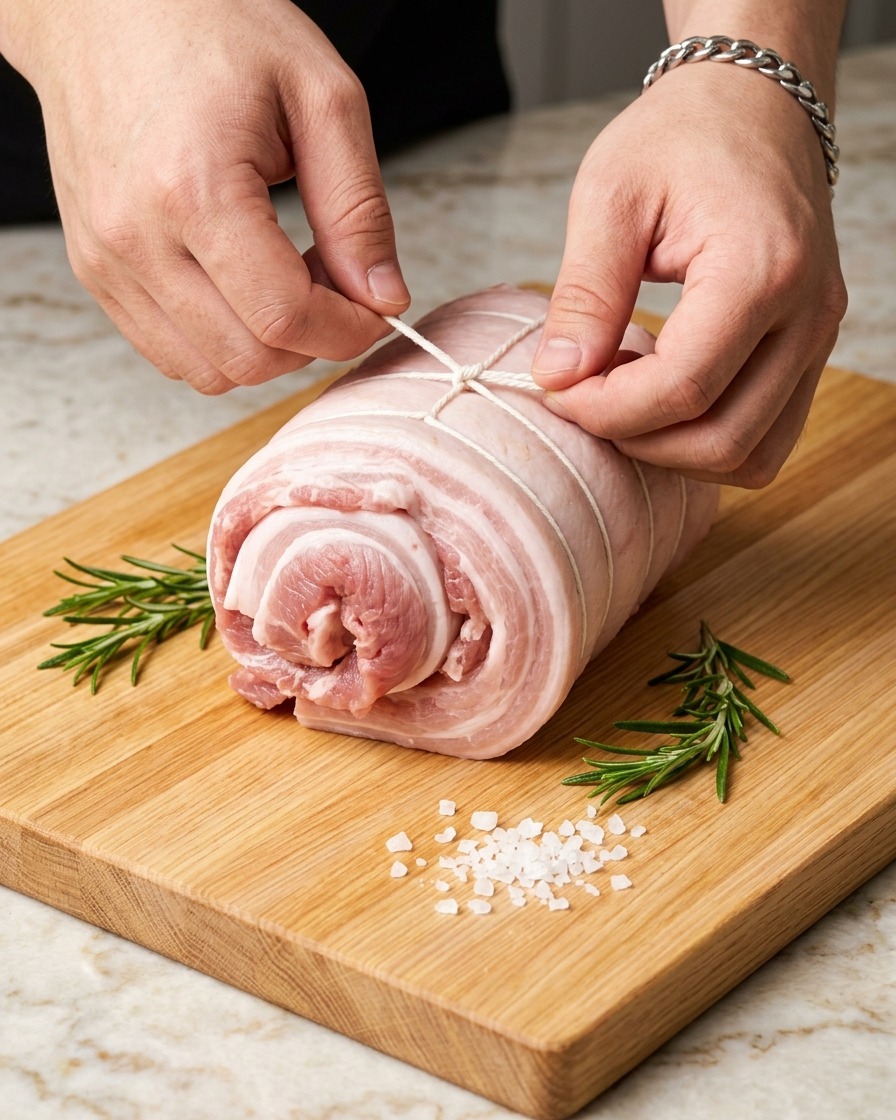
Wrap butchers twine around the rolled pork belly, spacing the loops evenly, and tie it securely with firm knots. This crucial step keeps the meat tightly bound together during the long braising process, preventing it from falling apart.
Tip: Make sure to use unbleached, 100% cotton butchers twine, as synthetic strings can melt or release harmful chemicals when heated. - 5Sear the pork belly
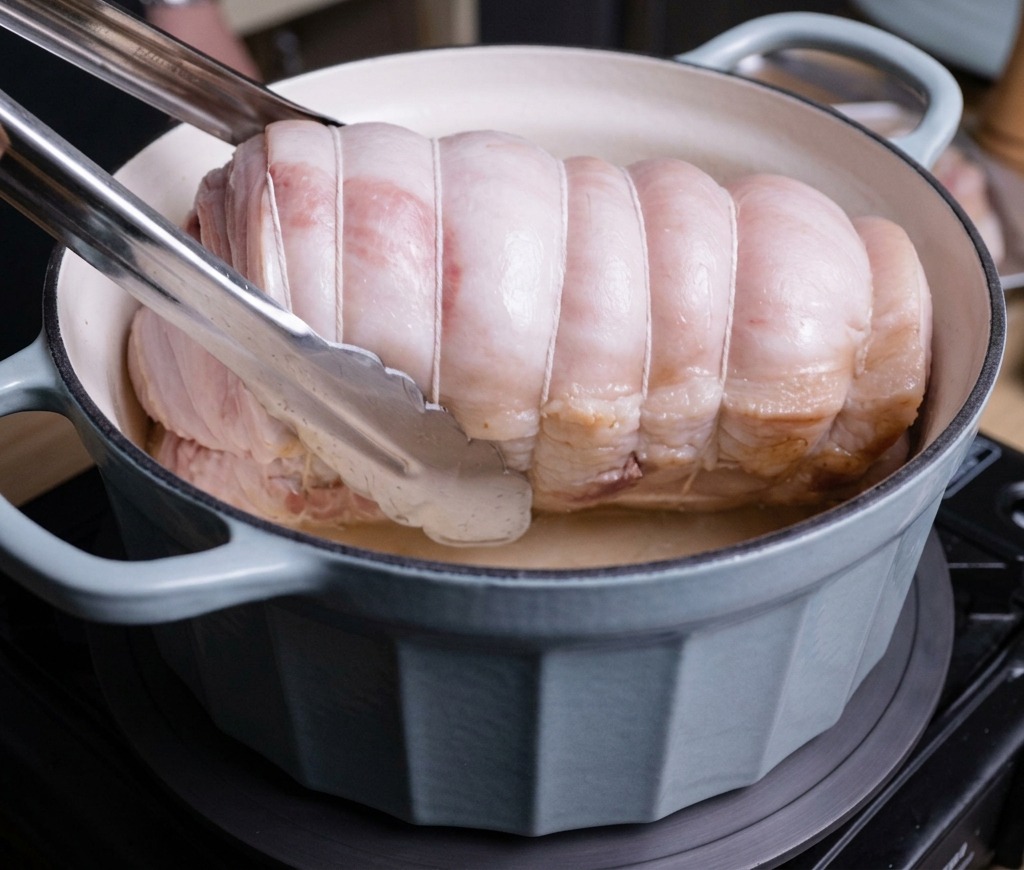
Place the tied pork belly roll into a preheated cast iron pot or Dutch oven. Sear the meat over high heat, using tongs to rotate it periodically. The goal is to brown every side evenly to create a deep flavor base through the Maillard reaction.
Tip: Ensure the pot is well heated before adding the meat. This promotes a better crust and prevents the pork from sticking to the bottom. - 6Add water to the pot
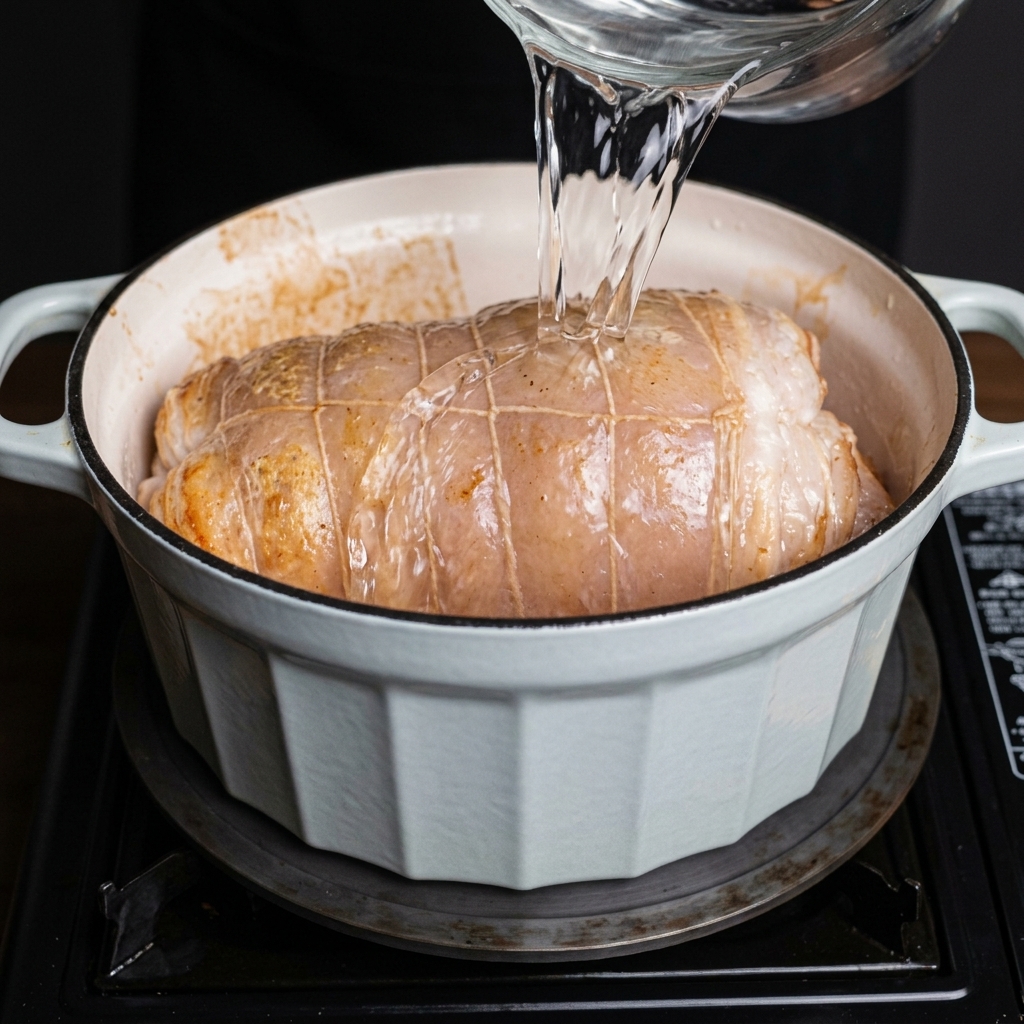
Once the pork roll has developed a rich, brown crust on all sides from the Maillard reaction, pour clear water into the pot. Ideally, add enough water to completely submerge the meat, which ensures even cooking and tenderizing.
Tip: If your pot isnt deep enough to fully submerge the pork, youll need to remember to flip the meat halfway through the braising time. - 7Add the liquid seasonings
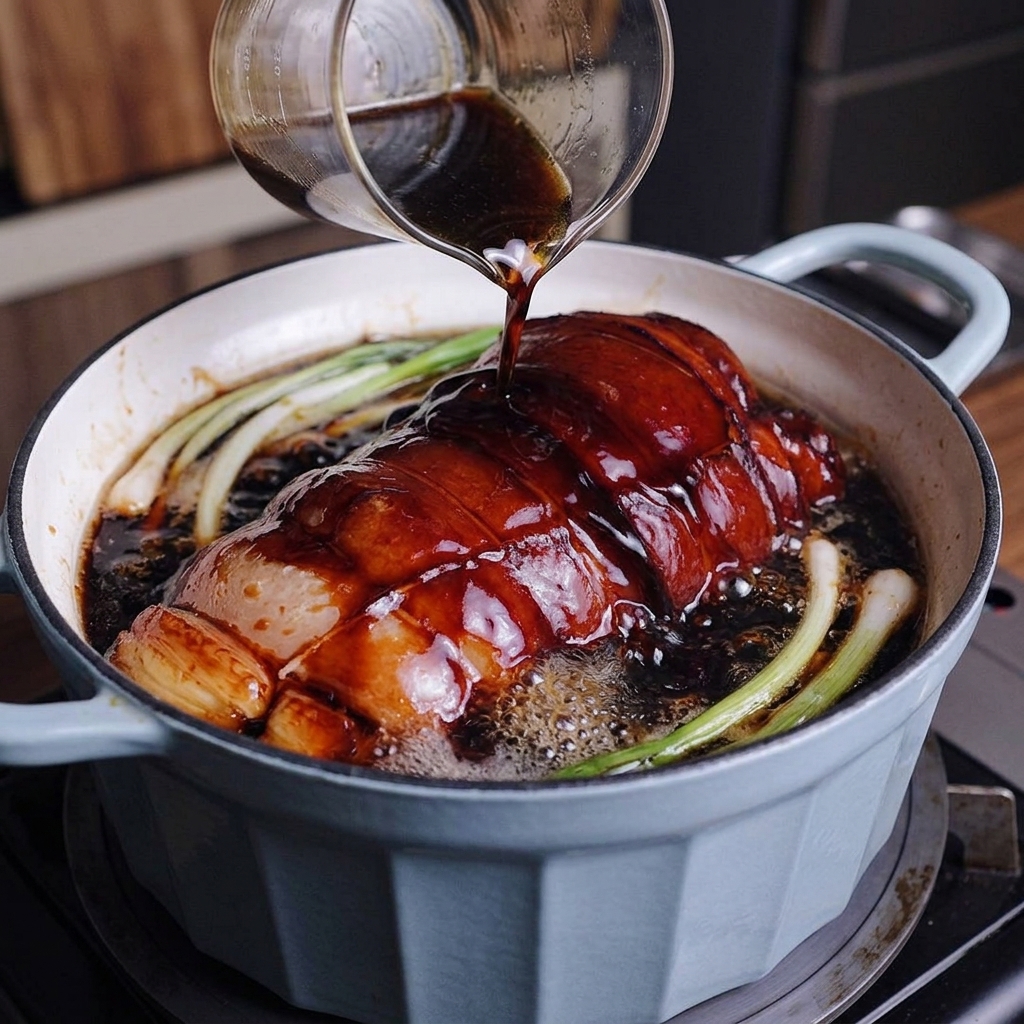
Pour the liquid seasonings like mirin cooking wine and soy sauce directly into the pot. Add the green onions and ginger to the water to build a deeply savory braising liquid without overflowing the pan.
Tip: The combination of soy sauce and sweet mirin creates that signature flavor profile while helping to tenderize the pork belly during the long simmer. - 8Simmer the chashu
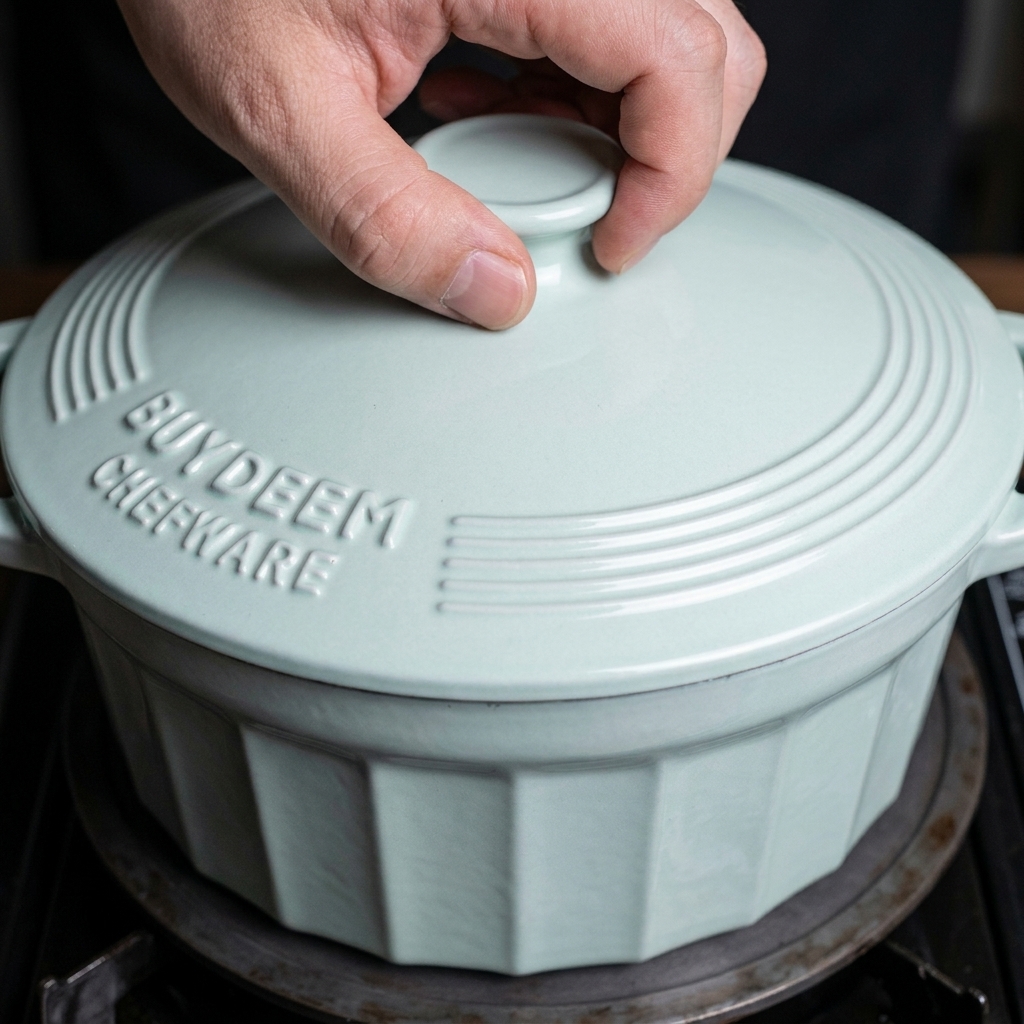
Bring the liquid to a boil, then reduce the heat to low and cover the pot tightly with its lid. Allow the pork to simmer gently for about 60 minutes to tenderize the meat and infuse it with flavor.
Tip: A tightly sealed cast iron pot retains heat and moisture exceptionally well, which helps reduce the required stewing time. - 9Marinate overnight
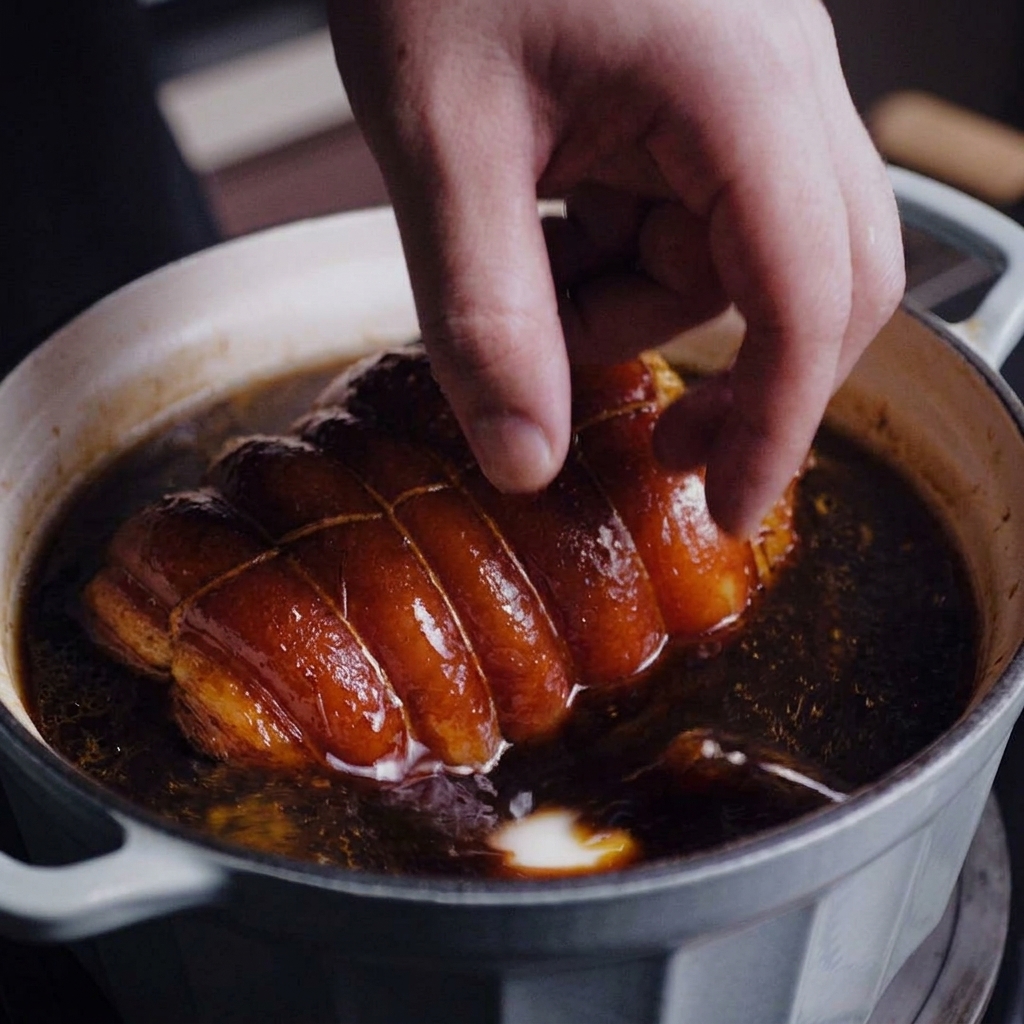
After simmering, let the pot cool down completely. Add your peeled soft-boiled eggs into the braising liquid, then place the entire pot in the refrigerator to marinate overnight.
Tip: Chilling the pork in its braising liquid overnight allows the flavors to deepen and firms up the meat, making it much easier to slice. - 10Slice the chilled chashu
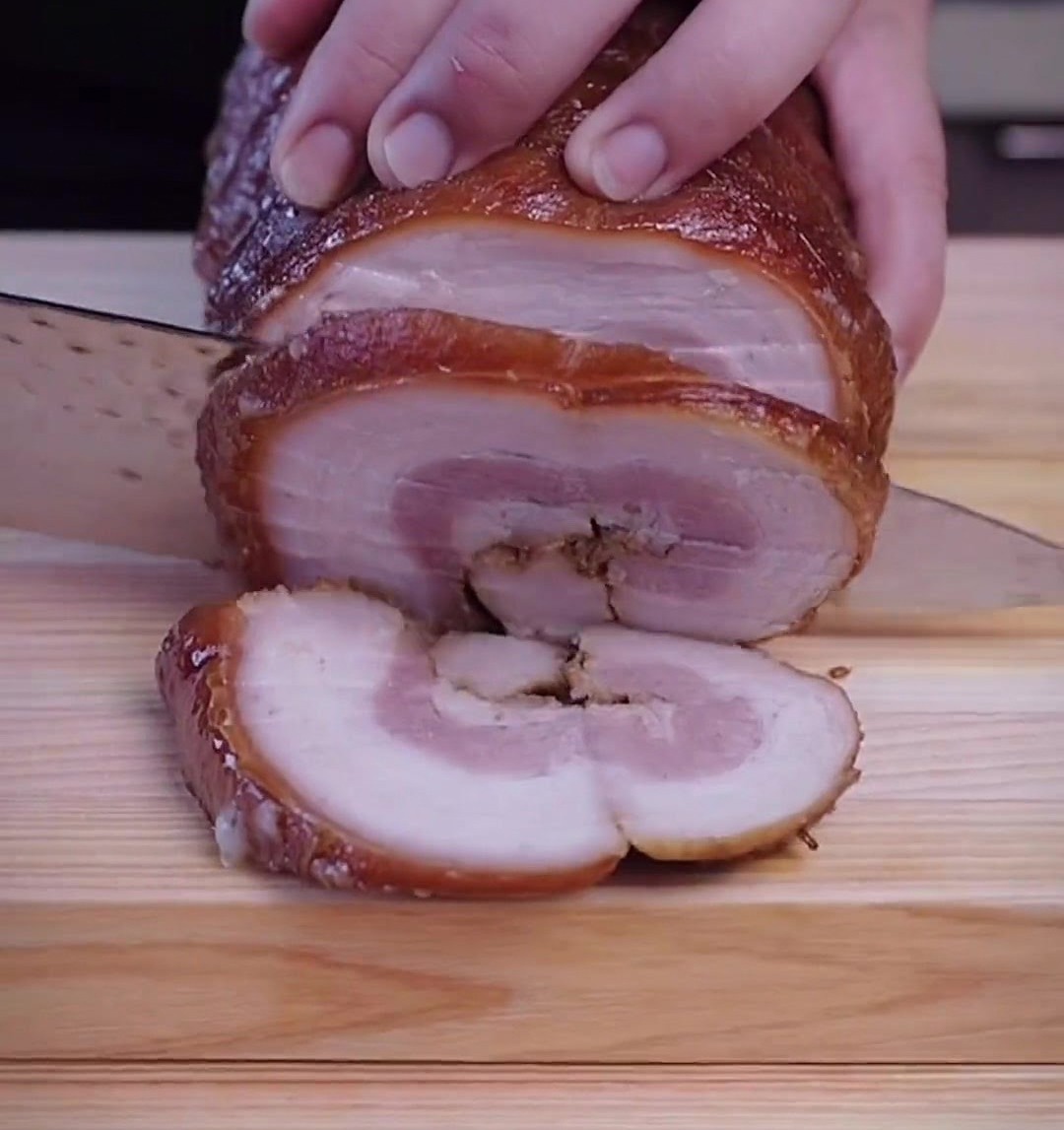
Once the cooked chashu pork has cooled and rested in the refrigerator overnight, transfer it to a cutting board. Use a sharp knife to cut the roll into thick, even circular slices. Chilling the meat solidifies the fats and juices, ensuring clean cuts without the meat falling apart.
Tip: A sharp chefs knife or slicing knife is essential here to glide through the meat cleanly instead of tearing it. - 11Pan fry the slices
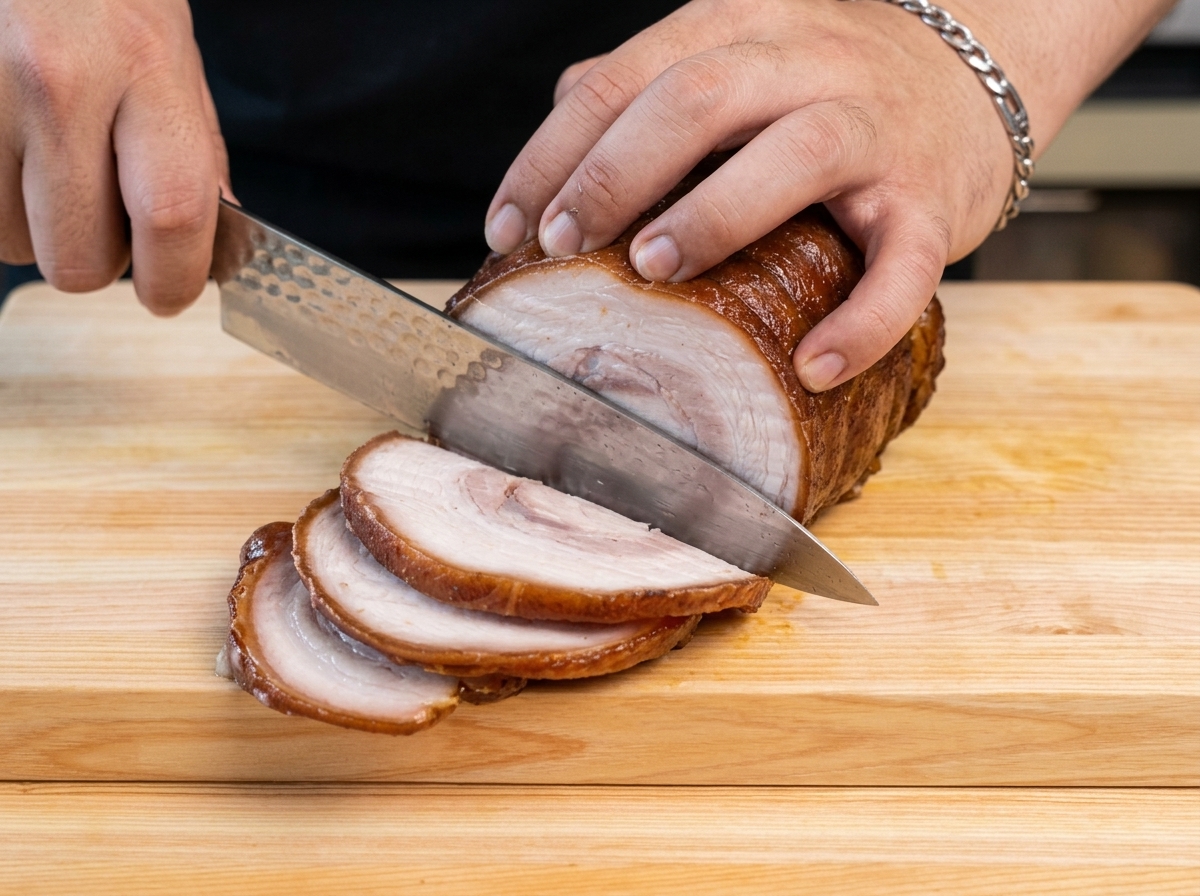
Place the cold chashu slices into a dark skillet over medium high heat. Use tongs to gently turn them searing the meat until the edges are beautifully caramelized and the fat just begins to render.
Tip: Pan frying gently warms the center of the slices while crisping the edges creating a wonderful contrast in texture before adding them to your noodle soup. - 12Char the chashu slices
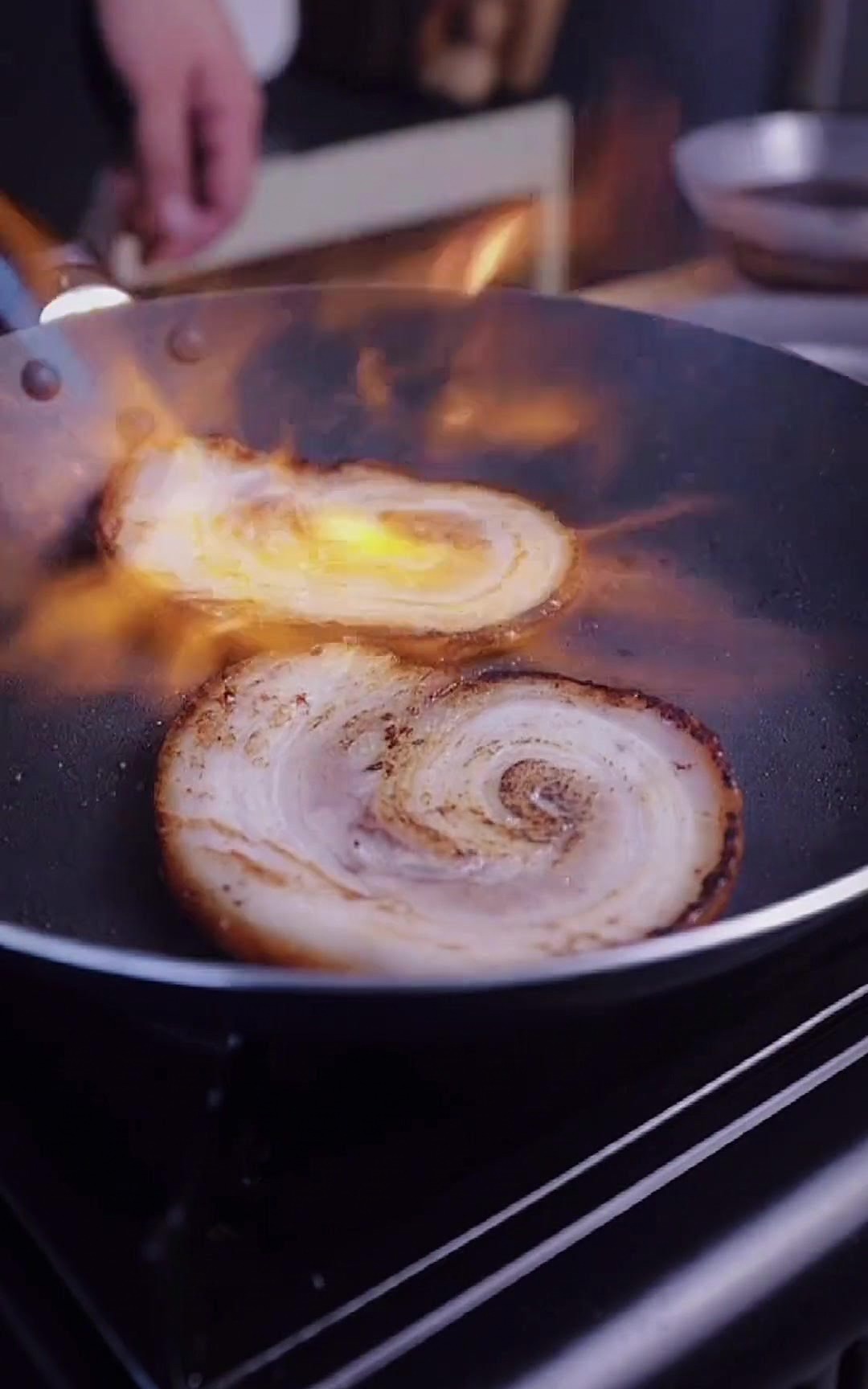
For an authentic, smoky finish, leave the slices in the pan or transfer them to a fireproof tray. Use a kitchen blowtorch to carefully blast the top surface of each slice, quickly rendering the fat and creating a rich, caramelized crust.
Tip: Keep the blowtorch moving constantly to prevent burning in one spot and to achieve an even, appealing caramelization across the meat. - 13Reduce the braising liquid
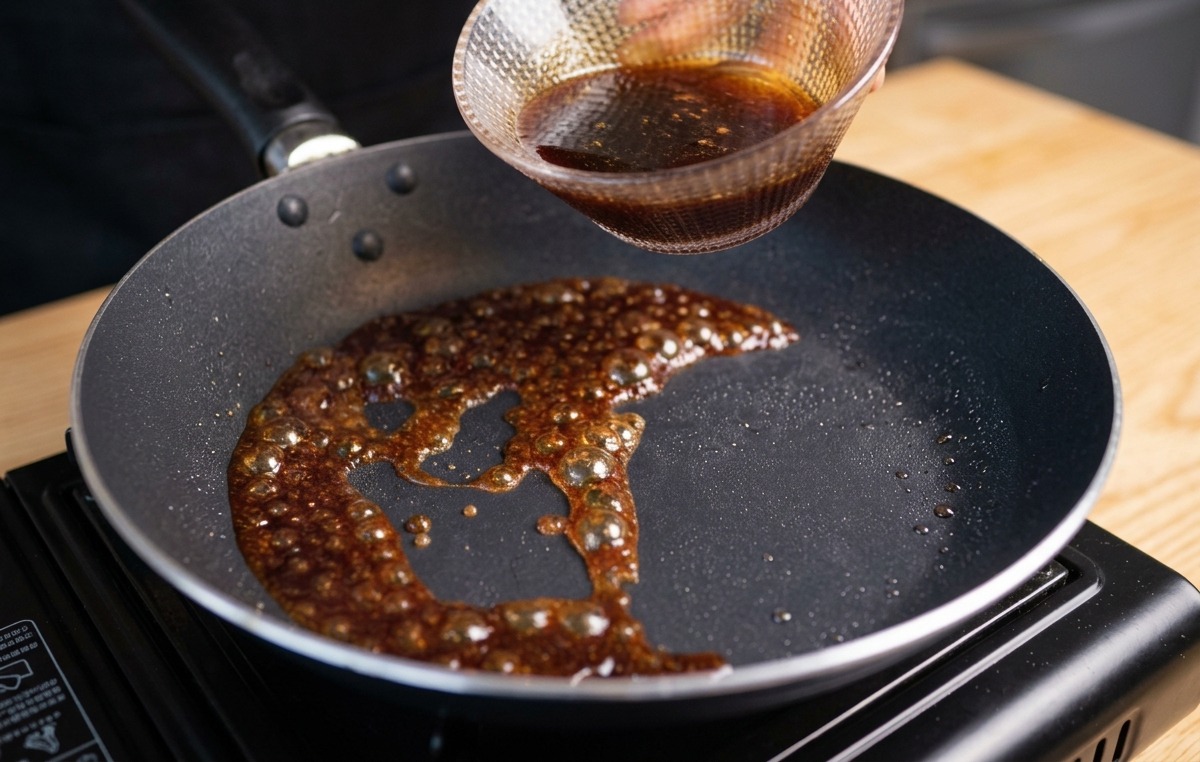
Pour the leftover braising liquid from cooking the pork into a saucepan or skillet. Bring it to a boil over medium-high heat, stirring occasionally. Allow the liquid to reduce down until it becomes a rich, thick, and glossy glaze.
Tip: Keep a close eye on the pan as the liquid reduces; the high sugar content from the mirin and rock sugar can cause it to burn quickly once it thickens. - 14Glaze the pork
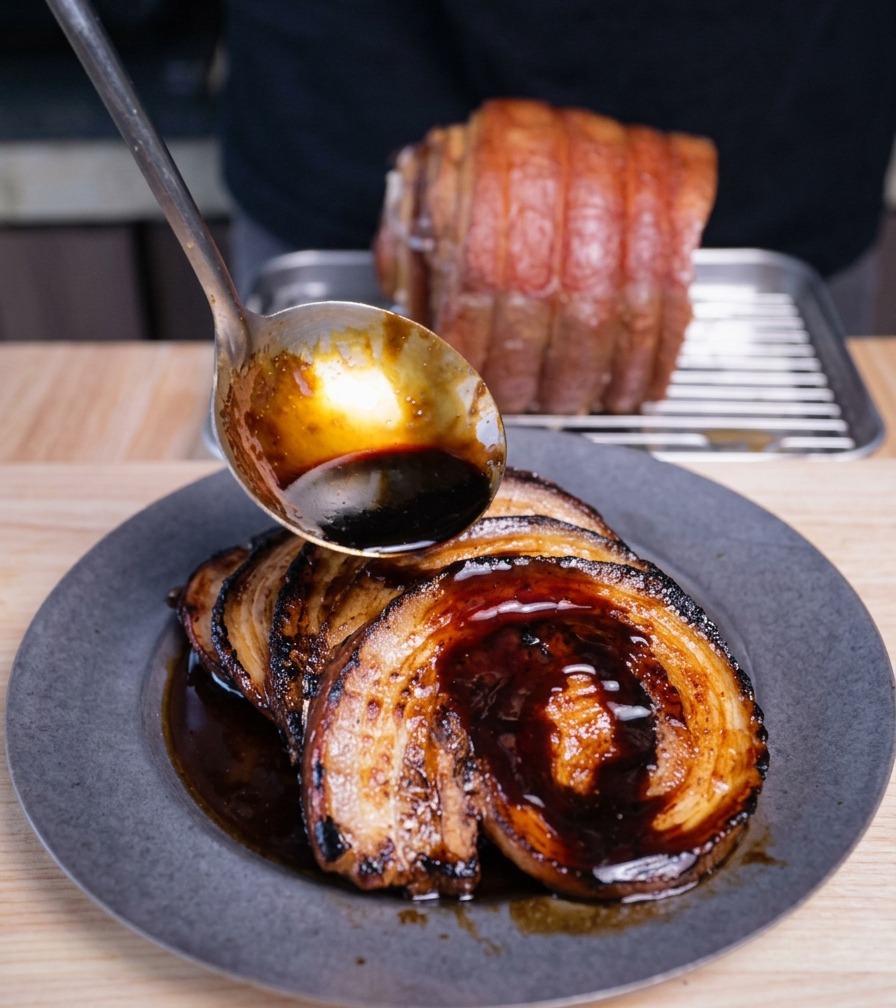
Arrange the freshly charred chashu slices on a serving plate. Generously spoon the warm, reduced glaze over the meat, ensuring each slice is well-coated in the sweet and savory sauce.
Tip: This glaze adds a beautiful shine and a punch of concentrated flavor to the chashu just before assembling your final dishes. - 15Assemble the Ramen
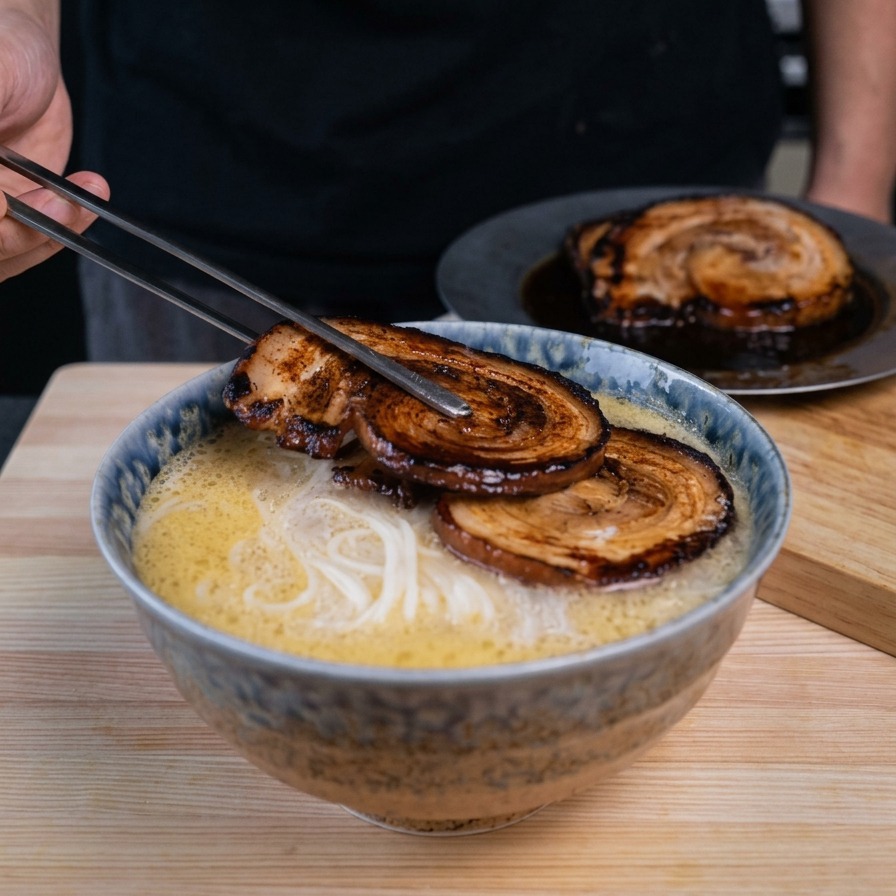
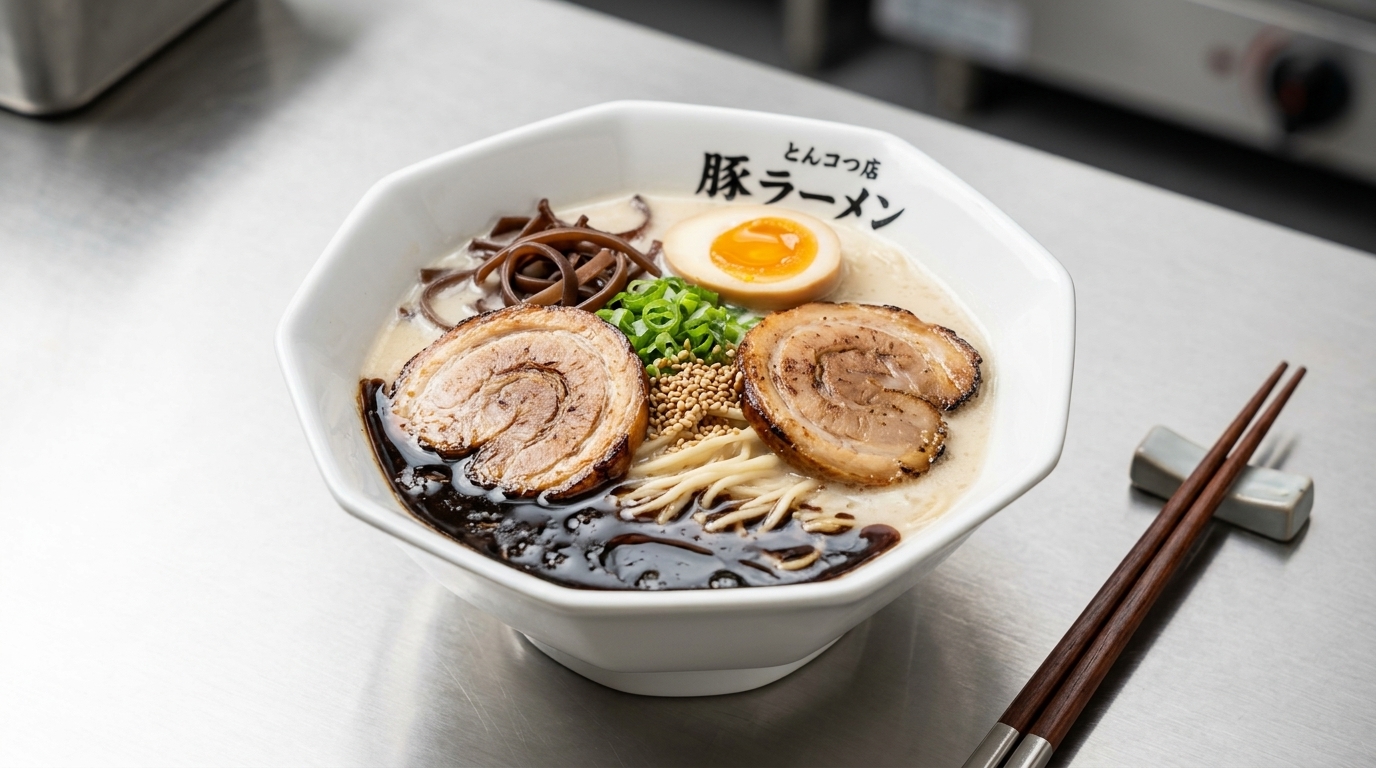
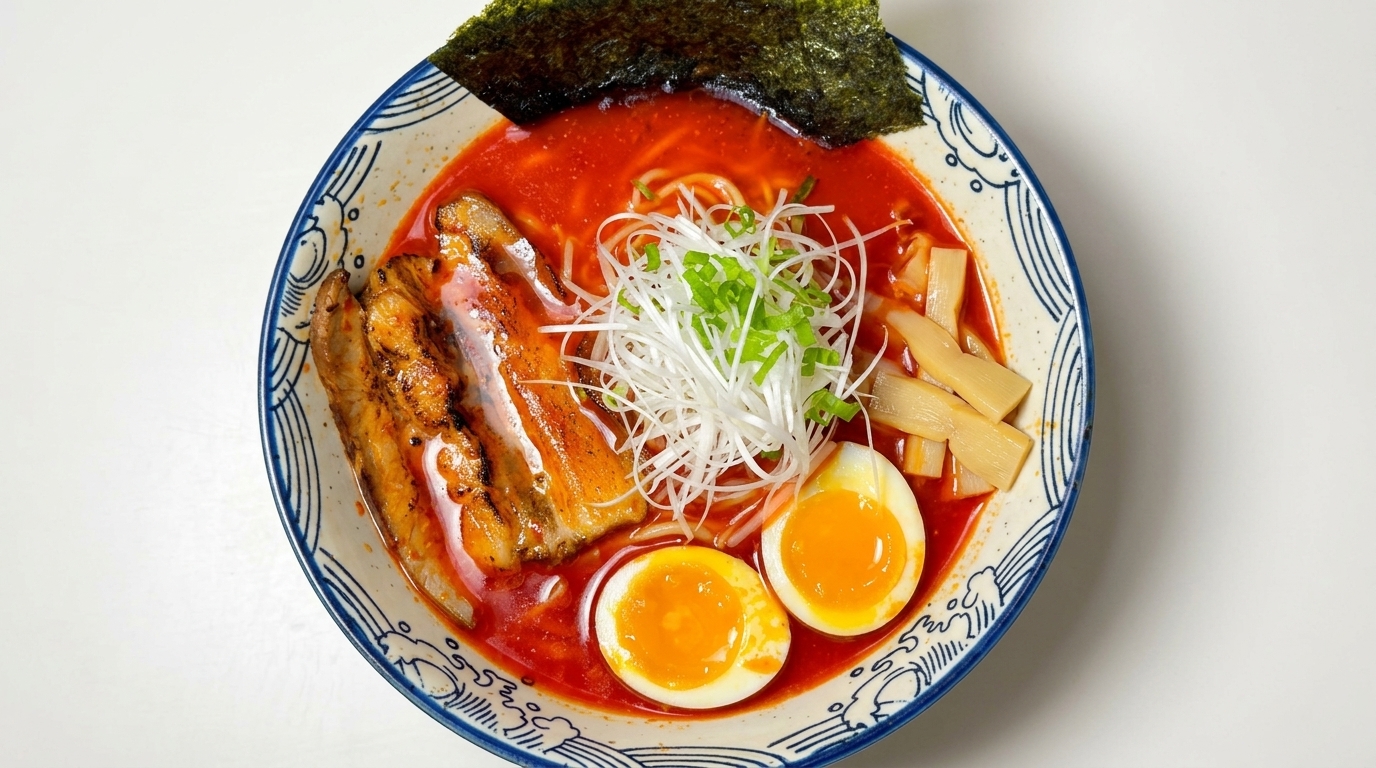
With the hot tonkotsu broth and noodles already in the serving bowl, use tongs to carefully arrange the beautifully seared chashu slices on top. Finish assembling the bowl by adding your desired garnishes like bamboo shoots, wood ear mushrooms, a soft-boiled egg, and chopped green onions.
Tip: Nestling the chashu slightly into the hot broth right before serving helps melt the fat and warms the meat through.