Rich and Creamy Japanese Tonkotsu Ramen
Master the art of authentic Japanese Tonkotsu ramen at home. This recipe features a rich pork broth, tender chashu, and a perfectly smooth umami base.
There is nothing quite like the deeply comforting embrace of a proper bowl of Tonkotsu ramen, a dish that often lingers in your memory long after a trip to Japan. Inspired by those unforgettable bowls, this recipe guides you through creating that signature milky, umami-rich pork broth in your own kitchen. By blending a custom miso and bonito tare, you can bring the complex flavors of a Japanese ramen shop right to your dining table.
Ingredients
- 4 cups creamy pork bone broth
- 2 portions fresh ramen noodles
- 2 tbsp miso paste
- 1 tbsp soy sauce
- 1 tbsp mirin
- 1 tsp sesame oil
- 1 tbsp roasted sesame seeds
- 1 small handful bonito flakes
- 2 cloves minced garlic
- 6 slices chashu pork (braised pork belly)
- 2 whole soft-boiled eggs (ajitsuke tamago)
- 14 cup shredded wood ear mushrooms (kikurage)
- 14 cup bamboo shoots (menma)
- 4 slices narutomaki (fish cake)
- 14 cup chopped green onions
- 4 squares nori (seaweed)
Instructions
- 1Prepare the base seasonings
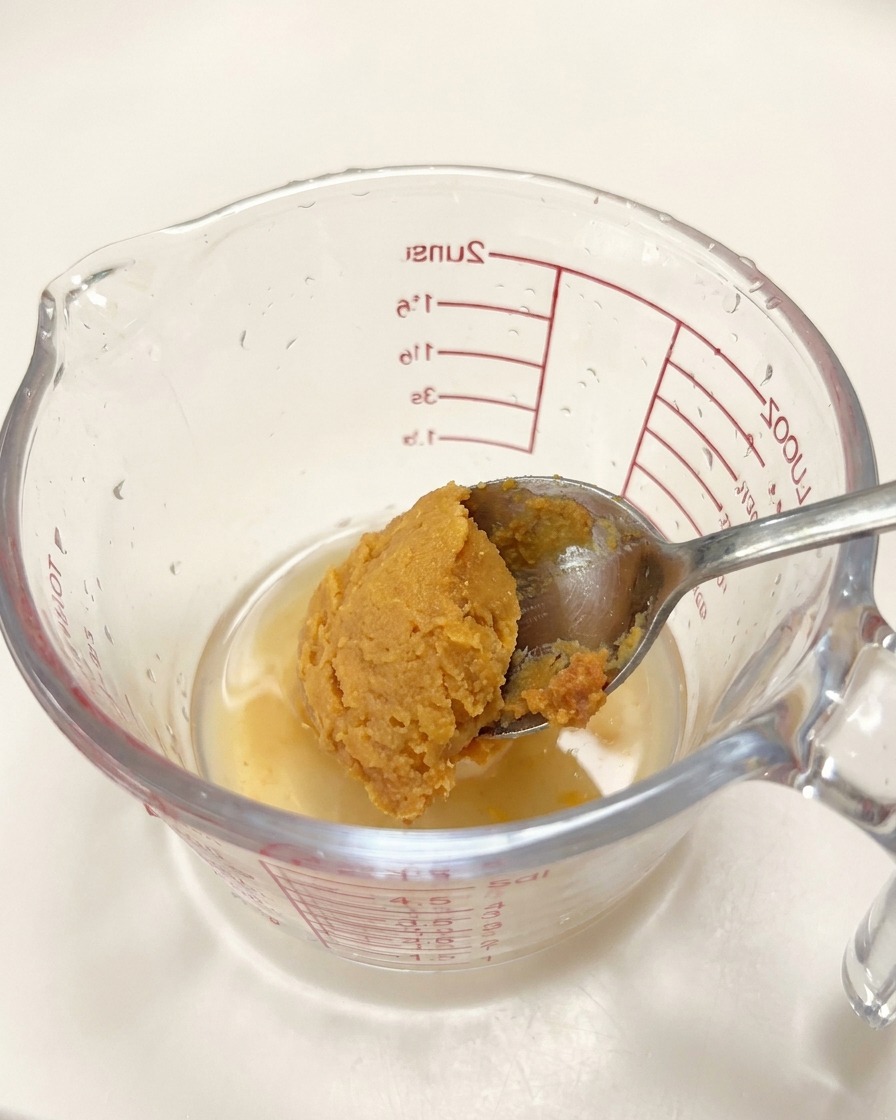
Begin by building the flavor profile in a measuring cup or small bowl. Add a generous scoop of miso paste, soy sauce, sesame oil, mirin, and roasted sesame seeds. This concentrated mixture will form the rich foundation of your ramen broth.
Tip: Using a measuring cup with a spout makes it easier to pour the blended base into your serving bowls later. - 2Add umami with bonito flakes
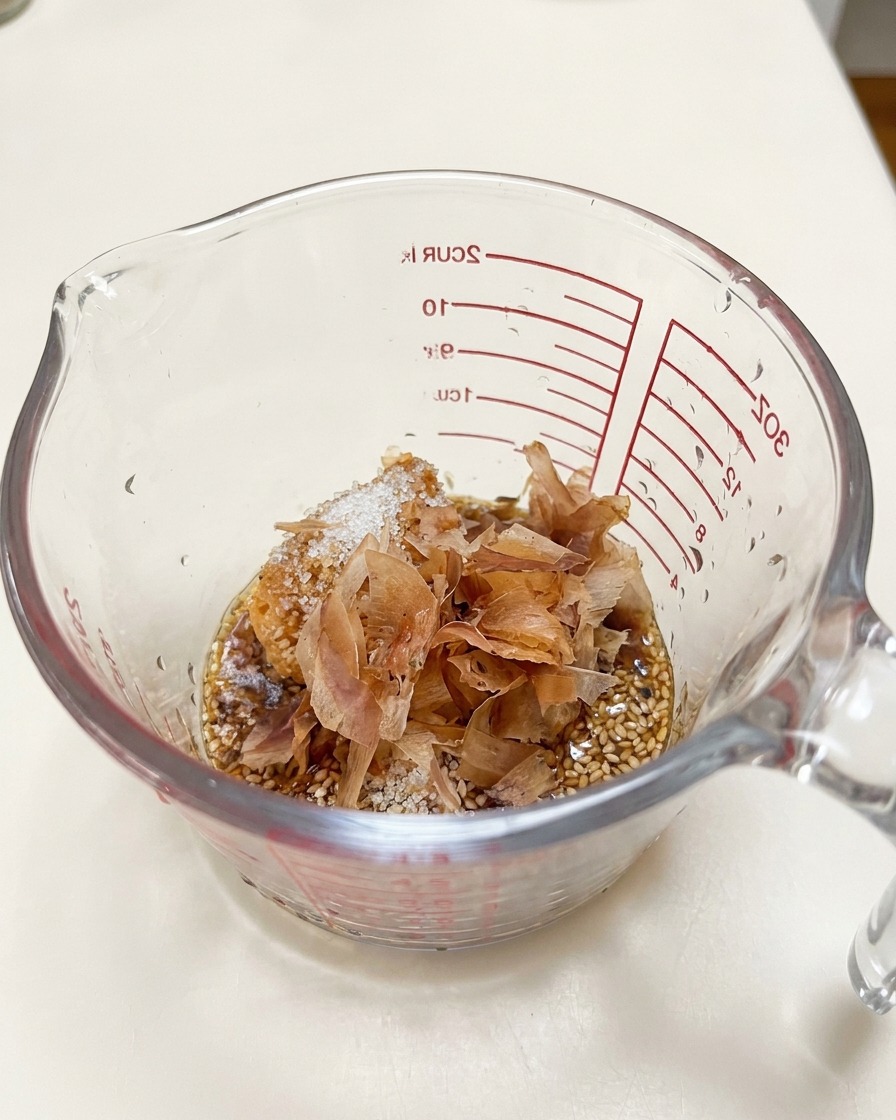
Drop a small handful of bonito flakes directly into the measuring cup over the liquid seasonings and miso paste. The bonito flakes will dissolve into the hot broth later, releasing a deep, smoky umami flavor that perfectly complements the pork bone base.
Tip: If you prefer a completely smooth broth without blending, you can steep the bonito flakes in hot water first and strain the liquid into the bowl. - 3Pour in the hot broth
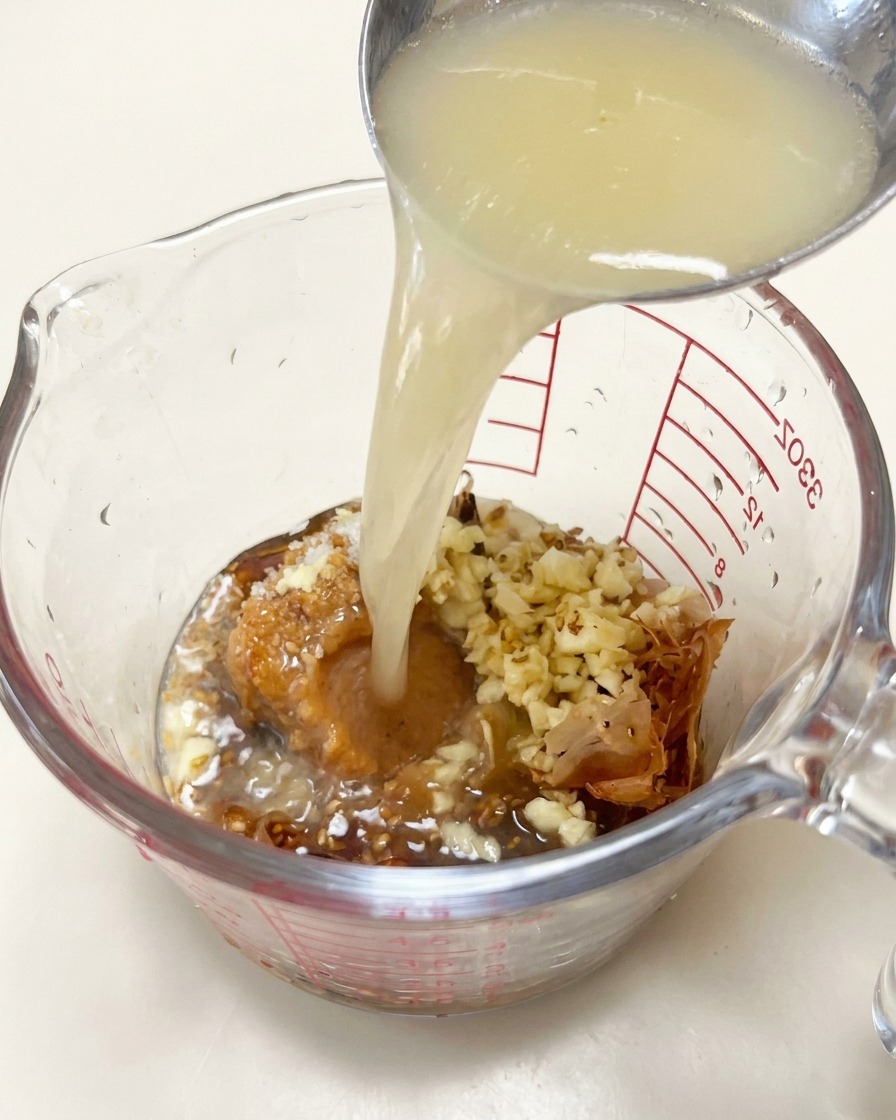
Add a portion of hot, creamy pork bone broth into the measuring cup along with some freshly minced garlic. The heat from the broth will start to soften the miso paste and extract the flavors from the bonito flakes and garlic.
Tip: Make sure the broth is piping hot so it easily dissolves the thick miso paste and activates the aromatics. - 4Stir to combine
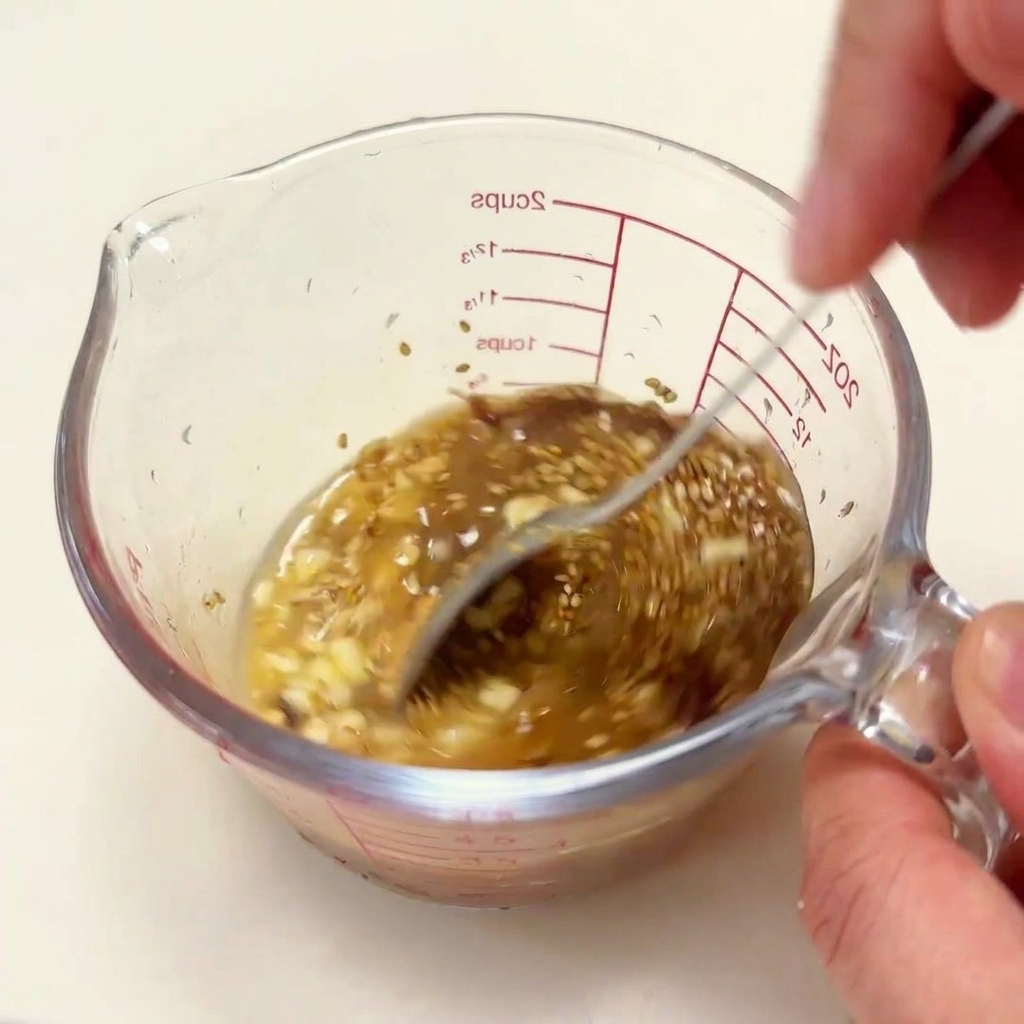
Use a metal spoon to vigorously stir the hot broth and seasonings together. Ensure the miso paste is fully broken down and the sesame seeds, garlic, and bonito flakes are evenly distributed throughout the liquid.
Tip: Miso paste can be stubborn to dissolve; pressing it against the side of the cup with the back of your spoon can help break it apart faster. - 5Blend for a smooth base
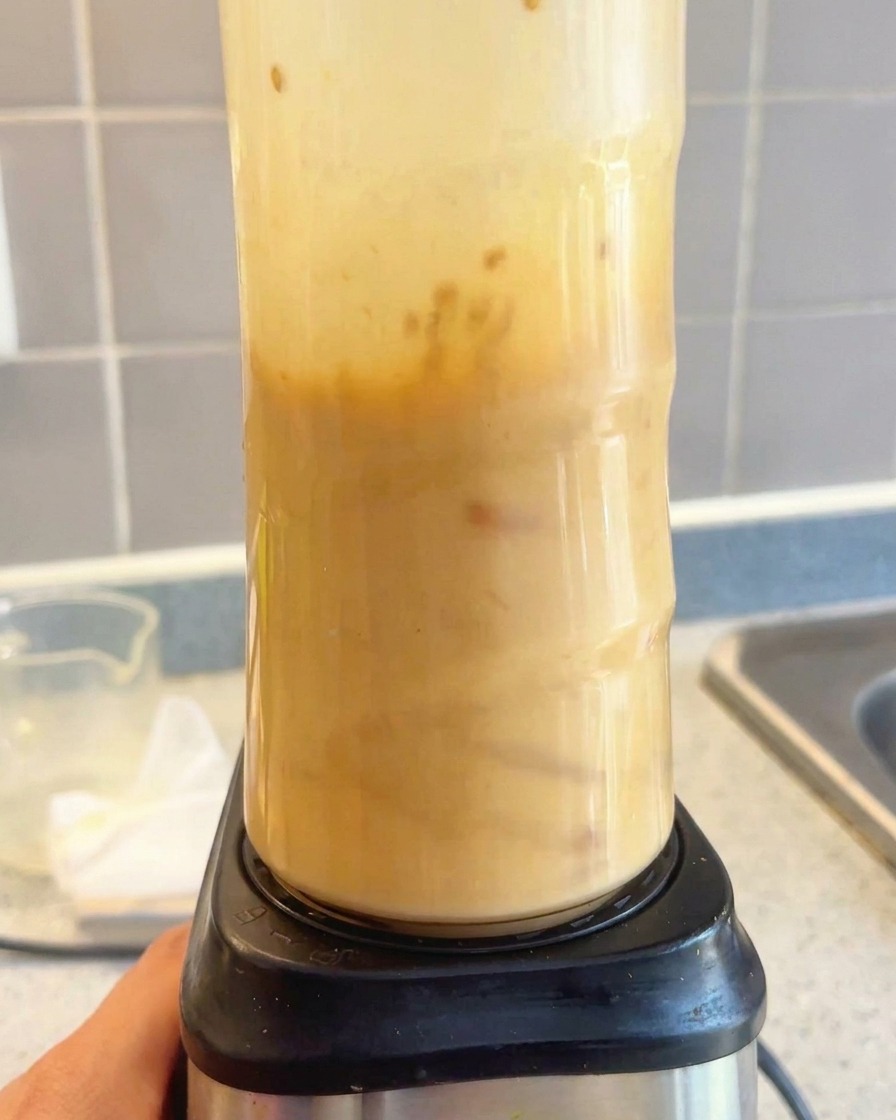
Transfer the mixed soup base into an electric blender and blend until completely smooth. This step pulverizes the bonito flakes, sesame seeds, and garlic, creating a highly concentrated, silky-smooth seasoning liquid (tare) that will seamlessly mix into your final bowl of ramen.
Tip: Be careful when blending hot liquids; ensure the blender lid is vented or hold it down securely with a towel to prevent pressure buildup. - 6Boil the ramen noodles
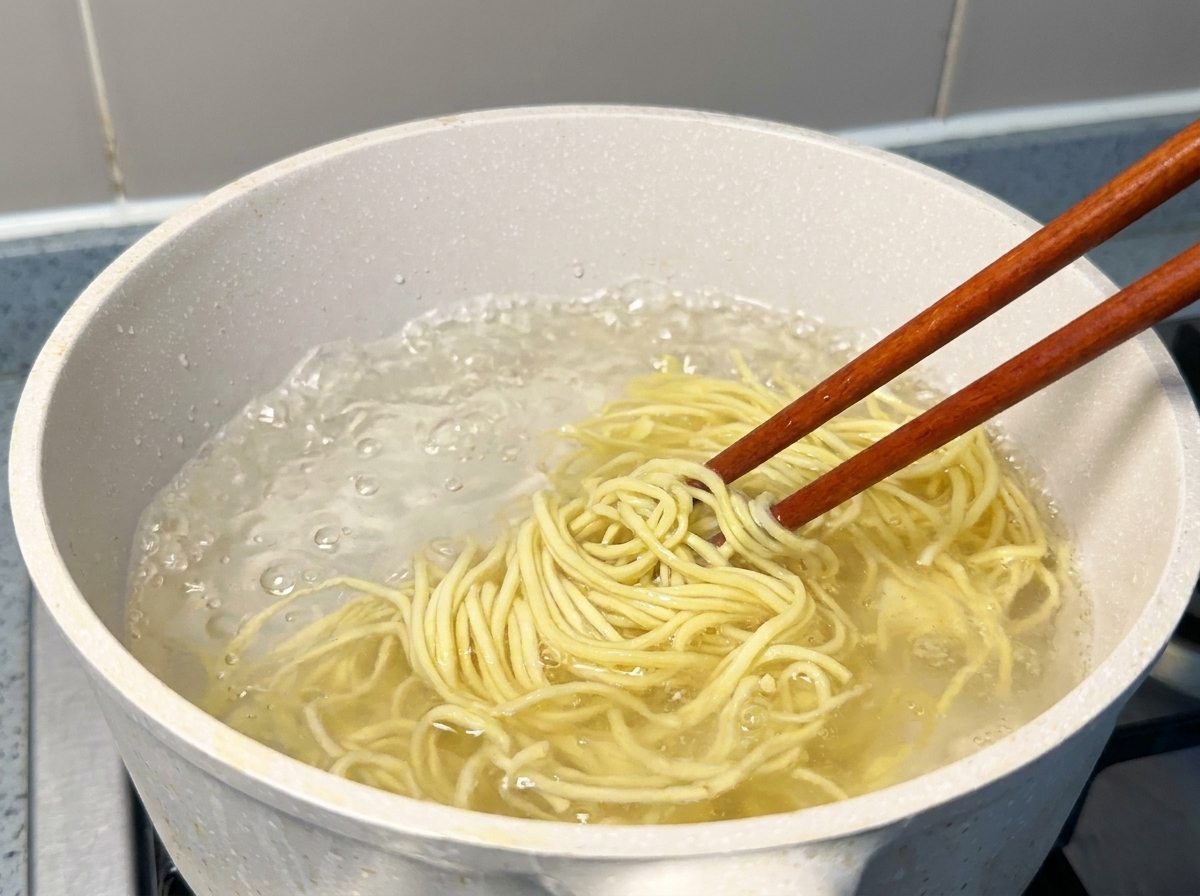
Bring a separate pot of water to a rolling boil and drop in your fresh ramen noodles. Use wooden chopsticks to gently stir and lift the noodles, preventing them from clumping together. Cook them according to the package instructions, usually just for a couple of minutes until perfectly chewy.
Tip: Cook the noodles right before you are ready to assemble the bowls so they dont get soggy or stick together while waiting. - 7Pour the soup base
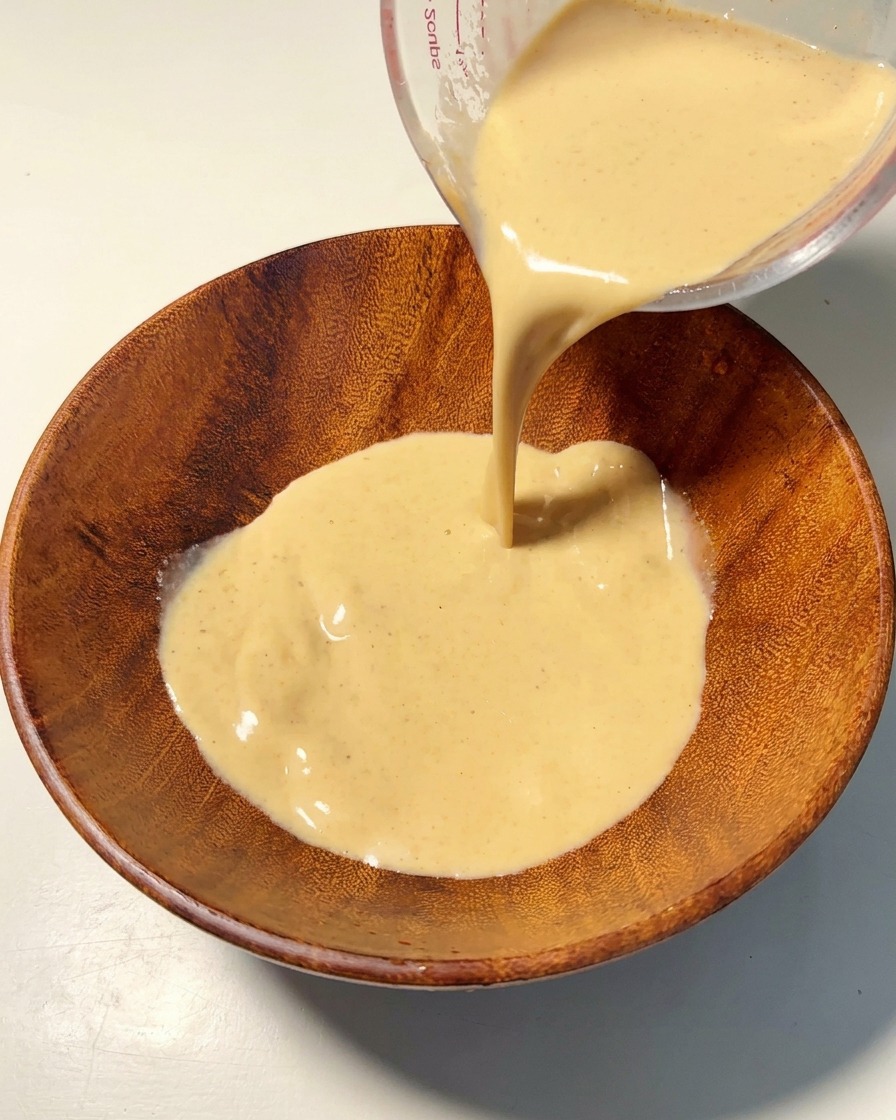
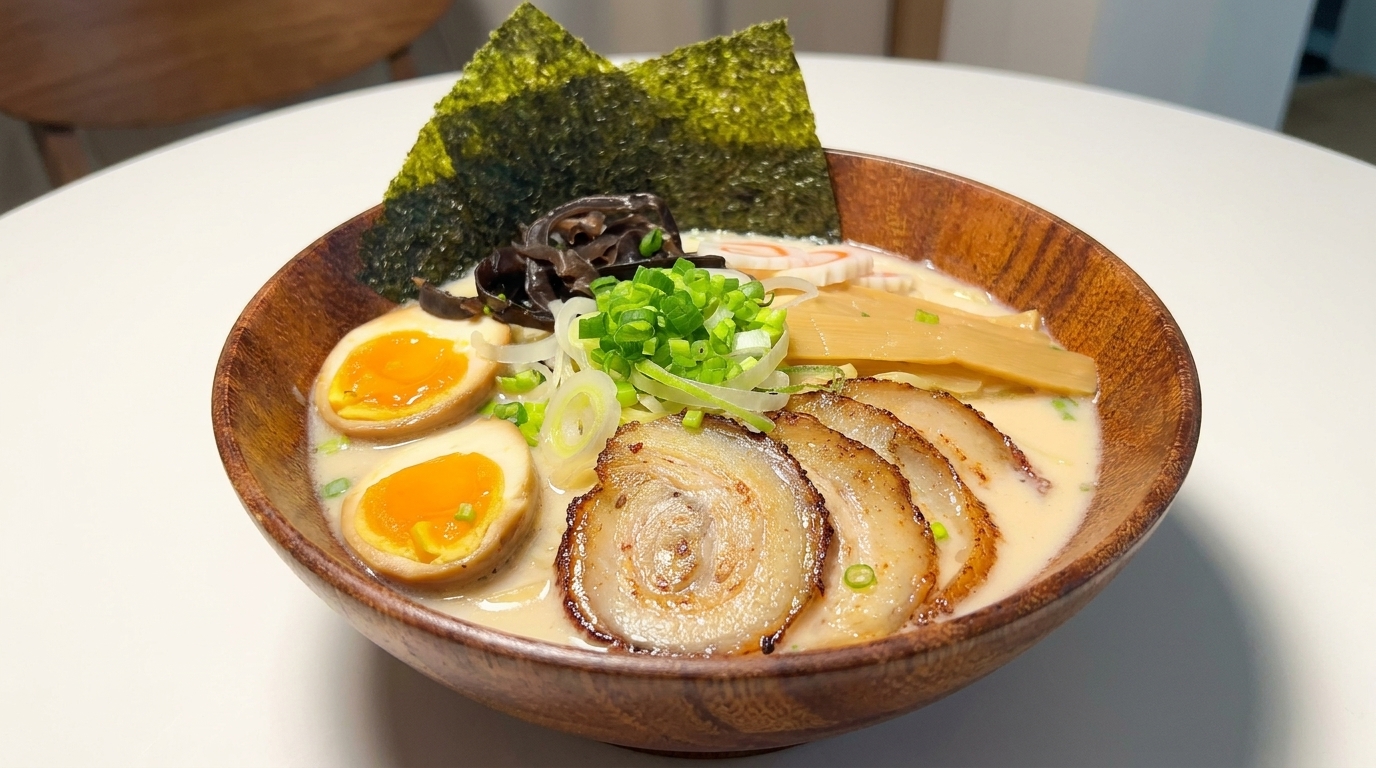
Pour the blended, creamy soup base mixture into a large wooden serving bowl. This rich and concentrated base forms the flavor foundation for the entire bowl of ramen.
Tip: Warming your serving bowl beforehand ensures the ramen stays piping hot while you assemble the toppings. - 8Combine the broth base
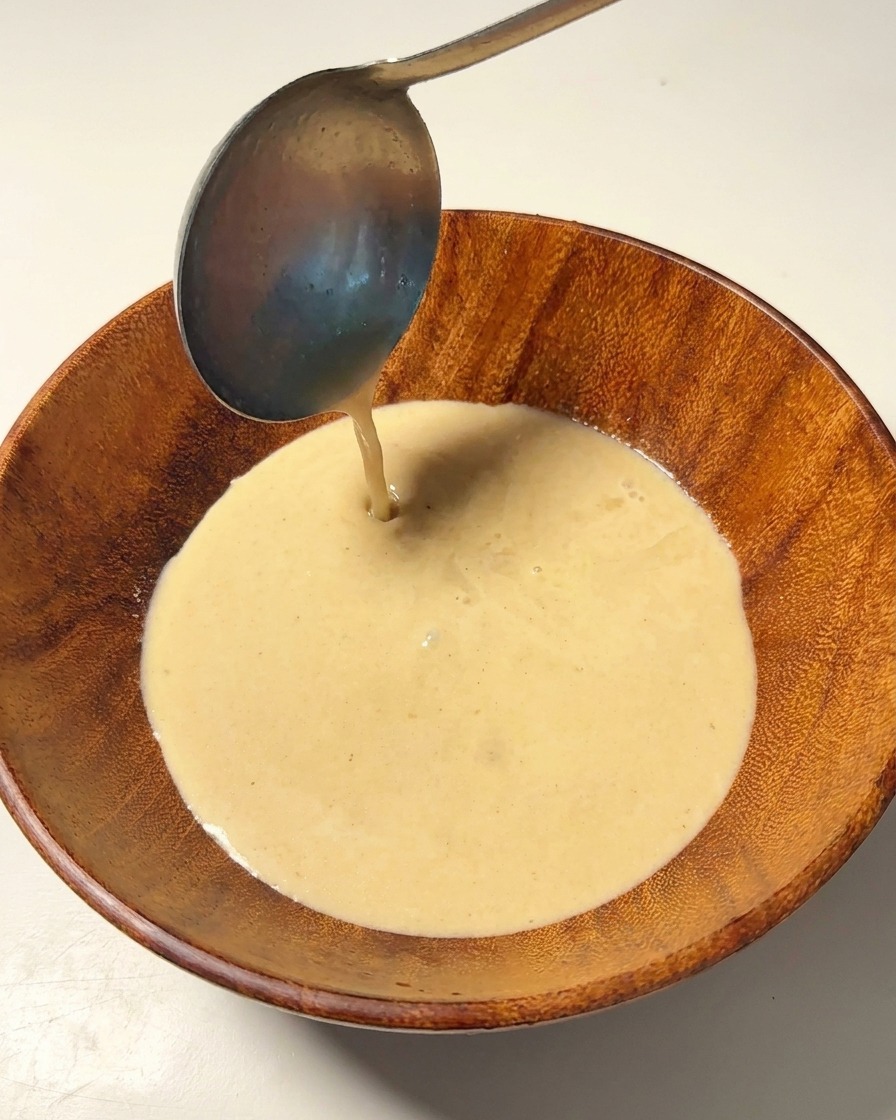
Carefully ladle the hot pork bone broth into the serving bowl, mixing it with the concentrated ramen base. This creates the rich, creamy, and deeply flavorful foundation characteristic of a traditional Tonkotsu ramen.
Tip: Ensure the broth is piping hot before pouring to keep the noodles warm and properly activate the flavor of the base. - 9Add the ramen noodles
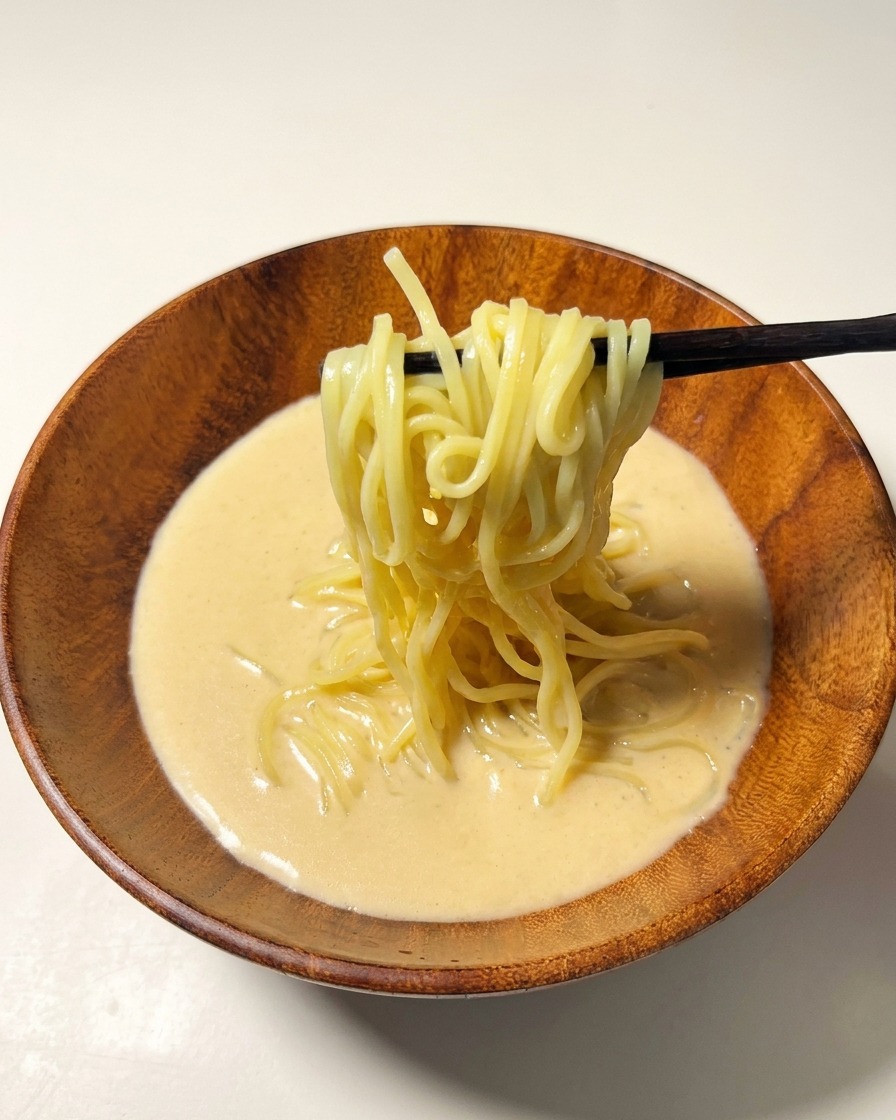
Place the cooked and thoroughly drained ramen noodles directly into the creamy broth. Use chopsticks to gently fold the noodles, ensuring they are evenly coated and lay beautifully in the bowl.
Tip: Shake off as much excess cooking water as possible from the noodles to prevent diluting the rich flavor of the broth. - 10Arrange the chashu
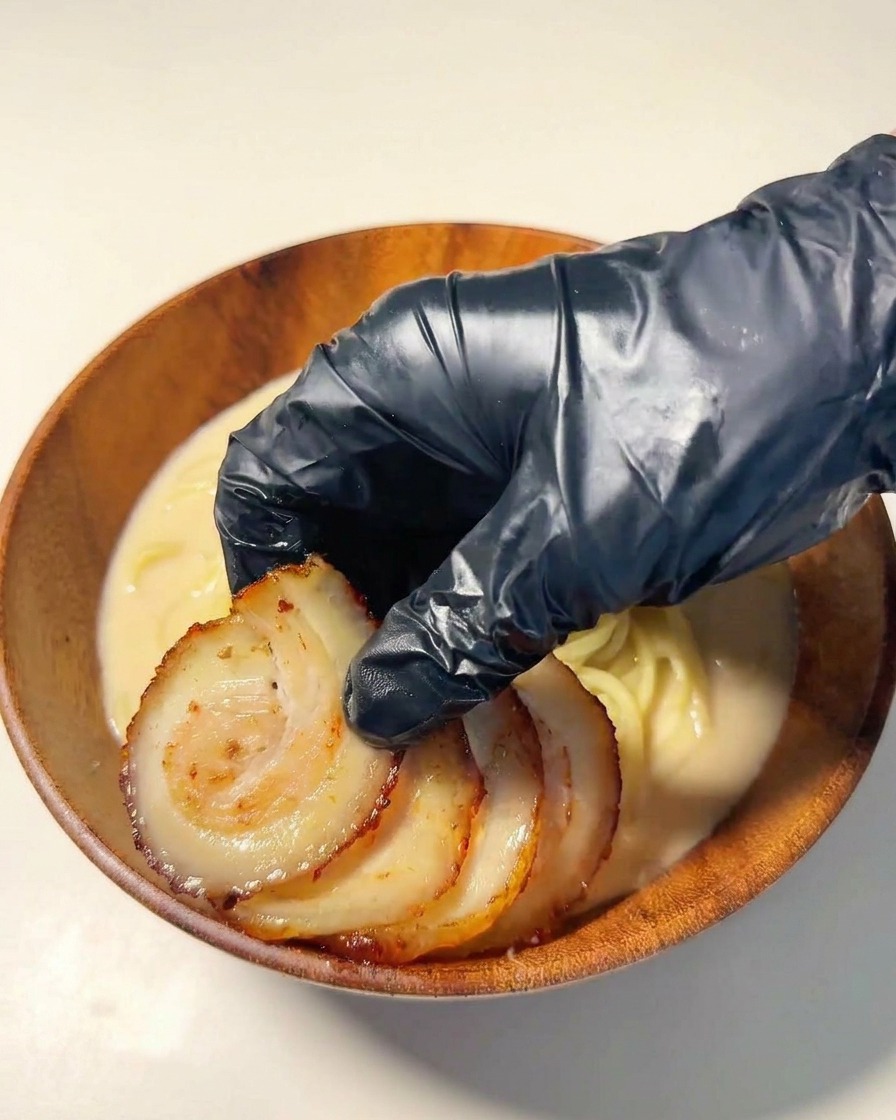
Carefully lay the slices of seared chashu pork over the top of the noodles. The residual heat from the broth will gently warm the pork, allowing its fat to melt slightly into the soup.
Tip: For an extra layer of smoky flavor, give the chashu a quick sear with a kitchen blowtorch right before plating. - 11Add the soft-boiled egg
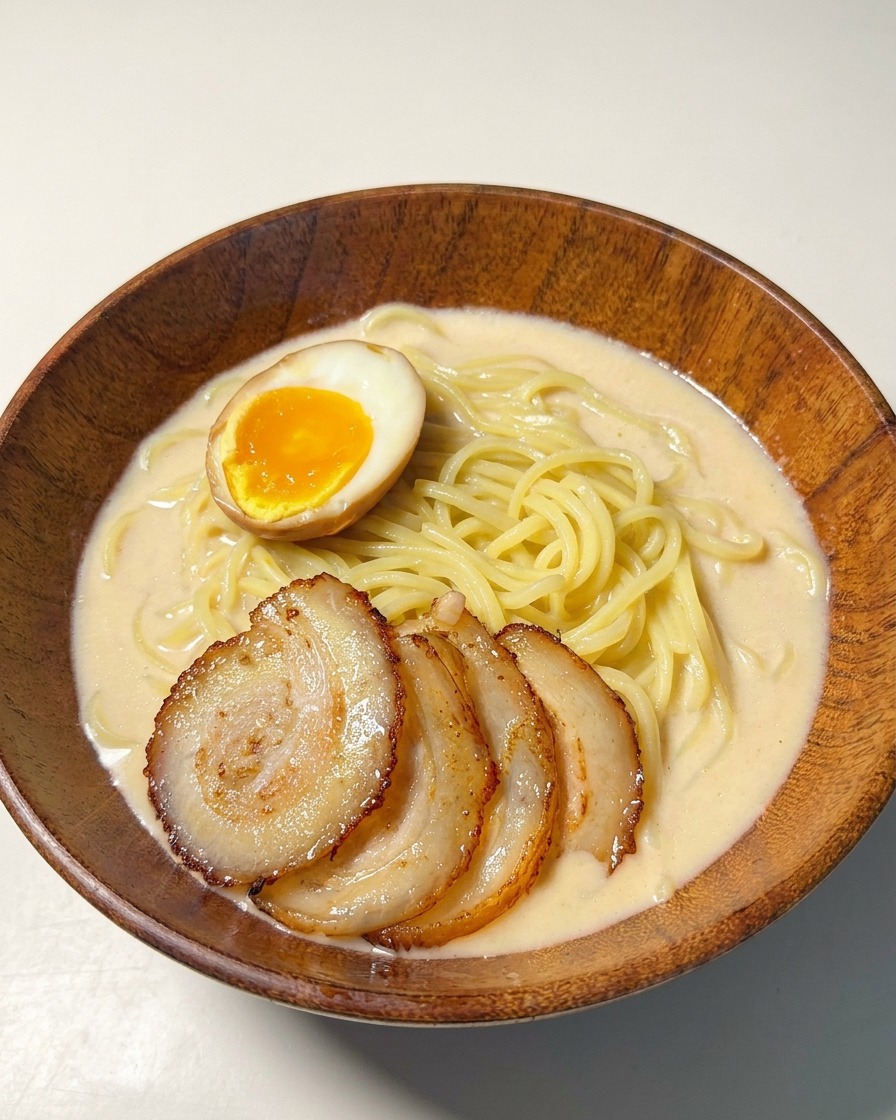
Place the soft-boiled egg gently into the bowl alongside the pork. The vibrant, jammy yolk adds a beautiful pop of color and an extra creamy texture to the dish.
Tip: Slicing the egg with a tight piece of fishing line or unflavored dental floss gives a much cleaner cut than a knife. - 12Add the toppings
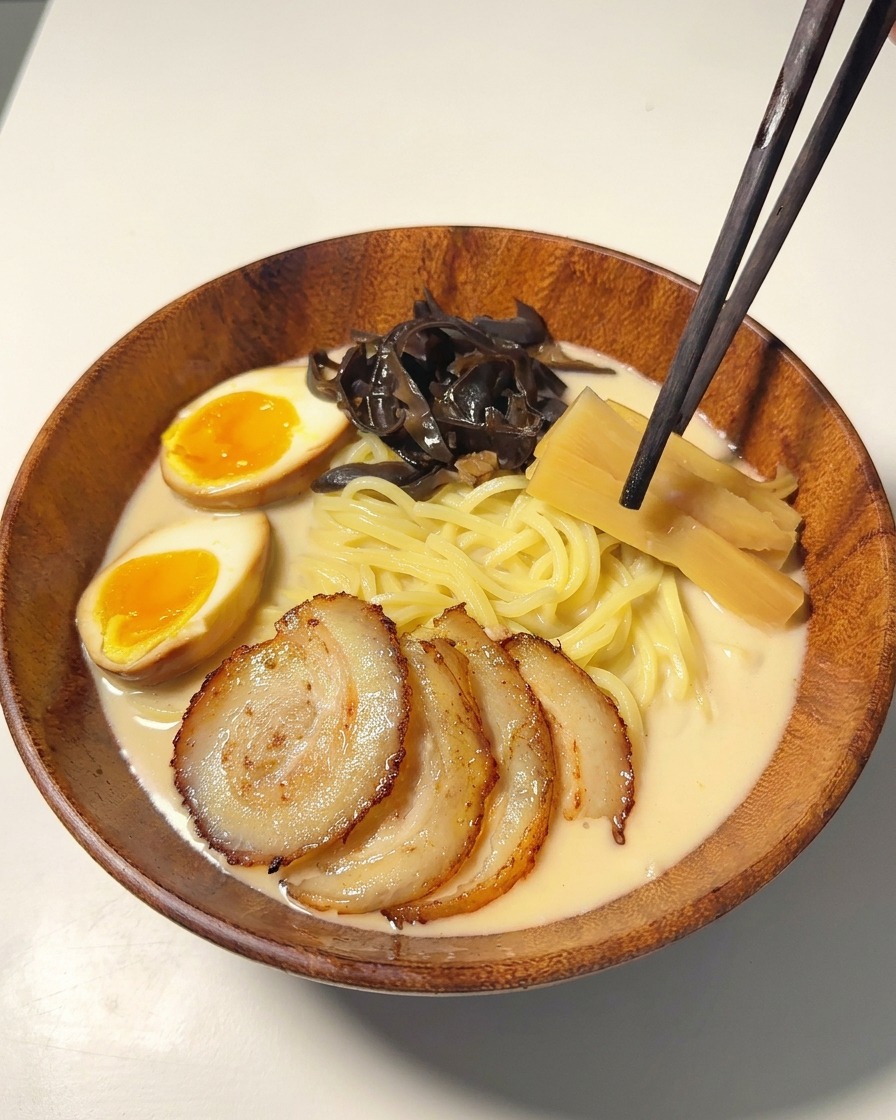
Begin assembling the bowl by carefully placing the toppings over the cooked noodles and warm broth. Use chopsticks to neatly arrange the dark shredded wood ear mushrooms alongside the pale bamboo shoots, leaving room for the remaining garnishes.
Tip: Keep the different toppings grouped in distinct sections rather than mixing them together to create a professional and appetizing presentation.