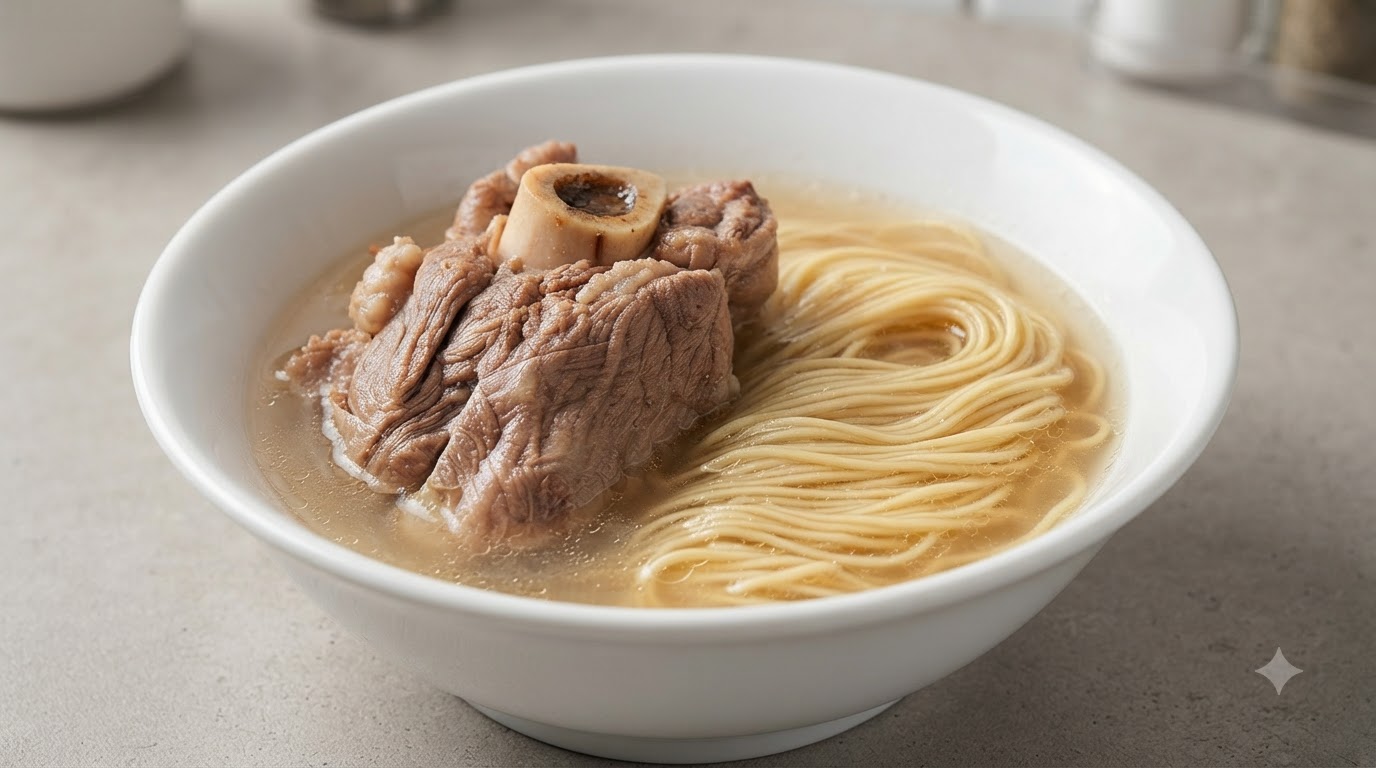
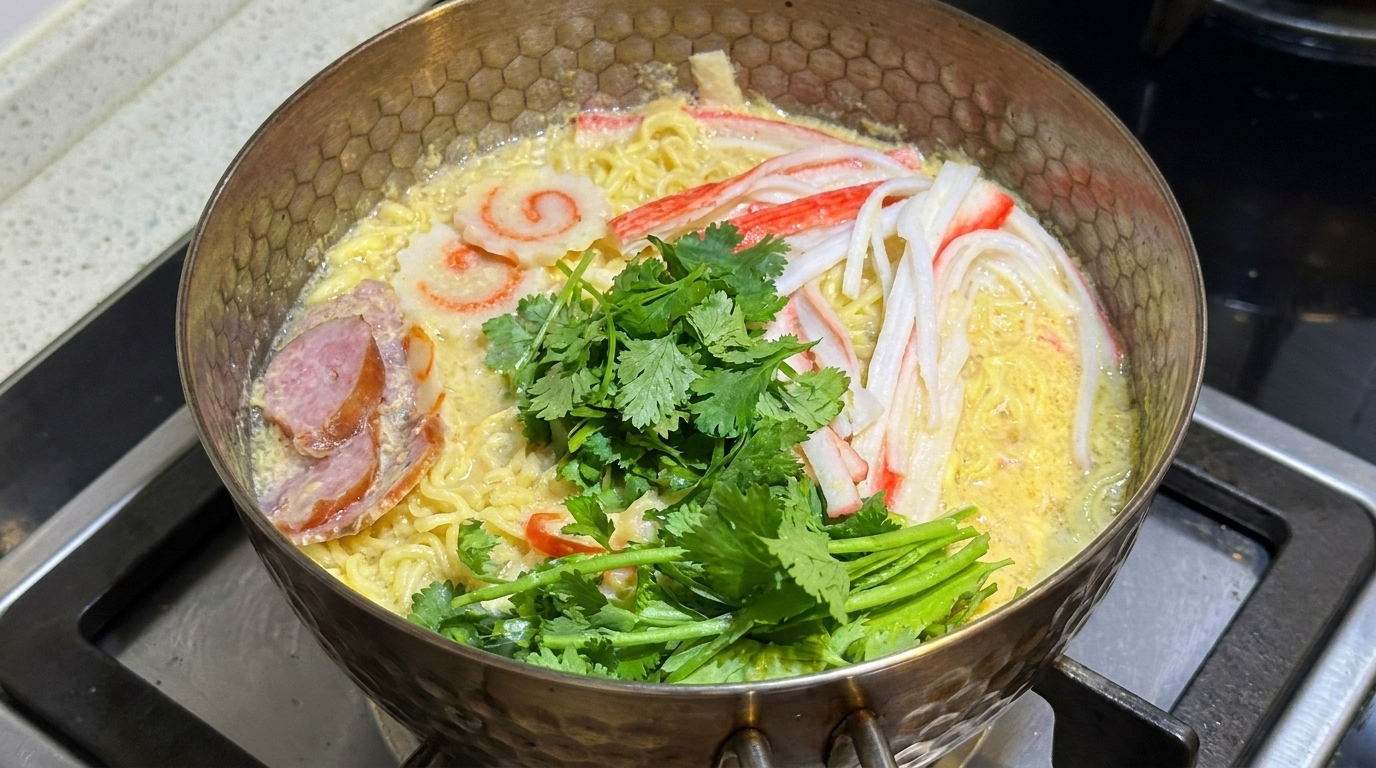
Rich and Creamy Tonkotsu Ramen Soup Base
Master the art of authentic tonkotsu broth with this 20-hour recipe. Learn how to extract rich, milky-white marrow flavors for the ultimate ramen base.
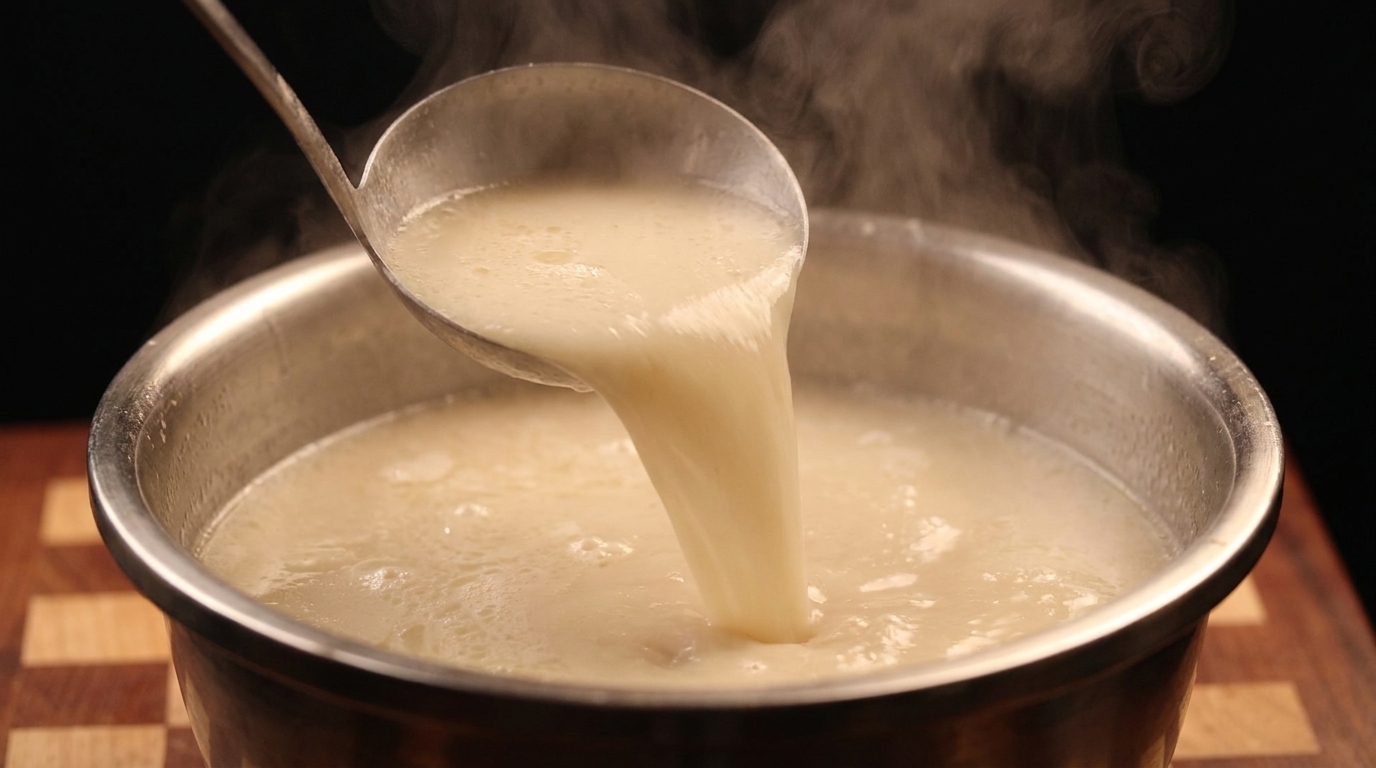
Making tonkotsu broth requires patience and precision, taking nearly twenty hours to create a single pot of luxurious soup basecite: 1. By carefully soaking, boiling, skimming, and deboning pork trotters, leg bones, and spine bones, you achieve a velvety, opaque broth that coats the tongue with rich, savory flavorcite: 1.
Ingredients
- 1 kg pork trotters
- 1.5 kg pork leg bones
- 1 kg pork spine bones
- to cover filtered water
Instructions
- 1Place the pork bones into the pot
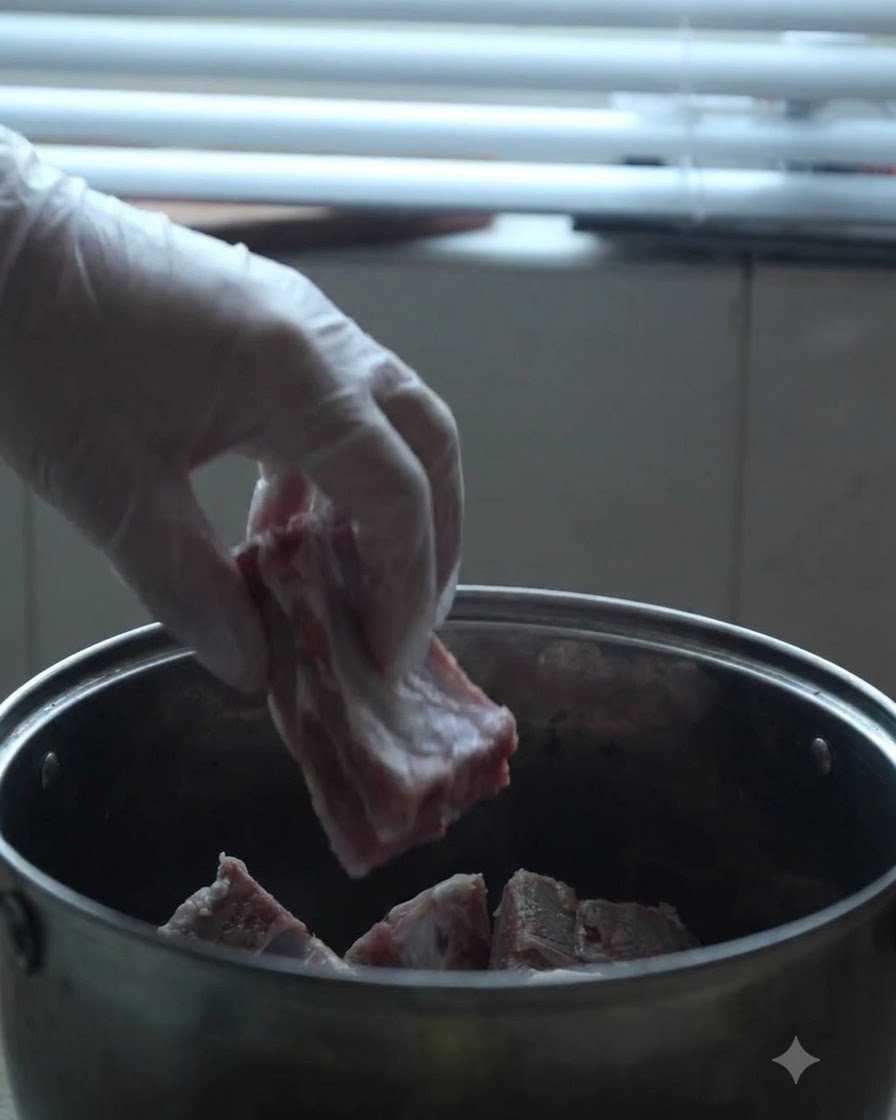
Begin by soaking pork trotters, pork leg bones, and spine bones to remove blood. After soaking, place the bones into a large stainless steel potcite: 1.
Tip: Ensure the bones are properly soaked beforehand to remove excess blood for a cleaner broth. - 2Add water to the pot
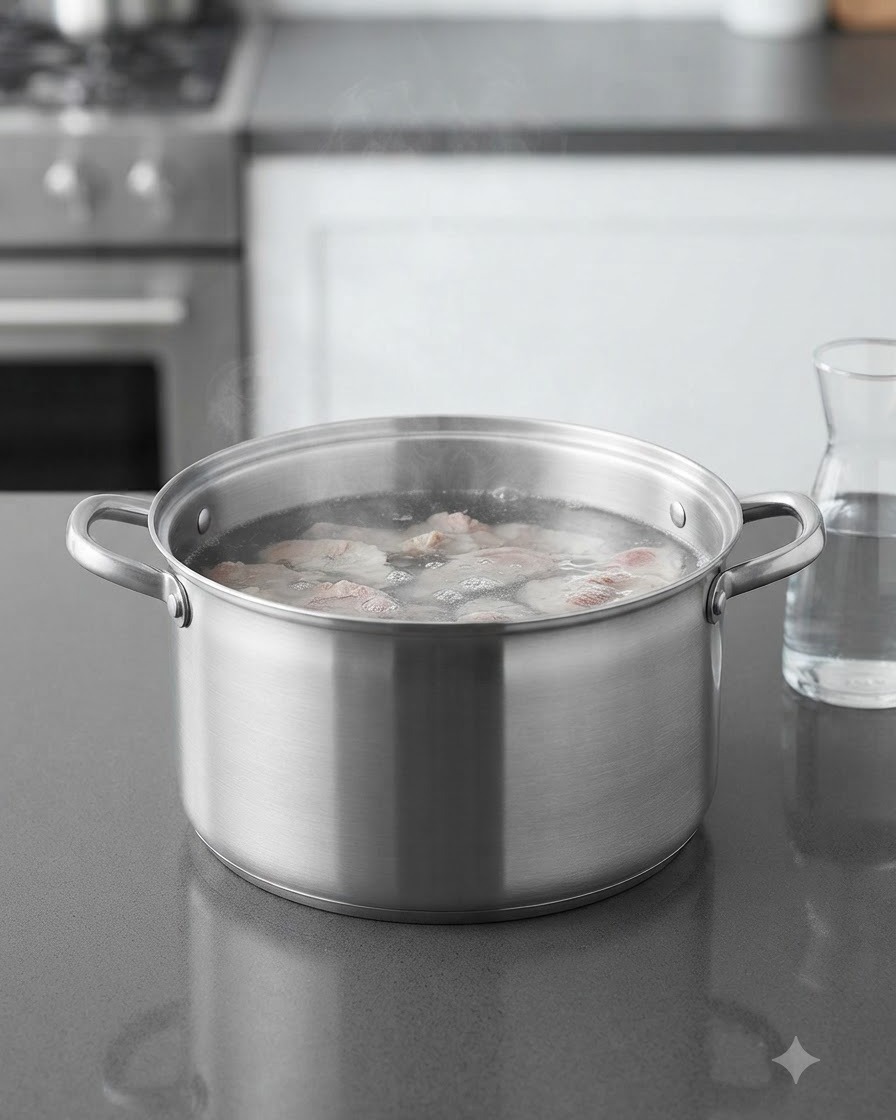
Cover the pork bones in the pot with filtered watercite: 1. If a filter is not available, boiled and cooled water serves as a fine substitutecite: 1.
Tip: Using filtered or pre-boiled water helps maintain the purity of the soup base. - 3Boil and skim the foam
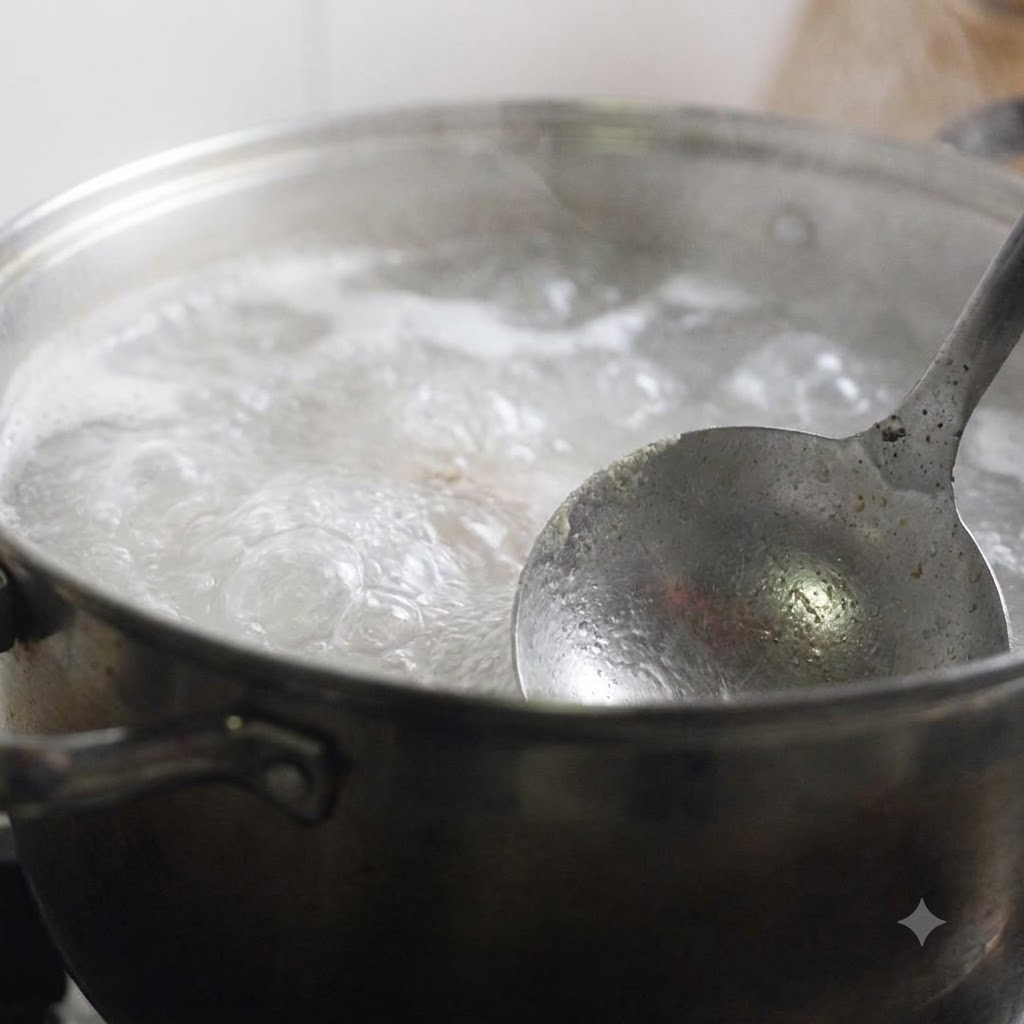
Boil on high heat for at least five hourscite: 1. Keep the pot uncovered during the first hour to allow gamey odors to escape, and use a fine-mesh strainer to skim off any foam that rises to the surfacecite: 1.
Tip: Skimming the foam is the key to achieving a clean, non-gamey soup basecite: 1. Repeat this whenever water is addedcite: 1. - 4Remove the cooked bones
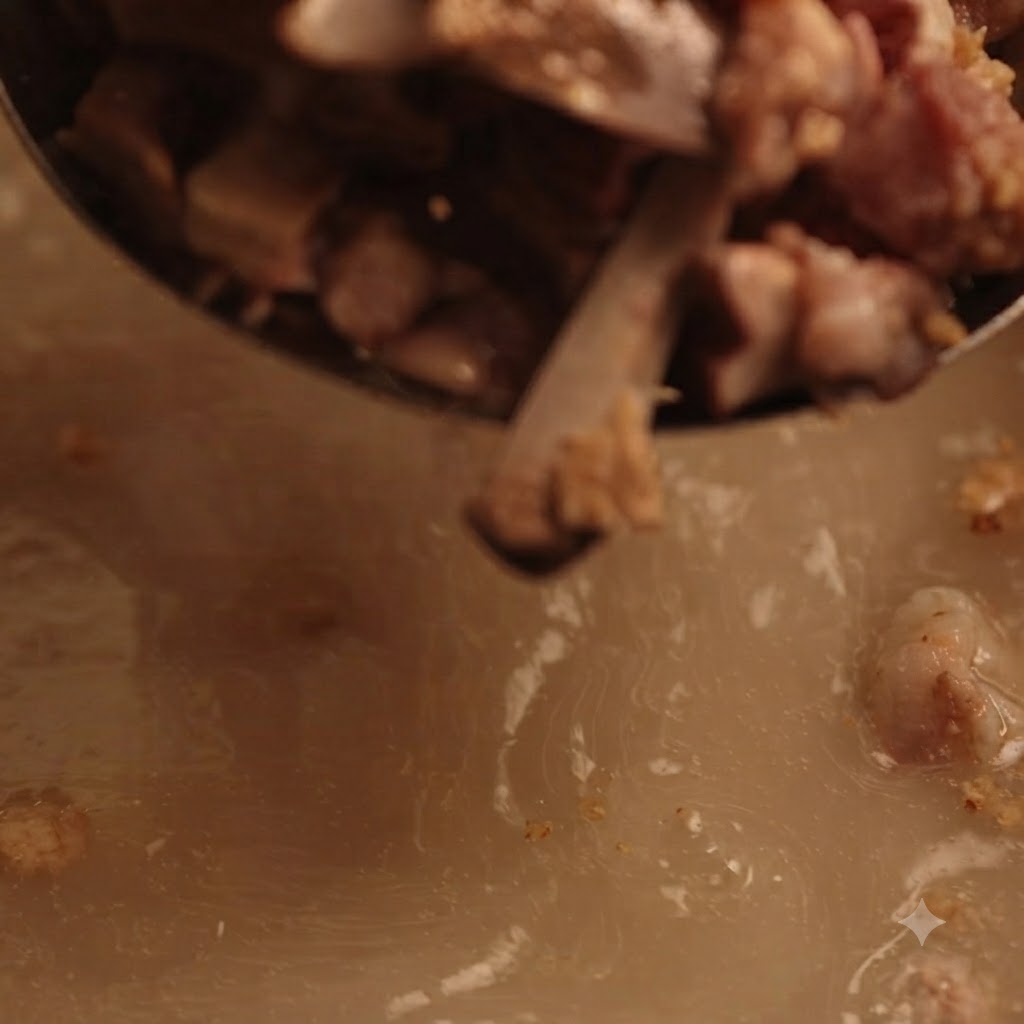
Around the four-hour mark, the meat will begin to separate from the bonescite: 1. Remove the bones from the pot using utensils like chopstickscite: 1.
Tip: Keep an eye on the water level during the first four hours, replenishing it promptly as it dropscite: 1. - 5Debone and mash the meat
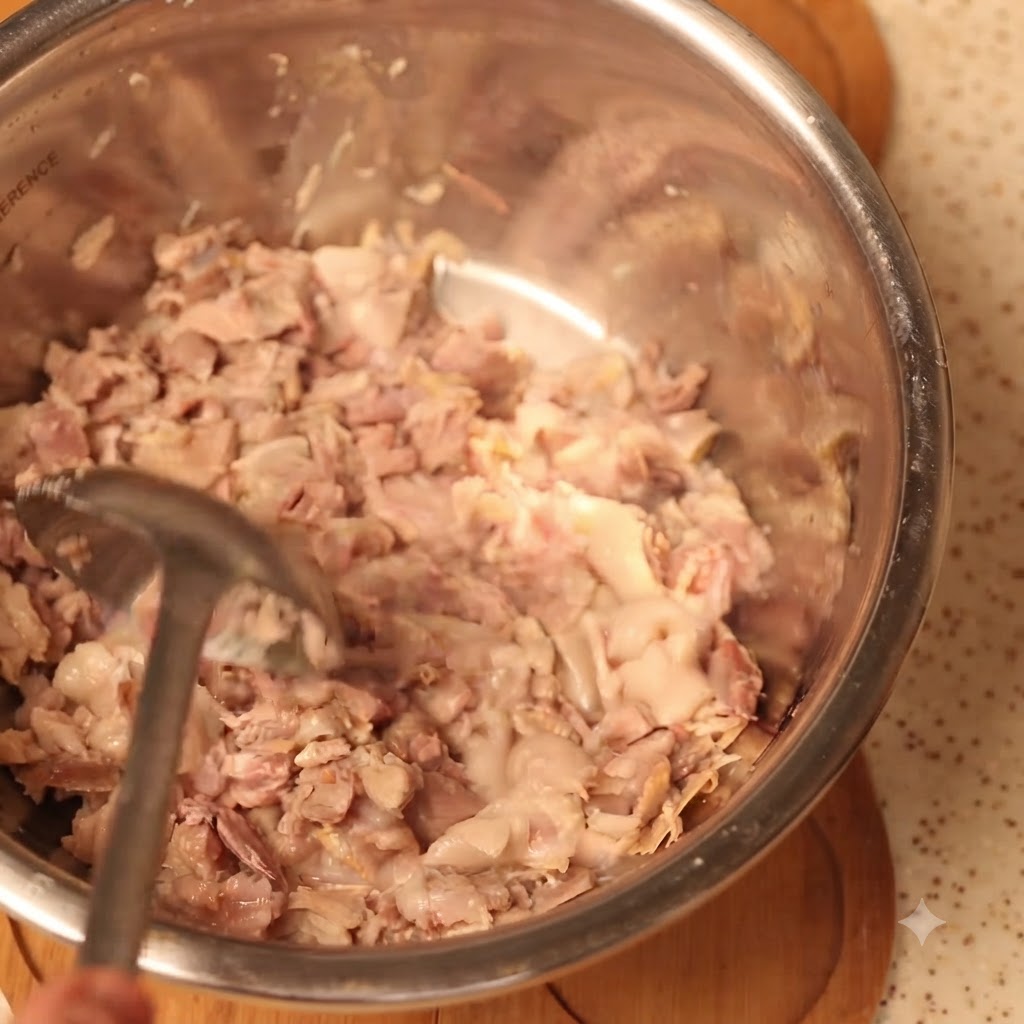
After removing the bones, debone the meat and mash it as finely as possible using a large metal spoon or similar toolcite: 1.
Tip: Mashing the meat finely helps release its flavors and thickens the soup further during the next boiling stage. - 6Return mashed meat to the pot
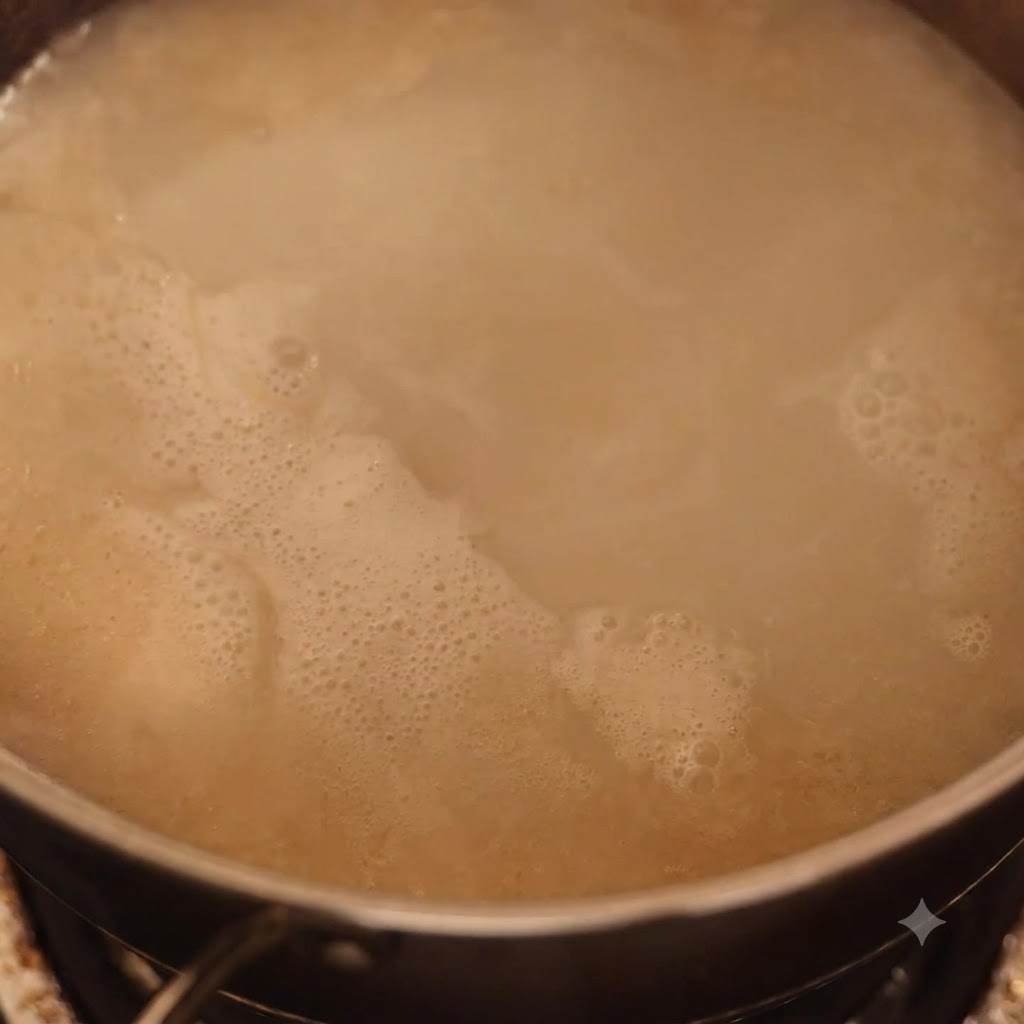
Return the mashed meat back into the pot and continue boiling on high heat for another hour, stirring frequently to prevent burning at the bottomcite: 1.
Tip: Stir frequently during this final hour to avoid burning the thick mixture at the base of the potcite: 1. - 7Strain the Broth
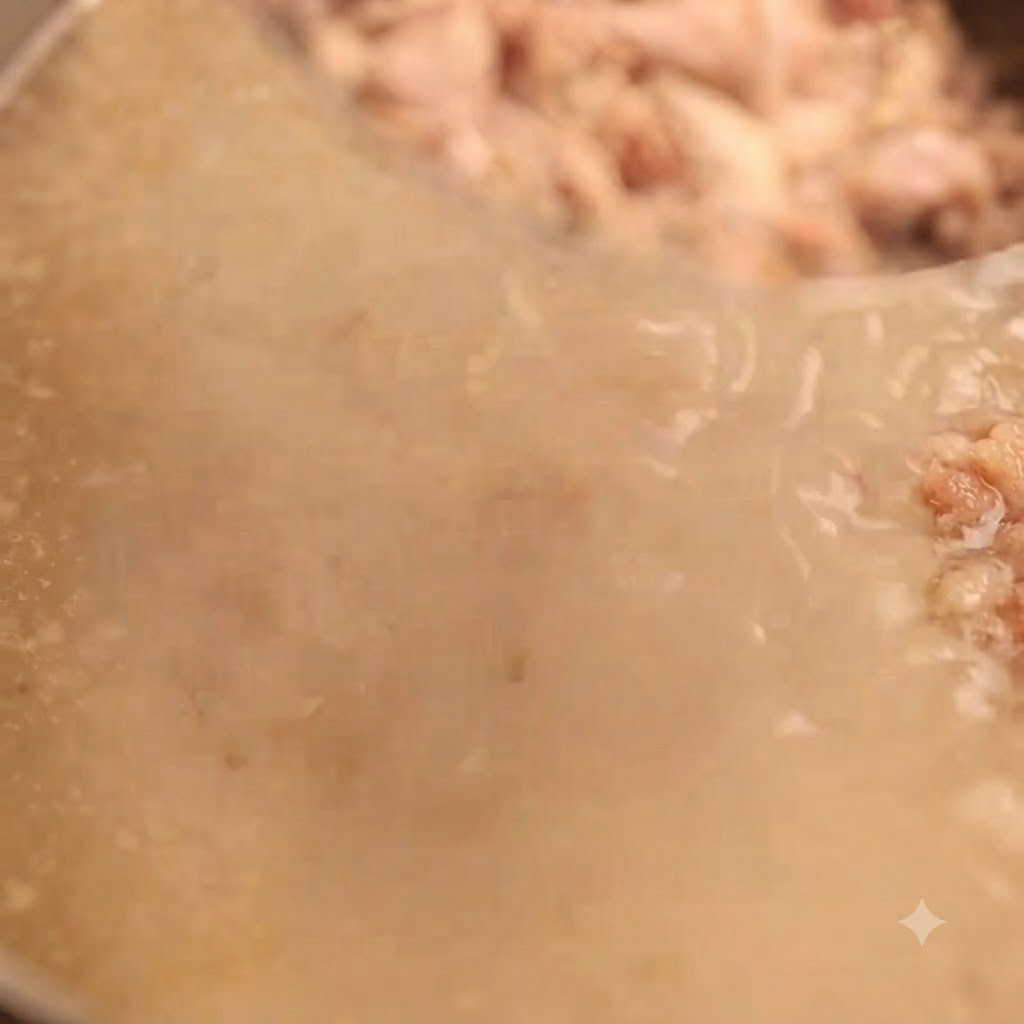
Turn off the heat once the water level drops five centimeters below your mark. Strain the soup through a fine-mesh sieve to remove all the meat bits and ensure the resulting broth is clean and very thick.
Tip: Do not discard the strained meat, as it can be saved and used for a second cooking. - 8Skim off excess fat
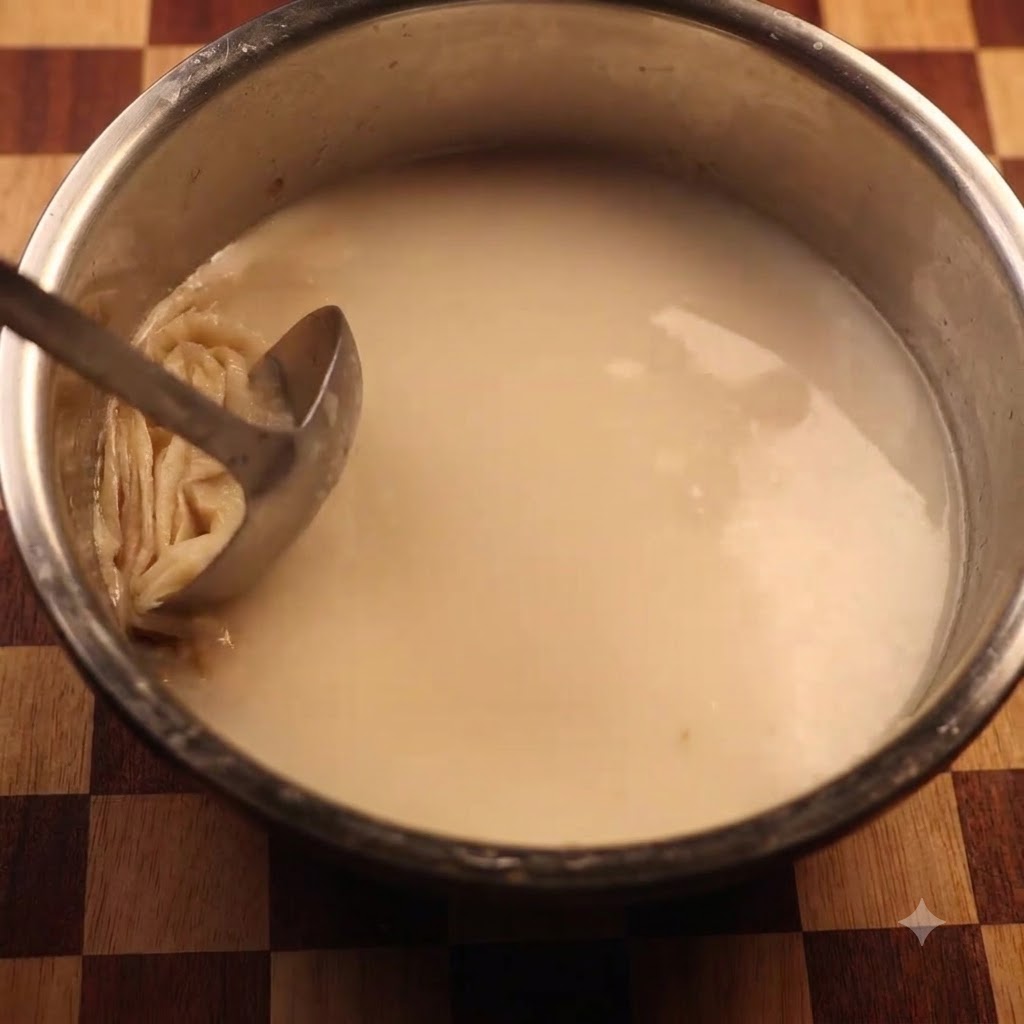
Let the strained soup rest for a moment until a layer of fat rises to the top, then use a ladle to carefully skim it off so the broth remains clear of obvious oil.
Tip: Skimming the fat gives the final tonkotsu base a cleaner appearance while keeping the rich mouthfeel intact.