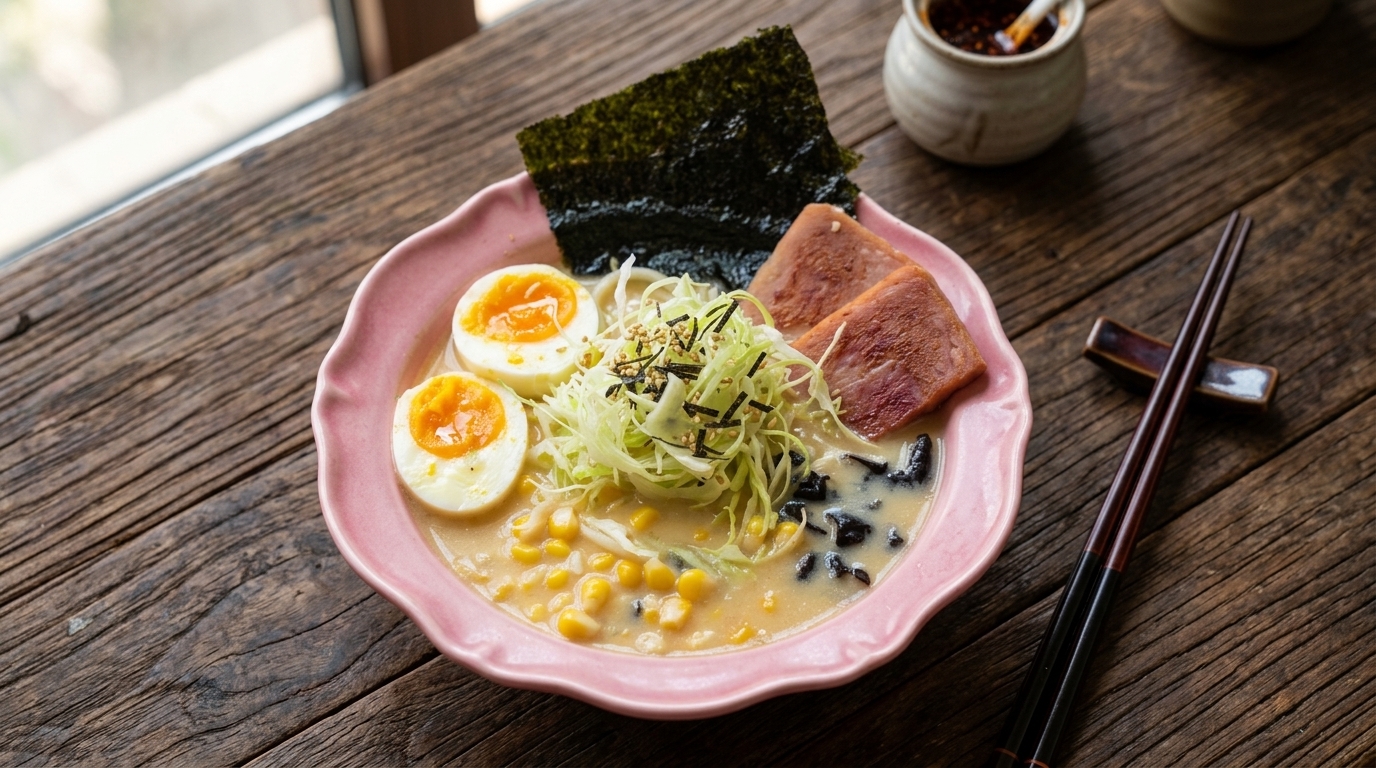
Rich Japanese Tonkotsu Pork Bone Broth
Master the soul of Japanese ramen with this velvety Tonkotsu broth, achieving a deep, milky-white consistency through a double-simmer technique and bone-mashing method.
Tonkotsu broth is a pillar of Japanese culinary craftsmanship, characterized by its creamy texture and rich mouthfeel. Traditionally simmered for days, this recipe utilizes a pressure cooker to accelerate the extraction of collagen and marrow from pork bones and chicken feet. The result is a fragrant, concentrated liquid gold that serves as the perfect foundation for ramen or tsukemen.
Ingredients
- 1 pork marrow bone
- 0.5 pigs trotter
- 15 chicken feet
- 3 stalks scallions
- 50 g fresh ginger
- 2 tbsp white cooking wine
- to taste boiling water (for topping up)
Instructions
- 1Prepare the base ingredients
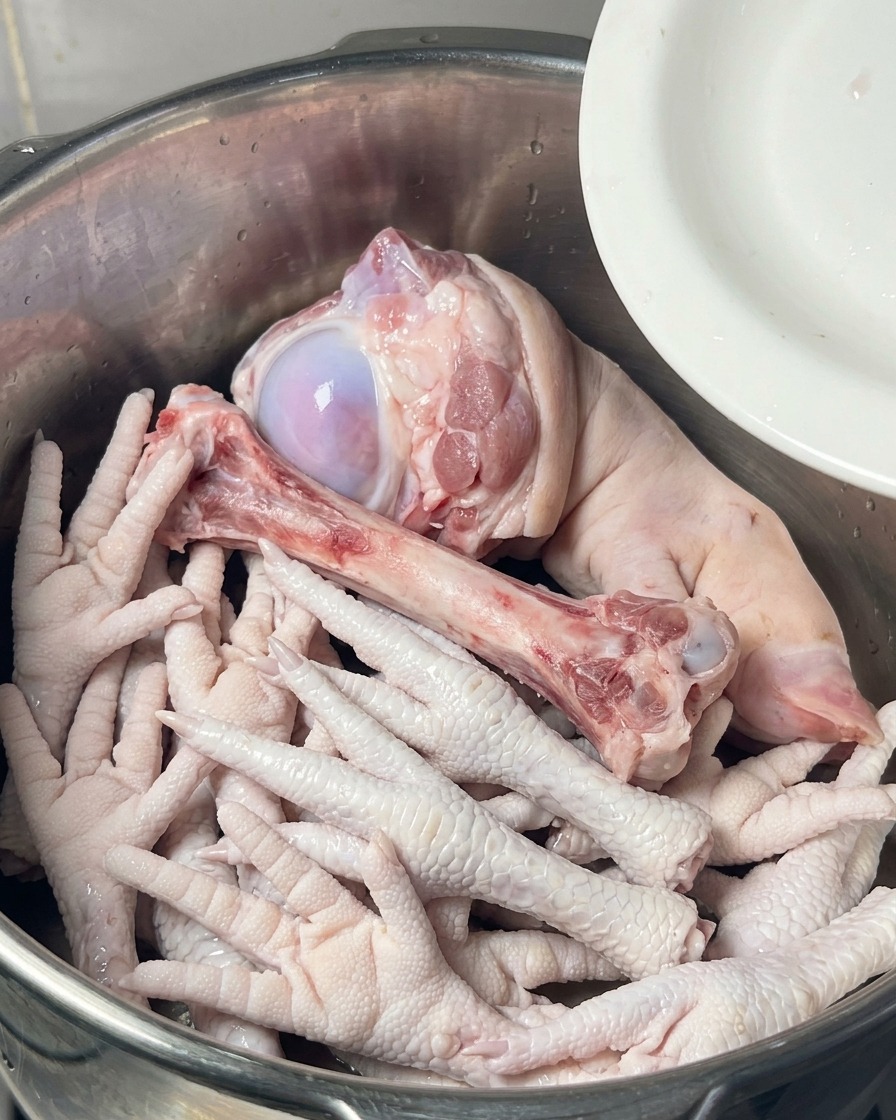
Place the raw chicken feet, pork trotter, and marrow bone into a pressure cooker. Fill the pot with enough water to submerge the bones, then add fresh ginger and scallions to help neutralize any strong odors during the initial boil.
Tip: Starting with cold water helps to gradually release impurities and marrow, leading to a cleaner and more flavorful base for the broth. - 2Skim the impurities
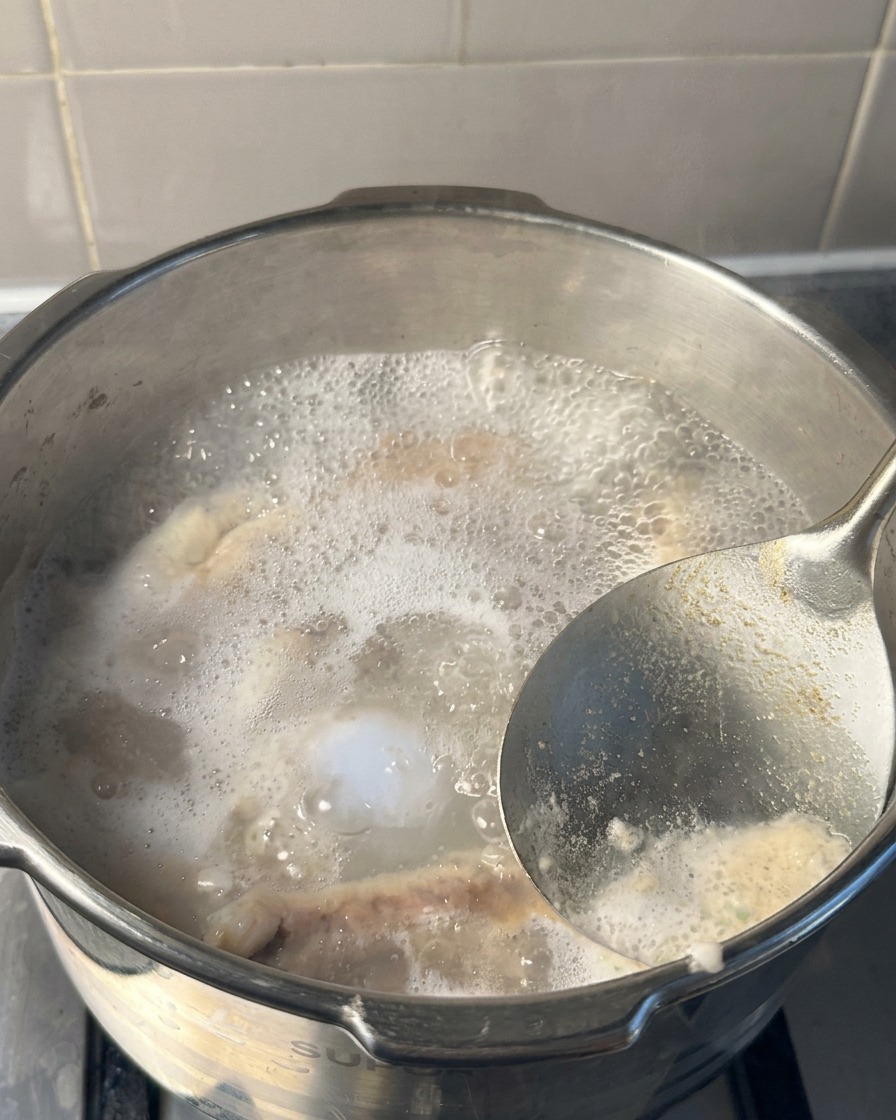
Bring the water to a boil and use a large metal ladle to carefully skim off the grayish foam and scum that rises to the surface. Removing these impurities at the beginning is essential for achieving a clear and pure final soup.
Tip: Keep a small bowl of water nearby to dip the ladle in; this makes it easier to wash off the sticky scum between skims. - 3Extract the softened ingredients
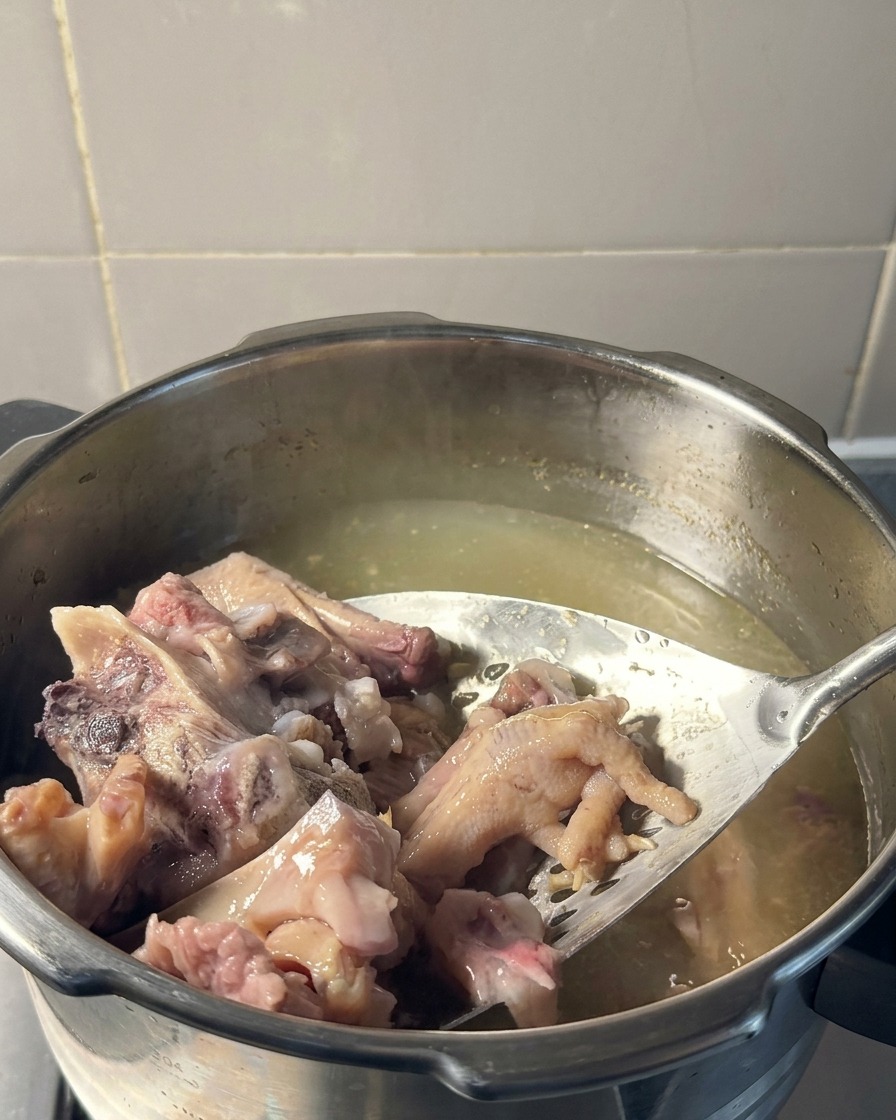
After pressure cooking for one hour, the meat should be tender and falling off the bone. Use a slotted spatula to carefully lift the cooked meat and bones out of the broth and transfer them to a separate bowl for mashing.
Tip: Be careful when opening the pressure cooker; ensure the steam is fully released before attempting to remove the lid. - 4Mash the meat and bones
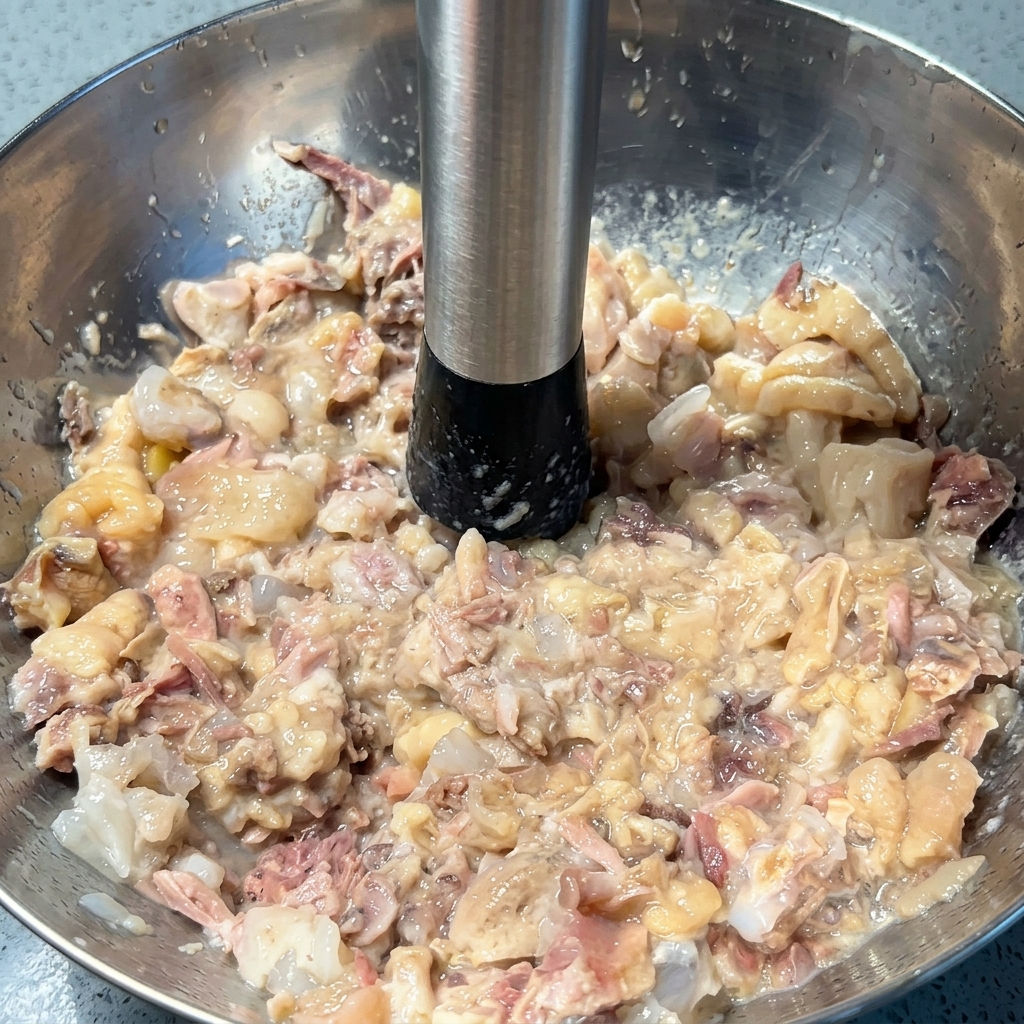
Place the cooked ingredients into a sturdy bowl. Use a mashing tool or a heavy spatula to thoroughly crush the meat and bone residue into a thick paste. Breaking down the components this way maximizes the extraction of gelatin and flavor.
Tip: The more thoroughly you mash these ingredients, the creamier and more milky your final broth will become. - 5Reintroduce the mash
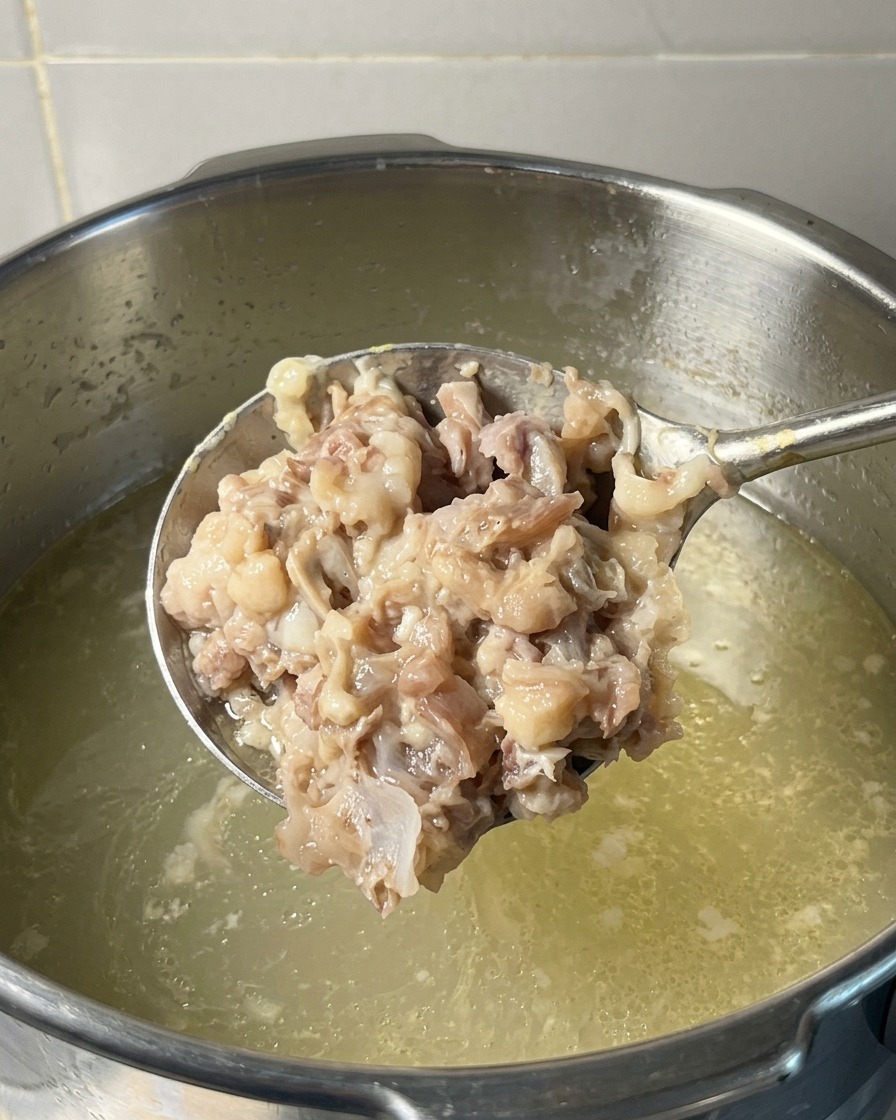
Return the mashed meat and bone mixture back into the pressure cooker with the original broth. Continue to simmer the mixture uncovered over medium-low heat for another hour to allow the flavors to fully emulsify and the soup to thicken.
Tip: Simmering uncovered allows some liquid to evaporate, which concentrates the protein and fat for a richer mouthfeel. - 6Strain for a smooth finish
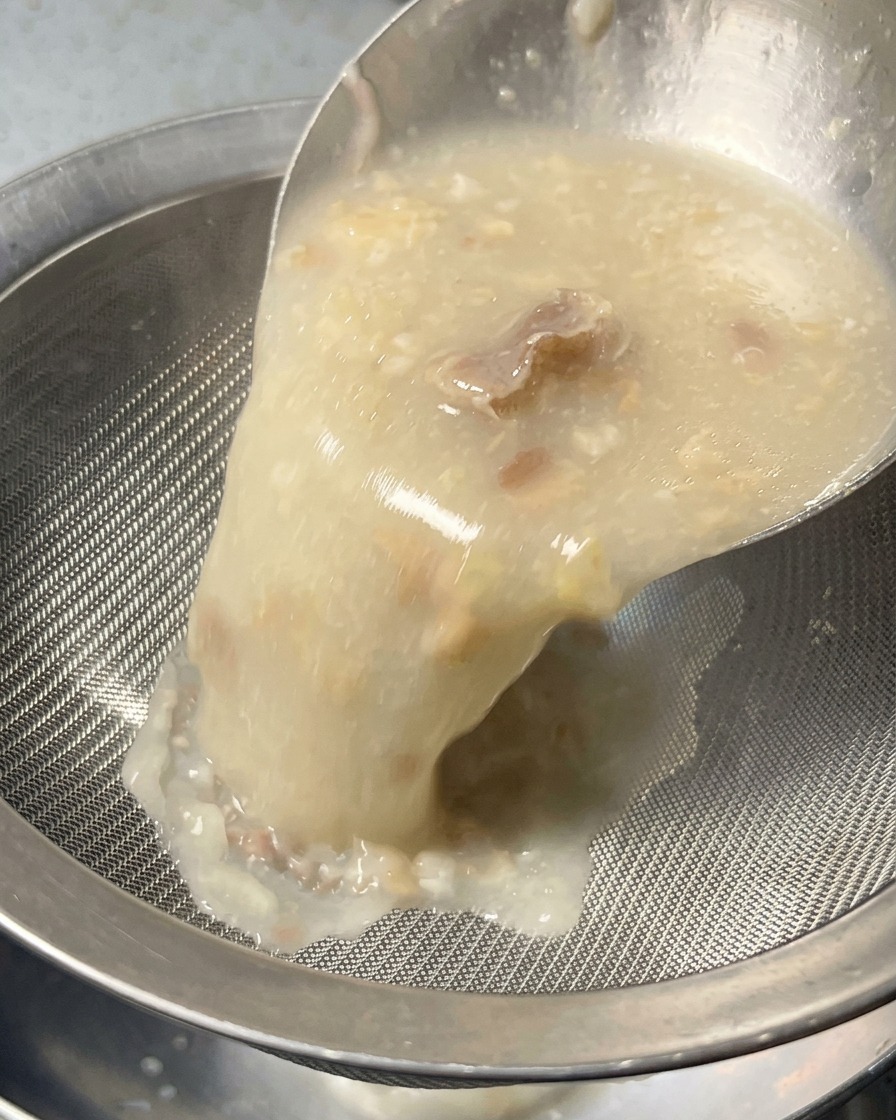
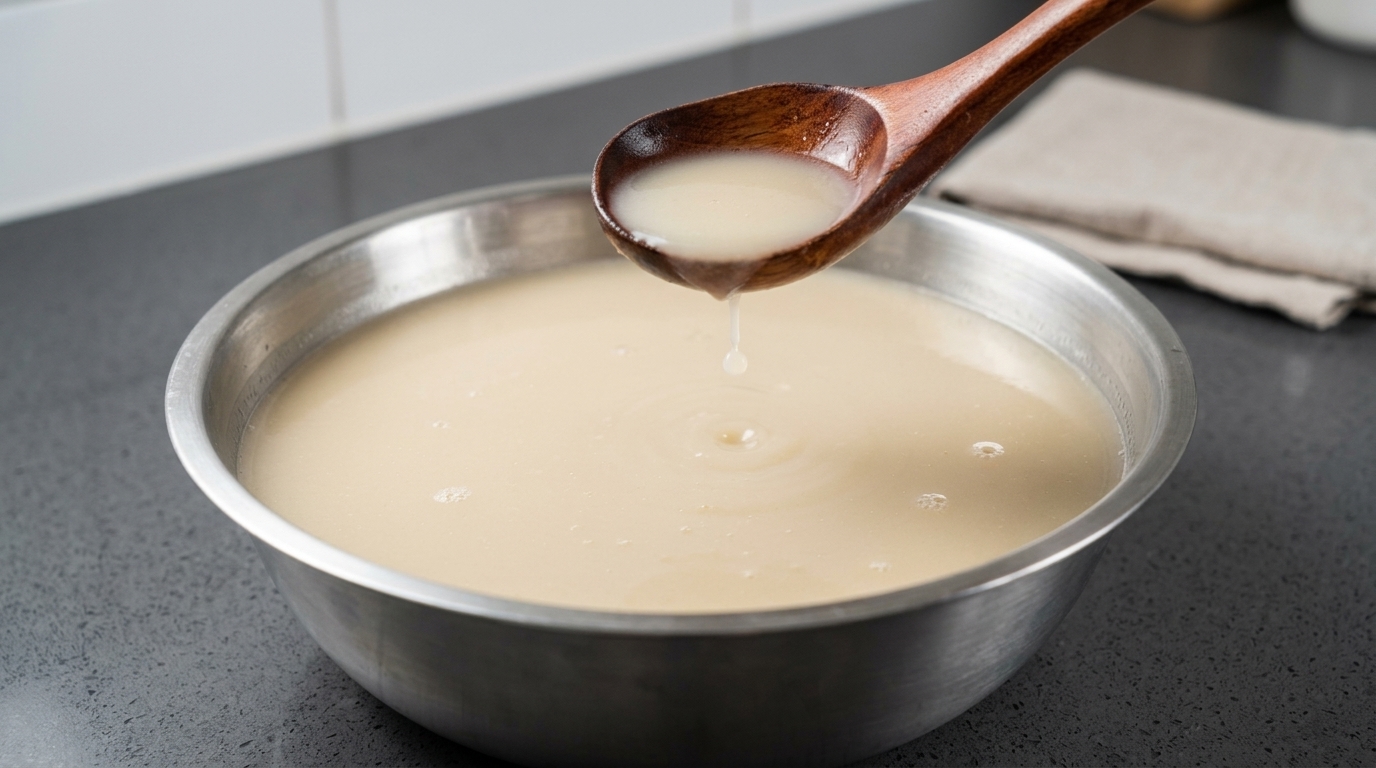
Once the broth has reached a rich, milky white consistency, pour it through a fine-mesh strainer into a clean container. This removes all the solid bone fragments and meat fibers, leaving you with a silky, concentrated pork bone soup.
Tip: Press down on the solids in the strainer with a spoon to extract every last drop of the flavorful essence. - 7Remove the congealed fat
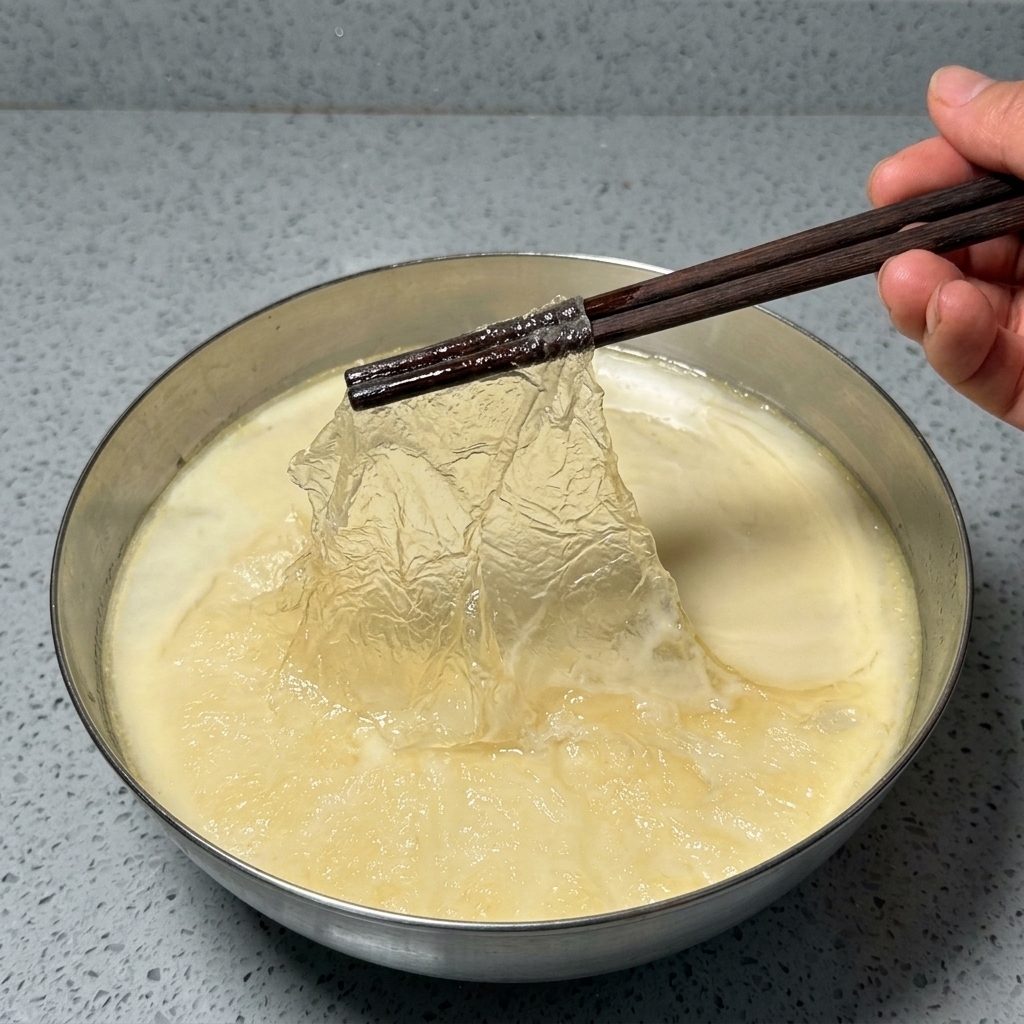
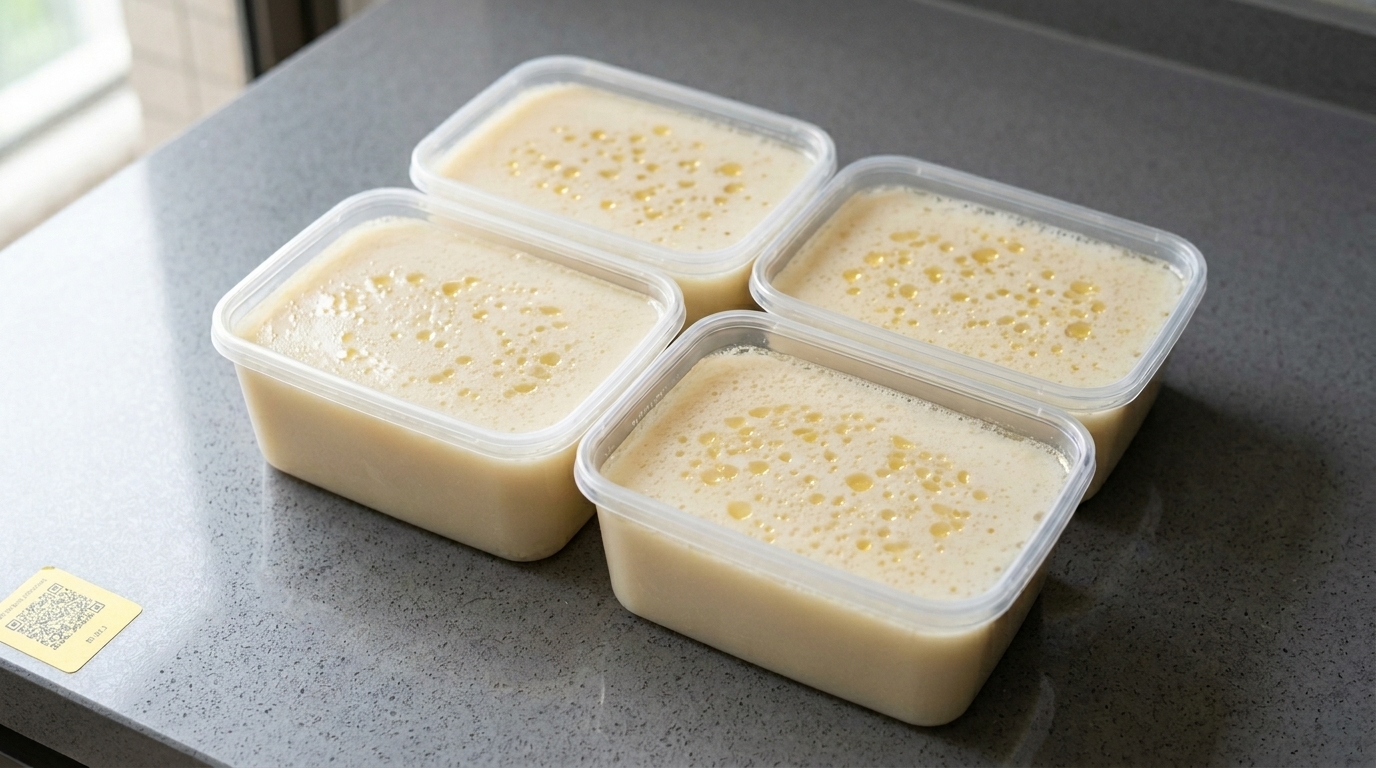
Allow the strained broth to cool completely until a solid, yellow layer of fat forms on the surface. Use a pair of chopsticks or a spoon to gently lift and discard this layer. Removing the excess fat ensures the final broth is rich and flavorful without being overly greasy.
Tip: For the cleanest results, refrigerate the broth overnight; the fat will harden into a solid disk that is much easier to remove in one piece.