Classic Spaghetti Aglio e Olio
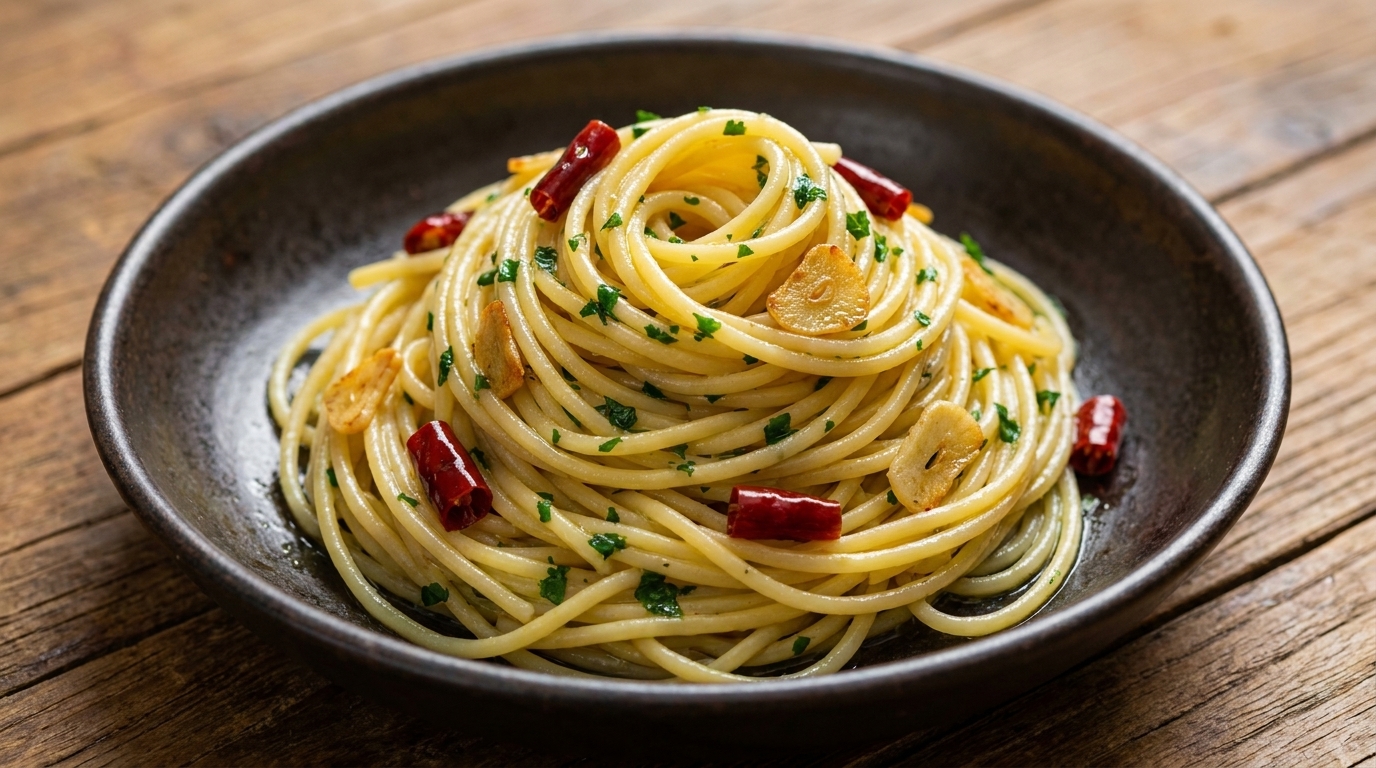
Master the art of the simplest Italian pasta dish. This classic Spaghetti Aglio e Olio transforms humble garlic, olive oil, and chili flakes into a luxurious, emulsified sauce.
Spaghetti Aglio e Olio is a testament to the magic of Italian cuisine, where a few high-quality pantry staples create something far greater than the sum of their parts. The secret to its creamy, restaurant-quality texture lies in slowly infusing the oil from cold and vigorously tossing the noodles with starchy pasta water to bind the sauce into a silky glaze.
Ingredients
- 400 g spaghetti
- 1 head garlic
- 2-3 dried red chilies
- 12 cup extra virgin olive oil
- 1 large handful fresh parsley
- to taste salt
- to finish extra virgin olive oil
Instructions
- 1Prepare the parsley leaves
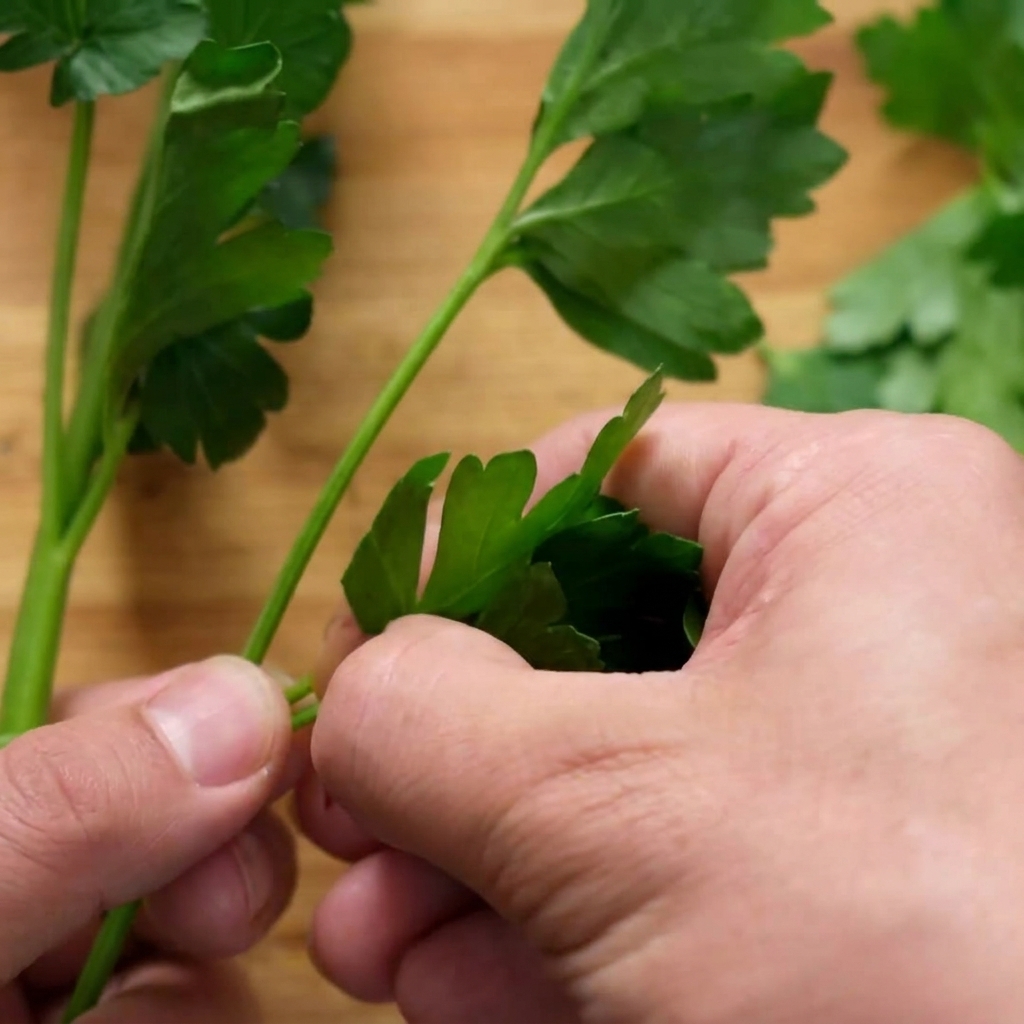
Start by washing the fresh parsley thoroughly and spinning it completely dry. Carefully pluck the tender leaves from their stems, discarding the thick stalks as we only need the delicate leaves for this dish.
Tip: Ensuring the parsley is completely dry before chopping prevents it from turning into a wet, bruised paste. - 2Finely chop the parsley
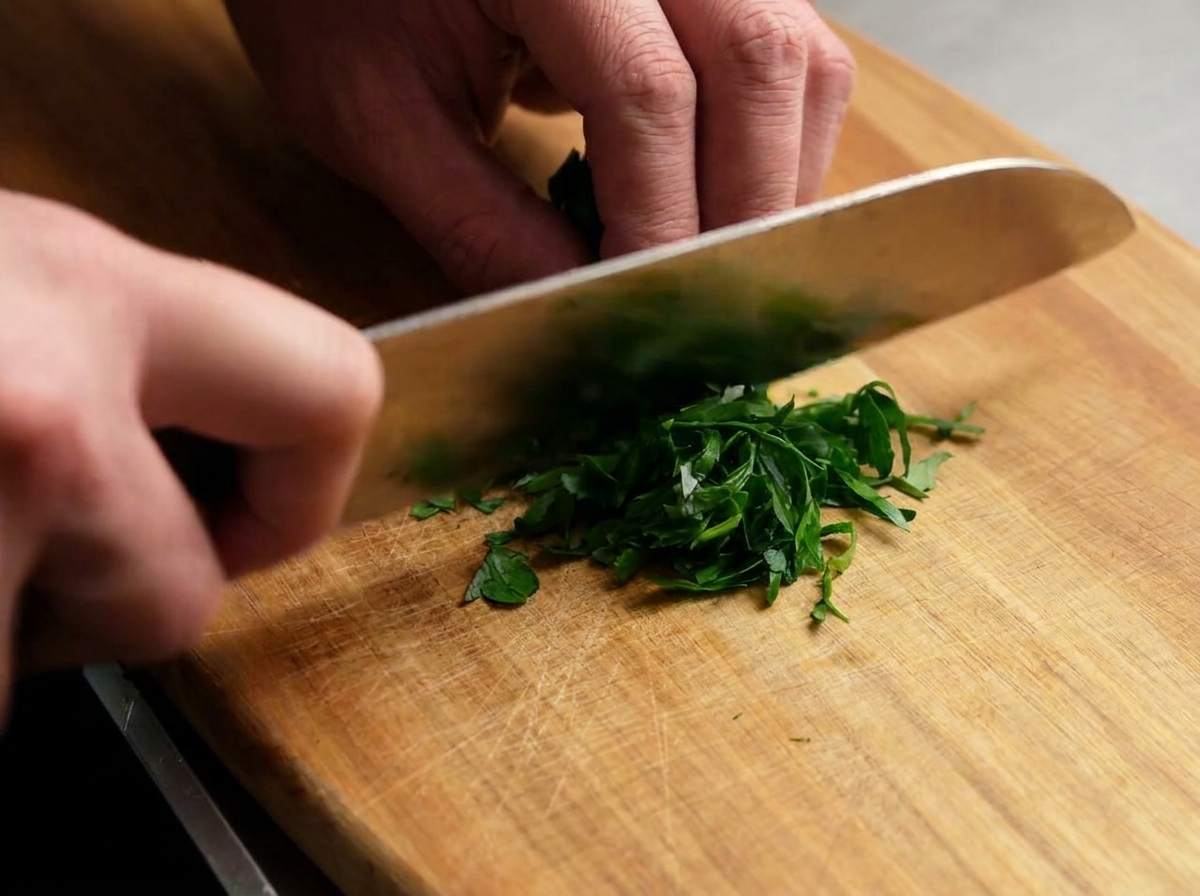
Gather the plucked parsley leaves into a small mound on a wooden cutting board. Using a sharp chefs knife, chop the leaves finely to ensure they will evenly distribute their fresh, bright flavor throughout the pasta.
Tip: Use a very sharp knife and rock it back and forth over the leaves. A dull knife will crush the herbs rather than slice them. - 3Slice the garlic
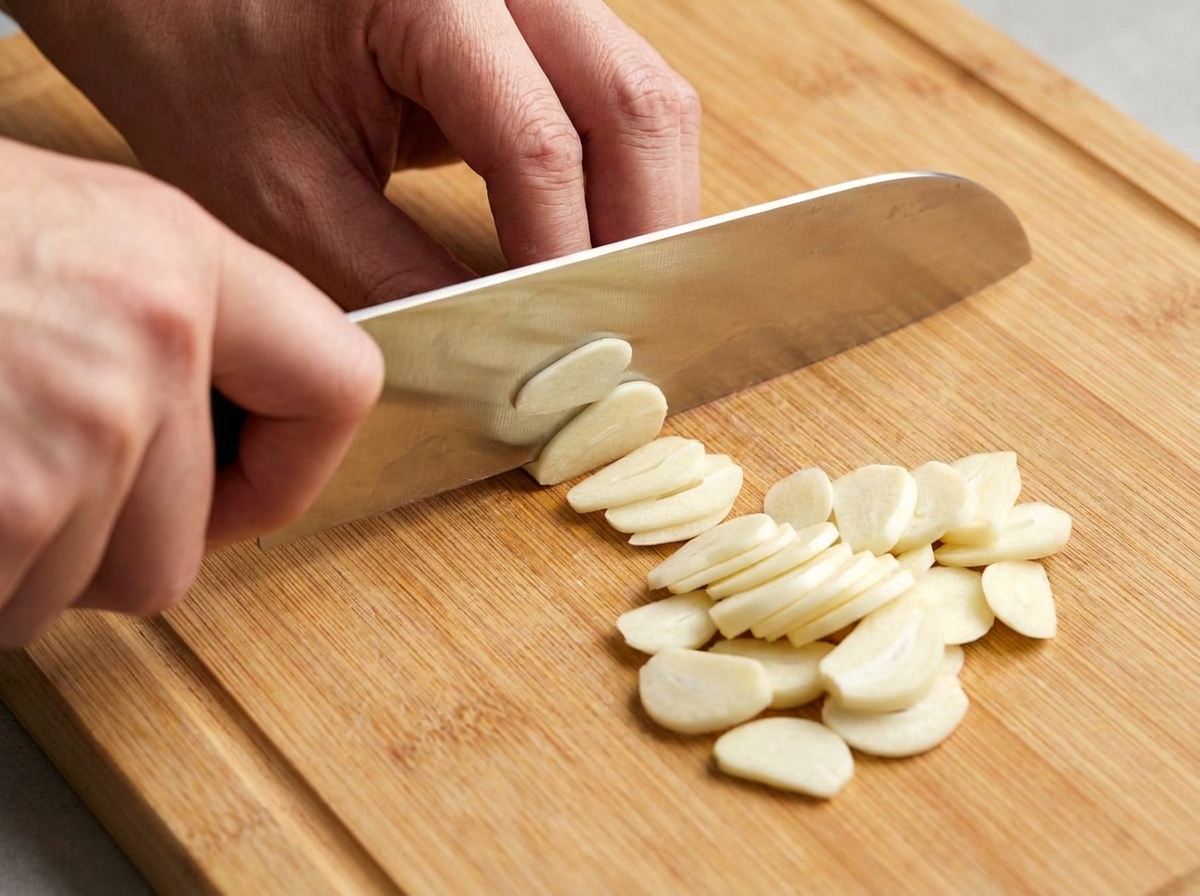
Take the peeled garlic cloves and carefully slice them into thin, even pieces. Cutting them uniformly ensures that they will cook at the same rate and gently release their flavor into the oil without burning.
Tip: If your garlic cloves have a green sprout or germ in the center, remove it before slicing to avoid any bitter flavors. - 4Cut the dried chilies
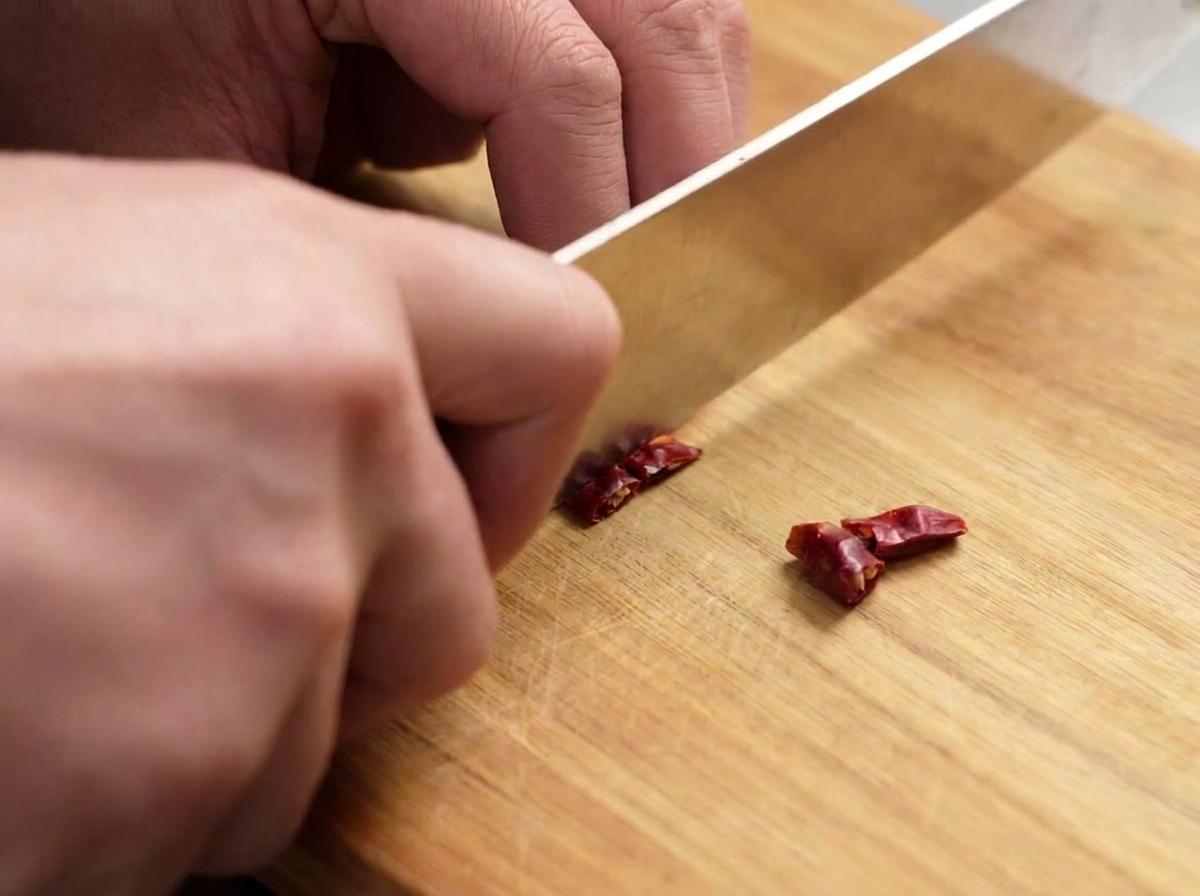
Using a sharp knife, carefully slice the dried red chilies into short segments. This essential ingredient provides the warming kick of heat that balances the rich olive oil in a classic aglio e olio.
Tip: If you prefer a milder level of heat, shake out and discard the seeds from the chili segments before cooking. - 5Boil the spaghetti
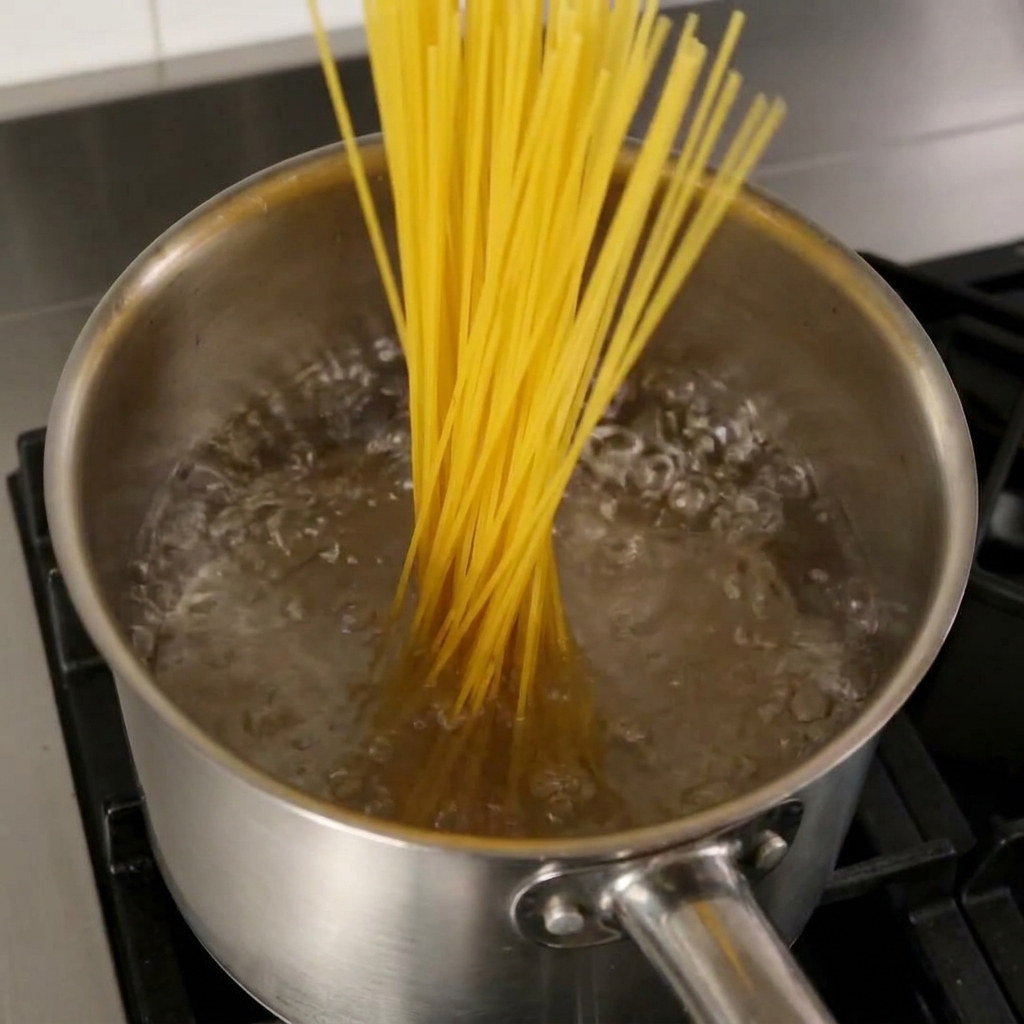
Bring a large pot of water to a rolling boil and season it generously with salt. Add the spaghetti to the boiling water and cook for about seven minutes, or until al dente.
Tip: Resist the urge to break the spaghetti; simply wait a few seconds for the submerged ends to soften, then gently push the rest into the water. - 6Infuse the olive oil
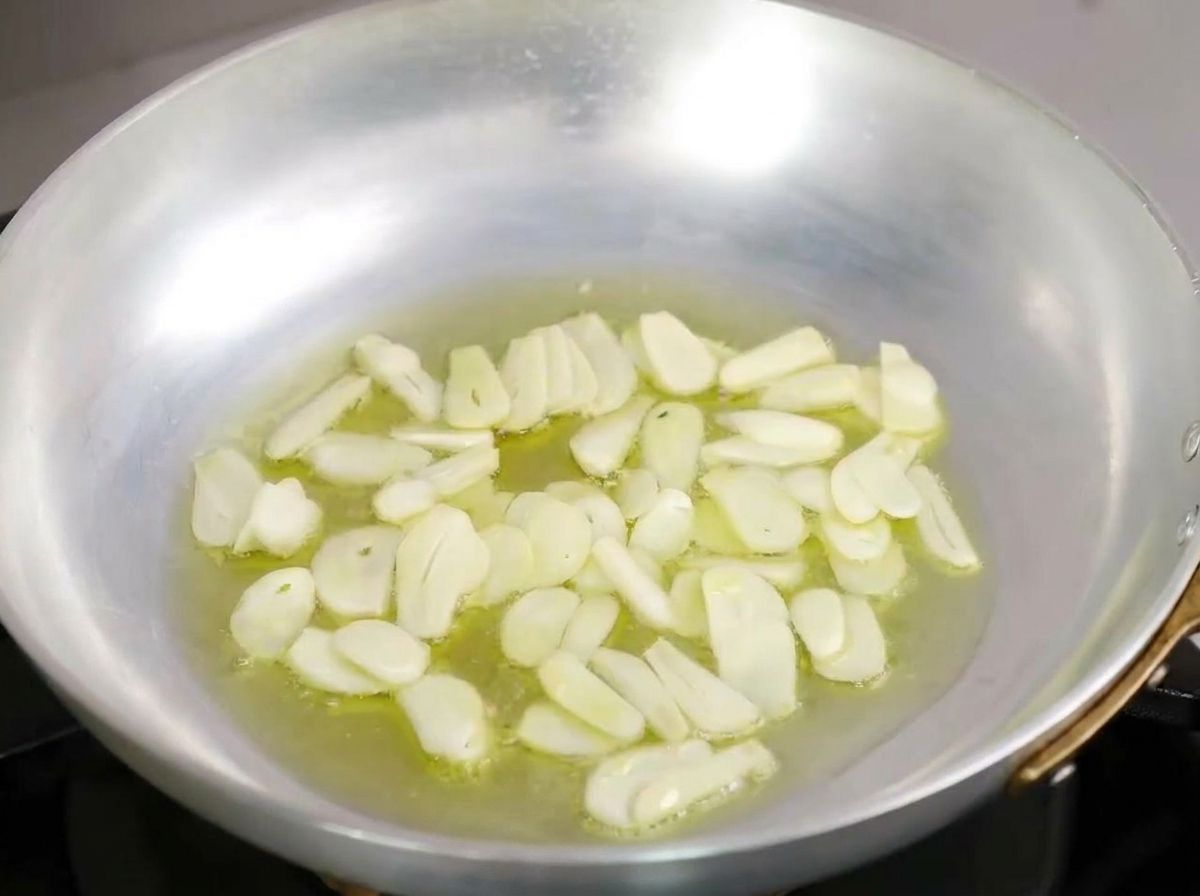
Pour a generous amount of high-quality olive oil into a wide, cold pan, and add the sliced garlic. Place the pan over low heat, allowing the oil to slowly warm up and gently extract the sweet, aromatic flavor of the garlic without burning it.
Tip: Always start with a cold pan. Dropping garlic into hot oil will fry it too quickly, making it bitter and ruining the base of the sauce. - 7Add the dried chilies
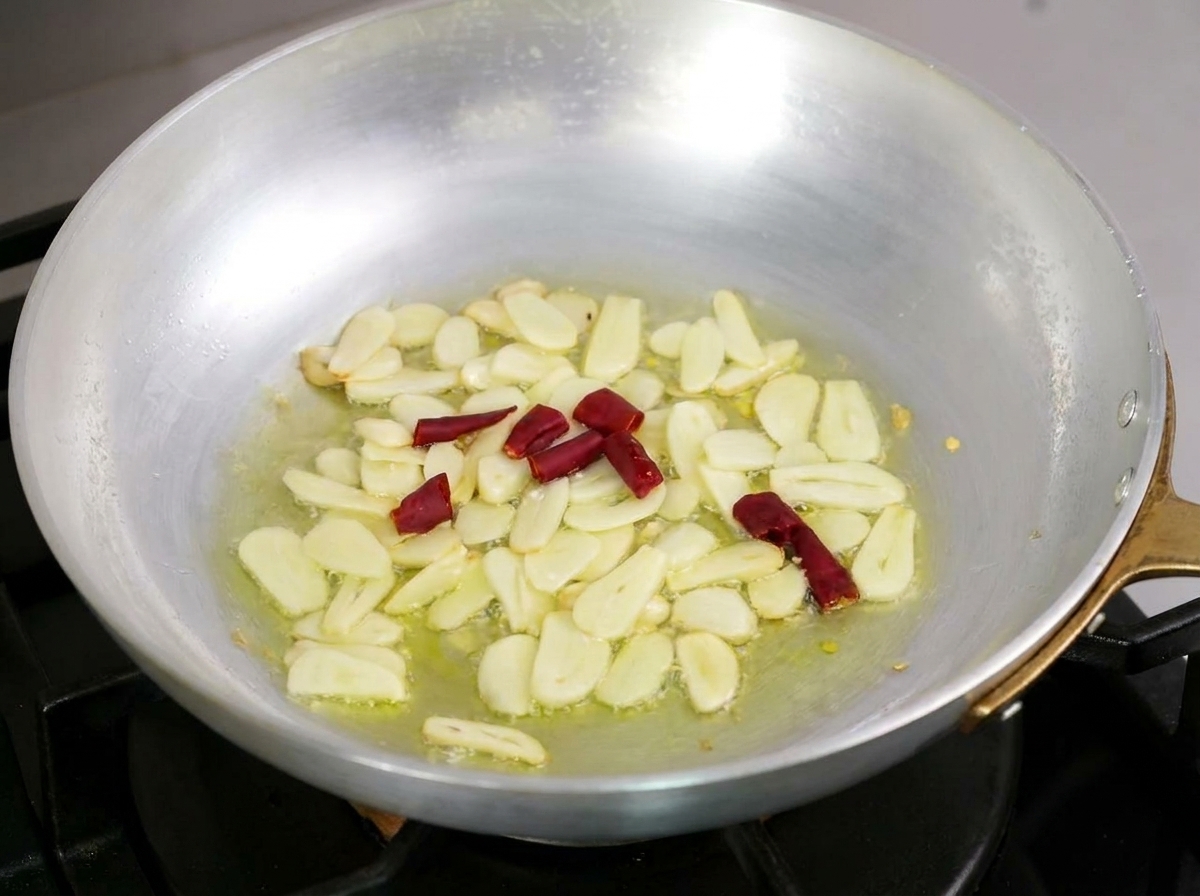
Once the garlic begins to gently sizzle and takes on a light golden hue, toss in the chopped dried chilies. Allowing the chilies to toast briefly in the warm oil releases their spicy oils, building a complex, aromatic base for the sauce.
Tip: Keep the heat low; if the garlic browns too quickly, it will turn bitter and overpower the dish. - 8Transfer the pasta
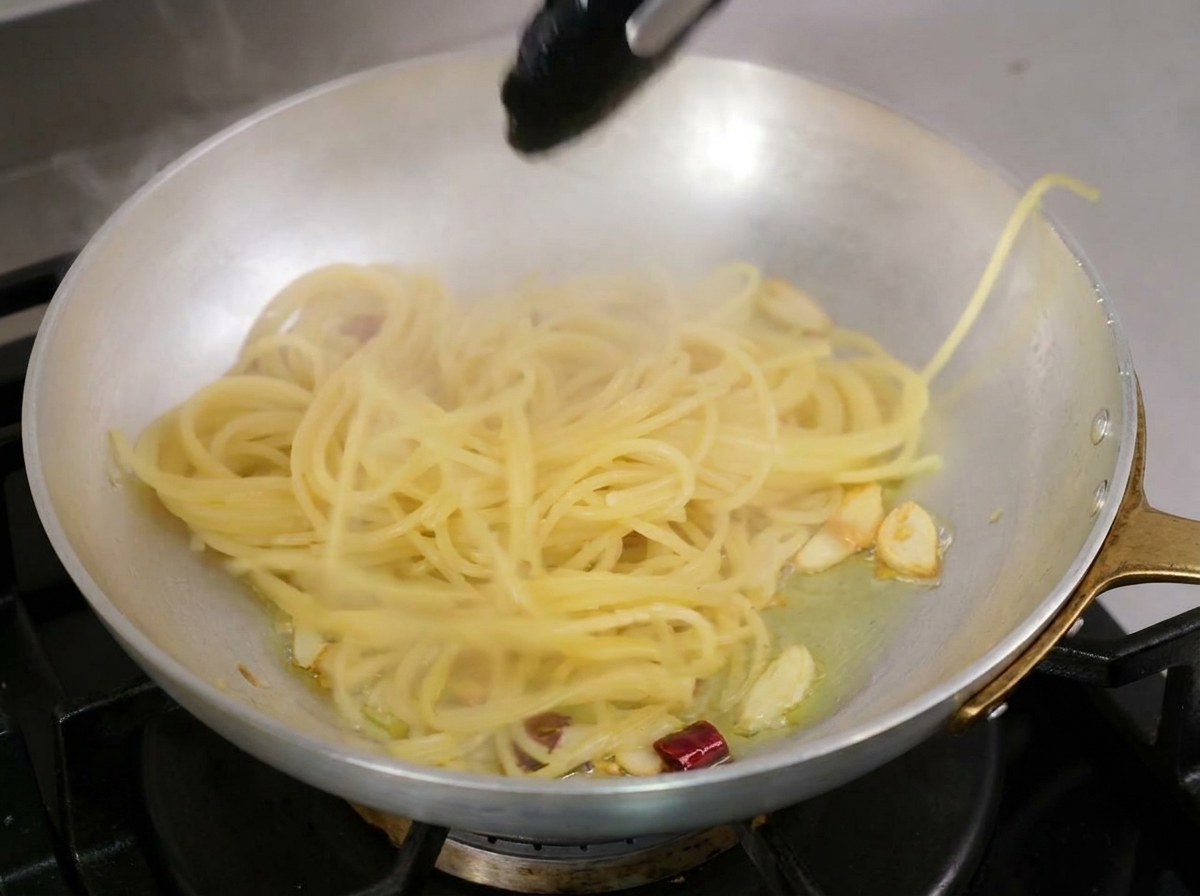
Once the spaghetti is cooked al dente, use tongs to lift it directly from the boiling water into the pan with the infused oil and aromatics. Do not drain the pasta completely, as the starchy water clinging to the noodles is essential for building the sauce.
Tip: Transferring the pasta directly from the pot ensures it stays hot and carries over enough starchy water to start the emulsification process. - 9Add pasta water
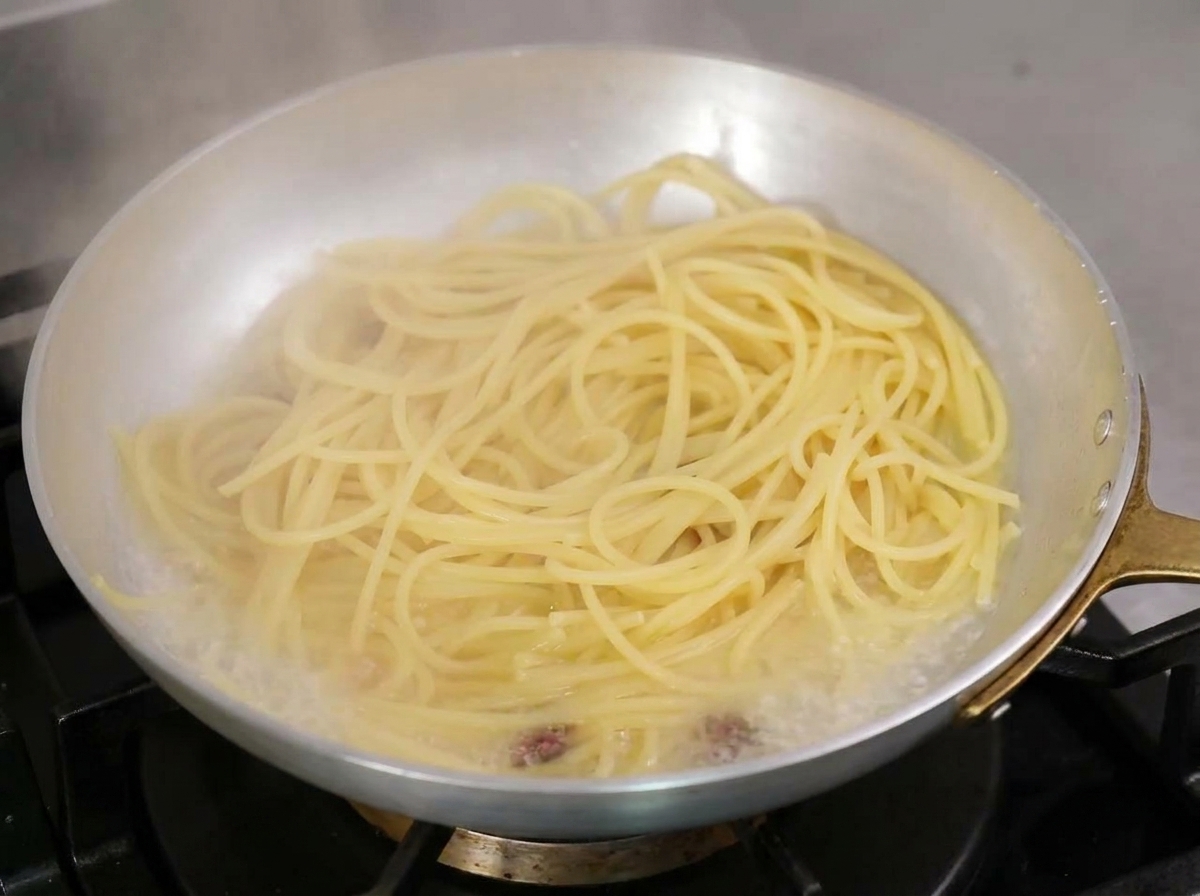
Pour two ladles of the starchy pasta cooking water directly into the pan with the spaghetti. The heat will cause the liquid to bubble rapidly. This starchy water is the key ingredient that will bind with the olive oil to form a cohesive, creamy sauce.
Tip: Always reserve a little extra pasta water before draining, just in case your sauce needs more thinning out later. - 10Toss to emulsify
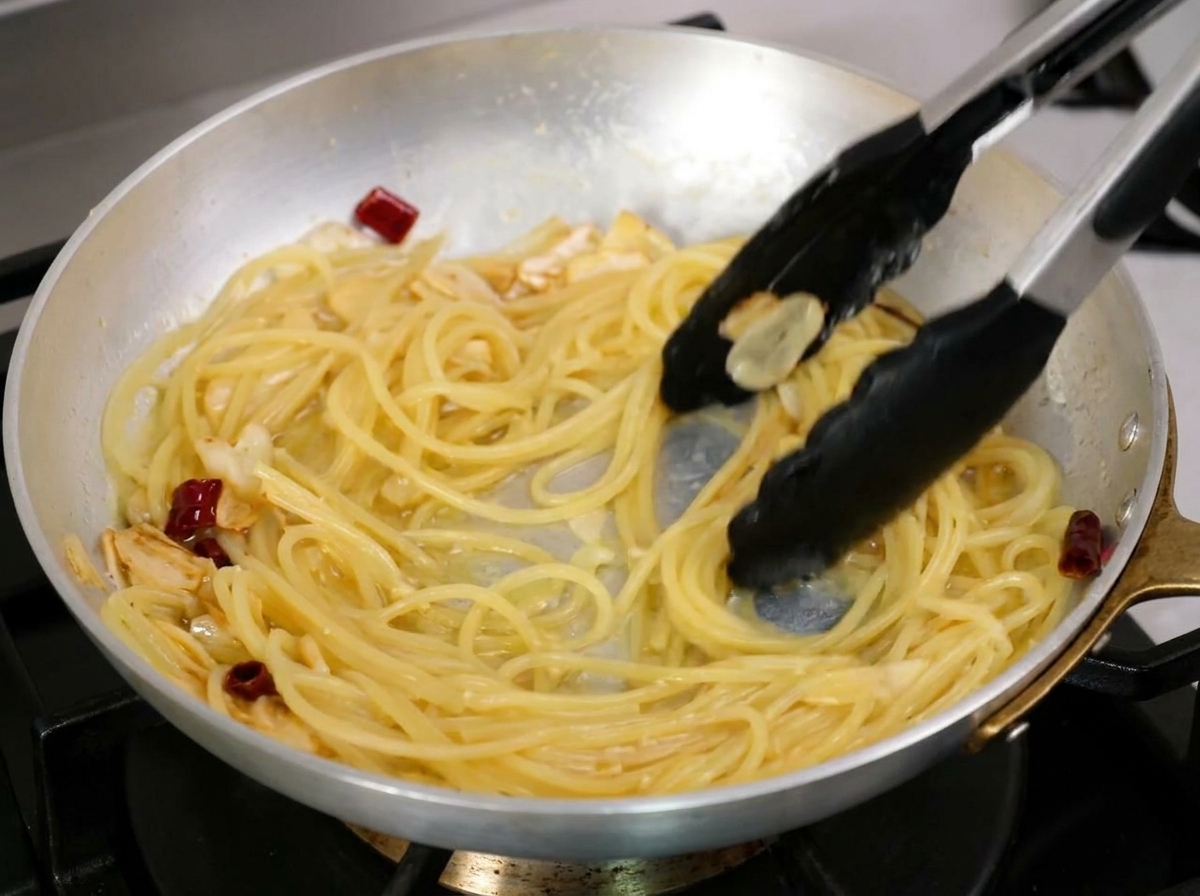
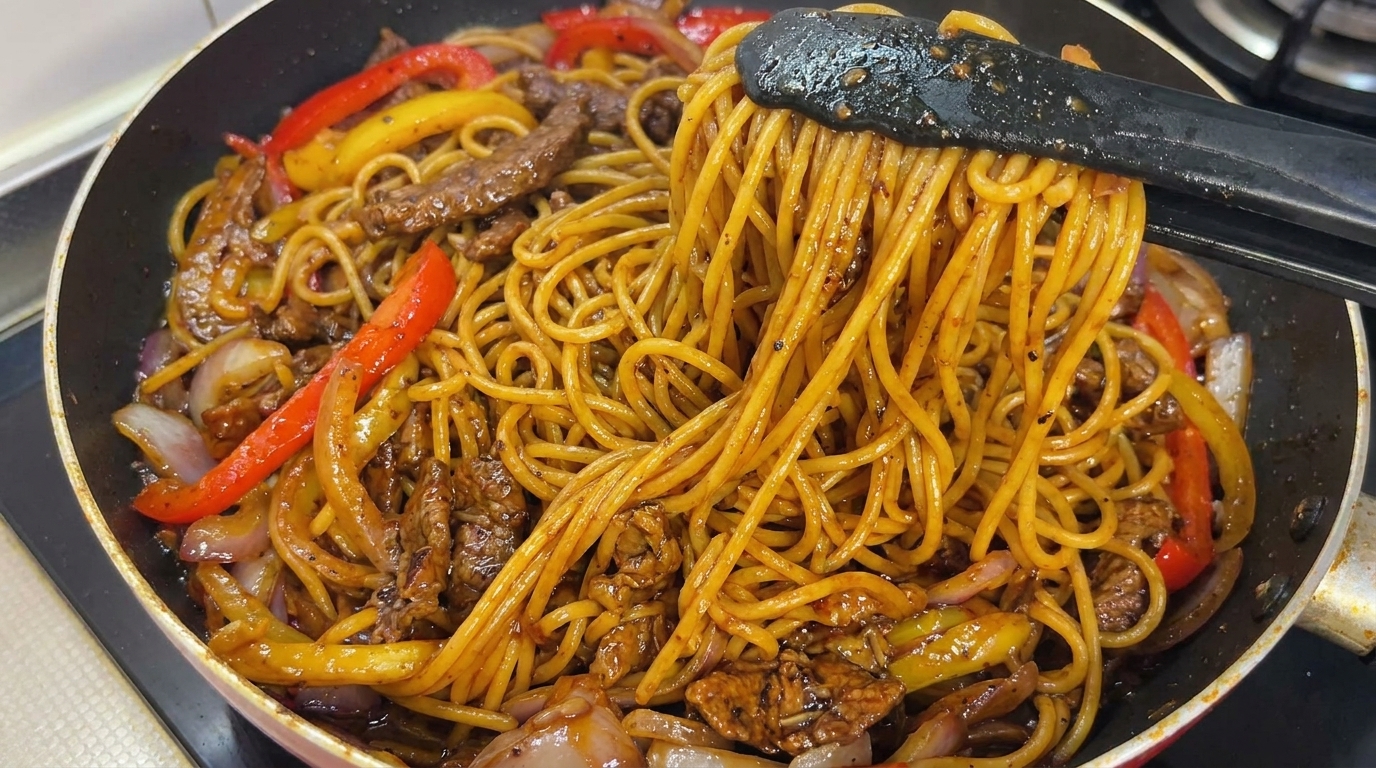
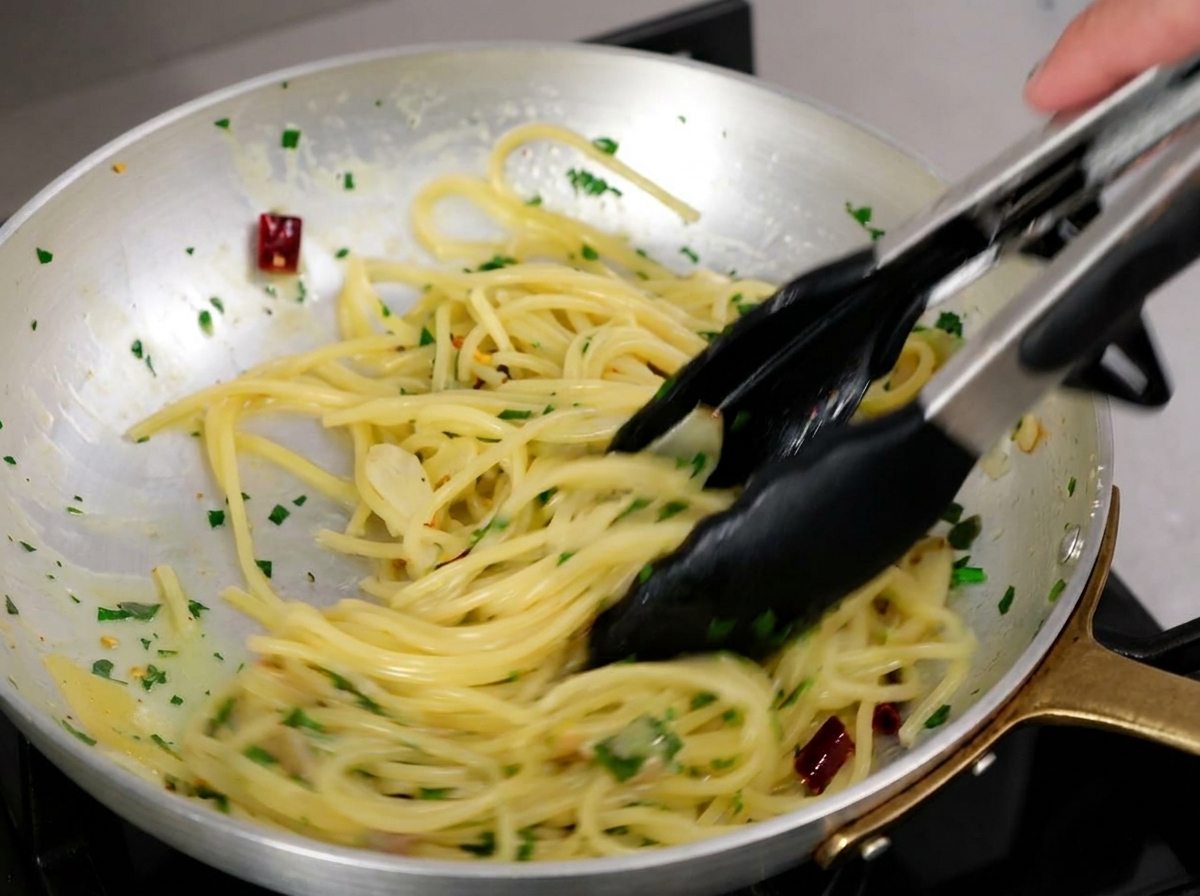
Vigorously toss the spaghetti in the pan using black tongs. The mechanical action of moving the noodles, combined with the heat and bubbling liquid, forces the starchy pasta water and olive oil to emulsify into a silky sauce that evenly coats every strand.
Tip: Keep tossing continuously until the watery liquid at the bottom of the pan transforms into a slightly thickened glaze. - 11Add fresh parsley
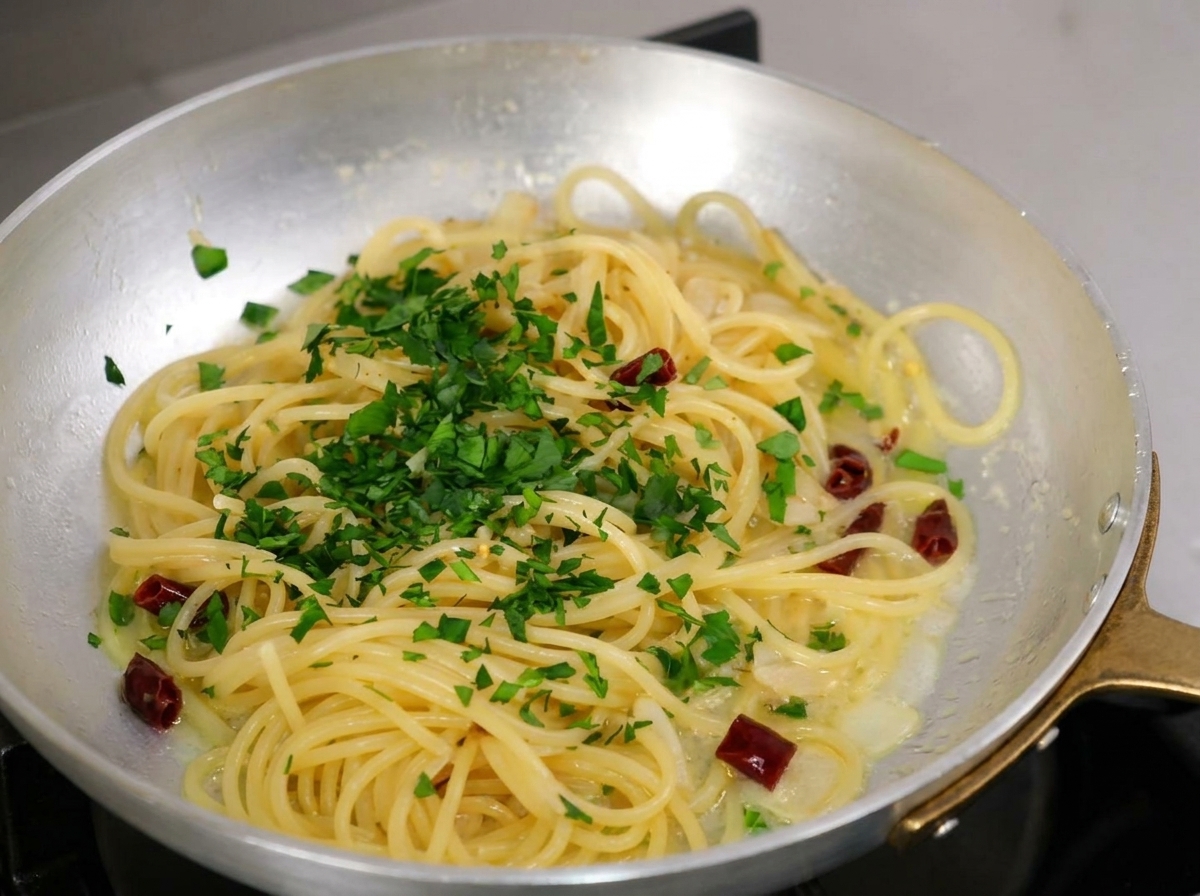
Scatter a large handful of finely chopped fresh parsley over the top of the spaghetti. Toss everything together one final time to distribute the herbs evenly throughout the dish. The parsley adds a bright, fresh flavor that perfectly balances the rich garlic oil.
Tip: Add the parsley off the heat or right at the very end of cooking to maintain its vibrant green color and delicate taste. - 12Plate the pasta
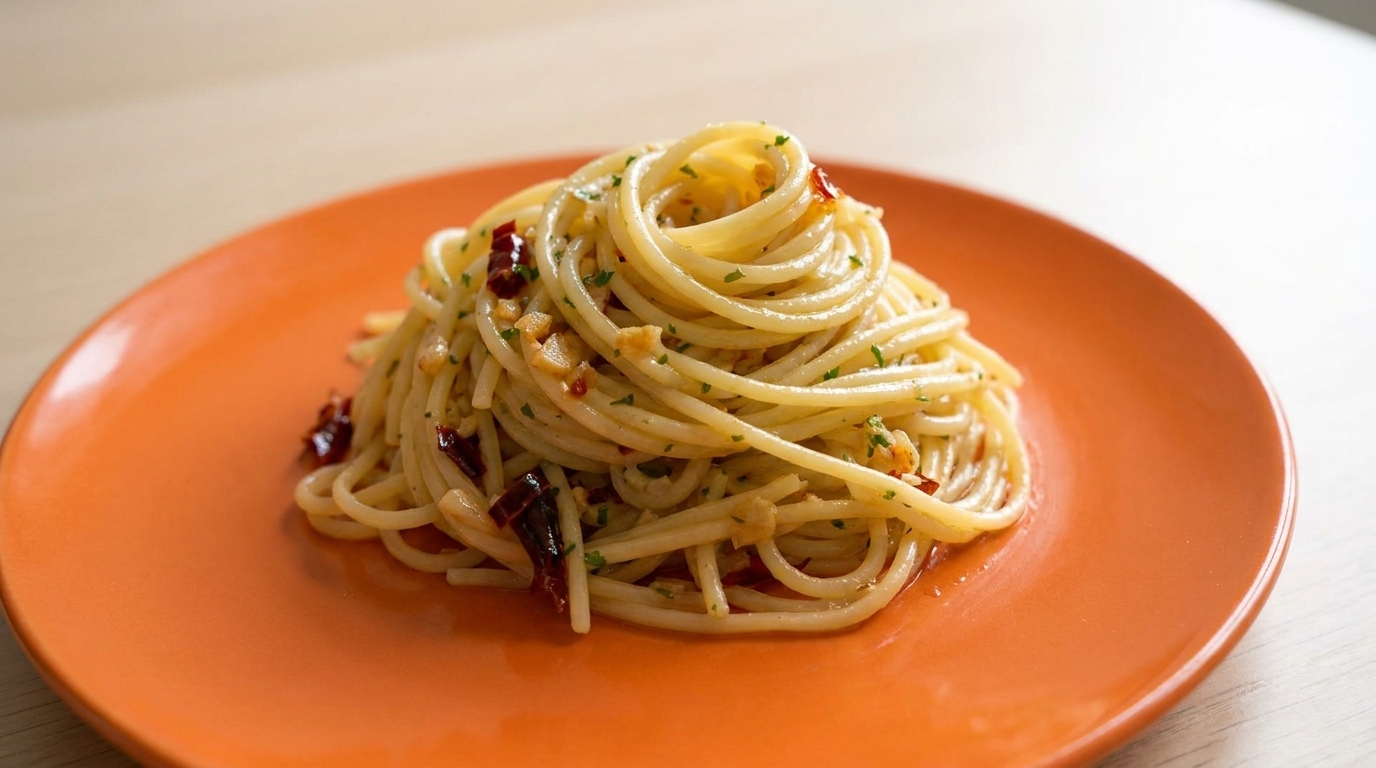
Transfer the finished spaghetti into warm serving bowls making sure to scoop up the remaining garlic pieces and spicy oil from the pan. Serve the dish immediately while the emulsified sauce is still warm and incredibly silky.
Tip: Finish with a tiny drizzle of premium raw olive oil over each plate for an extra burst of fresh flavor right before eating.