Classic Spaghetti Aglio
Olio e Peperoncino
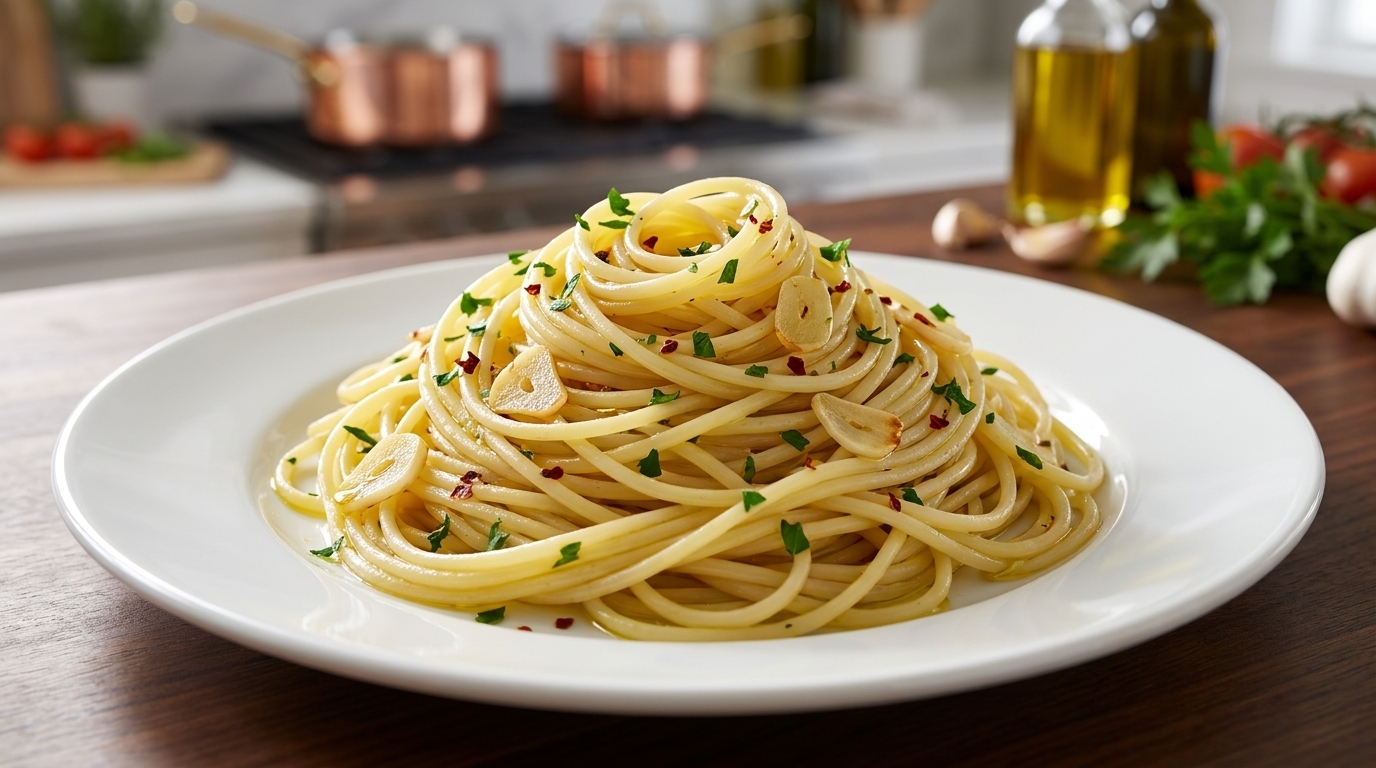
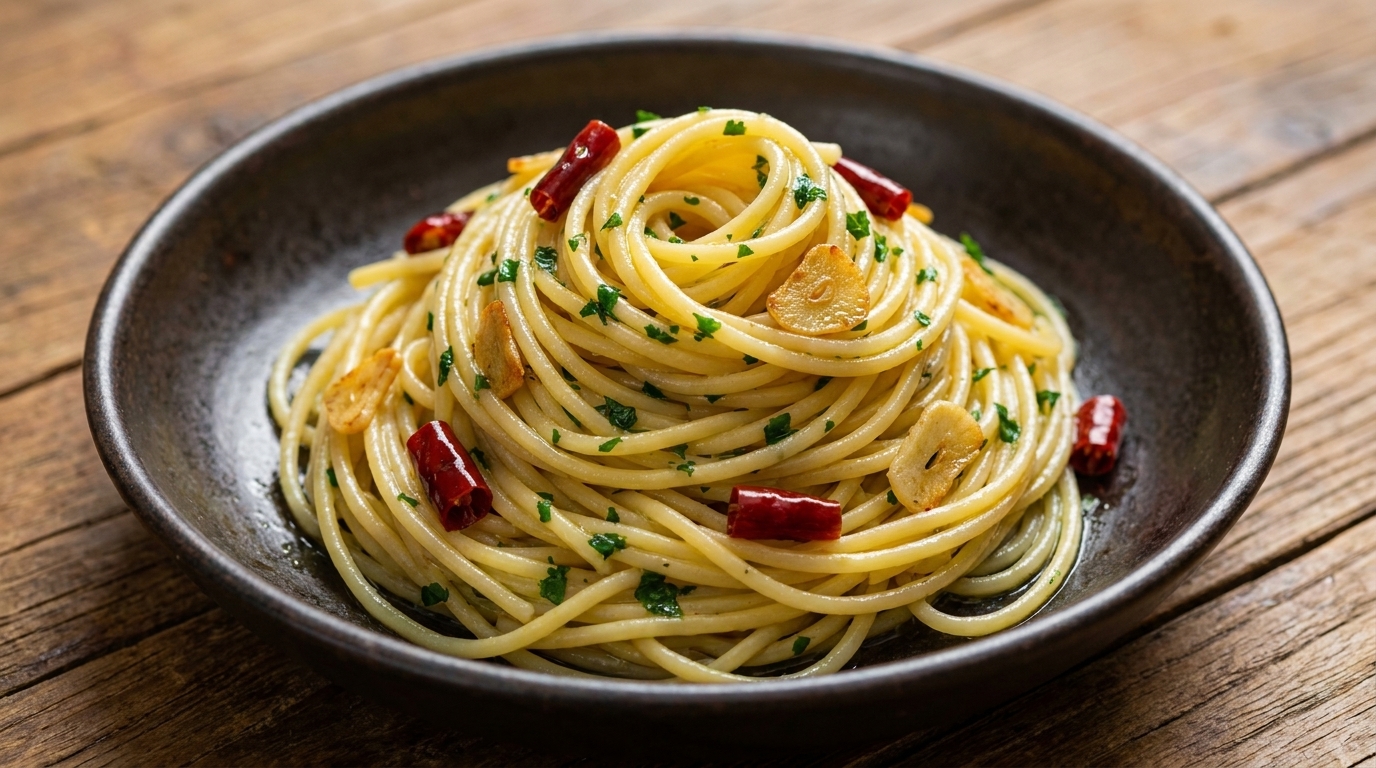
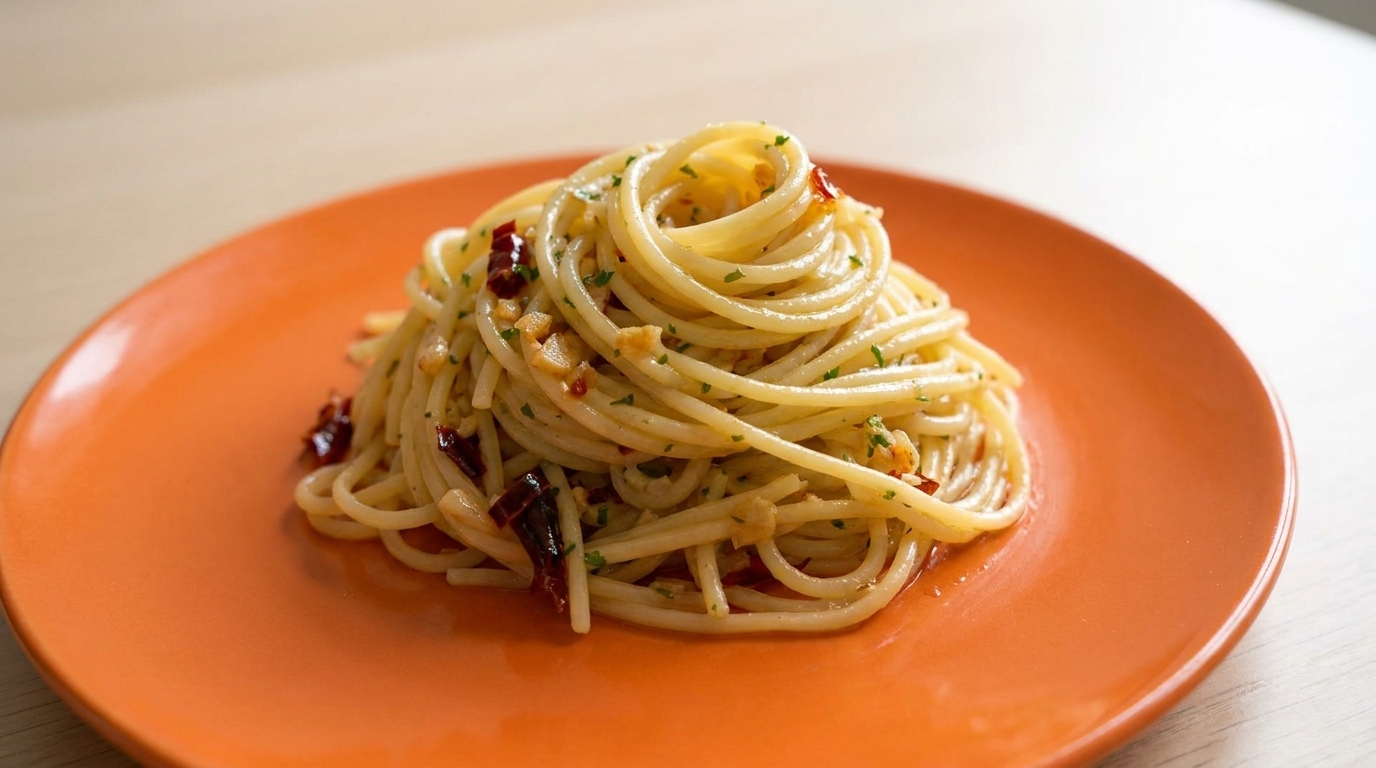
Master the ultimate Italian pantry pasta. This Spaghetti Aglio e Olio e Peperoncino features perfectly al dente noodles coated in a spicy, garlic-infused olive oil emulsion.
Aglio, Olio e Peperoncino is the unsung hero of late-night Italian cooking, proving that simplicity is often the ultimate sophistication. Relying entirely on technique rather than a long list of ingredients, this minimalist dish is created by slowly coaxing the aromatic oils from fresh garlic and spicy dried chilies into quality olive oil. By emulsifying that fragrant oil with hot, starchy pasta water, you create a rich, glossy sauce out of almost nothing.
Ingredients
- 200 g dry spaghetti
- 3-4 cloves fresh garlic
- 1-2 dried red chilies
- 14 cup extra virgin olive oil
- to taste kosher salt
- to taste fresh parsley
Instructions
- 1Smash the Garlic
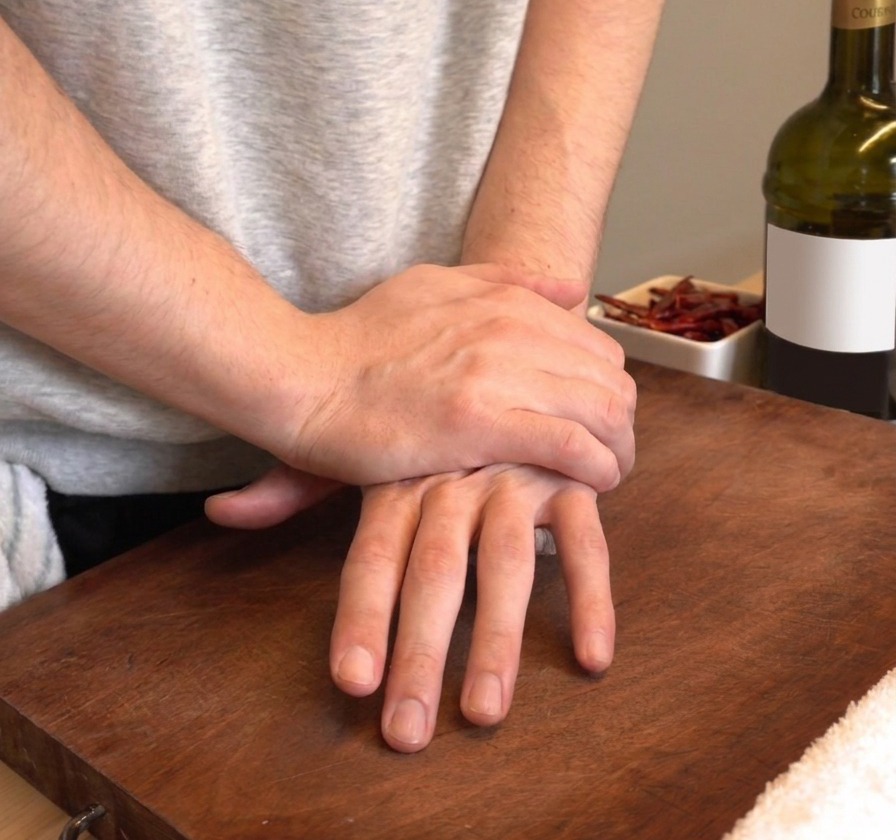
Place the raw garlic cloves onto a wooden cutting board. Using the heel of your hand, press down firmly to smash the cloves, which will help loosen the skins and make them easier to peel.
Tip: Smashing the garlic first not only makes peeling effortless but also begins to release its aromatic oils early in the prep process. - 2Remove the Garlic Germ
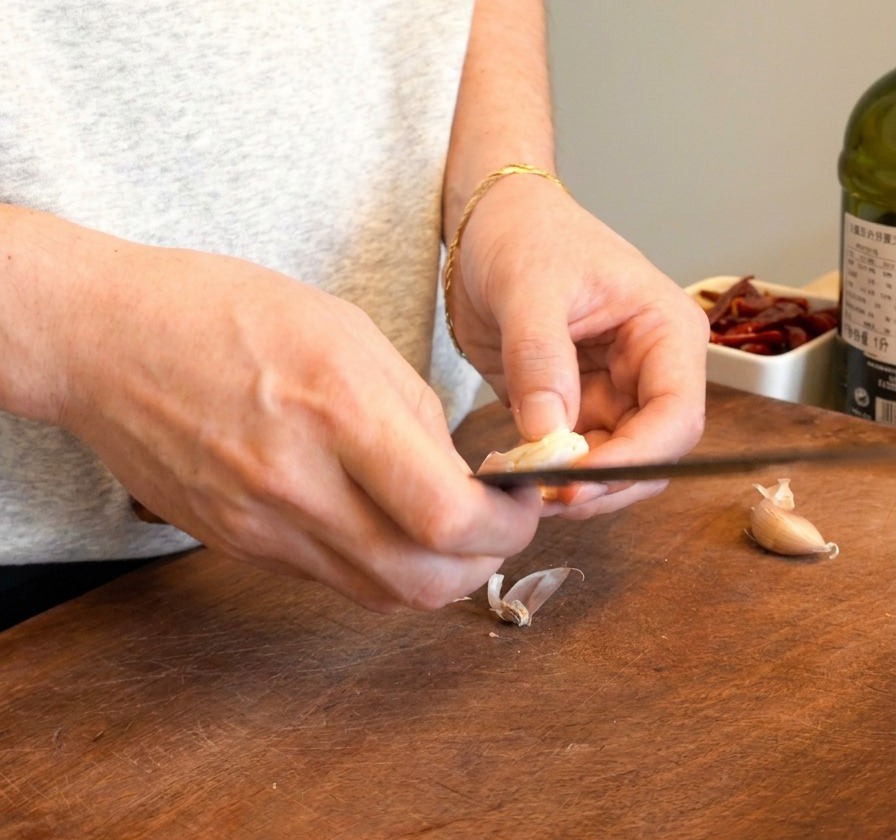
Take the peeled garlic cloves and carefully slice them in half lengthwise. Pluck out and discard the small green germ found inside the center of each clove.
Tip: Taking the time to remove the inner green germ ensures your pasta wont have a harsh or bitter aftertaste. - 3Mince the Garlic
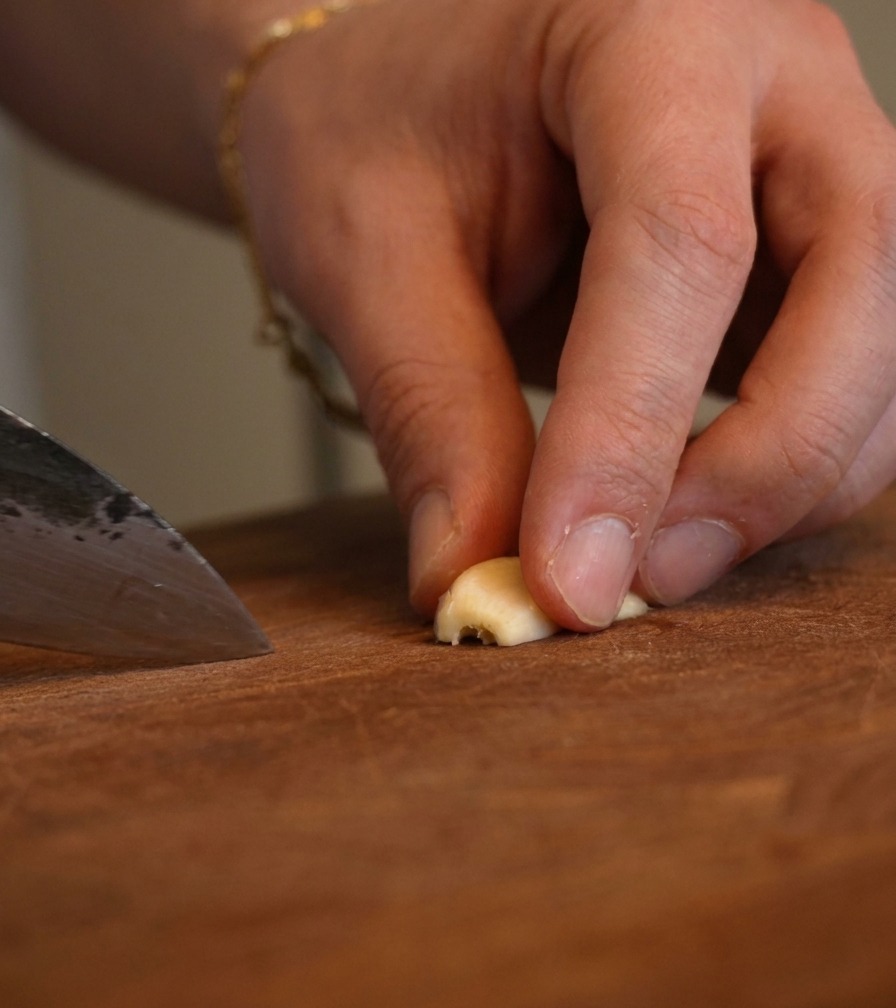
Finely mince the halved garlic cloves into small, uniform pieces on your cutting board. A fine chop allows the garlic flavor to infuse smoothly and quickly into the olive oil later.
Tip: Try to keep the minced pieces as even as possible so they cook at the same rate and dont burn in the pan. - 4Chop the Chilies
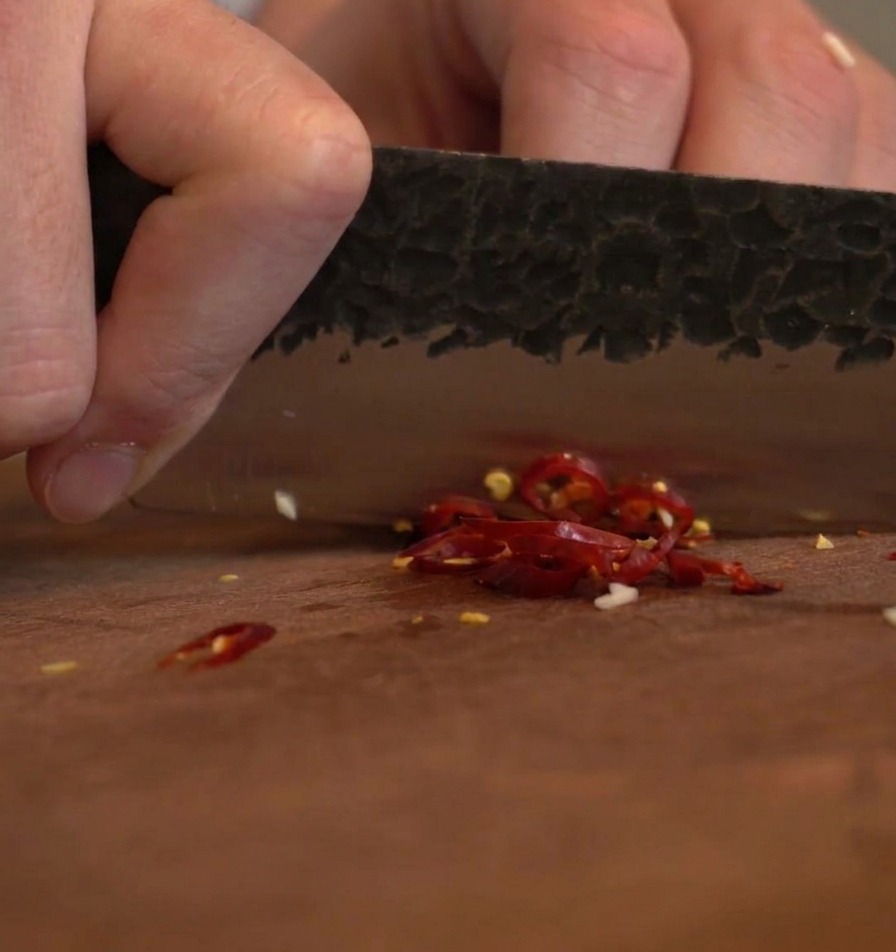
Grab your dried red chilies and use a sharp knife to chop them into small flakes and pieces. This will provide the signature spicy kick for your Aglio Olio e Peperoncino.
Tip: If you are sensitive to heat, you can shake out and discard the seeds from the chilies before chopping them. - 5Salt the Boiling Water
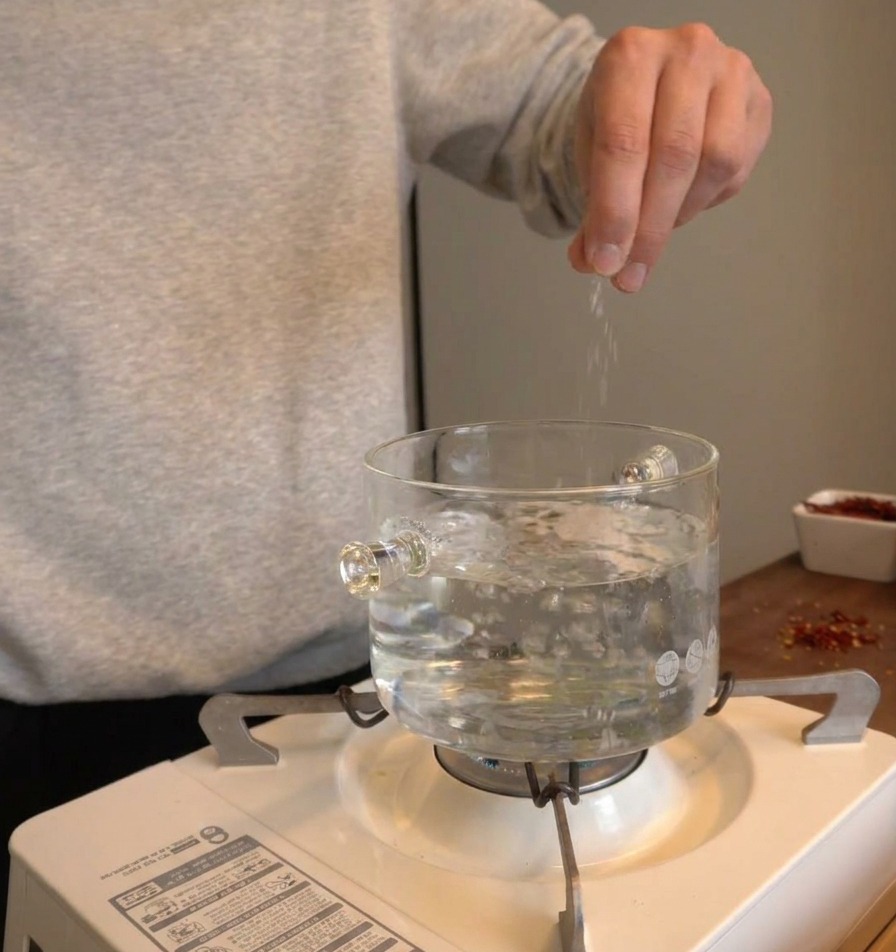
Bring a pot of water to a rolling boil. Add a generous amount of salt to the water to properly season the pasta as it cooks. Stir well to ensure the salt is fully dissolved before adding the spaghetti.
Tip: Do not skimp on the salt. The pasta water should taste slightly salty like the sea to properly flavor the spaghetti from the inside out. - 6Boil the Spaghetti
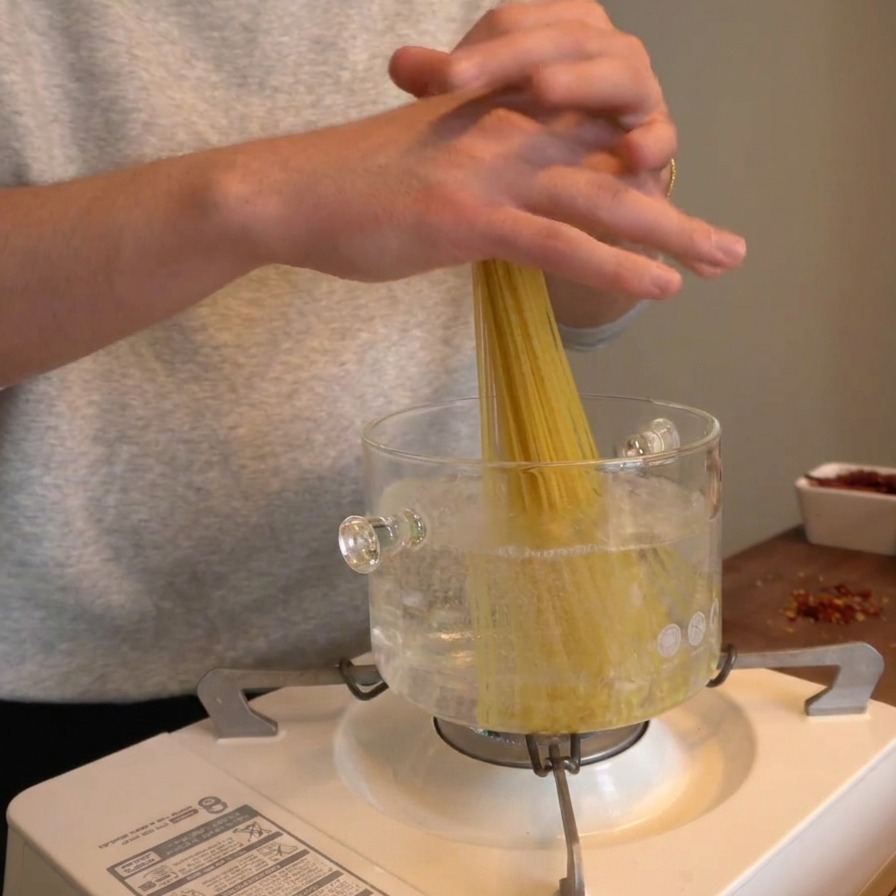
Once your pot of salted water reaches a rolling boil, add a handful of dry spaghetti. Because this pasta will finish cooking in the pan, it only needs to boil for a short time, roughly 5 minutes.
Tip: Gently push the spaghetti down as it softens so it all submerges and cooks evenly without breaking the noodles. - 7Heat the Olive Oil
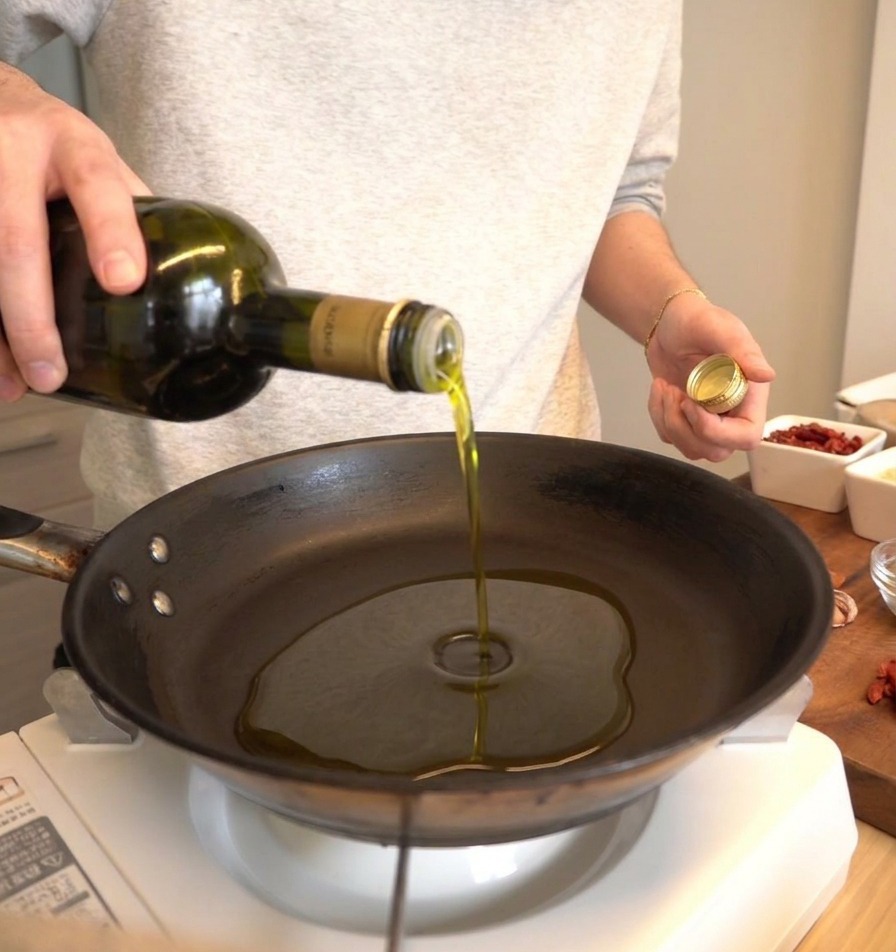
Place a large, cold frying pan on the stove and pour in a generous amount of high-quality olive oil. Heating the oil gently allows the aromatics to infuse properly without burning.
Tip: Aglio e Olio relies on very few ingredients, so using a good quality extra virgin olive oil is essential for the best flavor. - 8Infuse the Garlic
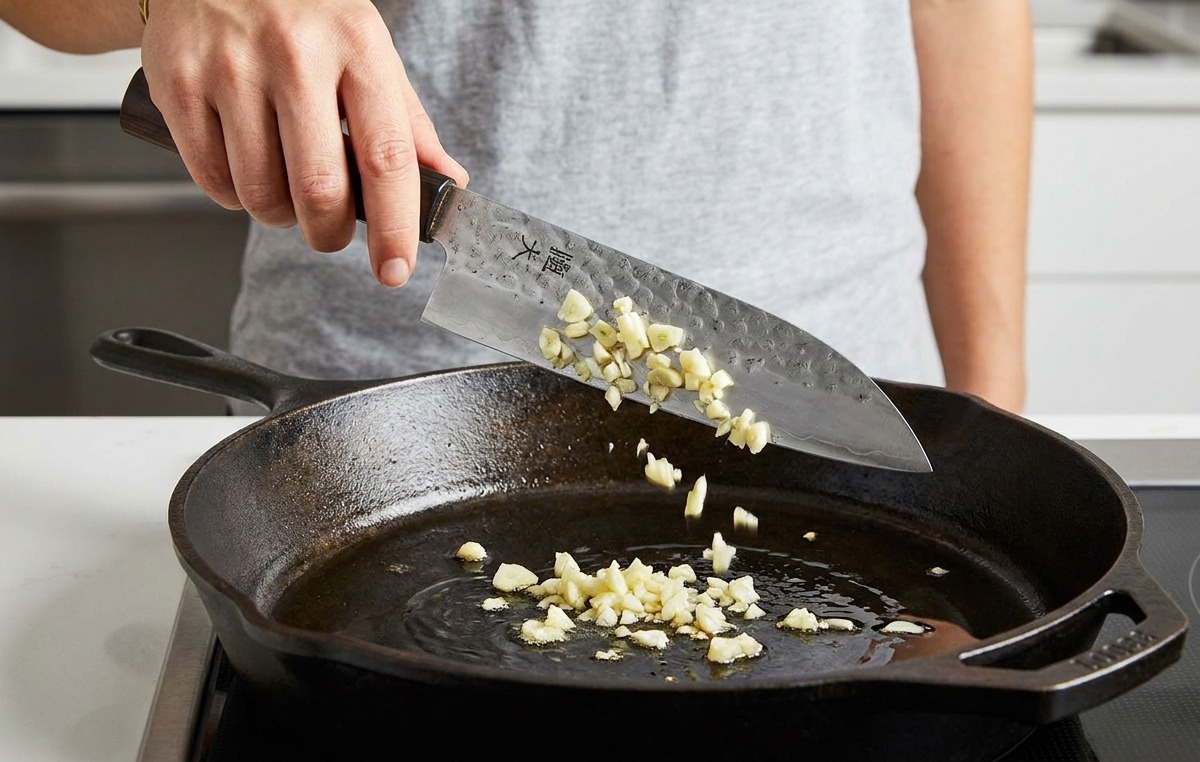
Add the finely minced garlic into the pan with the olive oil. Keep the heat on a low setting so the garlic gently sizzles and slowly infuses the oil, turning a light golden color.
Tip: Watch the garlic closely. If it browns too quickly or burns, it will introduce a bitter taste to the entire dish. - 9Add the Dried Chilies
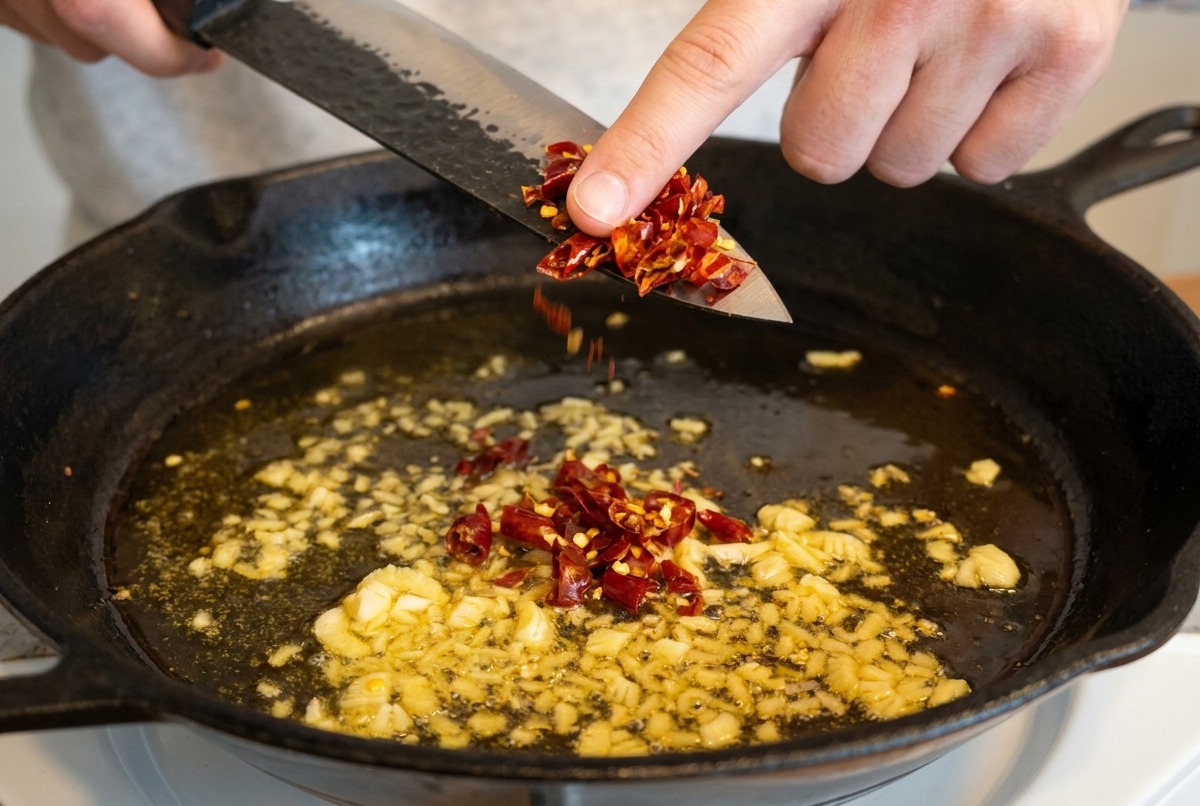
Once the garlic is fragrant and just starting to turn golden, add the chopped dried red chilies into the pan. Mix the ingredients evenly to release the spicy oils from the peppers into the base.
Tip: Adjust the amount of dried chili based on your spice preference. Remember that the seeds carry most of the heat. - 10Emulsify with Pasta Water
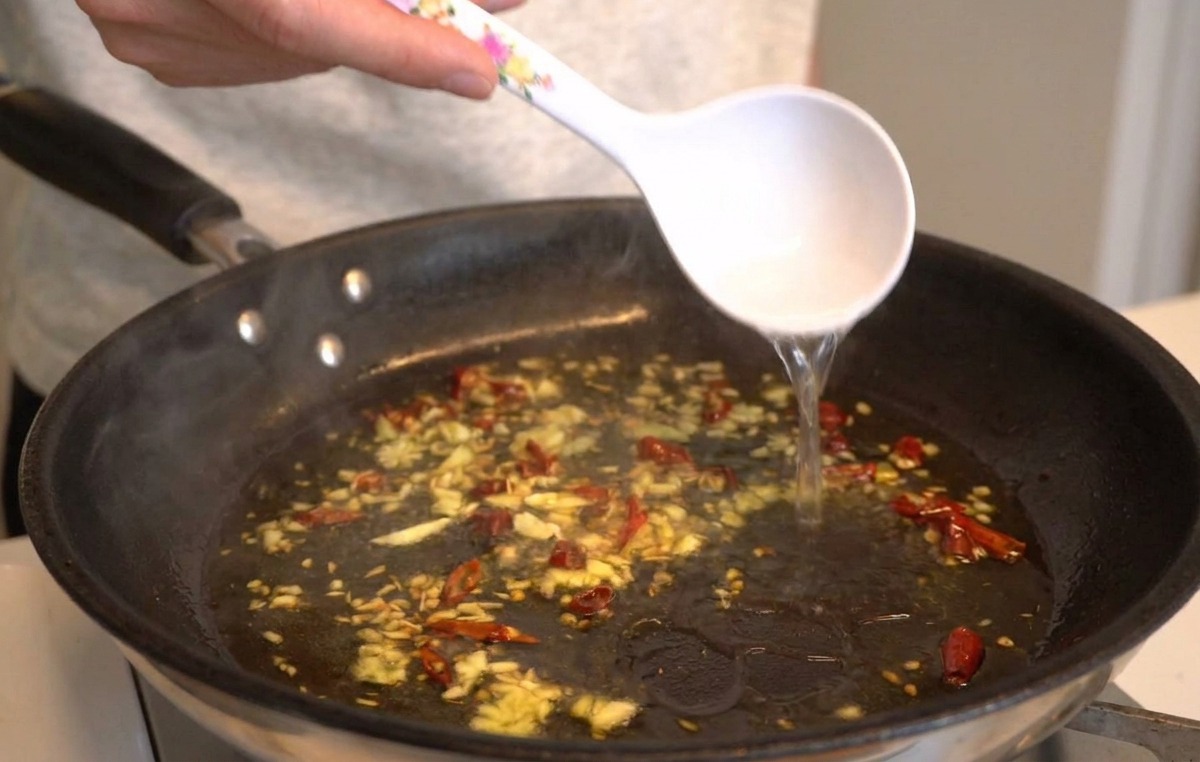
Carefully pour a ladle of the hot, starchy pasta cooking water directly into the pan with the garlic and chili oil. Swirl or mix the pan to help the water and oil emulsify into a smooth sauce and stop the garlic from cooking further.
Tip: This starchy water is liquid gold; it binds the oil into a cohesive, creamy sauce that will evenly coat the pasta. - 11Toss the Spaghetti
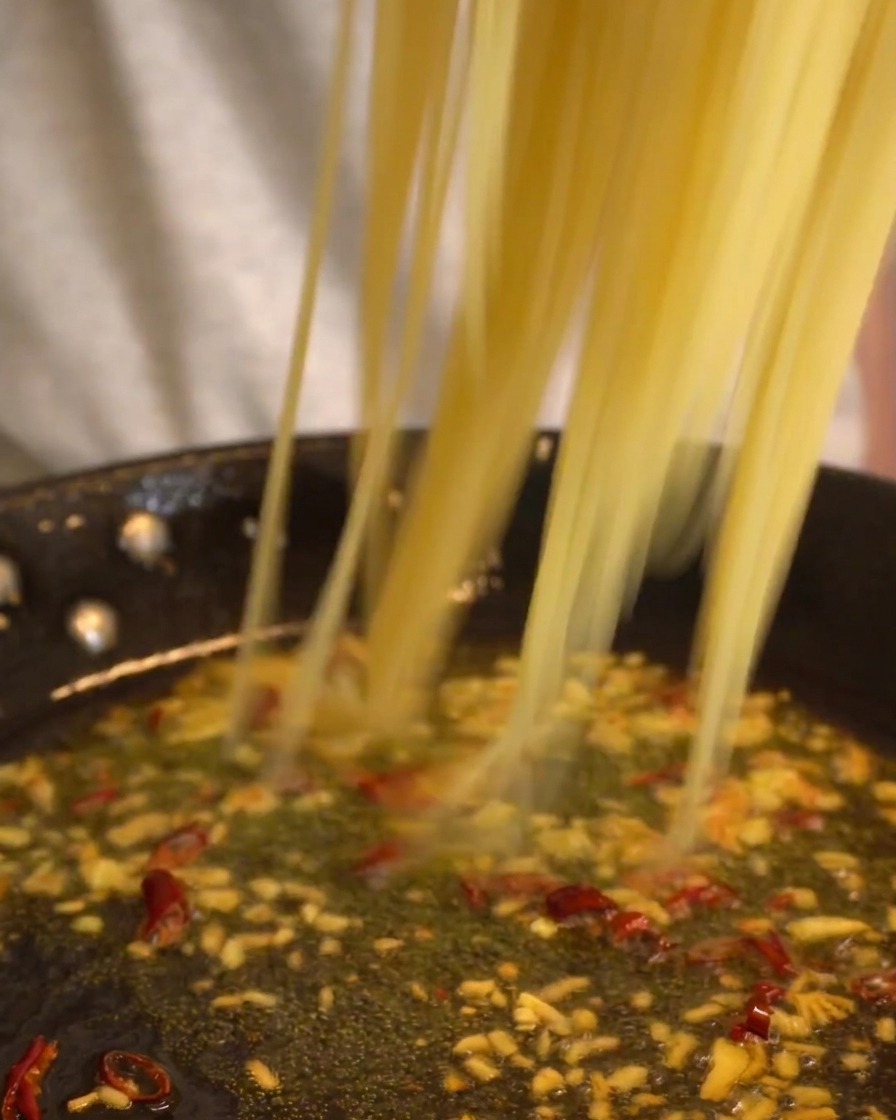
When the spaghetti is still slightly hard (about 5 minutes of cooking), transfer it directly from the boiling water into the pan with the garlic and chili sauce. Add another ladle of pasta water and toss thoroughly to let the pasta finish cooking in the flavorful sauce.
Tip: Transferring the pasta directly, rather than draining it in a colander, brings extra starchy water into the pan, which thickens the sauce beautifully. - 12Add More Pasta Water
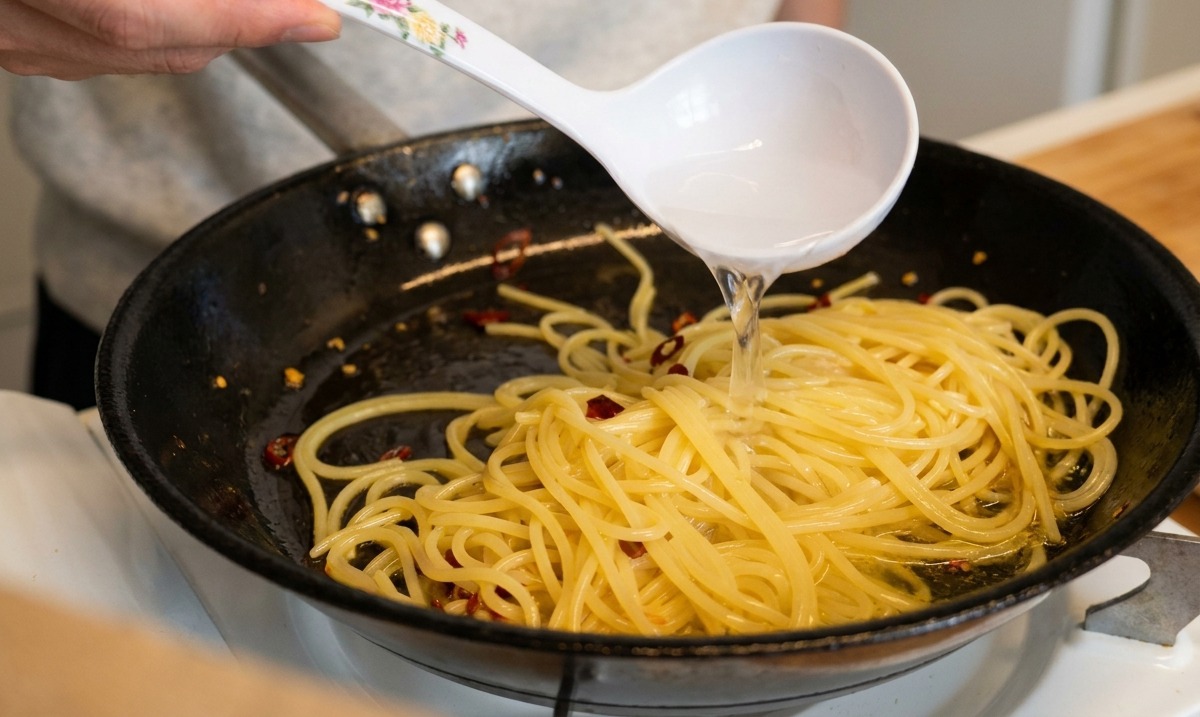
Pour another ladle of the reserved starchy pasta water into the pan. The starchy water is crucial for creating a creamy, emulsified sauce when combined with the olive oil and garlic.
Tip: Add the water gradually. You want enough to coat the pasta evenly without making it soupy. - 13Emulsify the Sauce
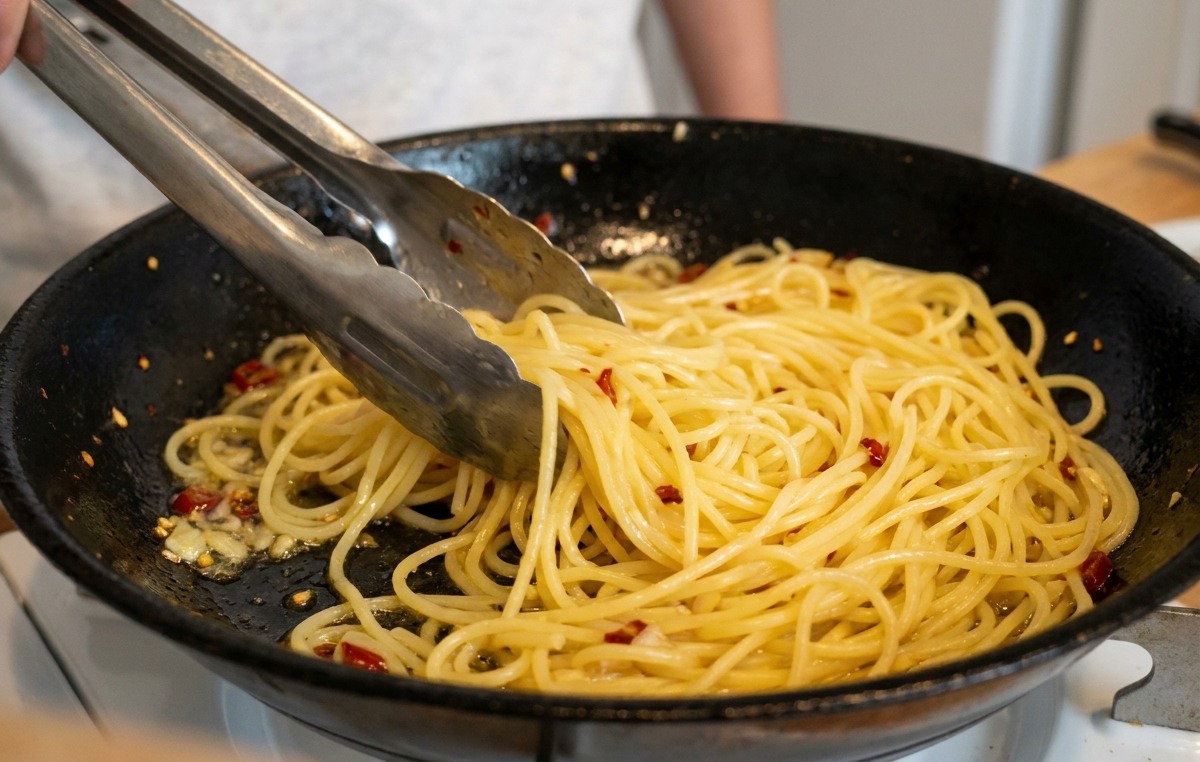
Using tongs, vigorously toss and stir the spaghetti in the pan. The continuous agitation helps emulsify the olive oil and starchy pasta water into a thick, glossy sauce that coats every strand perfectly.
Tip: If the sauce looks too oily and separated, add a splash more pasta water and keep tossing vigorously. - 14Add Fresh Parsley
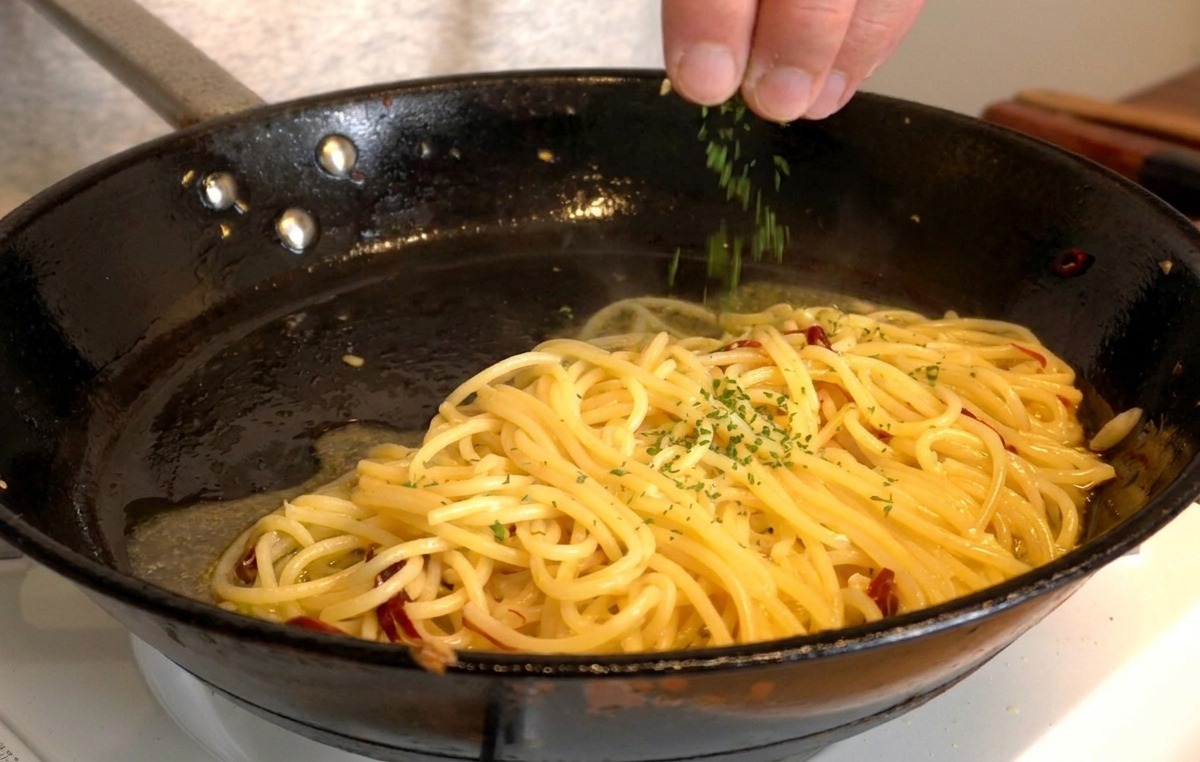
Sprinkle a handful of finely chopped fresh parsley over the coated pasta. The parsley adds a bright, fresh flavor and a pop of green color that balances the richness of the garlic and olive oil.
Tip: Add the parsley at the very end off the heat to preserve its delicate fresh flavor and vibrant color. - 15Plate the Pasta
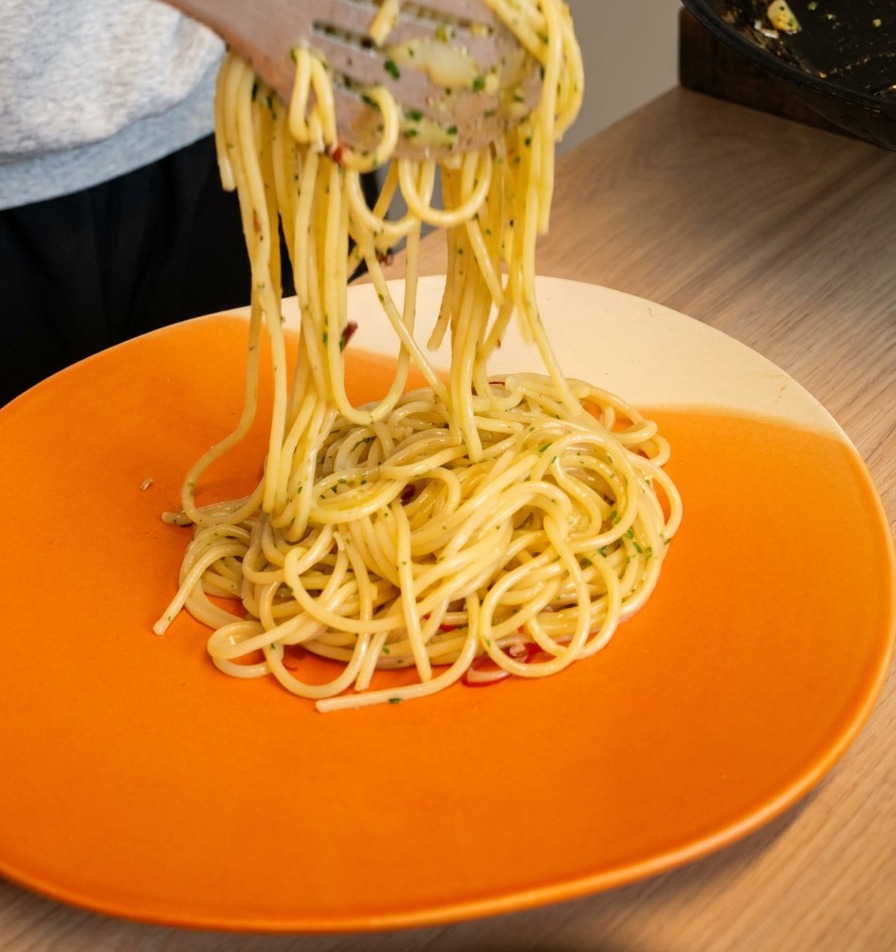
Use tongs to lift a generous portion of the spaghetti. Twirl the pasta around the tongs and gently slide it onto a plate to create a neat, attractive mound. Make sure to scoop up any remaining garlic, oil, and chilies from the pan to spoon over the top.
Tip: Twirling the pasta gives it height and makes for a beautiful, restaurant-quality presentation.