Classic Rigatoni Amatriciana
A comforting Roman classic featuring al dente rigatoni tossed in a rich savory tomato sauce with rendered bacon and a touch of red wine
Amatriciana is a traditional Roman dish that traces its roots back to the 18th century and the town of Amatrice. While originally made with guanciale and Pecorino Romano this accessible variation uses crisp bacon and Parmesan. In 2008 the Italian government even issued a postage stamp to honor this beloved soul warming recipe.
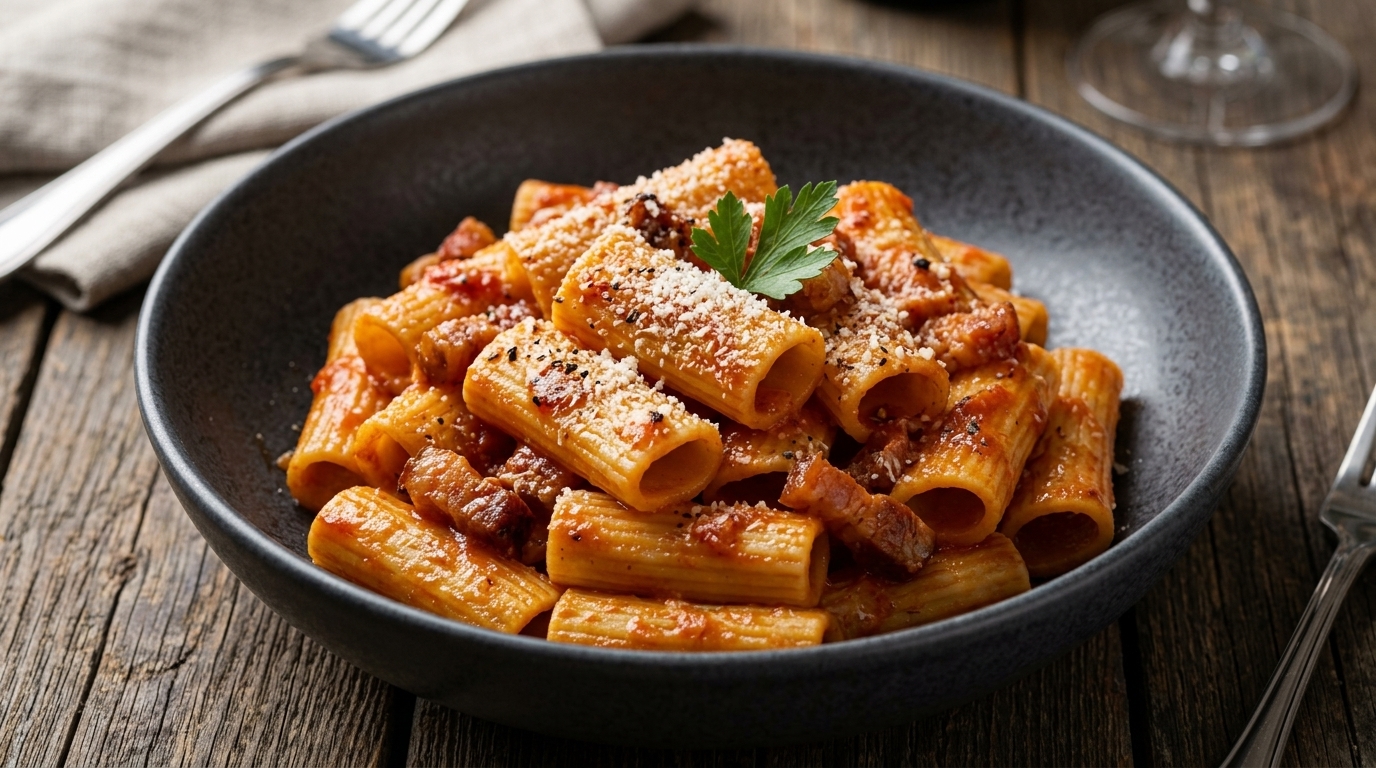
Ingredients
- 1 medium white onion
- 2 tbsp olive oil
- 200 g bacon
- 60 ml red wine
- 400 g peeled tomato sauce
- 400 g Rigatoni pasta
- 2 bay leaves
- 1 tsp oregano
- 1 tsp black pepper
- 2 pats butter
- optional Parmesan cheese
Instructions
- 1Slice the onion
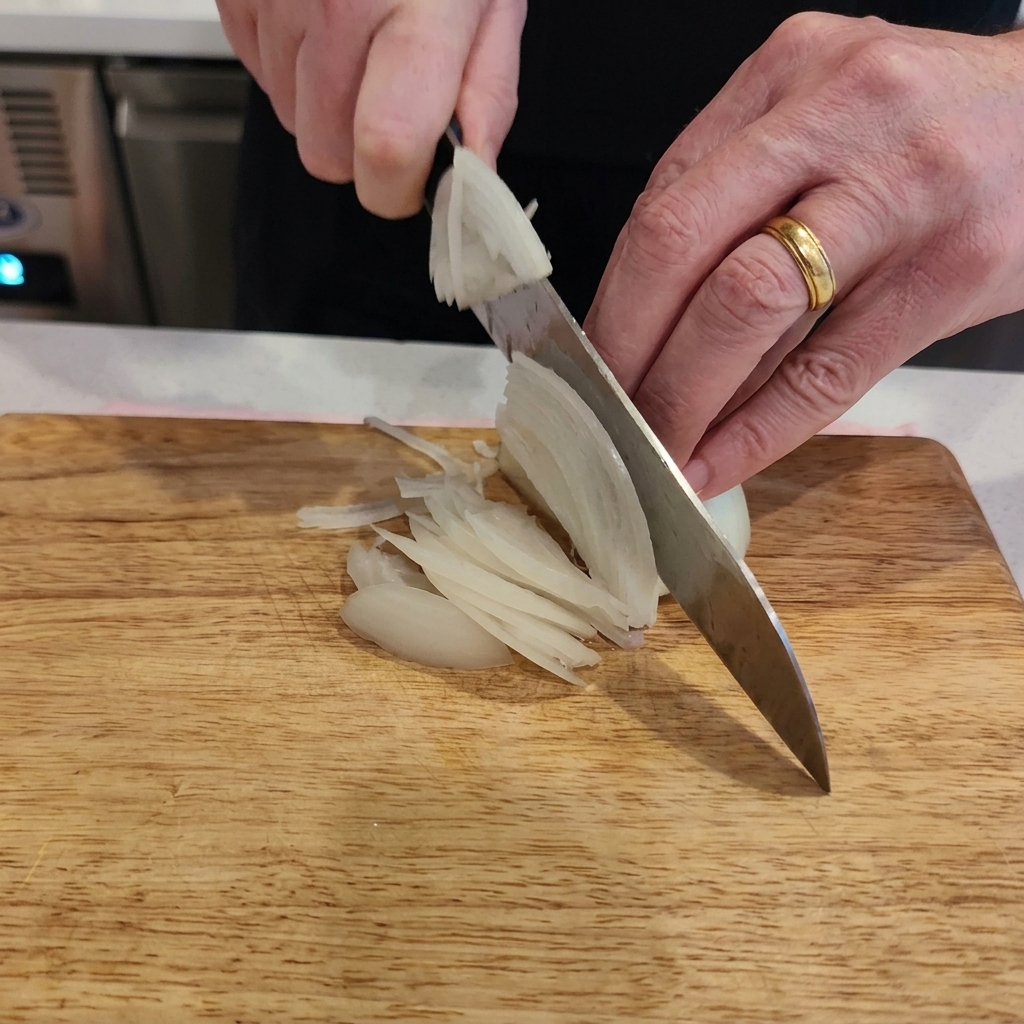
Using a sharp kitchen knife, carefully cut a raw white onion into thin vertical slices on a wooden cutting board. Aim for uniform thickness to ensure even cooking during the sautéing process later.
Tip: To keep the onion stable while slicing, cut it in half from pole to pole first and place the flat side down on the board. - 2Saute the onions
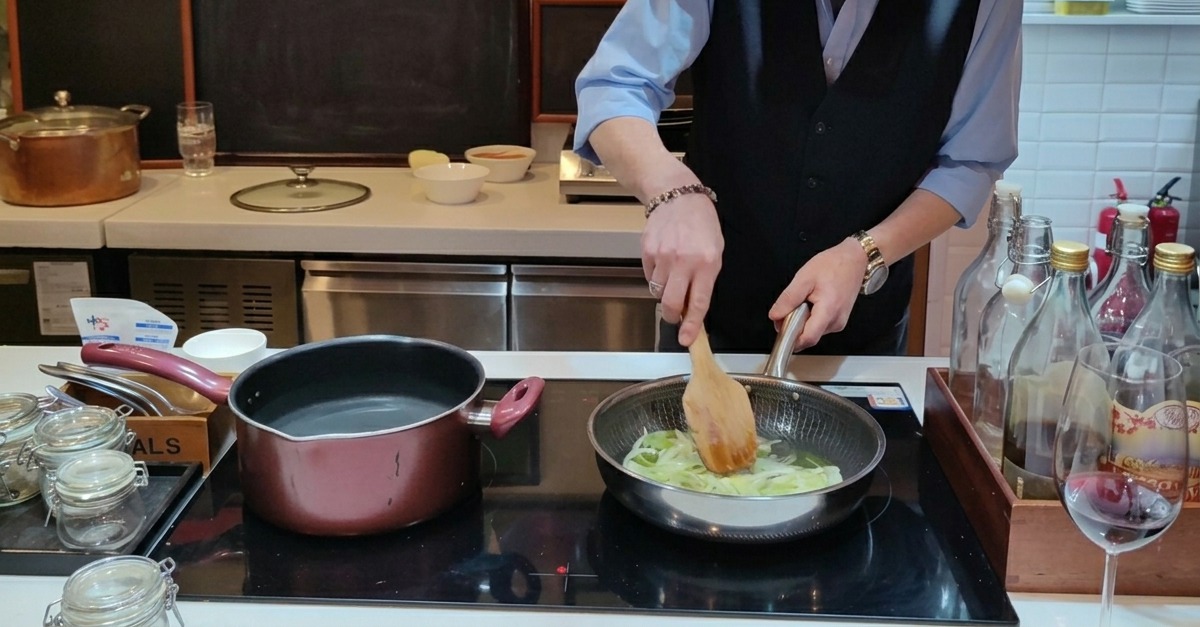
Heat olive oil in a pan and add the thinly sliced onions. Saute them for about five minutes until the moisture evaporates to build a sweet aromatic flavor base.
Tip: Cook the onions slowly over medium heat so they soften and sweeten without burning. - 3Brown the bacon
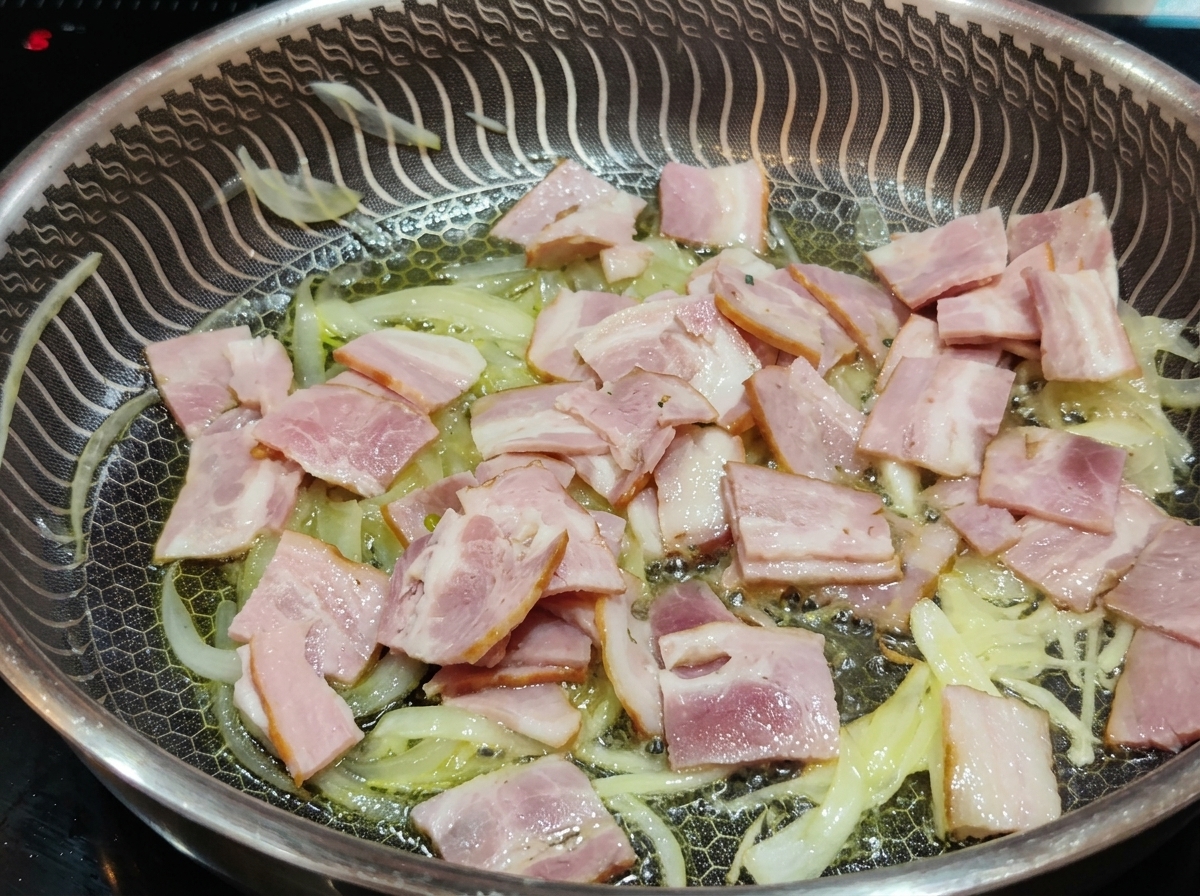
Add the chopped pieces of raw bacon to the pan containing the translucent sautéed onions. Cook over medium heat, stirring occasionally, until the bacon fat has rendered out and the pieces begin to turn golden and crisp.
Tip: Sautéing the bacon with the onions allows the rendered fat to infuse the onions with a smoky, savory flavor right from the start. - 4Deglaze with red wine
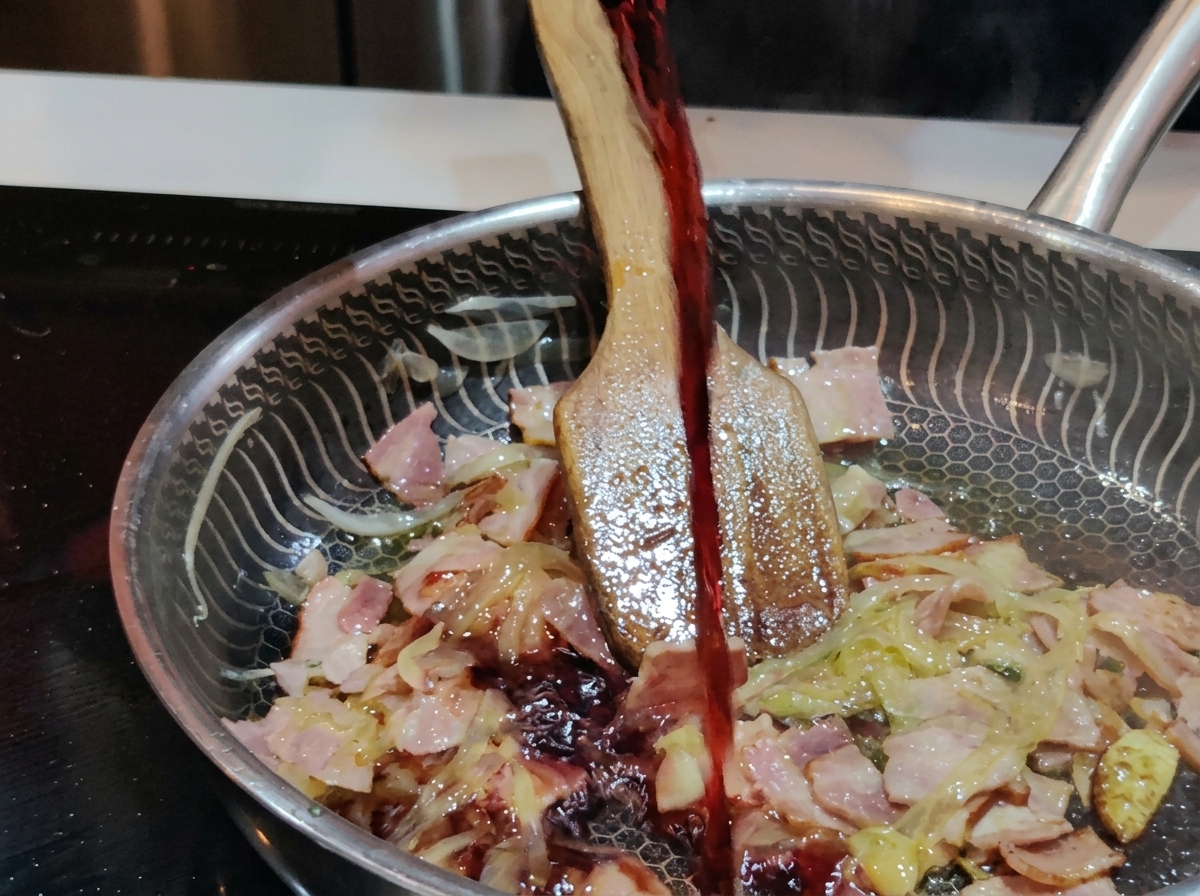
Pour a generous splash of red wine into the pan with the rendered bacon and onions. Use a spatula to scrape the bottom of the pan, loosening the browned bits to incorporate their deep flavor into the sauce as the alcohol evaporates.
Tip: Deglazing is essential for capturing the fond or browned bits on the pan, which provide the primary depth of flavor for the Amatriciana sauce. - 5Incorporate the tomato sauce
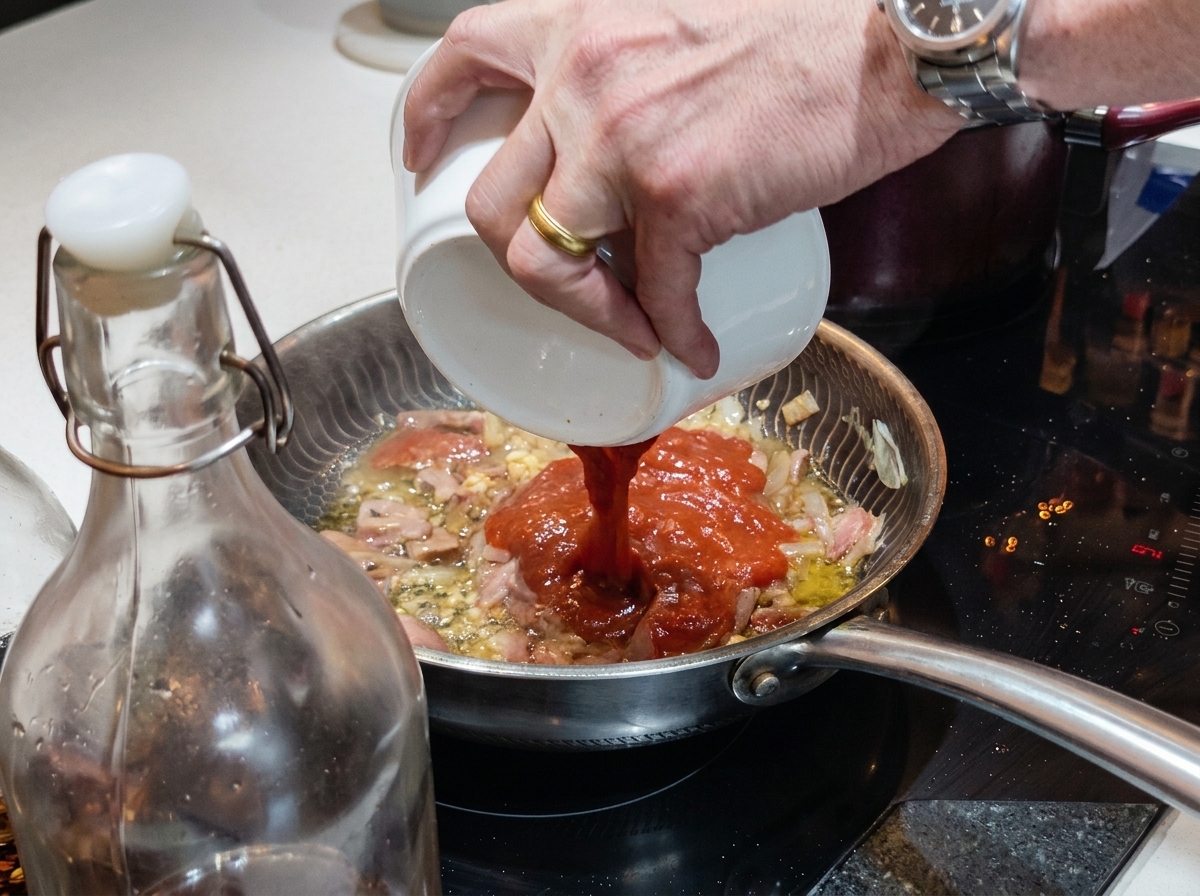
Pour the thick, red peeled tomato sauce from a white bowl into the pan with the bacon and onions. Stir the mixture thoroughly to combine the ingredients before letting the sauce simmer on low heat for about 20 minutes to thicken and develop its flavor.
Tip: Do not add any water to the sauce; the moisture from the tomatoes and wine is sufficient to create a rich, concentrated consistency. - 6Cook the rigatoni
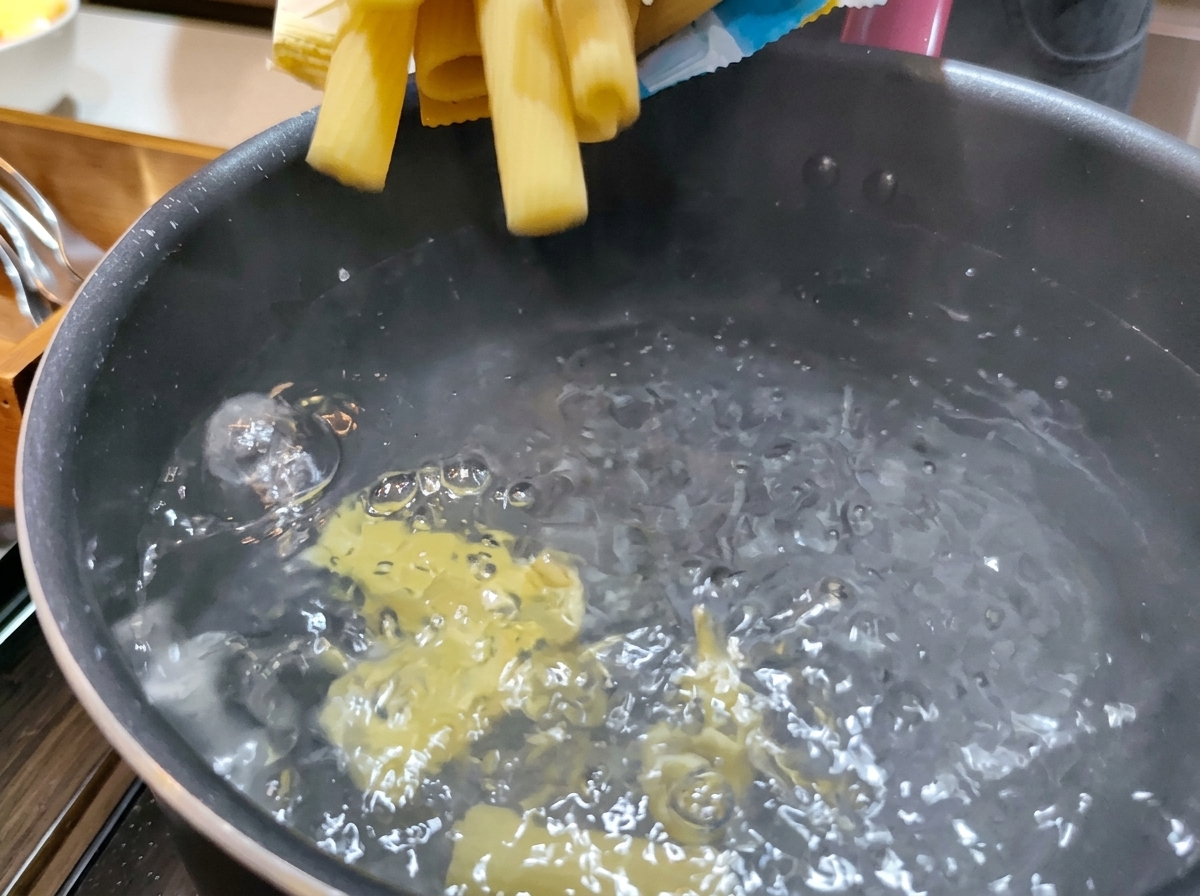
Add the dry Rigatoni pasta to a large pot of vigorously boiling salted water. Cook for approximately 12 minutes, checking occasionally, until the pasta reaches an al dente texture with a firm bite.
Tip: Rigatoni is the traditional choice for this dish as its hollow shape and ridges are perfect for catching and holding the thick tomato and bacon sauce. - 7Finish the sauce with butter
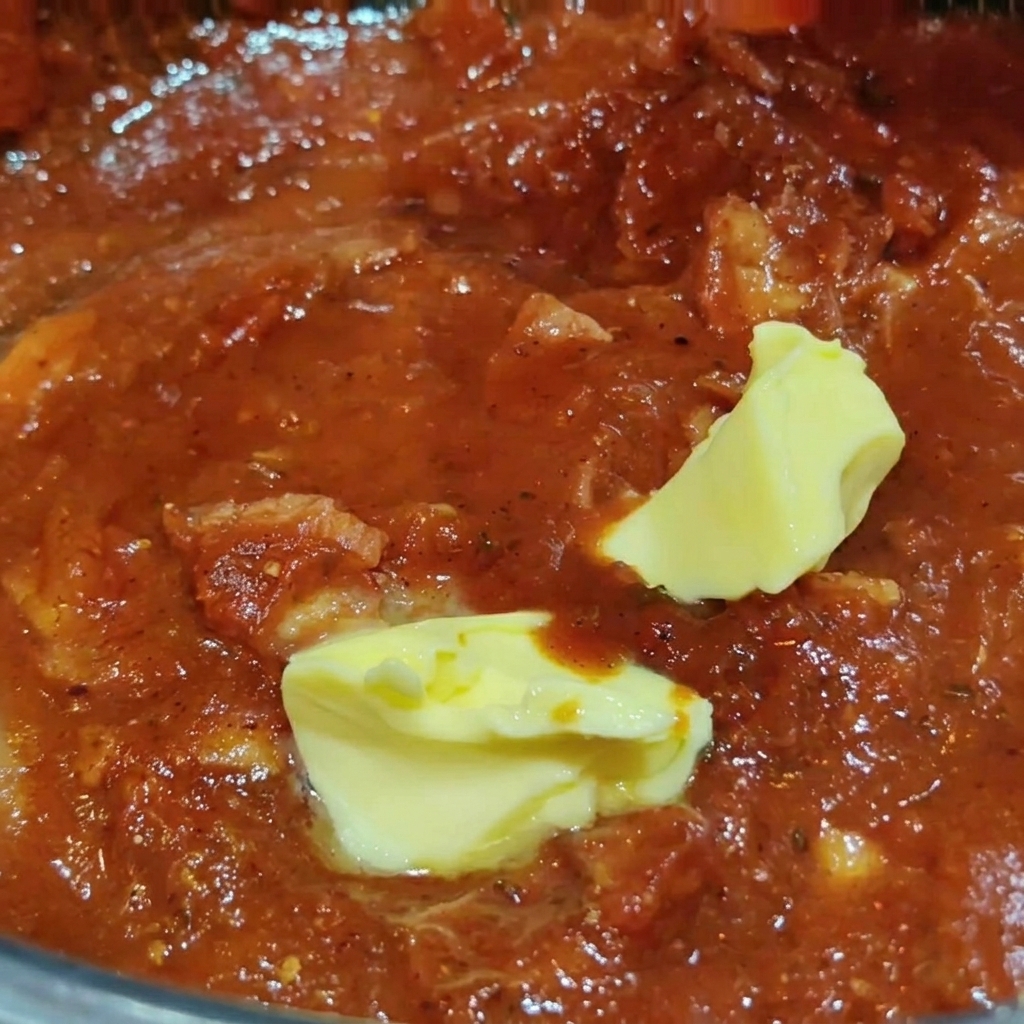
Once the tomato and bacon sauce has simmered, add pats of butter directly into the pan for extra richness. Stir gently until the butter melts completely into the sauce.
Tip: Adding cold butter at the end of cooking helps to emulsify the sauce, giving it a glossy finish. - 8Combine the sauce and pasta
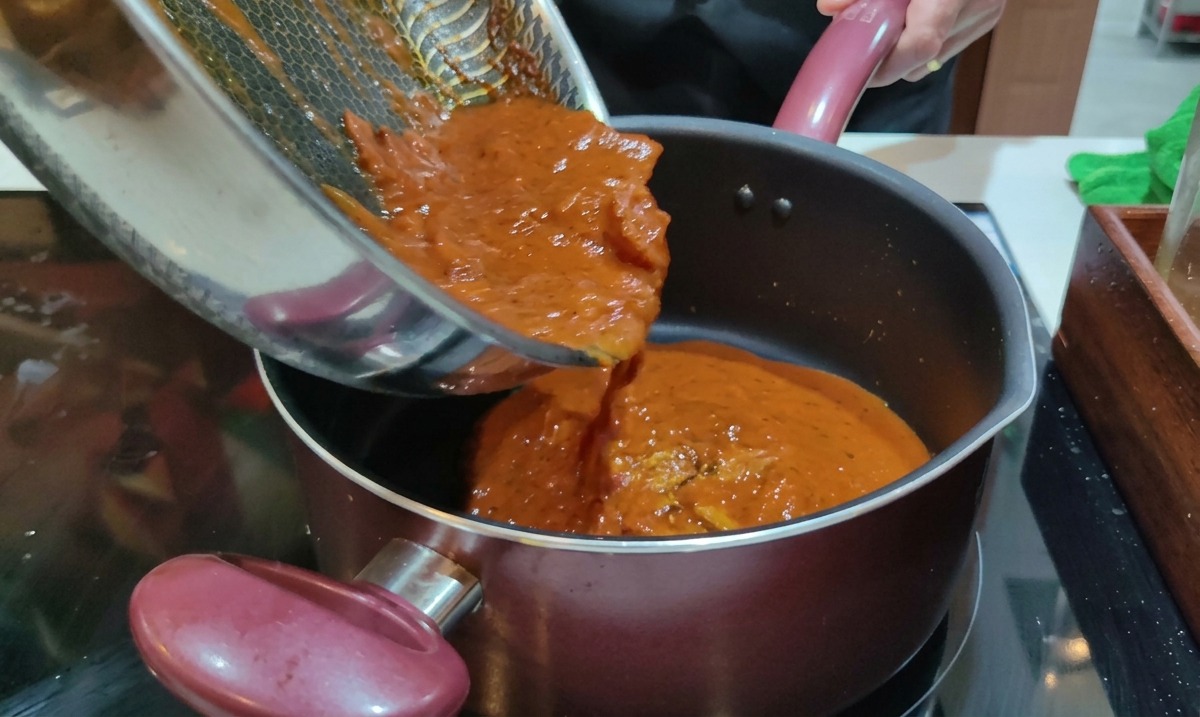
After the rigatoni has boiled until al dente, carefully pour the hot red Amatriciana sauce from the pan into the pot containing the drained pasta.
Tip: Reserve a small amount of starchy pasta water to add if the sauce needs to be loosened while mixing. - 9Toss to coat
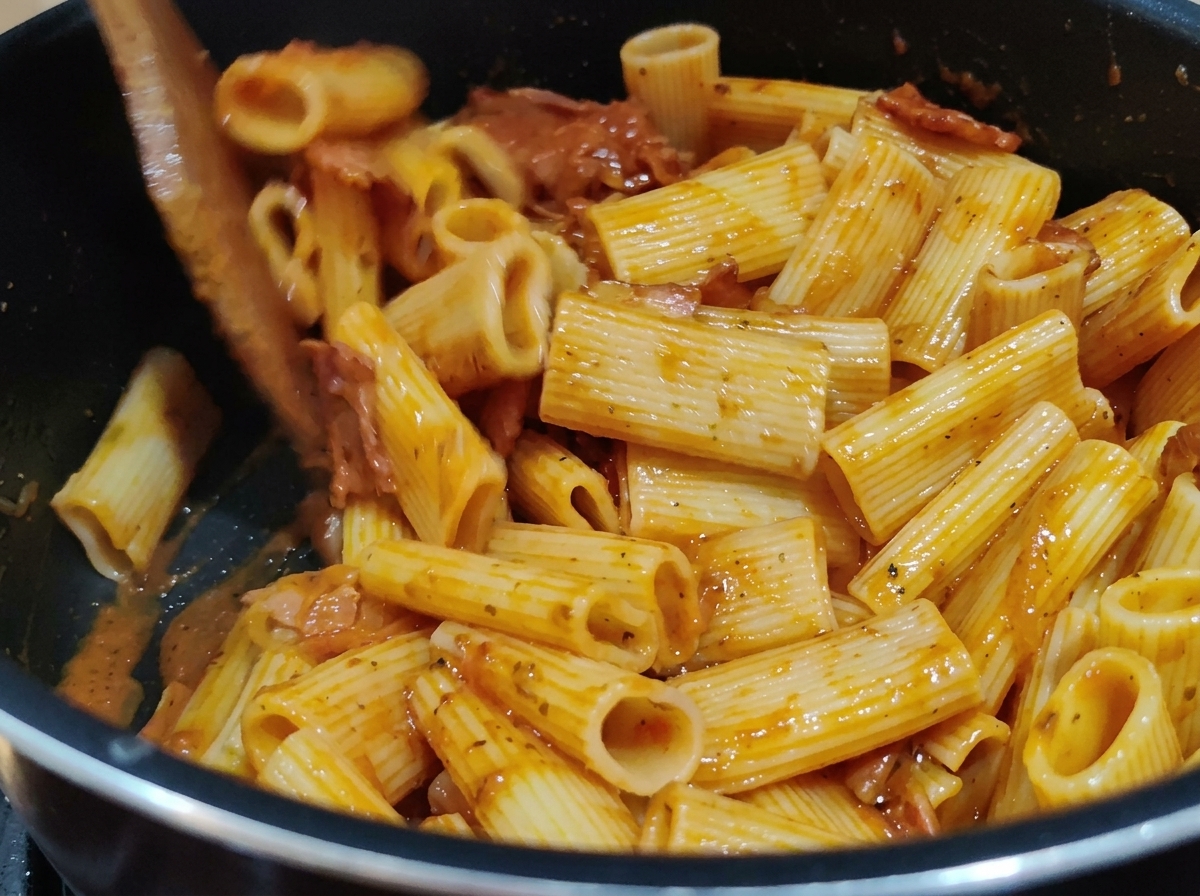
Use a wooden spatula to mix the sauce into the pasta in stages. Stir well until every piece of rigatoni is evenly coated with the rich tomato mixture, then let it rest briefly to absorb the flavors.
Tip: Mixing the pasta vigorously with the sauce helps release starches, ensuring the sauce clings perfectly to the rigatoni. - 10Drizzle with olive oil
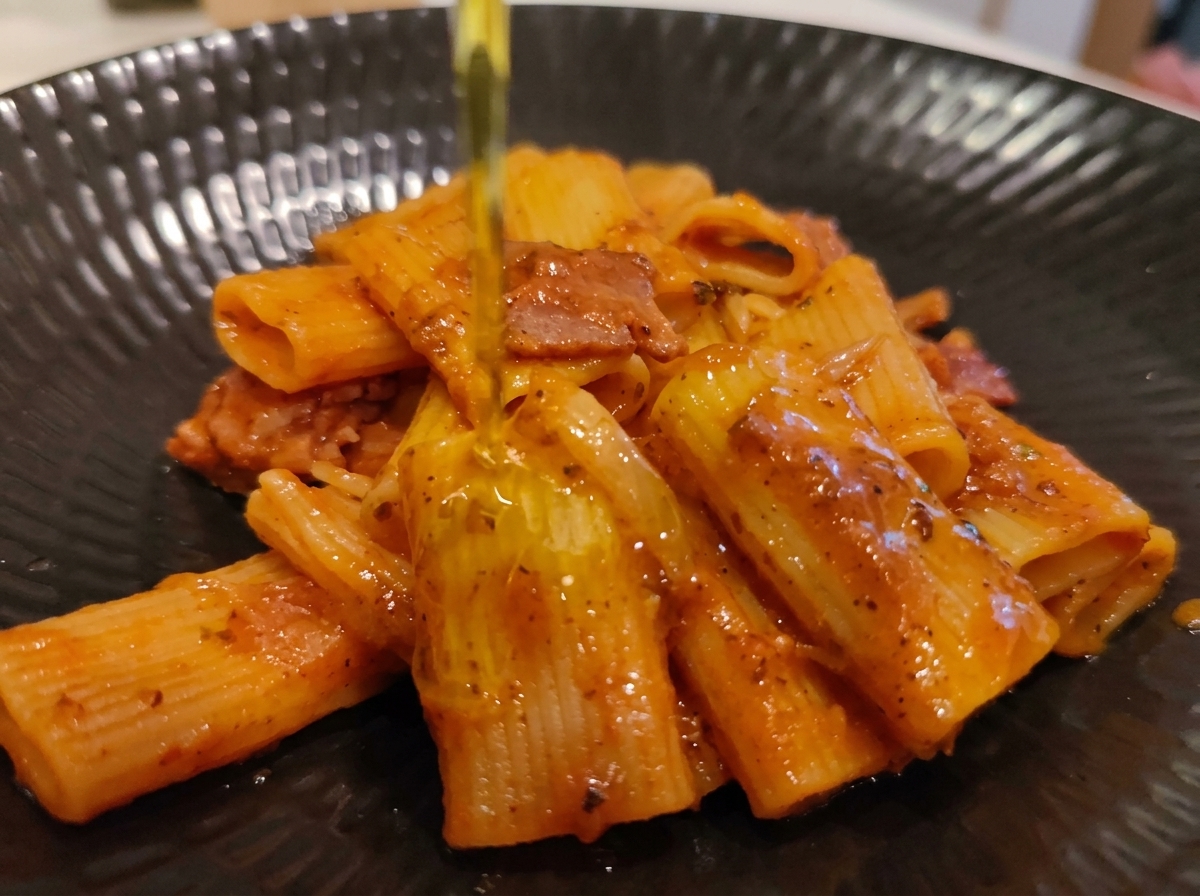
Transfer the coated pasta to a serving plate and drizzle it with high-quality extra-virgin olive oil for a fresh, fruity finish.
Tip: Use your best finishing olive oil here, as its raw flavor will shine through in the final dish.