Black Pepper Pork Fillet Pasta
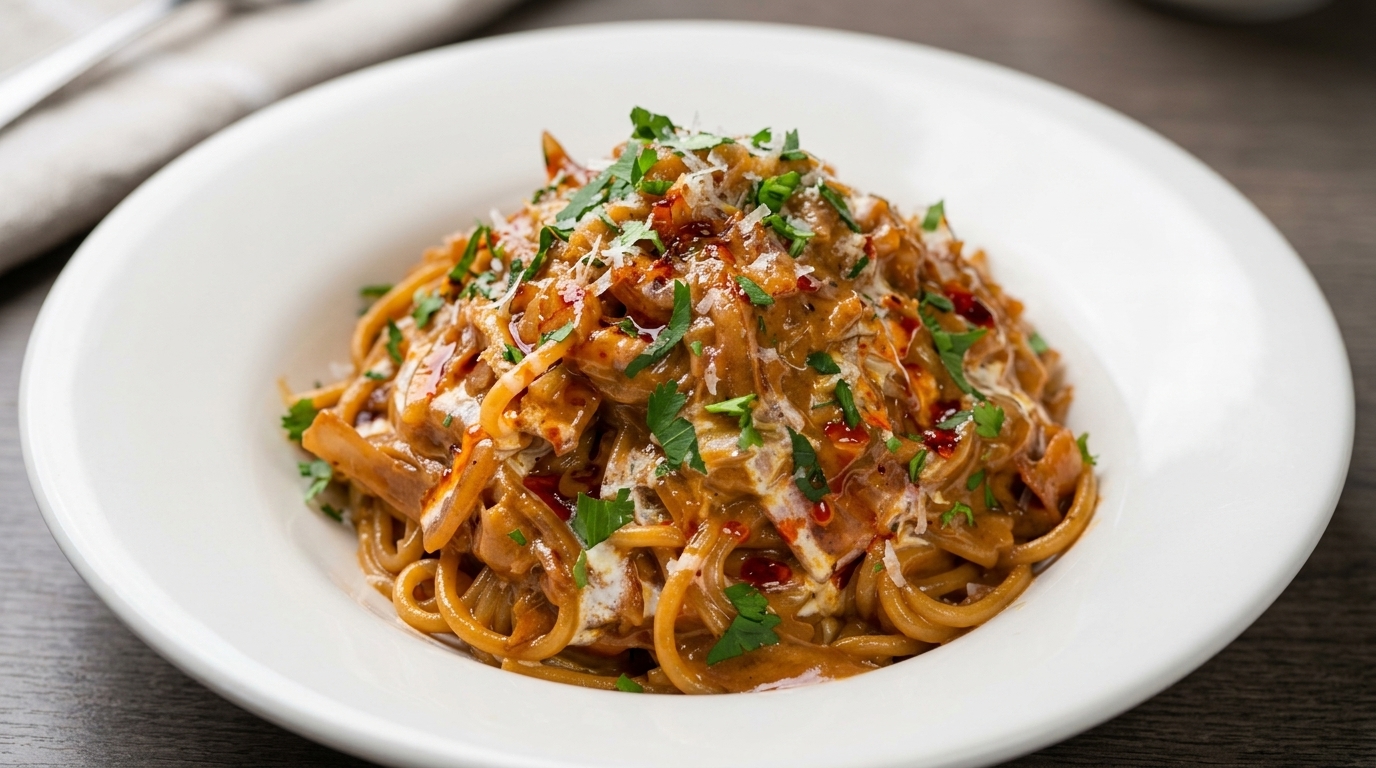
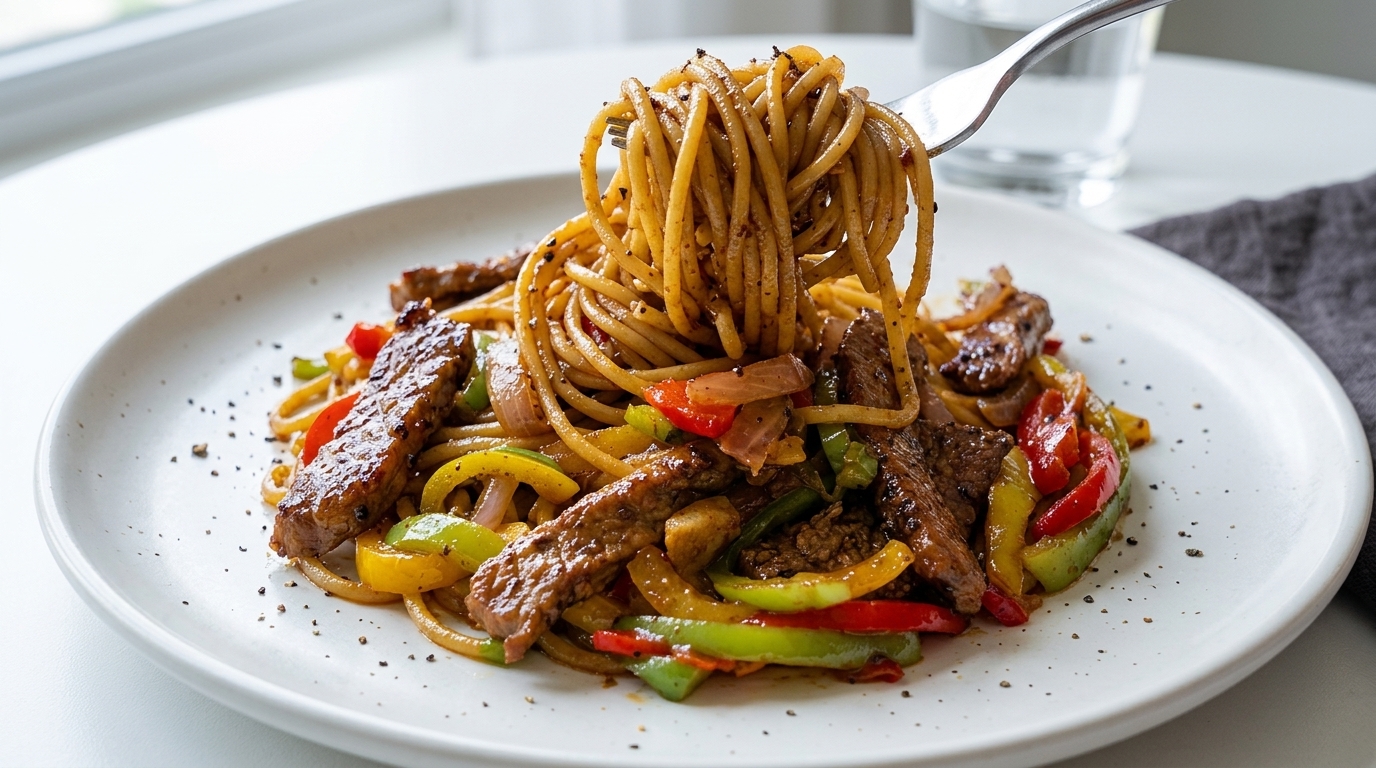
A savory fusion of tender seared pork strips and glossy spaghetti, tossed with vibrant bell peppers in a bold, aromatic black pepper sauce.
This dish is a popular contemporary comfort food found in casual dining across East Asia, blending Italian pasta with the classic Chinese technique of black pepper stir-fry. The secret lies in the velveting of the pork with cornstarch and oil, ensuring the meat remains succulent against the punchy heat of the crushed peppercorns.
Ingredients
- 200 g pork fillet
- 200 g spaghetti or long pasta
- 12 piece red bell pepper
- 12 piece yellow bell pepper
- 12 piece green bell pepper
- 12 piece purple onion
- 1 tbsp cooking wine
- 2 tbsp light soy sauce
- 12 tbsp dark soy sauce
- 1 tbsp black pepper
- 1 tsp cornstarch
- 3 tbsp black pepper sauce
- to taste salt
- to taste cooking oil
Instructions
- 1Slice the vegetables
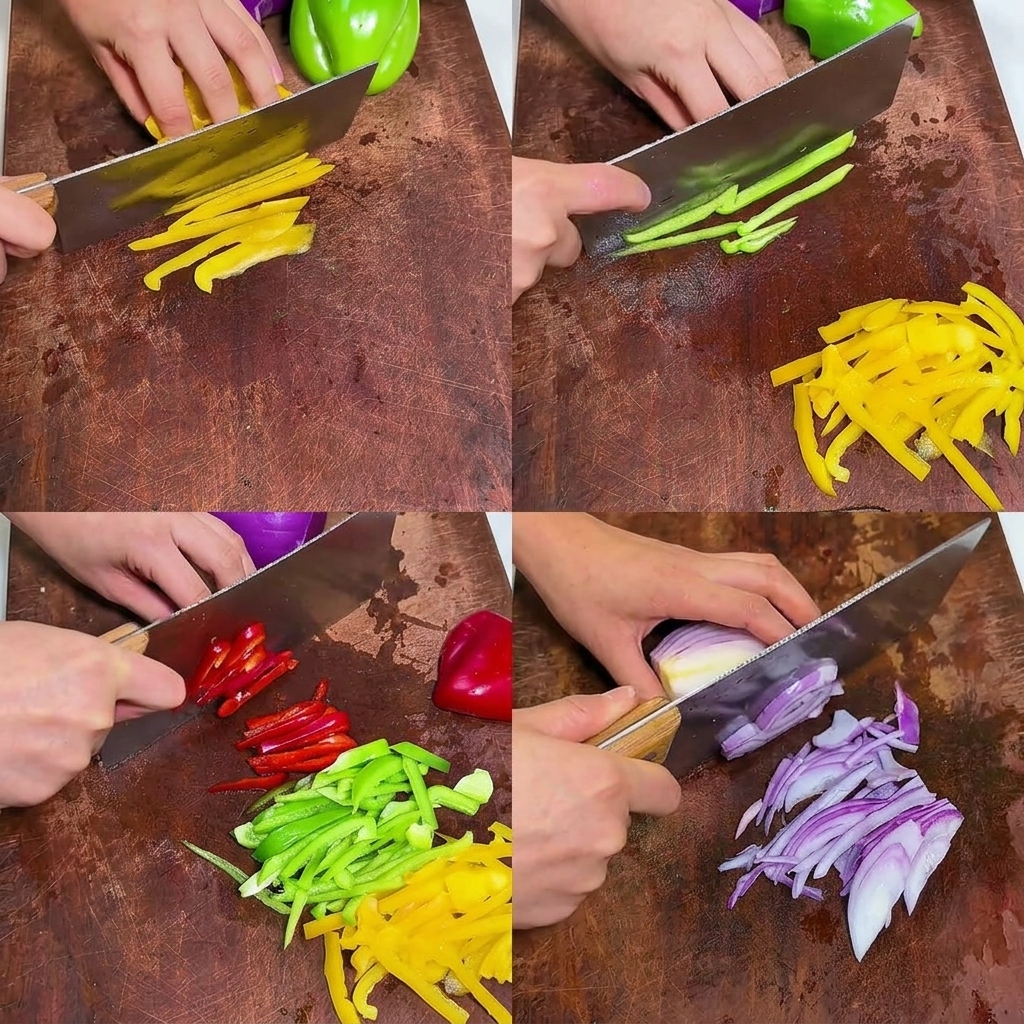
Prepare the vegetables by thoroughly washing the bell peppers and peeling the onion. Using a sharp knife, slice the red, yellow, and green bell peppers into long, thin strips. Do the same with the onion, ensuring all the vegetable pieces are of a similar width to allow for even stir-frying later.
Tip: Keeping the vegetable strips uniform in size not only makes the final dish look better but also ensures that the onion and peppers soften at the same rate in the pan. - 2Prep the pork fillet
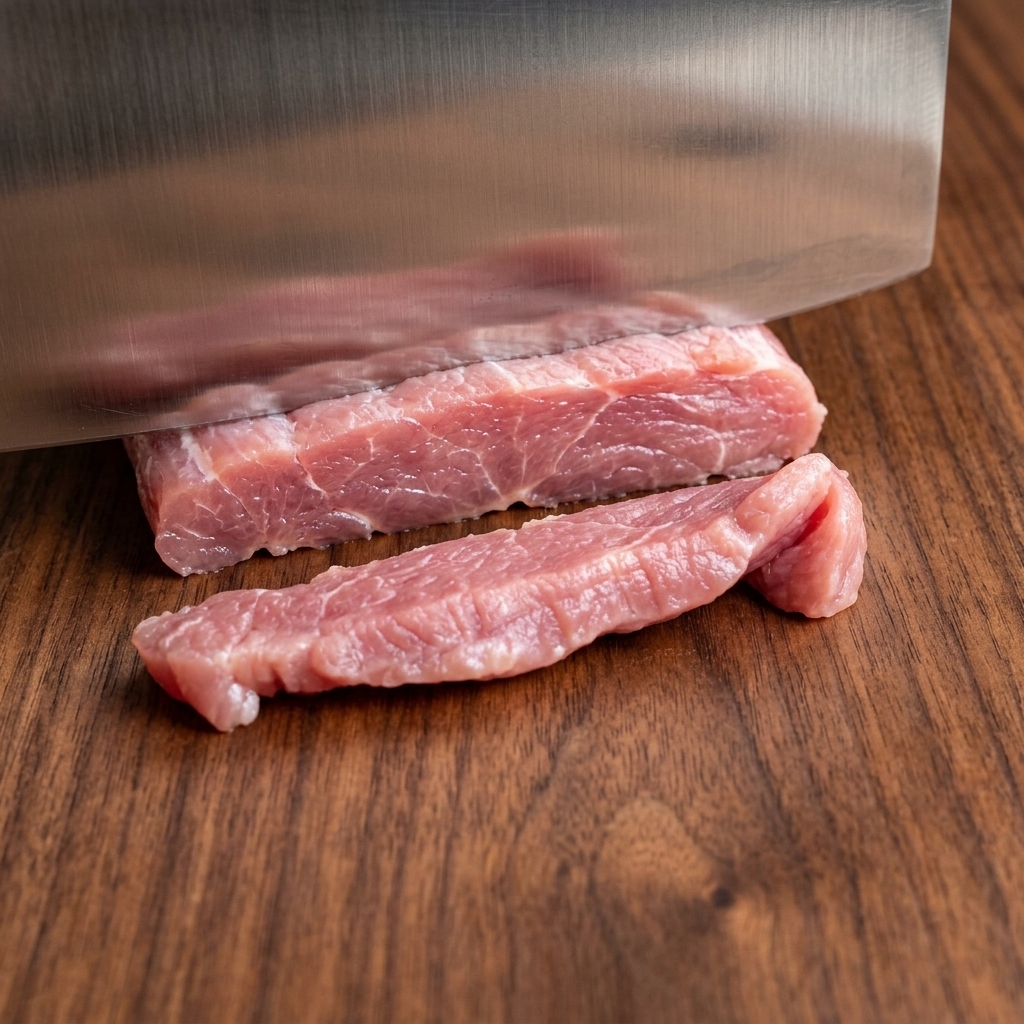
Place the pork fillet on a stable cutting board. Carefully slice the meat against the grain into thin, bite-sized strips. Slicing against the grain is crucial as it breaks down the muscle fibers, which will make the pork much more tender and easier to chew once cooked.
Tip: If the meat is too soft to slice thinly, put it in the freezer for about 20 minutes to firm up; this makes getting precise, thin strips much easier. - 3Season and marinate
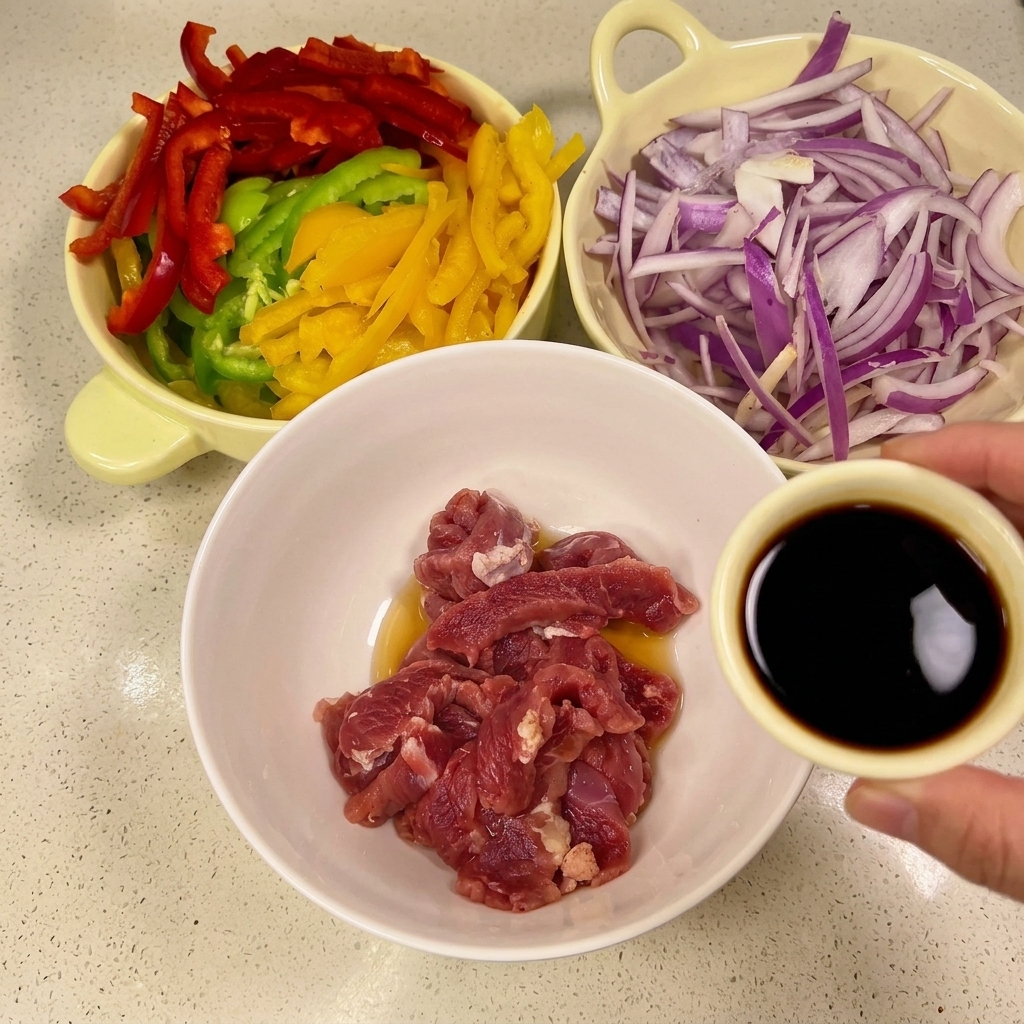
Transfer the pork strips into a mixing bowl. Add one spoon of cooking wine, one spoon of light soy sauce, and half a spoon of dark soy sauce for color. Season with a generous amount of black pepper and a pinch of salt. Mix the meat thoroughly with your hands or chopsticks until the liquid is absorbed.
Tip: The dark soy sauce is primarily for adding a rich, appetizing color to the meat. Use it sparingly to avoid making the dish too salty or overly dark. - 4Seal the marinade
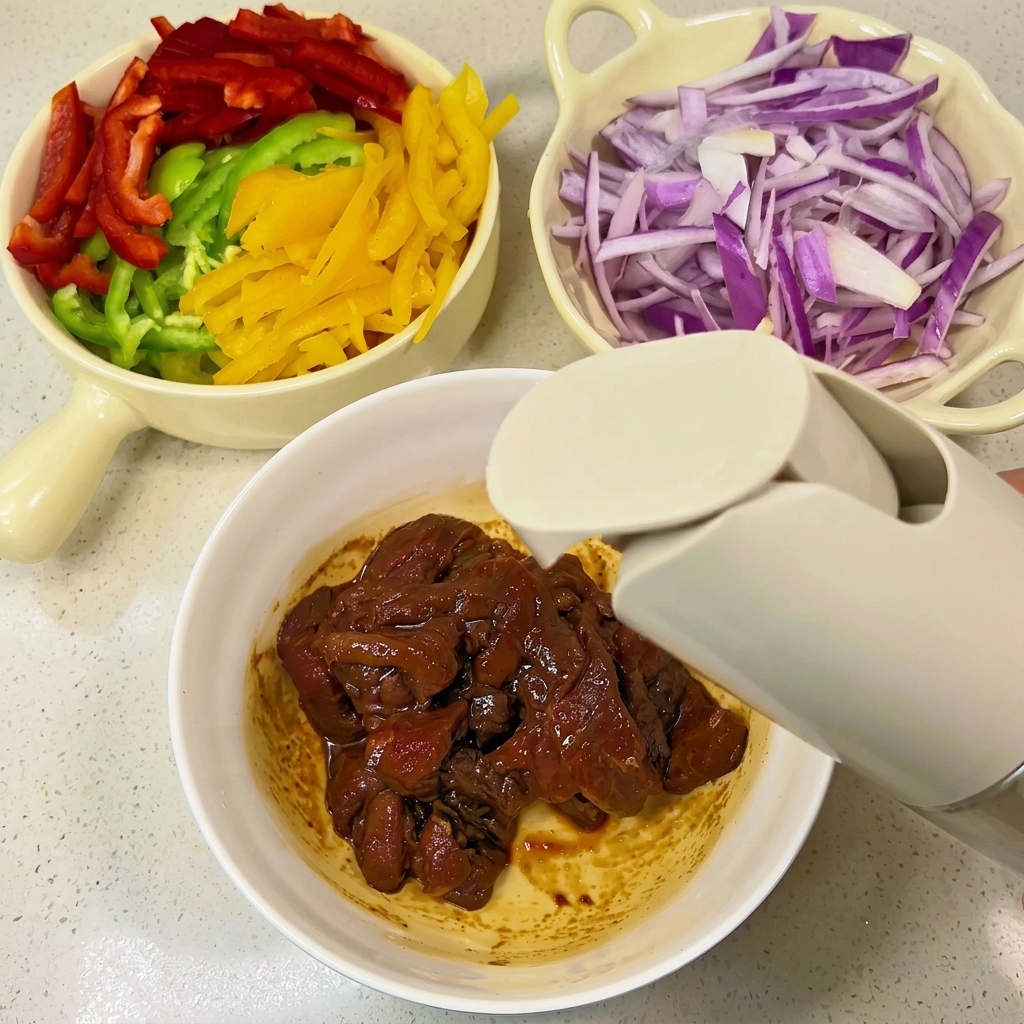
Once the seasonings and a little cornstarch have been mixed into the pork, use a spray bottle to apply a thin layer of oil over the surface of the meat. This oil layer acts as a seal, trapping the moisture inside the meat strips so they remain succulent and tender during the high-heat stir-fry.
Tip: Using a spray bottle helps distribute a very thin, even layer of oil without adding unnecessary calories or making the dish greasy. - 5Boil the spaghetti
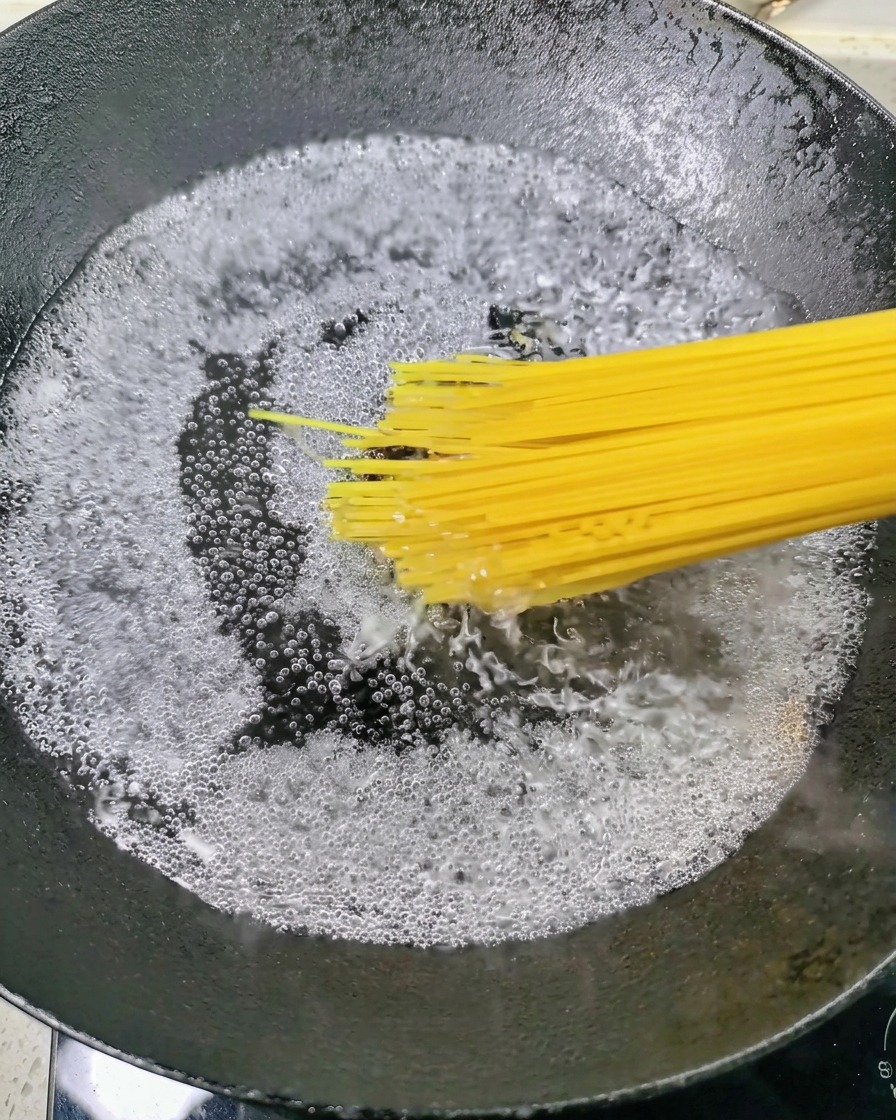
Bring a pot of water to a boil and add the dry spaghetti. Cook the pasta until it reaches a soft texture. Once done, remove the noodles from the water and set them aside to drain for later use in the stir-fry.
Tip: Check the pasta early to ensure it doesnt overcook, as it will be heated again in the pan later. - 6Fry the pork strips
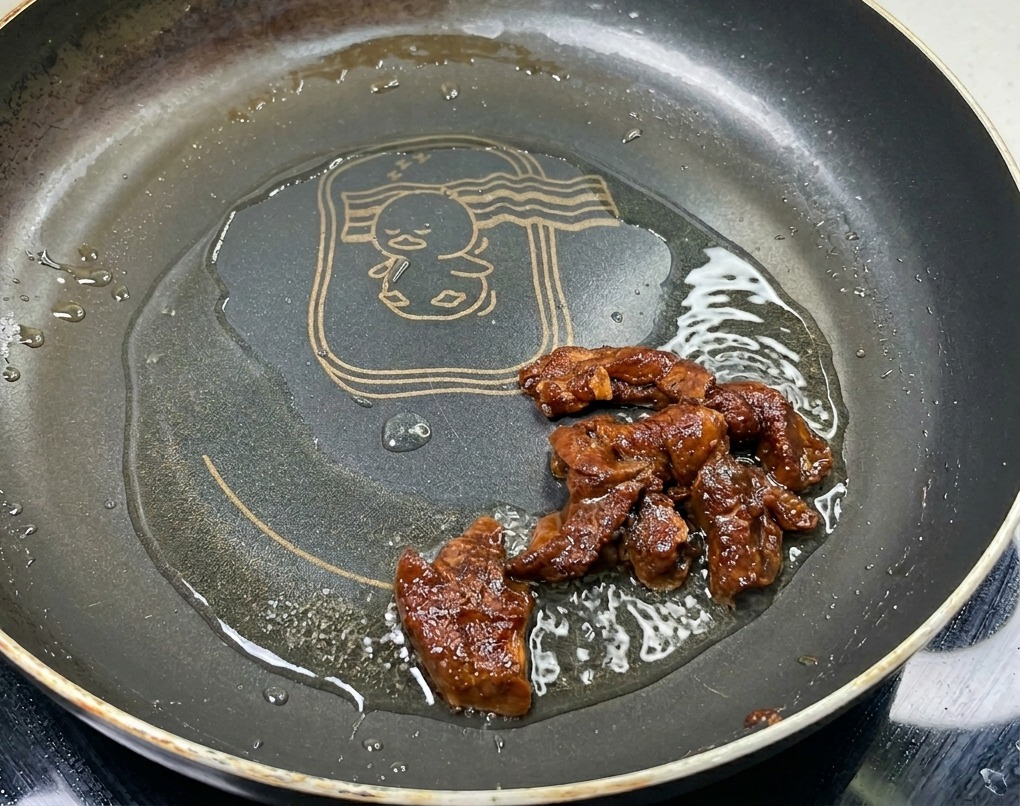
Heat a pan with a splash of oil over medium-low heat. Add the marinated pork strips and sauté them, stirring frequently to prevent sticking. Continue cooking until the pork is fully cooked through and the outside has developed a nice brown, caramelized crust. Remove the meat from the pan and set it aside.
Tip: Dont wash the pan after removing the meat; the leftover flavorful oil and browned bits (fond) will add incredible depth to the vegetables in the next step. - 7Sauté the onions
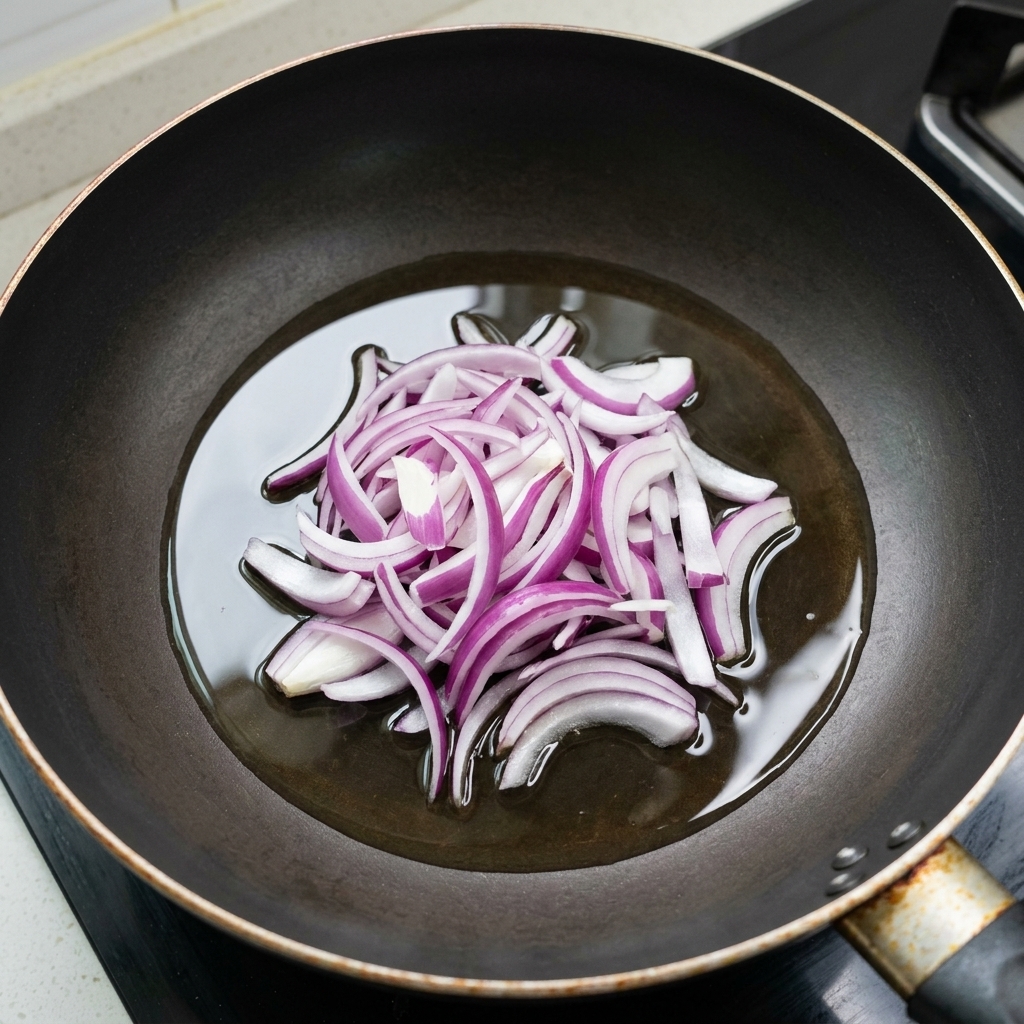
After removing the pork from the pan, use the remaining oil to stir-fry the sliced purple onions. Cook them over medium-low heat until they become fragrant and start to soften, providing a savory base for the vegetables.
Tip: If the pan seems too dry after cooking the meat, add a small splash of oil to prevent the onions from sticking. - 8Sauté the peppers
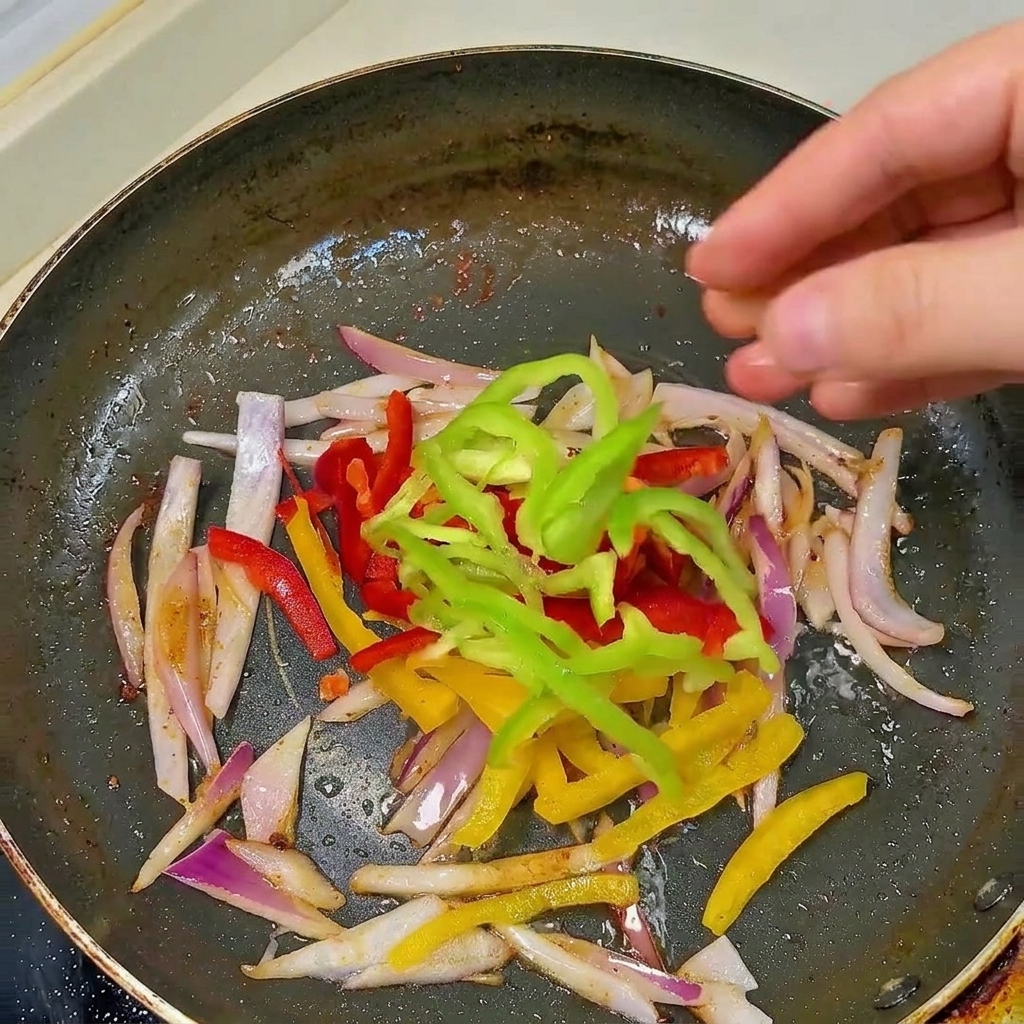
Add the strips of red, yellow, and green bell peppers to the pan with the softened onions. Stir-fry over medium heat until the peppers are vibrant and just tender-crisp, ensuring they dont become too mushy.
Tip: Using the residual oil from the pork adds extra savory flavor to the vegetables. - 9Combine pasta and vegetables
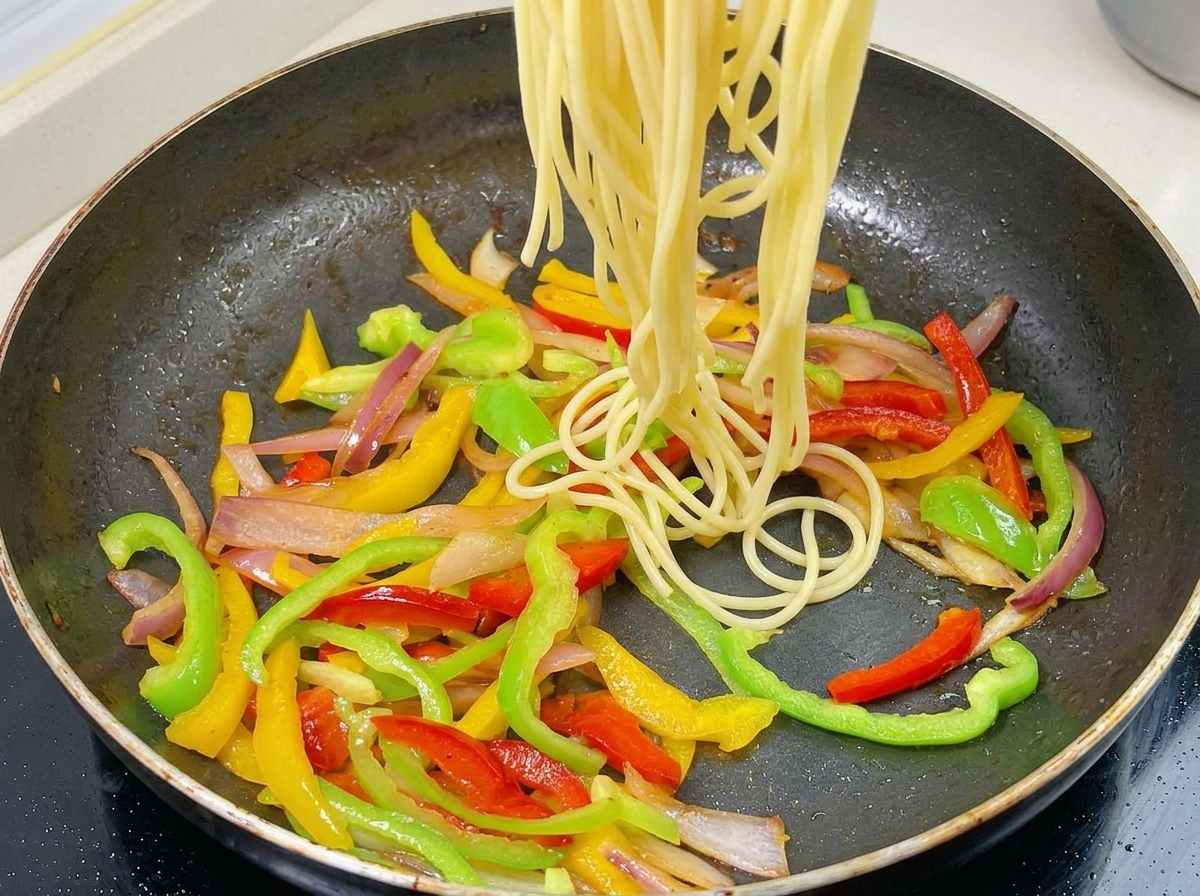
Once the onions and bell peppers have softened and combined their flavors, add the cooked and drained spaghetti back into the pan. Toss everything together so the pasta is evenly distributed among the vegetables.
Tip: Use tongs to easily lift and fold the pasta into the vegetable mixture without breaking the strands. - 10Add the sauce
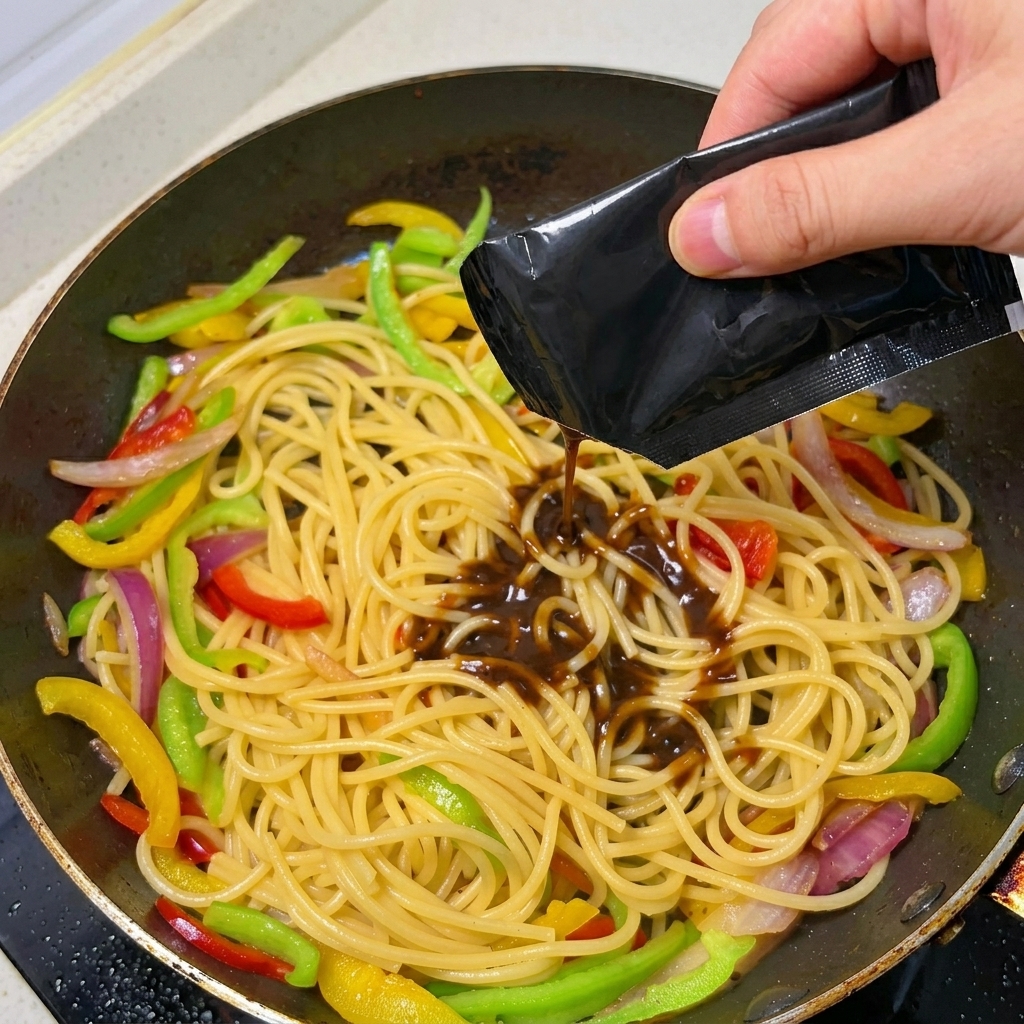
Tear open the packet of black pepper sauce and squeeze it directly over the noodles and vegetables in the pan. Stir everything well to ensure the rich flavor evenly coats every strand of pasta and all the vegetable pieces.
Tip: If the sauce seems too thick, you can add a small splash of leftover pasta water to help it distribute evenly. - 11Combine pork and pasta
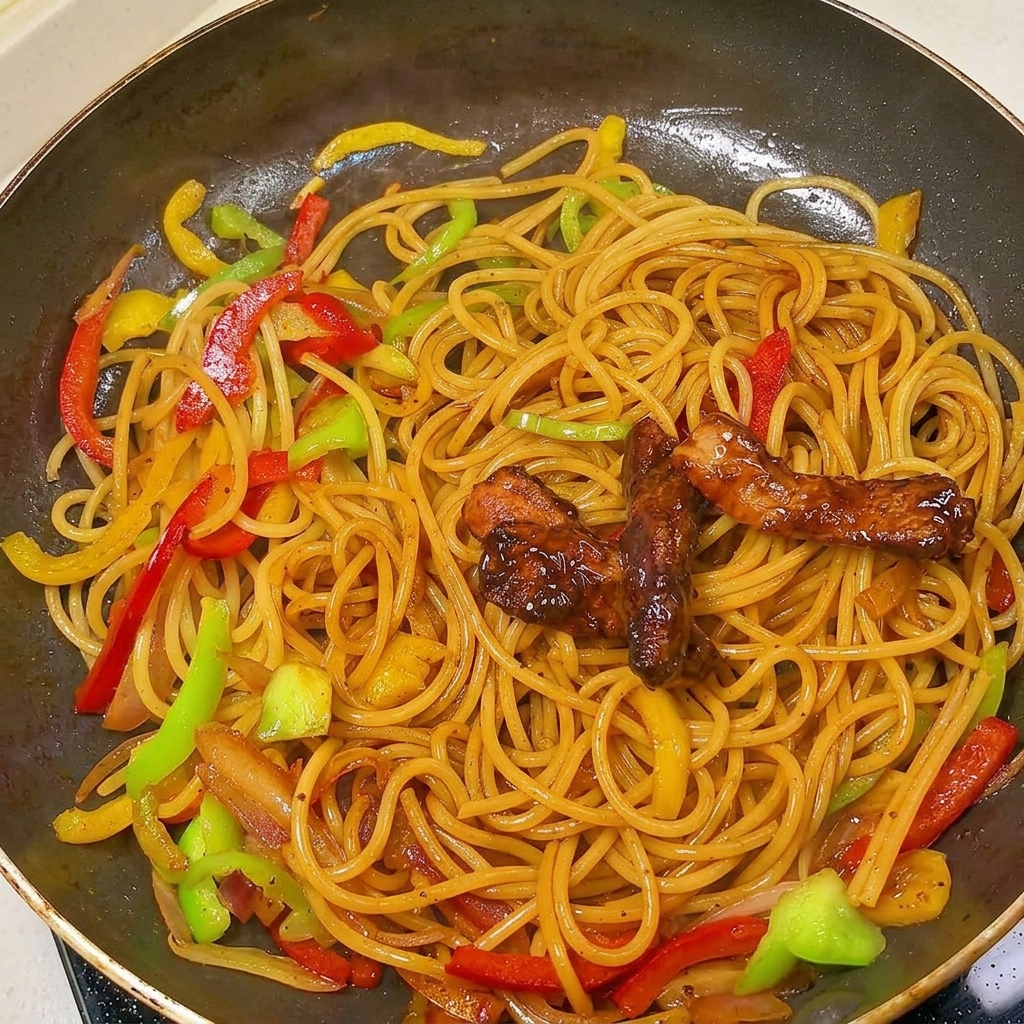
Return the cooked pork strips to the pan. Toss everything together over the heat to ensure the pork is reheated and the flavors of the meat, vegetables, and sauce are fully integrated.
Tip: Dont overcook at this stage; just toss until everything is hot and the sauce is glossy. - 12Toss to combine
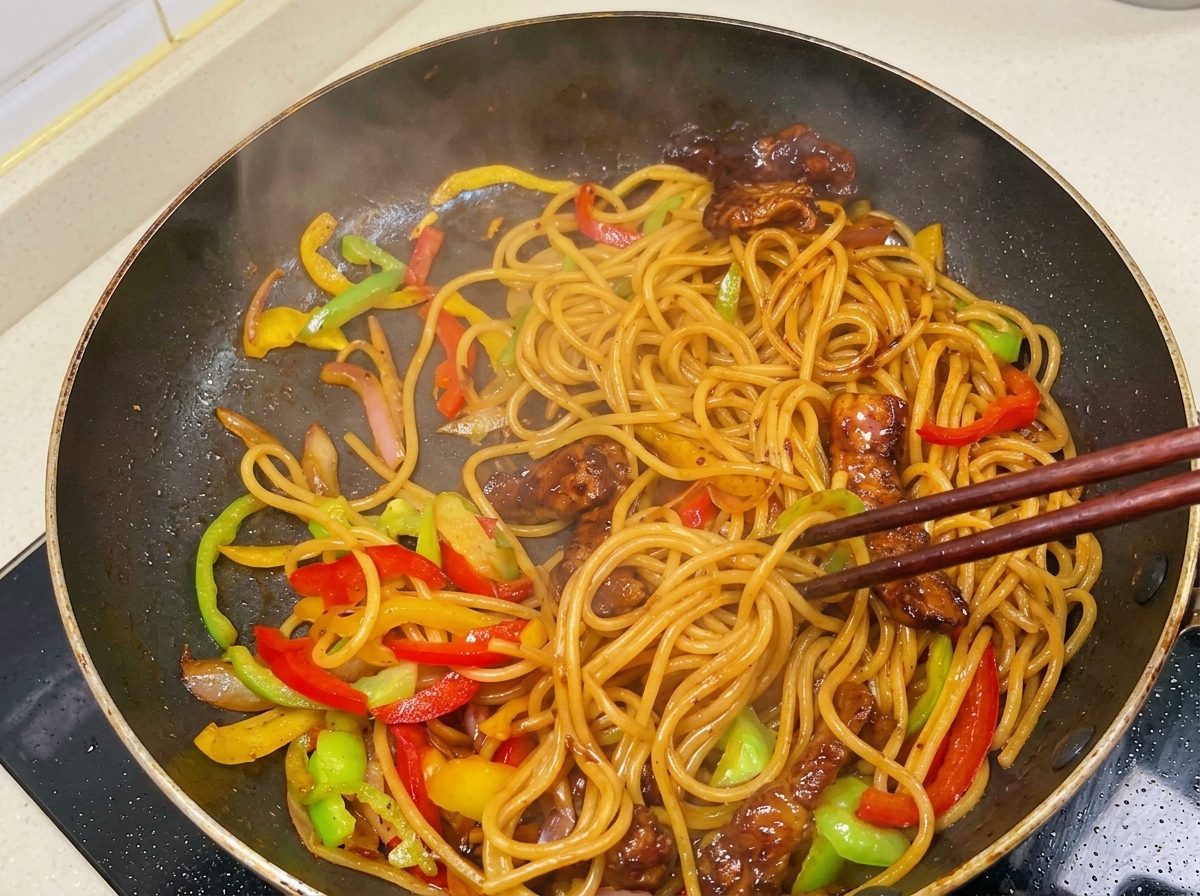
Use chopsticks or tongs to toss the mixture vigorously over the heat. Ensure the pasta, meat, and colorful vegetables are thoroughly coated in the glossy sauce before doing a final seasoning check and adding a splash of soy sauce if desired.
Tip: Toss continuously over low heat to allow the sauce to cling to the noodles without burning the bottom of the pan.