Authentic Roman Spaghetti Carbonara
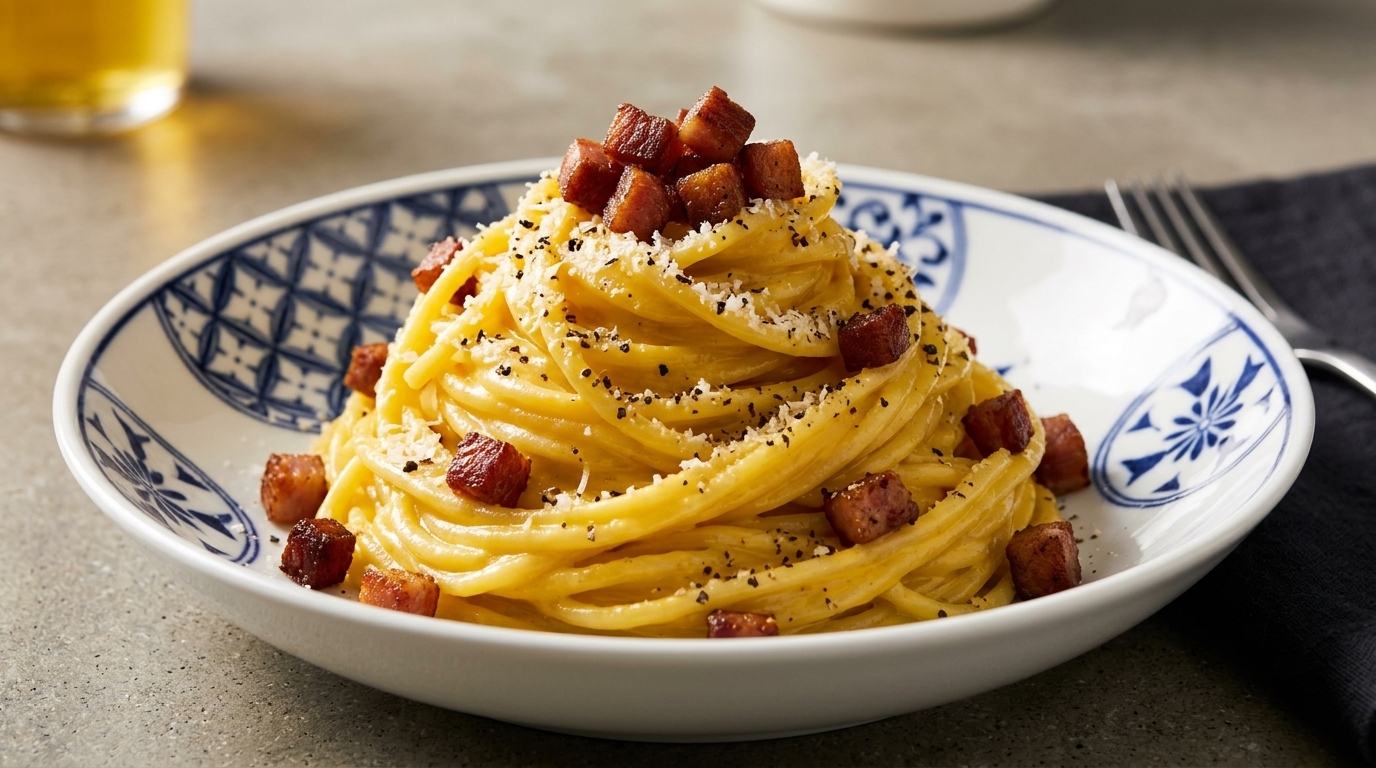
The definitive Roman pasta—a silky, cream-free sauce made from tempered eggs, sharp Pecorino Romano, and crispy guanciale, finished with a bold crack of black pepper.
Traditional Lazio style Carbonara relies on technique rather than cream to achieve its signature velvet texture. Using the residual heat of the pasta to cook the eggs creates a rich emulsion that honors the humble Roman roots of the dish.
Ingredients
- 250 g spaghetti
- 100 g guanciale or pancetta
- 2 pasteurized eggs
- 50 g Pecorino Romano cheese
- 1 tbsp olive oil
- 50 ml dry white wine
- 14 white onion
- to taste freshly ground black pepper
- to taste salt
Instructions
- 1Slice the cured meat
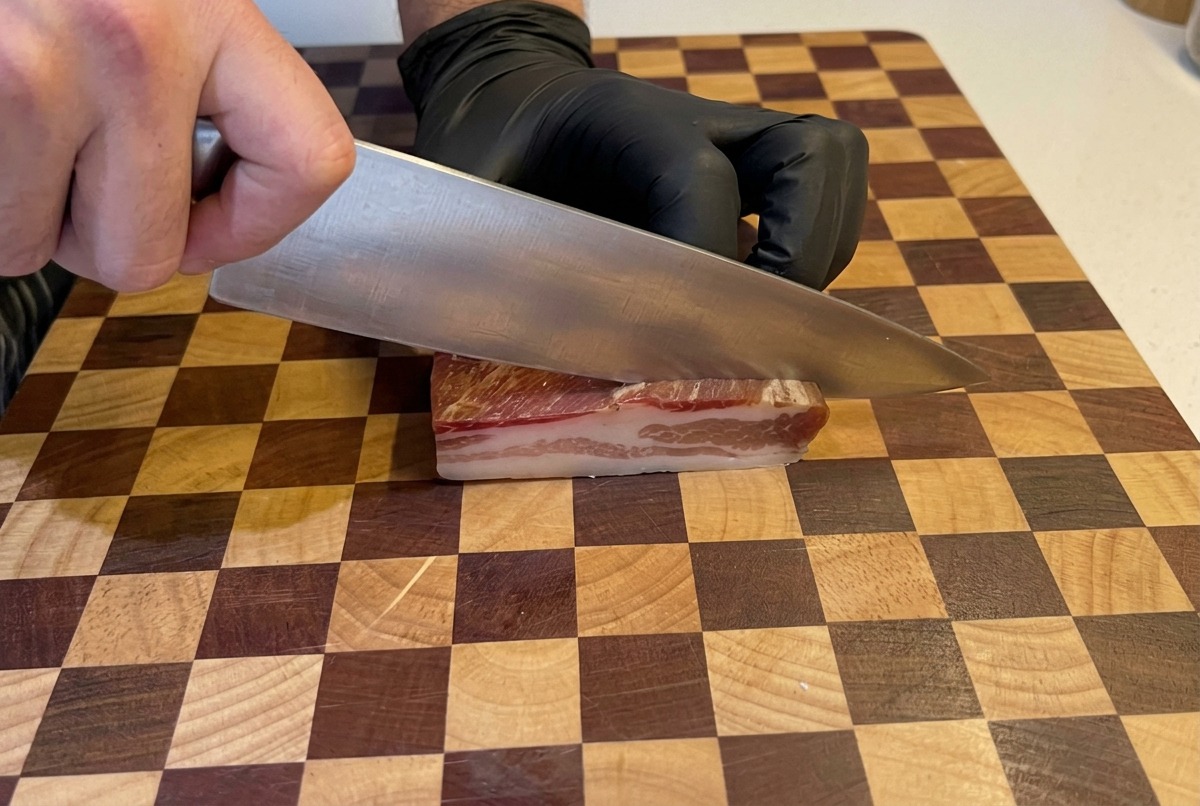
Prepare your pancetta or guanciale by slicing the slab into uniform small cubes or strips. Cutting them evenly ensures that the fat renders out at the same rate resulting in perfectly crispy bits that provide the salty savory base for the Carbonara.
Tip: If you are using guanciale be sure to trim away the tough outer skin and any excess peppercorns before you start slicing. - 2Fry the pancetta
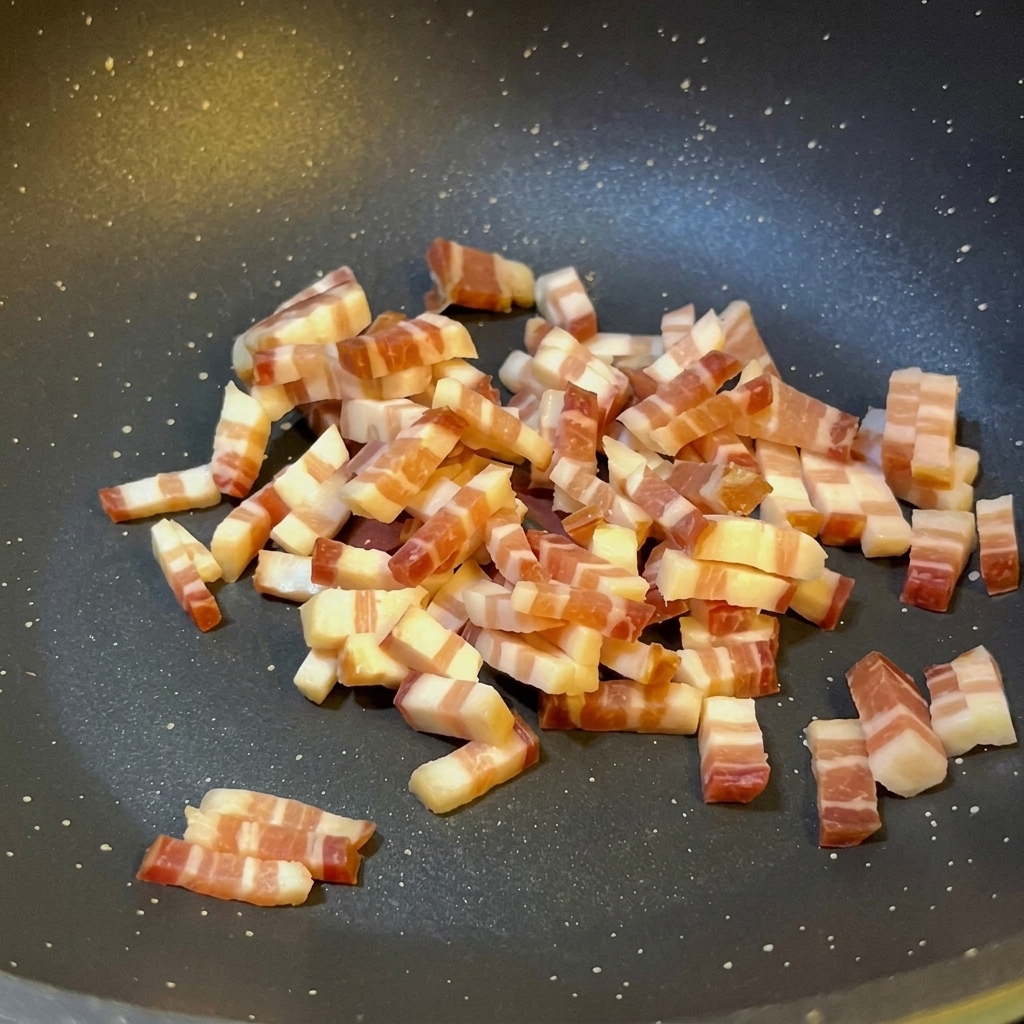
Place the pancetta cubes into a pan with a splash of olive oil. Cook over low heat, allowing the fat to render slowly until the meat begins to brown and crisp up.
Tip: Keep the heat low to prevent the fat from burning; you want a slow render for the best texture and flavor. - 3Prep the aromatics
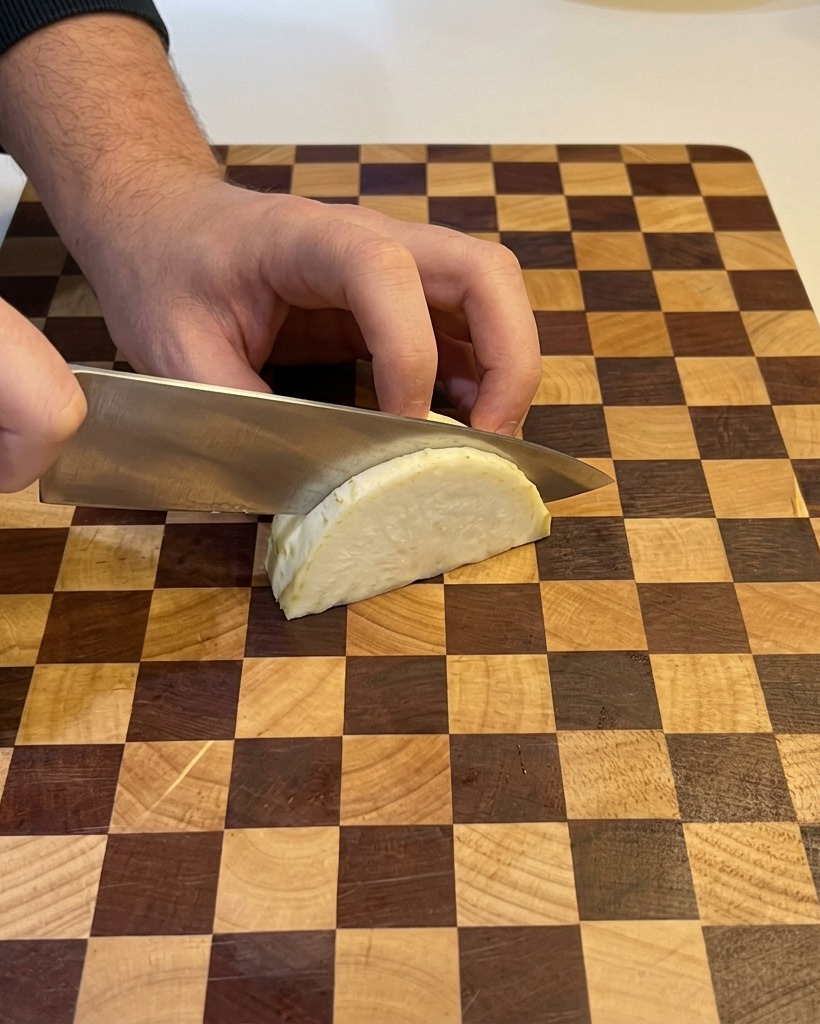
While the meat is frying, finely dice a segment of white onion. This adds a subtle sweetness and fragrance to the Carbonara base.
Tip: If you prefer a more traditional Roman style, you can omit the onion, but it adds a lovely depth to the sauce. - 4Add the diced onions
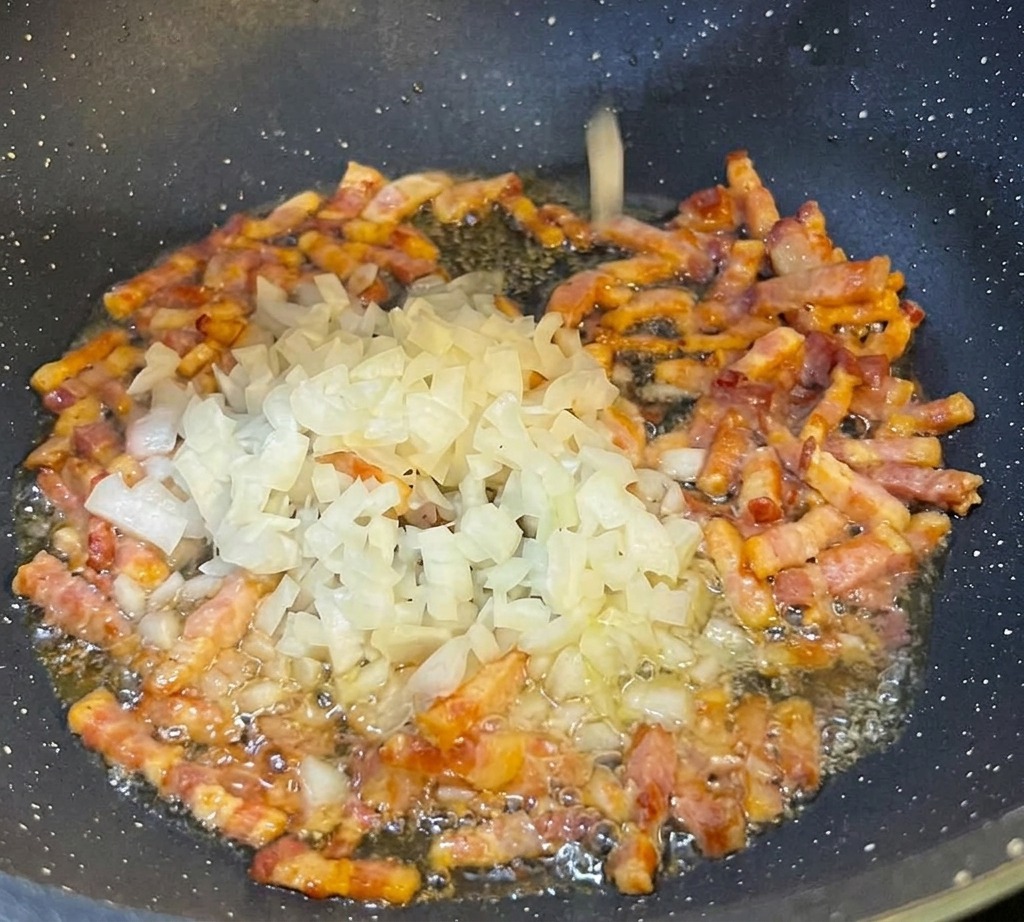
Once the pancetta or guanciale has rendered its fat and turned golden-brown, add the finely chopped onions to the pan. Sauté the onions until they become translucent and fragrant, absorbing the savory meat oils. This builds a sweet and aromatic base for the sauce.
Tip: If you prefer a strictly traditional Roman Carbonara, you can omit the onions and proceed with just the meat. - 5Deglaze the pan
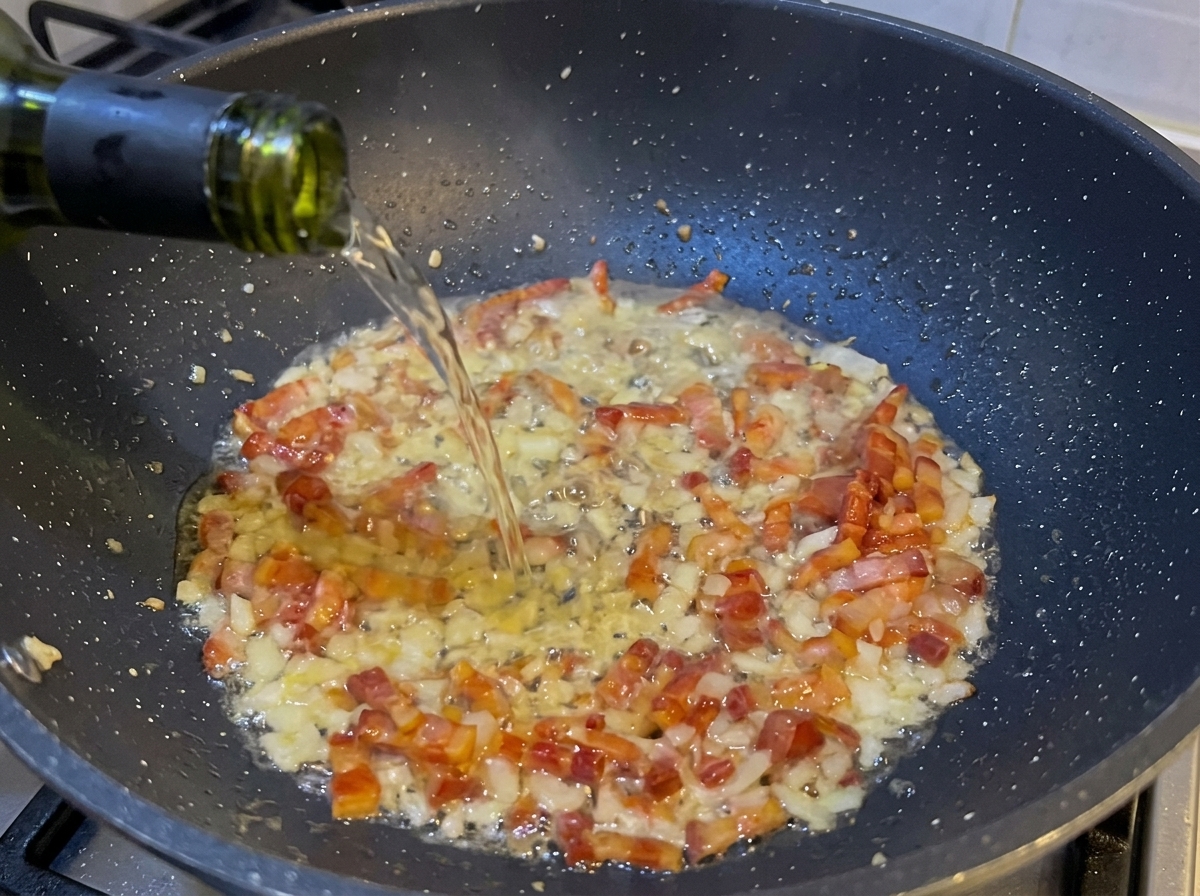
Once the meat is crispy and the onions have softened, pour in a splash of white wine. Stir and toss the pan to deglaze, scraping up all the flavorful browned bits from the bottom.
Tip: Let the alcohol bubble and evaporate slightly; this concentrates the flavor and creates a delicious base for the sauce. - 6Cook the spaghetti
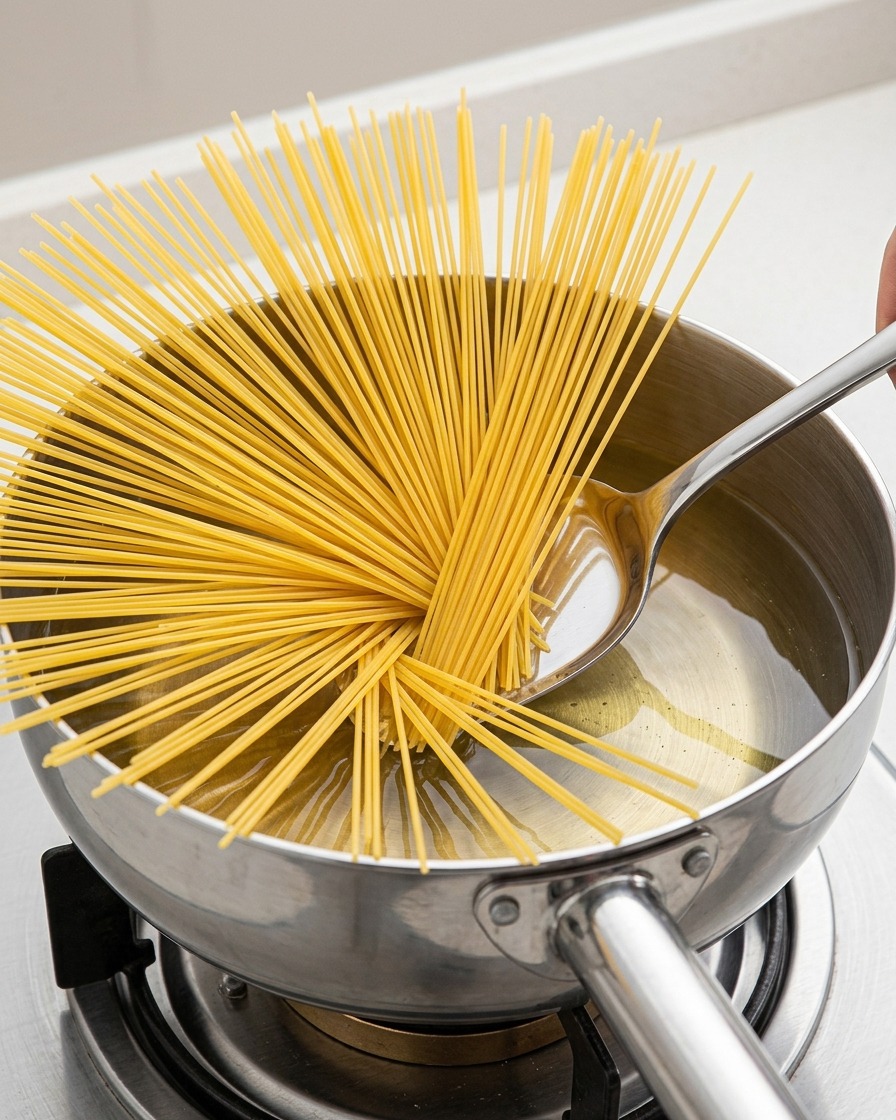
Bring a large pot of water to a boil and add a pinch of salt. Place the spaghetti in and cook for approximately 11 minutes or until al dente.
Tip: Do not add oil to the pasta water; salt is all you need for flavor and to keep the pasta from sticking. - 7Crack the eggs
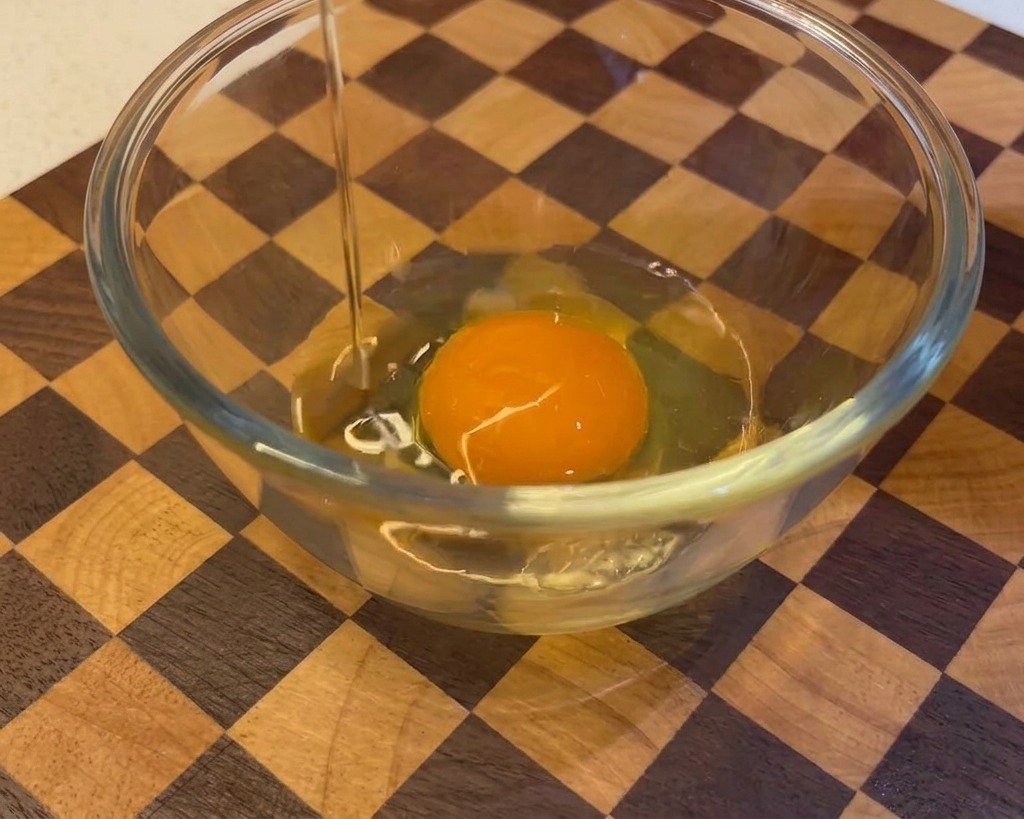
Crack two fresh eggs into a small glass mixing bowl while your pasta begins to cook. Using pasteurized eggs is ideal for this recipe as they will only be gently cooked by the residual heat of the pasta, creating a safe and silky sauce.
Tip: For an even richer sauce, you can use one whole egg and one egg yolk instead of two whole eggs. - 8Season with black pepper
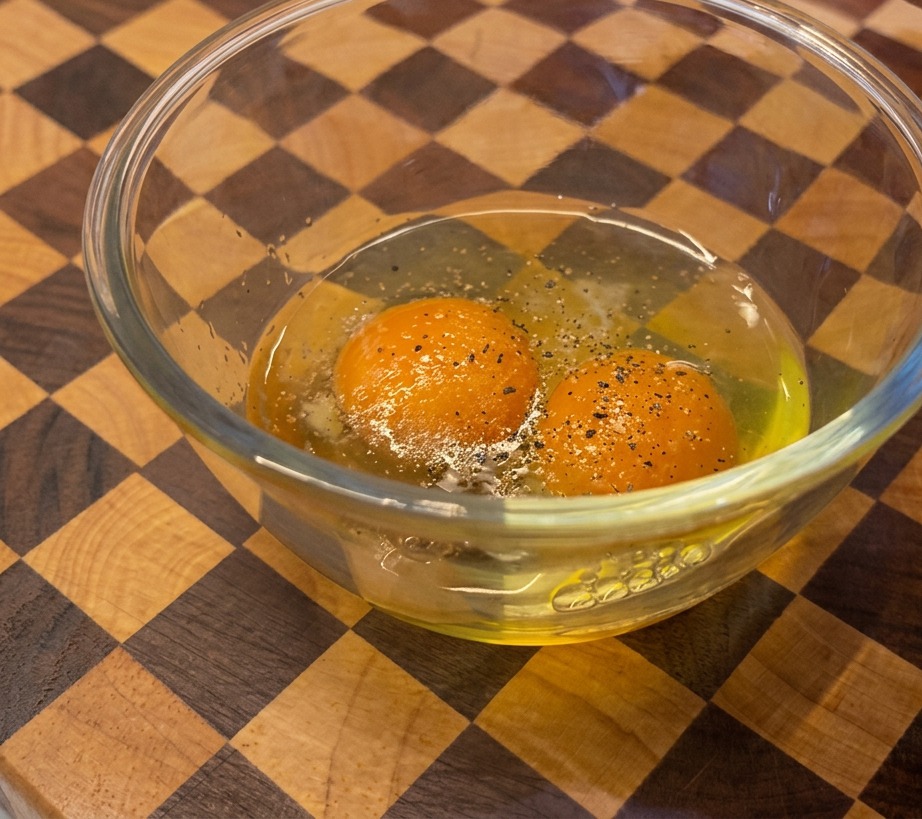
Add a small pinch of salt to the bowl containing the cracked eggs. Grind a generous amount of fresh black pepper over the yolks to provide the signature spicy bite and coal like appearance that gives Carbonara its name.
Tip: Always use pasteurized eggs for this recipe as they will only be lightly cooked by the residual heat of the pasta. - 9Add the Pecorino cheese
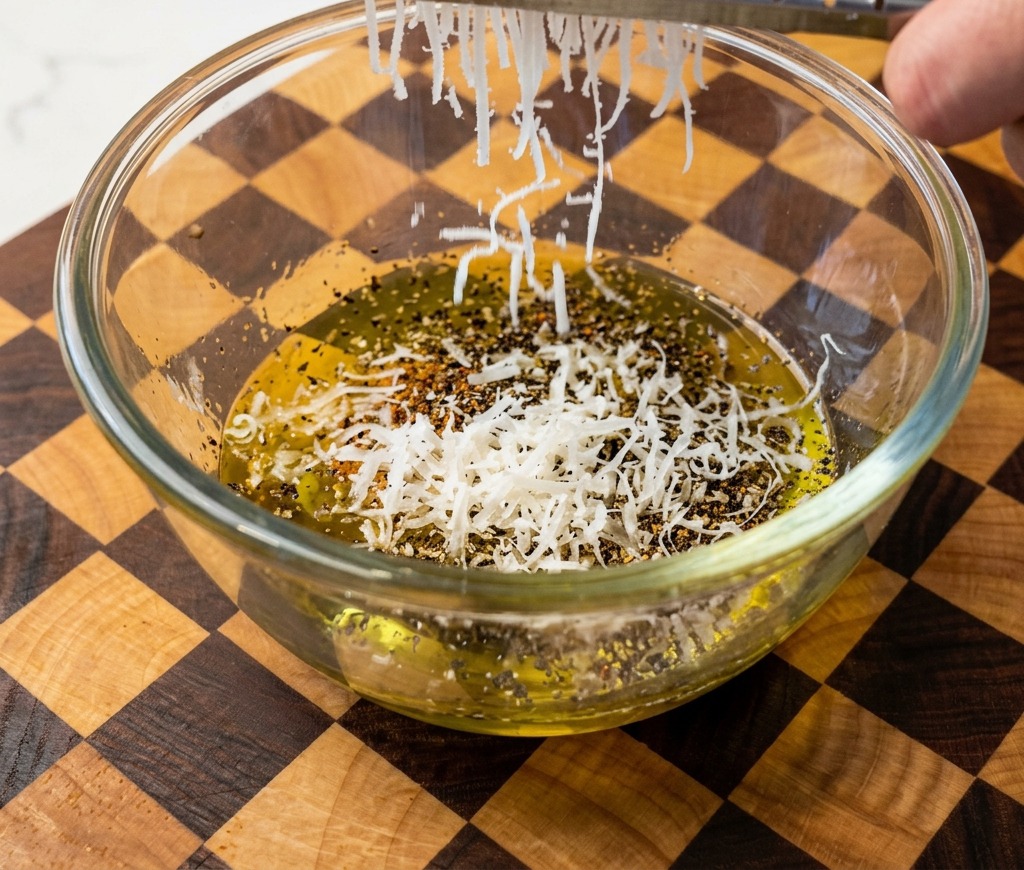
Grate plenty of Pecorino Romano cheese directly into the bowl with the eggs and pepper. This hard sheep milk cheese provides the necessary saltiness and sharp flavor profile essential for an authentic Roman sauce.
Tip: If Pecorino is too salty for your palate you can substitute half of it with aged Parmesan cheese. - 10Whisk into a smooth paste
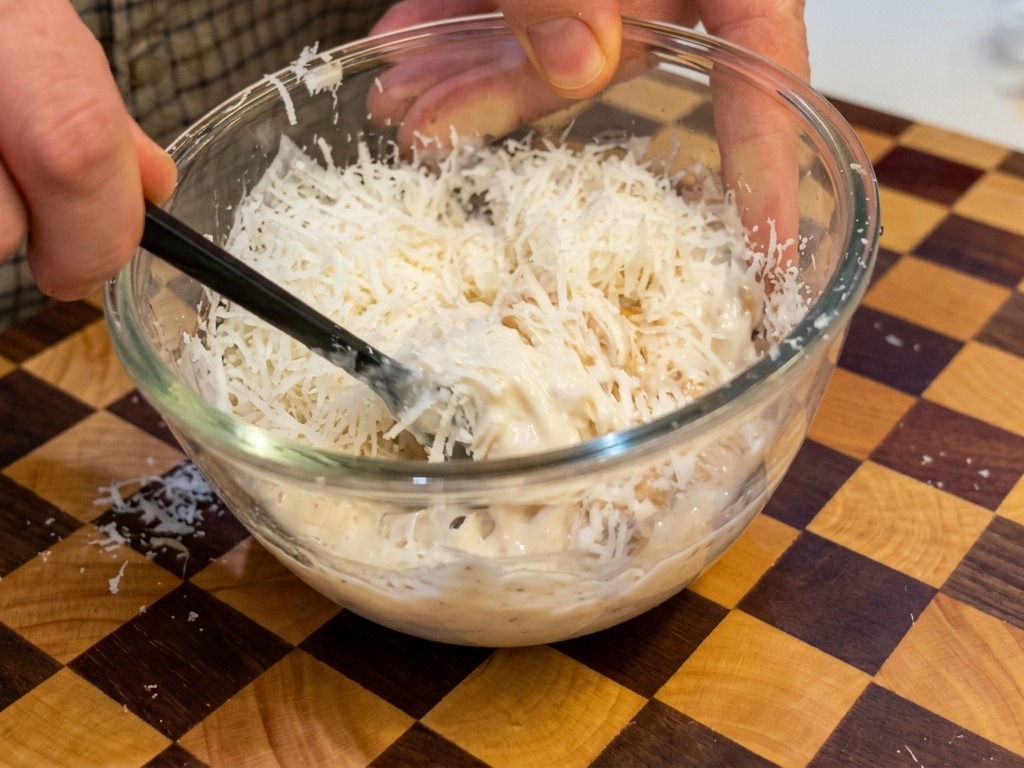
Use chopsticks or a small whisk to rapidly beat the eggs, pepper, and cheese together. Continue until the ingredients form a thick, uniform paste with no visible cheese clumps, ensuring a silky-smooth coating for the pasta later.
Tip: Whisking with chopsticks is a classic technique that helps incorporate the cheese without beating too much air into the eggs. - 11Transfer the pasta to the pan
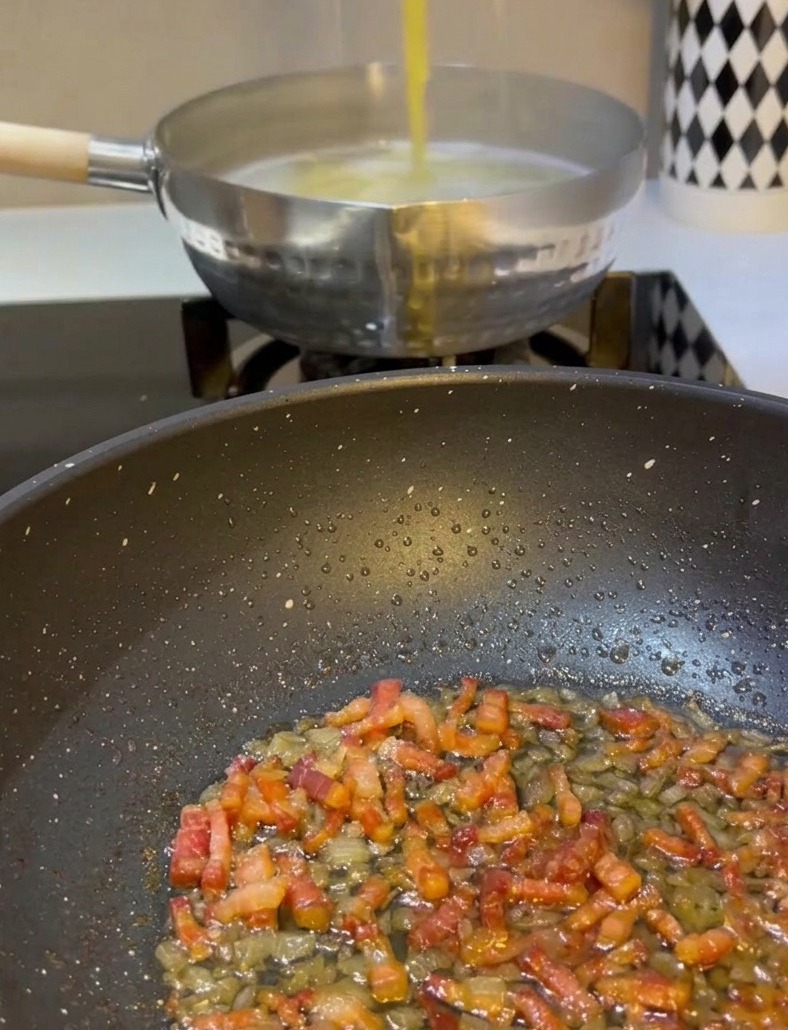
Once the spaghetti has cooked for 11 minutes and reached an al dente texture use tongs to lift the noodles directly from the boiling water into the pan with the crispy meat and onions. Do not drain the pasta in a colander as the starchy water clinging to the noodles is essential for creating the signature creamy texture of the sauce.
Tip: If the mixture looks a bit dry after adding the pasta you can add an extra ladle of the hot cooking water to help everything come together. - 12Incorporate pasta water
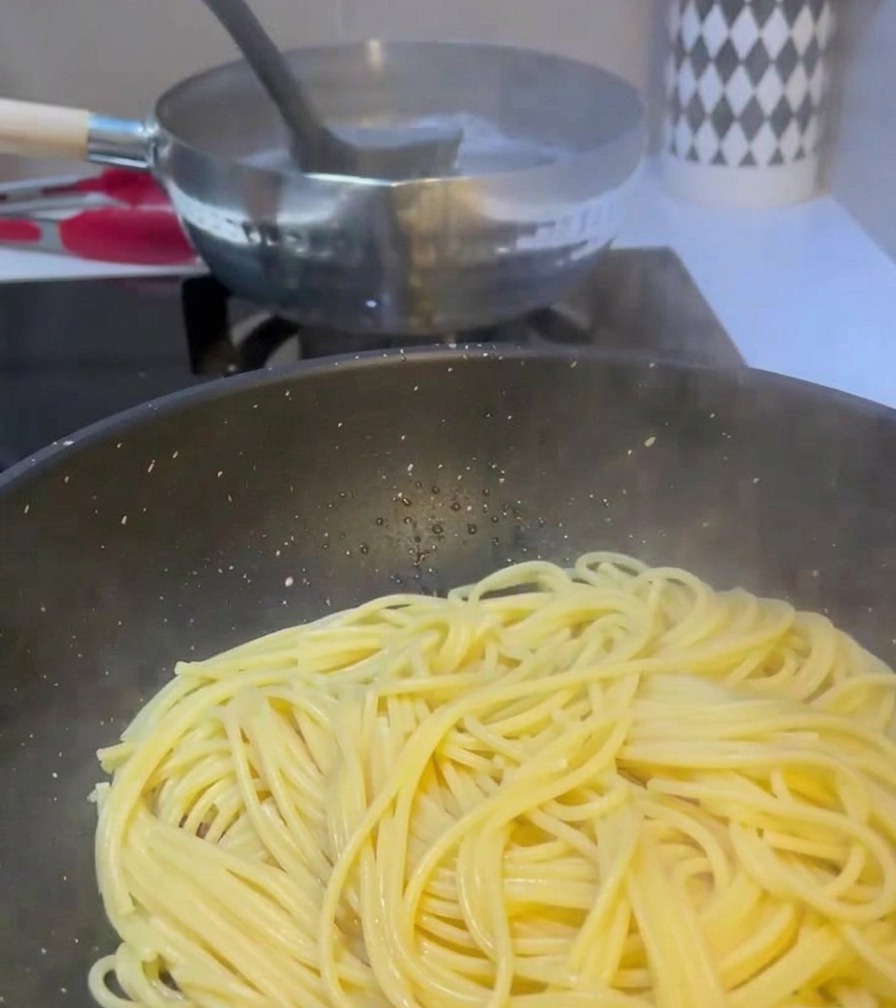
Just before the pasta is finished, use a ladle to scoop out some of the starchy cooking water and pour it into the pan with the fried meat. This starchy liquid acts as a bridge, helping the fats and the egg mixture emulsify into a creamy sauce.
Tip: The water should be cloudy; this indicates a high starch content which is essential for a smooth, non-greasy sauce. - 13Toss to combine
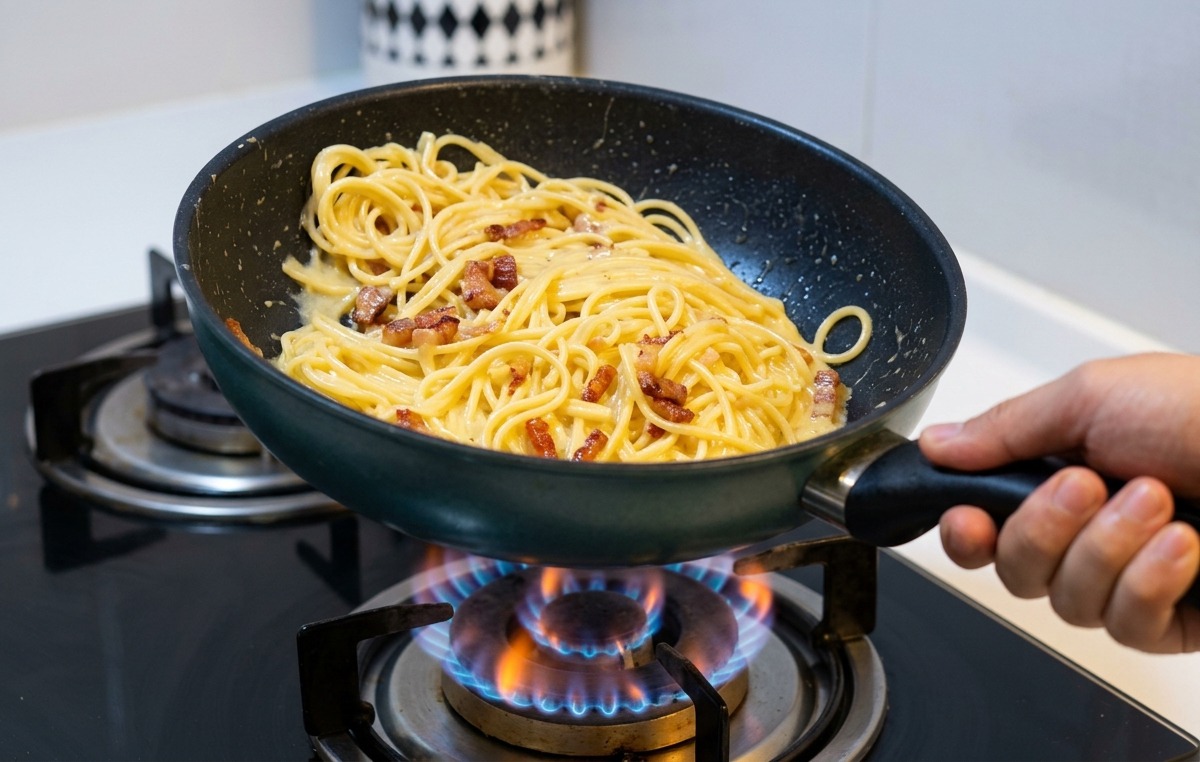
Briefly return the pan to the heat and toss the spaghetti vigorously with the meat and pasta water. This active mixing helps the starch and fat begin to bond coating every strand of pasta in a flavorful base before the eggs are added.
Tip: Do not leave the heat on too long as you only want to heat the ingredients through and start the emulsification not dry out the pan. - 14Add the egg sauce
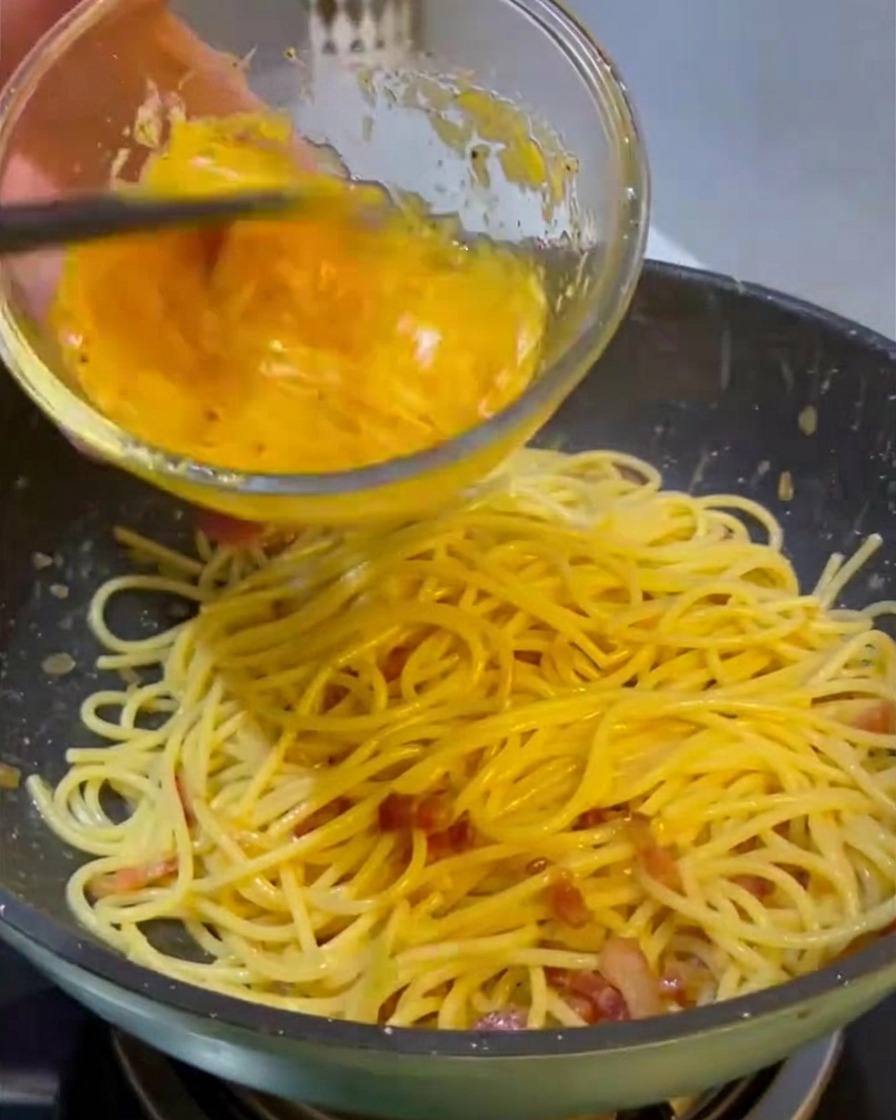
With the pan removed from the heat, pour the whisked egg and cheese mixture over the hot pasta. Stir and toss rapidly; the residual heat will transform the liquid eggs into a thick, velvety cream that clings perfectly to the spaghetti without scrambling.
Tip: If the sauce is too thick, add one more splash of pasta water and continue stirring until you reach the desired consistency. - 15Garnish and serve
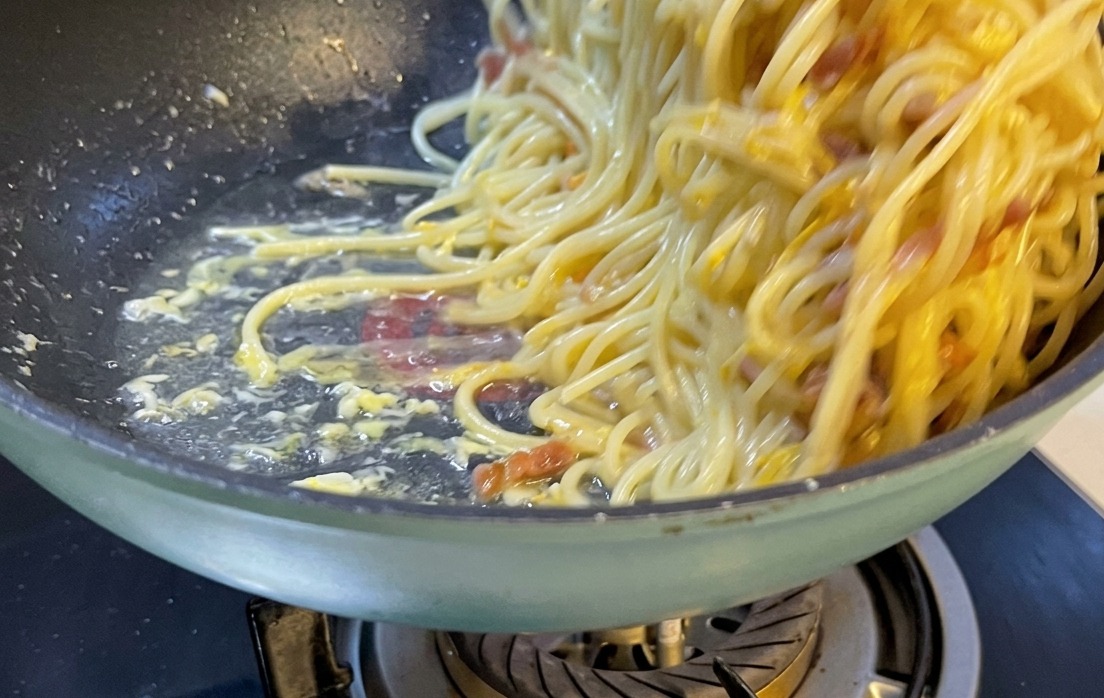
Plate the spaghetti immediately while the sauce is at its peak silkiness. Garnish each portion with an additional sprinkle of Pecorino Romano and a final crack of black pepper before serving.
Tip: Serve on warmed plates to keep the sauce creamy for longer.