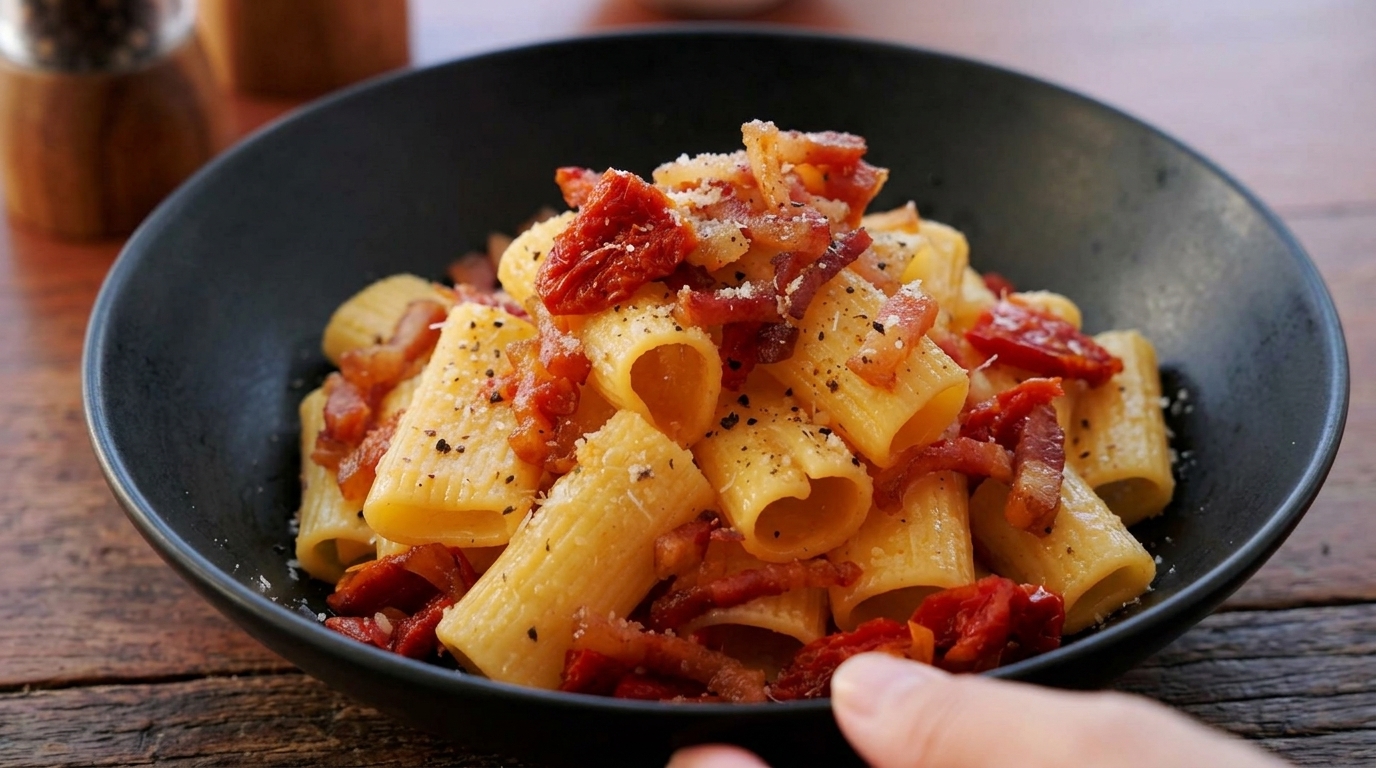
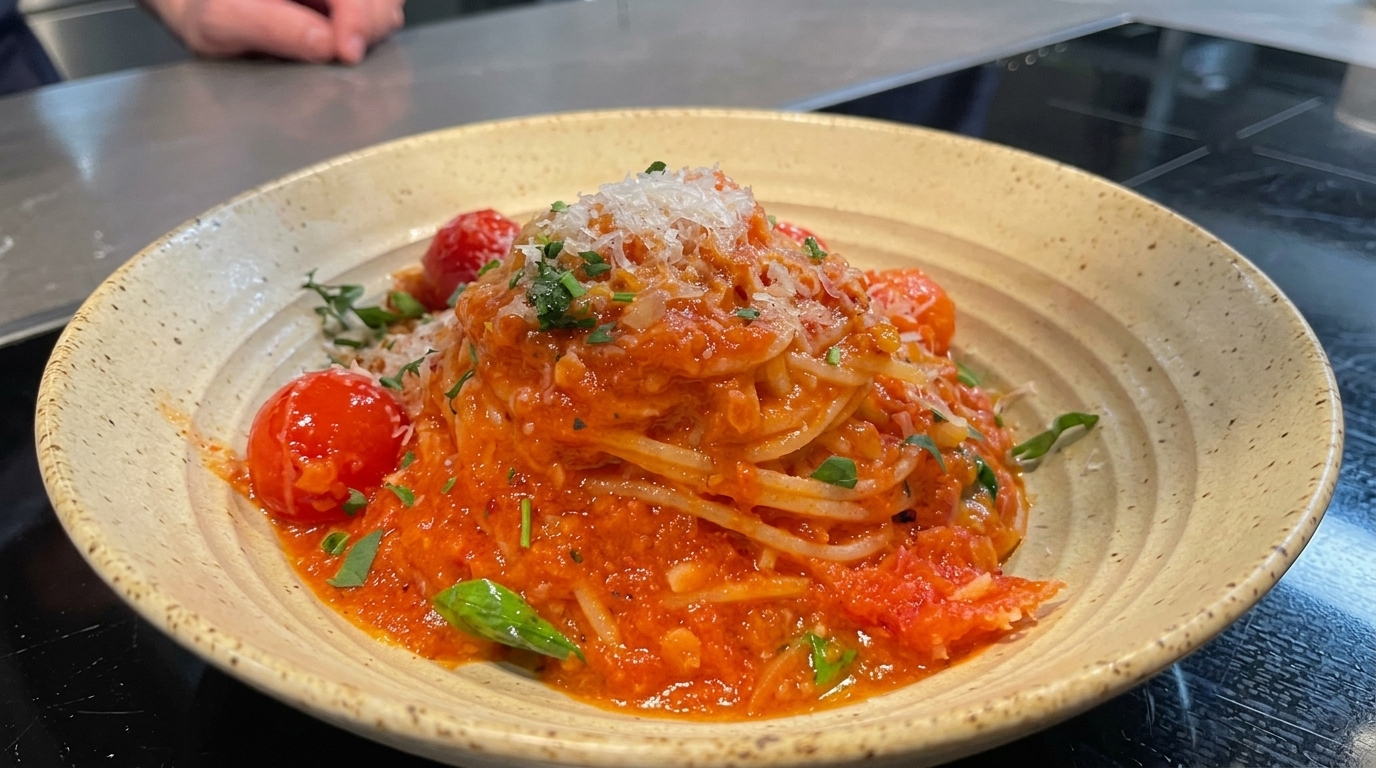
Classic Roman Pasta all'Amatriciana (Spicy Tomato
Guanciale)
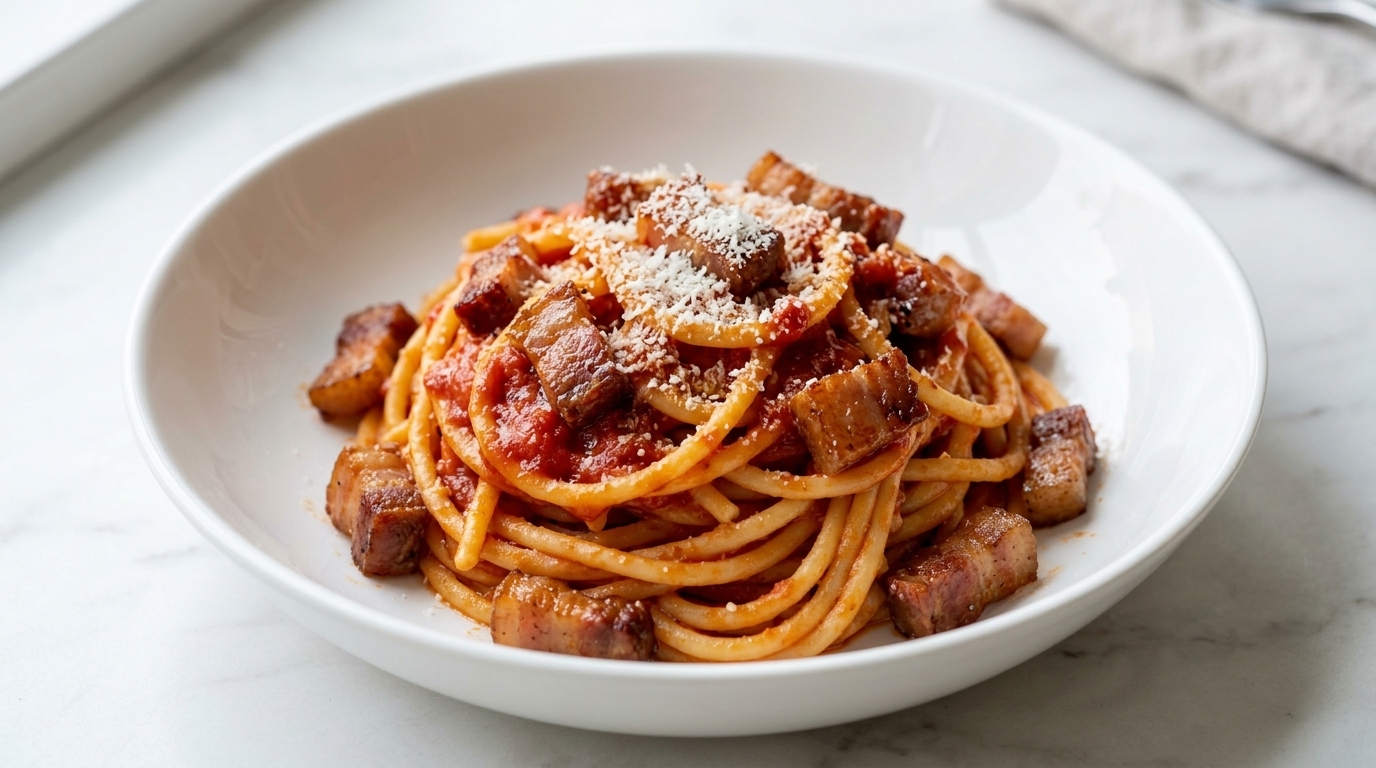
Master the classic Roman Pasta all'Amatriciana. This deeply savory, slightly spicy dish combines thick bucatini with rich rendered guanciale, sweet crushed tomatoes, and sharp Pecorino Romano.
Hailing from the town of Amatrice but popularized in Rome, Pasta allAmatriciana is a masterclass in Italian simplicity. The dish relies on the quality of its few core ingredients: the rich, pepper-crusted fat of authentic guanciale (cured pork jowl), sweet unseasoned peeled tomatoes, and the sharp, salty bite of Pecorino Romano cheese. By carefully rendering the pork fat and emulsifying it with starchy pasta water, you create a luxurious, glossy sauce that clings perfectly to thick bucatini noodles.
Ingredients
- 200 g bucatini pasta
- 150 g guanciale
- 400 g whole peeled canned tomatoes
- 1 glass dry white wine
- 50 g Pecorino Romano cheese
- 1-2 small fresh red chilies
- 1 tbsp salt
- 1 tsp olive oil
Instructions
- 1Slice the guanciale
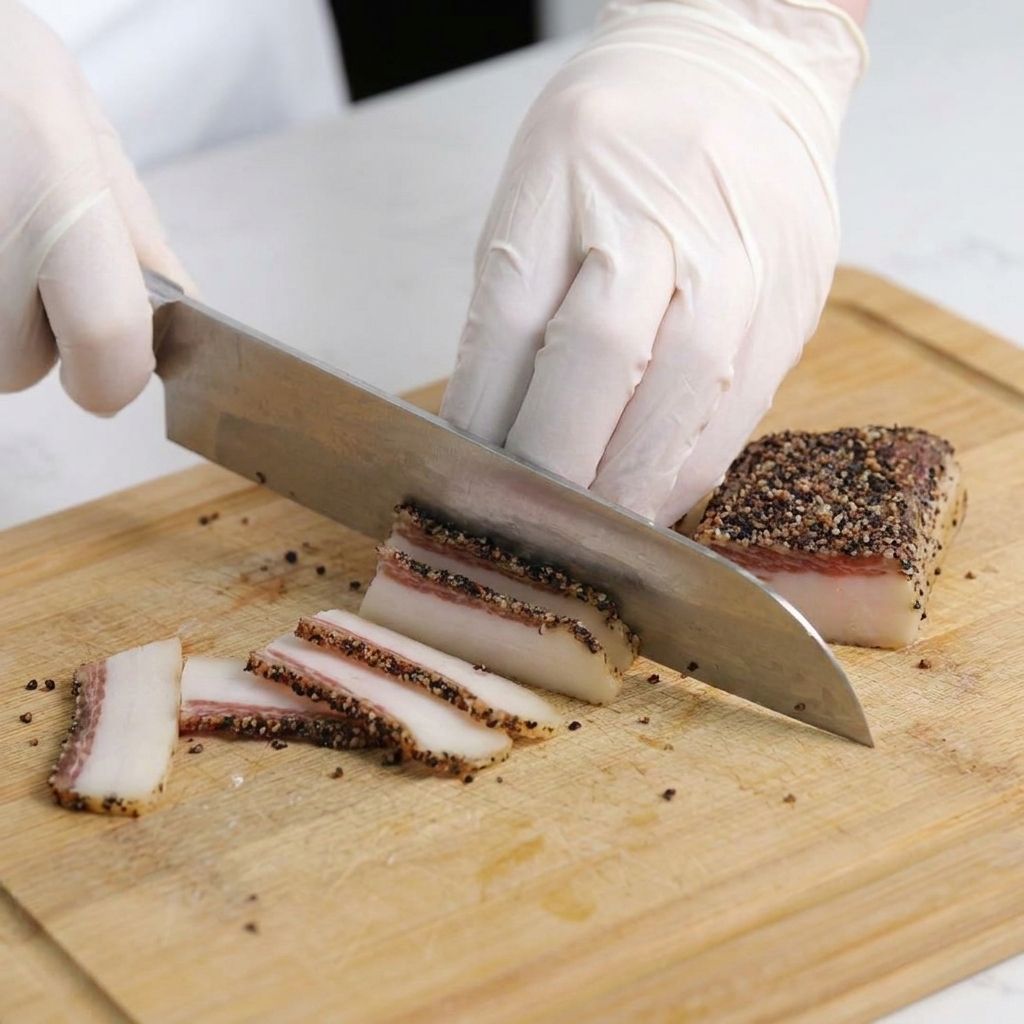
Start by preparing the guanciale. Take the pepper-crusted, air-dried pork cheek and slice it into thick, even strips on a wooden cutting board.
Tip: Guanciale is fattier than standard bacon or pancetta, but this fat is essential for the dishs signature flavor and rich texture. - 2Chop the red chilies
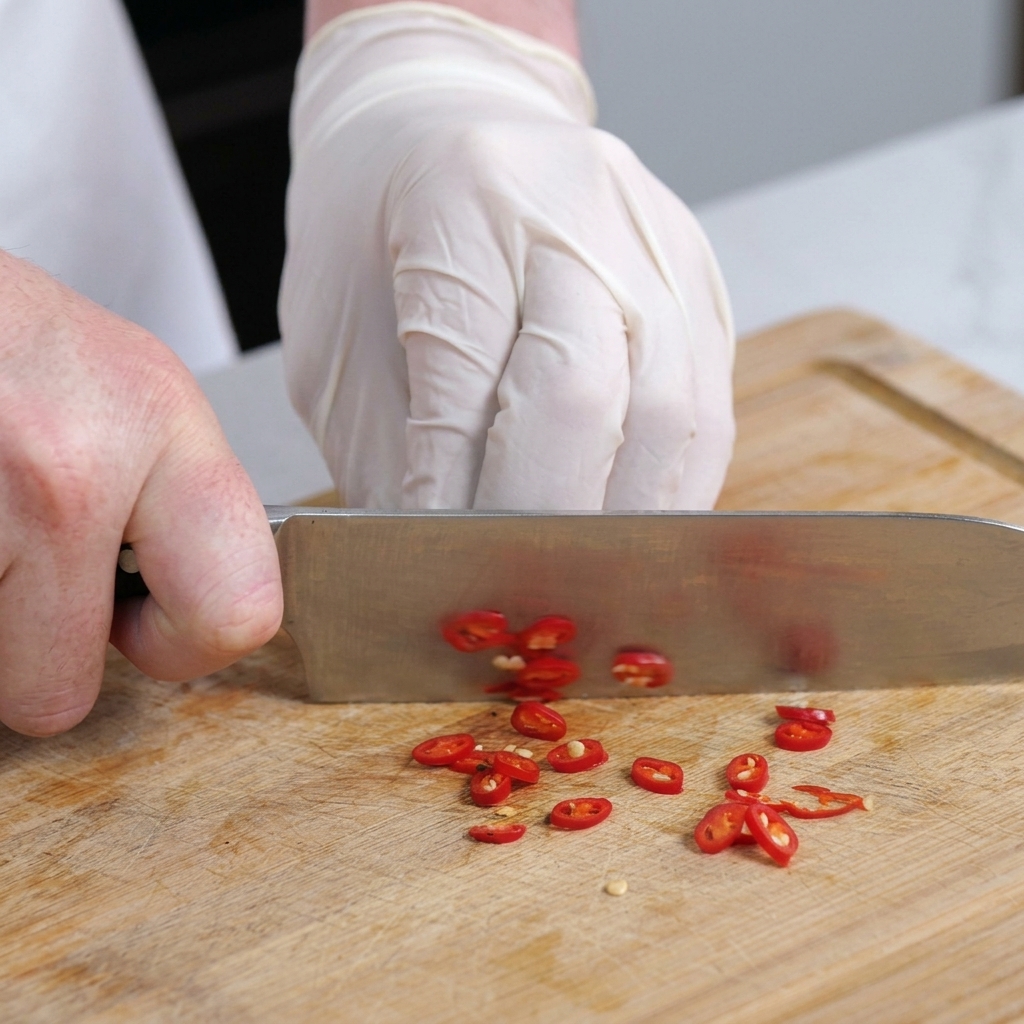
Take some fresh, small red chilies and chop them finely on the cutting board. This will add the essential, soulful kick of heat to the pasta sauce.
Tip: Adjust the amount of chilies based on your spice tolerance. Keep the seeds in if you want it extra spicy. - 3Grate the Pecorino cheese
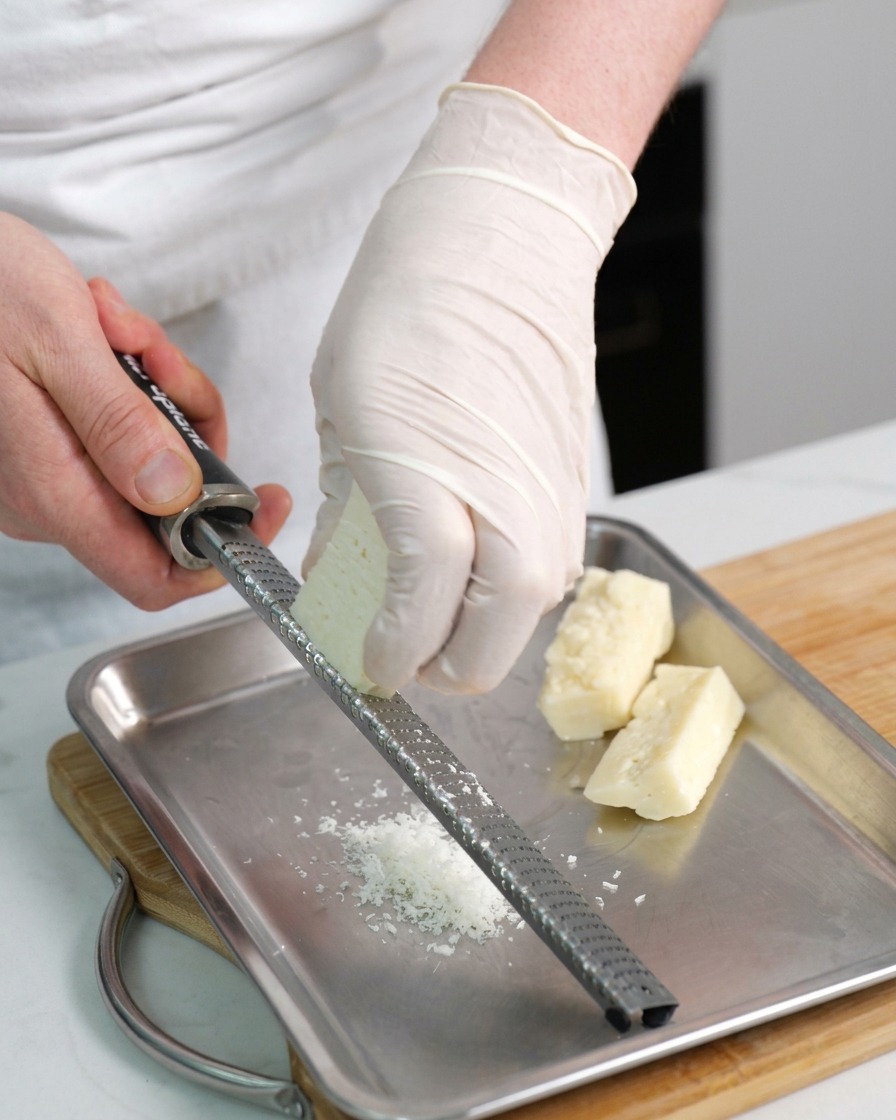
Using a handheld grater, grate the block of Pecorino Romano cheese into fine shreds over a metal tray or plate. Set aside plenty of this salty sheeps milk cheese for later.
Tip: Pecorino Romano is traditionally used in Amatriciana for its sharp, salty flavor, which balances the rich guanciale fat perfectly. - 4Crush the peeled tomatoes
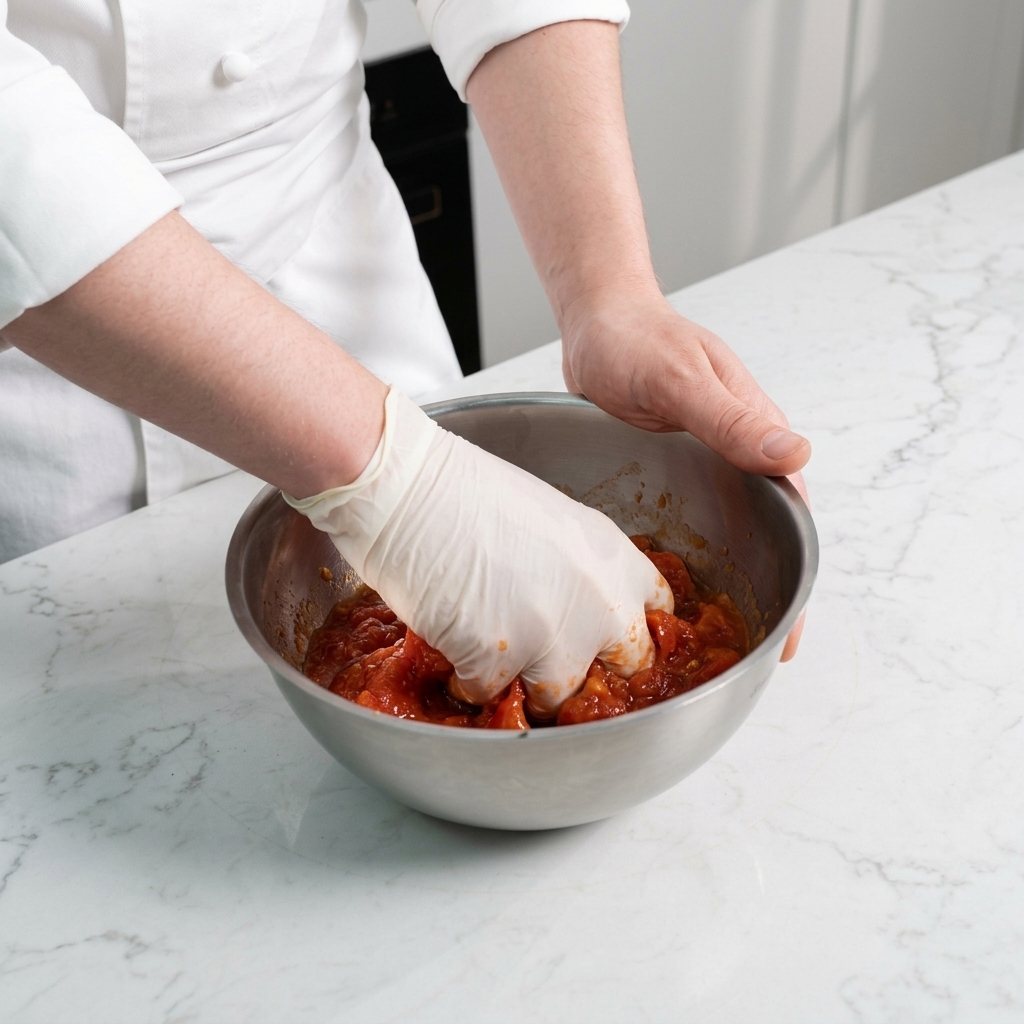
Place about 400 grams of whole, peeled canned tomatoes into a large metal mixing bowl. Use your hands to crush them thoroughly, breaking them down into a rustic, chunky texture.
Tip: Crushing the tomatoes by hand provides a superior, uneven texture compared to blending, giving the sauce a more authentic, rustic feel. - 5Render the guanciale fat
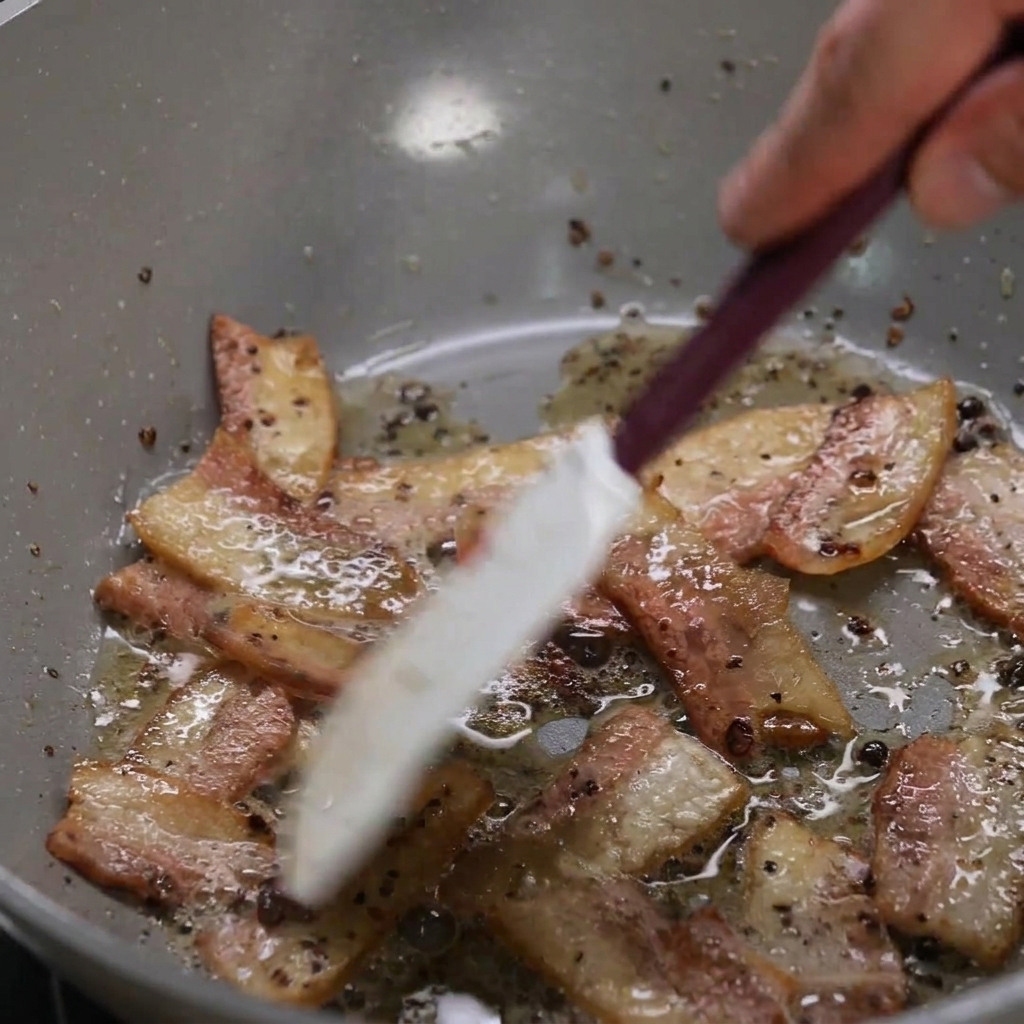
Add a touch of oil to a pan over medium heat, then toss in the sliced guanciale strips and chopped red chilies. Stir-fry gently until the pork fat begins to render, turning the meat translucent and the edges crisp and brown.
Tip: Start with a relatively low-medium heat so the fat renders out slowly without burning the pepper crust on the guanciale. - 6Deglaze with white wine
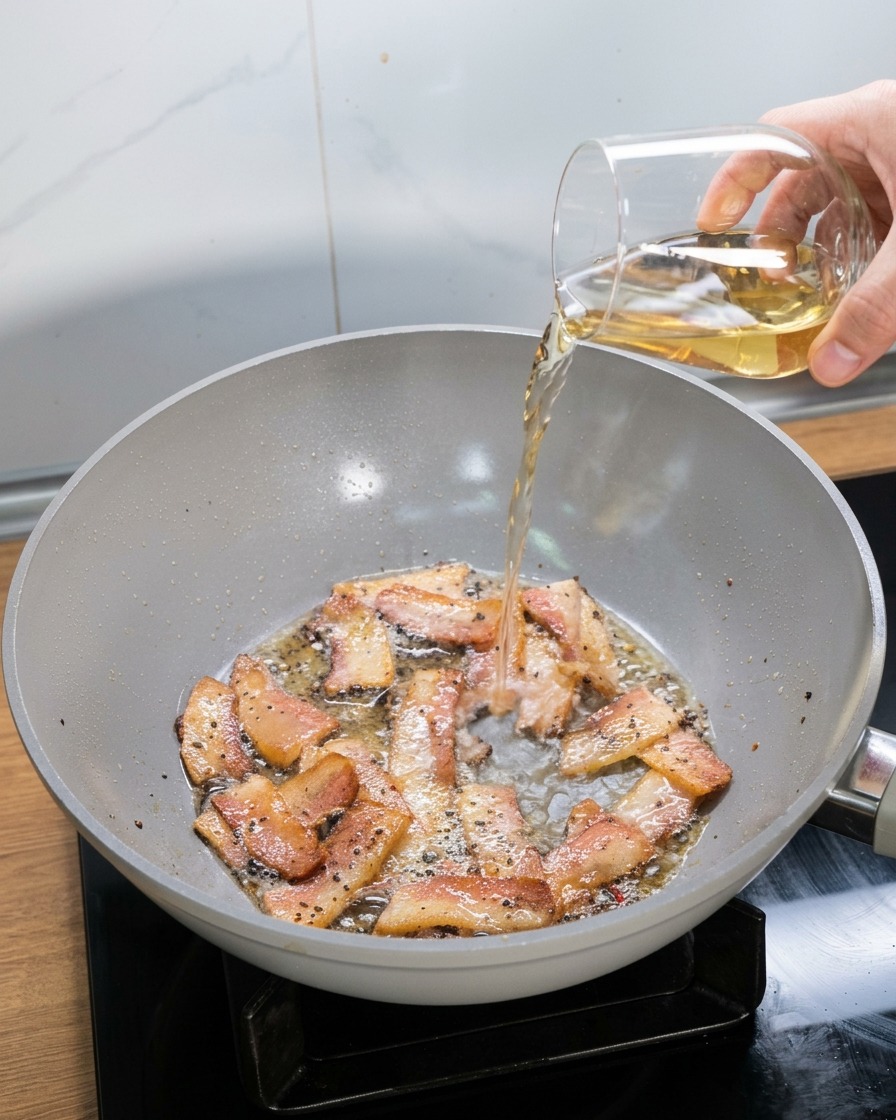
Once the guanciale fat is fully rendered out and the meat is nicely browned, pour a glass of dry white wine into the pan. Immediately turn up the heat to let the alcohol evaporate and the liquid reduce slightly.
Tip: The acidity of the white wine cuts through the richness of the rendered pork fat and helps lift all the flavorful browned bits from the bottom of the pan. - 7Add the crushed tomatoes
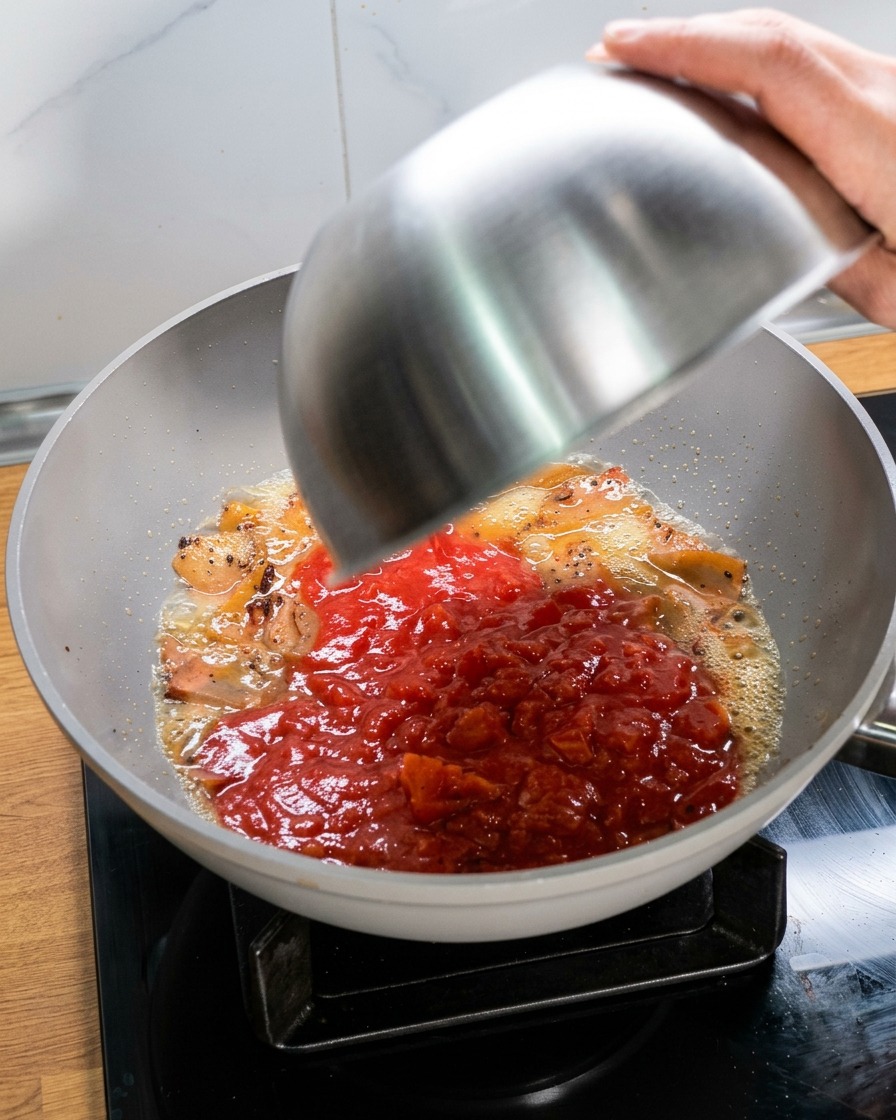
Carefully pour the hand-crushed tomatoes into the pan containing the rendered guanciale and chilies. Stir everything together evenly, then reduce the heat to low and allow the sauce to simmer and reduce.
Tip: Simmering on low heat gives the tomatoes time to break down and merge with the flavorful pork fat. - 8Salt the boiling water
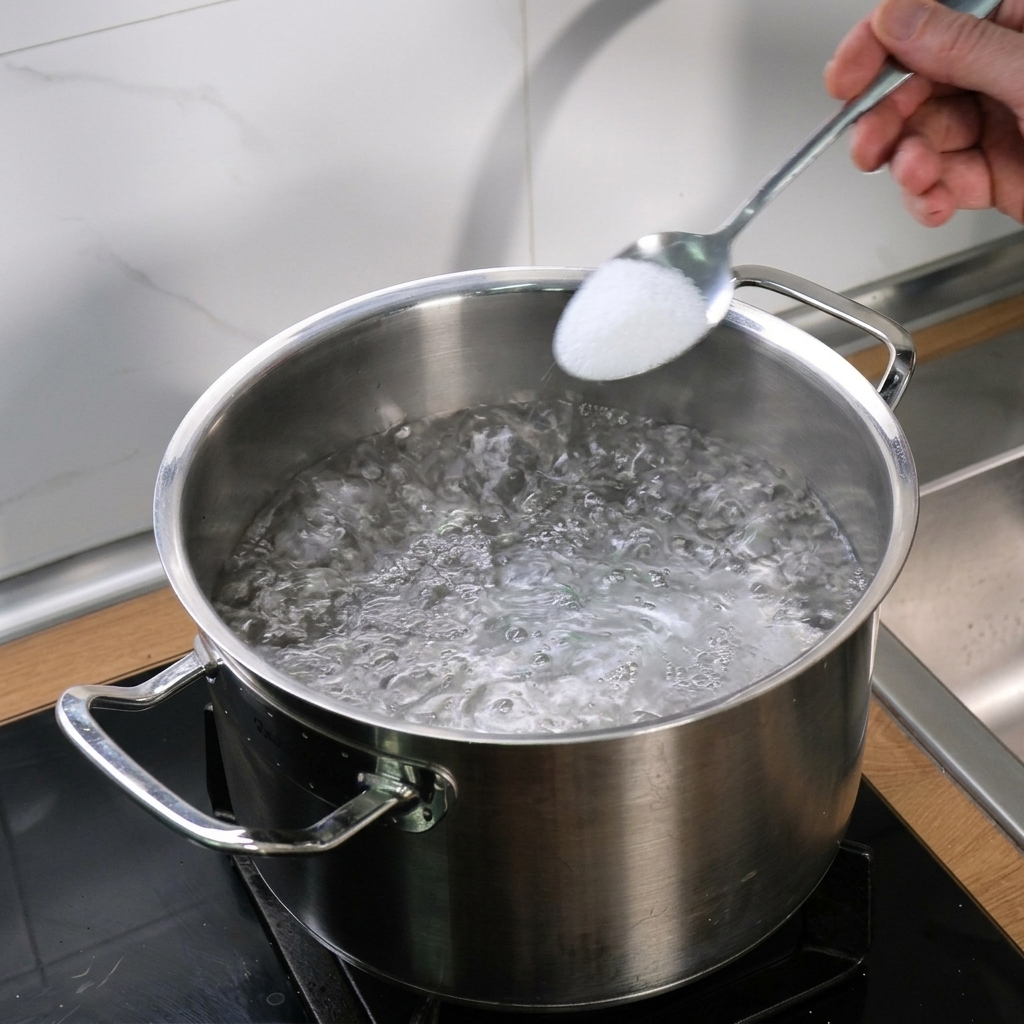
Bring a large pot of water to a rolling boil. Add a generous spoonful of salt to the water before adding the pasta. This is crucial for seasoning the pasta from the inside out as it cooks.
Tip: The water should taste slightly salty like the sea. Never add oil to your pasta water, as it creates a slick coating that prevents the sauce from clinging to the noodles later. - 9Cook the bucatini
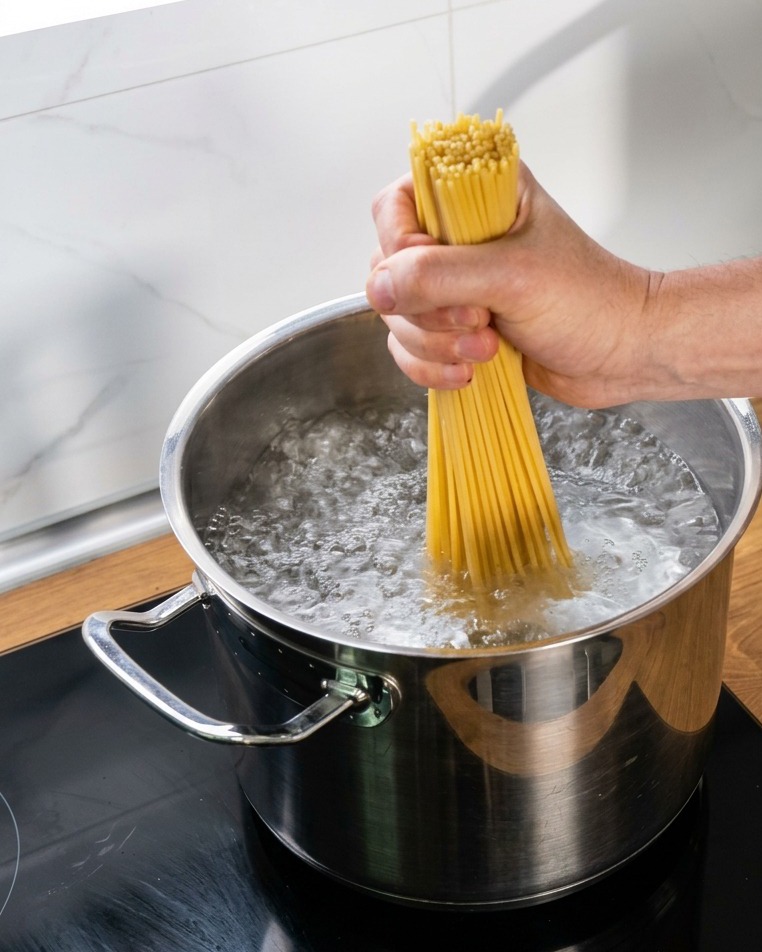
Place about 200 grams of dry bucatini pasta directly into the pot of boiling salted water. Gently push the pasta down as it begins to soften to submerge it completely. Boil until it reaches an al dente texture.
Tip: Bucatini is a thick spaghetti-like pasta with a hole running through the center, which perfectly captures the rich Amatriciana sauce. - 10Transfer pasta to sauce
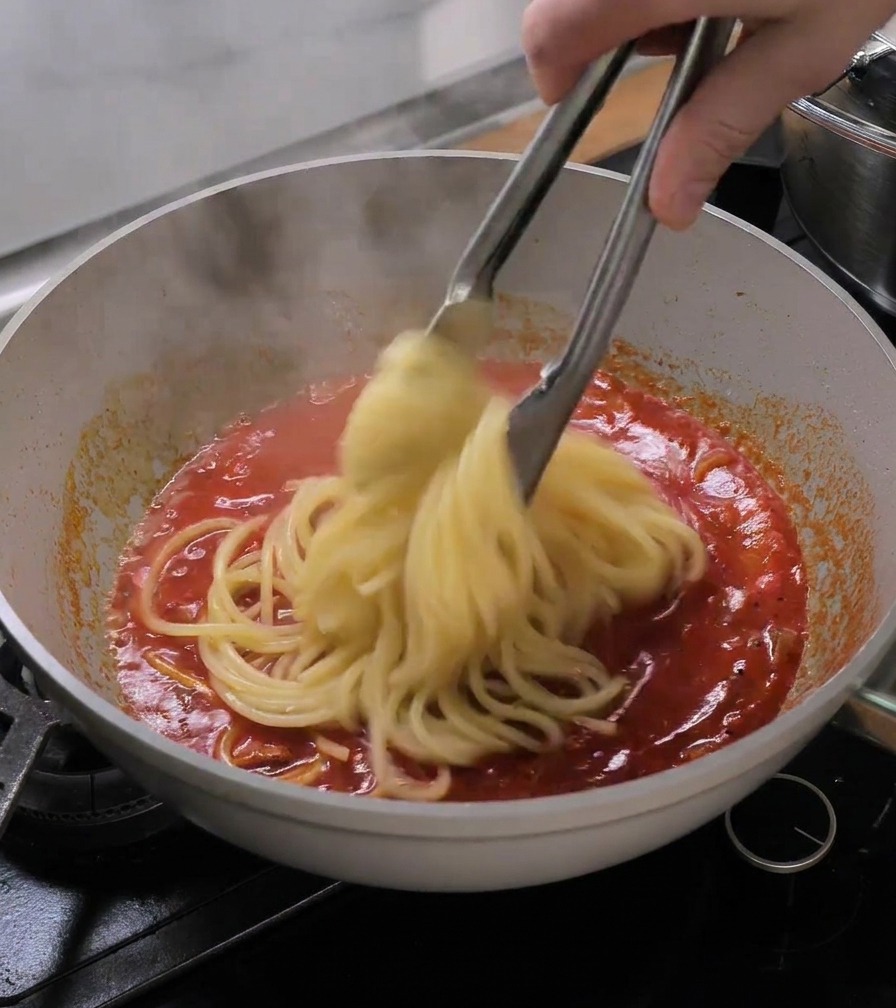
Once the bucatini is cooked, use tongs to lift it directly out of the boiling water and transfer it into the simmering tomato sauce. Do not drain the pasta dry; the clinging starchy water will help emulsify the sauce.
Tip: Moving the pasta straight from the pot to the pan prevents it from clumping and ensures it absorbs the maximum amount of flavor. - 11Add Pecorino cheese
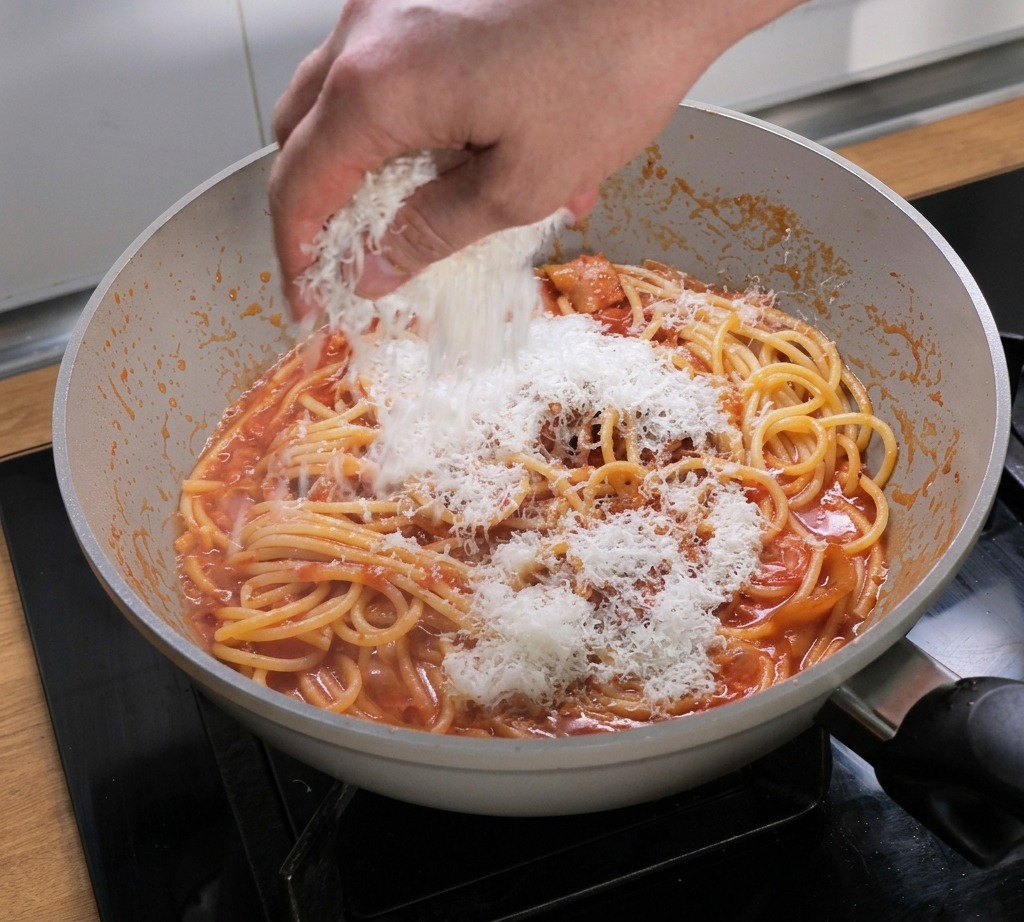
Sprinkle a generous amount of finely grated Pecorino cheese over the hot pasta and tomato sauce. The residual heat from the pasta and pan will melt the cheese into a creamy layer.
Tip: Pecorino is a traditional sheeps milk cheese from Rome that provides the authentic salty, sharp flavor profile essential to this dish. - 12Toss and combine
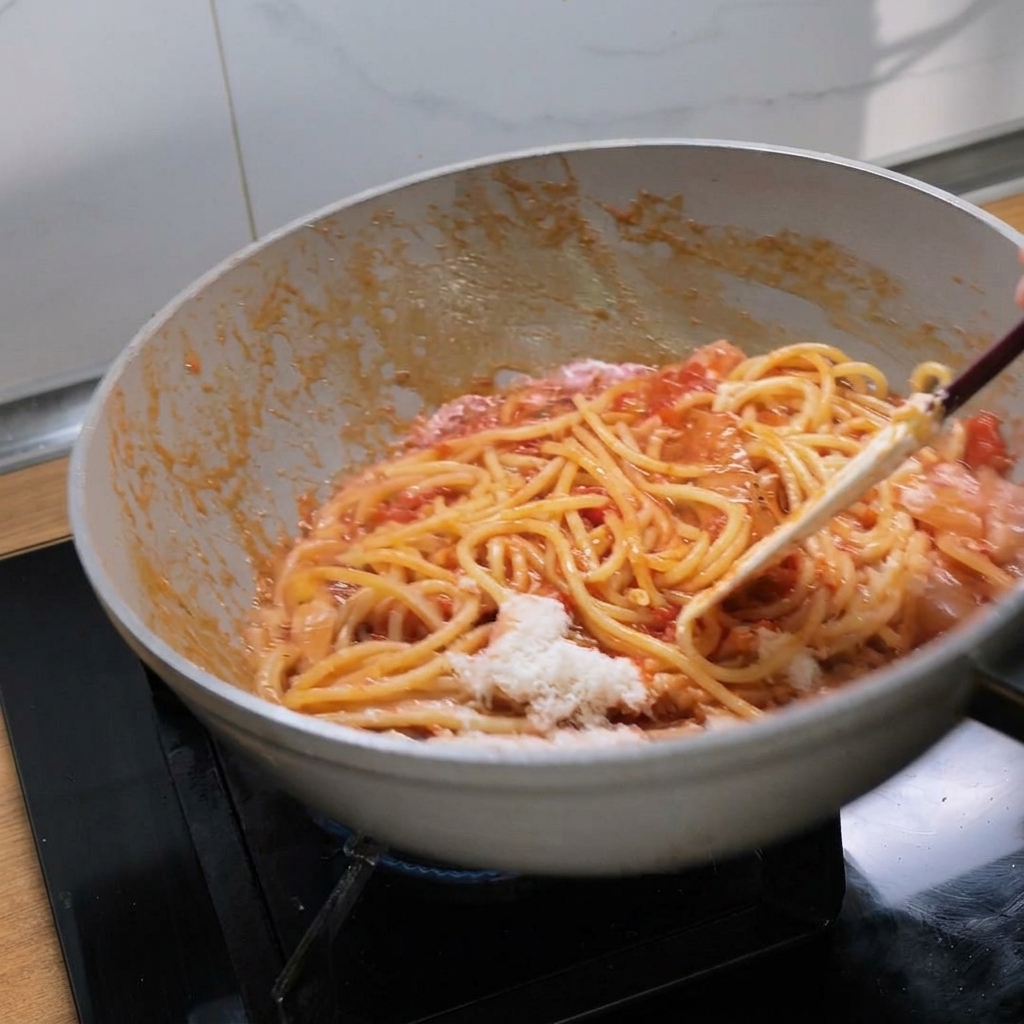
Vigorously toss the bucatini in the pan to evenly coat every strand with the rich tomato sauce and melted Pecorino cheese. The starches will bind the sauce to the pasta, giving it a thick, glossy finish.
Tip: If the sauce looks too thick while tossing, add a small splash of the hot pasta cooking water to loosen it up. - 13Plate and top with sauce
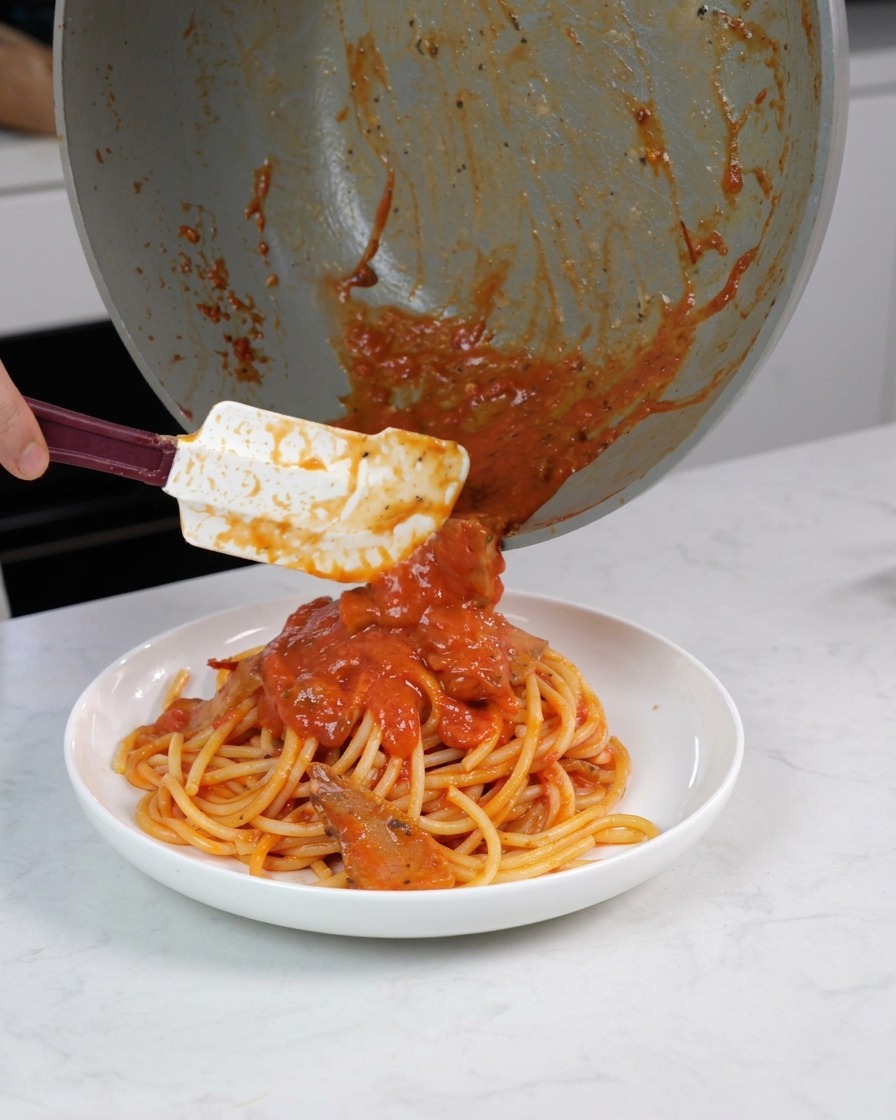
Transfer the tossed pasta onto a serving plate. Use a spatula to scrape out every last drop of the rich tomato and guanciale sauce from the bottom of the pan, pouring it directly over the top of the plated pasta.
Tip: Make sure to scrape the pan well to get all the flavorful rendered pork fat and caramelized tomato bits—thats where the intense flavor lives.