Classic Sun-Dried Tomato
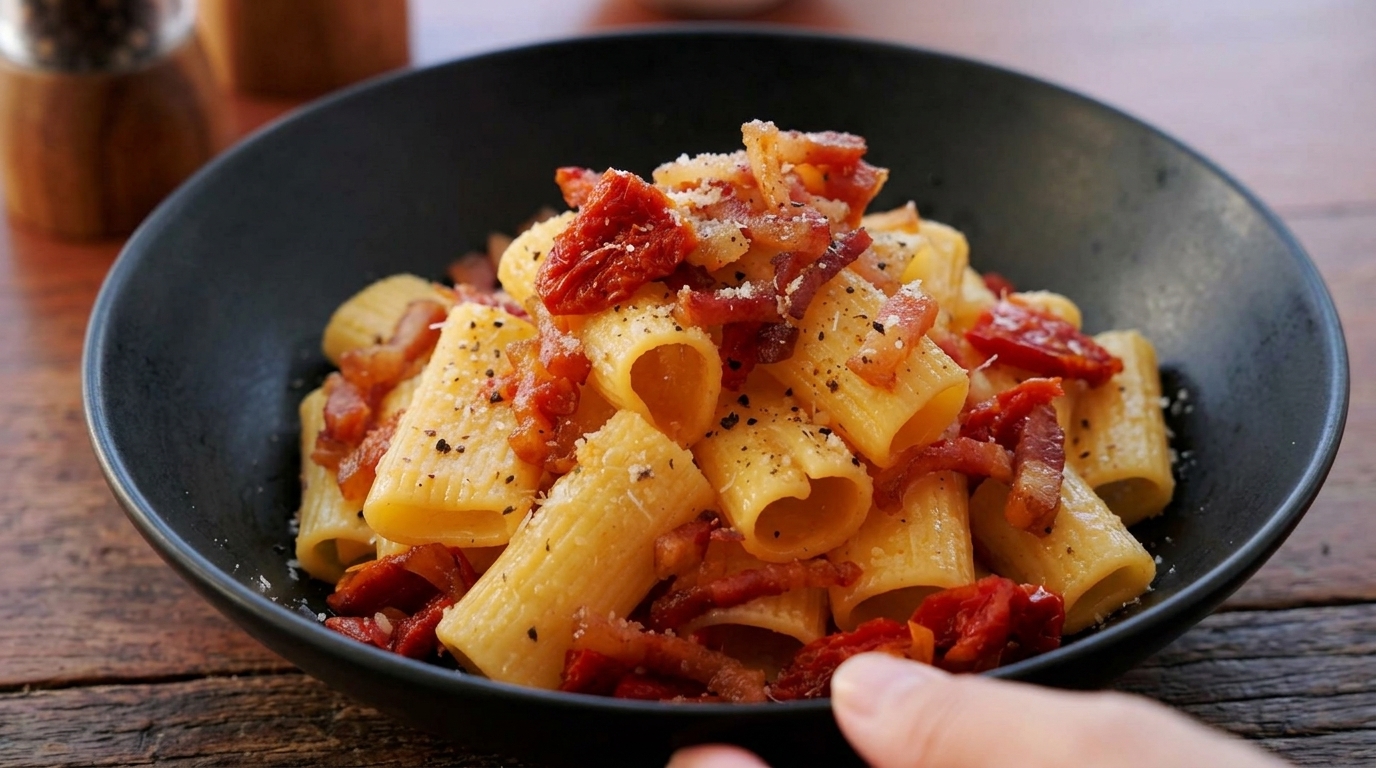
Guanciale Rigatoni
Transport yourself to the streets of Rome with this rich, savory rigatoni pasta, featuring crispy rendered guanciale and vibrant sun-dried tomatoes in a glossy, emulsified sauce.
While not a strictly traditional Roman sauce like carbonara or amatriciana, this dish leans heavily on the foundational technique of Roman pasta cookery: rendering guanciale and emulsifying its rich fat with starchy pasta water. The sweet tartness of sun-dried tomatoes provides a brilliant modern contrast to the deeply savory cured pork jowl, creating a quick yet incredibly complex plate of food.
Ingredients
- 50 g guanciale, diced
- 150 g rigatoni (frozen or dry)
- 30 g sun-dried tomatoes
- to taste black pepper
- to taste grated cheese (Pecorino Romano or Parmesan)
Instructions
- 1Prepare the Guanciale
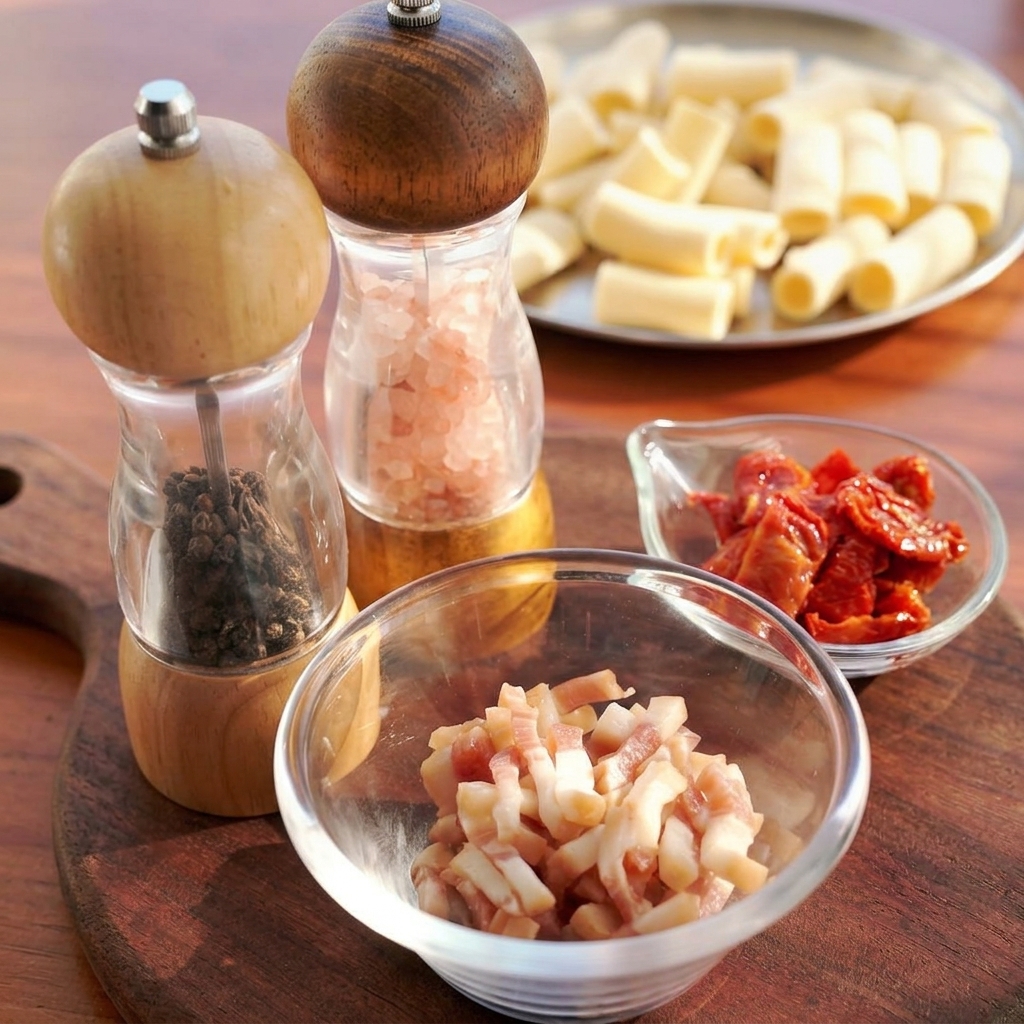
Begin by preparing your ingredients. For this classic Roman-style dish, use pre-cut guanciale, which has an excellent ratio of fat to lean meat, creating a rich and savory base. Keep your sun-dried tomatoes and rigatoni ready before cooking.
Tip: Guanciale is cured pork jowl and is the traditional choice, but if unavailable, high-quality pancetta is a great substitute. - 2Add Guanciale to the Pan
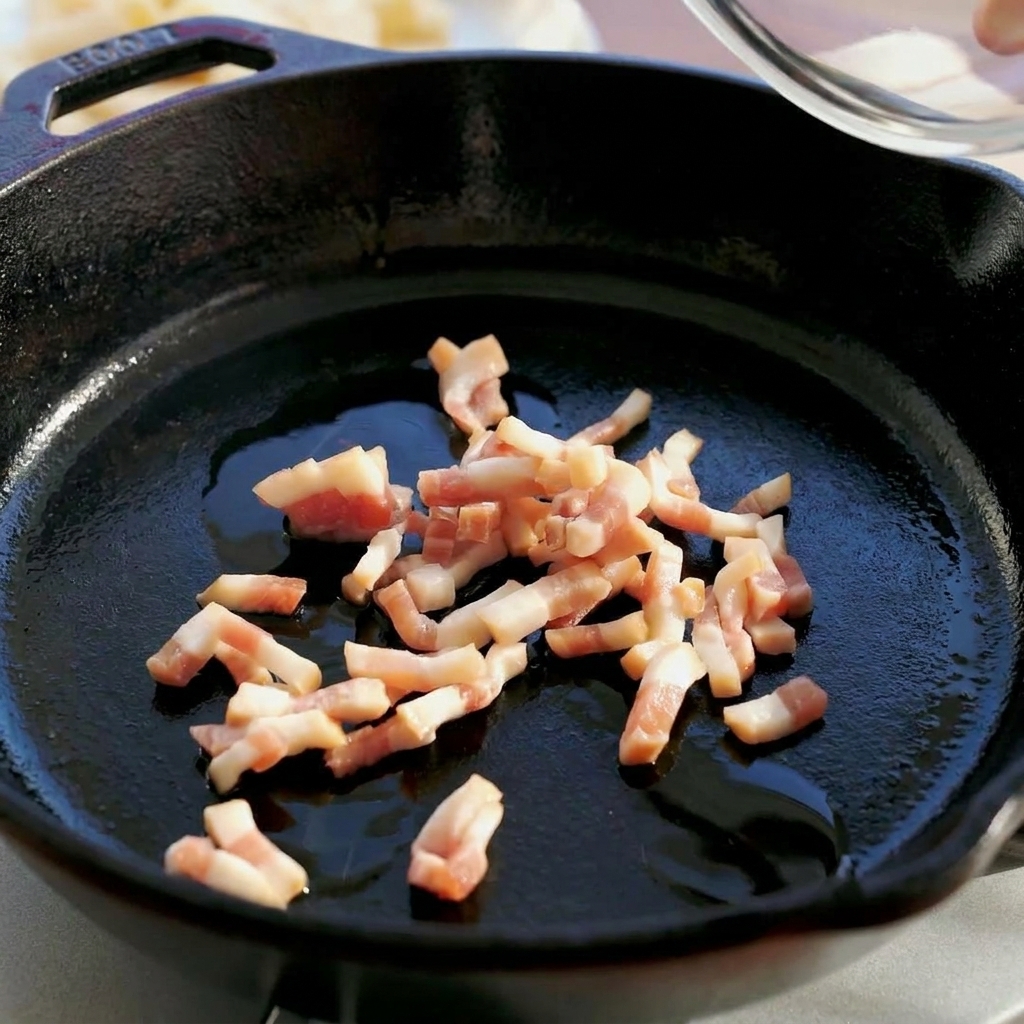
Place a cast iron skillet over low heat and add about 50 grams of the diced guanciale directly into the dry pan. There is no need to add any cooking oil, as the guanciale will slowly release its own flavorful fat as it cooks.
Tip: Always start guanciale in a cold or slightly warm pan to allow the fat to render slowly without burning the exterior. - 3Render and Crisp
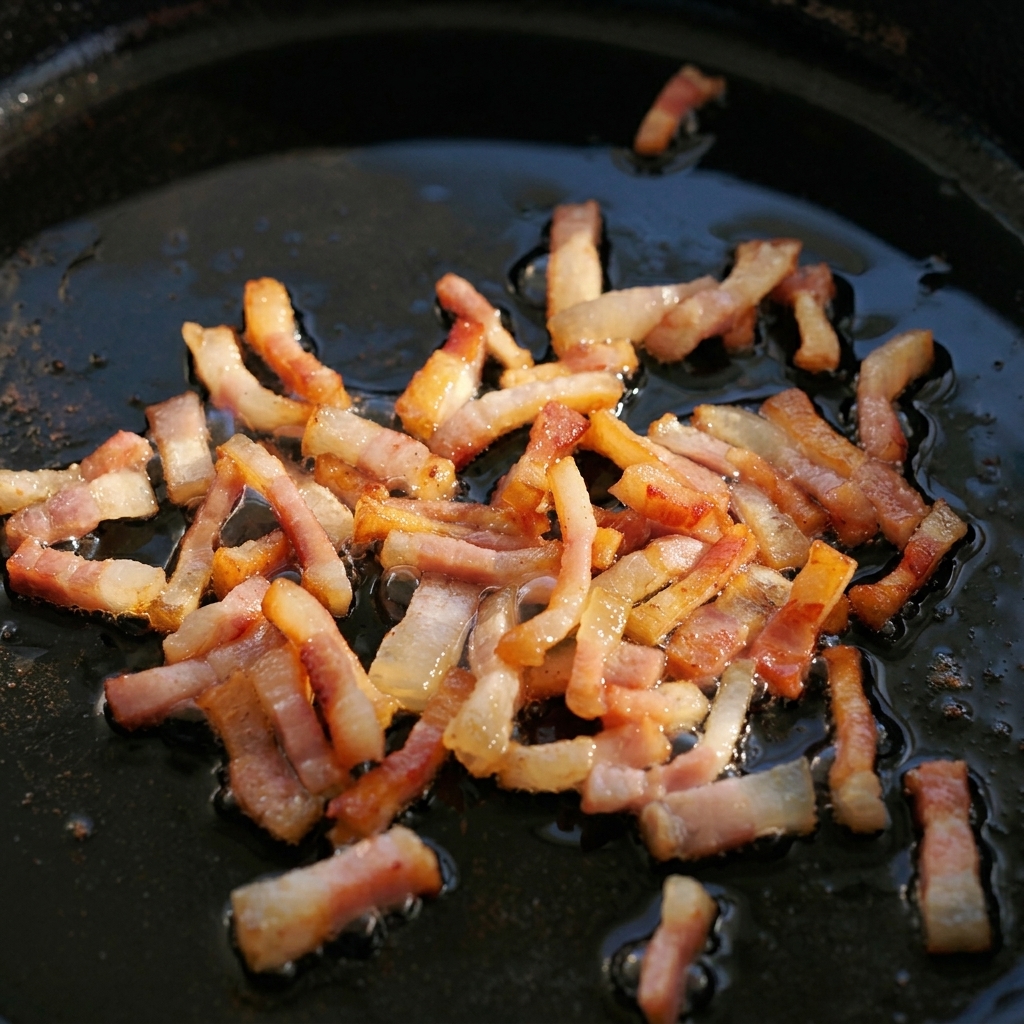
Gently fry the guanciale pieces over low heat until they become perfectly crispy and deeply fragrant. The rendered fat will coat the bottom of the pan and serve as the flavorful foundation for your pasta sauce.
Tip: Watch the guanciale closely as it transitions from translucent to browned; it can burn quickly once the fat has fully rendered. - 4Boil the Rigatoni
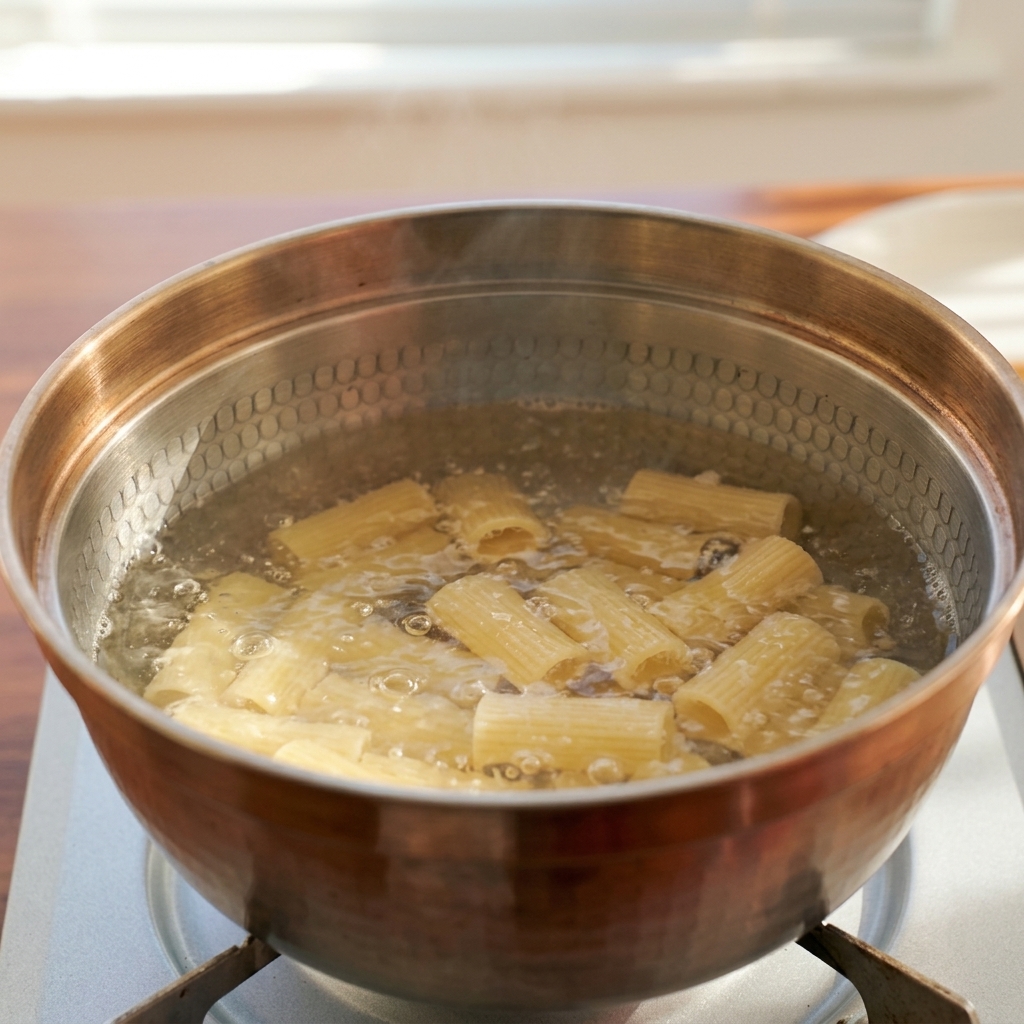
While the meat is crisping, bring a pot of water to a rolling boil. Drop in the frozen rigatoni and boil for just 30 seconds to quickly reheat and soften the pasta before transferring it directly into the sauce.
Tip: If using traditional dry rigatoni instead of frozen, be sure to boil it according to the package instructions until it reaches al dente. - 5Add Sun-Dried Tomatoes
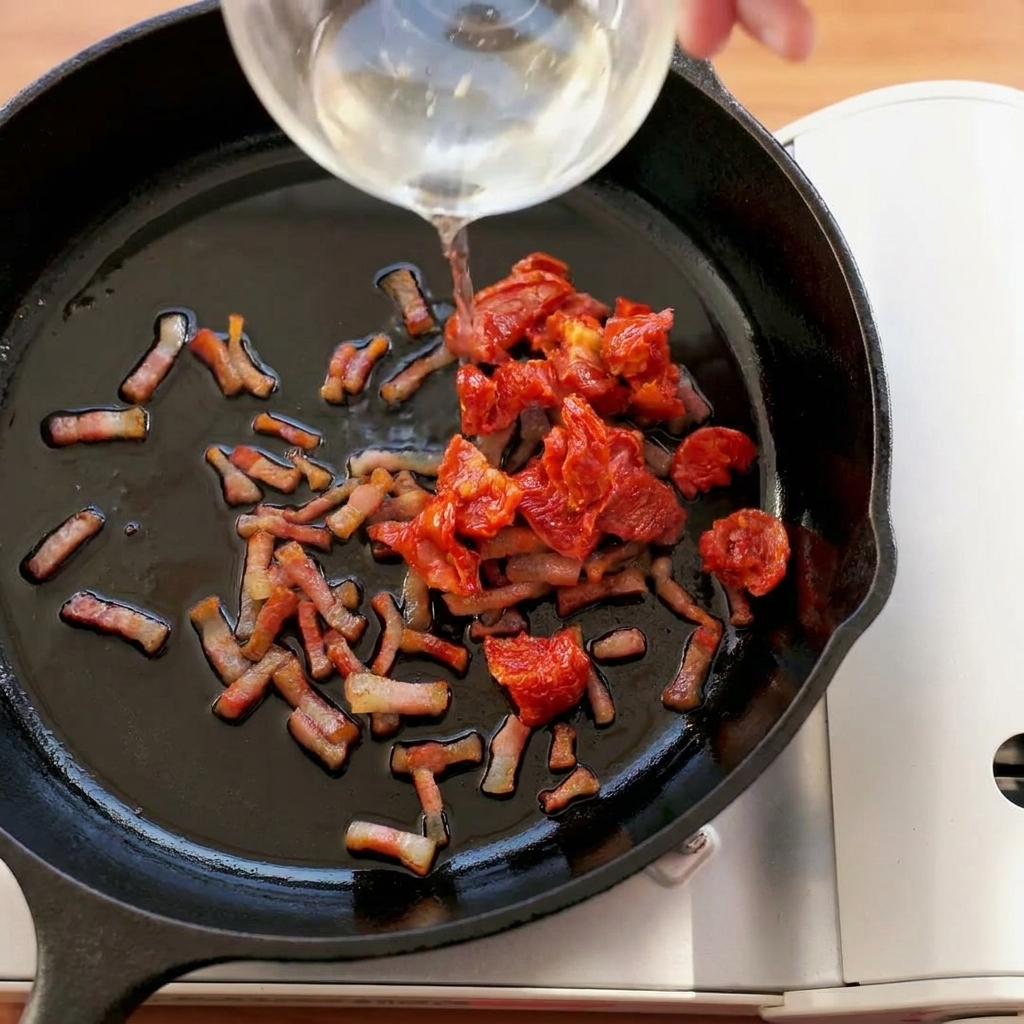
Add the sun-dried tomatoes into the skillet with the crispy, browned guanciale. Cook them together over low heat so the tomatoes soften and their sweet flavor melds perfectly with the savory pork fat.
Tip: If your sun-dried tomatoes are packed in oil, you can add a small spoonful of that oil to the pan for an extra boost of flavor. - 6Combine and Toss
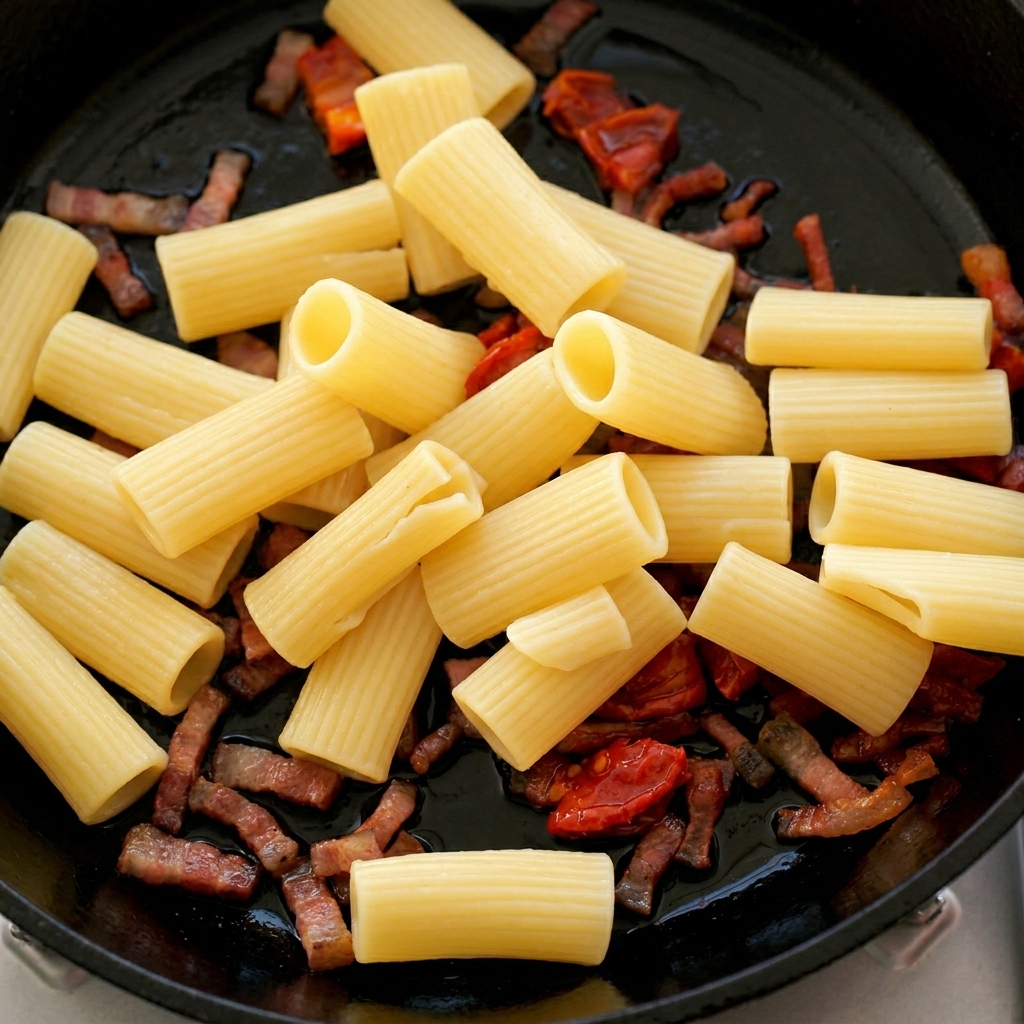
Transfer the boiled rigatoni directly into the flat-bottomed pan with the crisped guanciale and sun-dried tomatoes. Toss everything together gently over low heat so the pasta can absorb the rich, savory fat and vibrant tomato flavors.
Tip: Do not rinse your pasta! The residual starches clinging to the rigatoni will help the fat and any added pasta water emulsify into a beautifully cohesive sauce. - 7Add Pasta Water
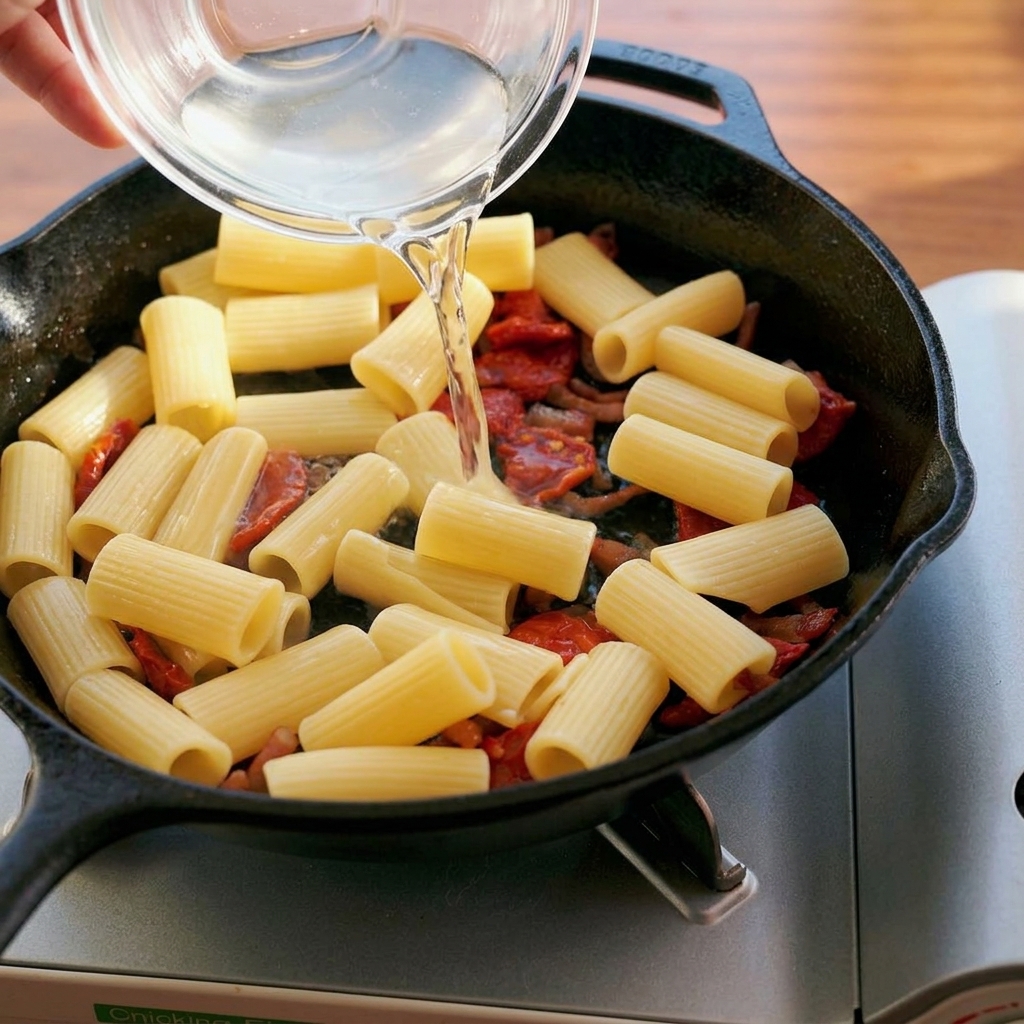
After adding the cooked rigatoni to the pan, pour in a small amount of reserved pasta water. This starchy liquid is essential for emulsifying the fats in the skillet to create a glossy, cohesive sauce.
Tip: Add the pasta water a little bit at a time; you can always add more if the pan looks too dry. - 8Toss and Combine
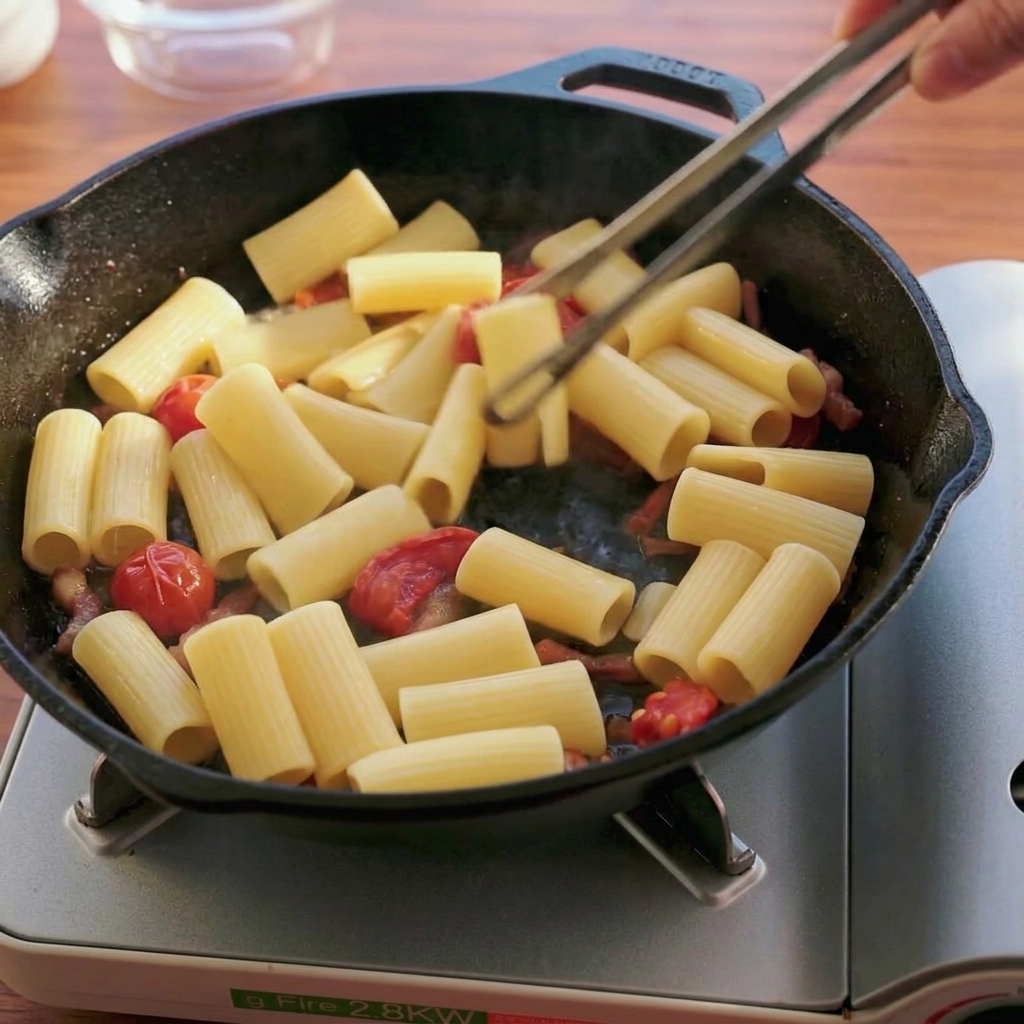
Use tongs to vigorously toss the rigatoni, guanciale, and sun-dried tomatoes together in the pan. Continue tossing over low heat until the pasta water and fats emulsify, evenly coating every piece of pasta.
Tip: The continuous tossing motion is key to developing a creamy sauce without using any heavy cream. - 9Garnish and Serve
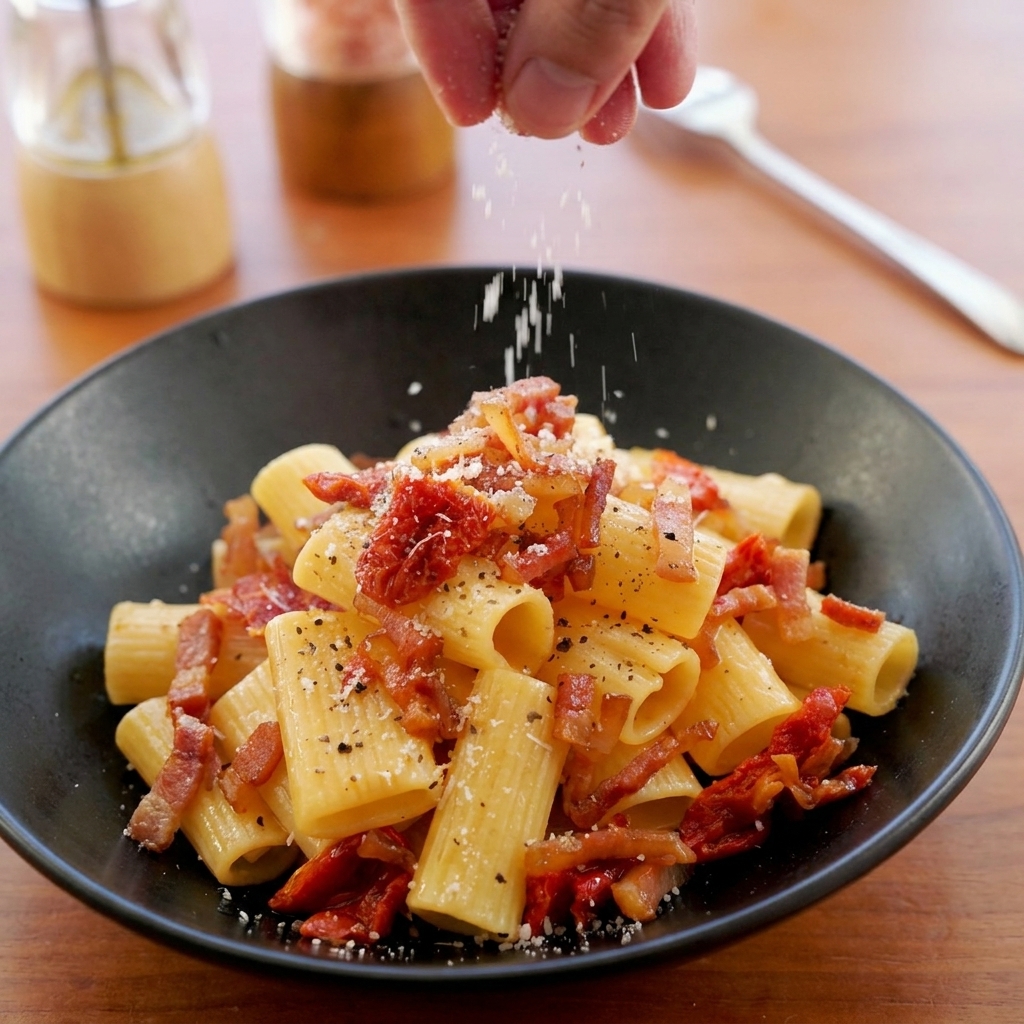
Transfer the finished pasta to a serving bowl. Garnish generously with grated cheese and freshly ground black pepper. Because the guanciale provides plenty of natural salinity, taste the dish before considering any additional salt.
Tip: Serve immediately while the pasta is hot and the cheese begins to melt into the rich sauce.