Rich Homemade Tomato Basil Spaghetti
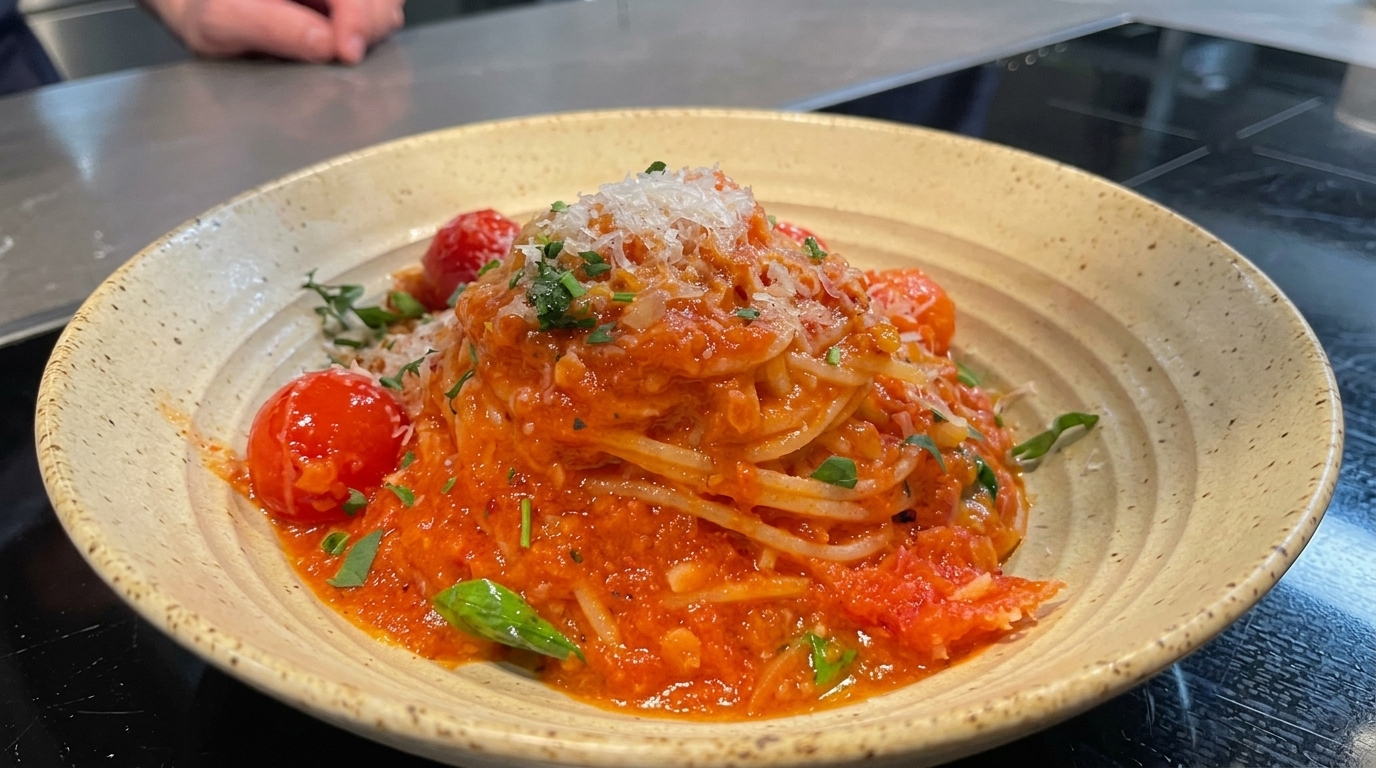
Master the perfect family-style tomato spaghetti. Fresh pureed tomatoes, rich aromatics, and a touch of parmesan create a vibrant, balanced sauce from scratch.
This family-style tomato spaghetti relies on a brilliant technique: starting the fresh tomato puree in a cool pan to prevent it from developing a harsh, sour taste. By building flavor with sautéed aromatics, fresh basil, and a final touch of butter, the sauce achieves a rich depth and a beautiful, glossy finish. It is a comforting classic that elevates everyday ingredients into a luxurious, satisfying meal.
Ingredients
- 200 g spaghetti
- 3 large fresh tomatoes
- 1 handful cherry tomatoes
- 1 small onion
- 12 carrot
- 1 stalk celery
- 3 cloves garlic
- 1 tbsp tomato paste
- 3 leaves fresh basil
- 1 tbsp butter
- 2 tbsp cooking oil
- to taste parmesan cheese
- to taste sea salt
- to taste black pepper
- optional chili flakes
- to garnish chopped parsley
Instructions
- 1Puree the Tomatoes
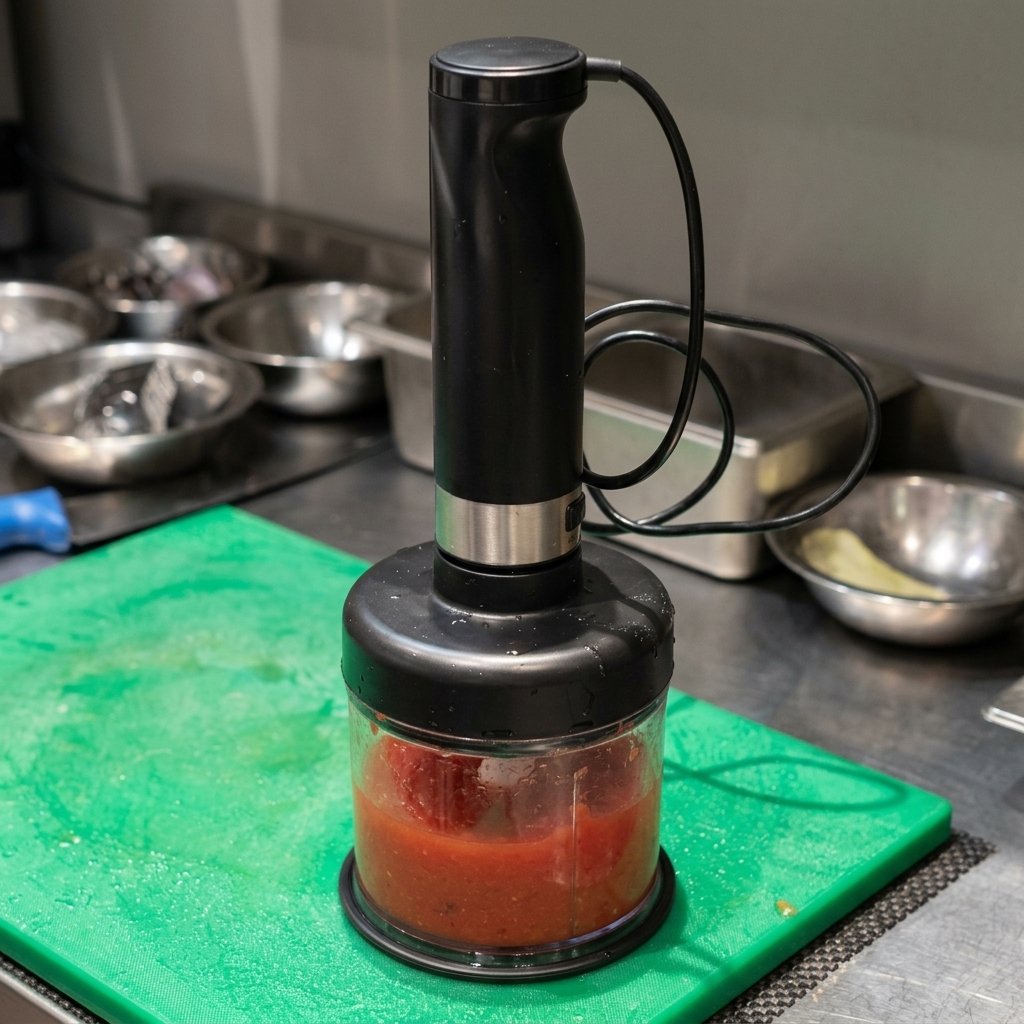
After peeling and seeding the tomatoes, process them in a clear container using a hand blender until smooth. This fresh tomato puree will serve as the vibrant base for our pasta sauce.
Tip: Using fresh, fully ripe tomatoes yields a naturally sweet flavor and a much better texture. - 2Chop the Aromatics
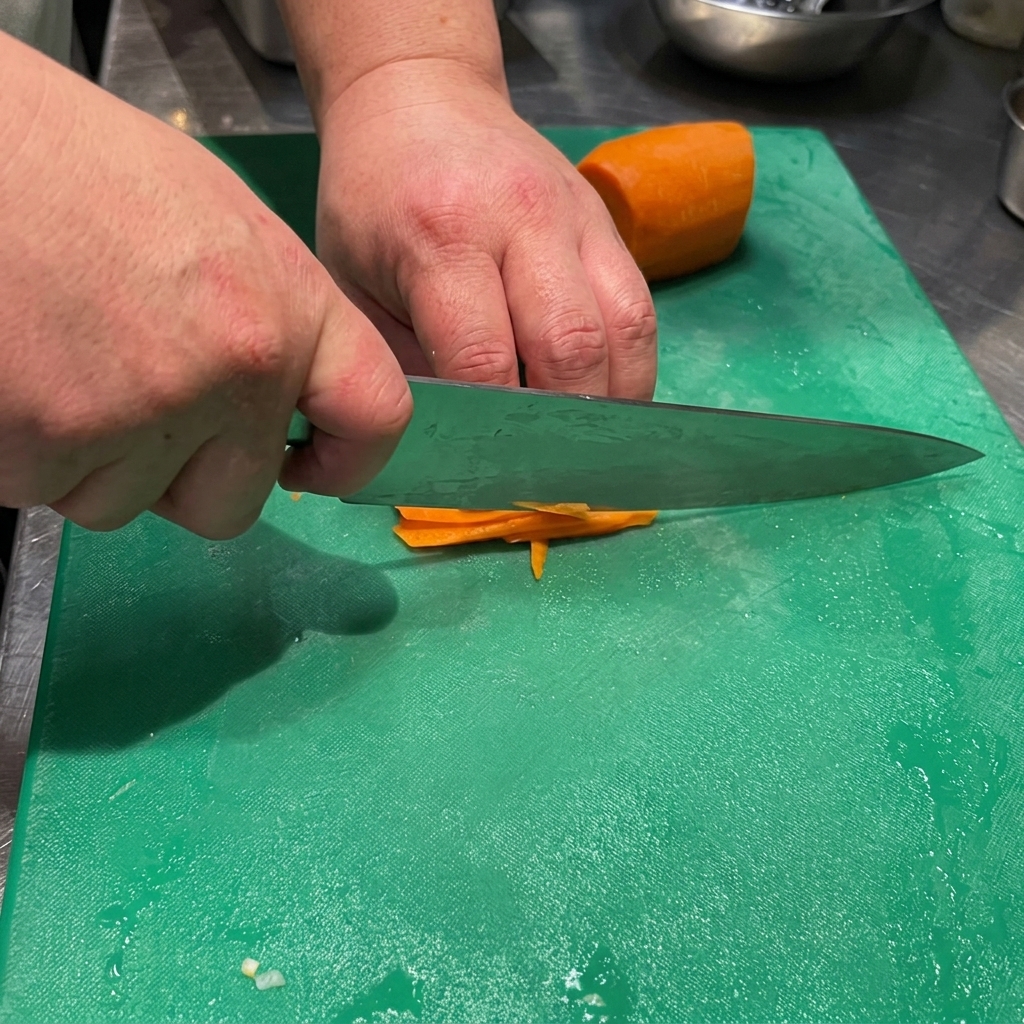
Finely chop the carrots, celery, onion, and garlic. Dicing these aromatics uniformly allows them to cook down evenly and blend seamlessly into the final sauce.
Tip: Take your time to chop the vegetables finely so they melt into the sauce without leaving large chunks. - 3Simmer the Tomato Puree
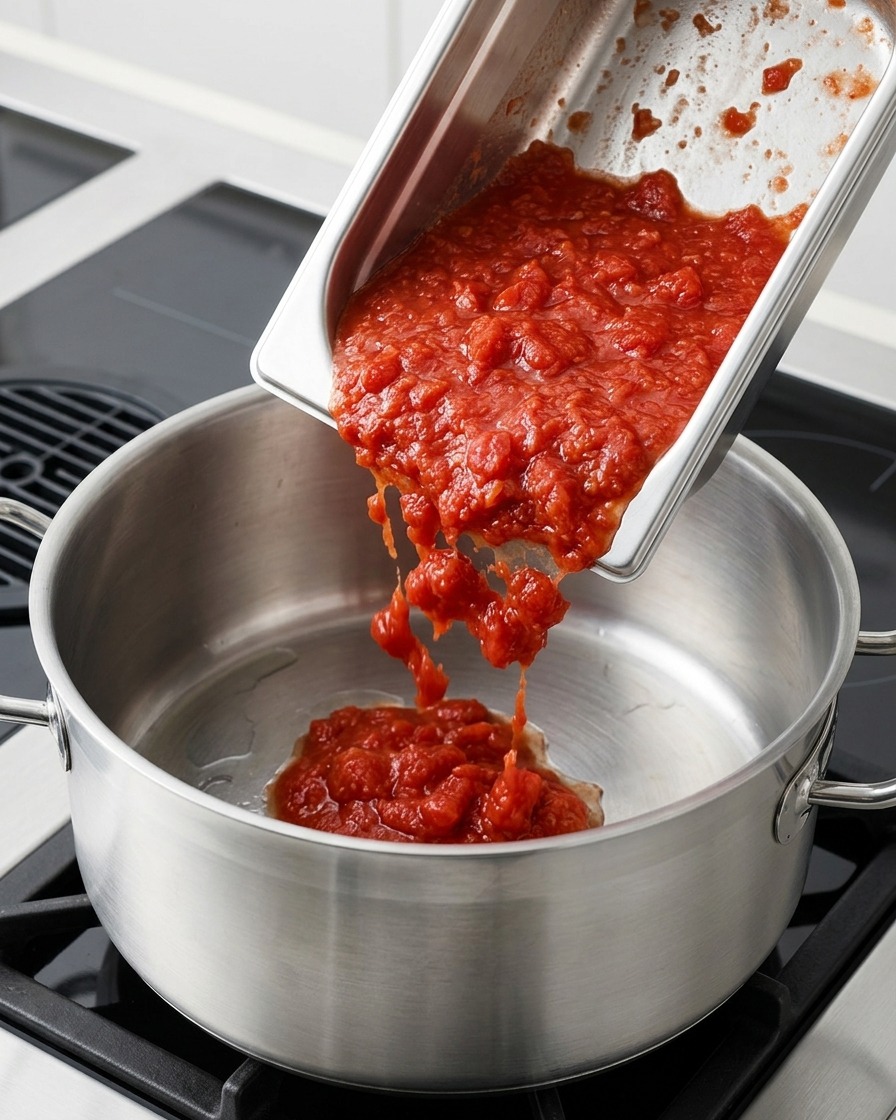
Take a cool stainless steel pan and pour the freshly blended tomato puree directly into it. Turn on the heat and bring it to a gentle boil, letting it cook for about half an hour.
Tip: Always start with a cool pan when cooking fresh tomato juice. This prevents the tomatoes from turning overly sour as they heat up. - 4Sauté the Vegetables
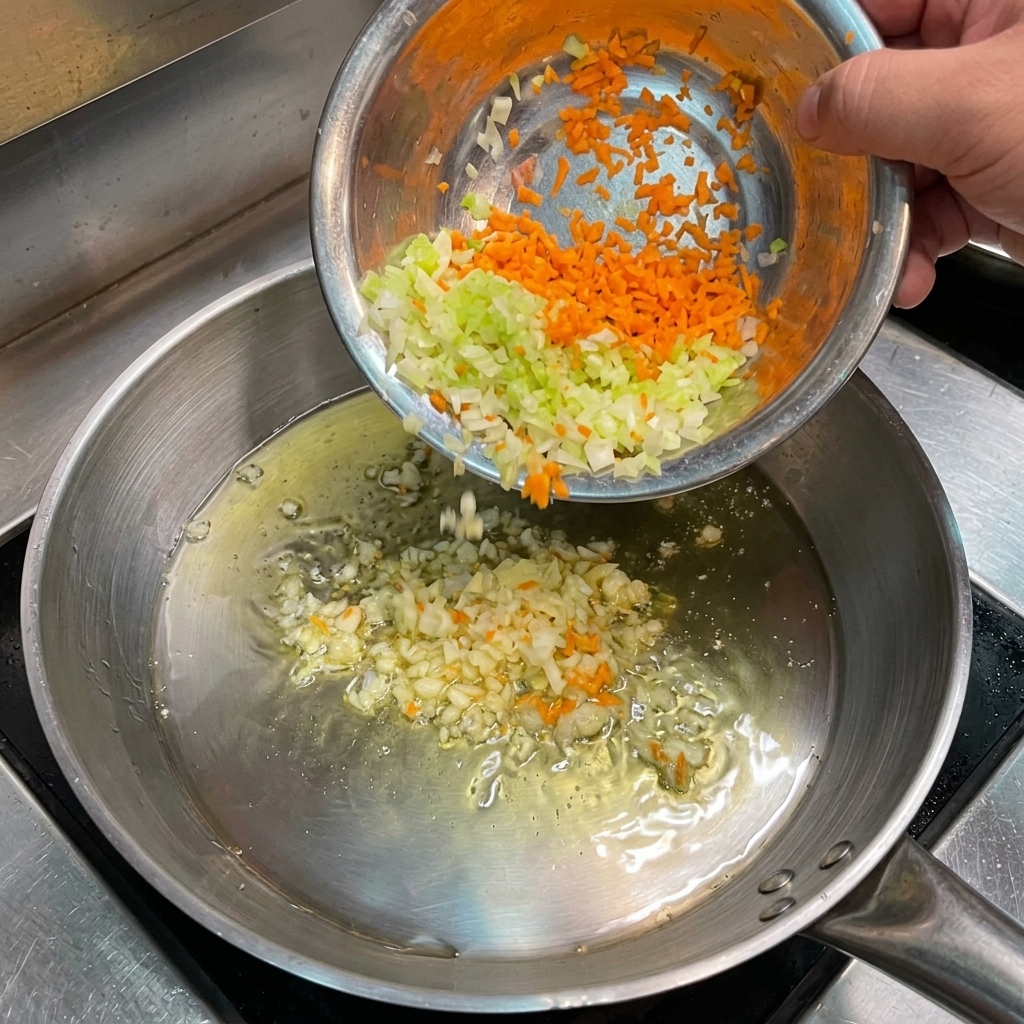
Heat a separate pan with oil and add the minced garlic. Once fragrant, carefully pour in your mixed chopped vegetables—carrots, celery, and onions—and sauté until they begin to soften.
Tip: Sweating the vegetable mixture slowly helps release their natural sweetness, building a foundational flavor for the sauce. - 5Incorporate the Tomato Paste
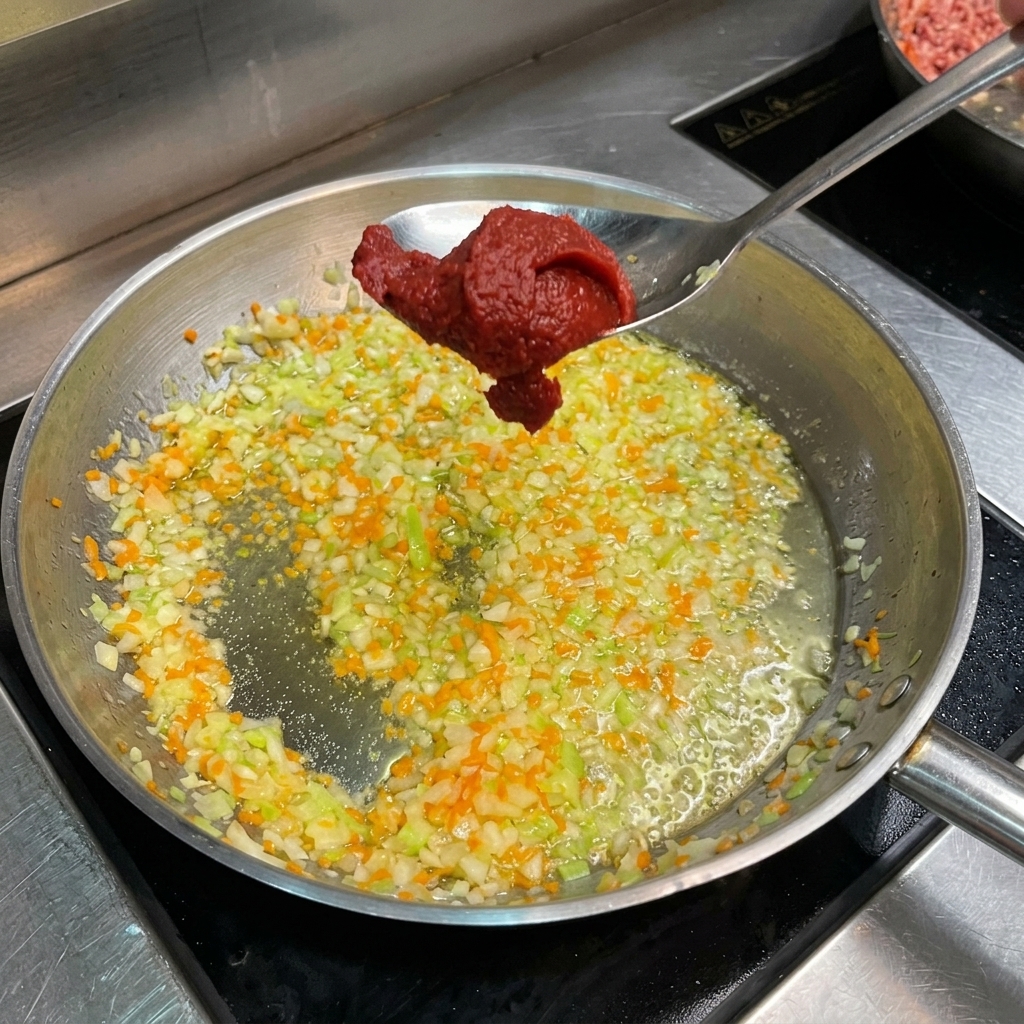
Once the vegetables have softened, add a spoonful of tomato paste to the pan. Stir it well to combine with the aromatics and let it cook briefly. This step enhances both the color and savory depth of the sauce.
Tip: Adding tomato paste helps compensate if your fresh tomatoes arent vibrant enough in color. - 6Combine Vegetables and Puree
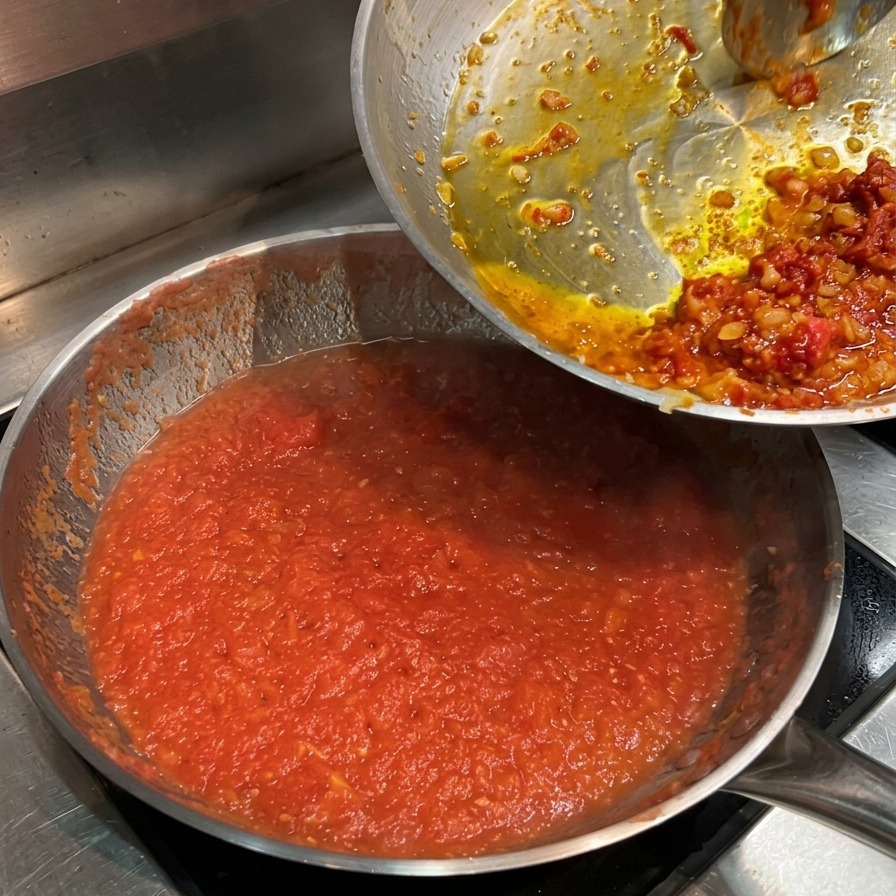
After the fresh tomato puree has boiled gently for half an hour, scrape the sautéed mixture of onion, carrot, celery, garlic, and tomato paste into the large pan. Stir everything together to unify the flavors and enrich the base.
Tip: Allowing the fresh puree to simmer and reduce before adding the sautéed vegetables ensures the aromatics retain their distinct flavors and dont turn into mush. - 7Infuse with Basil
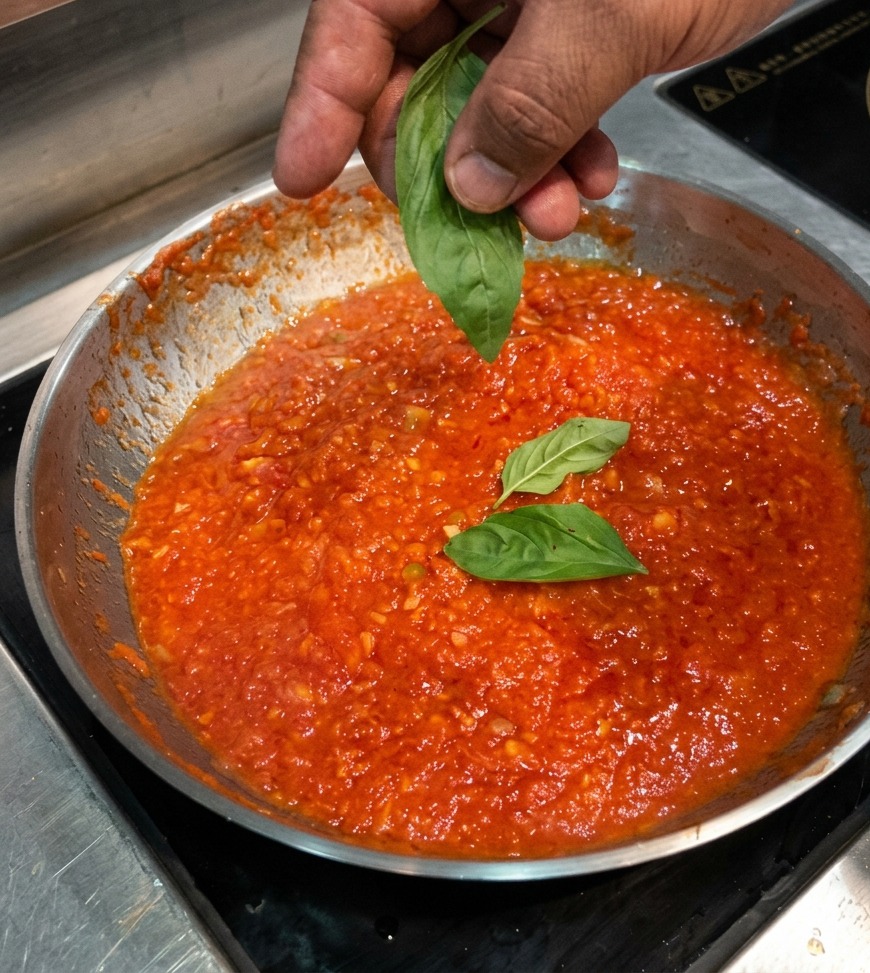
Tear or drop fresh basil leaves directly into the bubbling tomato sauce. The heat will immediately release the essential oils from the basil, infusing the rich tomato base with a vibrant, aromatic herbal note.
Tip: Add fresh herbs like basil near the end of the sauces simmering time to preserve their bright flavor and prevent them from turning bitter. - 8Season the Sauce
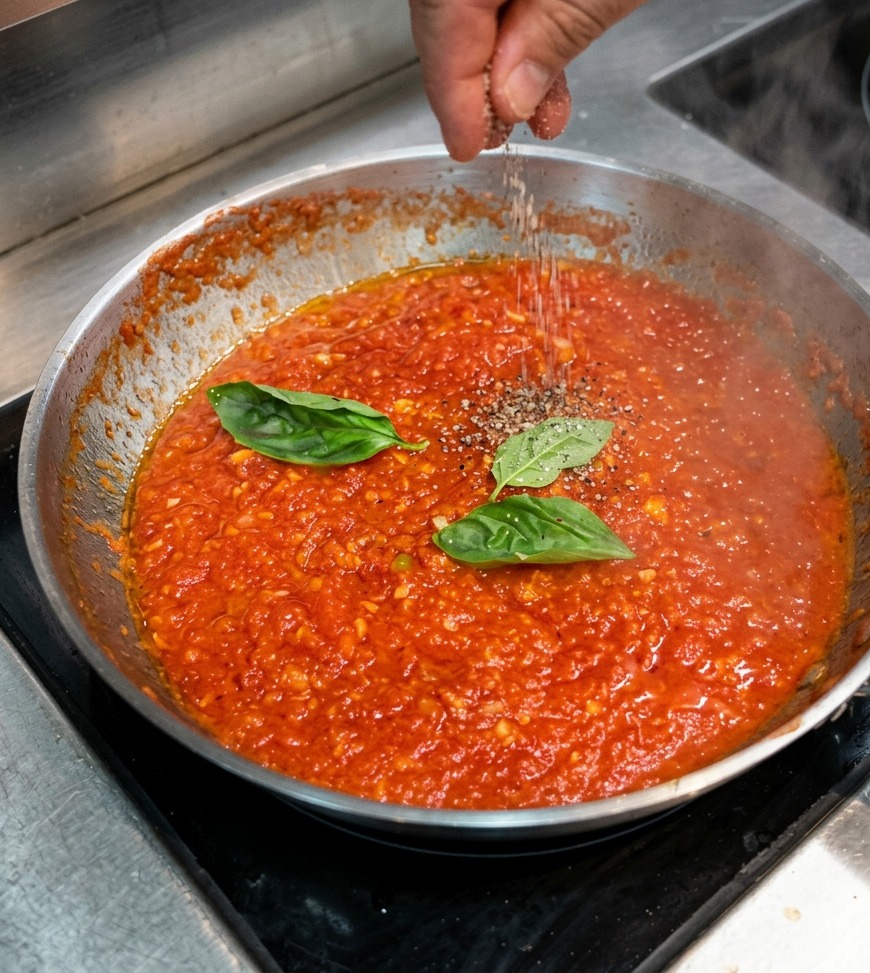
With the vegetables and basil mixed in, season the sauce by sprinkling salt and freshly cracked black pepper from above. Taste and adjust the seasoning to balance the natural acidity of the tomatoes and bring out the savory notes of the vegetables.
Tip: Sprinkling seasoning from higher up ensures an even distribution across the entire surface of the pan. - 9Boil the Spaghetti
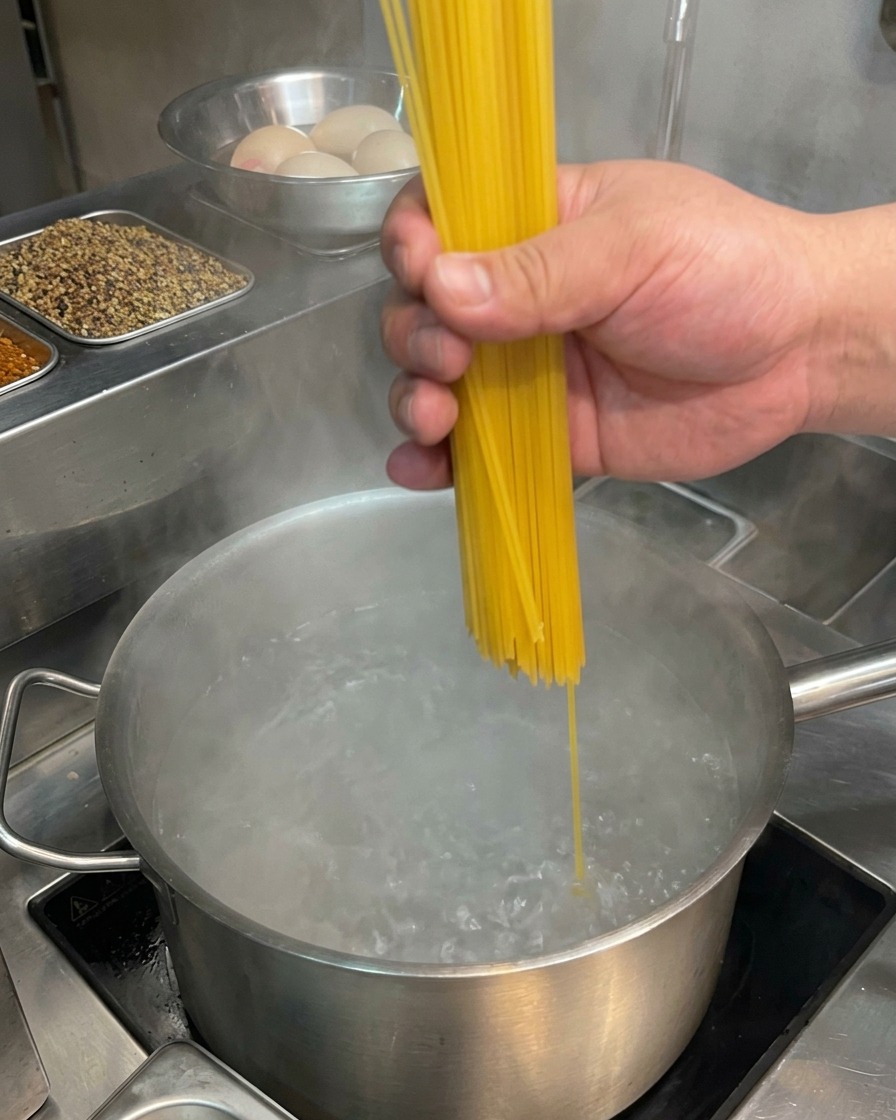
Bring a large pot of water to a rolling boil and add sea salt to build the pastas base flavor. Carefully submerge the dry spaghetti noodles into the water and let them cook for about 8 minutes until al dente.
Tip: Adding salt to the boiling water is crucial as it seasons the pasta from the inside out. - 10Saute the Cherry Tomatoes
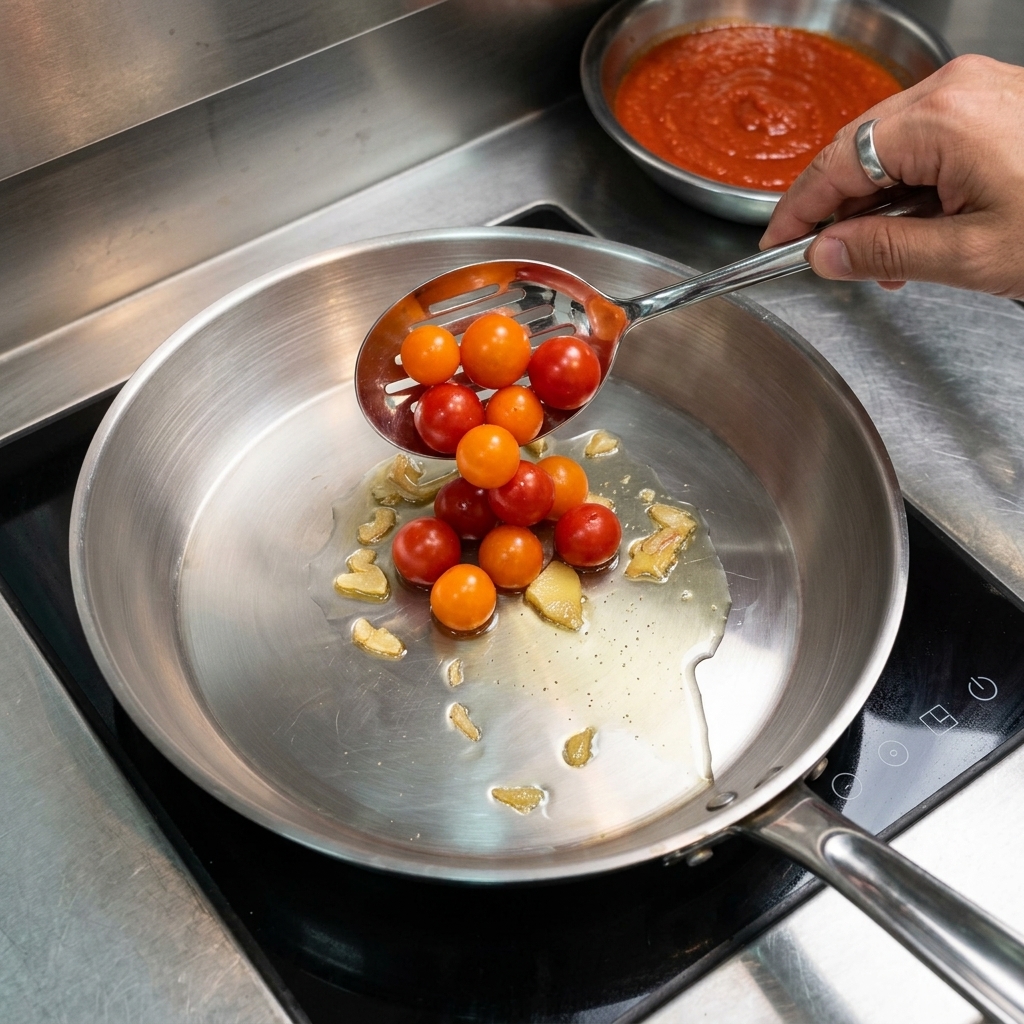
Heat a wide stainless steel pan with a splash of oil over medium heat. Carefully add a handful of whole cherry tomatoes into the pan. Let them sizzle and blister slightly in the hot oil to release their natural sweetness and juices, building a vibrant base for the final pasta toss.
Tip: If you enjoy a bit of heat, this is the perfect time to add some red chili flakes into the oil along with the tomatoes. - 11Add Chili Flakes
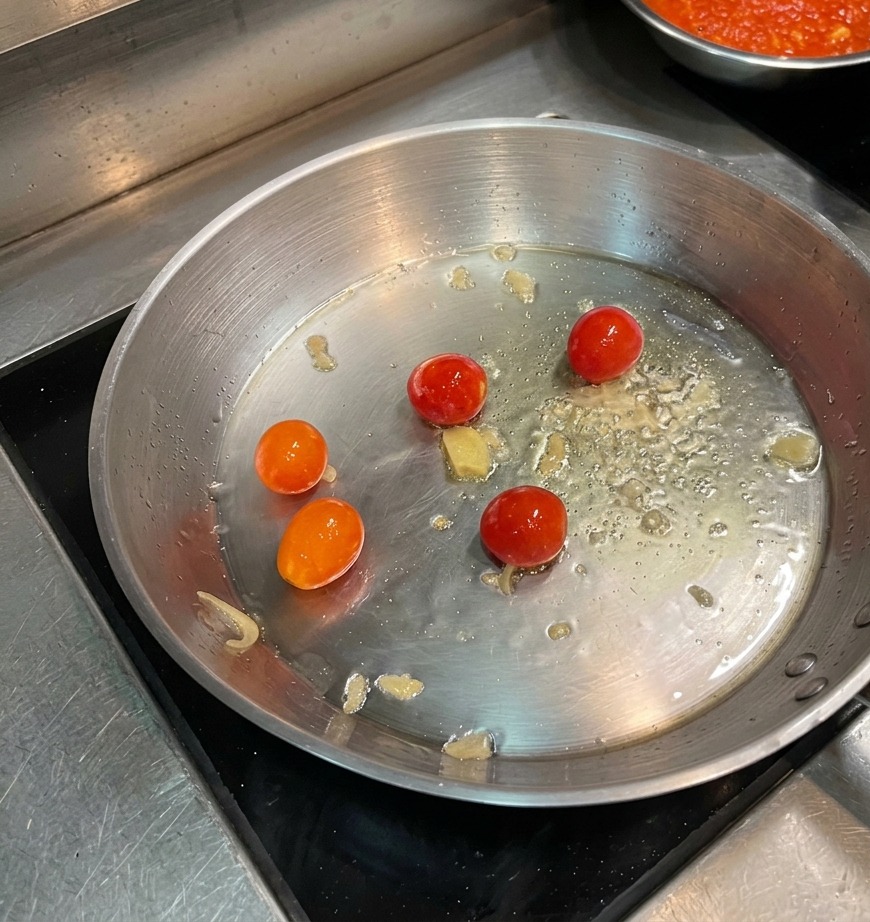
Sprinkle dried chili flakes directly over the cooking cherry tomatoes. Letting the flakes toast briefly in the hot oil releases their spicy aroma and infuses the base before adding the sauce.
Tip: Toast the chili flakes for just a few seconds; they can burn quickly and turn bitter if left in hot oil for too long. - 12Pour in the Tomato Sauce
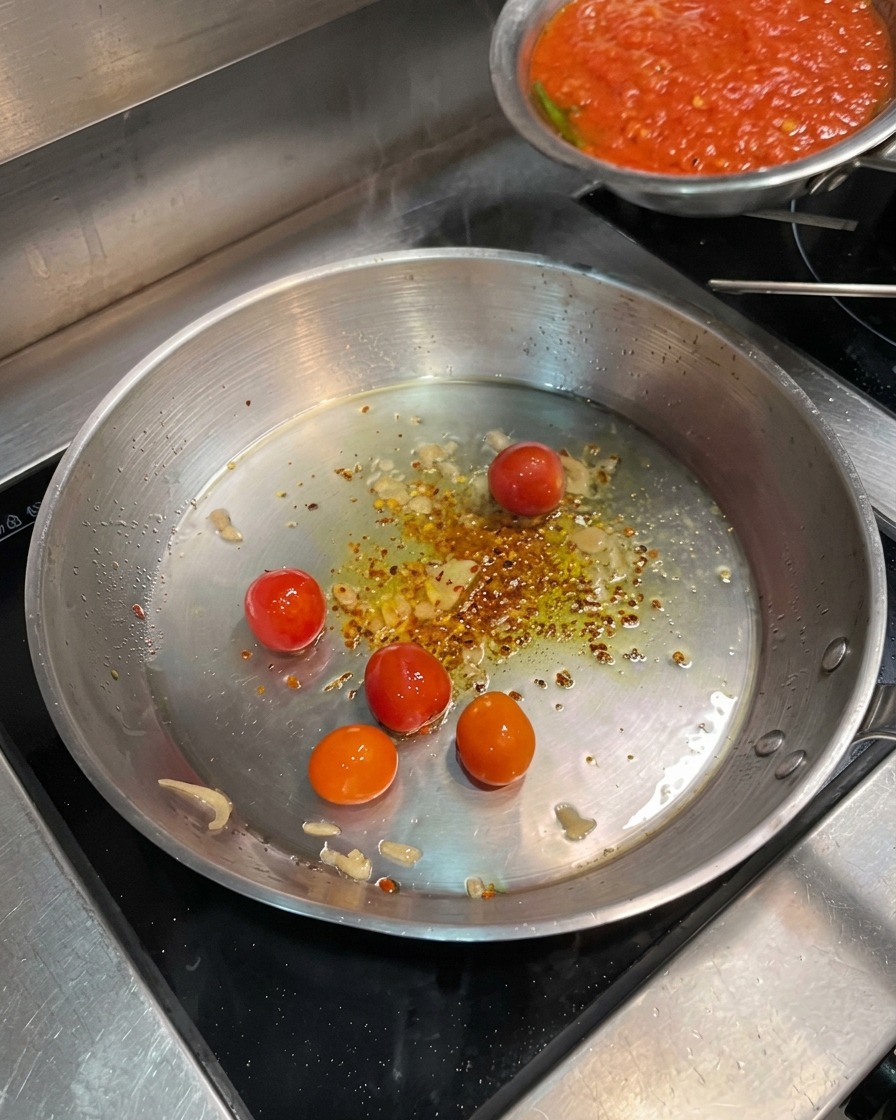
Once the cherry tomatoes are slightly softened and the chili flakes are fragrant, carefully pour the rich, slow-simmered tomato sauce into the wide pan to bring all the base flavors together.
Tip: Sautéing the cherry tomatoes first enhances their natural sweetness and adds a fresh texture to the sauce. - 13Add Spaghetti to Sauce
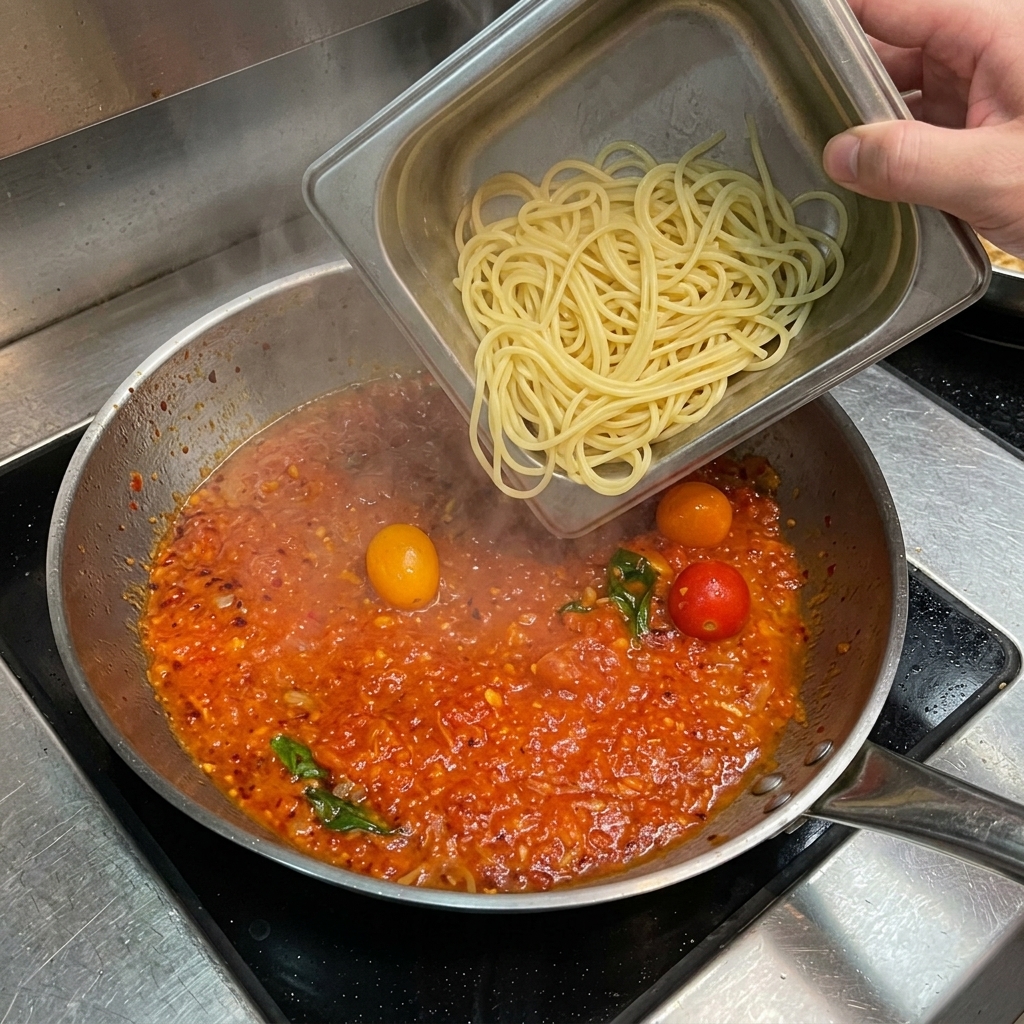
Once your tomato sauce is bubbling and fragrant, transfer the cooked spaghetti directly into the pan. Toss the pasta thoroughly so every strand is evenly coated with the rich tomato sauce.
Tip: Transferring the pasta directly from the boiling water can carry over some starchy pasta water, helping to thicken and bind the sauce. - 14Add Cheese and Butter
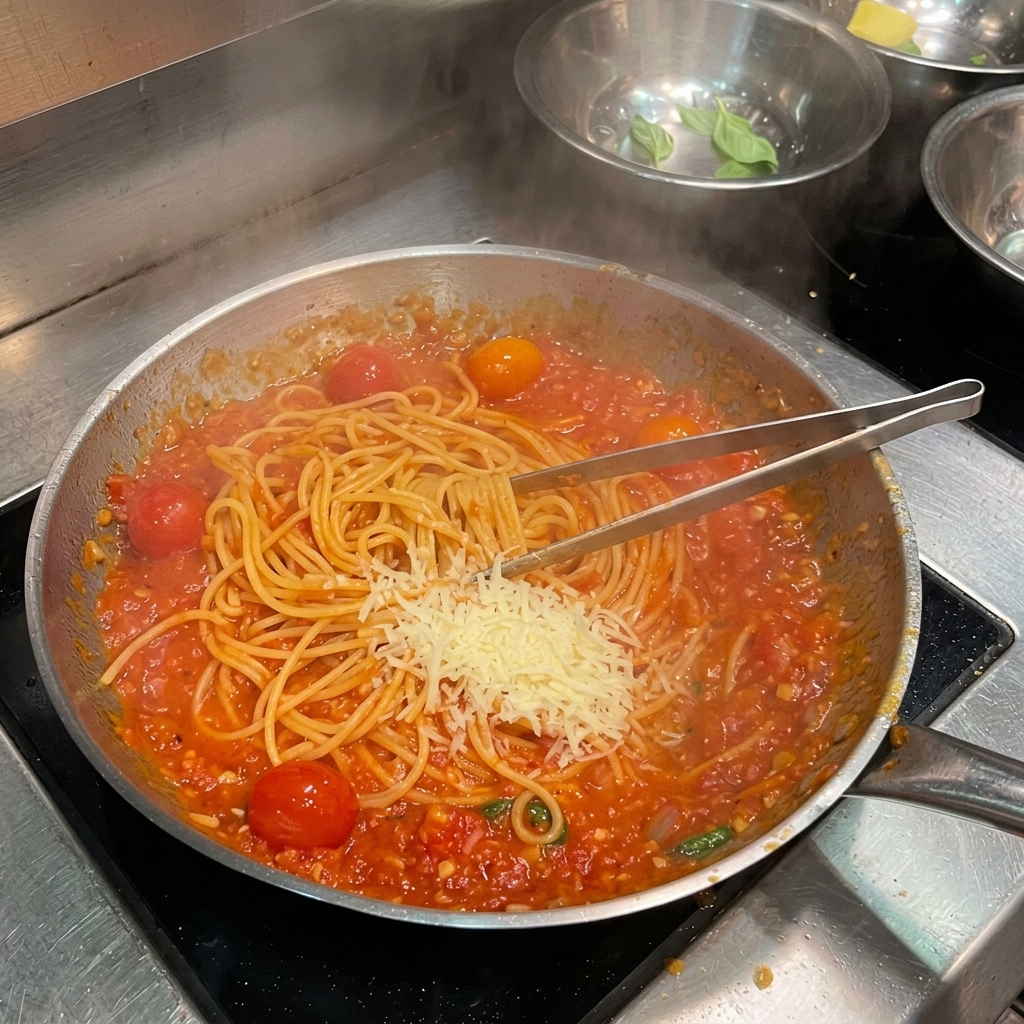
To finish the dish and create a luxurious, glossy sauce, add a small cube of butter and a generous handful of grated parmesan cheese to the pan. Toss everything together until the cheese and butter melt completely into the sauce.
Tip: Turn off the heat before adding the cheese and butter to prevent the sauce from splitting or becoming greasy. - 15Plate the Spaghetti
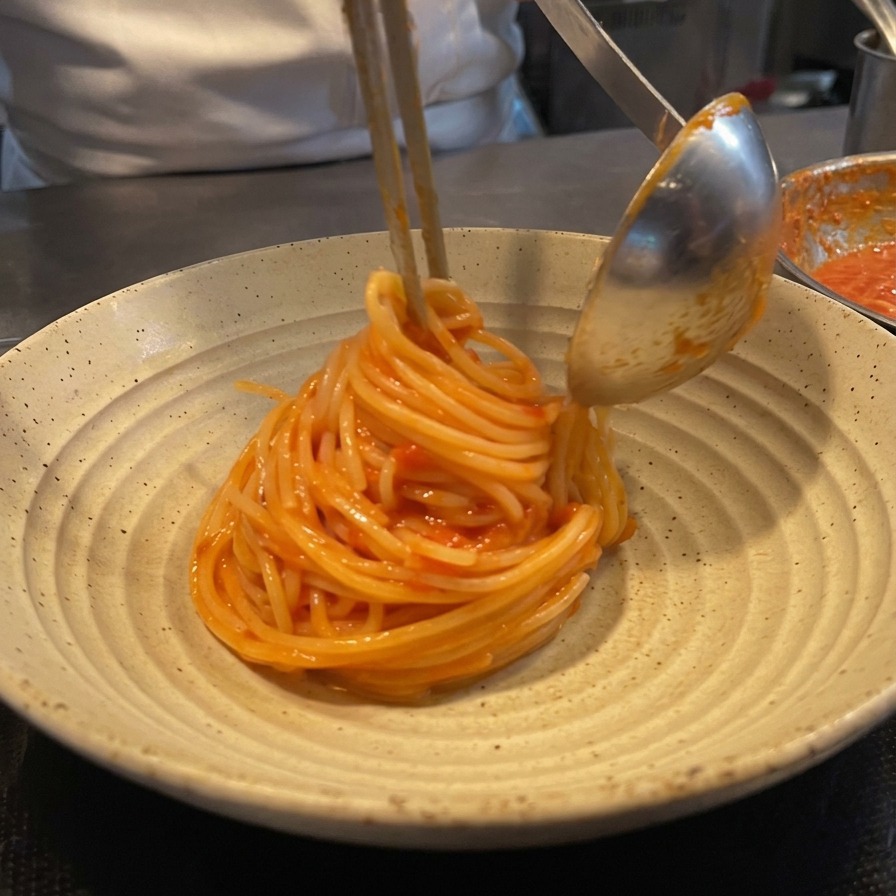
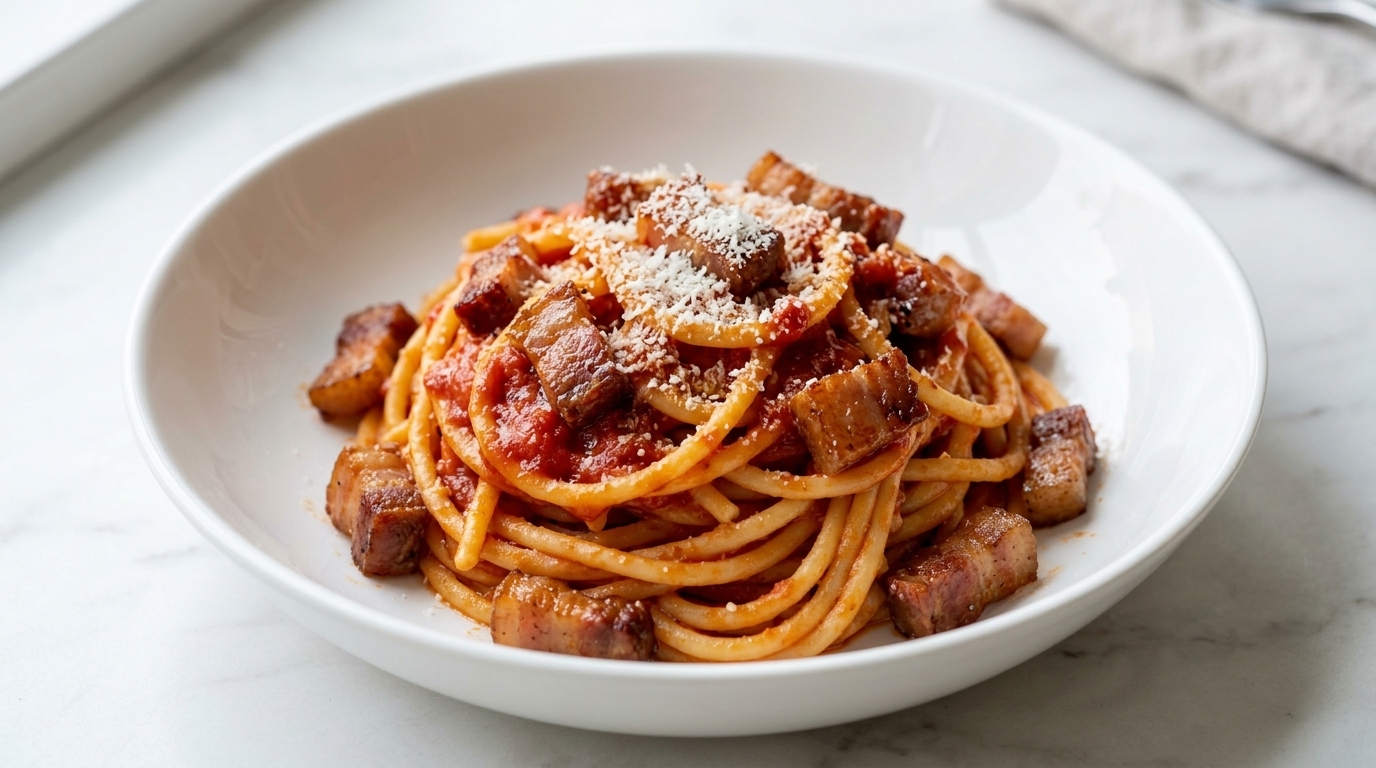
Using a pair of tongs and a ladle, carefully twirl the coated spaghetti to form a neat, tight mound. Gently slide the twisted pasta into a shallow ceramic bowl for a professional and elegant presentation.
Tip: Twirling the pasta inside the ladle helps create height and makes the final dish look like it came straight from a restaurant kitchen.