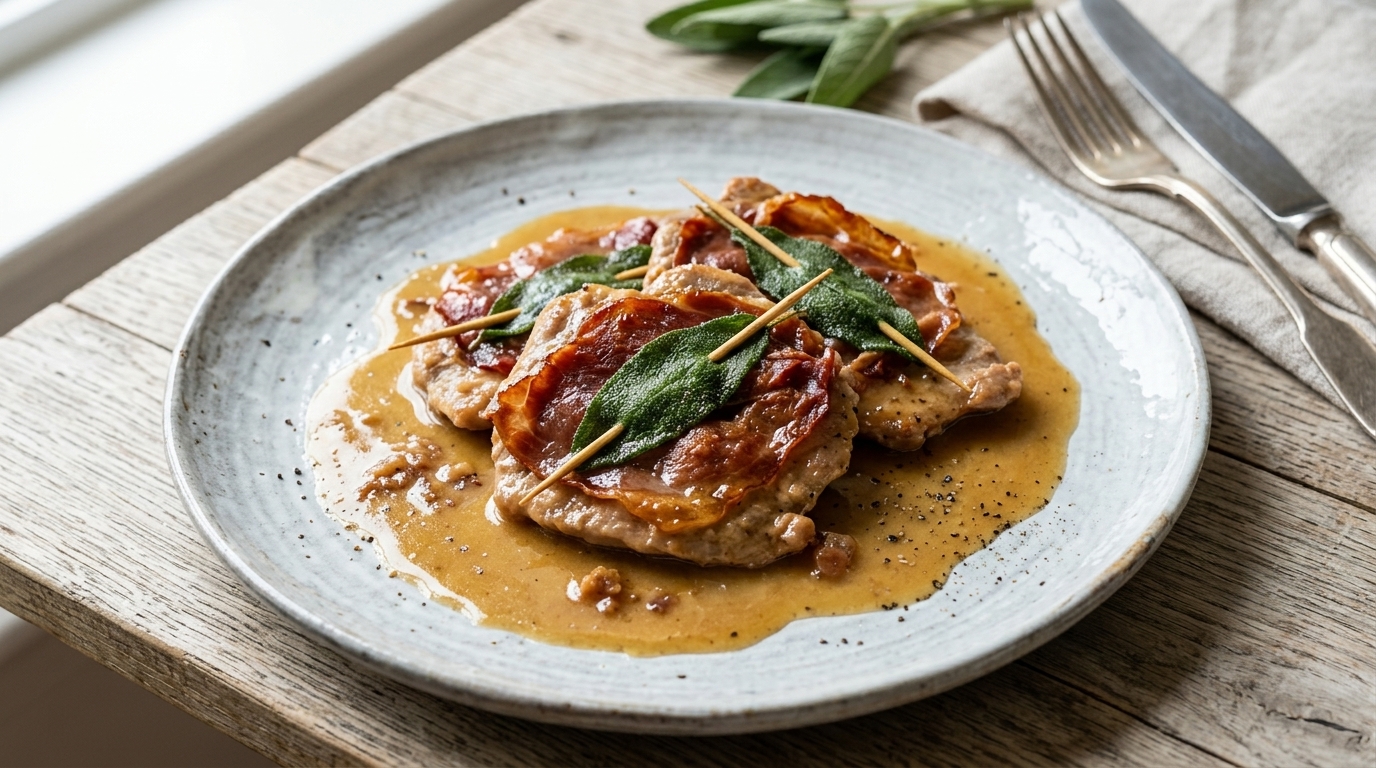
Traditional Saltimbocca alla Romana (Roman-style Veal)
Savory veal cutlets layered with salty prosciutto and fresh sage then pan seared to perfection in a silky white wine and butter sauce.
Saltimbocca literally translates to jump in the mouth which is a testament to the irresistible combination of tender veal and aromatic sage. This classic Roman dish embodies the simplicity of Italian cooking by relying on high quality ingredients and a quick sear to create a sophisticated main course.
Ingredients
- 500 g veal cutlets
- 8–10 slices prosciutto crudo
- 8–10 leaves fresh sage
- 30 g butter
- 2 tbsp olive oil
- 100 ml dry white wine
- 12 cup all-purpose flour
- to taste salt
- to taste black pepper
- optional crusty bread
Instructions
- 1Prepare the veal slices
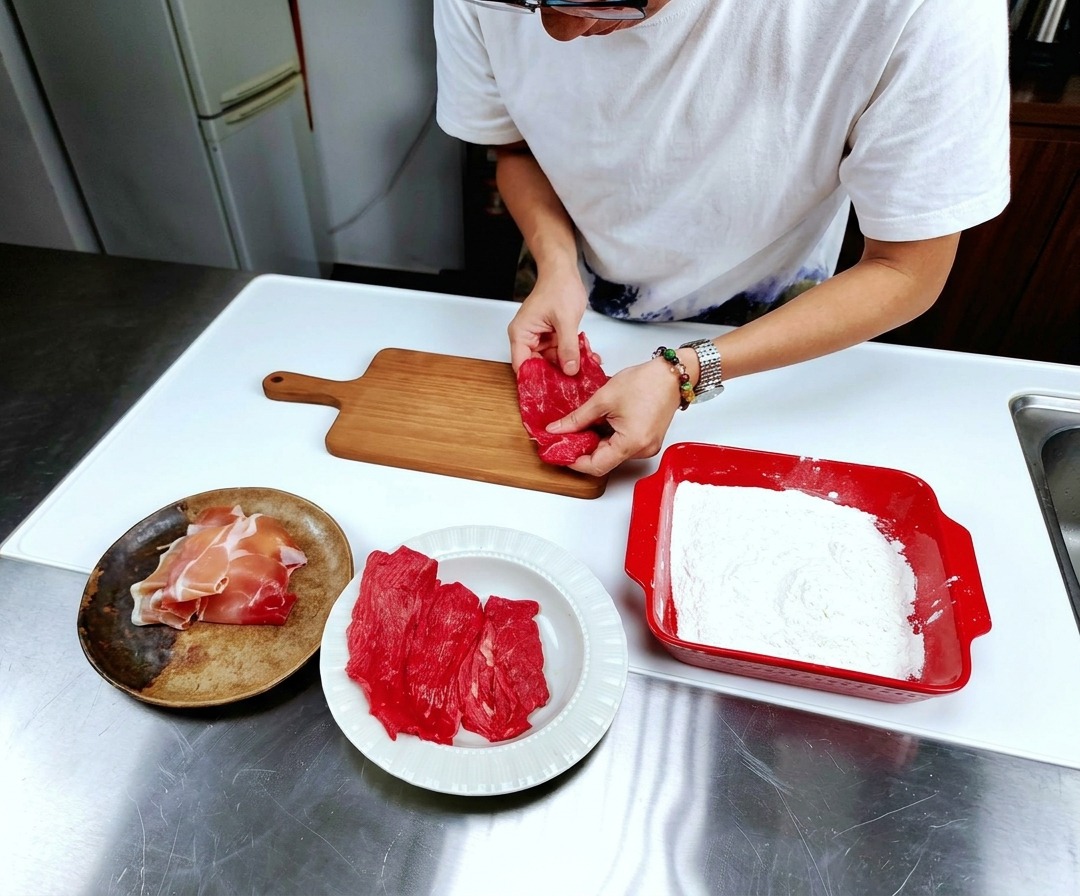
Select tender, lean veal and slice it thinly. Lay the raw veal slices out flat on a clean wooden cutting board to prepare them for layering with the other traditional ingredients.
Tip: If the veal slices are too thick, you can gently pound them between sheets of plastic wrap to achieve a uniform thinness. - 2Layer with prosciutto
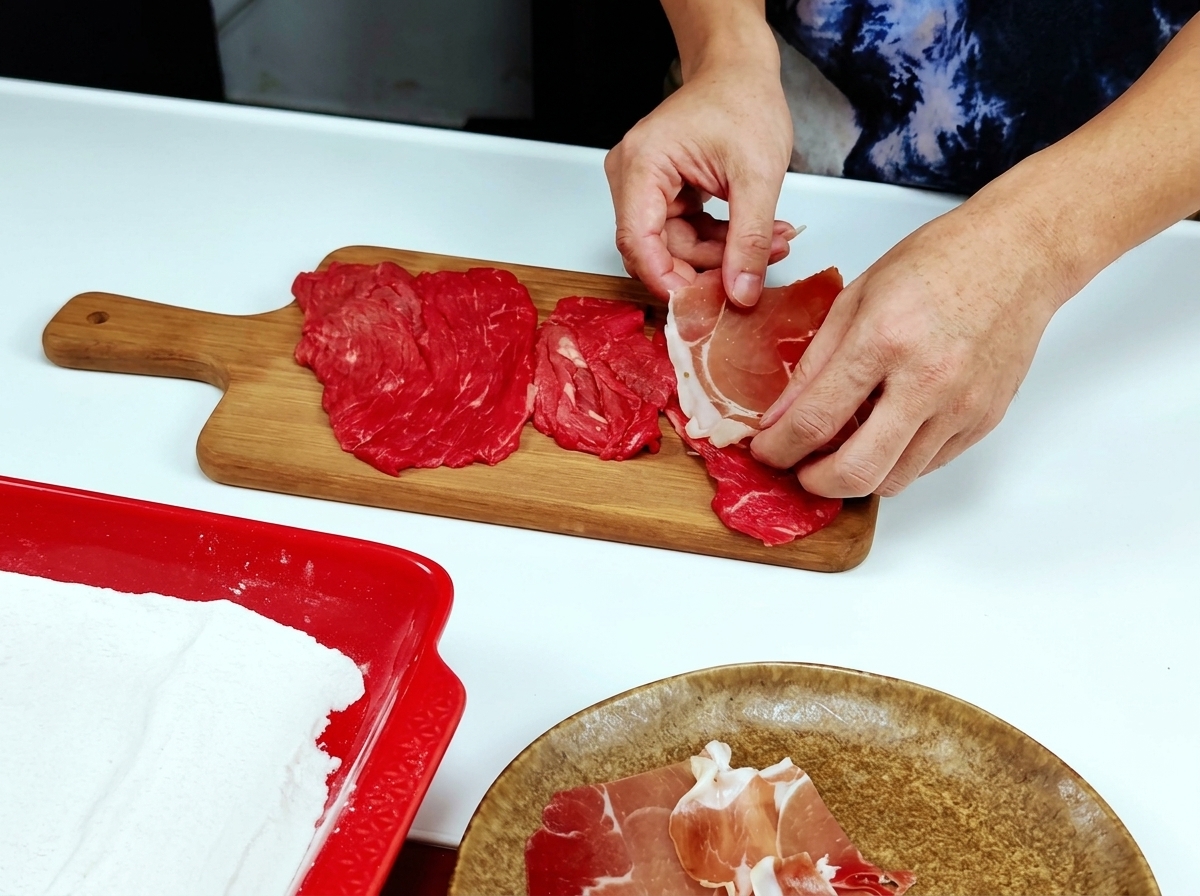
Place a thin slice of pink prosciutto over each piece of veal. The salty ham provides the primary seasoning for the dish and helps lock in the moisture of the lean meat.
Tip: Try to match the size of the prosciutto slice to the veal so it covers the meat without hanging over the edges too much. - 3Add fresh sage
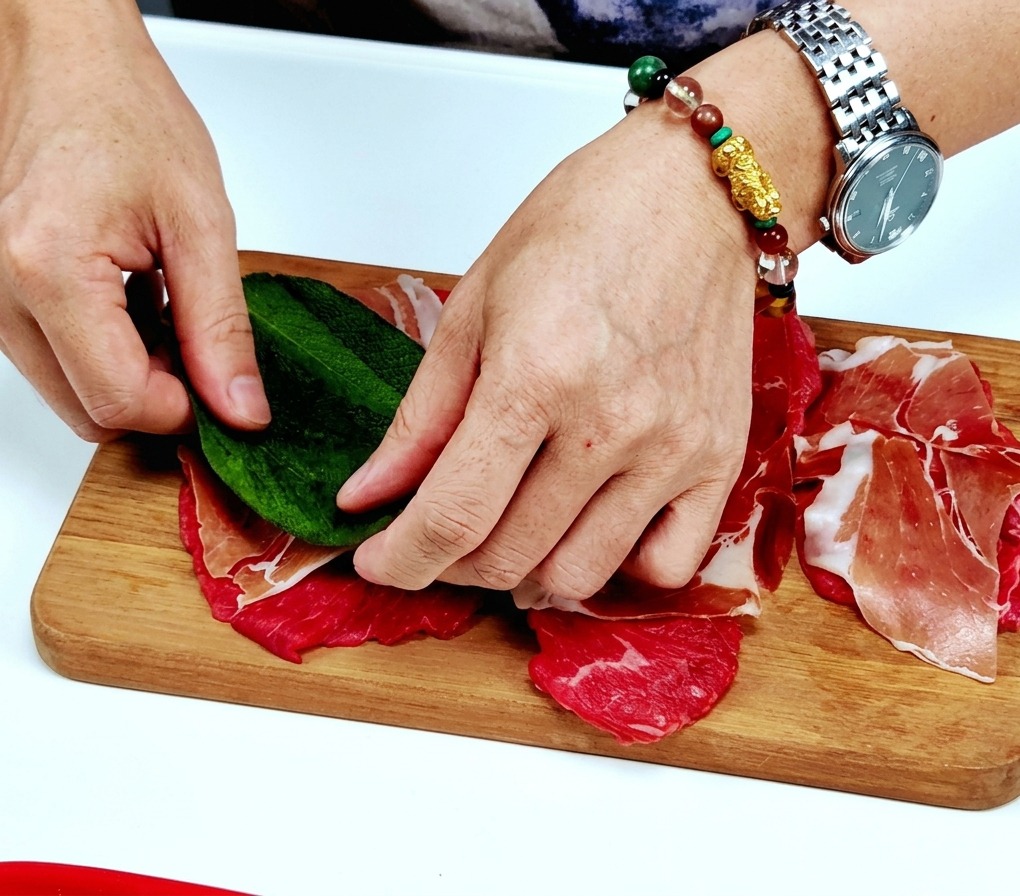
Place one or two fresh green sage leaves in the center of the prosciutto layer. Sage is the essential aromatic that gives Saltimbocca alla Romana its signature fragrant profile.
Tip: Use fresh sage rather than dried for the most authentic flavor and the best visual presentation. - 4Secure with a toothpick
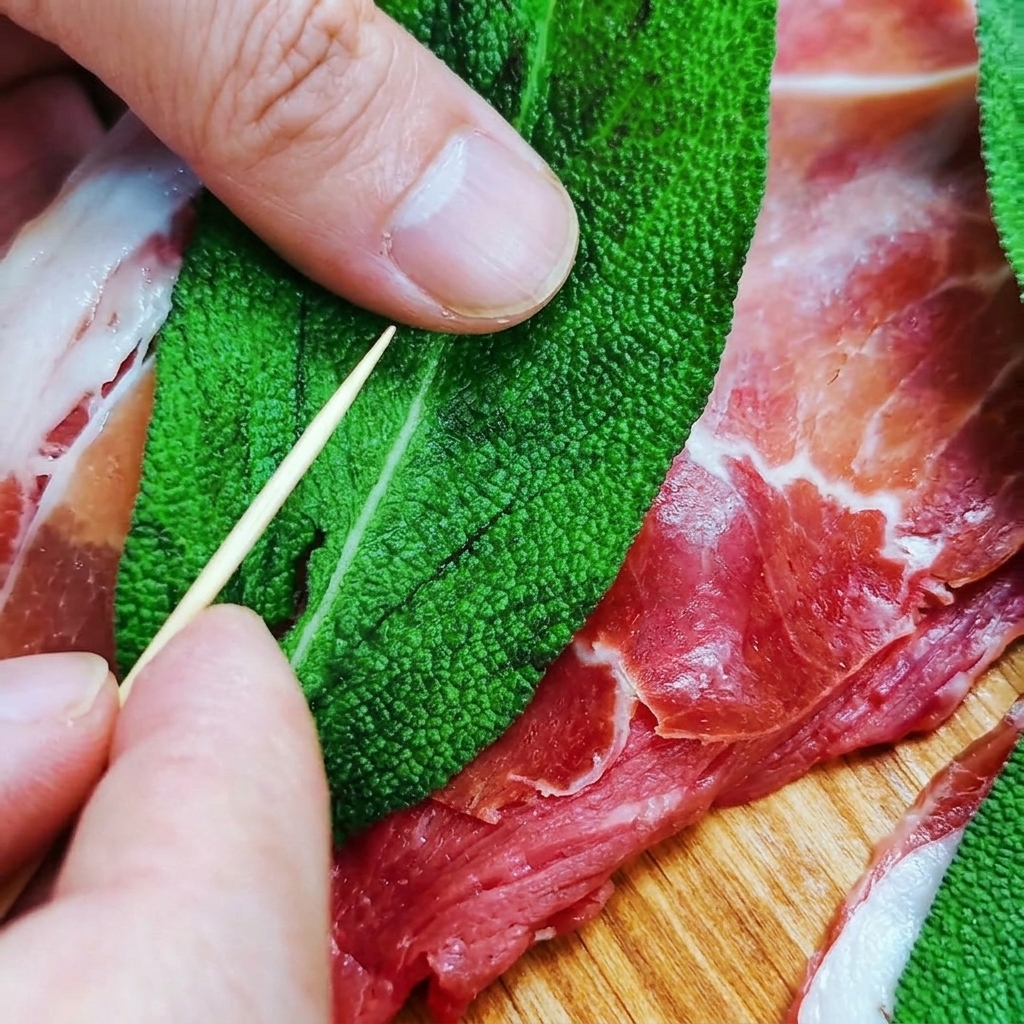
Weave a wooden toothpick through the sage leaf and the ham plus the veal to pin all three layers together. This ensures the aromatics stay attached during frying but remember to remove them before serving.
Tip: Insert the toothpick like a needle in a stitch pattern down through the leaf and meat then back up to keep everything flat. - 5Heat the oil and butter
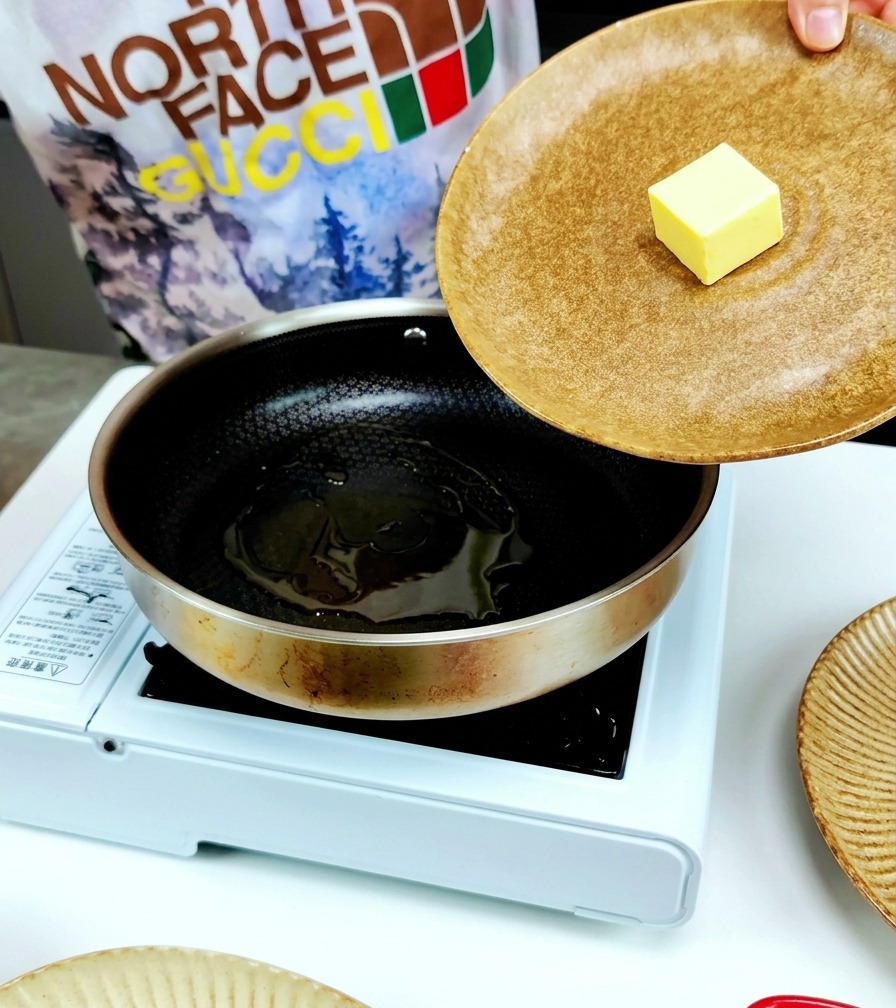
Place a frying pan over medium-low heat and add a drizzle of olive oil along with a generous knob of yellow butter. Allow the butter to melt and combine with the oil, creating a rich base for frying the veal while preventing the butter from burning.
Tip: Using a mix of oil and butter allows for the flavor of the butter with a higher smoke point from the olive oil. - 6Flour and sear the veal
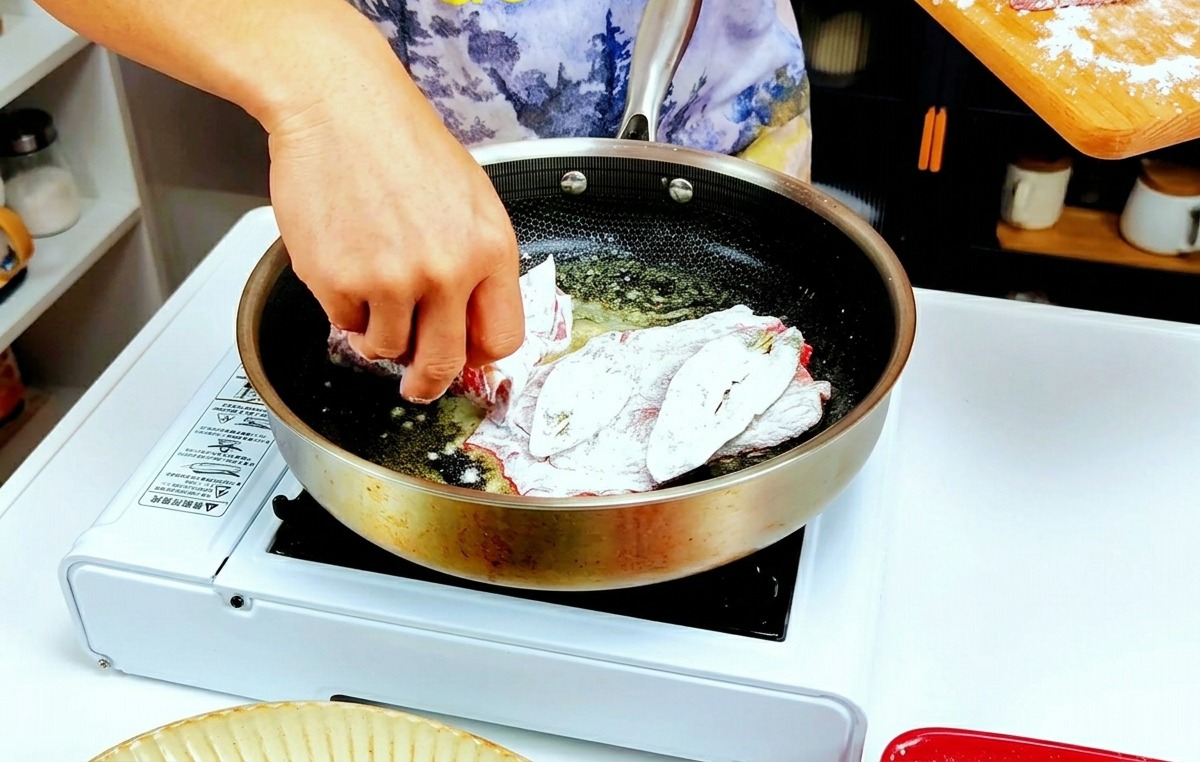
Lightly dust the bottom (veal) side of the prepared slices with white flour, shaking off any excess. Carefully place them into the bubbling butter. Sear the meat to develop a light golden crust while keeping the ham and sage visible.
Tip: Only flour the meat right before it goes into the pan to prevent the coating from becoming gummy. - 7Deglaze with white wine
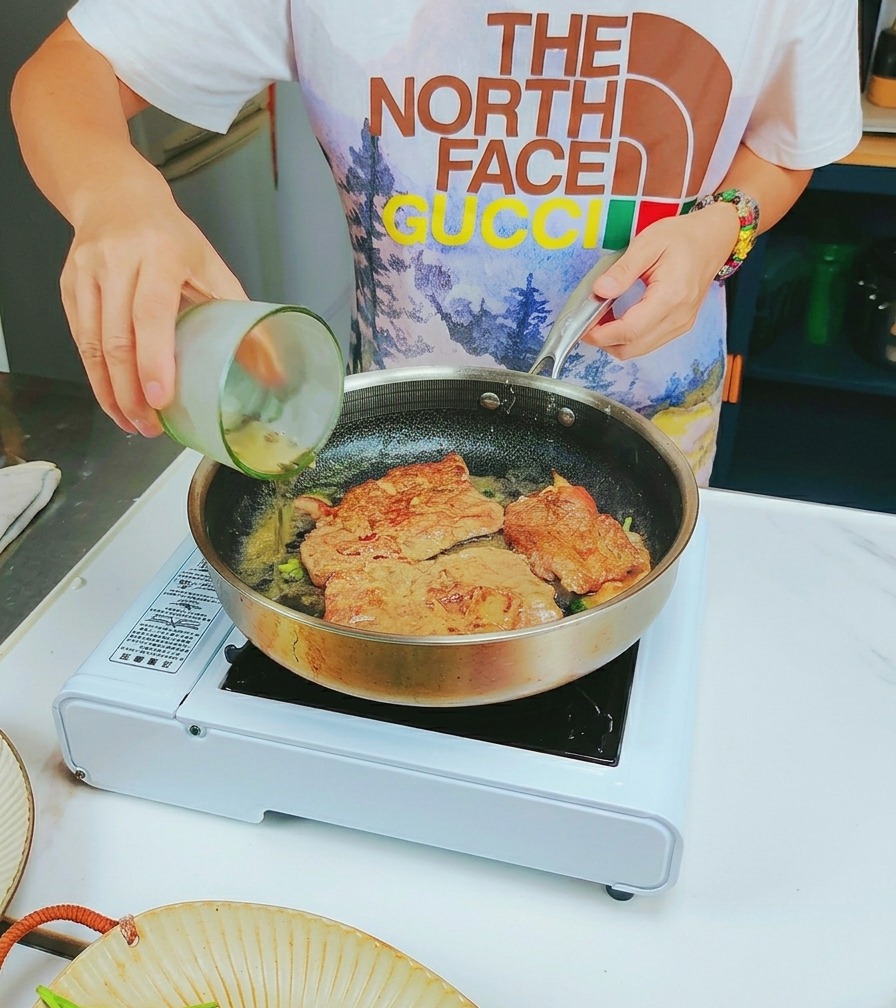
Once the veal has browned, pour a splash of white wine into the pan. Use the liquid to deglaze the bottom of the pan, scraping up the flavorful browned bits to incorporate them into what will become a silky, aromatic sauce.
Tip: Use a dry white wine for the best balance of acidity in the pan sauce. - 8Season with salt
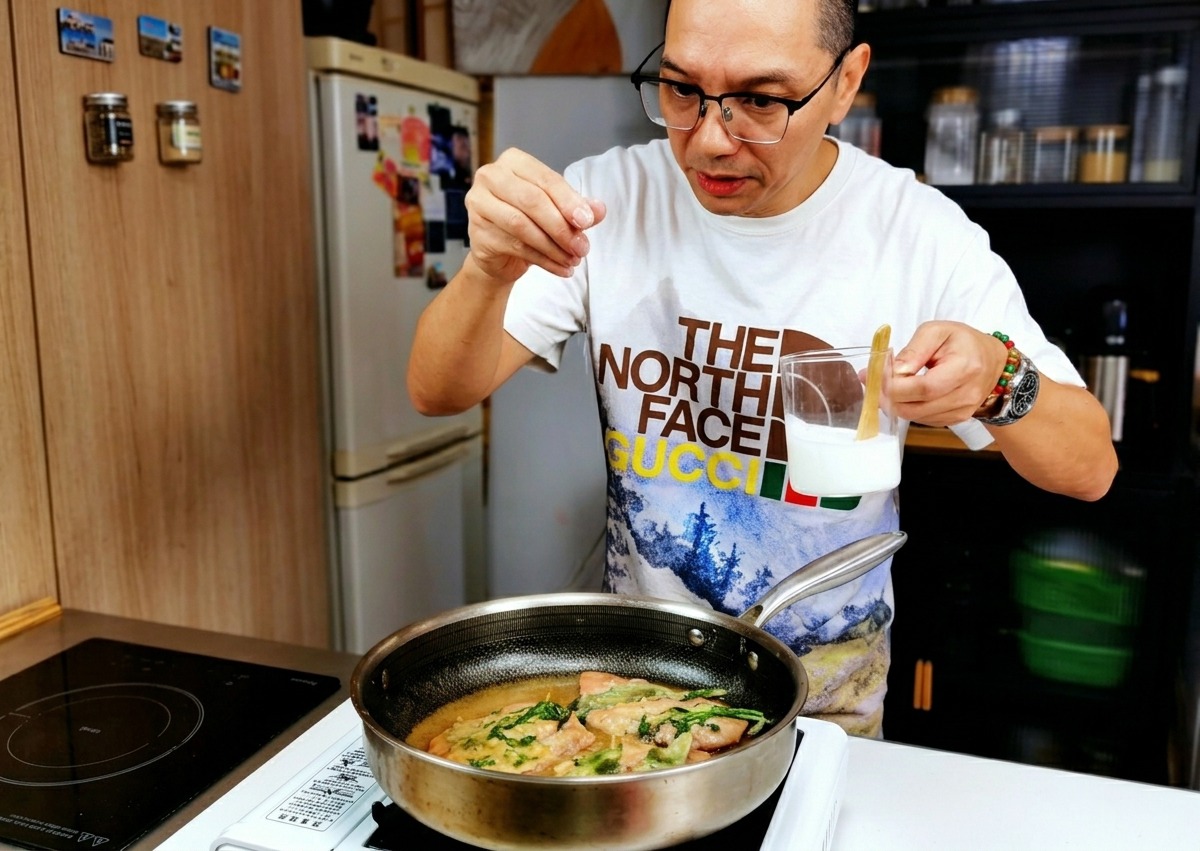
Sprinkle a small pinch of salt over the meat as it simmers in the wine sauce. Be conservative with the seasoning at this stage, as the prosciutto already contributes a significant amount of saltiness to the dish.
Tip: Always taste your sauce before adding salt, especially when cooking with cured meats like prosciutto. - 9Finish with black pepper
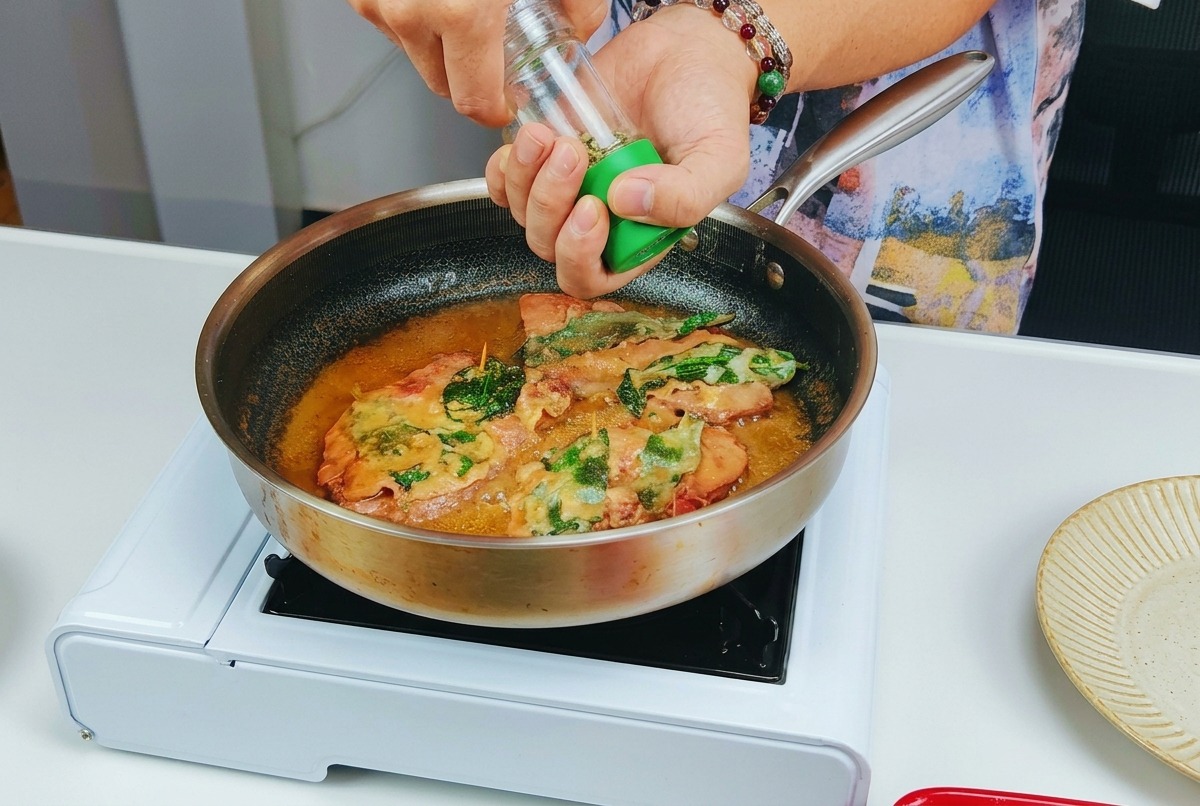
Grind fresh black pepper over the simmering Saltimbocca to add a touch of heat and floral aroma. Allow the sauce to reduce slightly until it reaches a perfect consistency that coats the back of a spoon.
Tip: Freshly ground pepper has much more oils and flavor than pre-ground pepper, making a big difference in simple dishes.