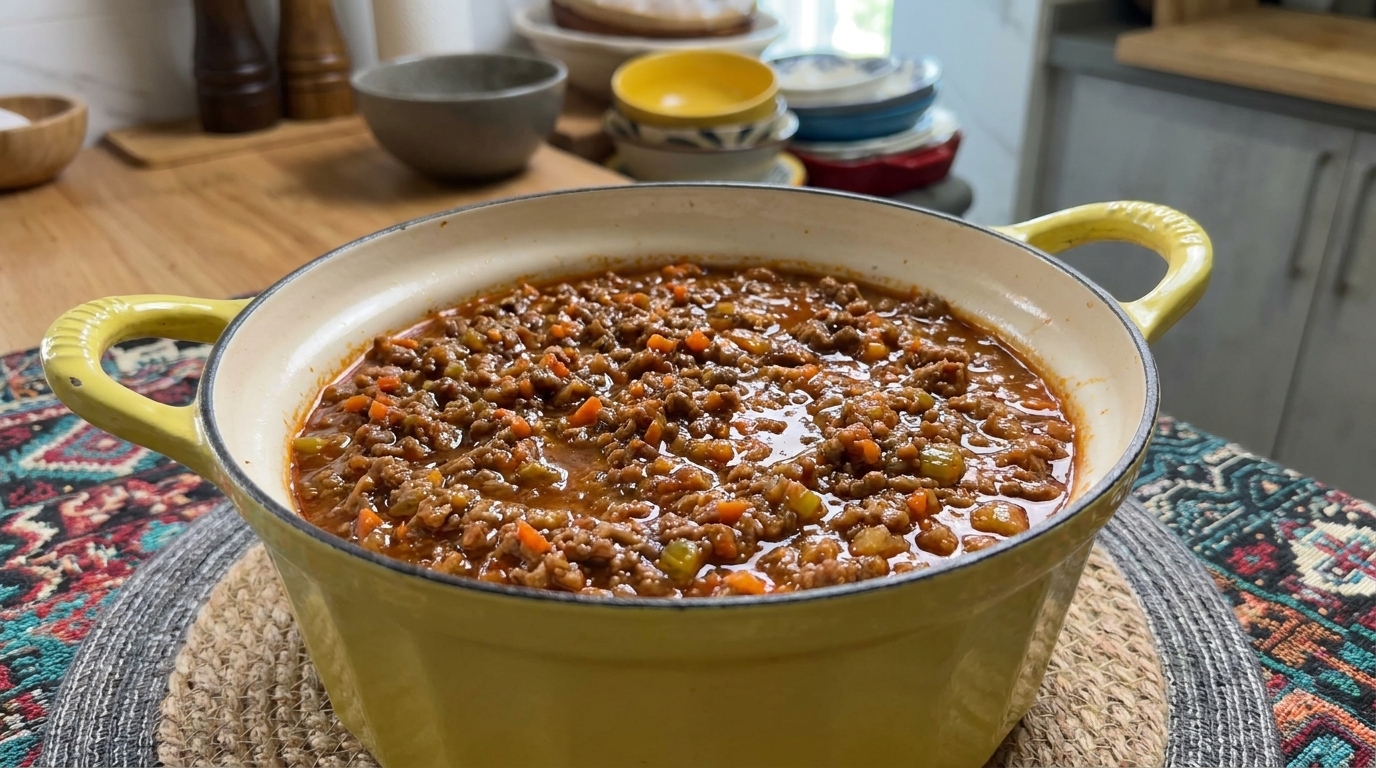
Authentic Tagliatelle al Ragù alla Bolognese
Experience the official slow-simmered Bolognese—a rich, meat-forward ragù balanced with whole milk and served over silky ribbons of tagliatelle.
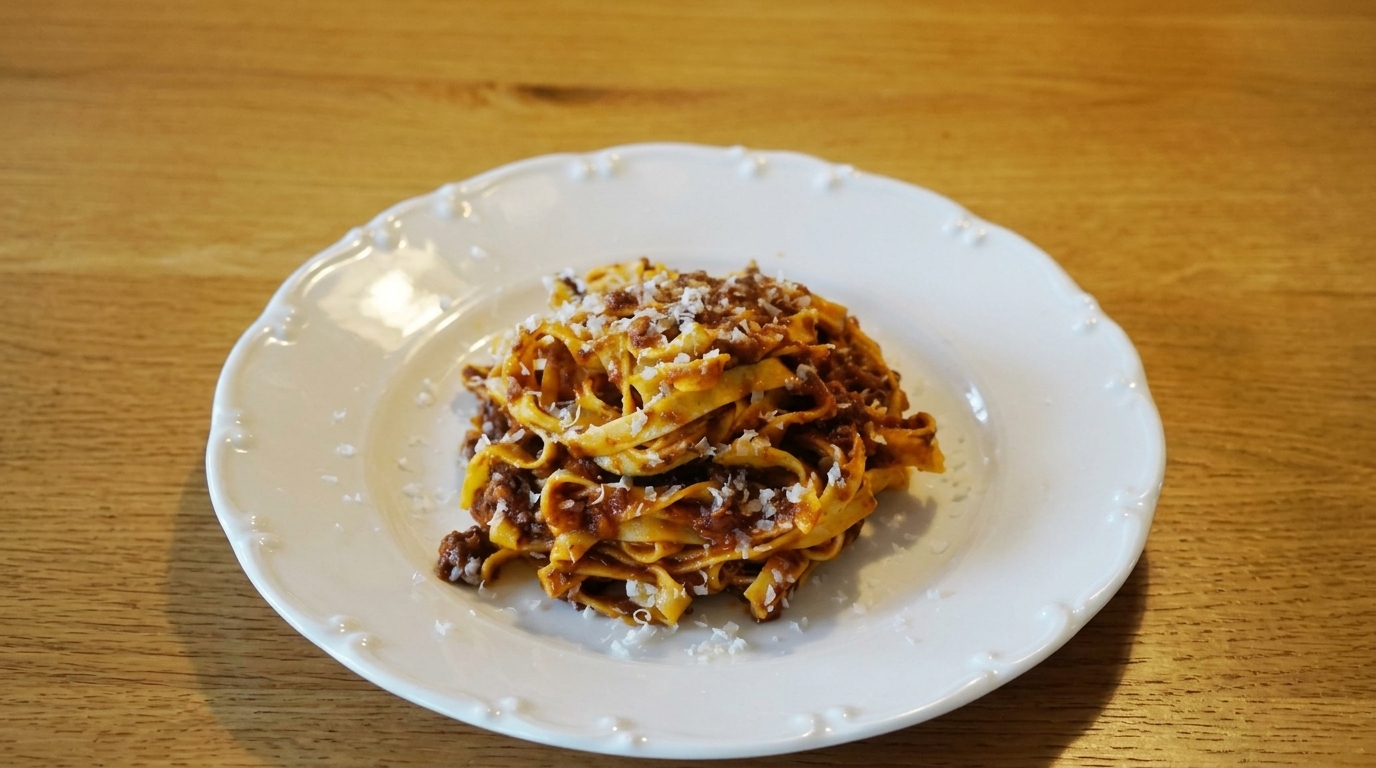
Ragù alla Bolognese is the soul of Bologna, Italys culinary capital. Registered in 1982 to preserve its heritage, this version emphasizes a slow-cooked meat base over tomatoes, enriched with milk and a hint of nutmeg. It is traditionally served with wide tagliatelle ribbons, which are perfectly textured to hold the hearty sauce.
Ingredients
- 400 g ground beef
- 150 g non-smoked Italian pancetta
- 1 unit onion
- 1 unit carrot
- 1 unit celery stalk
- 2 tbsp olive oil
- 125 ml red wine
- 1 tbsp tomato paste
- 200 ml tomato puree
- 500 ml beef broth
- 200 ml whole milk
- 1 pinch ground nutmeg
- to taste salt
- to taste black pepper
- 500 g tagliatelle noodles
- optional grated Parmesan cheese
Instructions
- 1Prep the pancetta
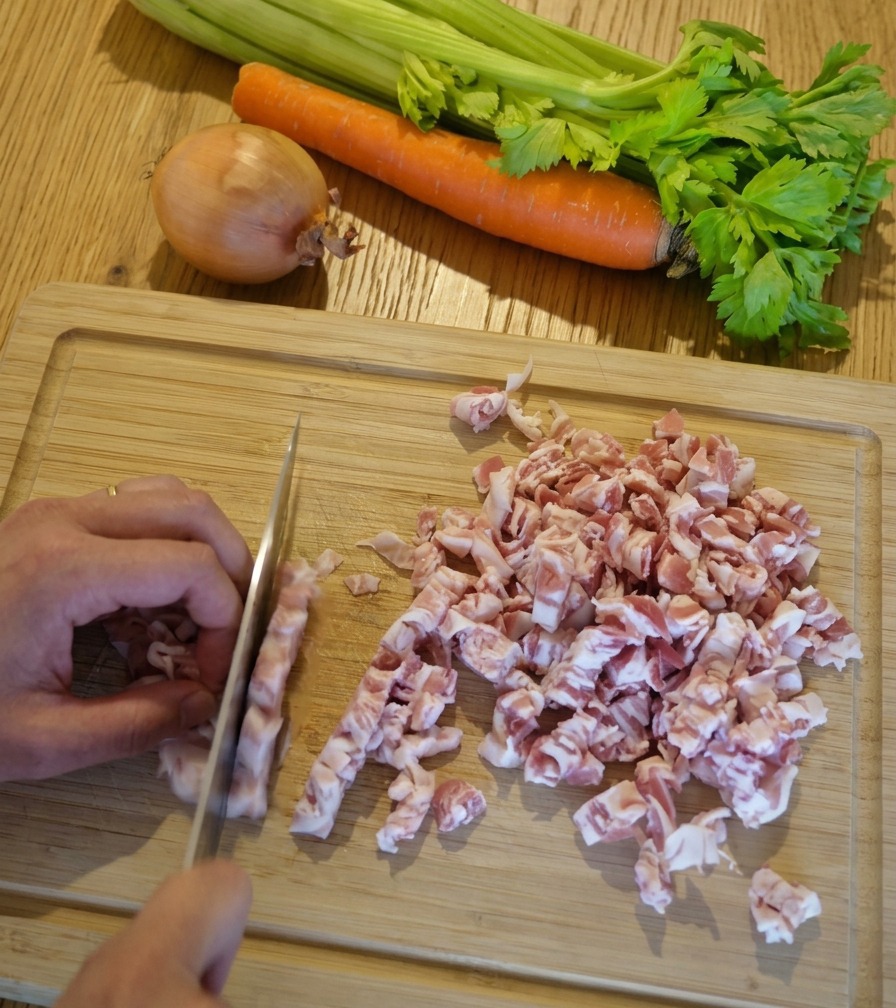
Start by finely dicing 150g of non-smoked Italian pancetta. Cutting the meat into small, uniform cubes ensures the fat renders evenly, providing a rich, savory base for your authentic Ragù.
Tip: If the pancetta is too soft to dice easily, place it in the freezer for 10-15 minutes to firm up before cutting. - 2Prepare the soffritto
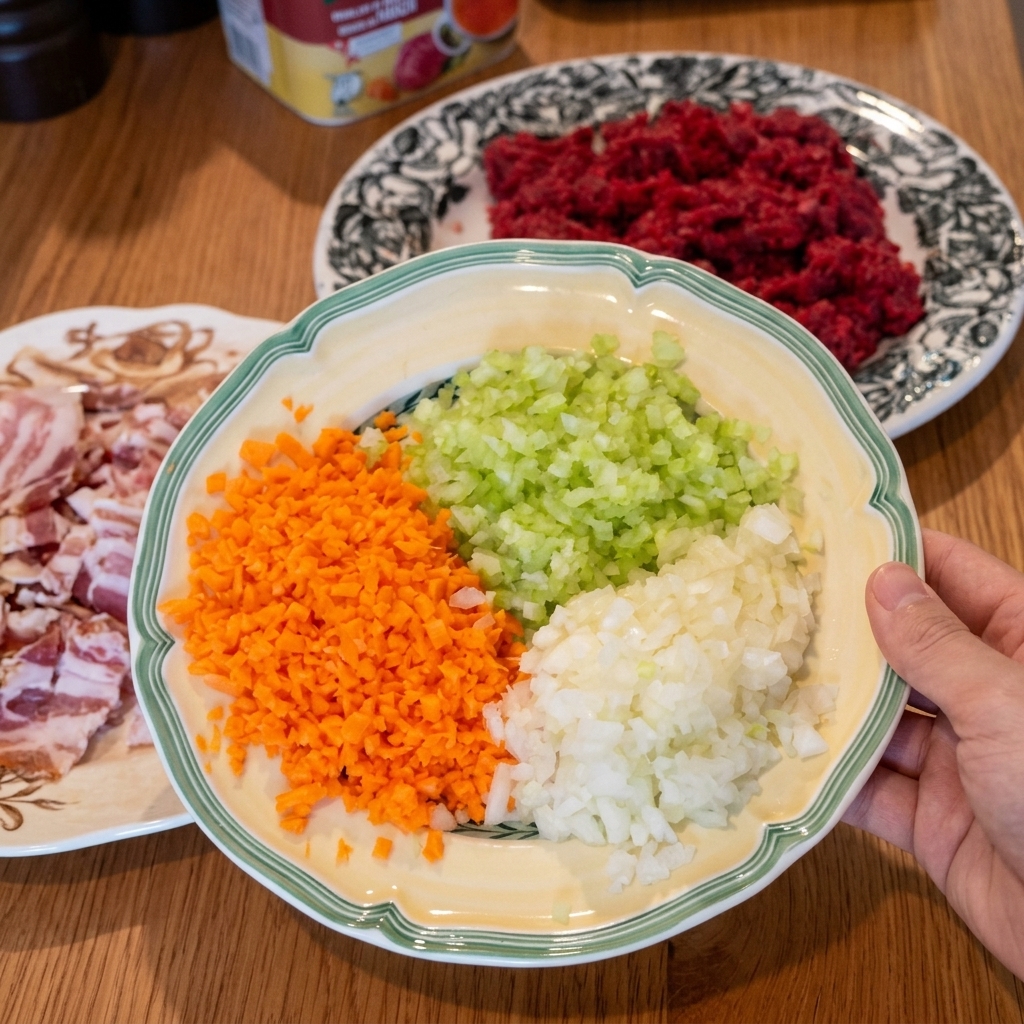
Finely mince the onion, carrot, and celery stalks to create a traditional Italian soffritto. Keeping the vegetables uniform in size allows them to cook at the same rate and eventually meld into the sauce.
Tip: While hand-chopping is traditional, a food processor can be used for a very fine mince; just be careful not to turn the vegetables into a paste. - 3Sauté the pancetta
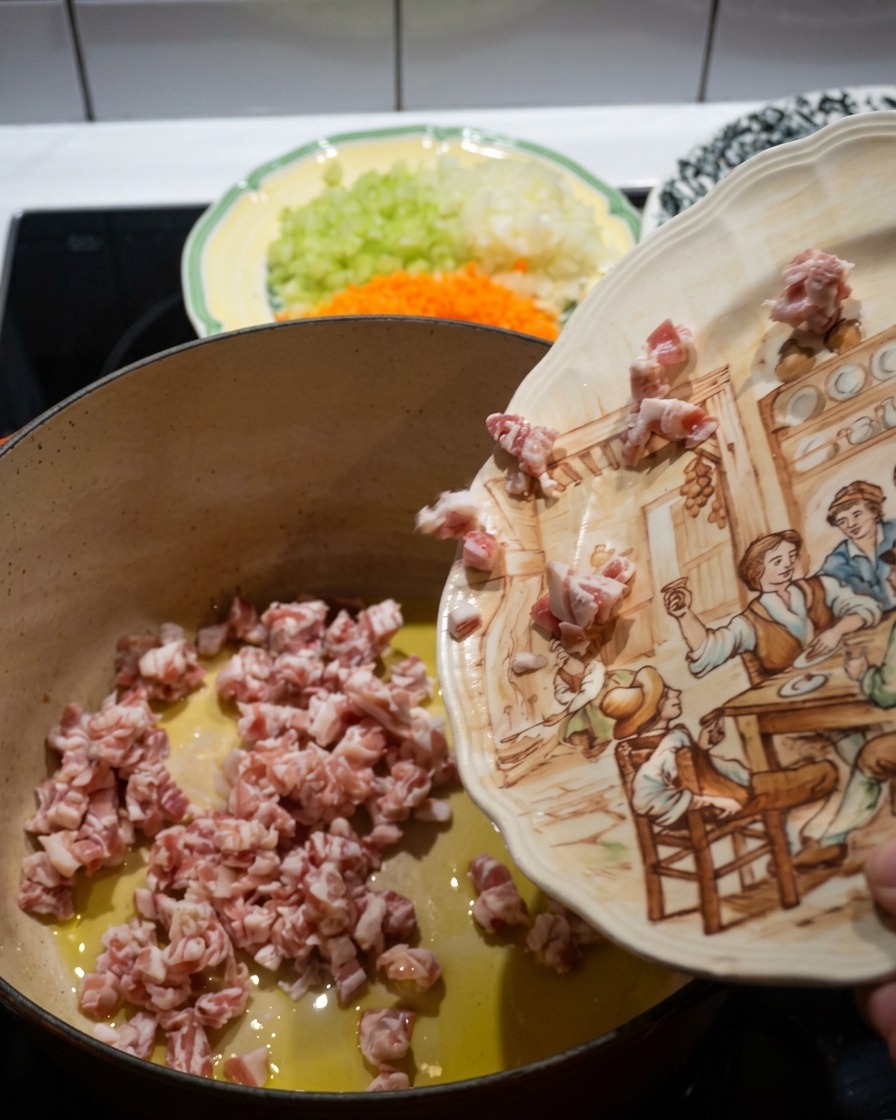
Heat a splash of olive oil in a red enameled cast-iron pot over medium-low heat. Add the diced pancetta and cook until the fat has rendered out and the meat begins to turn golden and slightly crispy.
Tip: Dont rush this step; rendering the fat slowly over medium-low heat builds the essential flavor foundation for the sauce. - 4Cook the aromatics
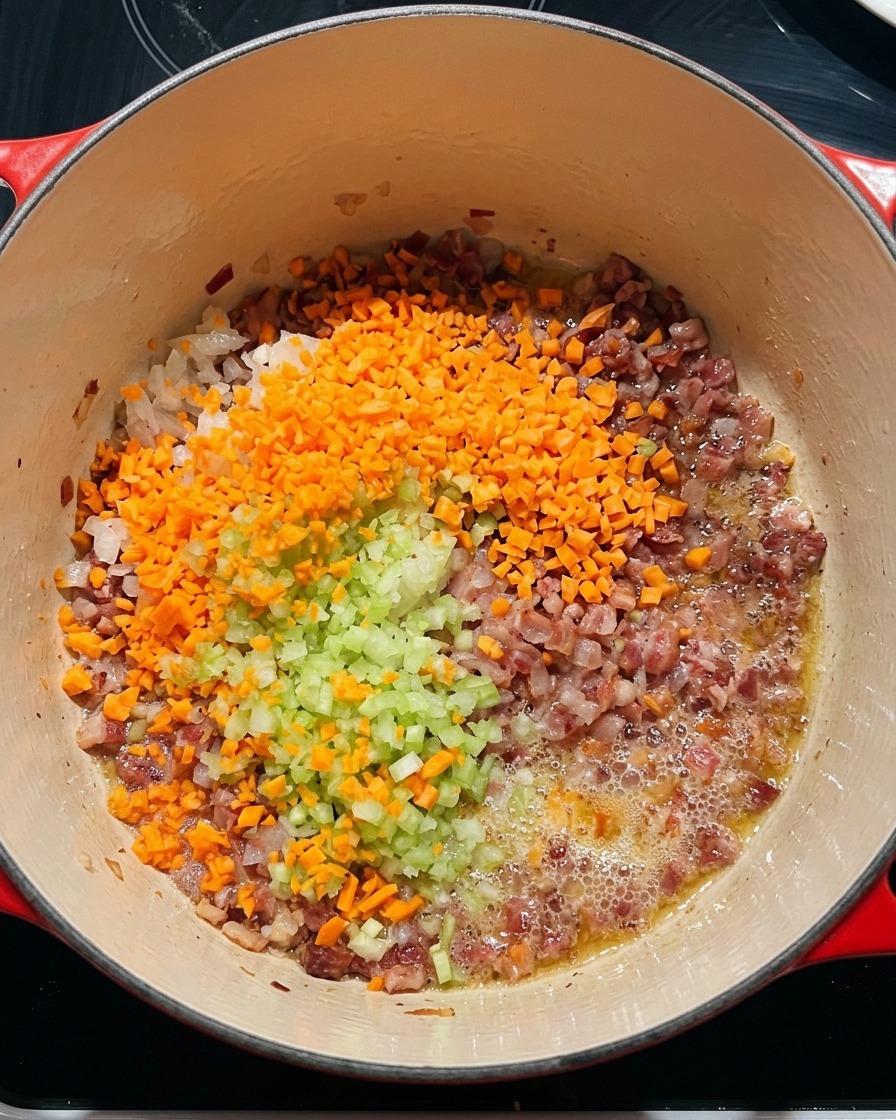
Add the minced carrots, celery, and onions to the rendered pancetta fat. Sauté the vegetables over medium-low heat, stirring occasionally, until they soften and become fragrant.
Tip: If the vegetables start to brown too quickly, lower the heat to prevent them from becoming bitter. - 5Brown the ground beef
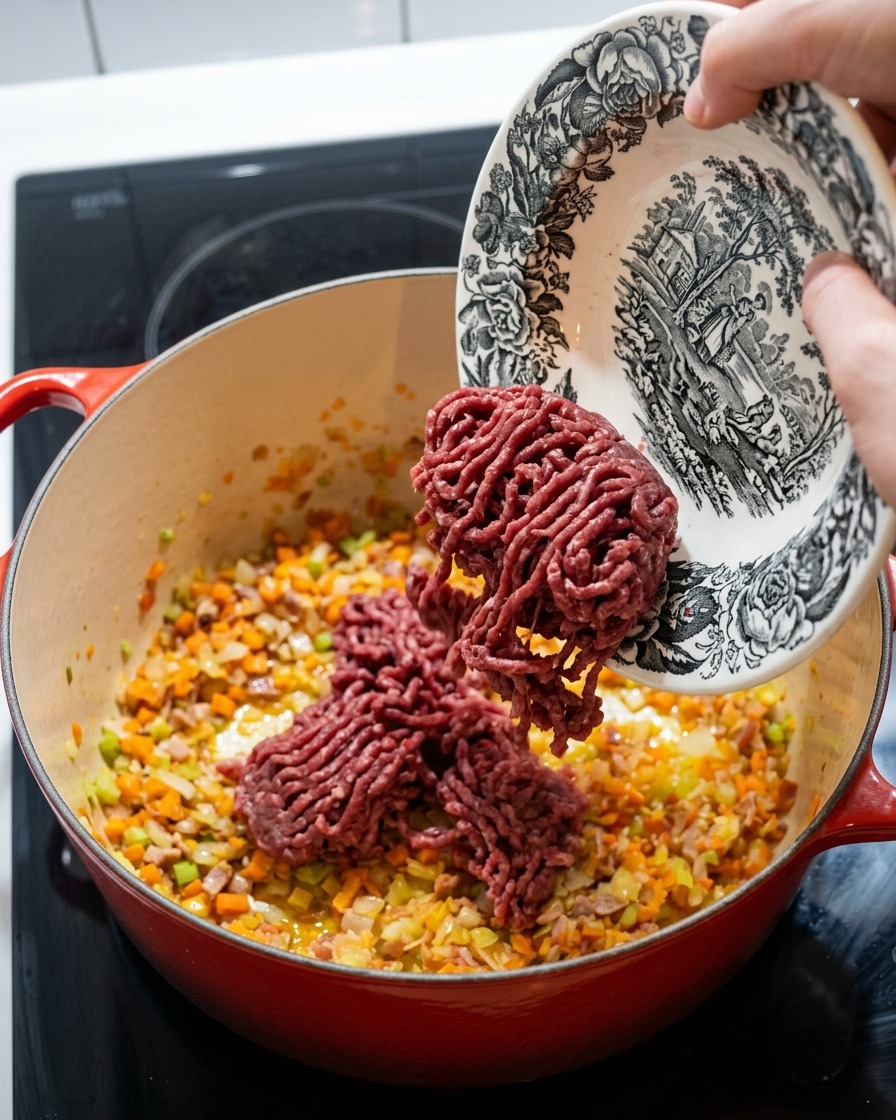
Add the ground beef to the pot. Use a spatula to break up the meat and stir it into the vegetables. Cook for about 10 minutes until all the liquid has evaporated and the meat is well-browned, which removes any gamey scent.
Tip: For the most authentic flavor, try using beef diaphragm as recommended by the traditional registered recipe. - 6Deglaze with wine
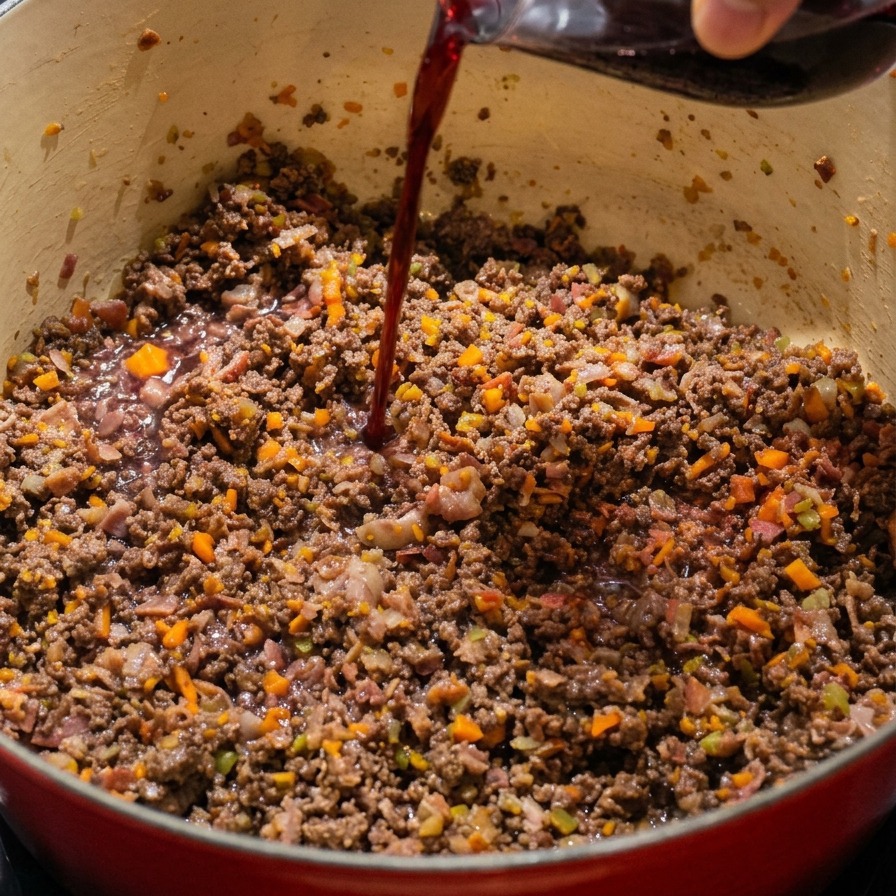
Pour a glass of red wine into the pot to deglaze the mixture. Use a spoon to scrape the bottom of the pot, releasing the caramelized bits of meat and vegetables known as fond. Continue cooking for a few minutes until the sharp scent of alcohol has evaporated and the liquid has reduced slightly.
Tip: While red wine provides a classic, robust depth, you can use a dry white wine for a cleaner, slightly brighter flavor profile. - 7Add tomato paste and puree
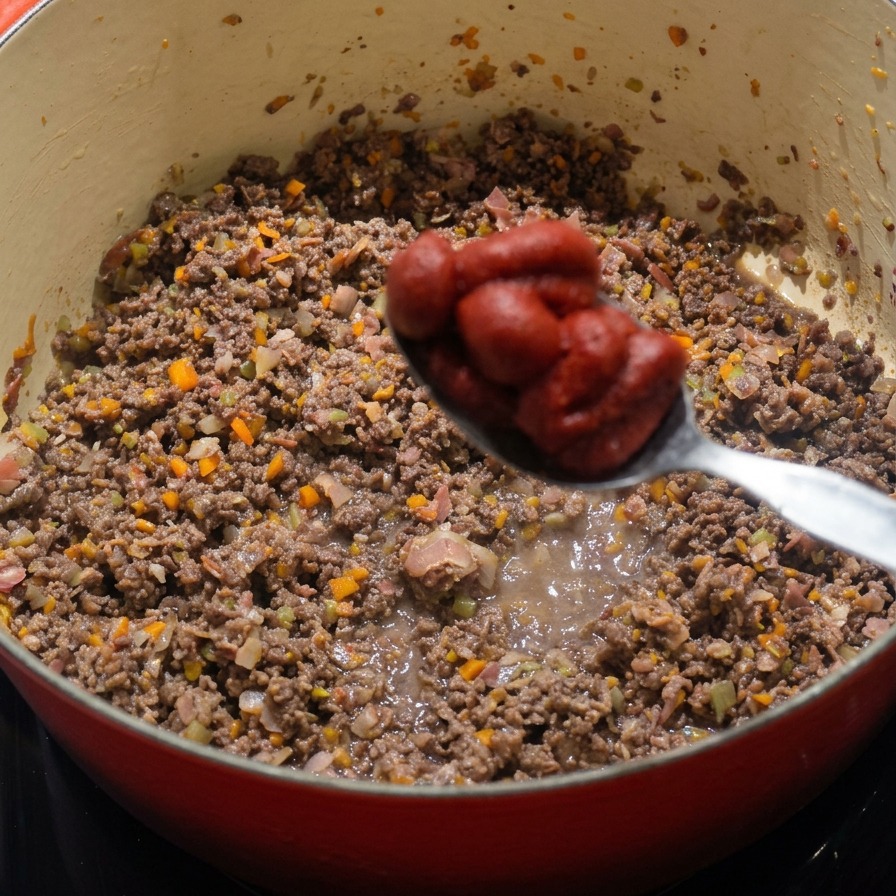
Incorporate a large spoonful of concentrated tomato paste and the tomato puree into the meat sauce base. Stir thoroughly to combine. Cooking the tomato paste briefly with the meat before adding broth helps to caramelize it, adding a rich color and concentrated savory flavor to the ragù.
Tip: Do not skip the paste; it provides the body and deep orange red color that defines an authentic Bolognese sauce. - 8Add the broth
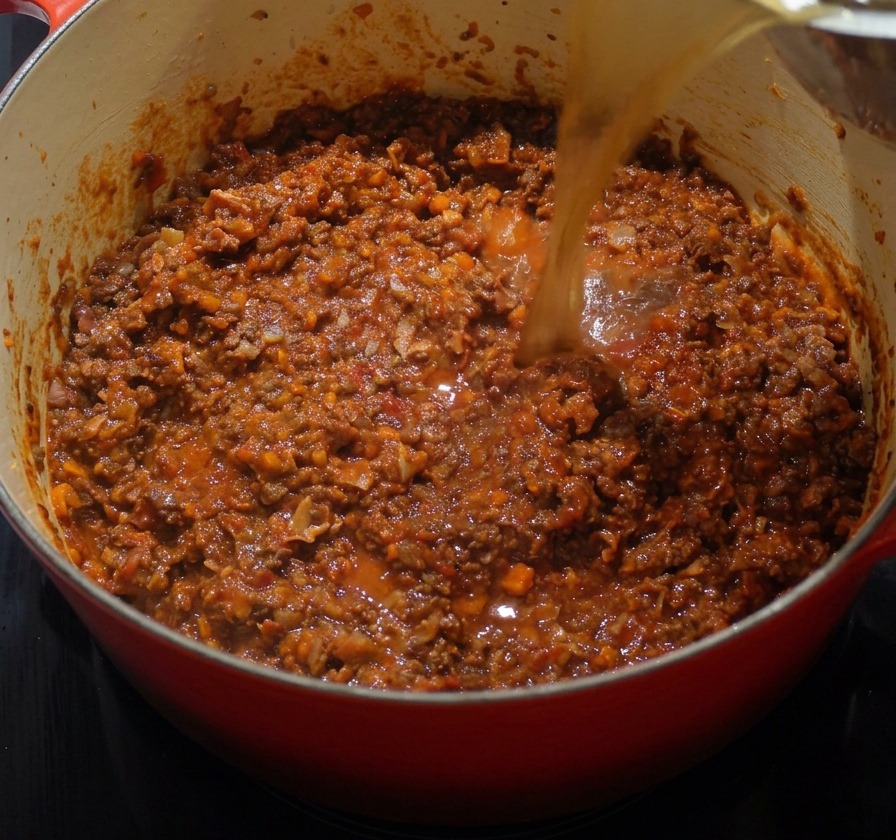
Pour in beef or vegetable broth until the meat and vegetables are fully covered. This liquid will act as the braising medium, allowing the sauce to cook slowly over a long period without drying out, which is essential for developing a complex flavor.
Tip: If you dont have beef broth, a high-quality vegetable broth or even water can be used, though beef broth adds the most richness. - 9Begin the slow simmer
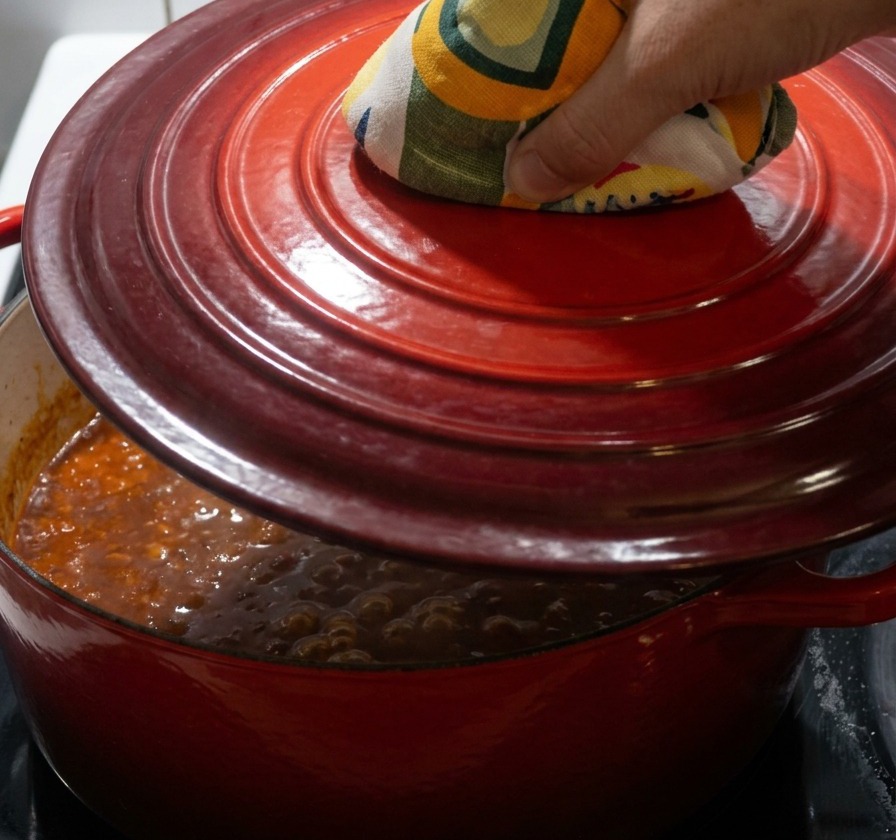
Place a heavy, tight-fitting lid onto the pot and reduce the heat to low. The ragù needs to simmer gently for at least two hours. This long, slow cooking process is the most important step for breaking down the meat fibers and melding the flavors of the soffritto and wine.
Tip: Check the pot occasionally to ensure it is at a very low bubble; if the liquid reduces too quickly, you can add a splash more broth. - 10Stir in the milk
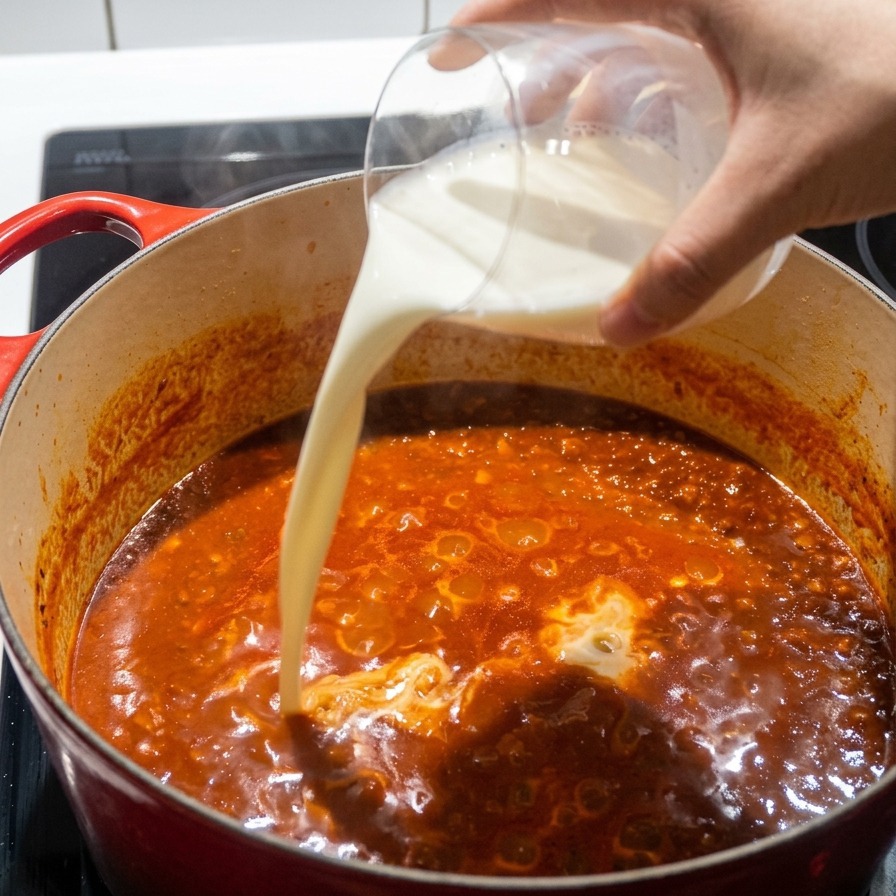
Halfway through the simmering process, pour in the whole milk and stir it into the bubbling sauce. The addition of dairy is a hallmark of traditional Bolognese; it helps to tenderize the beef and perfectly balances the acidity from the tomatoes, creating a velvety texture.
Tip: Always use whole milk rather than skim or low-fat to achieve the desired richness and mouthfeel. - 11Season with nutmeg
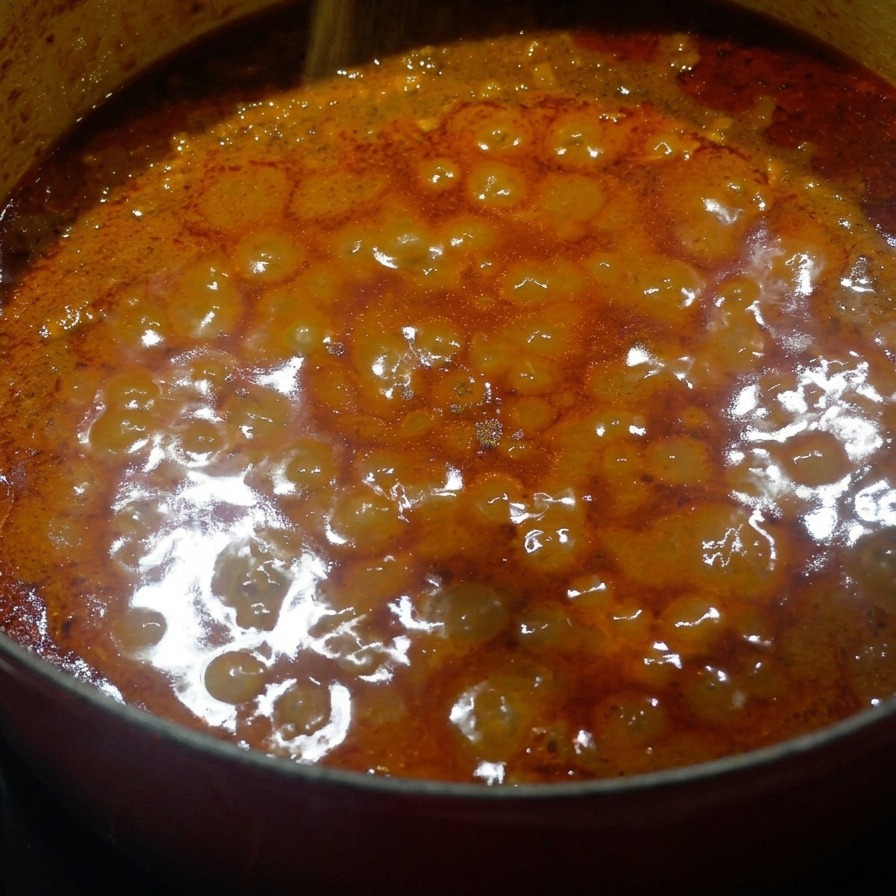
Sprinkle a pinch of ground nutmeg over the simmering sauce. This subtle aromatic spice is a traditional ingredient that enhances the creamy notes of the milk and adds a faint, warm complexity to the final dish without being overpowering.
Tip: Freshly grated nutmeg has a much more vibrant aroma than pre-ground, so use it if you have it available. - 12Season the Ragù
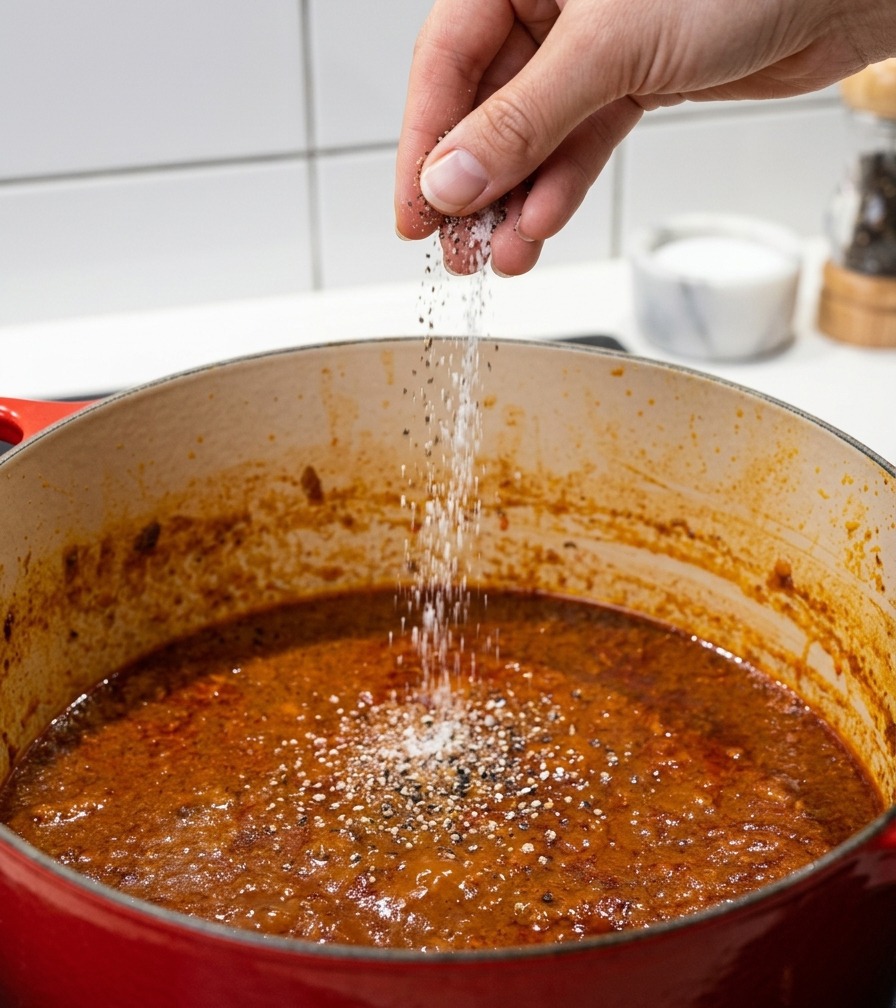
Add salt and freshly ground black pepper to the sauce to finish the seasoning. Since the pancetta and broth already contribute salt, taste the Ragù first before adding more. This final adjustment ensures the flavors are perfectly balanced after the long simmering process.
Tip: Always season with pepper at the very end to keep its sharp aroma and flavor from dissipating during the long cook time. - 13Drain the Tagliatelle
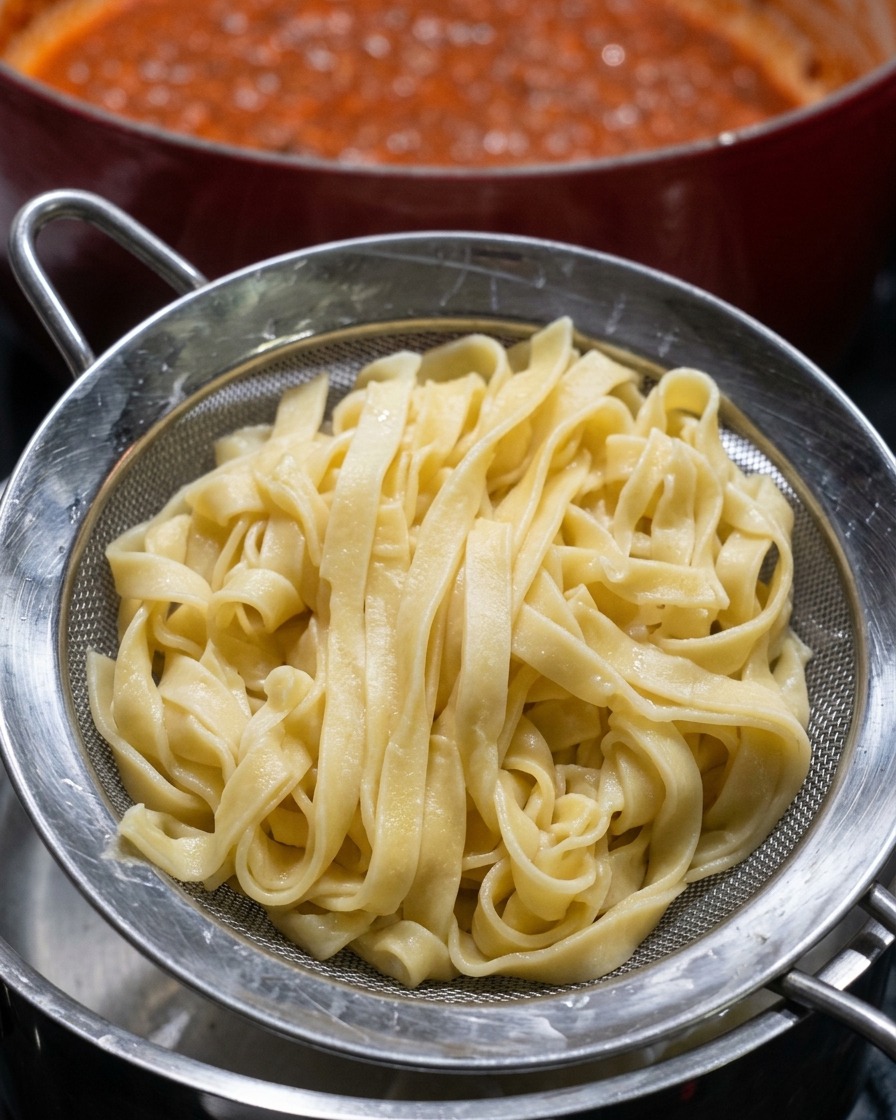
Boil the tagliatelle noodles until they reach an al dente texture. Use a mesh strainer to lift the noodles directly from the boiling water. Transferring them immediately helps maintain their temperature and ensures the natural starch helps the sauce adhere.
Tip: Never rinse the pasta with cold water; the natural starch on the surface of the noodles is what allows the meat sauce to adhere properly. - 14Combine Tagliatelle with Ragù
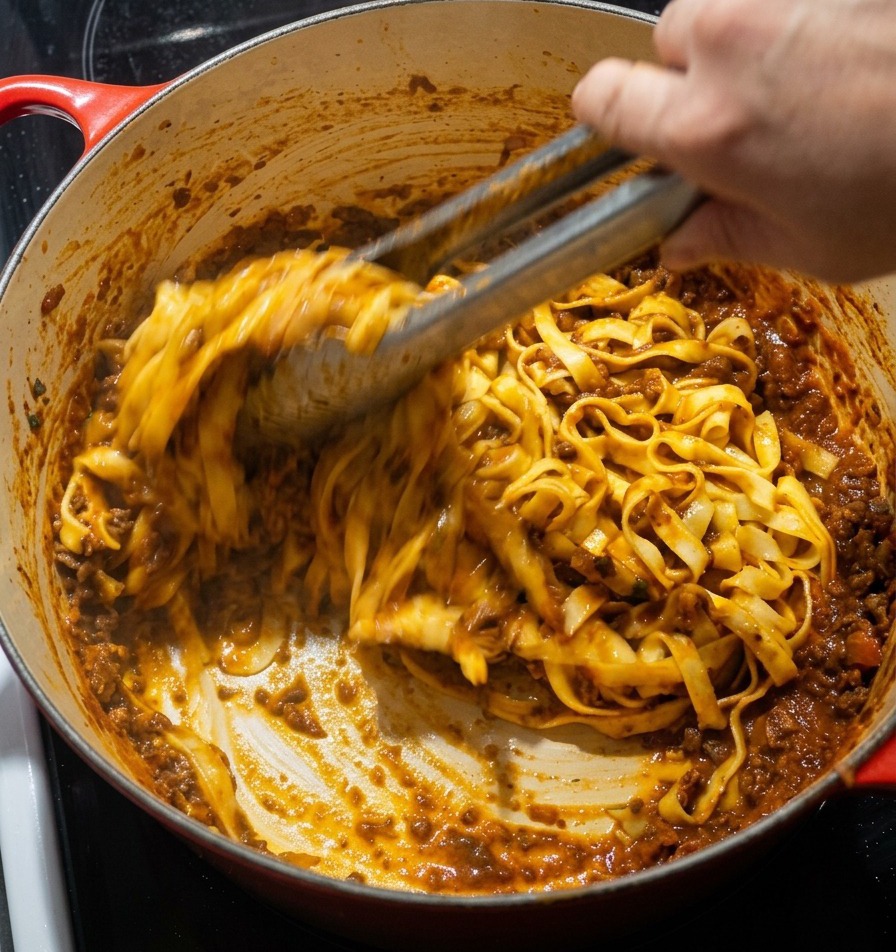
Combine the cooked tagliatelle with the rich meat sauce in the red pot. Use tongs to toss the mixture thoroughly until every strand of pasta is evenly coated. The wide, rough surface of the tagliatelle is specifically designed to trap the savory bits of meat and aromatics.
Tip: If the sauce seems too thick, add a ladle of the reserved pasta cooking water to create a glossier, more cohesive consistency.