Authentic Korean Army Stew (Budae Jjigae)
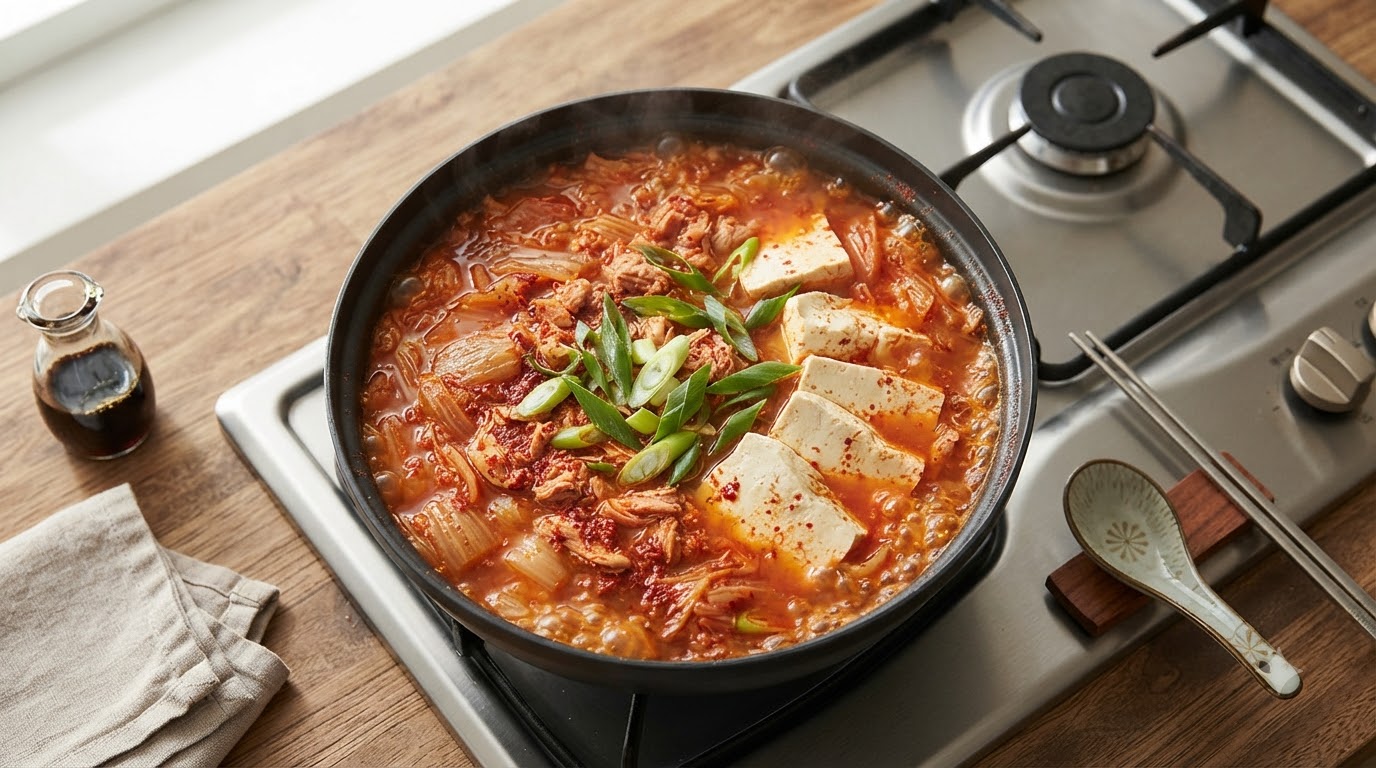
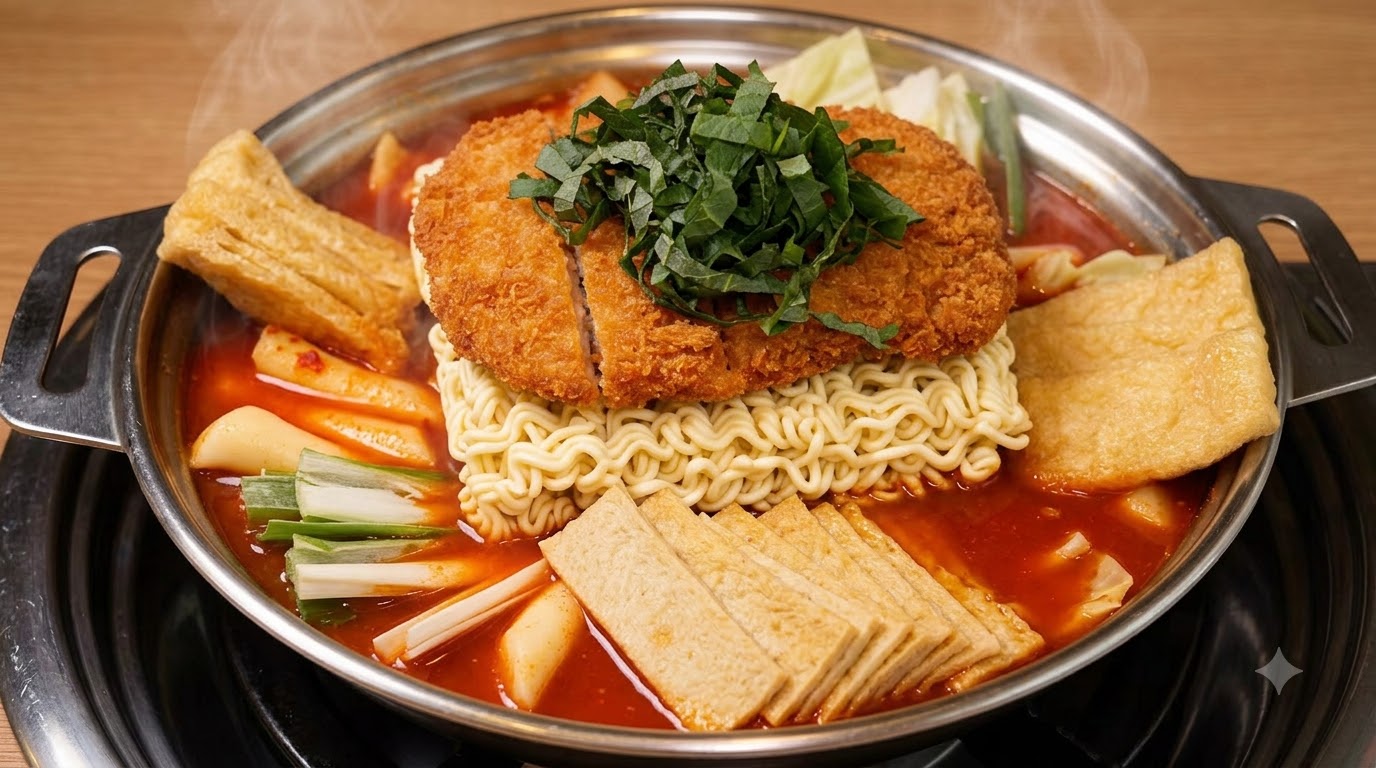
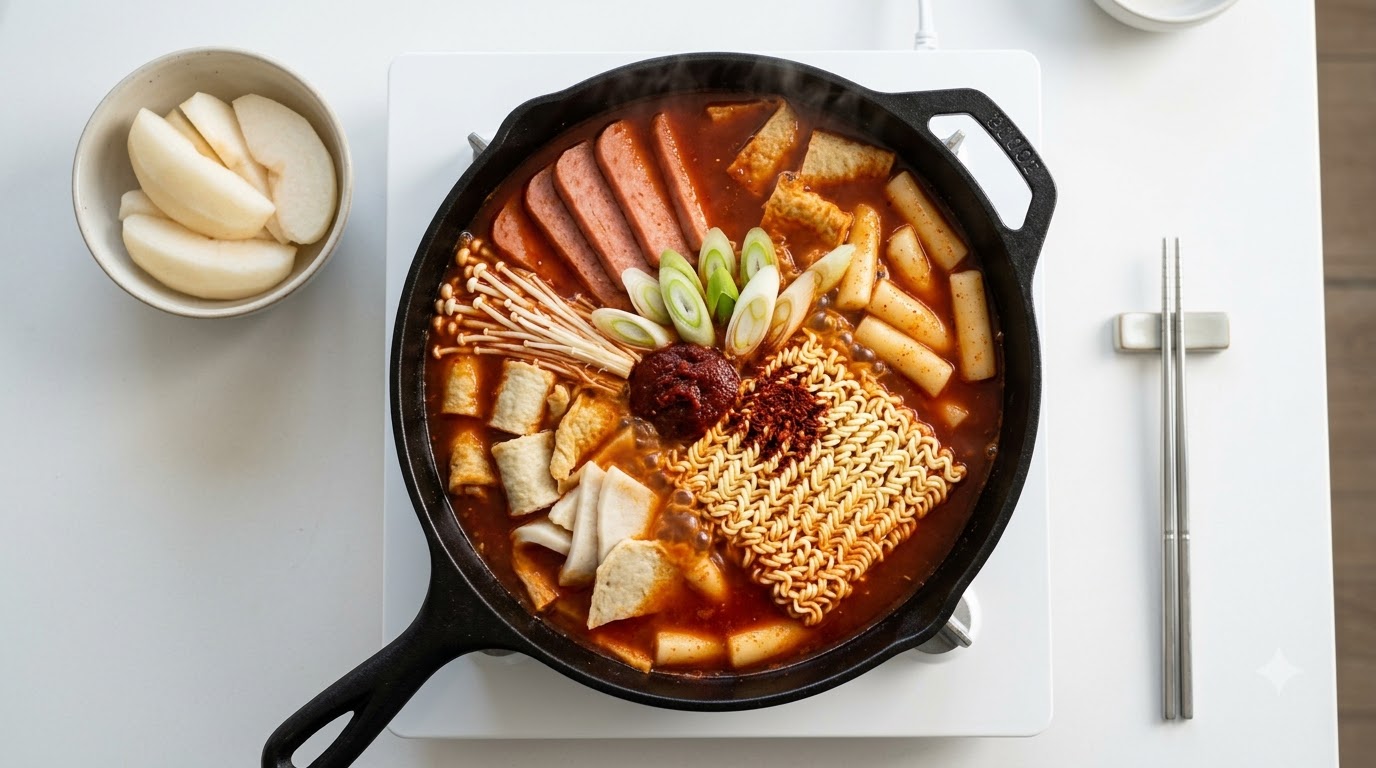
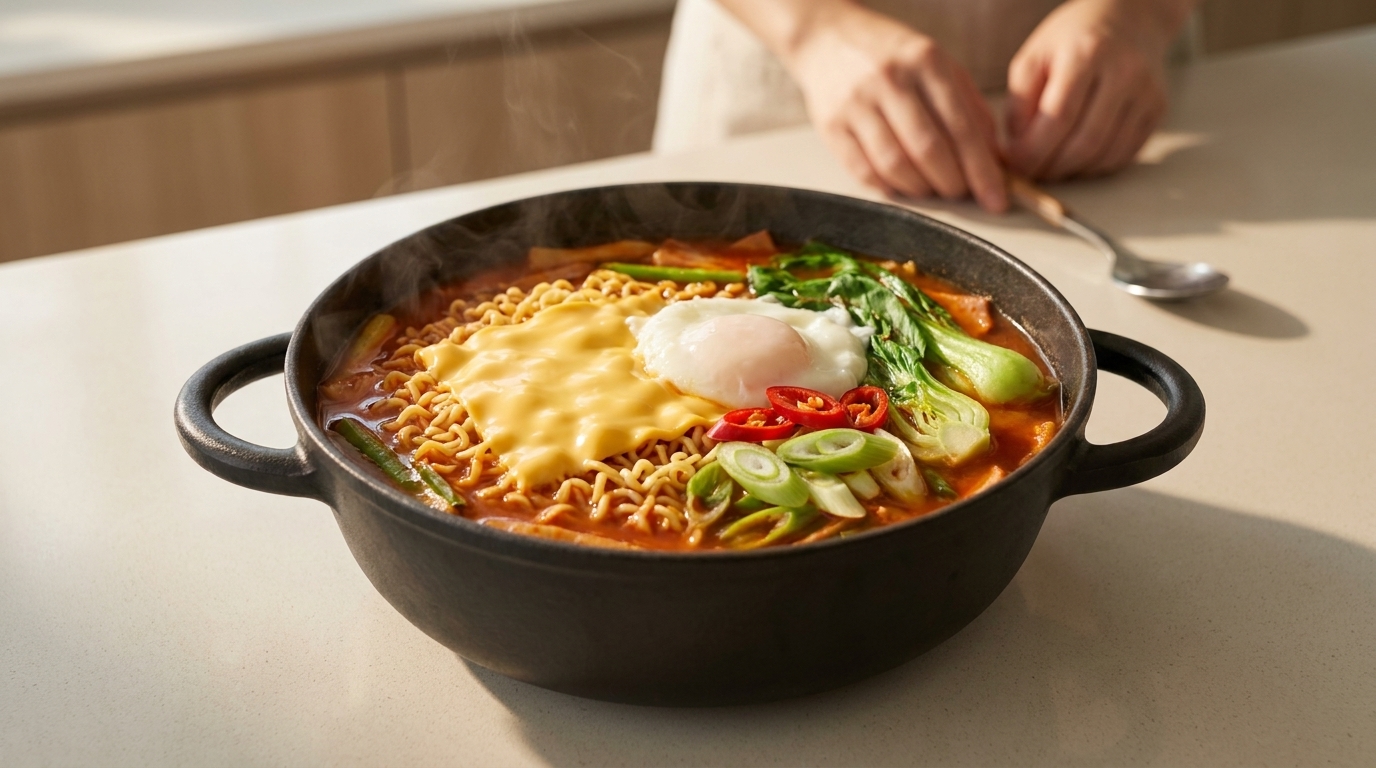
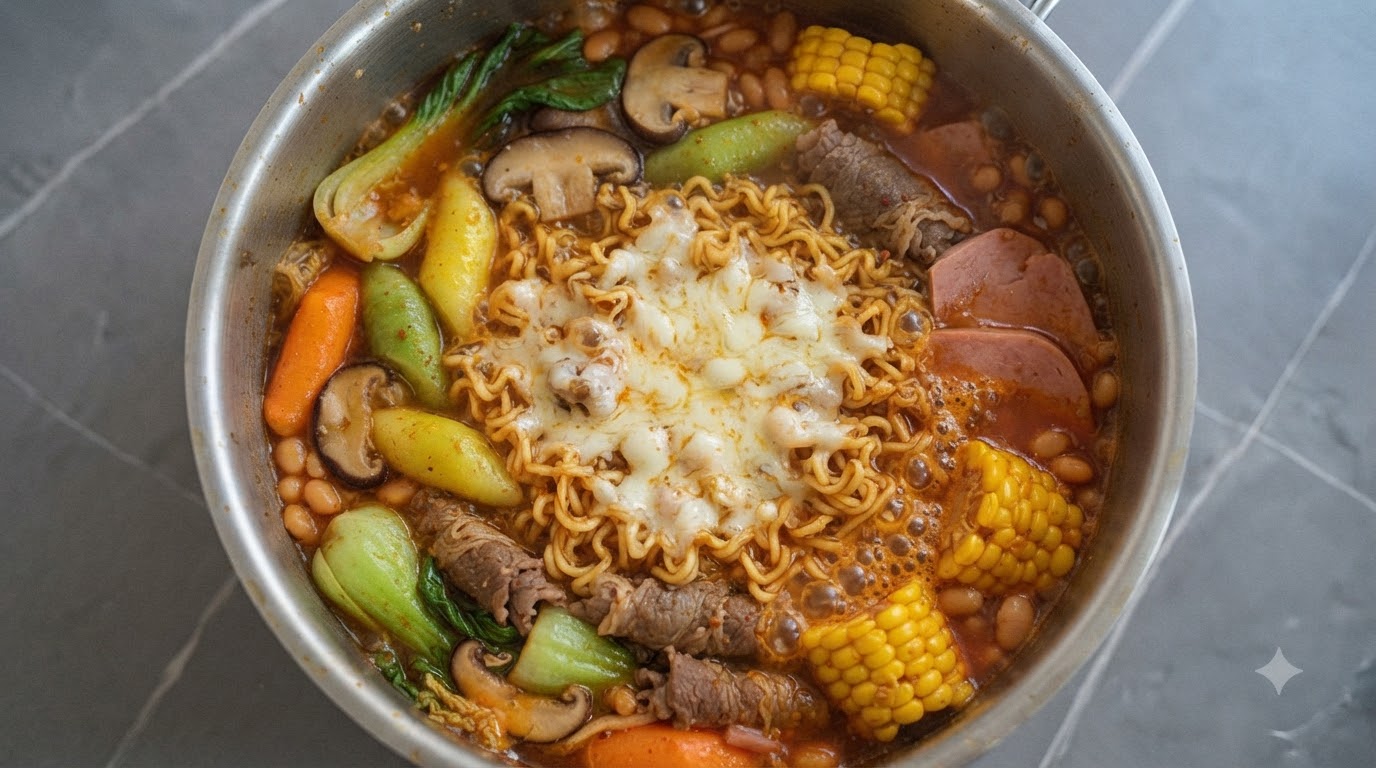
A rich and savory Korean Army Stew featuring spicy ramen noodles, cheese rice cakes, savory luncheon meat, crisp vegetables, and a melting layer of cheese.
Budae jjigae, or Korean army stew, is a comforting fusion hot pot created post-Korean War by combining surplus military ingredients like canned sausage and spam with traditional Korean gochujang and kimchi. It is a deeply flavorful, bubbling communal dish that brings together contrasting textures and spicy, savory depths.
Ingredients
- 80 g Korean chili paste
- 40 g tomato sauce
- 40 g oyster sauce
- 40 g light soy sauce
- 20 g white sugar
- 1 packet spicy ramen noodle seasoning packet
- 2 tbsp cooking oil
- 1 red onion
- 1/2 head Napa cabbage
- 1/2 bowl spicy kimchi
- 1 pack cheese rice cakes
- 1 pack spicy ramen noodles
- 1 cup shredded melting cheese
- 200 g beef rolls
- to taste corn, zucchini, wood ear mushrooms, bean curd skin, and luncheon meat
Instructions
- 1Measure Gochujang
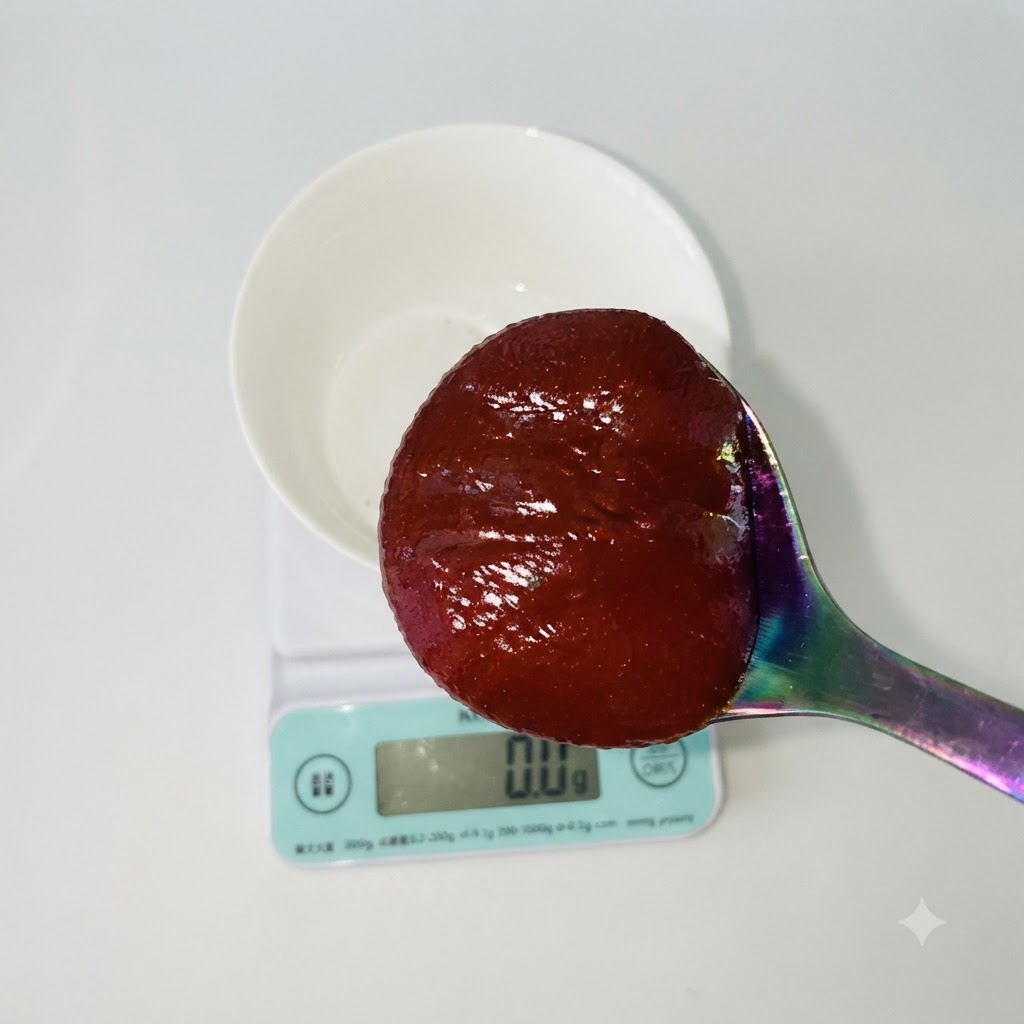
Place a digital kitchen scale on your counter, set a white mixing bowl on it, and measure out 80g of Korean chili paste as the foundation for the sauce.
Tip: Ensure the scale is tared with the bowl on it first for accurate measurement. - 2Add tomato sauce
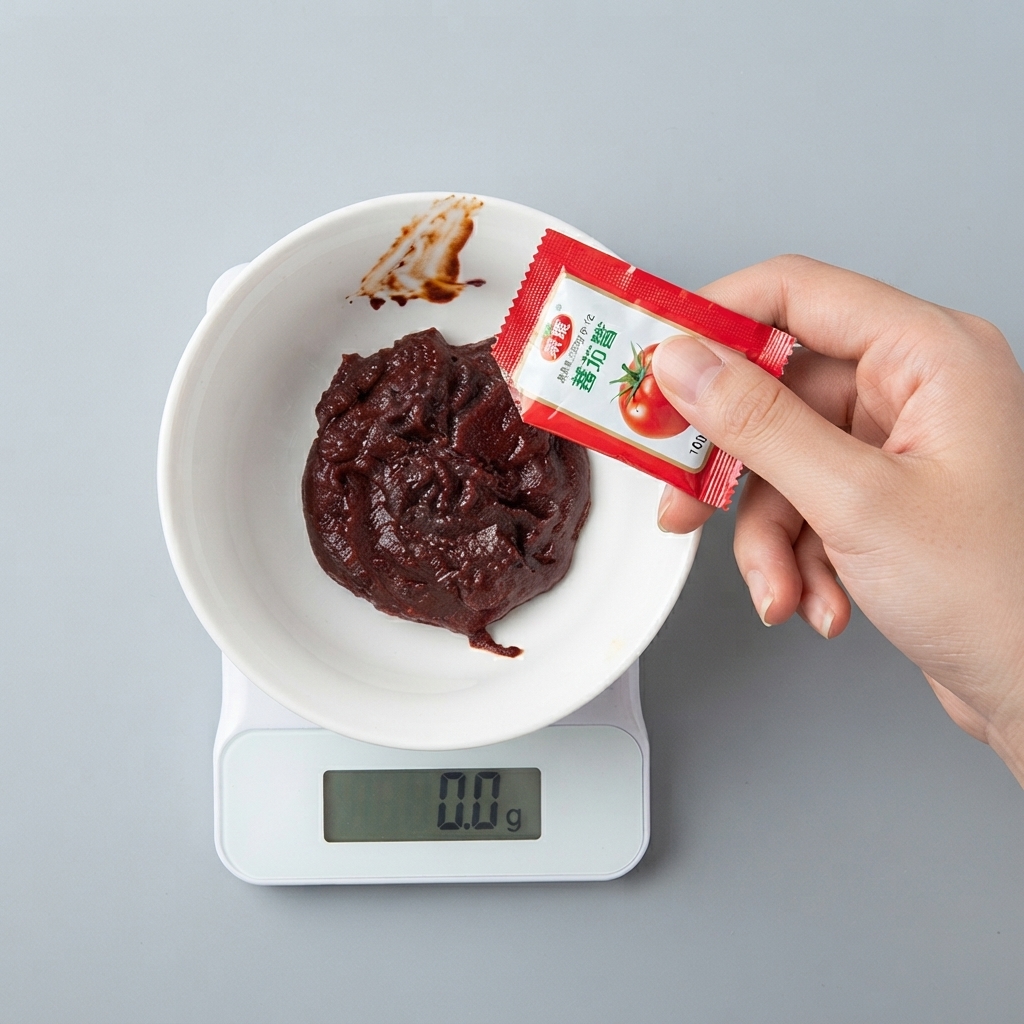
Add 40g of tomato sauce into the white bowl containing the Korean chili paste.
Tip: Squeeze the entire contents of the small sauce packet cleanly into the bowl. - 3Add light soy sauce
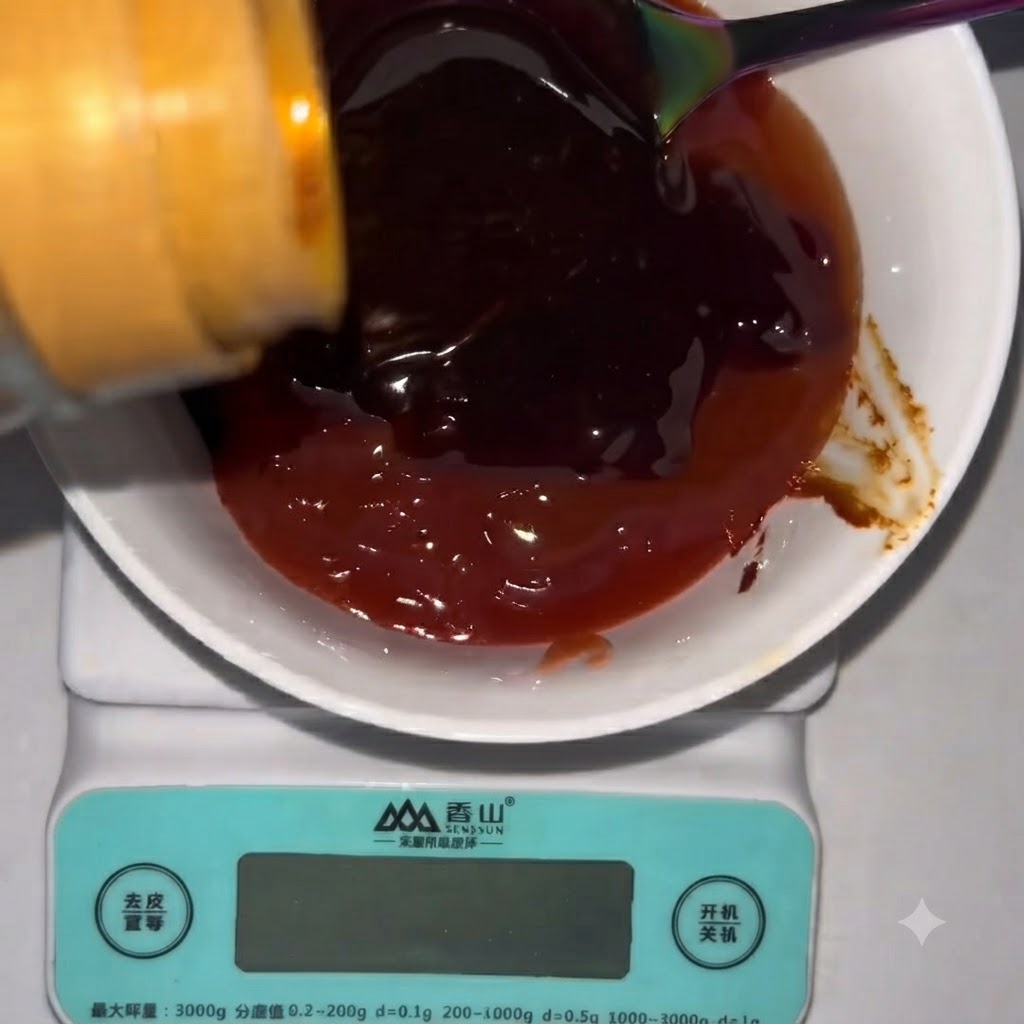
Pour 40g of light soy sauce into the bowl with the previous sauce ingredients.
Tip: Pour steadily to avoid splashing over the sides of the bowl. - 4Add water
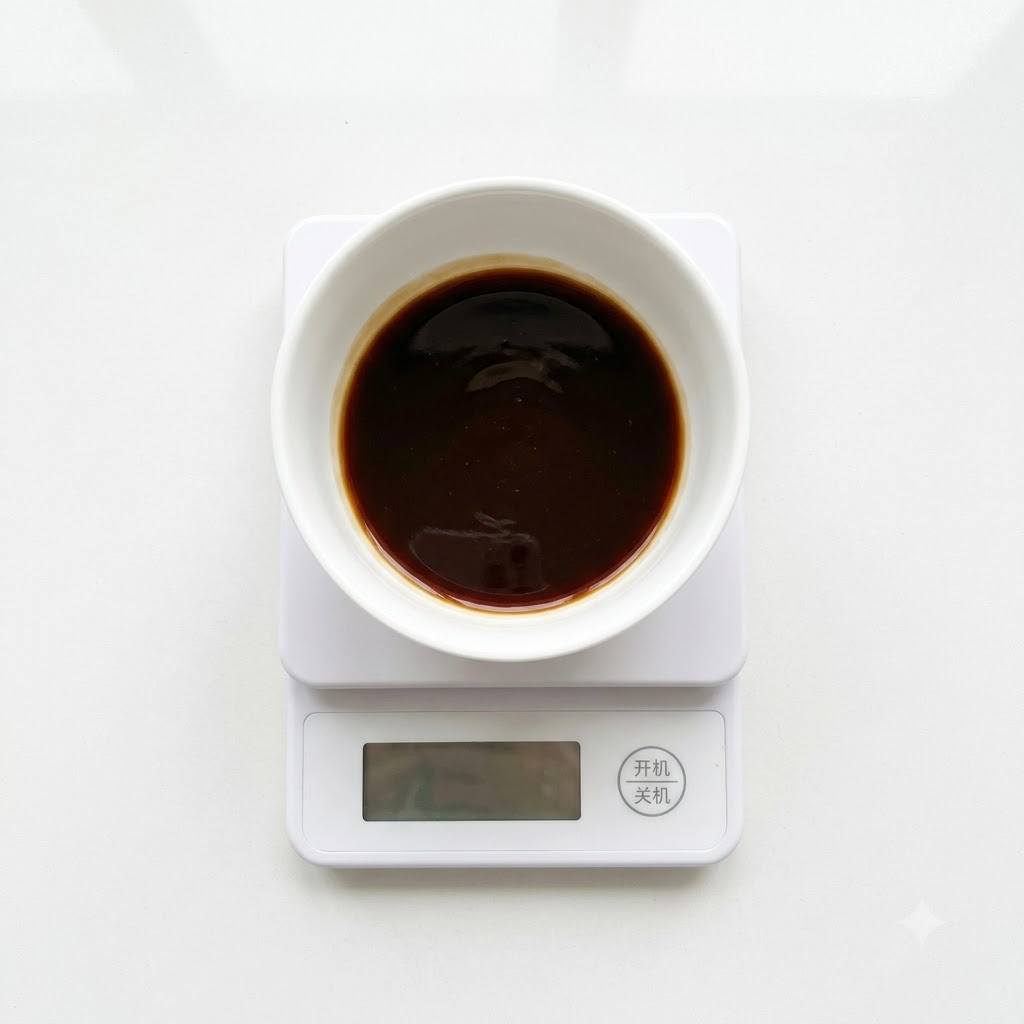
Pour a suitable amount of water into the bowl to help dissolve and balance the sauce mixture.
Tip: Add water gradually if you want to control the thickness of the sauce. - 5Mix Sauce Base and Sugar
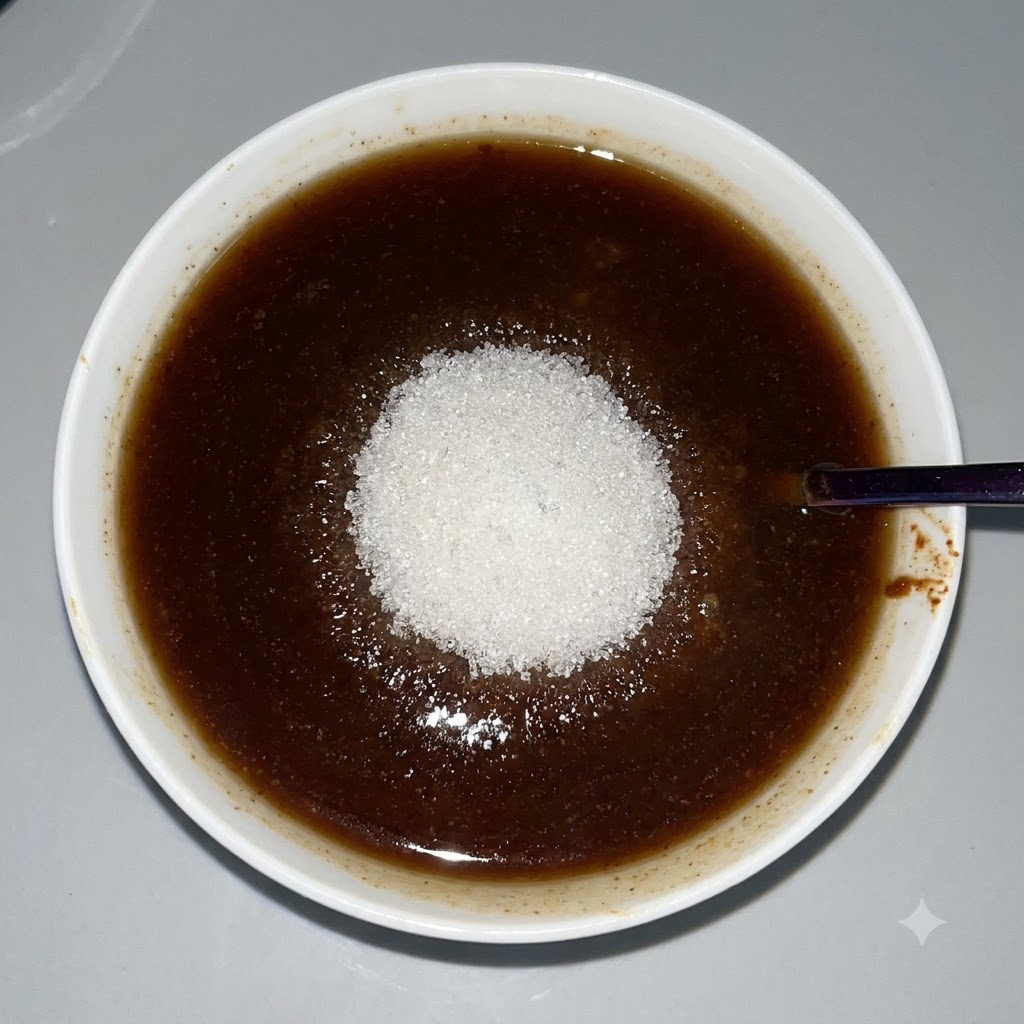
Add 20g of white sugar into the sauce mixture along with the tomato sauce, oyster sauce, light soy sauce, and water, then stir thoroughly from the bottom up until completely uniform.
Tip: Stir well from the bottom of the bowl to ensure the sugar is fully dissolved. - 6Add ramen seasoning
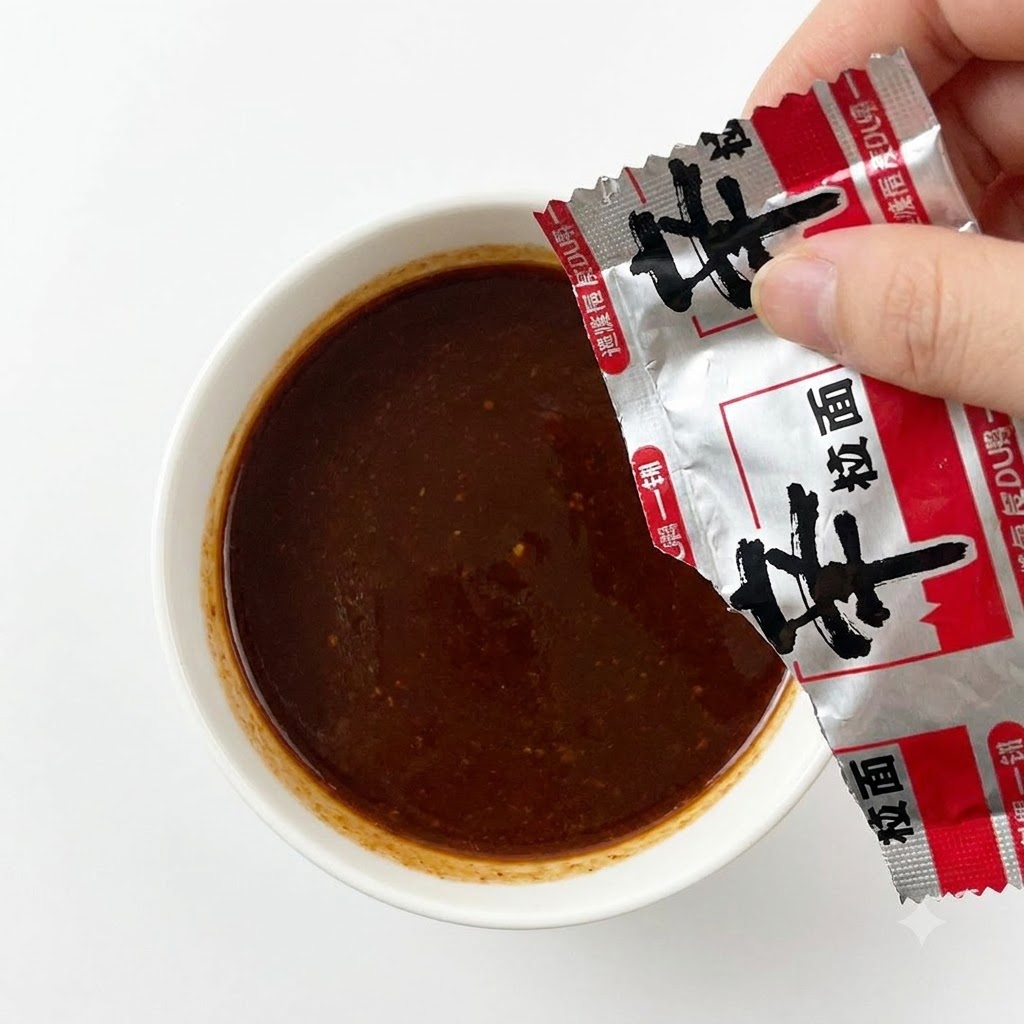
Open the seasoning packet from the spicy ramen noodles and empty its contents directly into the sauce bowl.
Tip: Tap the packet gently to ensure all the seasoning powder falls into the mix. - 7Sauté Red Onion Base
Heat your cooking pot, add two spoonfuls of oil, and sauté the sliced red onion until translucent and aromatic.
Tip: Sautéing onions over medium heat helps release their natural sweetness without burning. - 8Add Napa Cabbage Base
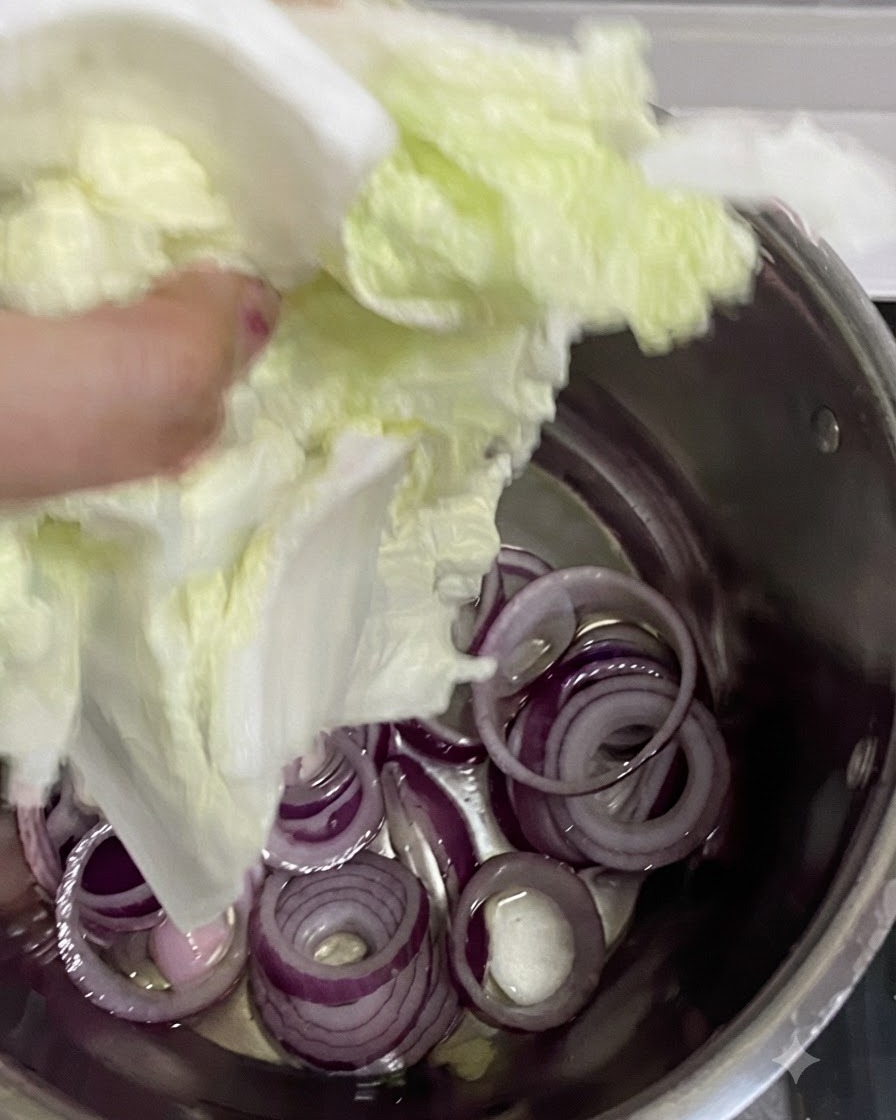
Place chopped Napa cabbage into the pot directly over the sautéed red onions to create a flavorful vegetable foundation.
Tip: Layering cabbage at the bottom prevents other ingredients from sticking and provides moisture as it cooks. - 9Assemble Vegetables and Kimchi
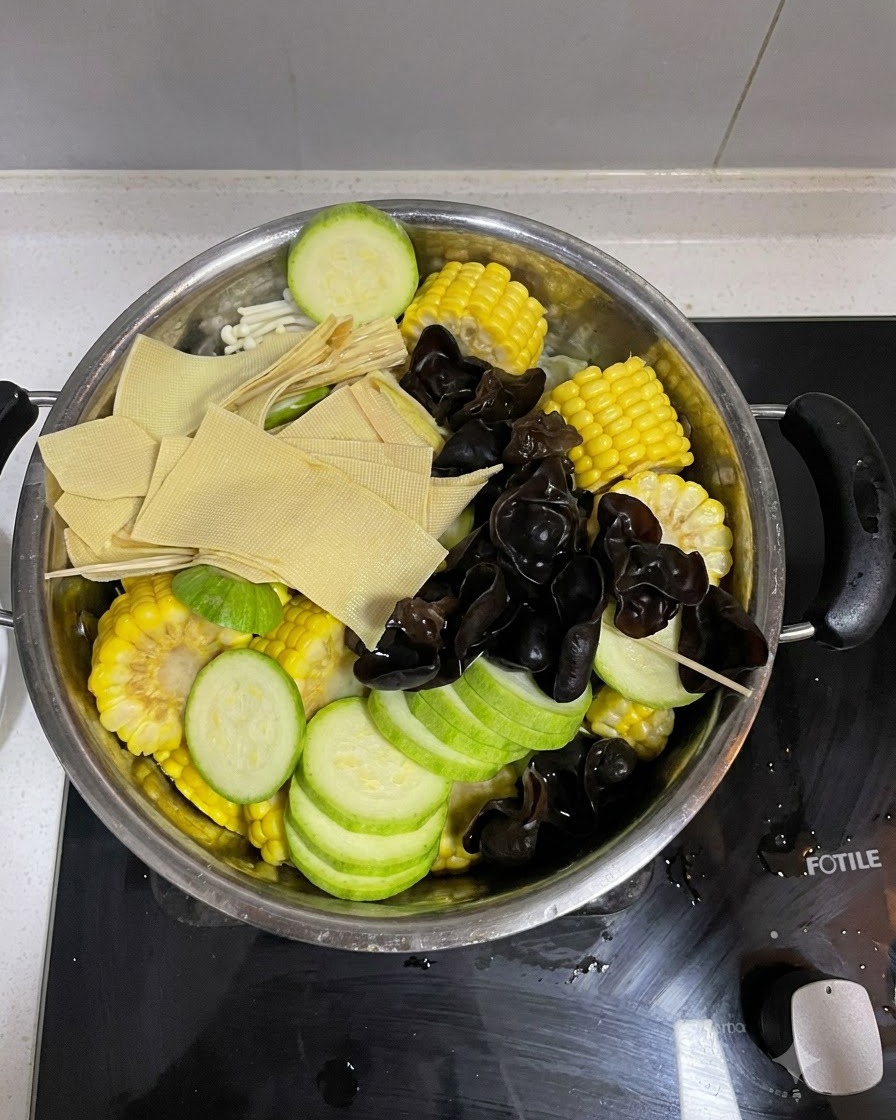
Arrange your favorite vegetables such as corn, zucchini, wood ear mushrooms, and bean curd skin on top of the cabbage, then top with half a bowl of spicy kimchi.
Tip: Packing the pot tightly helps all the ingredients meld together as they simmer. - 10Pour Sauce Mixture Over Ingredients
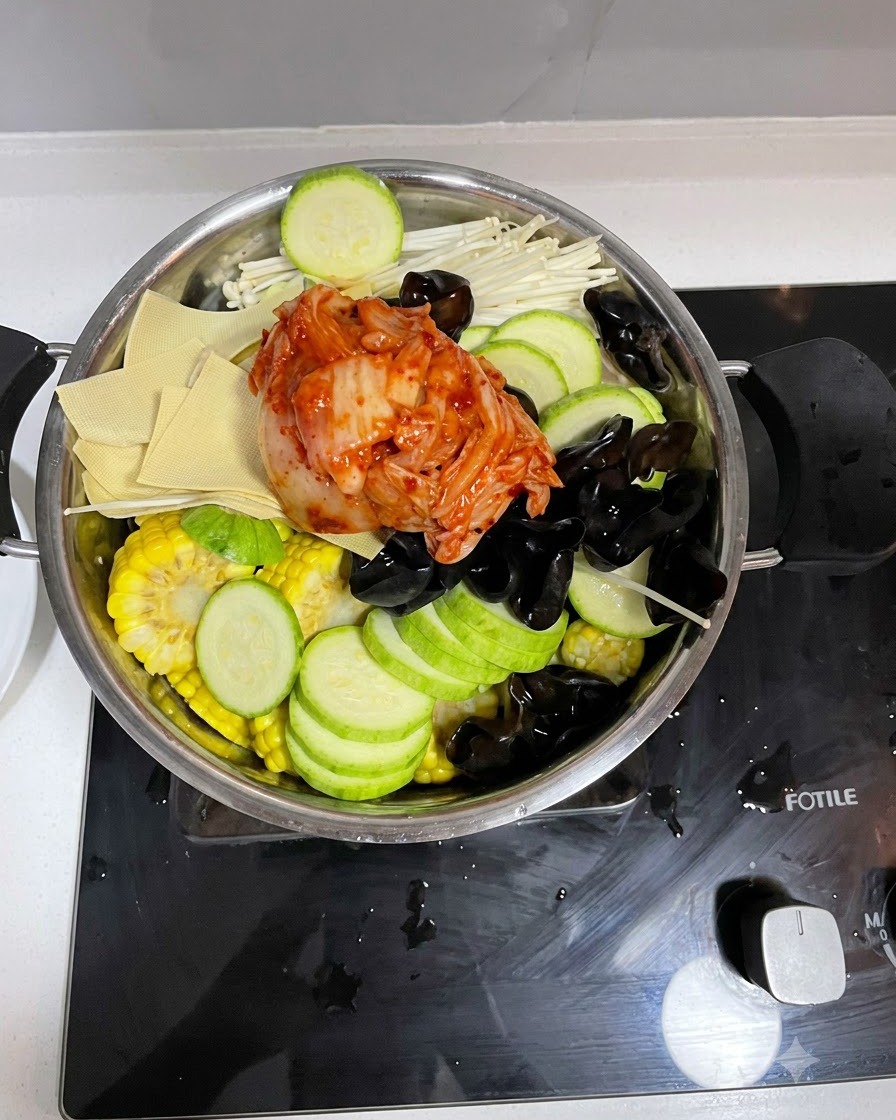
Pour the prepared sauce blend evenly over the assembled vegetables and ingredients in the cooking pot.
Tip: Ensure the sauce is evenly distributed over the top ingredients so it coats everything as it heats. - 11Add Cheese Rice Cakes
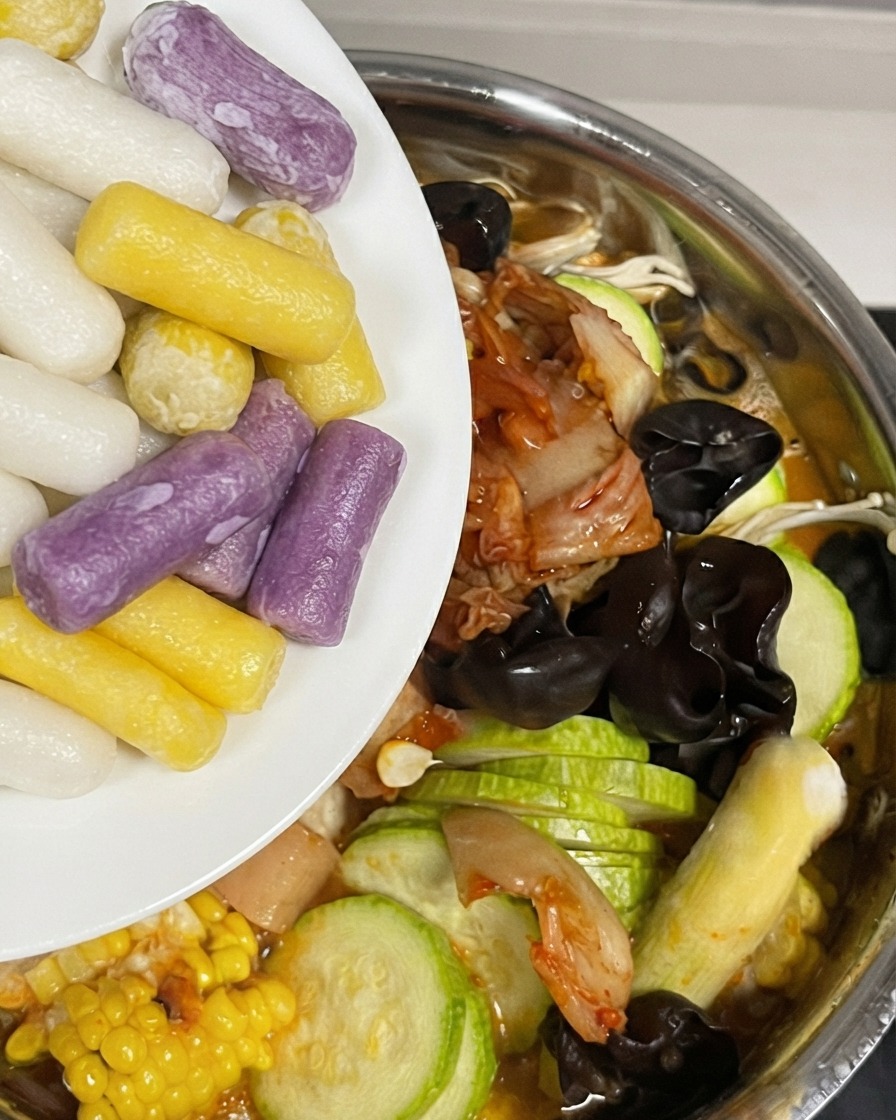
Add the cheese rice cakes into the pot along with a suitable amount of water and the spicy ramen noodles to continue building the dish.
Tip: Add the rice cakes carefully around the sides so they cook evenly in the broth.