Budae Jjigae (Korean Army Stew
One)
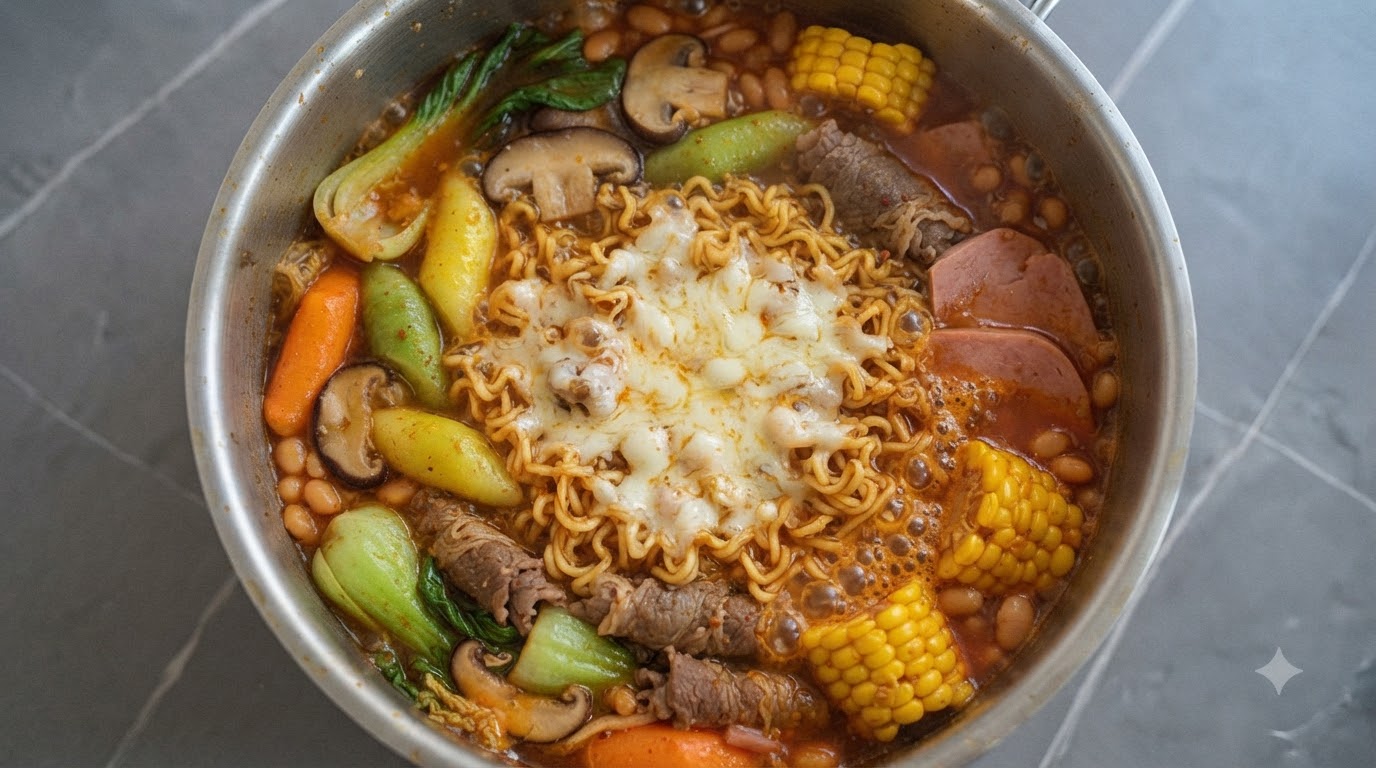
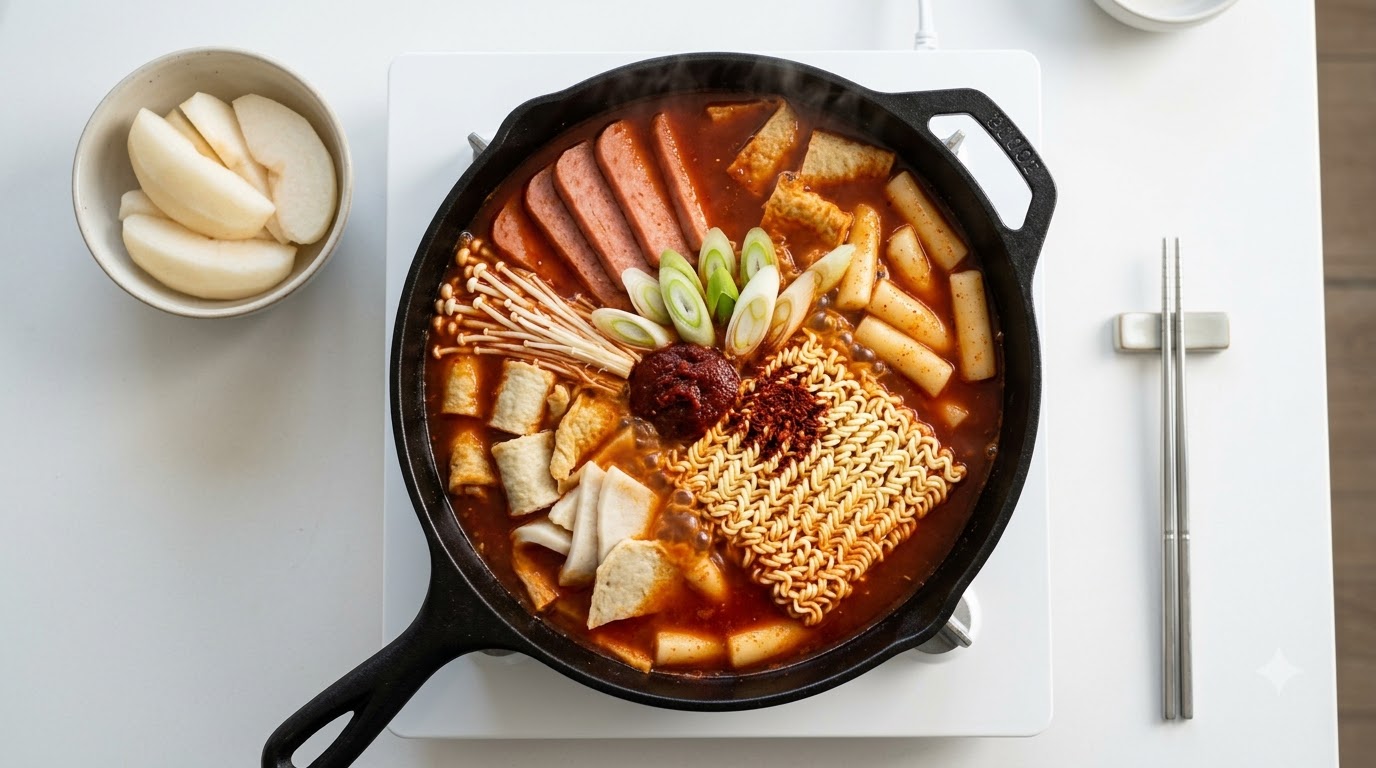
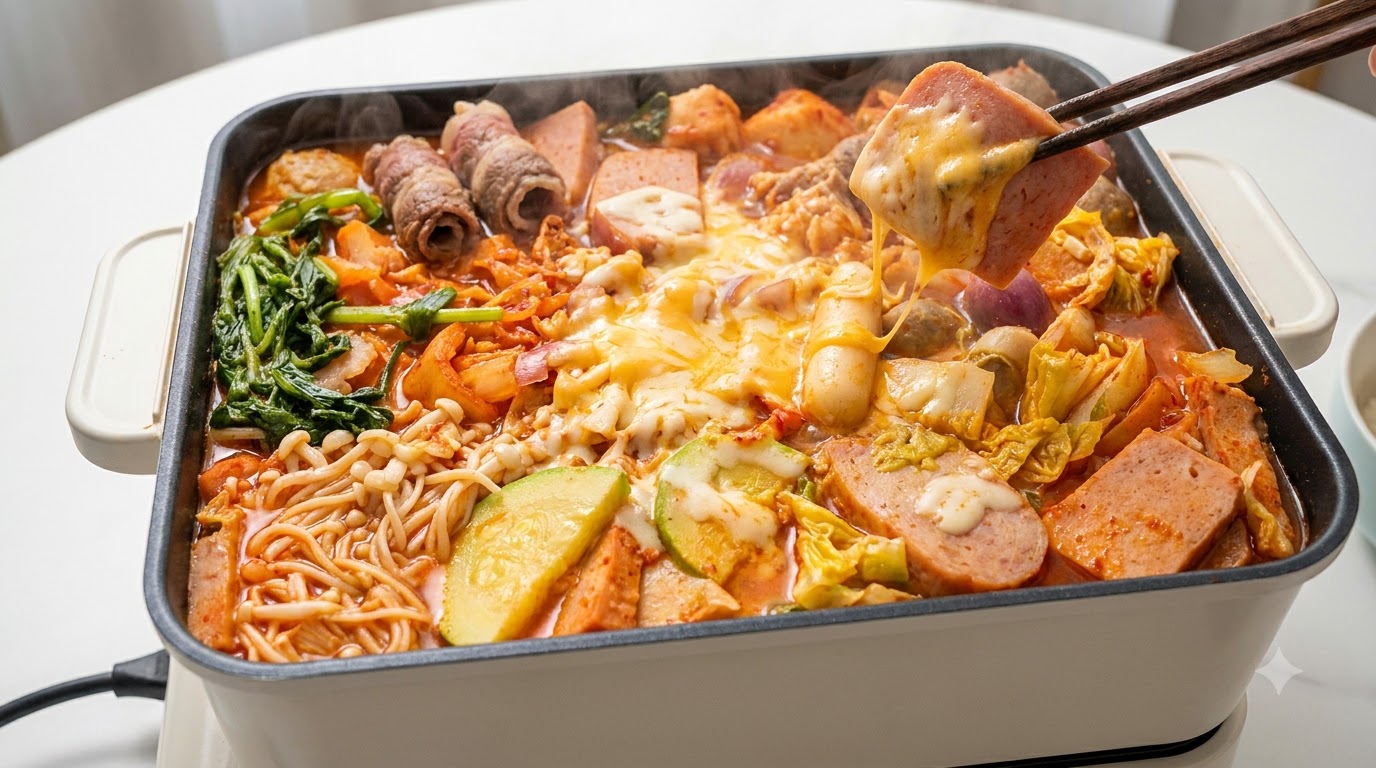
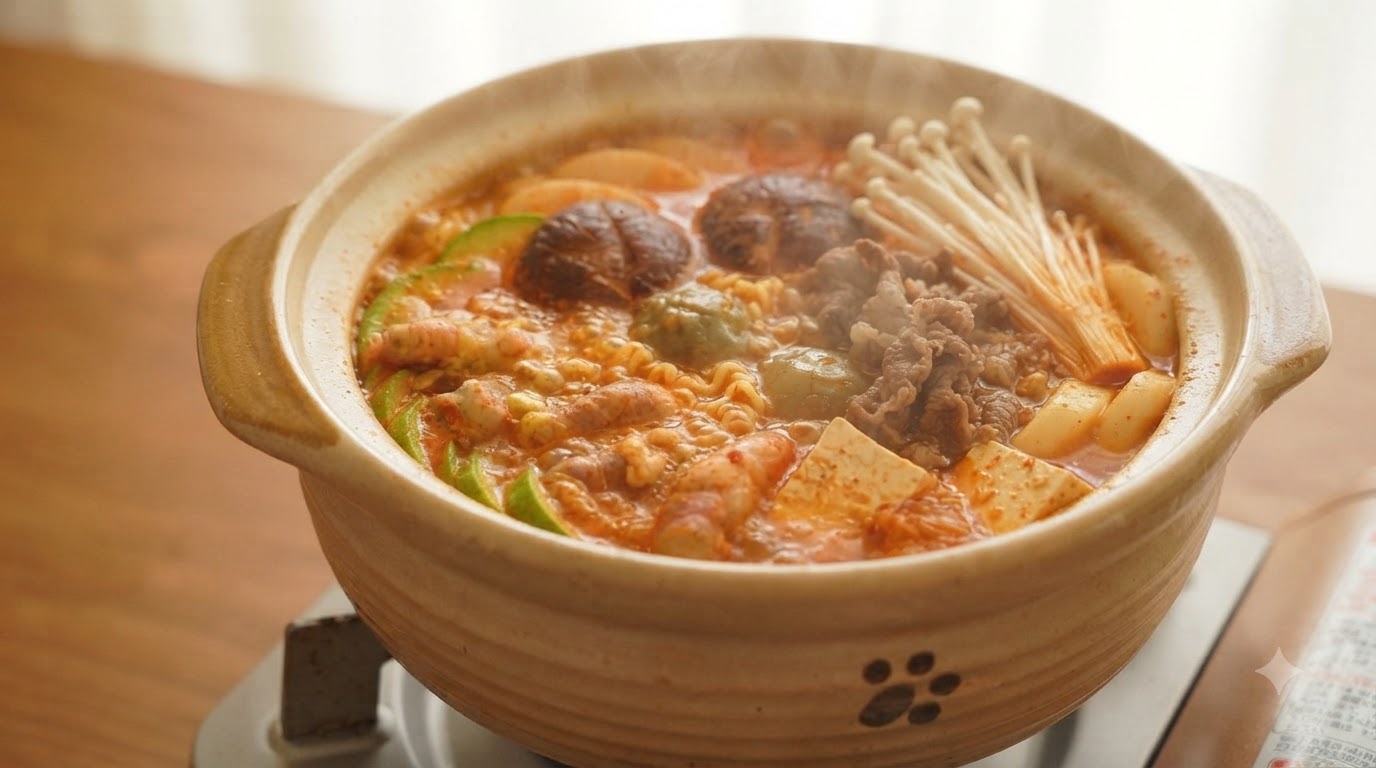
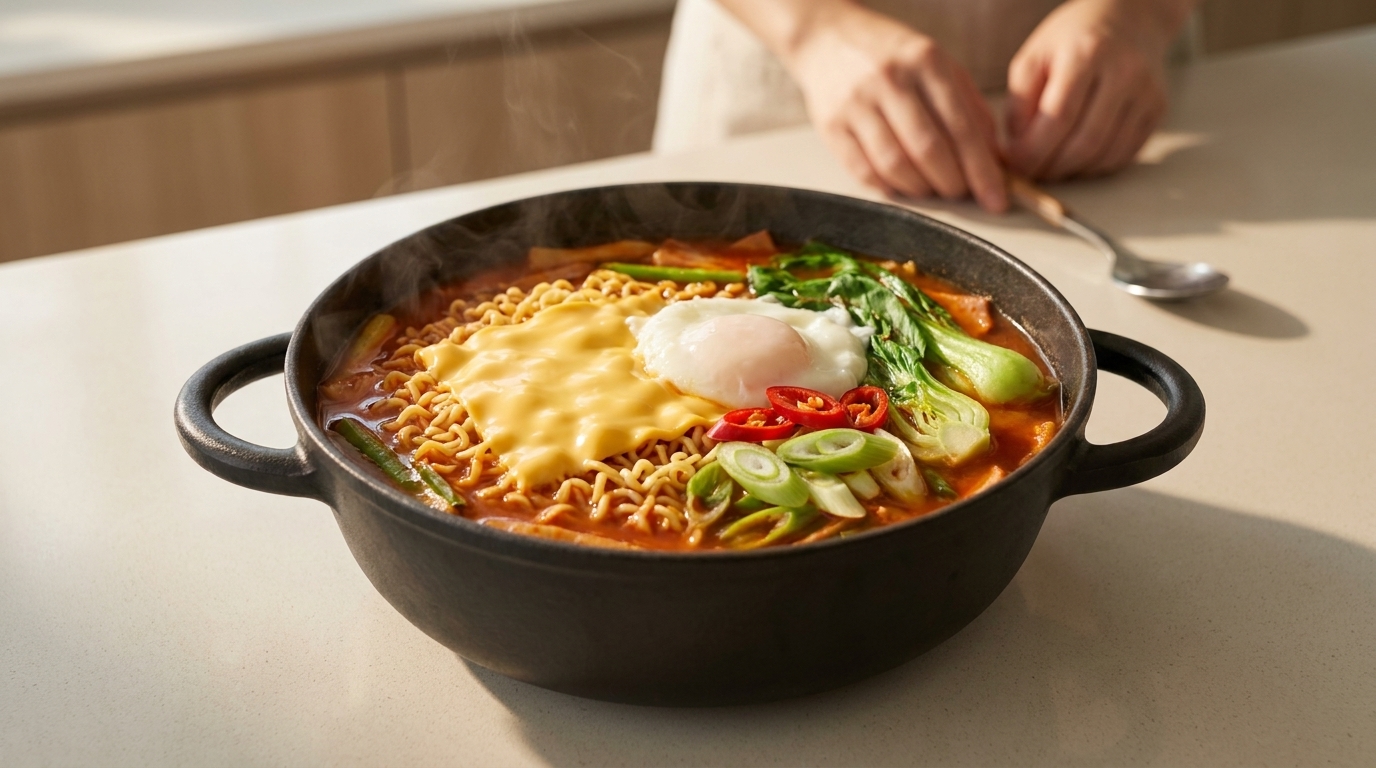
A comforting, single-serving Korean army stew featuring savory luncheon meat, firm tofu, ramen noodles, and a rich, spicy broth topped with melted cheese.
Budae Jjigae, or Korean army stew, is a comforting fusion dish born out of post-war ingenuity, combining traditional Korean chili paste with convenient canned ingredients. Making a personal portion in a single pot is a wonderful way to warm up on a chilly day, watching the cheese melt into the bubbling broth as it washes away the days exhaustion.
Ingredients
- 100 g luncheon meat
- 1/2 block firm tofu
- 1/2 red onion
- 1/2 cup napa cabbage
- 1/2 zucchini
- 1 pack ramen noodles
- 1 slice yellow cheese
- 1 egg
- 1 tbsp Korean chili paste
- 1 tsp chili powder
- 1 tsp soy sauce
- 1/2 tsp sugar
- 1 clove minced garlic
- to taste green vegetables and chili slices
Instructions
- 1Slice the Red Onion
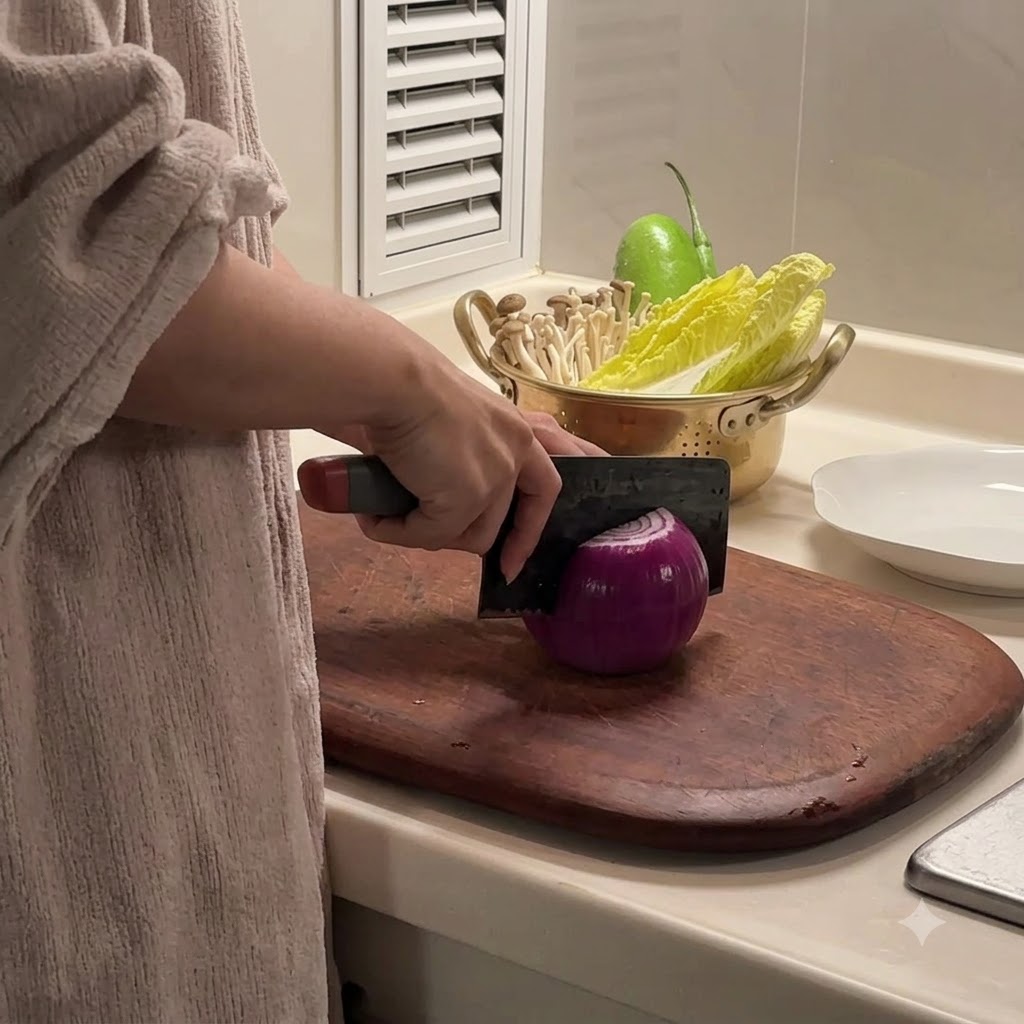
Place a fresh red onion on the wooden cutting board and carefully slice it into even sections using a kitchen knife.
Tip: Keep your fingertips tucked inward to protect your hands while cutting round or bulb vegetables. - 2Slice the Zucchini
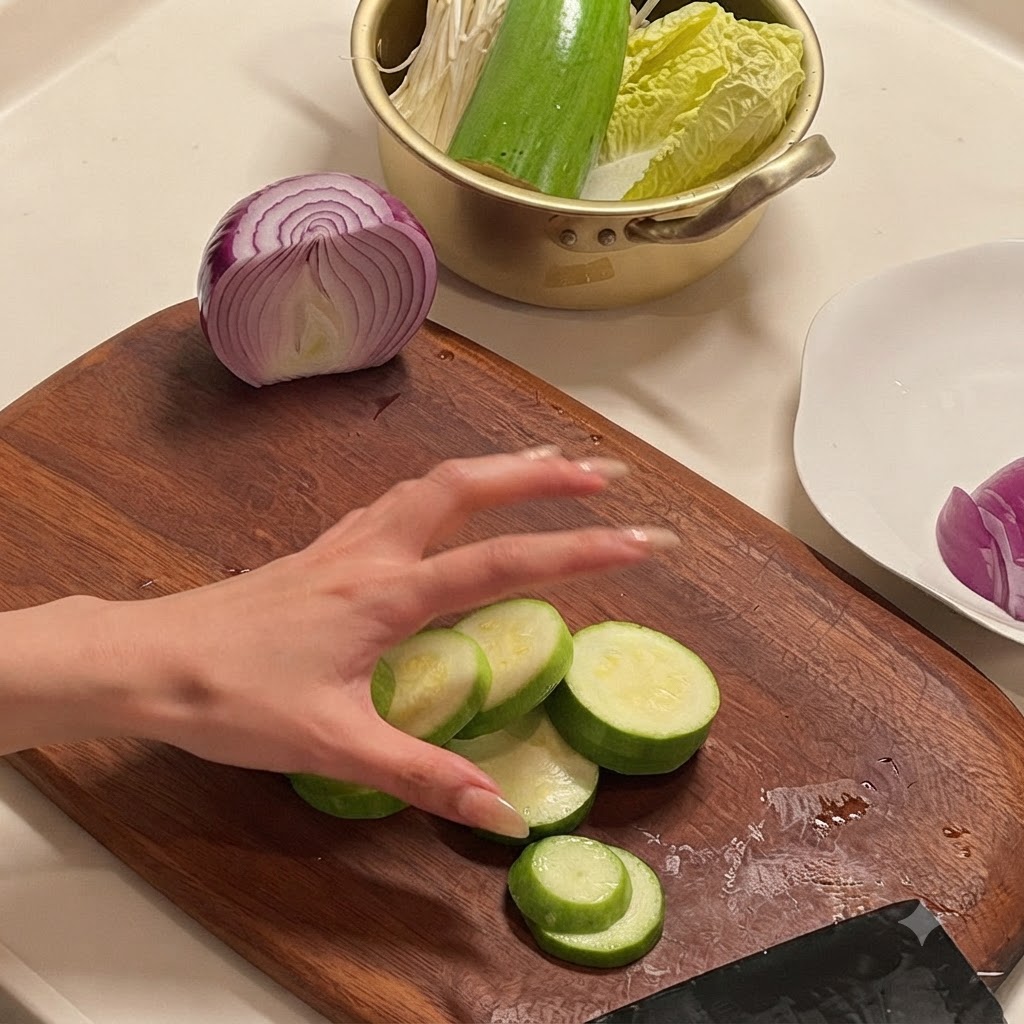
Take the zucchini and cut it crosswise into neat, uniform rounds on the cutting board, ready for the stew pot.
Tip: Cutting the zucchini into consistent thickness ensures they cook evenly in the broth. - 3Cut the Tofu
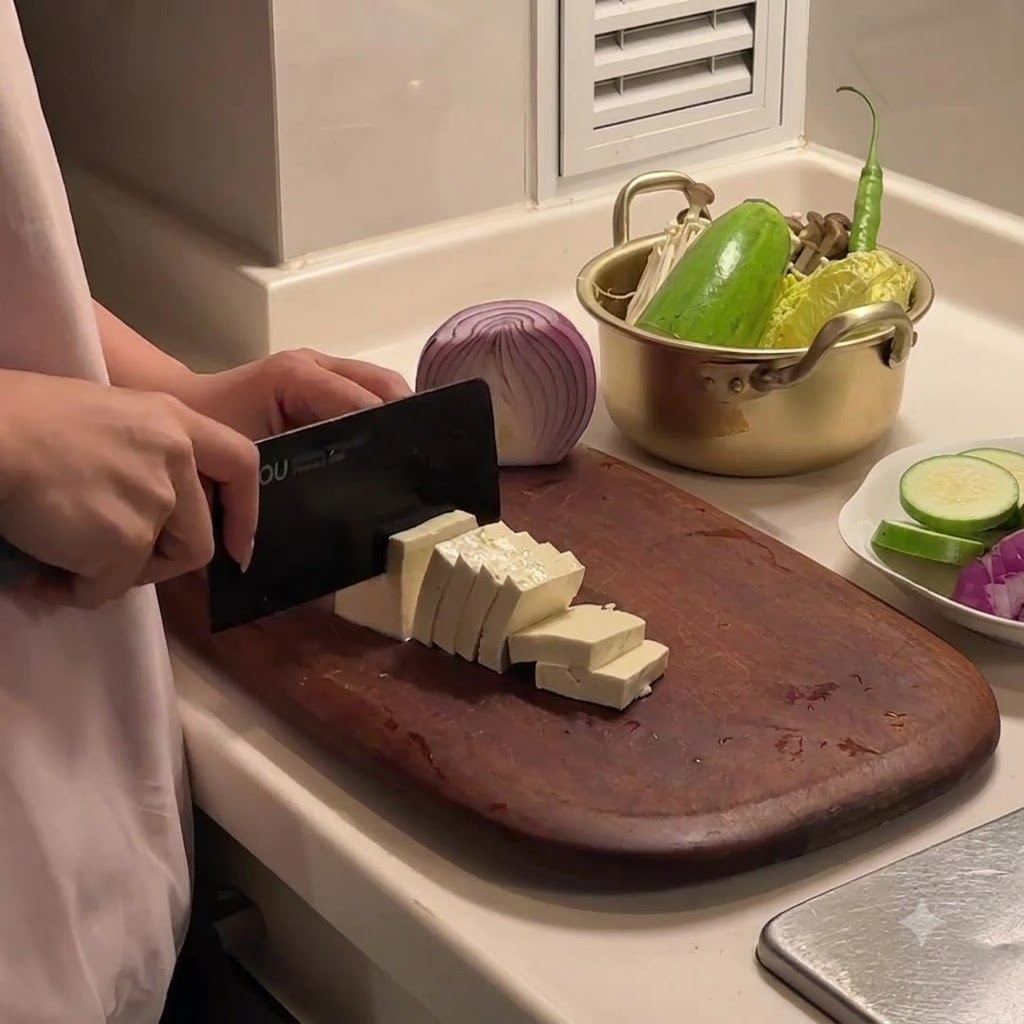
Slice a block of firm tofu into clean, bite-sized rectangular pieces so they can easily absorb the flavors of the stew.
Tip: Firm tofu holds its shape much better during simmering compared to soft or silken varieties. - 4Slice the Luncheon Meat
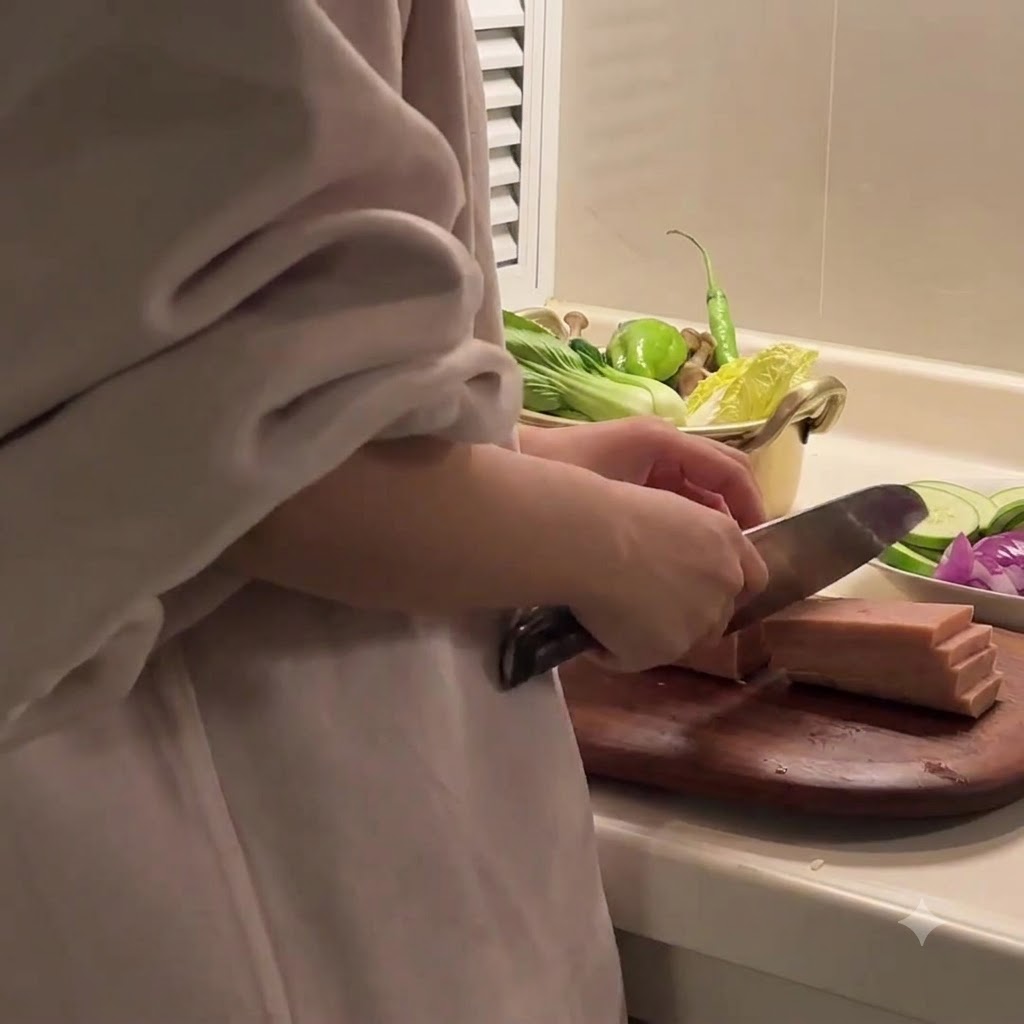
Cut the block of luncheon meat into thin rectangular slices, a classic and essential ingredient for Budae Jjigae.
Tip: Slice them to a thickness that allows them to get slightly crispy on the edges while remaining tender. - 5Prepare the Sauce Base
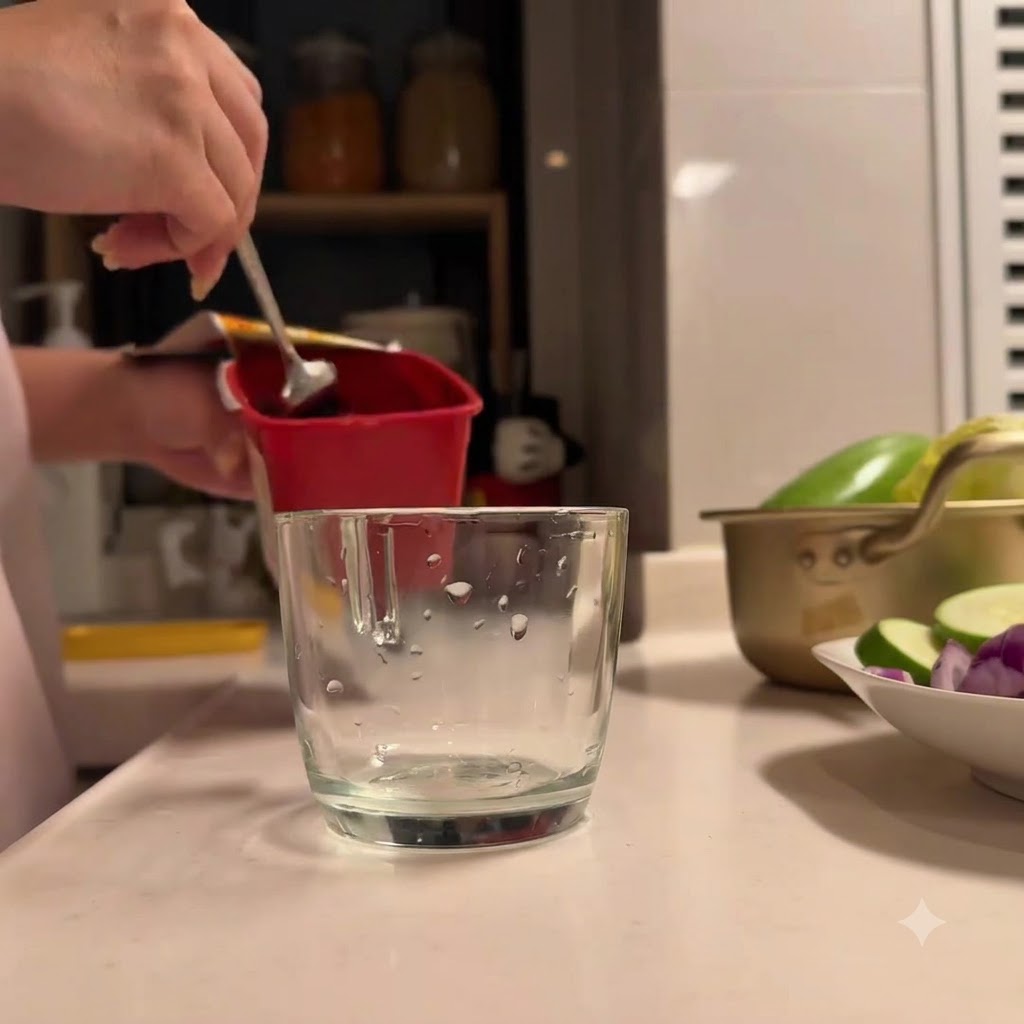
Combine Korean chili paste, chili powder, a touch of sugar, and soy sauce inside a clear glass cup to build the savory and spicy flavor foundation.
Tip: Mix the sauce ingredients thoroughly beforehand so the paste dissolves smoothly into the broth later. - 6Add Minced Garlic to Sauce
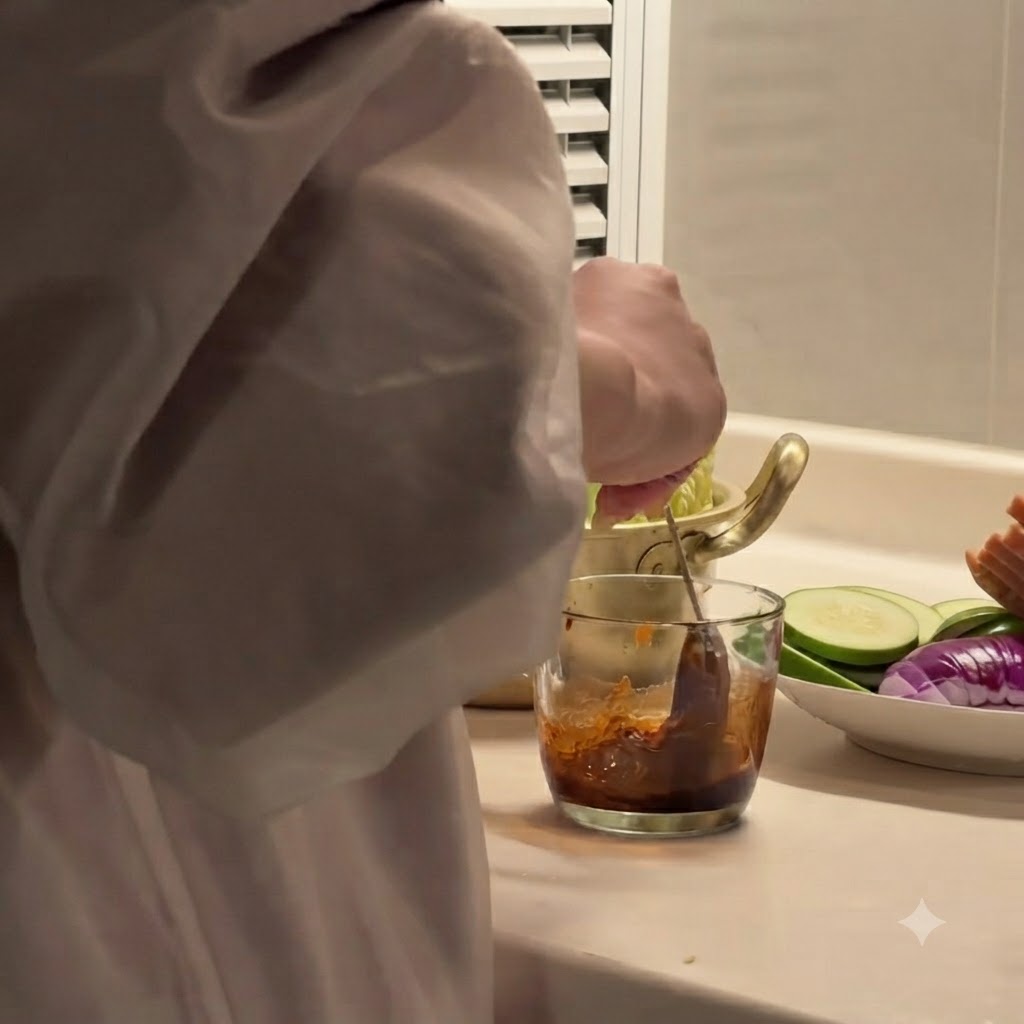
Add a spoonful of minced garlic directly into the glass cup containing the prepared seasoning mixture and stir well.
Tip: Freshly minced garlic brings a sharp, aromatic punch that elevates the depth of the chili sauce. - 7Layer the Base Vegetables
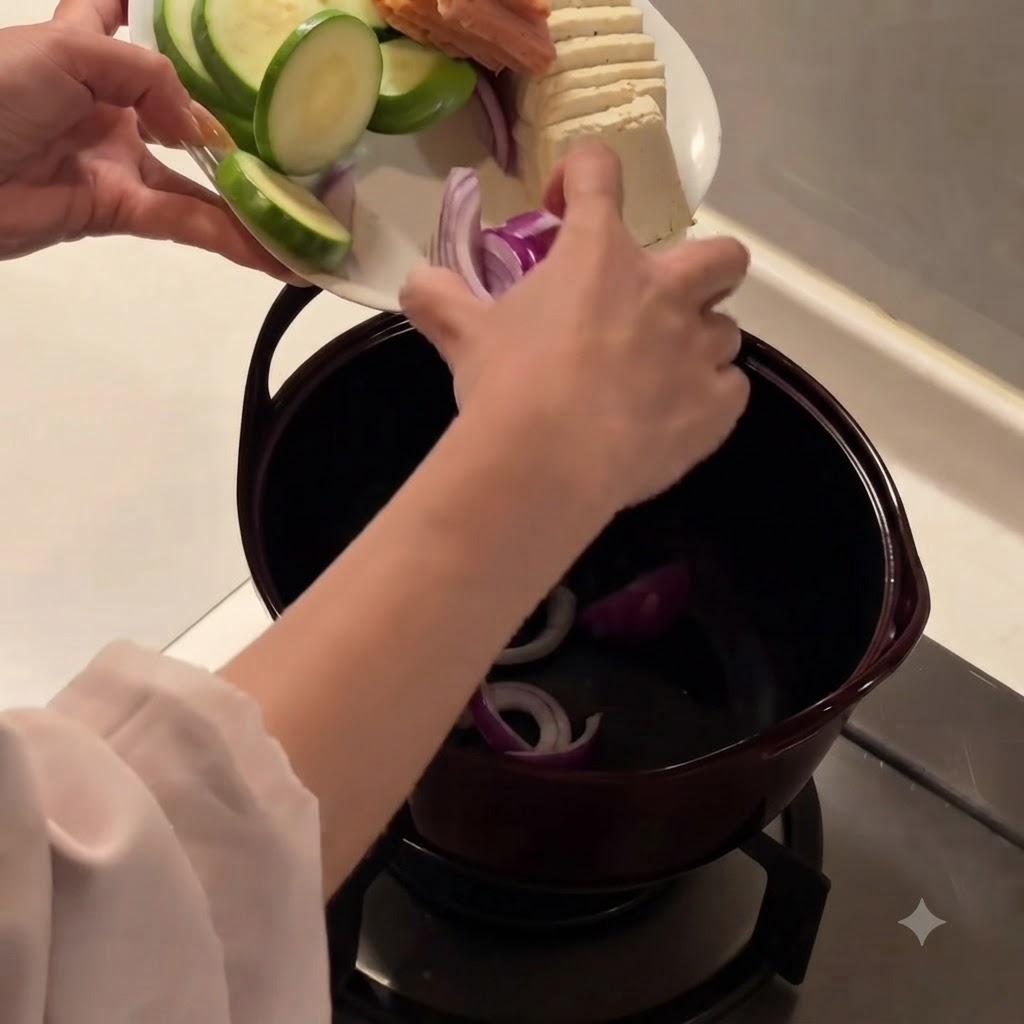
Place a fresh layer of sliced red onions and napa cabbage at the bottom of the pot to establish a flavorful vegetable base.
Tip: Laying the vegetables at the very bottom prevents the ingredients from burning and adds natural sweetness to the broth as it simmers. - 8Add Luncheon Meat and Tofu
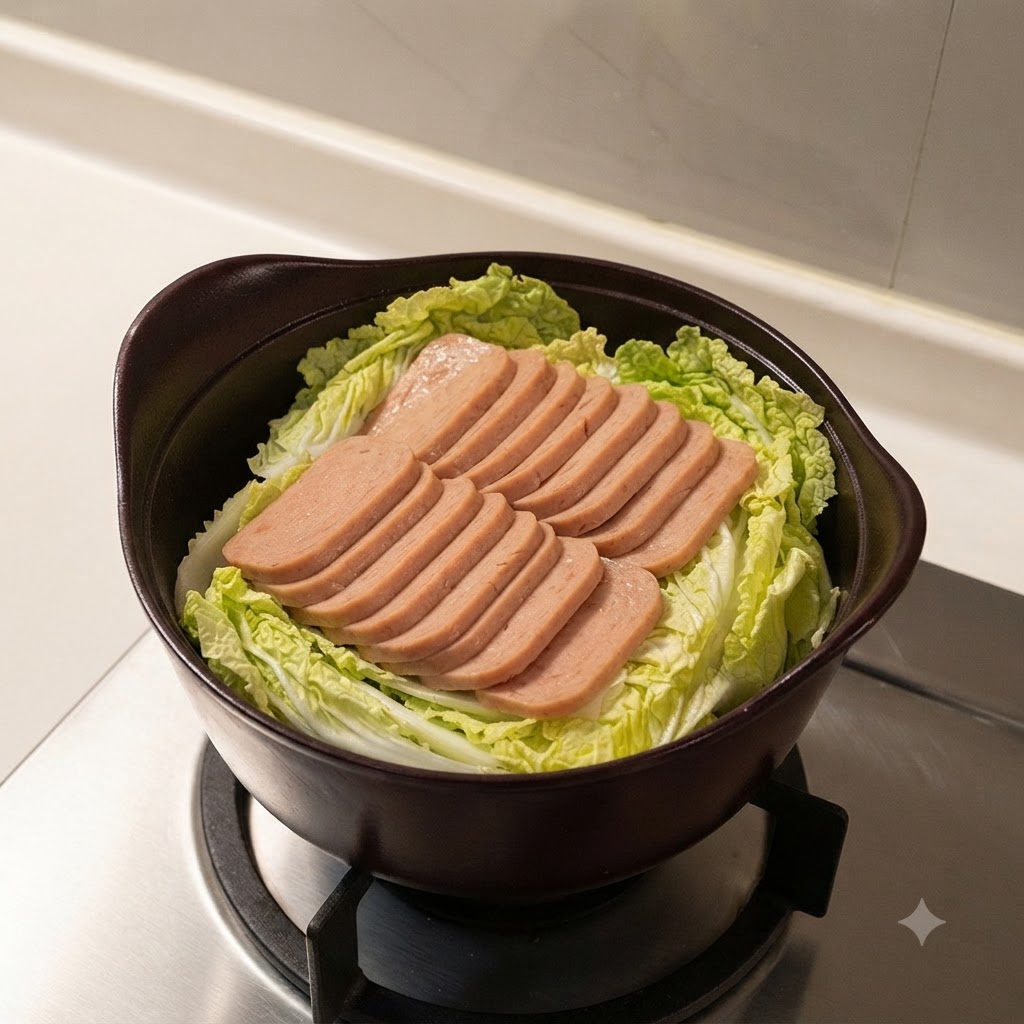
Neatly arrange slices of luncheon meat and firm tofu pieces on top of the cabbage bed inside the pot.
Tip: Fan out the luncheon meat and tofu evenly around the edges so they absorb the savory soup flavors uniformly.