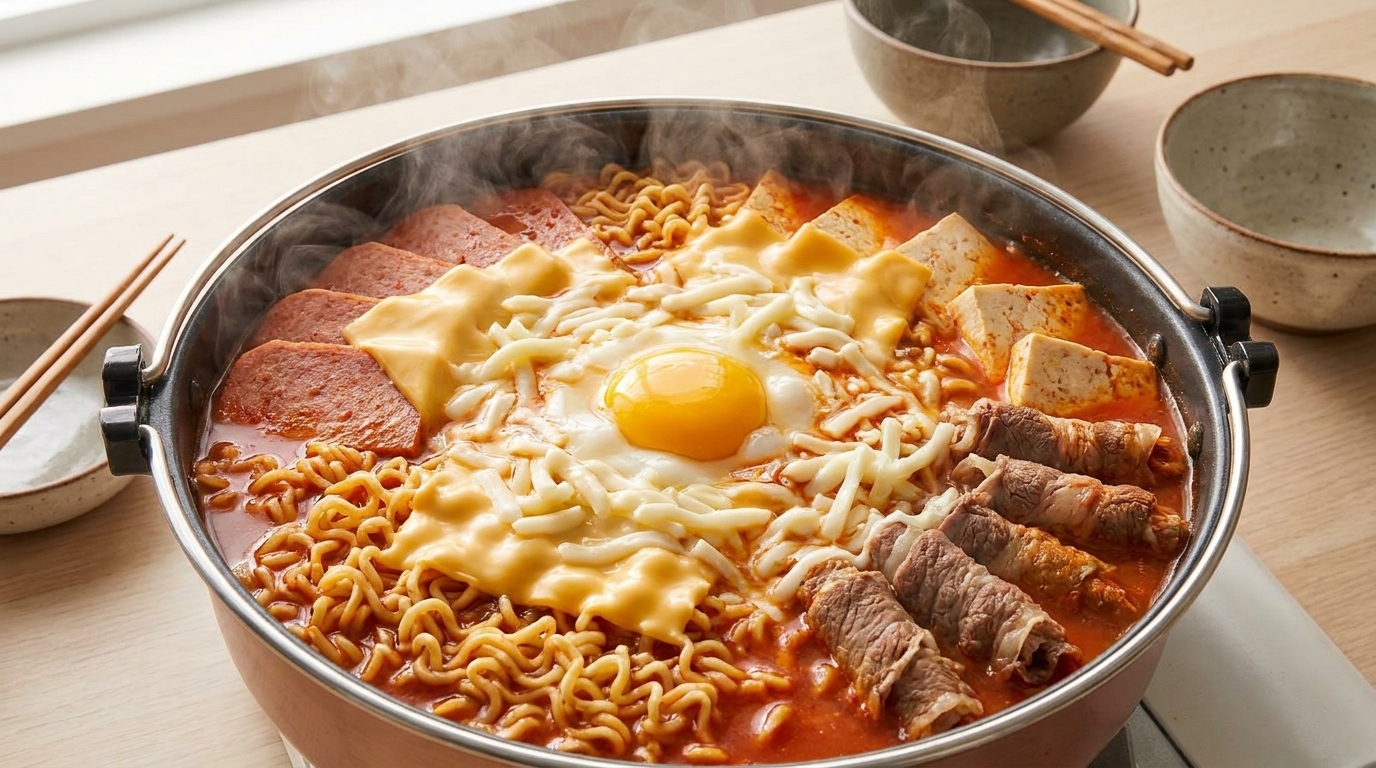
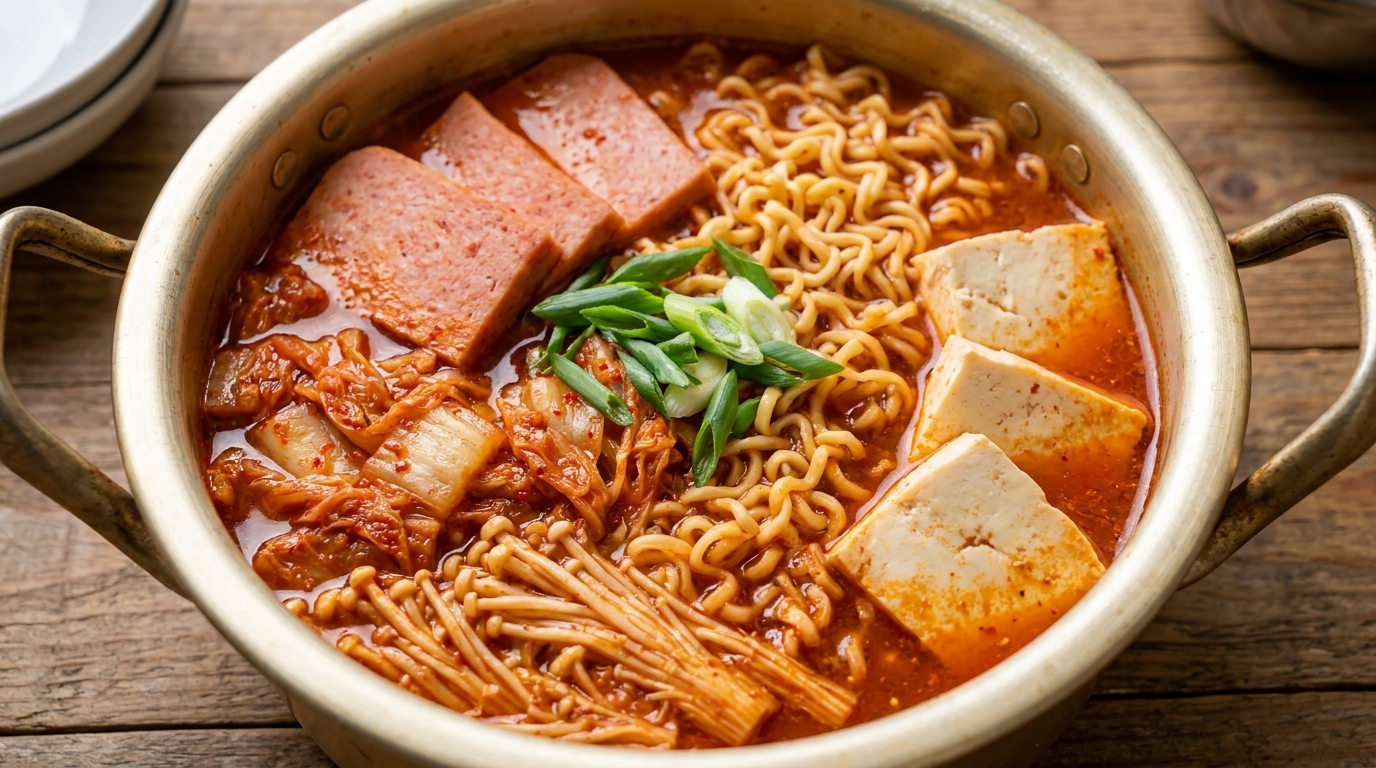
Classic Korean Army Stew (Budae Jjigae)
Experience the ultimate comfort of Korean Army Stew, a vibrant hot pot filled with spicy broth, savory Spam, mushrooms, kimchi, and gooey melted cheese.
Budae jjigae, or army stew, is a beloved example of Korean culinary ingenuity. Born out of necessity, this fusion dish combines traditional Korean ingredients like kimchi and gochujang with accessible canned goods to create a deeply flavorful, spicy, and satisfying communal meal.
Ingredients
- 3 tbsp Korean chili paste (gochujang)
- 1 tbsp light soy sauce
- 1 tsp sugar
- 1 cup bean sprouts
- 1 cup enoki mushrooms
- 1/2 cup sliced onion
- 1/2 cup sliced zucchini
- 4 shiitake mushrooms
- 100 g Spam
- 4 crab sticks
- 4 fish tofu cubes
- 1/2 cup kimchi
- 1 block spicy instant ramen noodles
- 2 slices yellow processed cheese
- 1 tsp black sesame seeds
Instructions
- 1Start the all-purpose sauce
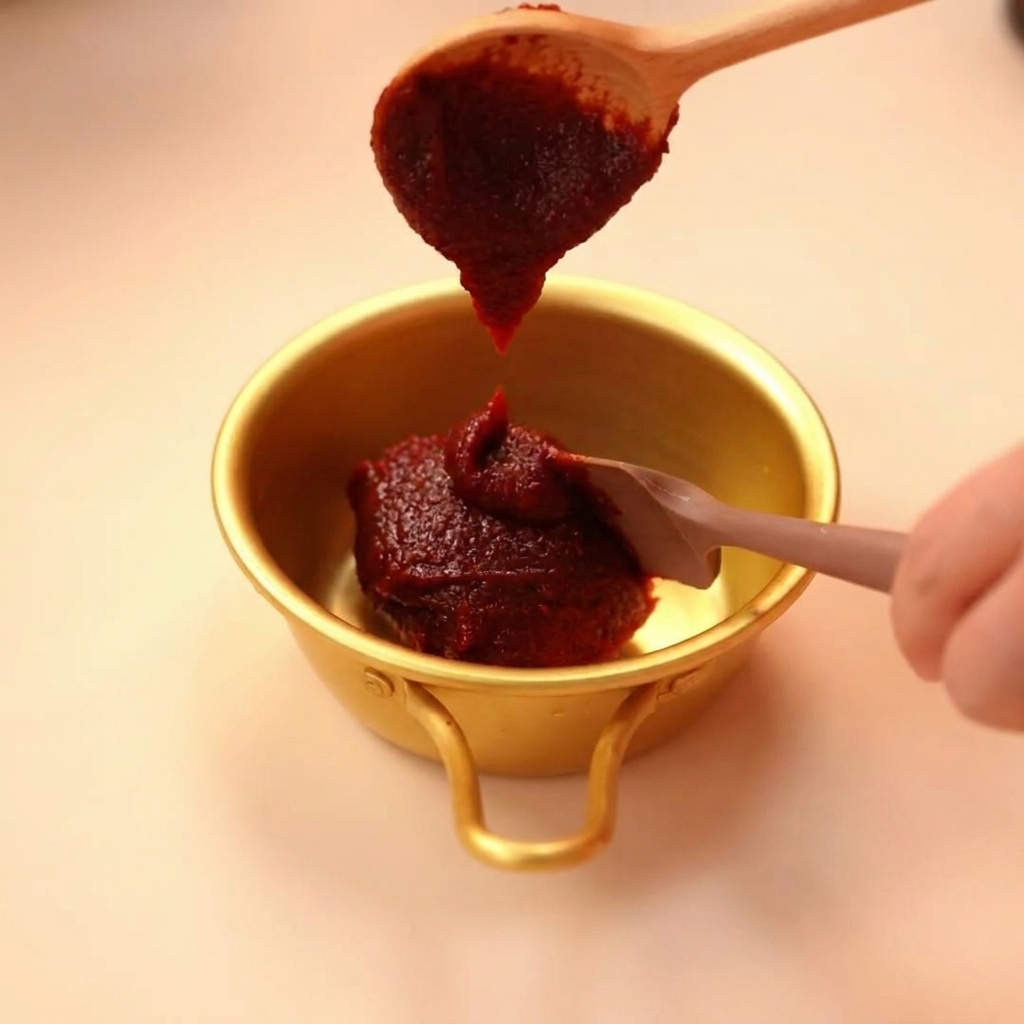
Begin building the flavor base by adding three spoonfuls of Korean chili paste (gochujang) into a small mixing bowl.
Tip: Using a separate small bowl to pre-mix the sauce ensures all the flavors meld together evenly before you add them to the hot pot. - 2Add soy sauce
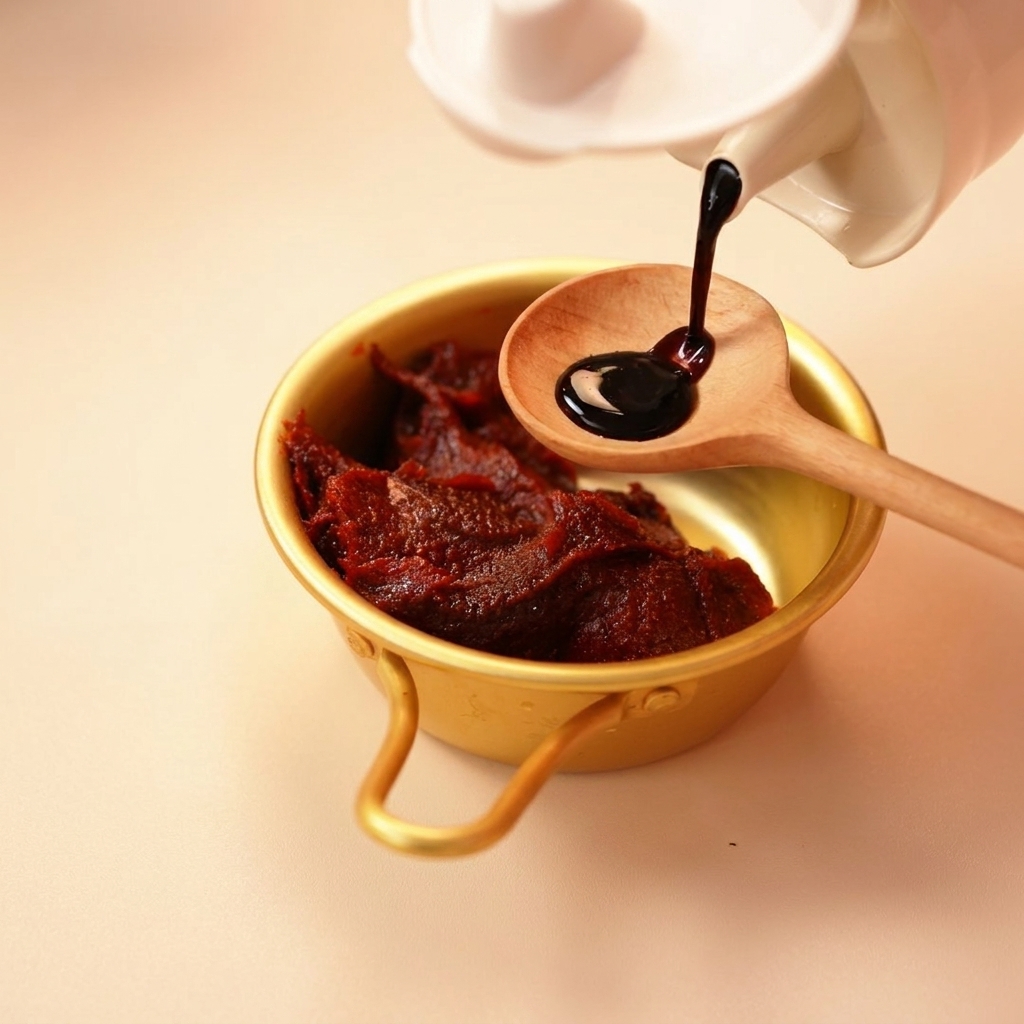
Pour one spoonful of soy sauce into the bowl with the chili paste to add a savory, umami depth to the stew base.
Tip: You can adjust the amount of soy sauce slightly depending on how salty your specific brand of chili paste is. - 3Sweeten the mixture
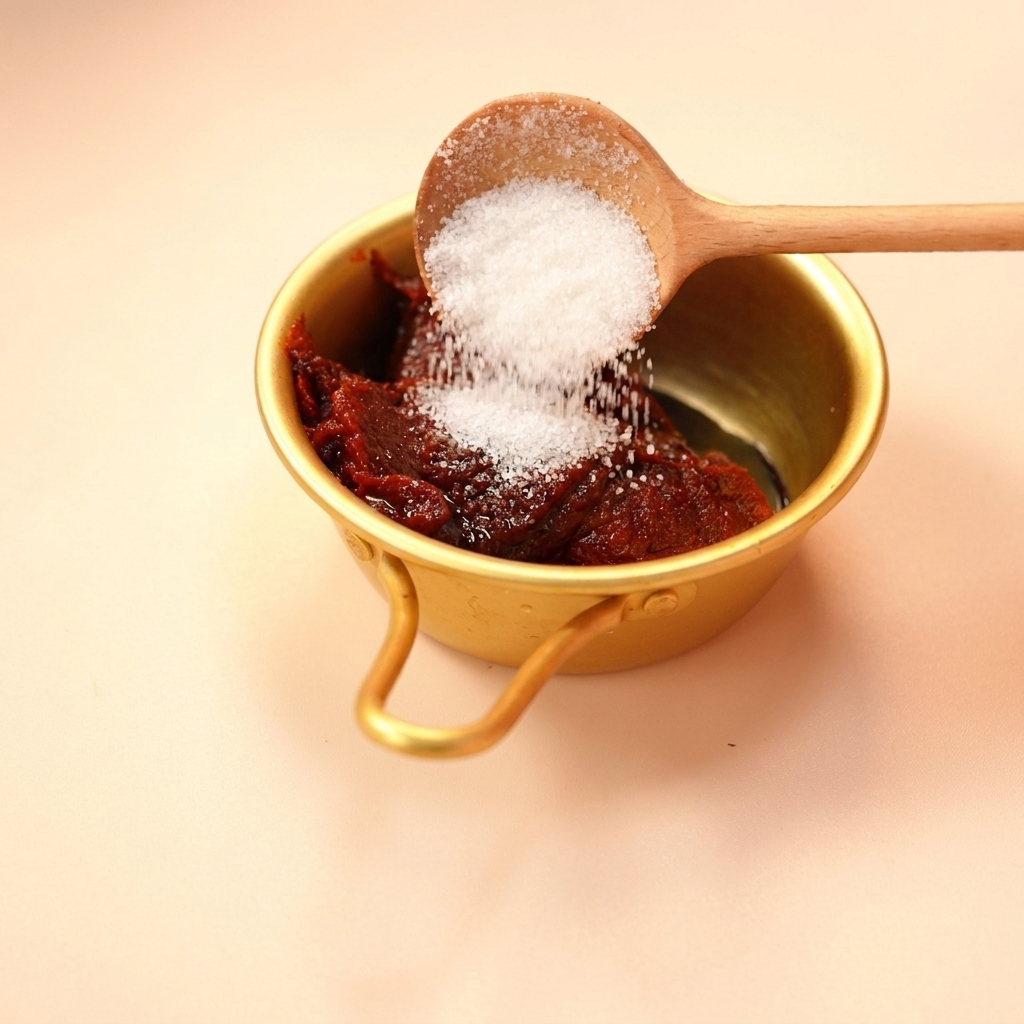
Add one small spoonful of white sugar to the bowl. The sugar helps balance the heat of the chili paste and rounds out the savory notes of the soy sauce.
Tip: If you prefer a less sweet broth, you can reduce the amount of sugar, but a little bit is essential for an authentic Korean flavor profile. - 4Stir the sauce evenly
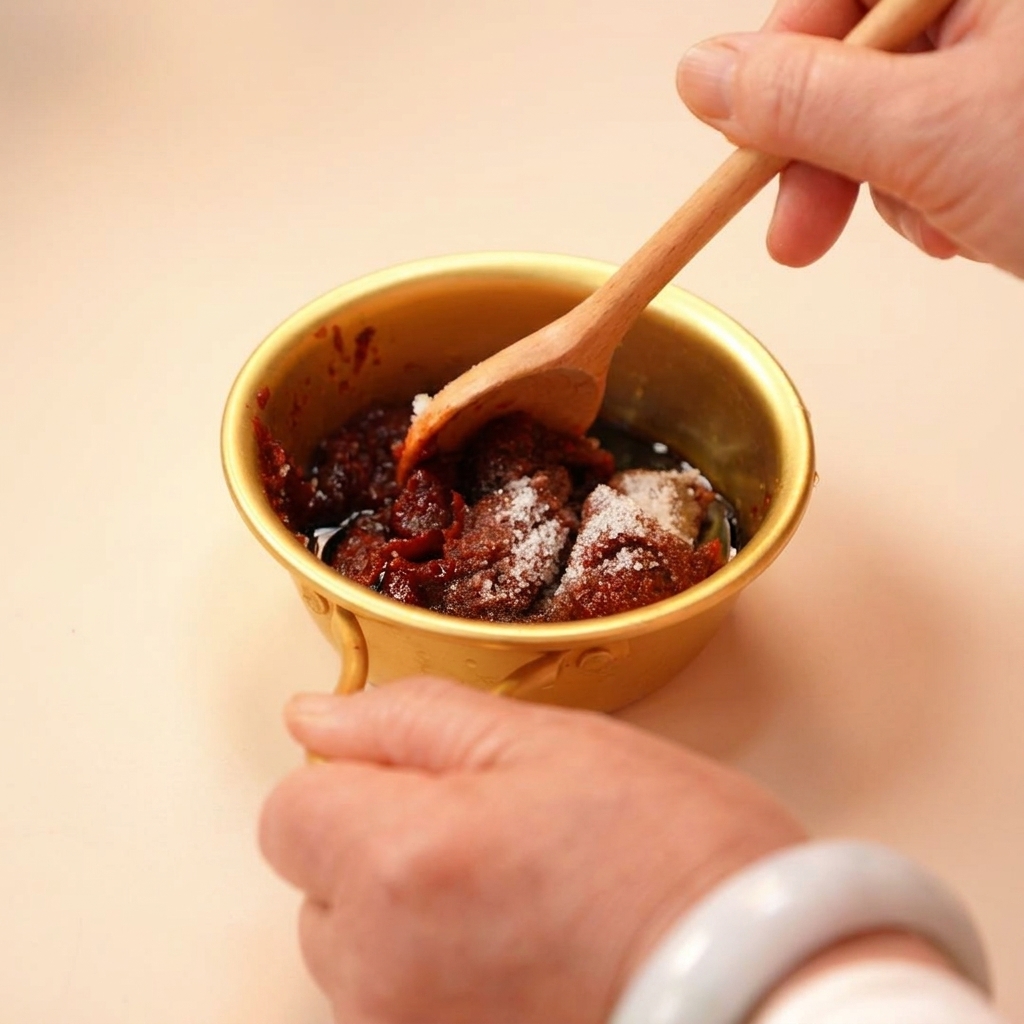
Thoroughly stir the chili paste, soy sauce, and sugar together until they are well combined. This all-purpose sauce will be the flavor foundation for your army stew.
Tip: Make sure all the sugar crystals are completely dissolved into the paste to create a smooth, unified sauce. - 5Build the hot pot base
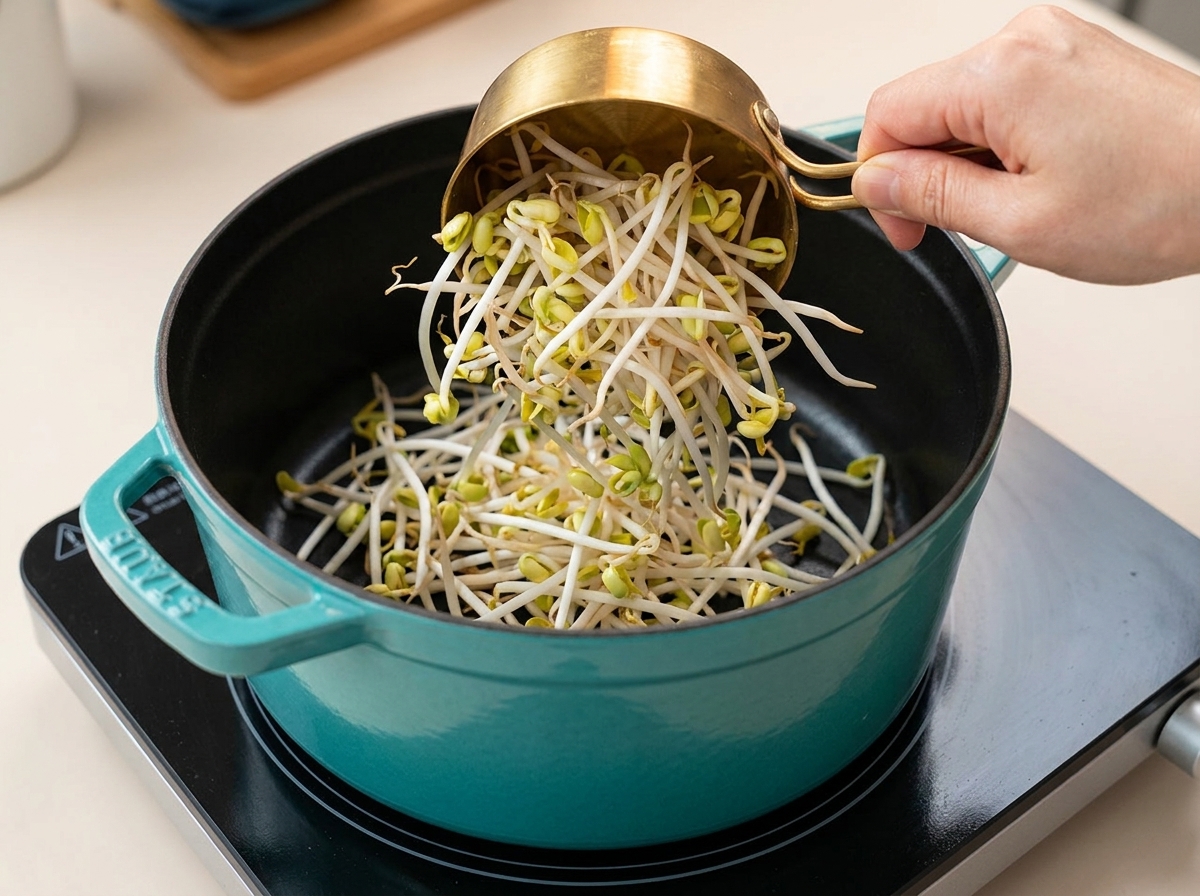
Begin assembling the hot pot by placing a generous layer of fresh, raw bean sprouts directly into the bottom of a large pot.
Tip: Putting hearty vegetables like bean sprouts at the bottom helps protect more delicate ingredients from overcooking and creates a naturally sweet vegetable broth as they cook down. - 6Add fresh vegetables
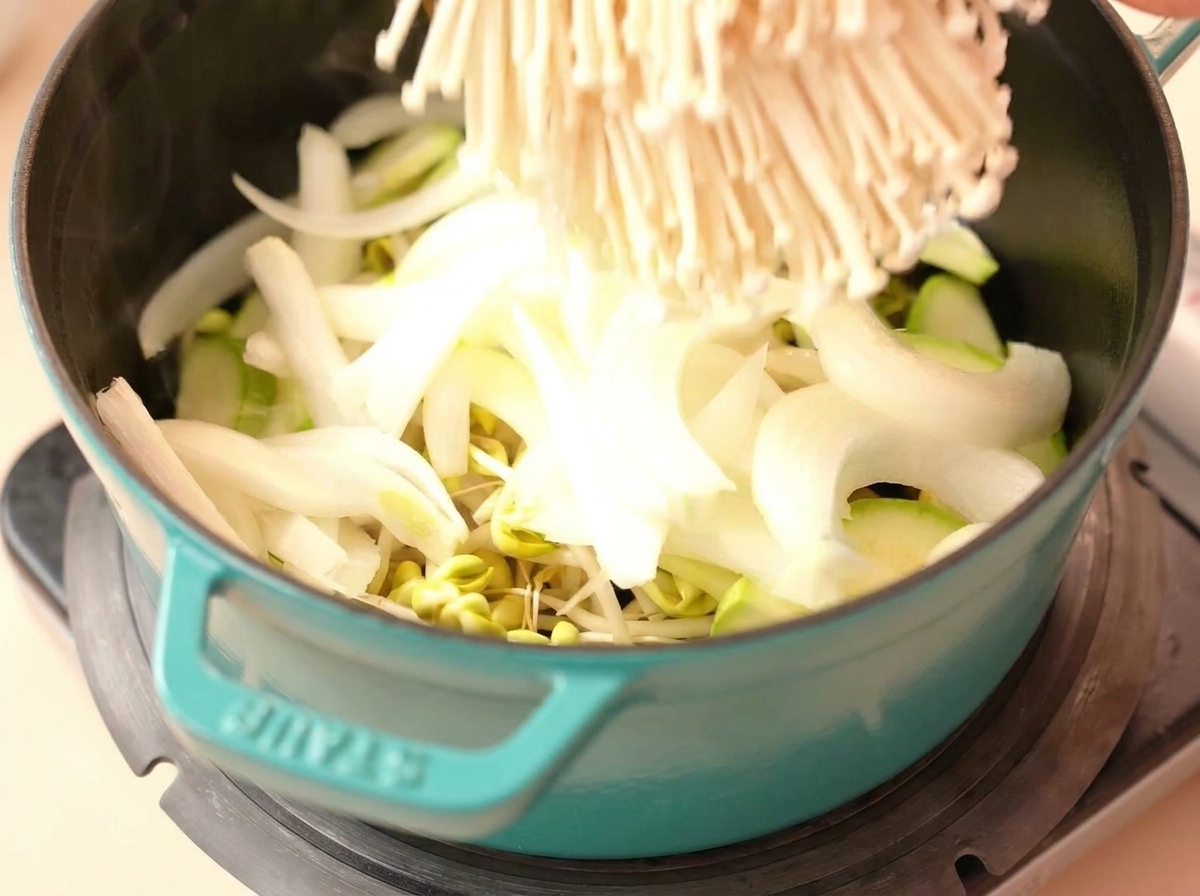
Layer in the next batch of fresh ingredients by adding raw enoki mushrooms, sliced onions, and sliced zucchini on top of the bean sprouts.
Tip: Arranging the vegetables in distinct, separate sections around the pot makes for a beautiful, classic presentation before the broth is added. - 7Add the Spam and mushrooms
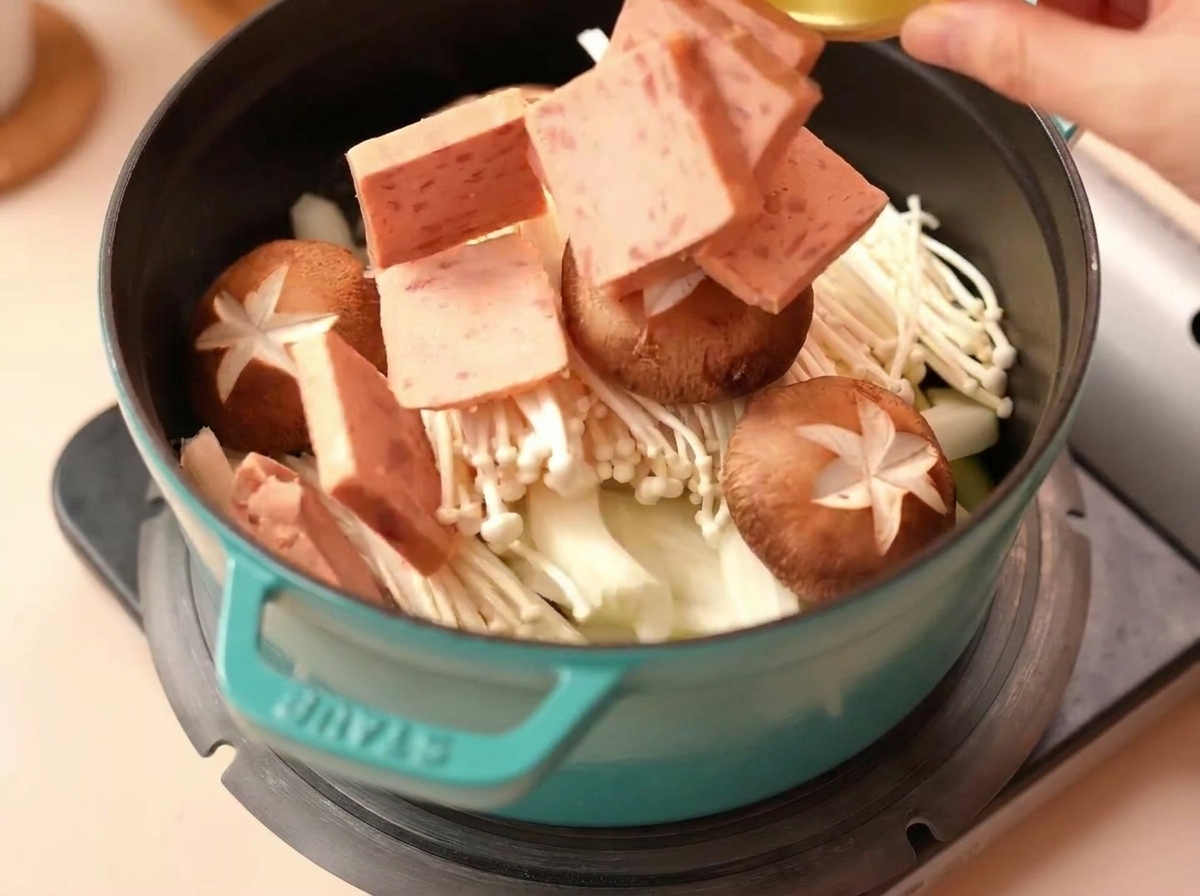
Continue assembling the stew by layering the square slices of Spam and whole shiitake mushrooms into the pot alongside the fresh vegetables.
Tip: Scoring the tops of the shiitake mushrooms with a star pattern not only makes them look beautiful but also helps them absorb the flavorful broth. - 8Include crab sticks and fish tofu
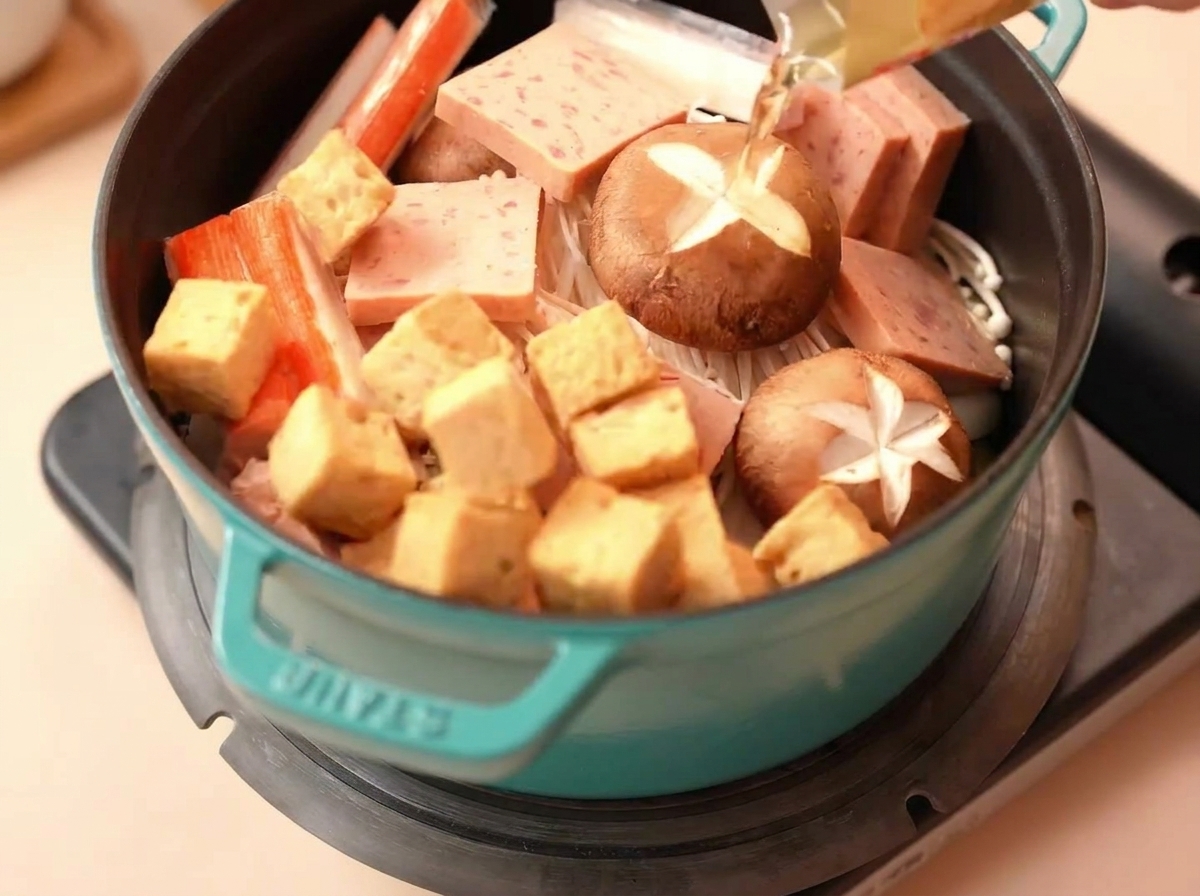
Add the fish tofu cubes and crab sticks to the other assembled ingredients, arranging them neatly in their own sections within the pot.
Tip: Army stew is highly customizable. Feel free to swap these out for hot dog sausages, fish balls, or your favorite hot pot additions. - 9Top with kimchi
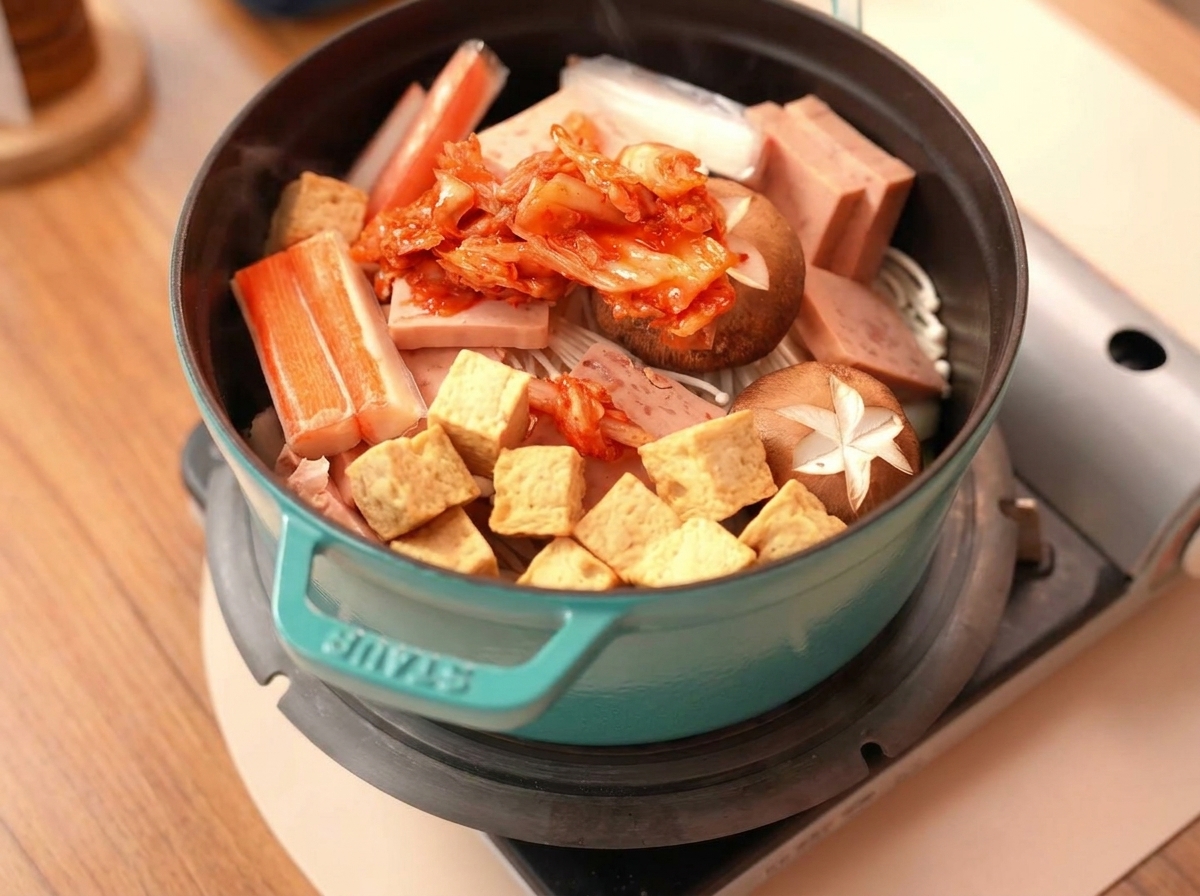
Once all the main components are in the pot, top the uncooked ingredients with a generous portion of red, fermented kimchi right in the center.
Tip: Using older, well-fermented kimchi is crucial. Its elevated acidity and deep flavor will significantly enhance the overall taste of the broth. - 10Add the all-purpose sauce
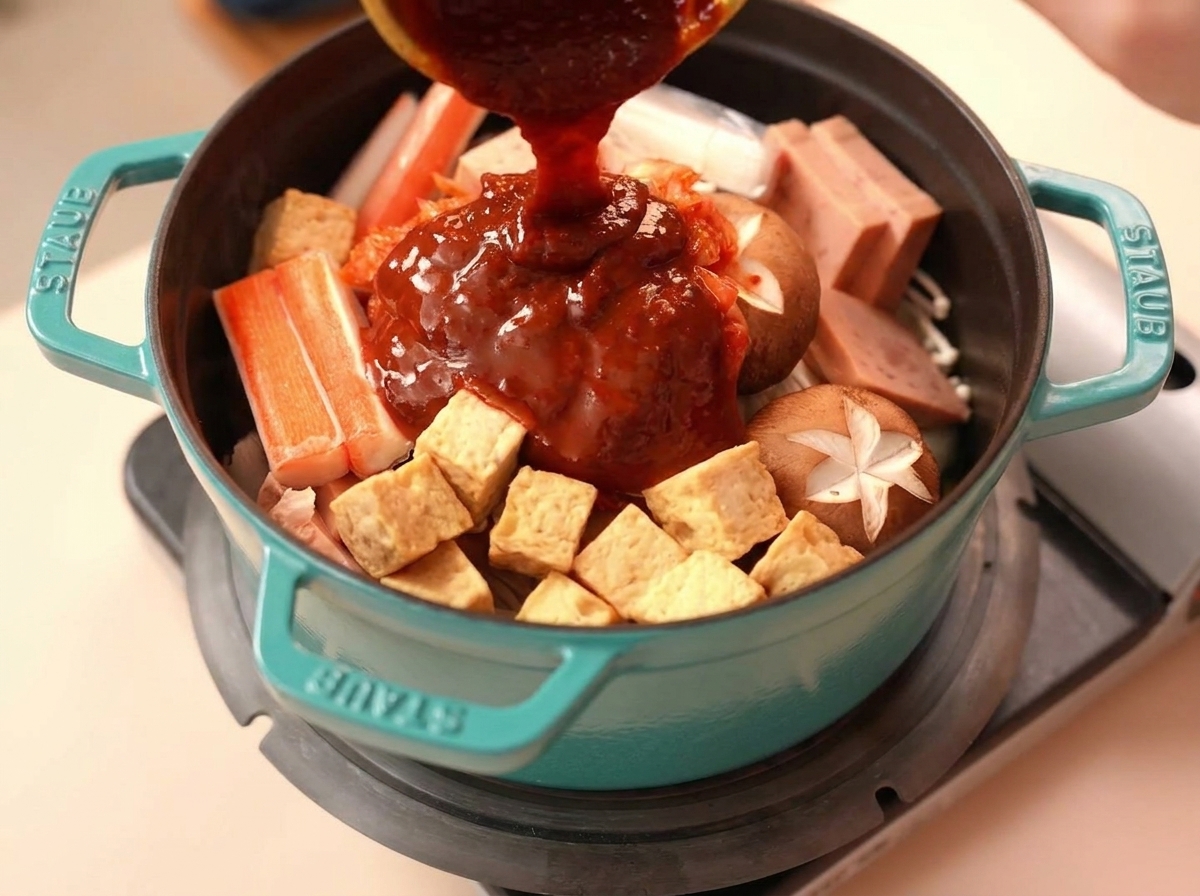
Pour the previously prepared sweet and spicy red Korean sauce directly over the kimchi and the surrounding ingredients.
Tip: Ensure you scrape out all the sauce from the bowl so the stew gets the full impact of the chili paste and seasonings. - 11Pour in the water
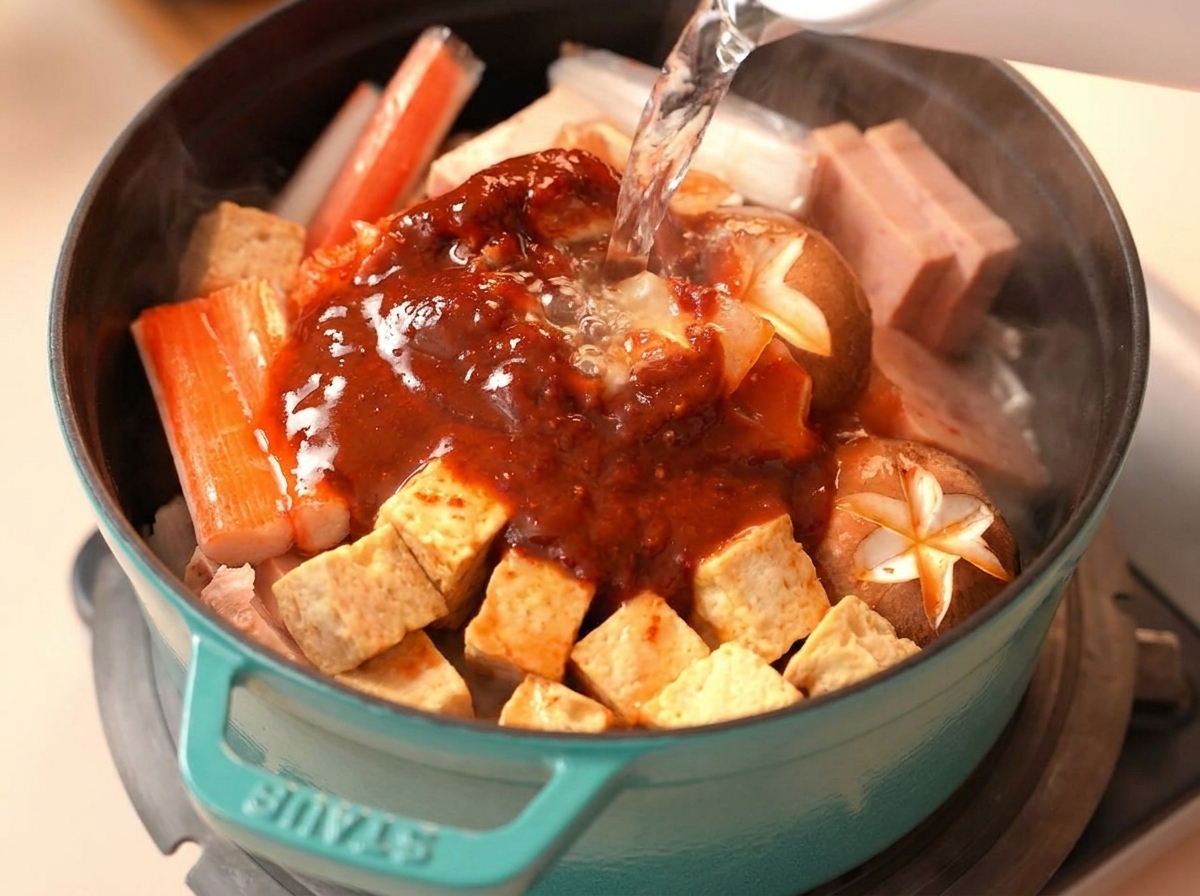
Pour clear water into the pot until it just covers the arranged ingredients. This will mix with the sauce and kimchi to create the rich soup base.
Tip: For an even richer and deeper flavor, you can substitute the clear water with unsalted chicken or beef bone broth. - 12Add the instant noodles
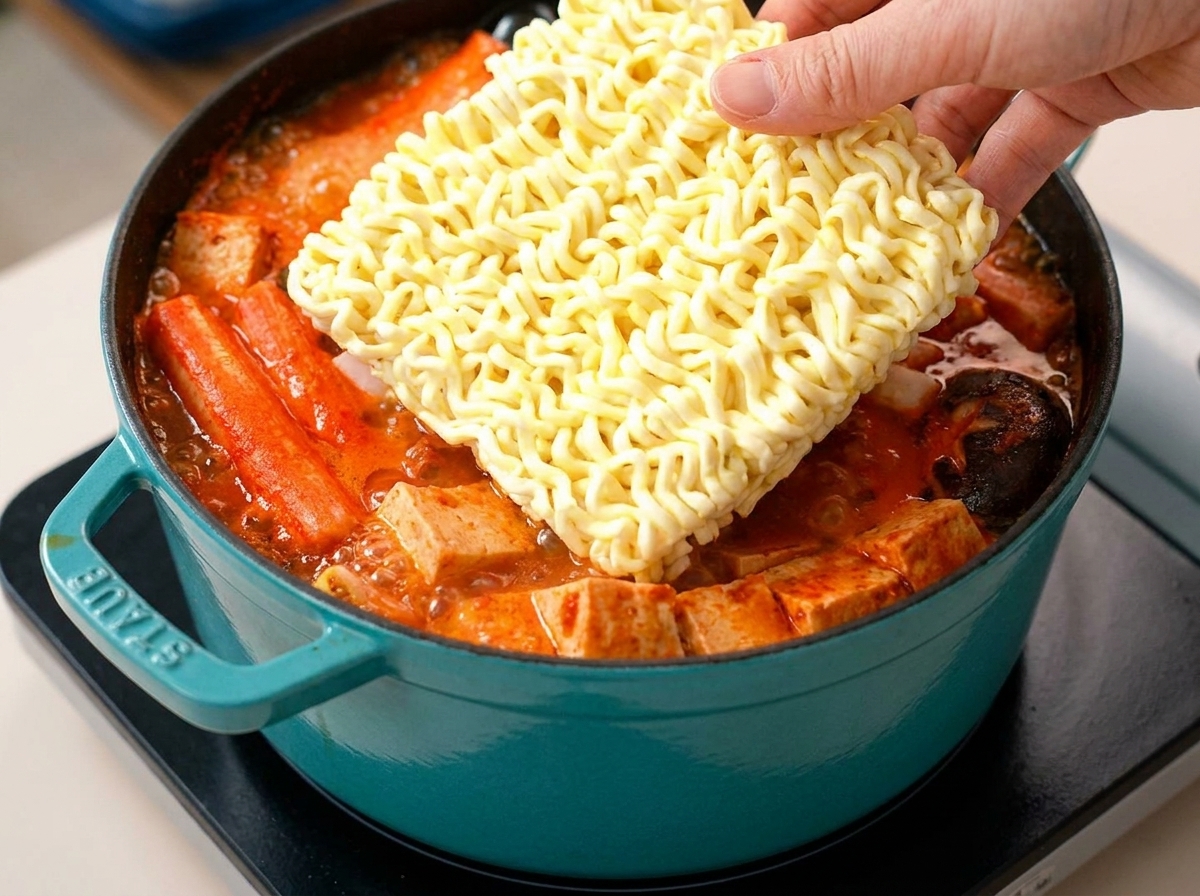
Wait for the water to come to a rolling boil, then carefully place a block of dry spicy instant ramen noodles directly into the bubbling red broth.
Tip: Always wait until the broth is actively boiling before adding the noodles so they cook quickly and retain a delightfully chewy texture. - 13Add the cheese
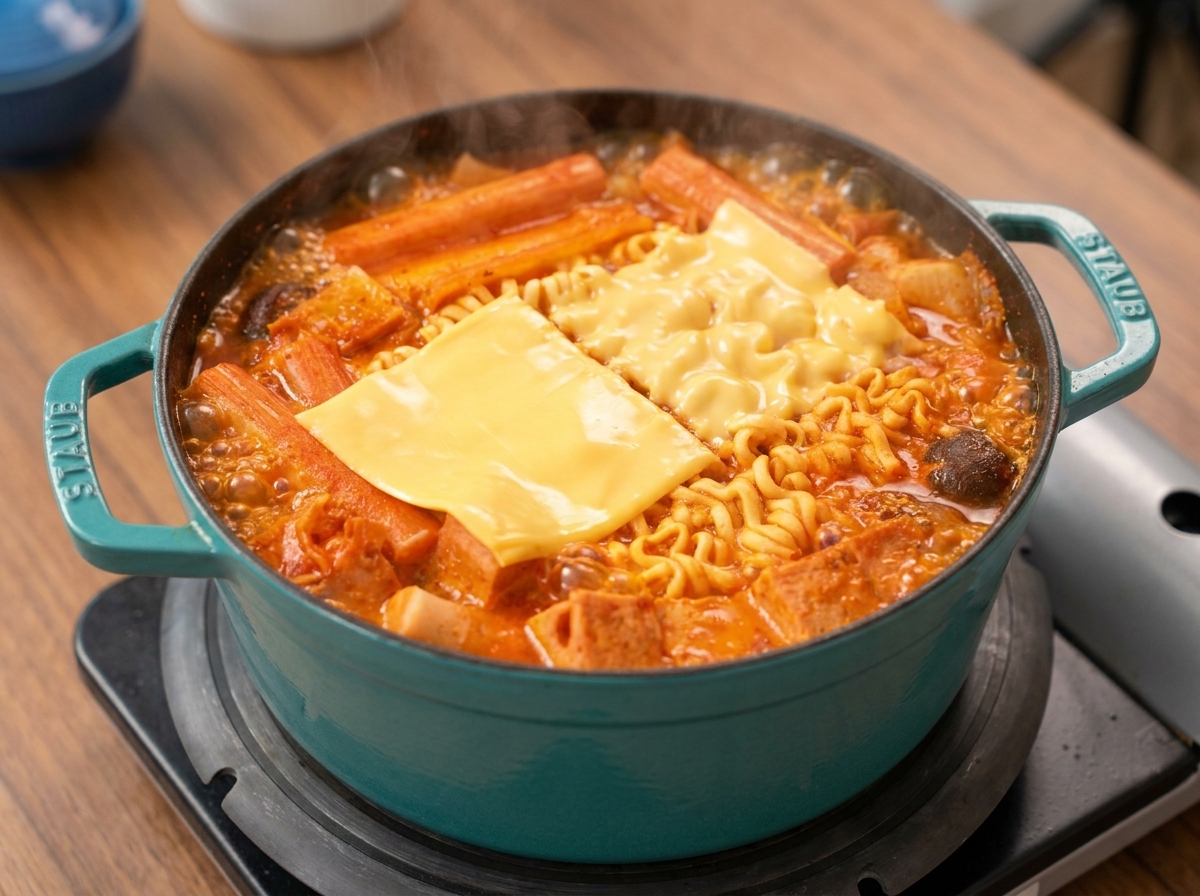
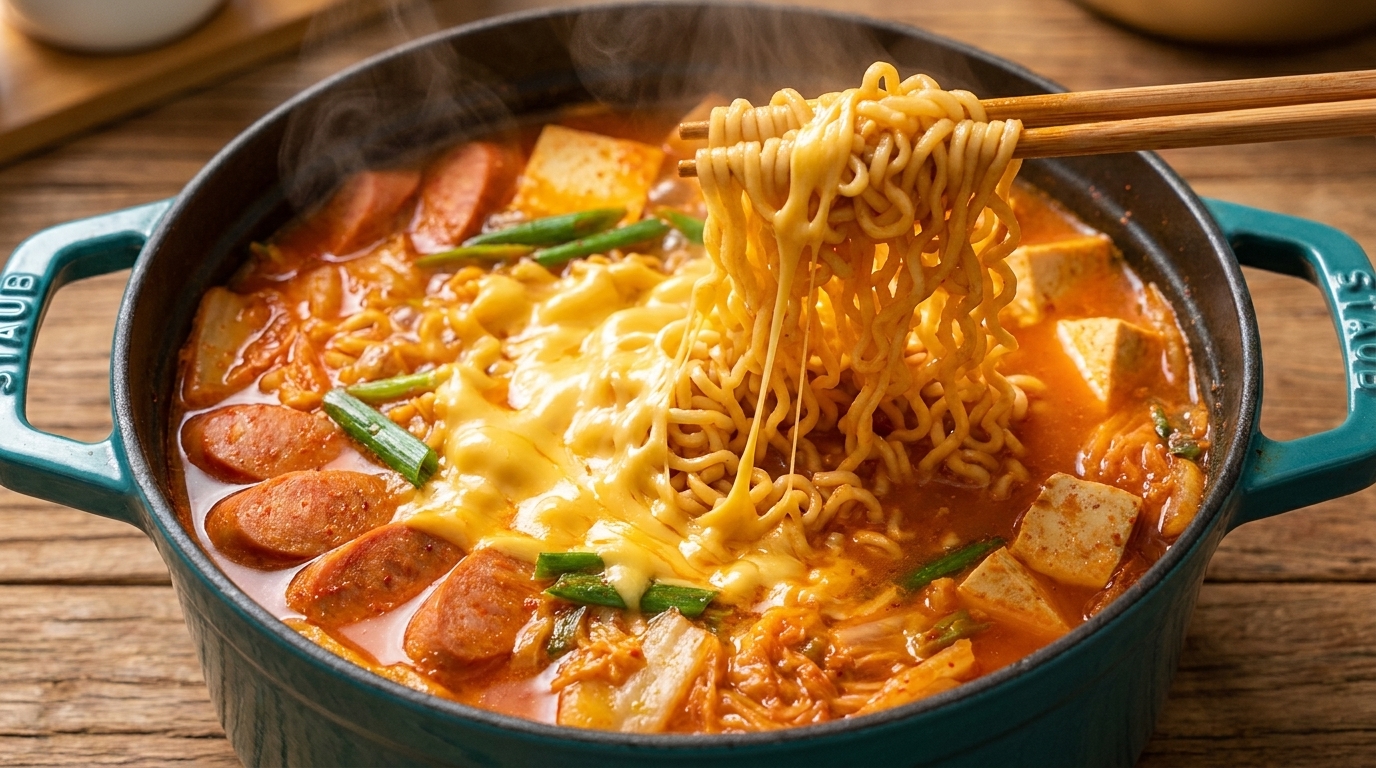
Wait for the broth to come to a boil, then add the spicy chicken noodles into the center of the pot. Immediately top the noodles with two slices of yellow cheese and let it boil for a while until the cheese begins to melt and become stringy.
Tip: Do not stir immediately after adding the cheese; let it melt slightly so it coats the noodles for a richer, creamier flavor. - 14Garnish and serve
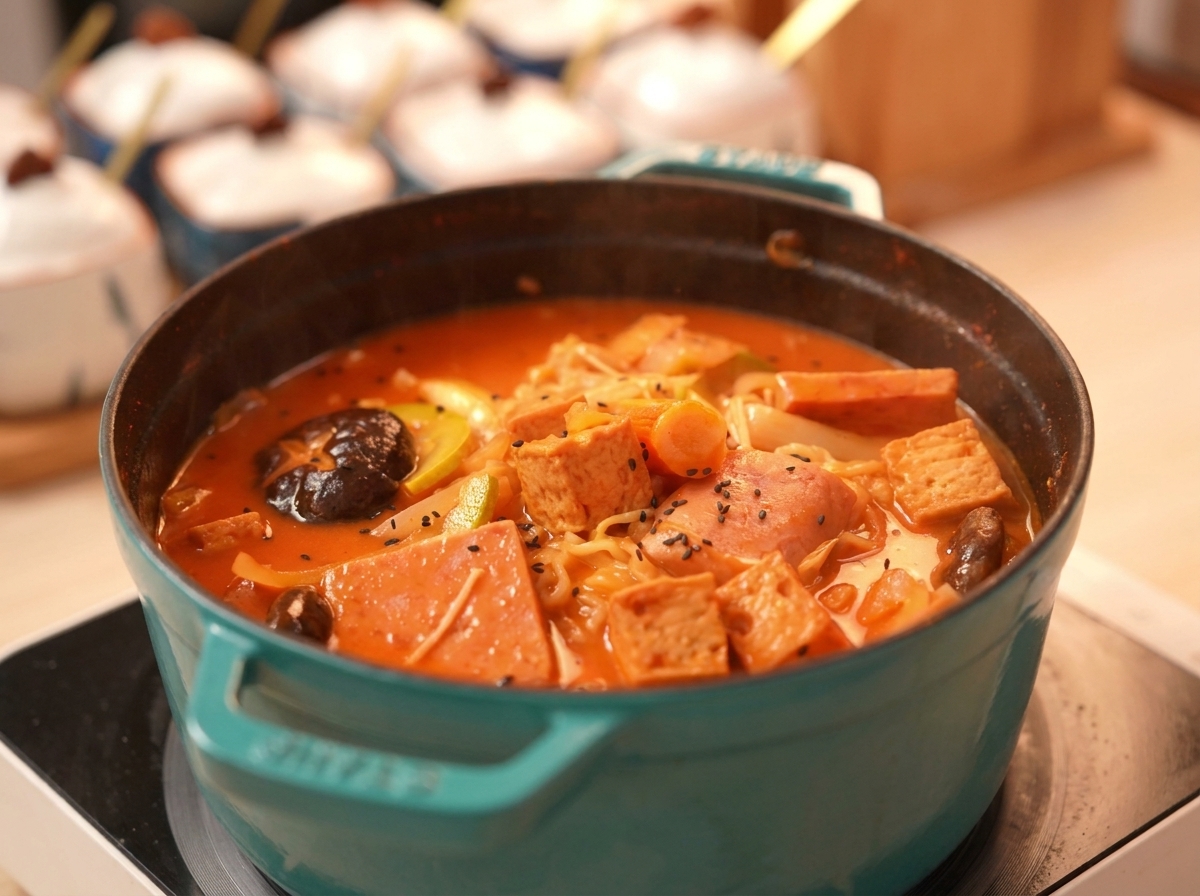
Once the ingredients are fully cooked and the cheese has melted, finish the stew by sprinkling a generous amount of black sesame seeds over the top. Give everything a gentle, even stir to combine the delicious flavors and serve immediately while piping hot.
Tip: The black sesame seeds add a subtle nutty aroma and great visual contrast to the vibrant red broth.