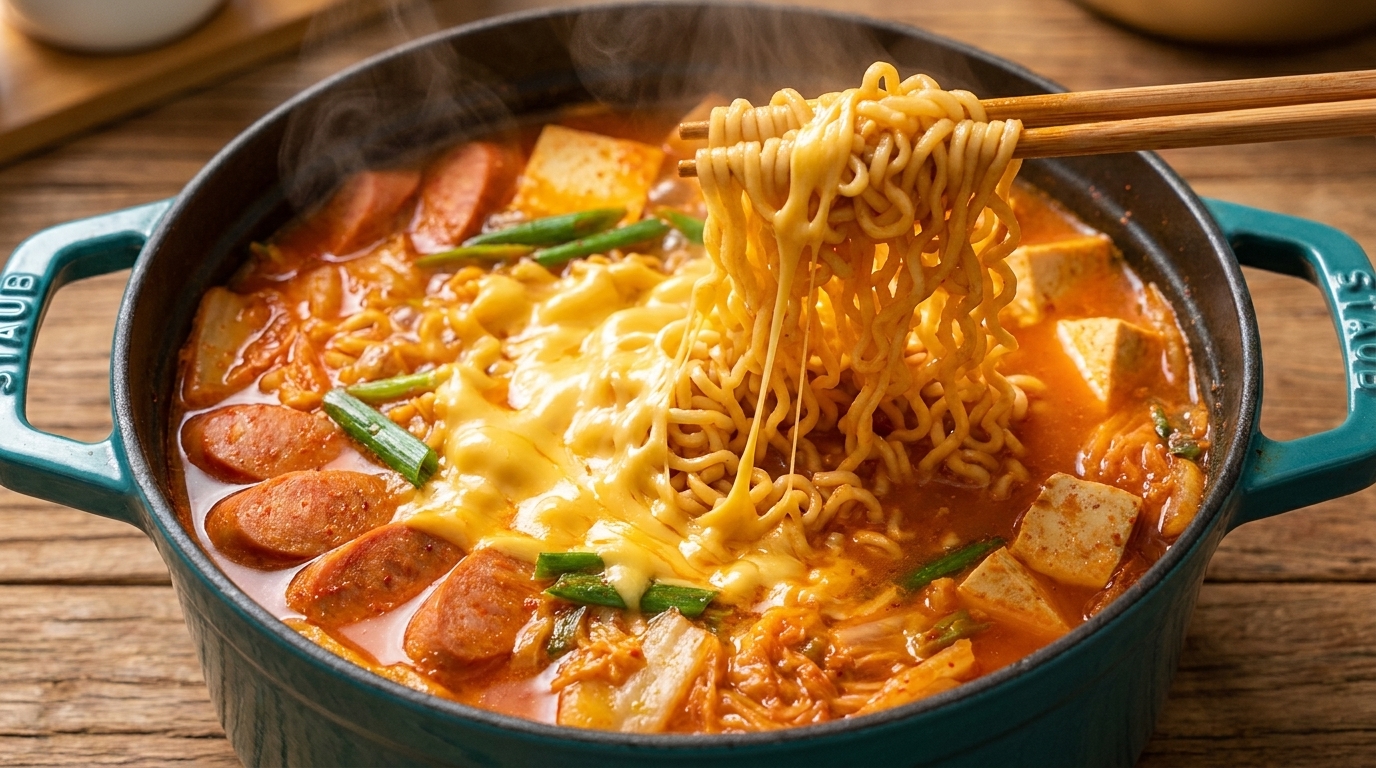
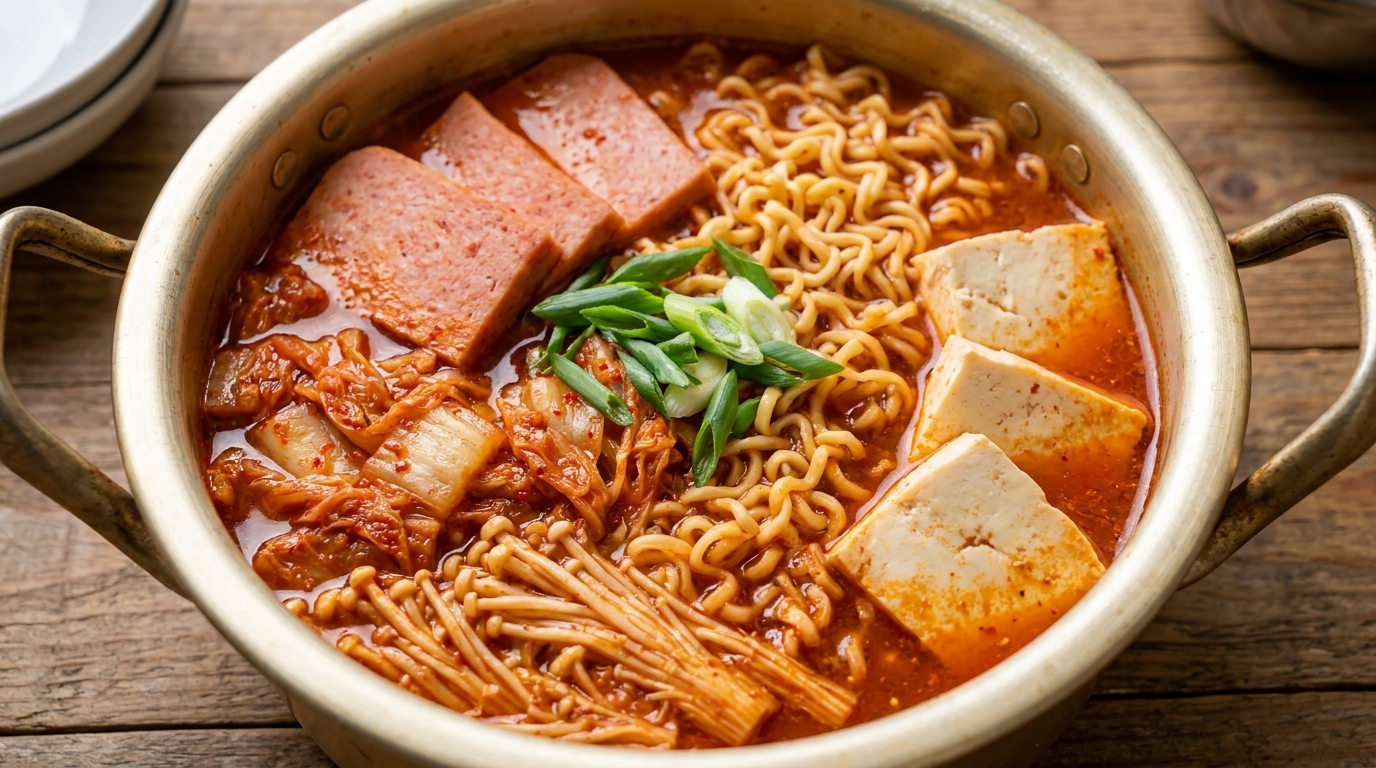
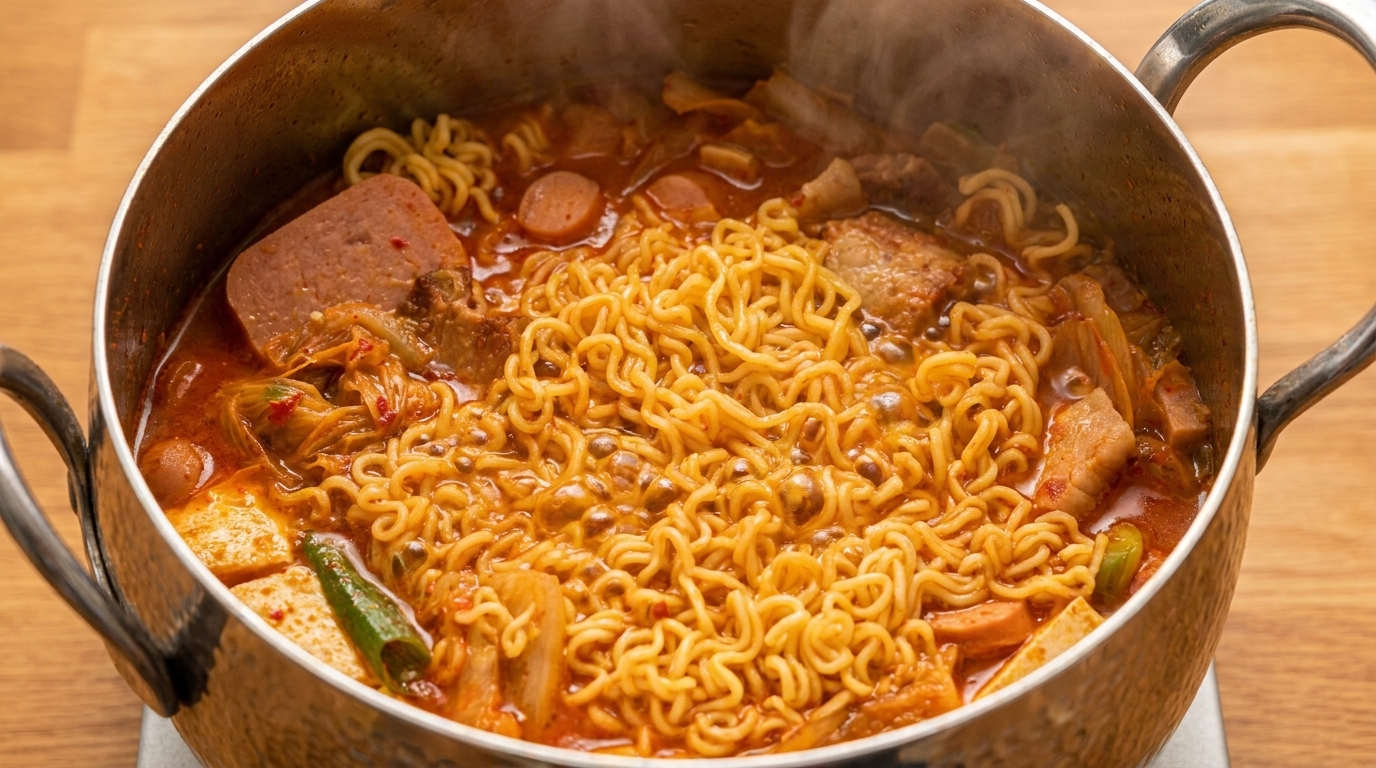
Ultimate Korean Army Stew (Budae Jjigae)
Warm up with this hearty Budae Jjigae, loaded with instant noodles, melted cheese, and baked pork belly in a deeply savory, spicy gochujang broth.
Budae Jjigae, or Korean Army Stew, is a brilliant fusion of Korean and American ingredients born out of necessity after the Korean War. Today, it remains a beloved comfort food, combining spicy gochujang and tangy kimchi with processed meats like luncheon meat and hot dogs. This upgraded version elevates the classic dish by adding savory baked pork belly, adding a roasted depth to the rich and bubbling broth.
Ingredients
- 150 g pork belly
- 3 slices ginger
- 4 cloves garlic
- 3 tbsp plum sauce (or honey/Sprite)
- 1 tsp white sesame seeds
- 2 tbsp sesame oil
- 4 tbsp light soy sauce
- 3 tbsp Korean spicy paste (gochujang)
- 1 tbsp Korean fine chili powder (gochugaru)
- 1 tbsp beef seasoning powder
- 1 cup kimchi
- 2 stalks green onion
- 1/4 red onion
- 1/4 head napa cabbage
- 1/2 zucchini
- 4 shiitake mushrooms
- 4 fish balls
- 1/2 can luncheon meat (Spam)
- 1/2 block tofu
- 4 crab sticks
- 1 pack instant ramen noodles
- 1 slice yellow cheese
- to taste fried tofu skin
- to taste hot water
Instructions
- 1Slice the Pork Belly
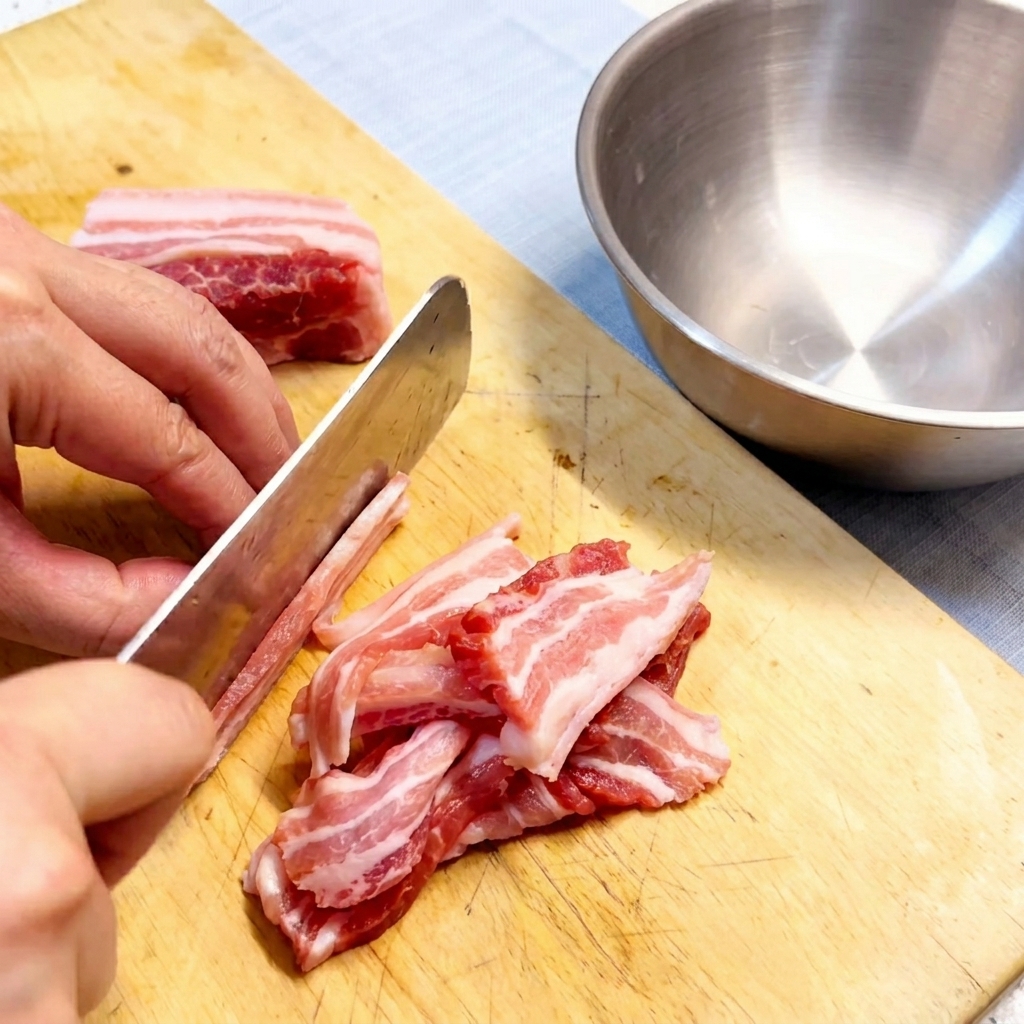
Place the fresh pork belly on a wooden cutting board and slice it into consistent, manageable strips. This preparation ensures even marination and helps the meat cook uniformly for the stew.
Tip: For easier slicing, you can chill the pork belly in the freezer for about 15 minutes to firm it up. - 2Marinate the Pork
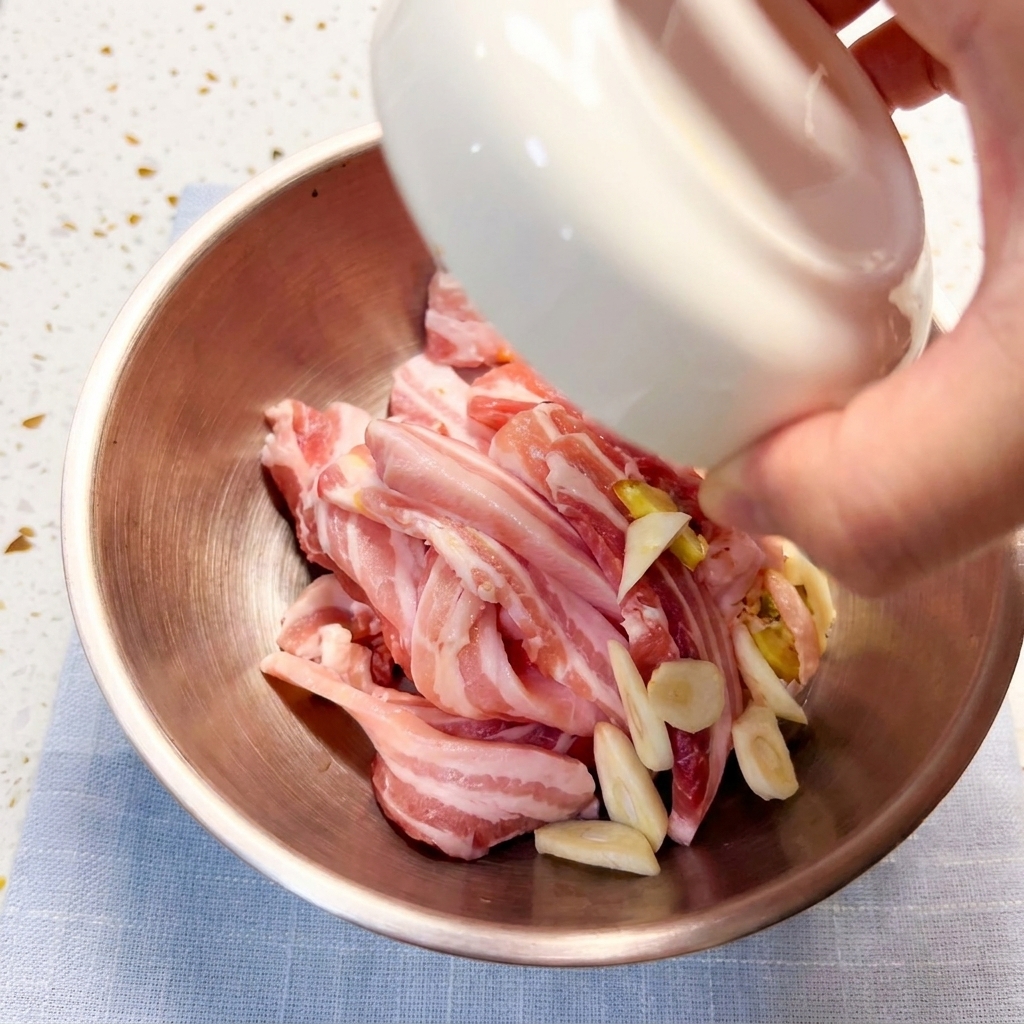
Transfer the pork belly slices into a mixing bowl. Add ginger slices, garlic slices, plum sauce (or honey), white sesame seeds, sesame oil, light soy sauce, and Korean spicy paste. Combine thoroughly and let it marinate for 20 minutes to infuse the flavors.
Tip: Ensure every piece of pork is well-coated with the marinade for maximum flavor absorption. - 3Bake the Pork Belly
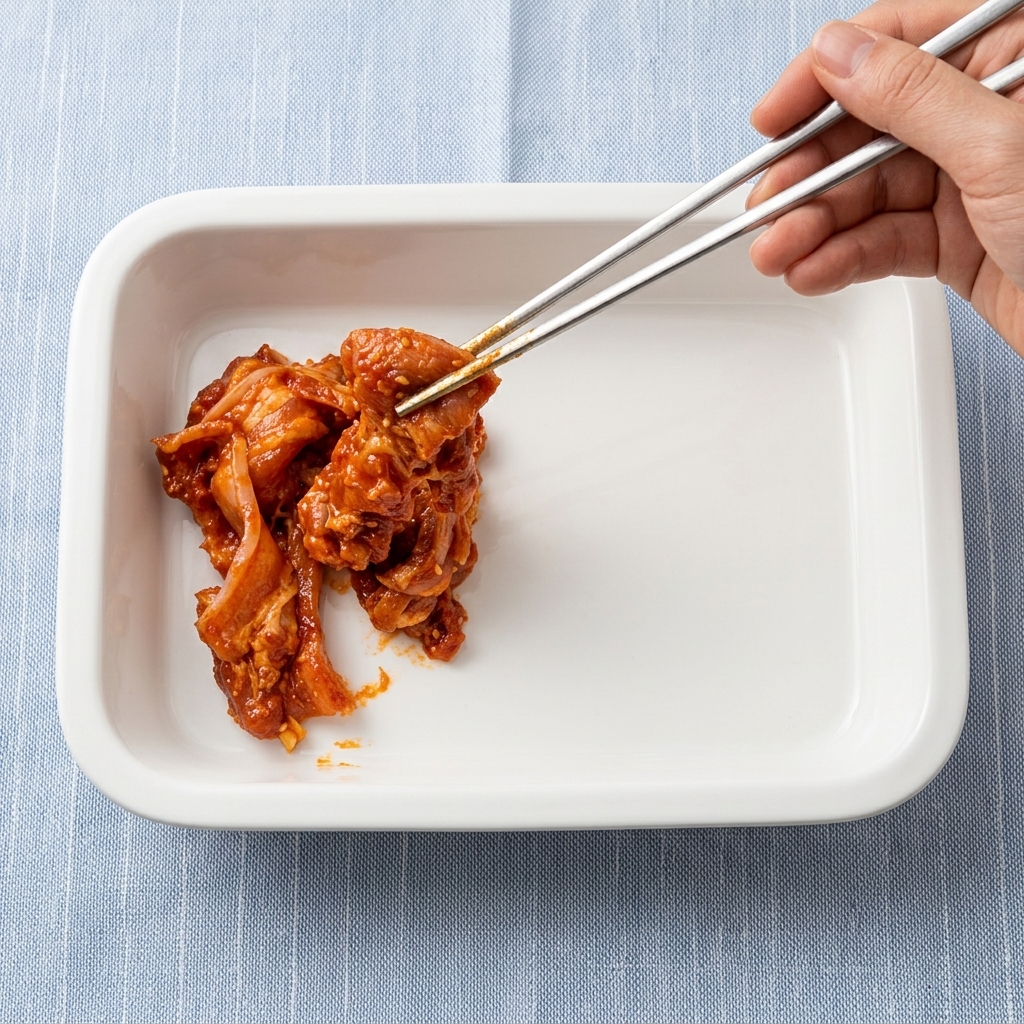
Arrange the marinated pork belly strips into a baking dish. Bake at 180 degrees Celsius (using both upper and lower heat) for 15-20 minutes. This process helps render excess fat, resulting in a superior texture for the stew.
Tip: If you are short on time, you can alternatively sear the marinated pork directly in your stew pot. - 4Prepare the Stew Sauce
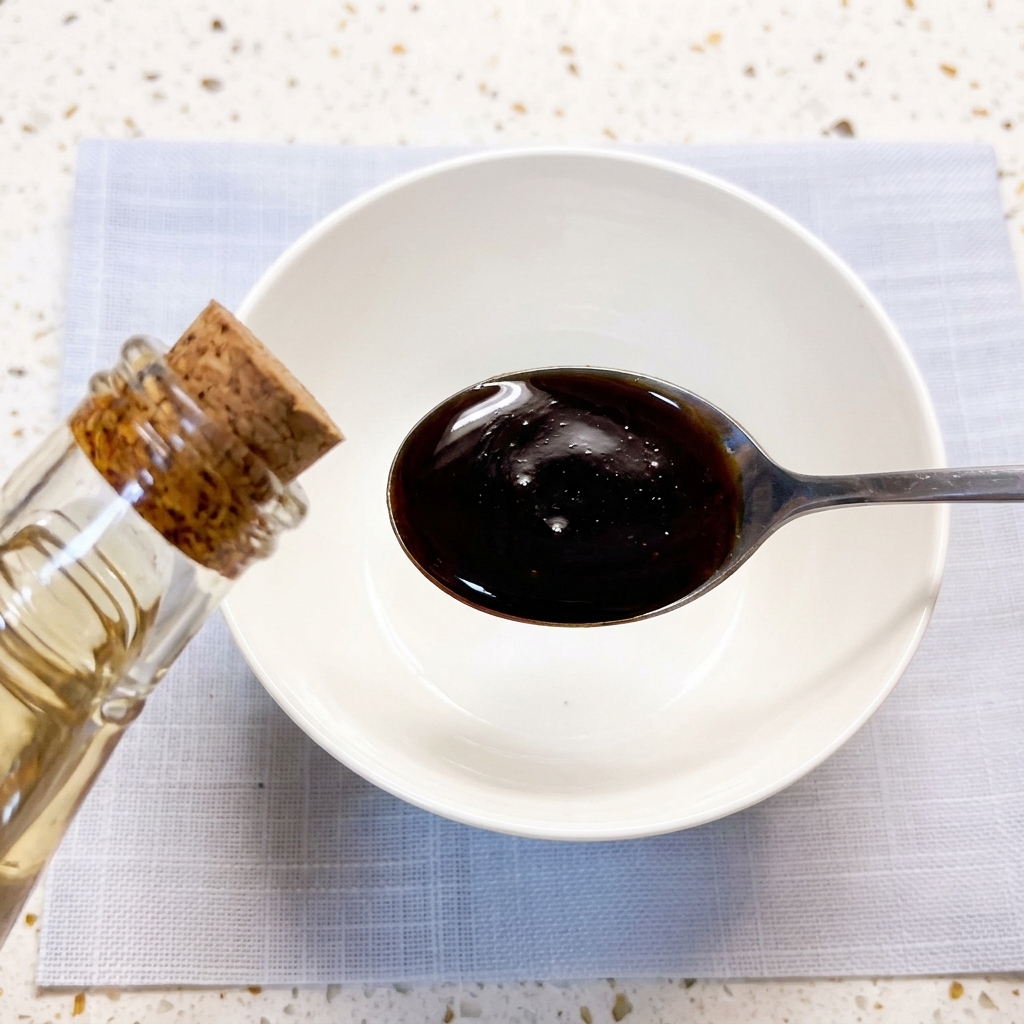
In a clean bowl, combine the following: light soy sauce (3 spoons), plum sauce (2 spoons, or Sprite), Korean fine chili powder (1 spoon), minced garlic (1 spoon), beef seasoning powder (1 spoon), sesame oil (1 spoon), and Korean spicy paste (2 spoons). Mix well until uniform.
Tip: Using a spoon of approximately 10 grams for the liquid ingredients will help maintain the correct flavor balance. - 5Prepare Aromatics
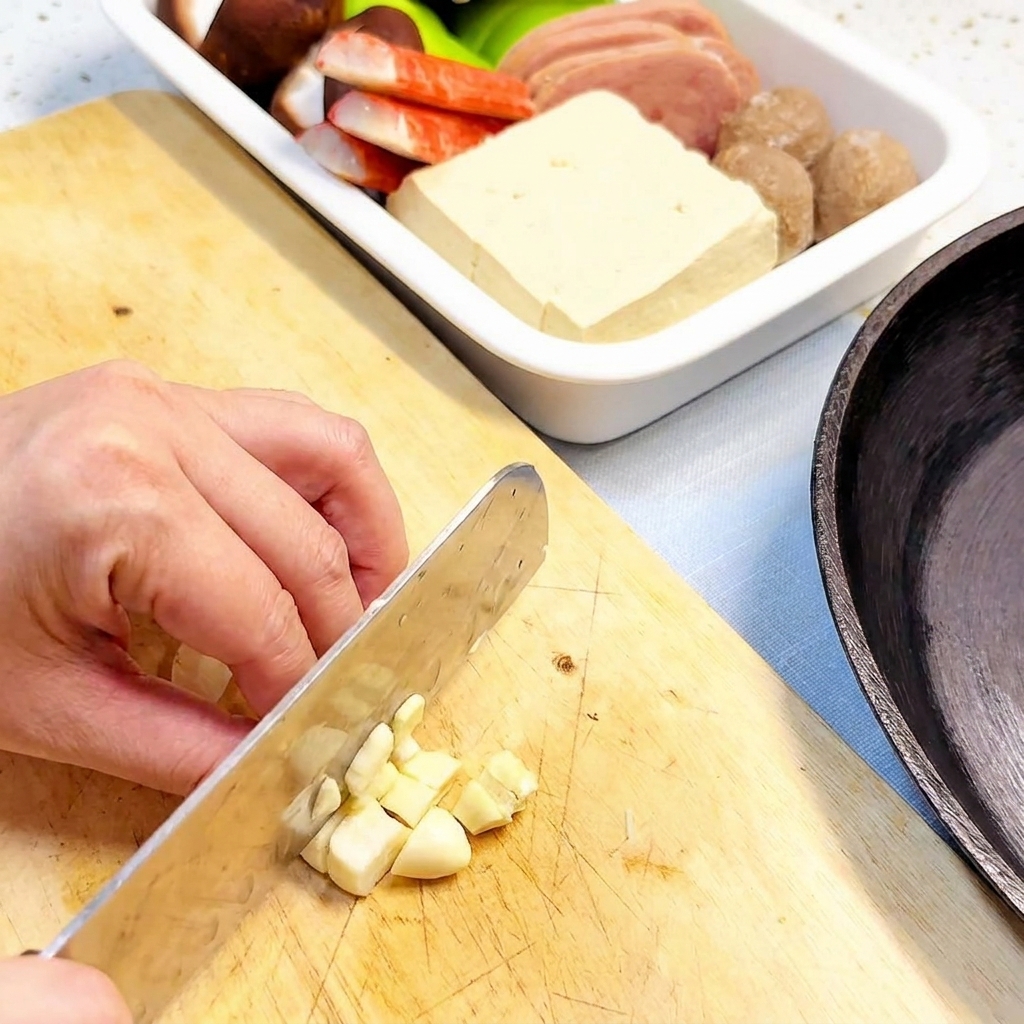
Clean and slice the garlic cloves, green onions, and red onions on a cutting board. These aromatics form the foundation of the stews fragrant broth base.
Tip: Keeping the slices uniform helps them cook evenly during the stir-frying stage. - 6Add the Kimchi
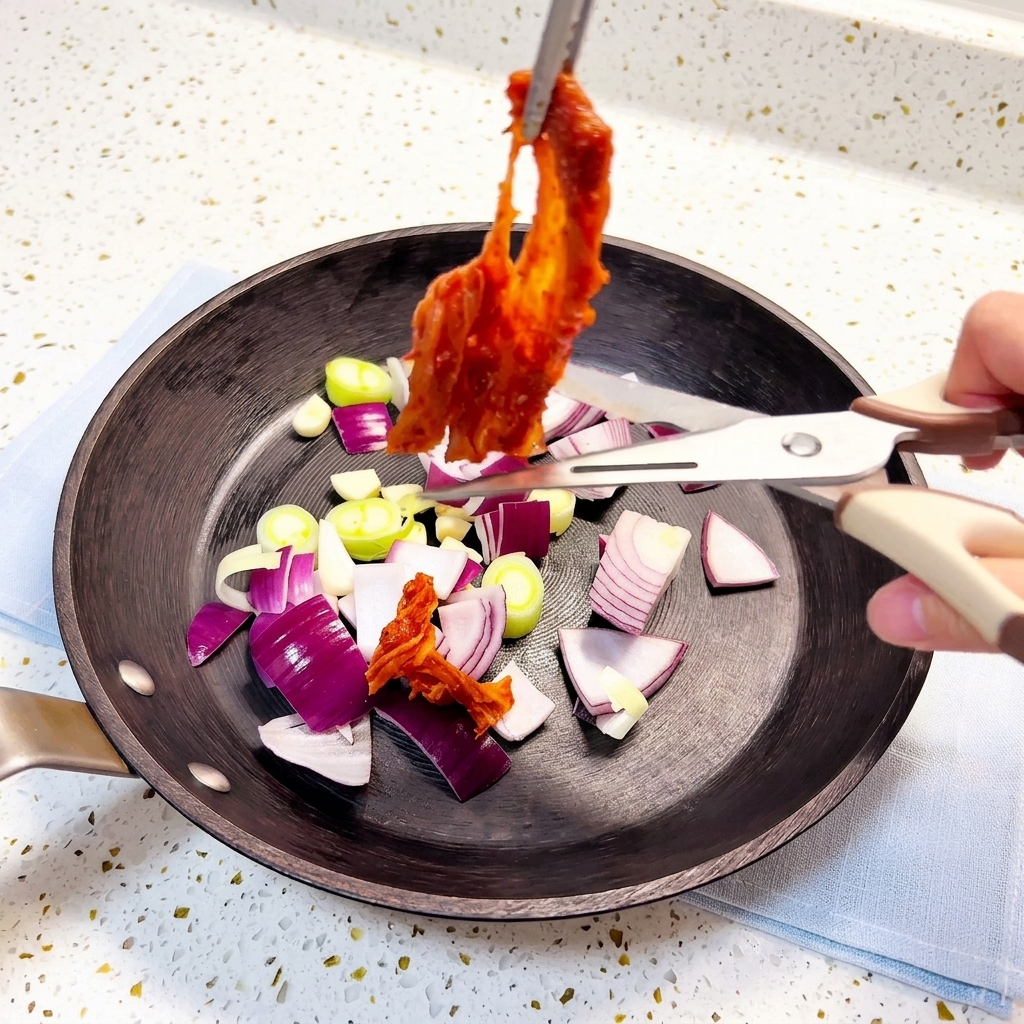
Using kitchen shears, cut the kimchi directly into the pan over the prepared aromatics. This is a quick and practical kitchen hack that prevents your cutting board from staining.
Tip: Use well-fermented (sour) kimchi for the best depth of flavor and tanginess in the stew broth. - 7Sauté the Base
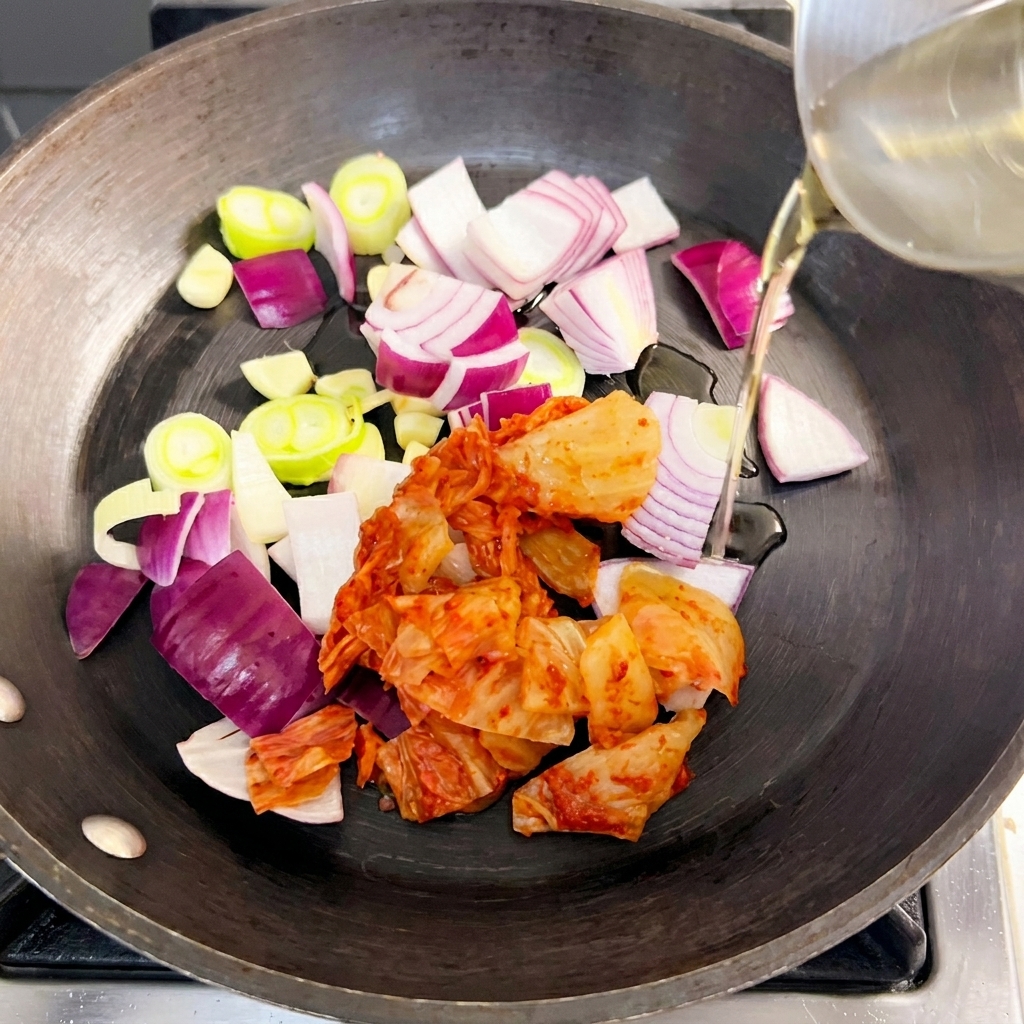
Drizzle a little oil into the pan and stir-fry the sliced garlic, green onions, red onions, and kimchi over medium heat. Cook until the vegetables soften and the kimchi becomes highly fragrant.
Tip: Thoroughly sautéing the aromatics and kimchi before adding liquids is crucial to unlocking a deeper, richer flavor profile. - 8Assemble the Stew
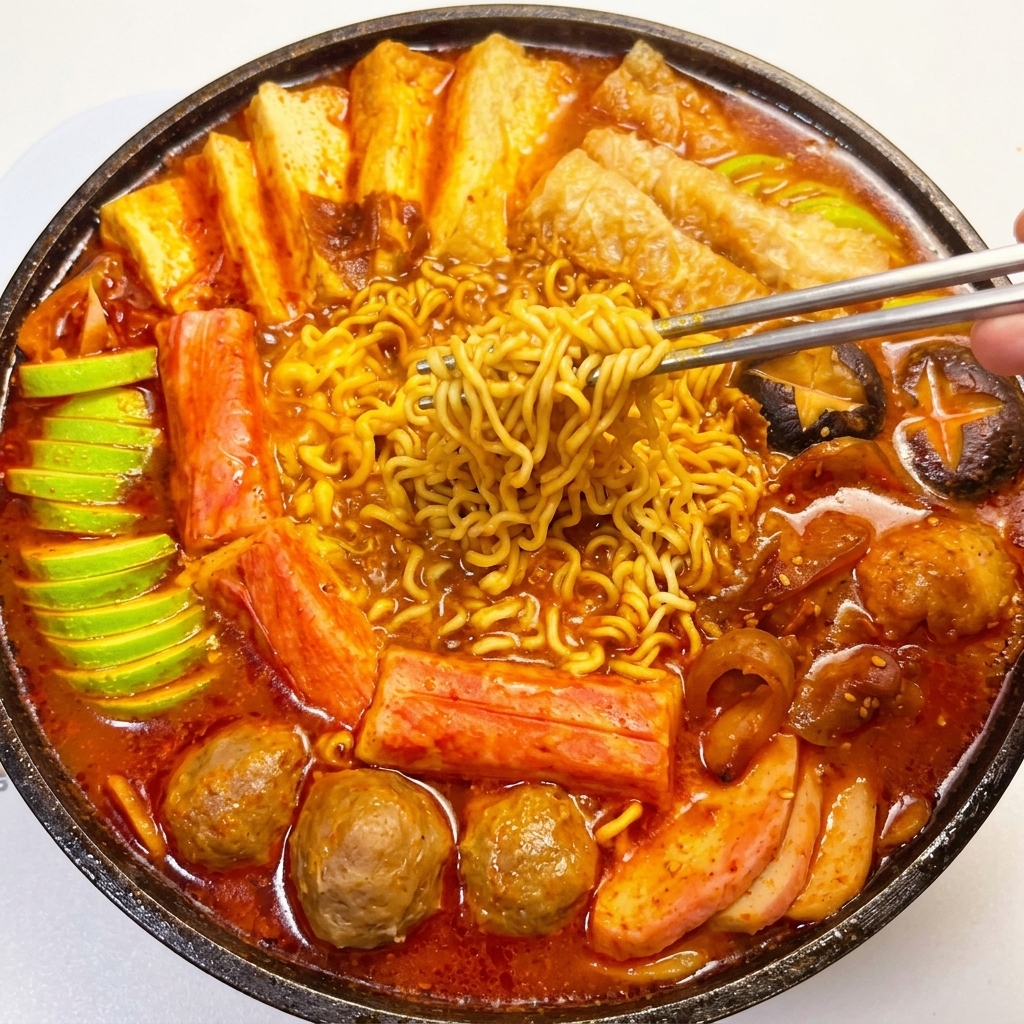
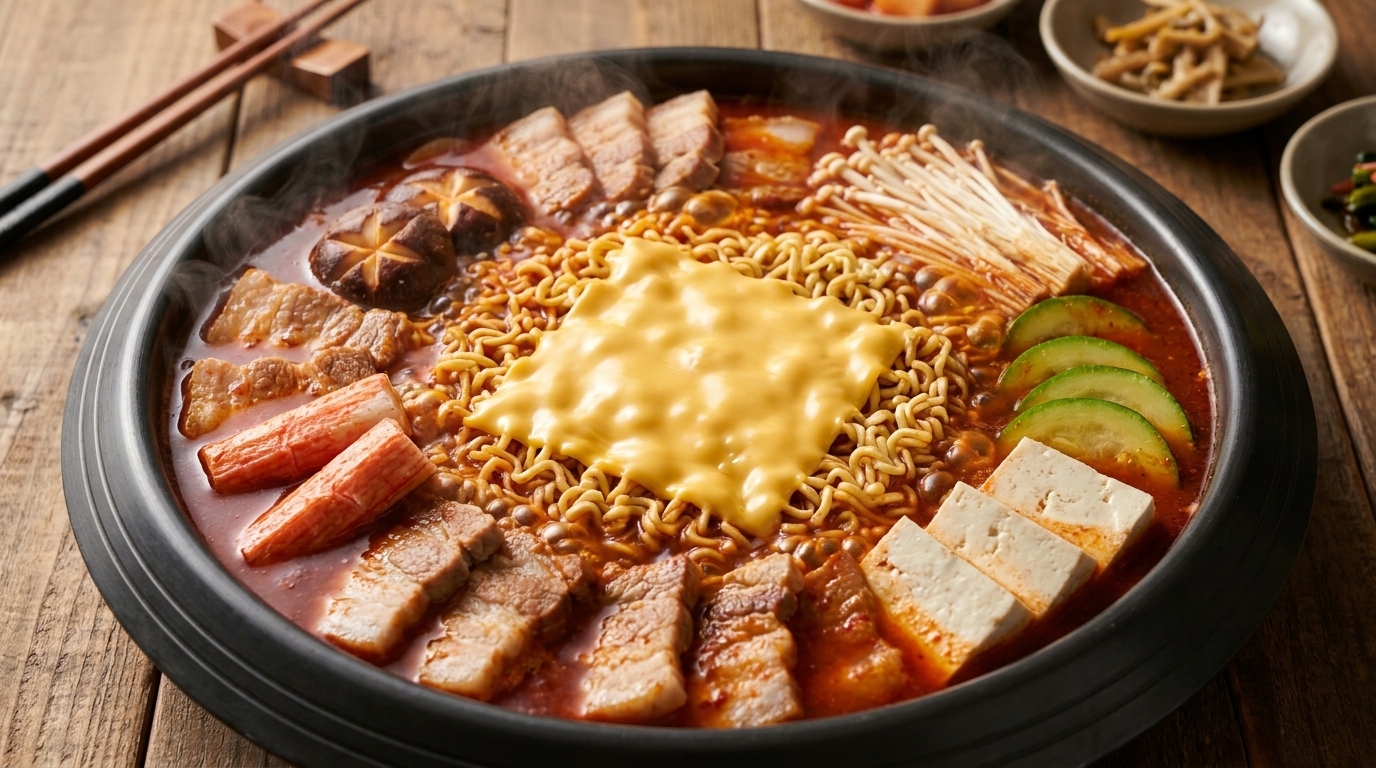
Turn off the heat. Lay down a base layer of napa cabbage, then beautifully arrange the remaining ingredients—such as tofu, fish balls, luncheon meat, crab sticks, and zucchini—in a neat, circular pattern around the pot.
Tip: Organizing the ingredients visually not only makes for a stunning presentation but also ensures even cooking once the broth is added.