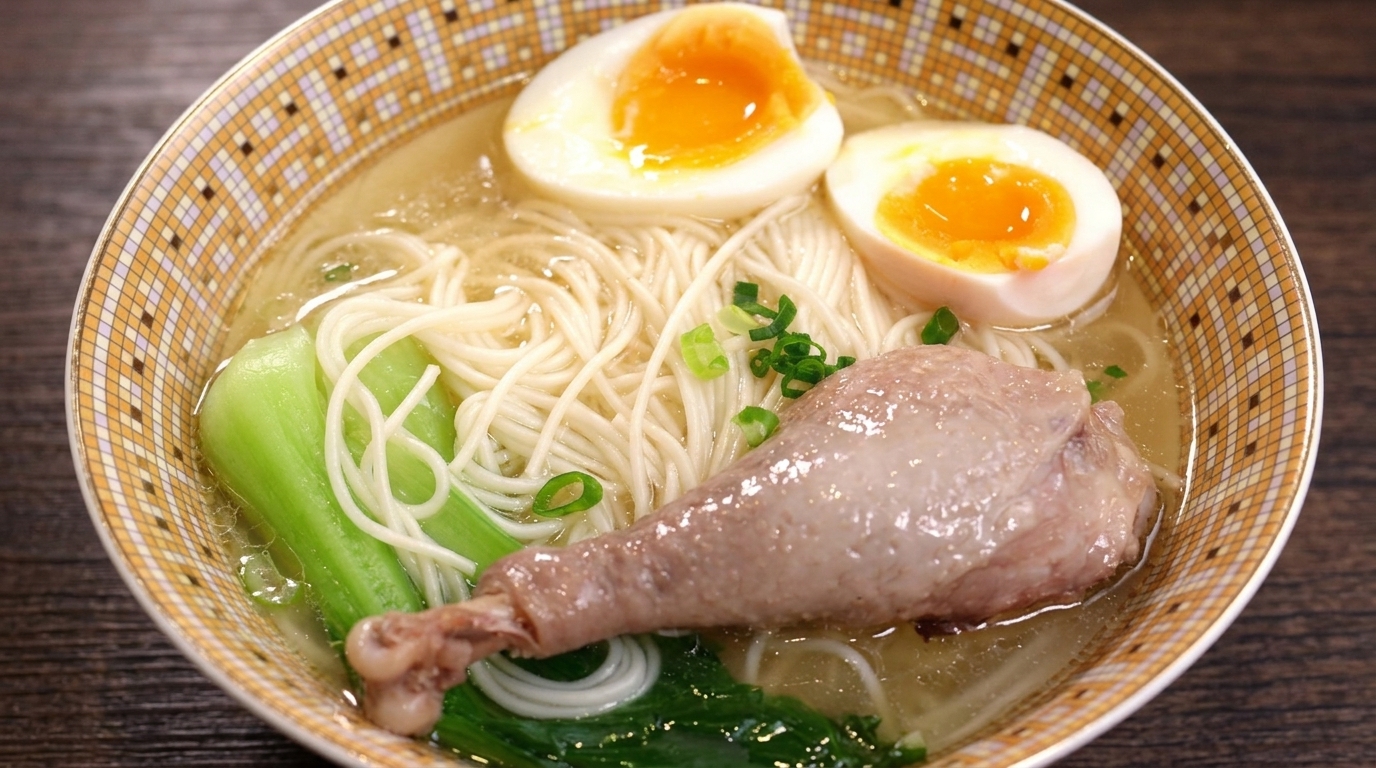
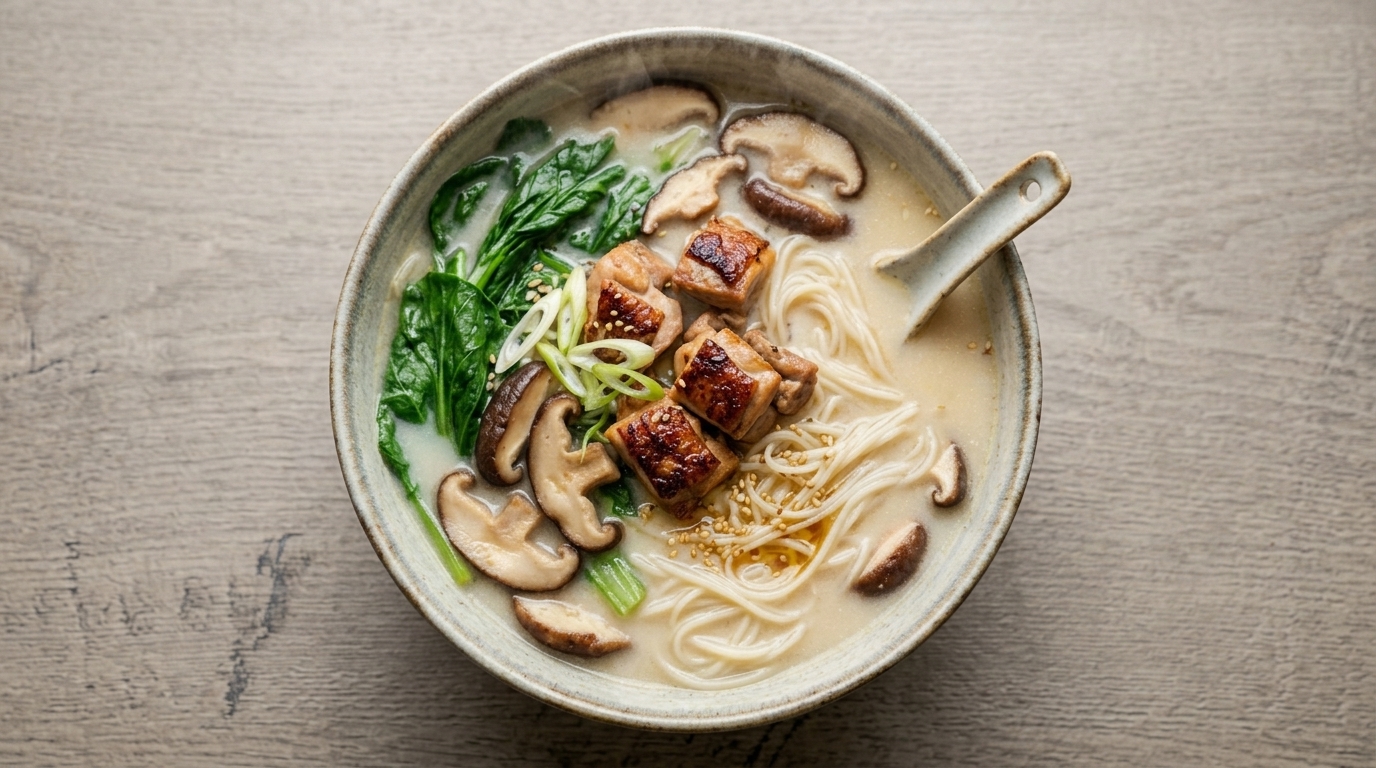
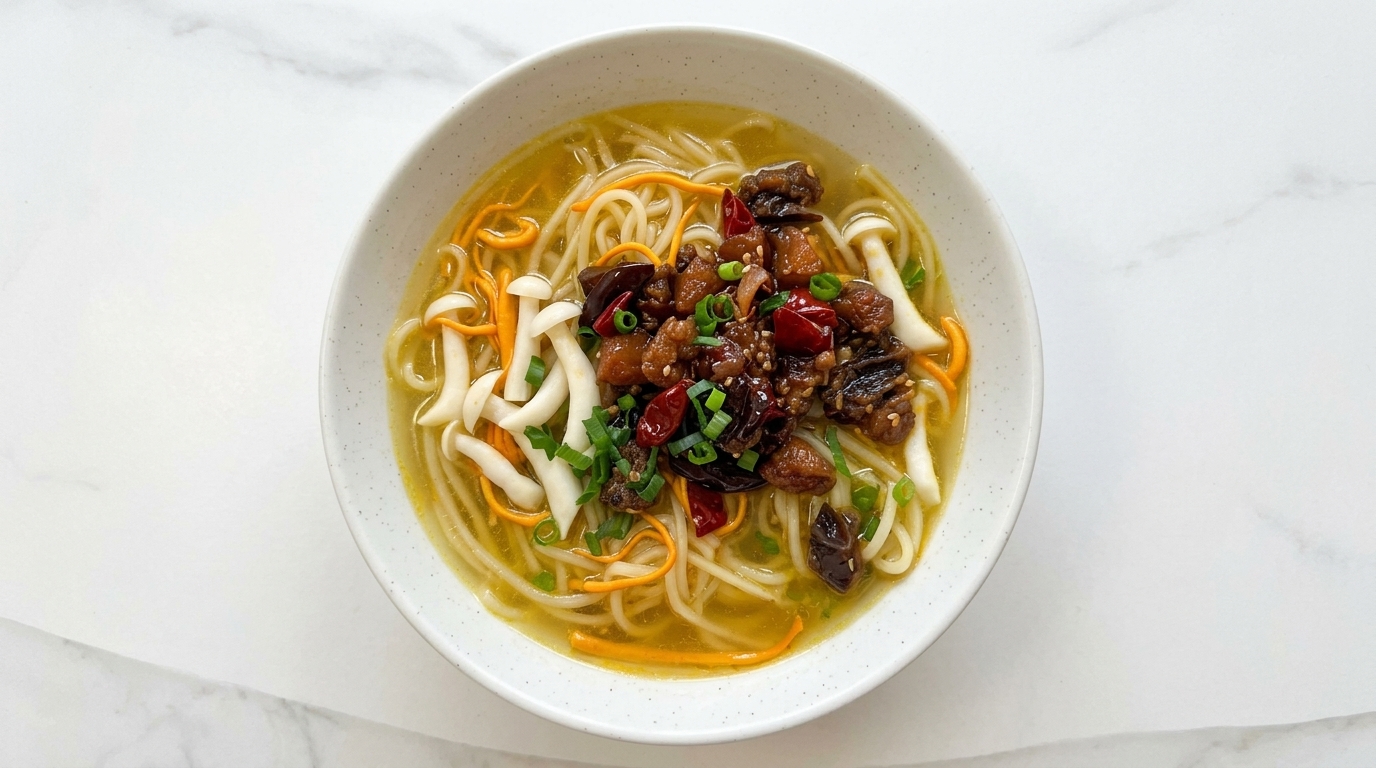
Japanese Shoyu Chicken Noodles (Soy Sauce Ramen Style)
A soul-warming bowl of tender chicken thighs and wheat noodles in a clear, umami-rich broth built from a gentle simmer of kombu, soy sauce, and aromatic rice wine.
Japanese shoyu chicken noodles focus on clarity and balance. By simmering chicken with kombu and a duo of soy sauces, you achieve a broth that is light yet deeply savory. This recipe represents the essence of home-style Japanese comfort—simple to prepare but incredibly healing for the soul.

Ingredients
- 2 pieces boneless chicken thighs
- 2 sheets dried kombu
- 800 ml water
- 1 tbsp light soy sauce
- 1 tsp dark soy sauce
- 1 tbsp rice wine
- 200 g wheat noodles
- 2 stalks green onions
- 1 tsp white sesame seeds
- optional salt
- to taste black pepper
- to taste sesame oil
Instructions
- 1Blanch the chicken thighs
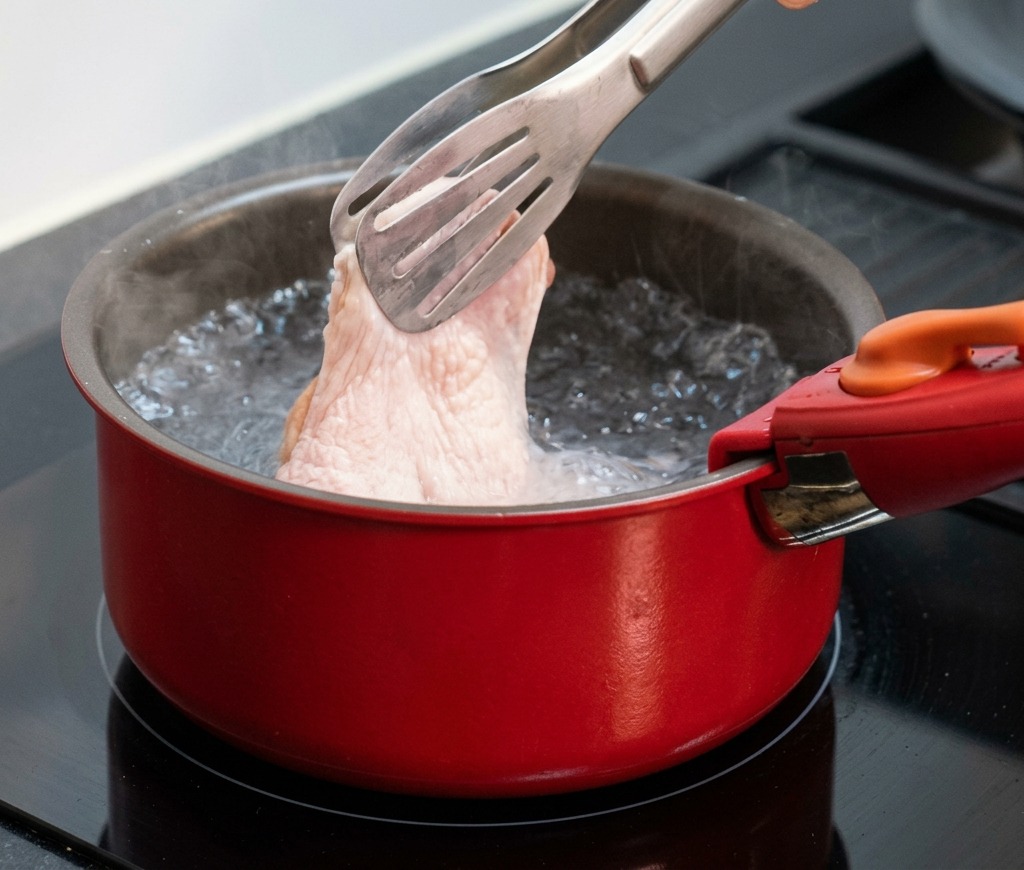
Place the chicken thighs in a pot of boiling water for approximately 40 seconds. This quick blanching process removes blood and impurities, ensuring the final soup is clear and clean while tightening the meat surface to lock in its natural juices.
Tip: Do not overcook the chicken at this stage. A short 40 second dip is enough to prepare the surface without toughening the interior. - 2Prepare the kombu base
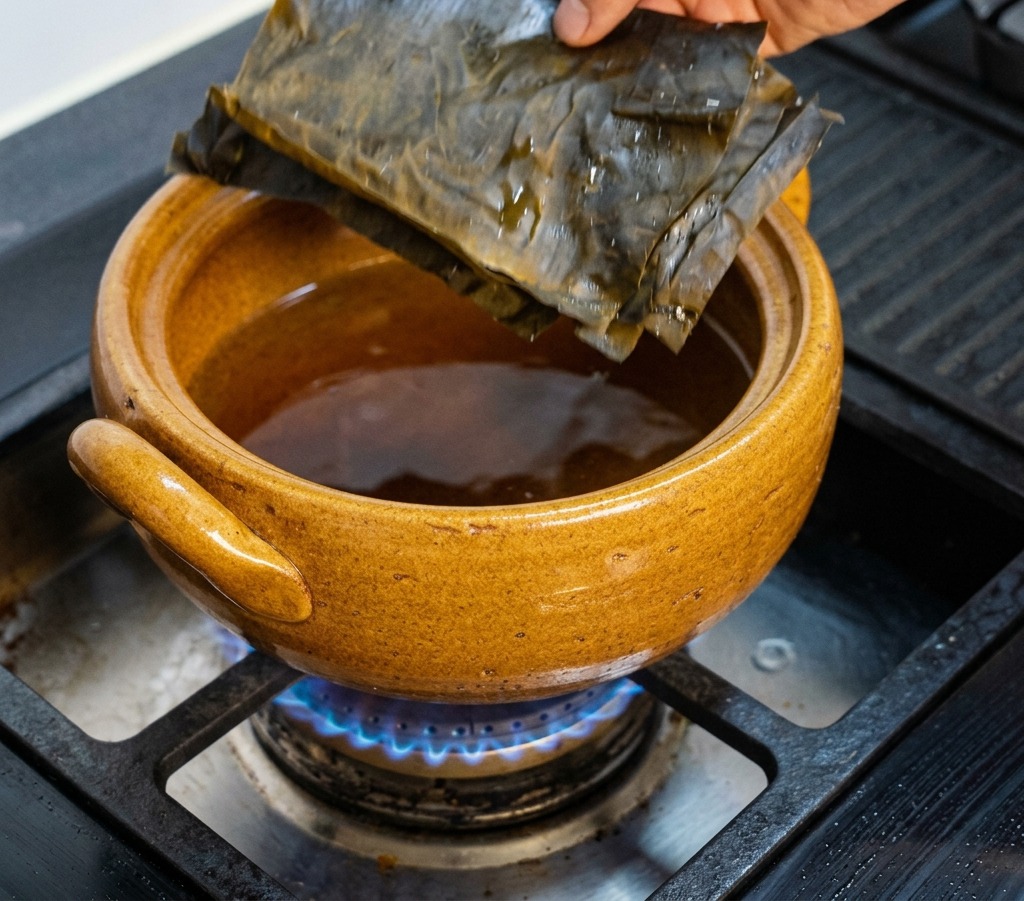
Add two pieces of dried kombu to a small ceramic pot. This traditional Japanese seaweed provides the essential umami foundation that gives the chicken broth its characteristic savory depth and complexity.
Tip: If the kombu has a white powdery coating, simply wipe it with a damp cloth—this powder is full of flavor and should not be washed off entirely. - 3Combine chicken and kombu
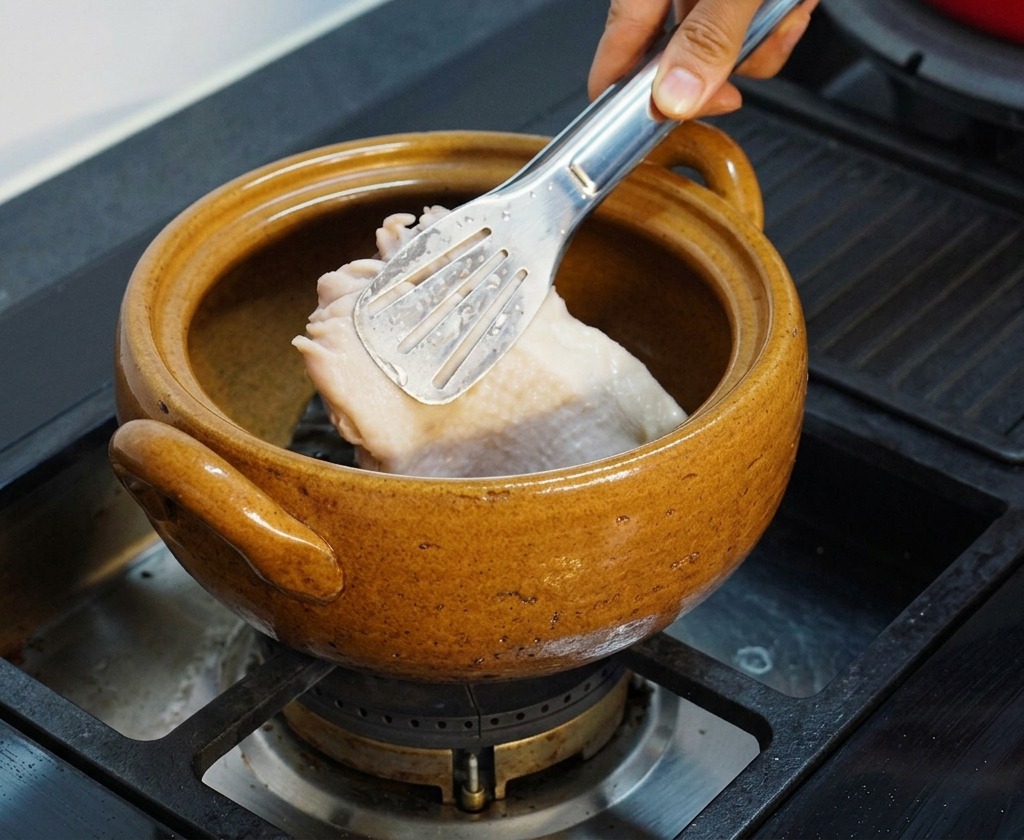
Carefully transfer the blanched chicken thighs into the ceramic pot, placing them directly on top of the kombu sheets. This setup allows the chicken and seaweed to release their flavors together as the broth begins to heat.
Tip: Arrange the chicken pieces so they lay flat, which helps them cook evenly once the water is added. - 4Add water to the pot
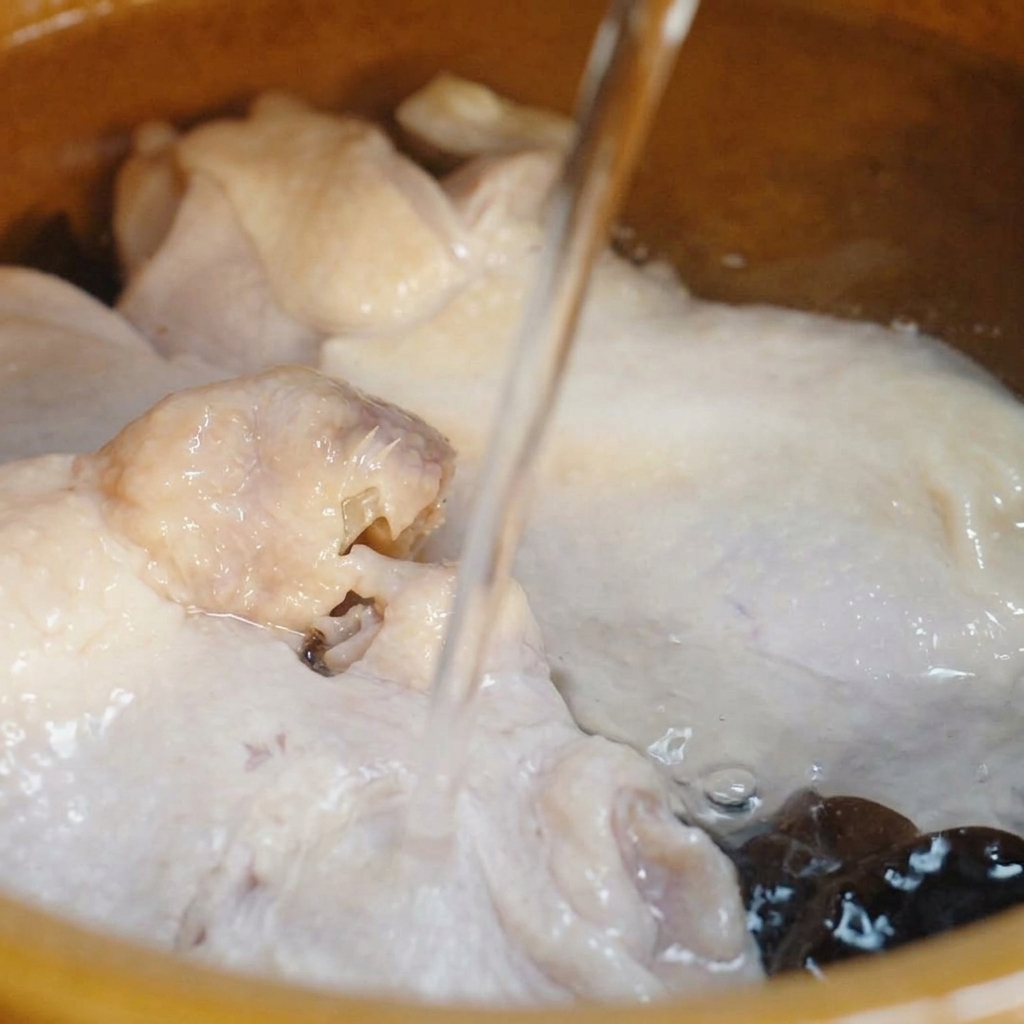
Pour fresh water into the pot until the chicken and kombu are fully submerged. Using a clean water source at the beginning of the simmer is crucial for maintaining the clarity and purity of the final Japanese-style broth.
Tip: Use room temperature or cool water rather than hot water to allow the flavors to extract more gently as the temperature rises. - 5Season with light soy sauce
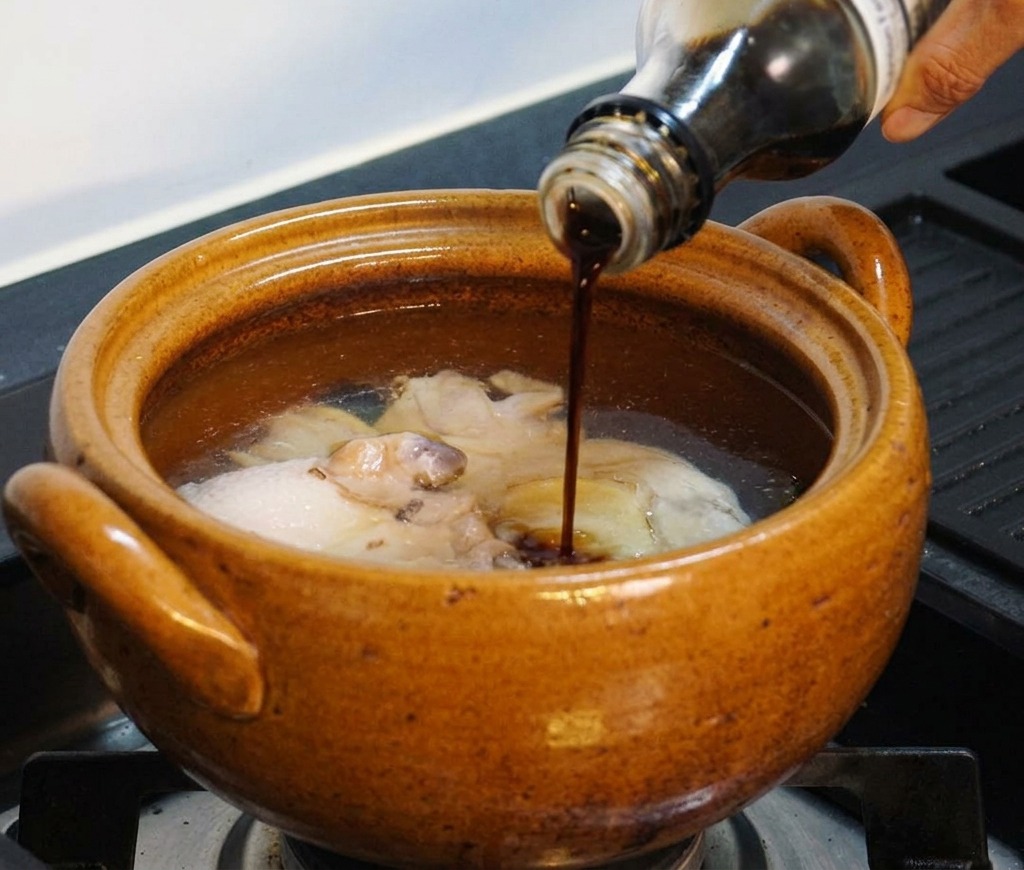
Add a spoonful of light soy sauce to the water. This provides the primary saltiness for the soup and enhances the savory notes of the ingredients without making the liquid too dark or opaque.
Tip: If you prefer a lighter colored soup you can adjust the ratio of light soy sauce to salt according to your taste. - 6Add dark soy sauce for color
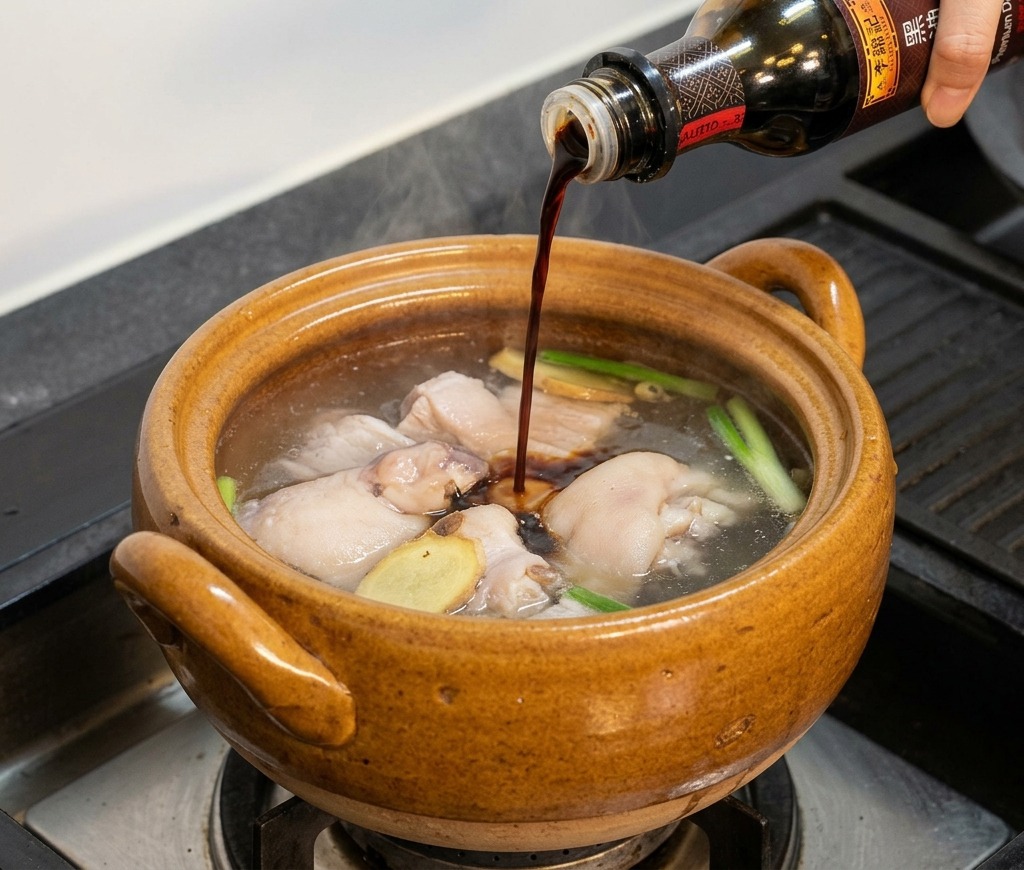
Pour in a small amount of dark soy sauce. While light soy sauce handles the flavor, dark soy sauce is added to give the broth a rich appetizing amber hue and a subtle touch of caramel sweetness.
Tip: Go easy on the dark soy sauce because its color is very concentrated and a small amount goes a long way in transforming the broth. - 7Add rice wine
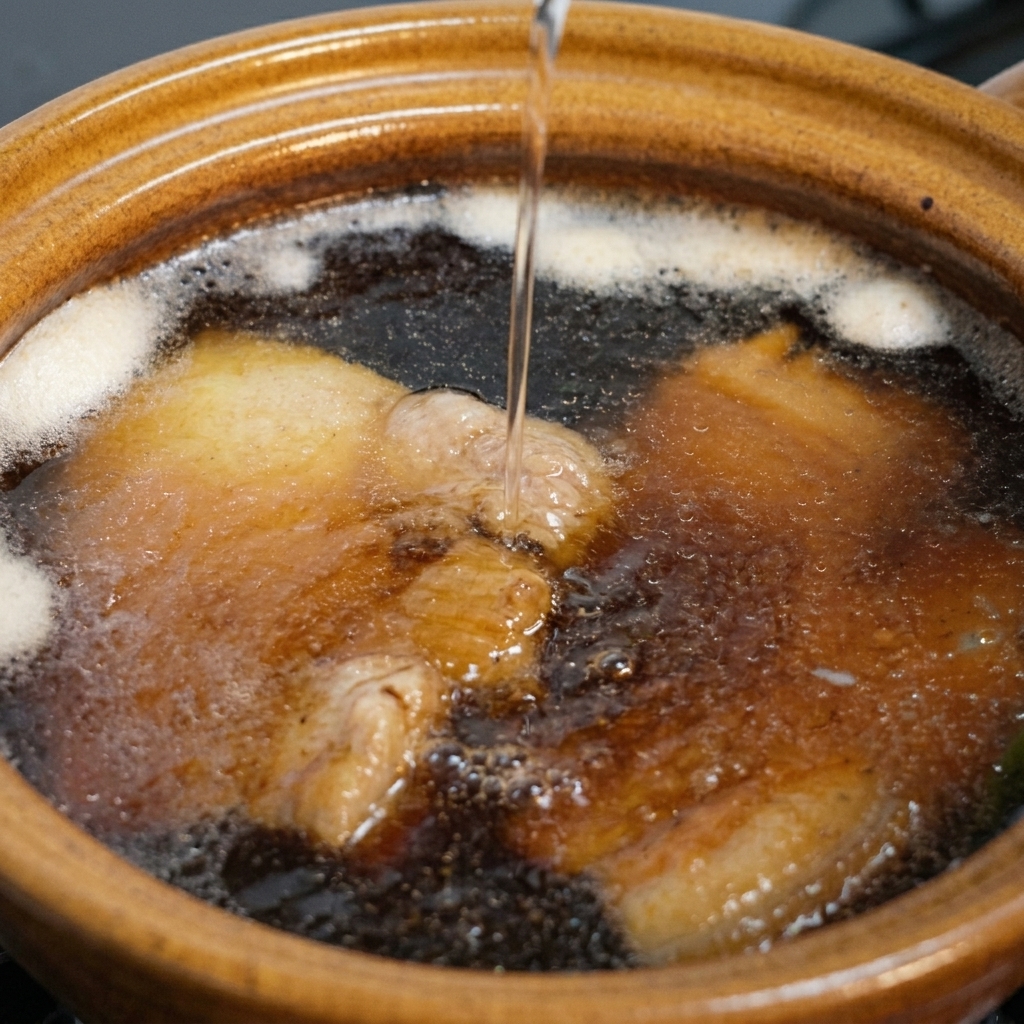
Pour a splash of rice wine into the pot with the chicken and soy sauce. The rice wine helps to neutralize any remaining gamey odors from the chicken while imparting a subtle aromatic sweetness that balances the saltiness of the soy sauce.
Tip: If Japanese sake or rice wine is unavailable a dry sherry or a small pinch of sugar can provide a similar flavor balance to the broth. - 8Skim the soup
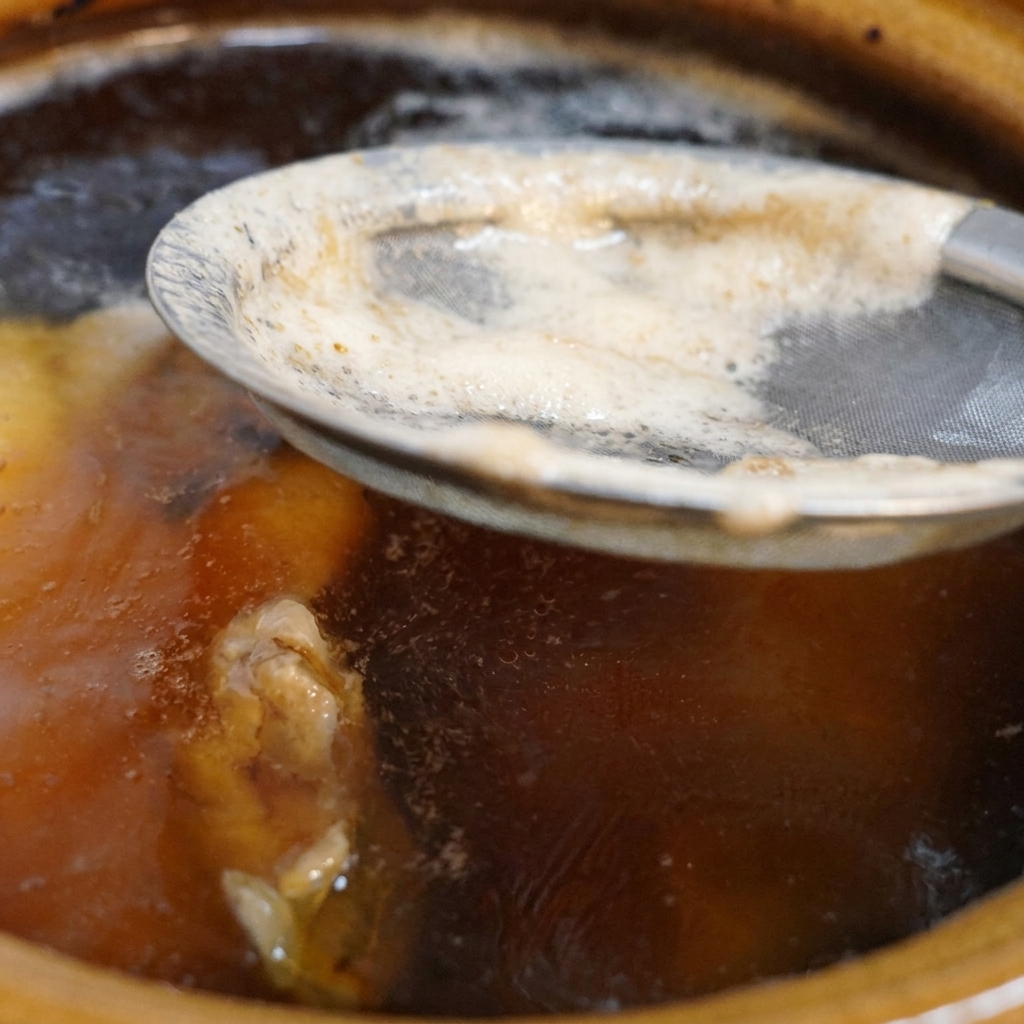
As the soup comes to a boil, use a fine-mesh strainer to carefully remove the white foam and impurities rising to the surface. This crucial step ensures the chicken broth remains clear, refreshing, and free of any bitter odors or cloudy sediment.
Tip: Keep a small bowl of water nearby to rinse the strainer frequently, which helps in picking up the fine foam more effectively. - 9Simmer the broth
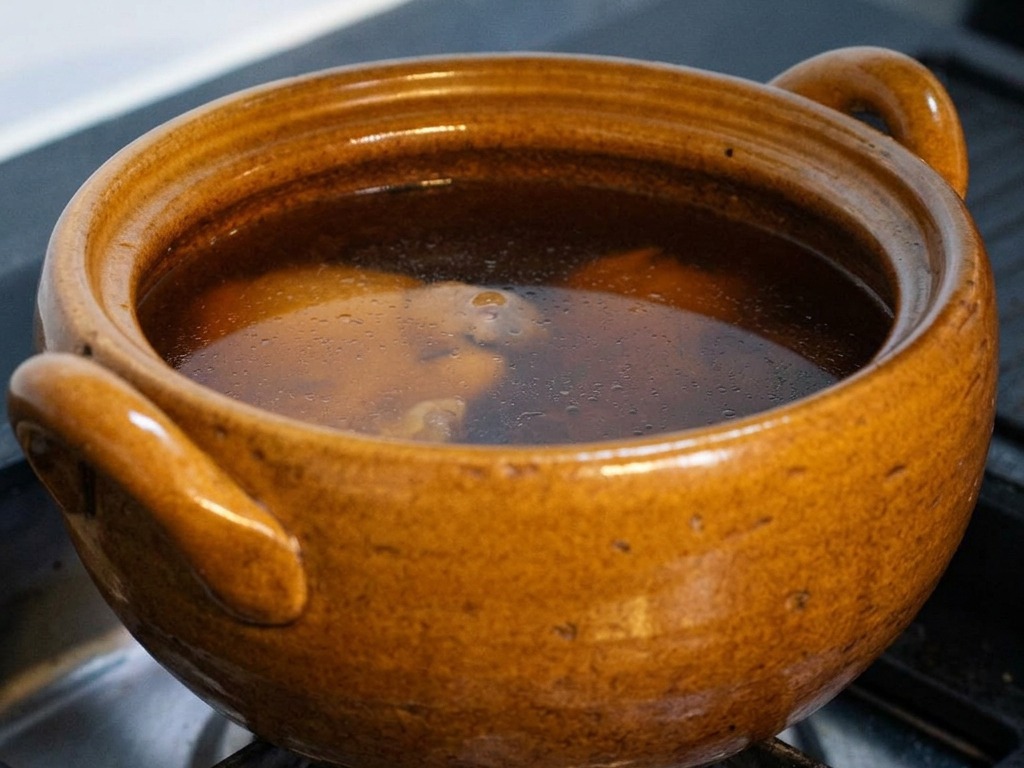
Cover the pot and allow the broth to simmer over low heat for 25 minutes. This slow, gentle process extracts the deep umami from the kombu and chicken while keeping the meat tender and the liquid crystal clear.
Tip: Consistent skimming is the secret to a clear broth; it removes impurities that would otherwise make the soup cloudy and bitter. - 10Remove the chicken
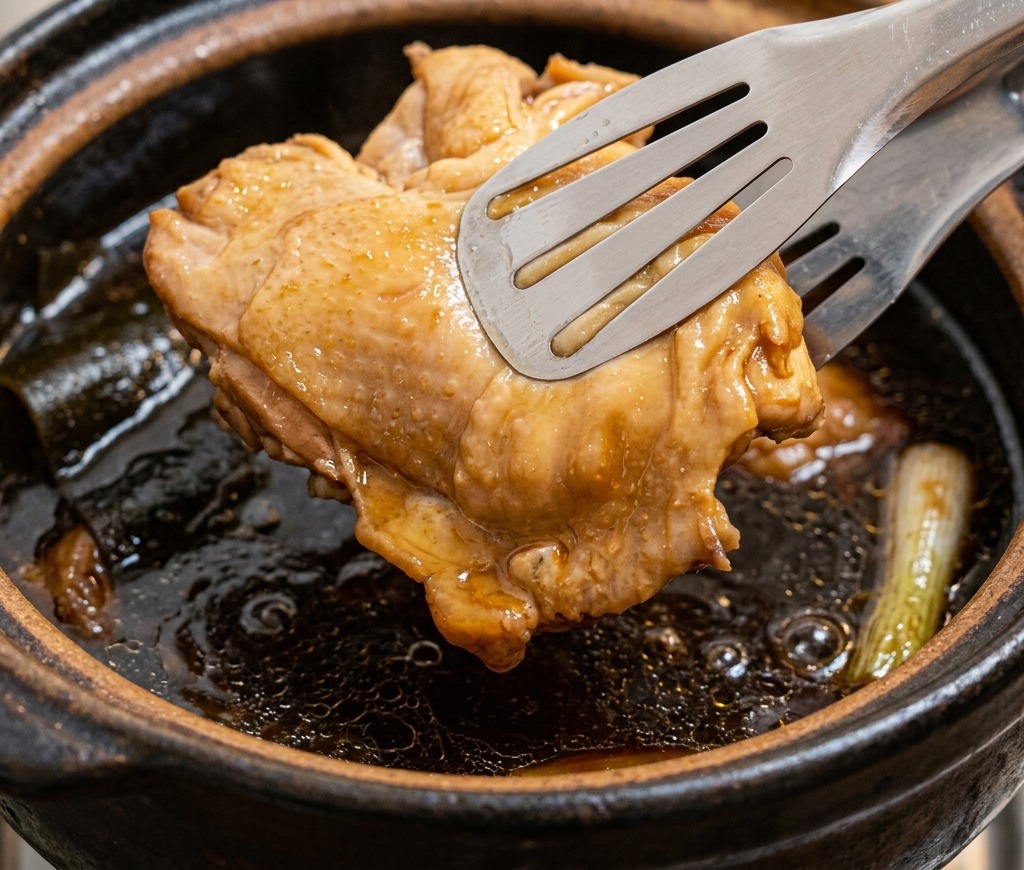
Once the chicken is fully cooked and tender, use tongs to carefully lift the thighs out of the simmering broth. Transfer the meat to a clean plate or cutting board and let it rest for a few minutes.
Tip: Allowing the chicken to rest before slicing ensures the juices stay inside the meat, keeping it moist and tender for the final dish. - 11Slice the chicken
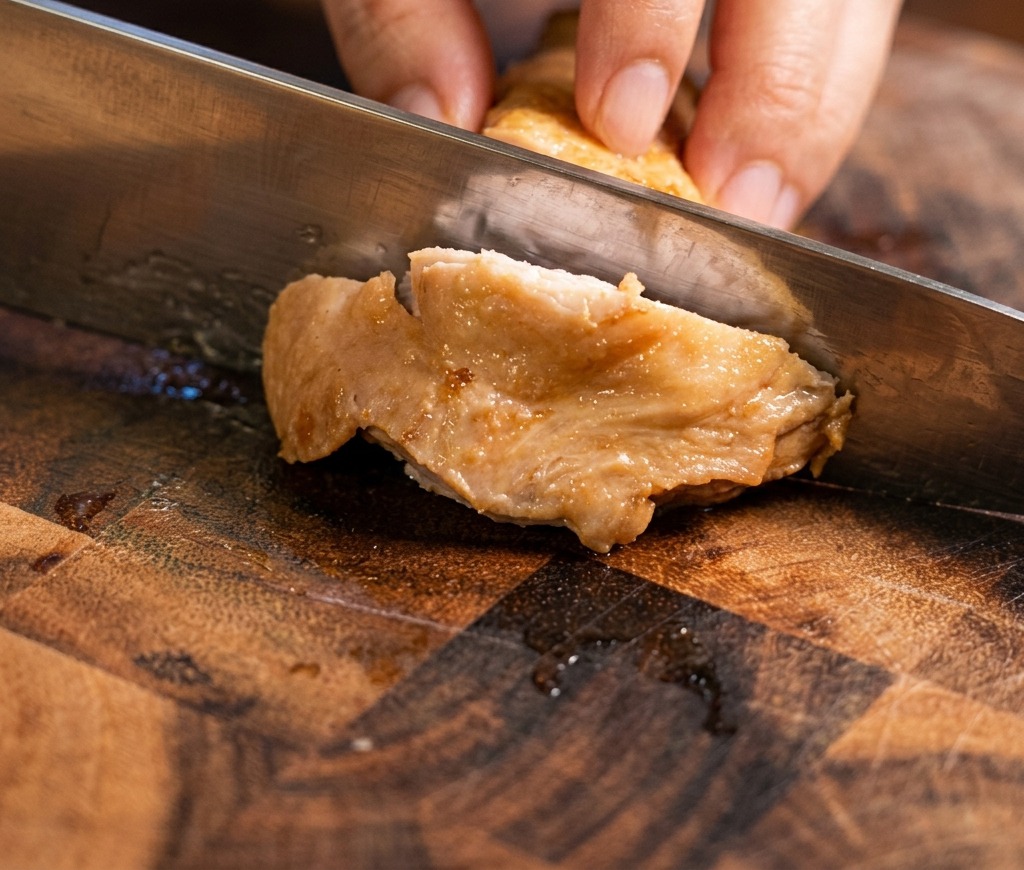
Using a sharp chefs knife slice the rested chicken thighs into even bite sized strips. The meat should be juicy and well colored from the soy sauce simmer.
Tip: For the best texture always slice the meat against the grain. - 12Infuse with scallions
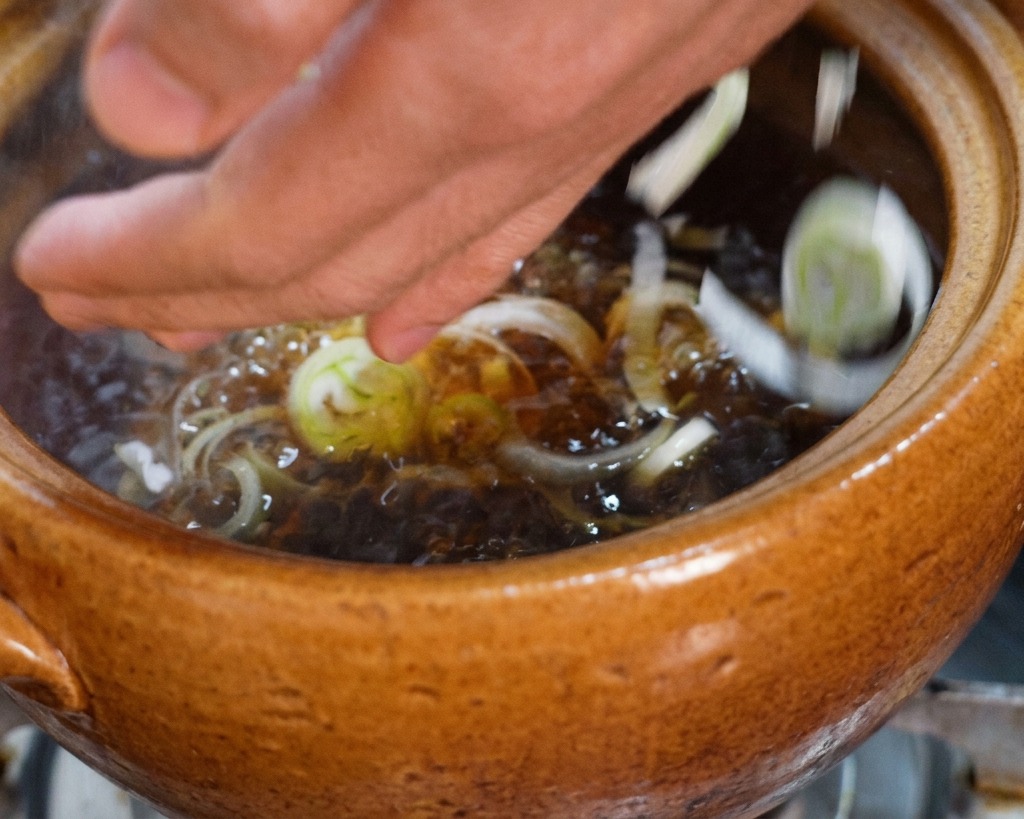
Add freshly sliced green scallions into the hot broth. Let them simmer for a moment to allow the bright oniony flavor to permeate the soup.
Tip: Use the green parts of the scallions for a fresh finish and reserve some for the final garnish. - 13Season with sesame seeds
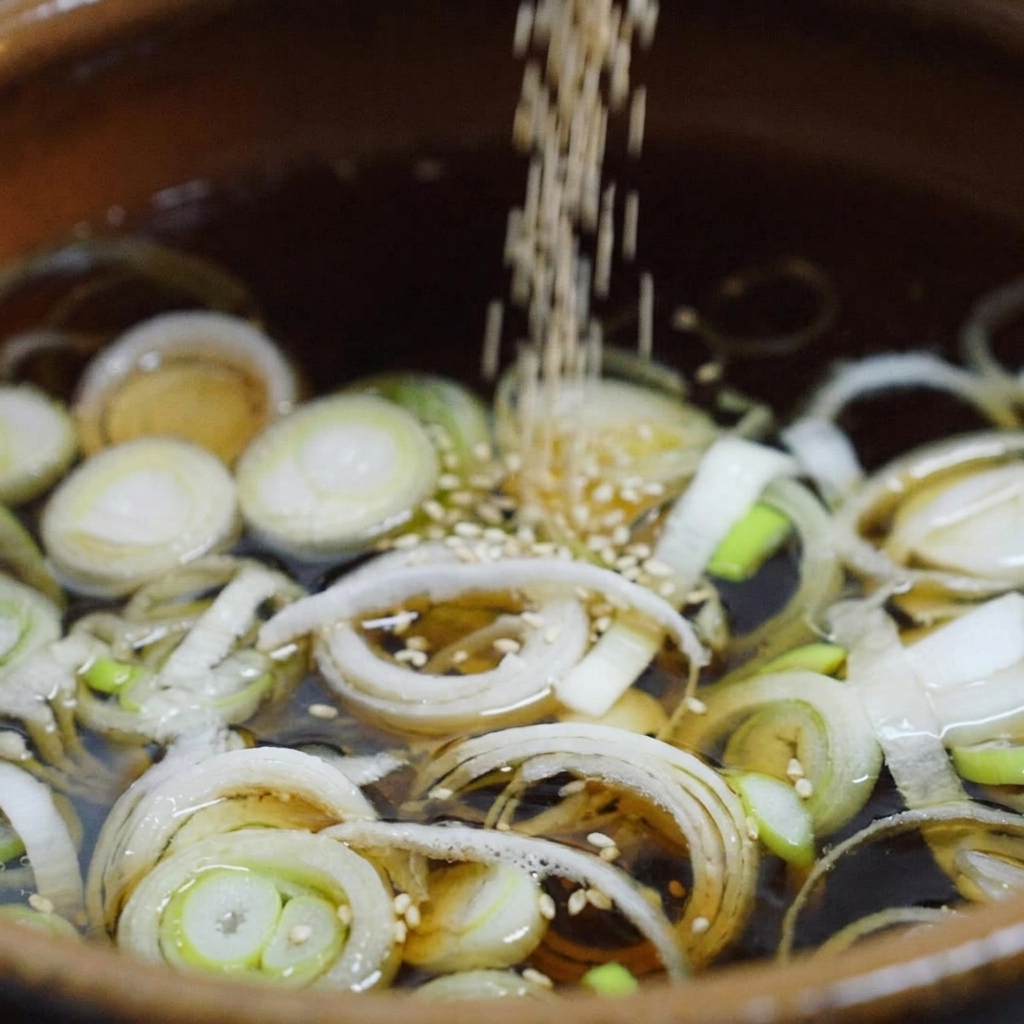
Once the broth is flavored add a sprinkle of white sesame seeds to the liquid. Simmer for two minutes to allow the seeds to release a toasted aroma into the soup base.
Tip: Lightly toast the sesame seeds in a dry pan before adding them to the pot to enhance the depth of flavor. - 14Boil the noodles
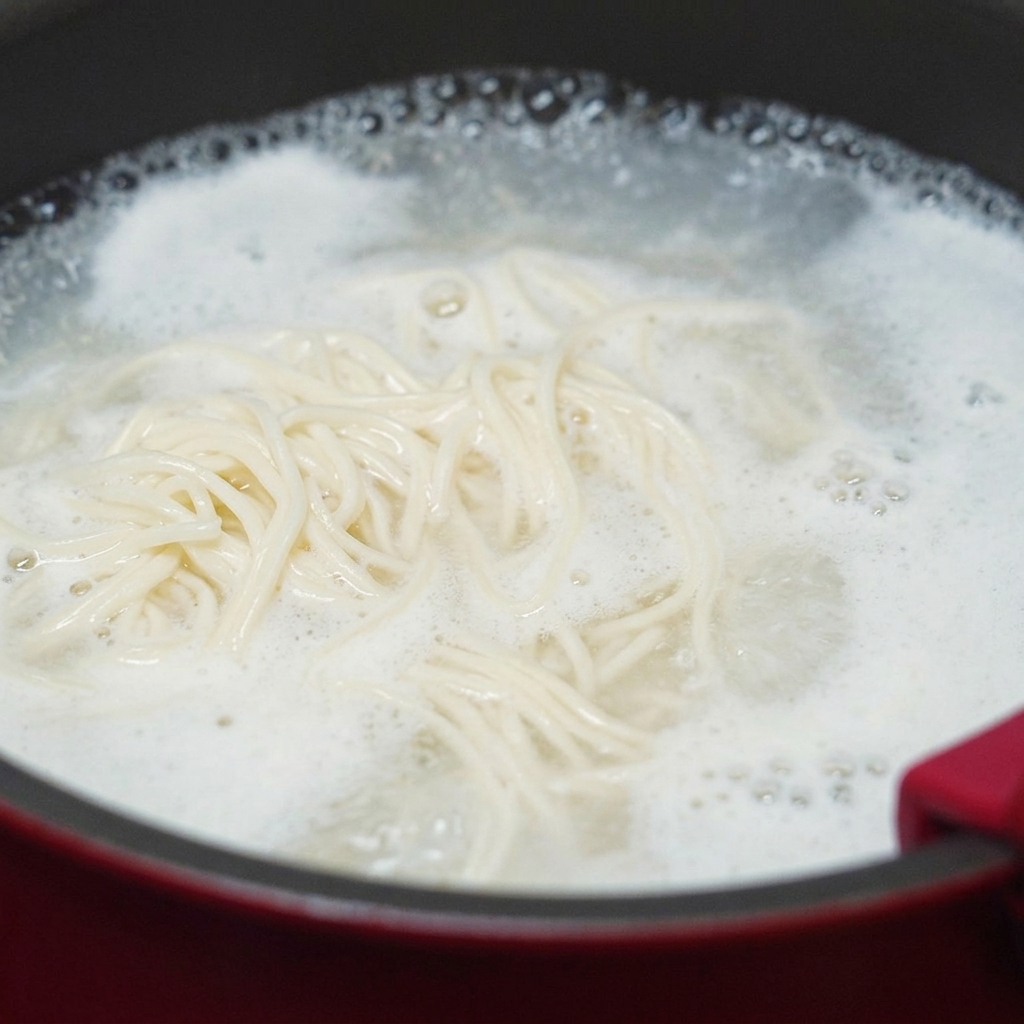
In a separate pot bring water to a vigorous boil and add the white wheat noodles. Cook them for approximately 2 to 3 minutes until they reach an al dente texture ensuring they still have a slight chewiness at the core.
Tip: Avoid overcooking the noodles as they continue to soften once the hot soup is added during the final assembly. - 15Transfer noodles to bowl
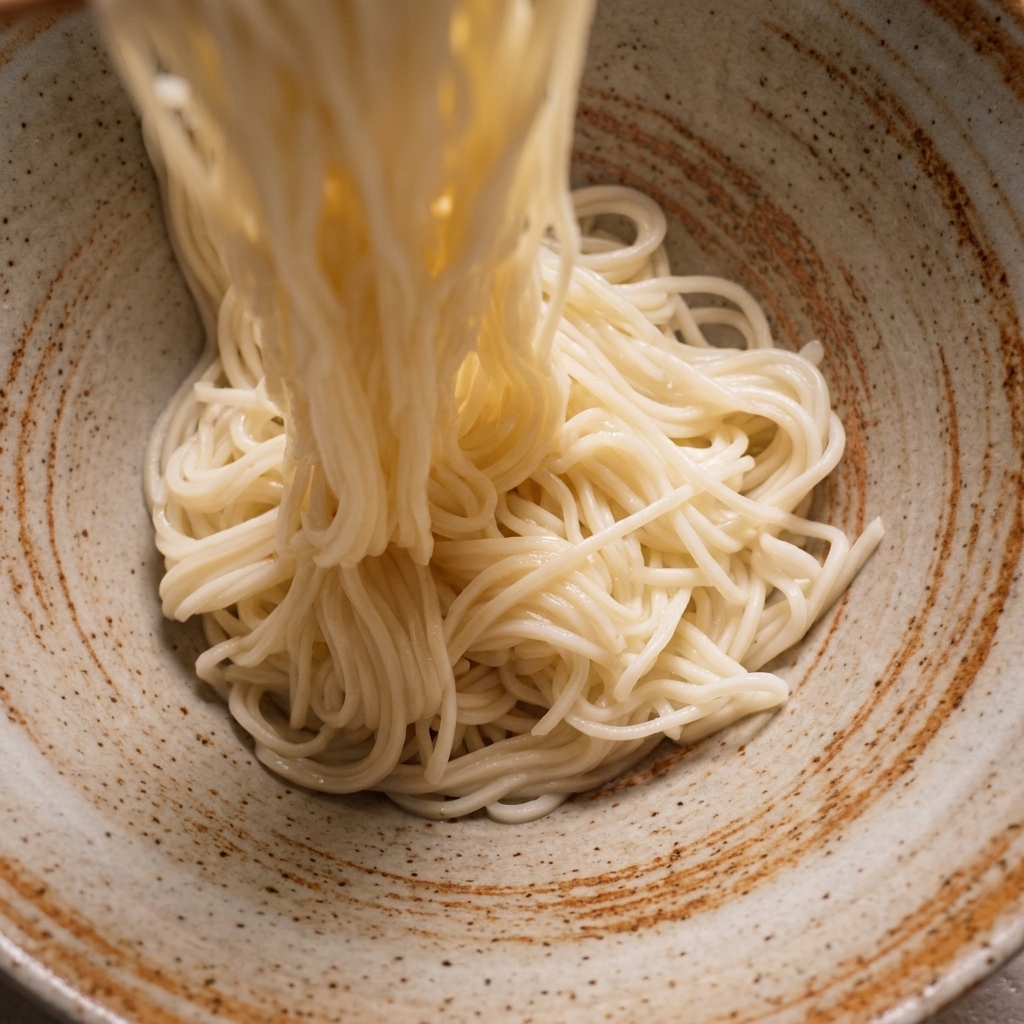
Drain the cooked noodles thoroughly and transfer them into a serving bowl. Use chopsticks to lift and arrange the noodles neatly, creating an even base that will hold the soup and toppings properly.
Tip: Give the noodles a quick toss with the chopsticks to ensure they dont clump together before you pour the broth. - 16Assemble the bowl
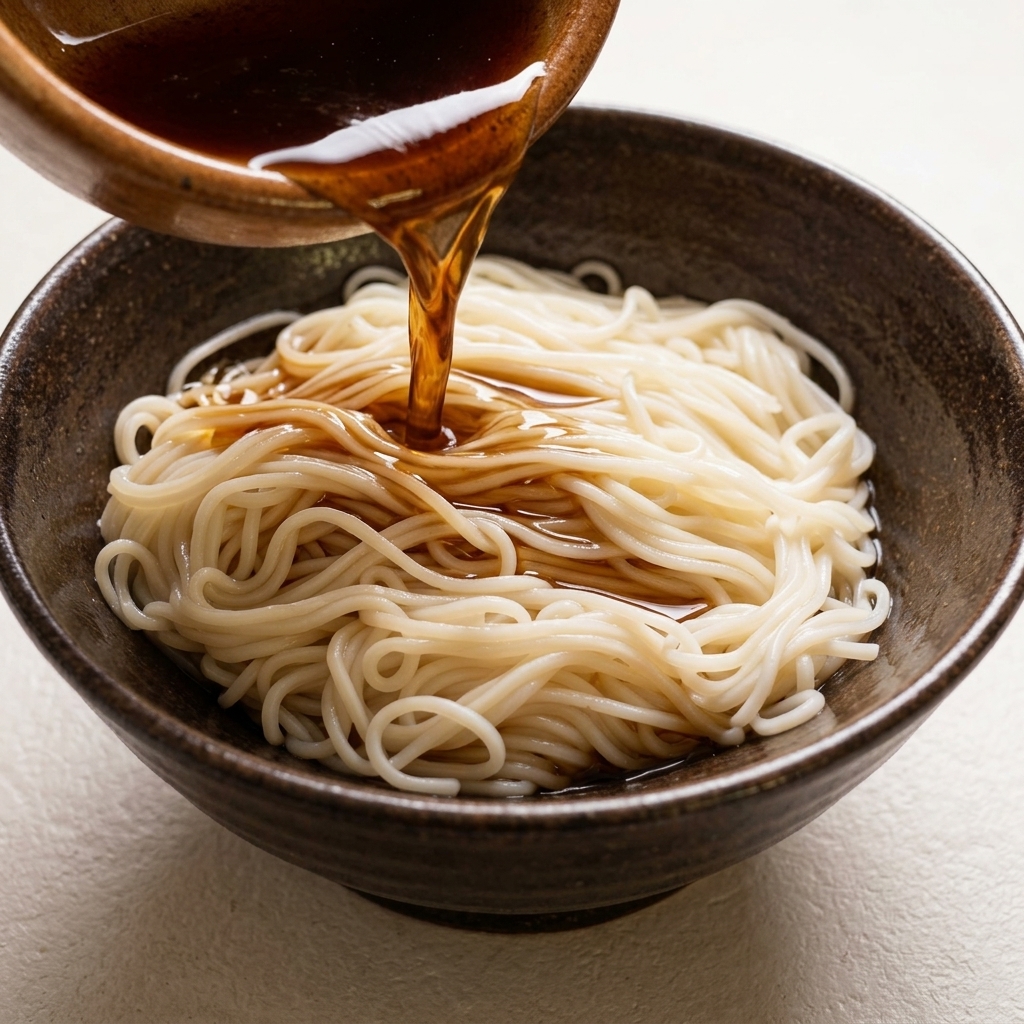
Ladle the hot broth, now infused with the aroma of scallions and toasted sesame seeds, directly over the prepared noodles in the serving bowl. The steaming liquid will fully hydrate the noodles and release the fragrant essence of the soy sauce and chicken.
Tip: Pour the broth slowly down the inner side of the bowl to maintain the neat arrangement of the noodles.