Classic American Clam Chowder
Bread Bowl
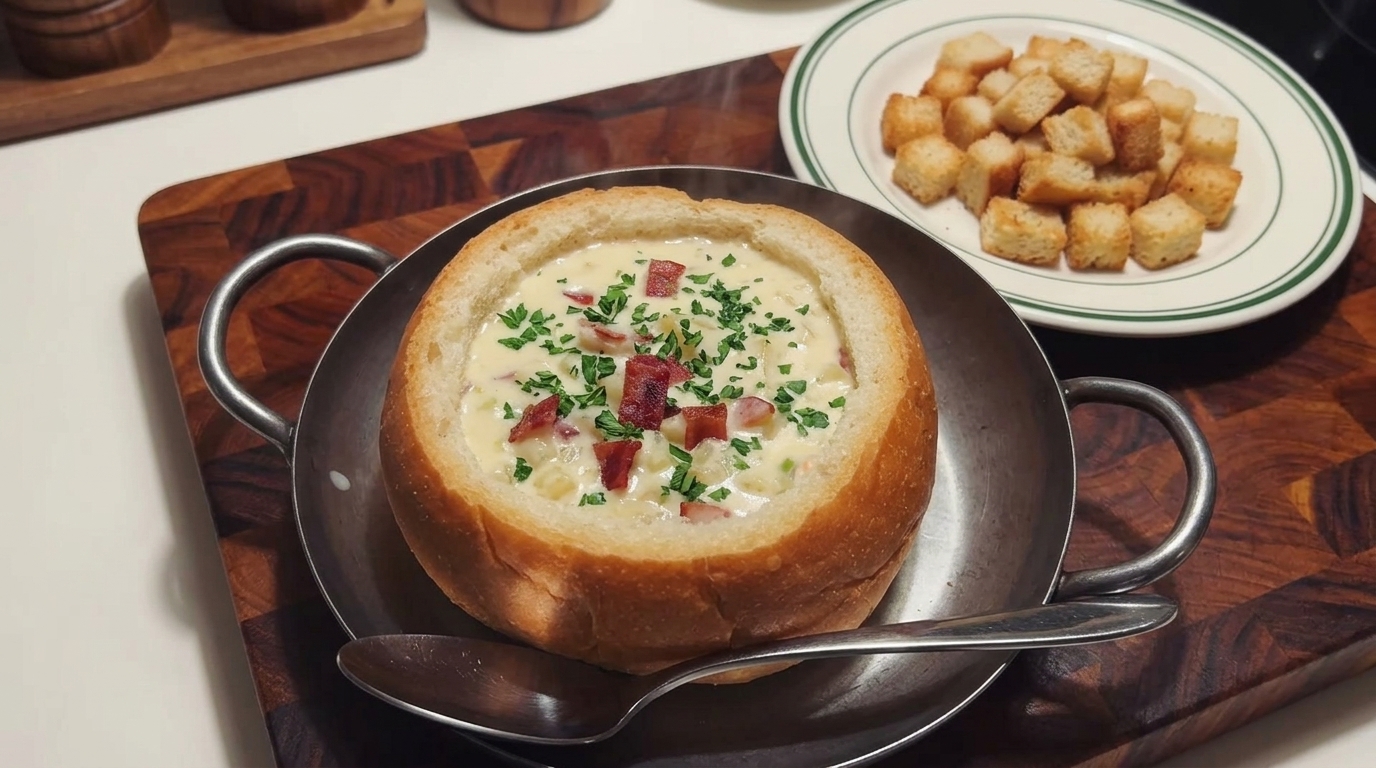
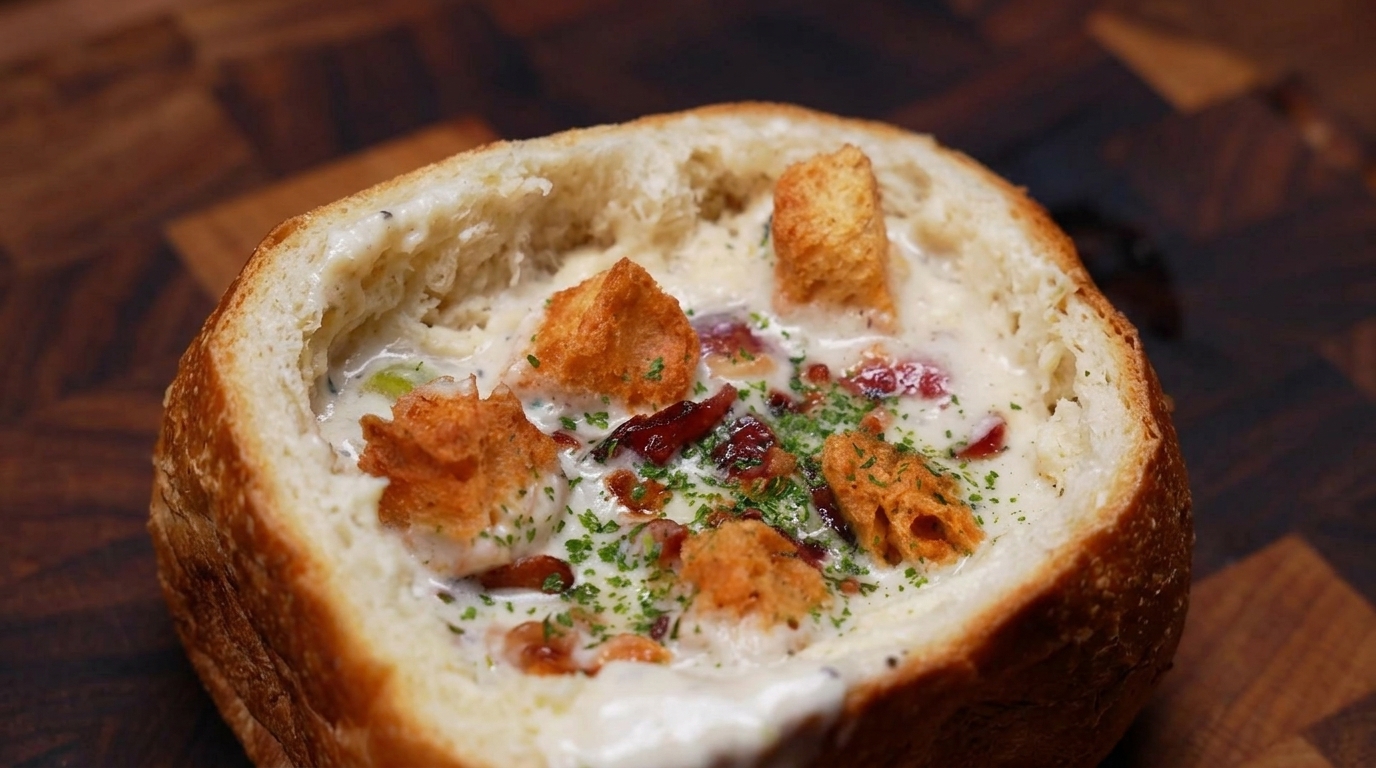
Rich, creamy, and packed with tender clams, this classic American chowder is served in a hollowed-out rustic bread bowl. A comforting masterpiece finished with crispy bacon.
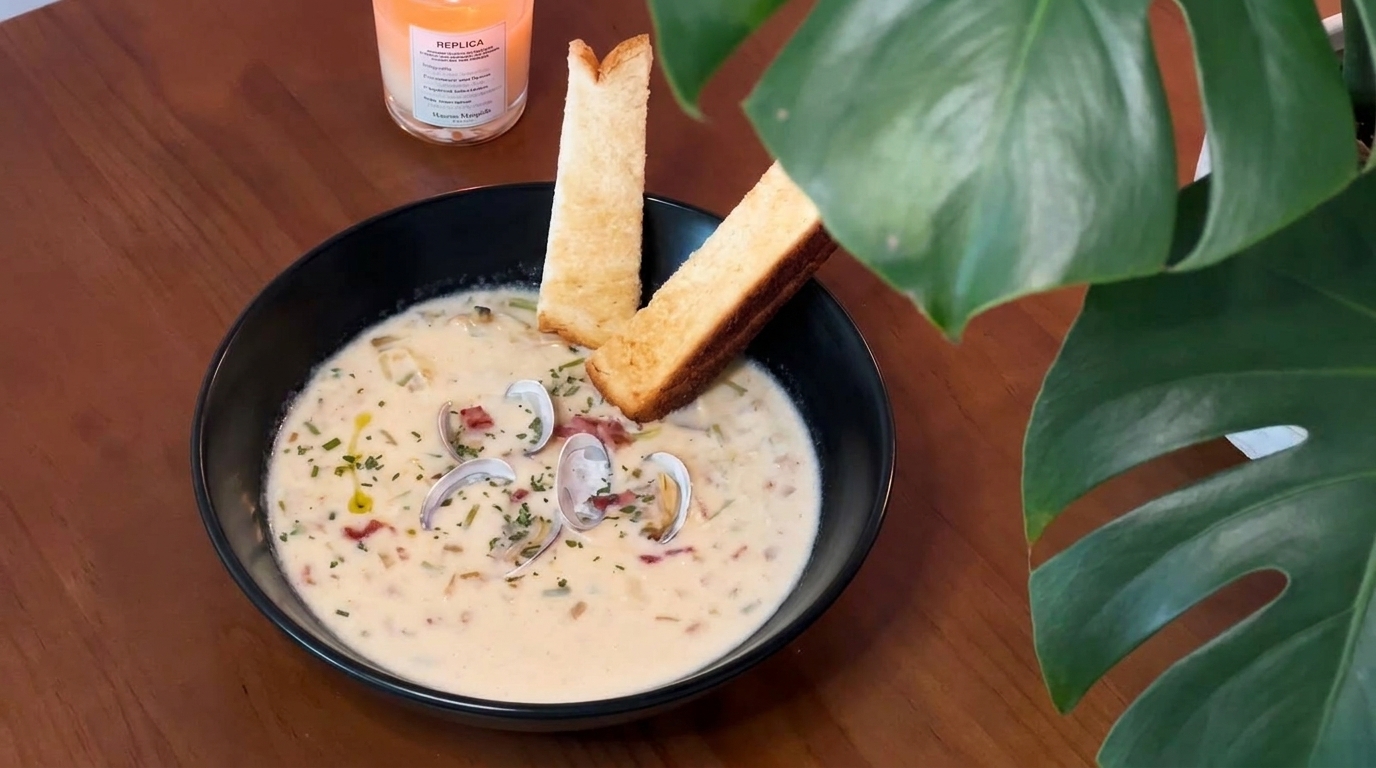
New England-style clam chowder is a cornerstone of American coastal cuisine, celebrated for its hearty, velvety texture and savory depth. Serving it in a crusty bread bowl not only adds a wonderful textural contrast but turns the meal into a cozy, edible experience. The smoky undertones from rendered bacon fat perfectly complement the sweet brininess of the fresh clams and the richness of the cream.

Ingredients
- 1 kg fresh clams (in shells)
- 2 stalks celery
- 1 large yellow or russet potato
- 1 medium red onion
- 5 slices thick-cut bacon
- 2 tbsp unsalted butter
- 2 tbsp all-purpose flour
- 1 cup whole milk (for the roux)
- 12 cup heavy cream (for the soup)
- to taste black pepper
- to taste sea salt
- 4 small round rustic bread loaves
- optional fresh parsley (chopped, for garnish)
Instructions
- 1Boil the clams
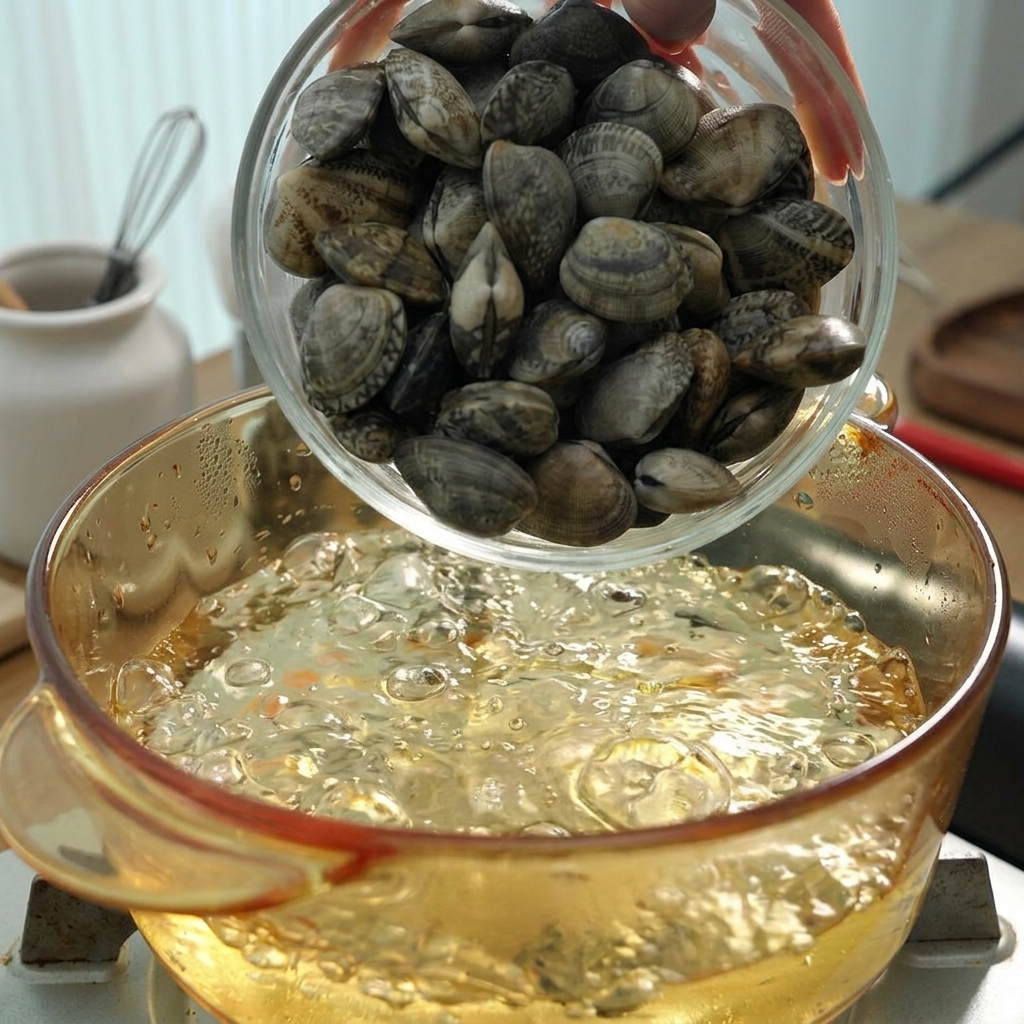
Bring a pot of water to a boil and carefully pour in the fresh clams. Cook them thoroughly, making sure to reserve the resulting clam broth for the soup base.
Tip: Discard any clams that remain closed after boiling, as they are not safe to eat. - 2Extract the clam meat
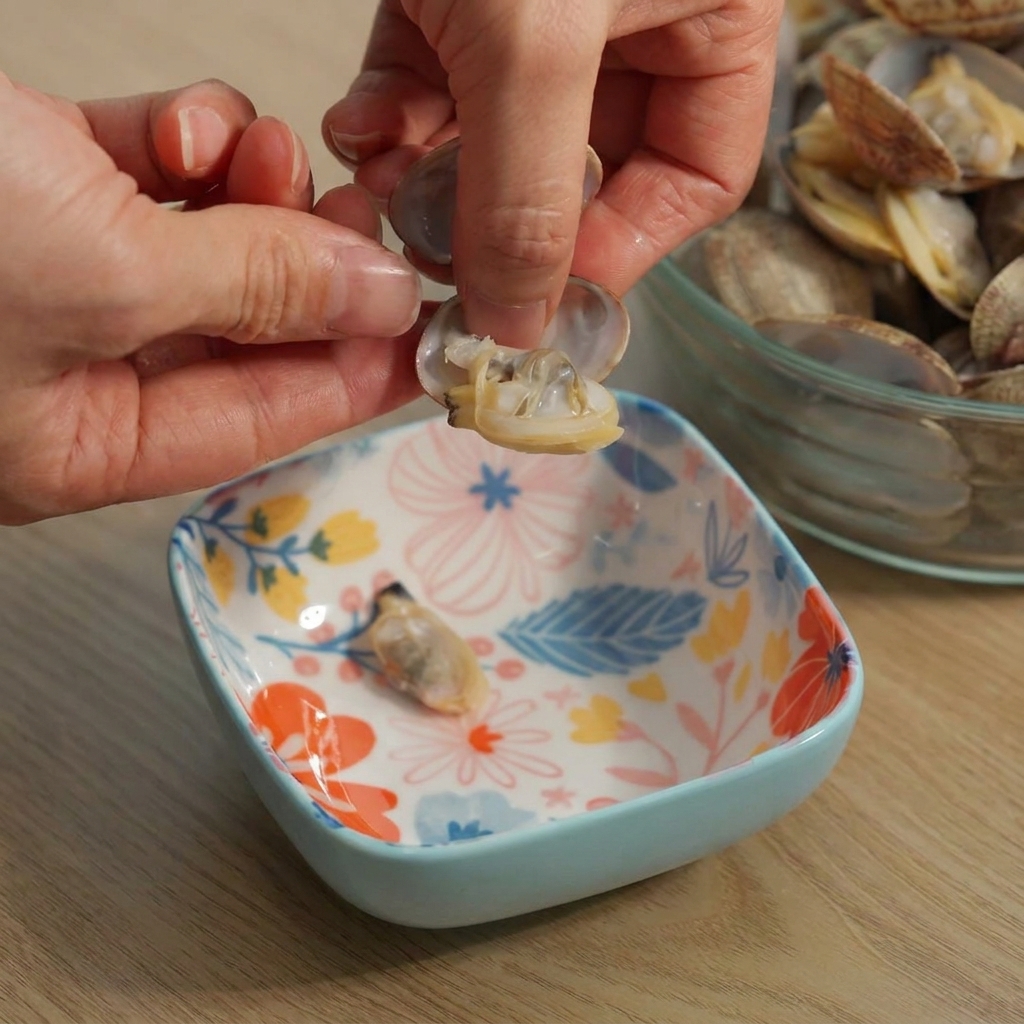
After boiling the clams until they open, carefully extract the cooked meat from the shells by hand. Place the clam meat into a small bowl and set it aside for later. Be sure to strain and reserve the leftover clam broth in the pot, as it will be used to flavor the soup.
Tip: Use a small fork or your fingers to gently pull the meat free from the shell, taking care not to tear it. - 3Dice the celery
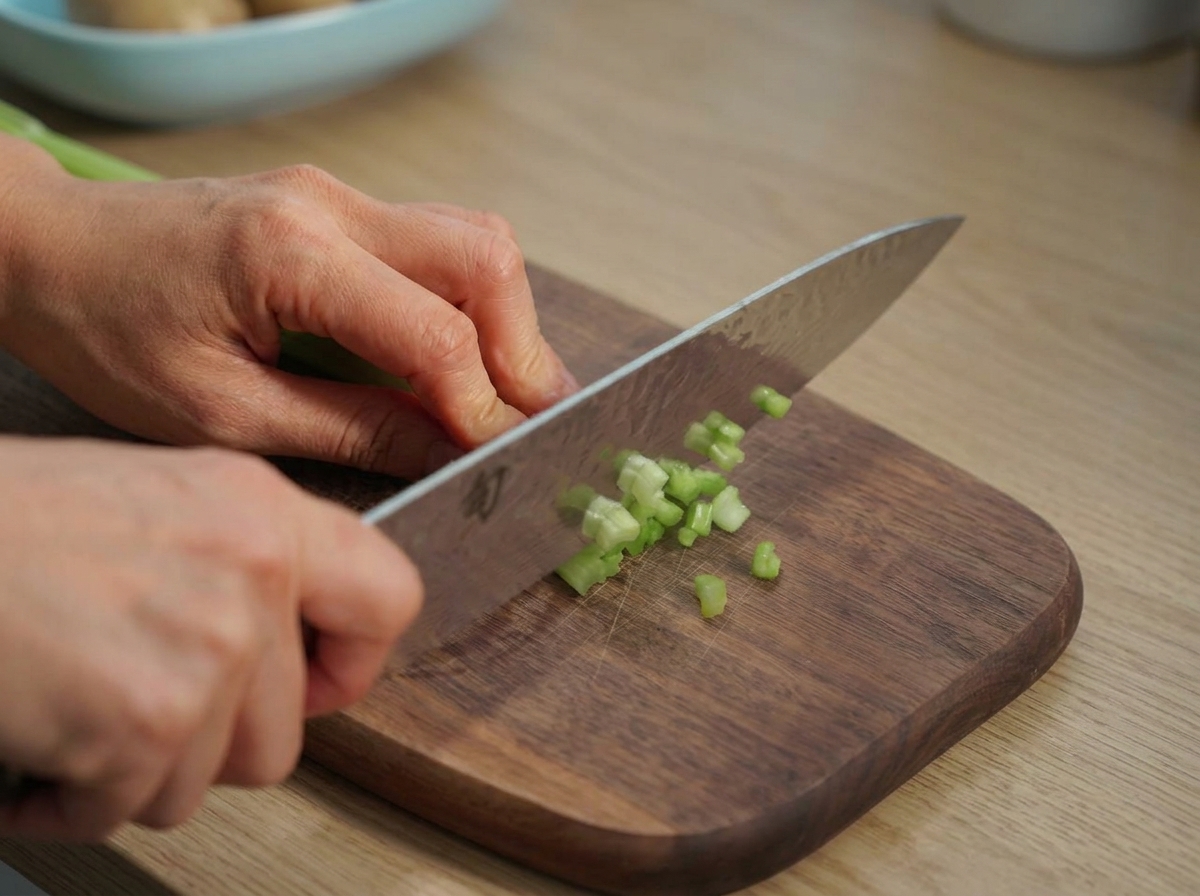
Using a sharp knife, finely dice the green celery stalks on a wooden cutting board. Cutting the vegetables into uniform, small pieces ensures they cook evenly and integrate smoothly into the creamy texture of the chowder.
Tip: Wash the celery thoroughly and use a vegetable peeler to remove any tough, stringy fibers from the outside before dicing for a more delicate texture. - 4Dice the potato
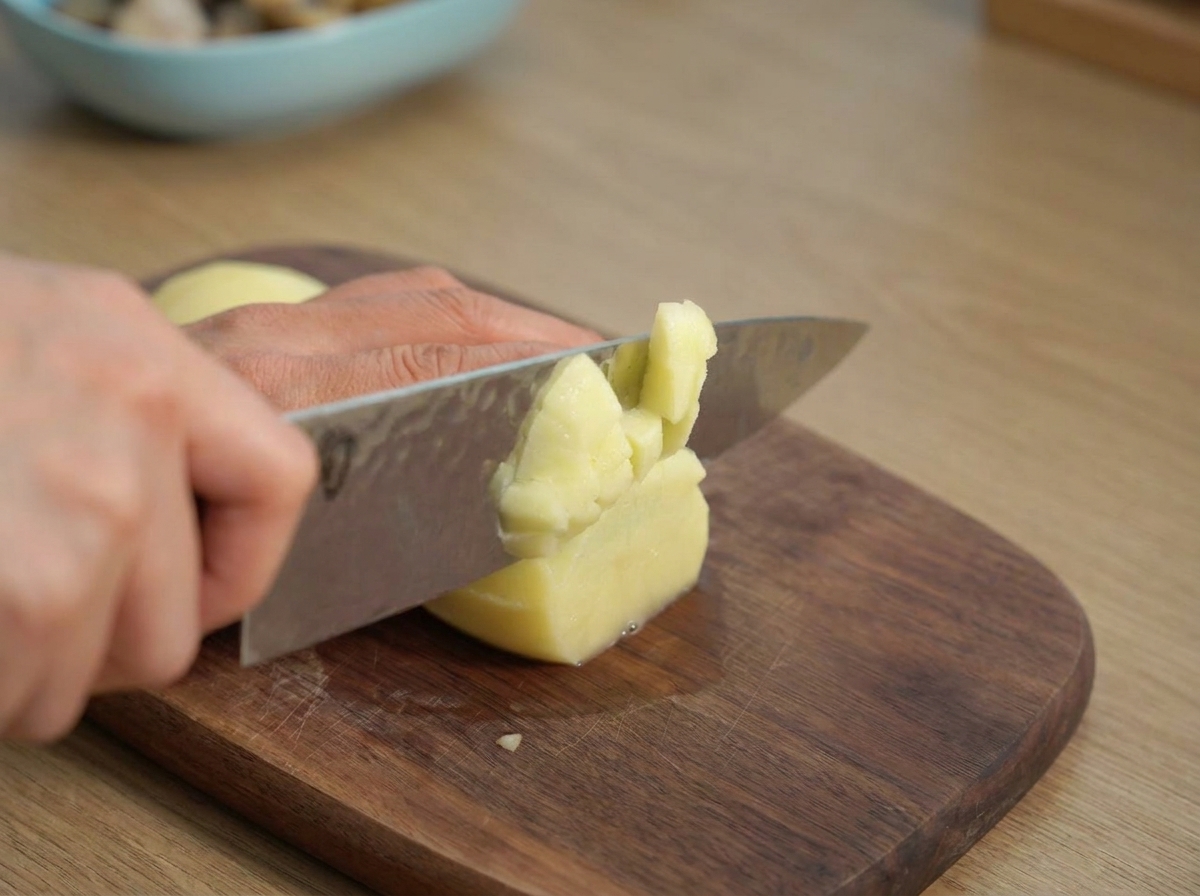
Peel the potato and dice it into small, even cubes. The potatoes will add heartiness and help naturally thicken the chowder as they simmer and release their starches into the broth.
Tip: If you are preparing the ingredients ahead of time, keep the diced potatoes submerged in a bowl of cold water to prevent them from oxidizing and turning brown. - 5Chop the red onion
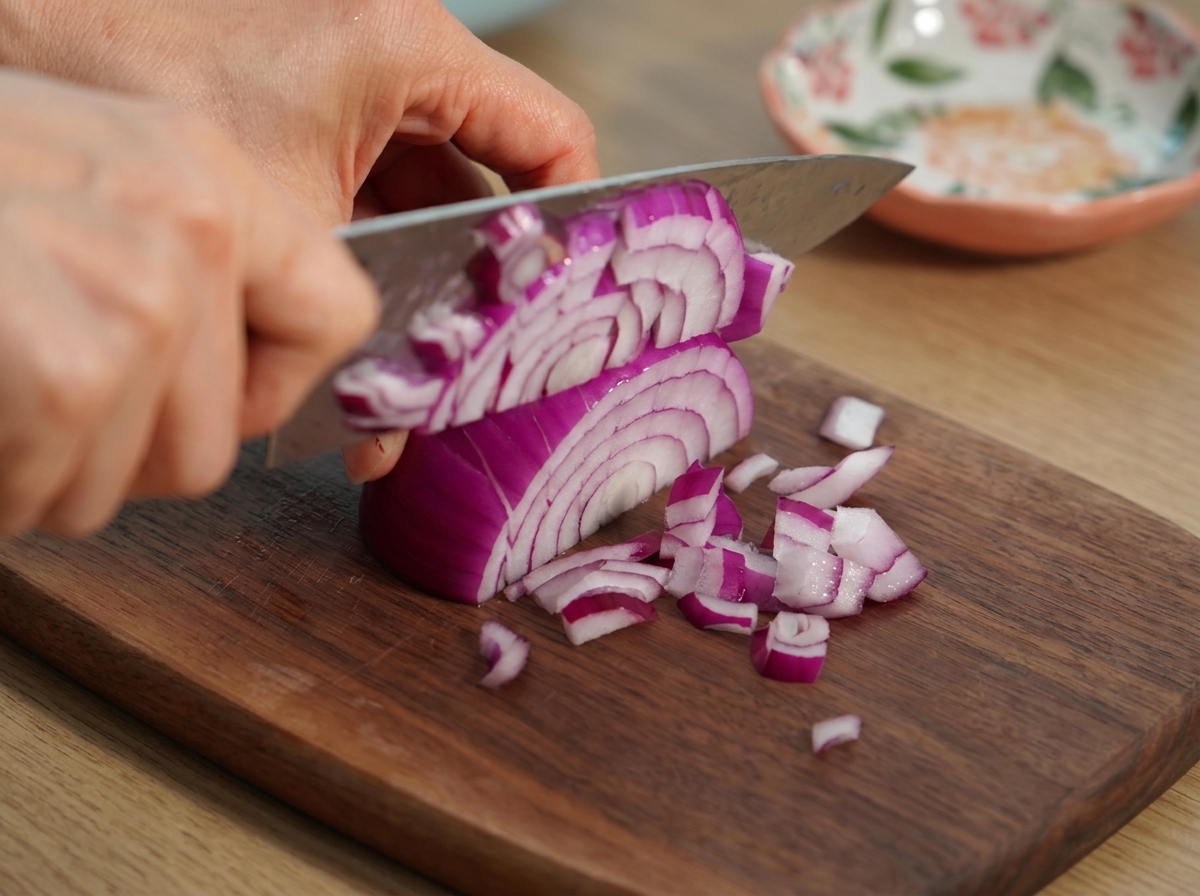
Slice and finely dice the red onion. Along with the celery, the diced onion will serve as an aromatic base for the soup, providing a subtle sweetness and deep flavor once sautéed.
Tip: Leaving the root end of the onion intact while you make your vertical and horizontal cuts will hold the layers together and make dicing much easier. - 6Slice the bacon
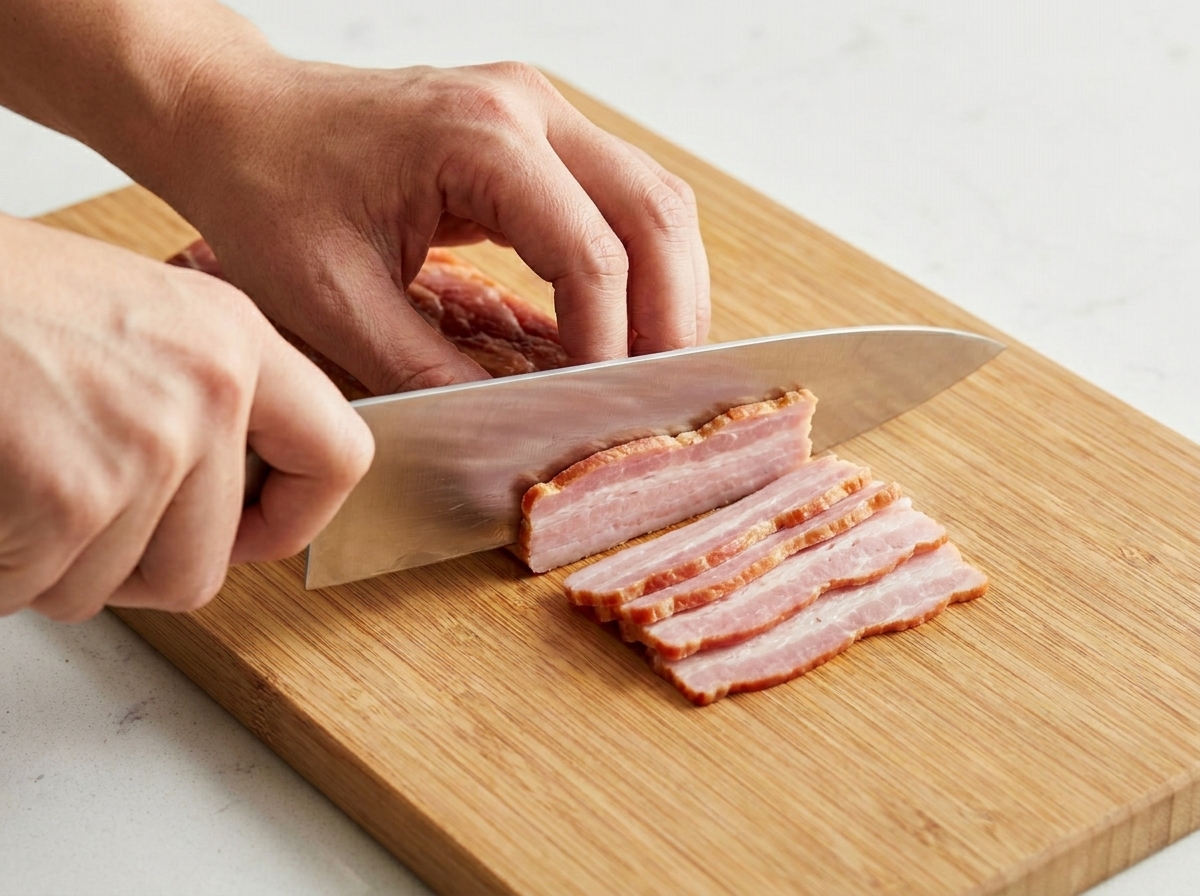
Stack the slices of raw bacon and chop them into small, rectangular pieces. Frying these bacon pieces will render their fat, creating a savory and smoky base for sautéing the vegetables. A portion of the crispy bacon bits will also be reserved for garnishing the finished dish.
Tip: Place the bacon in the freezer for about 10 to 15 minutes before cutting; the firmer texture will make it much easier to slice cleanly without sliding. - 7Melt the butter
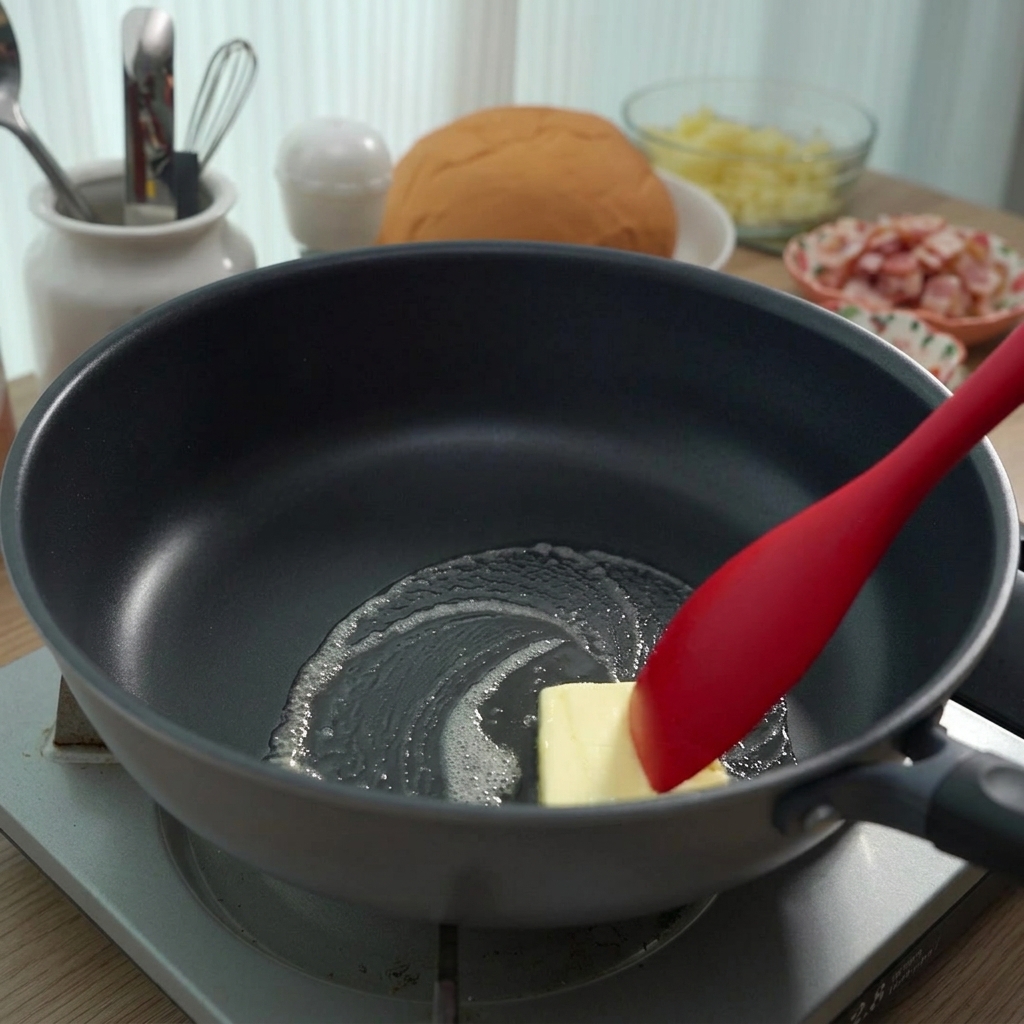
To prepare the white sauce base, place a square of butter into a frying pan. Heat gently and use a spatula to move the butter around until it is completely melted.
Tip: Keep the heat low to prevent the butter from browning, ensuring a pale base for the white sauce. - 8Whisk in the flour
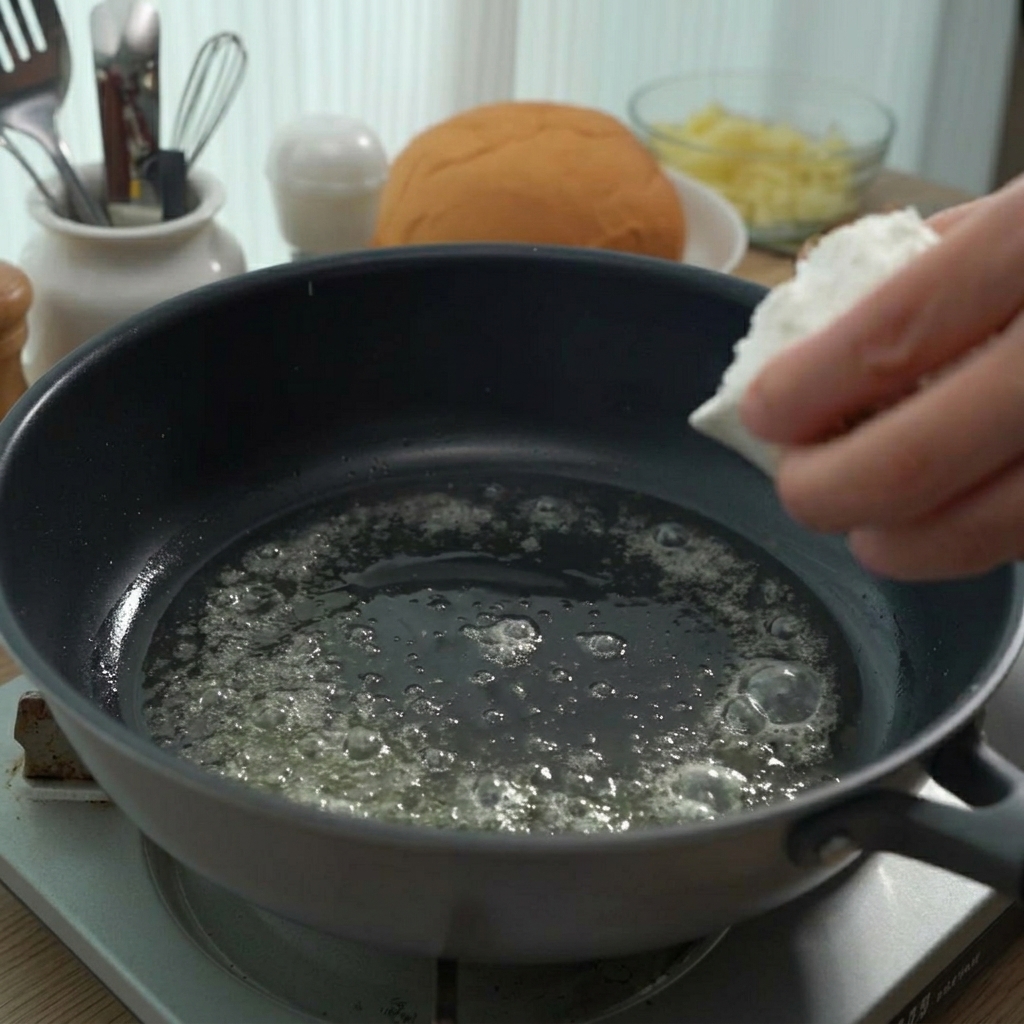
Once the butter is fully melted, add the white flour to the pan. Stir the mixture continuously to combine the flour and butter and cook the raw flour taste out.
Tip: Stir continuously to prevent lumps from forming and keep the mixture smooth. - 9Create the white sauce base
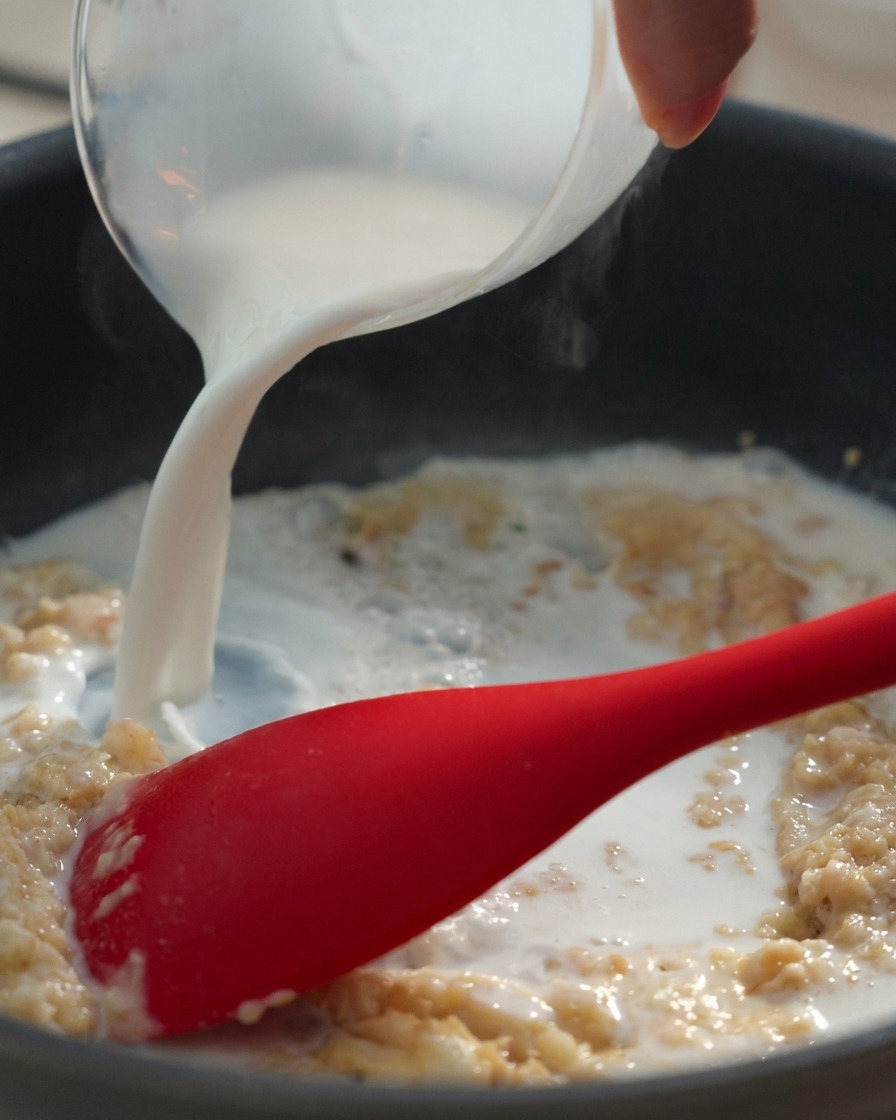
Gradually pour the milk into the cooked butter and flour mixture while stirring continuously with a spatula. Keep the pan over medium heat and mix until the liquids are fully incorporated, cooking until a smooth, thick paste forms. Set this mixture aside to use later as the thickening base for your soup.
Tip: Pour the milk in slowly while stirring constantly to prevent any lumps from forming in your roux. - 10Fry the bacon
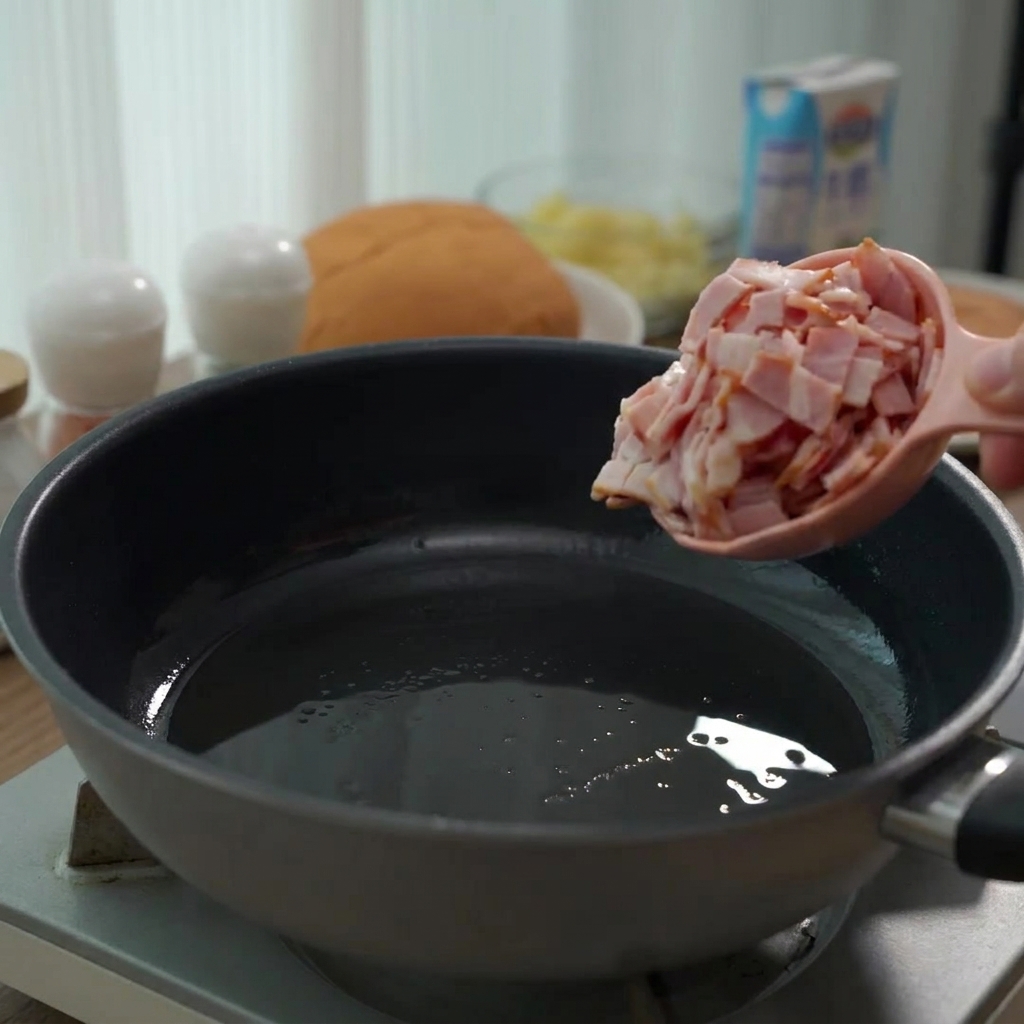
Place the chopped bacon pieces into a larger pan and fry them until they are nicely browned and crispy. Remove a small portion of the cooked bacon to save for garnishing the final dish.
Tip: Starting bacon in a cold pan helps the fat render out slowly, resulting in crispier pieces. - 11Add the potatoes
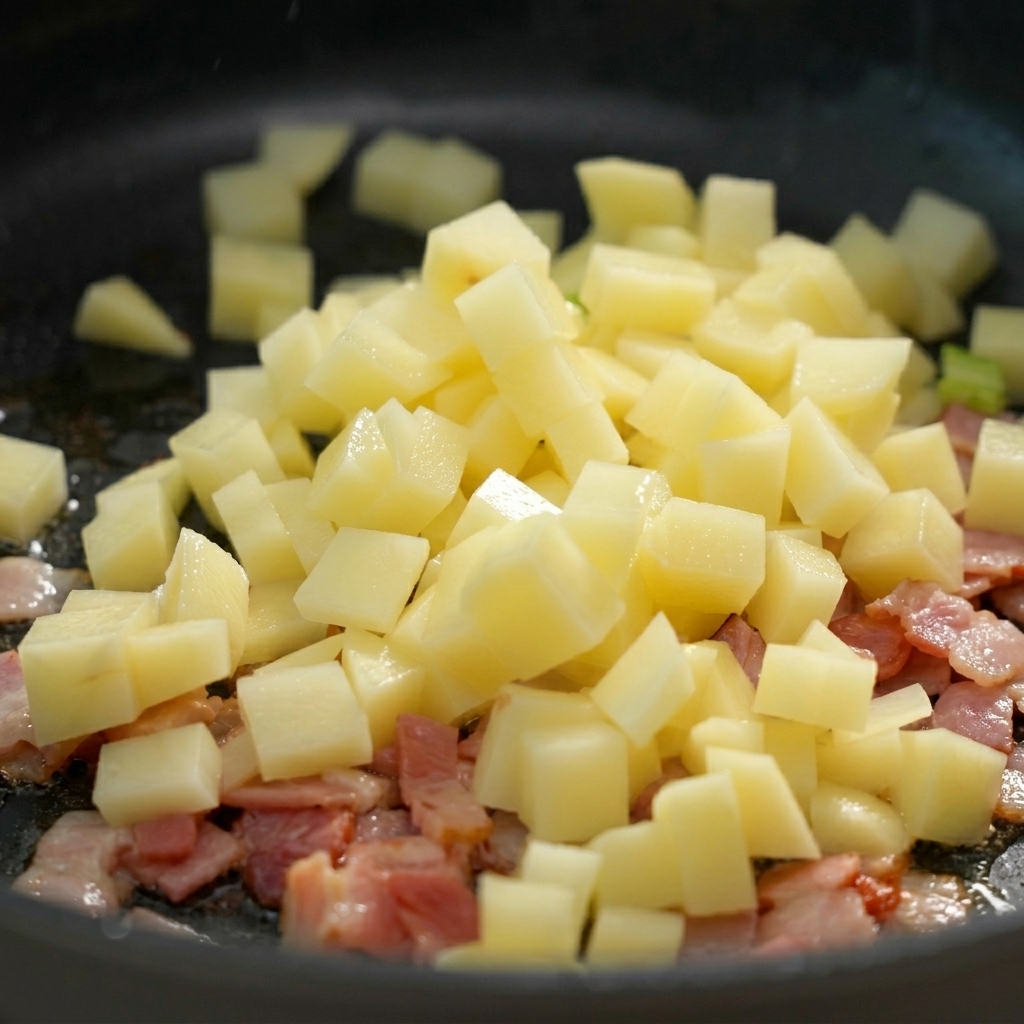
With the remaining bacon still in the pan, add the diced potatoes to begin softening them in the rendered fat.
Tip: Cut the potatoes into uniform cubes so they cook at the same rate. - 12Stir in onions and celery
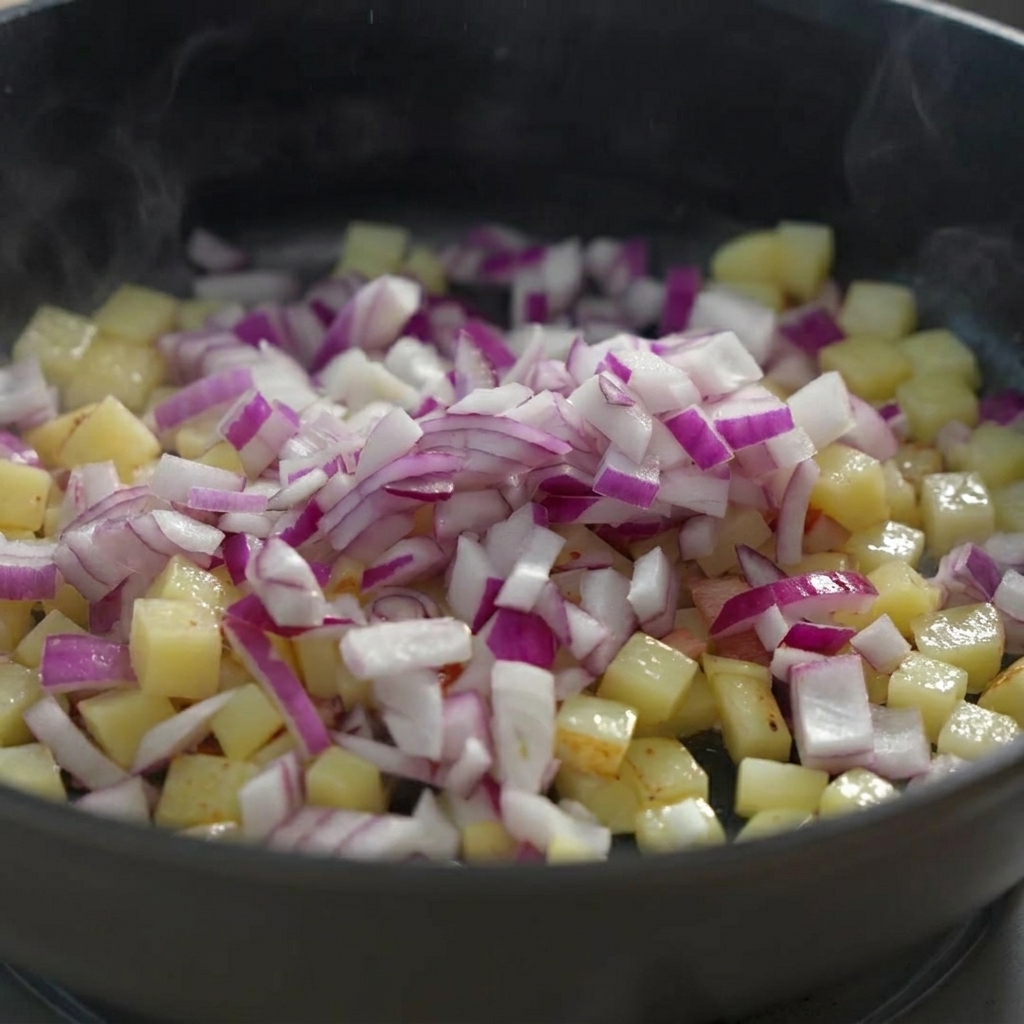
Stir the freshly diced red onion and celery into the hot pan with the potatoes and bacon. Sauté the vegetables briefly over medium heat until fragrant.
Tip: Sautéing the vegetables in the residual bacon fat builds a deeply savory and smoky flavor foundation for the chowder. - 13Pour in the clam broth
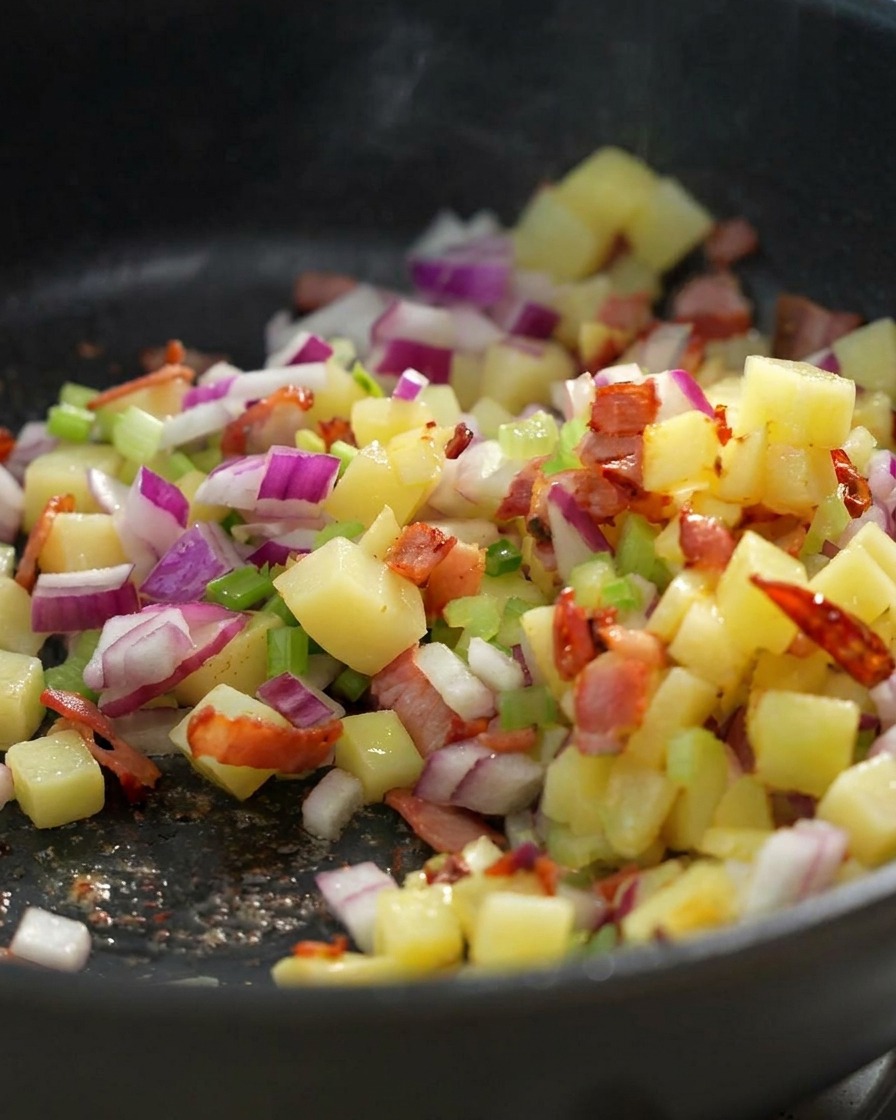
Carefully pour the reserved clam cooking broth into the pan with the sauteed vegetables and bacon, which will serve as the flavorful base for the soup.
Tip: If your broth looks particularly sandy, strain it through a fine mesh sieve or paper filter before adding it to the pan. - 14Season the broth
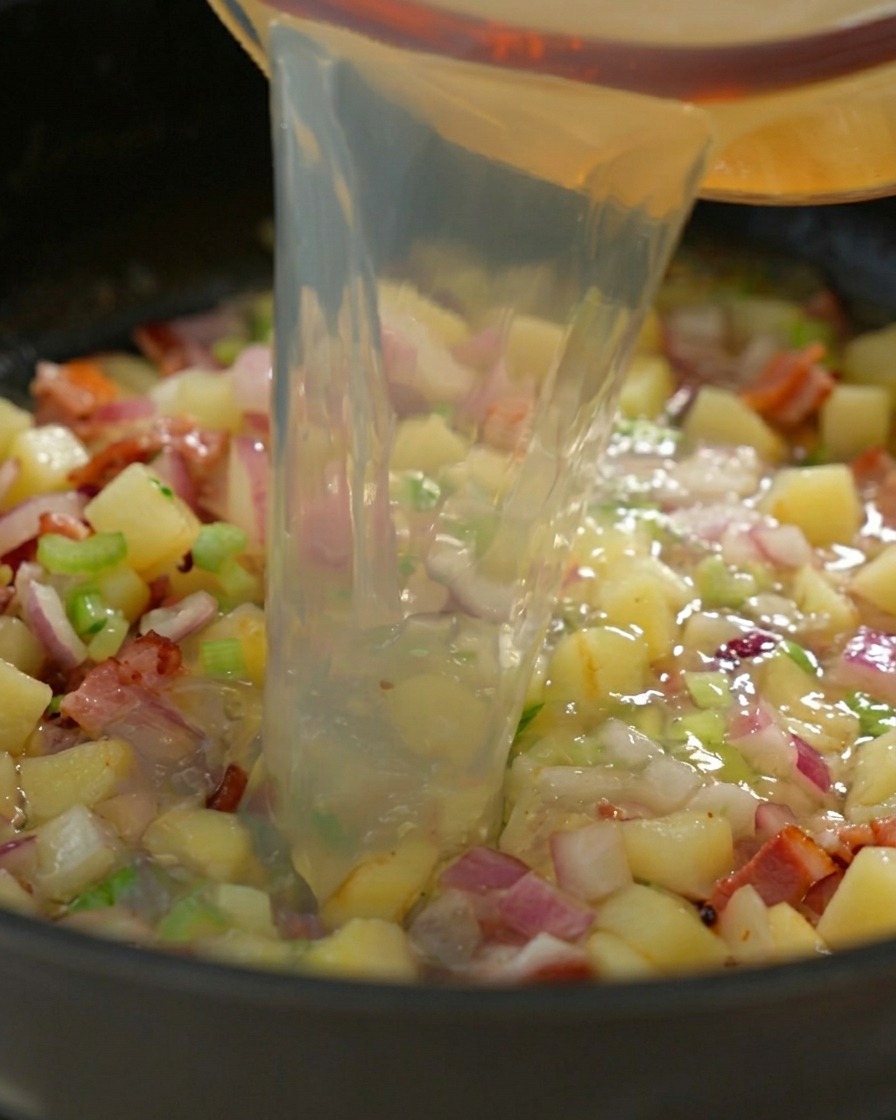
Grind fresh black pepper over the simmering broth and vegetable mixture. Cover the pan and let it simmer gently on low heat for about 15 minutes, or until the potatoes are completely tender.
Tip: Freshly ground black pepper adds a sharper, more aromatic bite than standard pre ground pepper, perfectly cutting through the richness of the bacon. - 15Add the cream
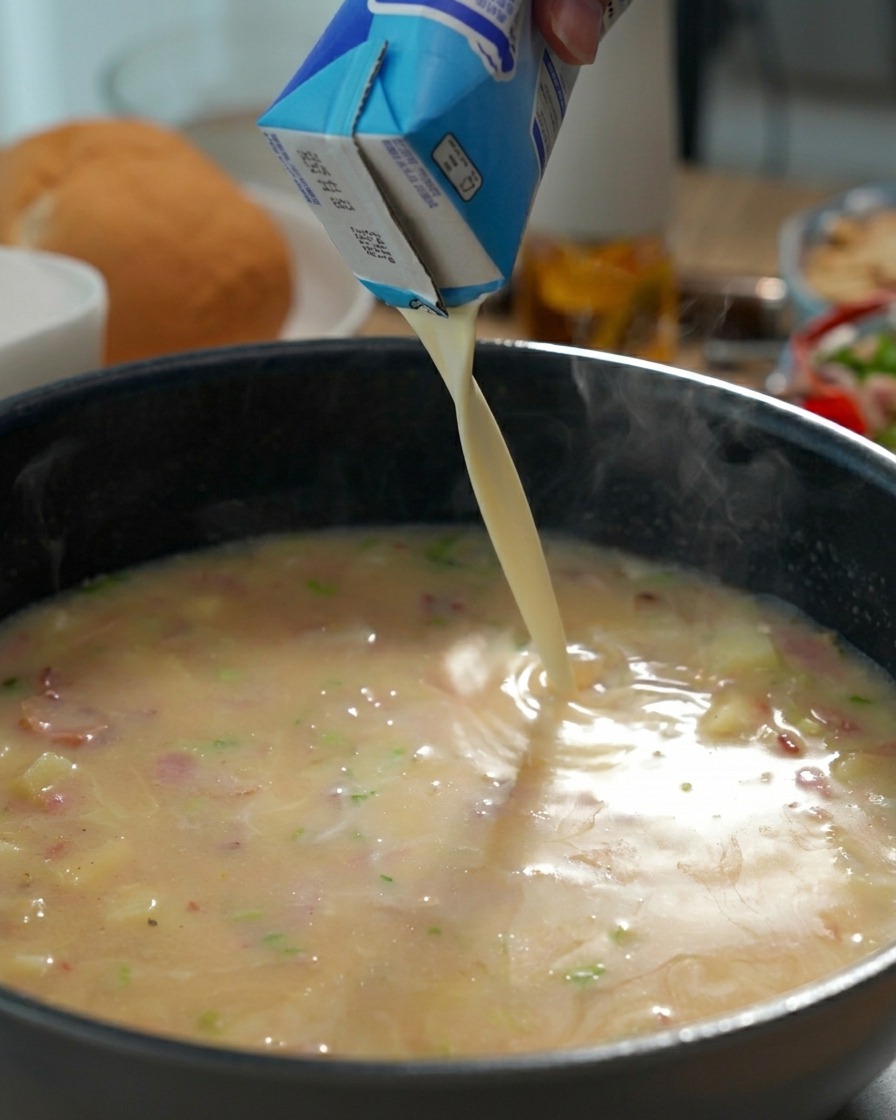
Once the soup base has simmered and the vegetables are tender, pour the milk and heavy cream into the pan. Stir gently to incorporate the dairy, creating a rich and silky chowder base.
Tip: Lower the heat slightly before pouring in the dairy to prevent the cream from splitting or curdling in the hot broth. - 16Stir in the clams
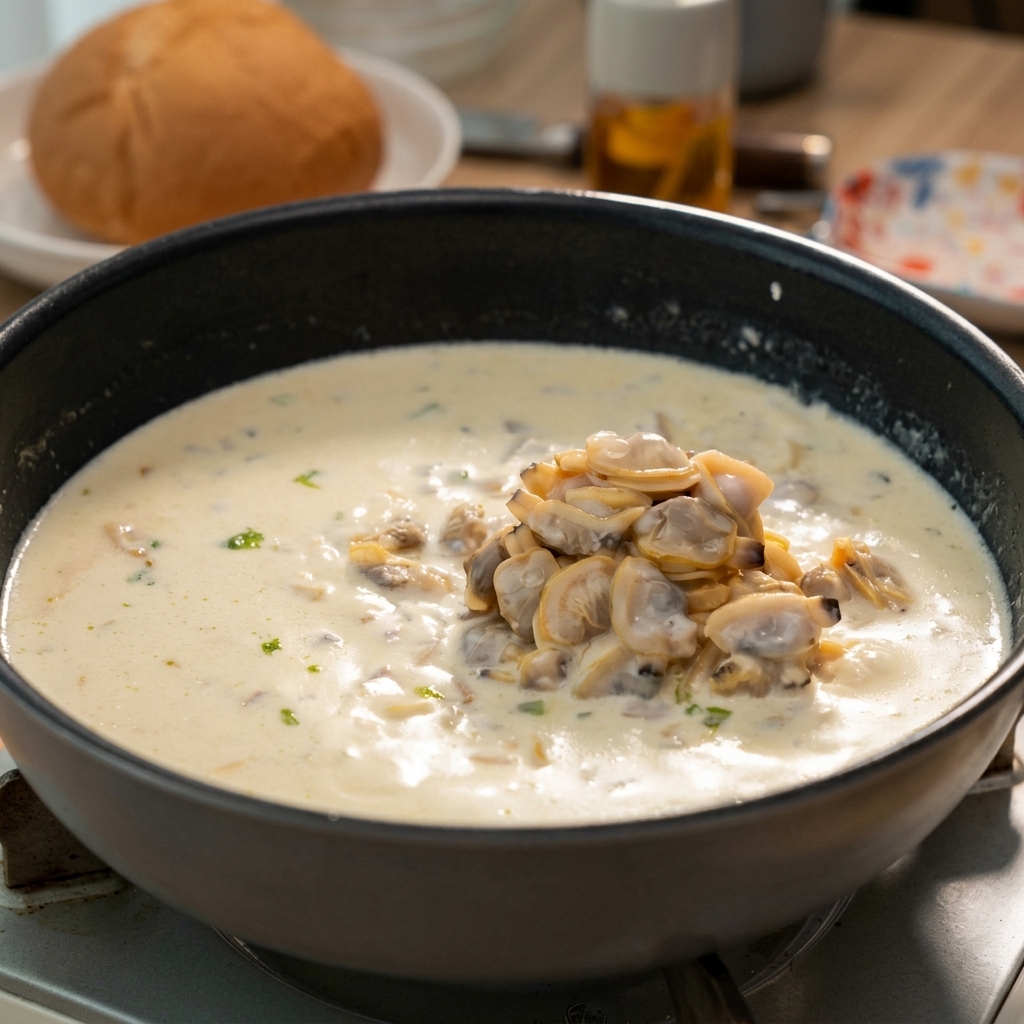
Add the reserved cooked clam meat into the creamy soup. Stir in the previously prepared white sauce base, and let the chowder simmer gently on low heat for a few more minutes until it reaches a thick, hearty consistency.
Tip: Adding the cooked clam meat at the very end ensures they stay tender and dont become tough or rubbery from overcooking.