Classic Manhattan Clam Chowder
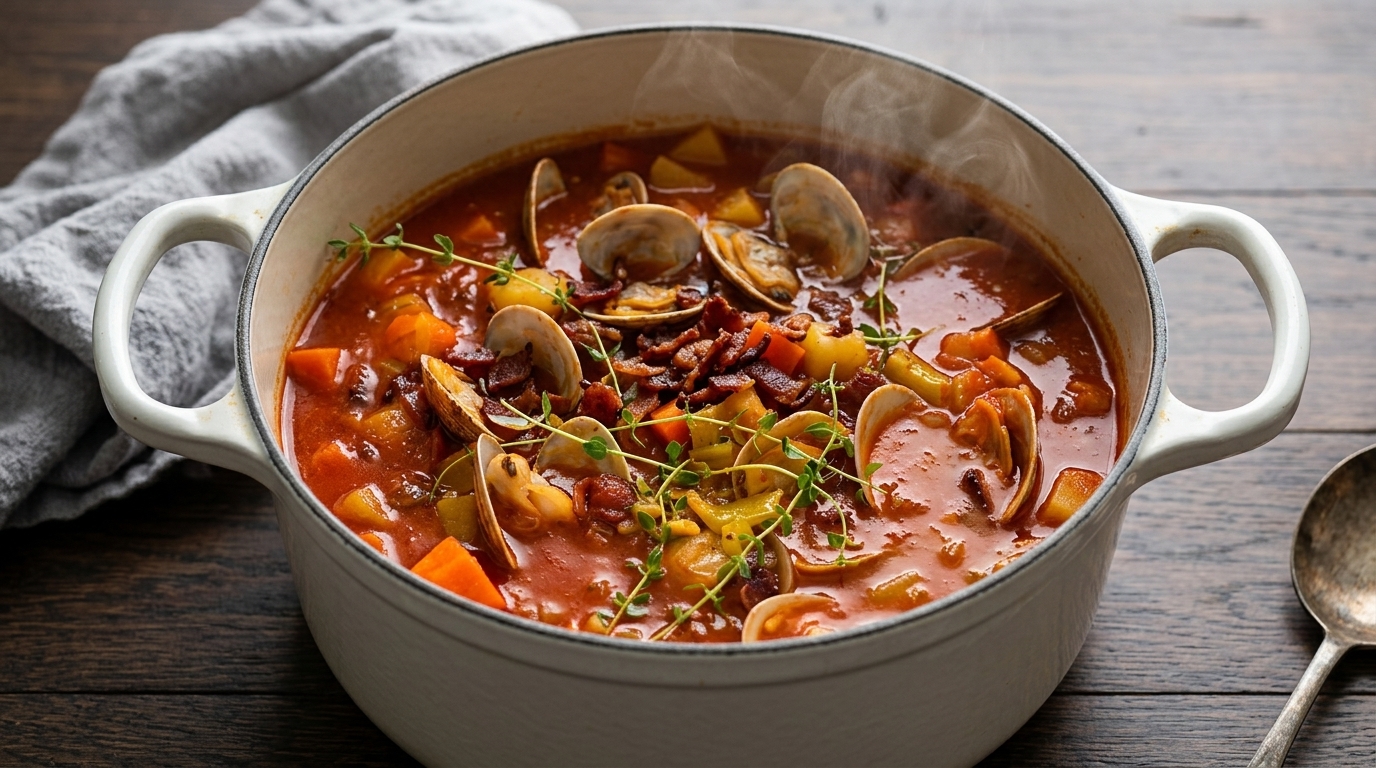
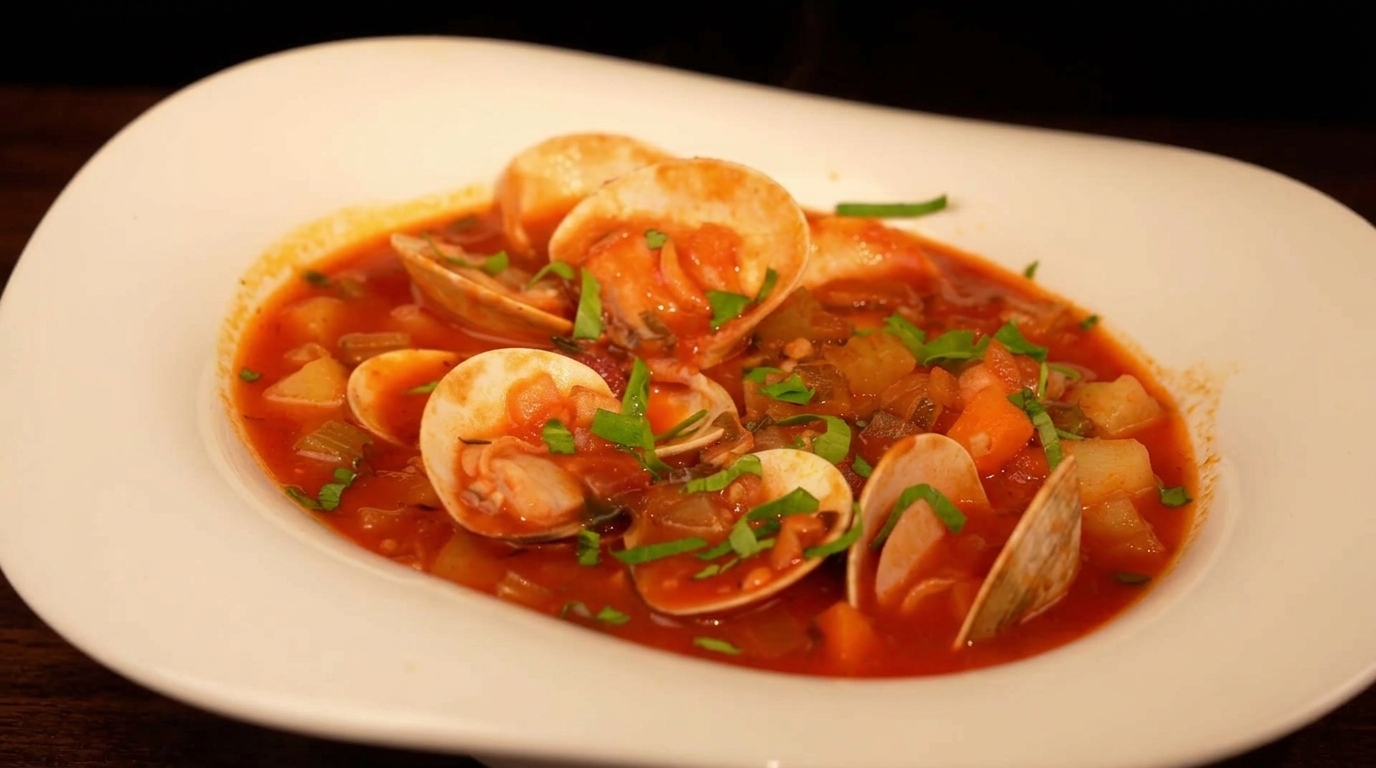
A vibrant, tomato-based take on the classic seafood soup. This hearty Manhattan Clam Chowder features tender fresh clams, smoky bacon, and chunky vegetables.
While New England clam chowder relies on rich cream and butter, the Manhattan version takes a brighter, briny approach. This vibrant red chowder owes its signature color and zesty flavor to a base of tomatoes, paired perfectly with a smoky bacon foundation. It is a hearty, warming soup that beautifully balances the sweetness of fresh clams with a robust, herbaceous broth.
Ingredients
- 4 slices bacon (diced)
- 1 medium onion (diced)
- 2 stalks celery (diced)
- 3 cloves garlic (minced)
- 2 medium carrots (diced)
- 2 medium waxy potatoes (like Yukon Gold, diced)
- 4 cups chicken broth
- 2 cups blended tomato puree
- 2 lbs fresh clams (in shell)
- 2 tbsp fresh parsley (chopped)
- 1 tsp fresh thyme
- to taste salt
- to taste black pepper
Instructions
- 1Render the bacon fat
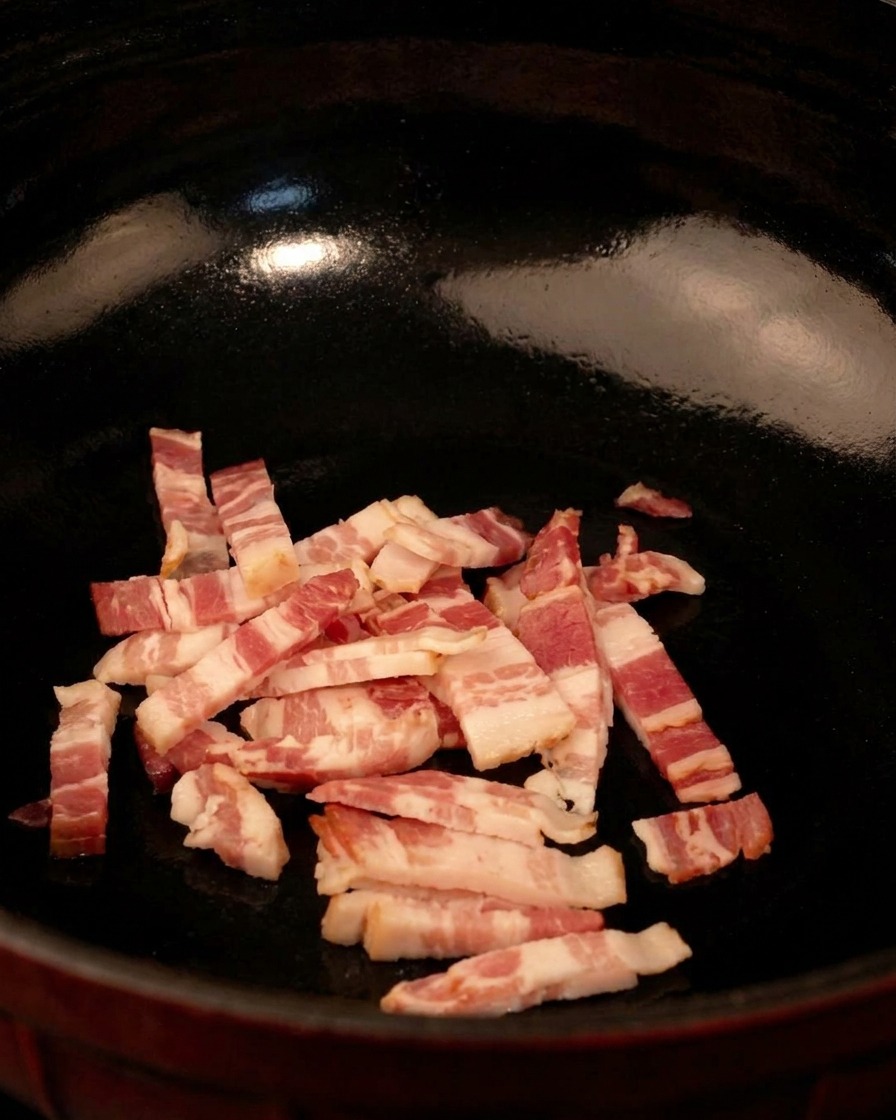
Place the diced bacon into a cold black pan and set the heat to medium. Cooking the bacon slowly allows the fat to render out completely, providing a rich and flavorful base for the chowder.
Tip: Starting bacon in a cold pan helps render the fat more evenly and prevents it from burning. - 2Remove the crispy bacon
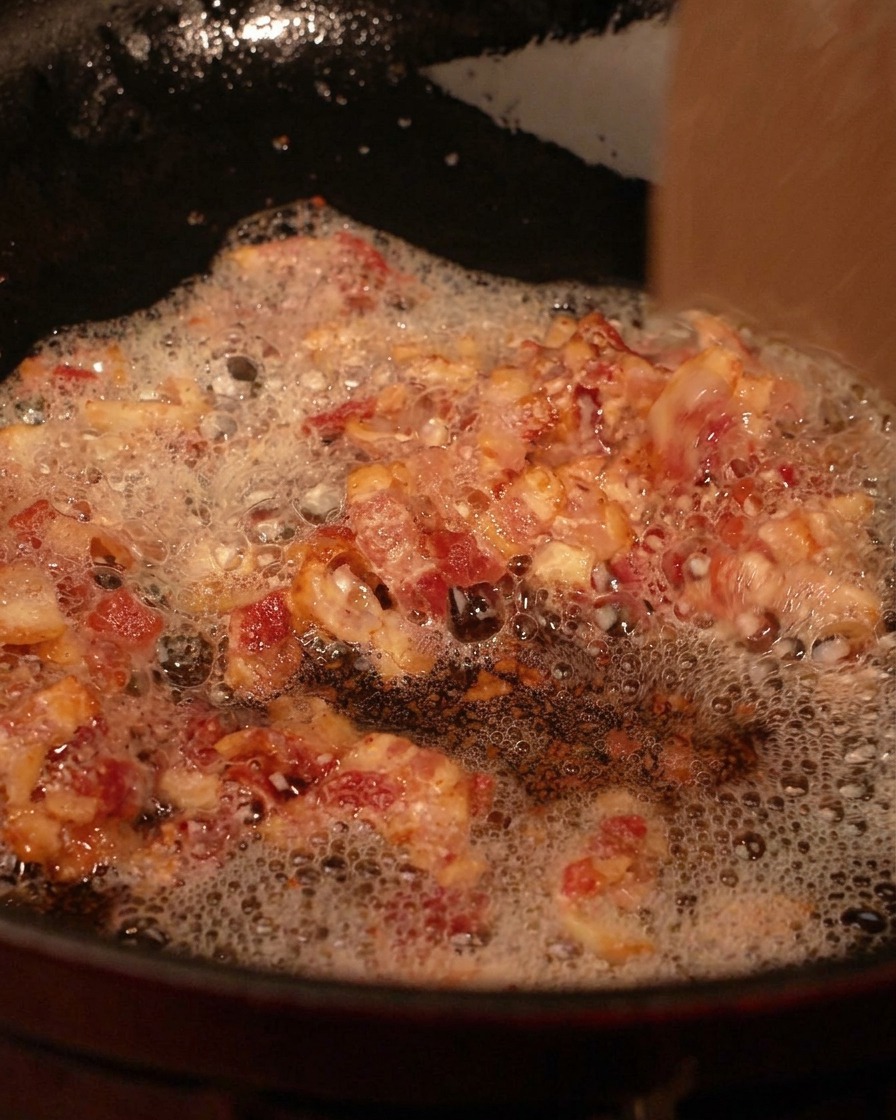
Once the bacon has turned golden brown and crispy, use a skimmer or slotted spoon to remove the pieces from the pan. Leave the rendered bacon fat in the skillet, as it will be used to sauté the vegetables.
Tip: Transfer the cooked bacon to a paper towel-lined plate to drain any excess grease and keep it crispy for the garnish. - 3Add the carrots
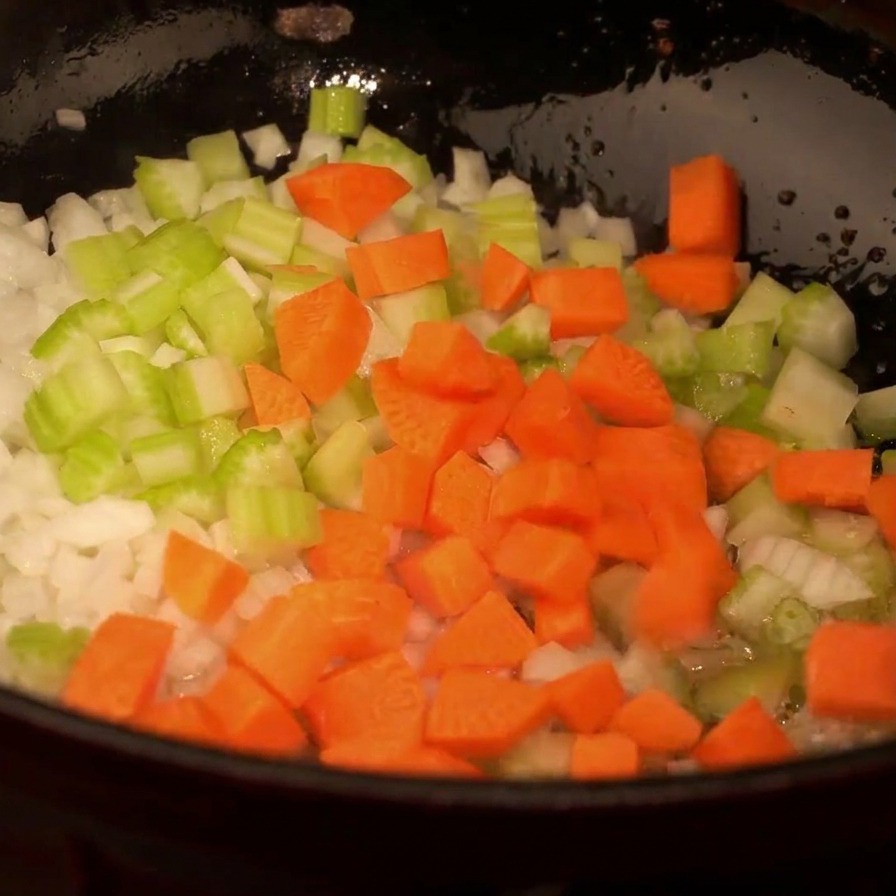
Add the diced carrots into the pan with the sautéed onions, celery, and minced garlic to continue building the flavor base.
Tip: Cut the carrots into uniform dice so they cook at the same rate as the celery and onions. - 4Sauté the aromatics
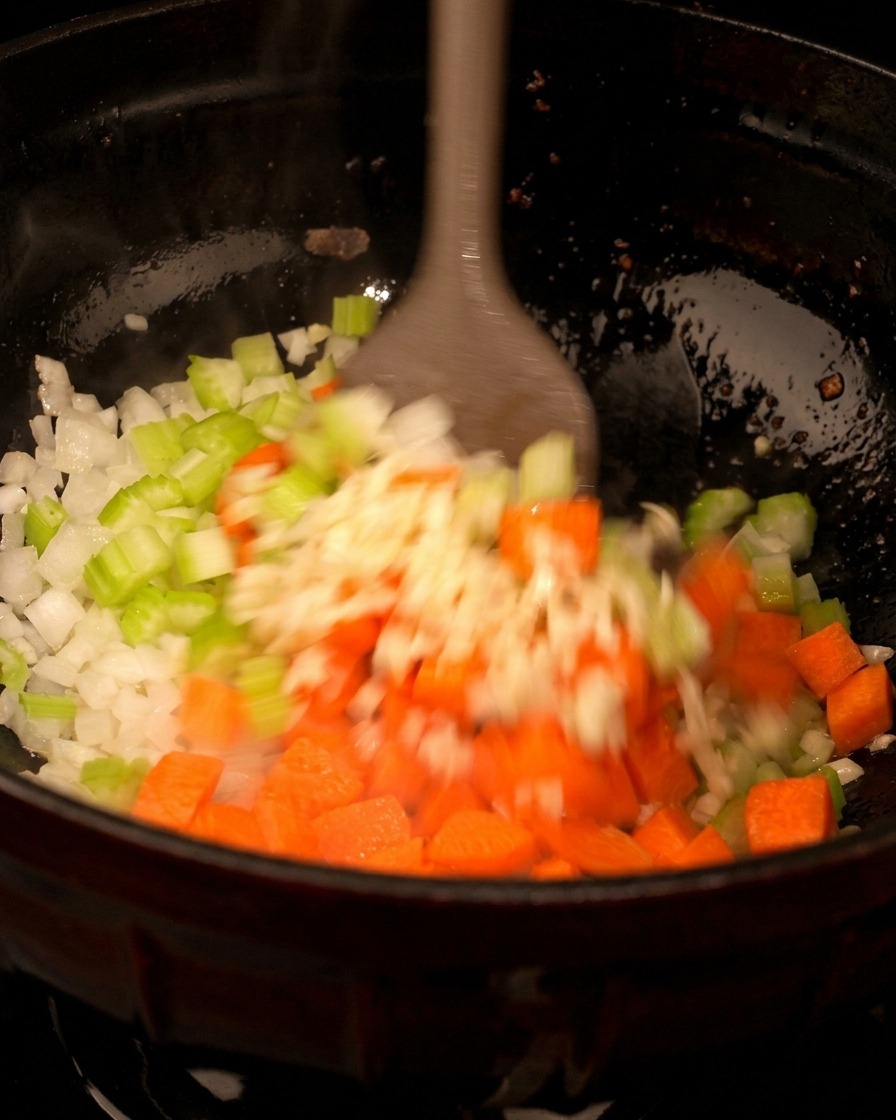
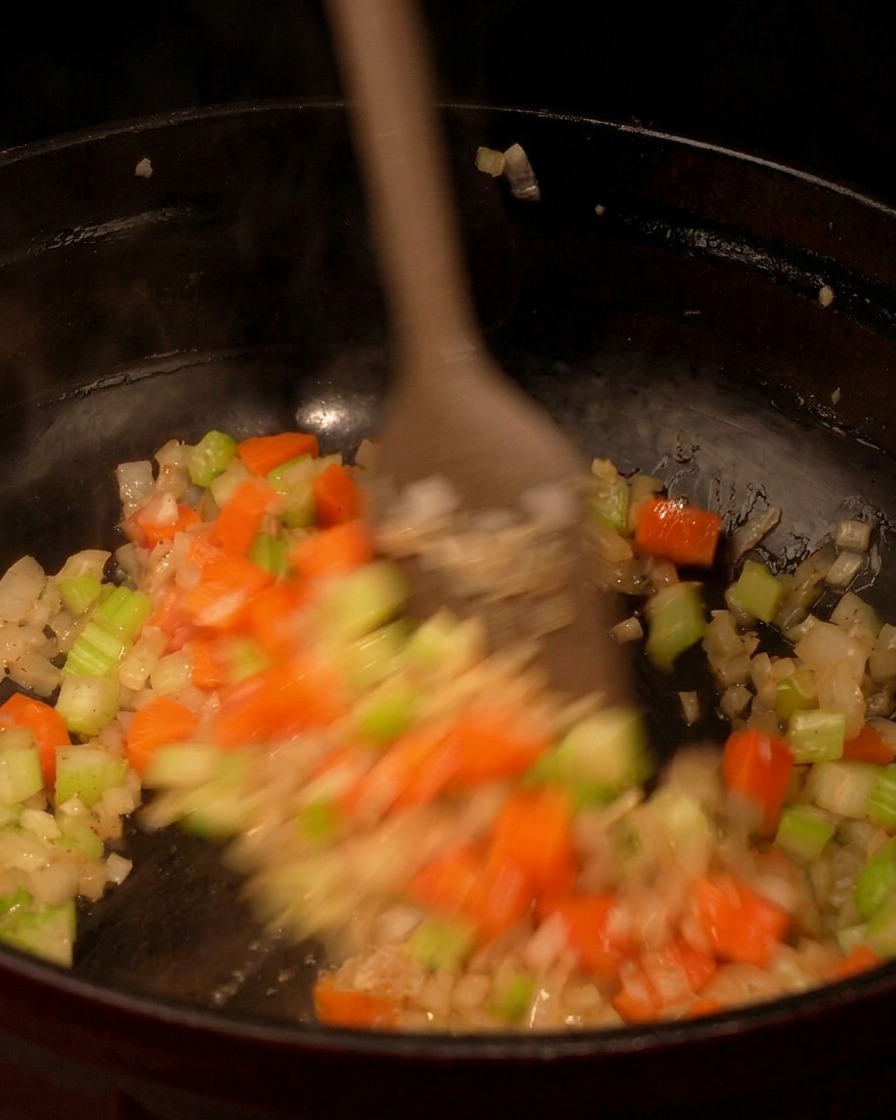
Stir-fry the mixture of carrots, onions, celery, and garlic over medium heat. Continue tossing until the vegetables soften and become deeply aromatic.
Tip: Cutting the vegetables into uniform pieces ensures they cook evenly and look cohesive in the final soup. - 5Add the potatoes
Stir the diced potatoes into the pan along with the softened aromatic vegetables, mixing them thoroughly to coat them in the flavorful fat.
Tip: Stir frequently to prevent the minced garlic from burning, which can add a bitter taste to the chowder. - 6Pour in the broth
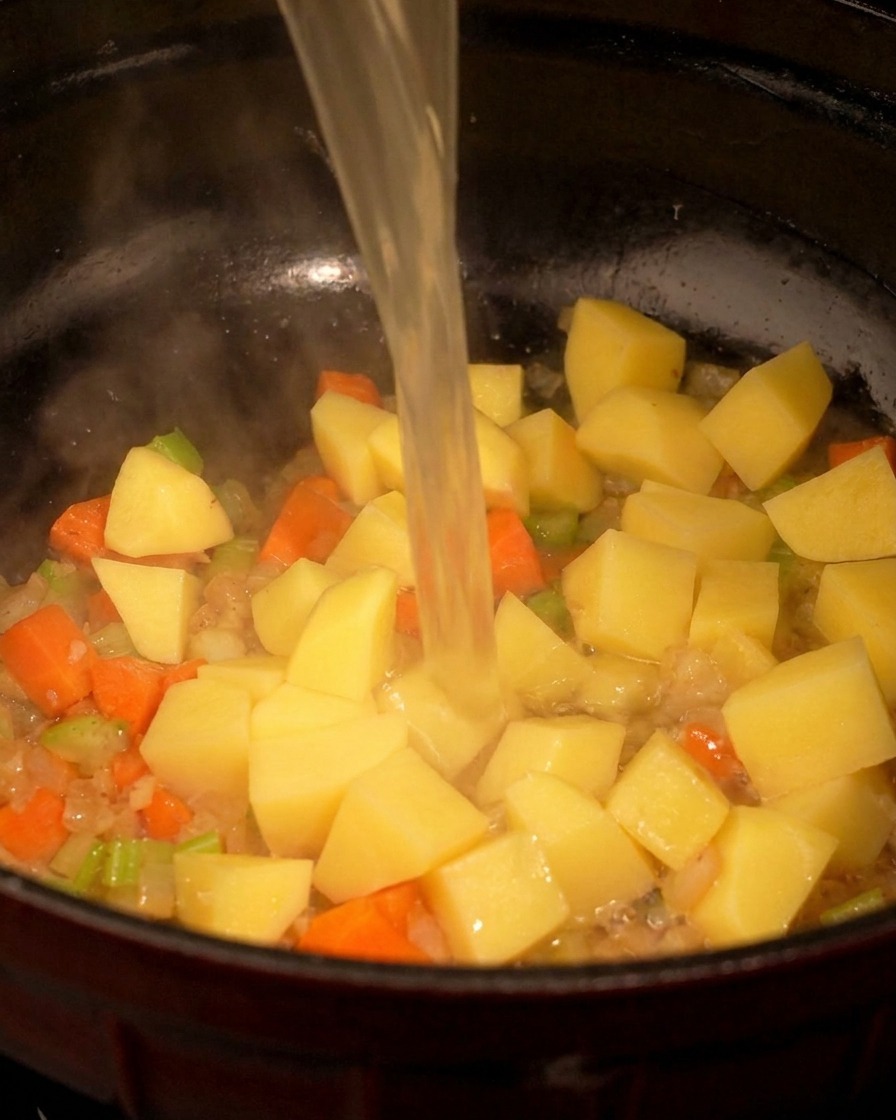
Pour enough chicken broth into the pot to completely submerge all the sautéed vegetables, creating the savory liquid foundation for the chowder.
Tip: Waxy potatoes like Yukon Golds hold their shape better in soups than starchy baking potatoes, keeping the chowder hearty. - 7Add tomato puree
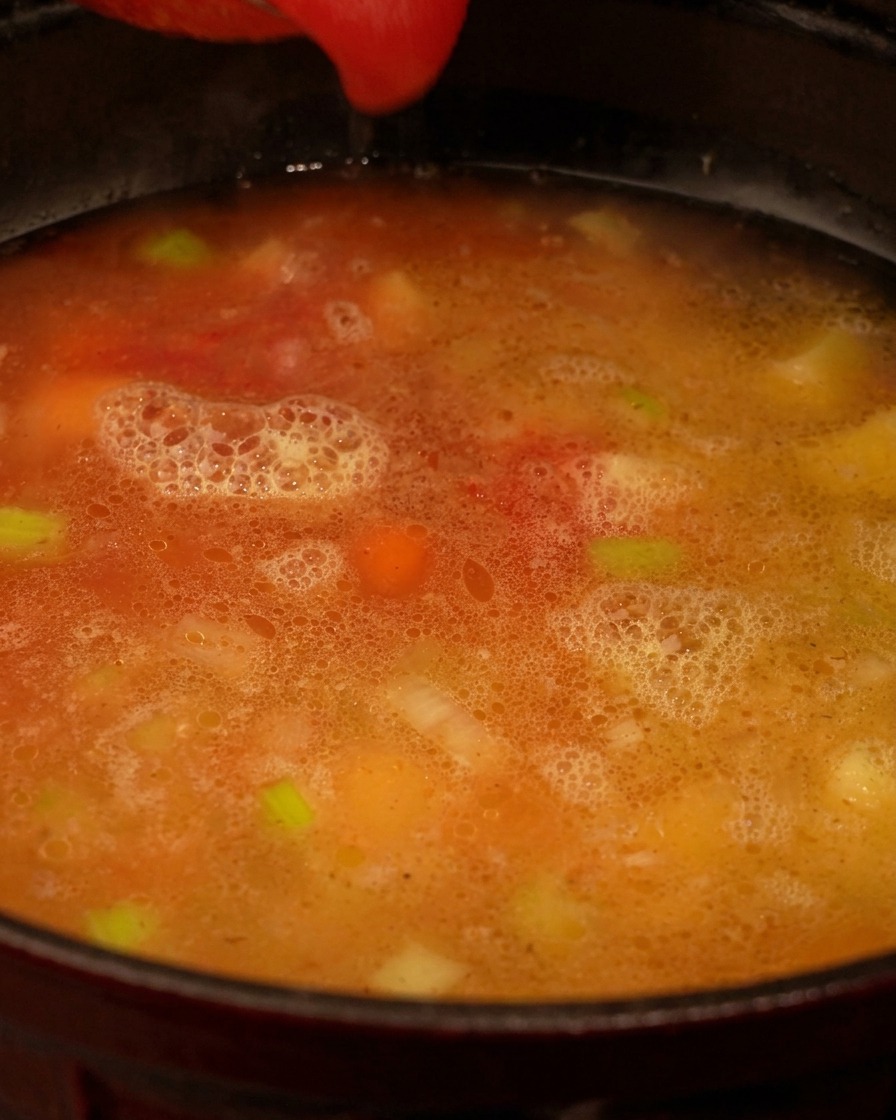
Pour the blended tomato puree into the pot with the broth and vegetables. This provides the signature red color and rich, acidic base for the Manhattan-style chowder. Stir well to combine all ingredients thoroughly.
Tip: If you prefer a chunkier soup, you can use crushed tomatoes instead of a smooth puree. - 8Stir the soup base
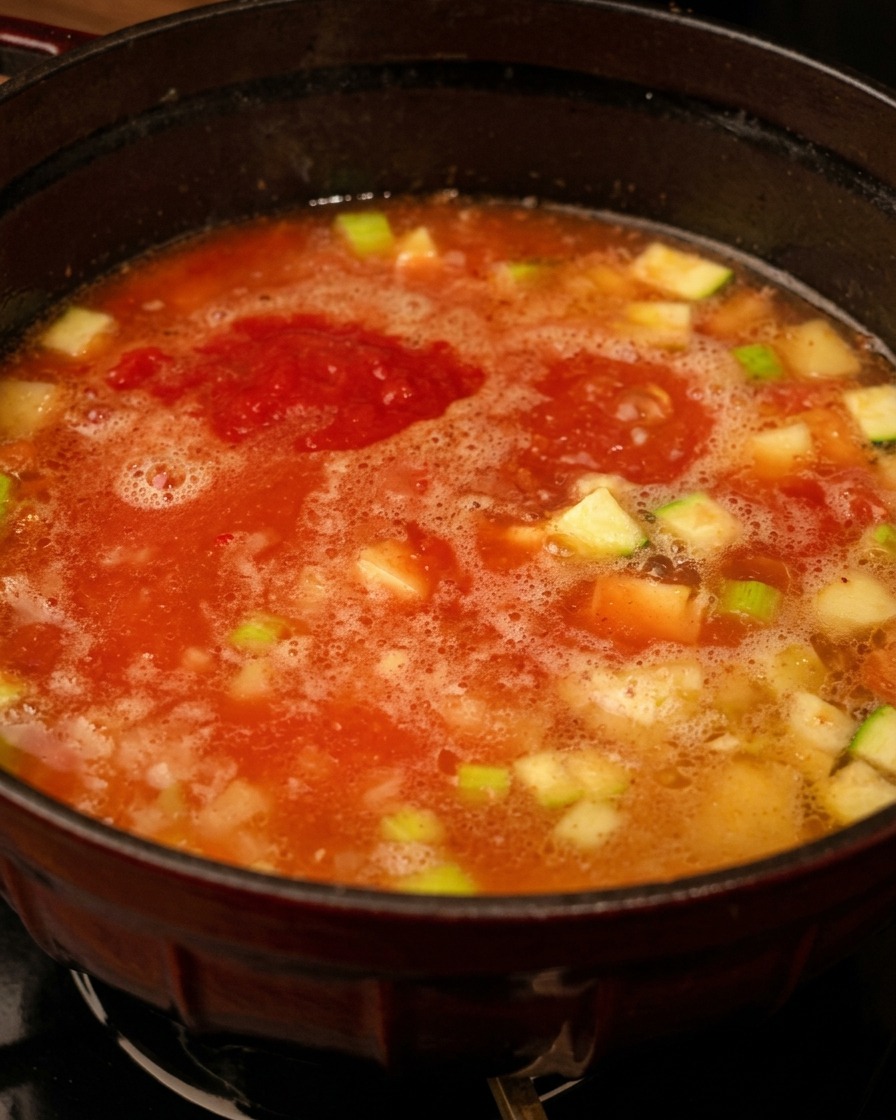
Gently stir the mixture to fully integrate the tomato puree with the chicken broth and vegetables, ensuring the broth is smooth and uniform.
Tip: Using blended tomato puree provides a smoother, more consistent broth than crushed tomatoes while still delivering robust flavor. - 9Simmer until tender
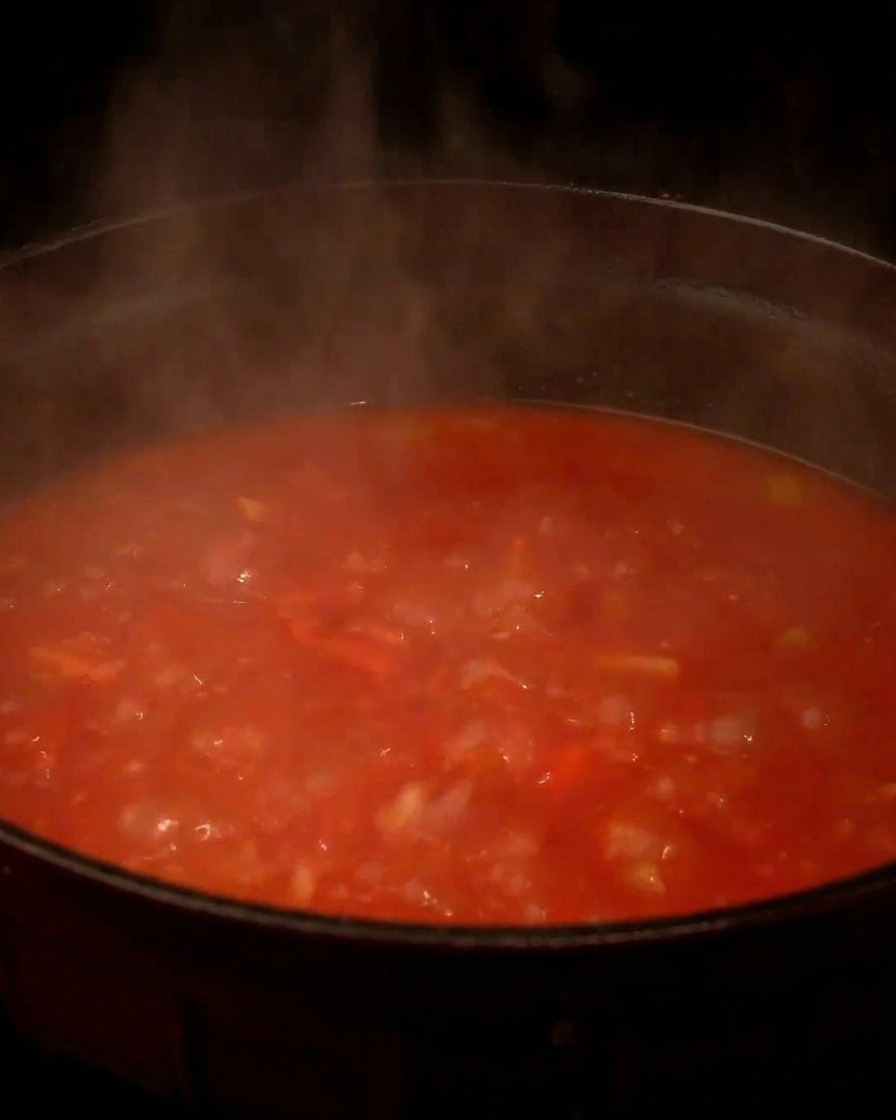
Stir the tomato-based soup well to ensure the puree is completely dissolved into the broth. Allow the soup to cook over medium-high heat until it begins to boil and produce steam. Continue simmering until the diced potatoes are completely tender.
Tip: Maintain a steady simmer rather than a rapid boil so the vegetables cook evenly without turning mushy. - 10Return the bacon
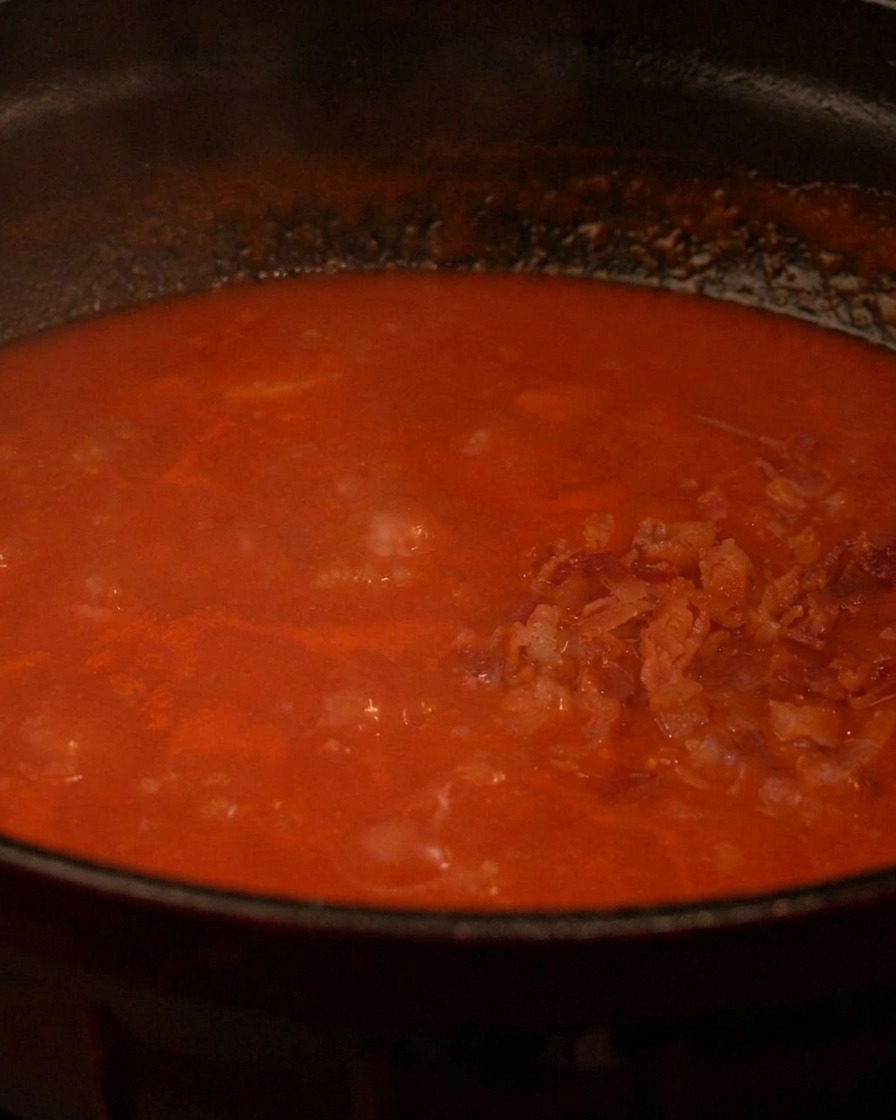
Once the potatoes are fully cooked and tender, return the previously fried, crispy bacon bits to the pot. Stir them into the bubbling soup so their smoky, savory flavor infuses directly into the tomato broth.
Tip: Adding the bacon near the end of the cooking process allows it to flavor the soup while retaining a slight crunch. - 11Season the chowder
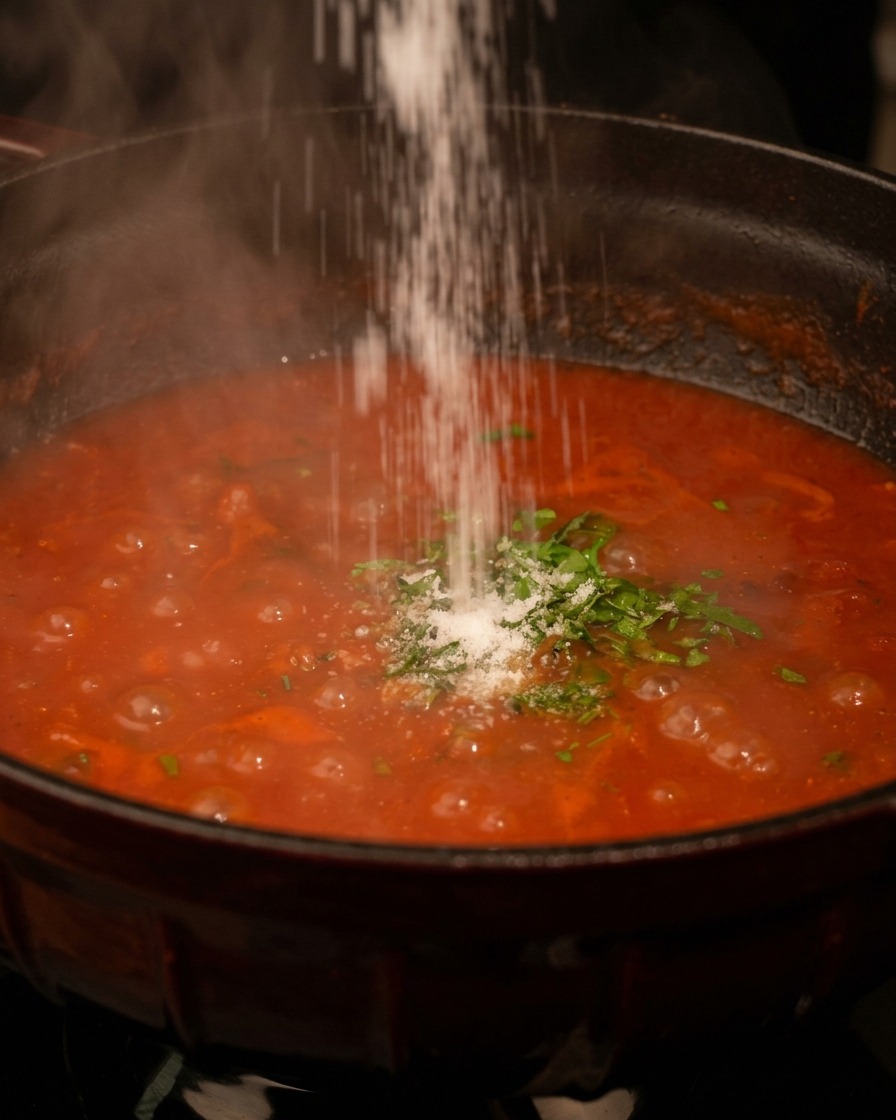
Season the simmering soup with a generous pinch of salt and cracked black pepper to taste. Give the pot a final stir to distribute the seasoning evenly throughout the rich, herbaceous tomato broth.
Tip: Taste the broth before heavily salting; the bacon and the clam juice added later will both contribute their own natural saltiness to the dish. - 12Add fresh herbs
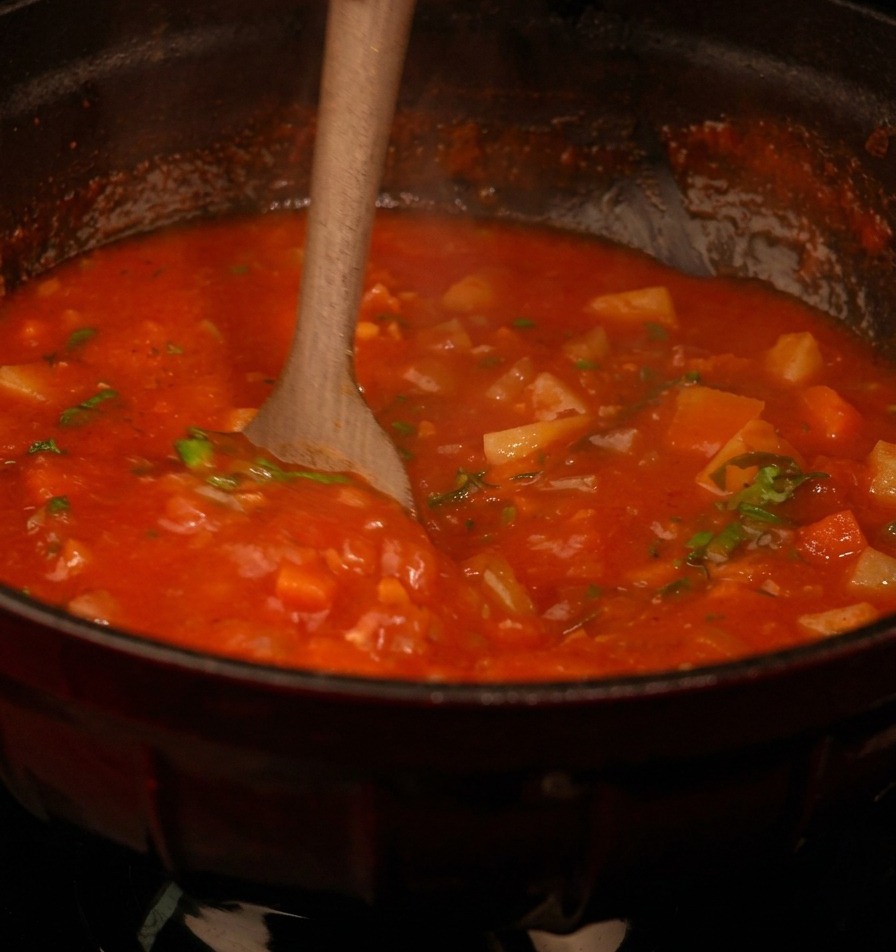
Fold the chopped parsley and thyme into the pot. Stir the mixture gently with a wooden spoon to distribute the greens throughout the red base for a fresh finish.
Tip: Adding herbs at the end of the cooking process preserves their bright flavor and color. - 13Prepare water for clams

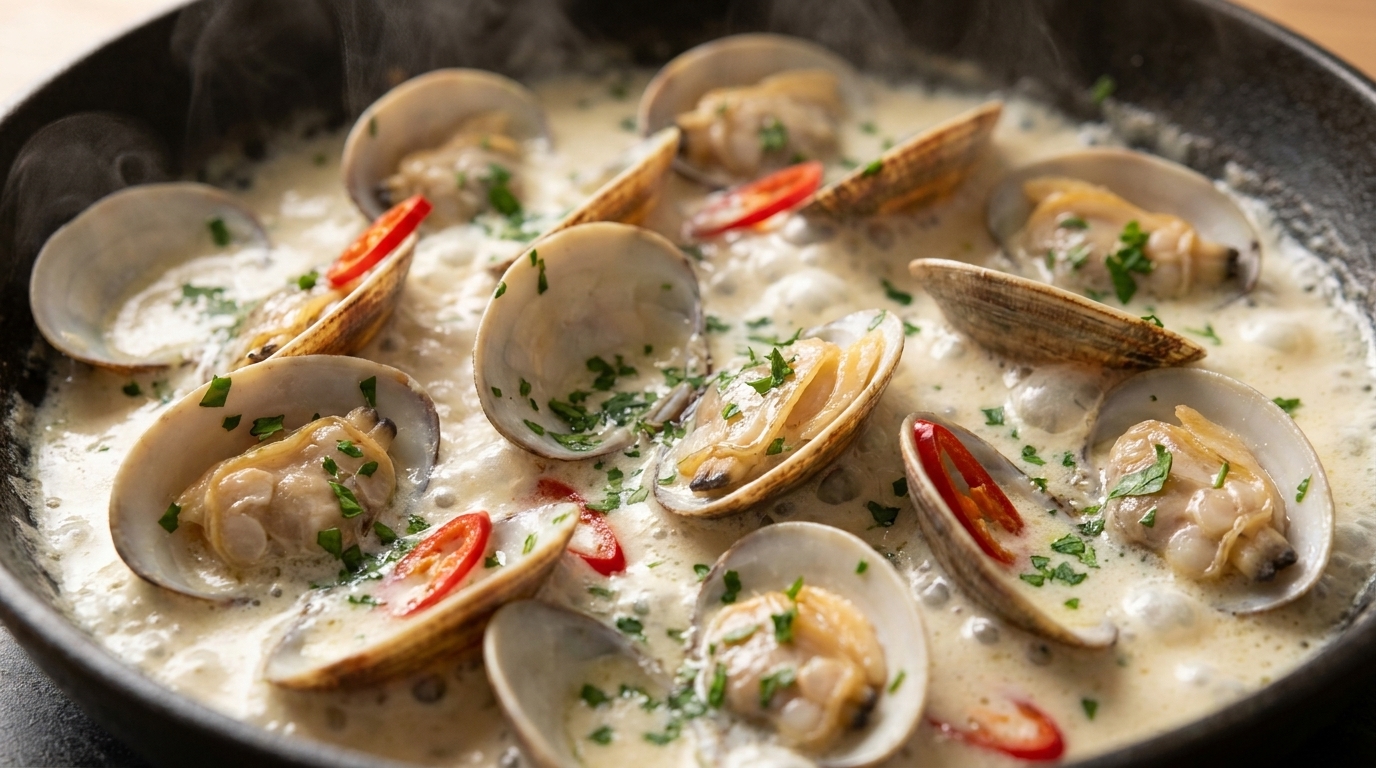
Fill a separate clear glass pot with water and place it on the stove. This water will be used to steam the fresh clams separately to ensure they are clean and perfectly cooked before being added to the main soup base.
Tip: Using a separate pot for the clams prevents any residual sand or grit from ending up in your main chowder. - 14Boil the clams
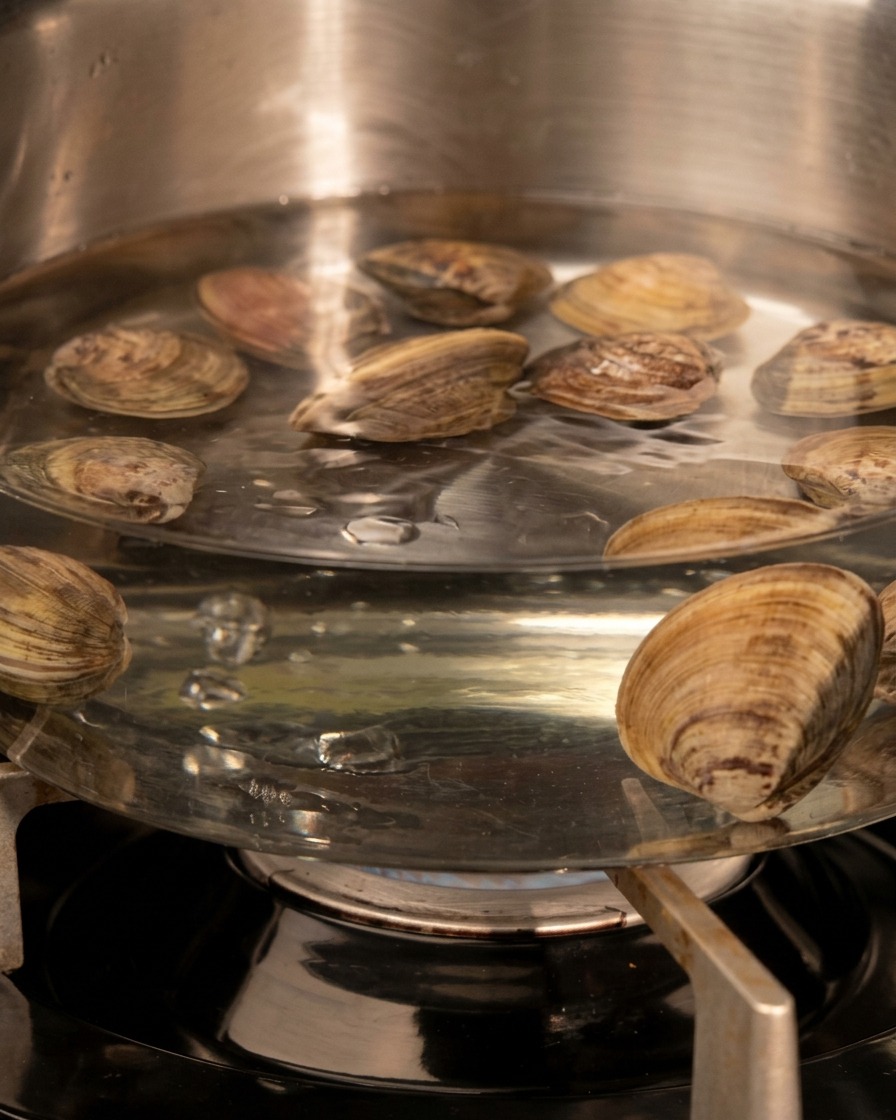
Bring the separate pot of water to a rolling boil. Carefully submerge the fresh clams in their shells into the boiling water.
Tip: Discard any clams with cracked shells before cooking, and be sure to throw away any that remain tightly closed after boiling. - 15Wait for shells to open
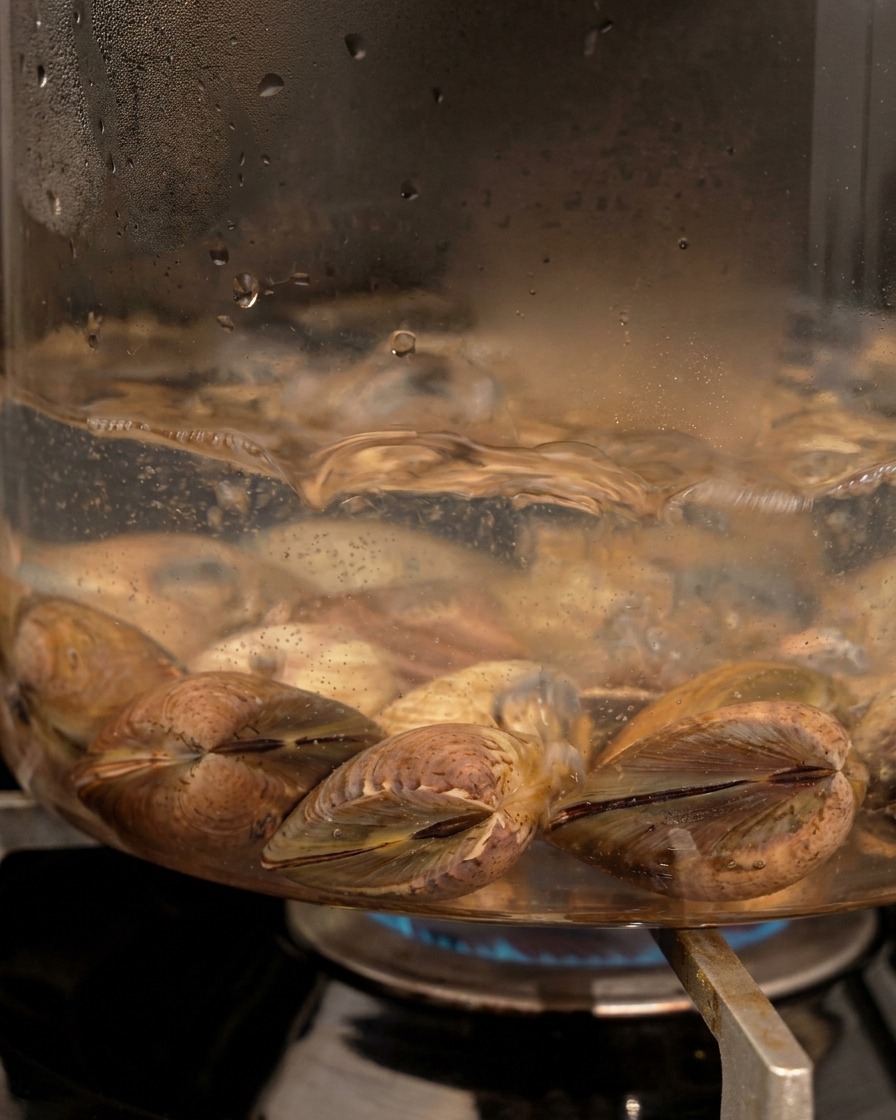
Boil the fresh clams just until their shells pop open, which indicates they are fully cooked. Keep a close eye on them, as this usually takes only a few minutes.
Tip: Keep a close eye on the clams; they cook very quickly and can become rubbery if left in boiling water for too long. - 16Combine clams and soup
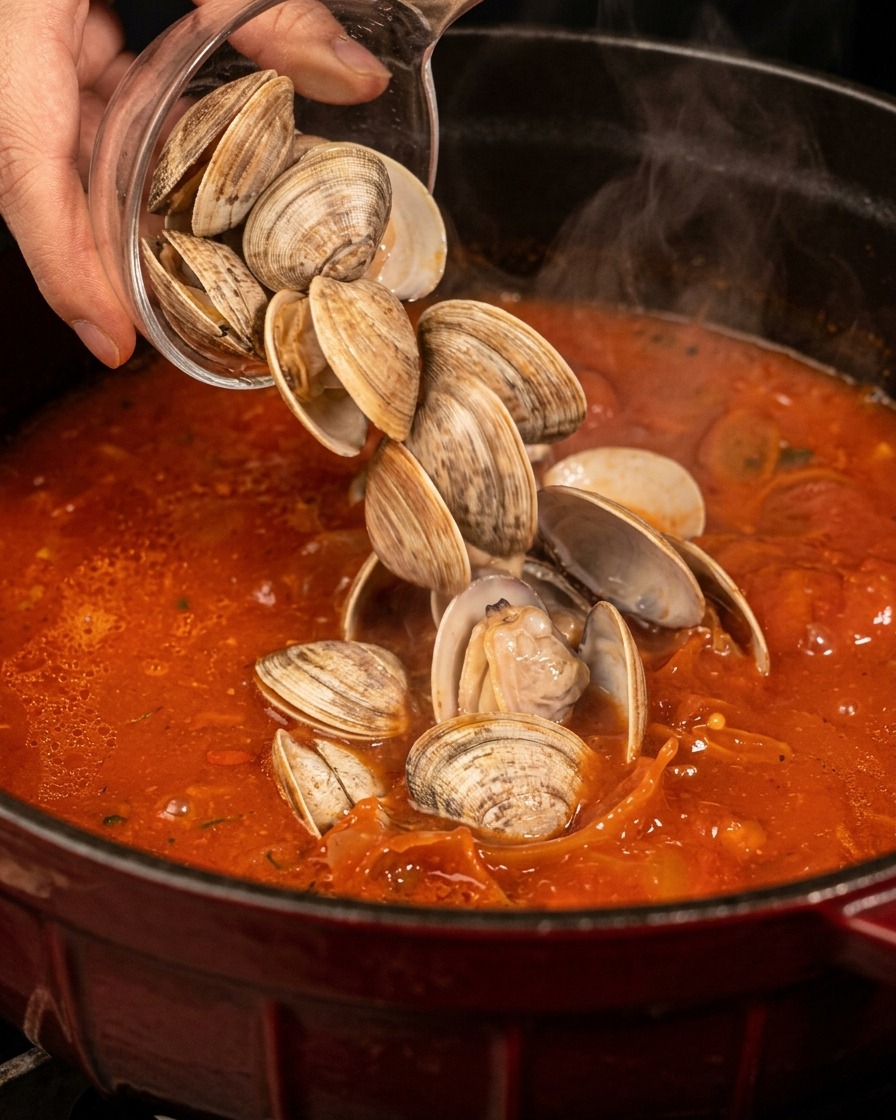
Carefully transfer the freshly cooked clams directly into the simmering tomato soup base. Stir gently to combine the clams with the hearty vegetable and bacon mixture, allowing the flavors to beautifully meld together.
Tip: Discard any clams that remained completely closed after boiling, as they are not safe to consume.