Classic Boston Clam Chowder
Bread Bowl
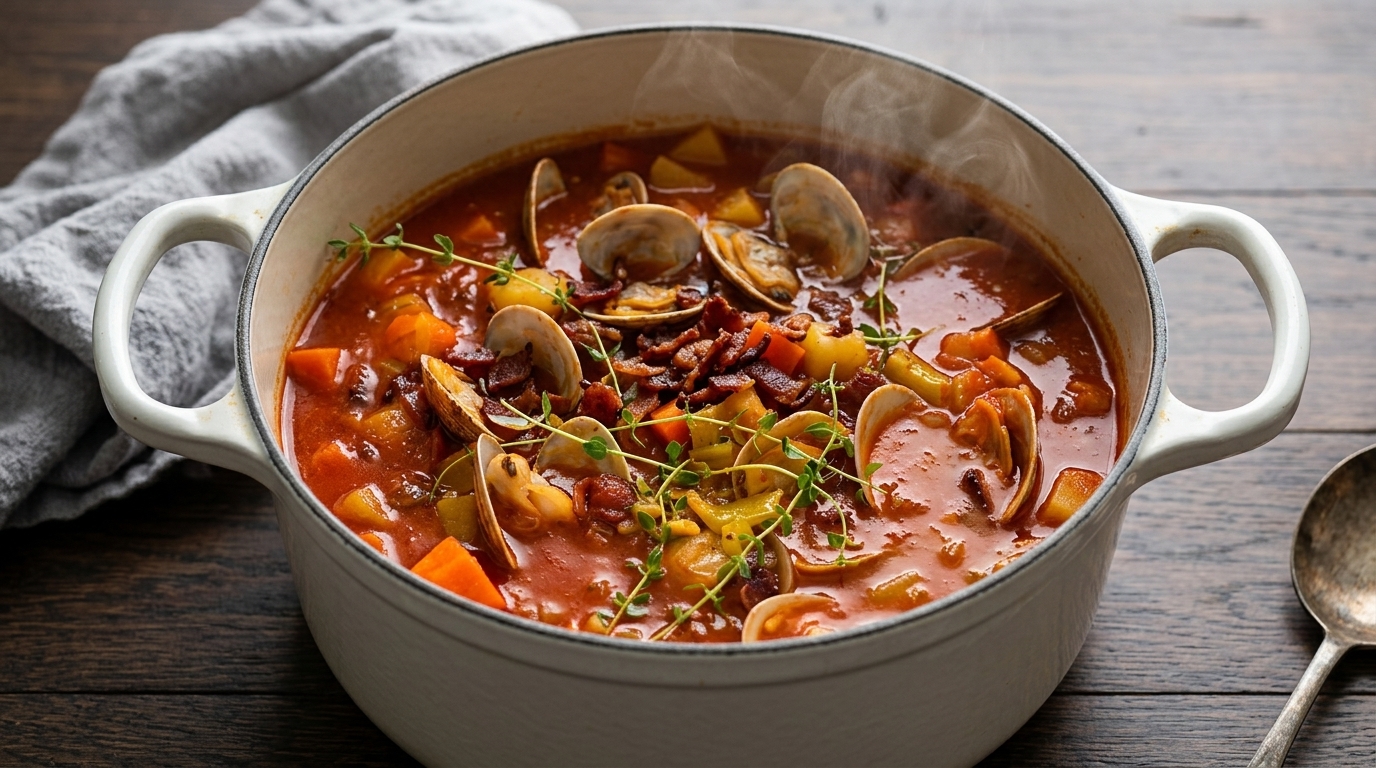
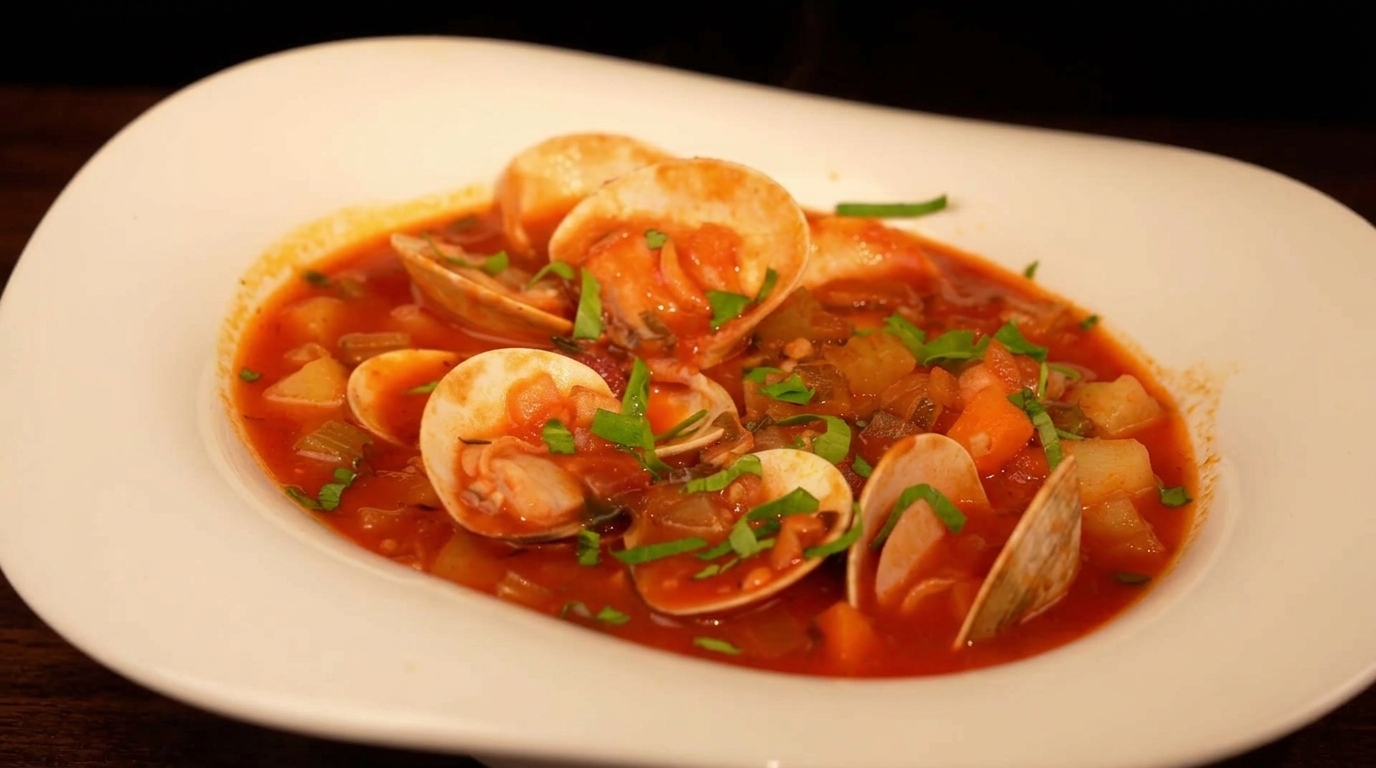
Experience ultimate comfort with this classic Boston Clam Chowder. Rich, velvety, and loaded with tender clams and smoky bacon, served in a rustic bread bowl.
Boston Clam Chowder has earned its reputation over centuries as a definitive New England comfort food. Unlike the clear or tomato-based chowders of other regions, this version relies on a thick, creamy white sauce to suspend its treasures of ocean-briny clams, earthy potatoes, and aromatic vegetables. Serving it in a hollowed-out bread bowl not only makes for a stunning presentation but provides the perfect vessel for soaking up every last drop of the savory, bacon-infused broth.
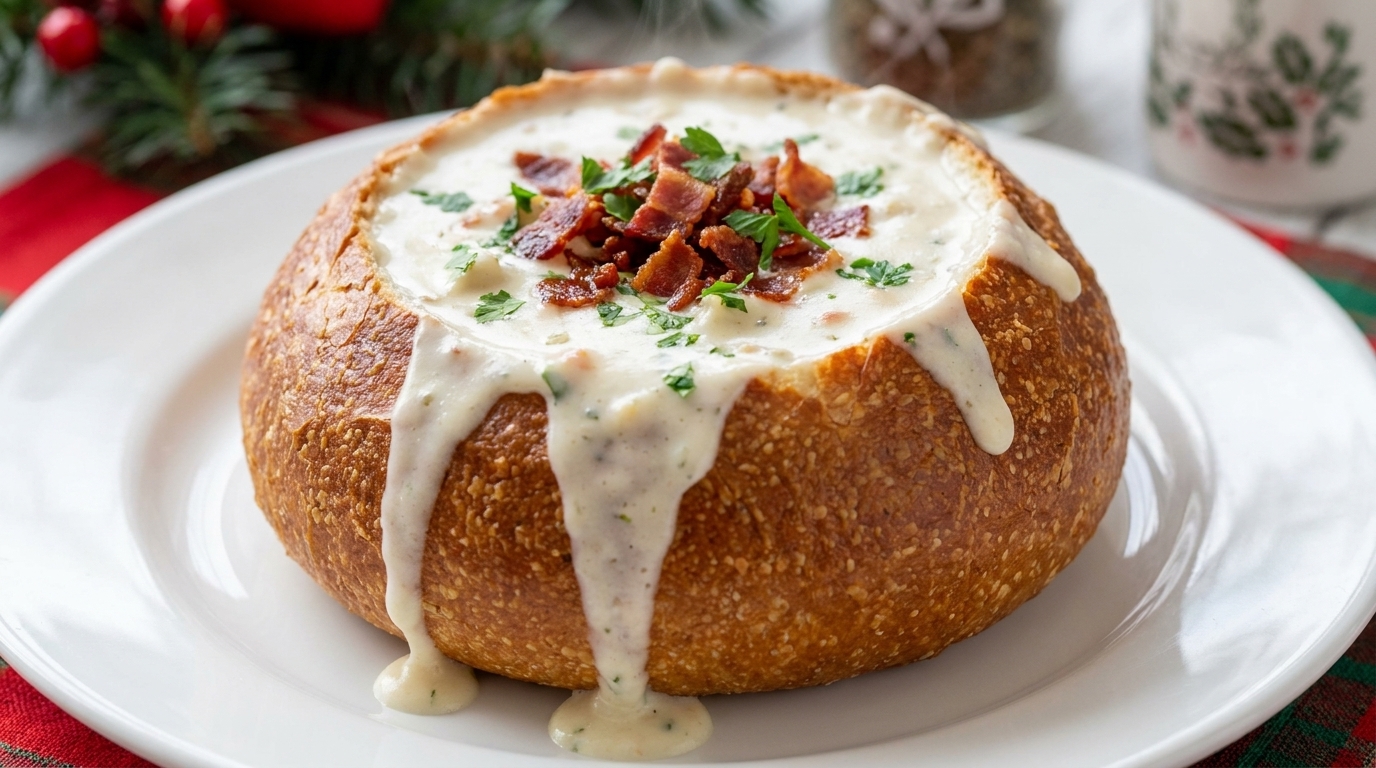
Ingredients
- 300 g shelled clam meat
- 4 slices bacon
- 12 white onion
- 2 stalks celery
- 1 large potato
- 4 tbsp butter
- 4 tbsp all-purpose flour
- 2 cups milk and heavy cream mixture
- 2 cups water or clam juice
- 1 large round crusty bread loaf
- to taste salt and freshly ground black pepper
- to garnish fresh parsley
Instructions
- 1Chop the bacon
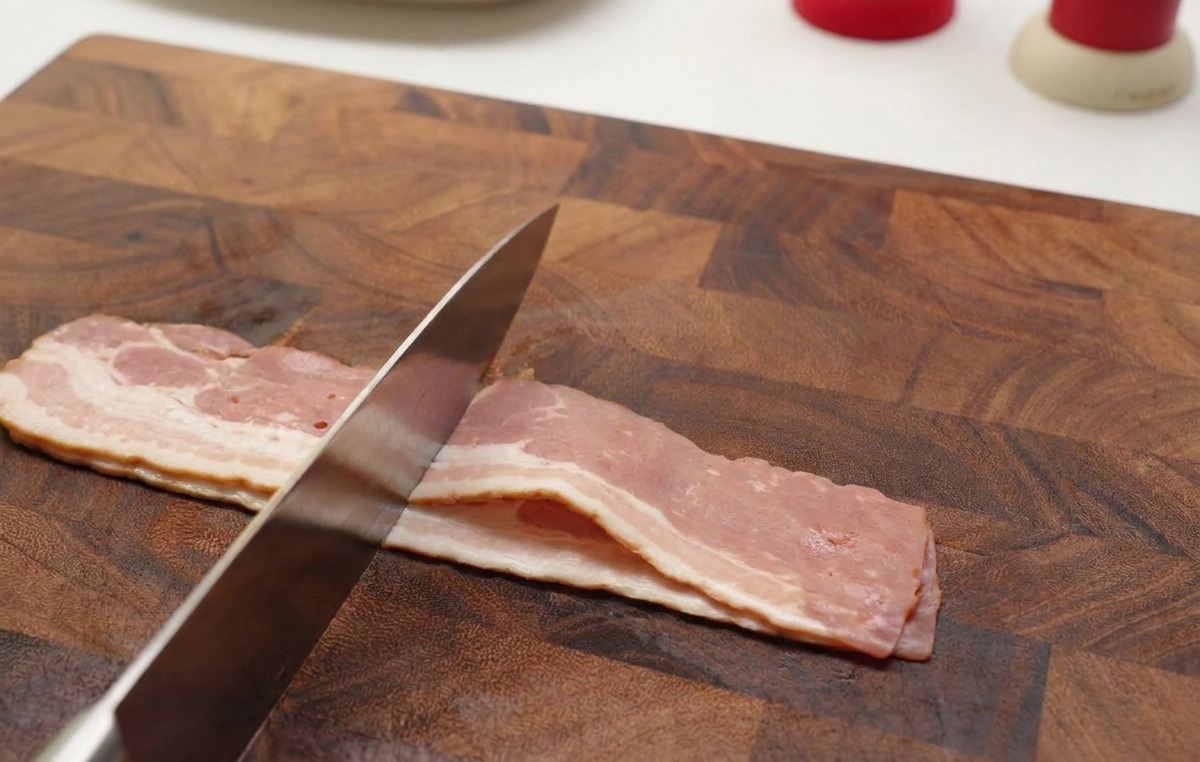
Place the bacon strips on a wooden cutting board and slice them into small, even pieces. Cooking chopped bacon will help render the fat perfectly and ensure every bite of your chowder has that savory, crispy texture.
Tip: To make slicing easier, pop the bacon into the freezer for about 10 to 15 minutes before cutting to firm it up. - 2Dice the celery
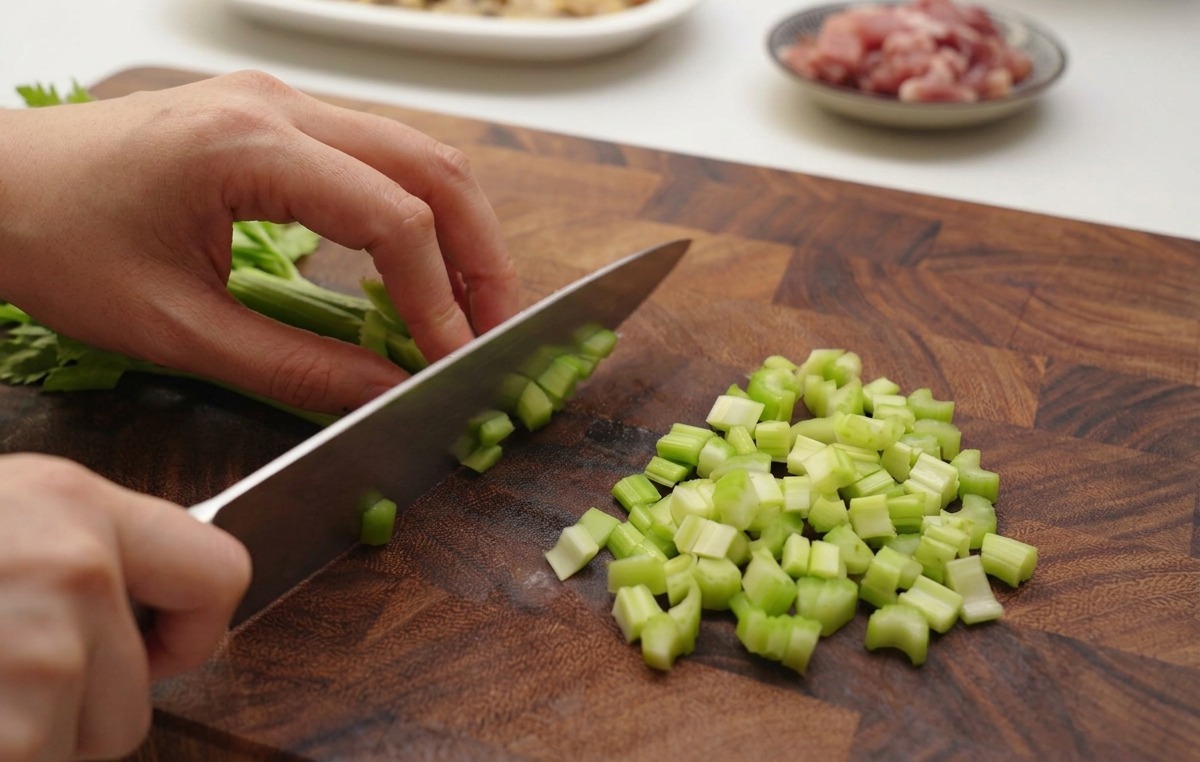
Take the fresh celery stalks and dice them into small, uniform chunks. Along with the onions, celery provides the essential aromatic base that builds the foundational flavor profile of a classic clam chowder.
Tip: Try to chop the celery to roughly the same size as your potatoes and onions so everything cooks evenly. - 3Dice the Onion
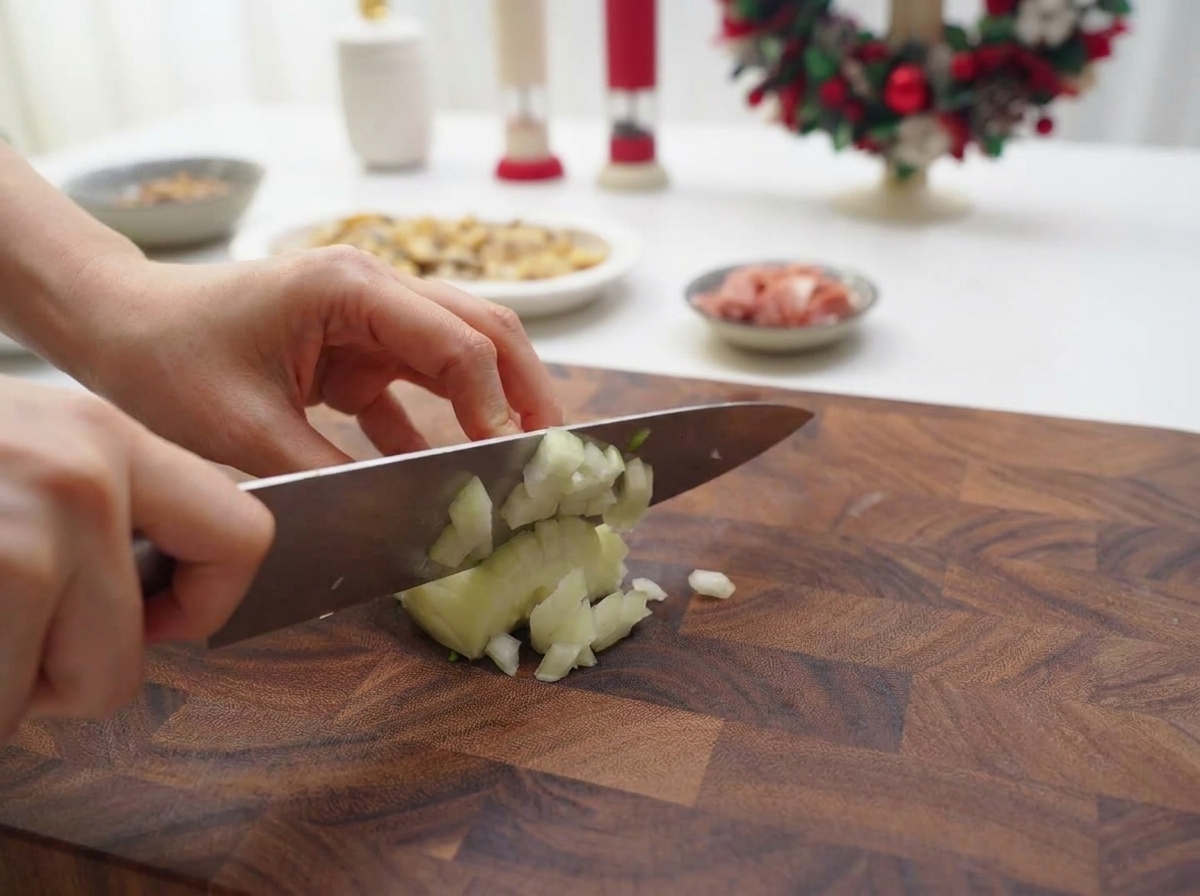
Begin by peeling and halving the white onion, then carefully dice it into small, even pieces on a wooden cutting board. Uniform dicing ensures the onion cooks evenly and melts seamlessly into the chowder base.
Tip: A sharp knife is crucial for clean cuts, which minimizes bruising the onion and reduces tears while chopping. - 4Melt the butter
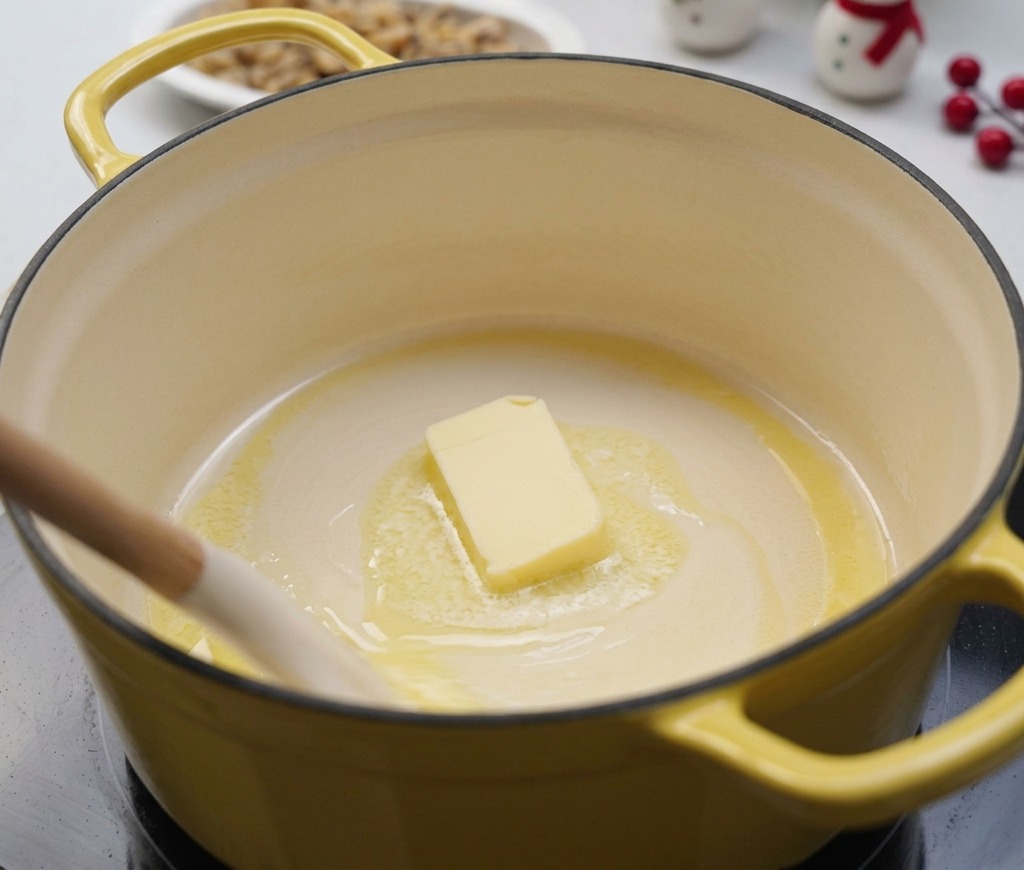
Place a yellow pot or Dutch oven on the stove over low heat. Add a block of butter and allow it to melt completely. This melted butter is the essential fat base for making your roux, which will thicken the chowder.
Tip: Keep the heat low to ensure the butter simply melts without browning, which would alter the white color of your chowder base. - 5Create the Roux Base
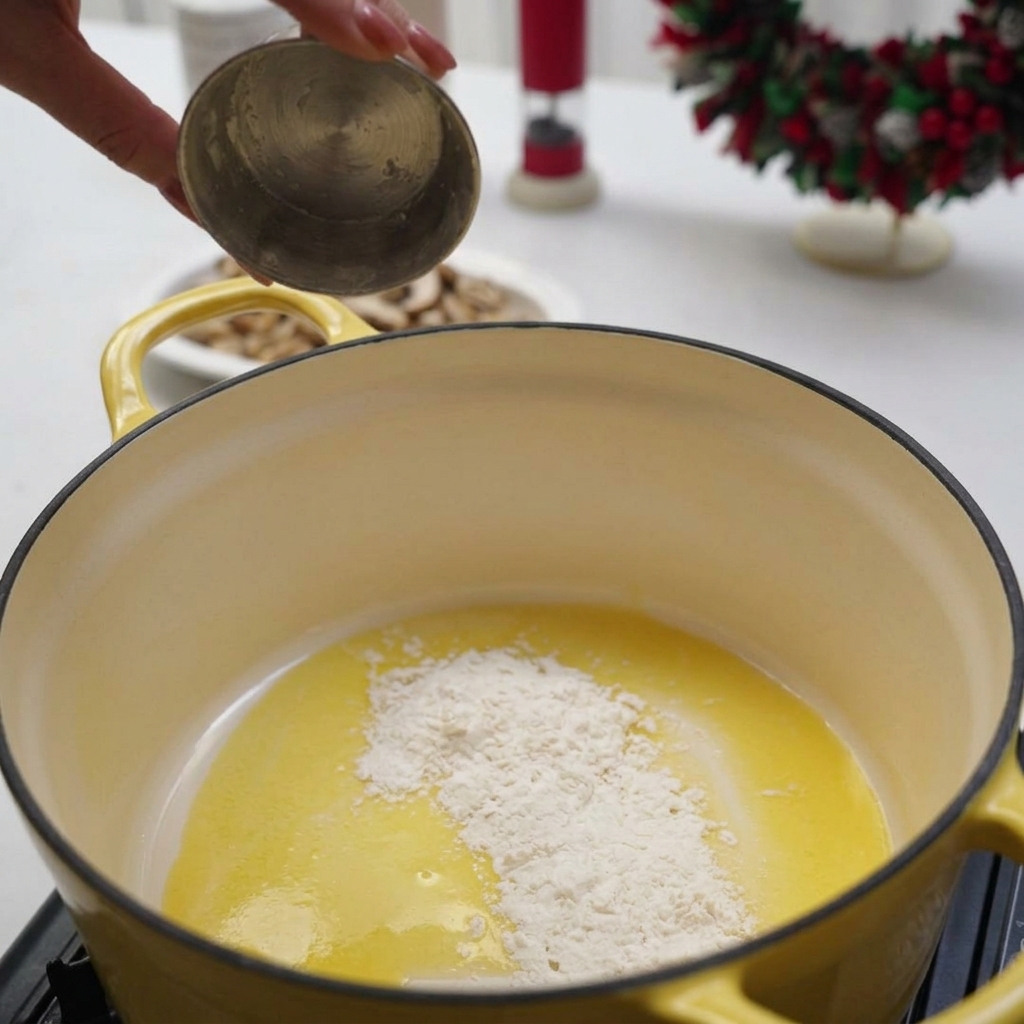
In a pot over low heat, melt the butter completely. Once melted, pour in the flour and stir continuously to form a smooth paste, cooking it briefly to remove the raw flour taste. This roux will act as the primary thickener for your clam chowder.
Tip: Keep the heat low to prevent the butter from browning, which would alter the desired pale color of your white sauce. - 6Add the Dairy
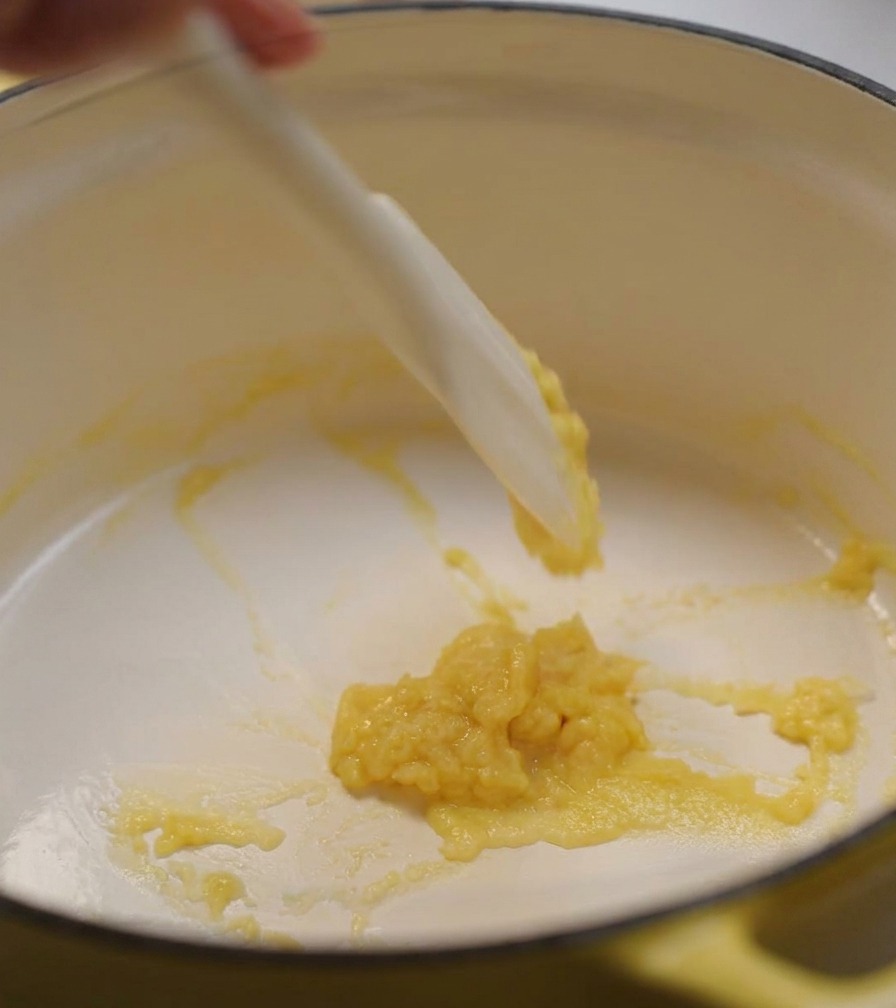
Gradually pour the milk and heavy cream into the roux while stirring constantly. Adding the liquid in small batches and mixing thoroughly ensures your white sauce becomes perfectly smooth and lump-free.
Tip: Warming the milk slightly before pouring it in helps it incorporate faster and prevents the butter from clumping. - 7Fry the Bacon
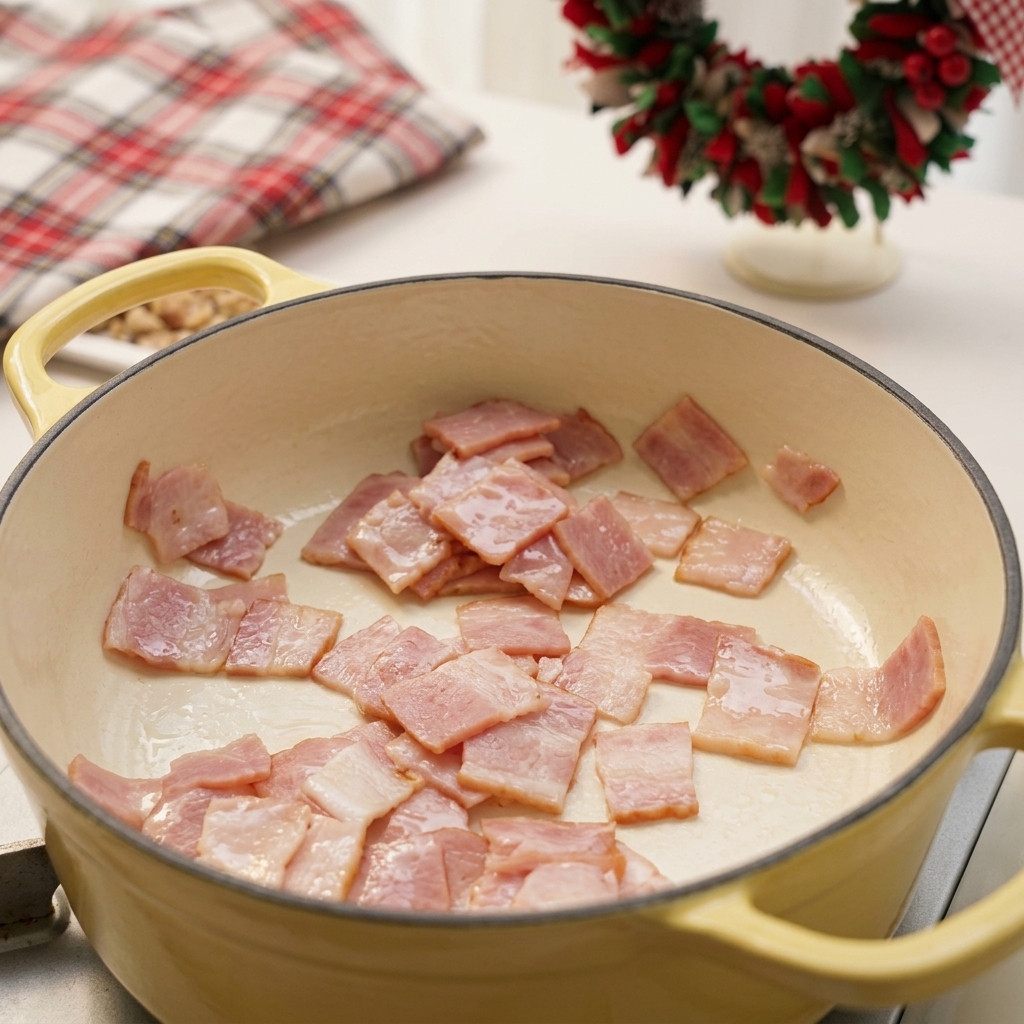
Place the chopped bacon into a heated pot. Fry the bacon pieces over medium heat until they render their fat and become beautifully browned and crispy. The rendered bacon fat will provide a rich, savory, and smoky foundation for the soup base.
Tip: Start frying the bacon in a cold or gently warmed pot to allow the fat to render slowly and evenly without burning the meat. - 8Reserve Bacon for Garnish
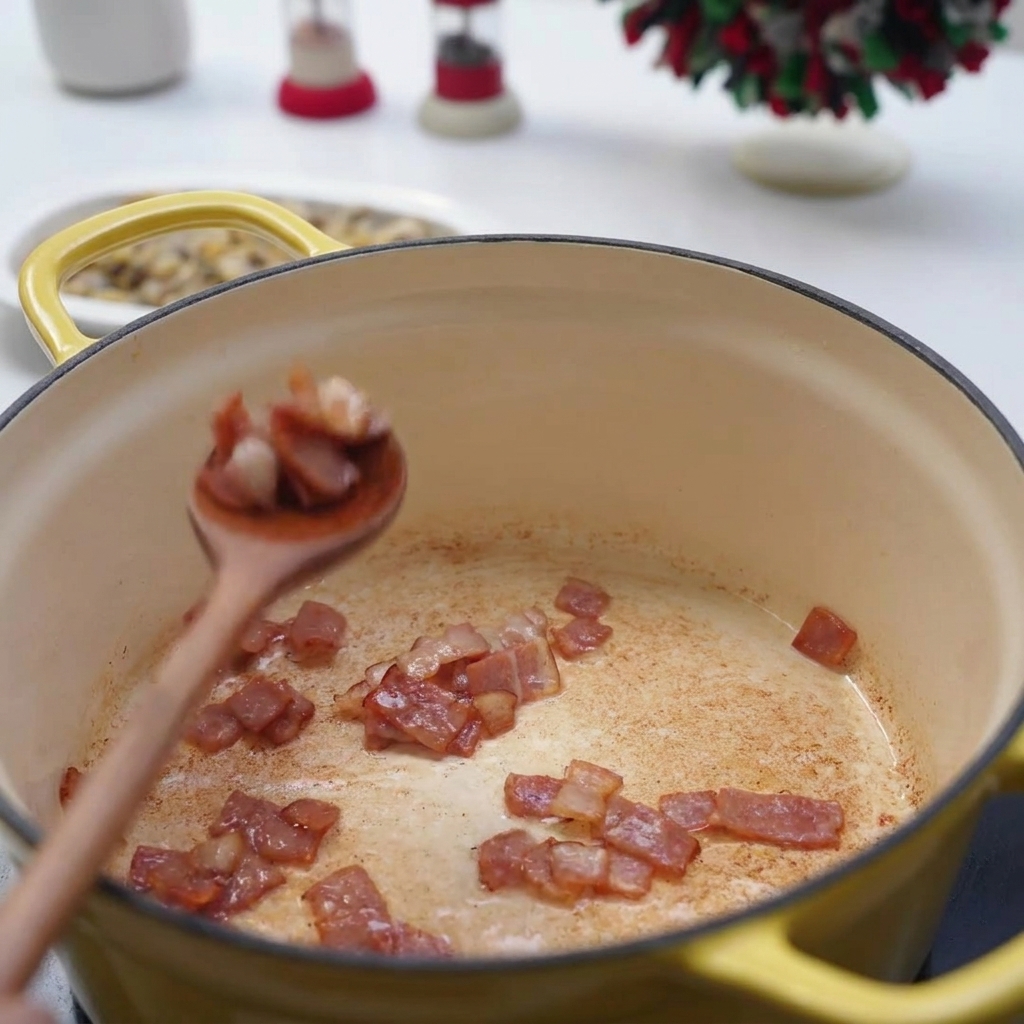
Once the bacon has crisped up, use a wooden spoon or slotted skimmer to carefully remove about half of the cooked bacon pieces from the pot. Set these crispy pieces aside to use later as a crunchy, savory garnish for the finished chowder.
Tip: Leave the remaining half of the bacon and all the rendered fat in the pot to sauté the vegetables. - 9Sauté the Vegetables
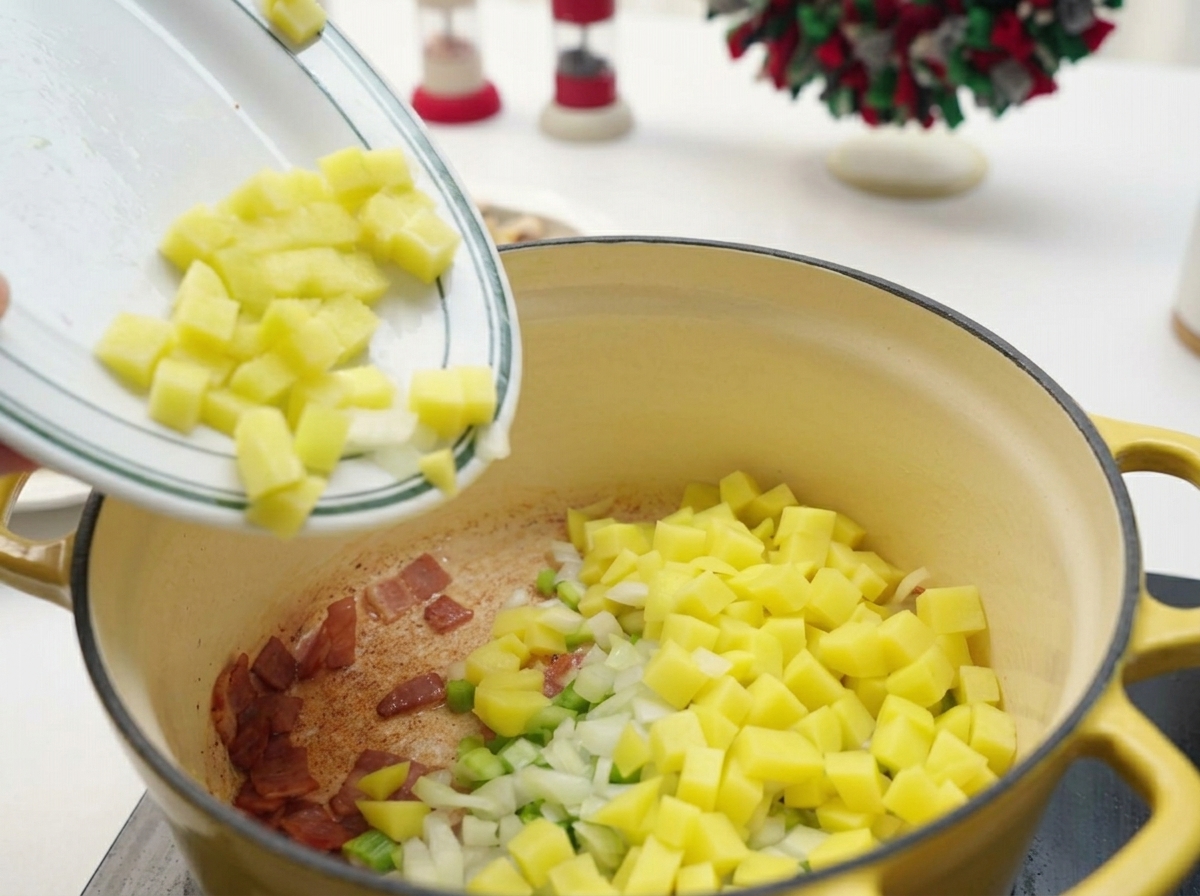
Pour the freshly diced potatoes, celery, and onions into the pot with the remaining bacon and rendered fat. Stir-fry the vegetable mixture over medium heat until the onions soften and become deeply fragrant, absorbing the rich bacon flavor.
Tip: Cutting the vegetables into uniform pieces ensures they all cook at the exact same rate and fit perfectly on your soup spoon. - 10Add Water and Simmer
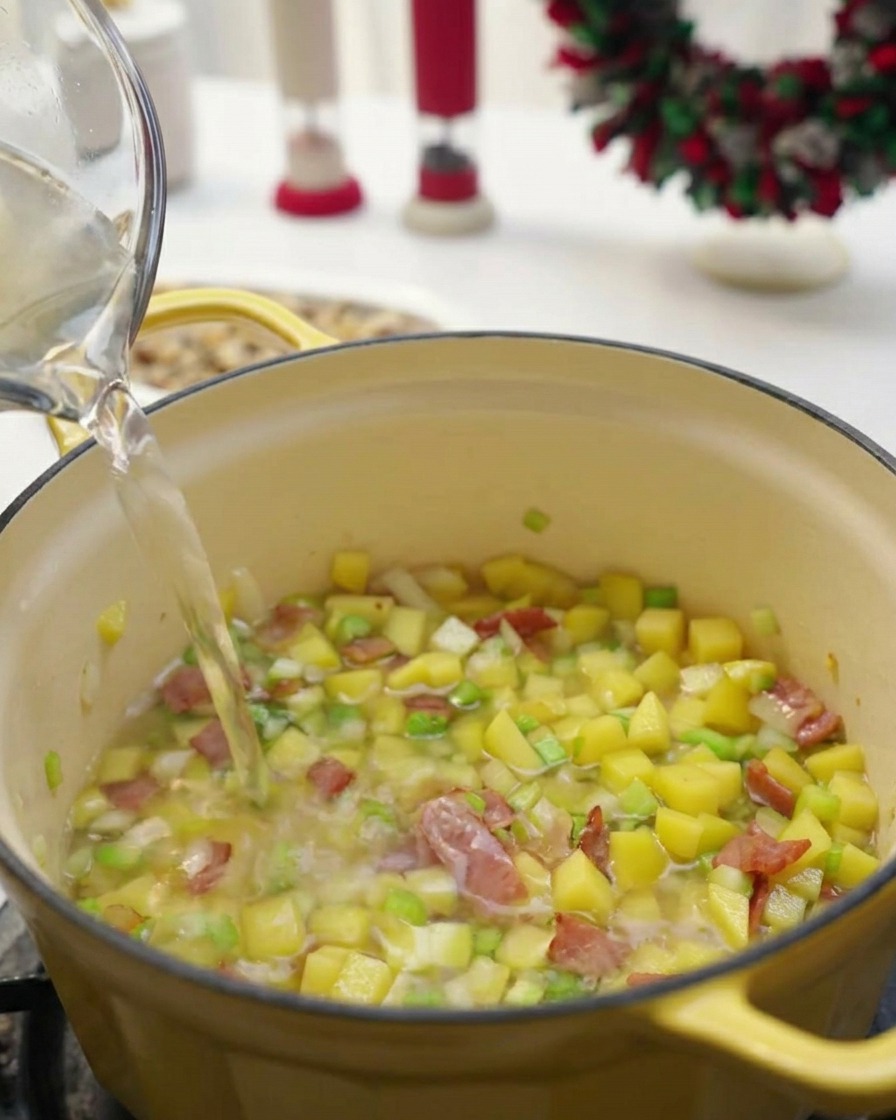
Pour enough water into the pot to completely submerge the sautéed vegetables and bacon. Season the mixture with a pinch of salt and black pepper to taste. Cover the pot and let the ingredients simmer gently over low heat for about 10 minutes until the potatoes are tender.
Tip: If you prefer an even deeper seafood flavor, you can substitute the water with bottled clam juice or a light seafood stock. - 11Season the soup base
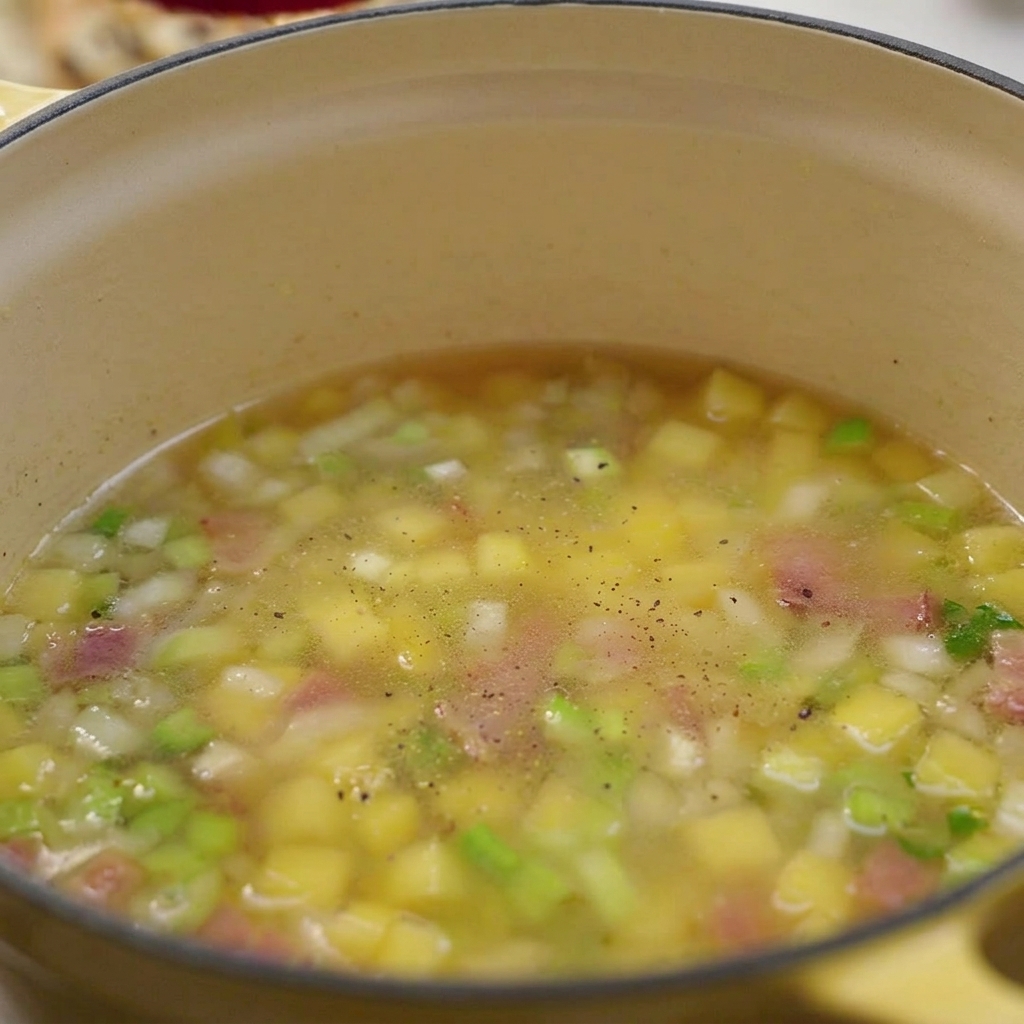
Once the vegetables and bacon have simmered for about 10 minutes and the broth is flavorful, season the mixture with freshly ground black pepper. Give it a gentle stir to ensure the seasoning is evenly distributed throughout the simmering pot.
Tip: Freshly ground black pepper provides a much more robust and aromatic flavor than pre-ground pepper. - 12Prepare the bread bowl
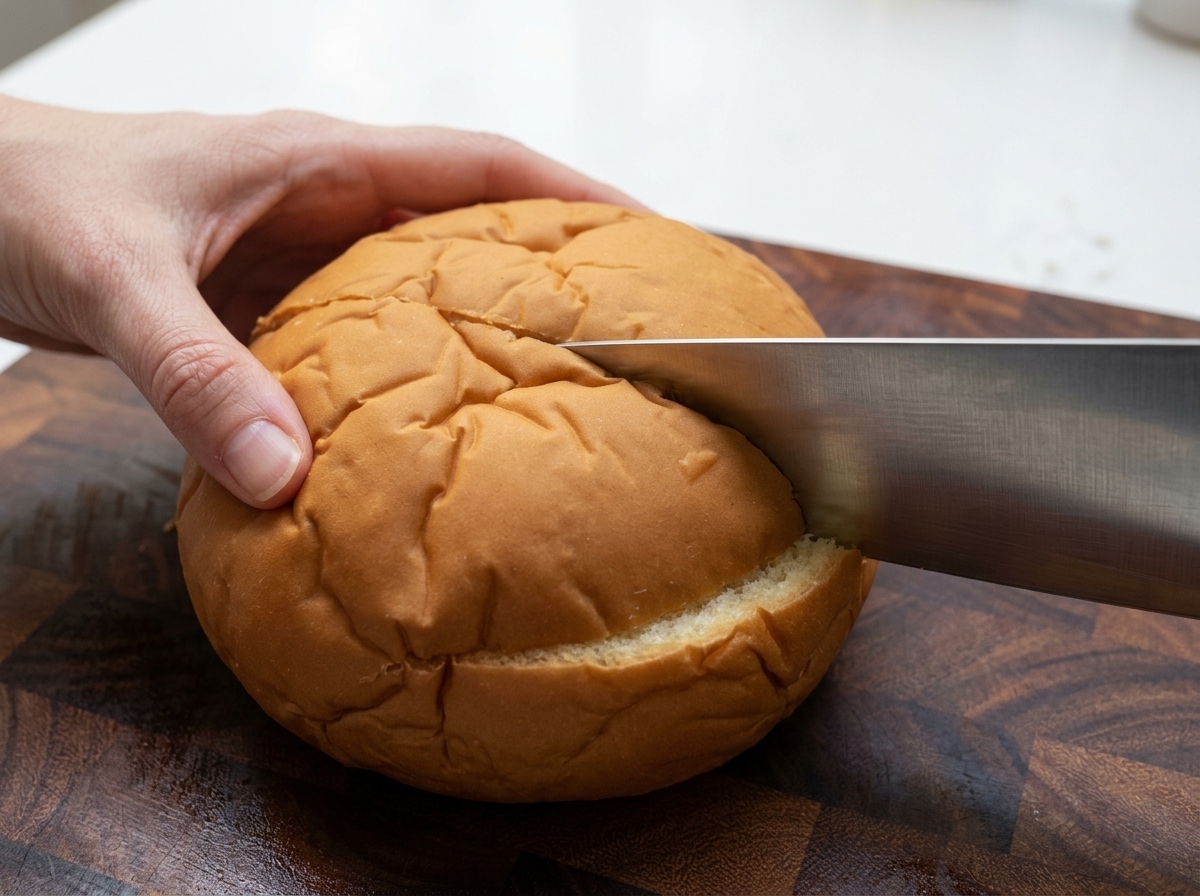
While the chowder simmers, prepare the bread bowl for serving. Use a knife to carefully slice off the top of a round loaf of bread. Hollow out the soft interior, making sure to leave about a 1-centimeter thick wall around the edges so the bread can safely hold the hot soup without leaking.
Tip: Dont throw away the hollowed-out bread! Seal it in an airtight container to save for another recipe, or toast it later to make croutons. - 13Hollow out the bread bowl
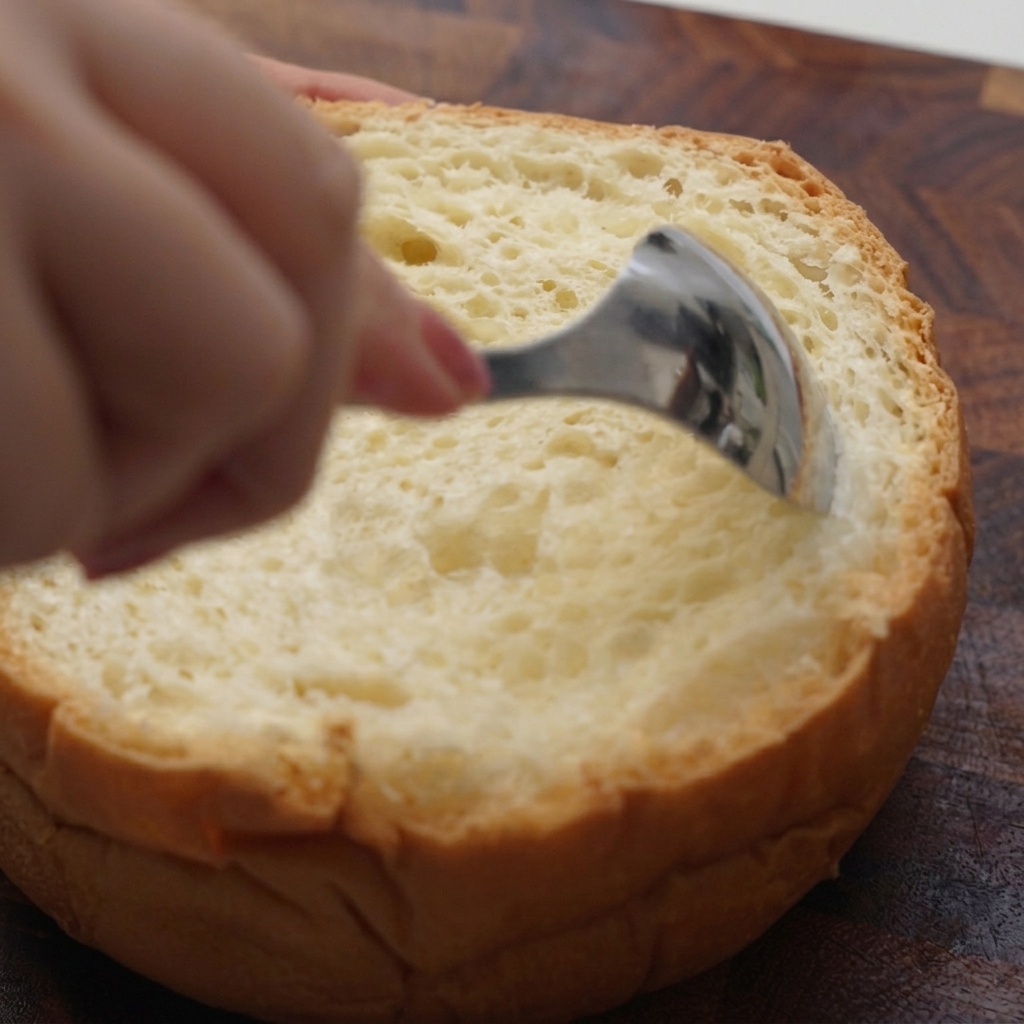
Using a metal spoon, carefully hollow out the inside of the bread loaf. Leave an edge that is about 1 centimeter thick to ensure the bread bowl is sturdy enough to hold the hot chowder without leaking.
Tip: Dont throw away the removed bread pieces! You can toast them to make croutons or save them for another recipe. - 14Add the clam meat
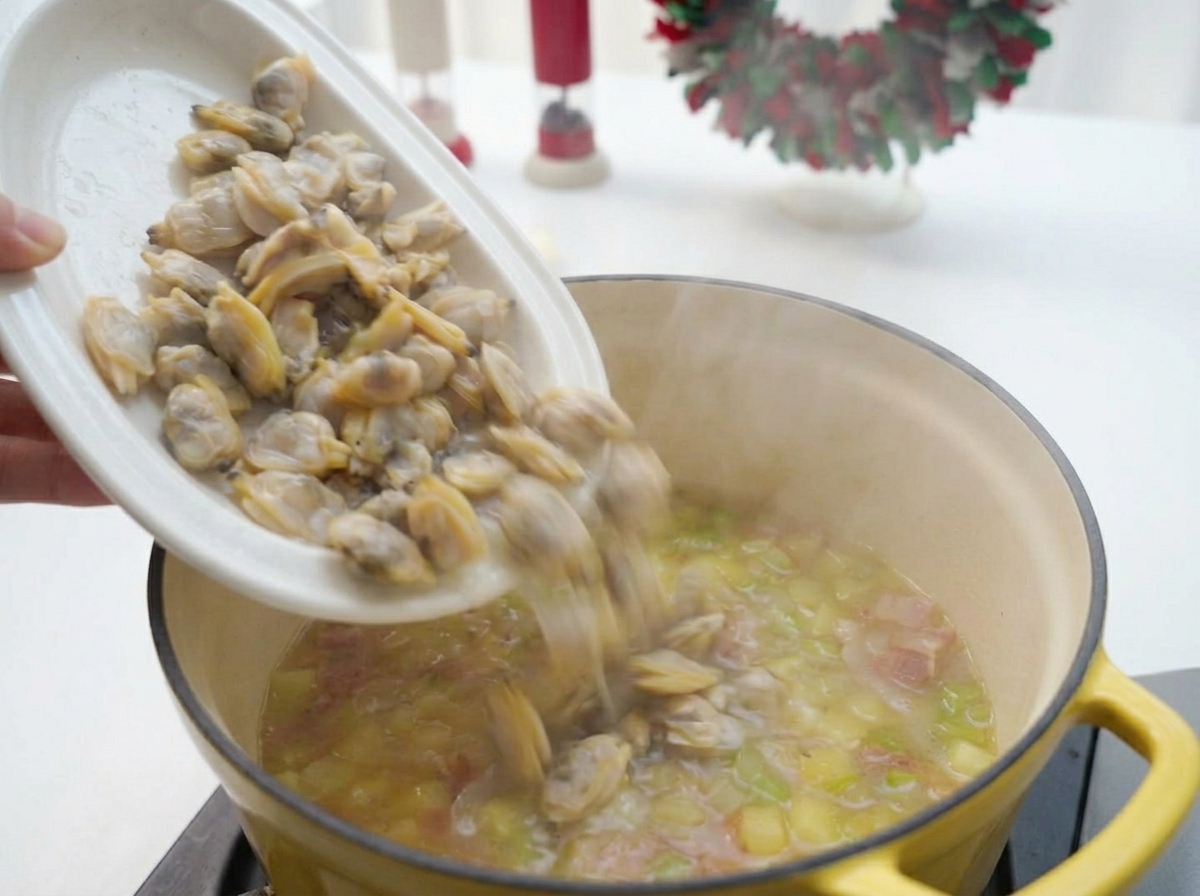
Slide the shelled clam meat from the plate directly into the simmering soup base. Gently stir the clams into the broth and taste it to see if any additional salt or seasoning is needed.
Tip: Add the clams towards the end of the cooking process so they remain tender and do not become rubbery. - 15Incorporate the White Sauce
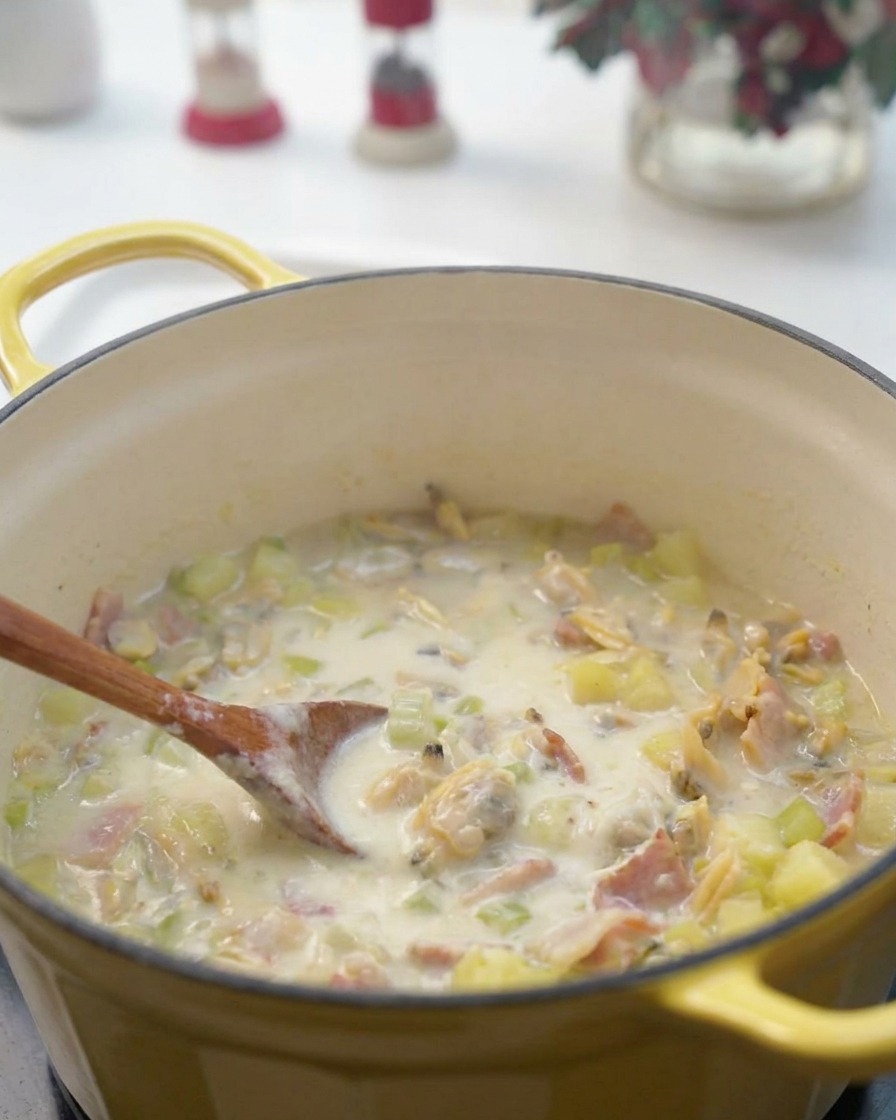
Pour your previously prepared thick white sauce into the simmering pot with the potatoes, vegetables, and clams. This will instantly transform the clear broth into a rich, creamy chowder.
Tip: Stir gently as you pour so the sauce melds evenly with the broth without mashing the tender potatoes. - 16Simmer and Thicken
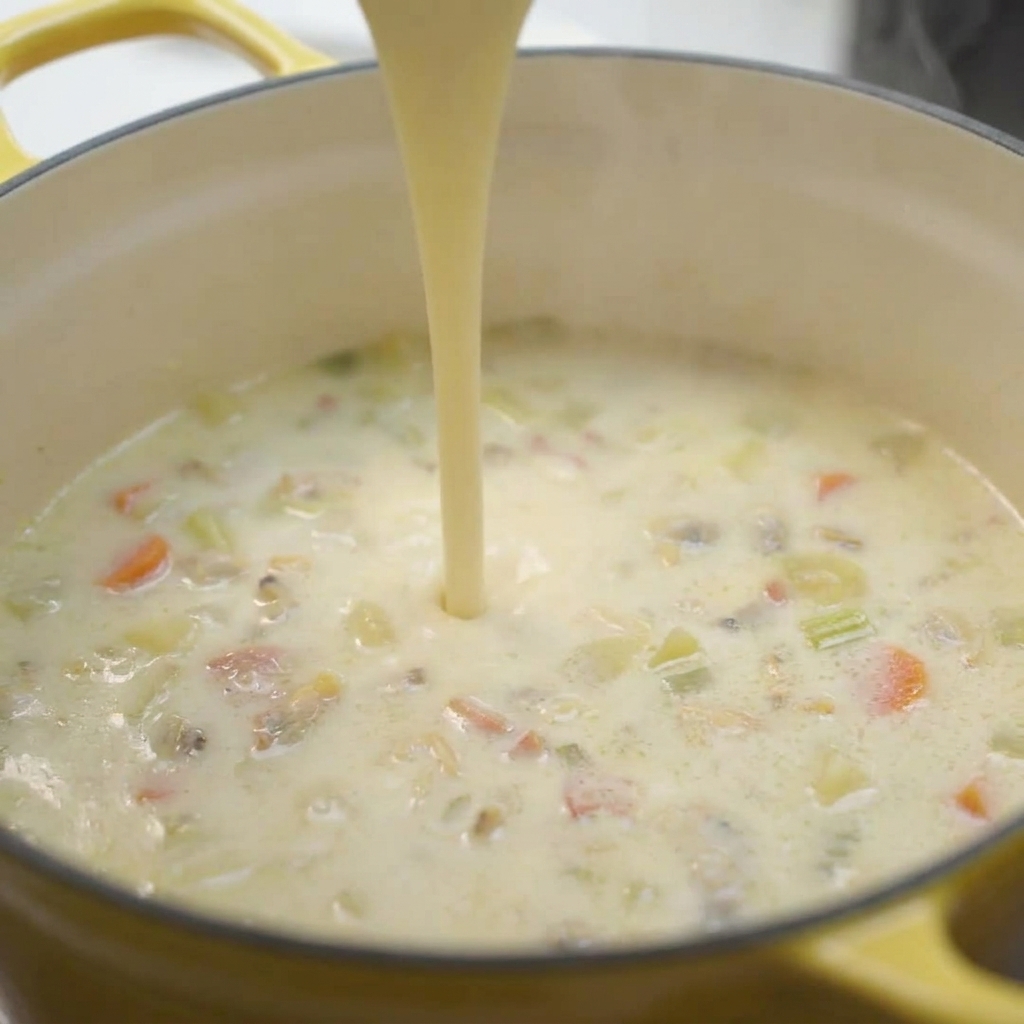
Gently stir the newly combined chowder as it simmers over low heat. Allow it to cook for just a few more minutes until it thickens to your desired consistency. Ladle the hot soup into your prepared bread bowls, garnish with the reserved bacon and fresh parsley, and serve immediately.
Tip: Do not let the soup come to a rolling boil after the dairy is added, as high heat can cause it to curdle.