Japanese Miso Stewed Pork Belly (Buta no Kakuni)
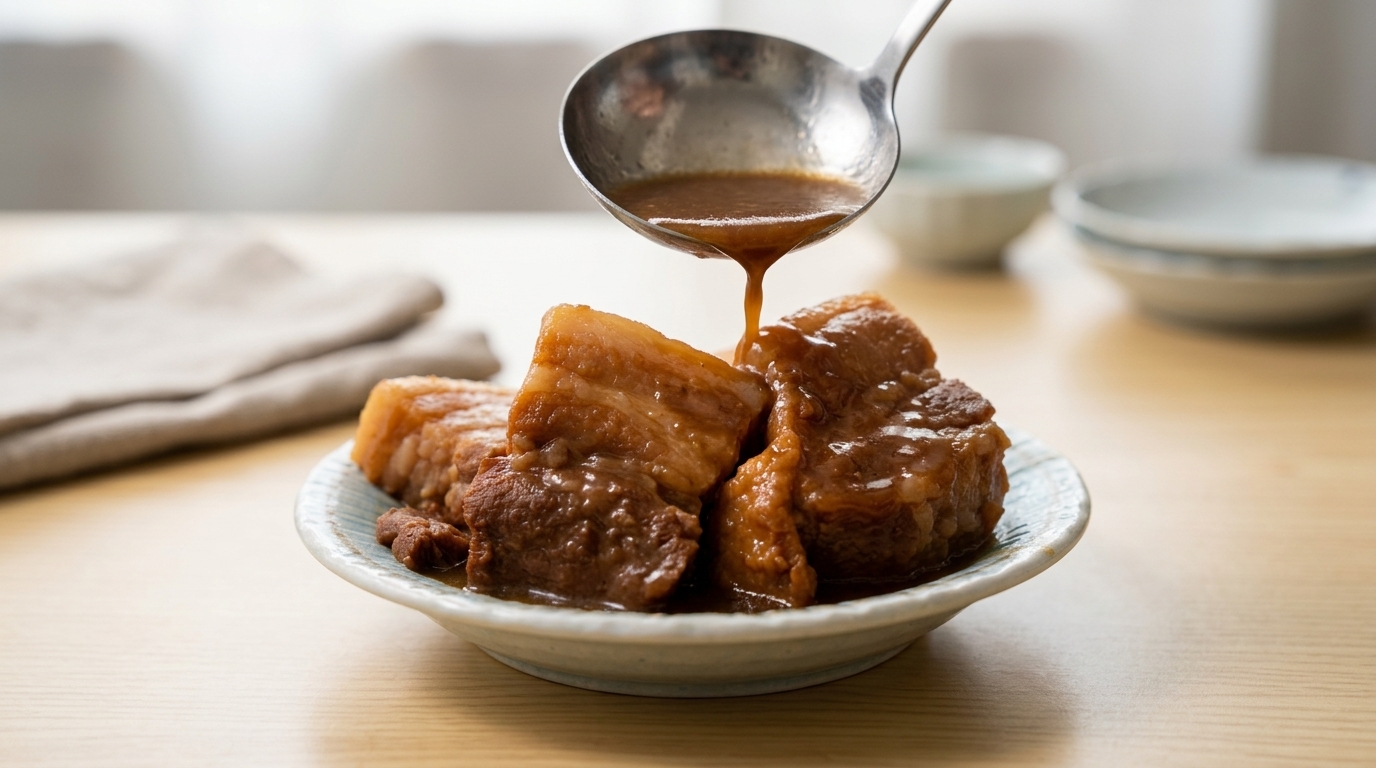
A masterclass in umami, this tender miso-stewed pork belly is simmered until meltingly soft and coated in a glossy, savory-sweet reduction.
Japanese braised pork belly, or buta no kakuni, is a comforting dish that showcases the transformative power of a slow, aromatic simmer. By using a drop lid, the meat stays perfectly submerged, absorbing a complex base of miso, sake, and mirin. The final reduction creates a rich, lacquer-like glaze that makes every piece irresistibly succulent.
Ingredients
- 500 g pork belly
- 2 stalks scallions
- 3 slices ginger
- 1 tbsp cooking wine
- 500 ml water
- 100 ml sake
- 50 ml mirin
- 1 tbsp sugar
- 1 tbsp miso paste
- 1 tbsp soy sauce
Instructions
- 1Blanch the pork belly
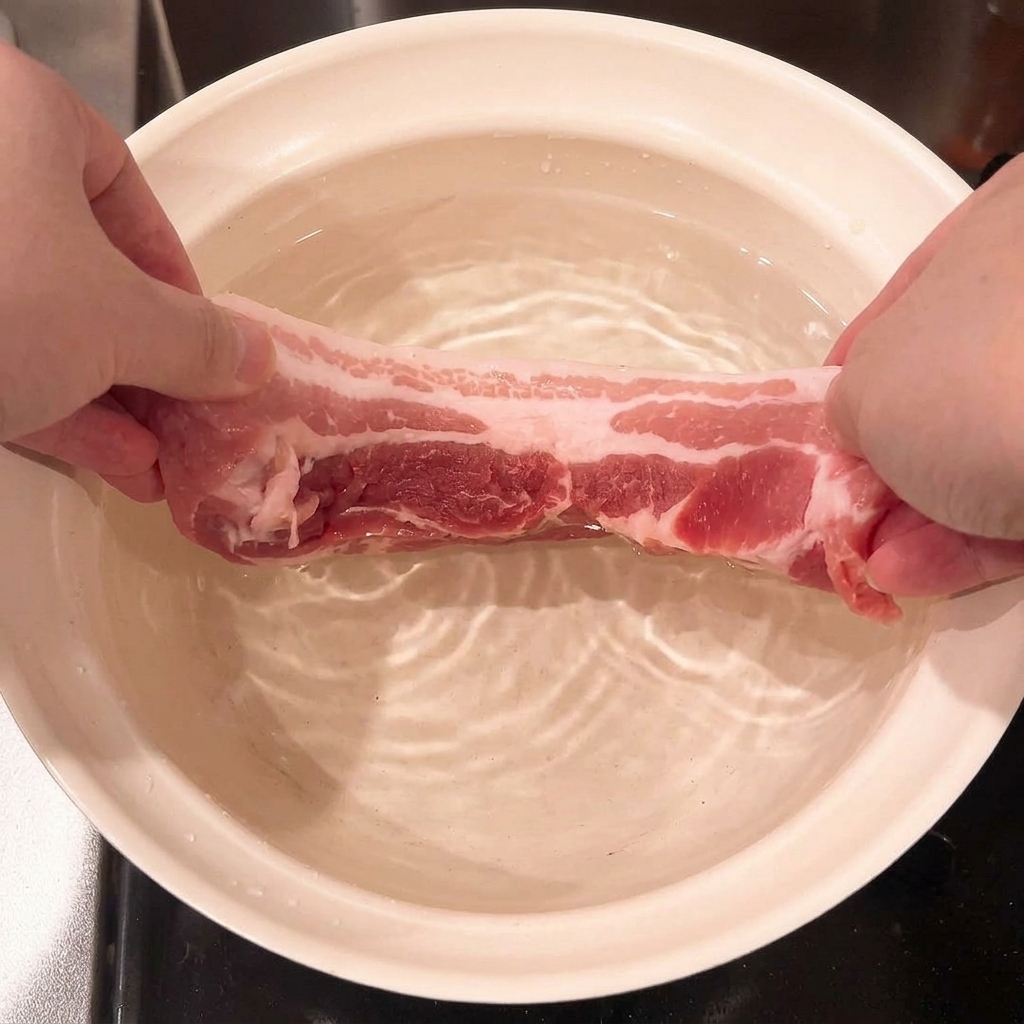
Place the whole strip of raw pork belly into a pot of cold water. This initial blanching step helps to draw out impurities from the meat, resulting in a cleaner flavor for the final dish.
Tip: Always use cold water to start the blanching process, as it allows impurities to release gradually as the temperature rises. - 2Add aromatics
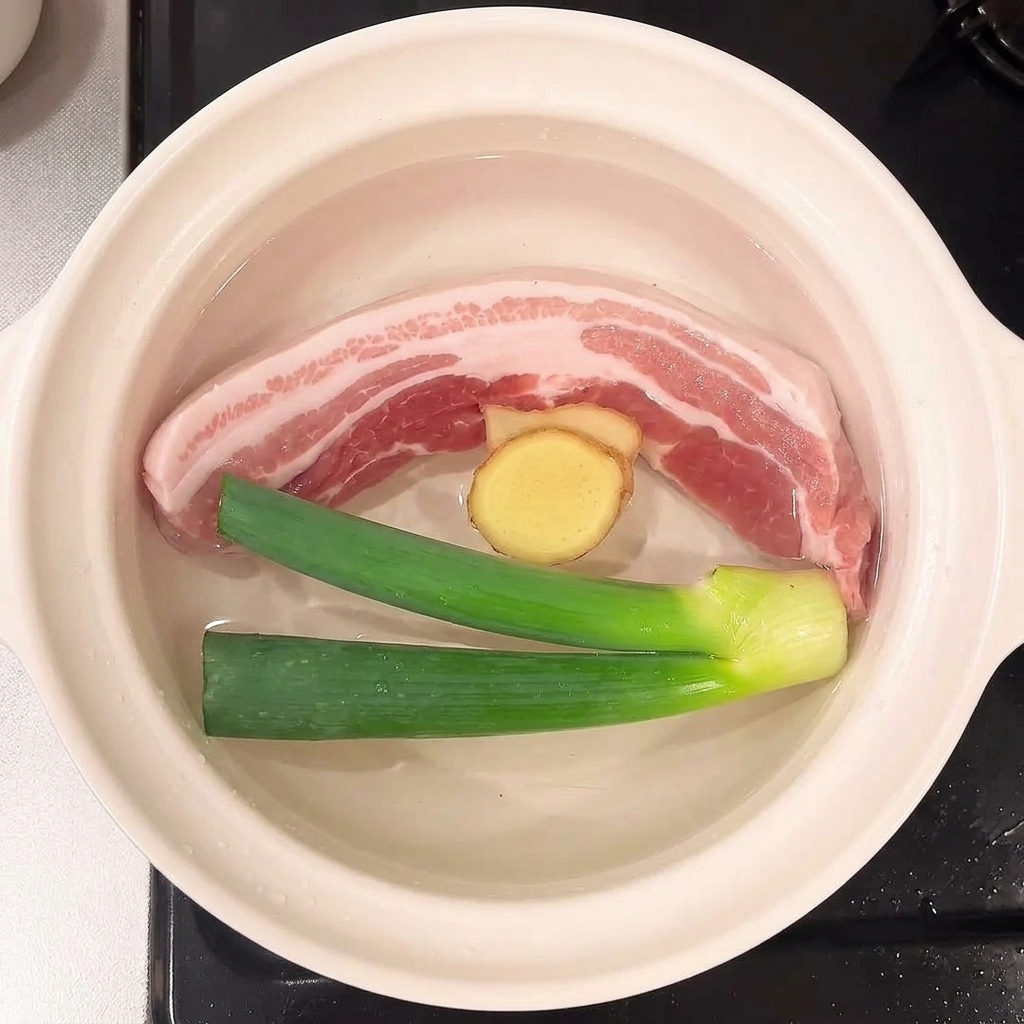
Add fresh scallion stalks and ginger slices to the pot with the pork belly. These aromatics are essential for infusing the meat with flavor and neutralizing any gamey odors during the blanching process.
Tip: Smashing the ginger slices with the side of a knife can help release more of their aromatic oils into the water. - 3Add cooking wine
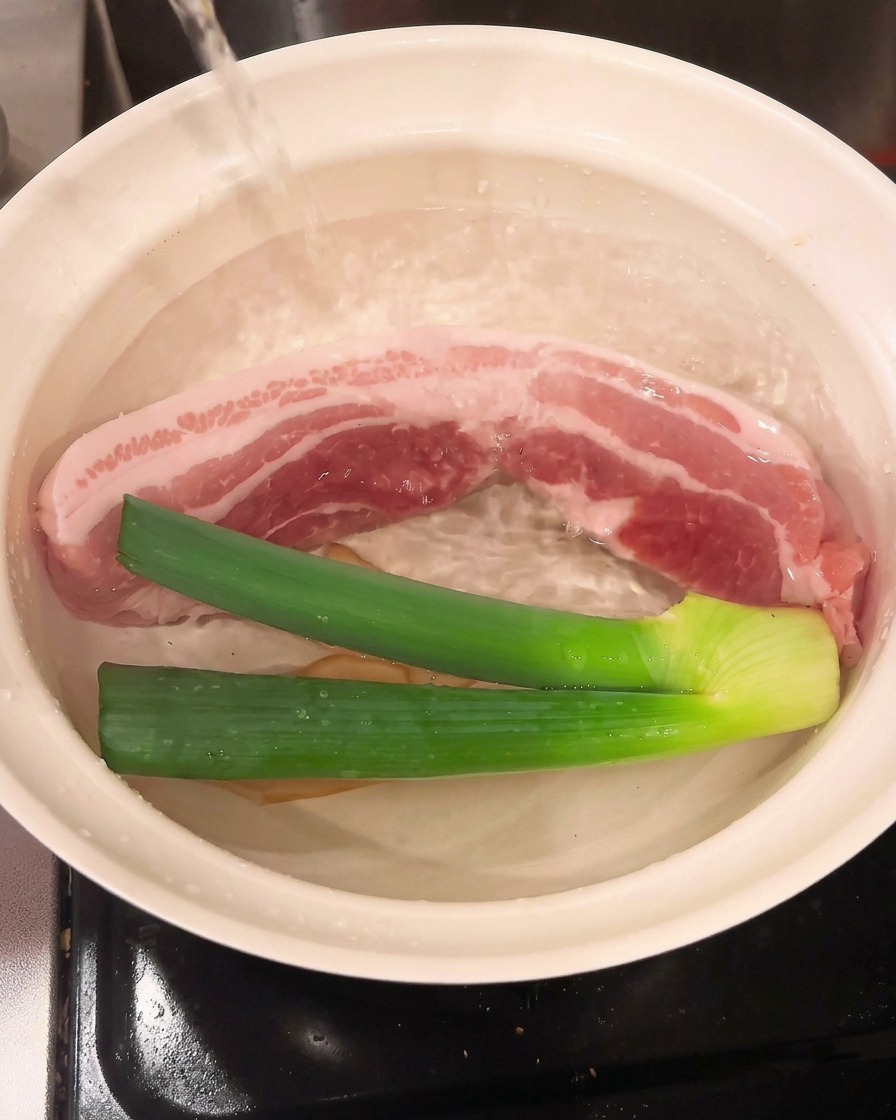
Pour a splash of cooking wine into the pot with the pork, scallions, and ginger. The alcohol helps to further tenderize the meat and eliminate unwanted odors as the water heats up.
Tip: If you lack cooking wine, a dry sherry or even a splash of rice vinegar can work as an alternative. - 4Remove the blanched pork
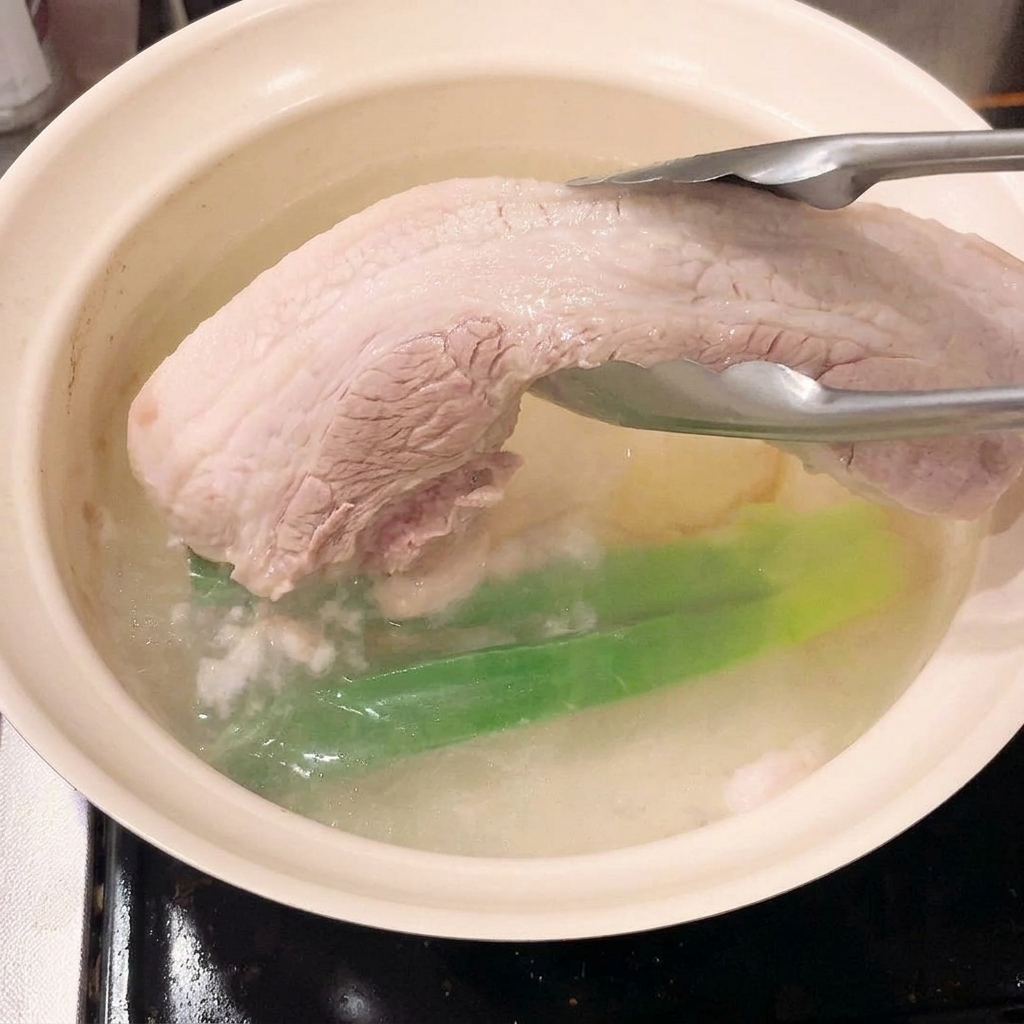
Once the pork belly is blanched, use tongs to carefully remove the meat from the hot water. The pork will appear firmer and slightly opaque after this process.
Tip: Rinse the blanched pork under cool water immediately after removing it to stop the cooking process and wash away any remaining surface foam. - 5Prepare the braising liquid
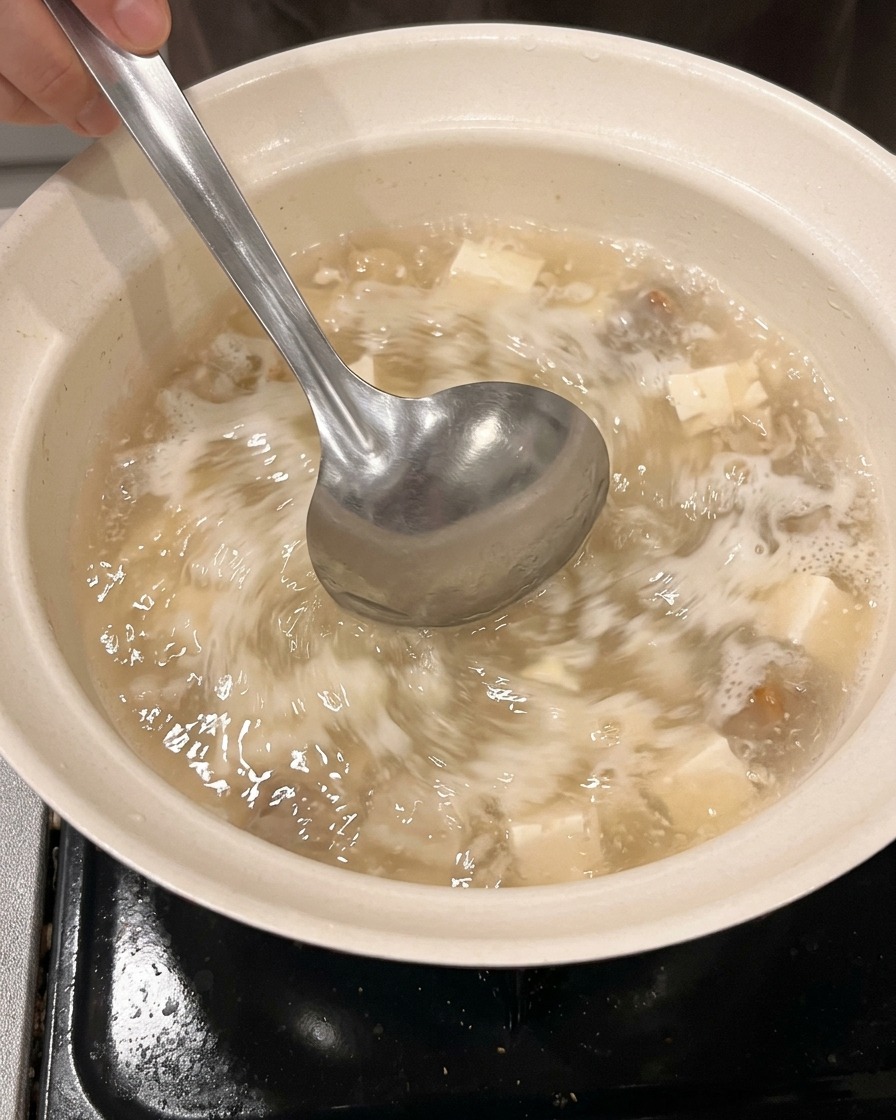
In a clean pot, begin preparing the braising liquid by pouring in the measured water and clear sake. This forms the base for the flavorful sauce that the pork will simmer in.
Tip: Ensure your pot is thoroughly cleaned before starting the braising liquid to prevent any residual impurities from the blanching step from affecting the final flavor. - 6Season the broth
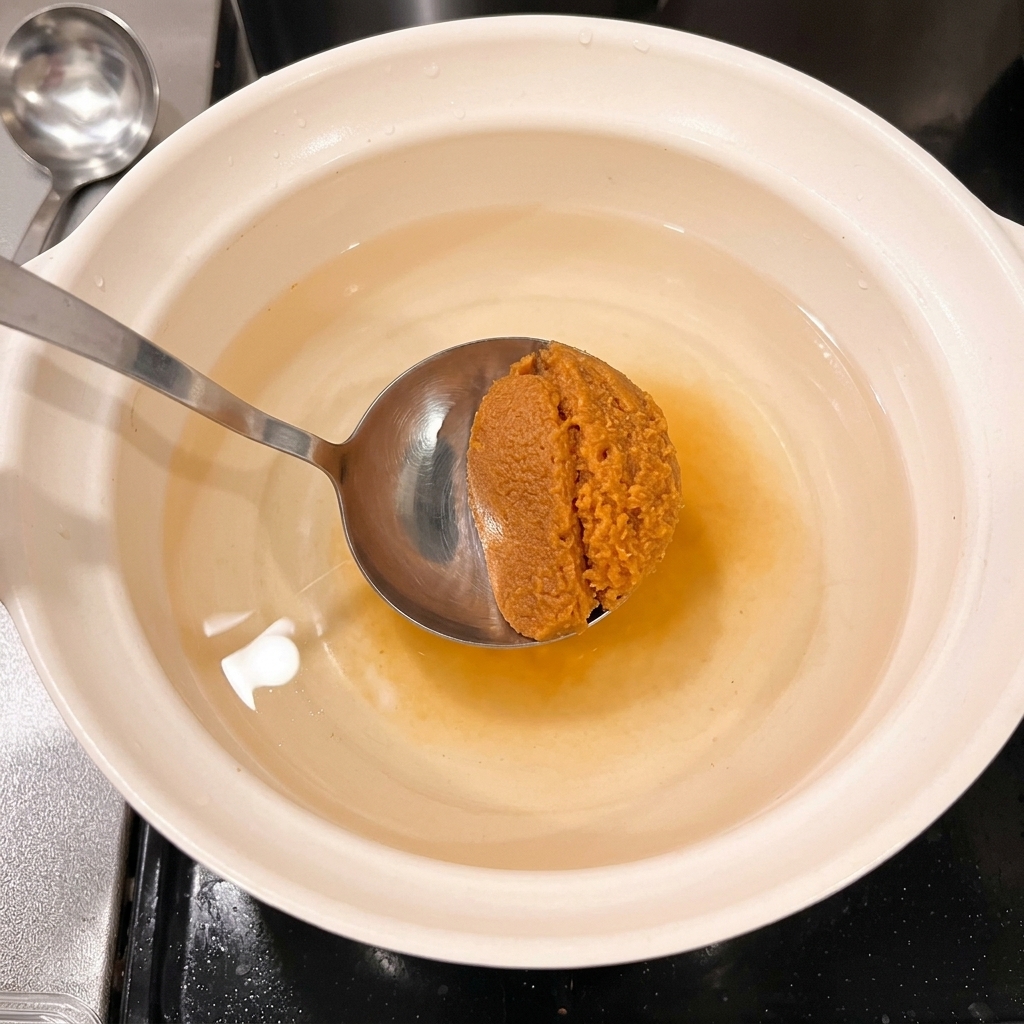
Add a spoonful of thick brown miso paste into the liquid mixture in the pot. Whisk or stir it well until the paste is fully dissolved, creating a savory and rich foundation for the braising sauce.
Tip: To make dissolving easier, take a little bit of the warm liquid from the pot into a small bowl, mix the miso there first until smooth, then pour it back into the main pot. - 7Add soy sauce and sweetness
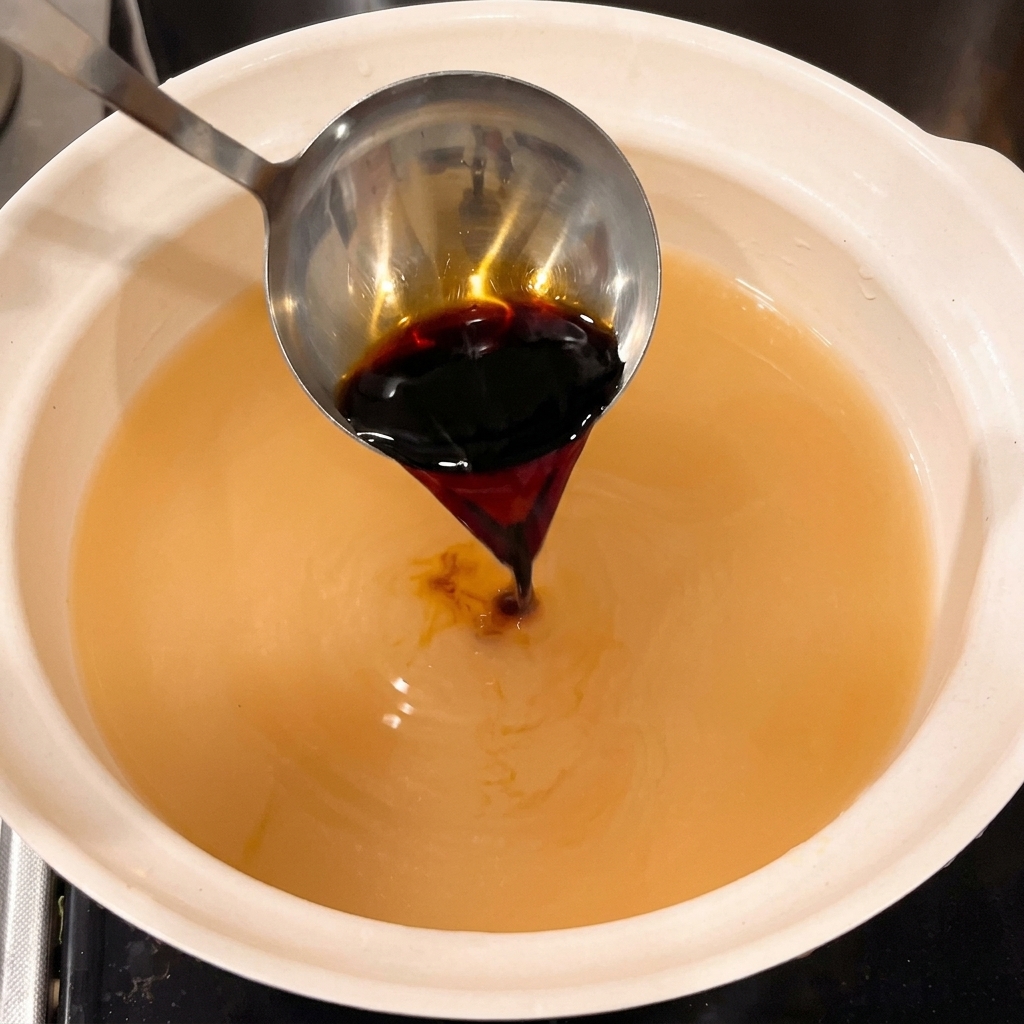
Pour in the dark soy sauce, mirin, and sugar to complete the seasoning profile. Stir the liquid thoroughly to ensure the sugar dissolves and the dark soy sauce integrates evenly into the miso base.
Tip: Mix the miso paste with a little warm water in the ladle first before stirring it into the pot to prevent any lumps from forming. - 8Add the pork to the broth
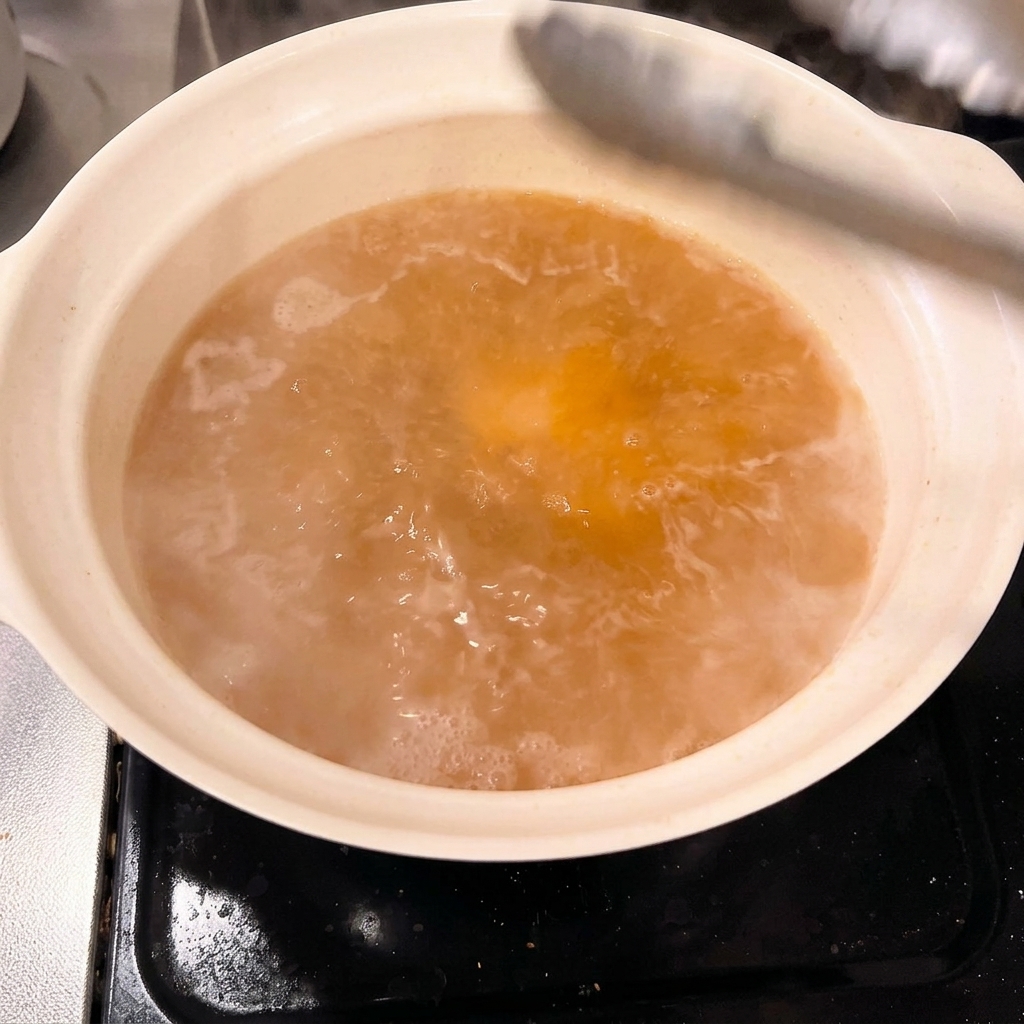
Carefully place the thick, pre-cut chunks of blanched pork belly into the pot with the seasoned miso broth. These aromatics and rich seasonings will deeply infuse the pork as it cooks.
Tip: Ensure the pork chunks are fully submerged in the liquid for even cooking. - 9Cover with a drop lid
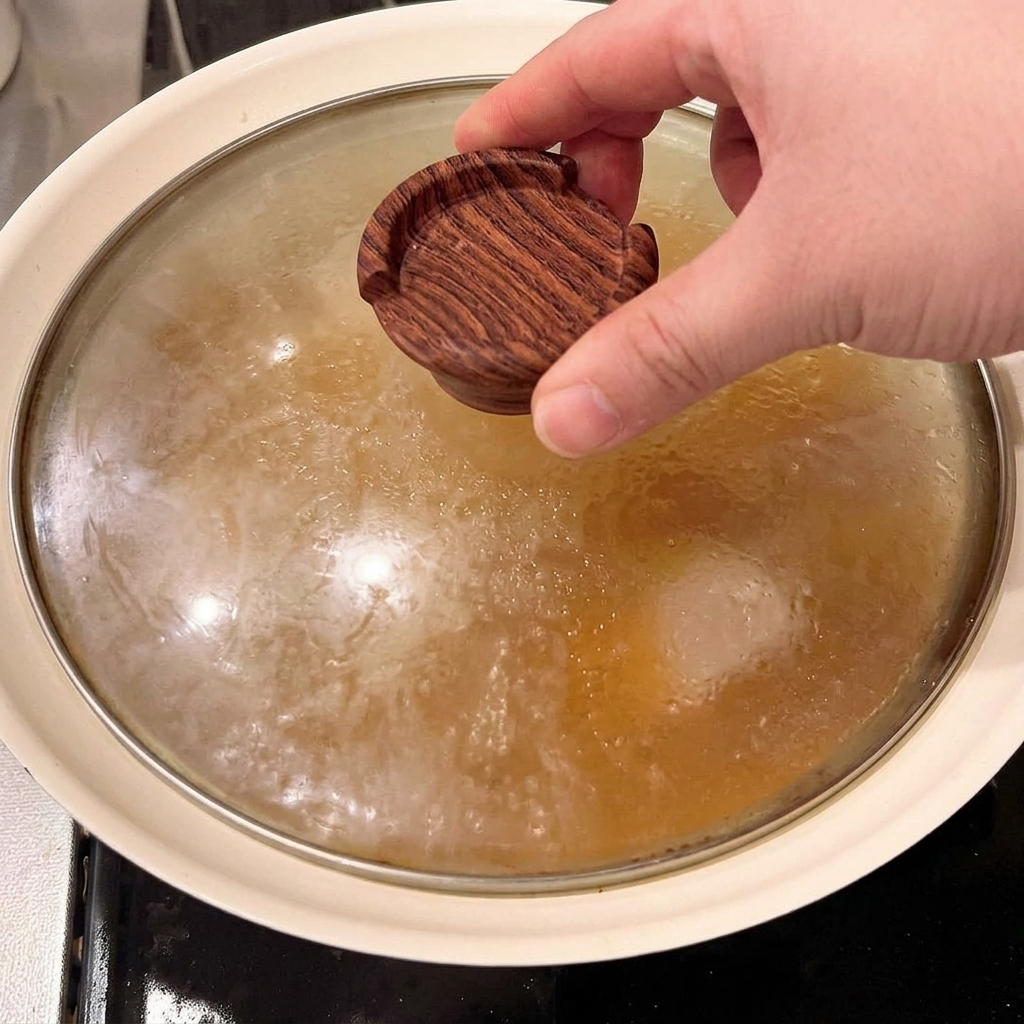
Place a small wooden drop lid (otoshibuta) directly onto the surface of the simmering liquid and pork. This technique helps distribute heat evenly and ensures the pork stays submerged, allowing it to braise perfectly without falling apart.
Tip: Using a drop lid helps intensify the flavors and keeps the meat moist during the long simmer. - 10Reduce the sauce
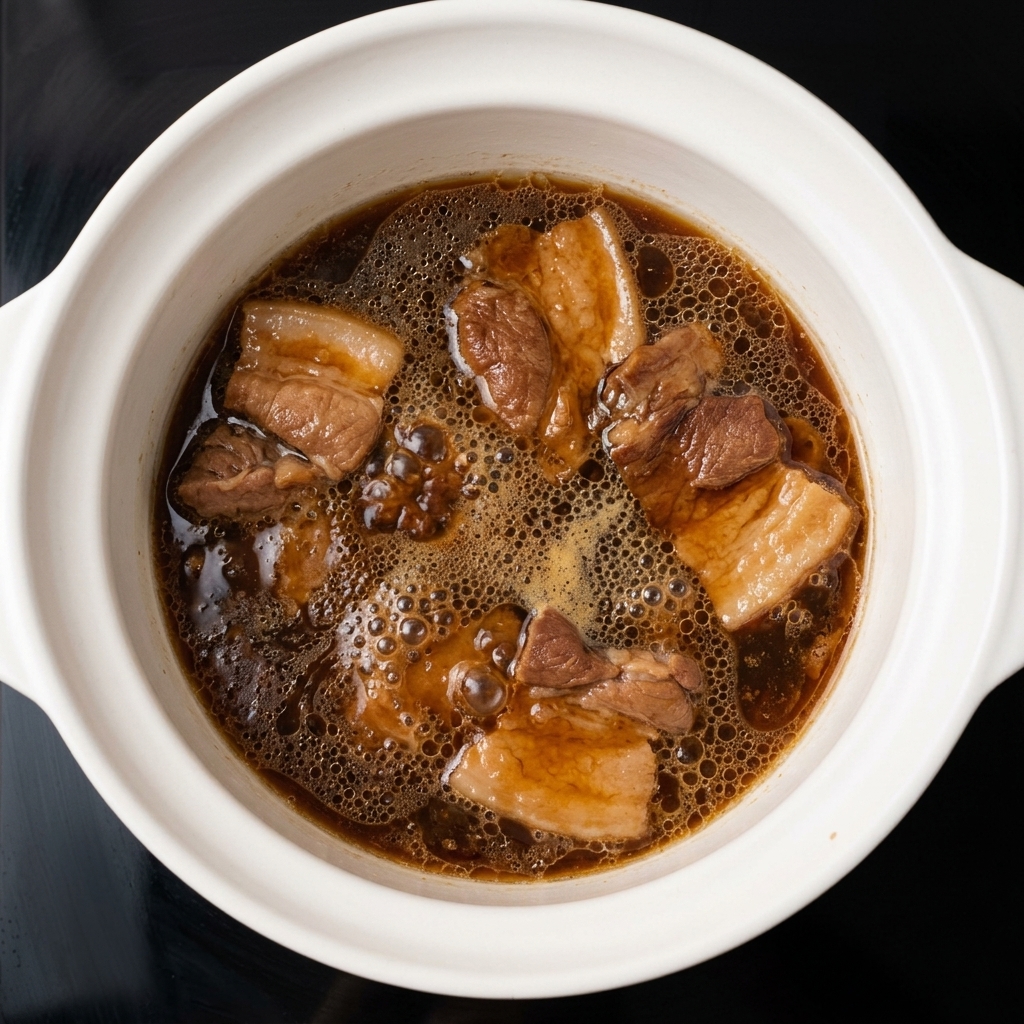
Remove the lid and turn up the heat to maintain a vigorous simmer. Allow the pork belly to continue cooking uncovered so the excess moisture evaporates, reducing the liquid until it becomes a thick, glossy glaze that coats the meat.
Tip: Watch the pot closely during this final reduction stage, as the concentrated sugars in the mirin and sugar can easily burn.