Authentic Korean BBQ-Style Soybean Paste Stew (Doenjang Jjigae)
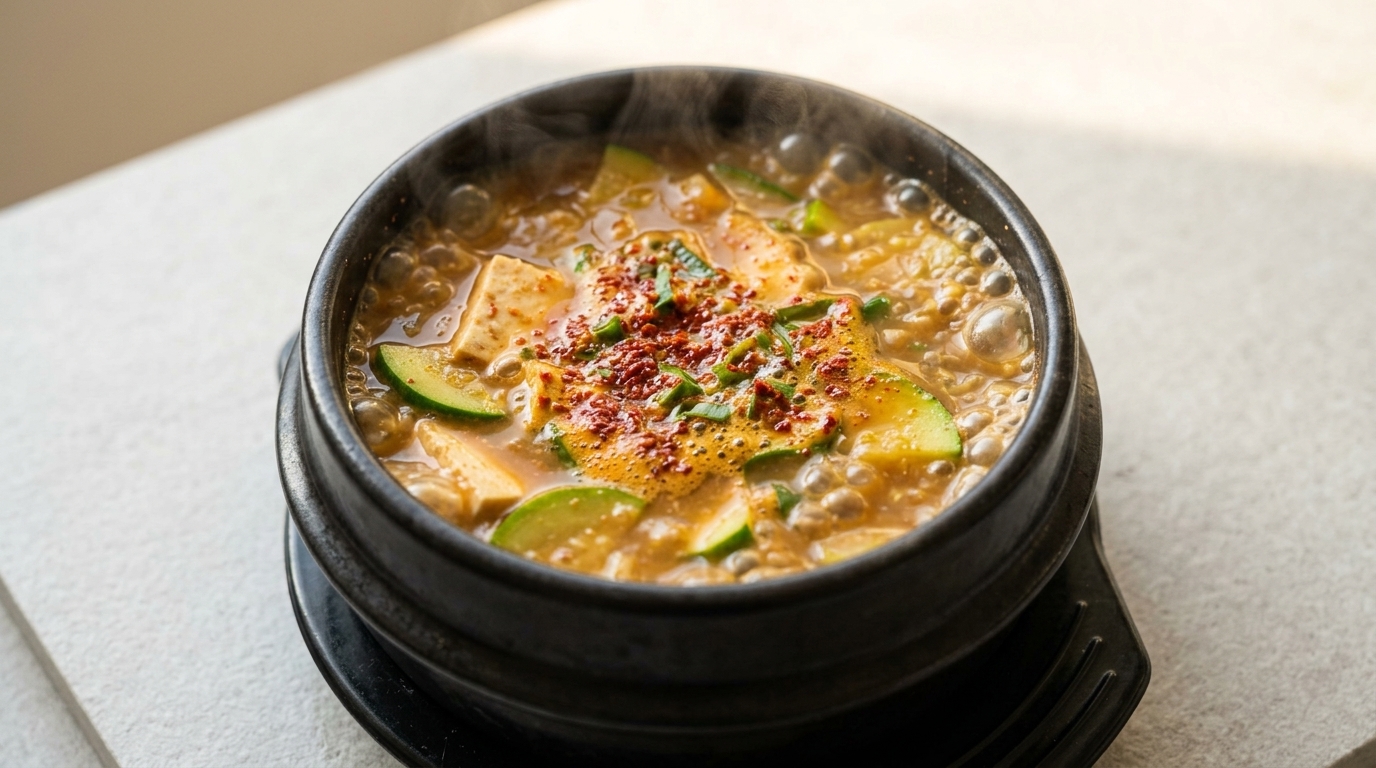
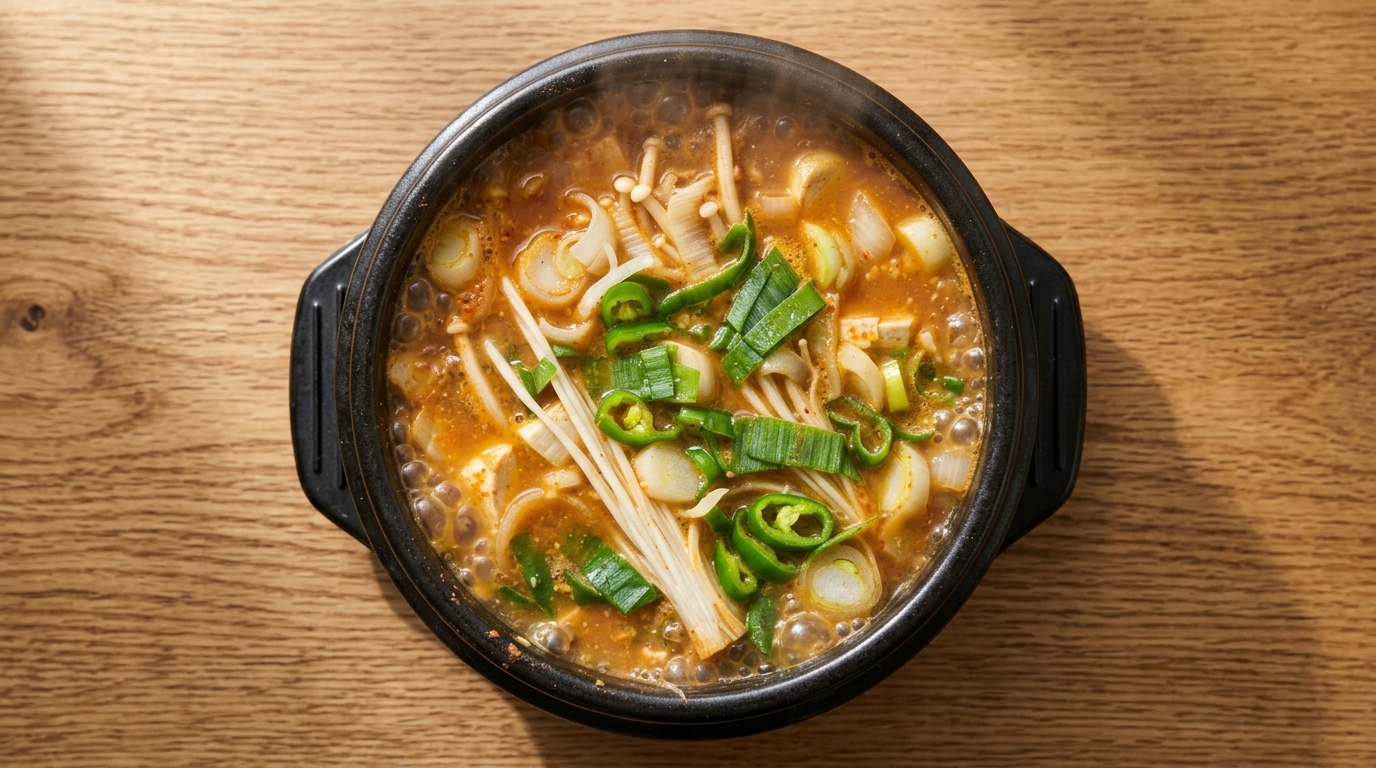
Recreate the savory magic of a Korean BBQ restaurant at home. This rich, bubbling Doenjang Jjigae is packed with pork belly, tofu, and deep umami flavors.
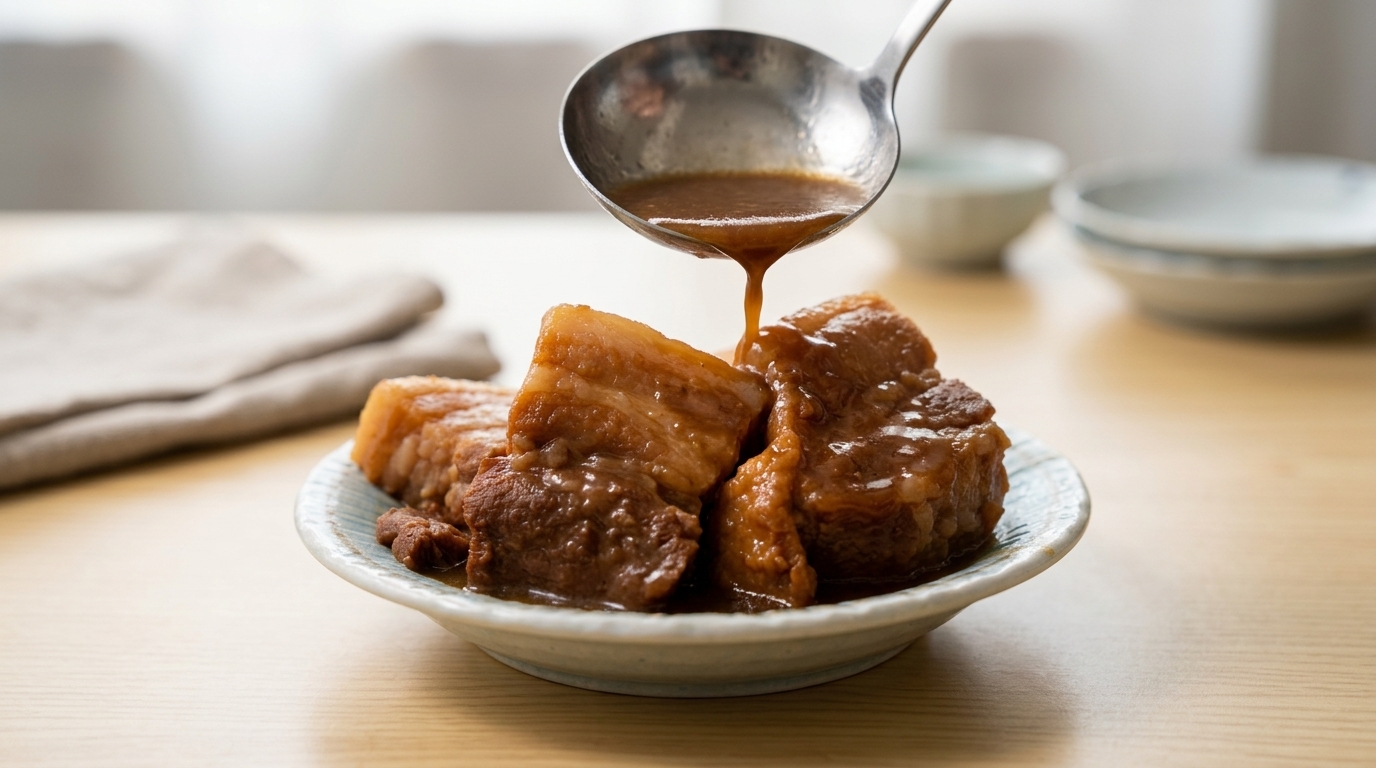
Doenjang Jjigae, or soybean paste stew, is the ultimate Korean comfort food and a staple at any traditional BBQ restaurant. The secret to that deeply savory, complex restaurant flavor lies in a unique blend of doenjang, sweet-spicy ssamjang, and a touch of beef bouillon. Rendering the pork belly fat first builds an incredibly rich base that permeates every bite of the soft tofu and vegetables.
Ingredients
- 150 g thinly sliced pork belly
- 2 tbsp soybean paste (doenjang)
- 1 tbsp ssamjang
- 1 tbsp red pepper powder (gochugaru)
- 350 ml water
- 1 tbsp beef bouillon
- 1/4 zucchini, chopped
- 1/2 onion, chopped
- 1/2 block soft tofu
- to taste enoki mushrooms
- to taste sliced green onions
- to taste hot chili peppers
Instructions
- 1Add the pork belly
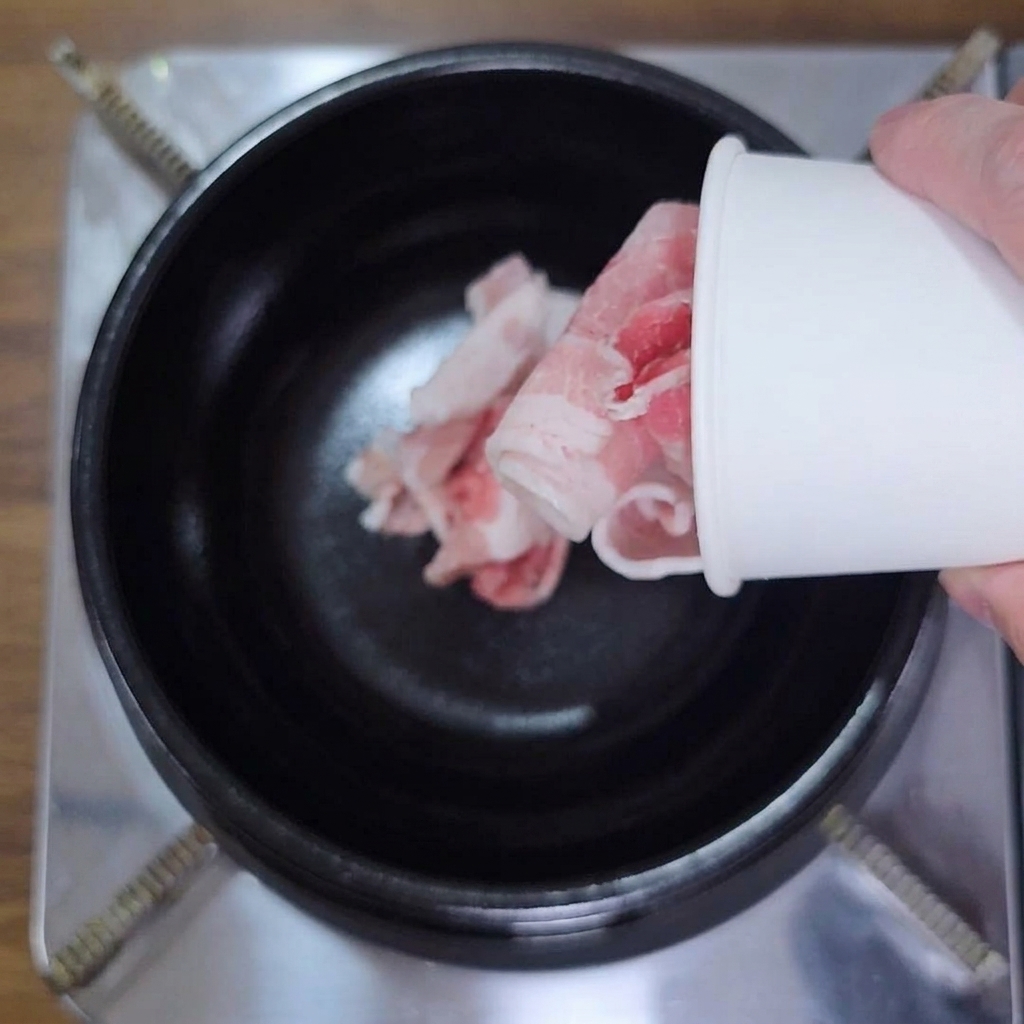
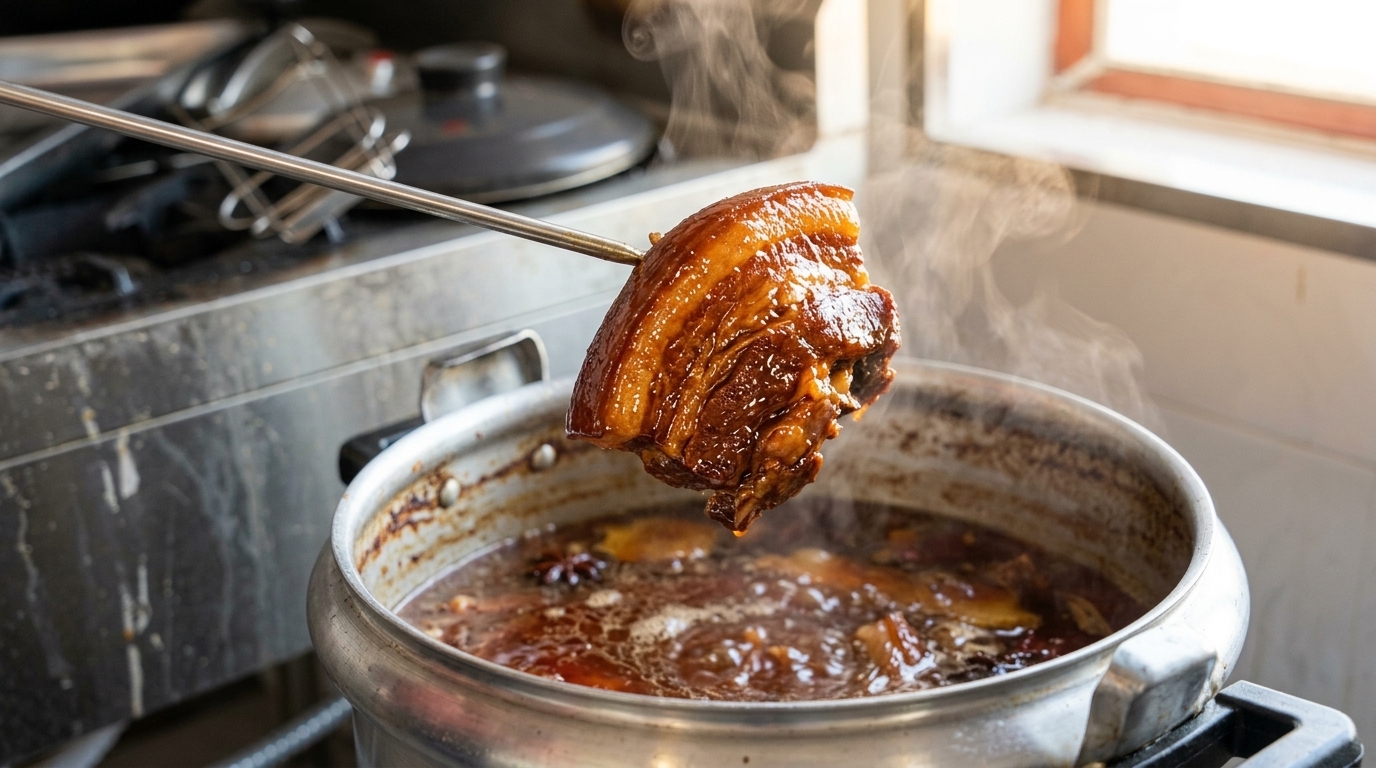
Place the rolled, thinly sliced raw pork belly into a cooking pot. Fry the meat thoroughly until it is nicely browned.
Tip: Frying the pork belly first renders its natural fat, which creates a rich and flavorful base for the stew. - 2Stir-fry the pork belly
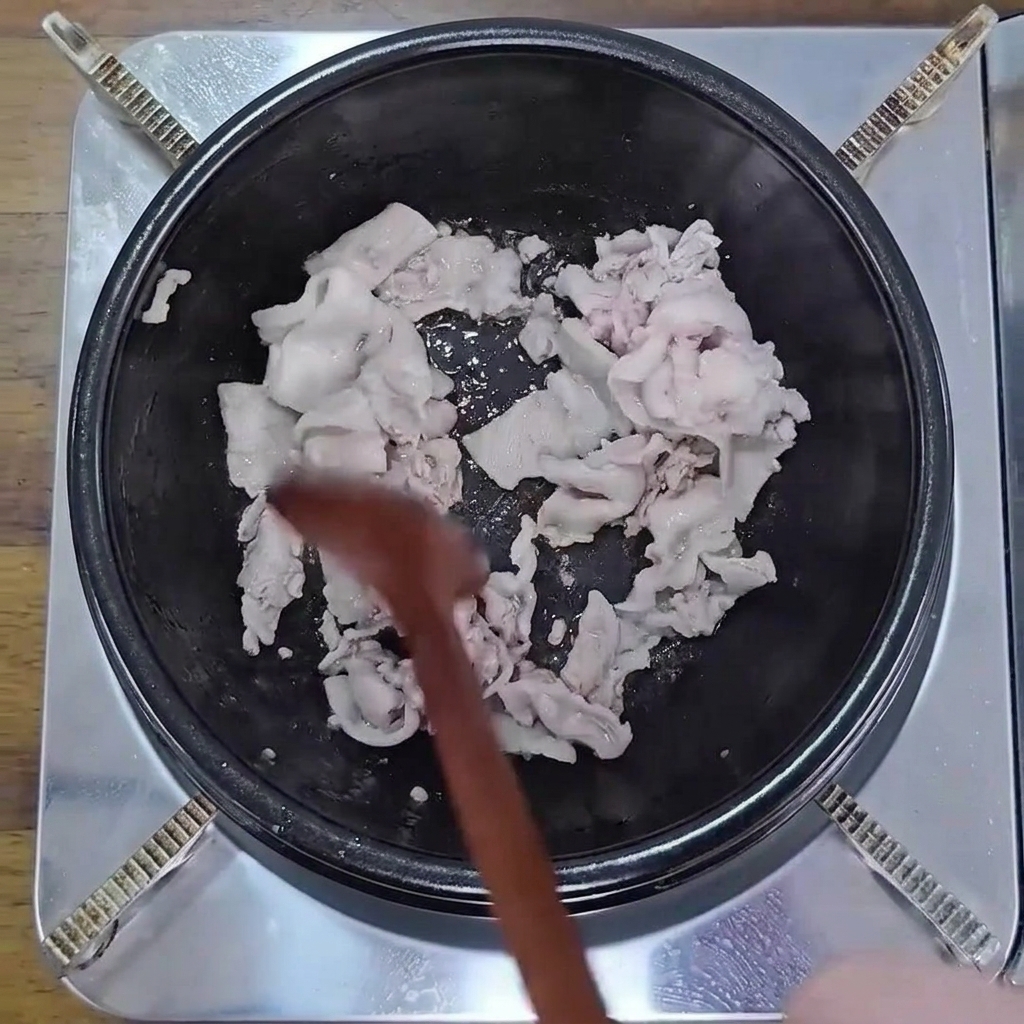
Cook the thinly sliced pork belly in the pot, stirring constantly. Continue to fry the meat until it is fully cooked and the surface develops a light brown color.
Tip: Keep the heat at medium-high to get a good sear on the meat without burning the bottom of the pot. - 3Add the flavor pastes
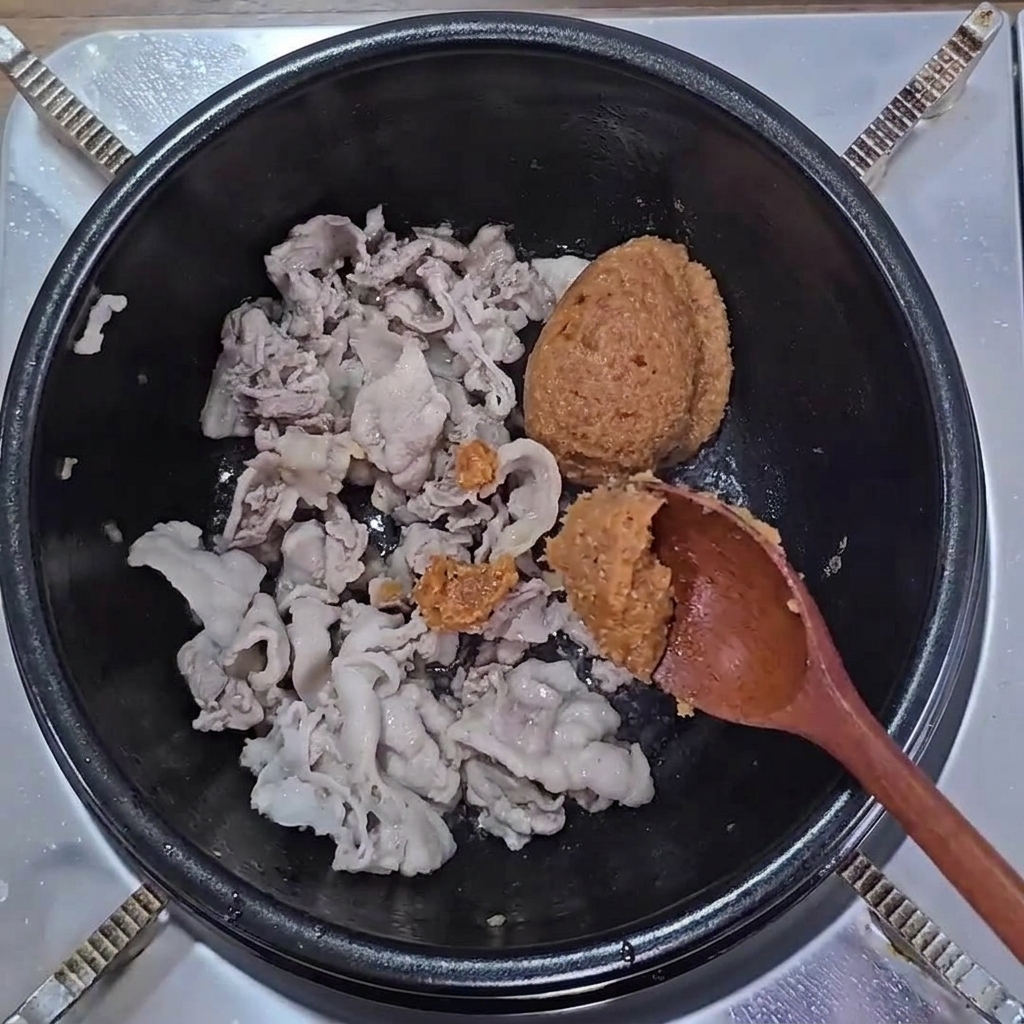
Once the pork is browned, add two tablespoons of soybean paste and one tablespoon of ssamjang over the cooked meat.
Tip: Using a mix of soybean paste and ssamjang is the secret to replicating the authentic flavor of Korean BBQ restaurant stews. - 4Fry the paste and meat
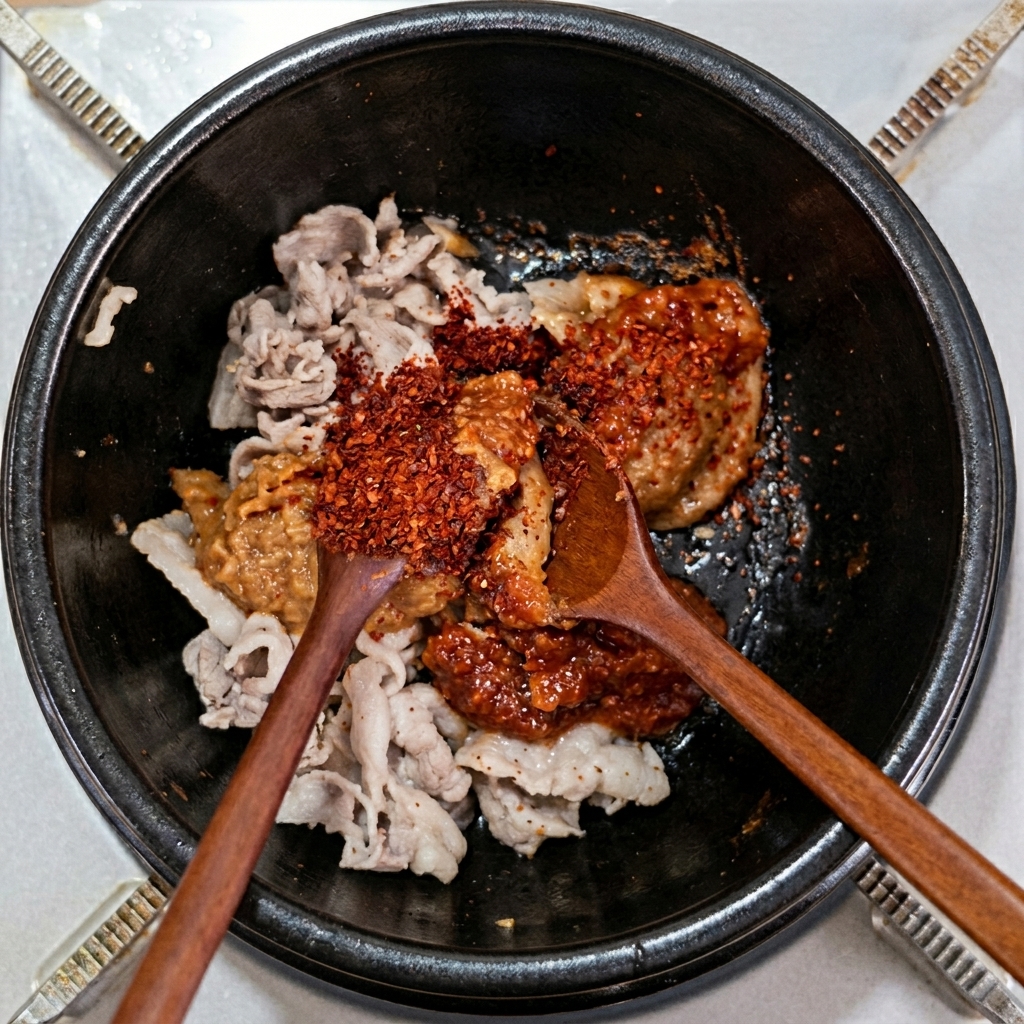
Add one tablespoon of red pepper powder to the pot, then stir-fry the pork belly together with the thick flavor pastes. Frying the paste in the rendered pork fat deepens its savory notes.
Tip: Stir constantly to prevent the thick pastes from sticking and burning at the bottom of the pot. - 5Pour water for the broth
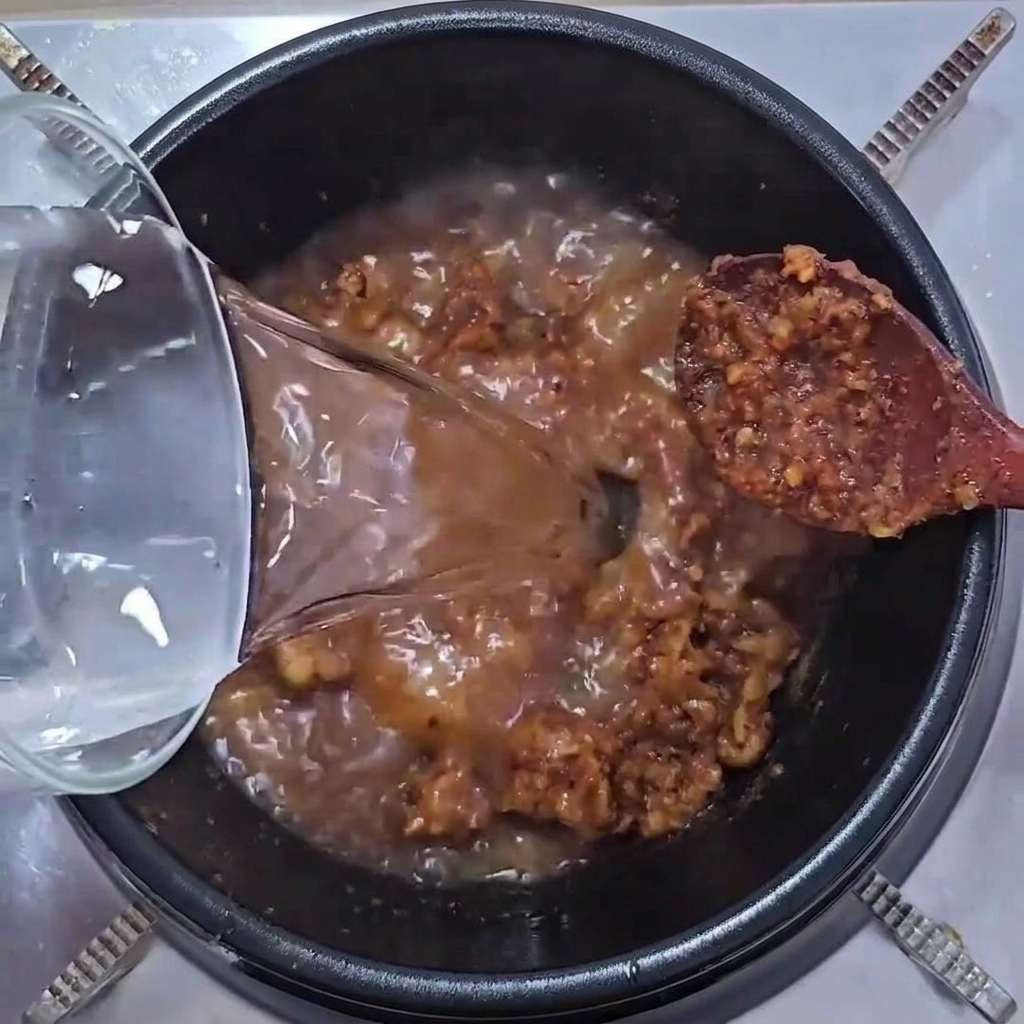
Pour 350 milliliters of water into the pot with the browned pork and roasted pastes. Stir the mixture well to ensure the soybean paste and ssamjang are fully dissolved into the liquid.
Tip: For an authentic restaurant flavor, you will add a tablespoon of beef bouillon to this water once it is mixed. - 6Season the broth
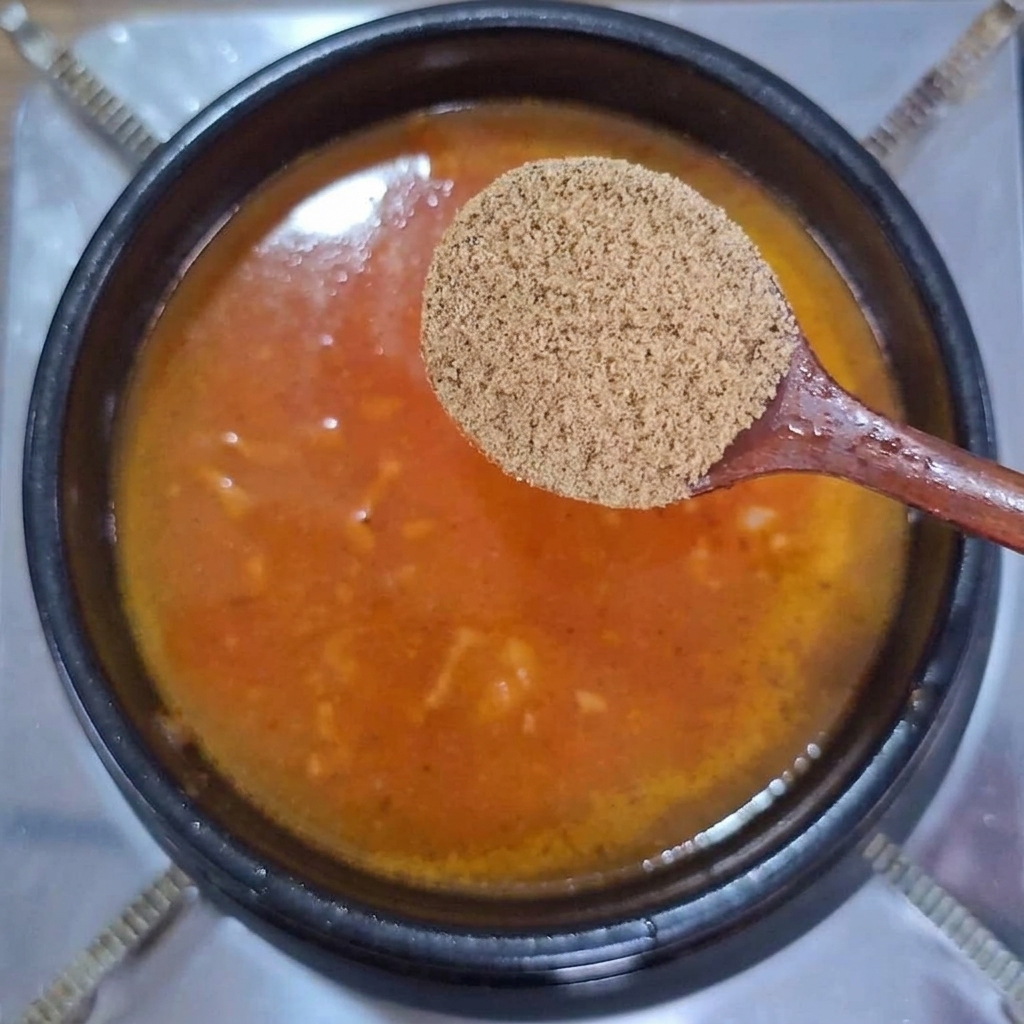
Add a spoonful of beef bouillon powder to the bubbling broth. This is the secret to achieving that authentic, restaurant-quality flavor profile.
Tip: Beef bouillon provides a deep, savory umami punch that elevates the simple soybean paste base. - 7Add zucchini and onions
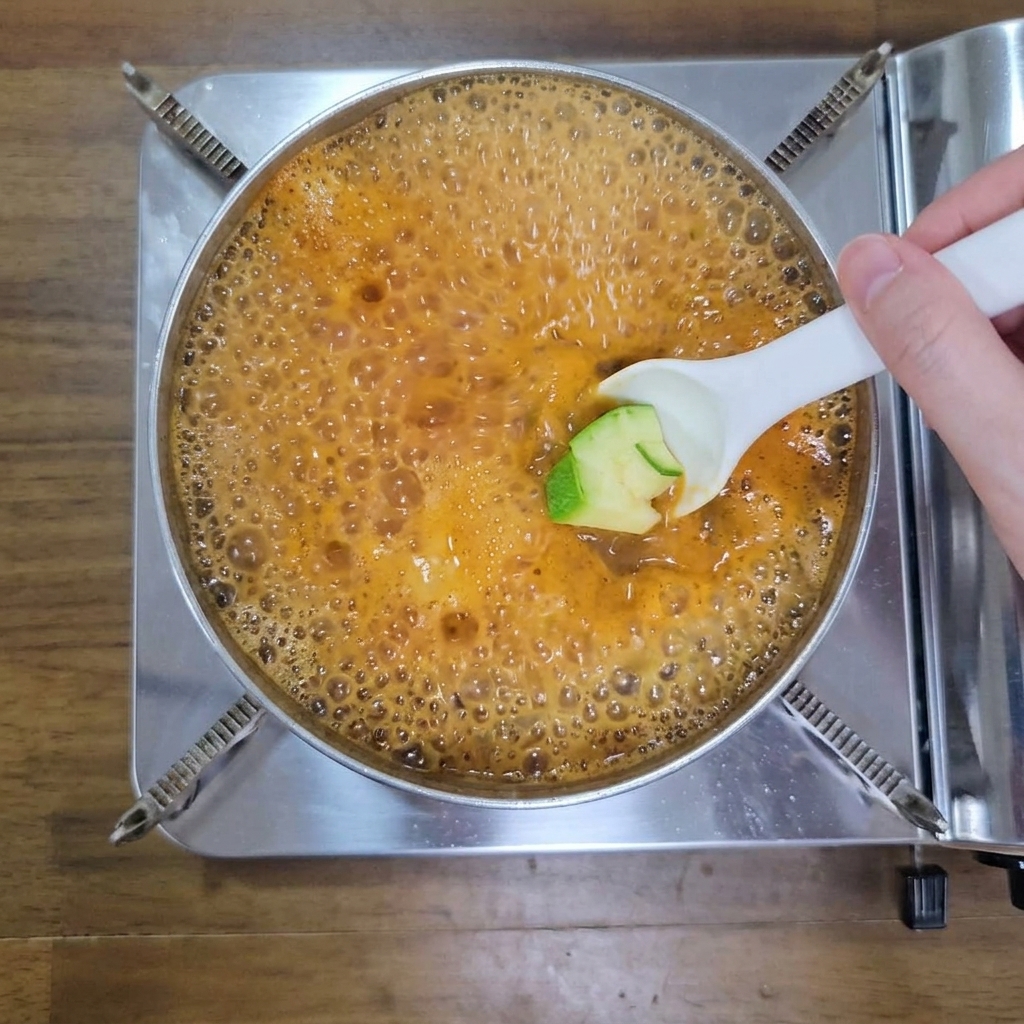
Once the broth comes to a rolling boil and the beef bouillon is mixed in, add the chopped zucchini and white onion. Let them boil in the savory broth to release their natural sweetness.
Tip: Cut the vegetables into bite-sized pieces so they cook evenly and are easy to scoop up with a spoon. - 8Add the tofu
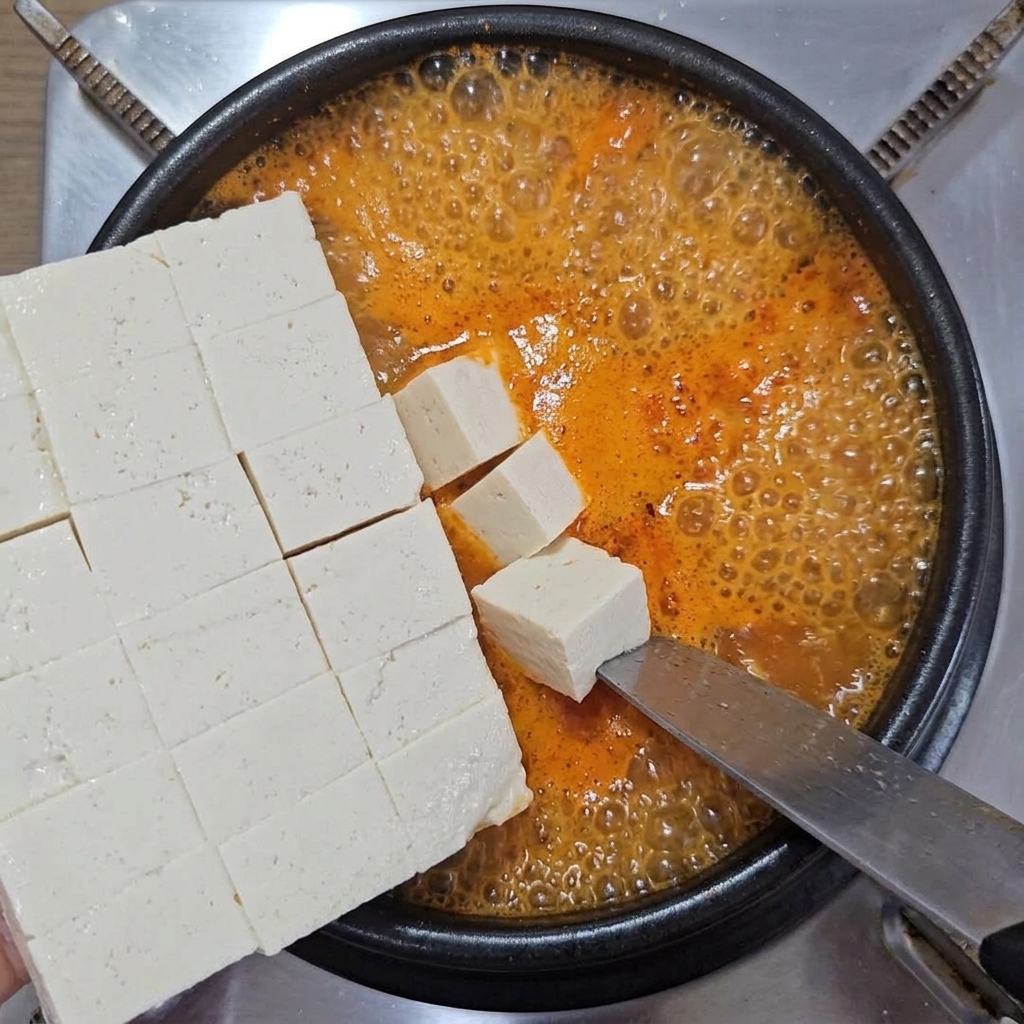
Carefully slide the cubed soft white tofu into the center of the boiling broth. Allow the stew to simmer a little longer so the tofu can soak up the savory soup.
Tip: Use a wide knife or a flat spatula to gently slide the tofu pieces into the pot to prevent the hot broth from splashing. - 9Add mushrooms and onions
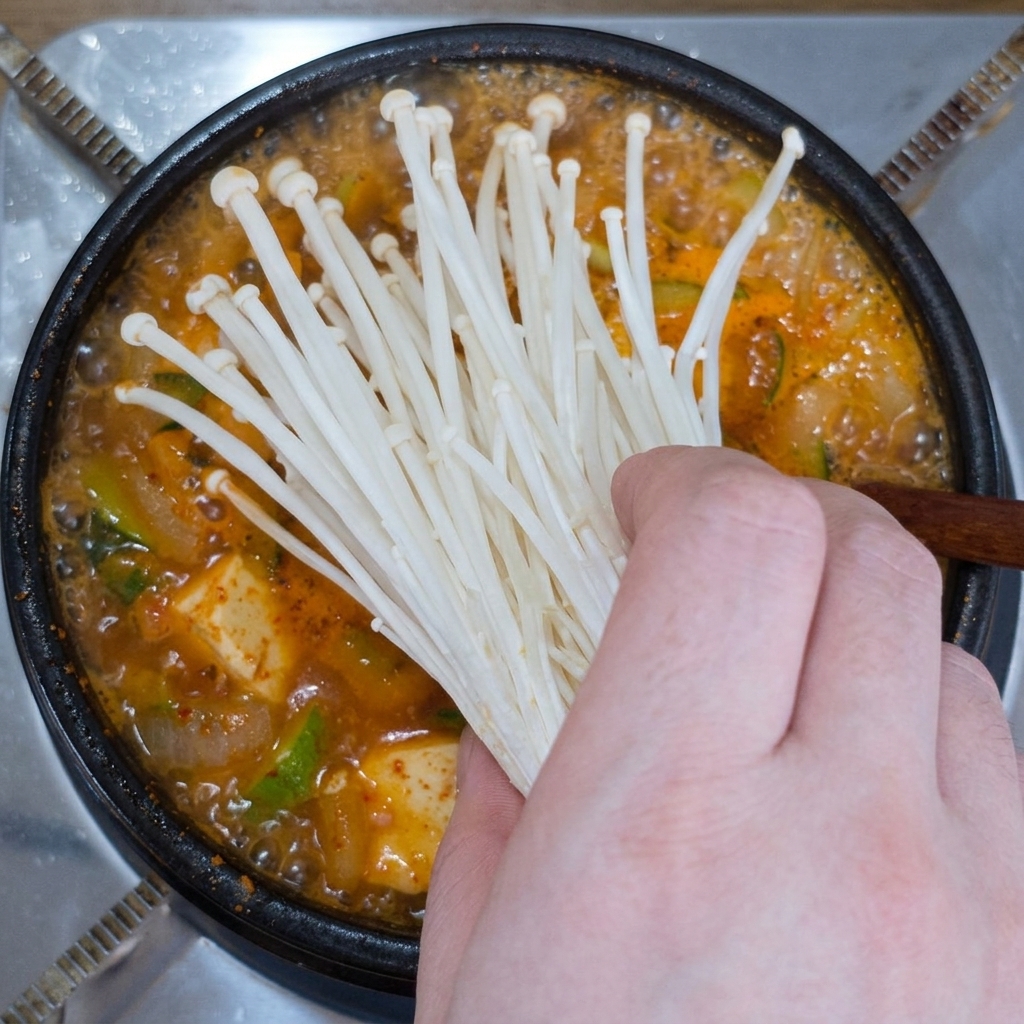
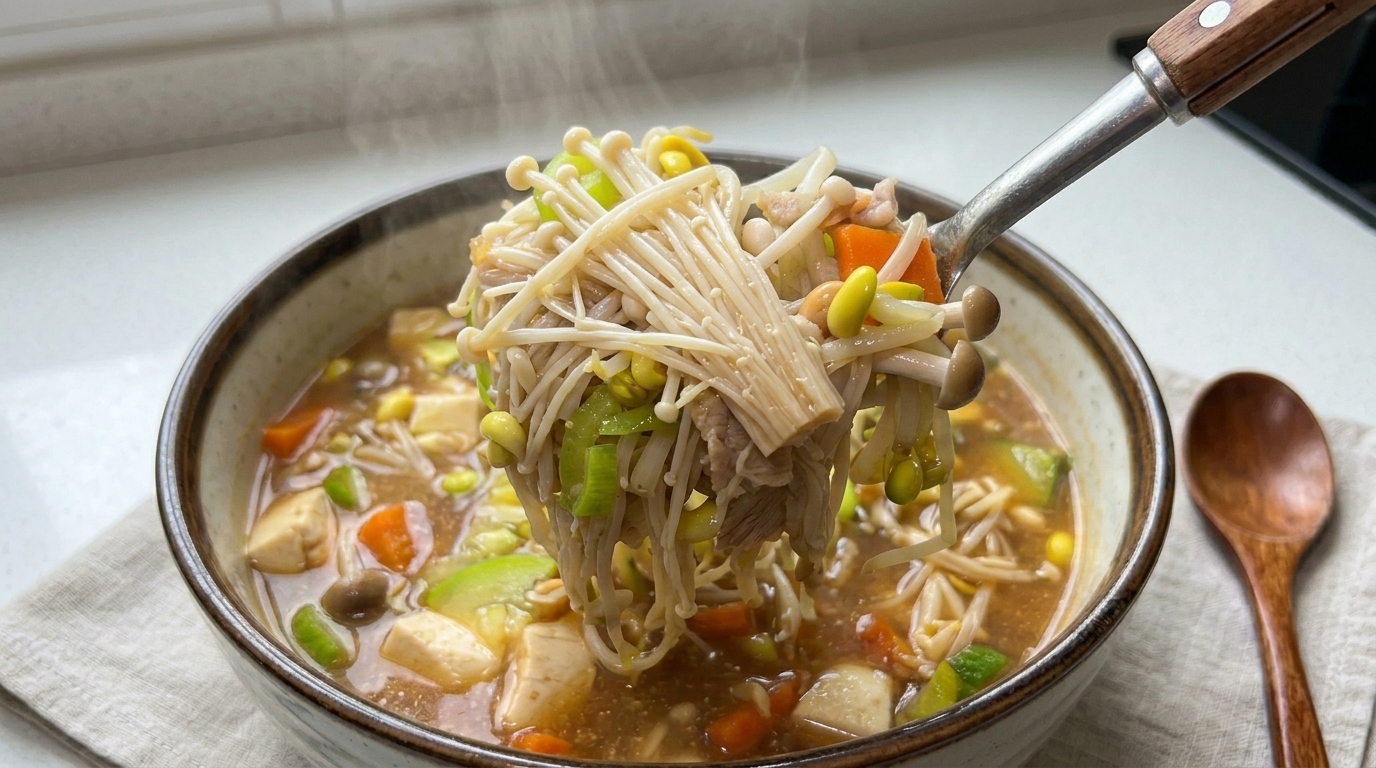
Finish the stew by placing a bunch of fresh enoki mushrooms and sliced green onions into the hot broth.
Tip: Enoki mushrooms cook exceptionally fast, so they are always added right at the end of the cooking process. - 10Garnish with chili peppers
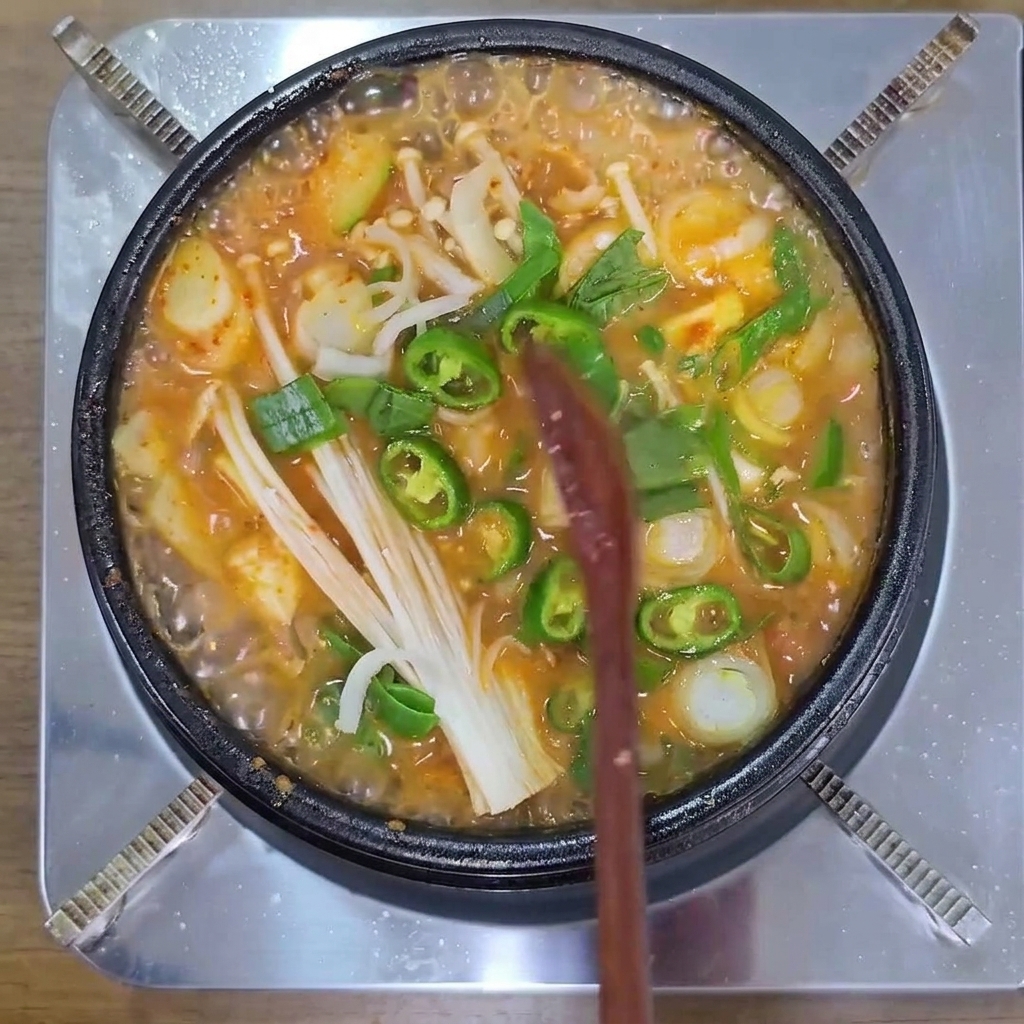
Sprinkle the freshly sliced green chili peppers over the bubbling stew. Let everything simmer together briefly to release the spicy oils before turning off the heat.
Tip: Adjust the amount of hot chili peppers according to your personal spice preference.