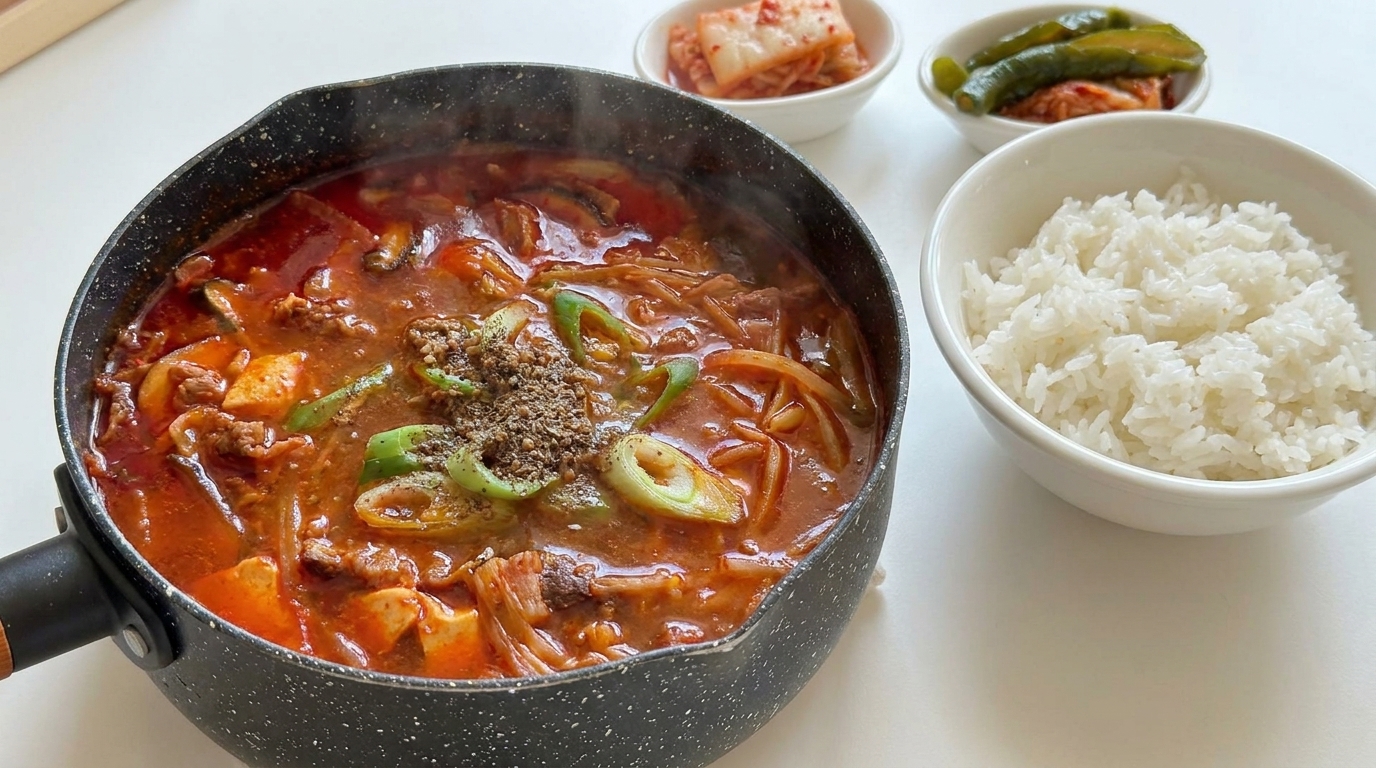
Korean Beef Doenjang Stew (Doenjang-jjigae)
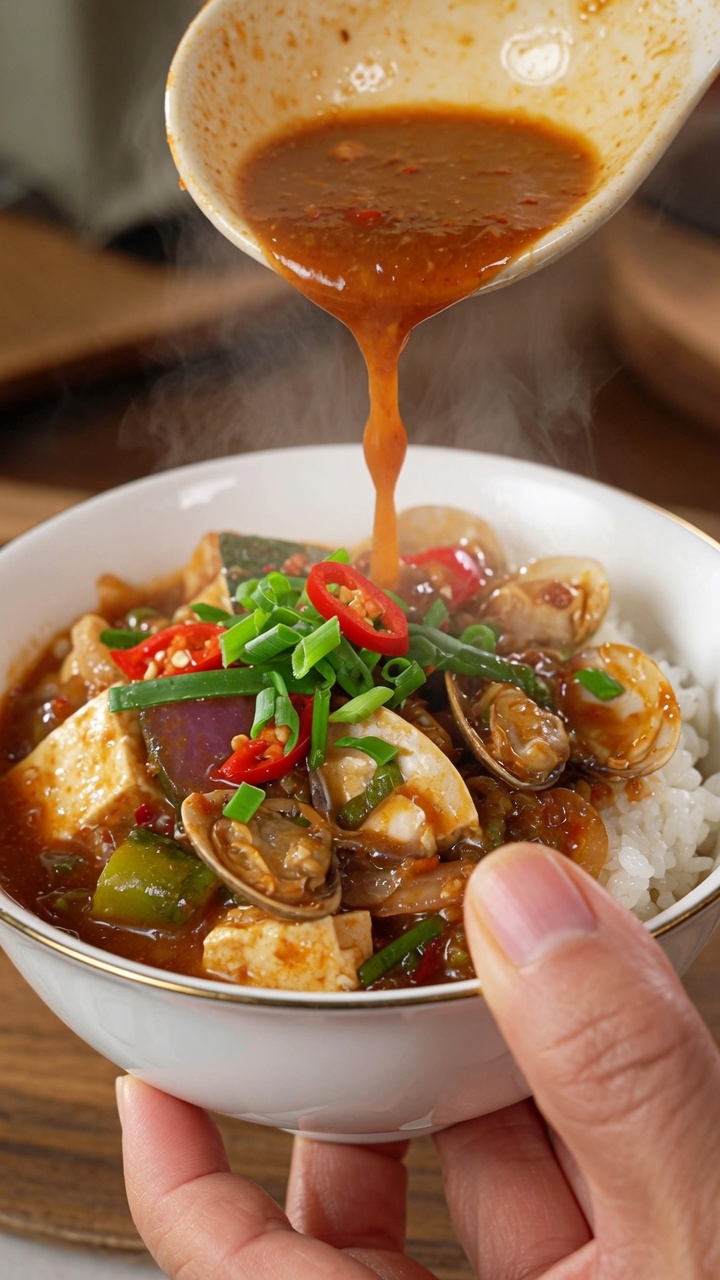
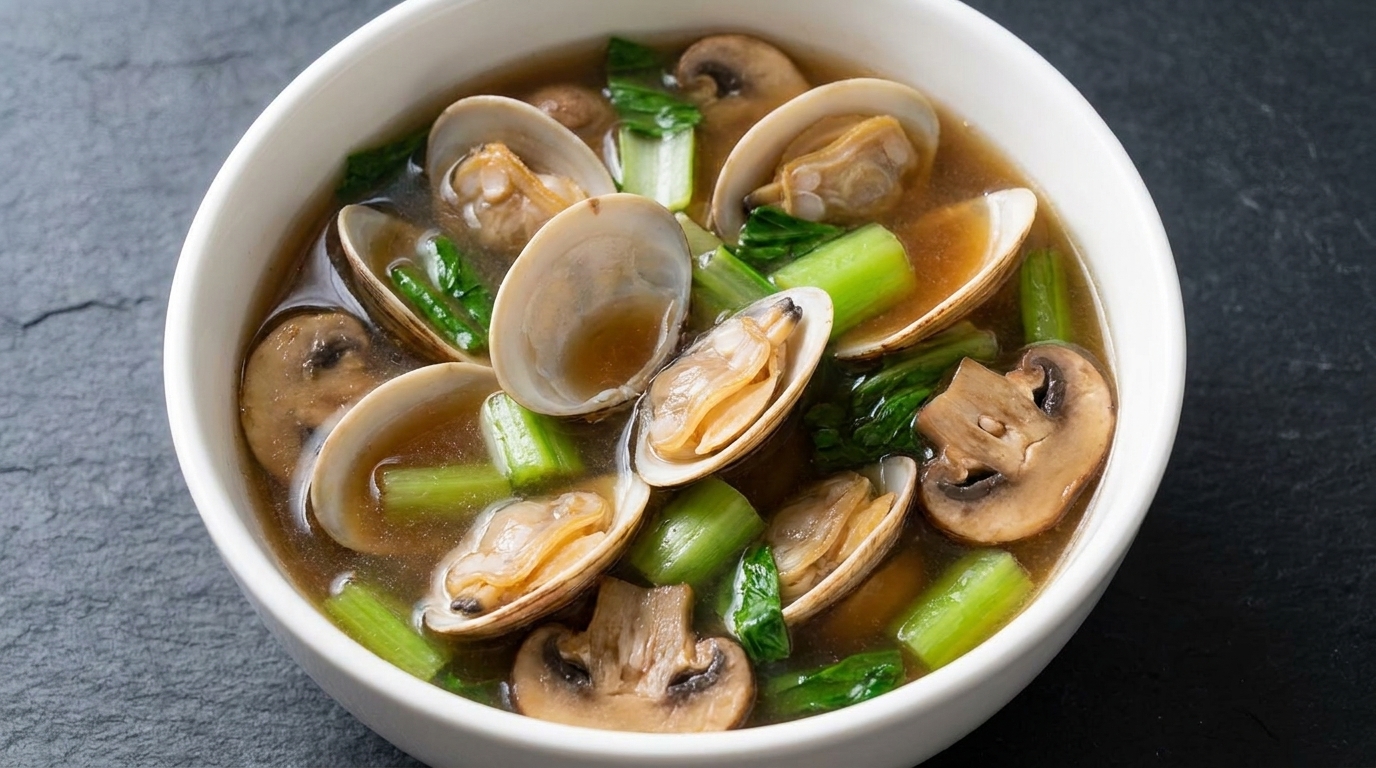
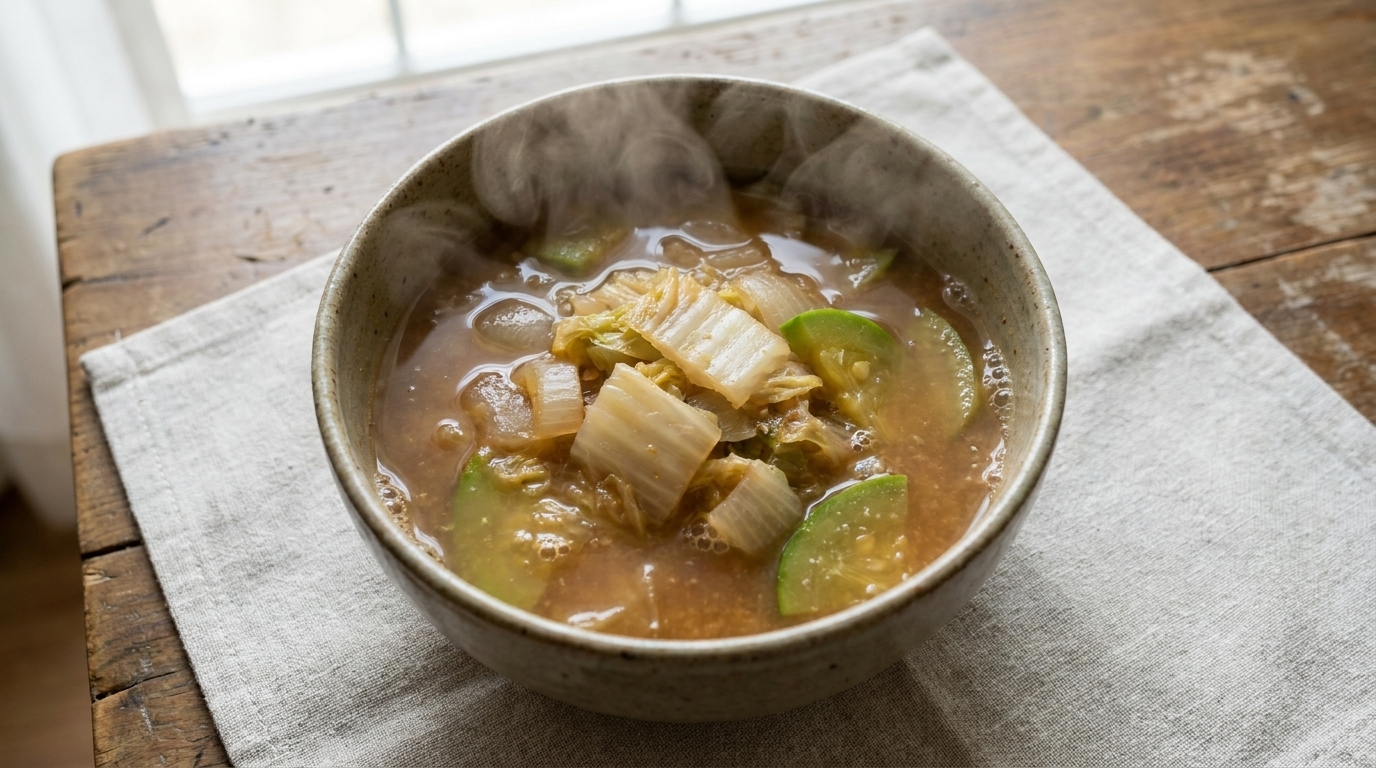
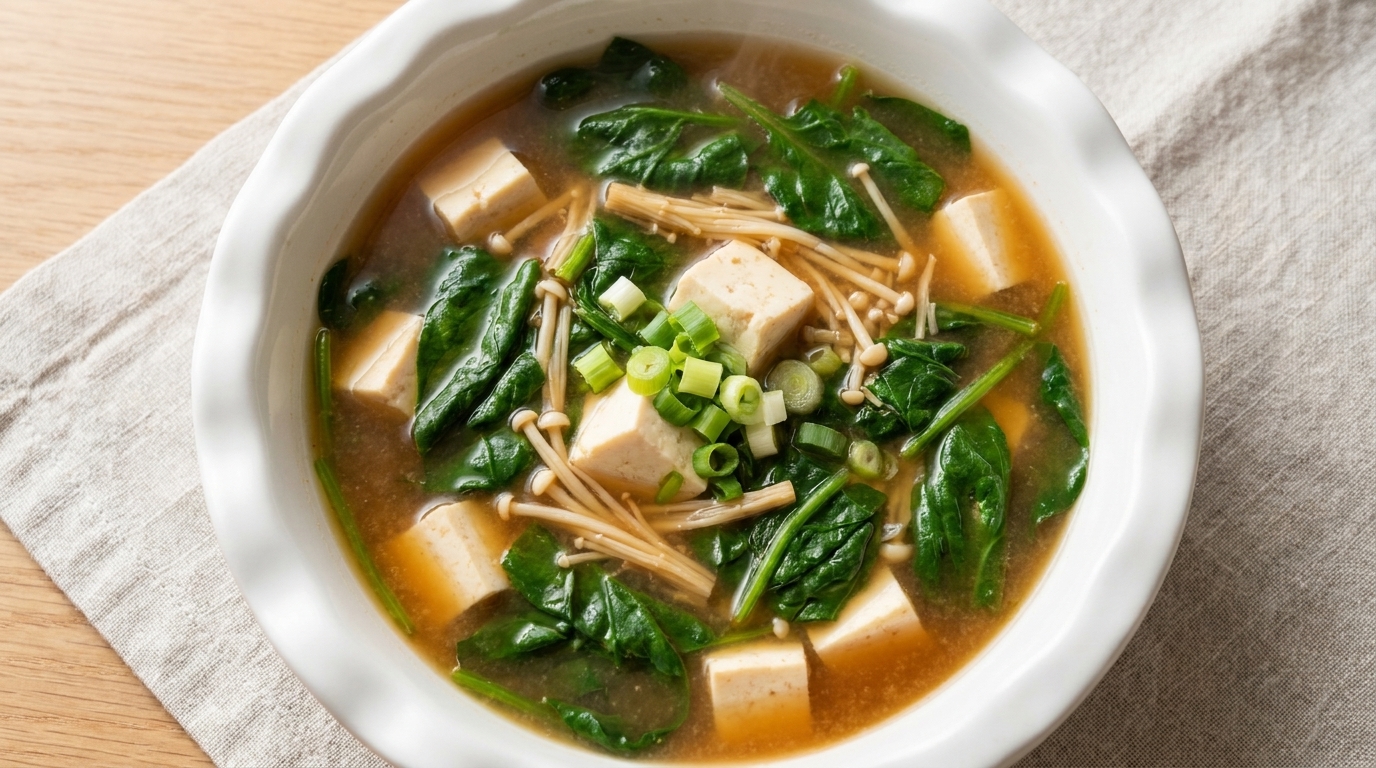
A soul-warming Korean classic, this Doenjang-jjigae features tender beef, silken tofu, and a rich, earthy fermented soybean paste broth, enhanced by aromatic perilla.
Doenjang-jjigae is a staple of Korean home cooking, celebrated for its deeply savory, probiotic-rich broth. This version elevates the traditional soybean paste base with tender beef and enoki mushrooms, while the addition of perilla powder provides an unmistakable, nutty, and herbal aroma that rounds out the bold flavors. It is a hearty, comforting stew that embodies the heart of Korean cuisine, traditionally enjoyed bubbling hot with a bowl of steamed white rice.
Ingredients
- 150 g beef, thinly sliced
- 200 g silken tofu
- 2 tbsp Korean doenjang (soybean paste)
- 100 g bean sprouts
- 50 g enoki mushrooms
- 50 g shiitake mushrooms
- 1/2 red onion
- 1 tbsp minced garlic
- 1 tsp beef bouillon powder
- 1 tsp chili powder
- 1 tbsp perilla powder
- 1 tsp sesame oil
- 2 green chilies
- 2 stalks scallions
- to taste perilla powder (extra for garnish)
Instructions
- 1Prepare the vegetables
Prepare the fresh vegetables by slicing the shiitake mushrooms, red onion, enoki mushrooms, and rinsing the bean sprouts. Arrange them neatly on a plate to be ready for the stir-frying process.
Tip: Ensure the vegetables are thoroughly washed and patted dry before prep to avoid excess moisture in the stew. - 2Prepare the beef
Prepare the raw, thinly sliced beef. Make sure the beef is sliced into bite-sized pieces to ensure it cooks evenly and quickly when added to the stew.
Tip: Pat the beef dry with paper towels if its too moist to help it sear better. - 3Measure the seasonings
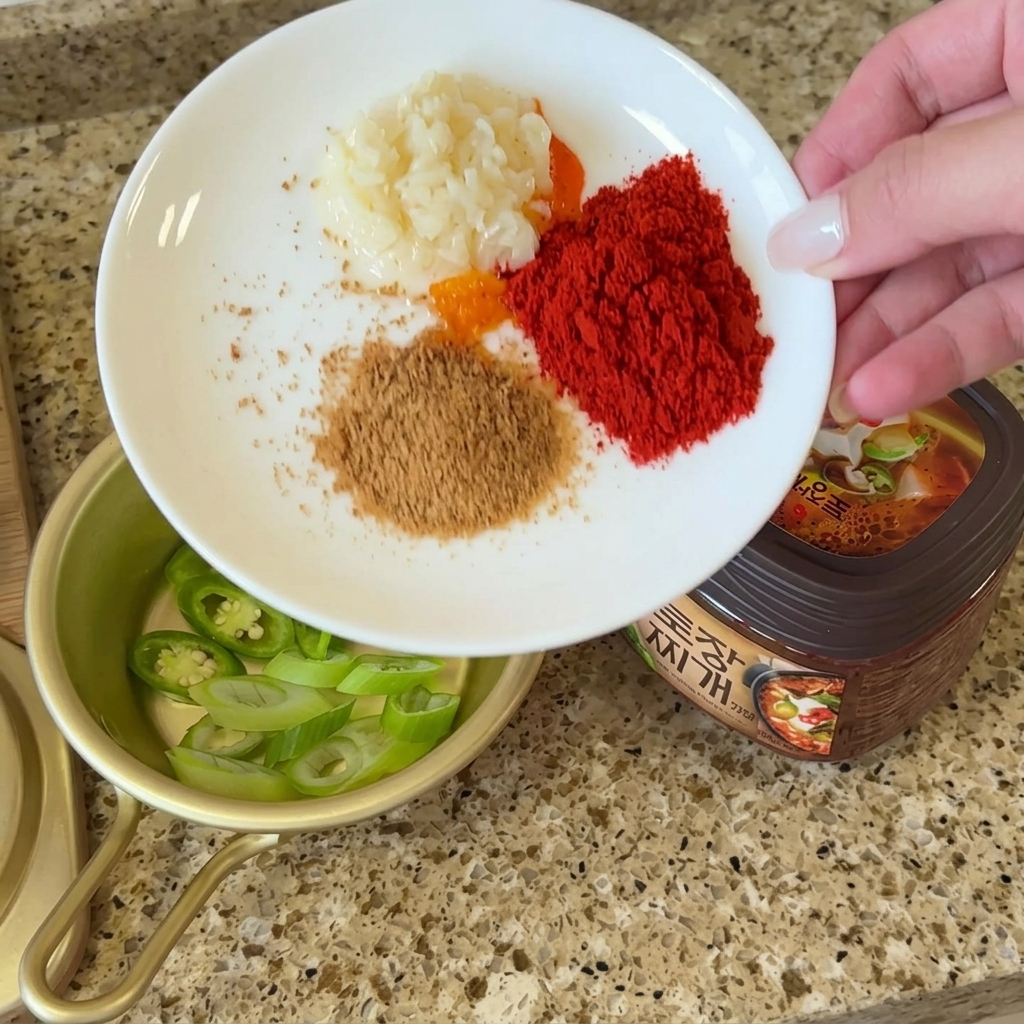
Gather the required seasonings: minced garlic, beef bouillon powder, chili powder, and perilla powder. Have the tub of Korean doenjang ready nearby.
Tip: Perilla powder is key for the unique aroma of this stew, so ensure you have enough on hand. - 4Sauté the aromatics
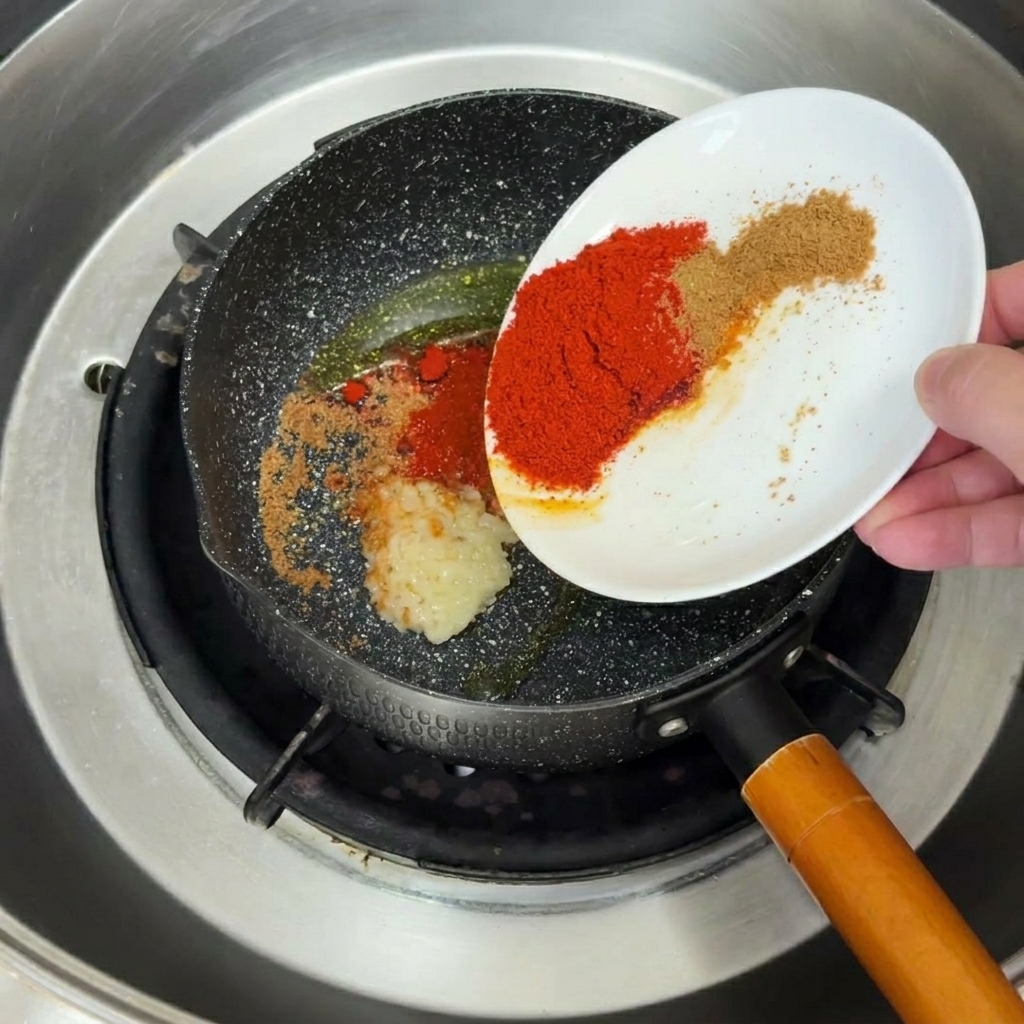
Heat oil in a black pan and add the minced garlic and dry spices. Fry them over medium heat until they become fragrant and aromatic.
Tip: Watch the heat closely; garlic burns quickly, so keep it moving in the oil. - 5Stir-fry the vegetables
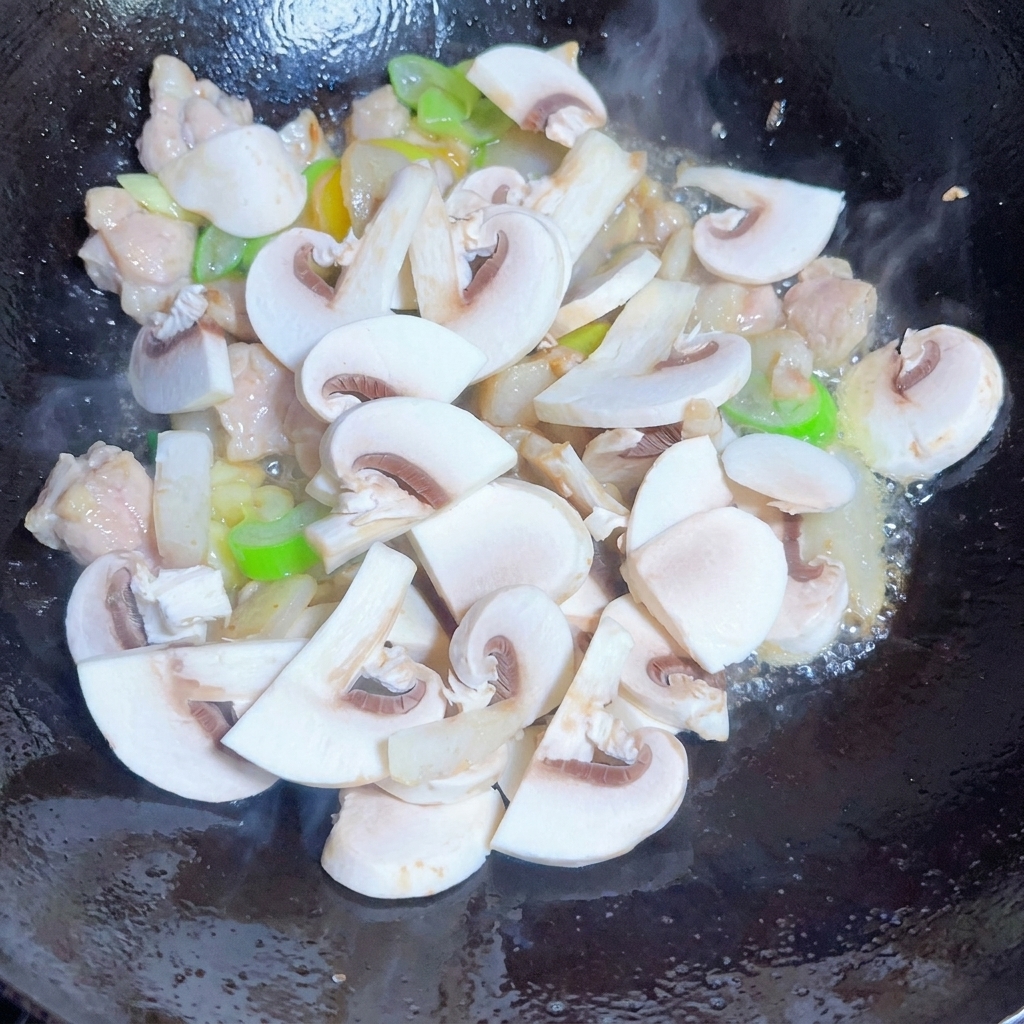
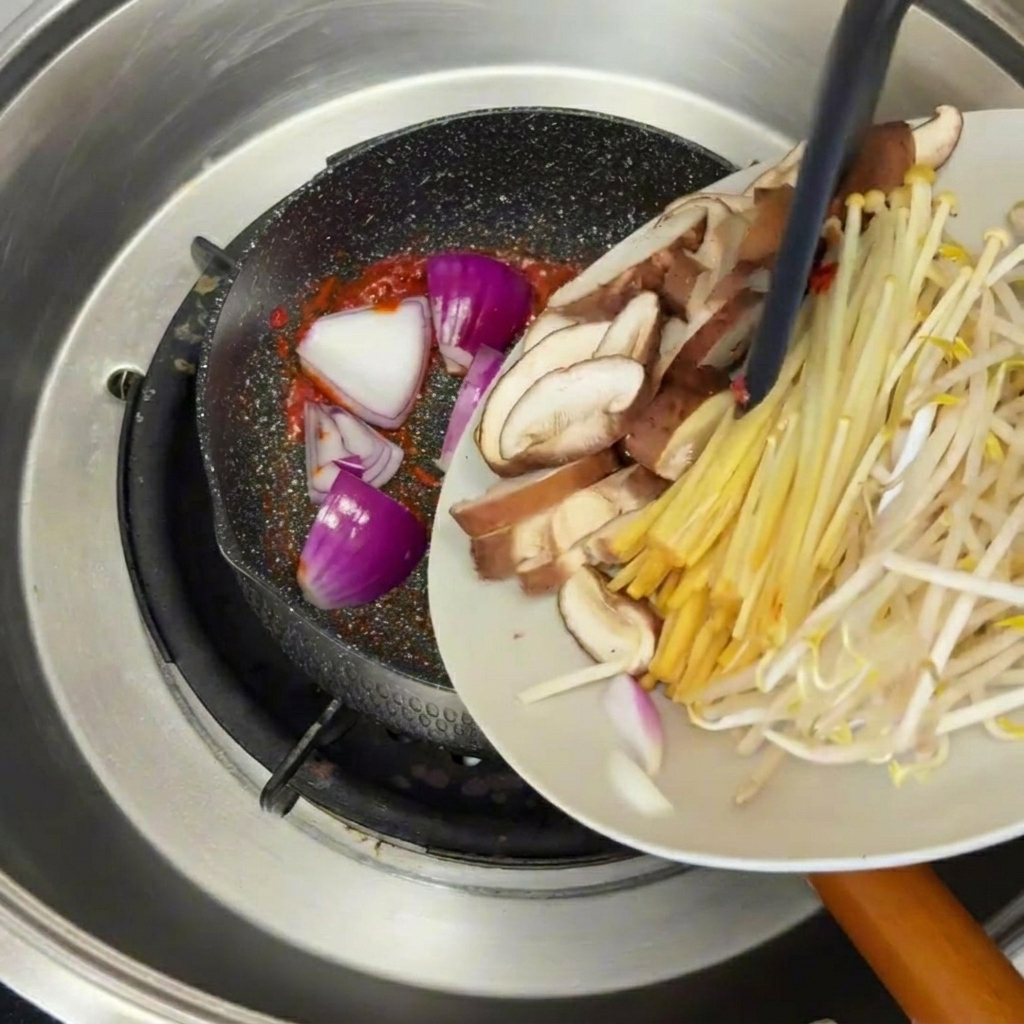
Add the prepared sliced mushrooms, onions, and bean sprouts into the pan with the fragrant spices. Stir-fry them together with a spatula until they begin to soften.
Tip: Stir-fry quickly to keep the vegetables crisp-tender before adding the liquid. - 6Add the doenjang
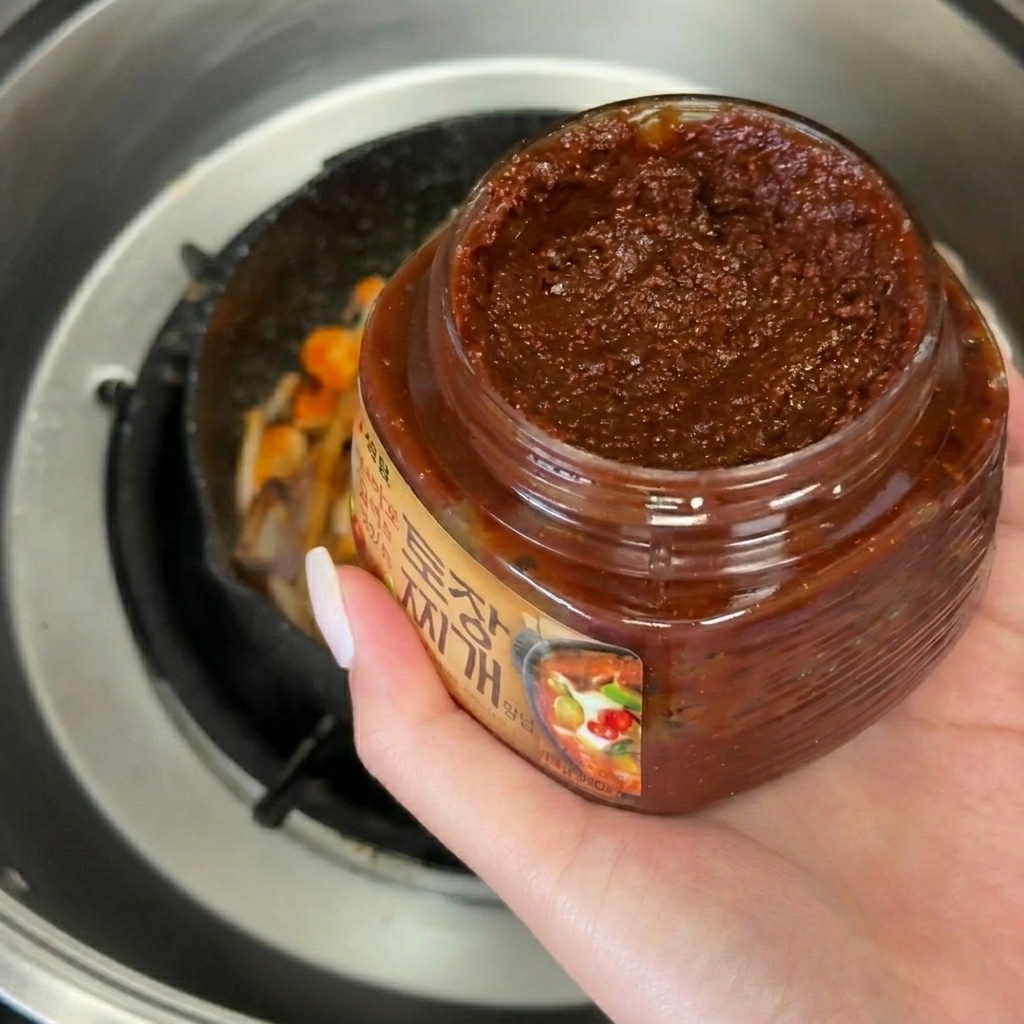
Add a generous spoonful of thick, brown Korean doenjang (soybean paste) into the pan with the stir-fried vegetables. Mix it thoroughly so the paste coats the vegetables and blends with the aromatics.
Tip: The doenjang provides a deep, savory umami base for the stew. - 7Create the broth
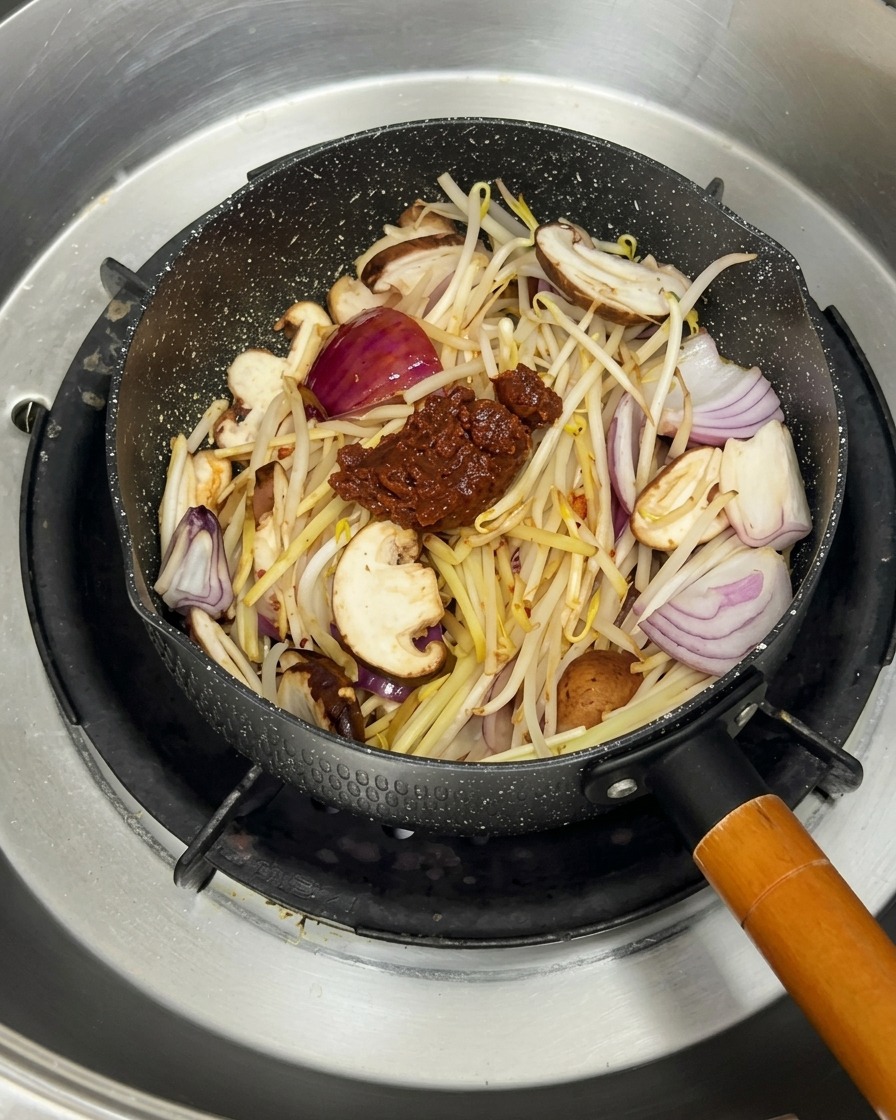
Pour boiling water into the pan containing the stir-fried vegetables and doenjang paste. This quickly creates a flavorful, hot base for the stew.
Tip: Using boiling water helps the stew return to a simmer immediately, preserving the vibrant texture of the vegetables. - 8Add the beef
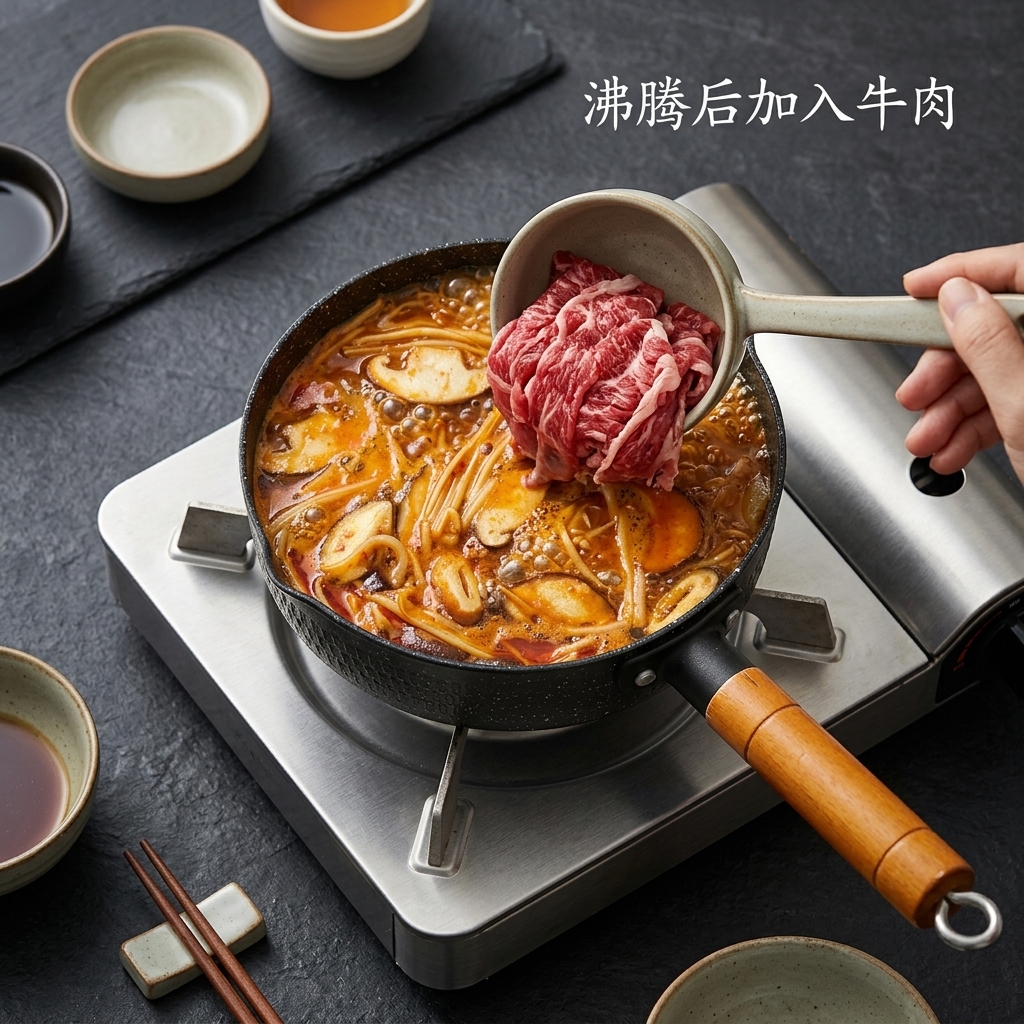
Once the broth is boiling, gently slide the raw, thinly sliced beef into the pot. The heat of the broth will cook the beef quickly and evenly.
Tip: Do not overcook the beef; since it is thinly sliced, it only needs a minute or two to become tender. - 9Add the tofu
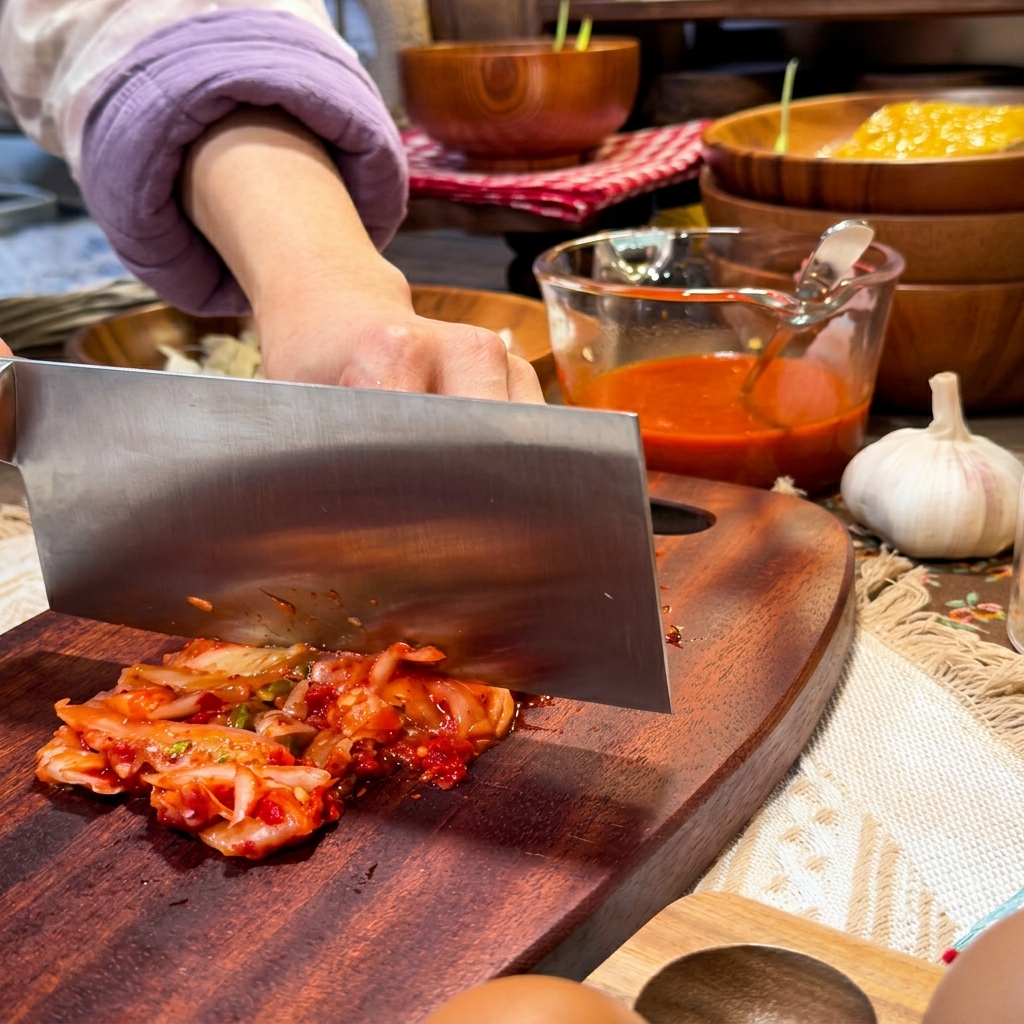
Carefully add the cubes of silken tofu into the bubbling stew. Silken tofu adds a delicate, creamy contrast to the robust, spicy broth.
Tip: Handle the tofu gently so it maintains its shape while simmering in the hot soup. - 10Finish with sesame oil
Drizzle a spoonful of toasted sesame oil over the stew just before taking it off the heat. This adds a rich, nutty aroma that rounds out the flavors.
Tip: Add the sesame oil at the very end to ensure its delicate fragrance isnt lost during the final moments of cooking. - 11Garnish the stew
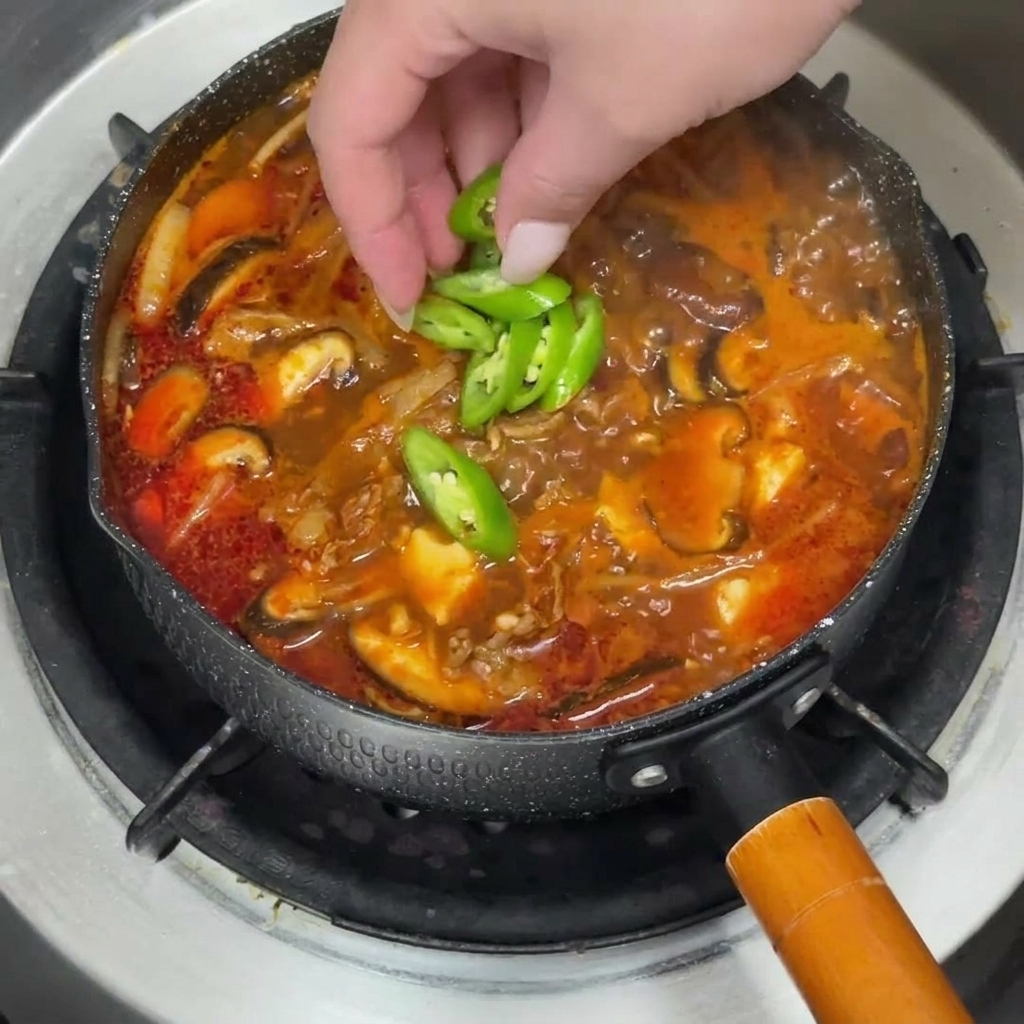
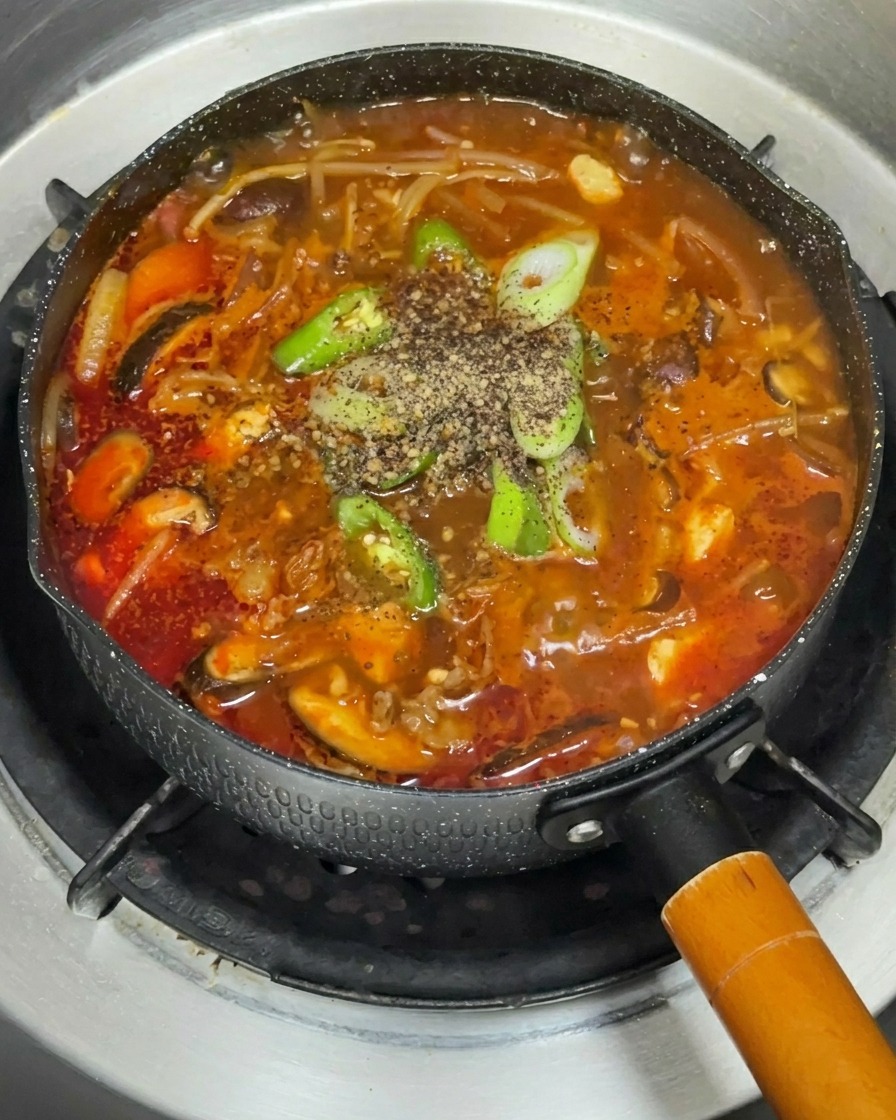
Turn off the heat and garnish the finished stew with fresh green chili slices and green onion segments for a pop of color and freshness.
Tip: Fresh garnishes provide a crisp contrast to the deep, savory flavors of the doenjang stew. - 12Final seasoning
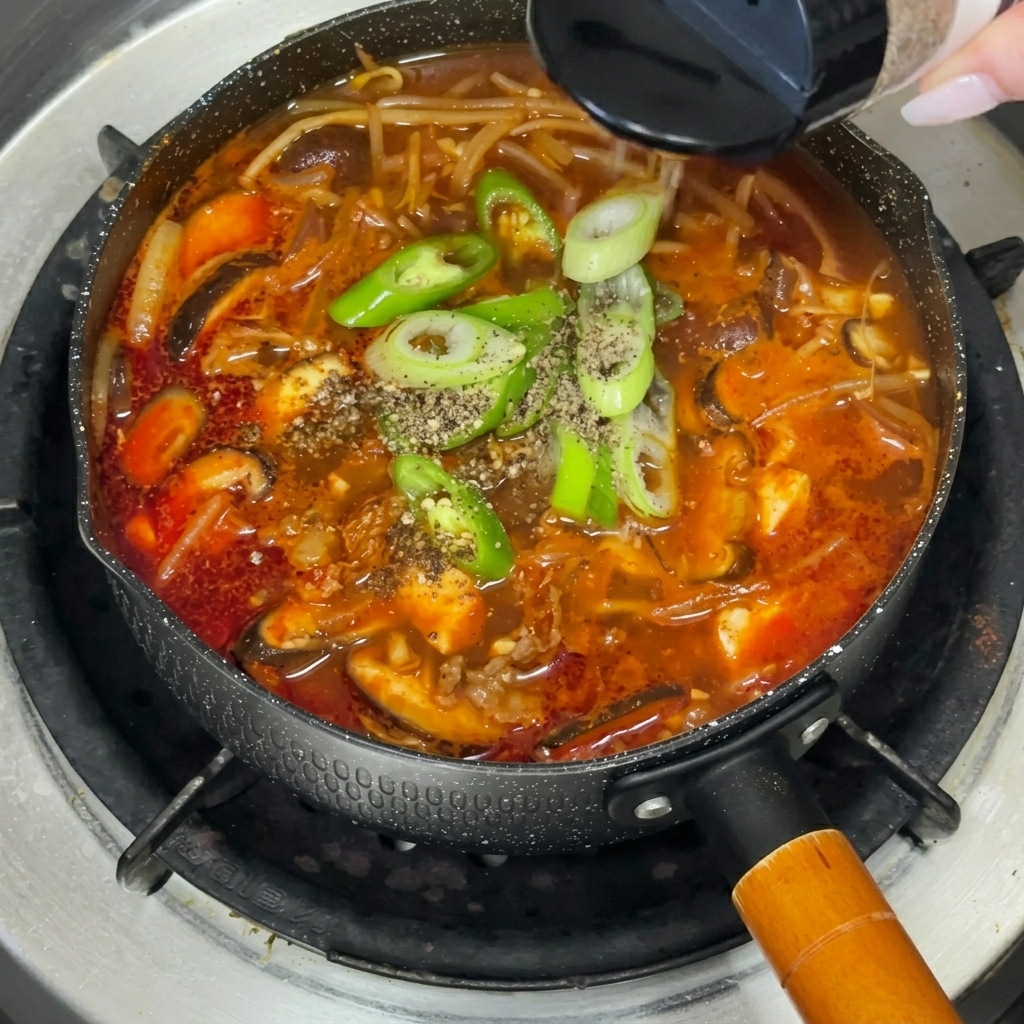
Sprinkle additional perilla powder over the top of the stew before serving. This enhances the depth of flavor and provides a signature nutty, earthy aroma.
Tip: Perilla powder is a key ingredient for Korean doenjang stew; add extra if you enjoy its unique herbal profile.