Korean Soybean Paste Stew (Doenjang-jjigae)
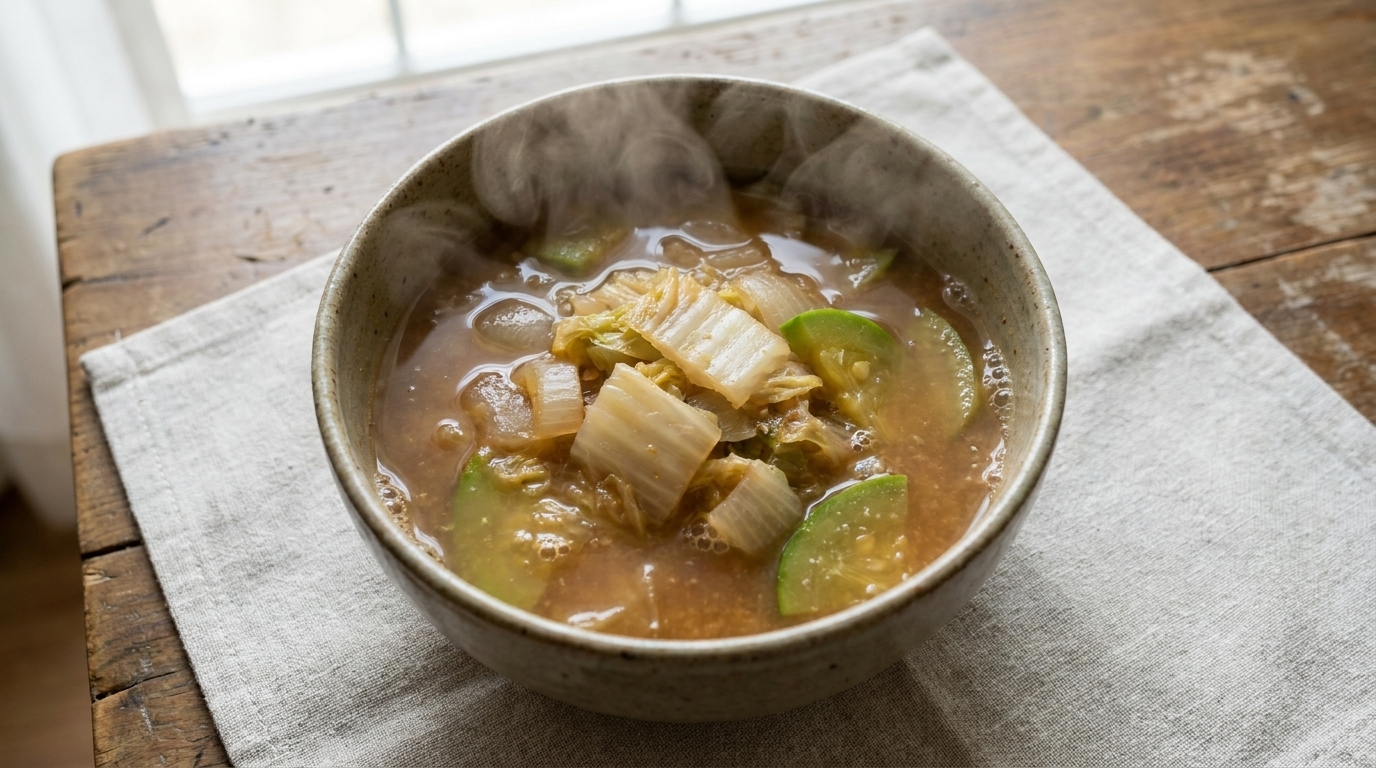
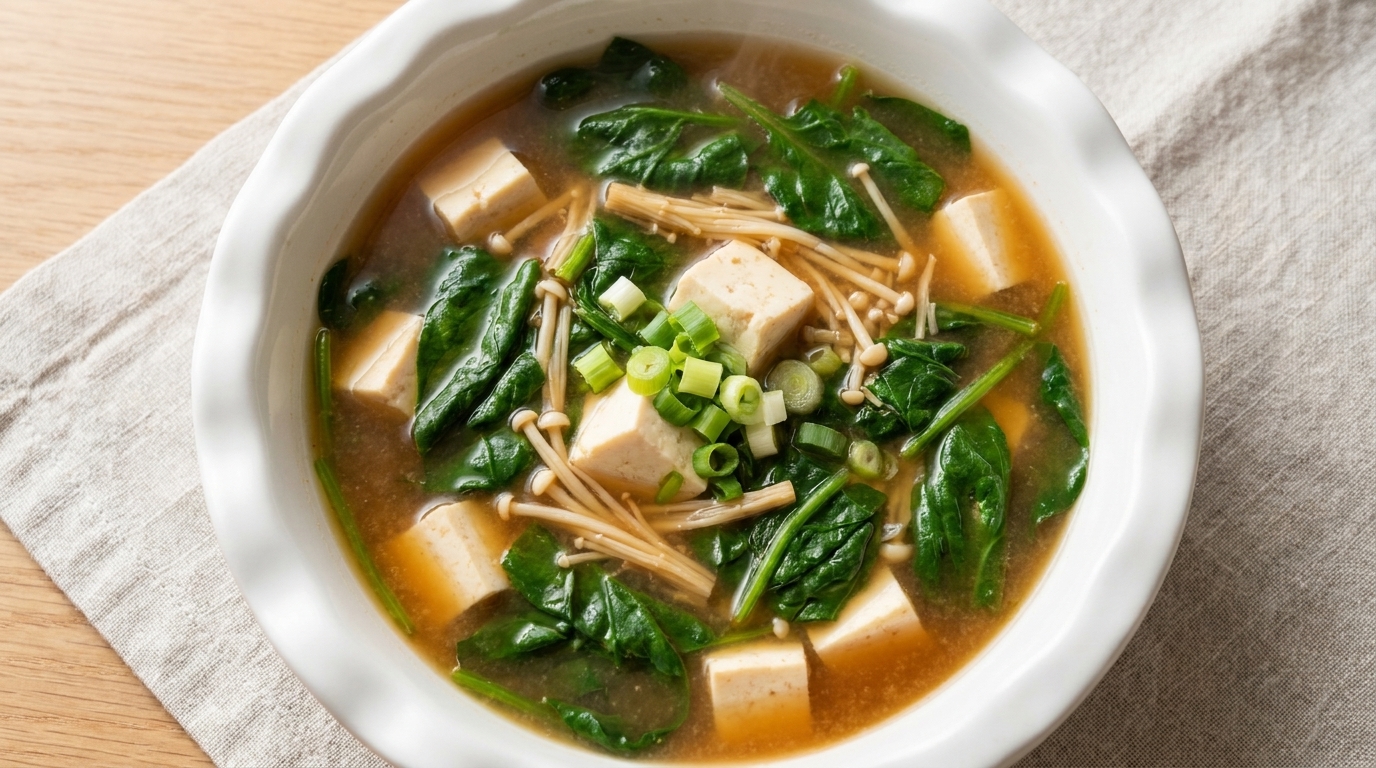
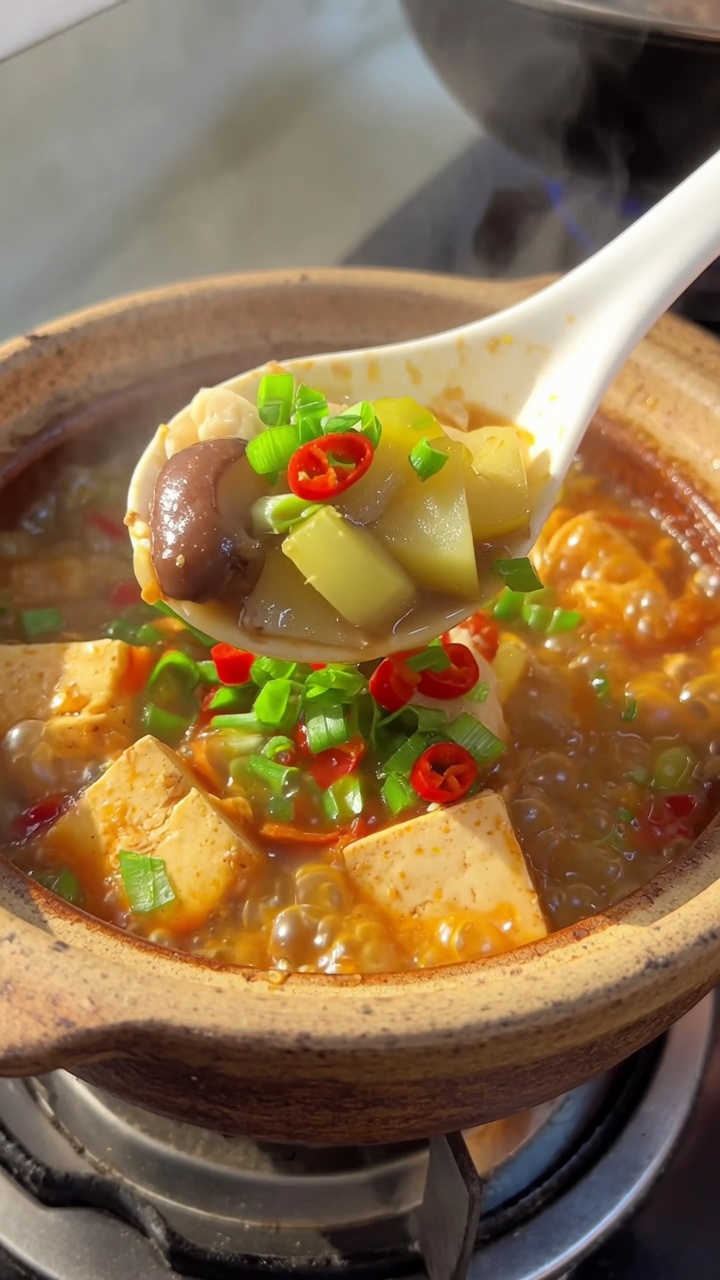
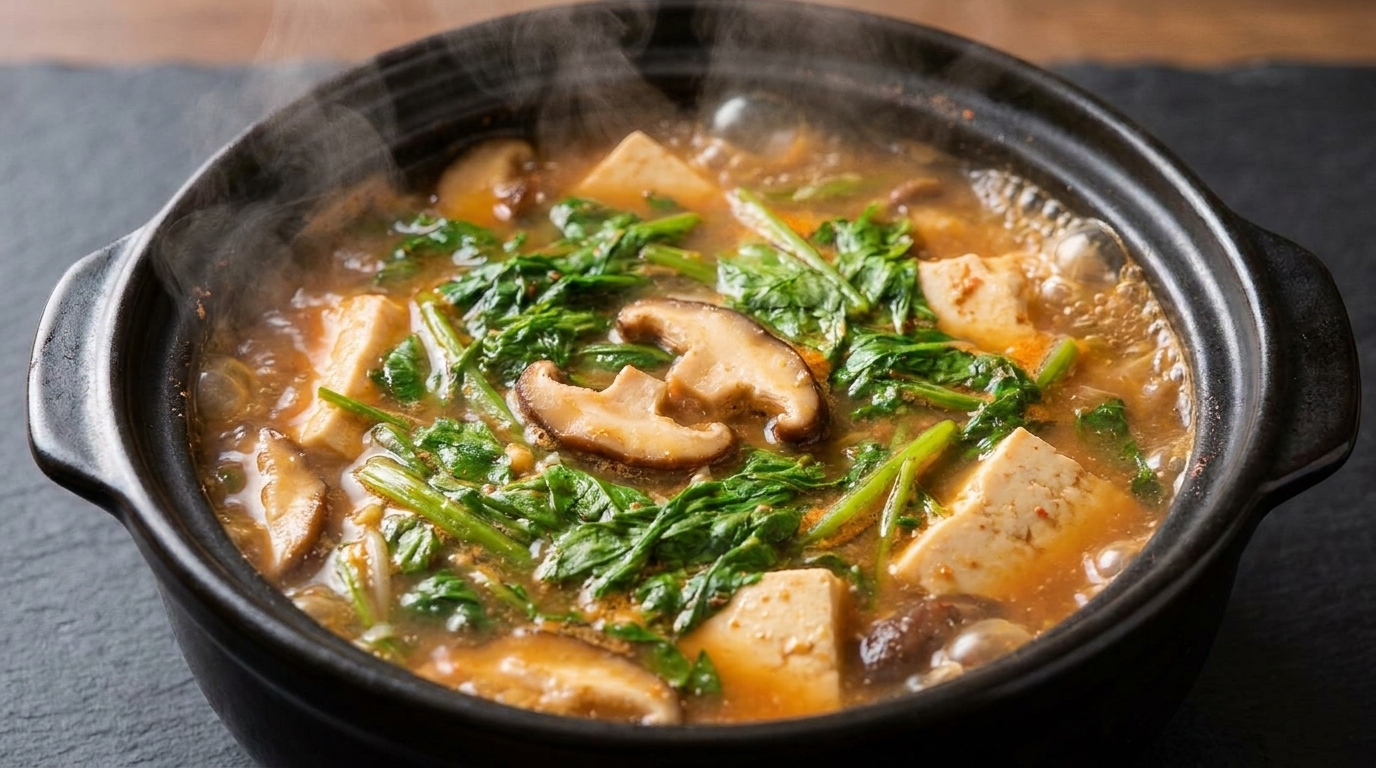
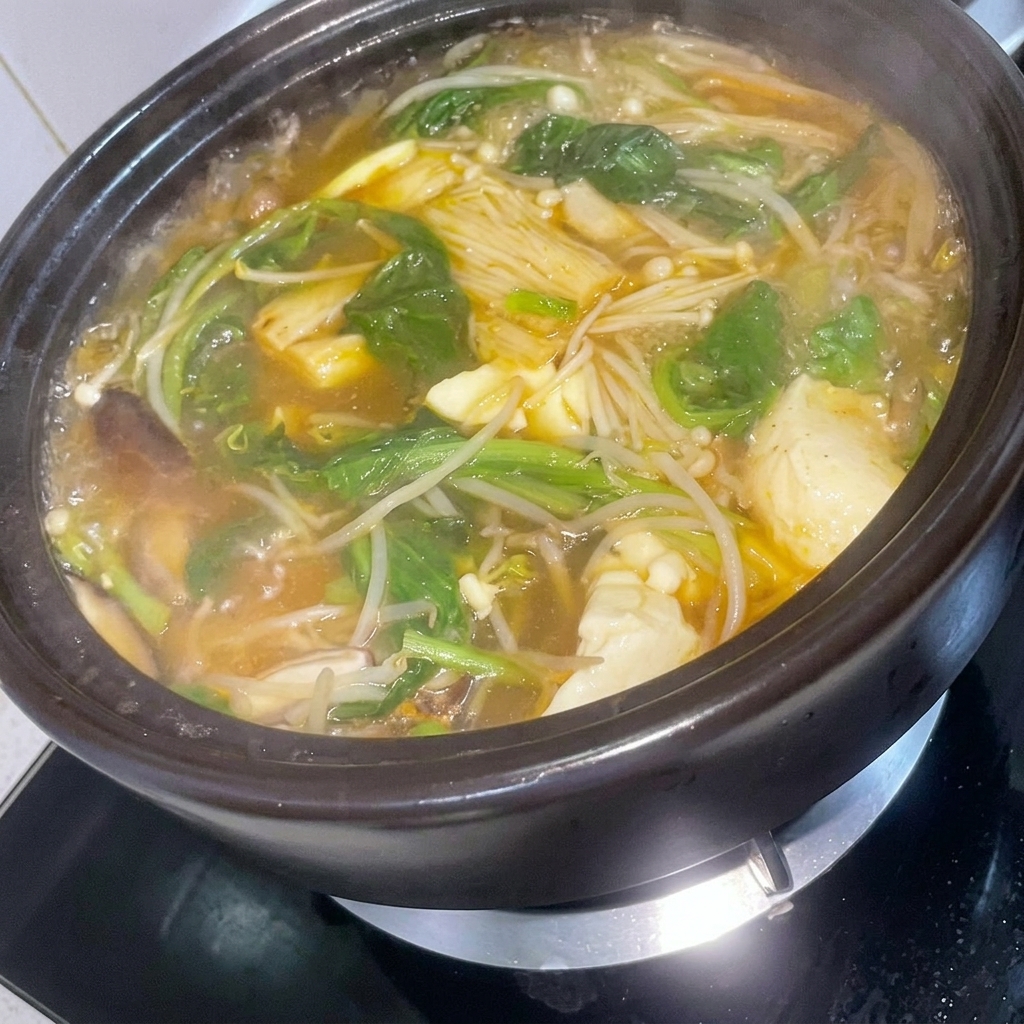
A comforting, earthy Korean stew made with a savory soybean paste broth, silken tofu, fresh vegetables, and mushrooms, perfectly seasoned for a quick, warming meal.
Doenjang-jjigae is a cornerstone of Korean home cooking, prized for its deep, savory flavor and healthful properties. Made from fermented soybean paste, this rustic stew is a versatile and restorative dish, especially beloved for its ability to warm you up on a cold day. Whether enjoyed with a simple bowl of rice or as part of a larger meal, its balanced flavors remain a true classic.
Ingredients
- 1 tbsp sesame oil
- 1 cup bok choy or leafy greens
- 1/2 cup bean sprouts
- 3-4 shiitake mushrooms, sliced
- 500 ml hot water
- 1.5 tbsp doenjang (Korean soybean paste)
- 1/2 tbsp gochujang (Korean chili paste)
- 1/2 tsp beef seasoning powder
- 1 block firm tofu, cubed
- 1 pinch salt
- 1 stalk green onion, chopped (optional)
Instructions
- 1Prepare the clay pot
Place your clay pot on the stove over medium heat. Carefully pour a small amount of sesame oil into the bottom of the pot to coat it, ensuring the base is well-greased for stir-frying.
Tip: Sesame oil adds a wonderful nutty aroma to the stew base; be careful not to overheat it as it can burn quickly. - 2Sauté the vegetables
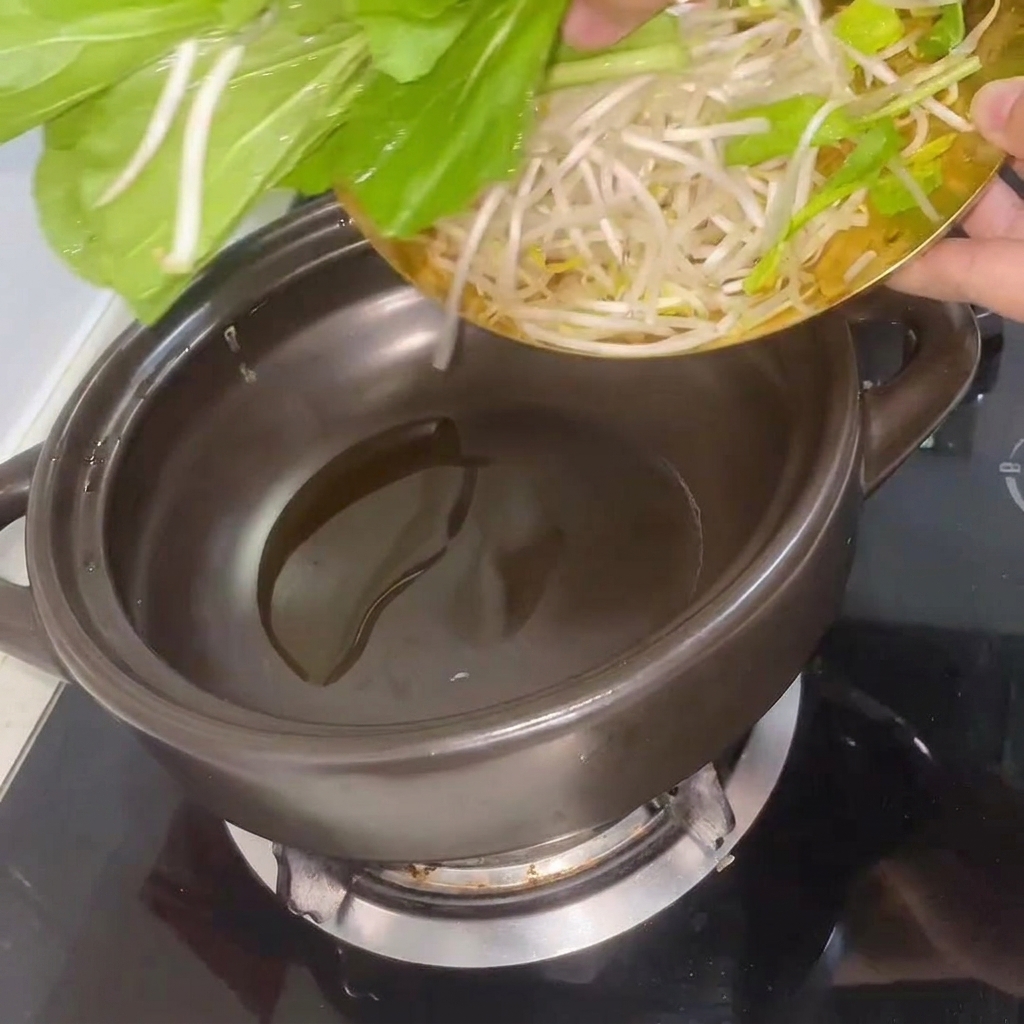
Add your selection of fresh leafy vegetables, such as bok choy, along with a handful of bean sprouts directly into the pot with the sesame oil. Stir-fry them gently until they begin to wilt and release their moisture.
Tip: Stir-frying the greens first builds a flavorful foundation for the broth. - 3Add mushrooms and water
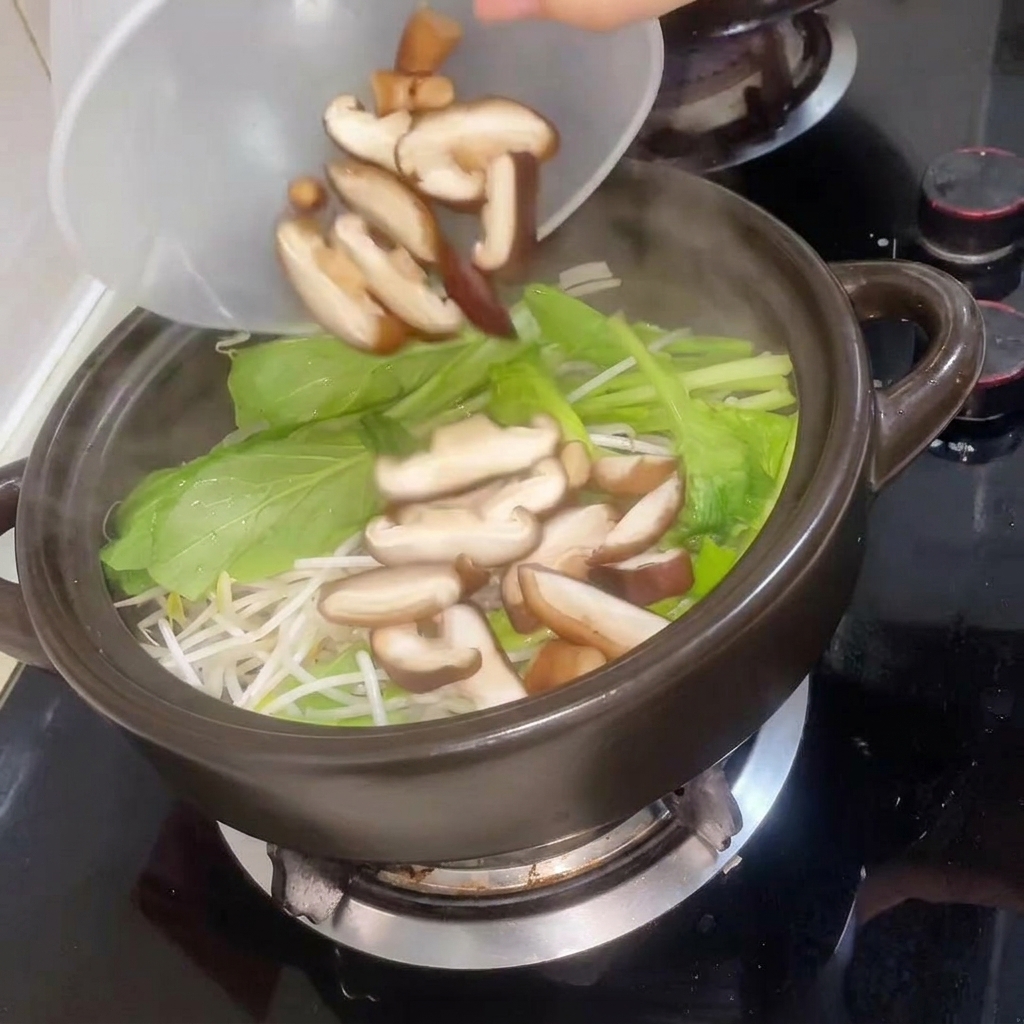
Add the sliced shiitake mushrooms to the wilted greens in the pot. Carefully pour in hot water to cover the ingredients; using hot water helps maintain the temperature of the clay pot and speeds up the cooking process.
Tip: Using hot water is safer for clay cookware and keeps the cooking process consistent. - 4Season with soybean paste
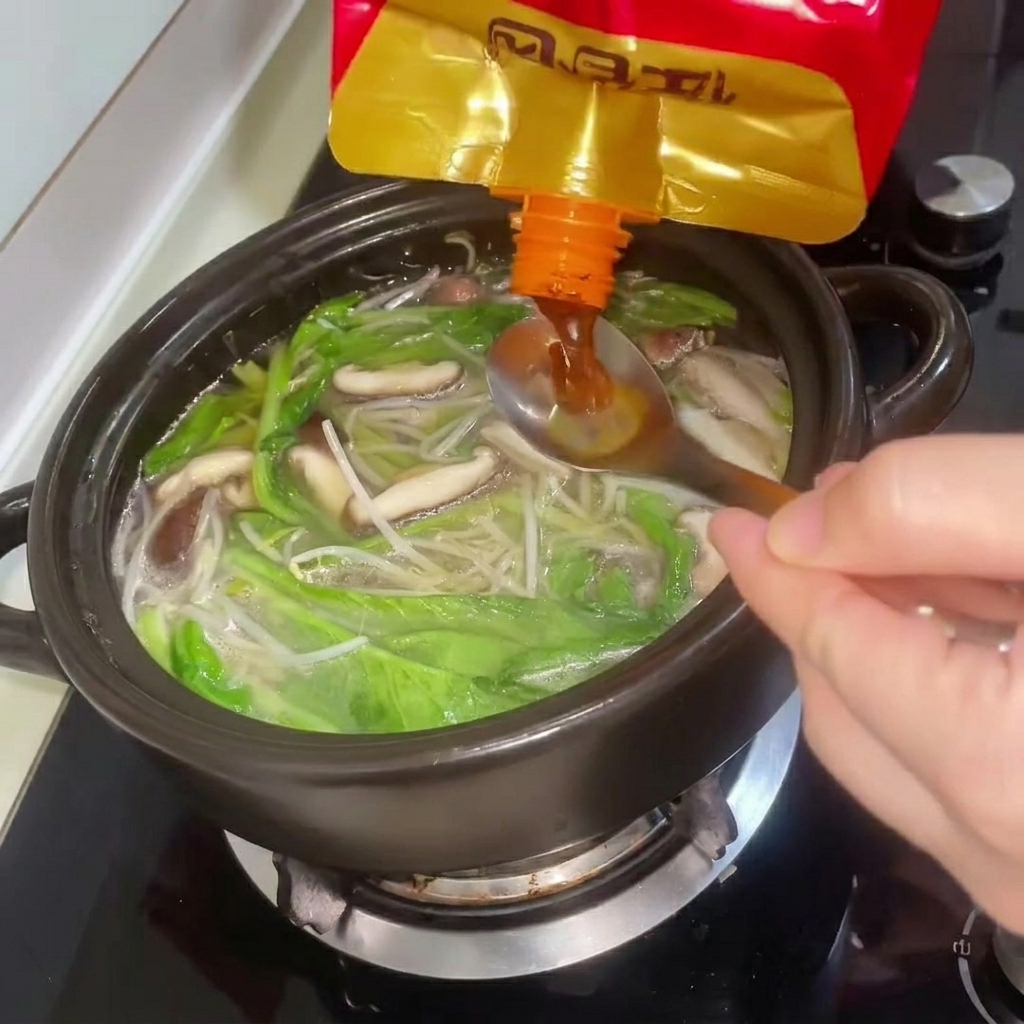
Add a generous spoonful of Korean soybean paste into the bubbling broth. Gently stir the paste into the liquid until it is completely dissolved and the broth turns a rich, opaque brown color.
Tip: Ensure the paste is fully dissolved to avoid clumps and achieve a uniform, savory flavor. - 5Add chili paste
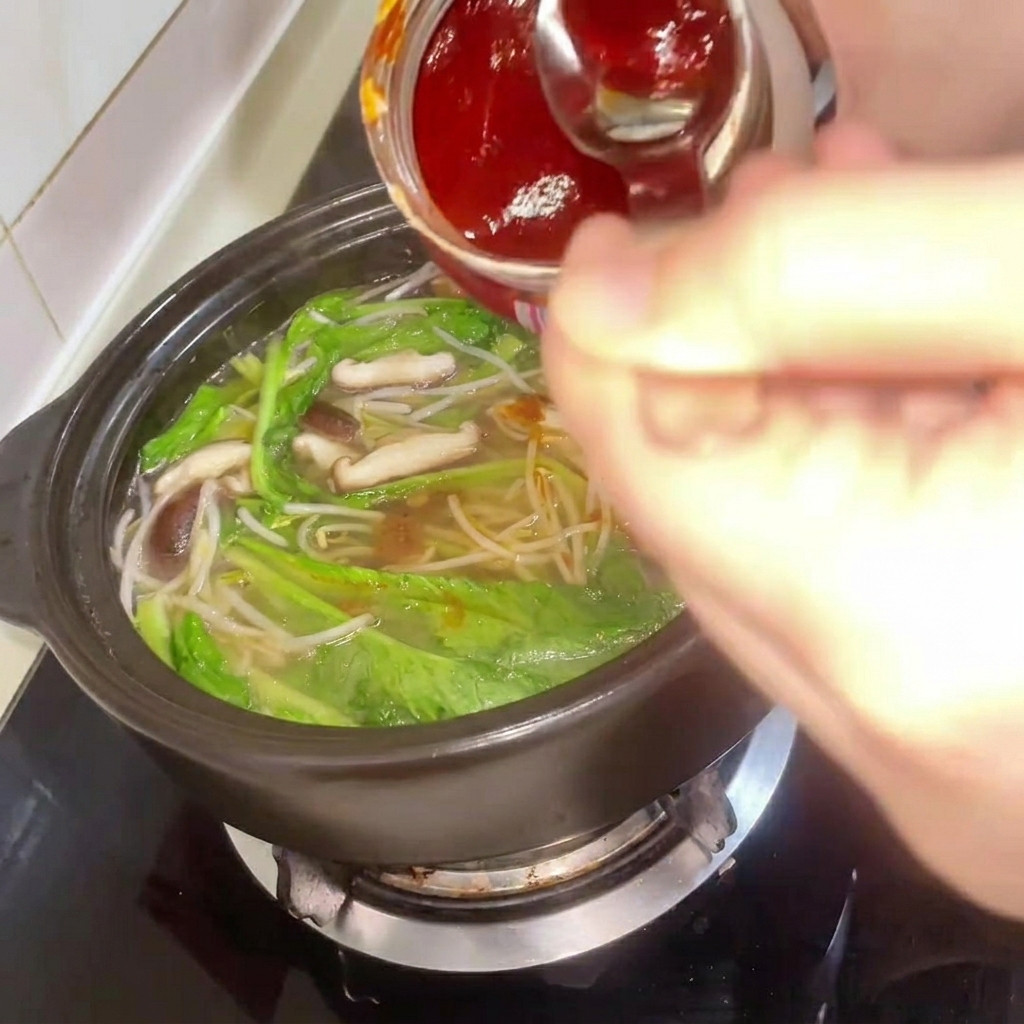
Add about half a spoonful of Korean chili paste to the stew. Stir well to combine, incorporating the spicy, slightly sweet flavor into the soybean-based broth.
Tip: Adjust the amount of chili paste based on your preference for heat; half a spoonful provides a nice balance without being overly spicy. - 6Add seasoning and finish
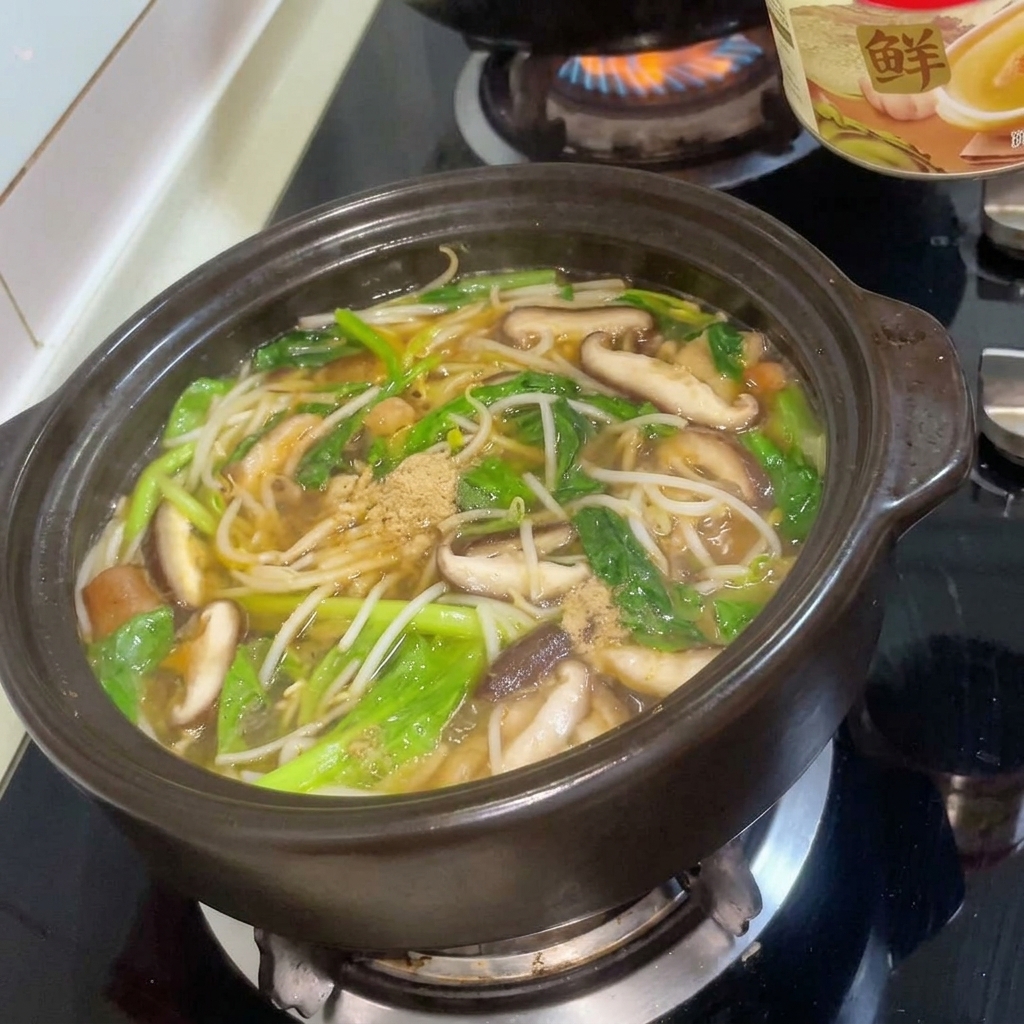
Sprinkle in a small amount of beef seasoning powder to enhance the depth of the broth, along with a pinch of salt if desired. Finally, add the tofu and let the entire stew simmer until heated through.
Tip: Beef seasoning adds a savory umami boost that complements the soybean paste perfectly. - 7Add tofu to the stew
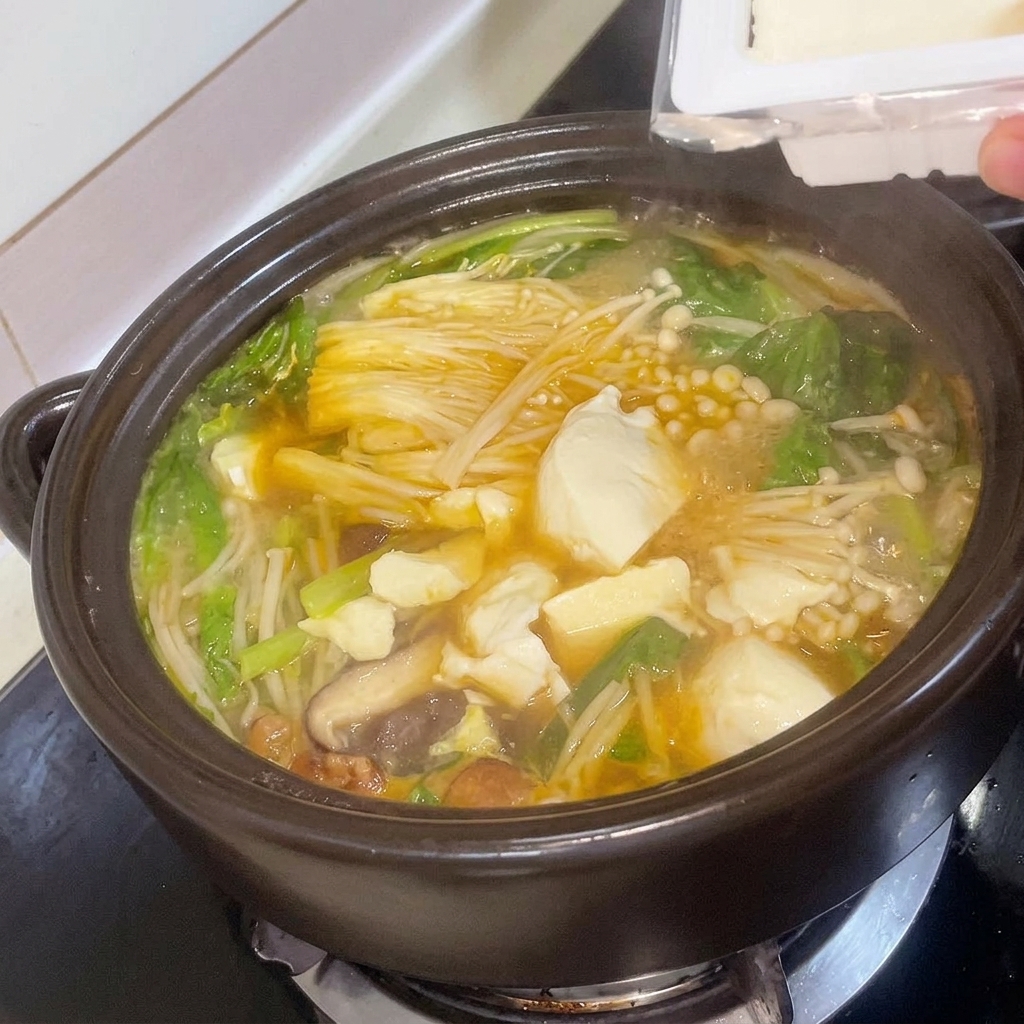
Gently place cubes of tofu into the bubbling clay pot. The tofu will absorb the flavors of the soybean paste broth as it simmers, becoming soft and savory.
Tip: Be careful when adding the tofu to avoid splashing the hot broth; using a spatula or spoon can help you lower it in gently.