Spicy Steamed Cured Pork Ribs
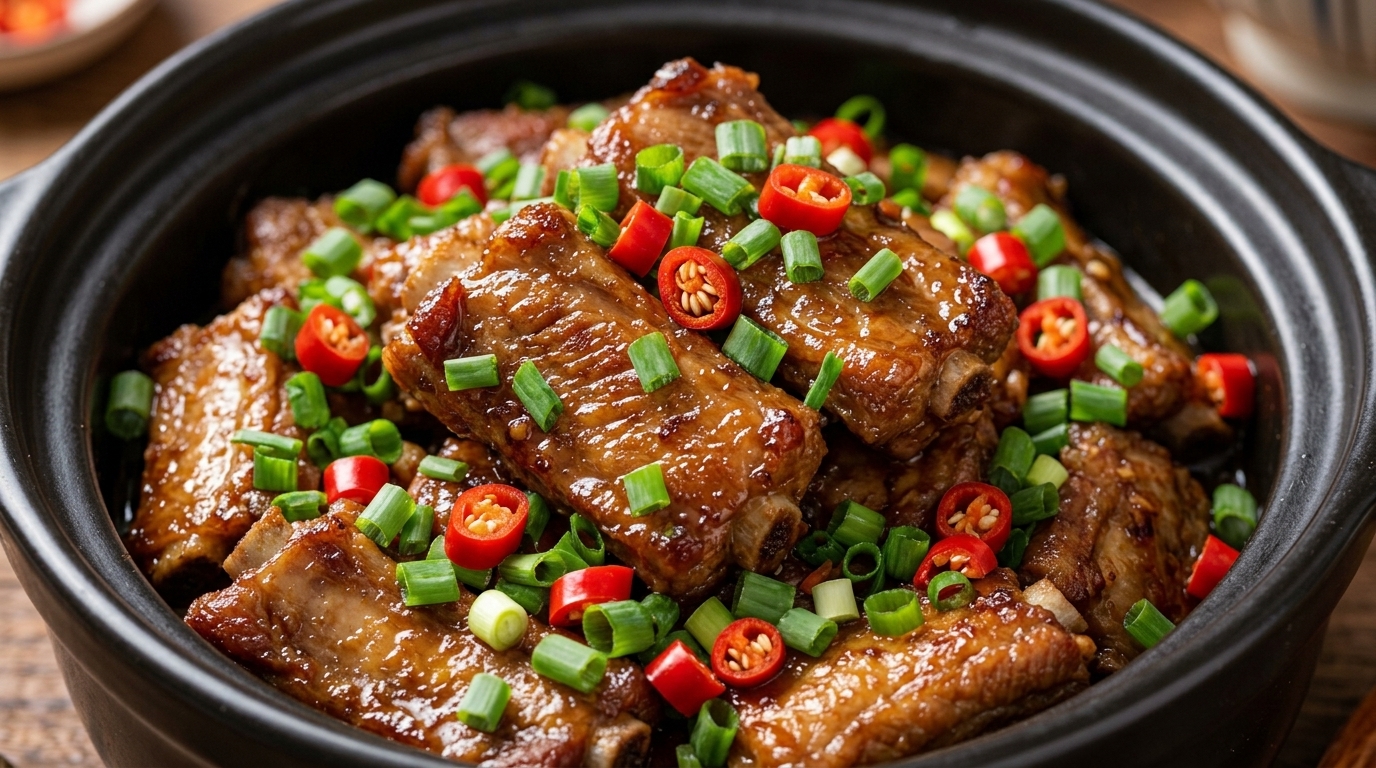
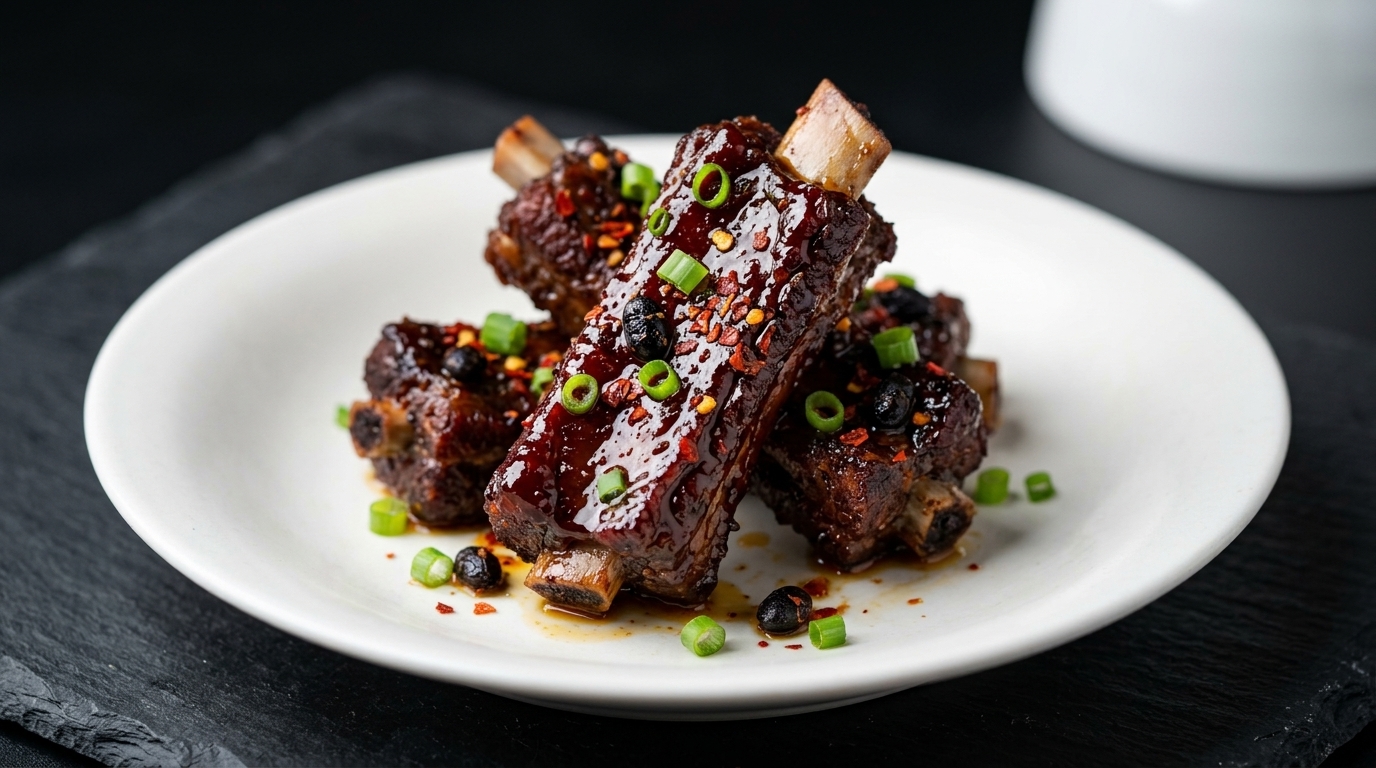
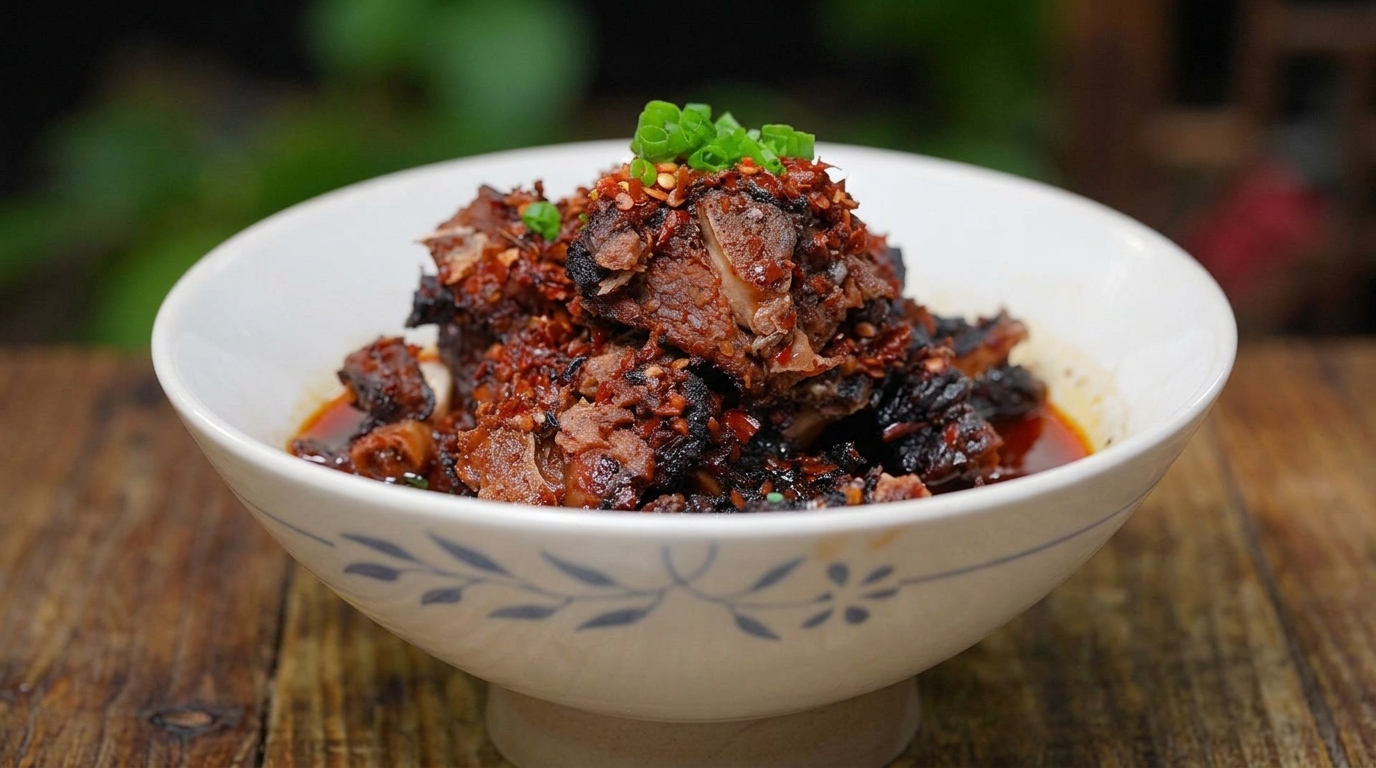
A fierce Hunan-style classic featuring savory cured ribs double-blanched to balance their salinity, then flash-fried with tea oil and fermented black beans before a 30-minute high-pressure steam.
Cured meats are an architectural pillar of regional Chinese cooking, designed historically for preservation and celebrated today for their intense, concentrated depth. This recipe uses the traditional counterintuitive technique of adding salt to the blanching liquid to draw out excess salinity from deep within the muscle fibers. Finished with an aromatic layer of hot tea oil, fermented douchi, and a vibrant duo of red and yellow chilies, the ribs emerge from the pressure cooker falling-off-the-bone tender and thoroughly saturated with spice.
Ingredients
- 500 g cured pork ribs
- 1 tbsp white salt (for desalination)
- 2 tbsp tea oil
- 1.5 tbsp fermented black beans (douchi)
- 2 tbsp red chili powder
- 12 tsp MSG
- 2 tbsp crushed yellow chili peppers
- 50 ml water
- to taste chopped scallions
Instructions
- 1Chop the cured ribs
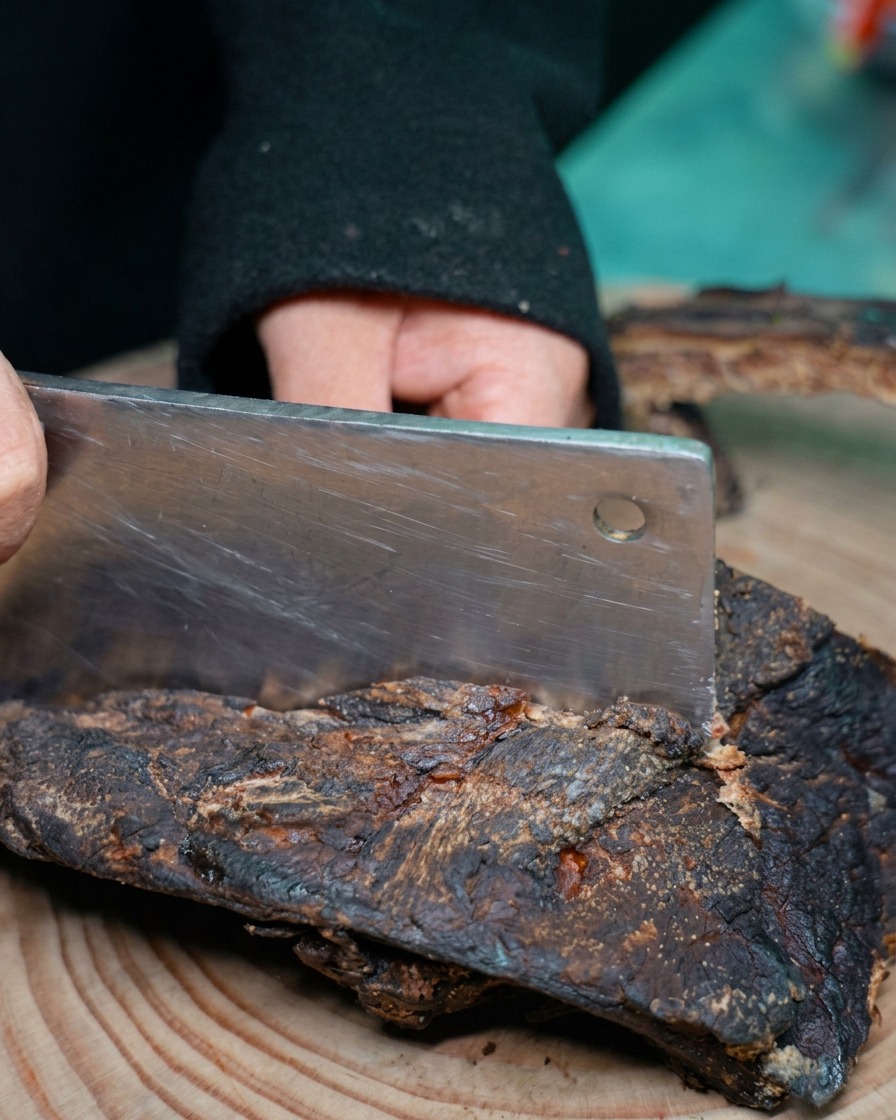
Using a large, heavy cleaver, carefully chop the slab of dark cured pork ribs into small, bite-sized pieces on a sturdy wooden cutting board. Cutting them into even pieces ensures they will cook uniformly and be easier to eat.
Tip: Cured meats and bones can be tough; use a sharp cleaver and cut straight down with firm pressure to chop safely. - 2Transfer the ribs to the wok
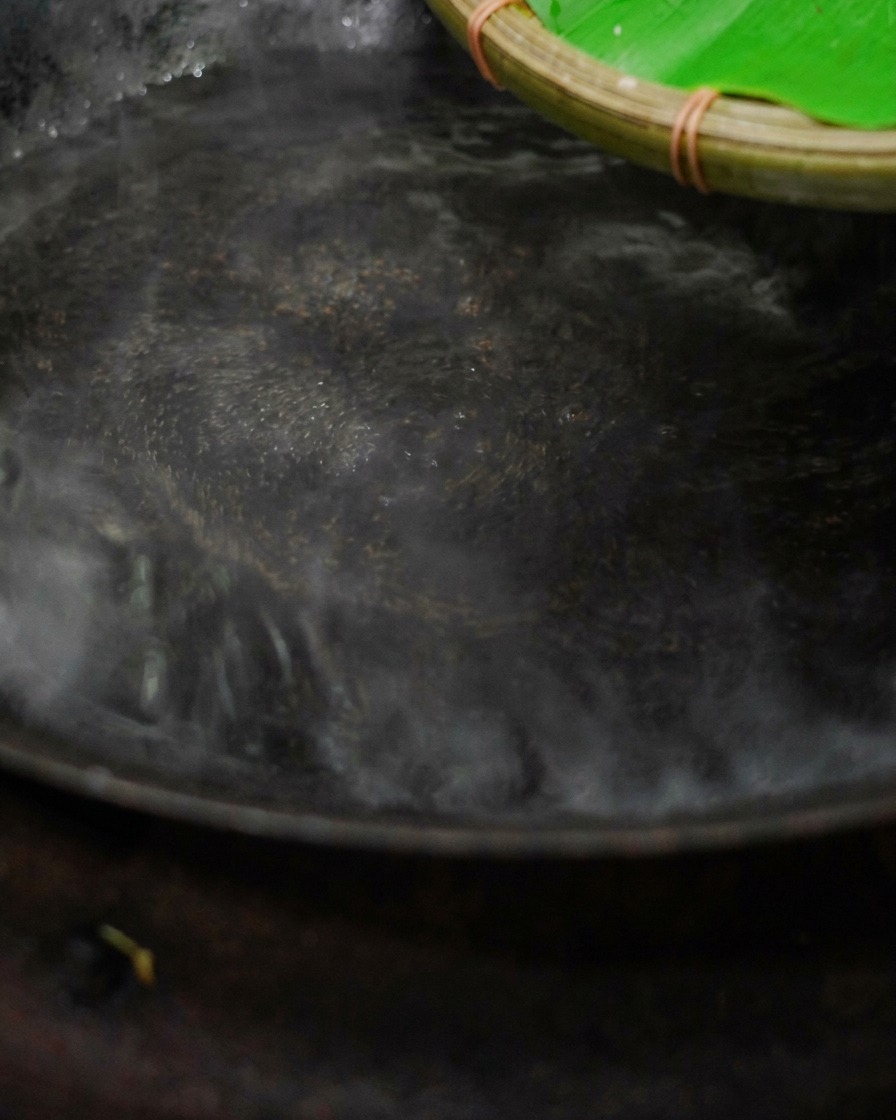
Carefully tip the chopped cured ribs from the woven bamboo basket into the wok filled with boiling water. This begins the first blanching process, utilizing the salt-extracts-salt principle to draw out the excess salinity inherent in the cured meat.
Tip: Ensure the water is at a rolling boil before adding the ribs to effectively kickstart the process of leaching out the extra salt. - 3Desalinate the ribs
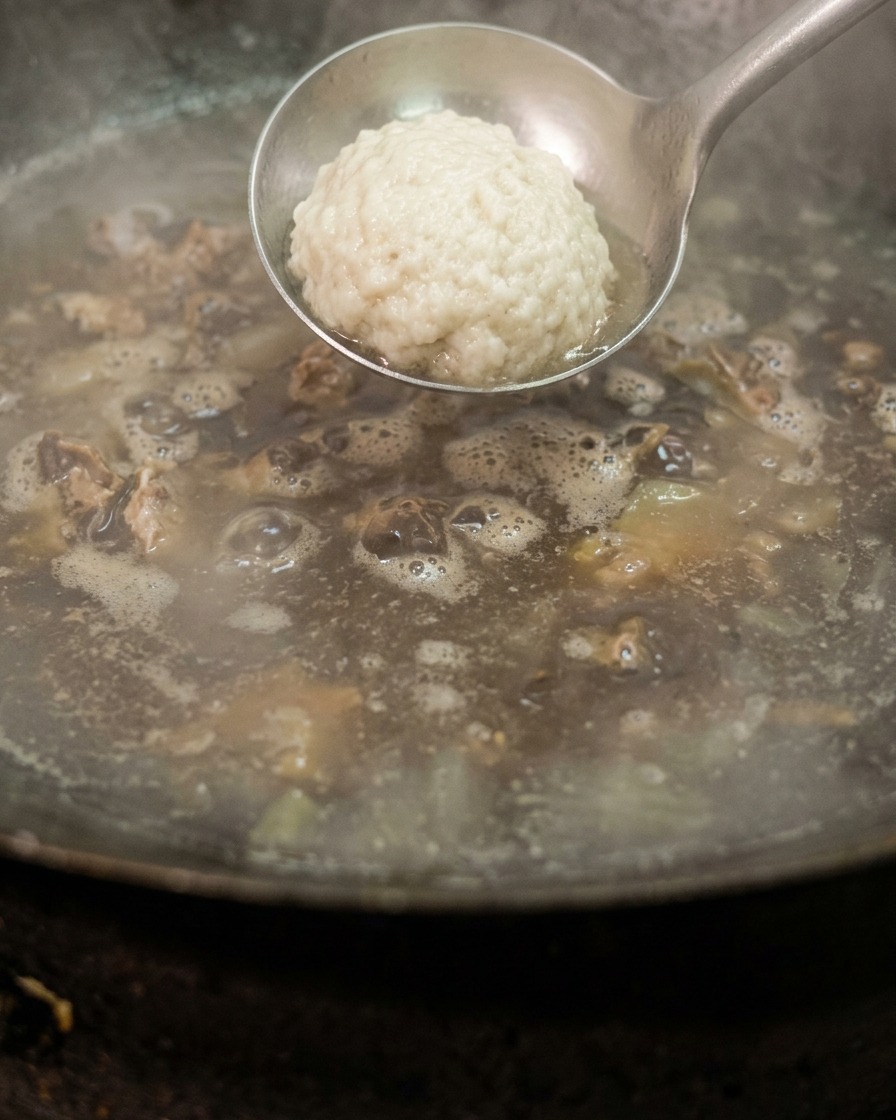
Once the ribs are boiling in the wok, add a ladle of white salt directly into the water. This counterintuitive technique uses the principle of osmosis—using salt to extract salt—to draw out the heavy, excess salt from deep within the cured meat.
Tip: This first blanching step is crucial for heavily cured meats to balance their flavor and prevent the final dish from being overwhelmingly salty. - 4Perform a second blanching
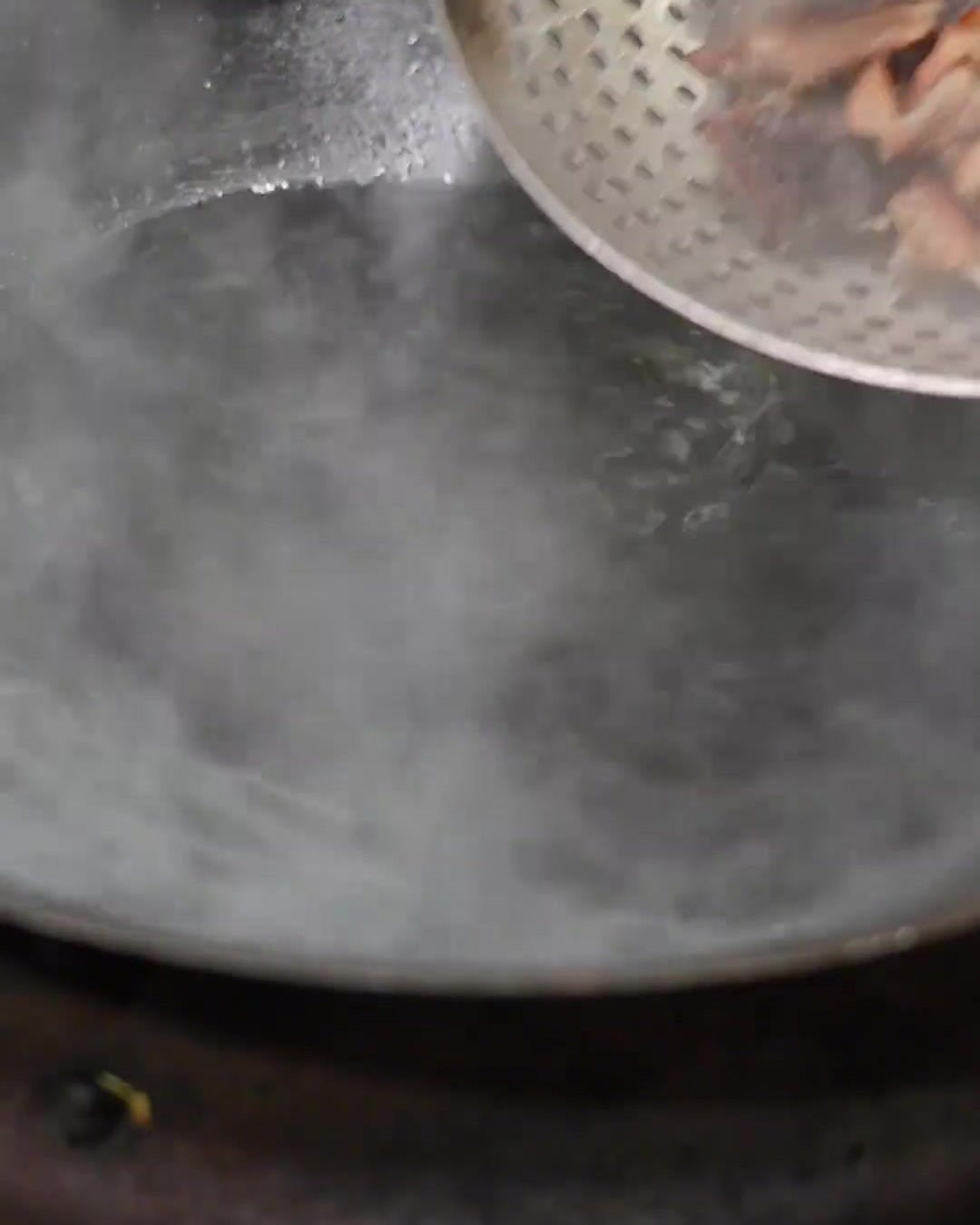
After draining the ribs from the first round, bring a fresh batch of clean water to a boil in the wok. Transfer the ribs back into the boiling water for a second round of blanching to further reduce the saltiness and fully prep the meat.
Tip: Using a completely fresh batch of water for the second boil prevents the meat from reabsorbing the salt removed during the first step. - 5Heat the tea oil
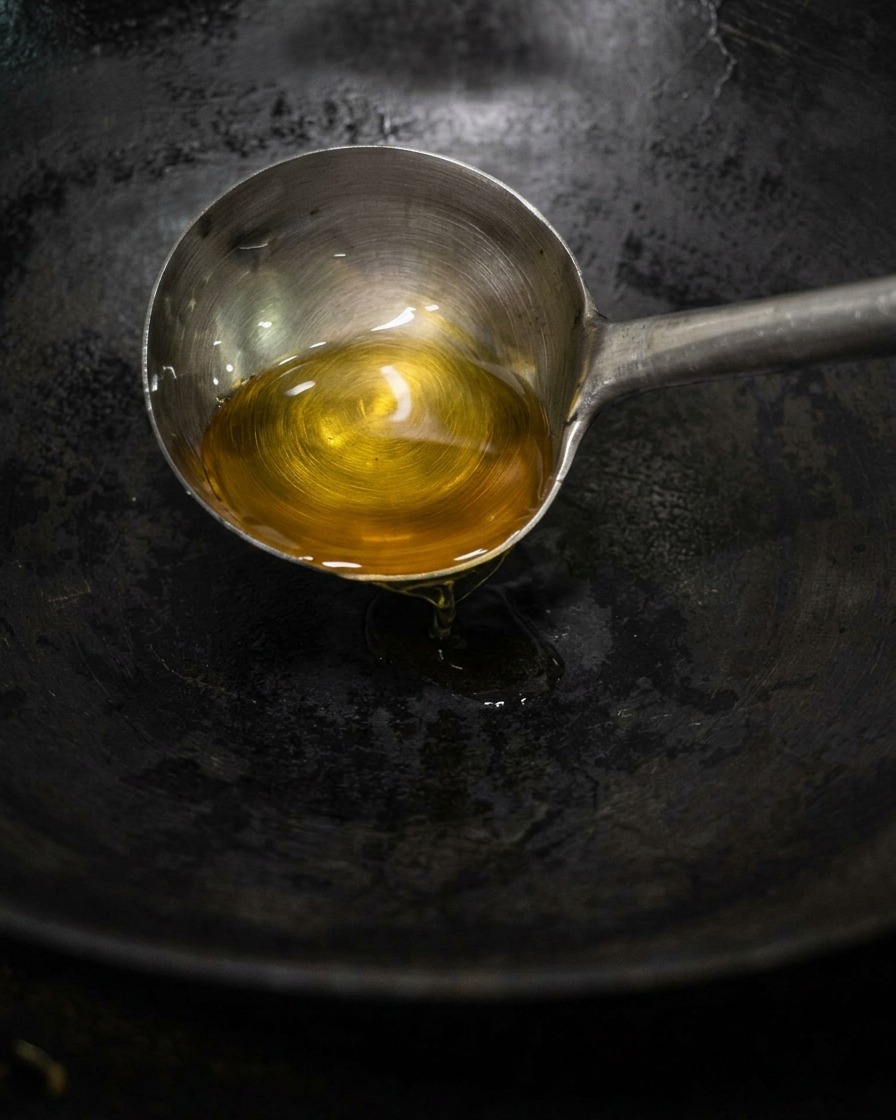
Heat up a clean wok over the stove and pour in aromatic tea oil. Using tea oil brings a unique, earthy fragrance that perfectly complements the rich and savory profile of the cured ribs.
Tip: Always ensure your wok is completely dry before adding cooking oil to prevent any dangerous splattering. - 6Fry the fermented black beans
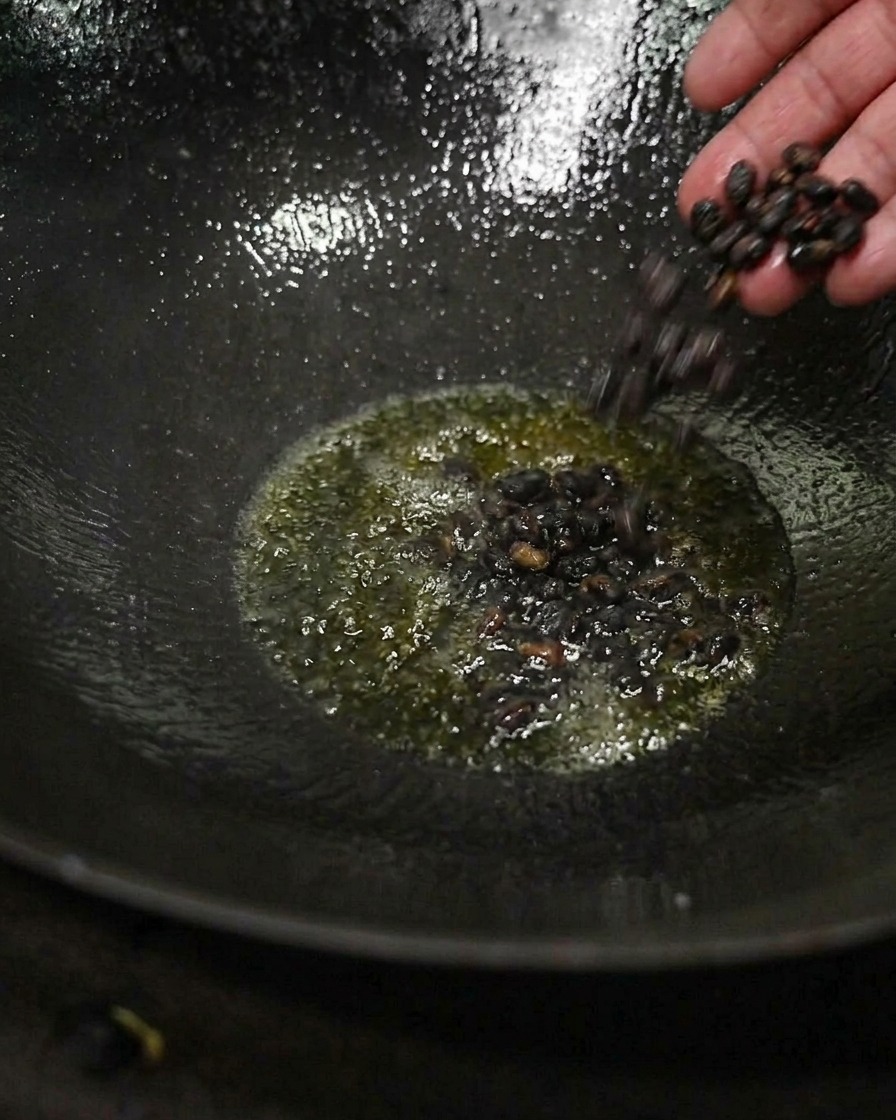
Heat fragrant tea oil in a clean wok over medium heat. Drop a handful of fermented black beans directly into the hot oil, letting them fry briefly to release their deep, savory aroma and create a rich flavor base.
Tip: Keep the heat moderate when adding the black beans so they gently infuse the oil without burning. - 7Stir-fry the cured ribs
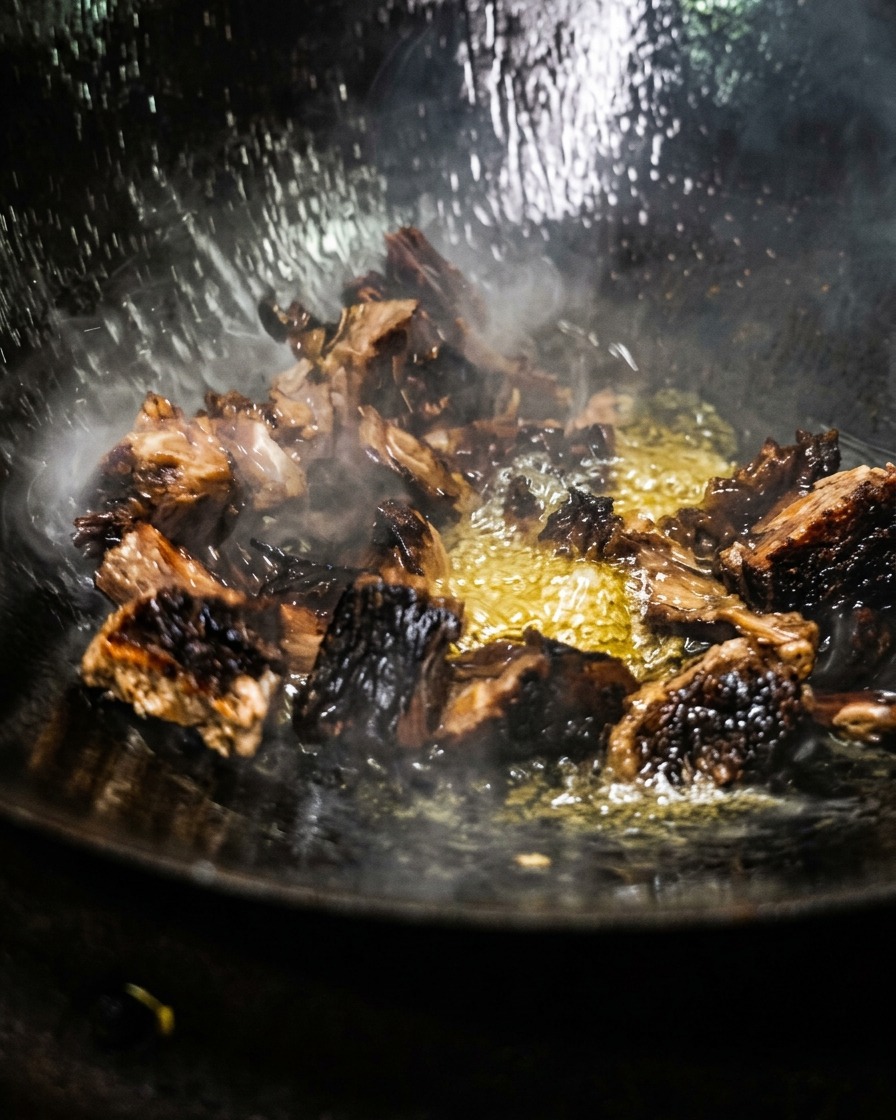
Add the blanched cured ribs into the wok containing the infused tea oil and fermented black beans. Stir-fry the mixture continuously, allowing the surface of the ribs to absorb the aromatics and become intensely fragrant.
Tip: Stir-fry briskly so the ribs are evenly coated in the oil and black beans, helping the flavors penetrate the meat. - 8Season with chili powder
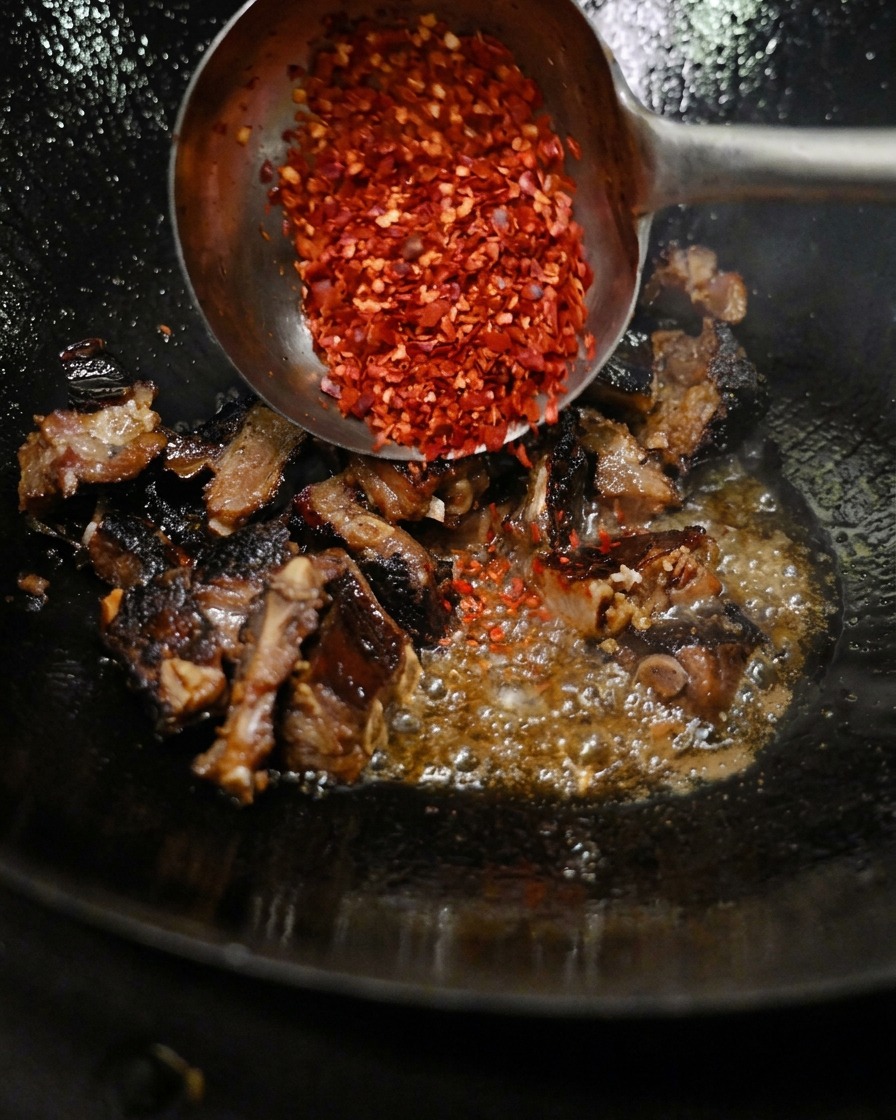
Pour a generous ladle of bright red chili powder over the ribs while continuing to stir-fry. This adds the vibrant color and bold spice signature to traditional cured dishes, complementing the rich flavor of the pork.
Tip: Adjust the amount of chili powder to your personal heat tolerance, though authentic cured dishes are meant to be distinctly spicy. - 9Add MSG for umami enhancement
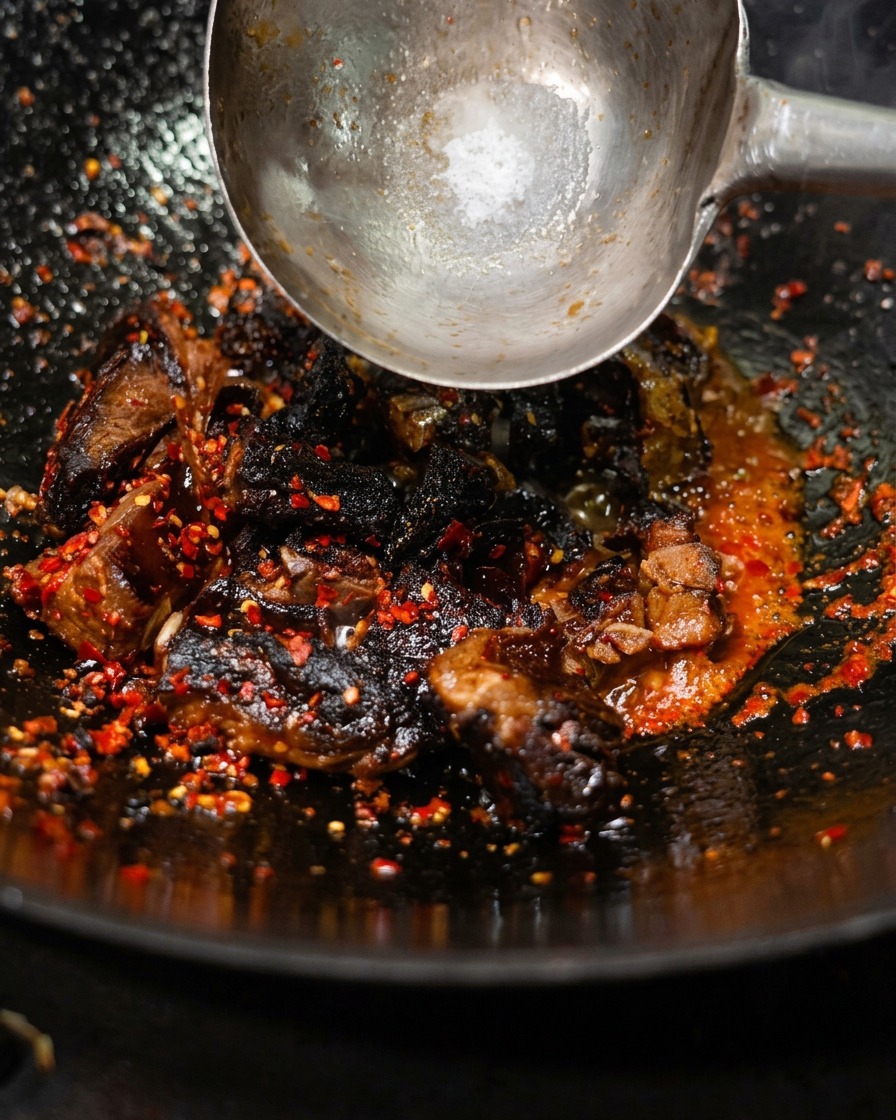
Measure a spoonful of MSG seasoning and sprinkle it evenly into the wok. Toss the ribs well to distribute the seasoning, which elevates the natural savory umami notes of the cured meat and spices.
Tip: Distribute the seasoning evenly over the ingredients while tossing to prevent any concentrated pockets of flavor. - 10Simmer with water
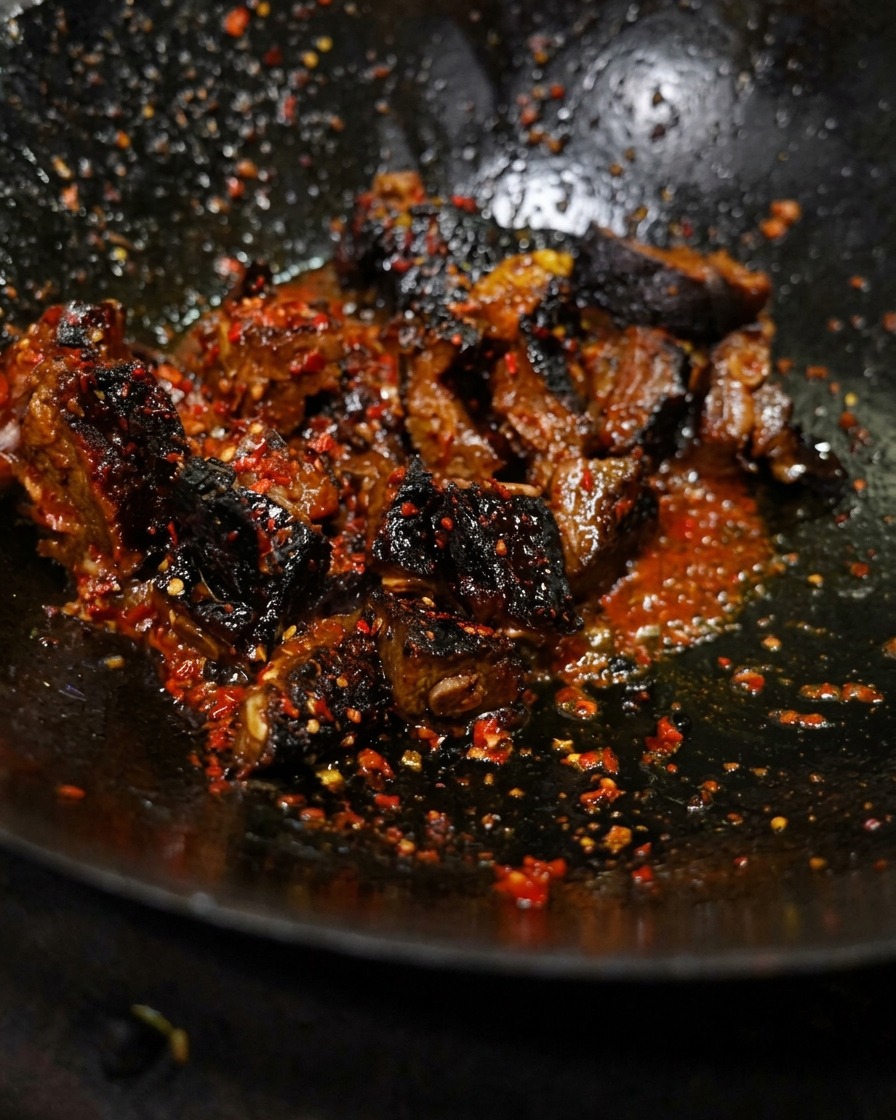
Pour a splash of fresh water into the wok with the spiced ribs. This helps create a rich seasoning sauce, allowing the chili and savory flavors to meld together and coat the meat evenly.
Tip: Adding water prevents the dry spices from burning in the wok and helps the flavors penetrate the cured ribs. - 11Transfer to a steaming bowl
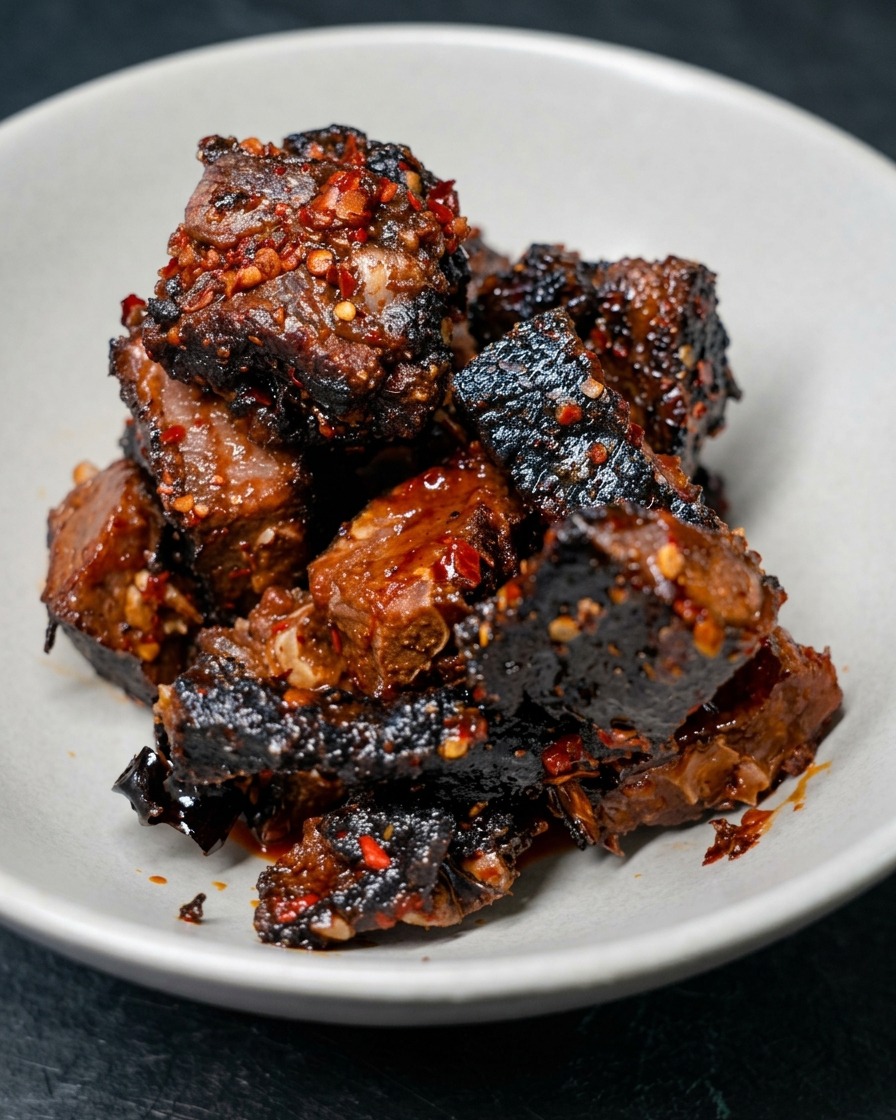
Carefully arrange the stir-fried seasoned ribs into a heat-proof white bowl. Ensure they are stacked neatly, and top them with any remaining chili flakes and crushed yellow peppers from the wok.
Tip: Make sure your bowl is deep enough to catch the delicious juices that will release during the steaming process. - 12Steam the ribs
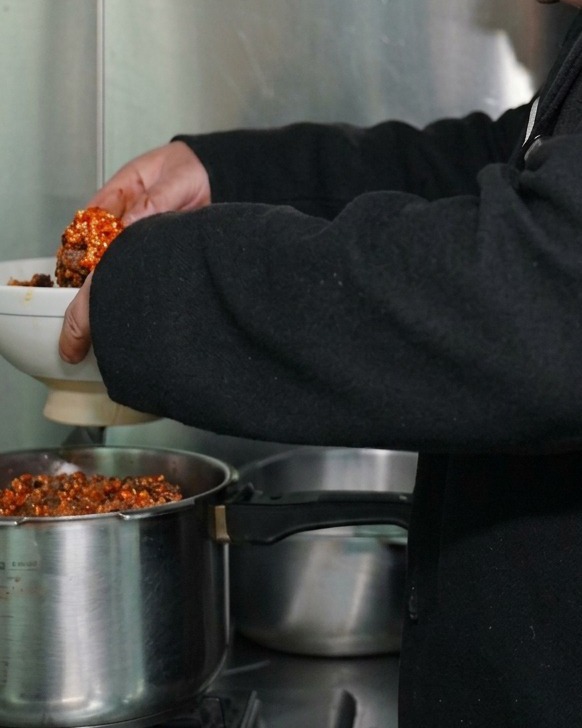
Place the bowl of seasoned ribs into a pressure cooker. Once the cooker reaches pressure, steam for 30 minutes to ensure the cured meat becomes incredibly tender and fully absorbs the spicy flavors.
Tip: If using a regular steamer instead of a pressure cooker, increase the steaming time until the meat is completely tender.