Hunan Steamed Cured Pork Ribs
Fermented Black Beans (Xiang Cai La Pai Gu)
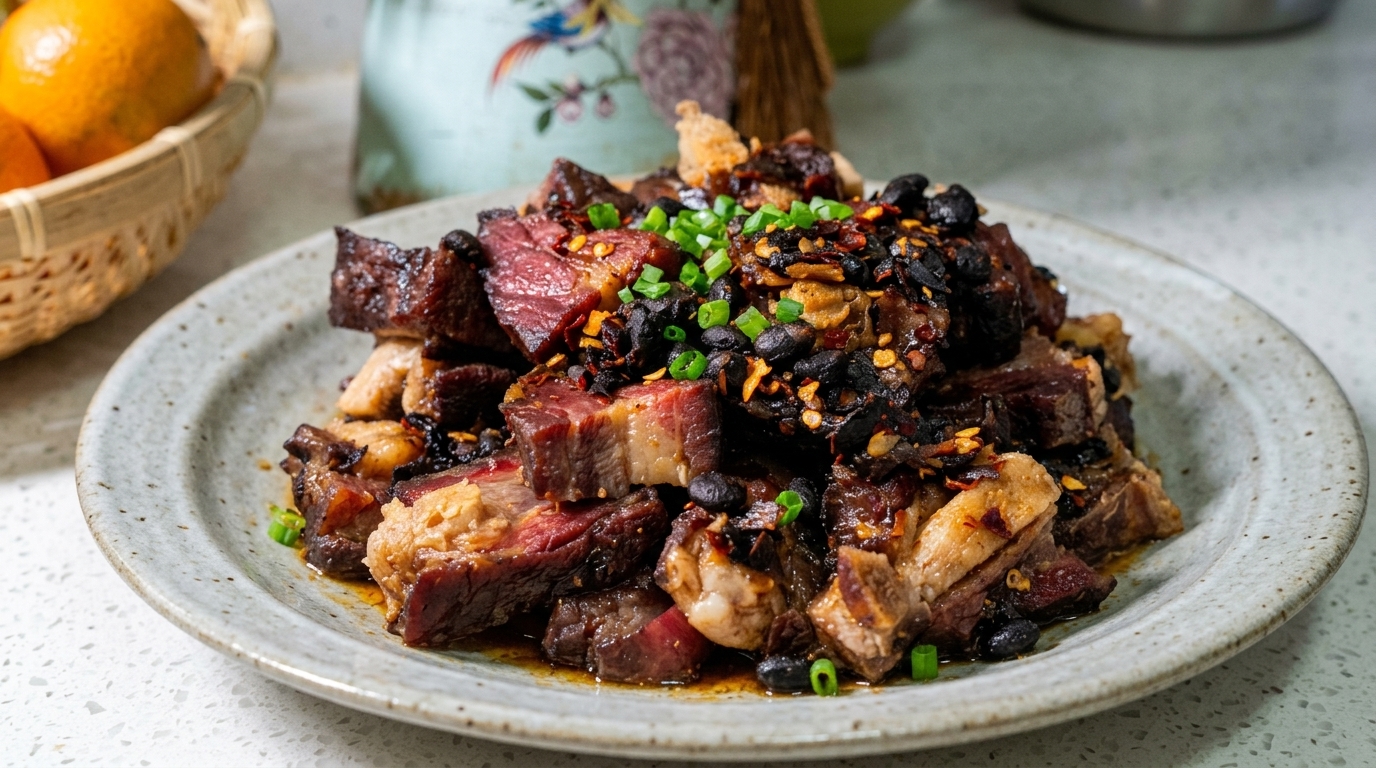
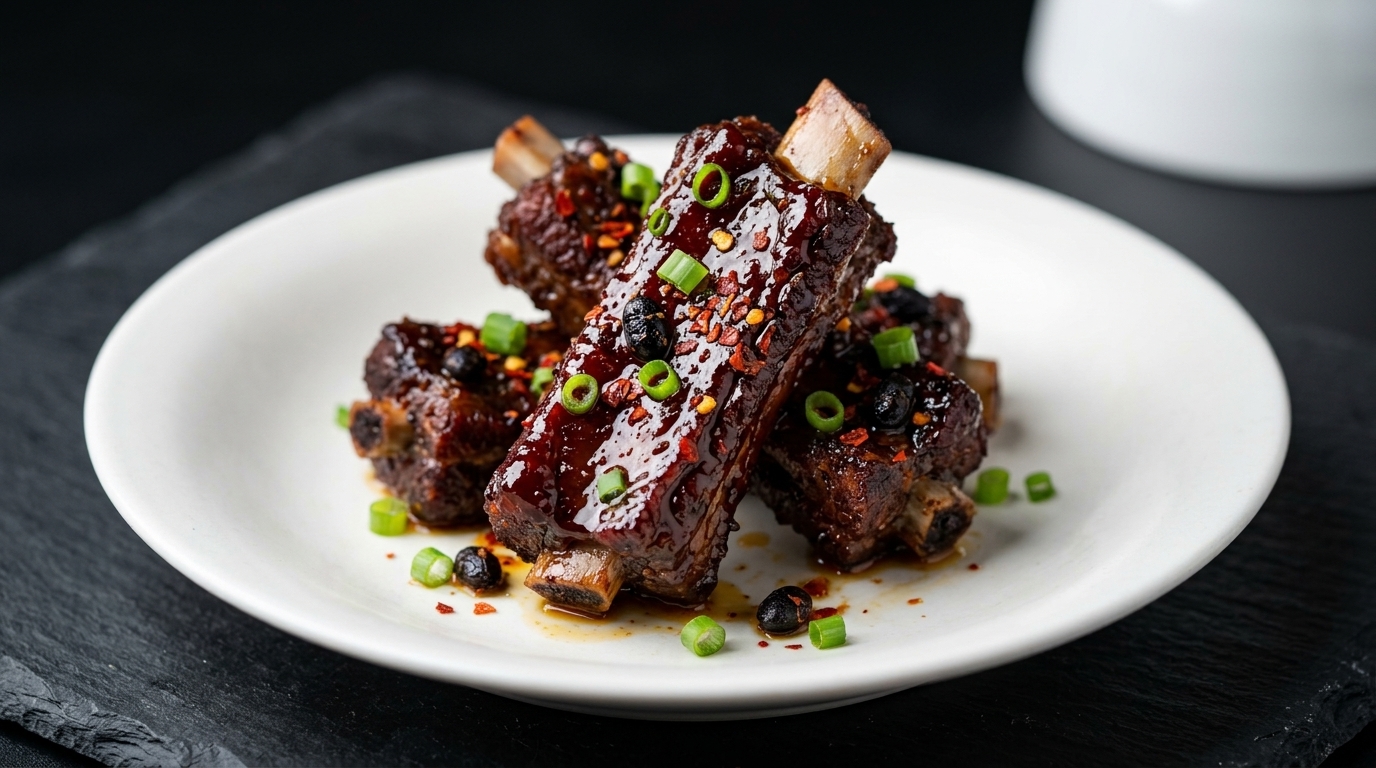
A classic Hunan delicacy featuring savory, smoky cured pork ribs steamed to tender perfection with pungent fermented black beans and fiery chilies.
In Hunan cuisine, cured meats or La Wei hold a sacred place on the dining table, especially during festive seasons. This traditional recipe elevates intensely savory, smoky cured pork ribs by steaming them with fermented black beans, fresh aromatics, and a signature fiery kick of chili. The gentle steaming process renders the firm cured meat incredibly tender while allowing the rich spices to infuse deeply into every single bite.
Ingredients
- 500 g cured pork ribs
- 1 tbsp high-proof Chinese white liquor (Baijiu)
- 3 fresh red chili peppers
- 4 cloves garlic
- 15 g ginger
- 2 tbsp camellia oil
- 1 tbsp light soy sauce
- 1 tsp dark soy sauce
- 1 tbsp dried chili powder
- 2 tbsp fermented black beans (douchi)
- to taste MSG
- to taste green onions
Instructions
- 1Boil the whole slab of cured ribs
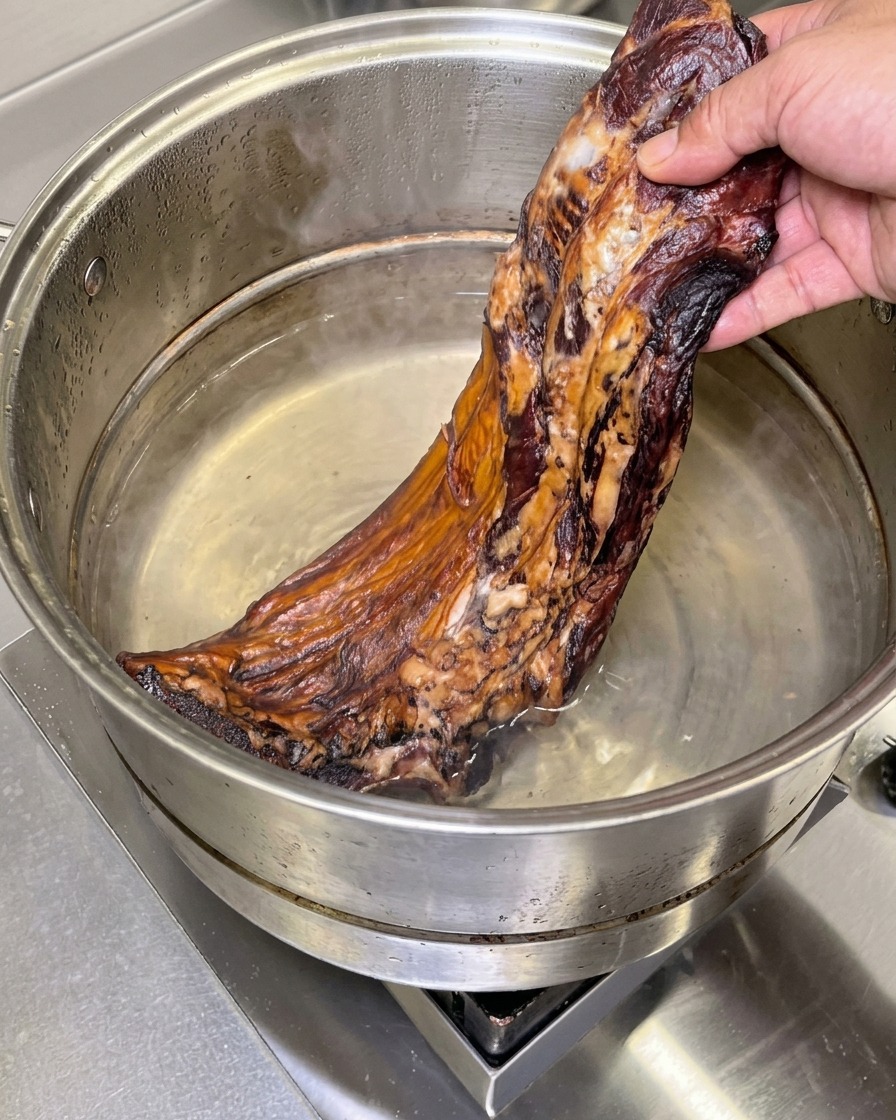
Place the whole slab of cured pork ribs into a pot of cold water. Bring the water to a boil and let the ribs cook for 20 minutes to soften the meat and help draw out excess salt and surface impurities.
Tip: Always start with cold water when boiling cured meats; this helps release excess salt and impurities more effectively than placing them directly into hot water. - 2Chop the ribs into uniform pieces
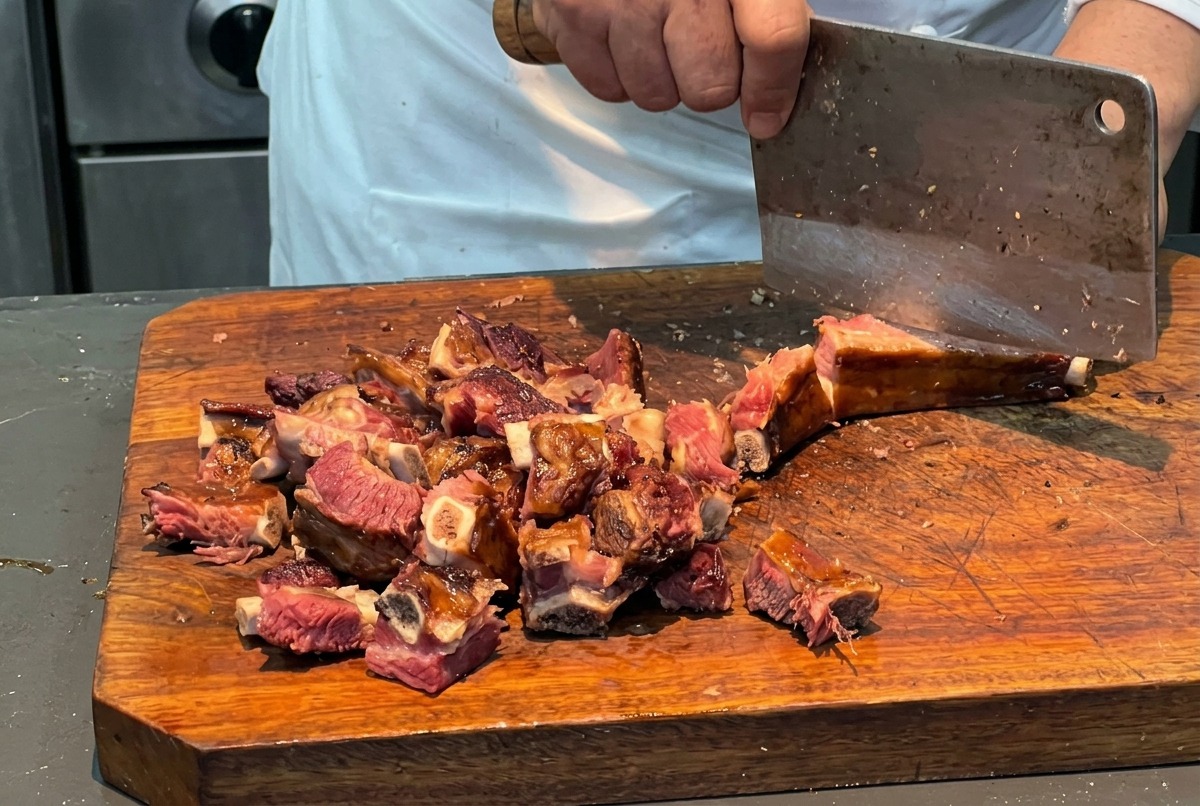
Transfer the boiled cured pork ribs onto a sturdy wooden cutting board. Use a sharp heavy cleaver to chop the slab into uniform, bite-sized pieces measuring approximately 3 centimeters in length.
Tip: Use a firm and swift chopping motion to cut through the rib bones cleanly, preventing any small bone fragments from splintering into the meat. - 3Blanch the ribs with white liquor
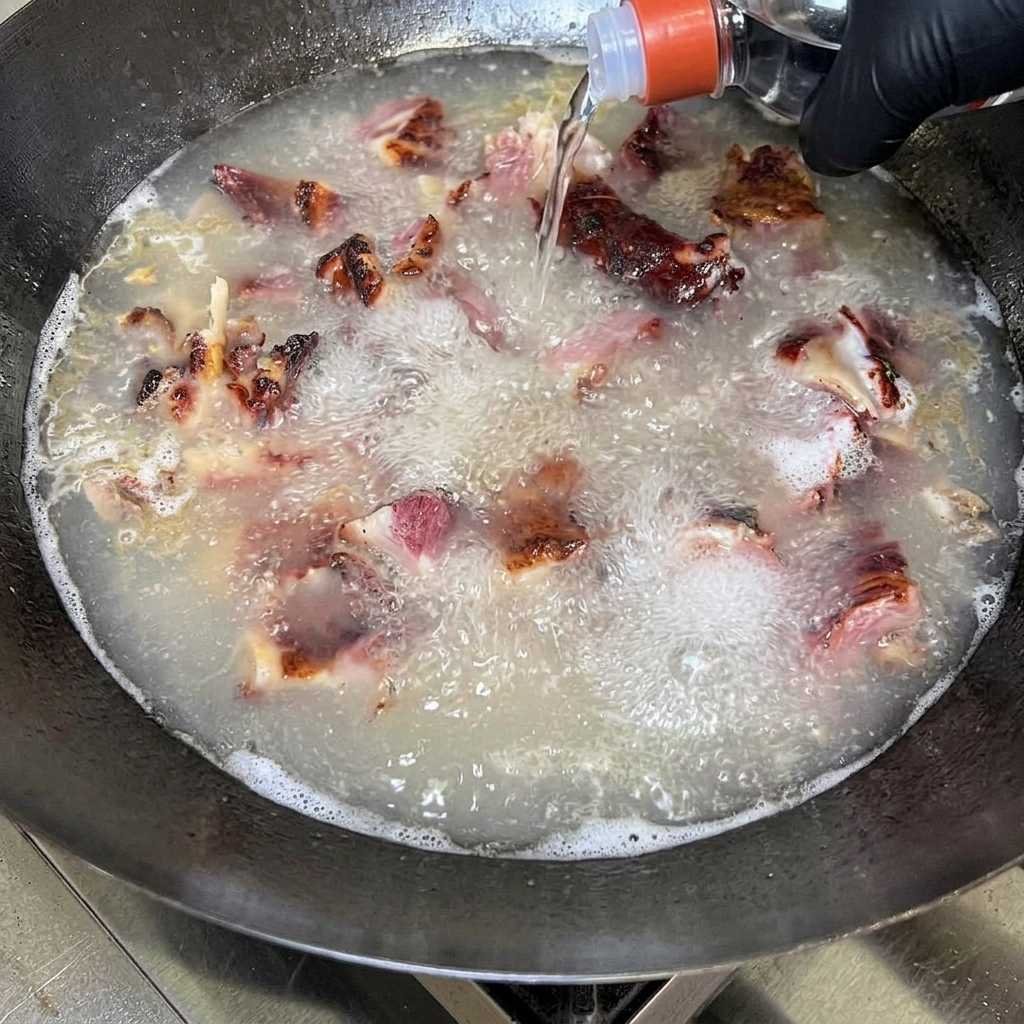
Place the chopped cured rib pieces into a wok filled with fresh cold water for a second blanching. As the water comes to a boil, pour in a splash of high-proof Chinese white liquor and let it cook for 3 to 5 minutes.
Tip: Adding high-proof white liquor during the second blanching is excellent for neutralizing heavy gamey odors and enhancing the overall aroma of the cured meat. - 4Mince the aromatics
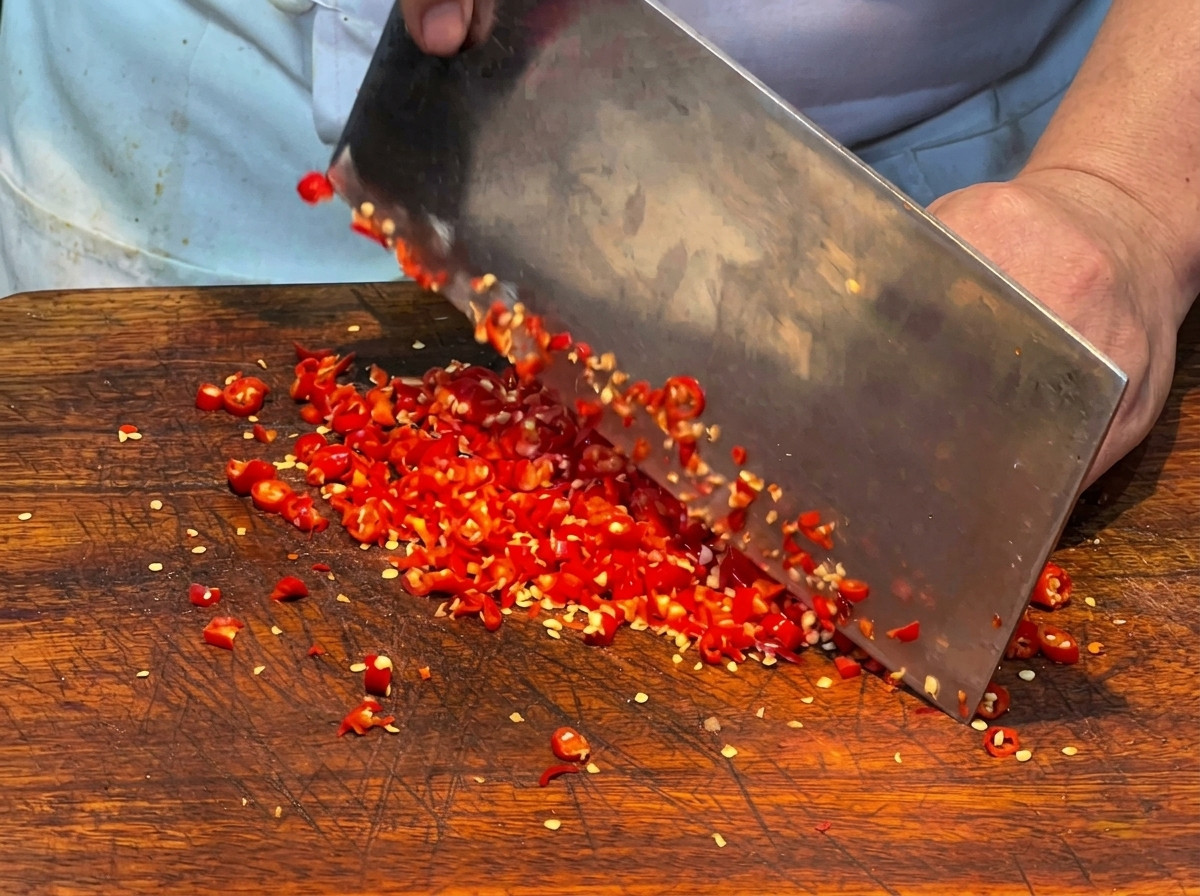
Finely mince the fresh red chili peppers on a wooden cutting board. At the same time, mince the garlic and ginger to prepare all the aromatic toppings needed for later in the recipe.
Tip: Using a sharp cleaver or chefs knife makes mincing faster and ensures clean cuts without crushing the chilies. - 5Stir-fry the ribs until fragrant
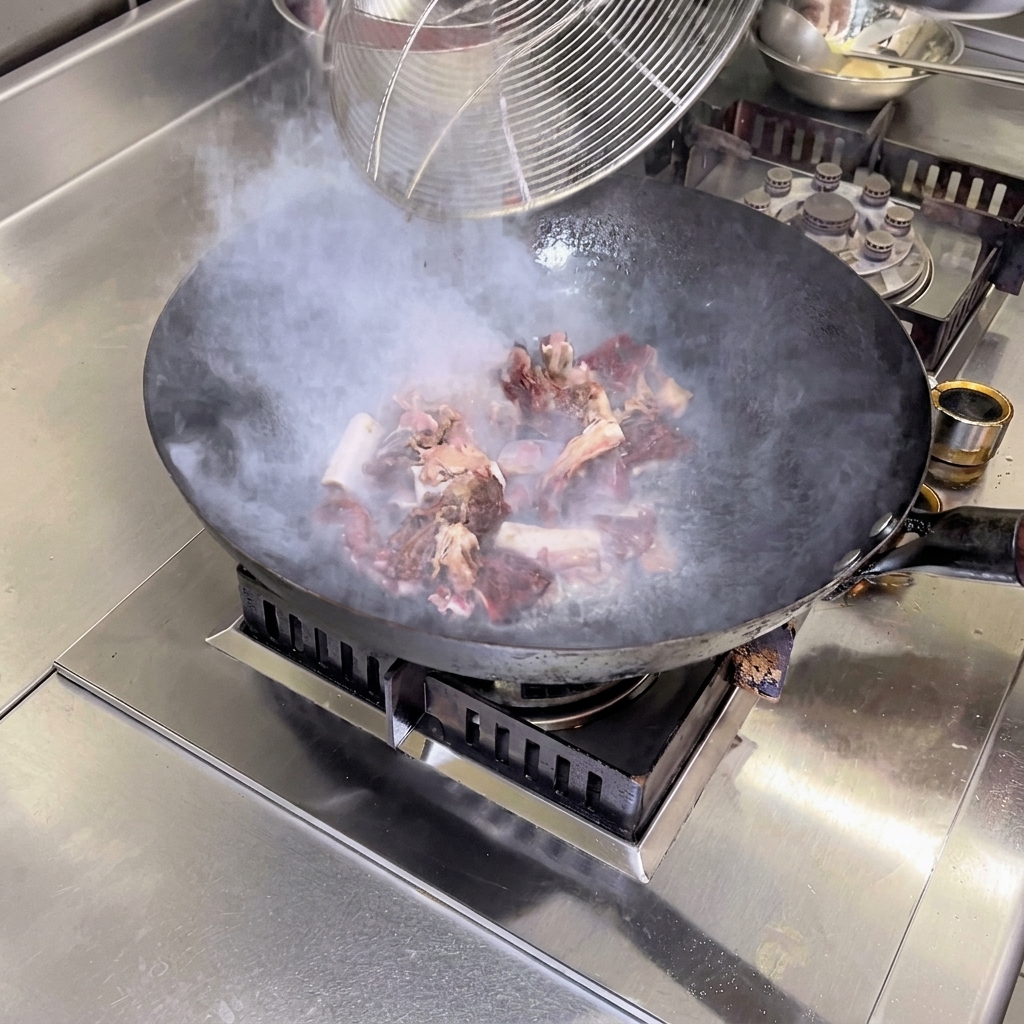
Heat a generous amount of camellia oil in a wok over high heat. Add the blanched cured pork ribs and stir-fry them continuously until they become aromatic and release their savory, smoky notes.
Tip: Camellia oil has a high smoke point and a delicate flavor profile, making it perfect for stir-frying cured meats without masking their natural smokiness. - 6Season with soy sauce
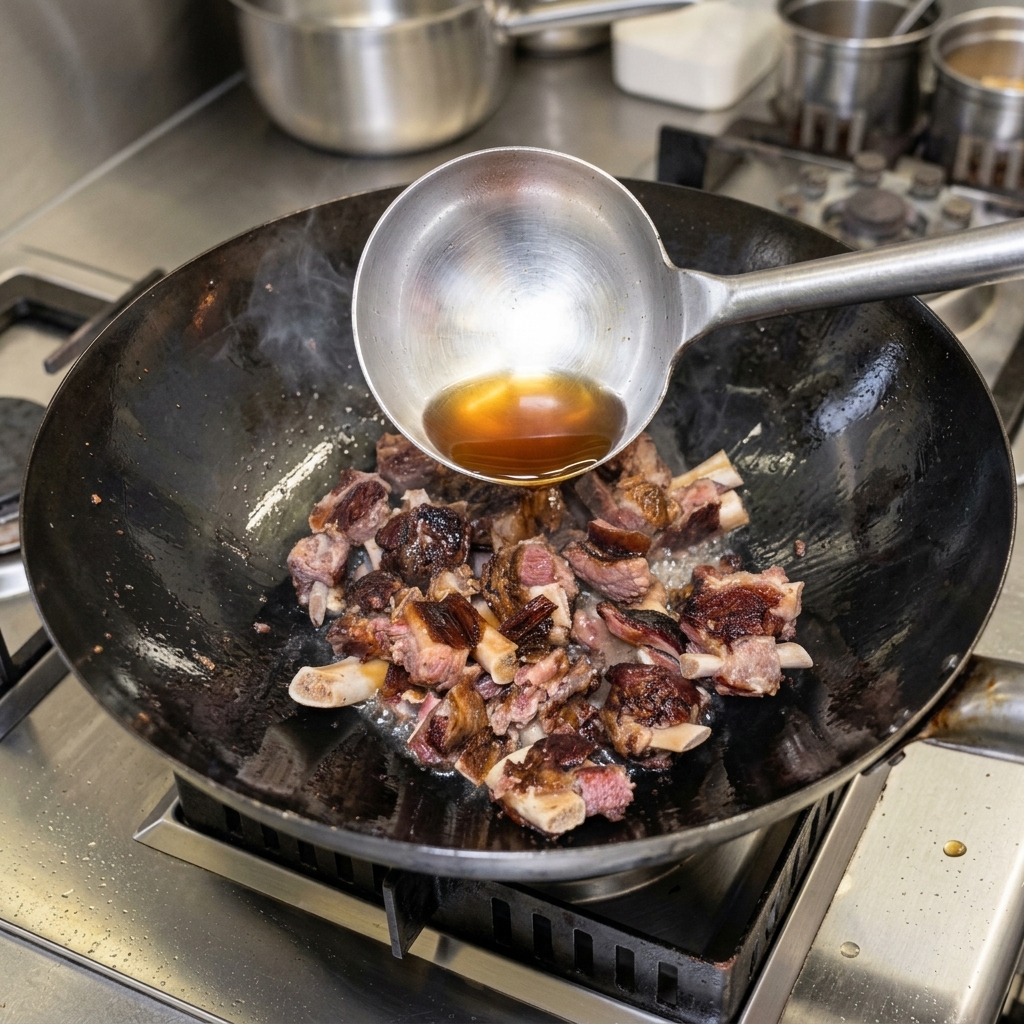
Pour a small amount of light soy sauce into the wok for a savory flavor base, followed by dark soy sauce to give the ribs a rich, deep color. Toss the ribs thoroughly to distribute the seasoning evenly before removing them from the wok.
Tip: Since cured ribs already carry a natural saltiness from the curing process, apply the light soy sauce sparingly to maintain a well-balanced flavor. - 7Add the aromatic toppings
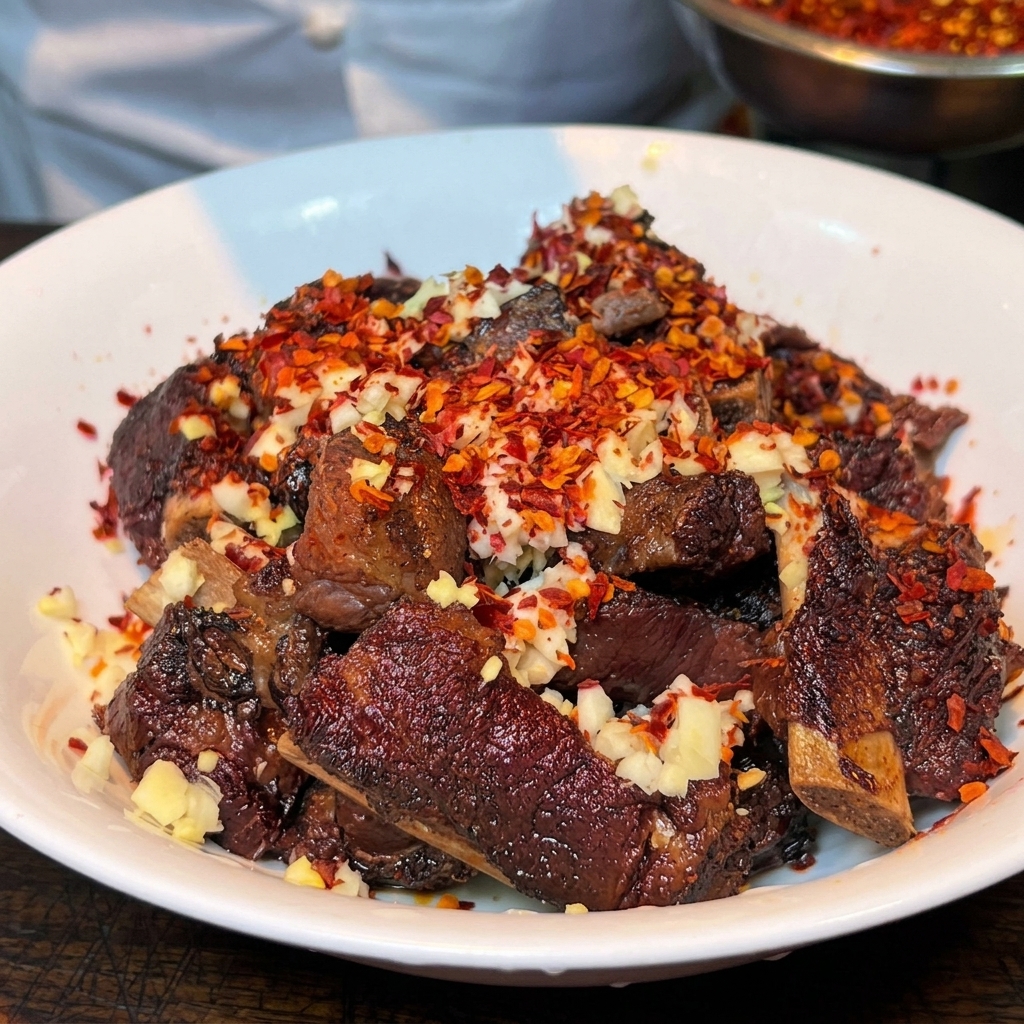
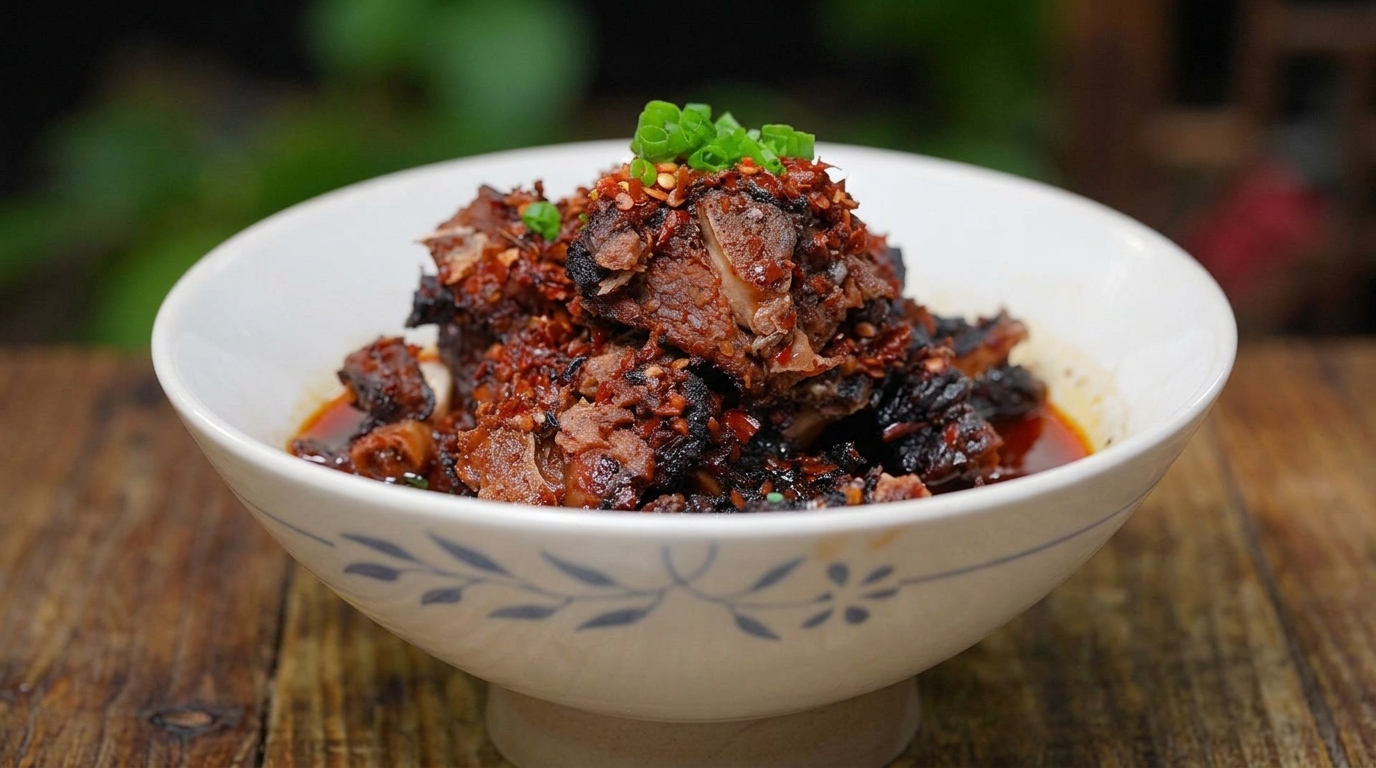
Transfer the stir-fried pork ribs into a white serving bowl, then begin layering the prepared seasonings. Evenly spread the minced garlic, minced ginger, dried chili powder, fermented black beans, and a pinch of MSG over the top of the ribs.
Tip: Layering the aromatics directly on top allows their juices and flavors to permeate down through the ribs as they steam. - 8Steam the seasoned ribs
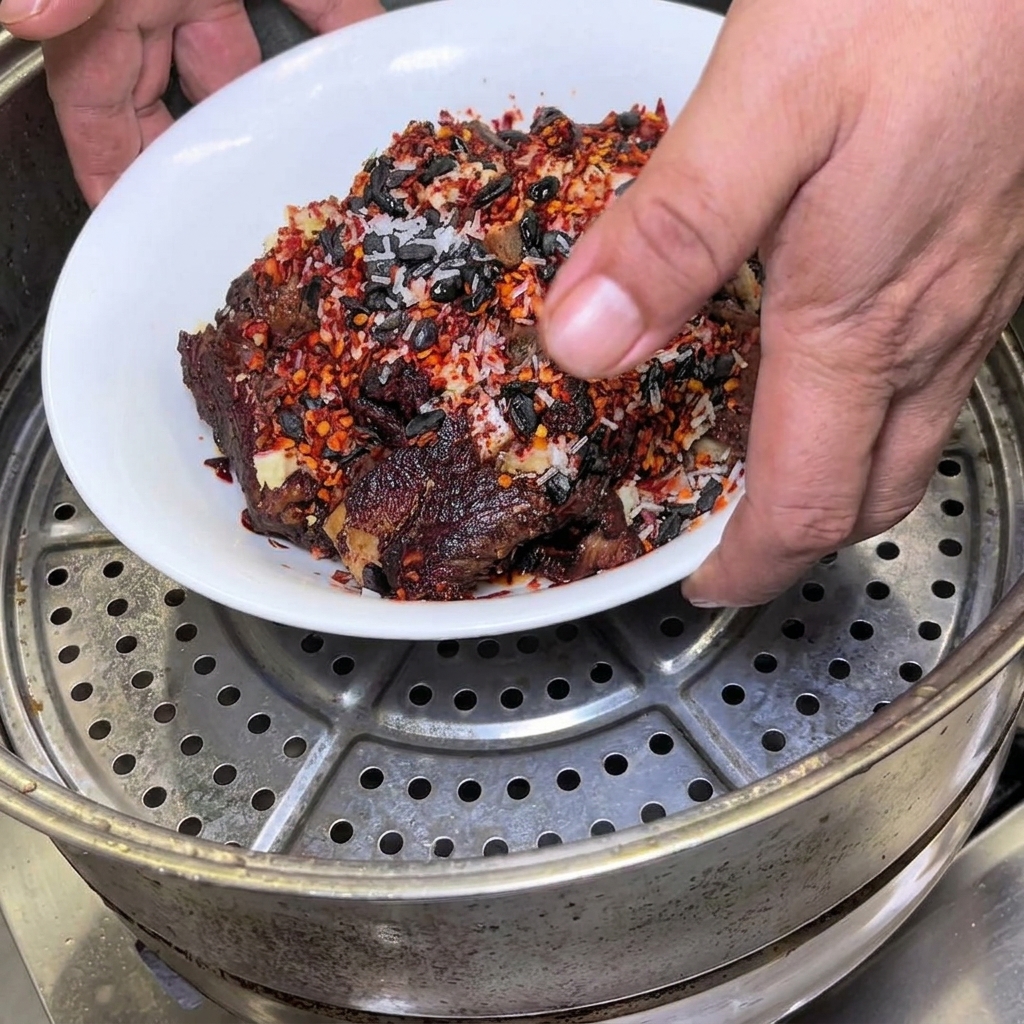
Carefully place the fully seasoned bowl of cured ribs, now topped with fermented black beans and a pinch of MSG, onto the tray inside a preheated metal steamer. Steam the dish for 30 minutes.
Tip: Make sure the water in the steamer is already boiling before placing the bowl inside to ensure accurate cooking time.