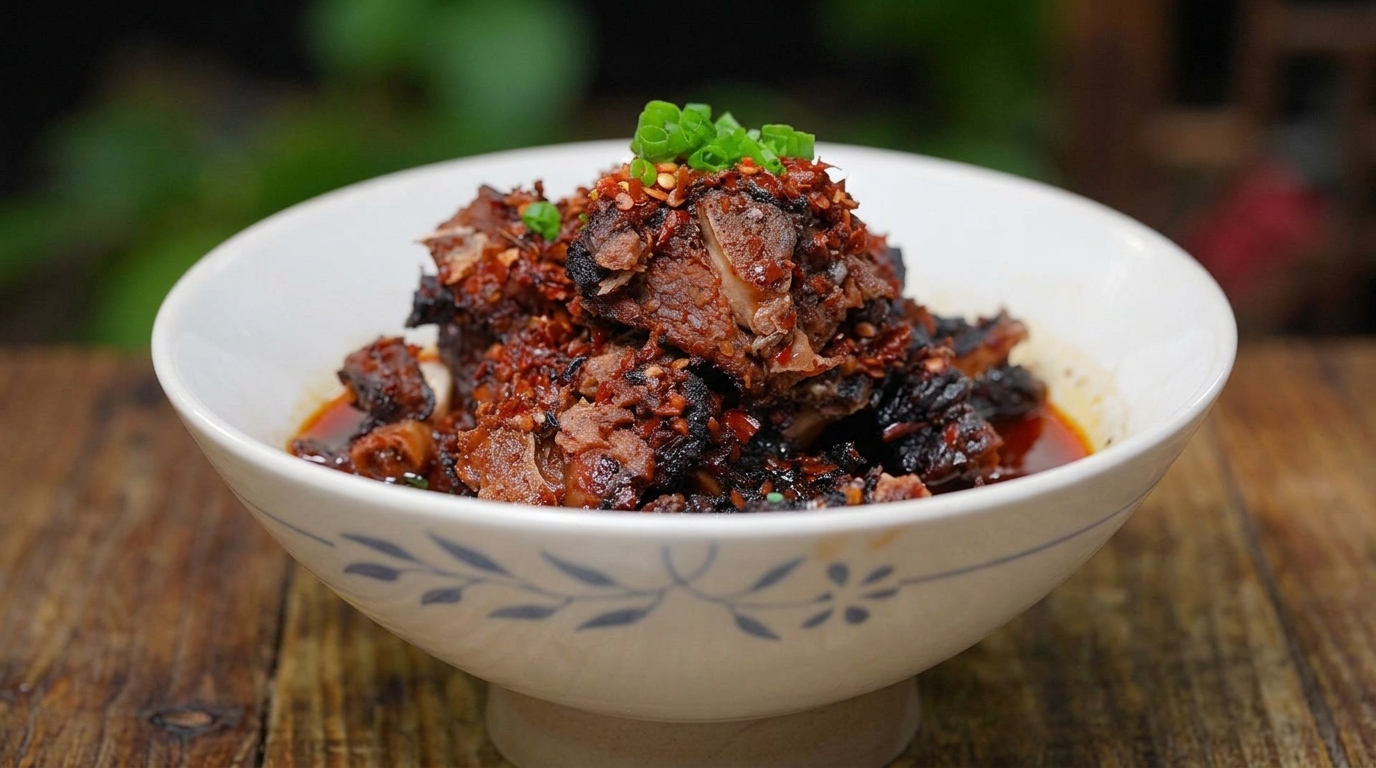
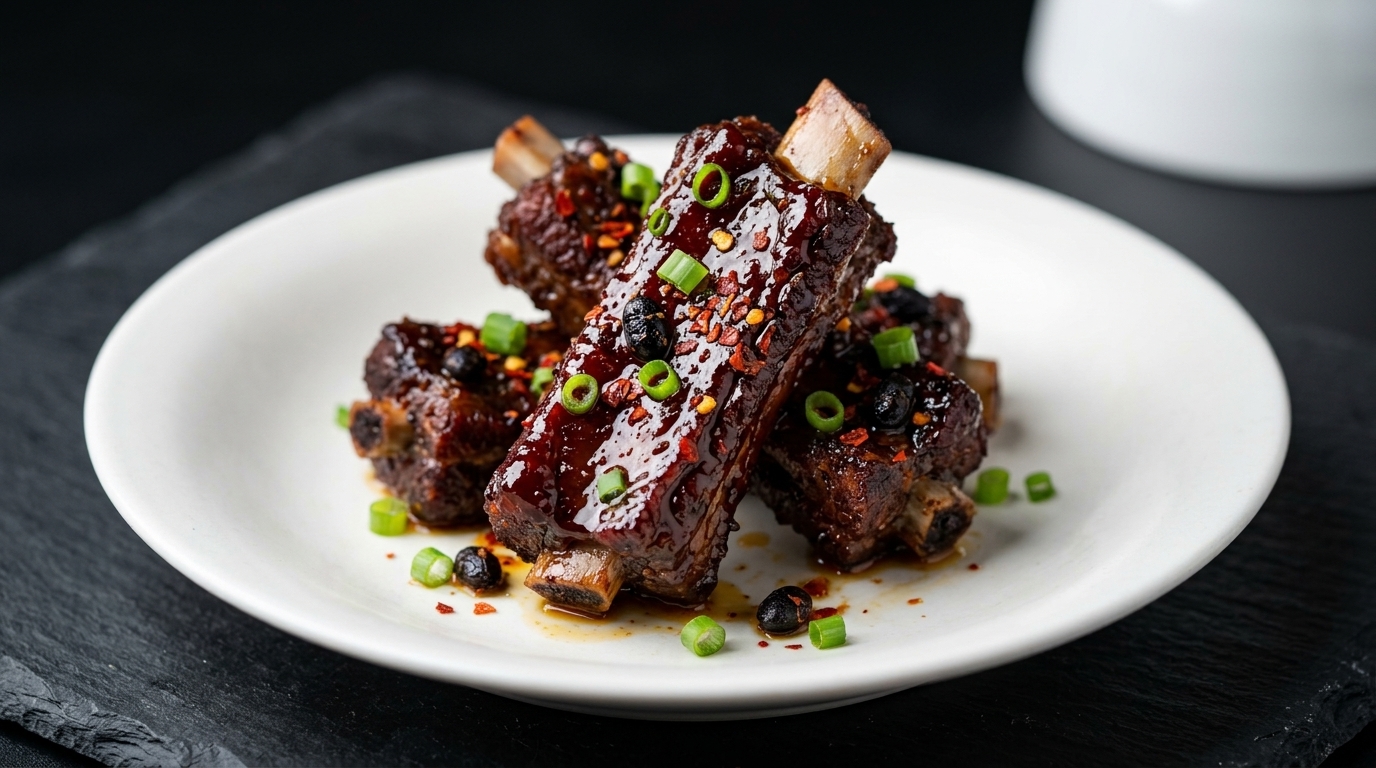
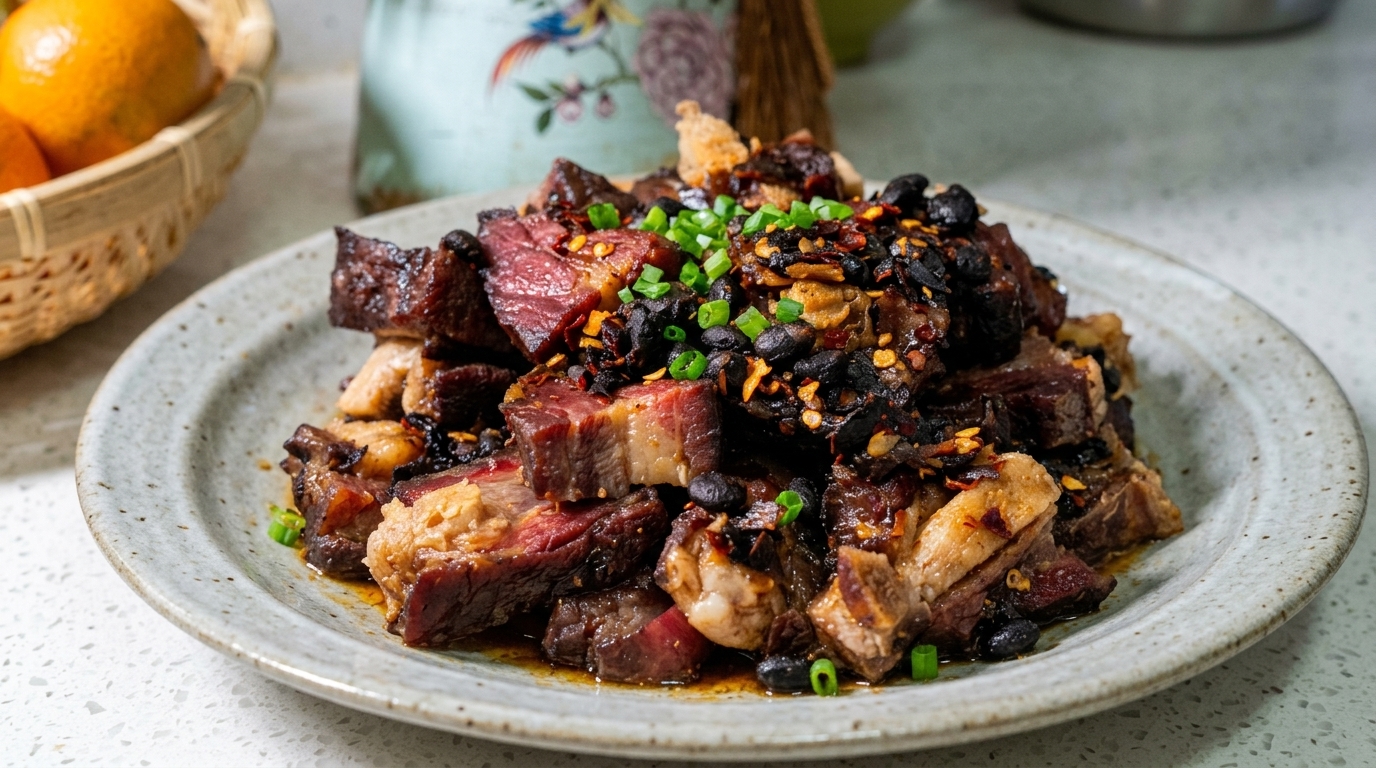
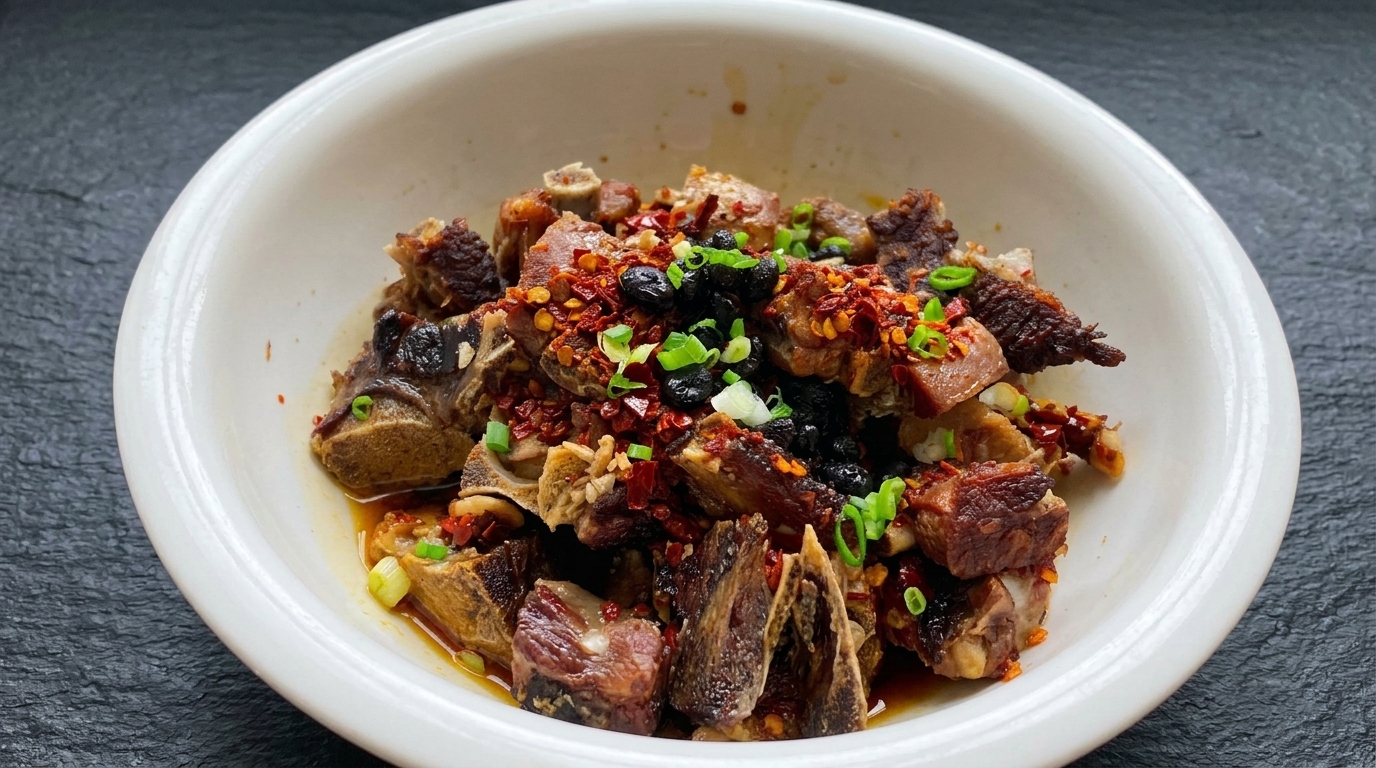
Authentic Lijiang Cured Pork Ribs Hot Pot (La Paigu)
A comforting Yunnan Naxi classic featuring savory cured pork ribs simmered into a rich, milky broth with tomatoes, traditional root herbs, and tender vegetables.
In Yunnan, the end of the year marks a traditional time for preserving meats to enjoy across the seasons. Lijiangs Naxi community perfected this preservation method with their famous cured pork ribs, turning them into the ultimate hot pot centerpiece. Simmered slowly until completely tender, the ribs create an incredibly savory, milky-white broth that is beautifully balanced by local herbs, fresh cabbage, and chewy rice cakes.
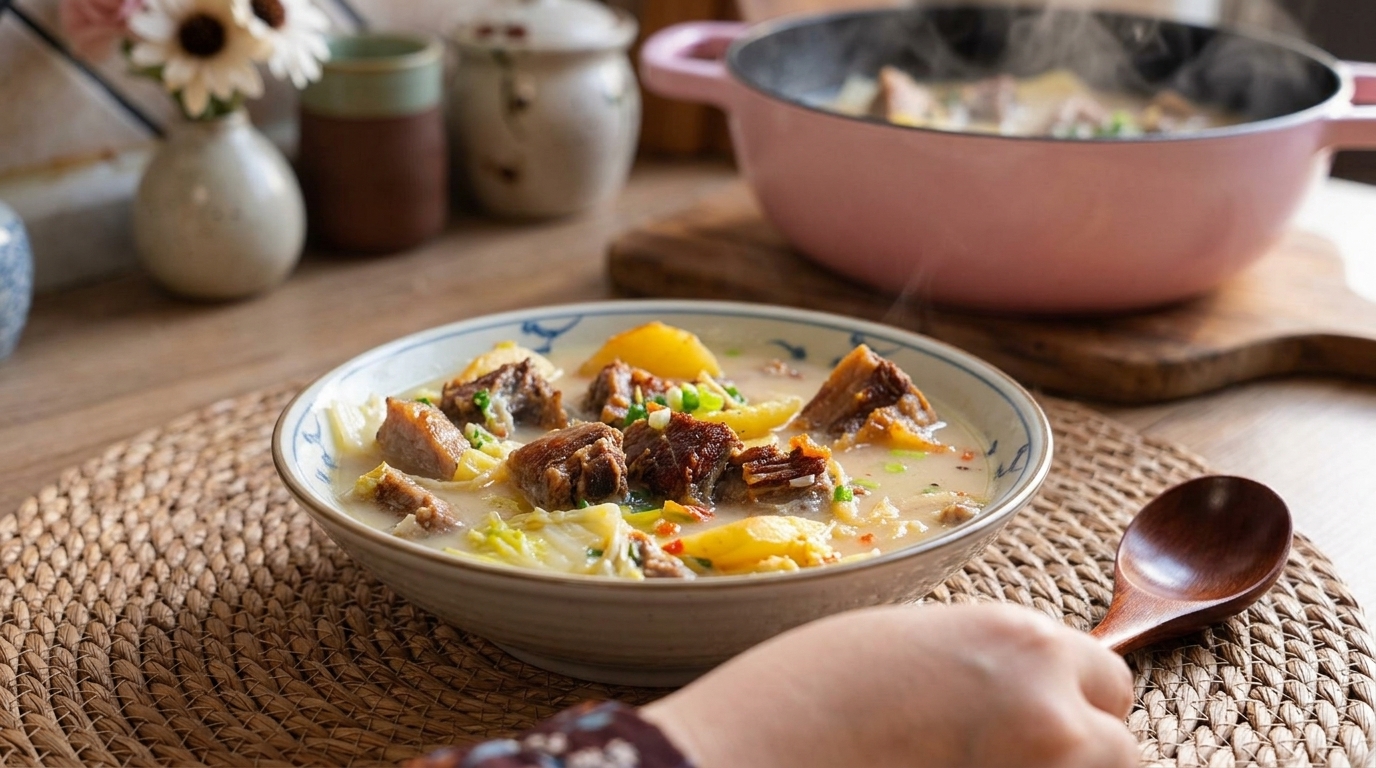
Ingredients
- 1 kg cured pork ribs
- 2 tbsp cooking oil
- 50 g fresh ginger
- 1 tsp Sichuan peppercorns
- 2 whole tomatoes
- 100 g Herba Allii Hookeri roots (pizhaigen)
- 2 tbsp cooking wine
- 300 g Napa cabbage
- 2 whole potatoes
- 200 g erkuai rice cakes
- 4 cloves garlic
- 1 bunch fresh cilantro
- 2 tbsp roasted chili flakes
- 2 whole millet chili peppers
- 2 stalks scallions
- 30 g roasted peanuts
- 12 tsp Sichuan pepper powder
- 1 tbsp sesame oil
- 1 cube Mouding fermented bean curd
Instructions
- 1Chop the cured pork ribs
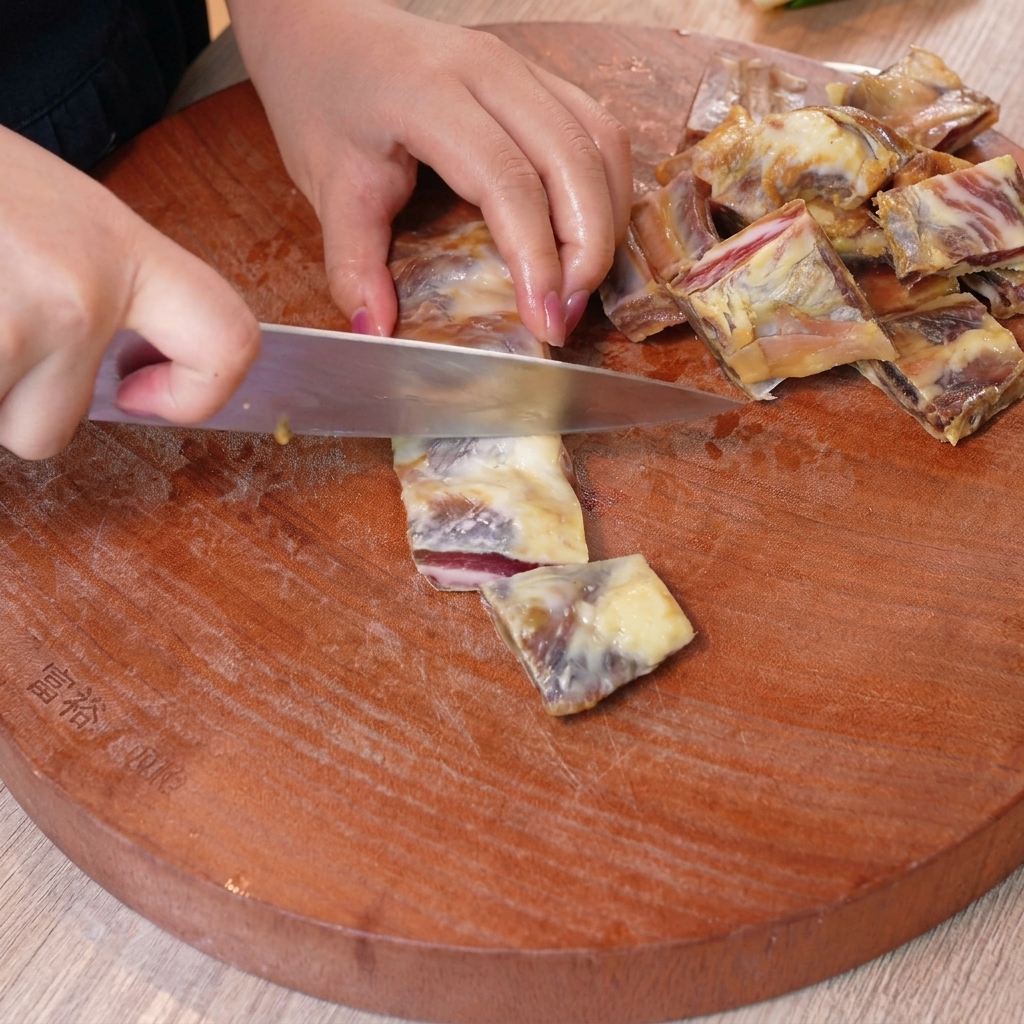
Chop the cured pork ribs into small blocks on a round wooden cutting board. Ensure the pieces are cut evenly so they cook uniformly and become perfectly tender during the long simmering process.
Tip: Use a heavy, sharp chefs knife or a meat cleaver to cut through the tough bones of the cured ribs safely and cleanly. - 2Soak the cured ribs
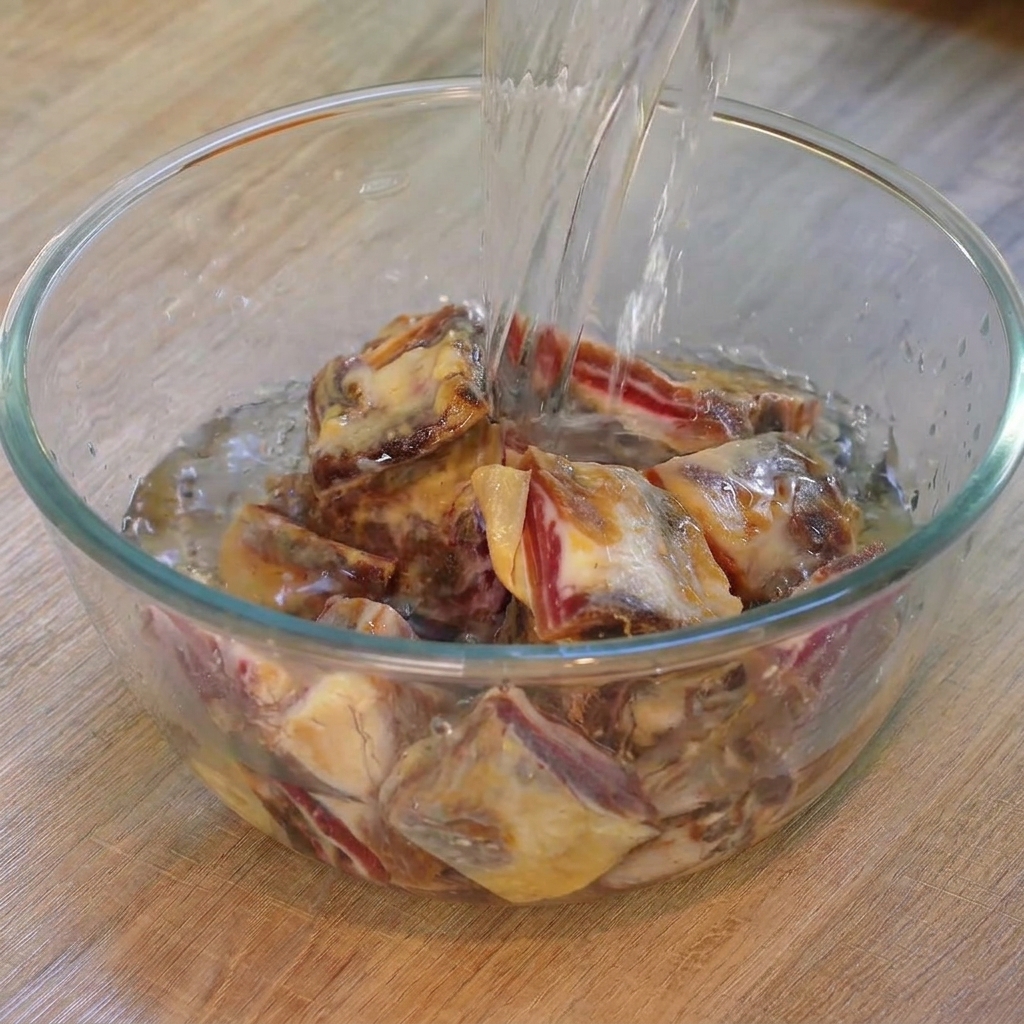
Place the chopped cured pork ribs into a clear glass bowl and pour in enough clean water to cover them completely. Let them soak for two hours to draw out excess salt and soften the dried meat before cooking.
Tip: Dont skip the two-hour soak, as cured ribs are highly salted for preservation and can make the hot pot broth too salty if not properly desalted. - 3Sauté the aromatics
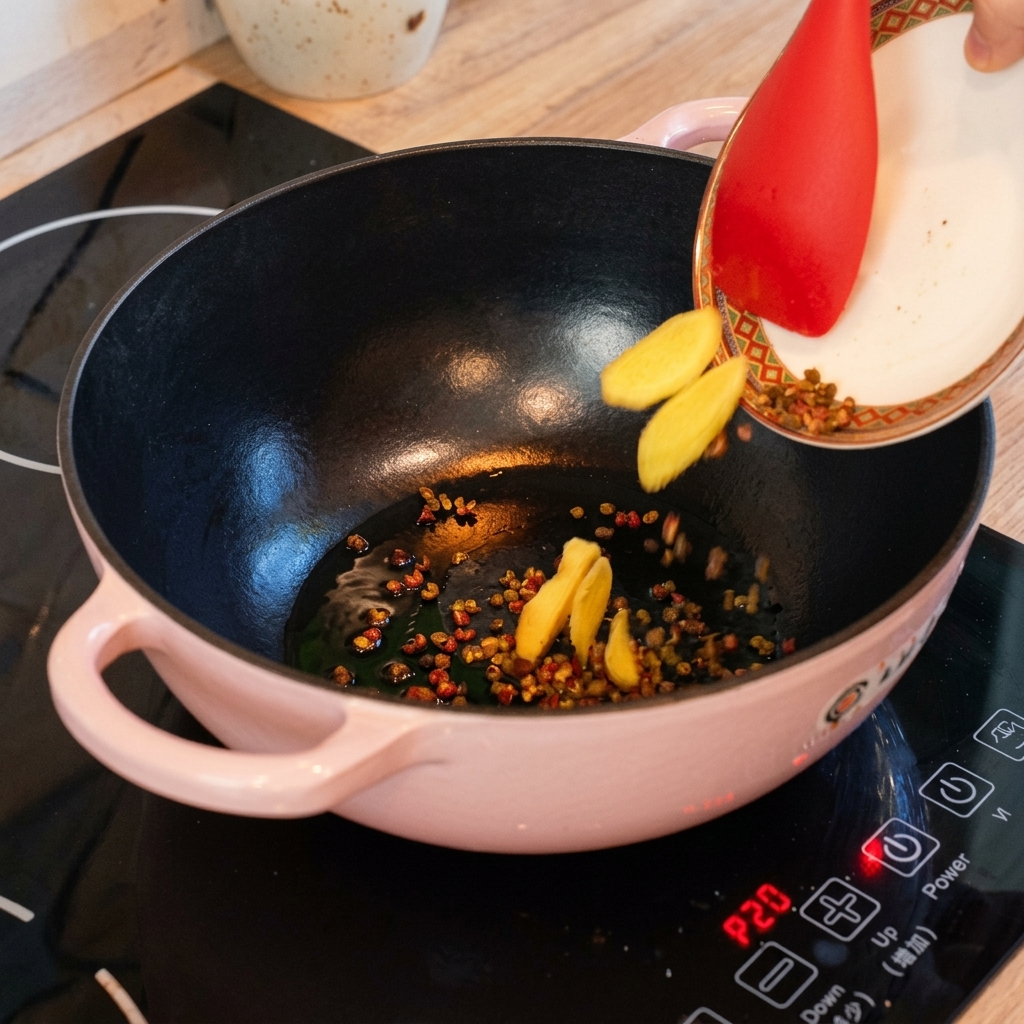
Heat a small amount of oil in a pink cooking pot over medium heat. Add fresh ginger slices and Sichuan peppercorns, then sauté them until they are highly fragrant and release their aromatic flavors.
Tip: Keep an eye on the heat to prevent the Sichuan peppercorns from burning, which can introduce an unpleasant bitterness to the dish. - 4Stir-fry the cured ribs
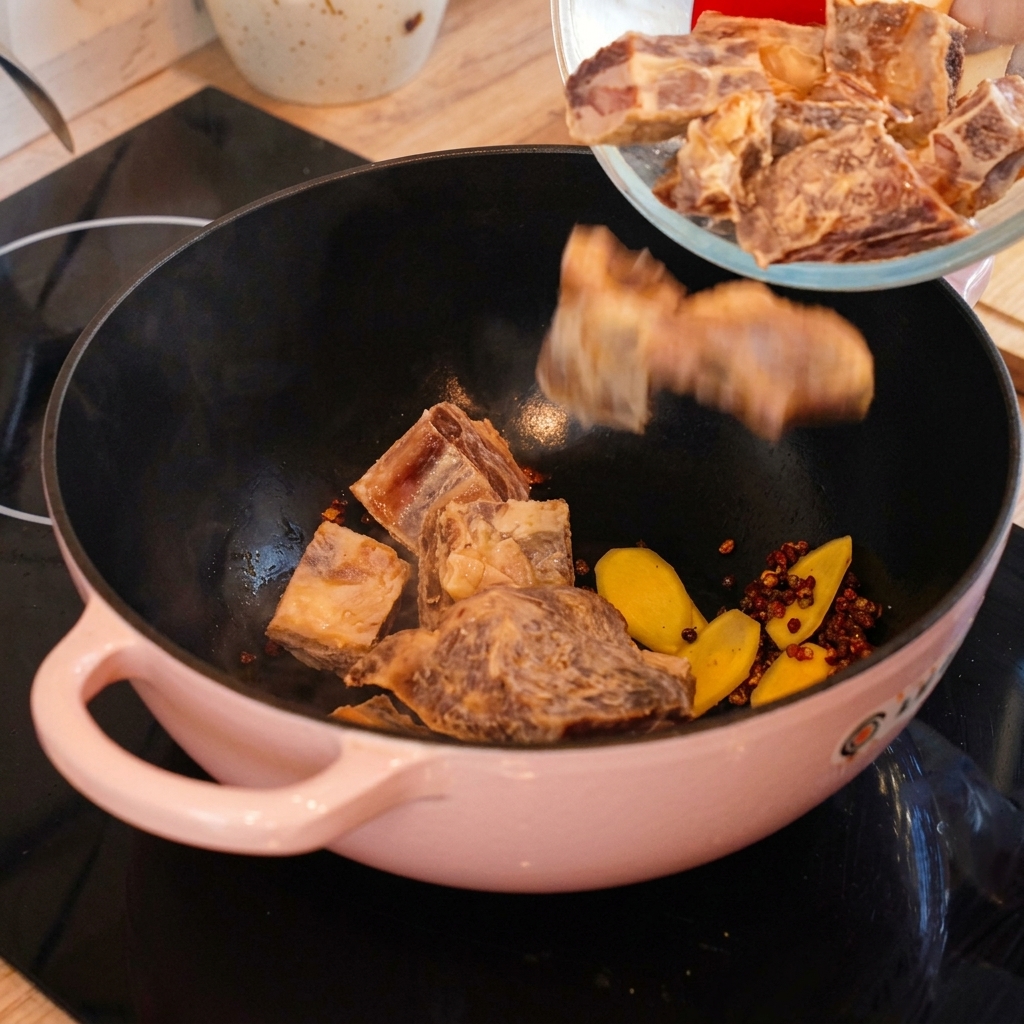
Add the soaked and drained cured pork ribs blocks into the pink pot with the sautéed ginger slices and Sichuan peppercorns. Stir-fry everything together so the ribs are evenly coated with the aromatic oil.
Tip: Searing the ribs briefly before adding water helps seal in their savory flavors and creates a richer soup base. - 5Pour in hot water
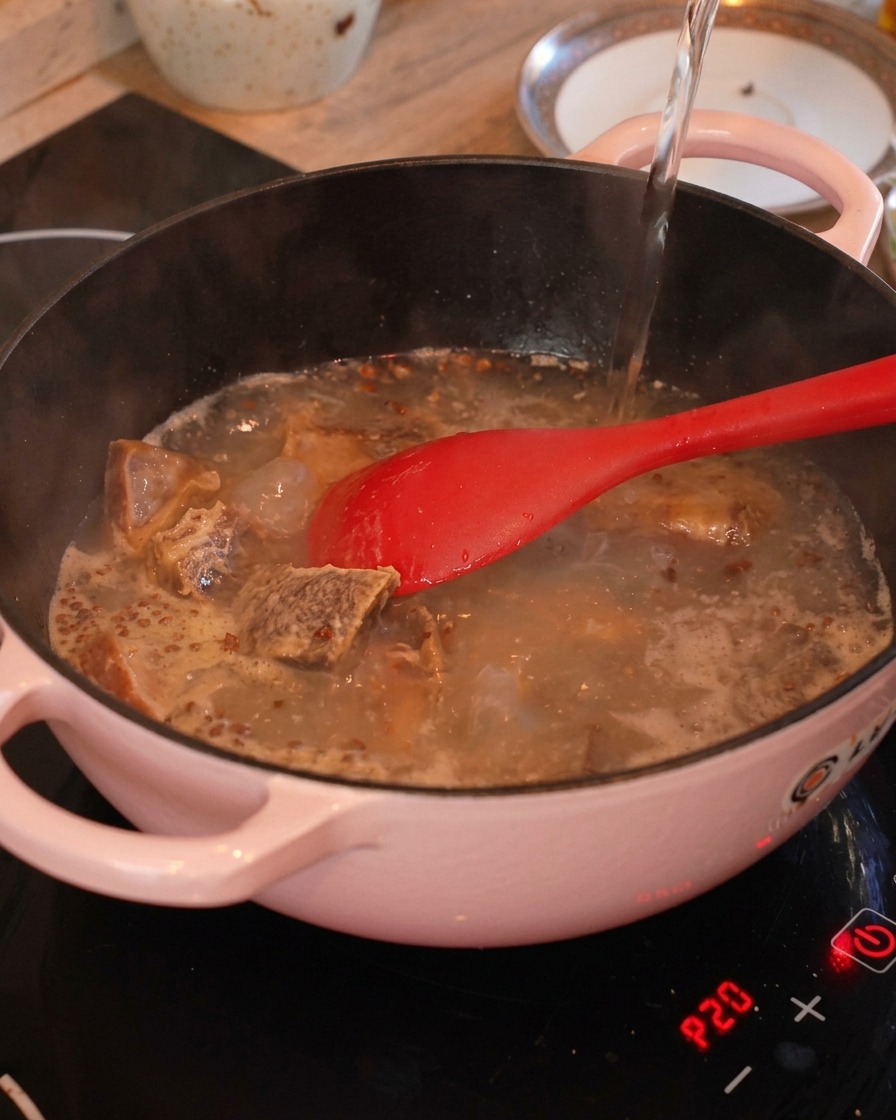
Pour hot water into the pink pot containing the stir-fried cured pork ribs and aromatics until the ribs are completely submerged. Bring the mixture to a boil to create the rich soup base.
Tip: Always use hot water instead of cold water here to avoid shocking the seared meat, which helps achieve a beautiful, milky-white broth. - 6Add tomatoes and chive roots
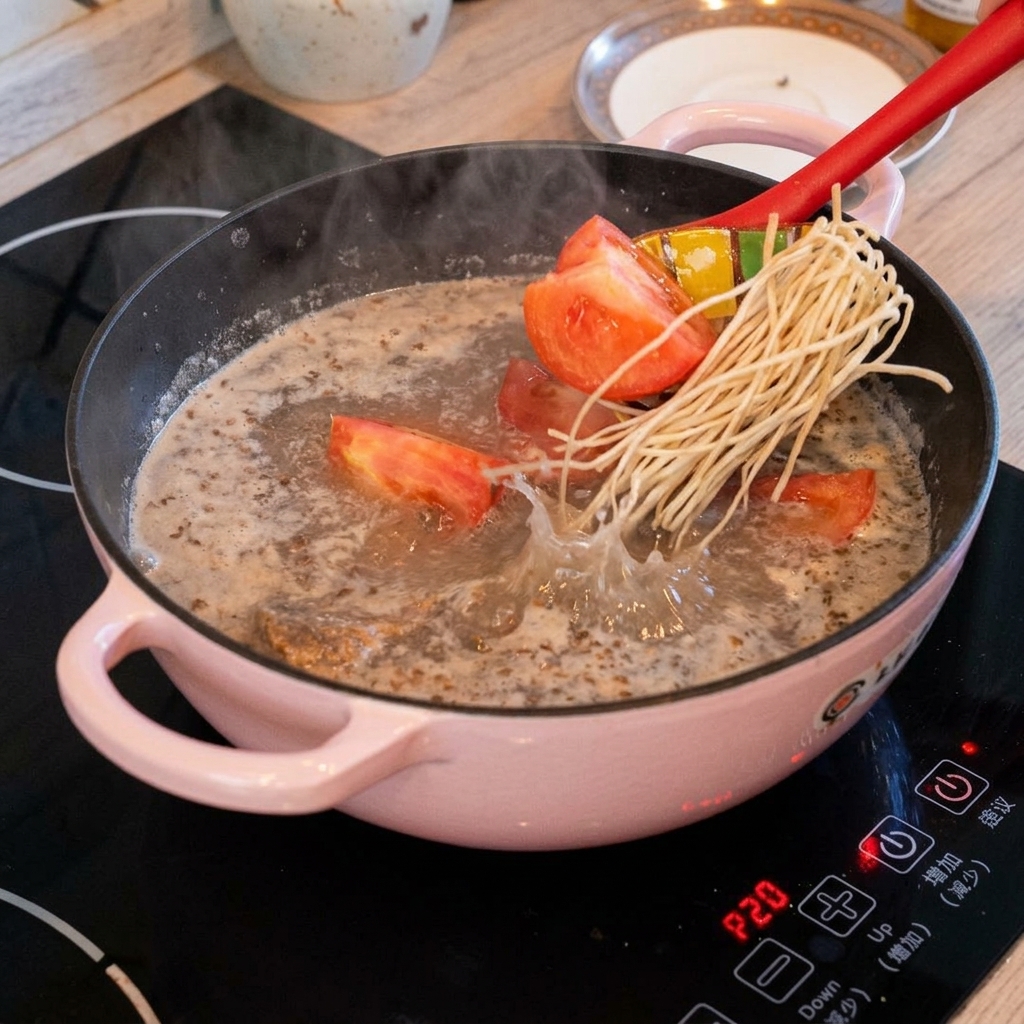
Add fresh tomato wedges and Chinese chive roots (Herba Allii Hookeri roots) into the boiling soup base. These ingredients will infuse the broth with a subtle tanginess and unique herbal depth.
Tip: The chive roots add an authentic Yunnan flavor profile to the hot pot, perfectly balancing the rich and savory notes of the cured ribs. - 7Add cooking wine and cover
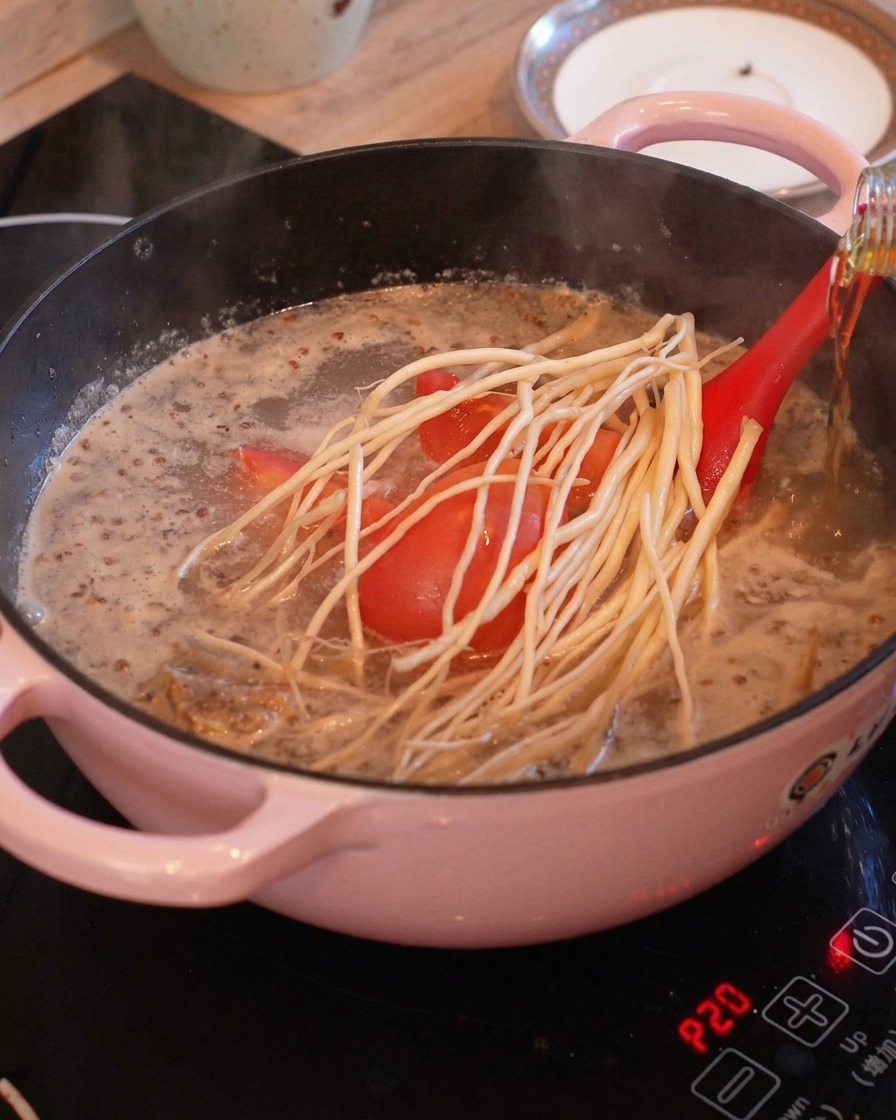
Pour a splash of cooking wine into the pot to eliminate any gamey notes and elevate the savory aroma. Secure the pink lid onto the pot to begin the long simmering process.
Tip: Simmering with the lid tightly closed traps the steam, ensuring the tough cured rib meat breaks down and becomes completely tender. - 8Add vegetables and rice cakes
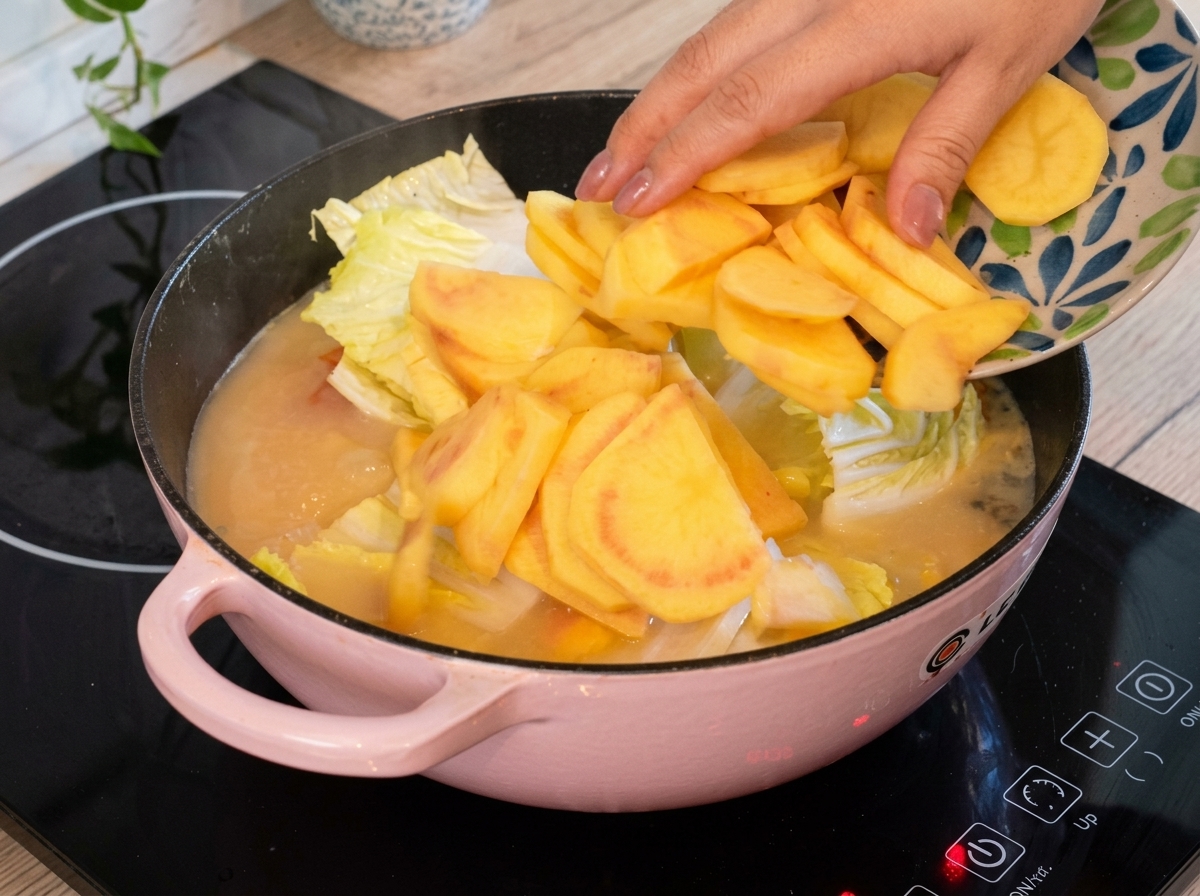
Once the cured pork ribs have simmered until completely tender and the broth turns a rich milky white, add the fresh Napa cabbage leaves, potato slices, and erkuai rice cake blocks into the pot.
Tip: Potatoes and rice cakes release starch as they cook, which naturally thickens the hot pot broth and makes it even more flavorful. - 9Prepare the dipping sauce ingredients
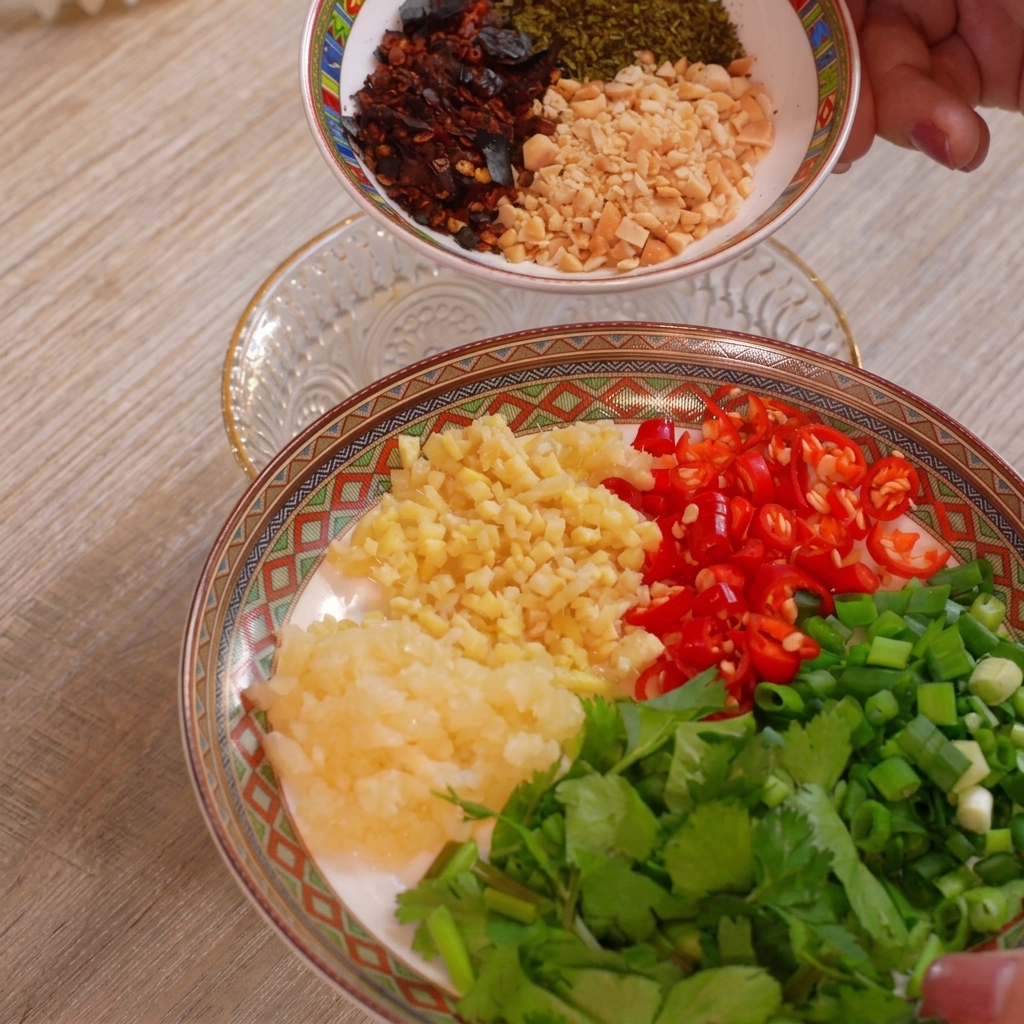
Prepare the aromatics and fresh herbs for the dipping sauce by finely mincing garlic and ginger, and chopping fresh red chili peppers, scallions, and cilantro. Gather the roasted chili flakes, crushed peanuts, and Sichuan pepper powder.
Tip: Finely mincing the garlic and ginger helps their flavors release quickly and blend smoothly into the dipping sauce. - 10Add fermented bean curd
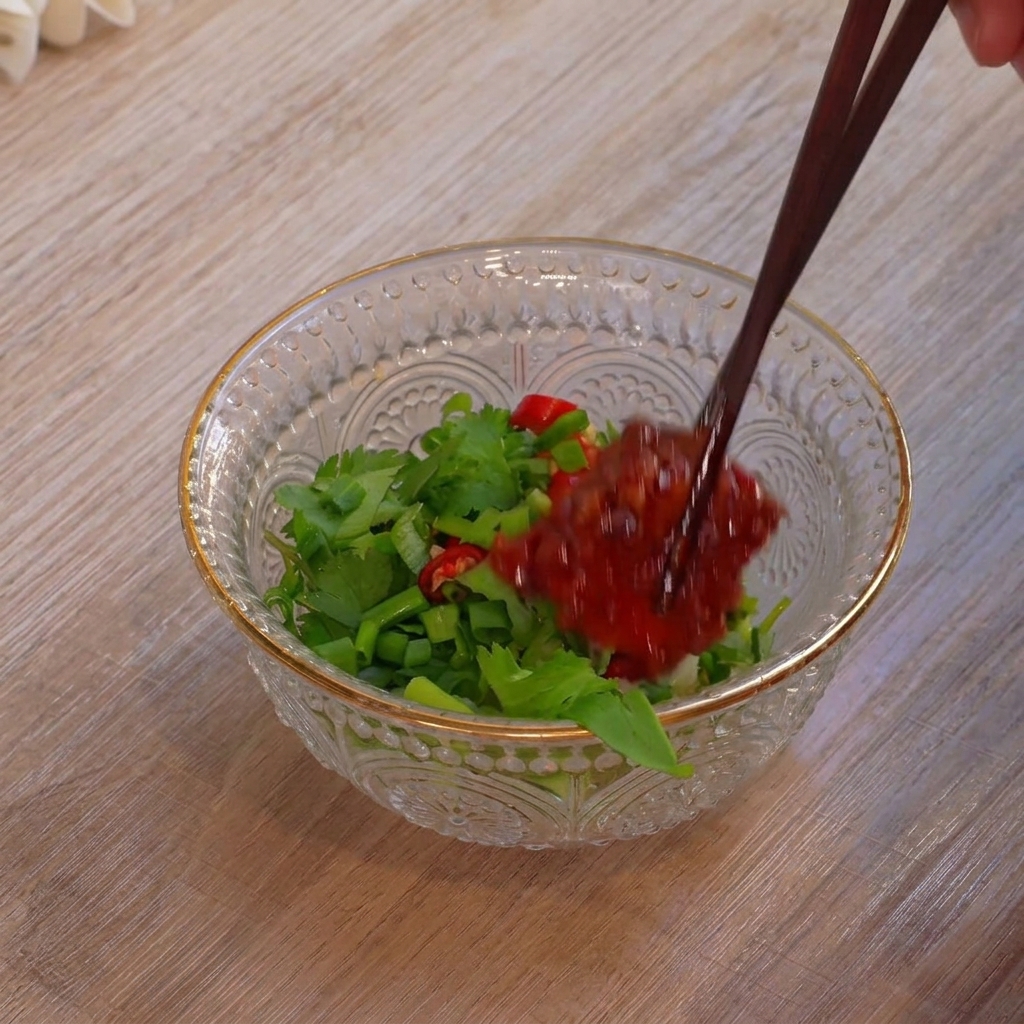
Place the chopped fresh herbs and chilies into a dipping sauce bowl, then use chopsticks to add a cube of rich red fermented bean curd (furu). This adds a savory, creamy, and deeply umami base to the sauce.
Tip: Mashing the fermented bean curd completely ensures it integrates evenly with the other ingredients for a smooth consistency. - 11Add dry spices and peanuts
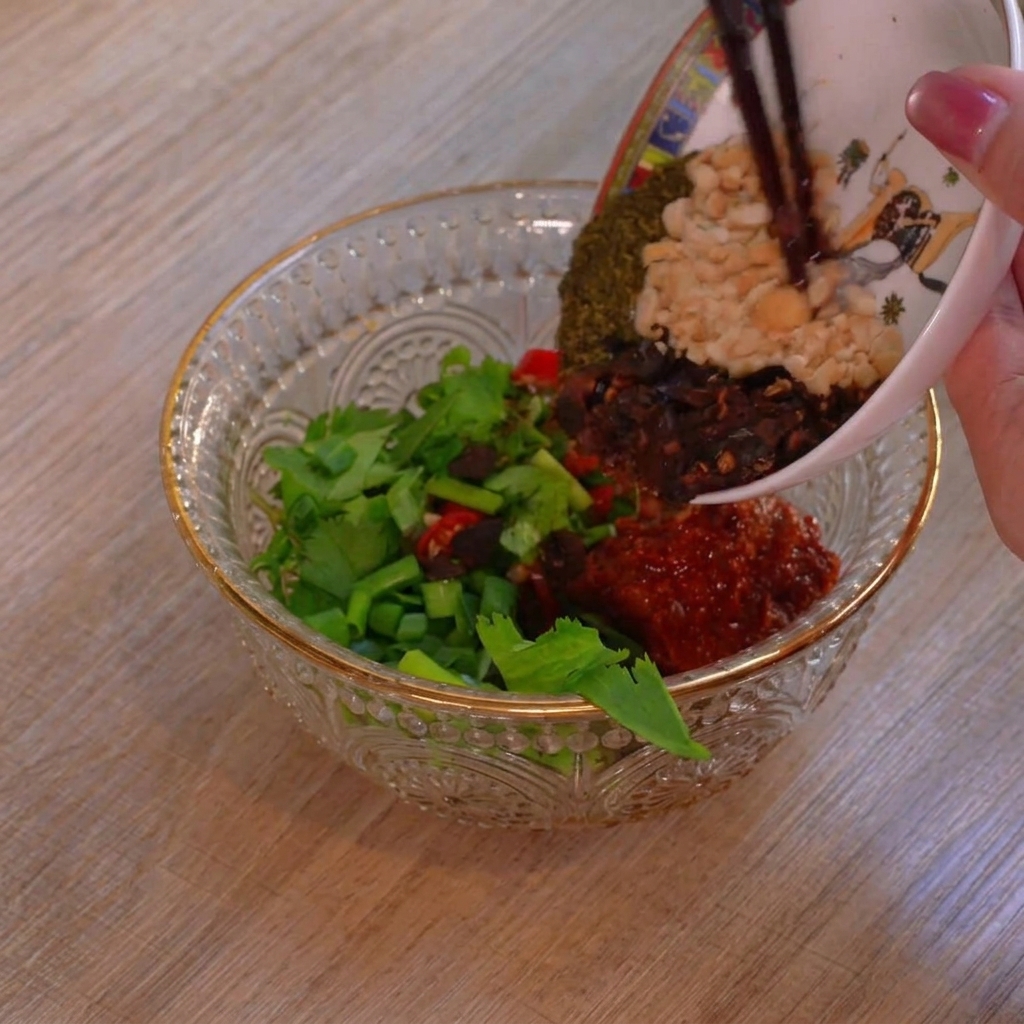
Pour the dry components into the dipping sauce bowl, including the crushed peanuts for crunch, roasted chili flakes for smoky heat, and aromatic Sichuan pepper powder.
Tip: Roasting your own chili flakes beforehand gives the dipping sauce a significantly more fragrant and authentic flavor profile. - 12Pour in the hot broth
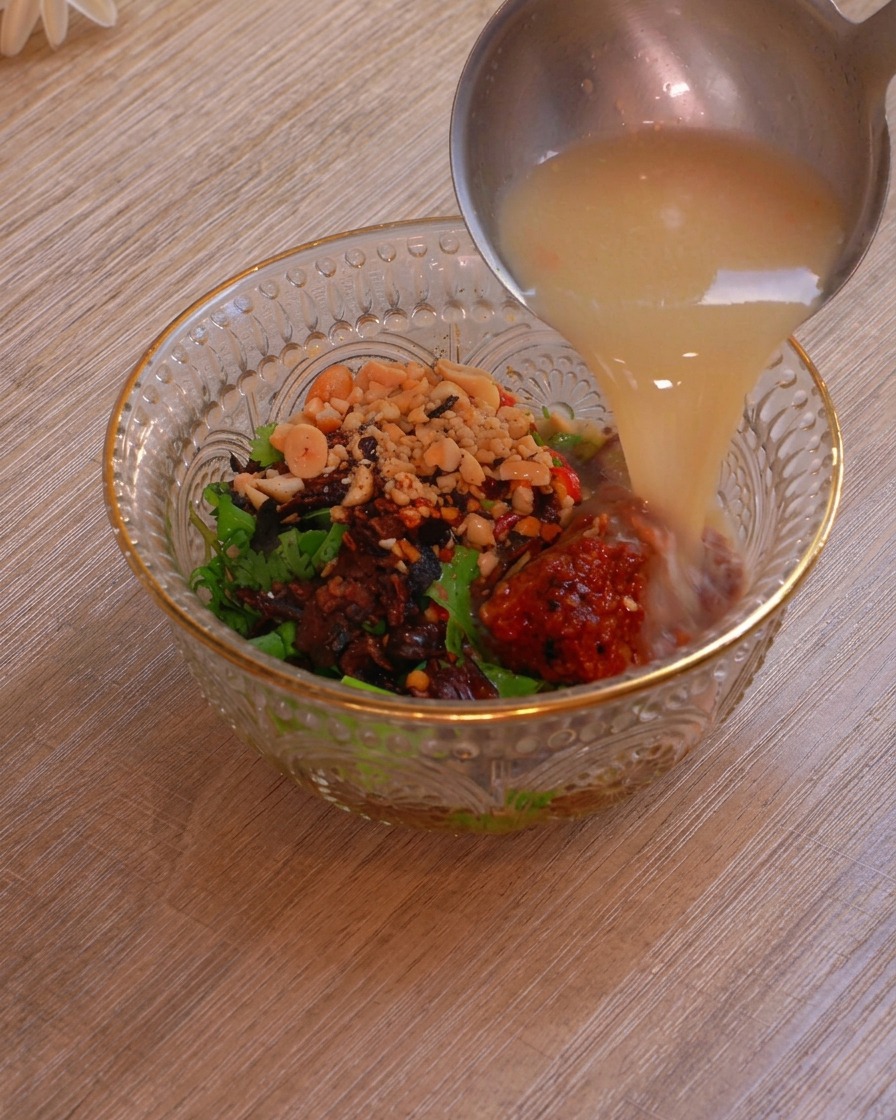
Ladle a portion of the boiling, savory cured pork rib broth directly from the hot pot into the prepared dipping sauce bowl. Stir well to dissolve the fermented bean curd and combine all the flavors.
Tip: Adding the hot broth cooks the raw garlic and ginger slightly, mellowing their sharp bite while unlocking their aromas. - 13Mix the dipping sauce
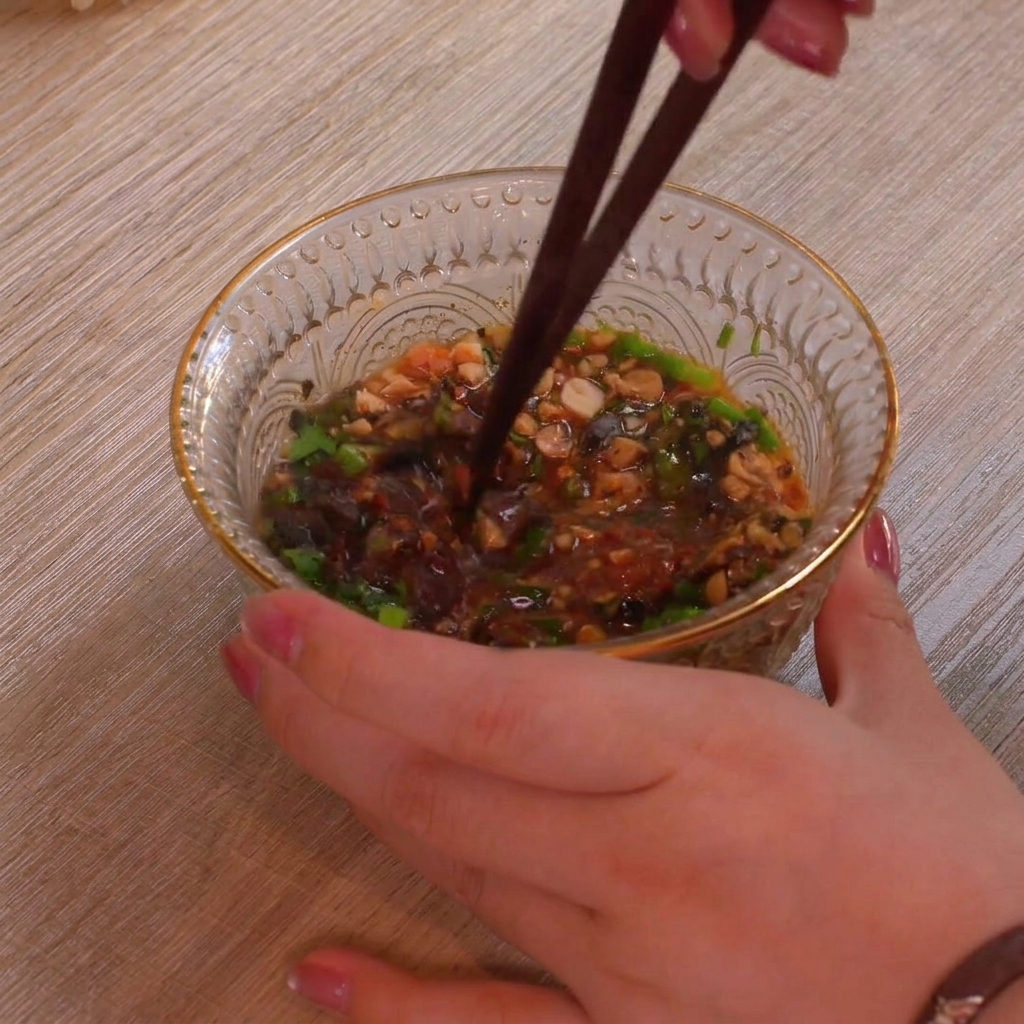
Combine the ginger, garlic, cilantro, roasted chili flakes, millet chili, chopped scallions, peanuts, Sichuan pepper powder, sesame oil, and fermented bean curd in a bowl. Use chopsticks to thoroughly stir and mix all the dipping sauce ingredients together until well combined.
Tip: If the fermented bean curd is too thick to mix smoothly, you can add a small ladle of the hot savory pork rib broth to help emulsify the dipping sauce.