Traditional Chinese Wind-Dried Cured Pork Ribs
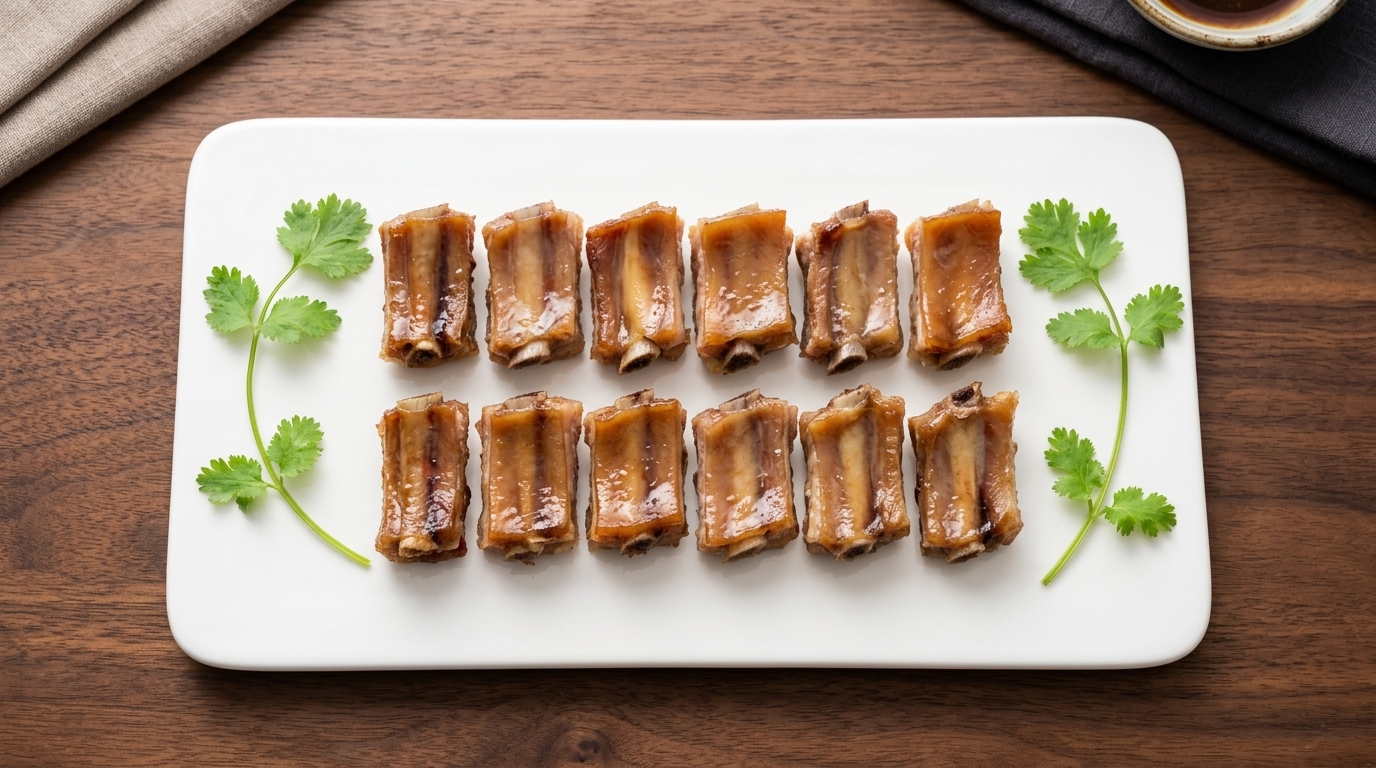
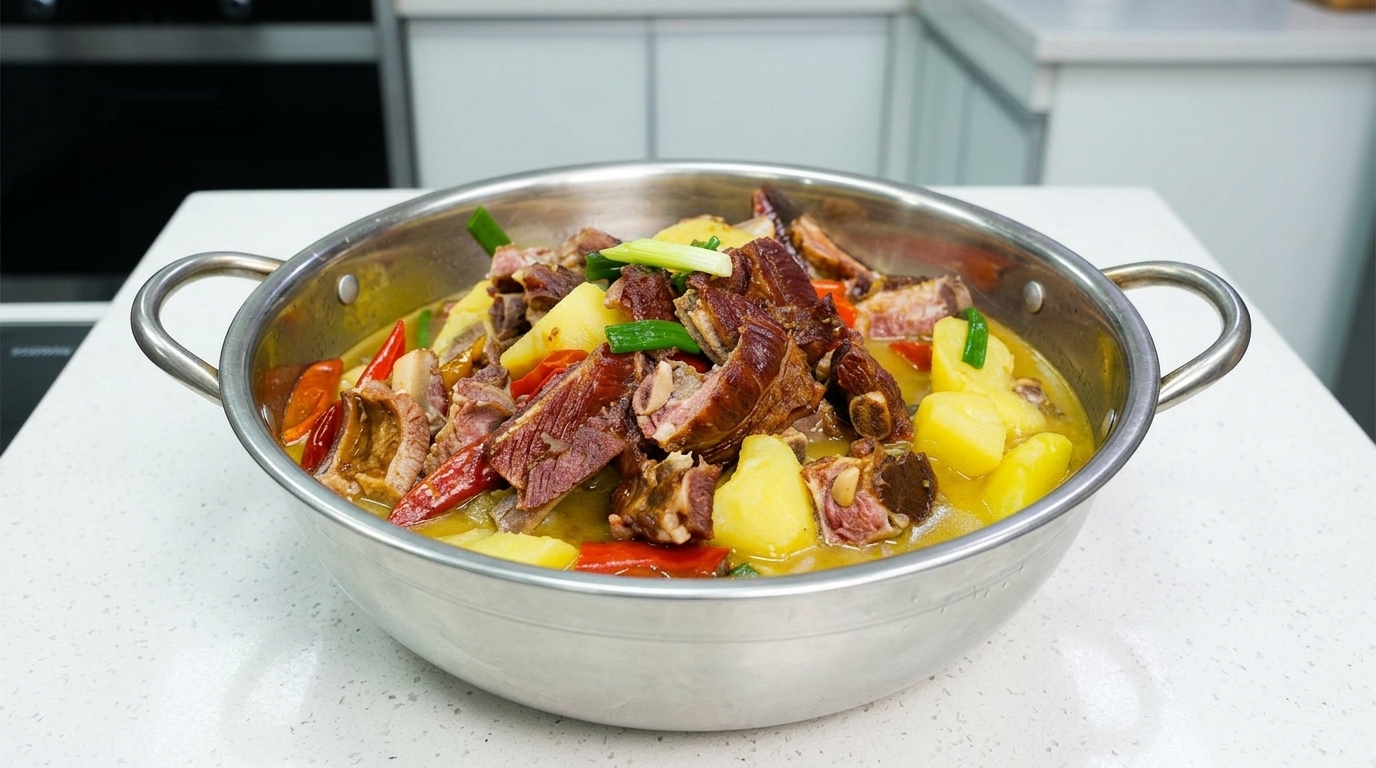
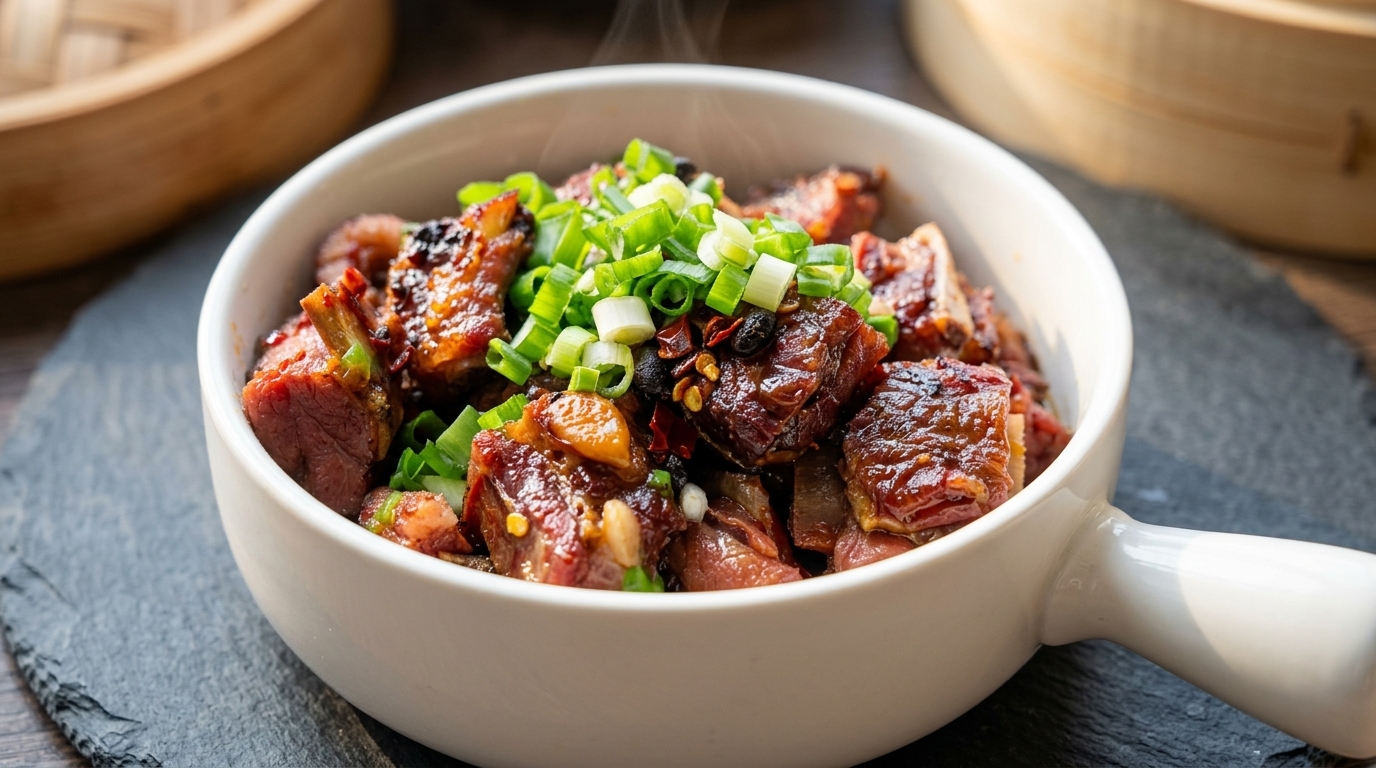
Master traditional Chinese curing with these wind-dried pork ribs. Rubbed with aromatic roasted Sichuan peppercorn salt, they dry naturally to savory perfection.
Wind-drying is an ancient preservation technique widely practiced across southern China during the crisp, dry winter months. This method relies on cold northern winds and bright sunlight to slowly cure the meat, concentrating its natural flavors while developing a firm, rich texture. Infused with aromatic Sichuan peppercorns, warm Chinese cinnamon, and high-proof white liquor, these cured ribs offer a deeply savory, rustic profile that captures the essence of traditional countryside cooking.
Ingredients
- 5 kg pork ribs
- 150 g edible salt
- 100 ml high-proof white liquor
- 20 g Sichuan peppercorns
- 15 g chili powder
- 5 whole bay leaves
- 2 pieces cinnamon bark
- 3 whole star anise
Instructions
- 1Prepare the pork ribs
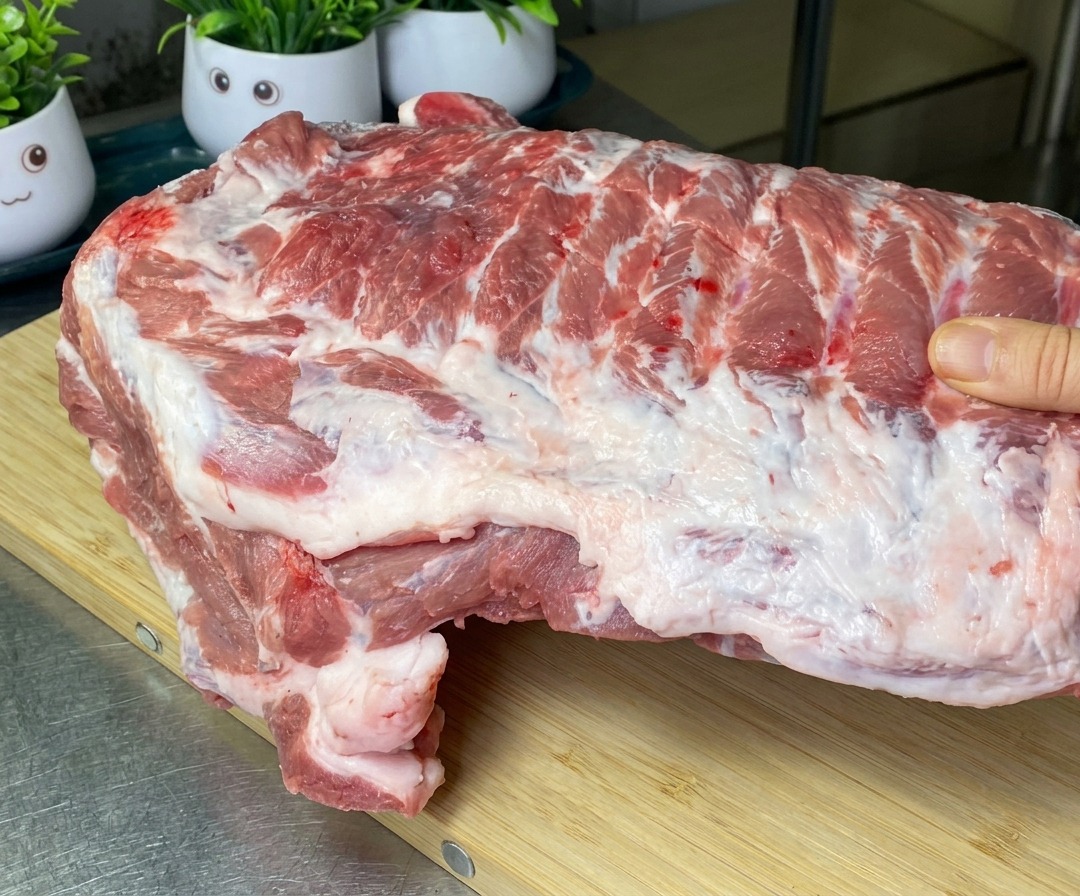
Take a large slab of raw pork ribs and place it on a wooden cutting board. Do not wash the meat; instead, carefully cut down between the individual ribs to separate them into strips, keeping them connected at the base without cutting completely through. For easier handling, sever them entirely at every third rib, then set them aside.
Tip: Avoid washing the ribs with water, as excess moisture can introduce bacteria and prevent the pork from curing and drying correctly. - 2Pour white liquor over ribs
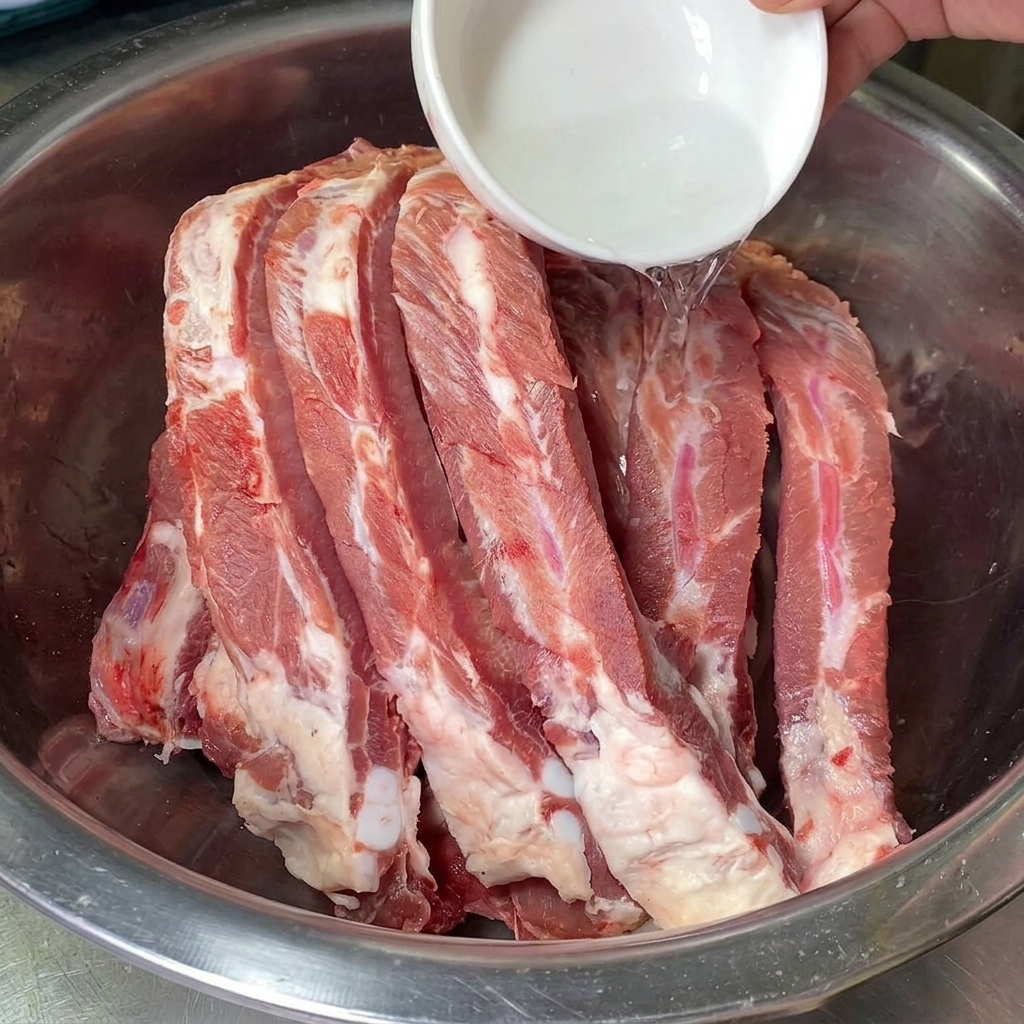
Place the pork ribs into a large stainless steel basin and pour a small bowl of high-proof white liquor over them. Rub it evenly into every corner and edge of the meat, then let it marinate for 10 minutes to eliminate odors and prepare the meat for curing.
Tip: High-proof white liquor is essential here as it acts as a sterilizer and helps preserve the pork ribs during the long air-drying process. - 3Massage the liquor into the meat
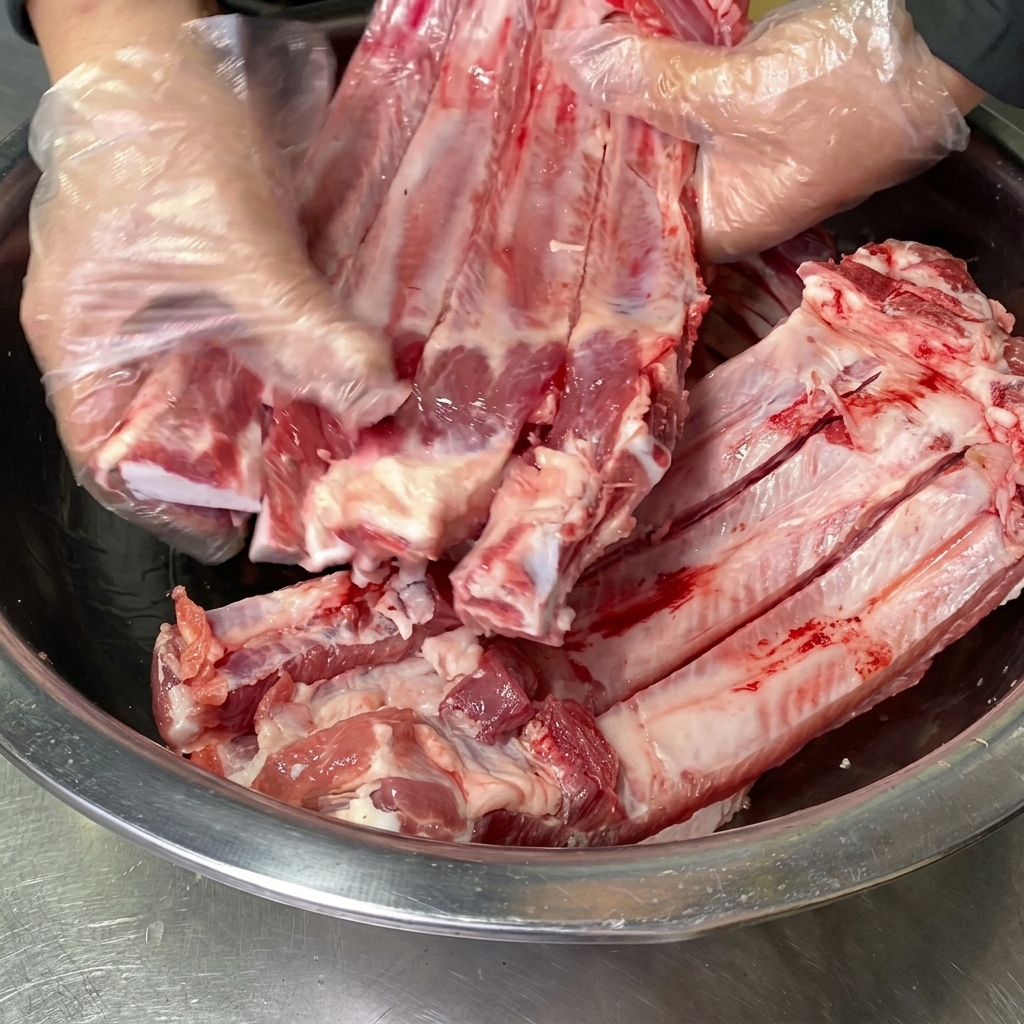
Using gloved hands, thoroughly massage and rub the high-proof white liquor into all sides, edges, and corners of the raw pork ribs. Ensure the liquid is evenly distributed across the entire surface of the meat.
Tip: Make sure to rub the liquor into all crevices around the bones to guarantee complete coverage and effective sanitation. - 4Combine salt and spices
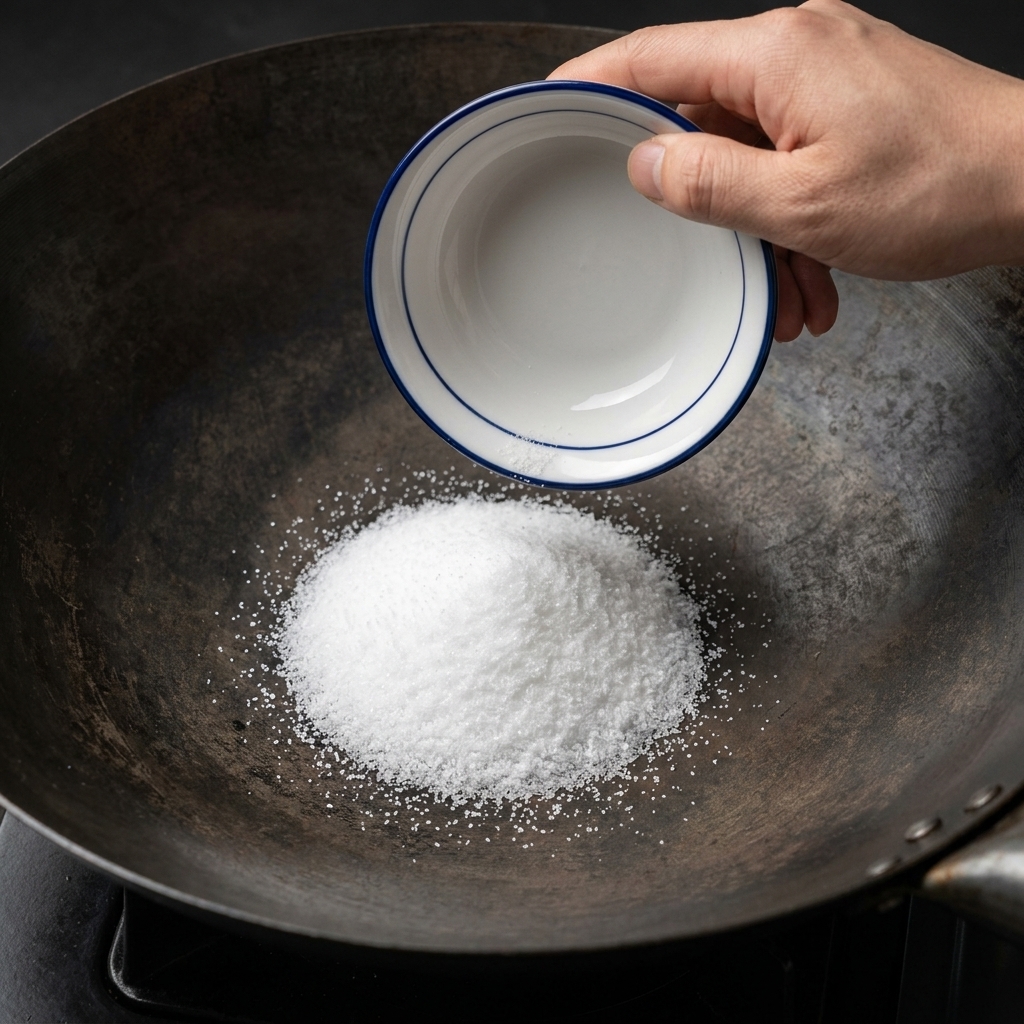
Add a measure of plain white salt directly into a clean, dry wok. Place the whole spices, including star anise, bay leaves, pieces of cinnamon bark, and Sichuan peppercorns, right on top of the salt before turning on the heat.
Tip: Make sure your wok is completely dry and free of oil before adding the salt and spices to ensure a clean dry-roasting process. - 5Dry-roast the salt and whole spices
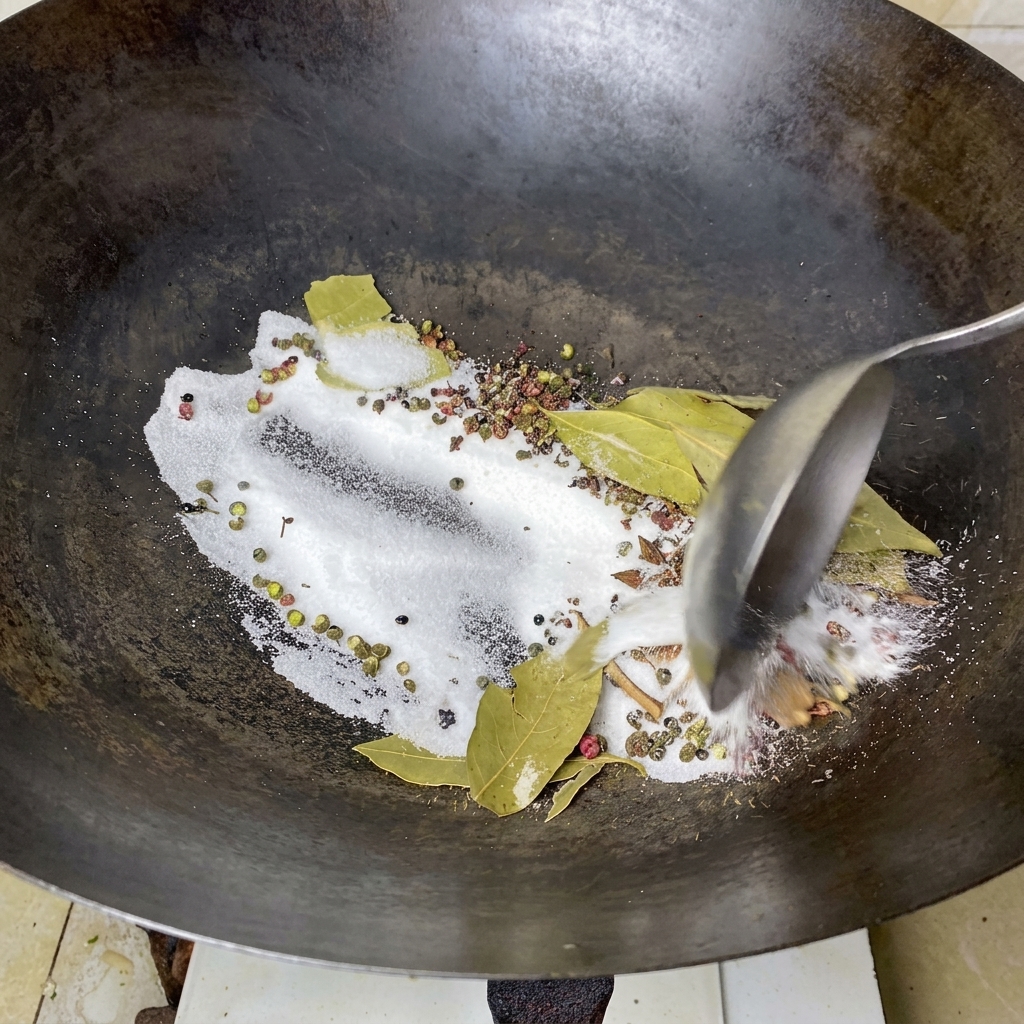
Turn the heat to low and use a metal spatula to constantly stir and flip the salt mixed with the star anise, bay leaves, cinnamon bark, and Sichuan peppercorns. Roast slowly until the salt shifts to a faint yellow hue and the rich aroma of the spices is fully released.
Tip: Keep the heat low and stay attentive; spices can burn quickly, which will introduce an unwanted bitter flavor to your finished cure. - 6Add chili powder to toasted spices
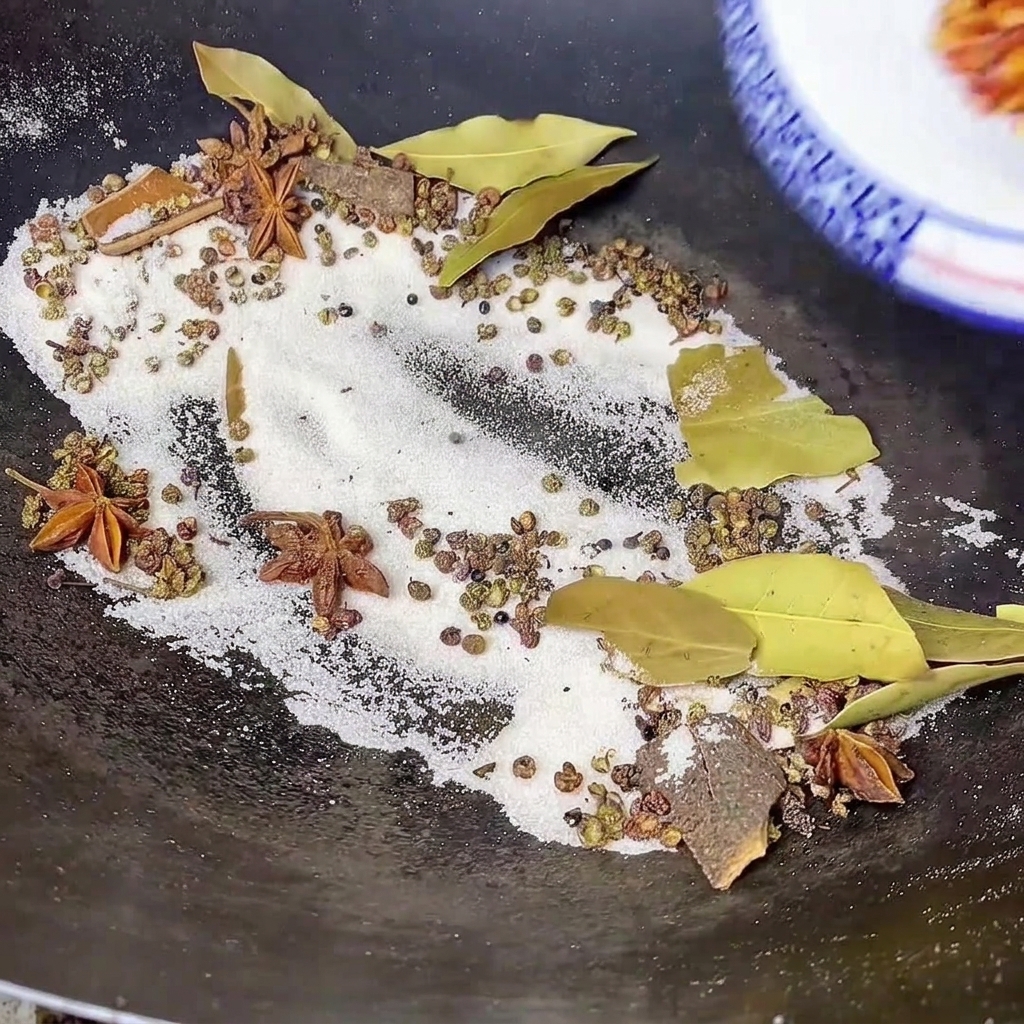
Stir-fry the salt, star anise, bay leaves, cinnamon bark, and Sichuan peppercorns on low heat until the salt turns slightly yellow and fragrant. Then, pour the red chili powder into the wok and stir-fry quickly to release its aroma.
Tip: Keep the heat low when adding the chili powder to prevent it from burning, which can introduce a bitter taste to the spice mix. - 7Add the spice mixture to the ribs
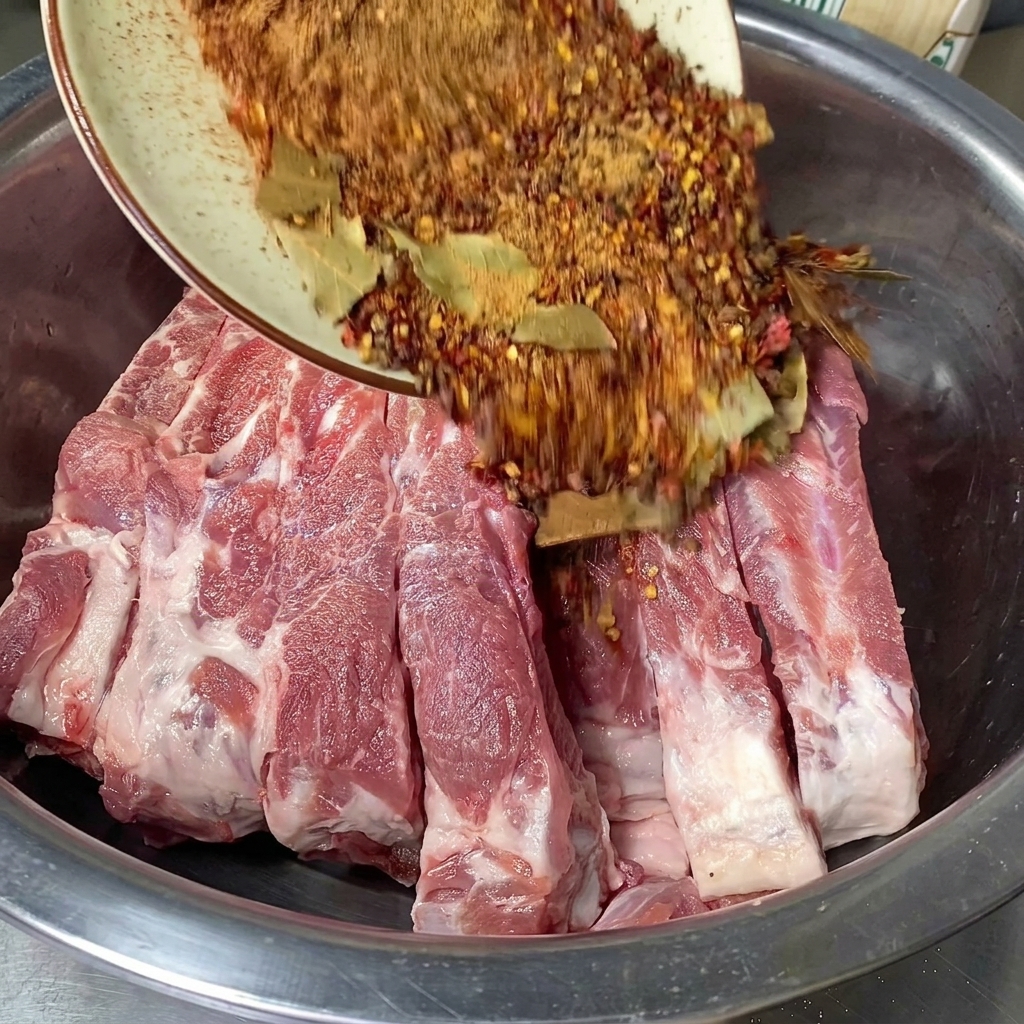
Once the roasted spice and salt mixture has cooled down completely, pour it out of the dish and scatter it evenly over the pork ribs waiting in the stainless steel basin.
Tip: Ensure the spice rub is completely cool before adding it to the meat, as hot salt can partially cook the raw surface and cause spoilage later. - 8Coat the ribs with spice rub
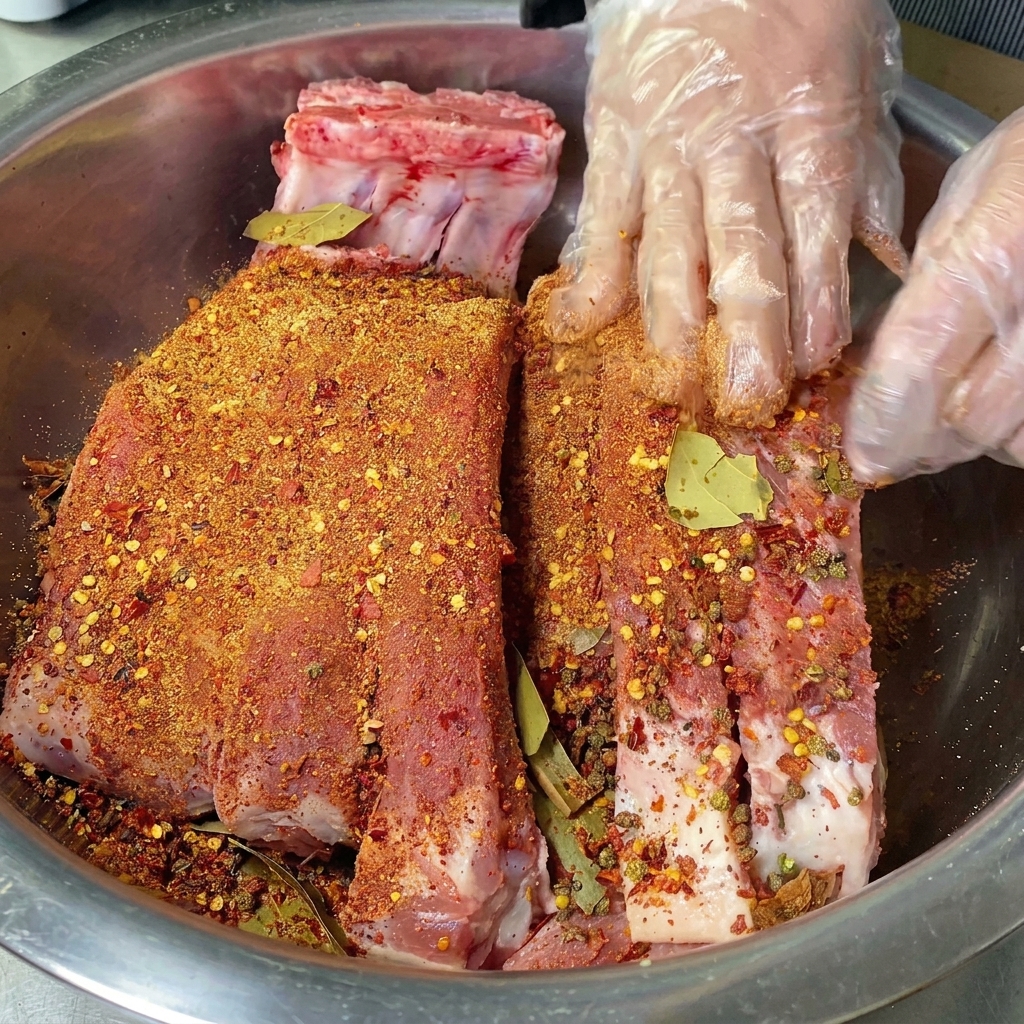
Use gloved hands to rub the seasoned red spice and salt mixture thoroughly onto all sides of the pork ribs. Massage the rub deep into every surface, edge, and fold to ensure uniform flavor and proper preservation.
Tip: Be meticulous with the coating, as any unseasoned spots on the ribs might not cure properly during the air-drying stage. - 9Seal the basin with plastic wrap
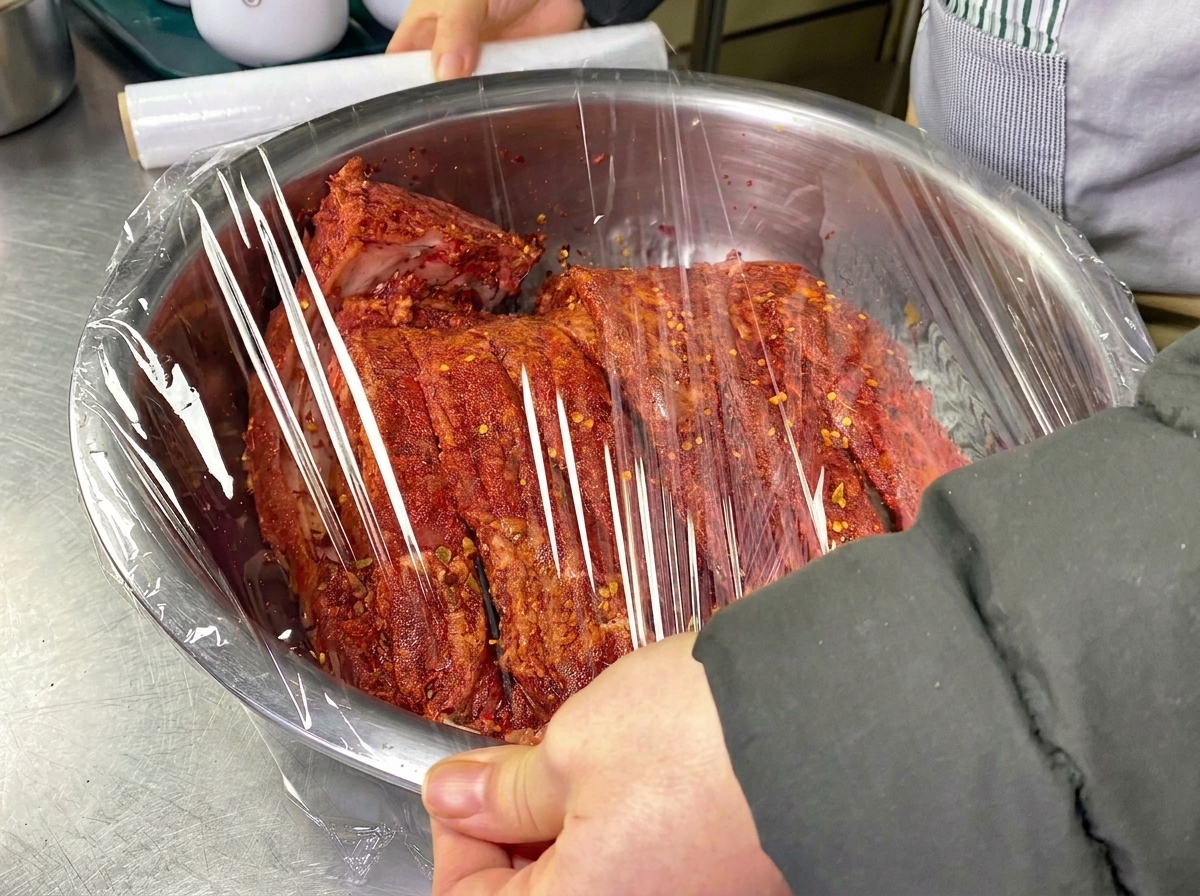
Cover the large stainless steel basin tightly with clear plastic wrap to seal the seasoned pork ribs inside. Let the ribs marinate undisturbed at room temperature for 5 days to thoroughly absorb the spices.
Tip: Make sure the plastic wrap forms an airtight seal over the rim of the basin to maintain cleanliness and retain moisture during fermentation. - 10Cover and marinate the ribs
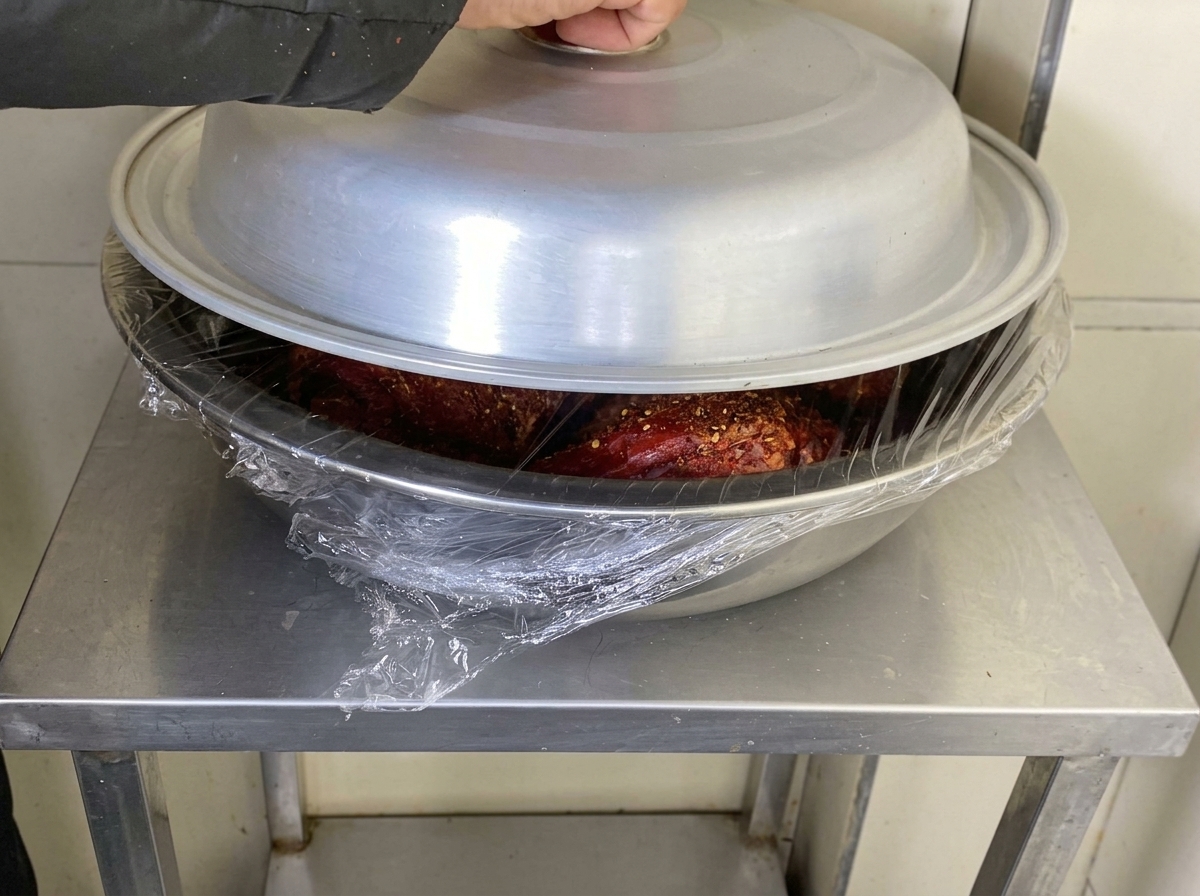
Securely seal the basin containing the spice-rubbed pork ribs with plastic wrap, then place a large metal lid over the top. Allow the ribs to marinate at room temperature for 5 days so the rich flavors of the salt, liquor, and aromatic spices can thoroughly penetrate the meat.
Tip: Make sure the plastic wrap is tightly sealed to maintain the necessary humidity and prevent the meat from drying out prematurely during the indoor marination stage. - 11Insert the hanging hooks
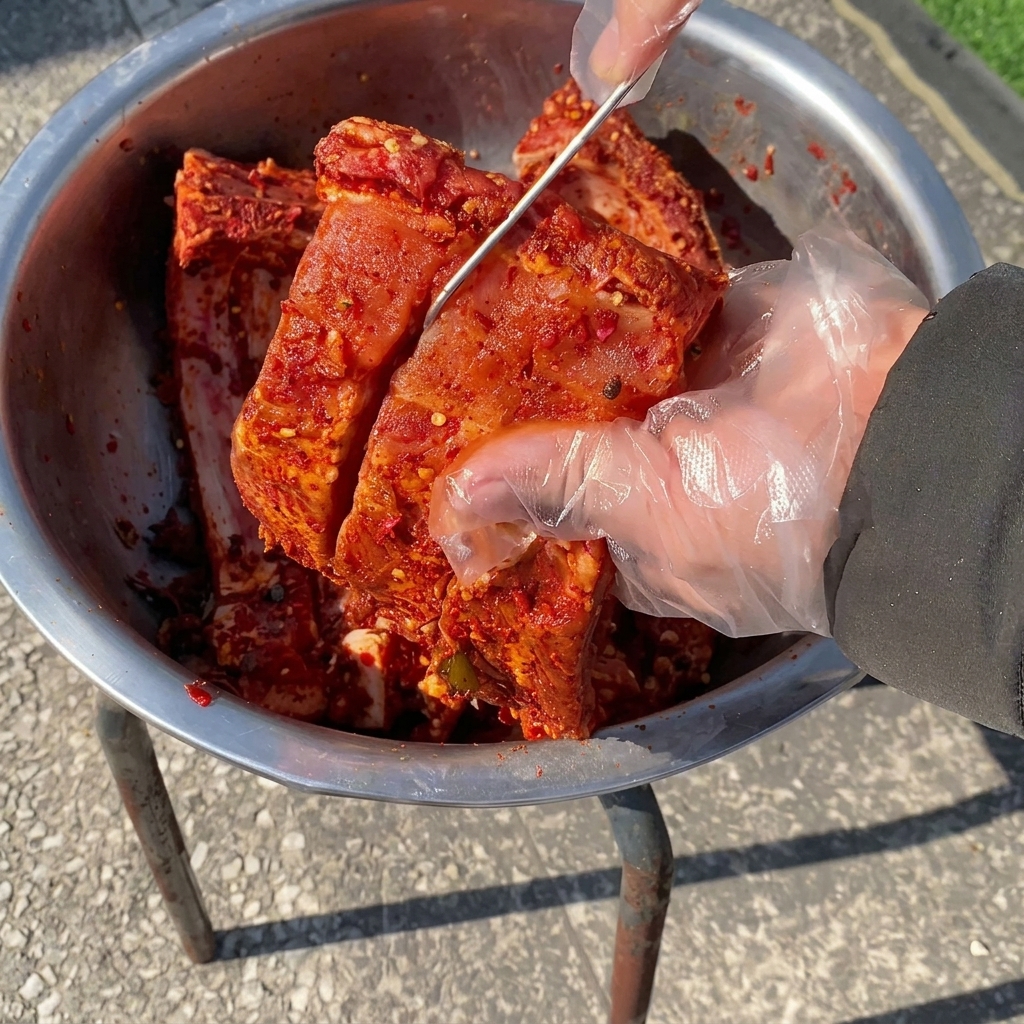
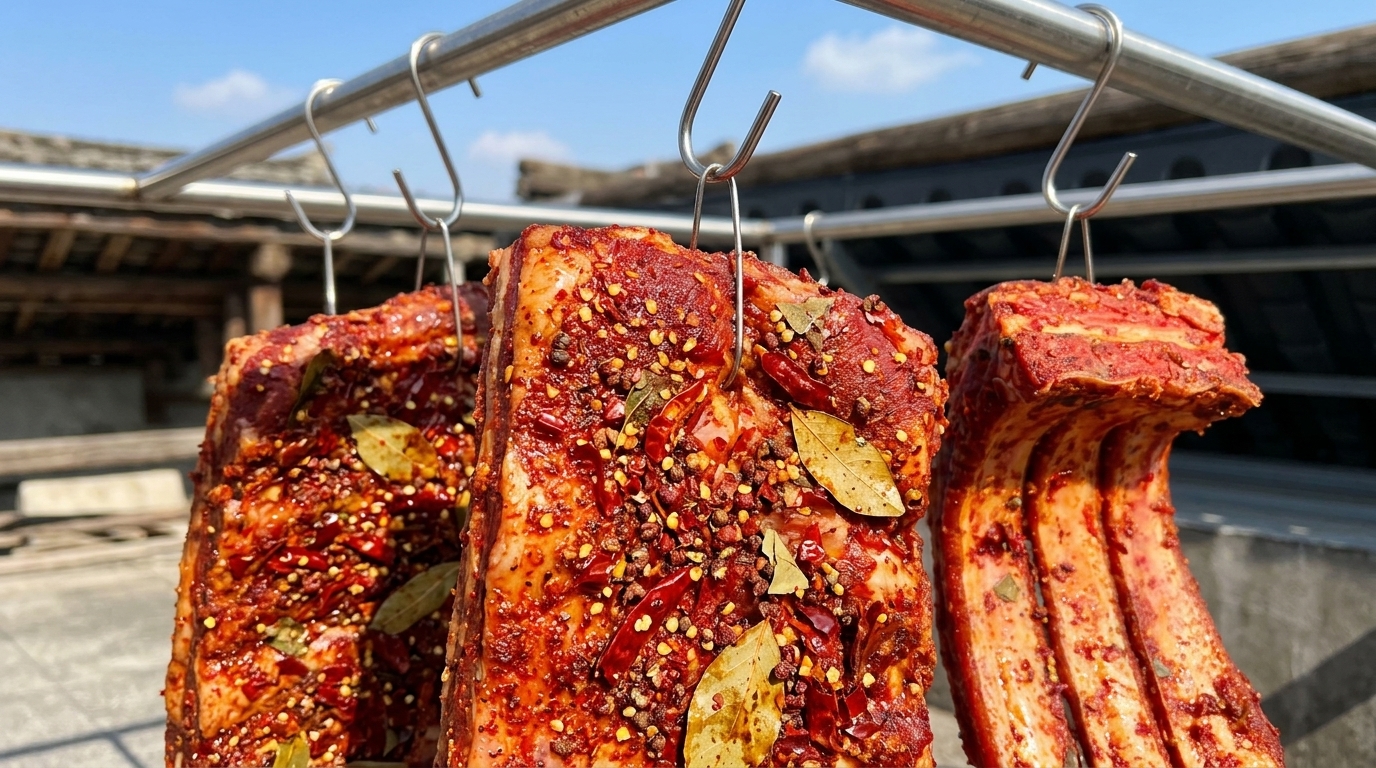
Once the 5-day marination period is complete, take the fully seasoned pork rib slabs and carefully pierce the upper section of each piece with a sharp stainless steel hook. Ensure the hook catches securely through a sturdy layer of meat or between the bones to support its weight.
Tip: Piercing through a thicker, muscular part of the slab ensures the ribs will hang securely without tearing or falling off during the outdoor drying phase. - 12Air-dry the ribs outdoors
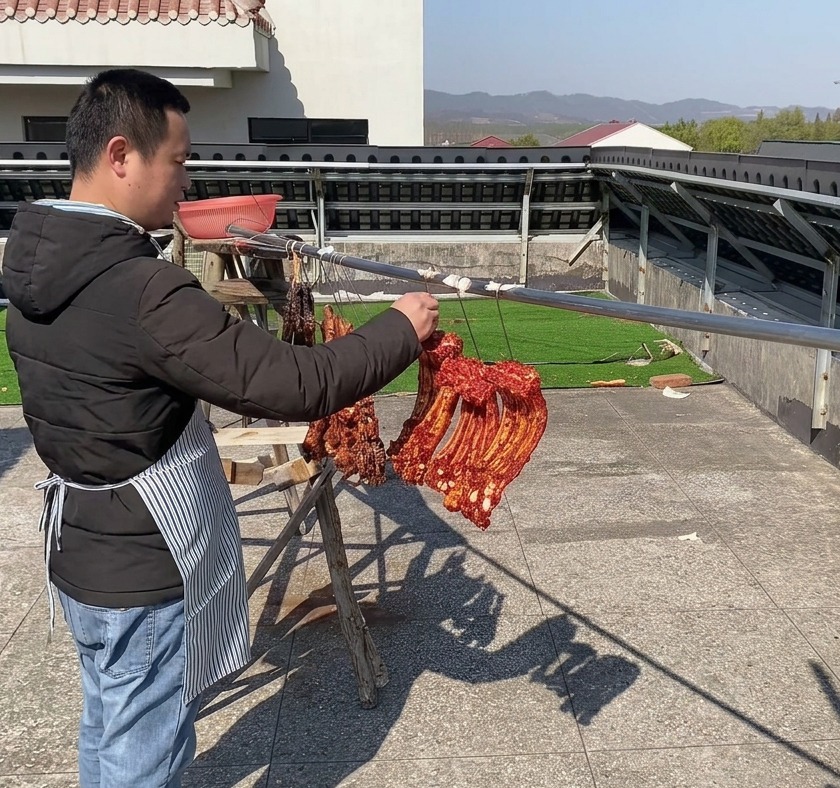
Take the hooked pork ribs outside and hang them on a long, sturdy metal rack. Position them in a well-ventilated, sunny area and let them naturally air-dry for about one week until they are beautifully cured and ready to enjoy.
Tip: Leave ample space between each hanging slab to ensure optimal airflow, which guarantees even and thorough drying across all sides of the meat.