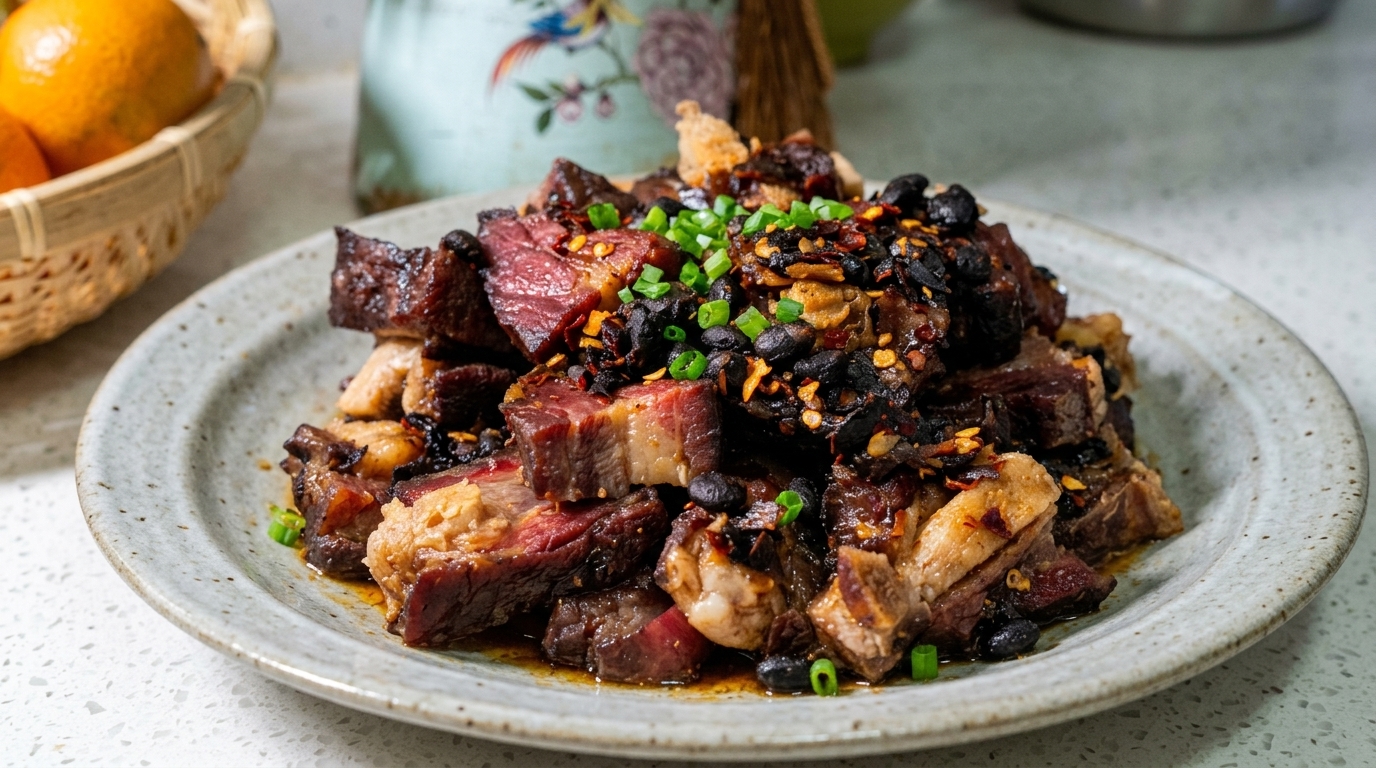
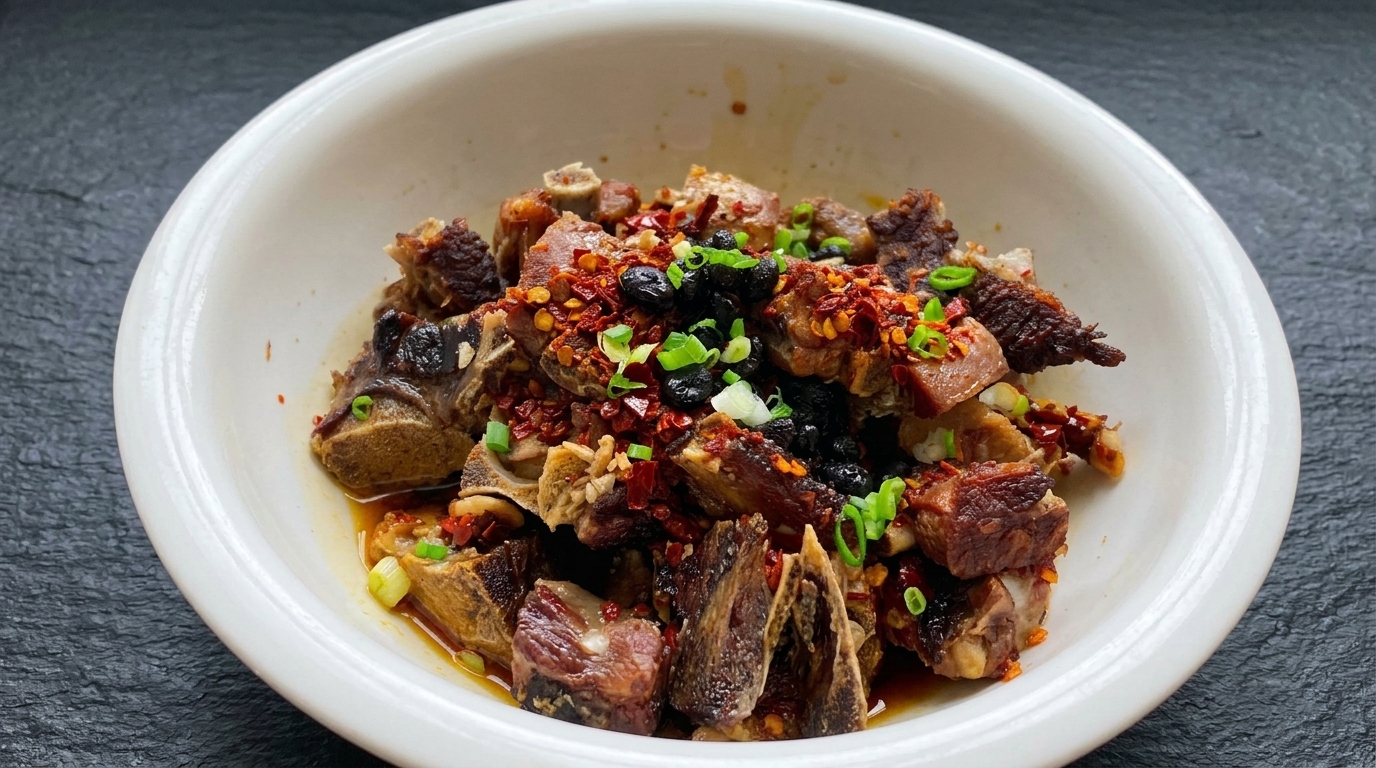
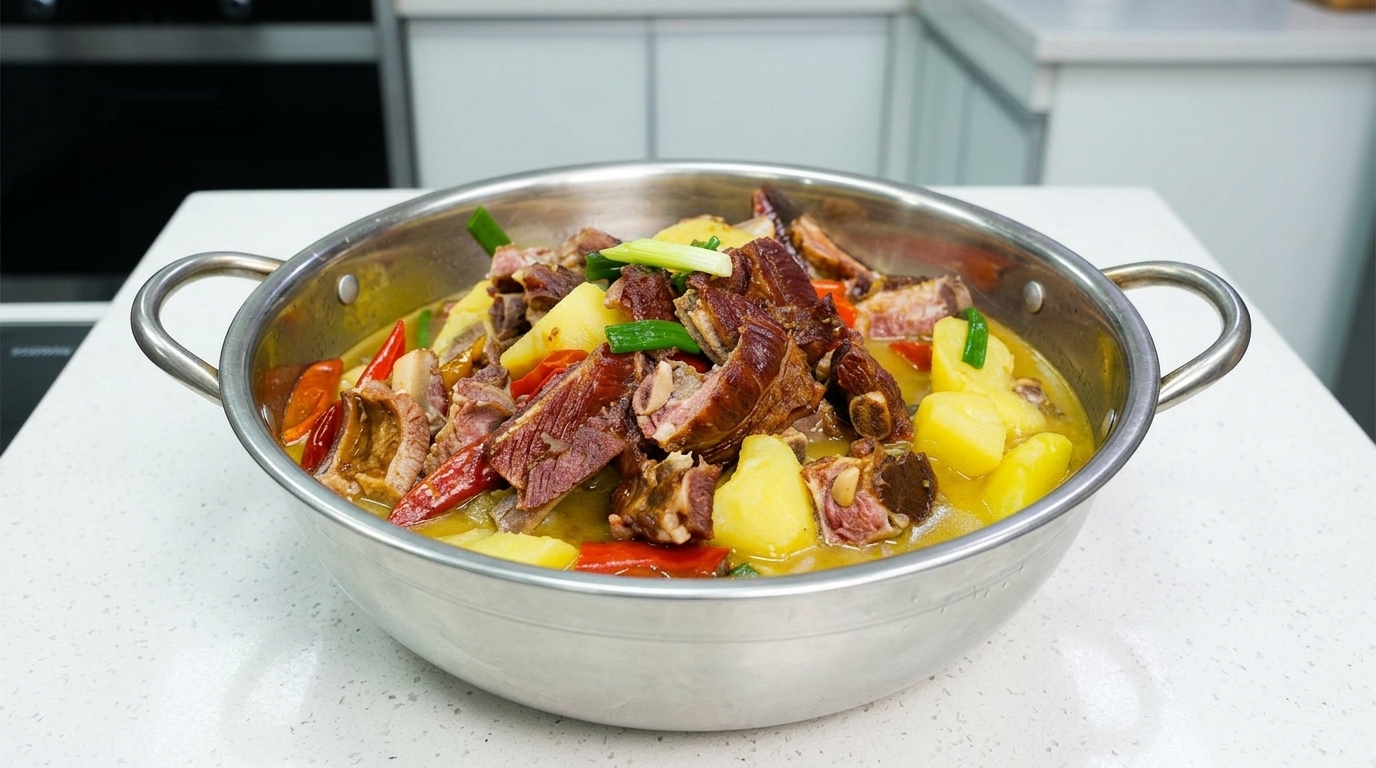
Steamed Cured Pork Ribs (Lạp Sườn Sườn Heo Chưng)
A savory, traditional specialty featuring Cantonese-style cured pork ribs blanched to perfection, topped with aromatic ginger, and steamed until deeply succulent and gleaming.
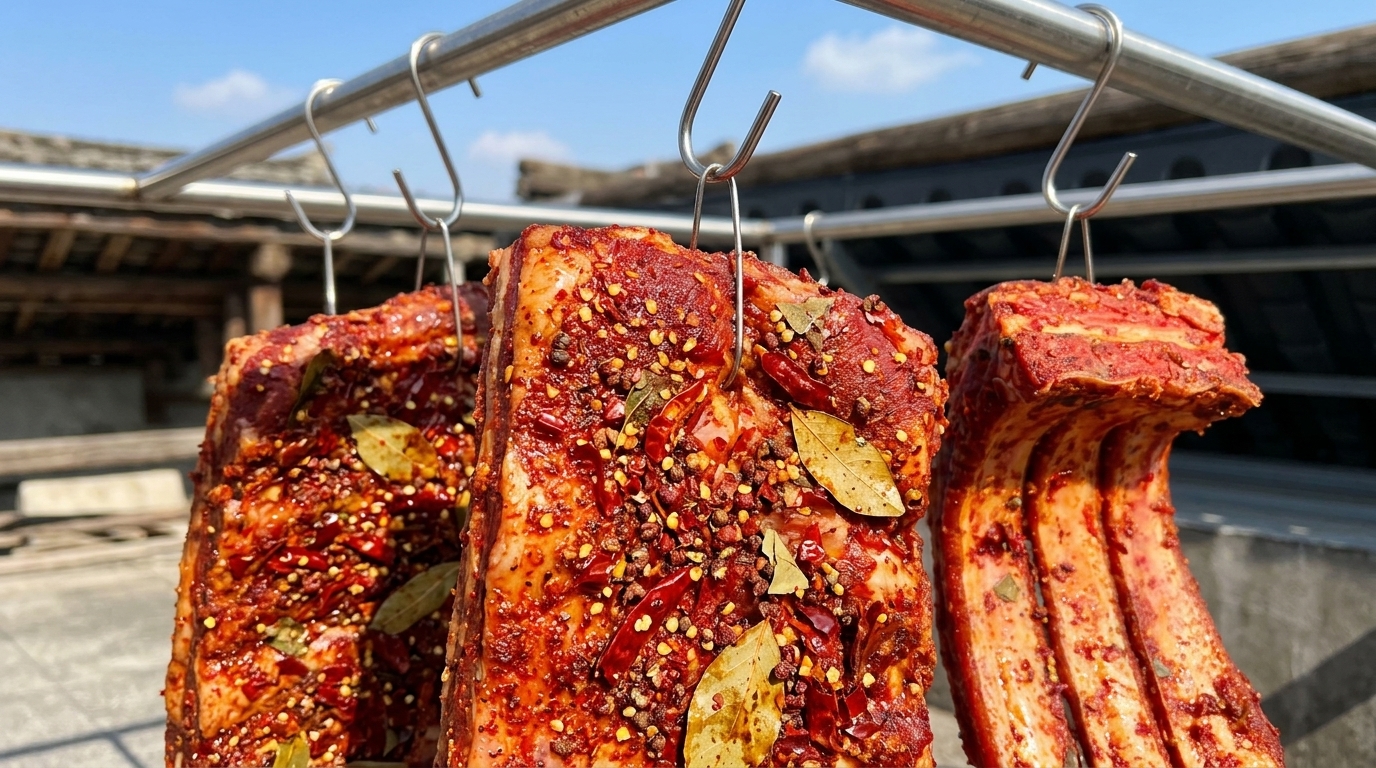
Cured pork ribs are a classic regional delicacy across East and Southeast Asia, prized for their deeply concentrated savory profile. Blanching removes any harsh surface saltiness, while a gentle steaming melts the fat into a beautiful translucent sheen, transforming the meat into a tender, rich bite best enjoyed with a warm bowl of plain white rice.
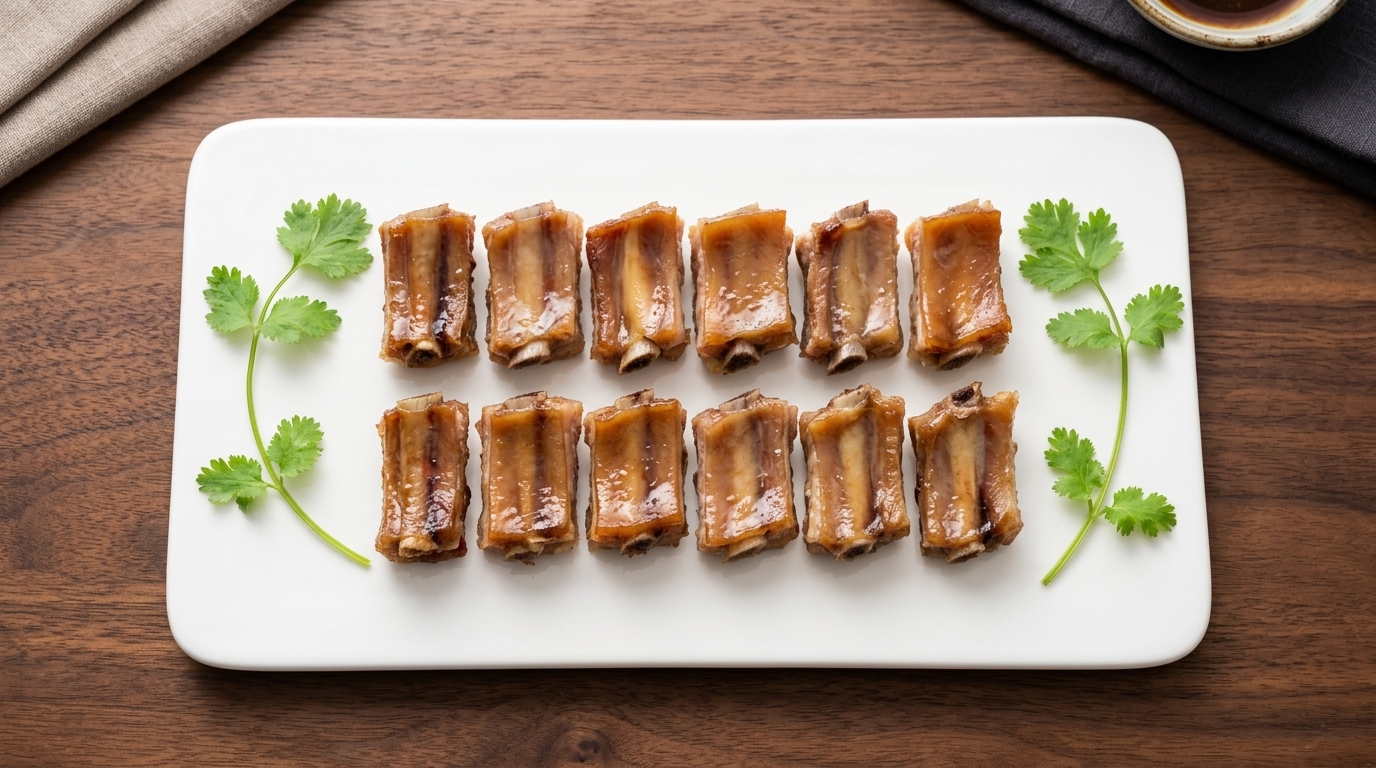
Ingredients
- 500 g cured pork ribs
- 20 g fresh yellow ginger, sliced into thin strips
- optional fresh cilantro leaves for garnish
Instructions
- 1Rinse the cured pork ribs
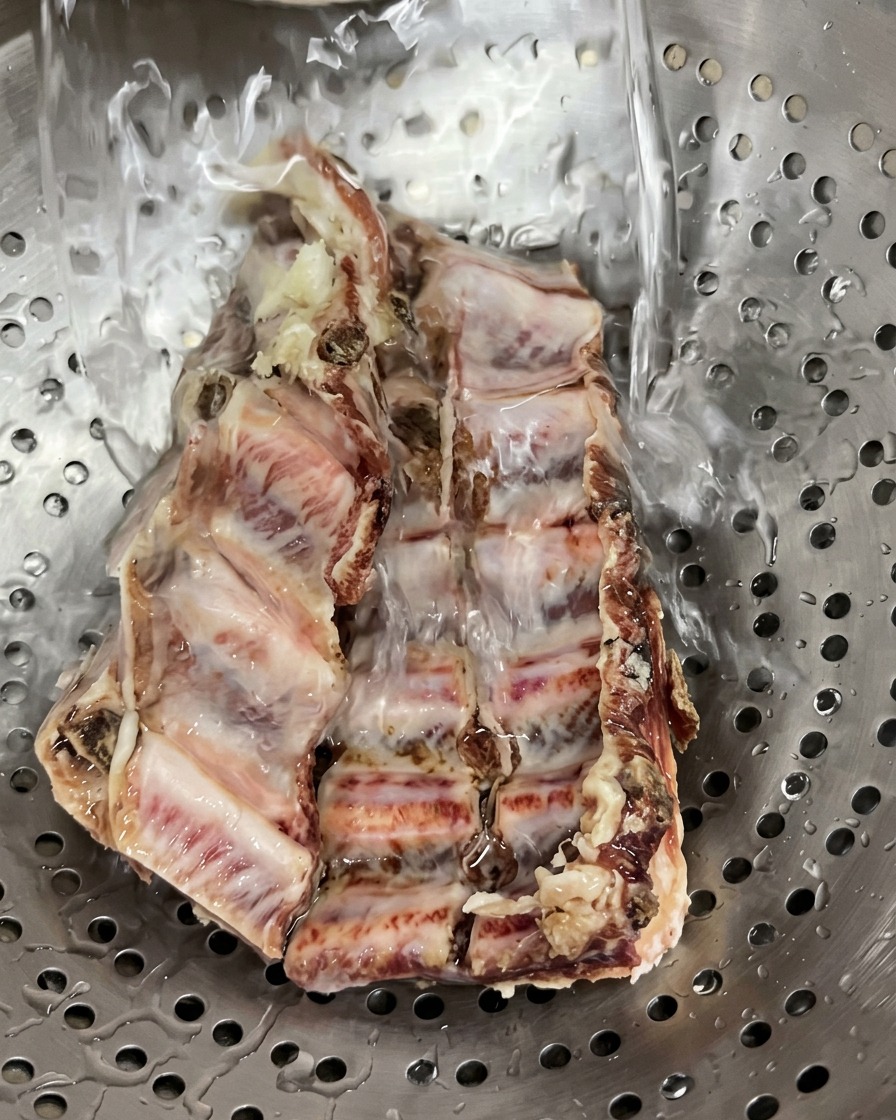
Place the raw cured pork ribs inside a metal colander and rinse them thoroughly under cold running tap water to remove surface debris and initial surface saltiness before cooking.
Tip: Make sure to wash both sides of the ribs evenly to prepare them properly for blanching. - 2Blanch the cured pork ribs
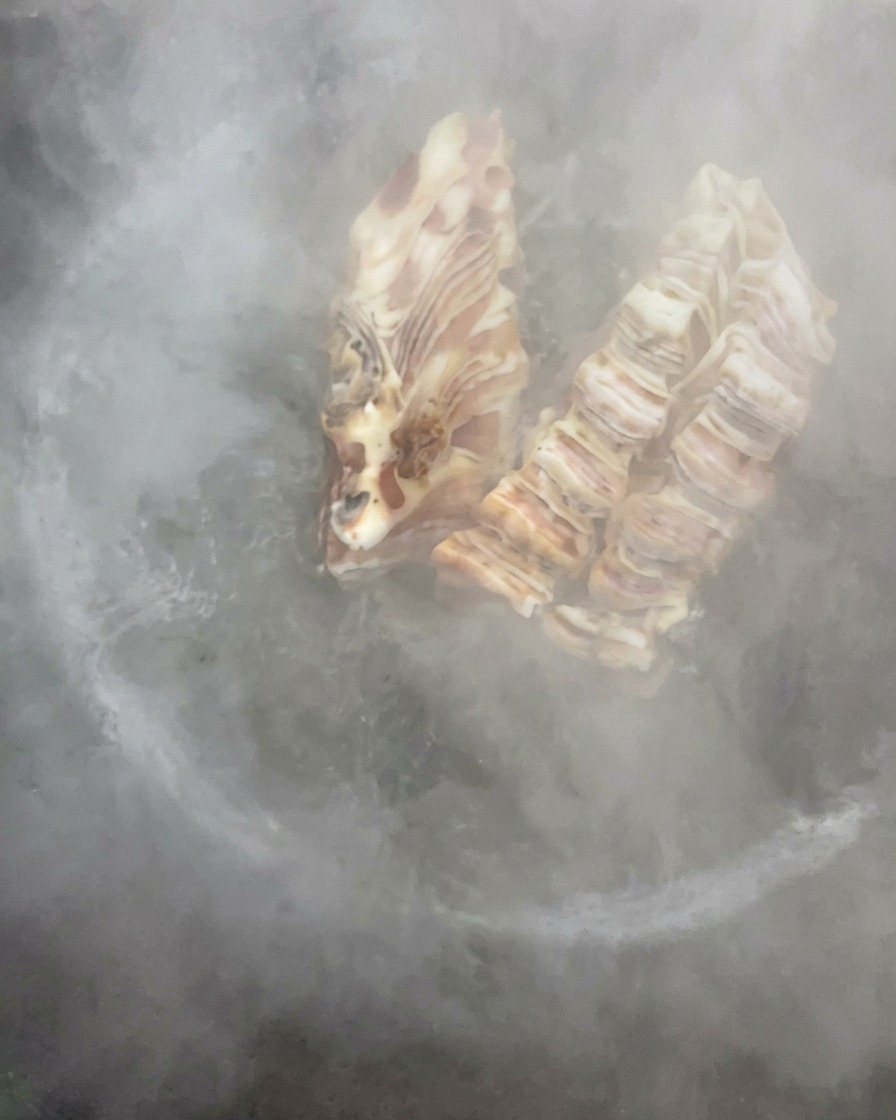
Place the cured pork ribs into a large pot of rapidly boiling water. Blanch the meat for about three minutes to draw out impurities and remove excess salt from the curing process. Skim off any foam that rises to the surface, then scoop out the ribs.
Tip: Rinse the ribs with clean water both before and after blanching to ensure they are thoroughly cleaned and balanced in flavor. - 3Skim off the foam
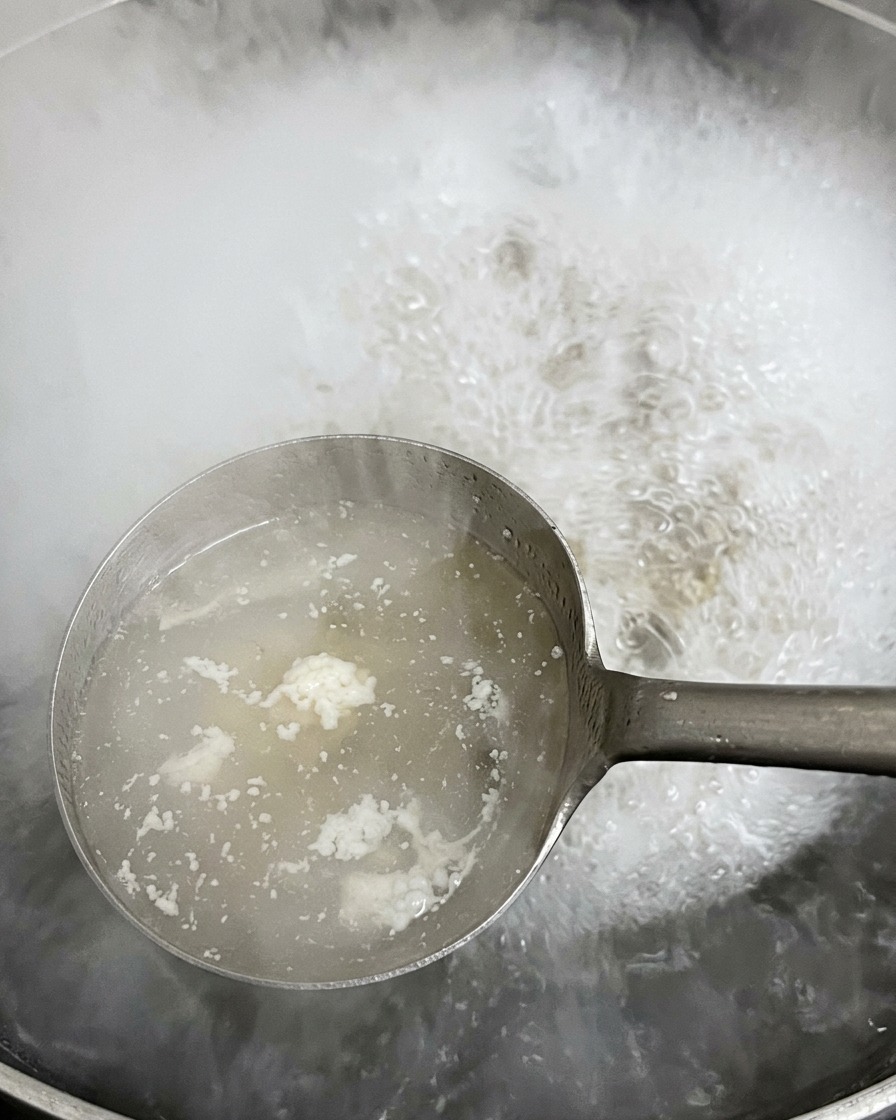
As the water boils rapidly, use a metal ladle to carefully skim away the white frothy scum and foam that rises to the surface. This helps eliminate excess salt and keeps the process clean.
Tip: Gently glide the edge of the ladle along the surface of the boiling water to collect only the impurities without discarding too much liquid. - 4Remove ribs from pot
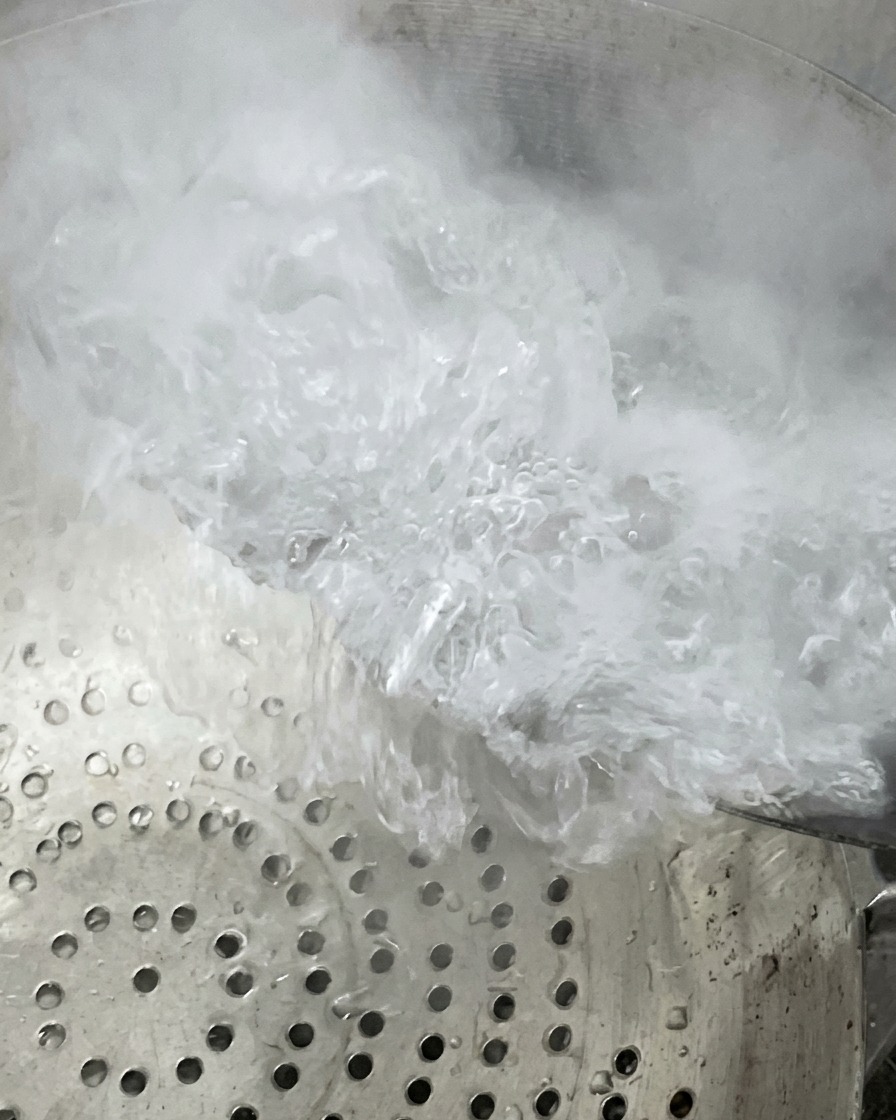
Carefully lift the blanched cured pork ribs out of the boiling pot using a metal strainer ladle to drain away the hot blanching water completely.
Tip: Hold the strainer over the pot for a couple of seconds to let the hot water drip back into the pot before transferring. - 5Rinse the blanched ribs
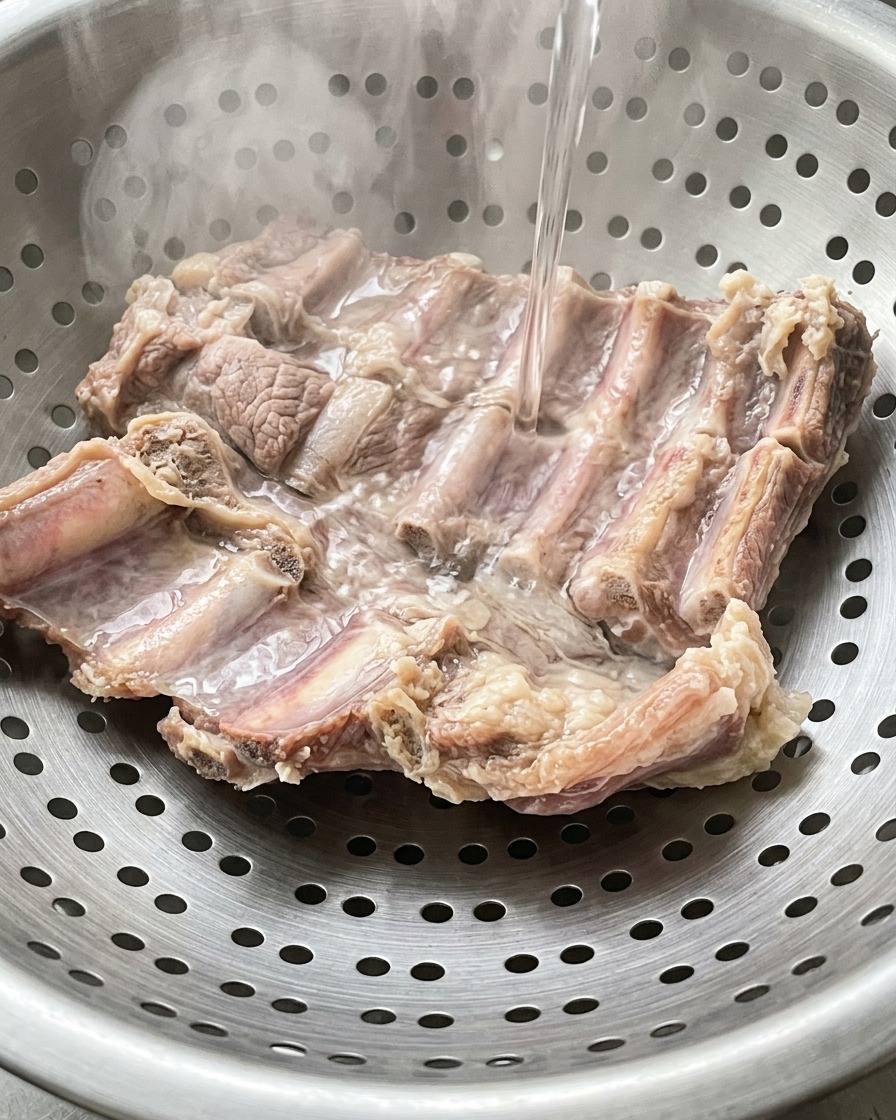
Transfer the blanched cured pork ribs back into the metal colander and pour clean water over them to rinse away any remaining surface scum and excess salt from the blanching process.
Tip: Rinsing with cold or fresh water right after blanching helps firm up the meat and washes off residual impurities thoroughly. - 6Add ginger slices
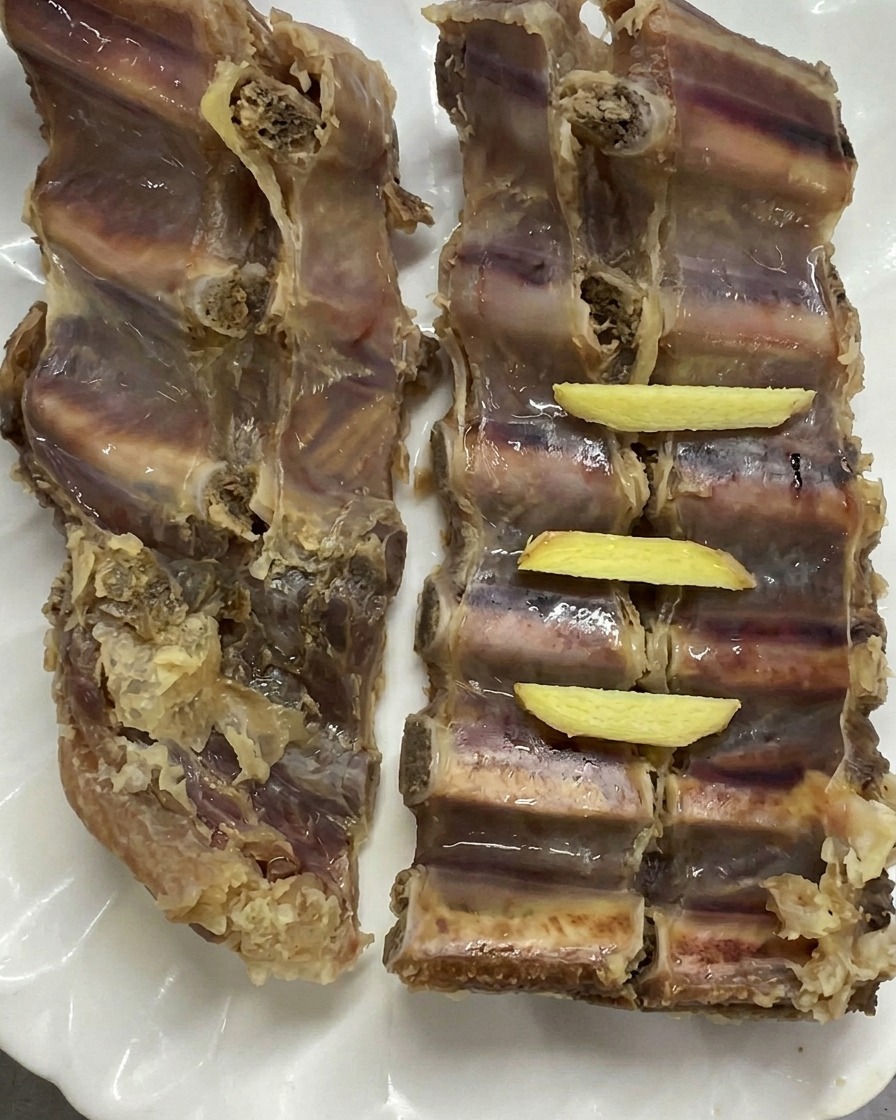
Arrange the blanched cured pork ribs side-by-side on a white plate and place thin slices of fresh yellow ginger evenly on top of the meat to infuse aroma during steaming.
Tip: Distribute the ginger evenly across the length of the ribs so the aromatic flavor penetrates the meat uniformly as it steams. - 7Steam the ribs
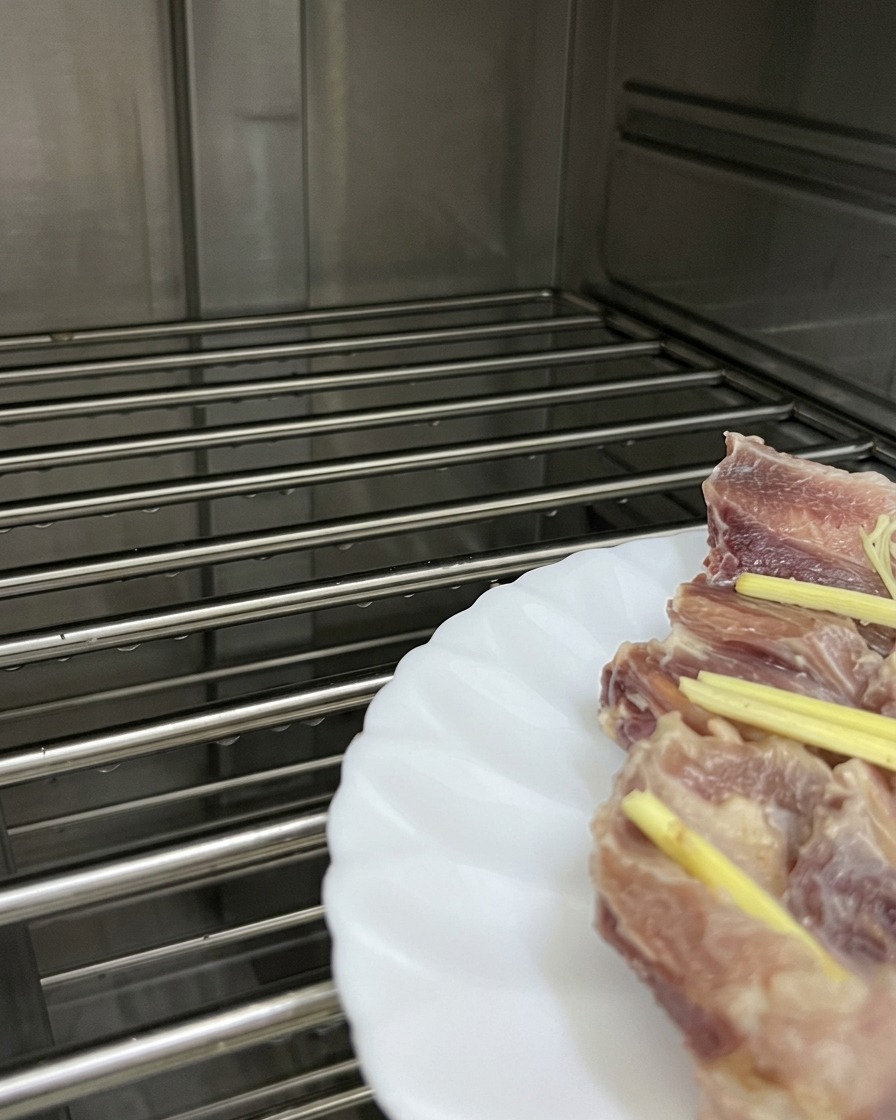
Transfer the blanched and rinsed pork ribs onto a heatproof plate, placing slices of fresh ginger on top for aromatics. Carefully place the plate onto a wire rack inside a steamer. Once the water is boiling, cover and steam the ribs for 10 minutes until they are fully cooked and tender.
Tip: Fresh ginger helps balance the savory profile of the cured meat and adds a subtle, refreshing aroma during steaming. - 8Chop into bite-sized pieces
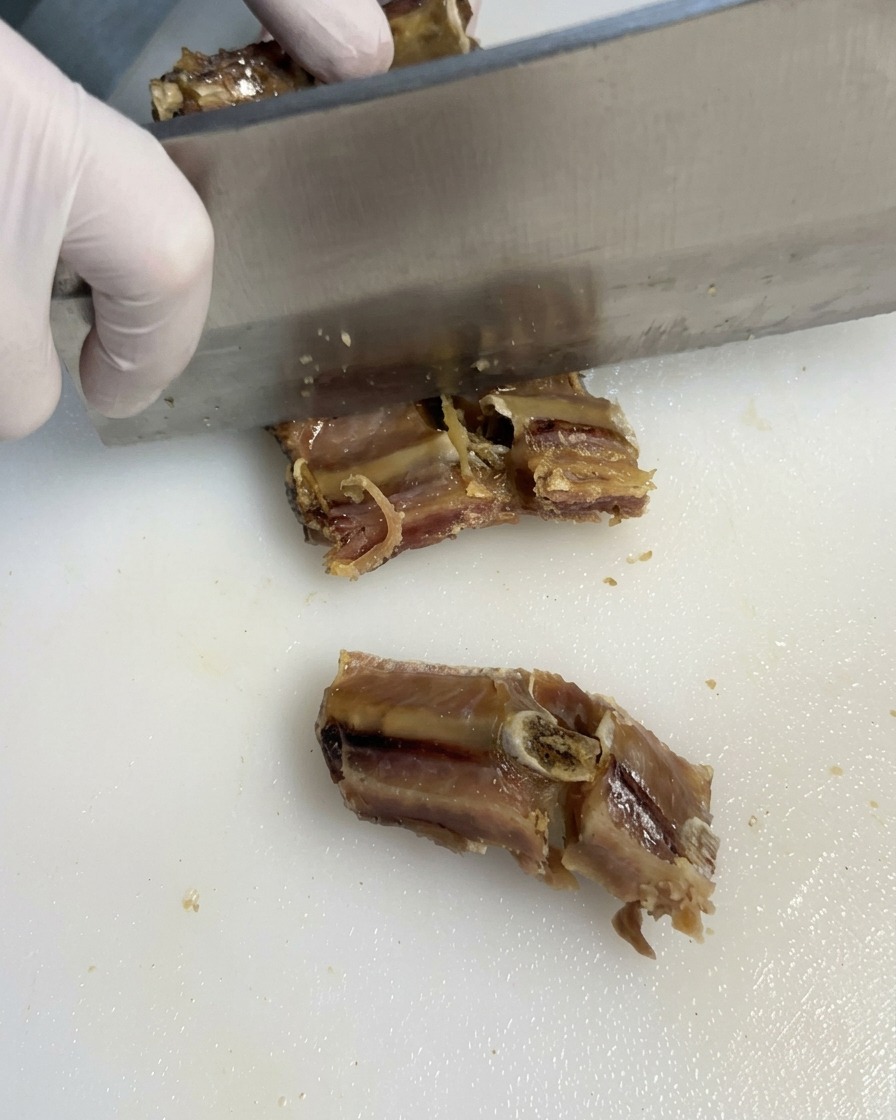
Remove the steamed cured pork ribs from the steamer and let them rest briefly. Using a sharp, heavy cleaver, carefully chop the cooked ribs into small, even, bite-sized pieces on a cutting board.
Tip: Aim to cut between the bones where possible, and use a firm, decisive motion with the cleaver for clean cuts. - 9Arrange the cured pork ribs
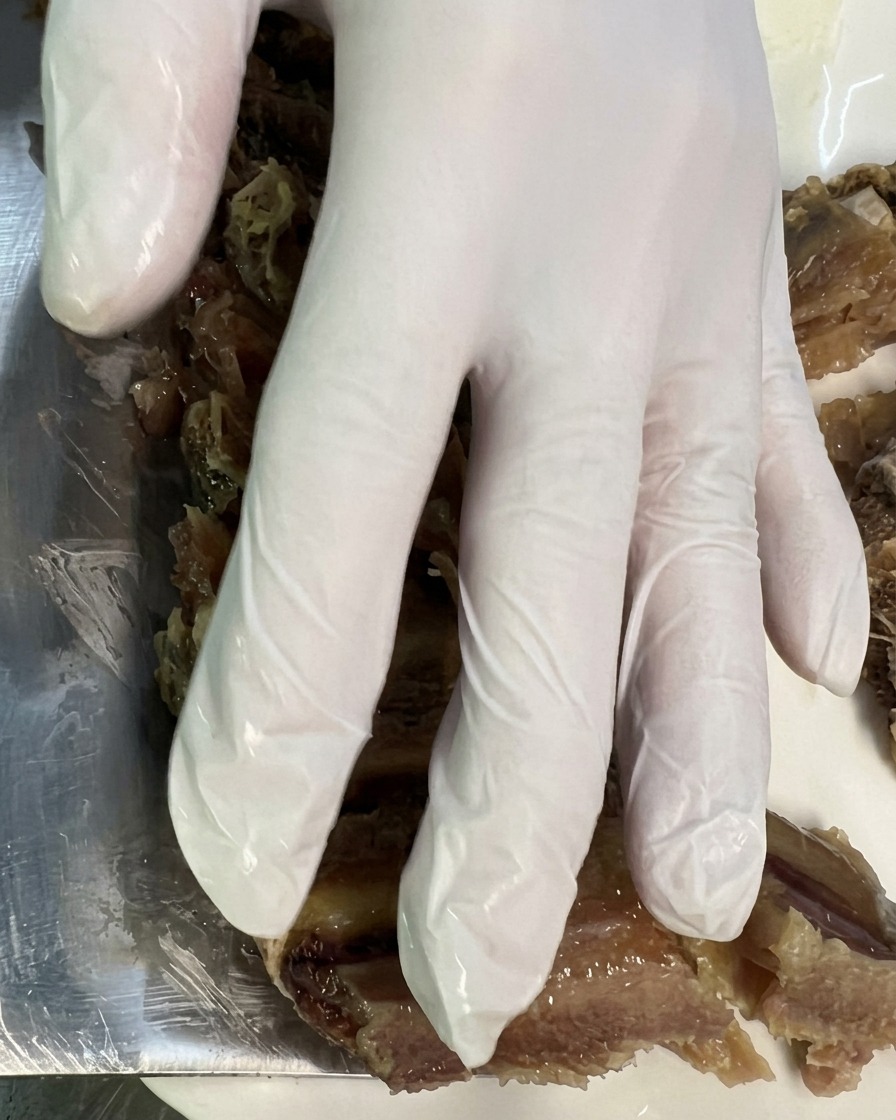
Carefully transfer the freshly chopped cooked cured pork ribs onto a white serving plate. Use your hands and the flat side of a cleaver to neatly rearrange and stack the pieces so they are beautifully presented and ready to serve.
Tip: Using the flat side of a wide cleaver helps you lift multiple uniform pieces at once, keeping the chopped sections intact during transfer.