Cured Pork Ribs Stewed
Potatoes
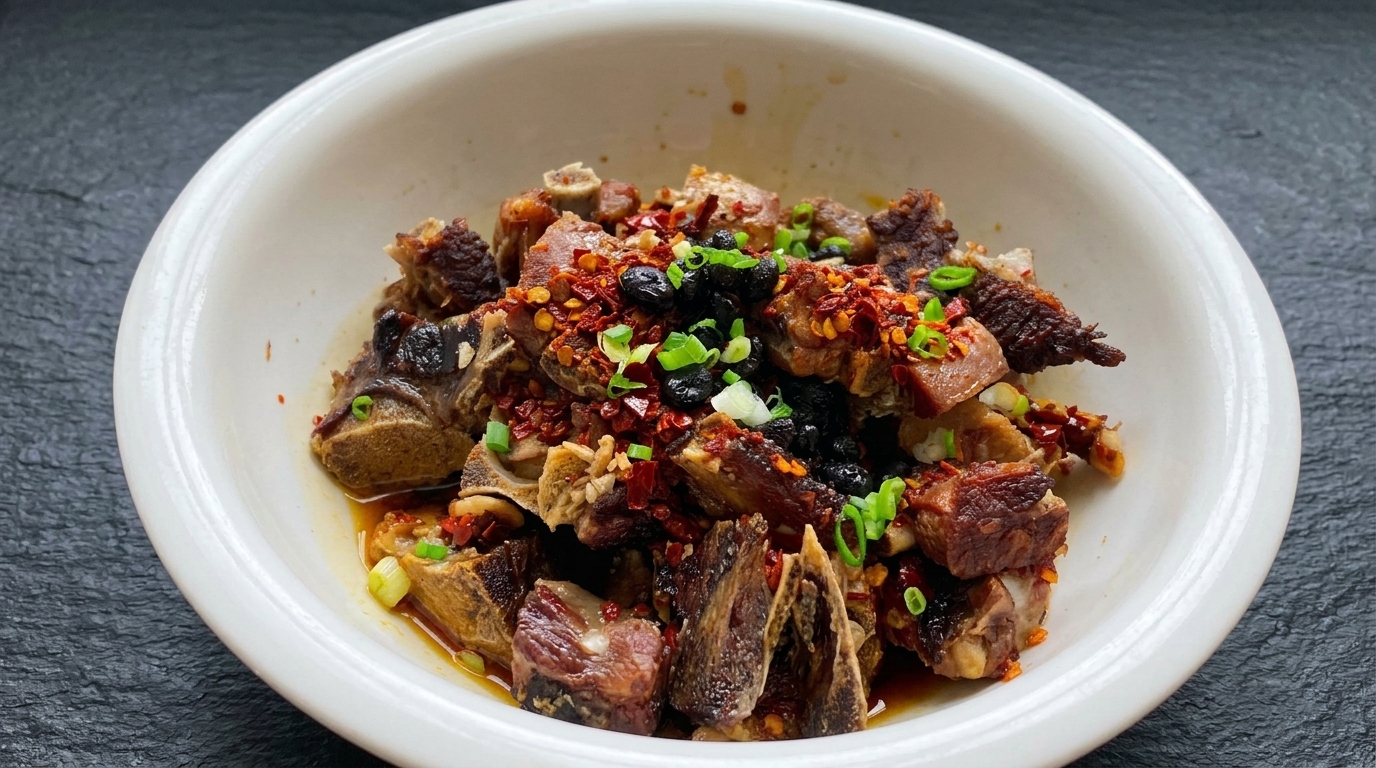
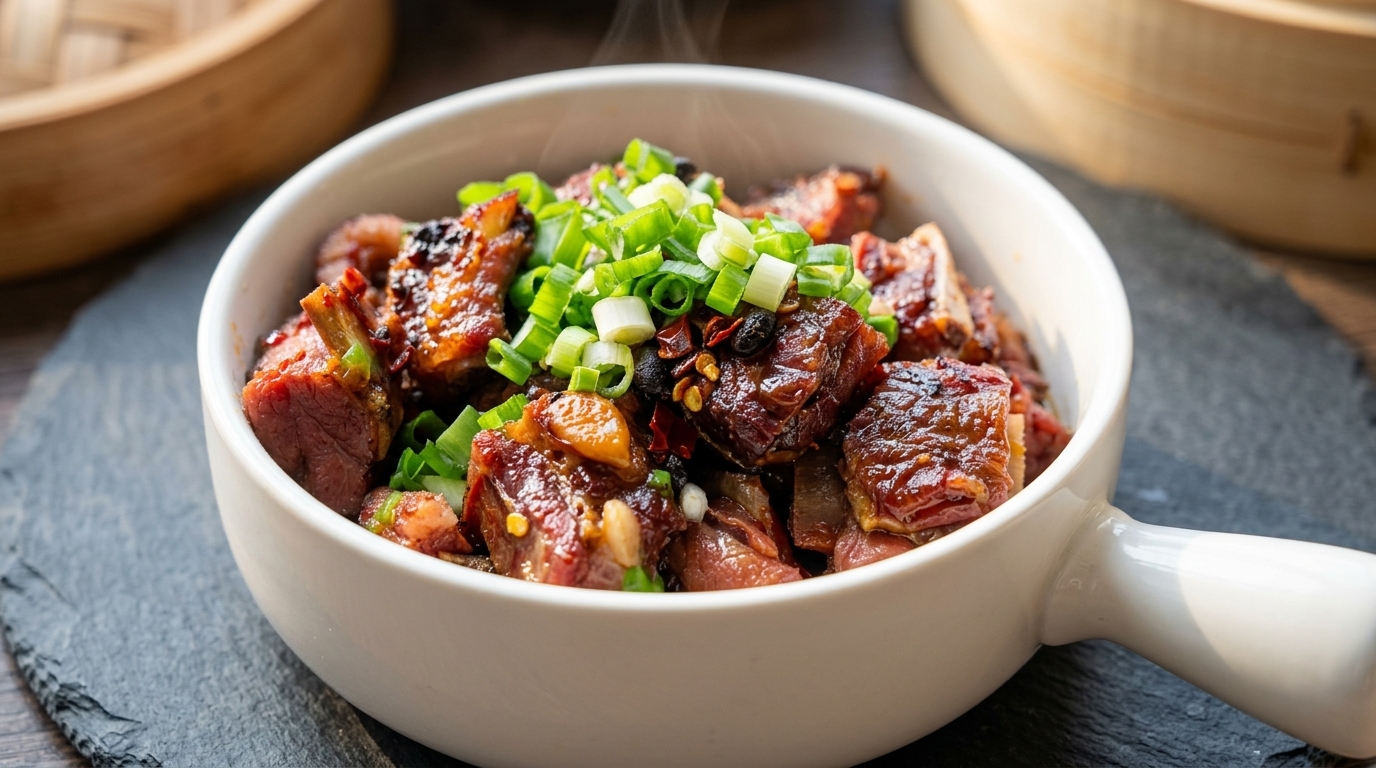
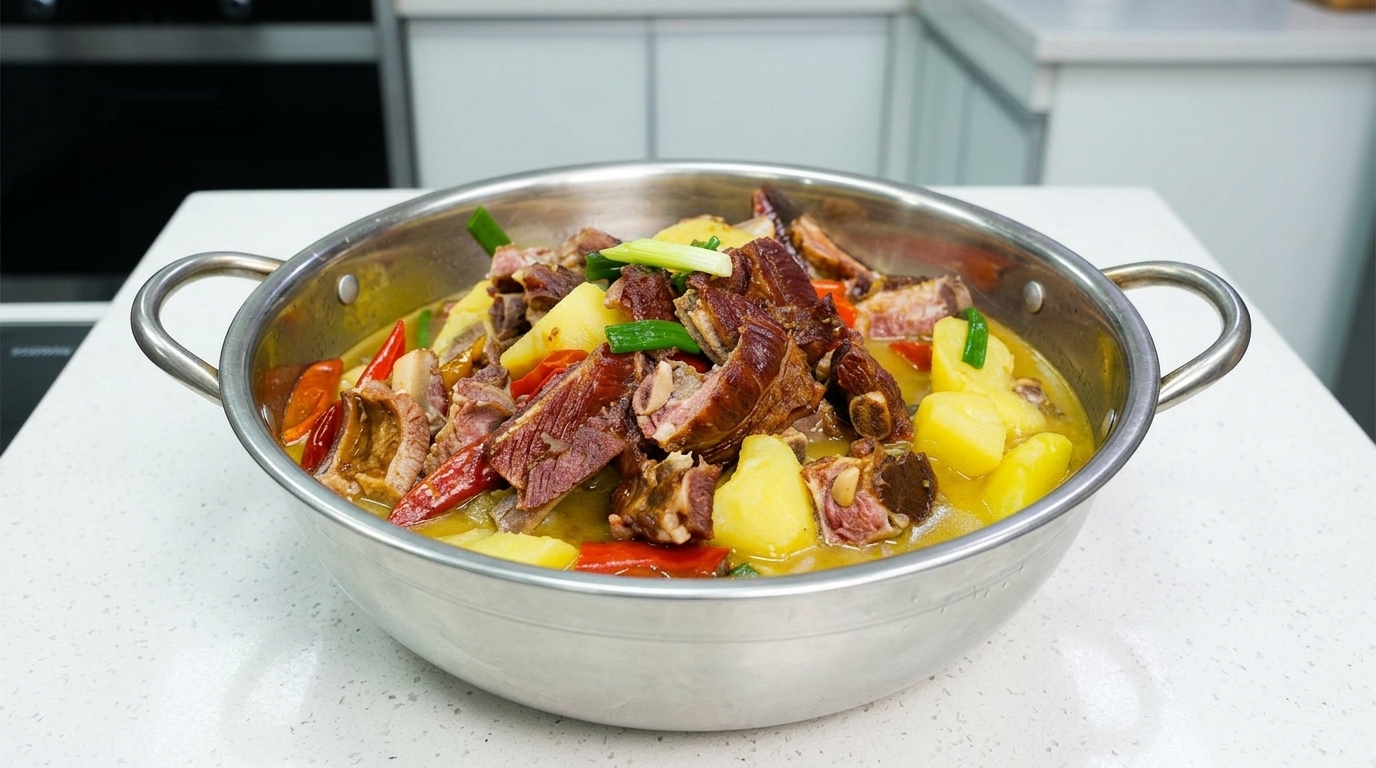
A comforting traditional Chinese stew featuring deeply smoky, rice-bran cured pork ribs simmered until tender with melt-in-your-mouth potato chunks.
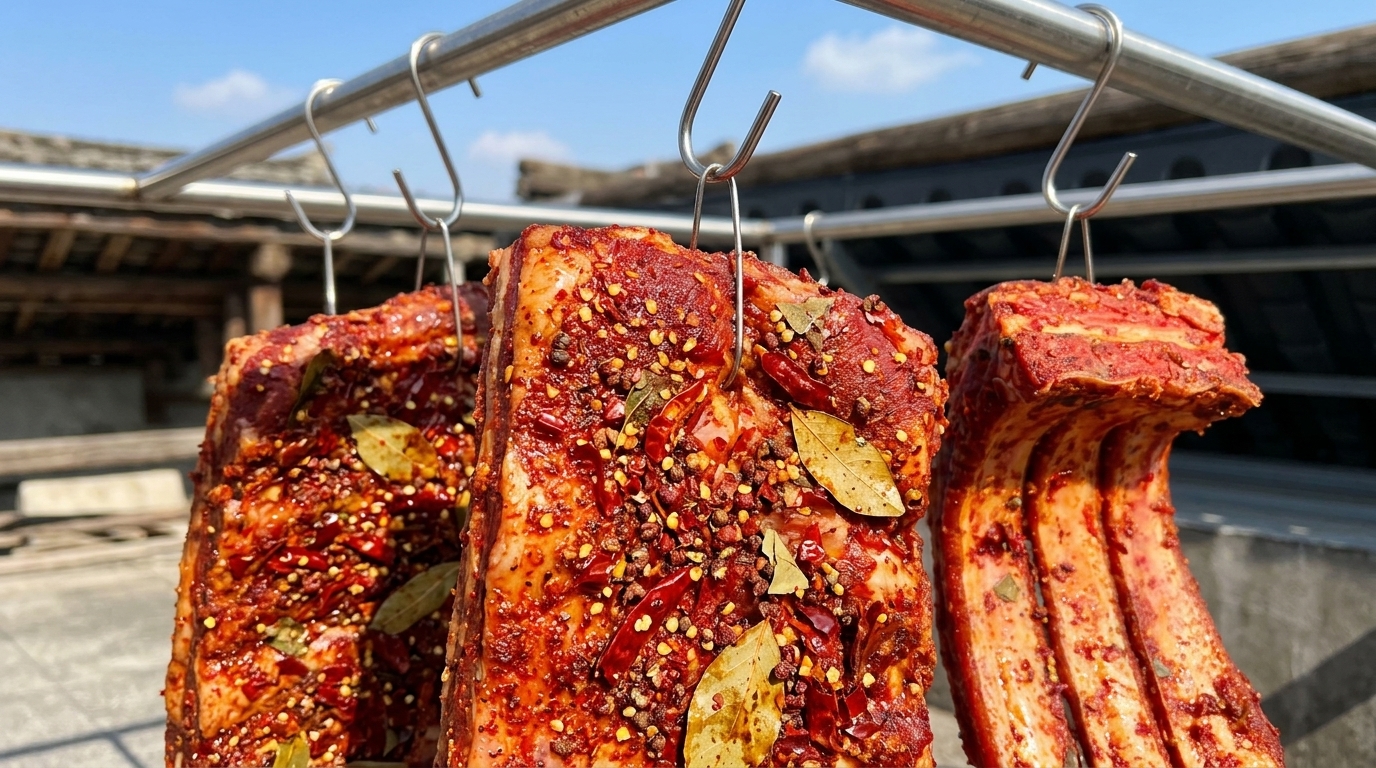
Cured meats, or lawei, hold a storied place in Chinese culinary history, particularly within regional traditions that rely on smoking and air-drying to preserve the harvest. This comforting stew pairs the intensely savory, smoky depth of rice-bran smoked pork ribs with humble potatoes that soak up the rich, seasoned broth. It is a rustic, soul-warming staple that showcases how time and patience transform simple ingredients into a deeply flavorful masterpiece.
Ingredients
- 500 g cured pork ribs
- 400 g potatoes
- 20 g ginger
- 6 cloves garlic
- 5 pieces dried red chili peppers
- 2 pieces fresh red chili peppers
- 30 g green garlic sprouts
- 1 tsp seasoning powder
Instructions
- 1Chop the cured pork ribs
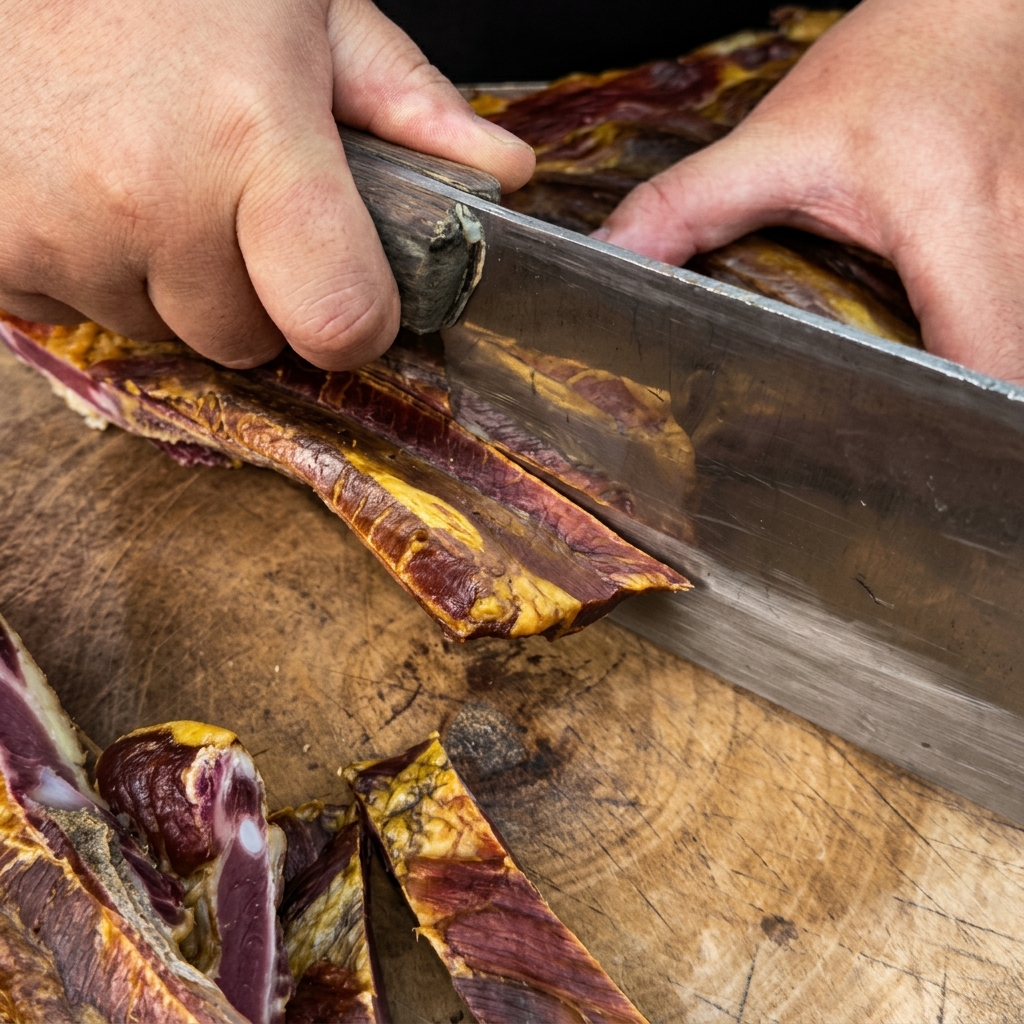
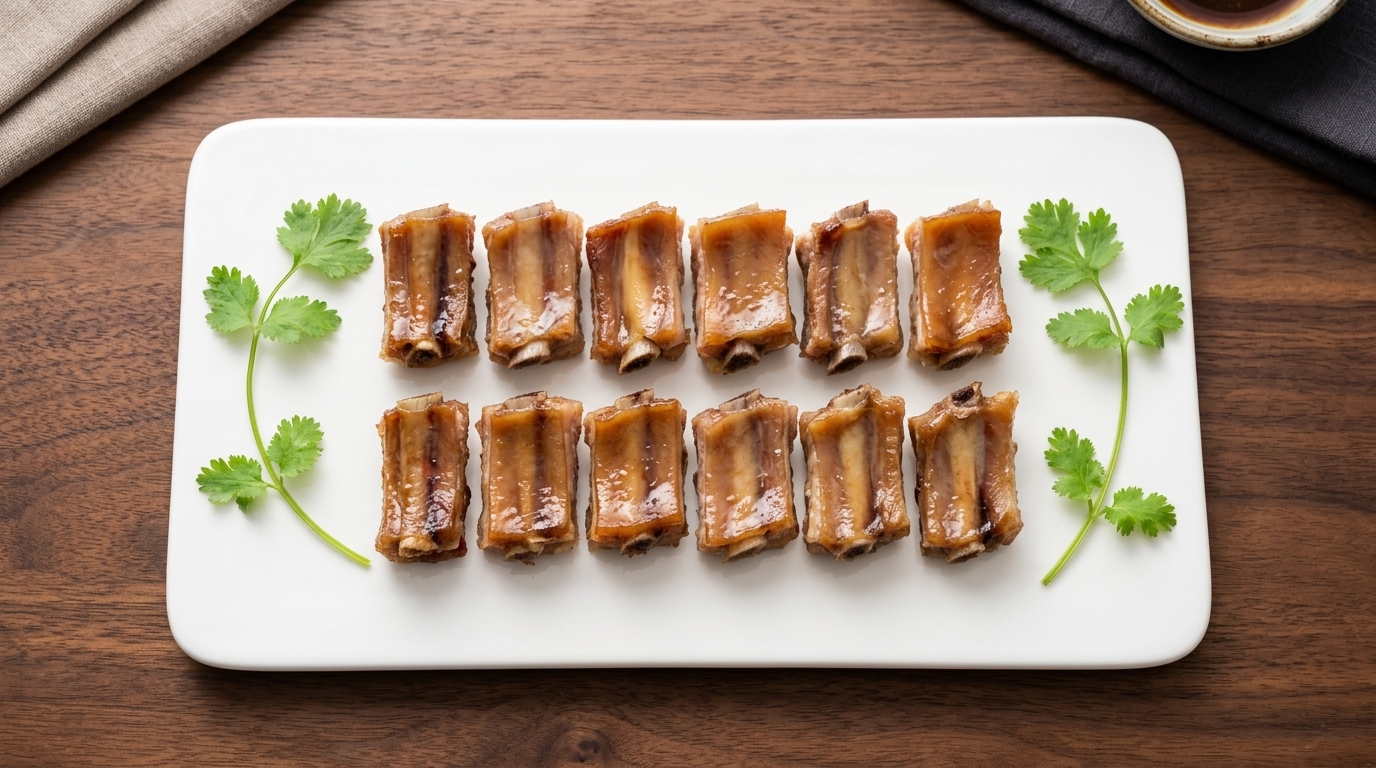
Place the cured pork rib slab onto a solid wooden cutting board. Use a heavy kitchen cleaver to chop the slab into uniform, bite-sized pieces, ensuring even sizing for consistent cooking and tenderness later on.
Tip: Hold the meat securely and use firm, decisive chops to prevent the bone from shattering into small fragments. - 2Prepare the ribs for blanching
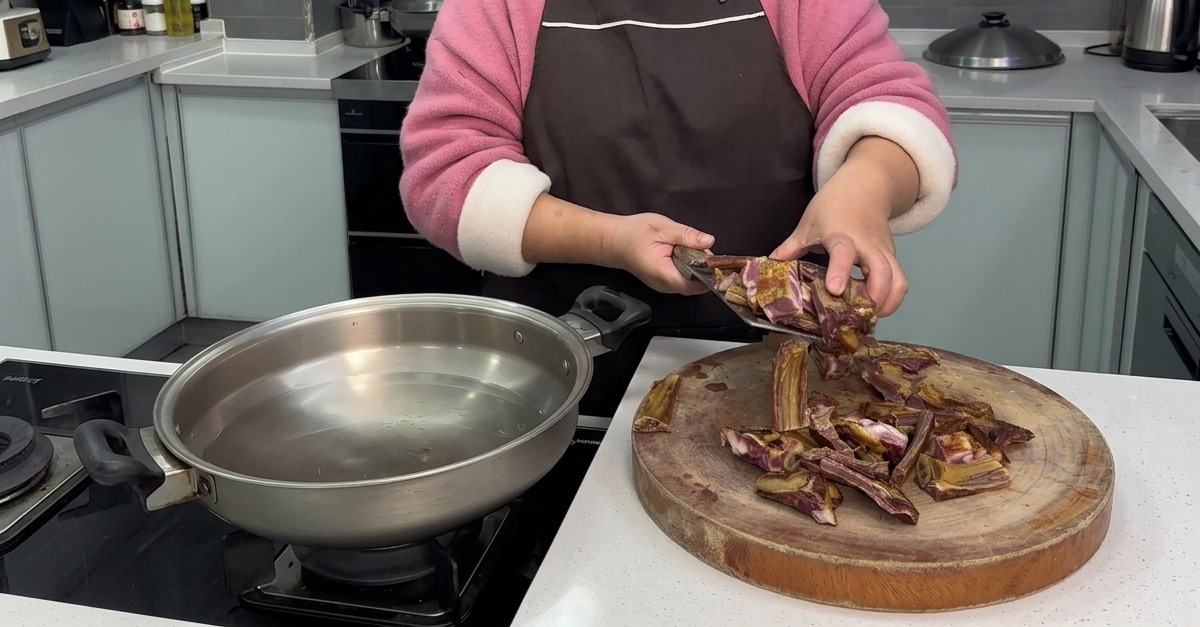
Transfer the chopped cured pork rib pieces from the cutting board into a pan filled with cold water. Starting the blanching process in cold water helps gradually extract excess surface salt, smoke impurities, and gamey odors from the cured meat.
Tip: Never place the cured meat directly into boiling water; starting cold allows the pores to open gradually, ensuring a cleaner blanch. - 3Rinse the blanched pork ribs
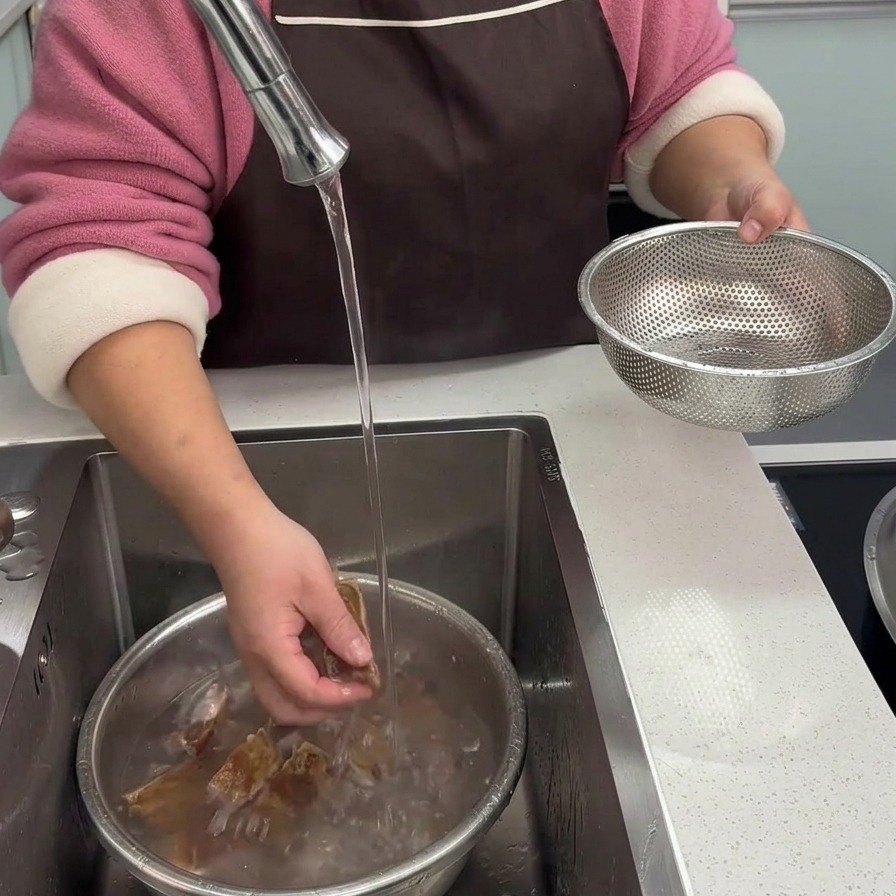
Place the blanched pork rib pieces into a stainless steel basin under cold running water. Rinse each piece thoroughly to wash away any residual foam, scum, or excess surface salt released during the blanching process, then drain well.
Tip: Washing the ribs thoroughly at this stage ensures the final stew broth remains clean, bright, and beautifully clear. - 4Stir-fry the ribs with ginger
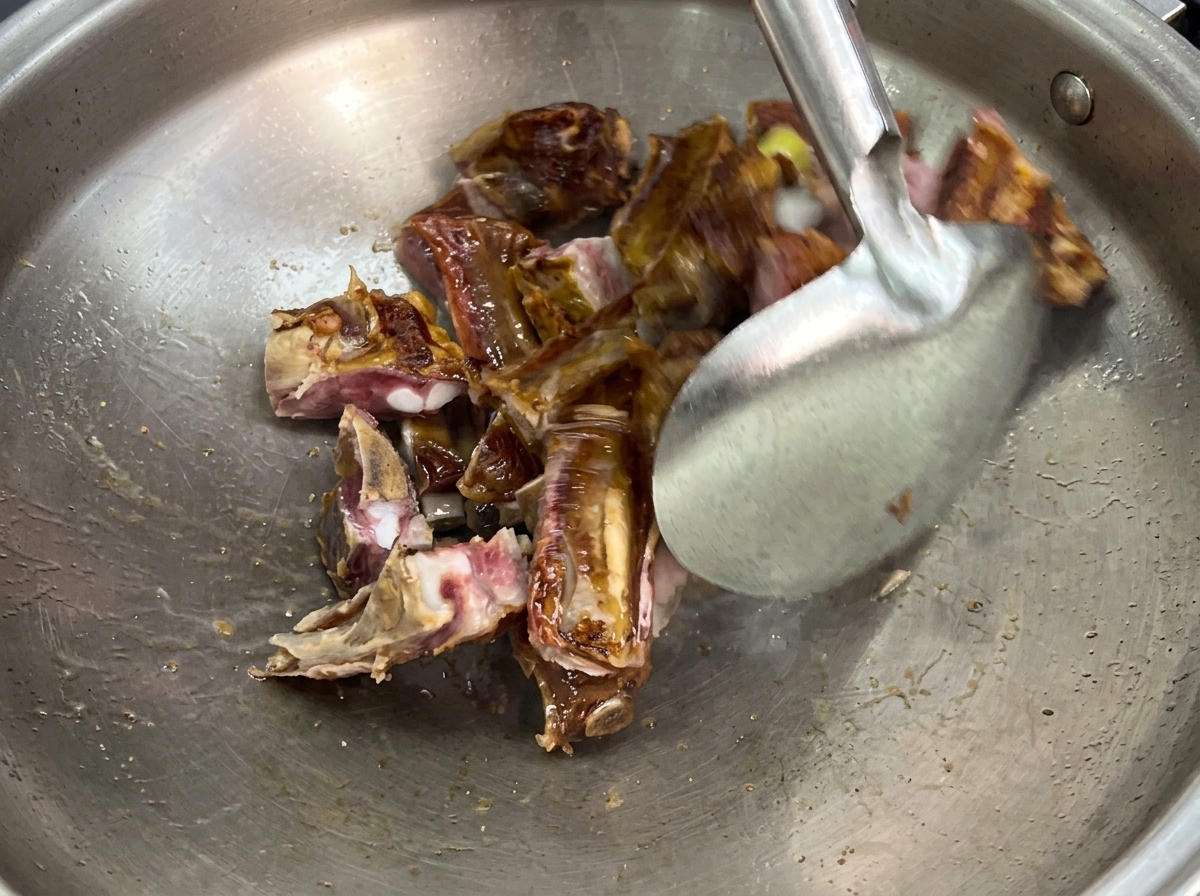
Heat your wok and add the blanched cured pork ribs along with fresh ginger slices. Stir-fry actively over medium-high heat until the pork pieces render out some of their natural oils and begin to release a rich, savory aroma.
Tip: Stir-frying the cured meat prior to stewing helps lock in the juices and creates a deeper, more rounded smoky flavor baseline. - 5Incorporate aromatics and spices
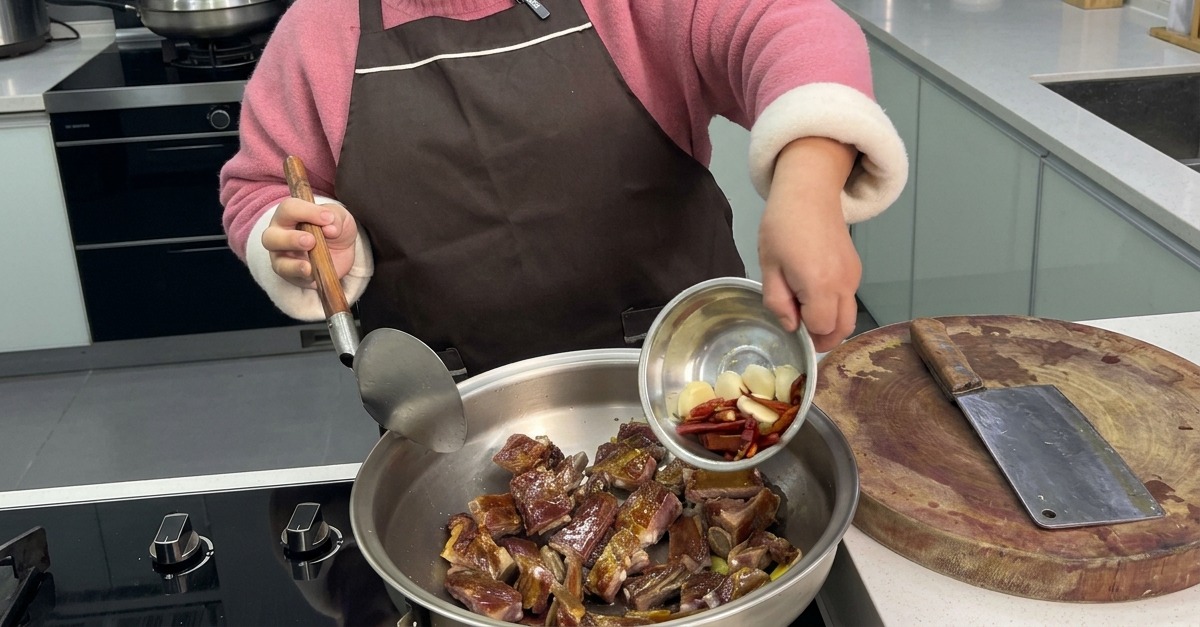
Add a generous handful of dried red chili peppers and whole peeled garlic cloves into the wok with the stir-fried pork ribs. Continue to toss and stir-fry briefly to allow the heat to wake up the spices and infuse the meat with their distinct aroma.
Tip: Keep the heat moving and stir quickly after adding the dried chilies to prevent them from scorching and turning bitter. - 6Add hot water for simmering
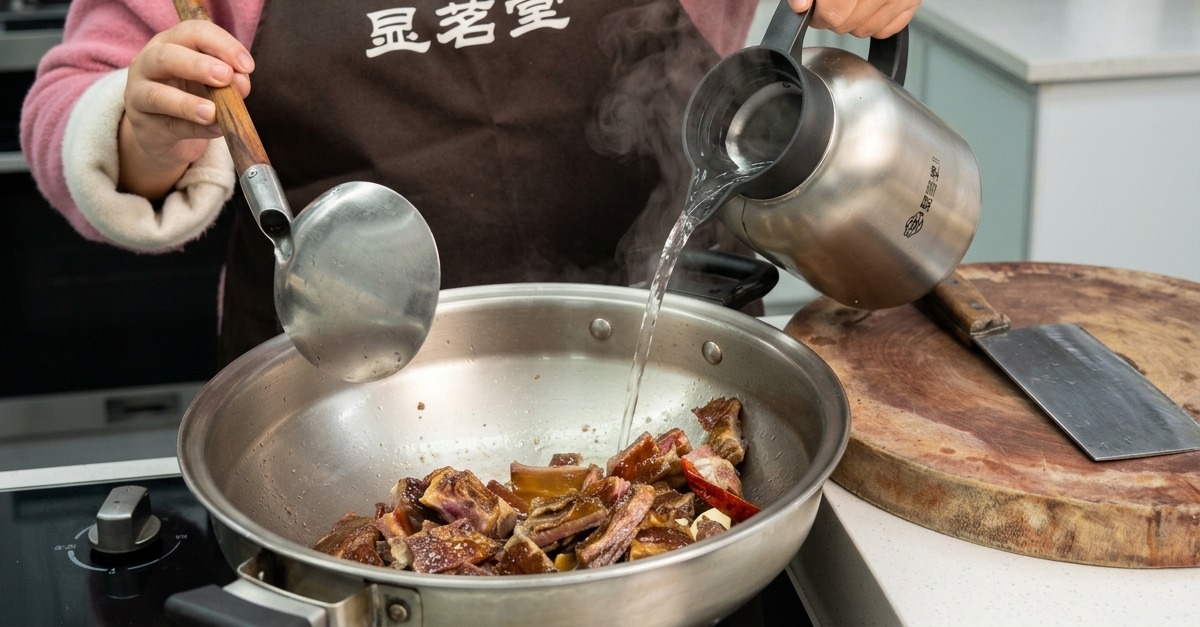
Carefully pour boiling water from a stainless steel kettle directly into the wok over the ribs and aromatics. Fill it with enough water to completely submerge the ingredients, providing ample liquid to create a rich soup base.
Tip: Always use boiling hot water here; adding cold water to hot meat causes it to tighten instantly, making the cured ribs tough. - 7Transfer the ribs to a pressure cooker
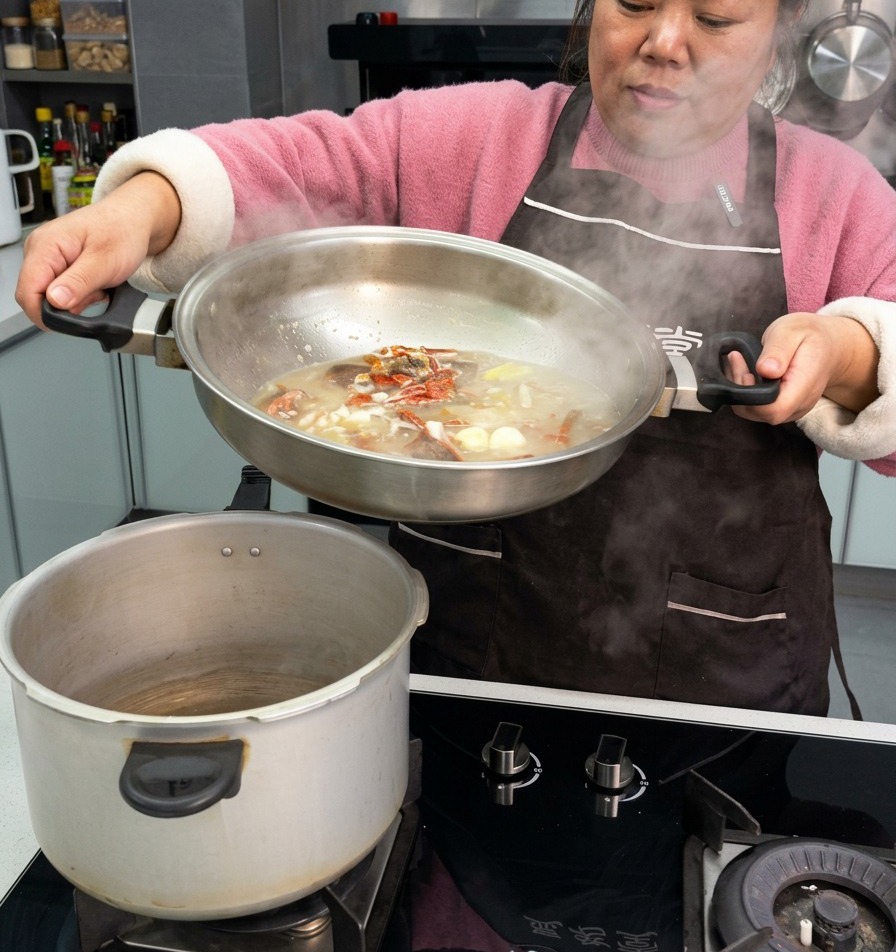
Carefully pour the stir-fried pork ribs along with the aromatic broth and dried chilies from the wok into a pressure cooker. Add enough boiling water to ensure there is plenty of flavorful soup base for the stew.
Tip: Using boiling water instead of cold water prevents the meat from tightening up, keeping the cured ribs tender. - 8Prep the potatoes
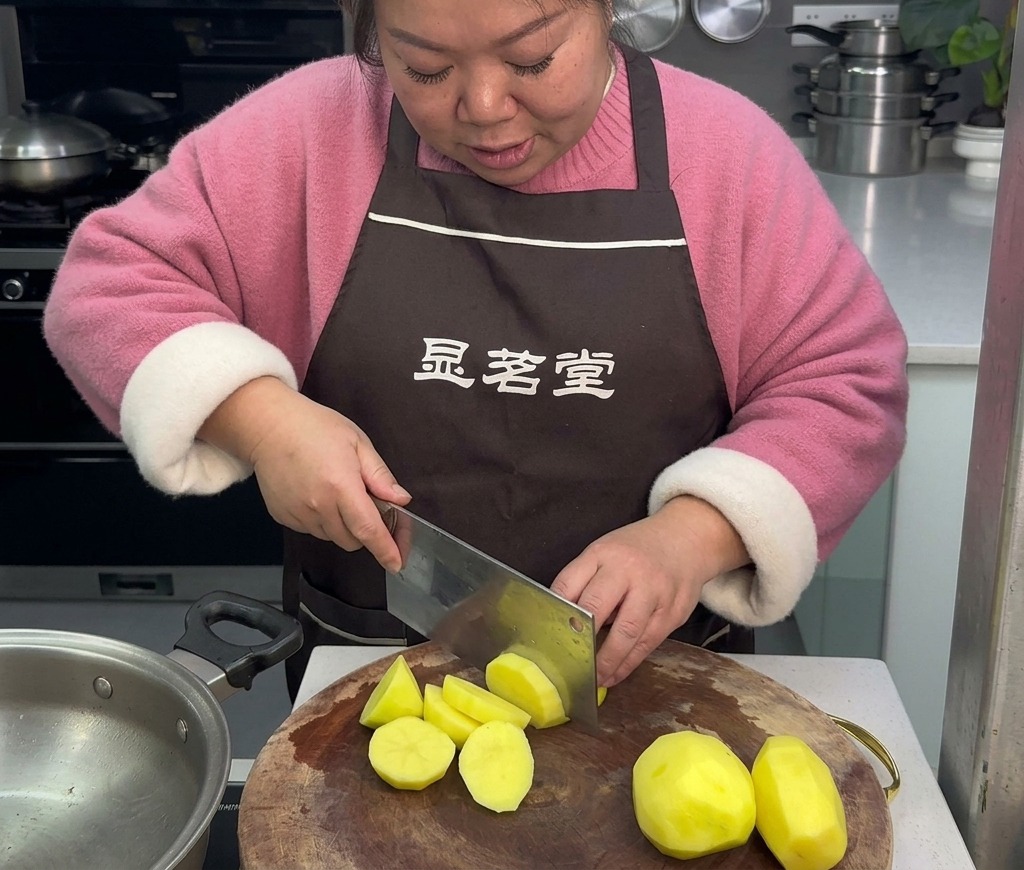
Place the peeled potatoes on a wooden cutting board and cut them into evenly sized roll-cut chunks. This cutting technique creates more surface area, allowing the potatoes to absorb the rich flavors of the cured meat broth more effectively.
Tip: If you do not have potatoes, taro or radishes also make excellent alternatives for this stew. - 9Slice the red chilies
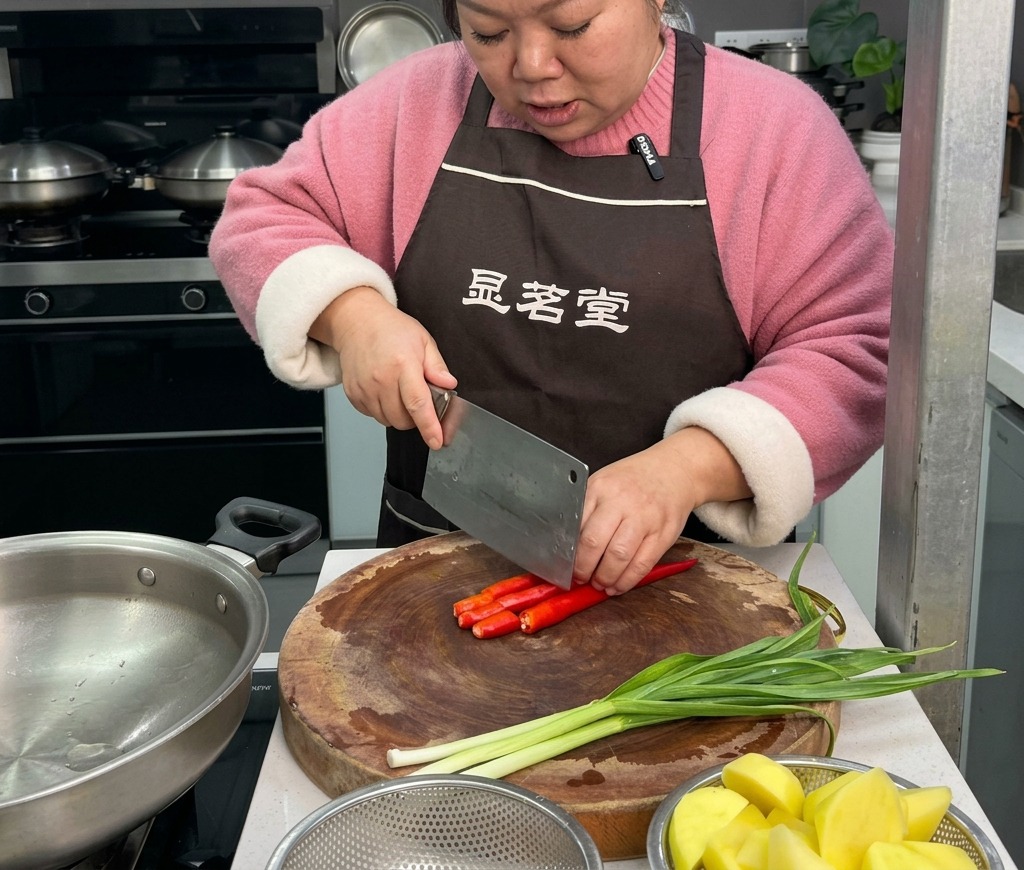
Carefully slice the fresh red chili peppers into pieces that match the size and shape of the potato chunks. These chilies will add a vibrant pop of color and a mild heat to complement the savory stew.
Tip: Adjust the amount of chili peppers according to your heat preference, or remove the seeds for less spice. - 10Chop the green garlic sprouts
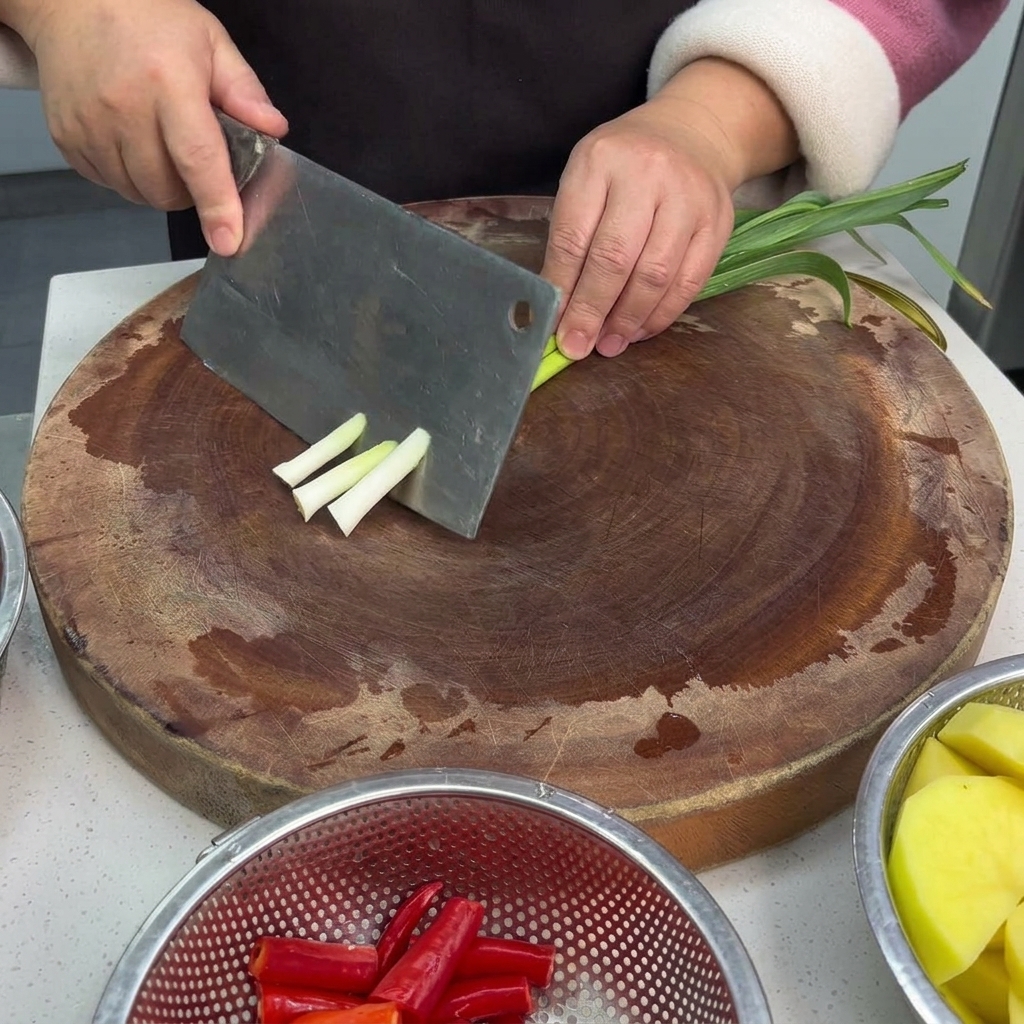
Chop the fresh green garlic sprouts into short segments on the cutting board. These will be added at the very end of the cooking process to provide a fresh, aromatic contrast to the rich and savory cured ribs.
Tip: Green garlic sprouts cook very quickly, so keep them separate from the potatoes and chilies until the final step. - 11Combine potatoes and chilies with the ribs
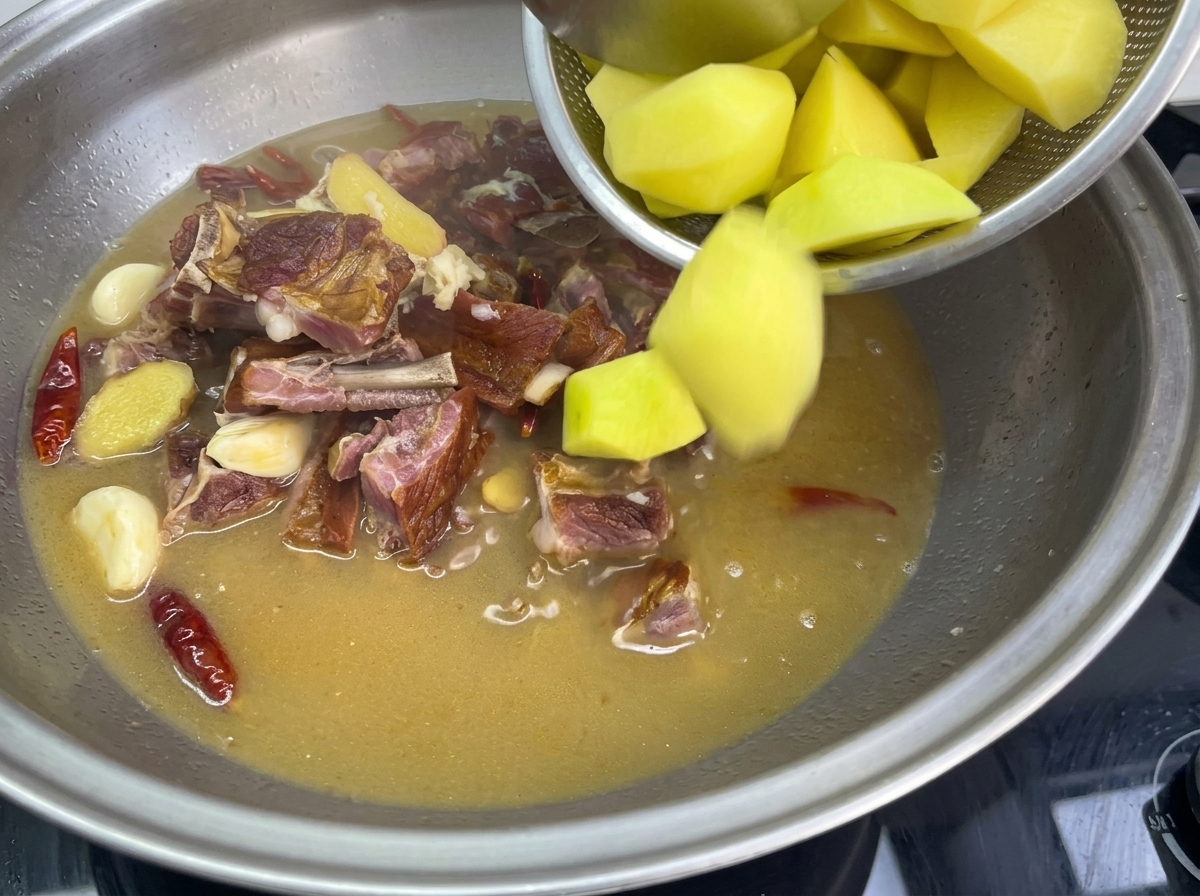
After pressure cooking the ribs for 8 minutes, pour everything back into the wok. Add the roll-cut potato chunks and sliced red chili peppers directly into the simmering broth with the ribs.
Tip: Ensure the potatoes are submerged in the broth so they cook evenly and soak up all the savory, smoky flavors. - 12Season the stew
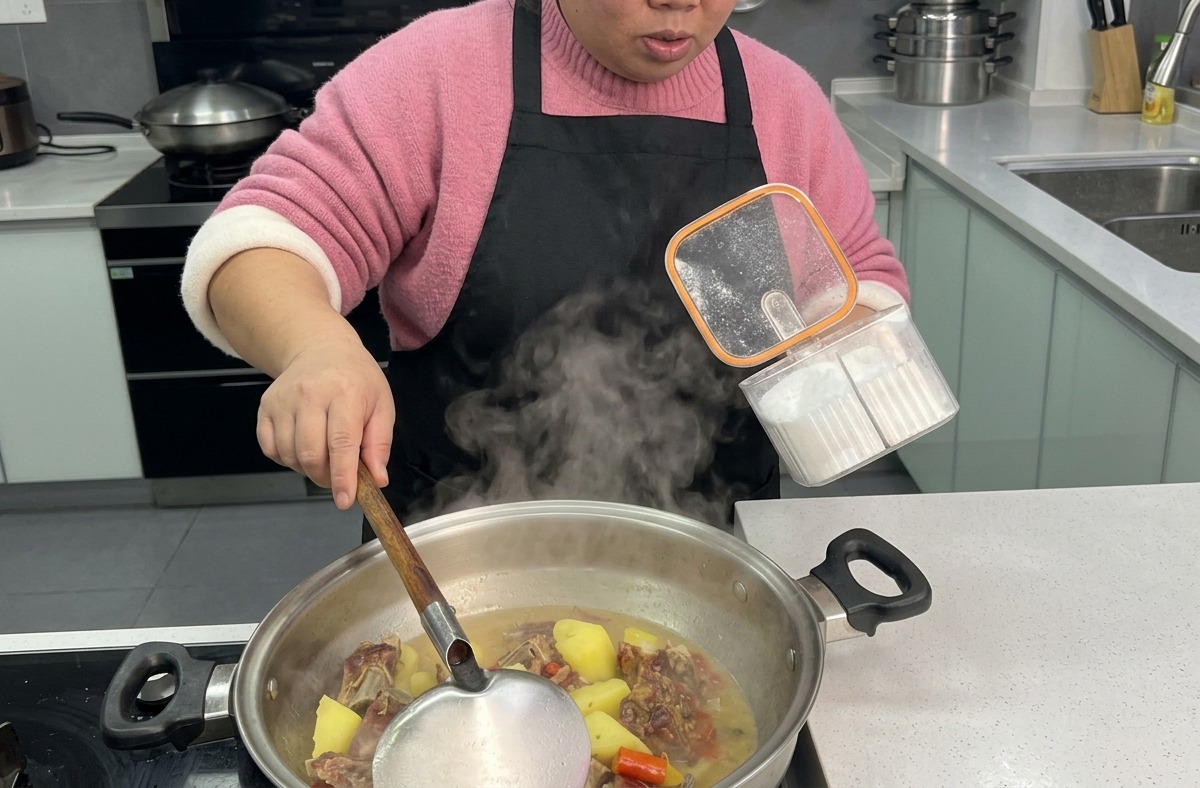
Cover the wok with a lid and let the potatoes simmer with the ribs for about 5 minutes. Once the potatoes are nearly tender, add a spoonful of seasoning powder into the simmering stew and stir gently to combine the flavors.
Tip: Cured ribs are inherently salty from the preservation process, so taste the broth before adding any additional salt or seasoning. - 13Add the green garlic sprouts
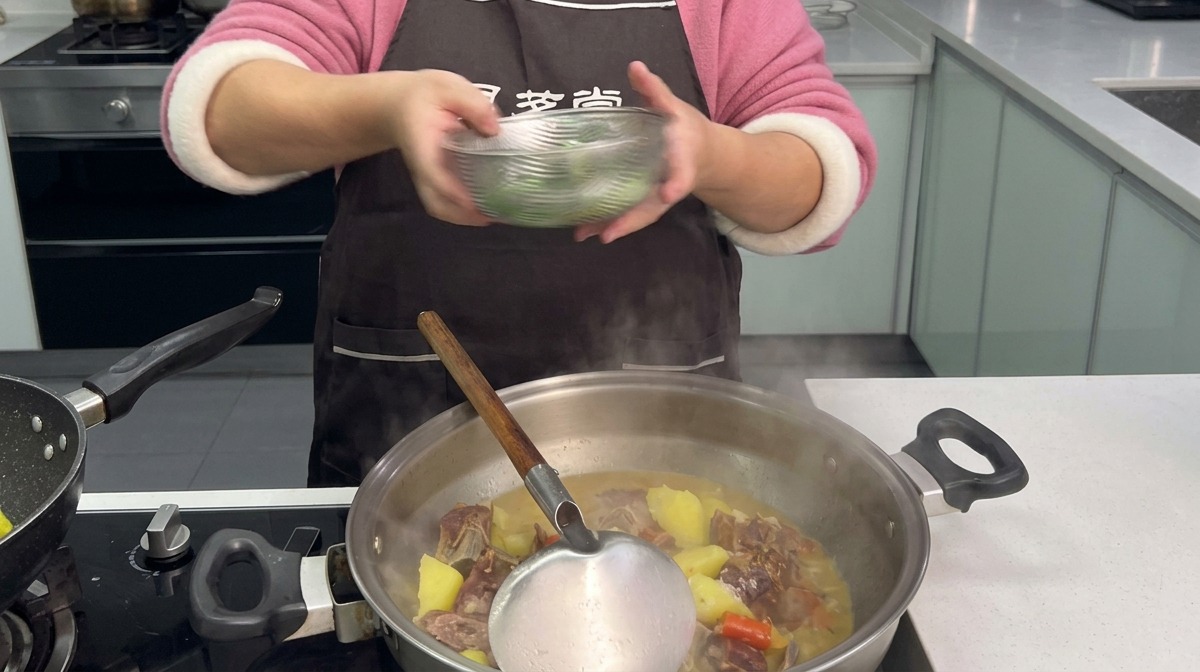
Toss the chopped green garlic sprouts into the wok with the stewed cured ribs and potatoes. Stir gently to incorporate them into the dish, letting the residual heat release their fragrant aroma just before serving.
Tip: Green garlic sprouts cook very quickly. Adding them at the very end ensures they retain their vibrant green color and fresh flavor without becoming mushy.