Black Gold Marinated Pork Donburi (Braised Pork Belly Rice)
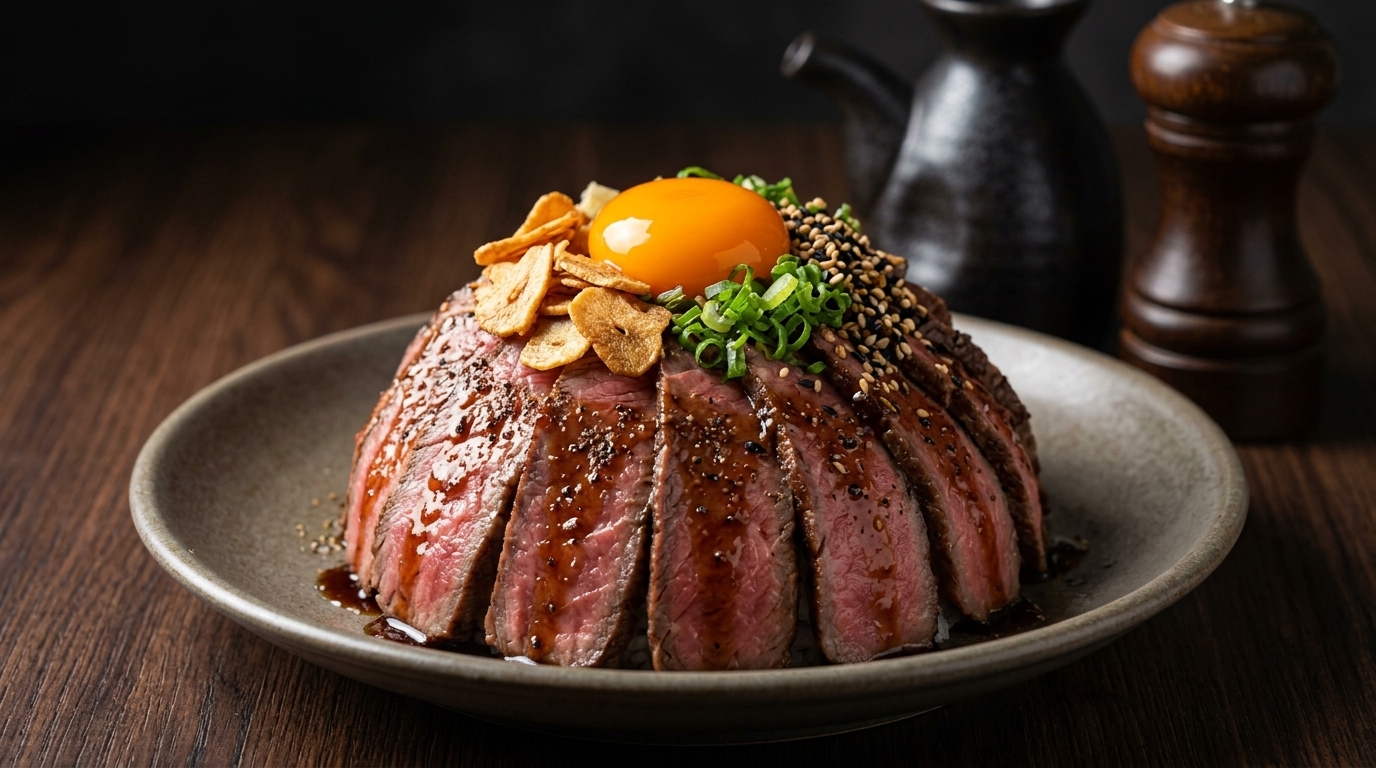
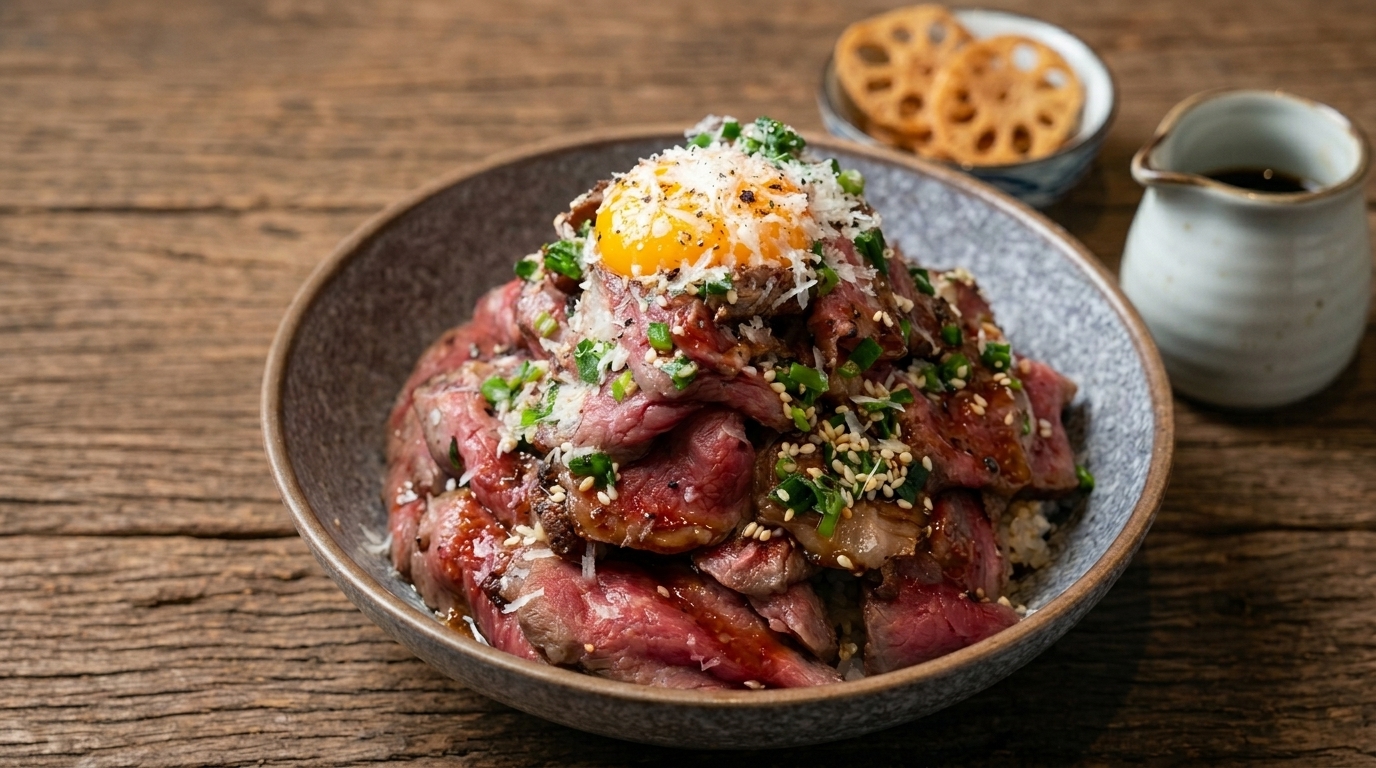
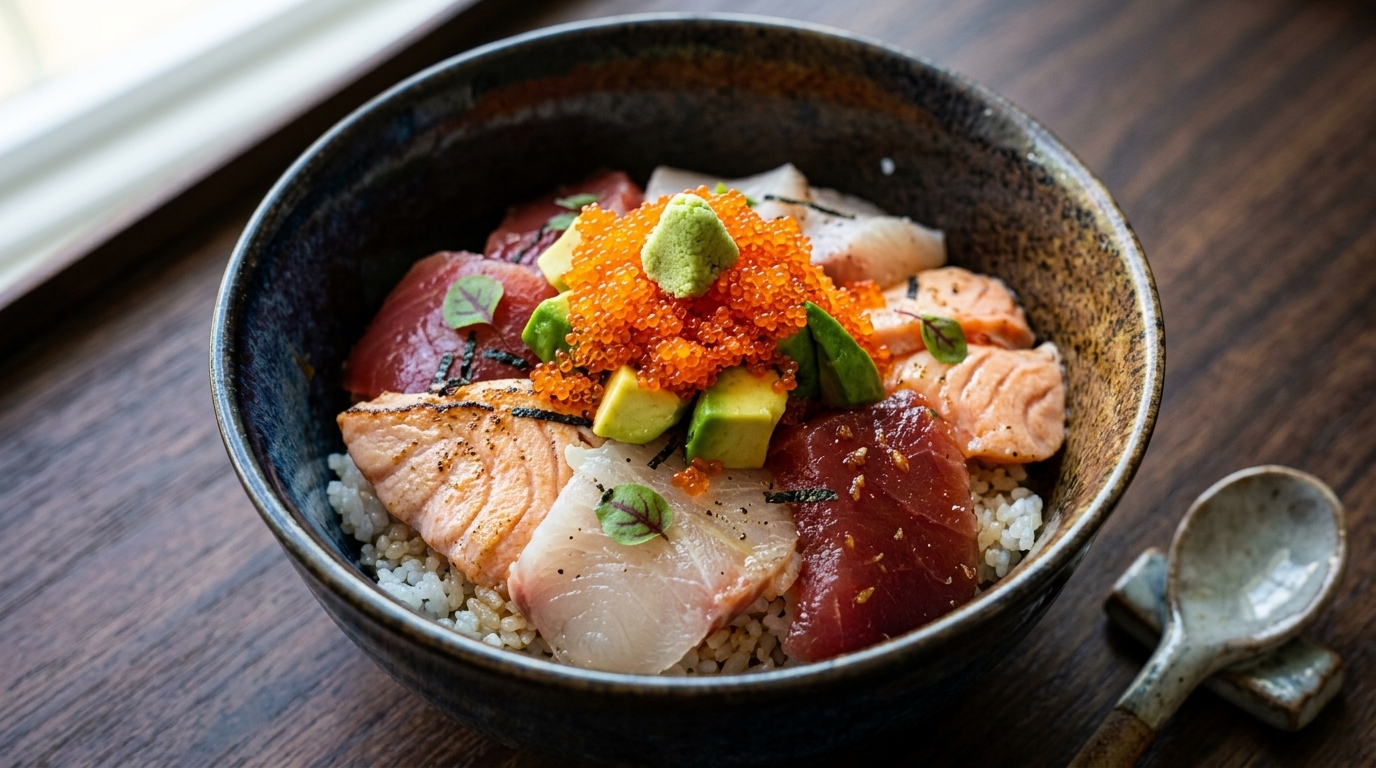
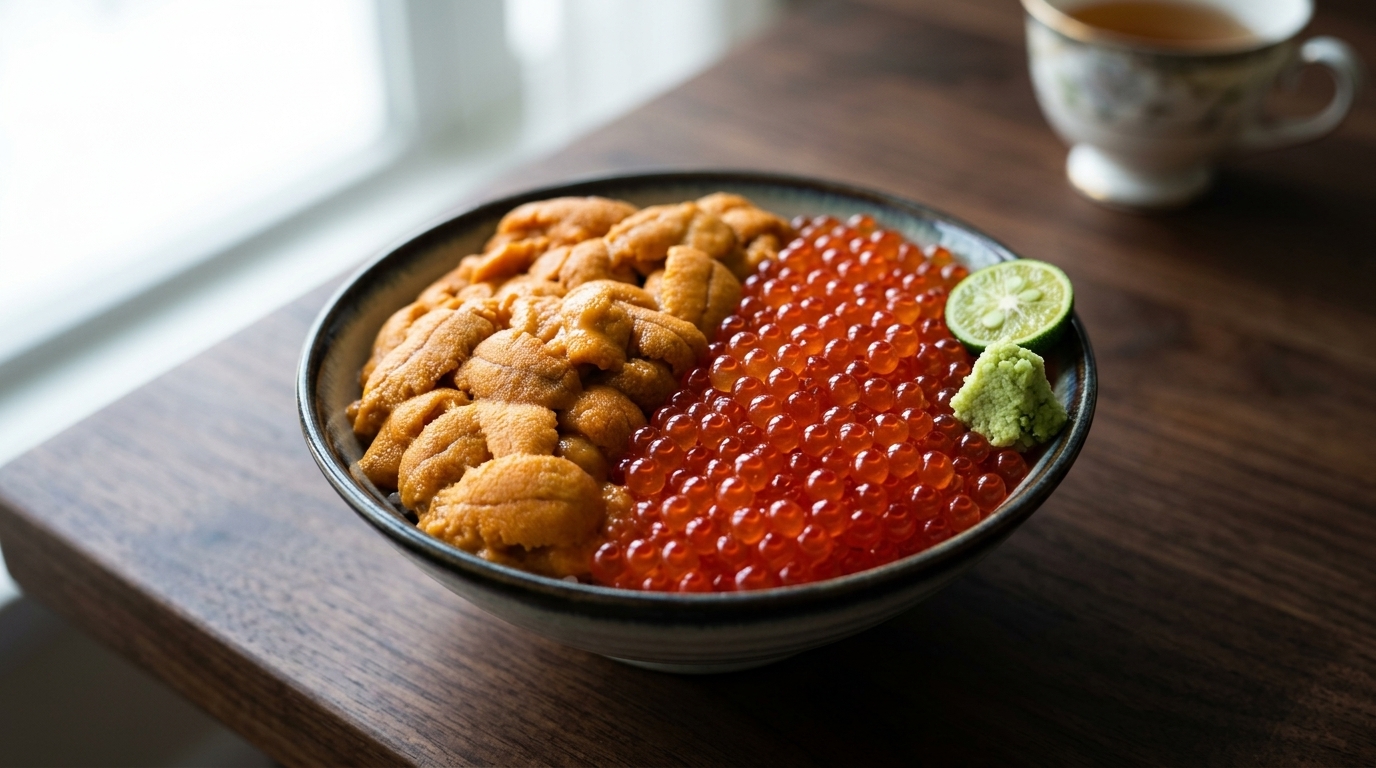
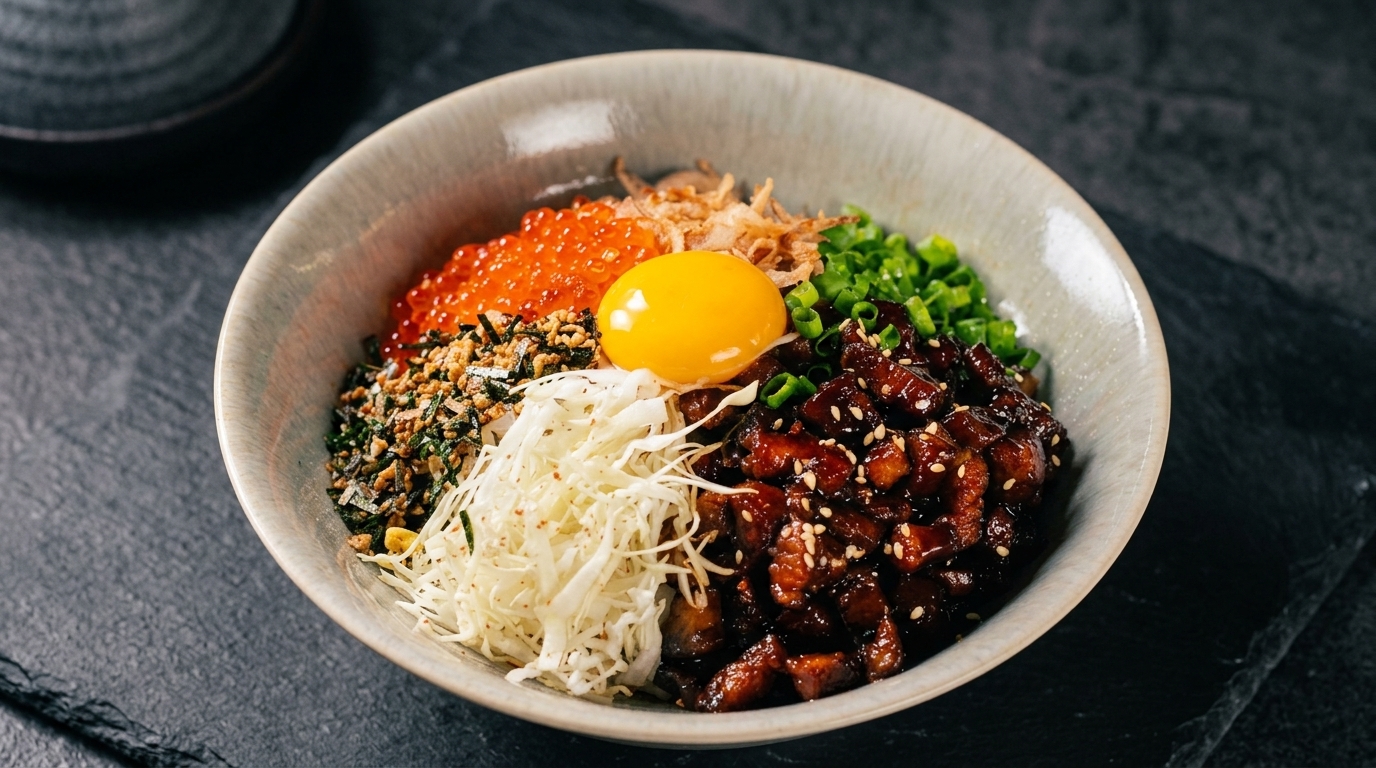
A luxurious take on braised pork belly, featuring glossy black gold caramelized pork, a silky raw egg yolk, and savory salmon roe over a bed of steamed rice.
Known as Black Gold for its deep glossy caramelization, this dish is a sophisticated fusion of traditional Taiwanese Lu Rou Fan and Japanese donburi. The pork belly is slowly simmered in a complex soy based soul marinade until tender, then paired with fresh garnishes for an immersive ceremony of flavor and texture.
Ingredients
- 500 g pork belly
- 100 ml soy sauce
- 50 ml mirin
- 30 ml rice wine
- 100 ml water
- 1 tbsp sugar
- 1 tbsp chicken powder
- 2 pieces bay leaves
- 3 slices ginger
- 1 piece dried kelp
- 2 stalks green scallions
- 12 unit red onion
- 14 head cabbage
- 2 tbsp all-purpose flour
- for frying vegetable oil
- 1 bowl steamed rice
- 1 unit pasteurized egg yolk
- to taste salmon roe
- to taste salt and pepper
- optional seaweed flakes
- optional toasted sesame seeds
- optional sprig of dill
Instructions
- 1Start the soy base
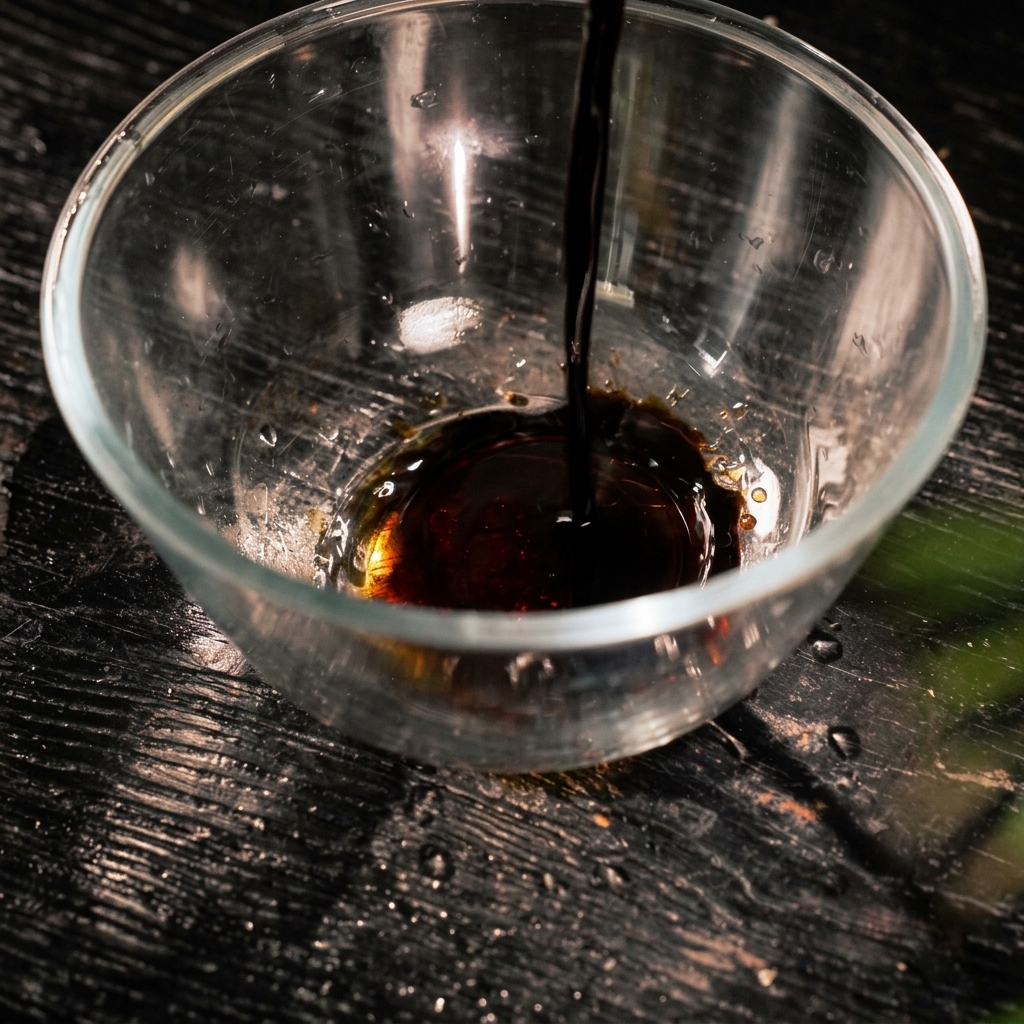
Begin the marinade by pouring soy sauce and mirin into a clear glass bowl. This mixture serves as the savory and slightly sweet foundation for the signature flavor profile of the dish.
Tip: Use a high quality brewed soy sauce for a deeper, more authentic umami taste in the final sauce. - 2Infuse with aromatics
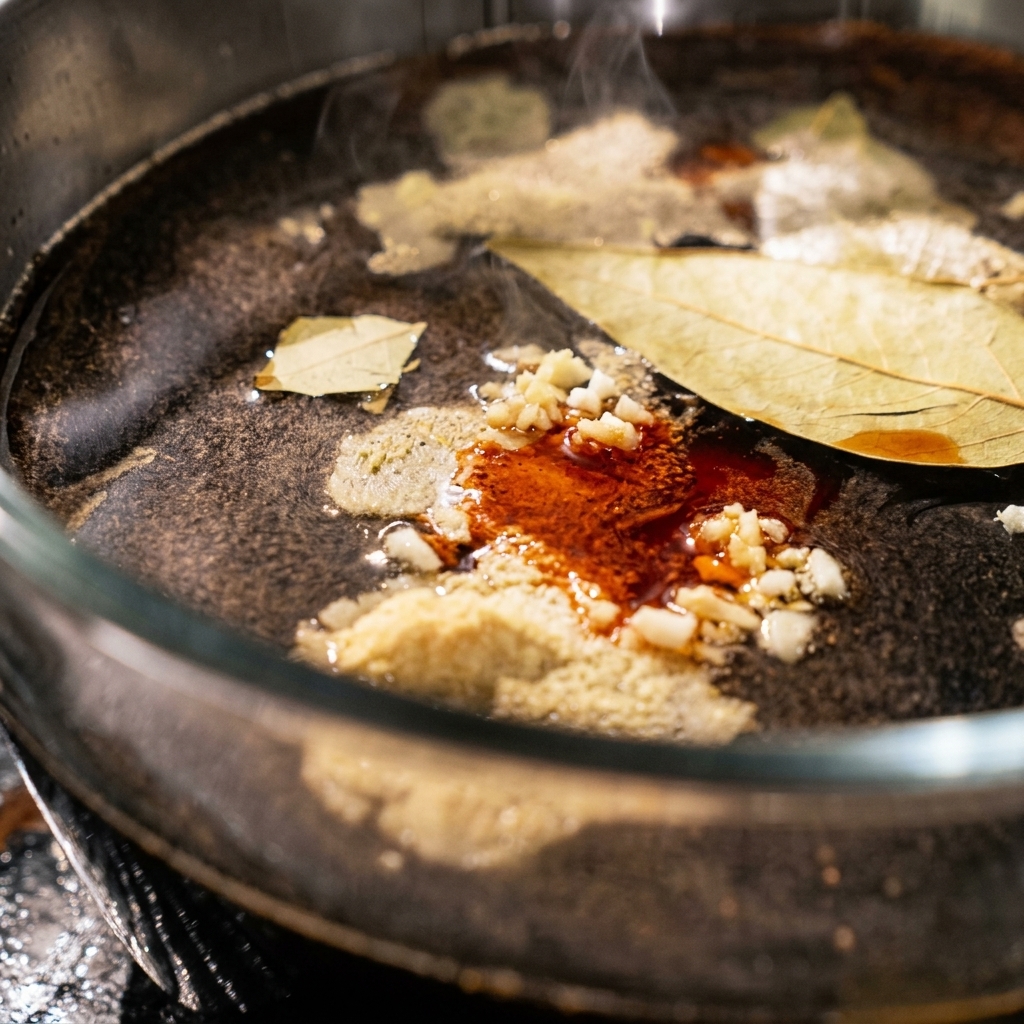
Add aromatic ingredients including bay leaves, fresh ginger slices, and a piece of dried kelp into the marinade. These elements will infuse the liquid with earthy notes and a natural brightness.
Tip: Lightly bruising the ginger before adding it to the bowl helps release its natural oils and fragrance more effectively. - 3Slice the pork belly
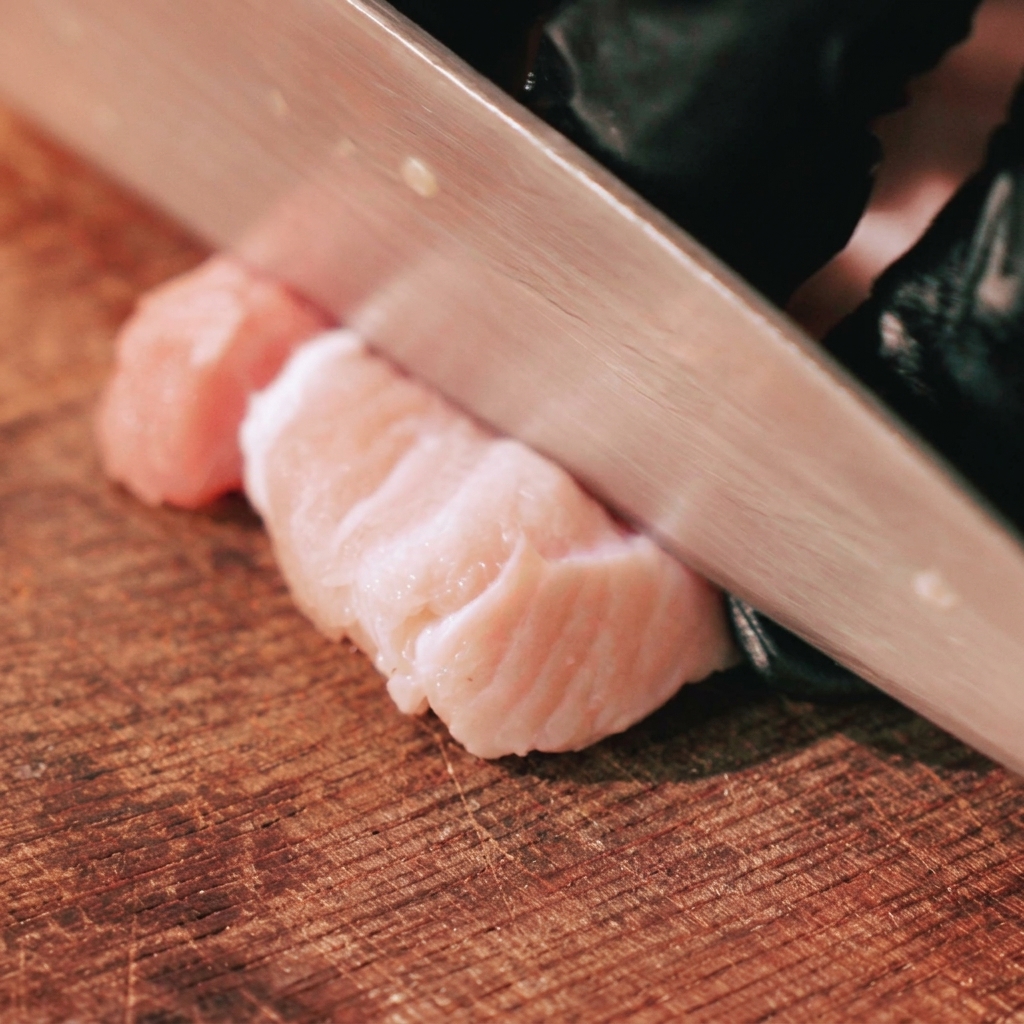
Using a sharp knife, carefully cut the raw pork belly into thick, finger-sized strips. Ensuring the pieces are uniform in size will allow them to cook evenly and absorb the marinade consistently.
Tip: Firm up the pork belly in the freezer for about 20 minutes before slicing to make it easier to cut clean, even strips. - 4Blanch the pork strips
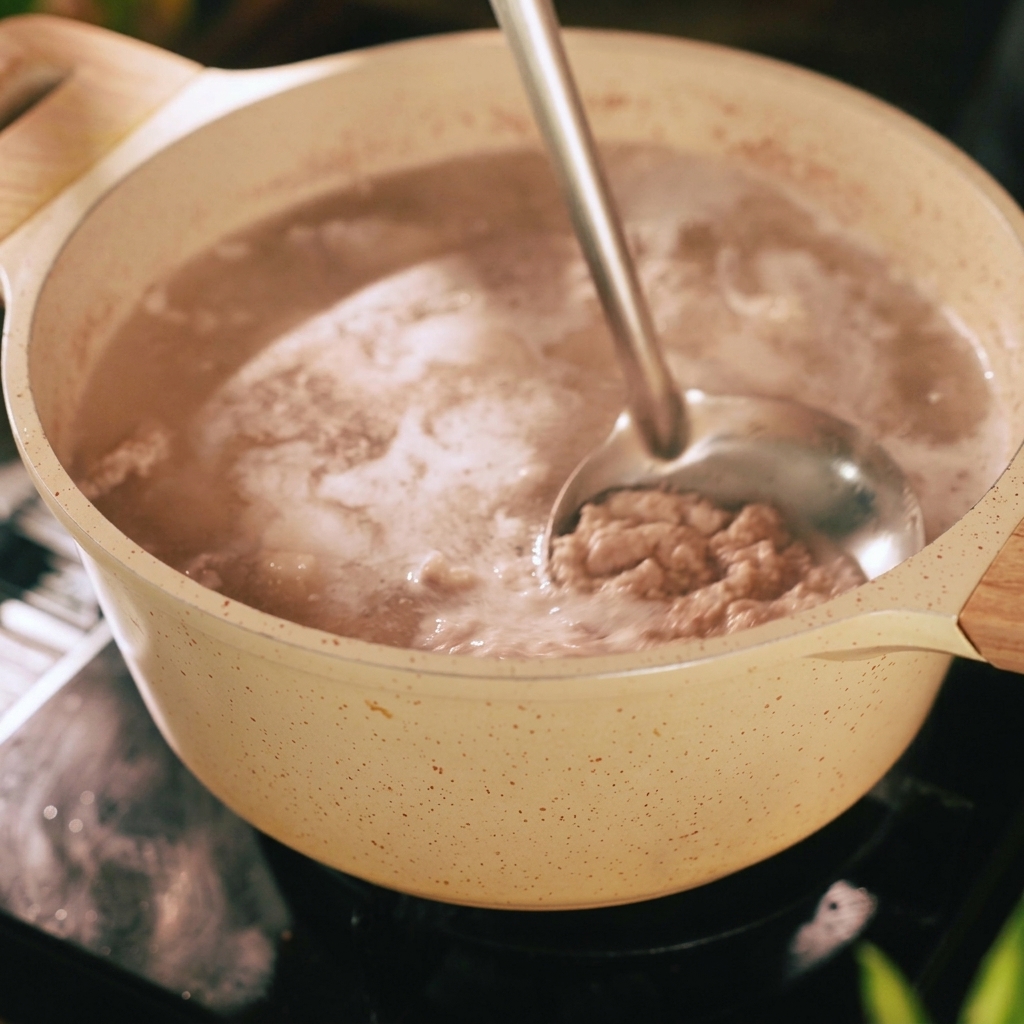
Place the pork strips in a pot of cold water and bring to a slow boil to draw out impurities. As the water heats up and grey foam rises to the surface, use a ladle to carefully skim it off. This process ensures the meat is clean and the final braised dish has a pure, refined flavor without any unwanted odors.
Tip: Starting with cold water instead of boiling water allows the blood and impurities to be released more gradually and effectively. - 5Sauté the pork
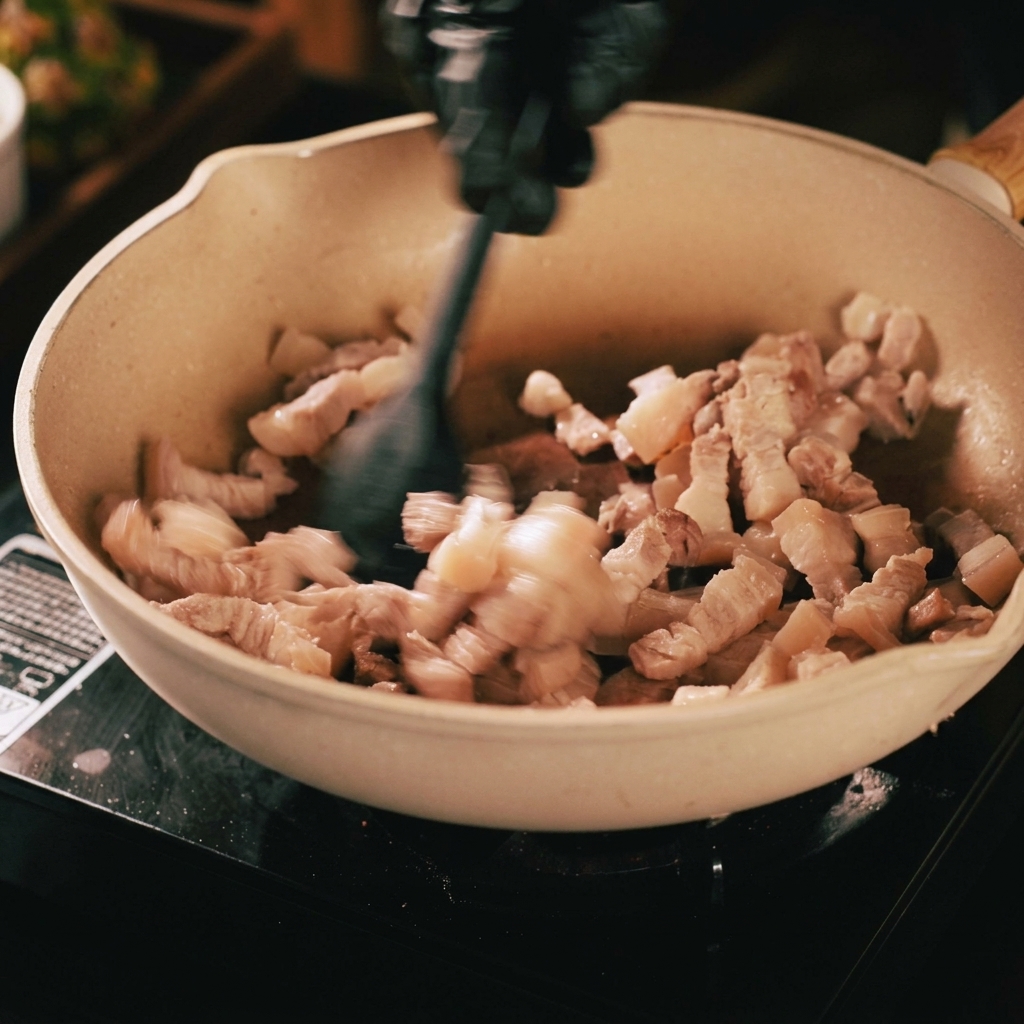
After blanching and draining the meat, add a small amount of oil to a pan and slide the pork strips in. Sauté the meat patiently over medium low heat, stirring frequently. Continue until the pork pieces are lightly browned and the fat begins to render out into the pan, creating a fragrant base for the braise.
Tip: Rendering the fat slowly over lower heat prevents the meat from burning while ensuring the final dish is not excessively greasy. - 6Simmer in the soul marinade
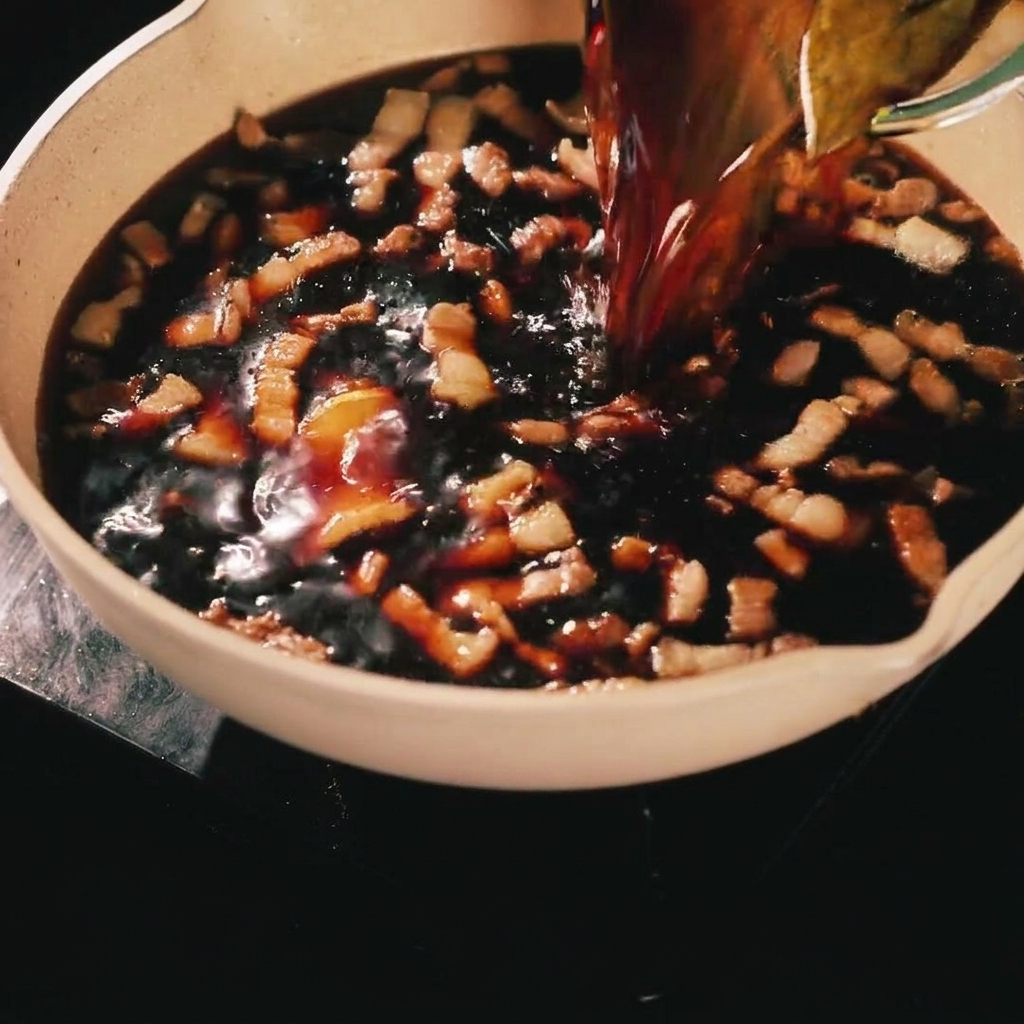
Once the pork has rendered its fat and turned golden, pour in your prepared soul marinade which is the savory blend of soy sauce, rice wine, sugar, and aromatics. This liquid will penetrate the meat during the long simmer, transforming it into tender chunks of flavorful pork.
Tip: Make sure the liquid covers the meat well so that every piece can absorb the flavors evenly. - 7Add fresh aromatics
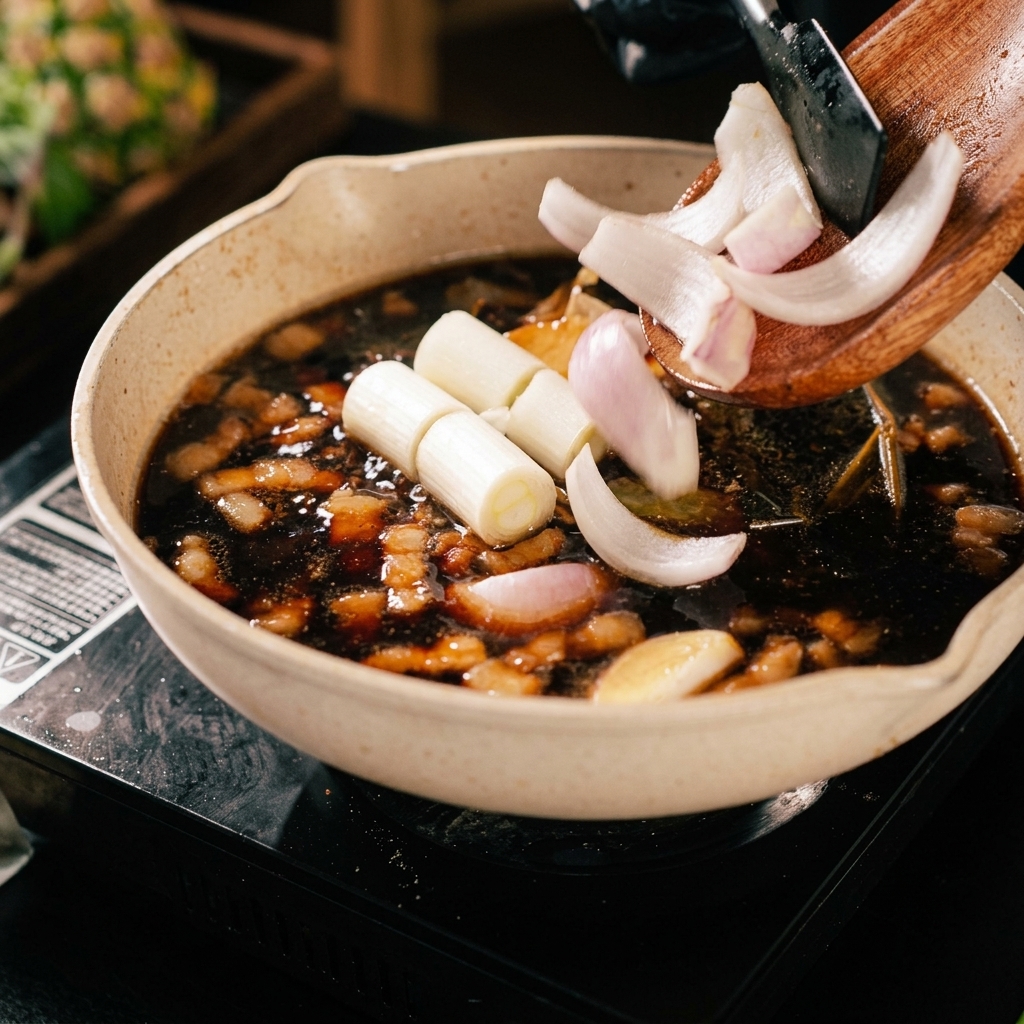
Incorporate large sections of green scallions and wedges of red onion into the pan with the pork and marinade. These fresh aromatics will break down slowly as the dish simmers, adding a natural sweetness and aromatic complexity to the sauce.
Tip: Keeping the scallions in large pieces makes them easier to remove later if you prefer a smoother sauce for serving. - 8Prepare the cabbage garnish
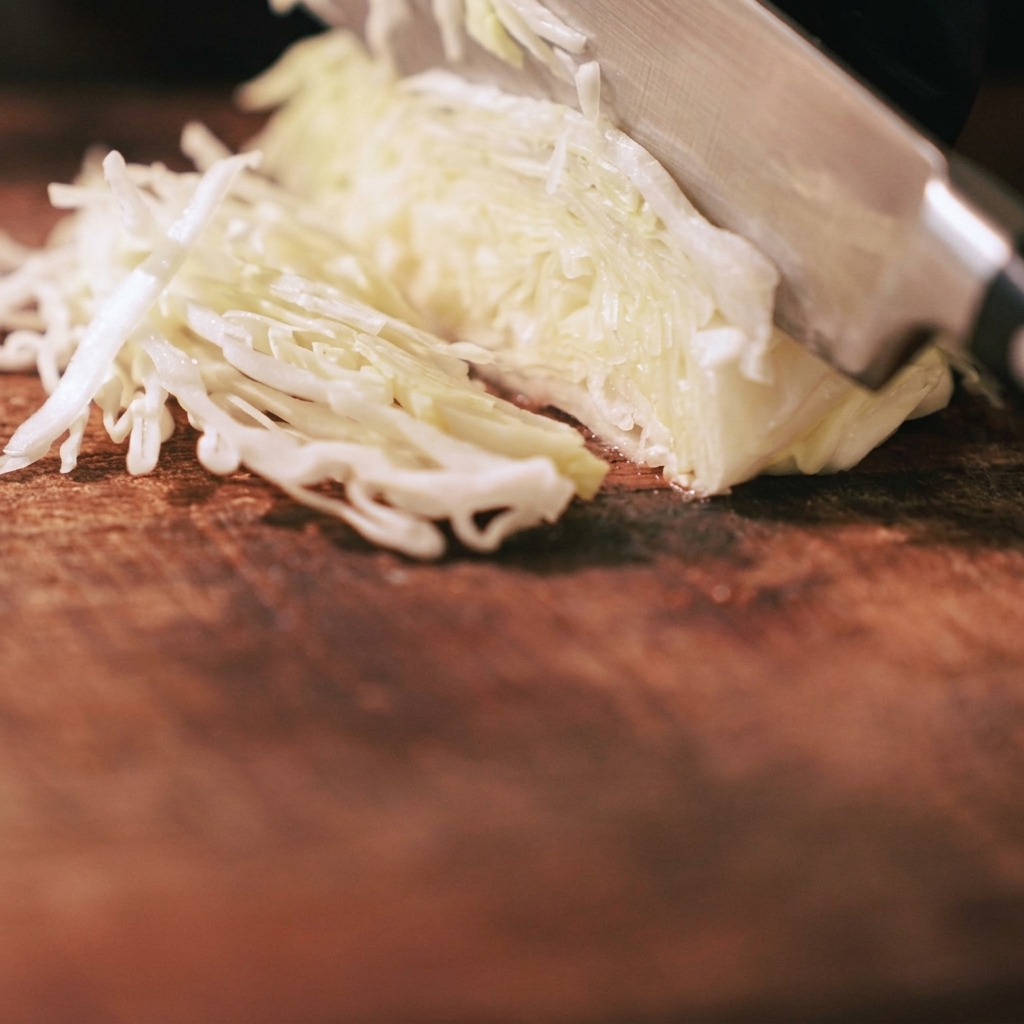
While the pork simmers, prepare the fresh elements for the final presentation. Use a sharp knife to finely shred a head of fresh cabbage on a cutting board. This crisp cabbage will provide a refreshing crunch and color contrast to the rich, tender braised pork when the dish is assembled.
Tip: A very sharp knife is key to getting thin, uniform shreds that have a pleasant texture.