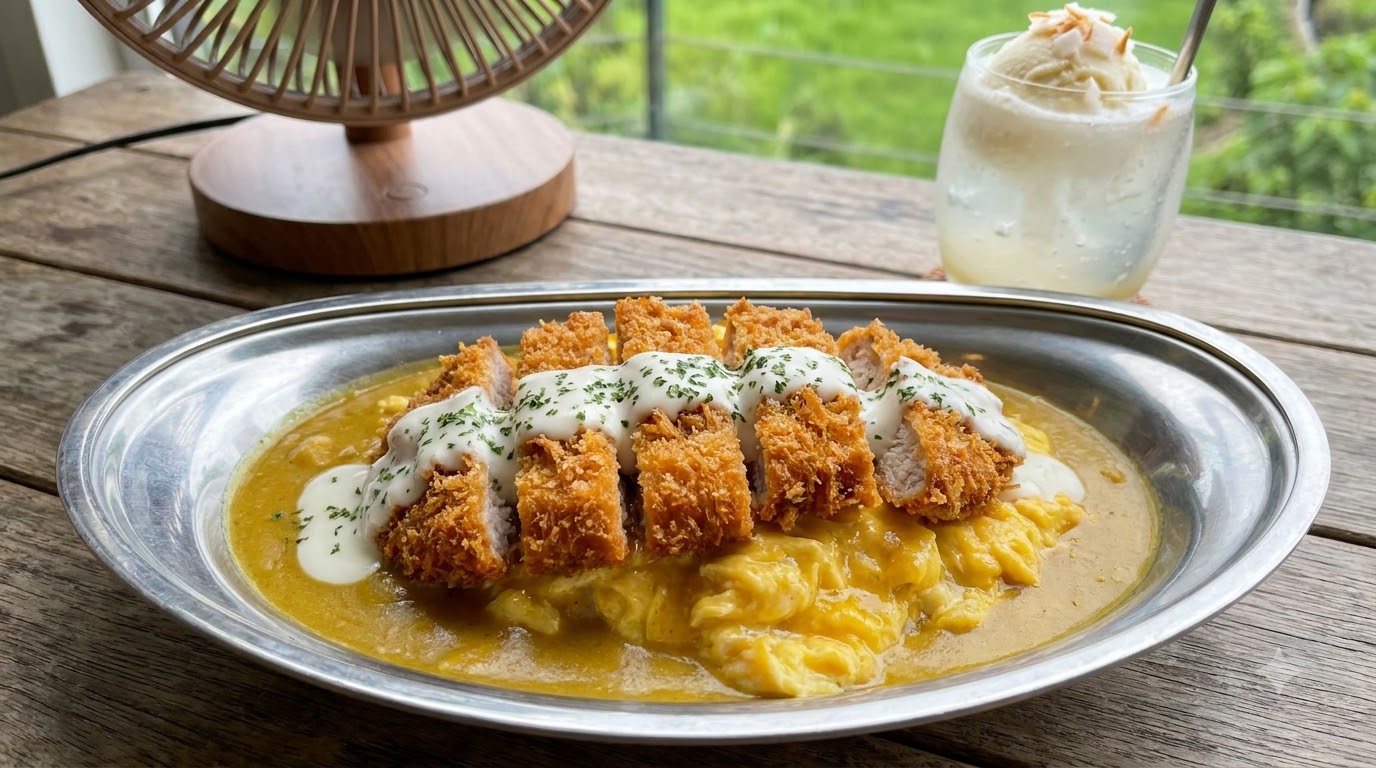
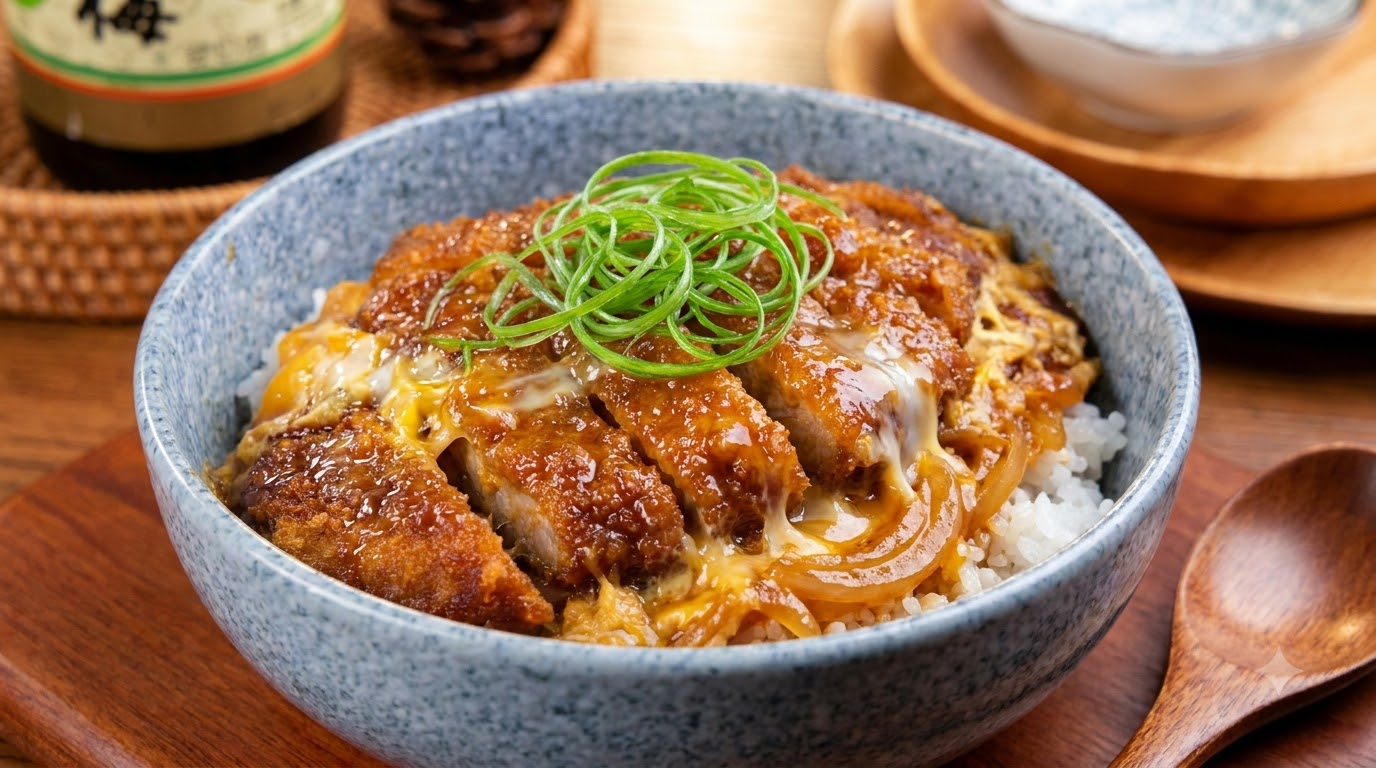
Japanese Pork Katsu Curry
Rice
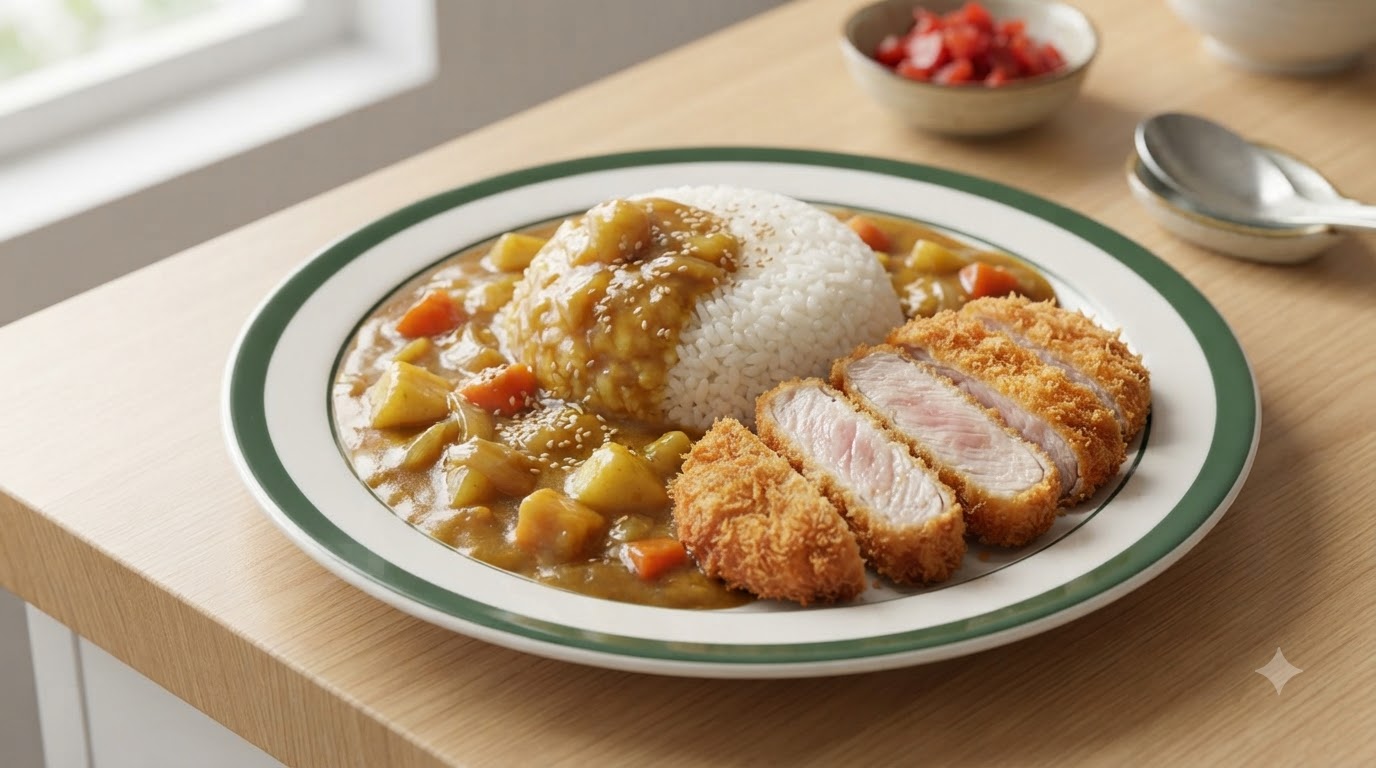
A classic Japanese comfort dish featuring crispy, golden-breaded pork cutlets served over a bed of fluffy white rice and enveloped in a rich, savory vegetable curry sauce.
Japanese curry katsu is a beloved comfort food that brings together two culinary favorites: ultra-crispy tonkatsu pork cutlets and deeply savory, mildly spiced vegetable curry. Originating from western-influenced dishes adapted during the late Meiji era, this combination has become a staple of casual dining across Japan. The rich, glossy sauce relies on a slow-simmered blend of onions, potatoes, and carrots infused with aromatic curry blocks, poured generously over hot rice alongside freshly fried pork.
Ingredients
- 400 g pork tenderloin
- 2 cups white rice
- 200 g curry blocks
- 2 potatoes
- 1 carrot
- 1 red onion
- 2 eggs
- 1 cup all-purpose flour
- 2 cups breadcrumbs
- 2 stalks scallions
- 3 slices ginger
- 1 tsp salt
- 1/2 tsp white pepper
- 2 tbsp cooking oil
- to taste white sesame seeds
Instructions
- 1Wash the rice
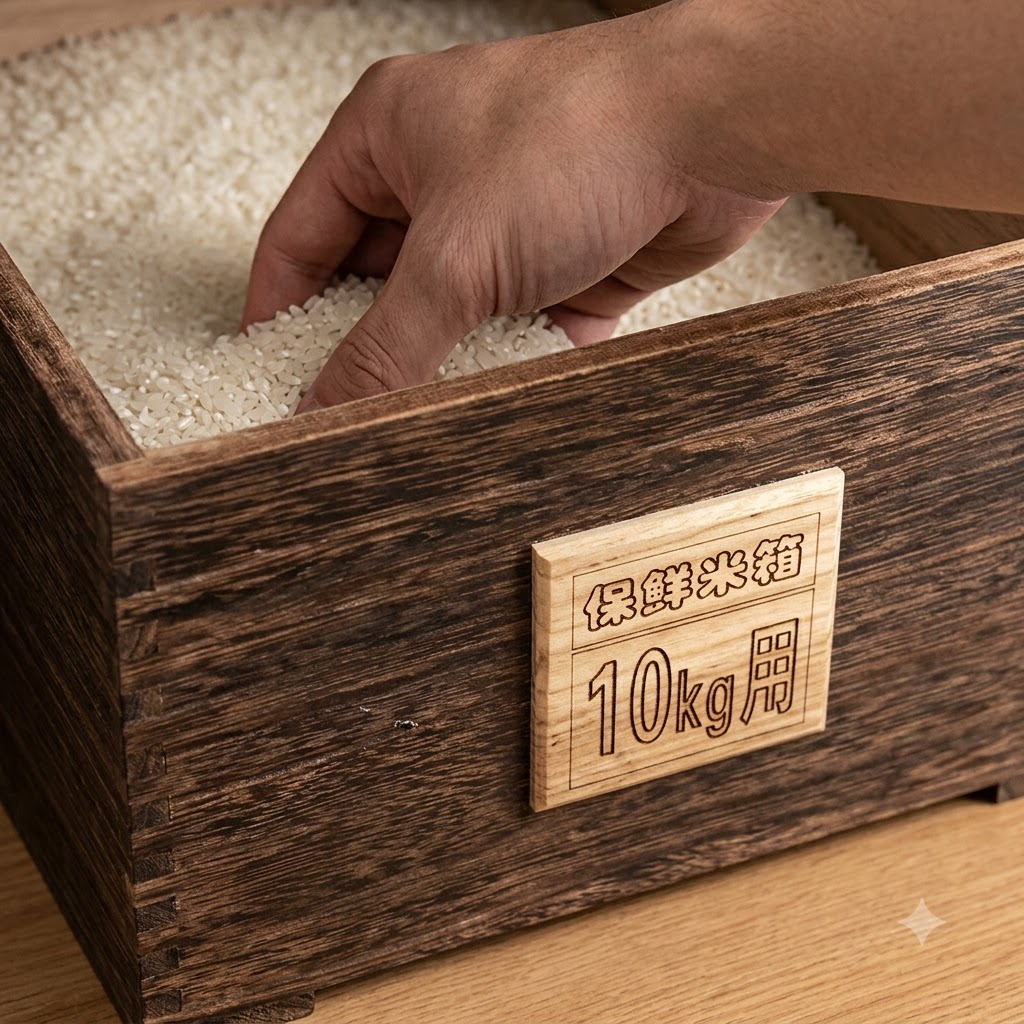
Place the raw rice into the cooker pot and wash thoroughly under running water to remove excess starch before cooking.
Tip: Rinsing the rice well helps achieve a fluffier texture once cooked. - 2Cut the pork tenderloin
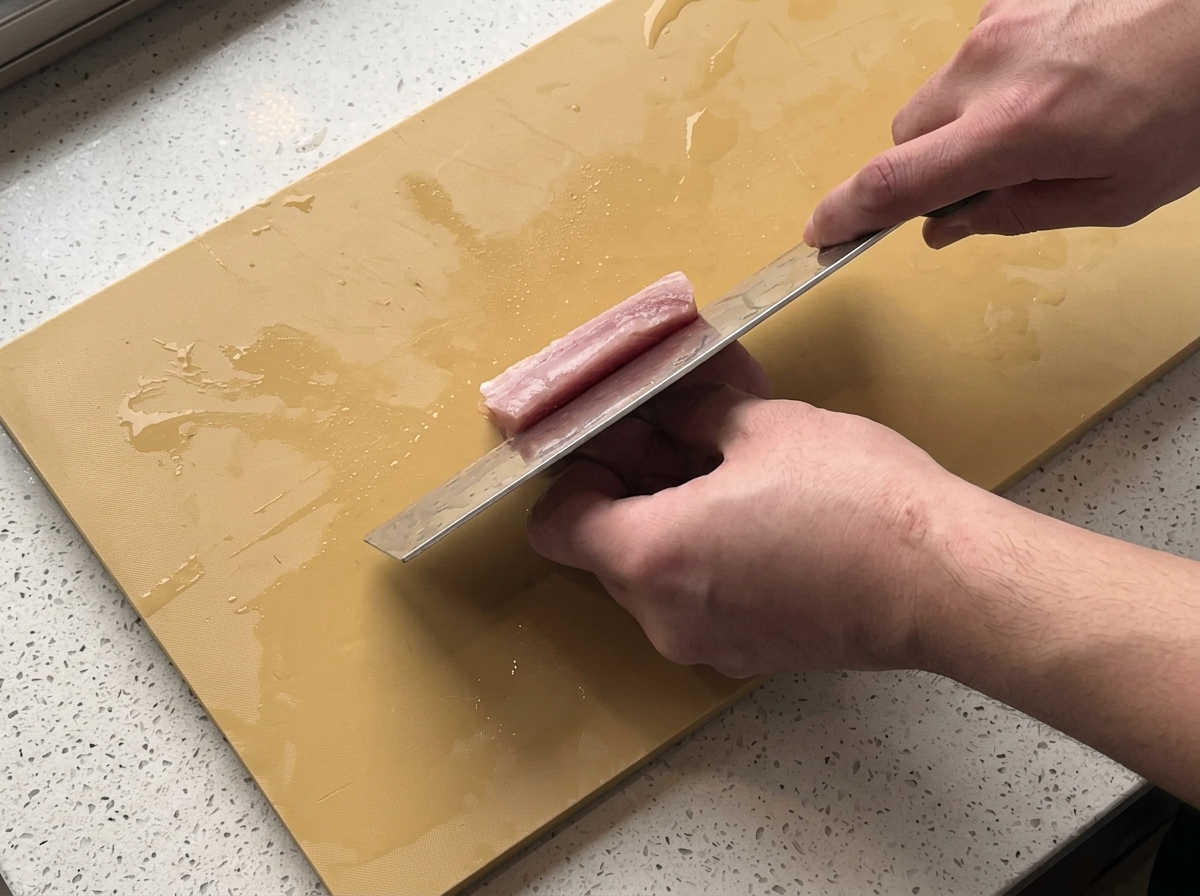
Place the raw pork tenderloin on a yellow cutting board and use a cleaver to slice it into uniform pieces.
Tip: Make sure the pieces are evenly sized so they cook consistently. - 3Tenderize the pork

Place the pork tenderloin slices on a clean cutting board and use the textured, flat side of a metal meat mallet to gently pound and tenderize the meat, breaking down the fibers to ensure a tender texture after frying.
Tip: Tenderizing the meat evenly helps it cook uniformly and absorb marinades much better. - 4Marinate the pork
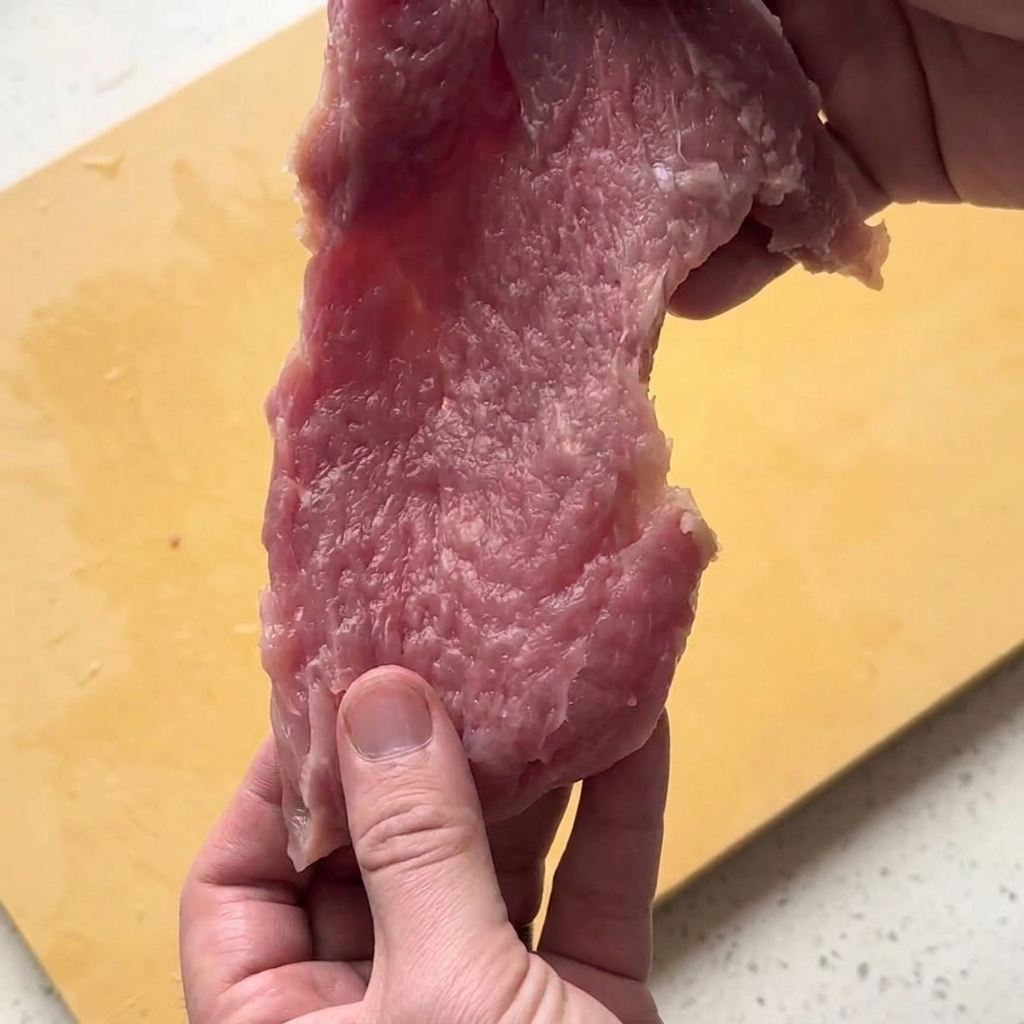
Hold up a slice of raw, tenderized pork to show its prepared state before seasoning, or place the tenderized pork in a bowl with sliced scallions, ginger, salt, white pepper, and cooking oil, mixing well to marinate.
Tip: Letting the meat marinate for at least 15 minutes enhances its savory depth. - 5Stir-fry diced red onions
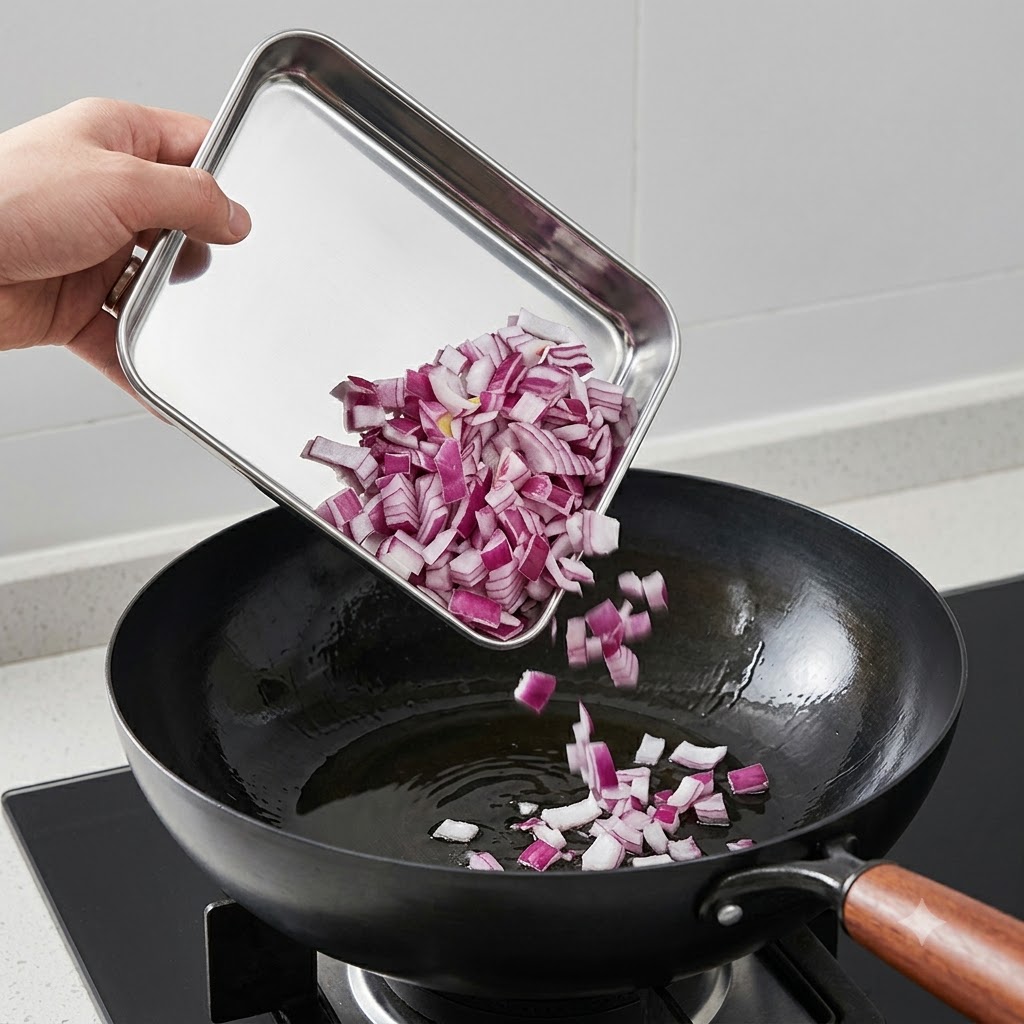
Pour diced red onions from a metal tray into a wok with hot oil and stir-fry until fragrant.
Tip: Ensure the oil is adequately heated before adding the onions to release their aroma quickly. - 6Add potatoes and carrots
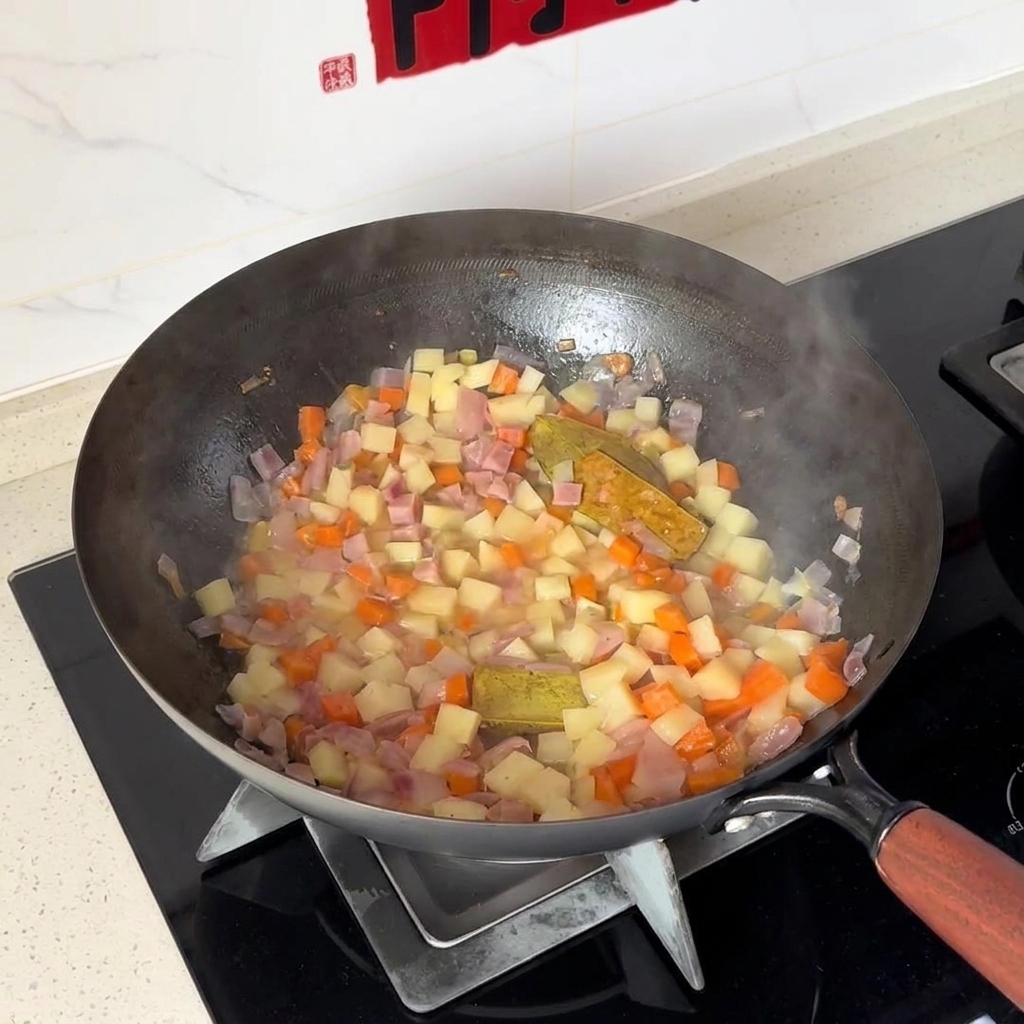
Incorporate diced potatoes and carrots into the wok containing the stir-fried onions, mixing everything well.
Tip: Stir the vegetables continuously to ensure even coating with oil before adding liquid. - 7Add hot water and simmer
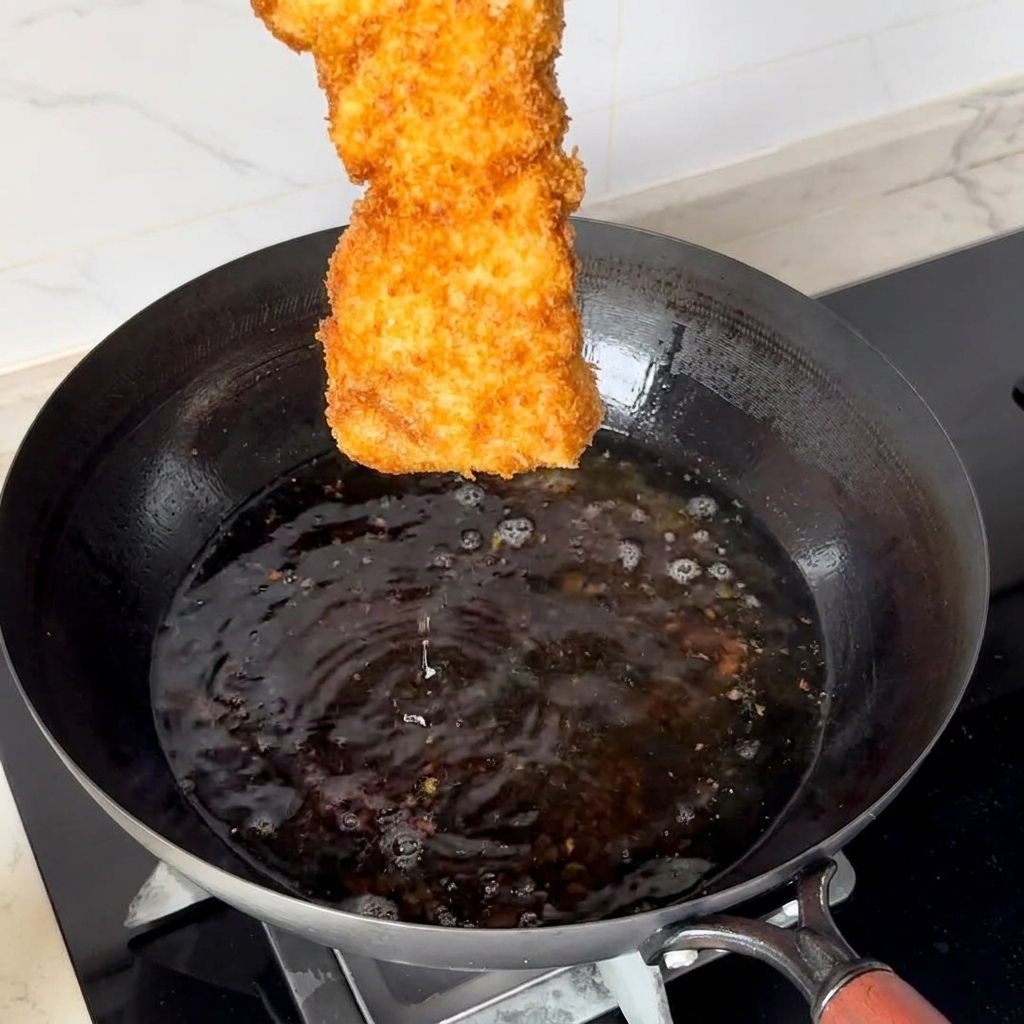
Pour hot water into the wok with the stir-fried red onions, potatoes, and carrots, cover with a lid, and let the vegetables simmer until tender.
Tip: Simmering on medium heat ensures the vegetables cook evenly without evaporating the liquid too quickly. - 8Coat the pork with flour
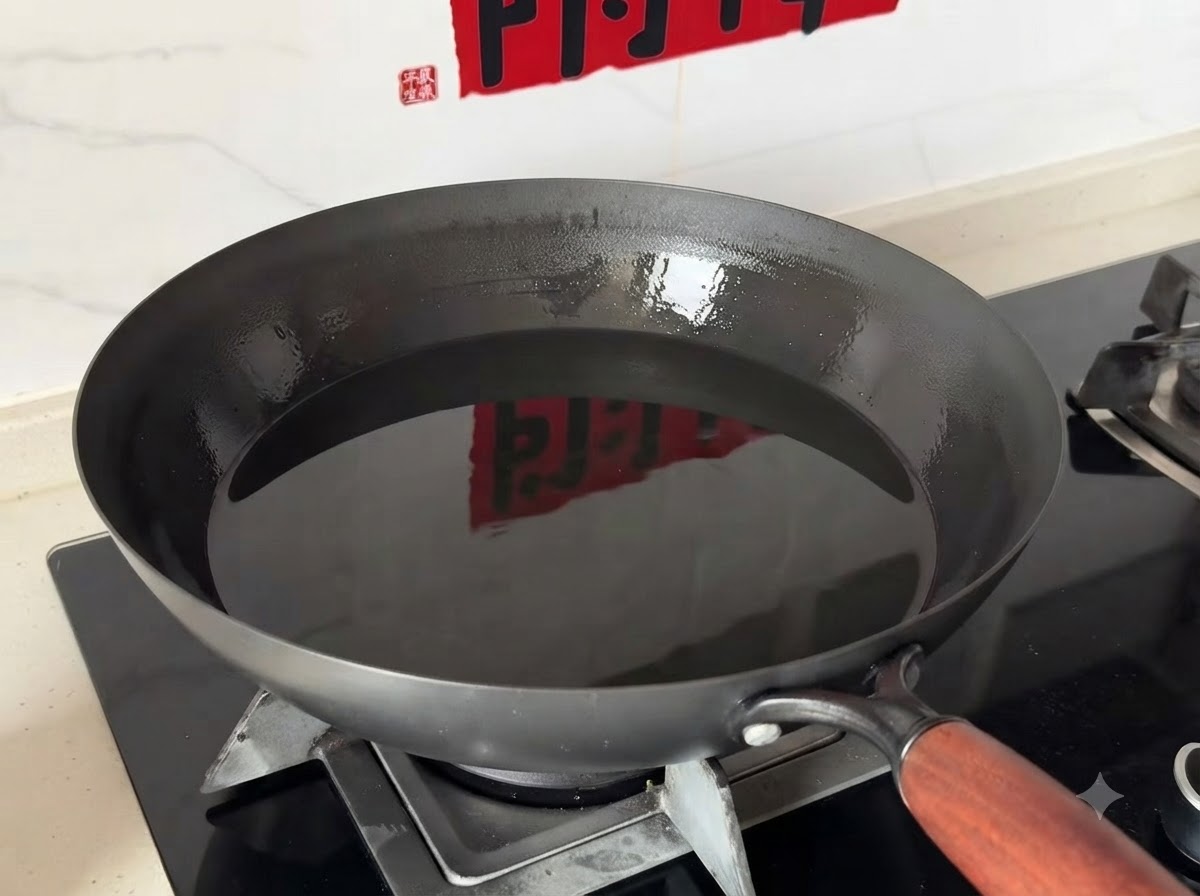
Coat the marinated raw pork pieces evenly in all-purpose flour on a metal tray, shaking off any excess.
Tip: A light, even layer of flour helps the beaten egg adhere properly to the meat. - 9Dip in beaten egg
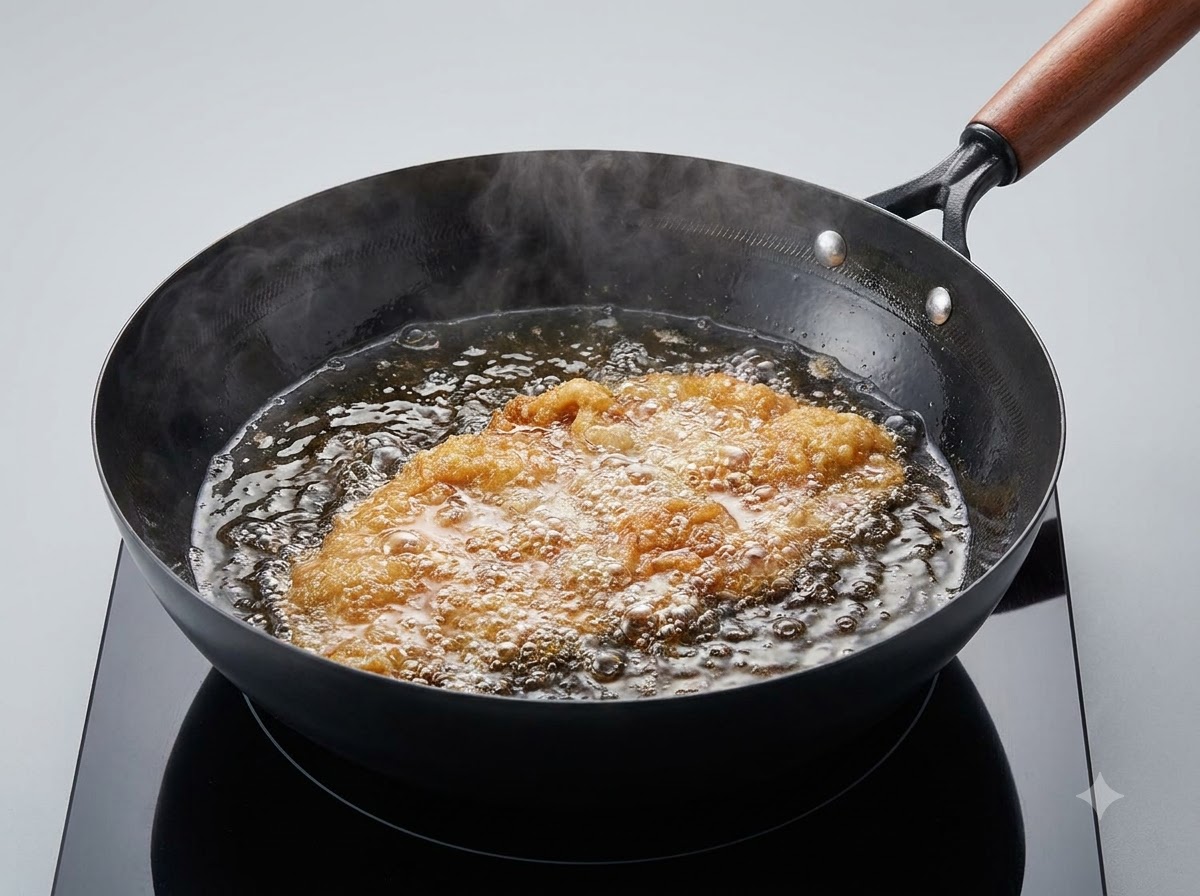
Dip the floured pork cutlet pieces into the beaten egg liquid, ensuring every part is thoroughly moistened.
Tip: Let any excess egg drip off so the breadcrumbs form a neat, uniform coating. - 10Slice the fried pork cutlet
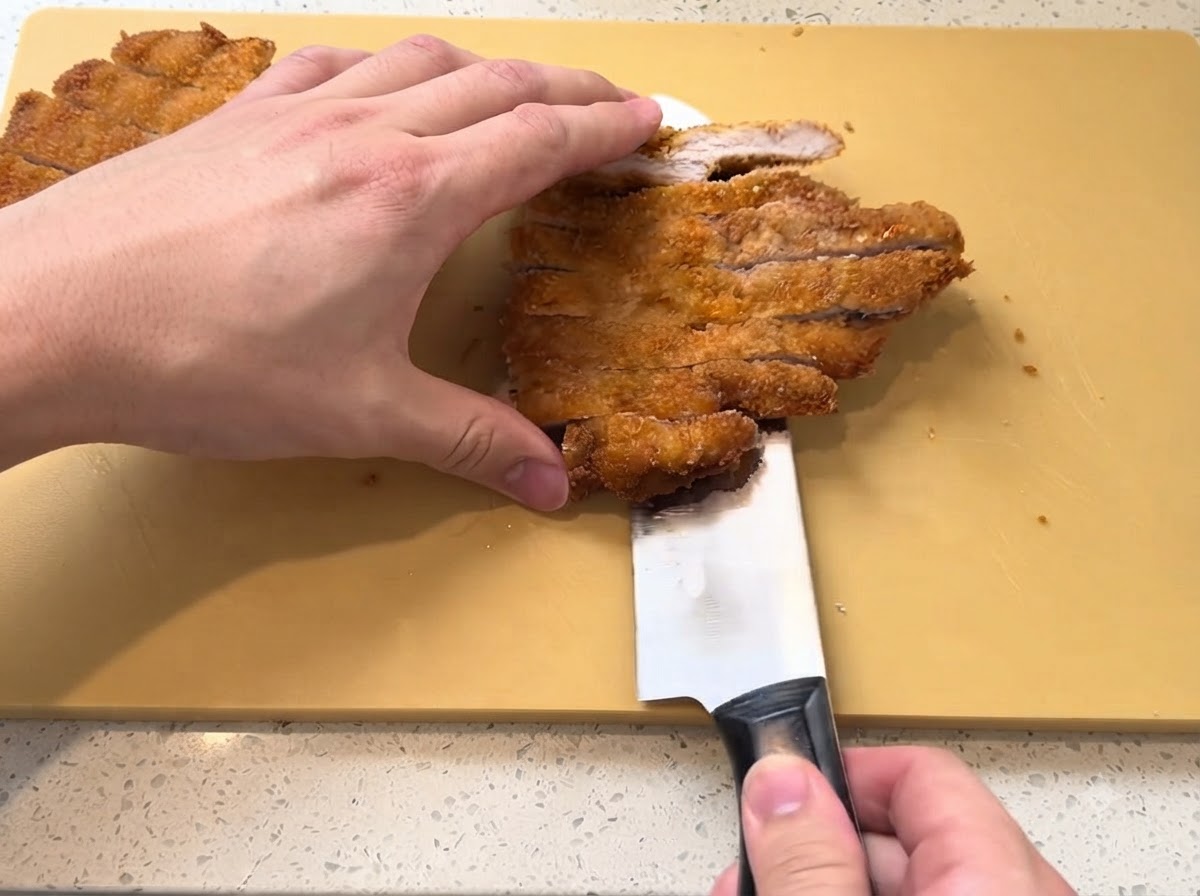
Place the fried and crispy pork cutlet on a cutting board and use a chefs knife to slice it evenly into bite-sized strips.
Tip: Slice with a steady downward motion to keep the crispy breadcrumb coating intact. - 11Plate the rice and add curry
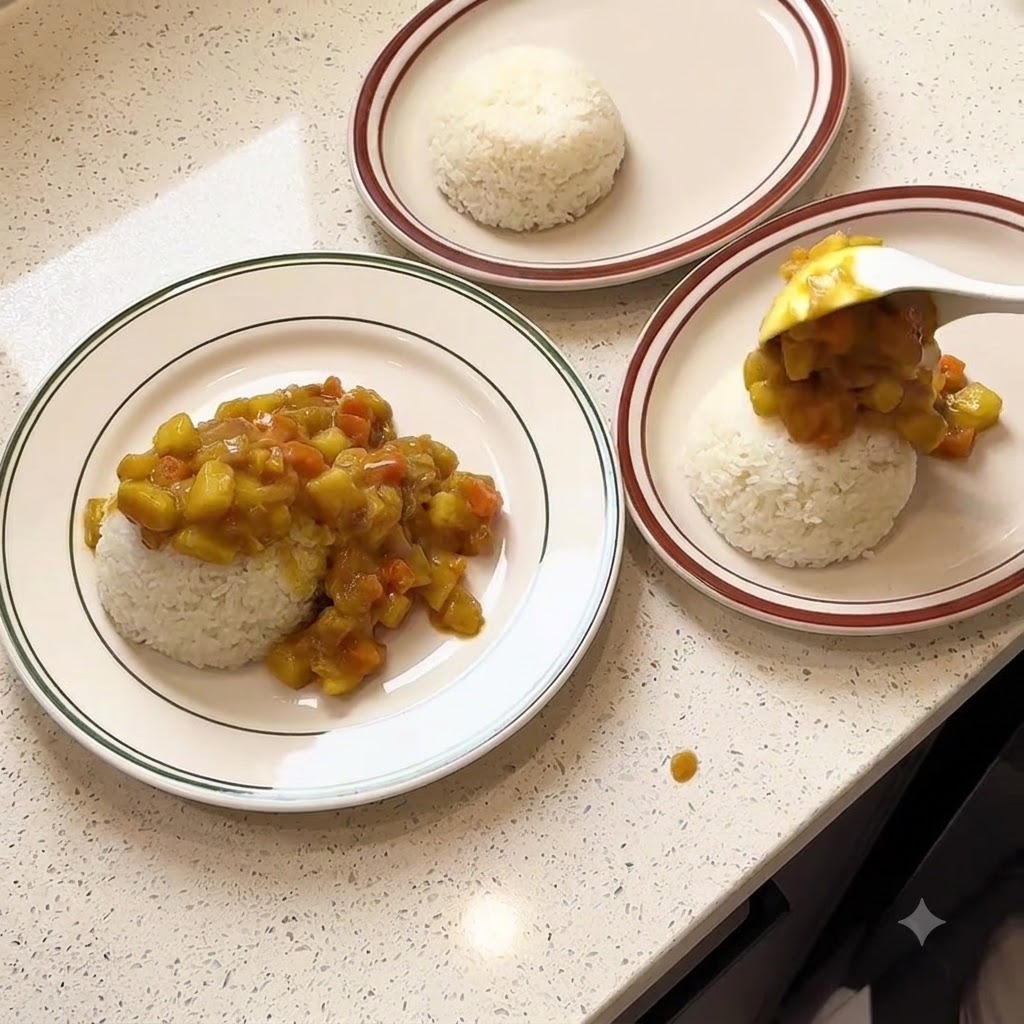
Molded white rice is placed onto serving plates, and the rich, thick vegetable curry sauce is spooned generously over the rice and plate.
Tip: Use a small bowl or mold to shape the rice neatly before plating.