Spicy Korean Kimchi Beef Tofu Soup
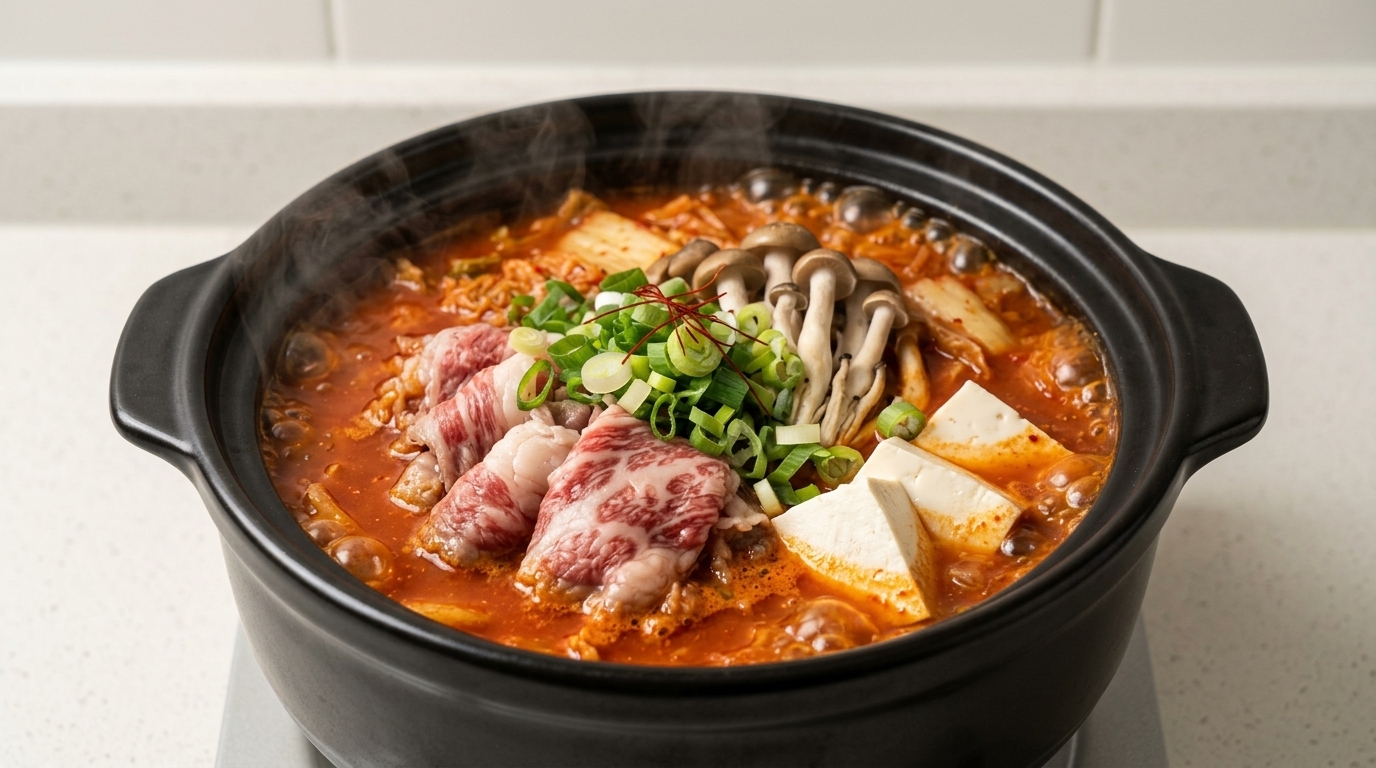
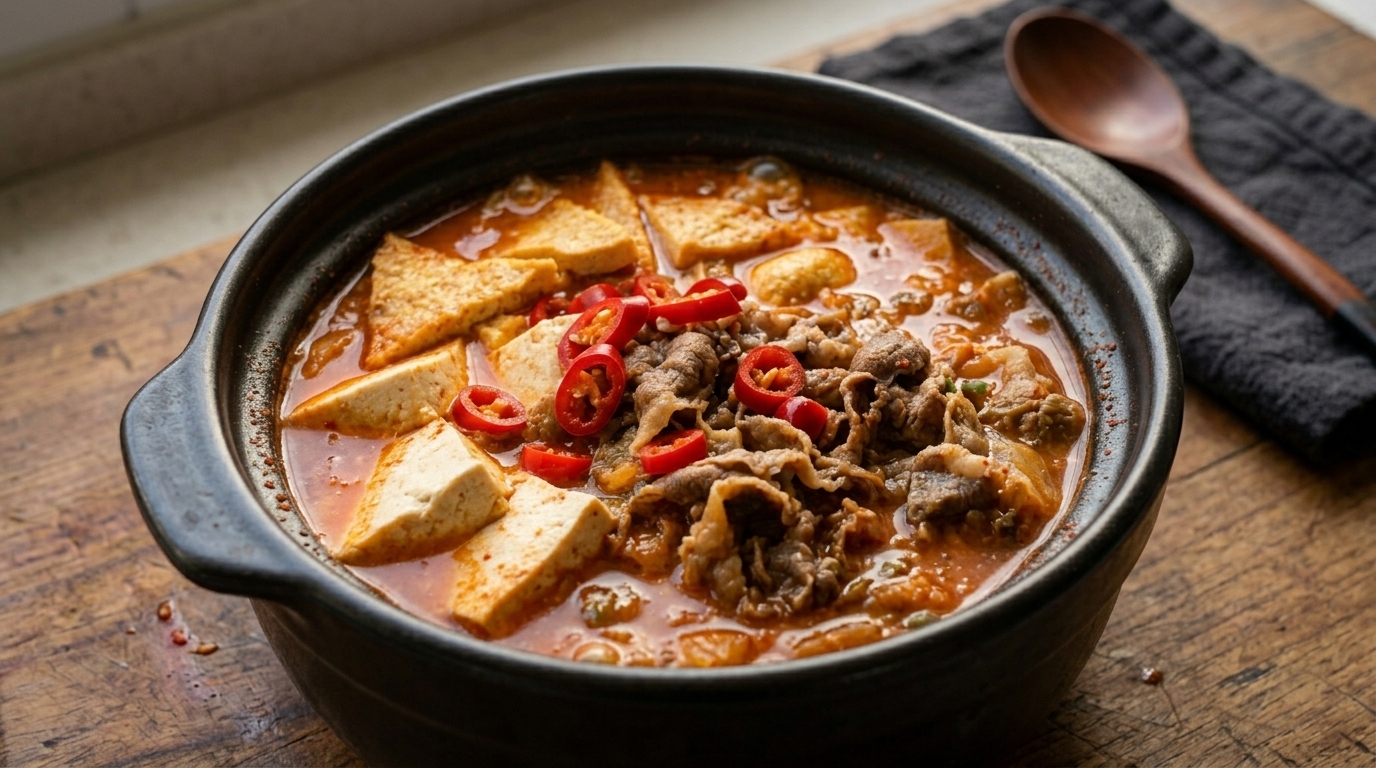
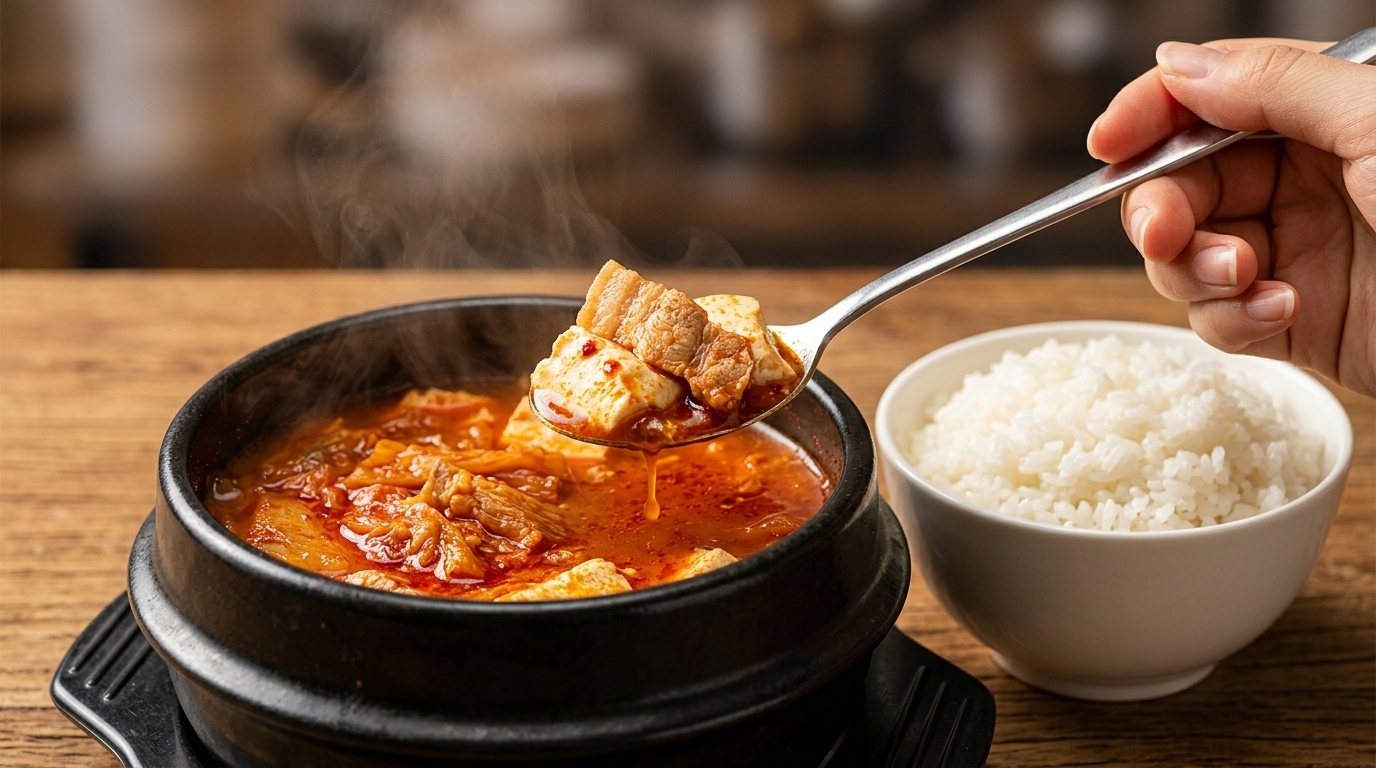
A comforting Korean soup with tender beef rolls, soft tofu, and enoki mushrooms in a fiery kimchi broth. Deeply savory and ready in just ten minutes.
Kimchi tofu soup is a quintessential Korean comfort food, celebrated for its bold heat and restorative qualities. This version balances the fiery, fermented tang of aged kimchi with the rich savoriness of thinly sliced beef rolls and the clean, cooling texture of large tofu blocks. Layered with fresh napa cabbage and delicate enoki mushrooms, it delivers a deeply satisfying, multi-textured experience in every spoonful.
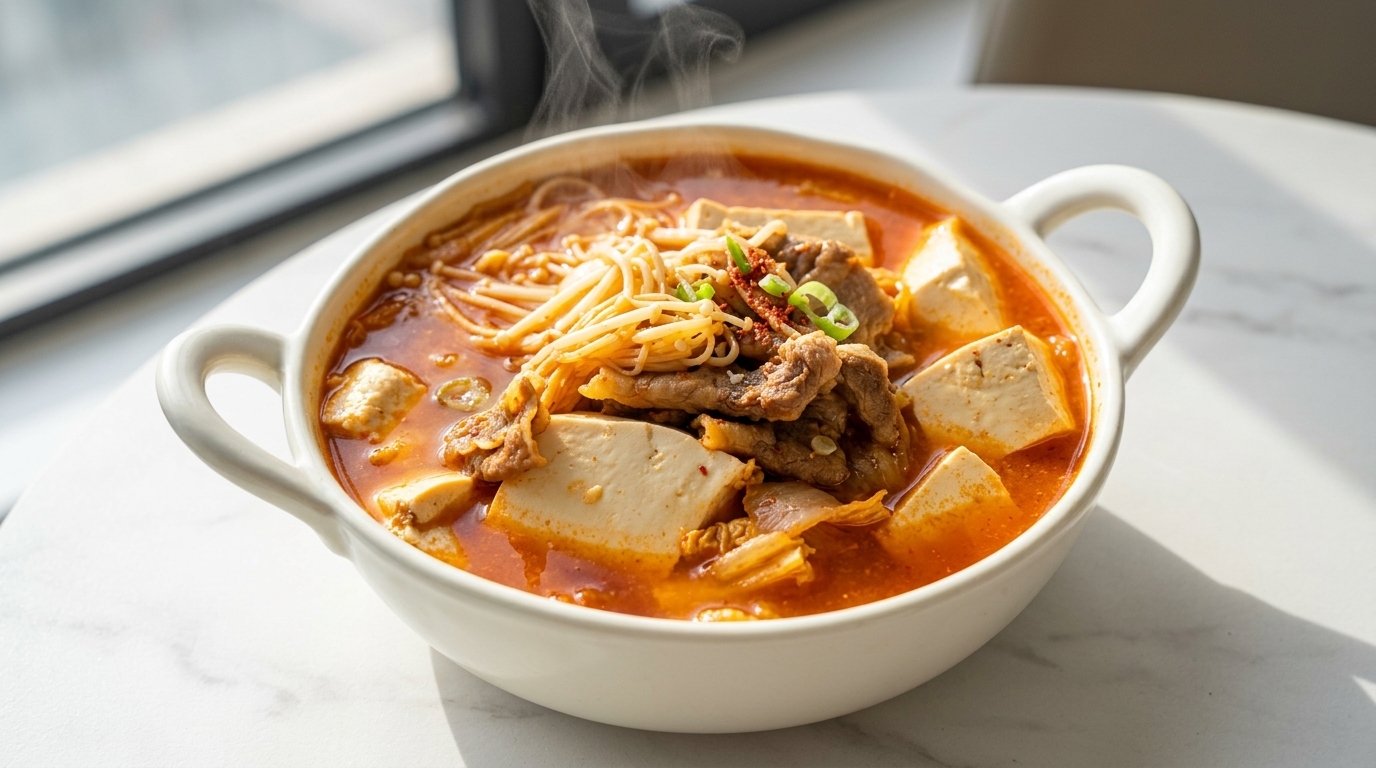
Ingredients
- 1 block fresh white tofu
- 1 cup kimchi
- 200 g beef rolls
- 1 bundle enoki mushrooms
- 5 leaves napa cabbage
- 1 small red onion
- 1 red chili pepper
- 1 tbsp light soy sauce
- 1 tbsp oyster sauce
- 1 tbsp Korean chili paste (gochujang)
- 1 tsp chili powder
- 0.5 tbsp sugar
- 1 tbsp cooking oil
- 500 ml water
Instructions
- 1Slice the fresh tofu
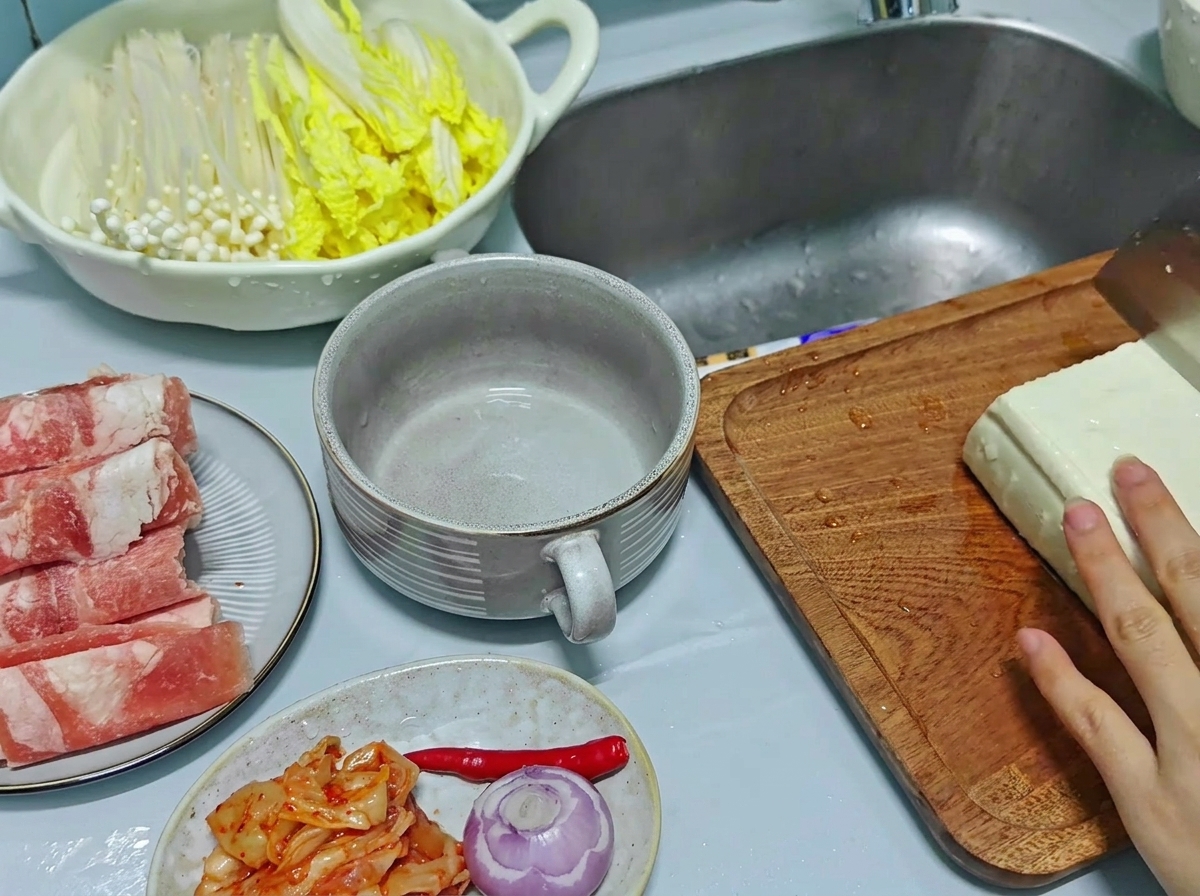
Carefully slice the block of fresh white tofu into thick, uniform rectangular slabs on a wooden cutting board. Cutting them into substantial pieces ensures they maintain their shape and do not crumble during the simmering process.
Tip: Use a sharp knife and apply gentle, steady downward pressure to achieve clean cuts without breaking the tofu. - 2Chop the aromatics
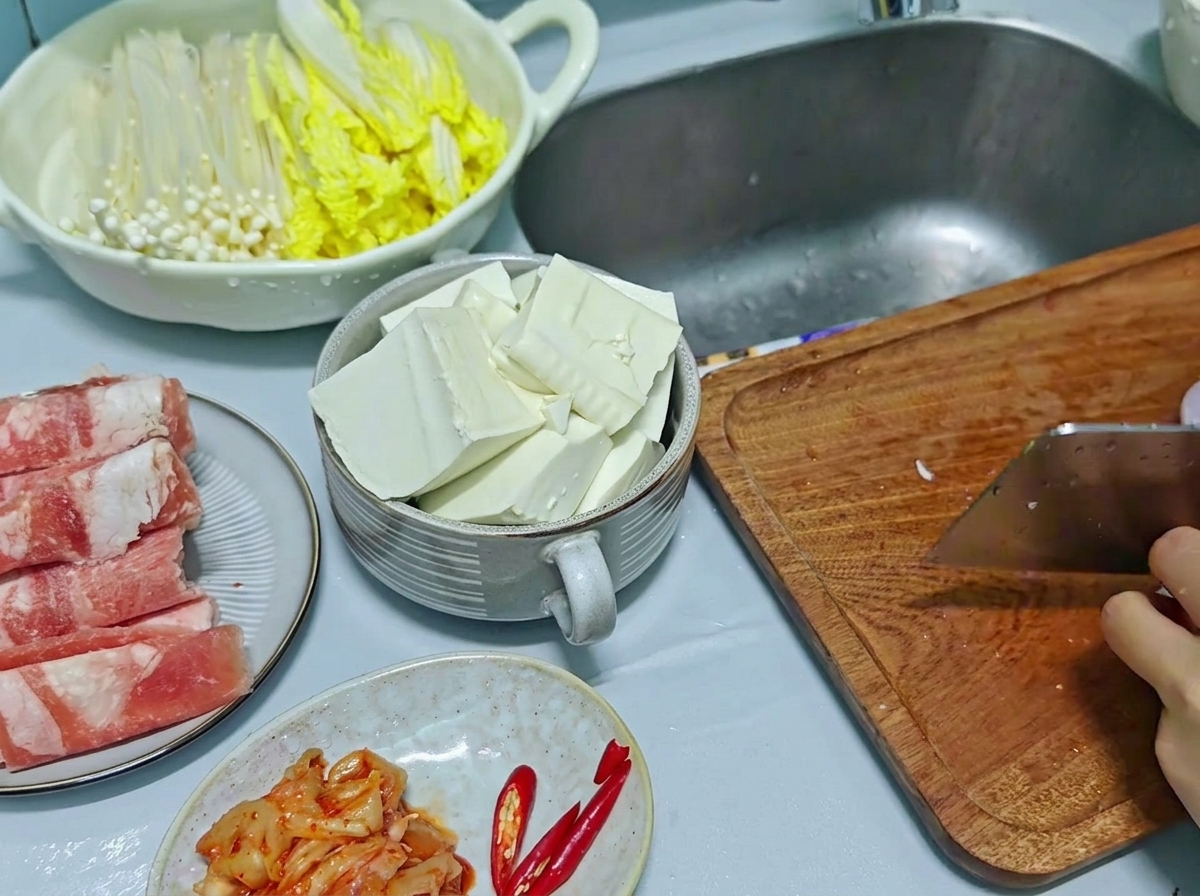
Finely chop the red onion and slice the red chili pepper into small pieces on the cutting board. Preparing these fresh aromatics ahead of time creates the flavor baseline for the savory and spicy soup broth.
Tip: You can adjust the amount of red chili pepper used to easily control the overall spiciness of the dish. - 3Combine the sauce base
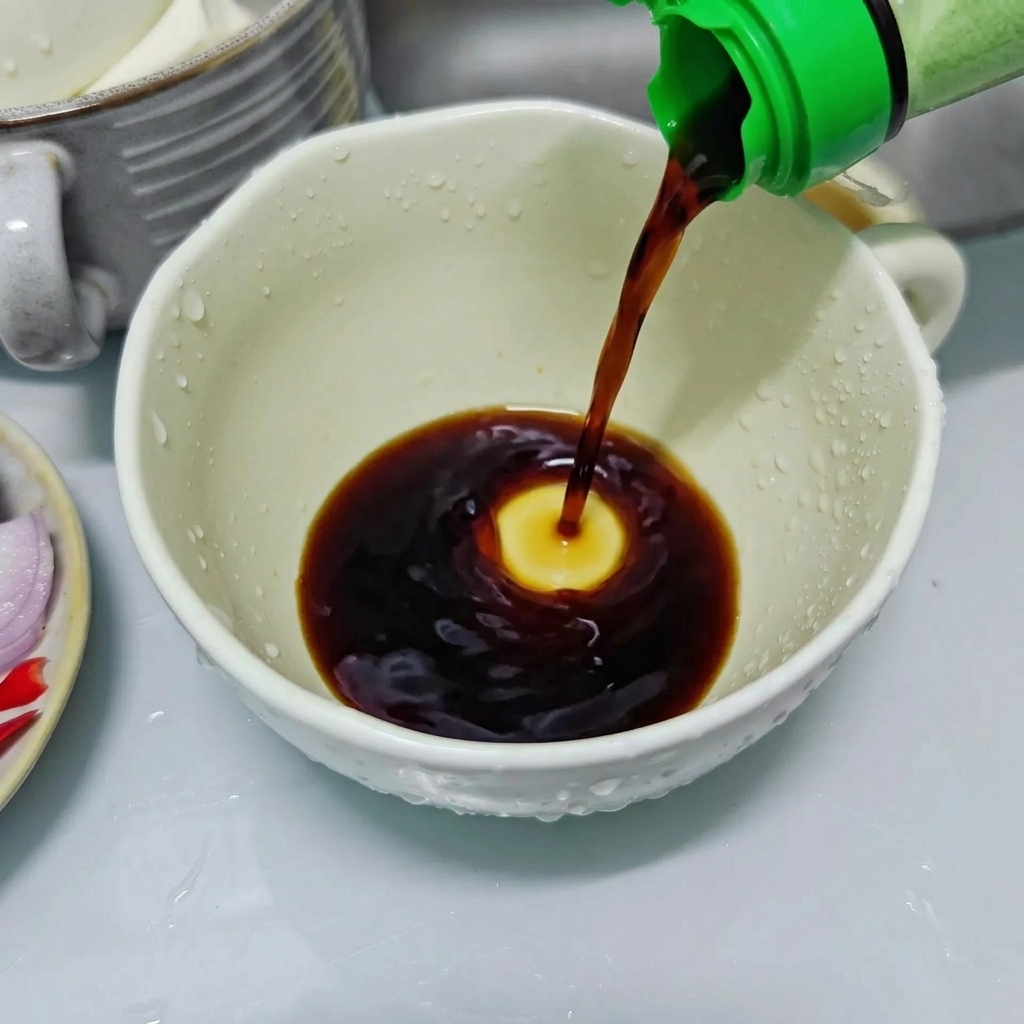
Pour the light soy sauce and oyster sauce into a white bowl or mug. This creates a savory, umami-rich foundation for the Korean kimchi soup seasoning.
Tip: Using a container with a handle or a pour spout makes it much easier to add the sauce mixture into the cooking pan later. - 4Incorporate the chili paste
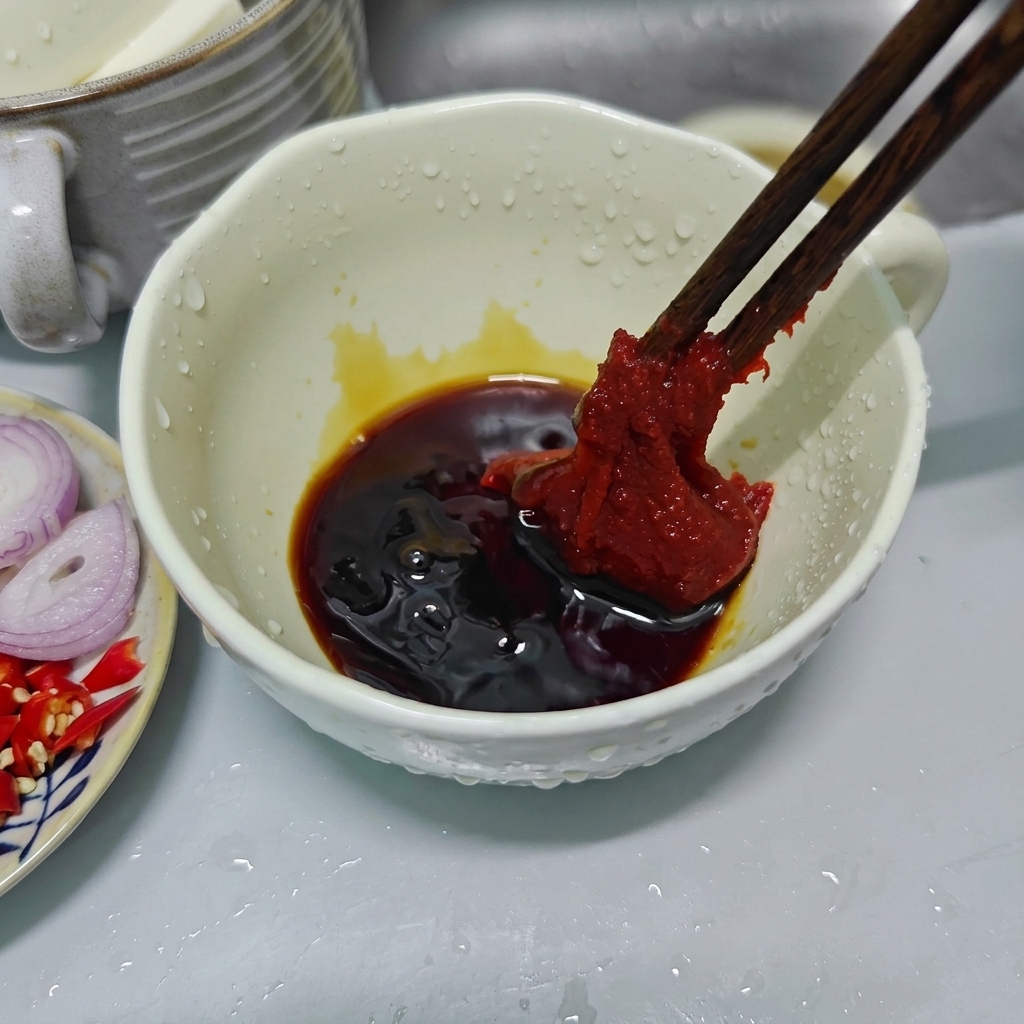
Add a generous scoop of authentic Korean chili paste (gochujang) and chili powder into the white bowl containing the soy sauce and oyster sauce. This combination provides both the vibrant red color and the signature deep heat.
Tip: Mix the paste thoroughly into the liquid base so it dissolves completely and distributes evenly in the pot later. - 5Dilute and mix the sauce
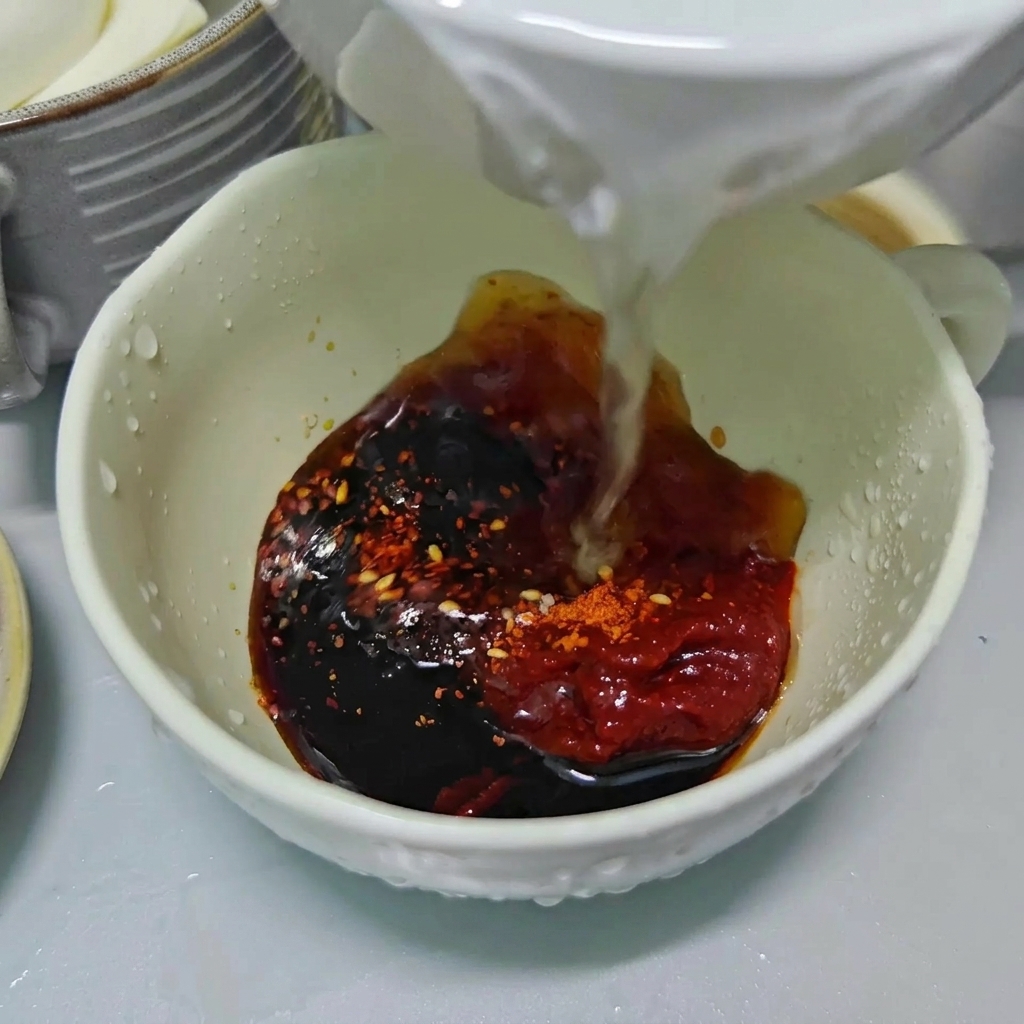
Pour clean water into the bowl containing the soy sauce, Korean chili paste, chili powder, and sugar. Stir thoroughly to completely dissolve the paste and blend all the seasonings into a smooth liquid sauce.
Tip: Pre-mixing the chili paste with water helps it distribute evenly into the soup broth without clumping up during cooking. - 6Sauté the red onions
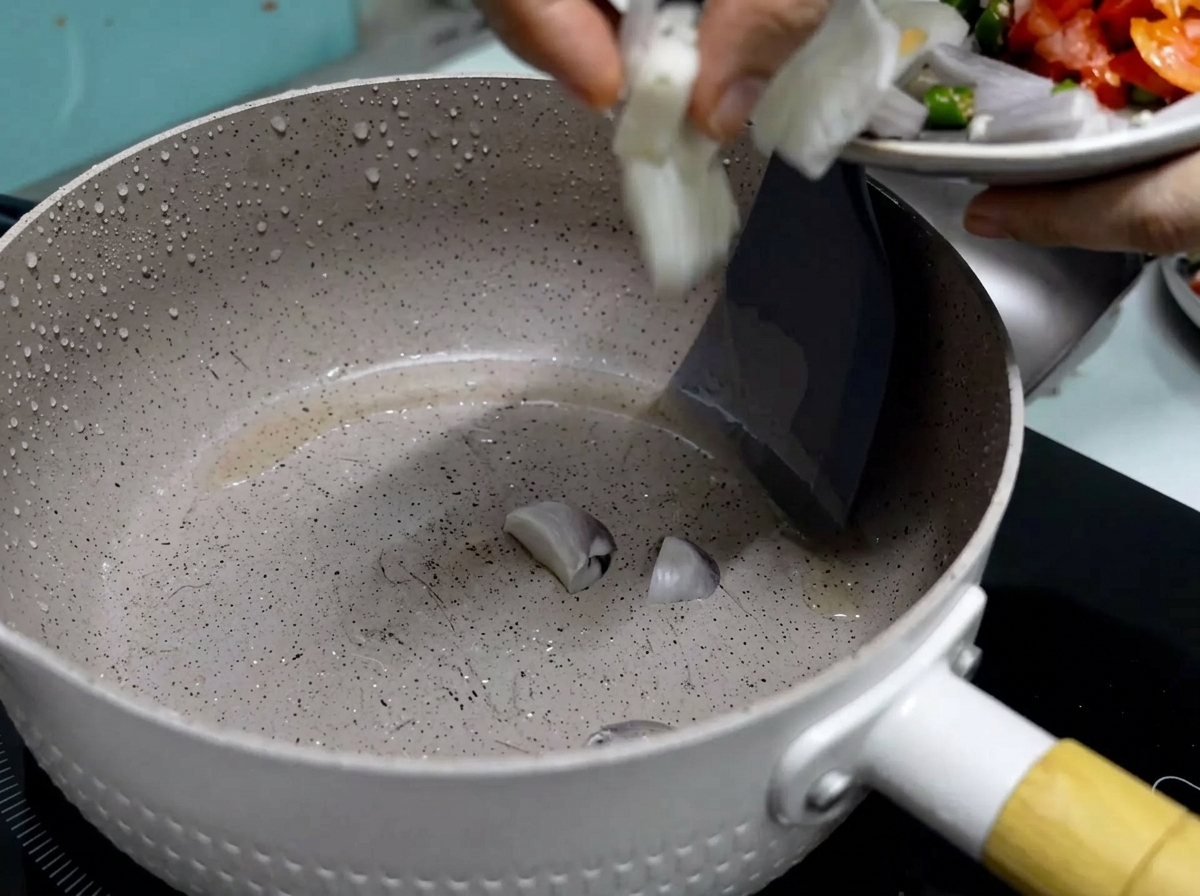
Heat a small amount of cooking oil in a pan over medium heat. Carefully transfer the sliced red onions into the hot pan and sauté them, stirring continuously until they become aromatic and slightly translucent.
Tip: Keep the onions moving around the pan to ensure an even cook and prevent them from burning, which can introduce bitterness. - 7Add sauce to the pan
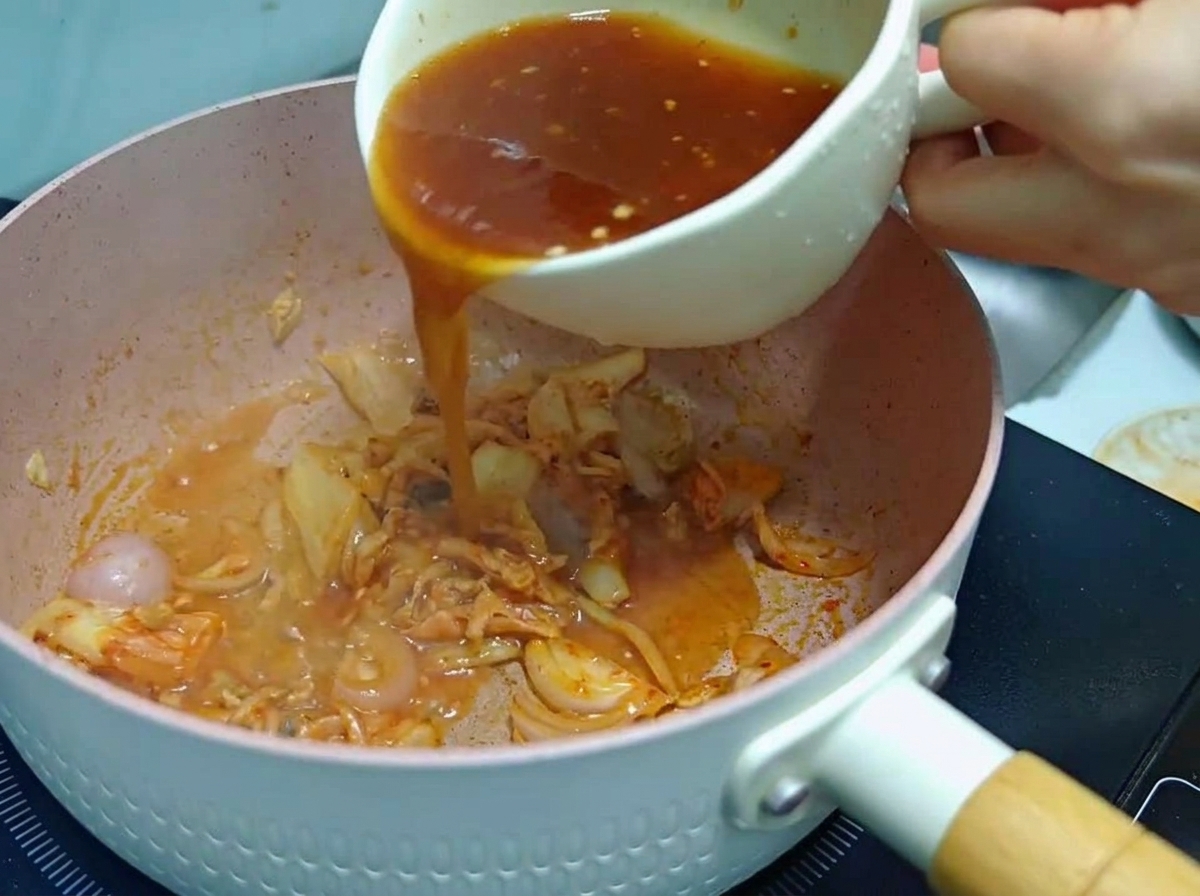
Pour the completely mixed red seasoning sauce directly into the pan over the sautéed red onions and kimchi. Mix well so that the ingredients are thoroughly coated and can begin absorbing the flavors.
Tip: Ensure the kimchi is slightly softened and fragrant before adding the liquid sauce to unlock its full fermented depth. - 8Pour in more water
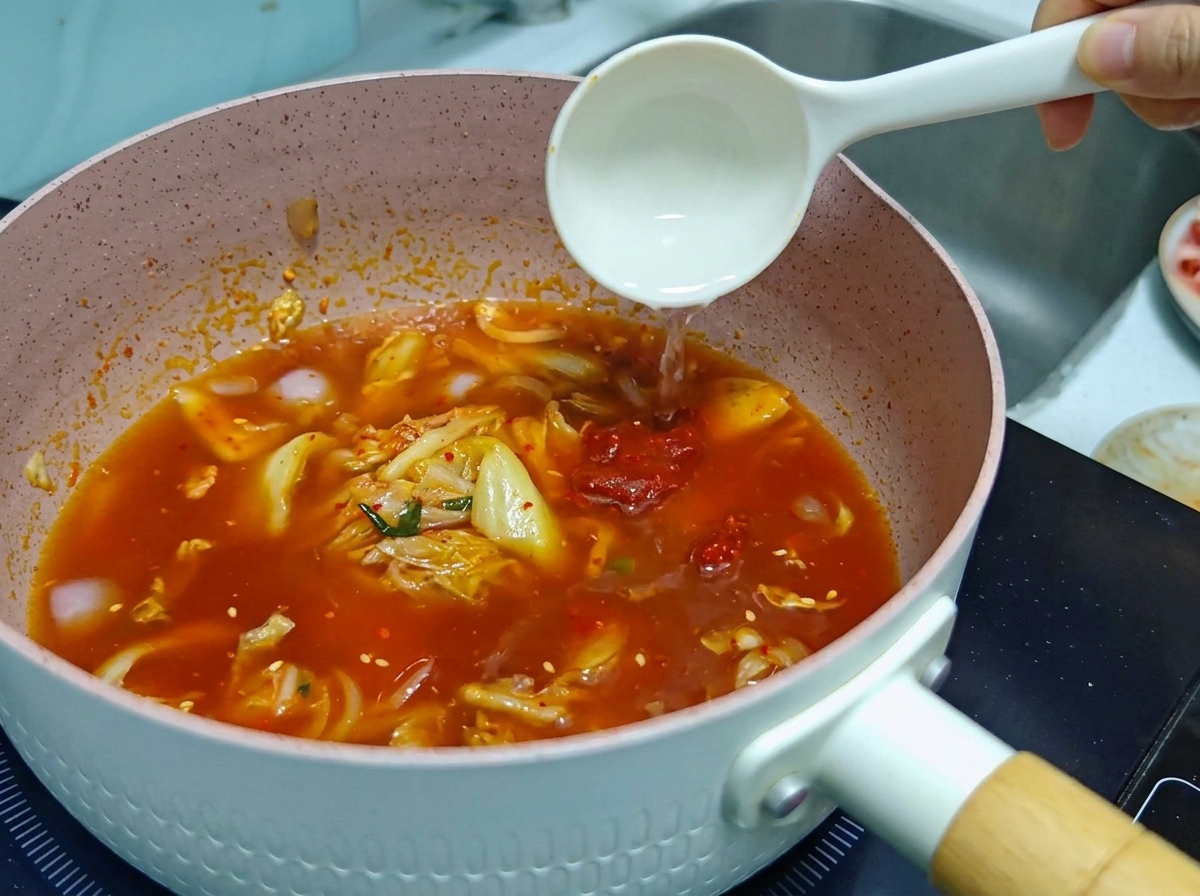
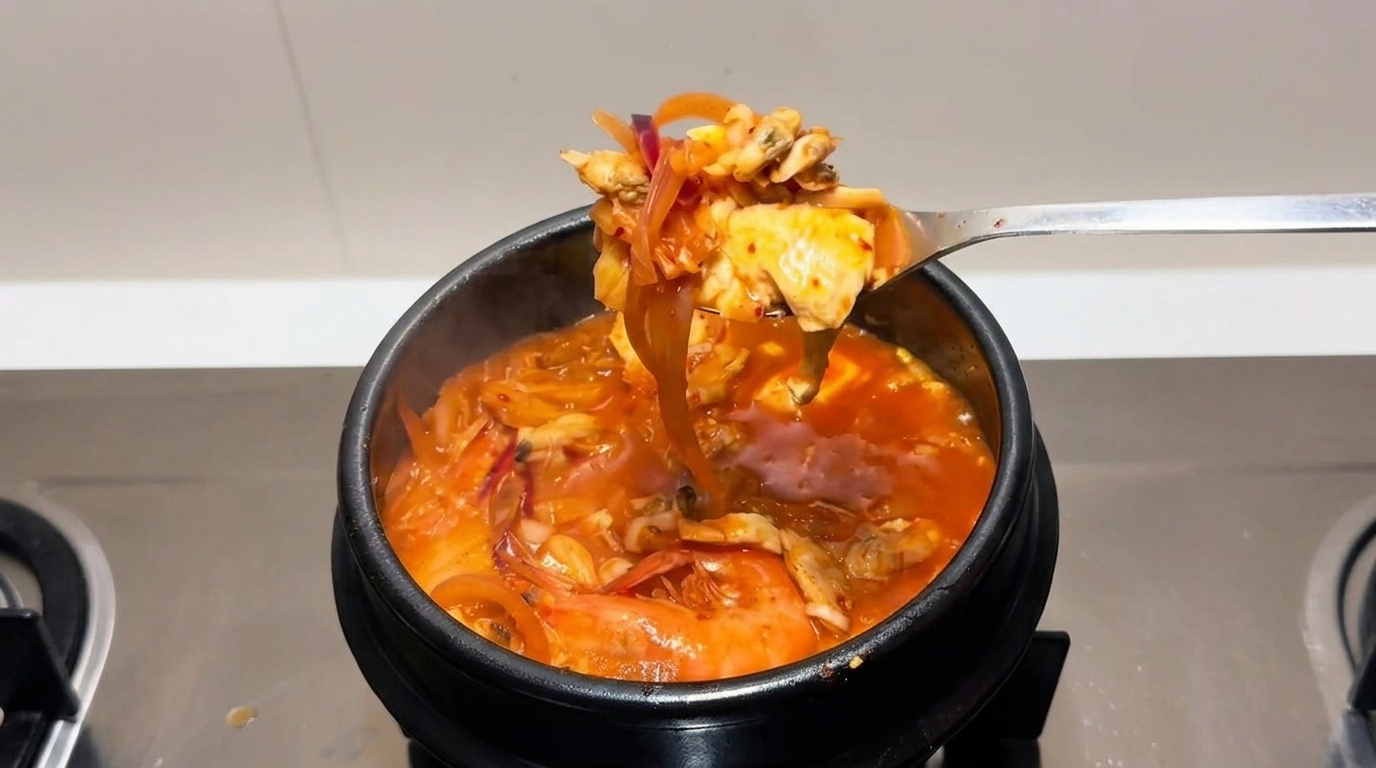
Add another bowl of water using a ladle into the pan with the kimchi and sauce. This extra liquid expands the mixture into a rich, flavorful broth base suitable for boiling the vegetables and tofu.
Tip: You can use dashi stock or bone broth instead of plain water if you prefer an even deeper layer of savory flavor. - 9Add the cabbage leaves
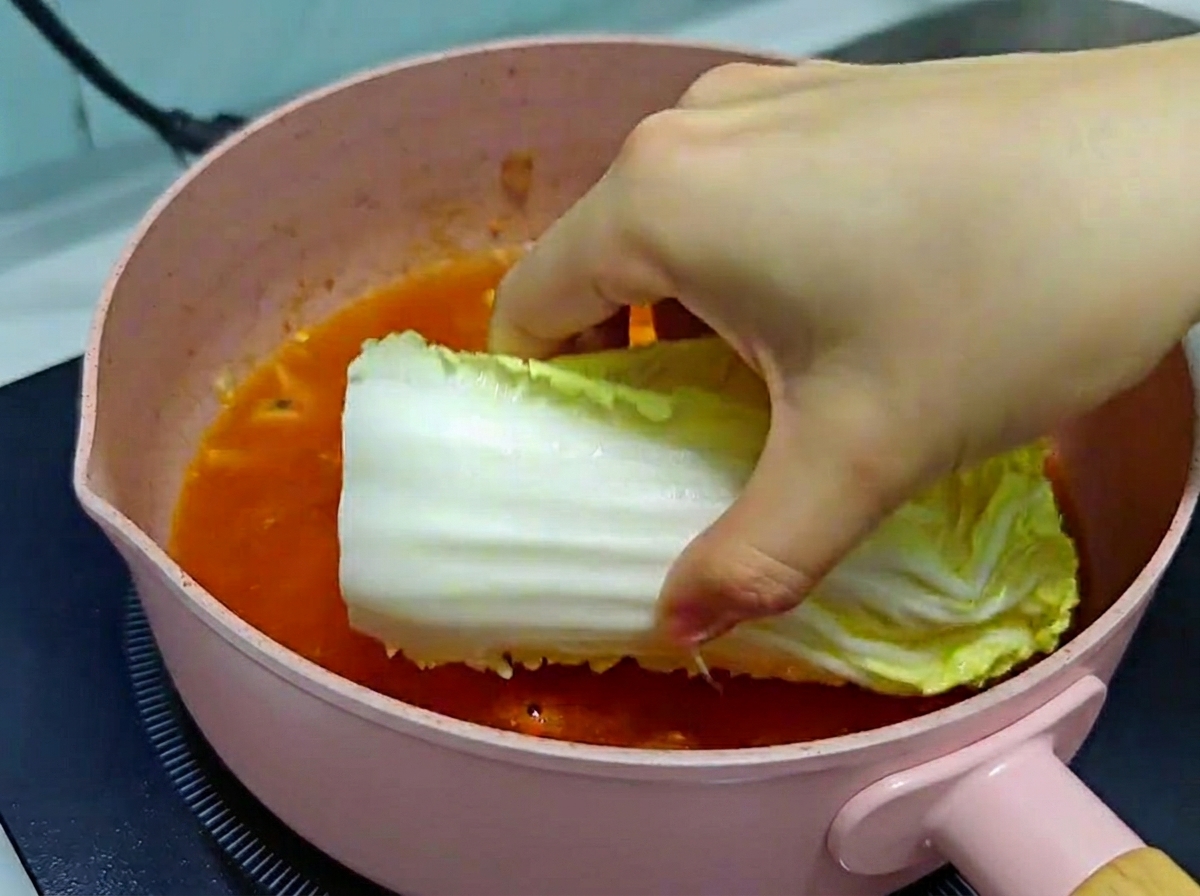
Place the fresh baby napa cabbage leaves into the simmering red broth. Placing them at the bottom allows them to soften and absorb the spicy soup flavors as it cooks.
Tip: Cut or tear the cabbage leaves into bite-sized pieces so they are easier to eat and fit comfortably in the pan. - 10Add the enoki mushrooms
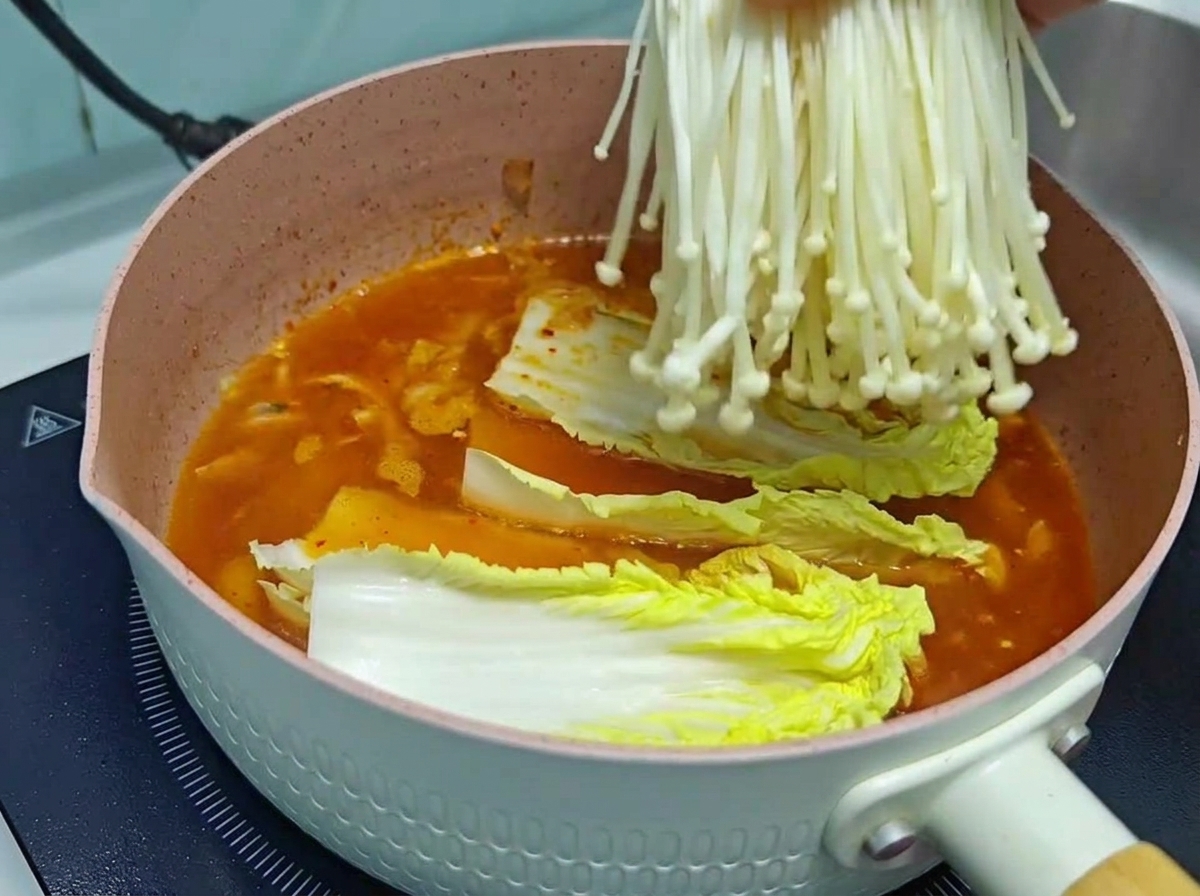
Gently place a fresh bundle of enoki mushrooms into the soup pot alongside the napa cabbage leaves. Arrange them neatly to form a clean, organized base at the bottom of the pot before adding the proteins.
Tip: Be sure to trim off the woody bottom roots of the enoki mushrooms and lightly separate the strands so they cook evenly and absorb the savory kimchi broth perfectly. - 11Add the tofu blocks
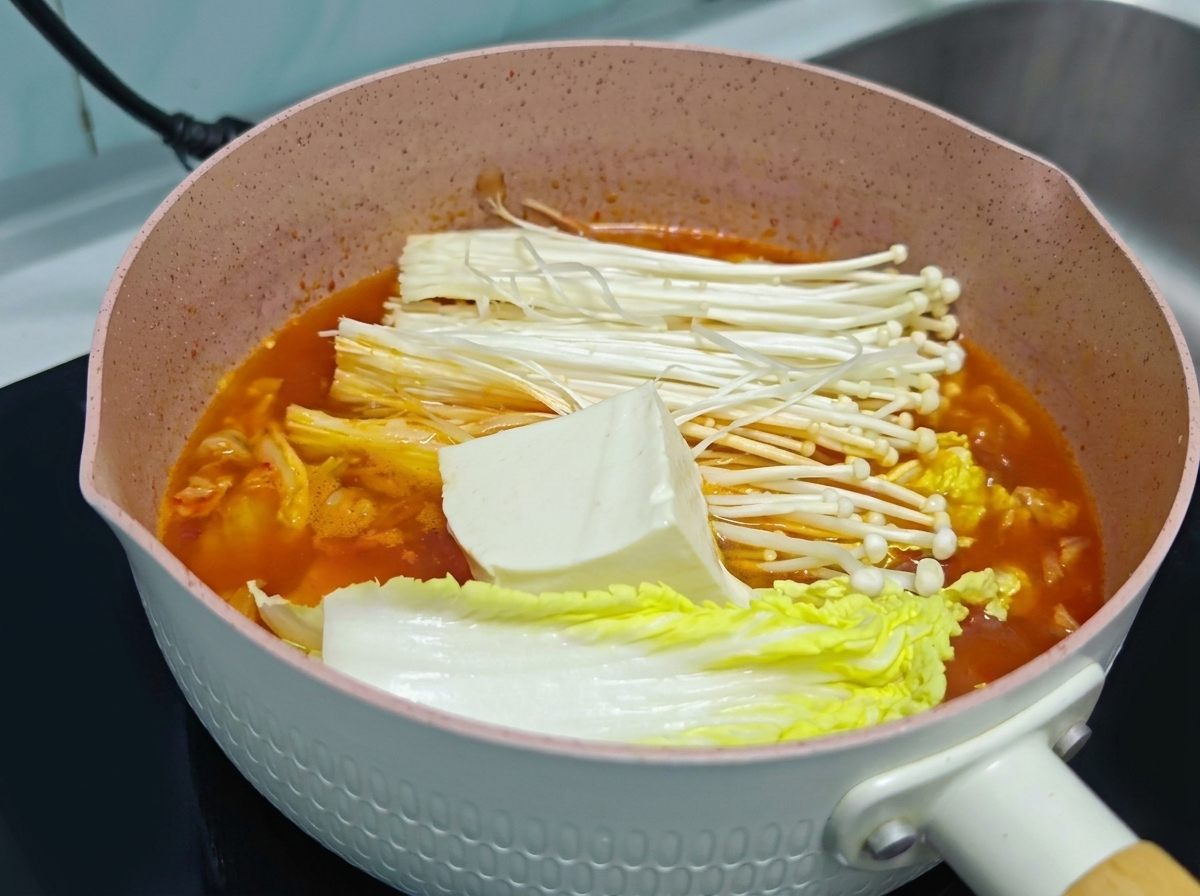
Carefully place the large blocks of sliced raw white tofu into the bubbling soup broth, arranging them gently over the layered cabbage and enoki mushrooms.
Tip: Handle the tofu blocks with care to prevent them from breaking apart as you add them to the delicate broth. - 12Add the raw beef rolls
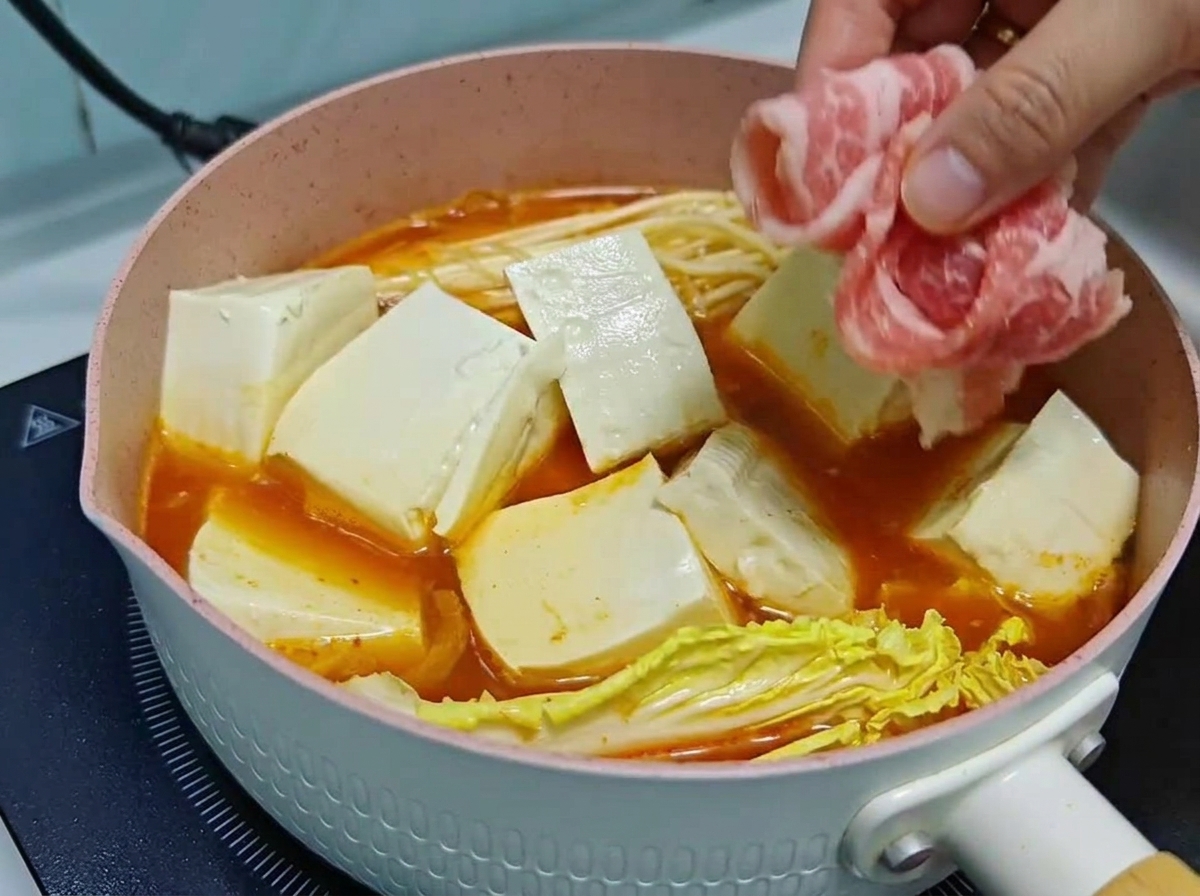
Place the raw beef rolls neatly on top of the tofu blocks and other ingredients in the pot, distributing them evenly across the surface.
Tip: Spacing out the beef rolls ensures they cook evenly and absorb the savory flavors of the broth uniformly. - 13Cover and simmer
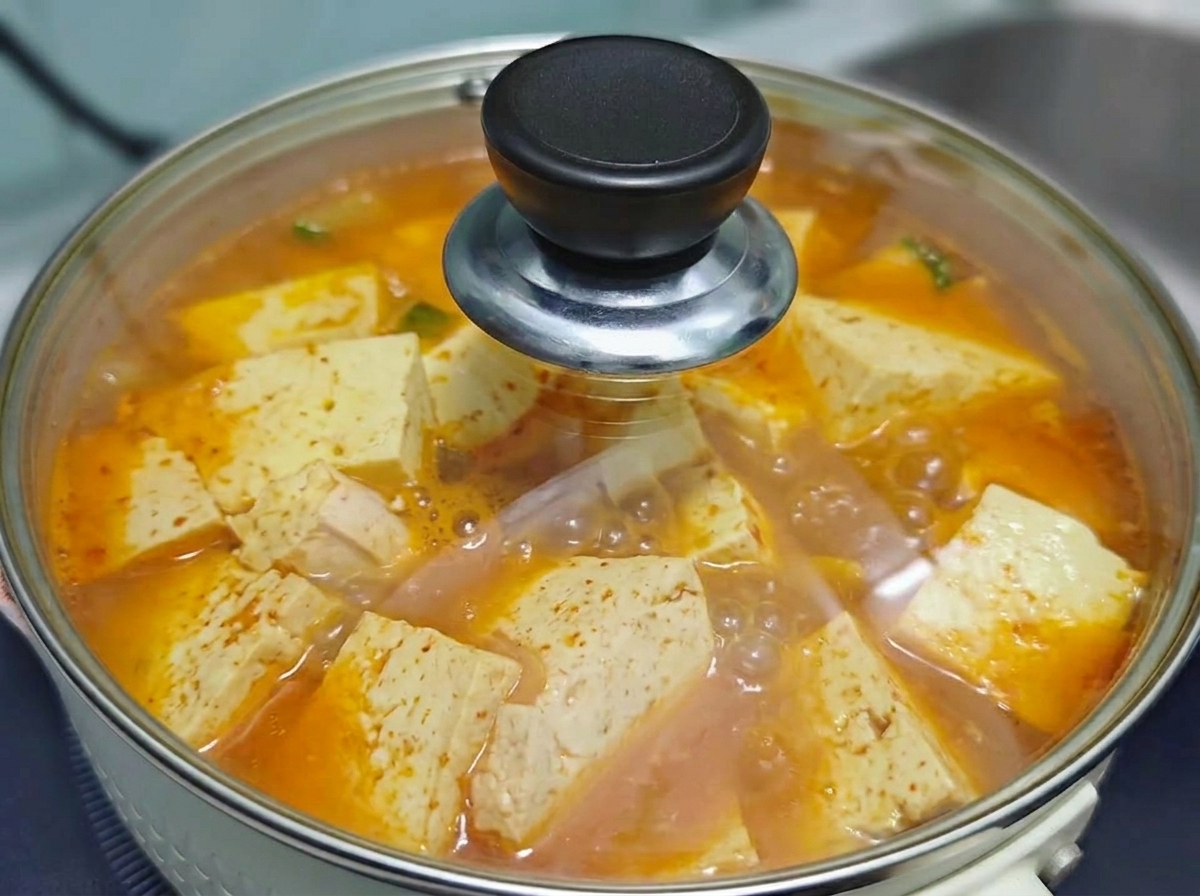
Cover the pot with a glass lid to let all the ingredients simmer together. Allow it to cook until the beef completely changes color, then let it bubble for one more minute before serving.
Tip: The clear glass lid allows you to monitor the beefs color change without lifting it and releasing valuable steam.