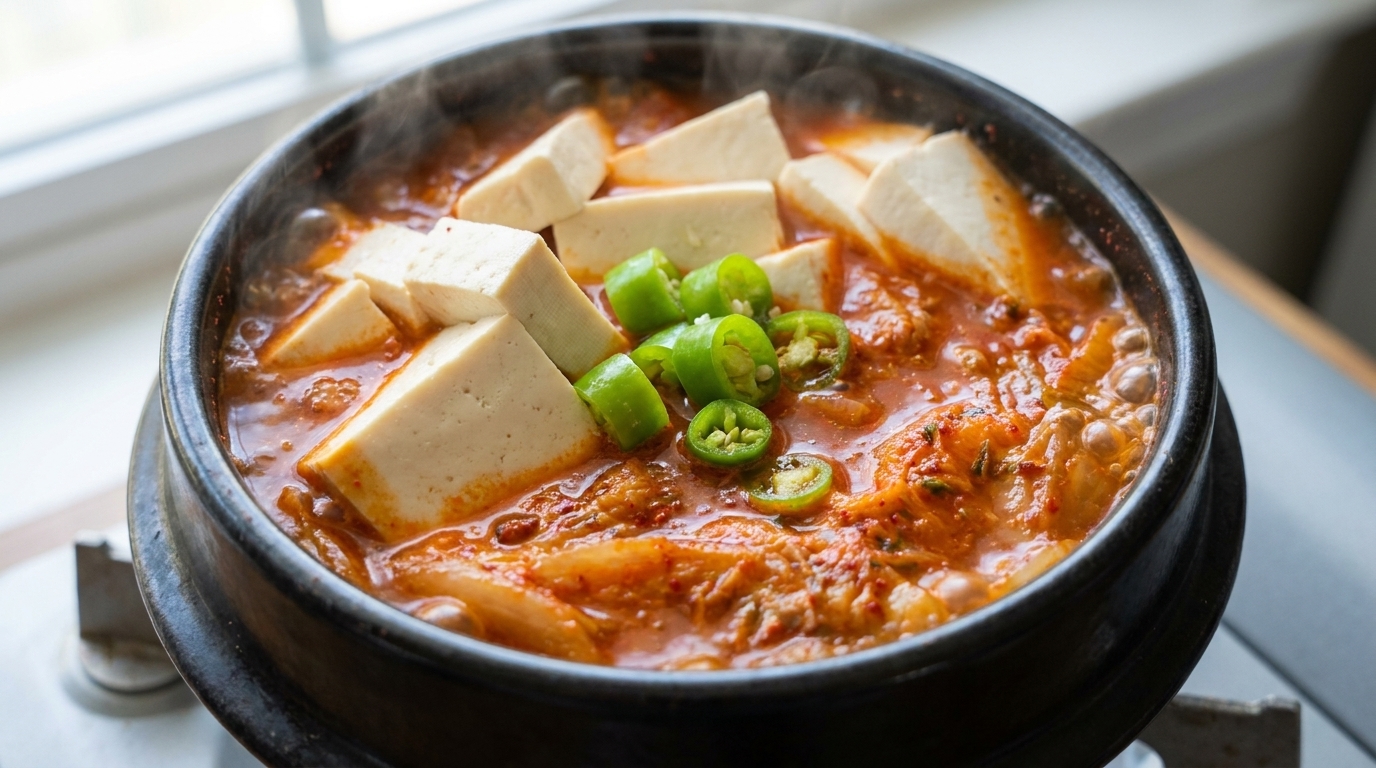
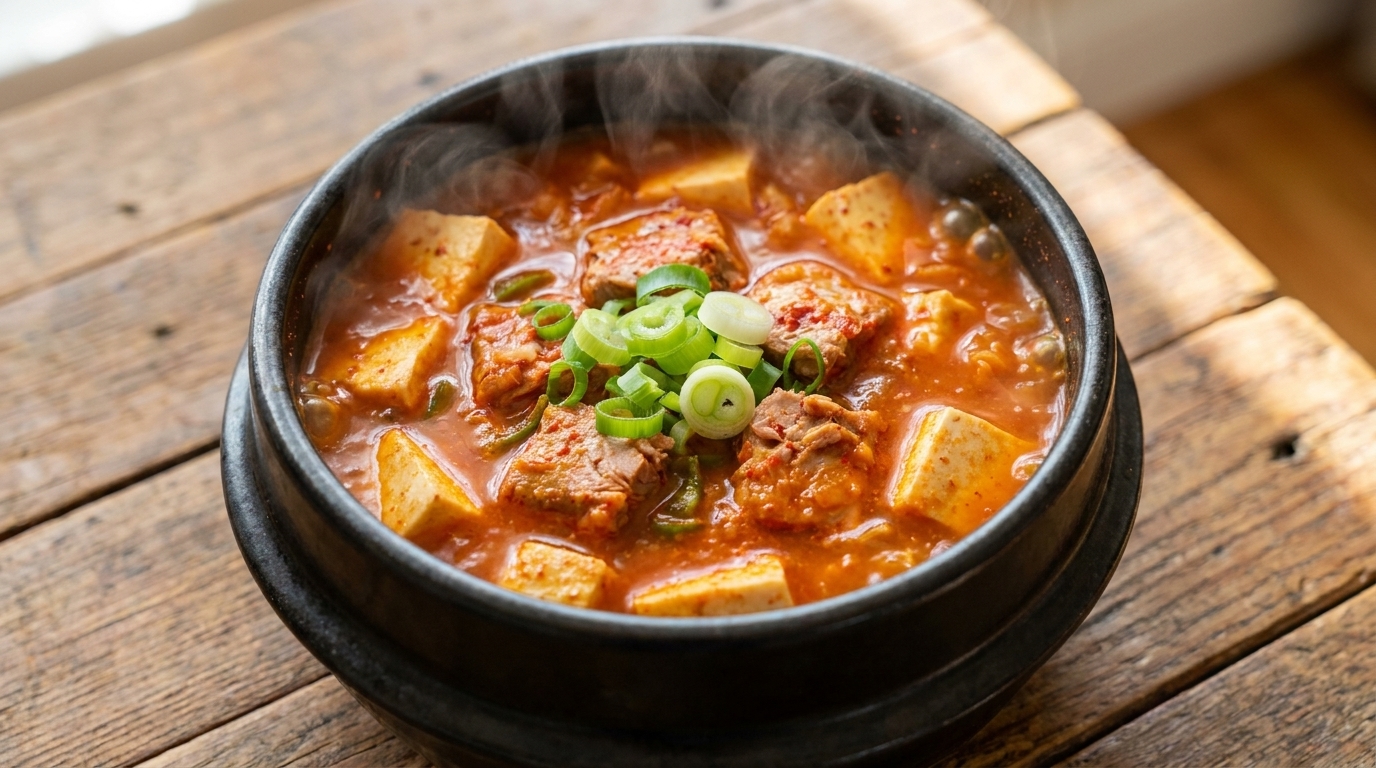
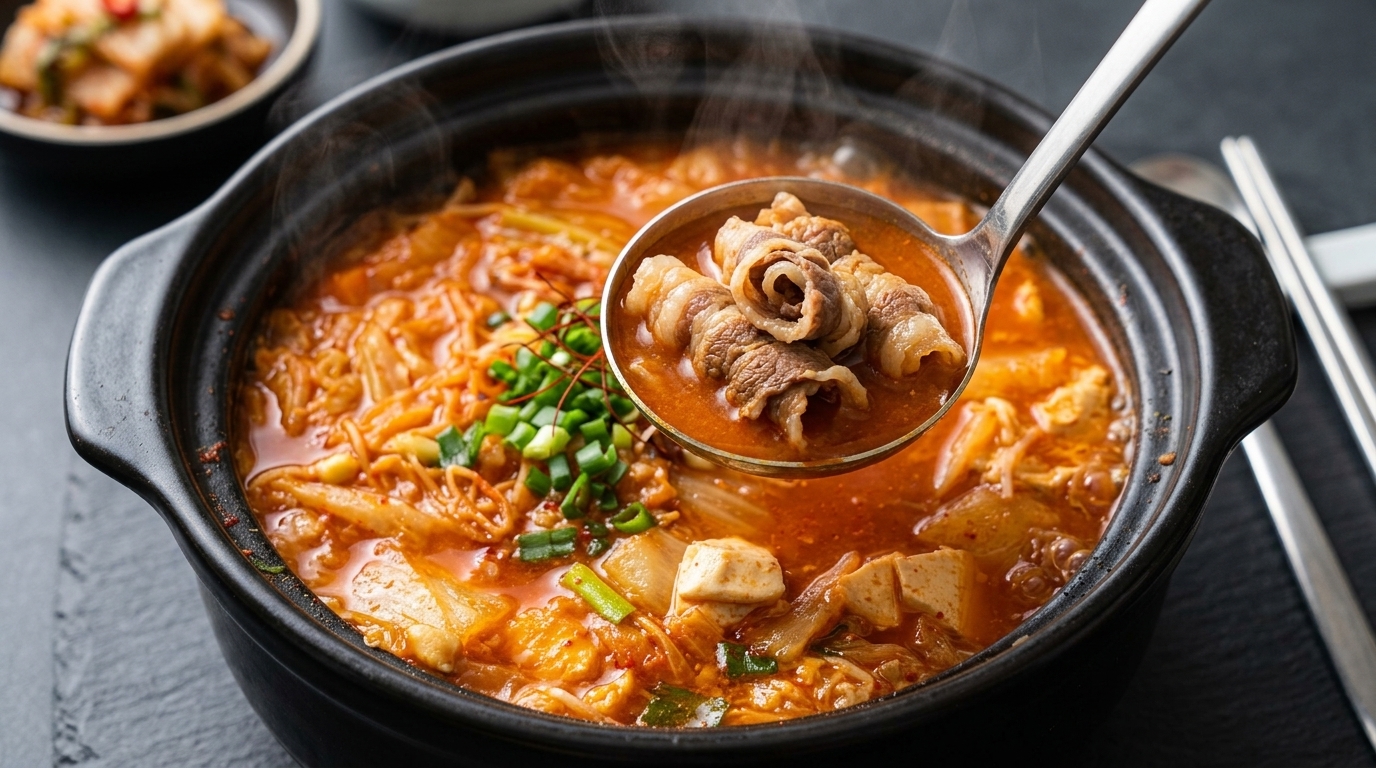
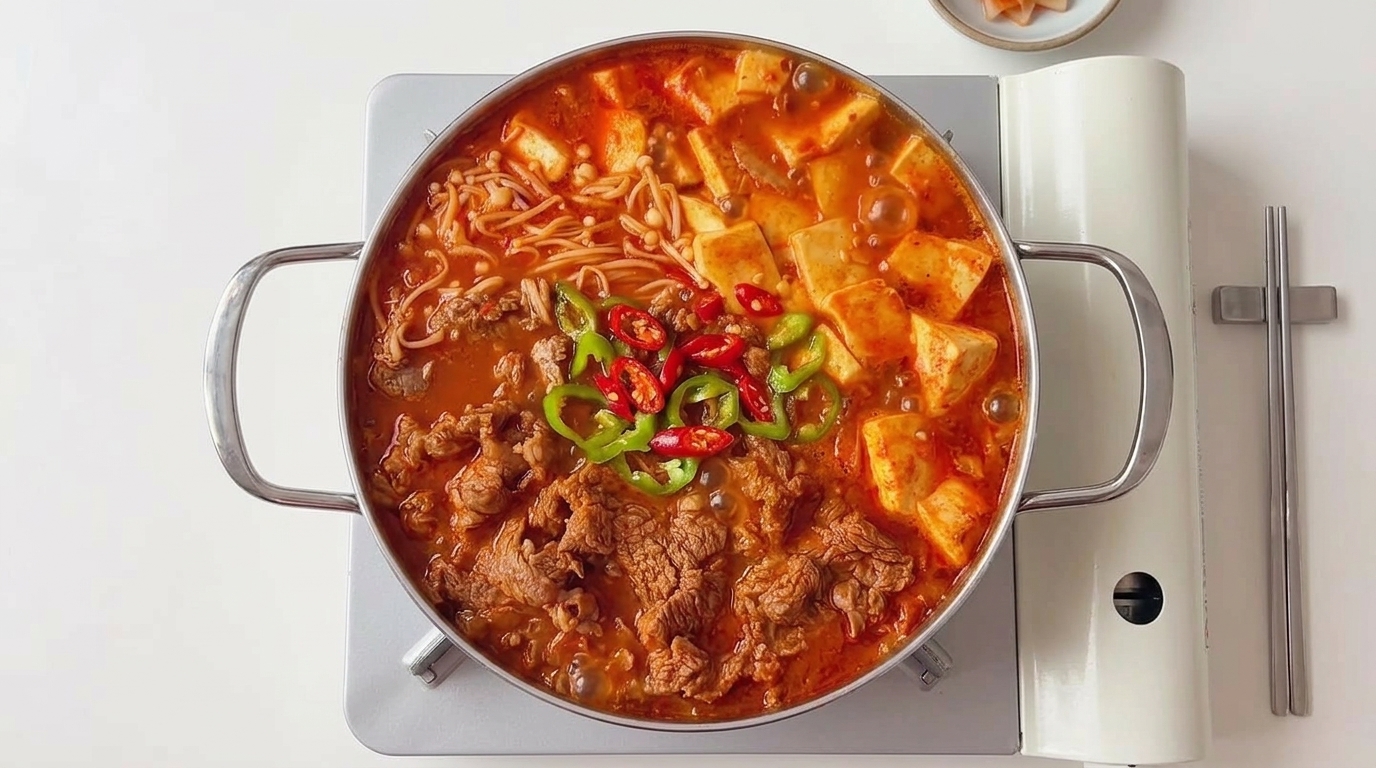
Authentic Kimchi Pork Soup (Kimchi-jjigae)
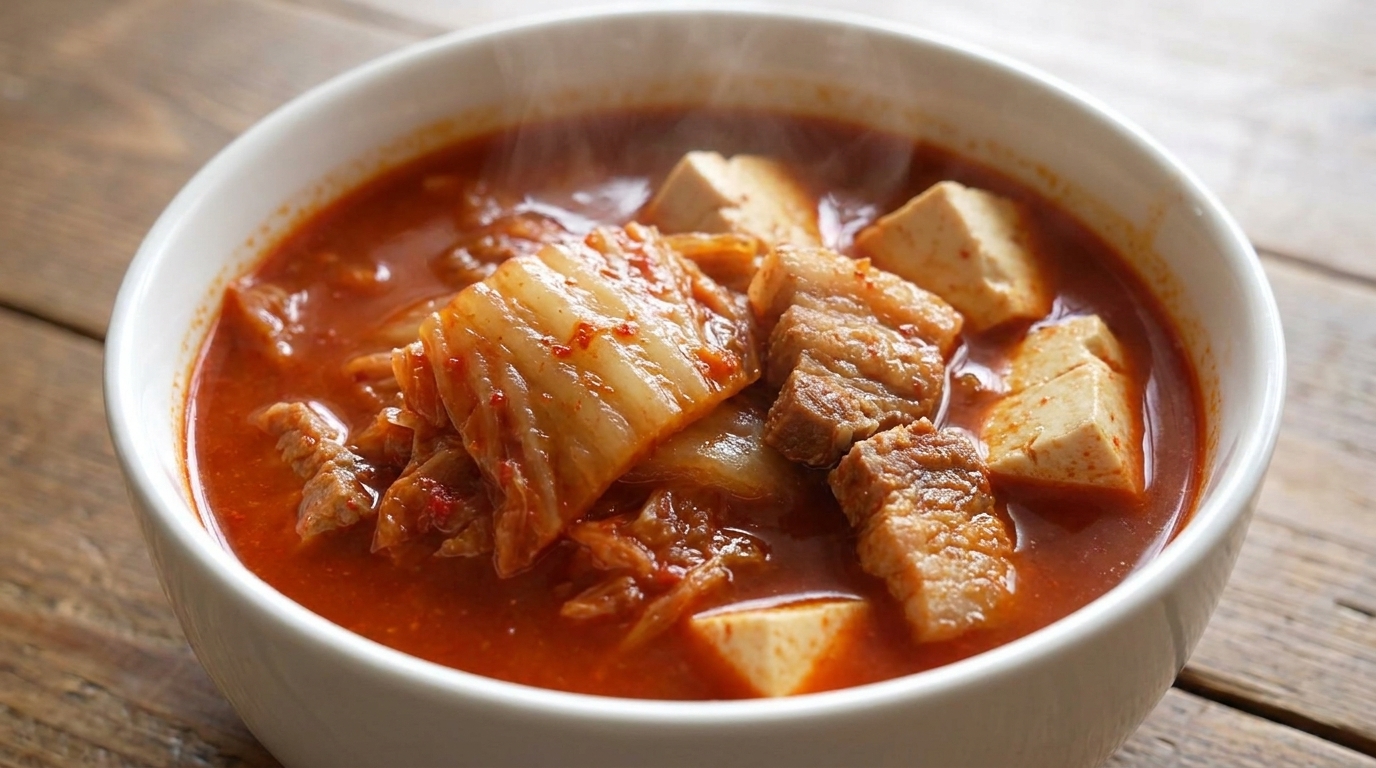
A deeply savory and spicy Korean classic featuring caramelized pork belly, aged kimchi, and soft tofu simmered into a rich, comforting broth.
Kimchi-jjigae is a cornerstone of Korean home cooking, traditionally prized for its resourceful use of muk-eun-ji or well-fermented cabbage. While historically made with humble ingredients like bean sprouts, modern versions are often enriched with fatty pork belly to create a luxurious, umami-packed depth that defines comfort in every bowl.
Ingredients
- 400 g pork belly (thickly sliced)
- 2 cups aged kimchi (chopped)
- 1 tbsp sesame oil
- 500 ml water or rice water
- 100 g fish cakes (sliced)
- 200 g soft tofu
- 3 shiitake mushrooms (sliced)
- 2 stalks green onions
- to taste kimchi juice
Instructions
- 1Sear the pork belly
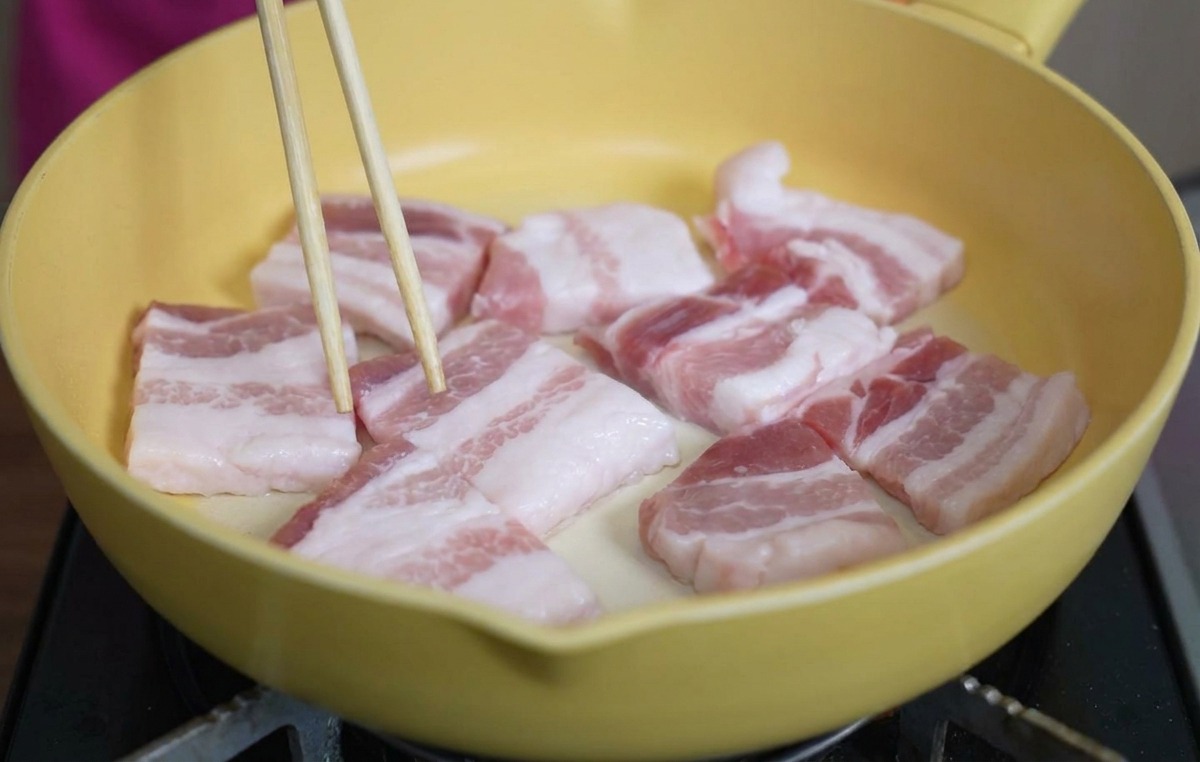
Cut the pork belly into thick, bite-sized slices and place them in a preheated frying pan. Arrange the pieces in a single layer so they cook evenly. There is no need to add oil initially, as the pork will render its own fat as it heats up.
Tip: Start with a medium-low heat to render more fat slowly, which creates a richer base for the stew. - 2Brown the pork
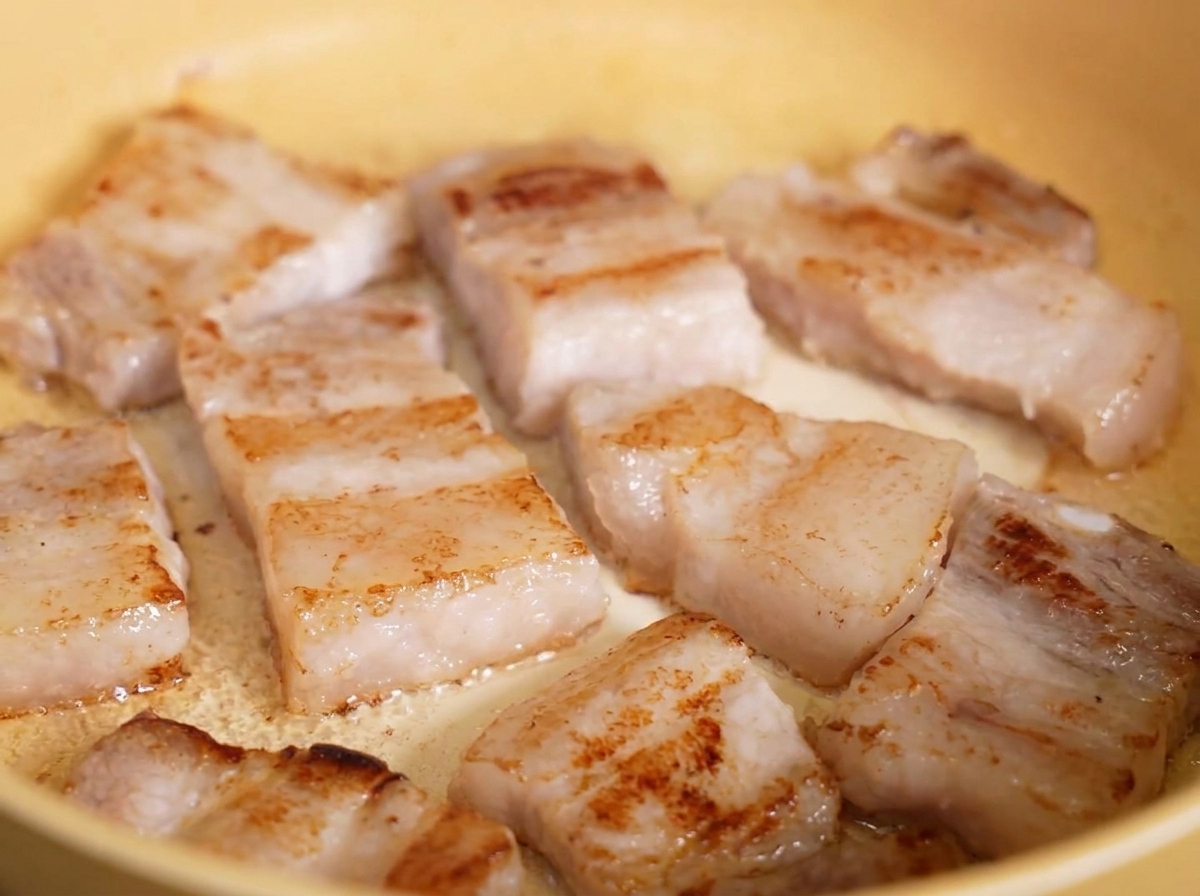
Fry the pork belly over medium heat until both sides are golden brown and the edges become crispy. This rendering process creates a flavorful base for the soup and ensures the meat has a pleasant, firm texture that remains intact when boiled.
Tip: Allow enough time for this step because the caramelization on the meat provides deep umami flavor to the final dish. - 3Transfer the fried pork belly
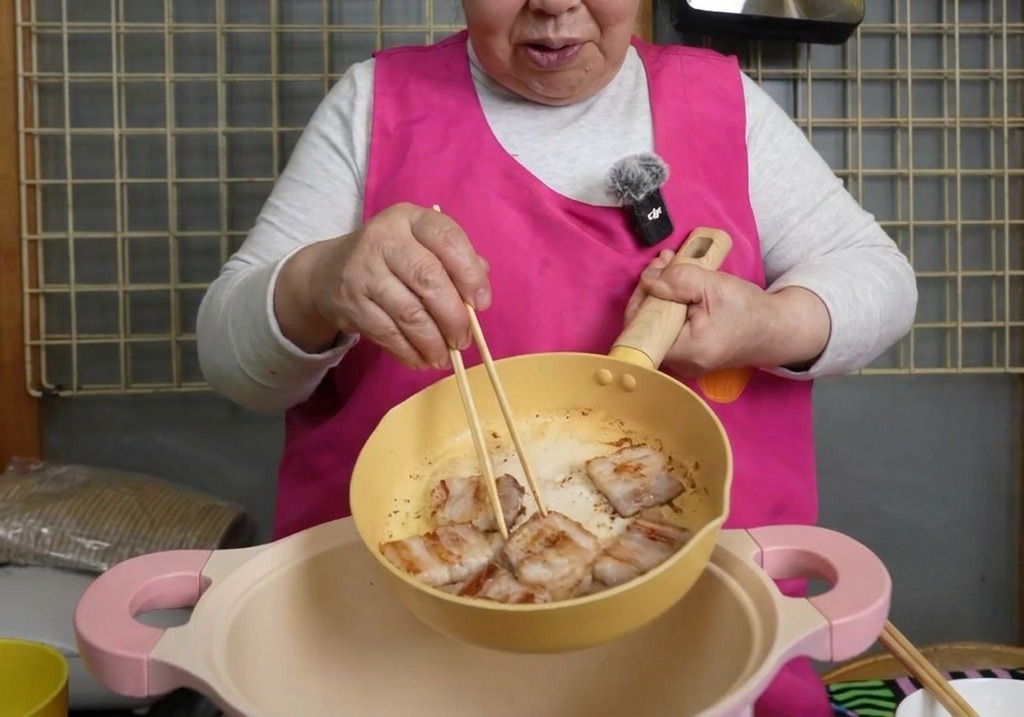
Once the pork belly pieces have been fried until golden and crispy, carefully transfer them from the frying pan into a larger soup pot. This rendered pork will serve as the rich, savory foundation for the kimchi soup broth.
Tip: Save the fat left in the frying pan to sauté the kimchi for even more depth of flavor. - 4Add sesame oil
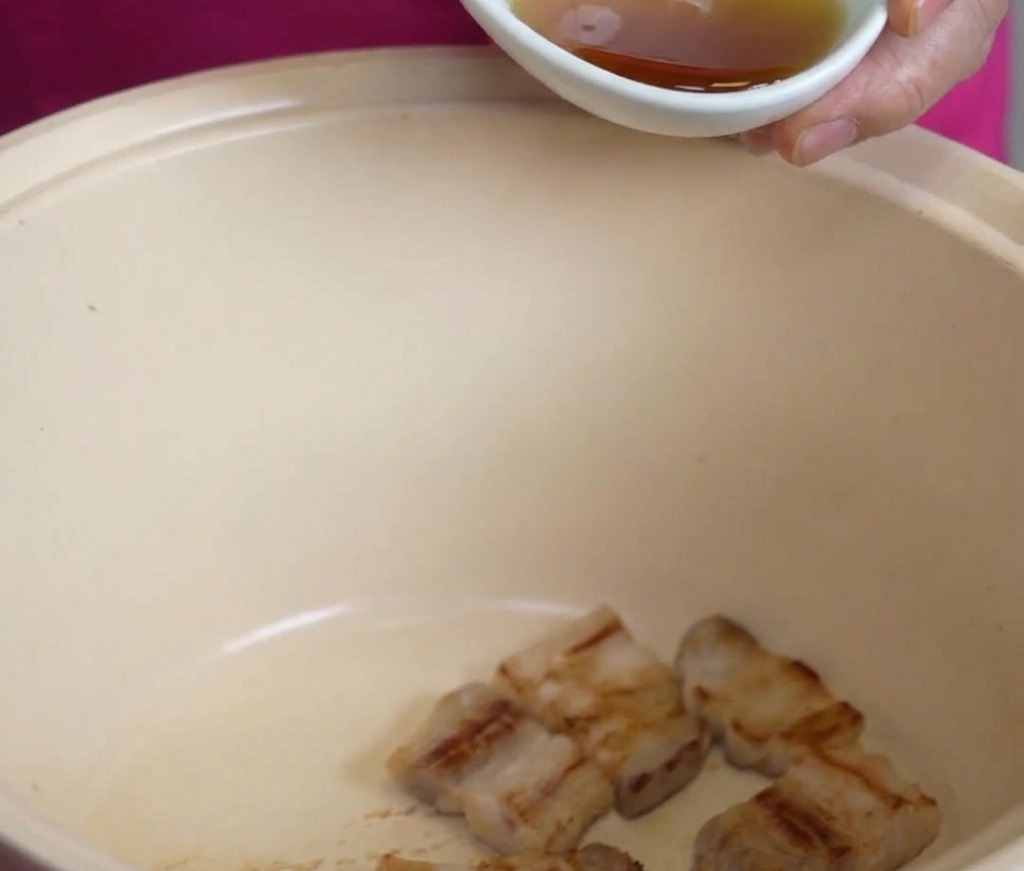
Drizzle sesame oil over the browned pork belly in the pot. The oil adds a distinct nutty aroma and helps lubricate the ingredients for the next stage of stir-frying with the kimchi.
Tip: Use toasted sesame oil for the most intense fragrance, and keep the heat low to prevent smoking. - 5Incorporate the kimchi
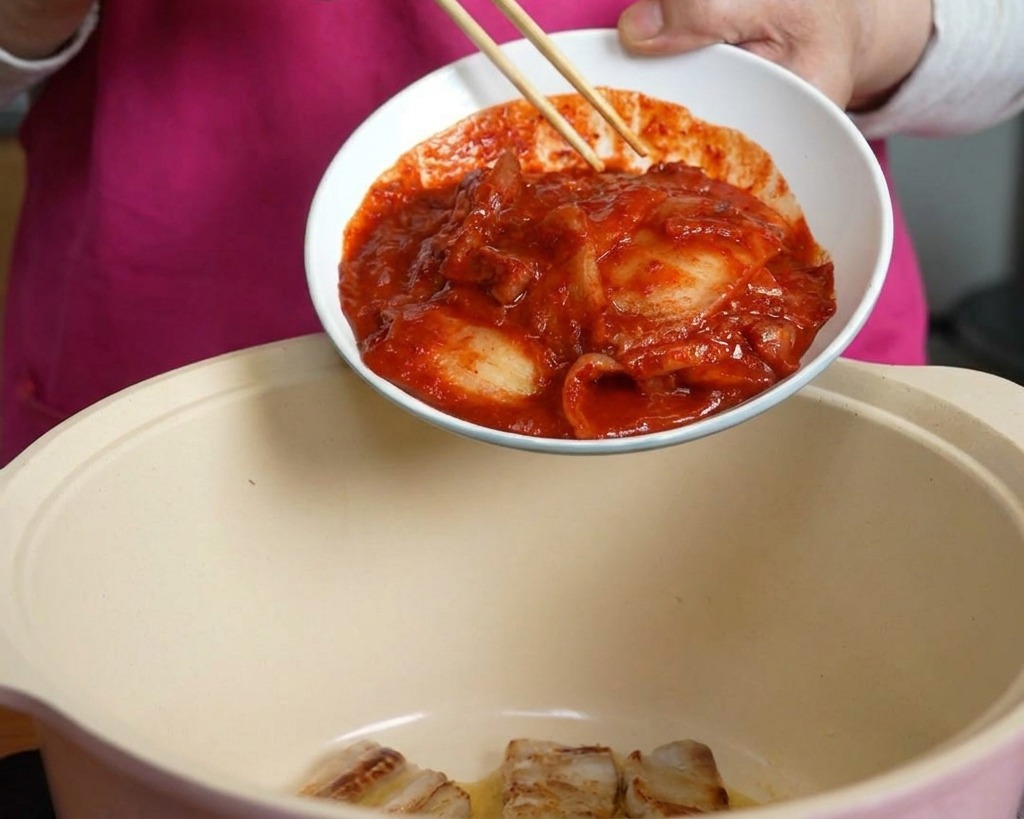
Add a generous portion of well-fermented red kimchi to the pot with the pork belly. For the best results, use muk-eun-ji or aged kimchi as its sharp acidity and deep fermentation provide the signature tangy flavor of the soup.
Tip: If your kimchi is too fresh, you can add a splash of vinegar or a pinch of sugar to balance the flavors. - 6Stir-fry the base
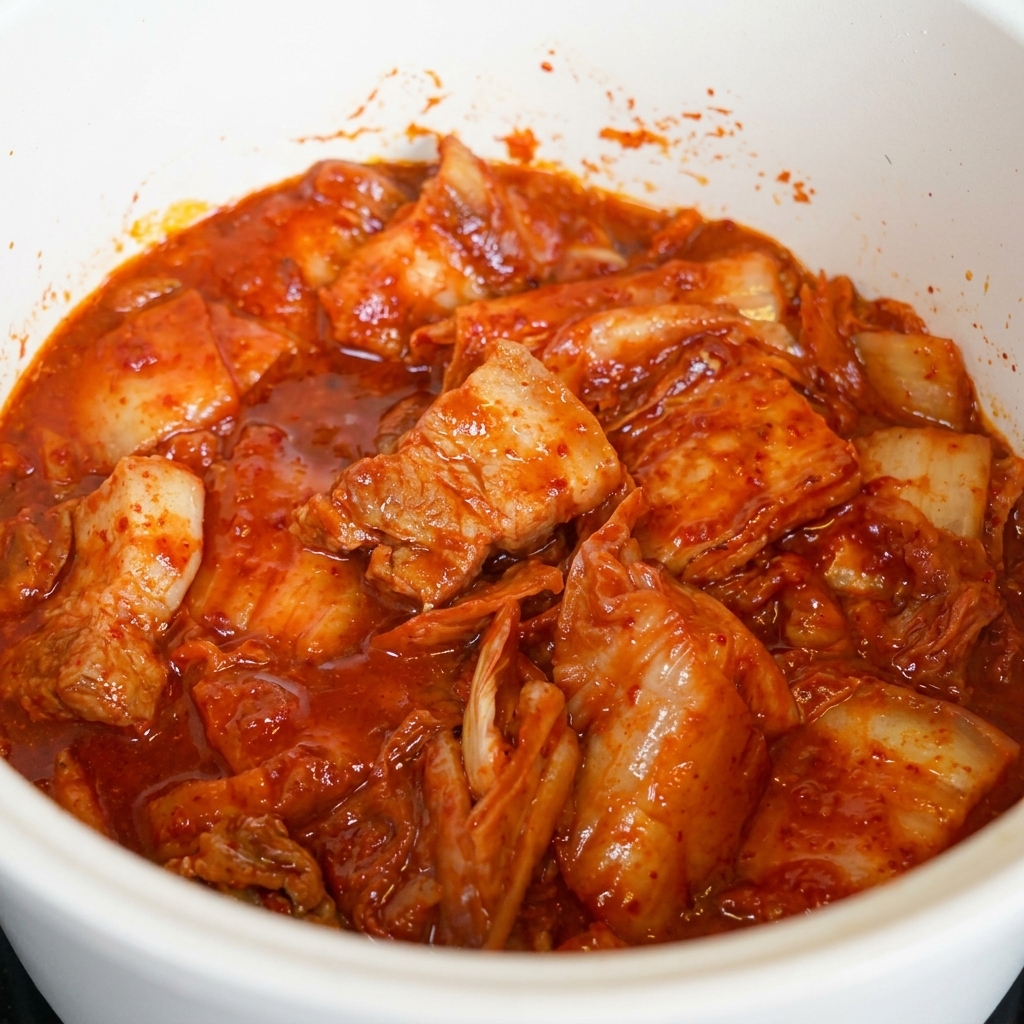
Stir-fry the kimchi and pork belly together over medium heat for several minutes. This allows the pork to absorb the spicy flavors of the kimchi juice and softens the cabbage texture before any water is added.
Tip: Stir-fry until the kimchi looks slightly translucent; this step is crucial for developing the soups complexity. - 7Add water to the base

Pour fresh water into the pot containing the pork belly and sautéed kimchi. The water combines with the juices from the meat and the spices from the kimchi to create a vibrant and aromatic soup base.
Tip: If you have it on hand, using rice water or a simple anchovy stock instead of plain water will add an extra layer of umami to the final dish. - 8Incorporate fish cakes
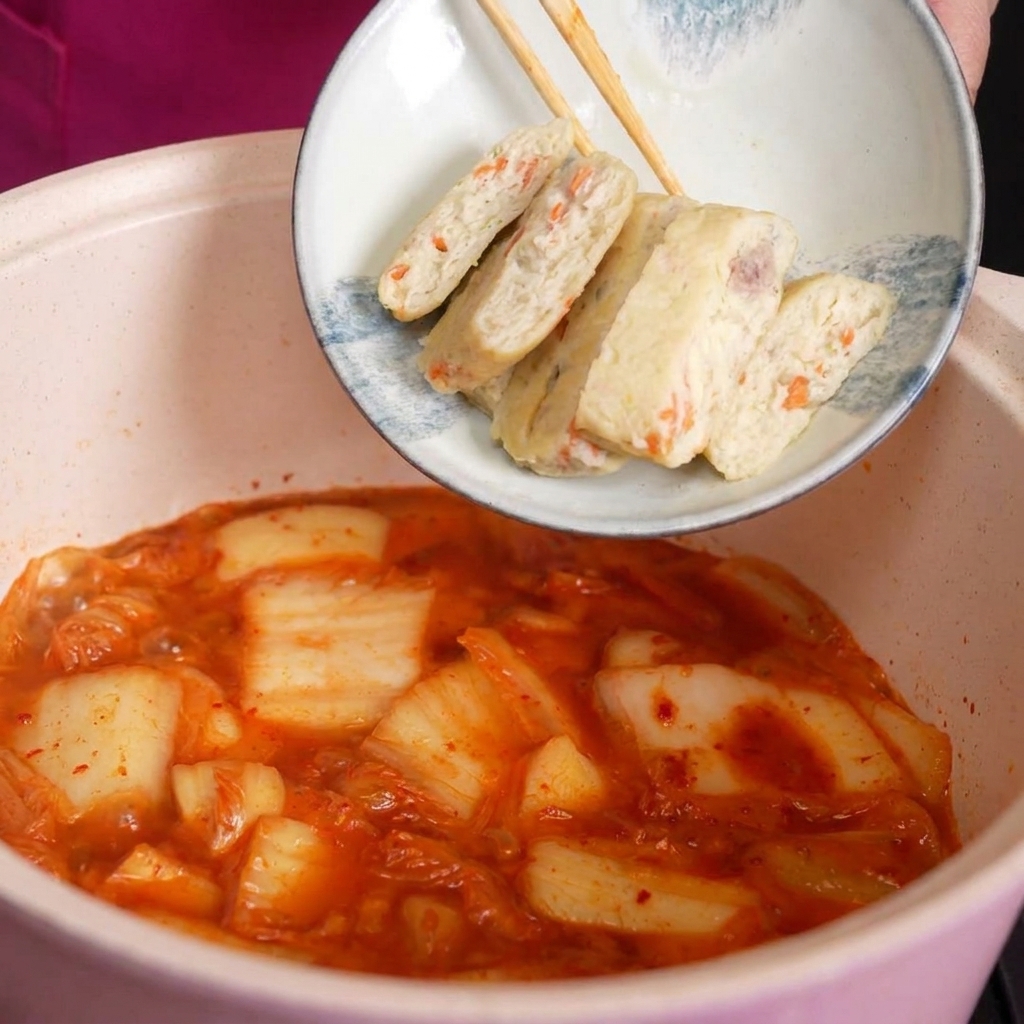
Add several slices of prepared fish cakes into the simmering soup. These fish cakes introduce a pleasant, chewy texture and a mild sweetness that perfectly complements the acidity of the fermented kimchi.
Tip: You can use various shapes of fish cakes, such as square sheets or tubular ones, depending on your texture preference. - 9Add the soft tofu
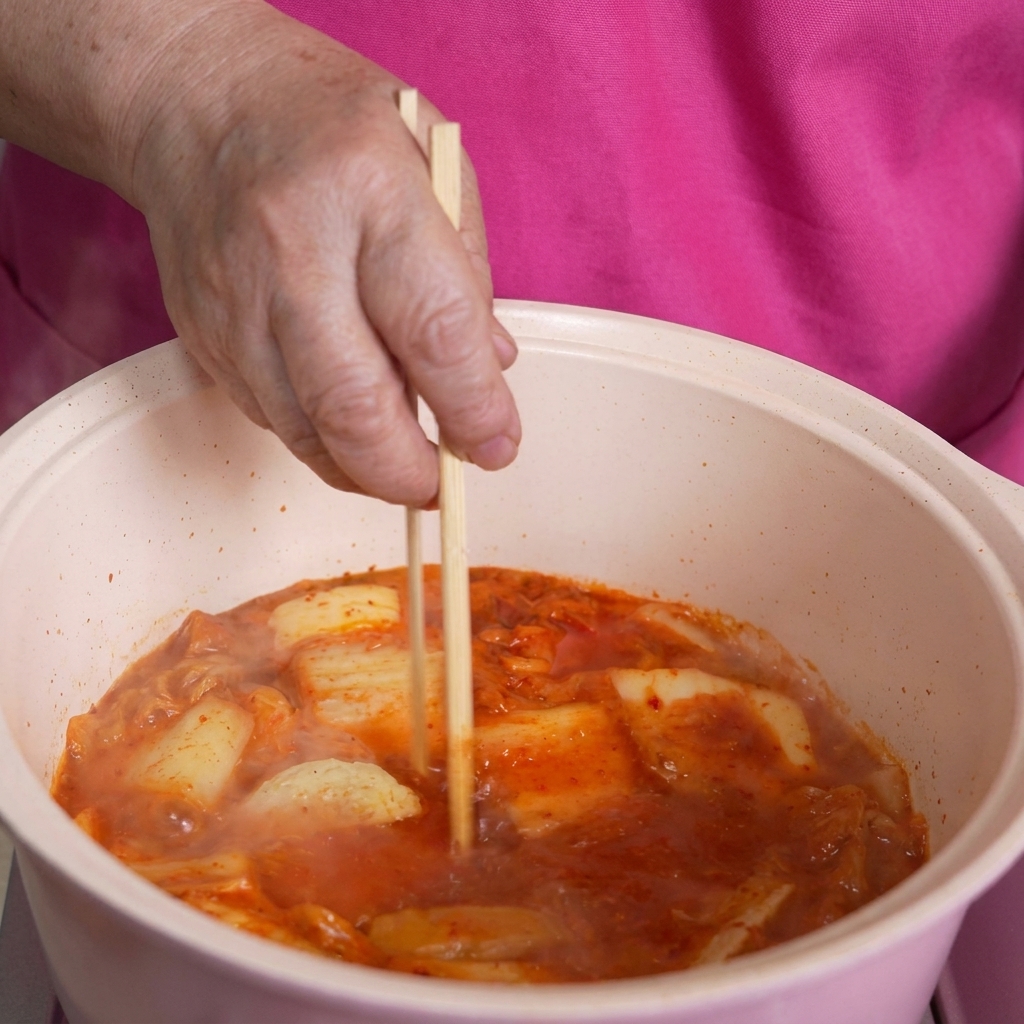
Place round slices of soft white tofu into the pot. The tofu will soak up the spicy broth, becoming tender and flavorful, while providing a silky contrast to the other ingredients in the soup.
Tip: Avoid over-stirring once the tofu is in the pot to prevent the delicate slices from breaking apart.