Savory Tuna Kimchi Stew (Chamchi Kimchi-jjigae)
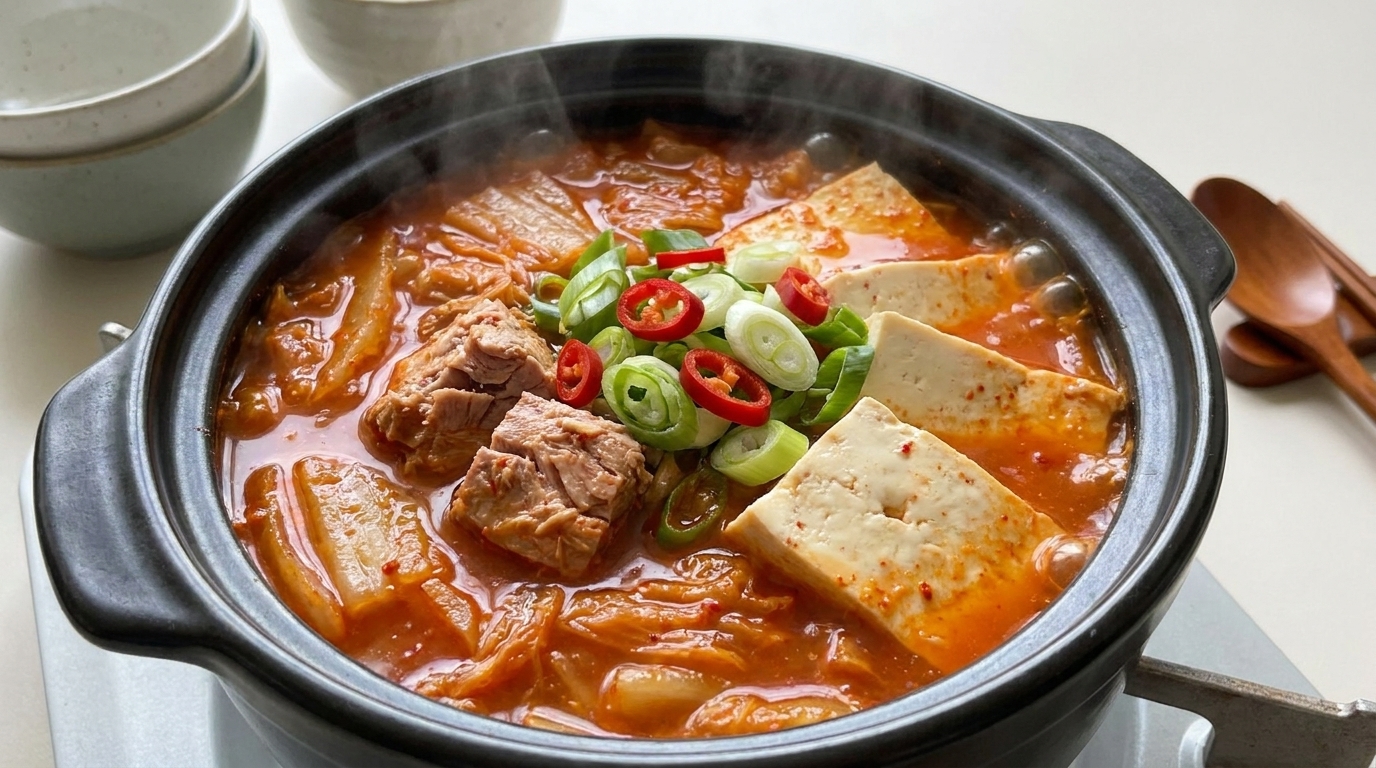
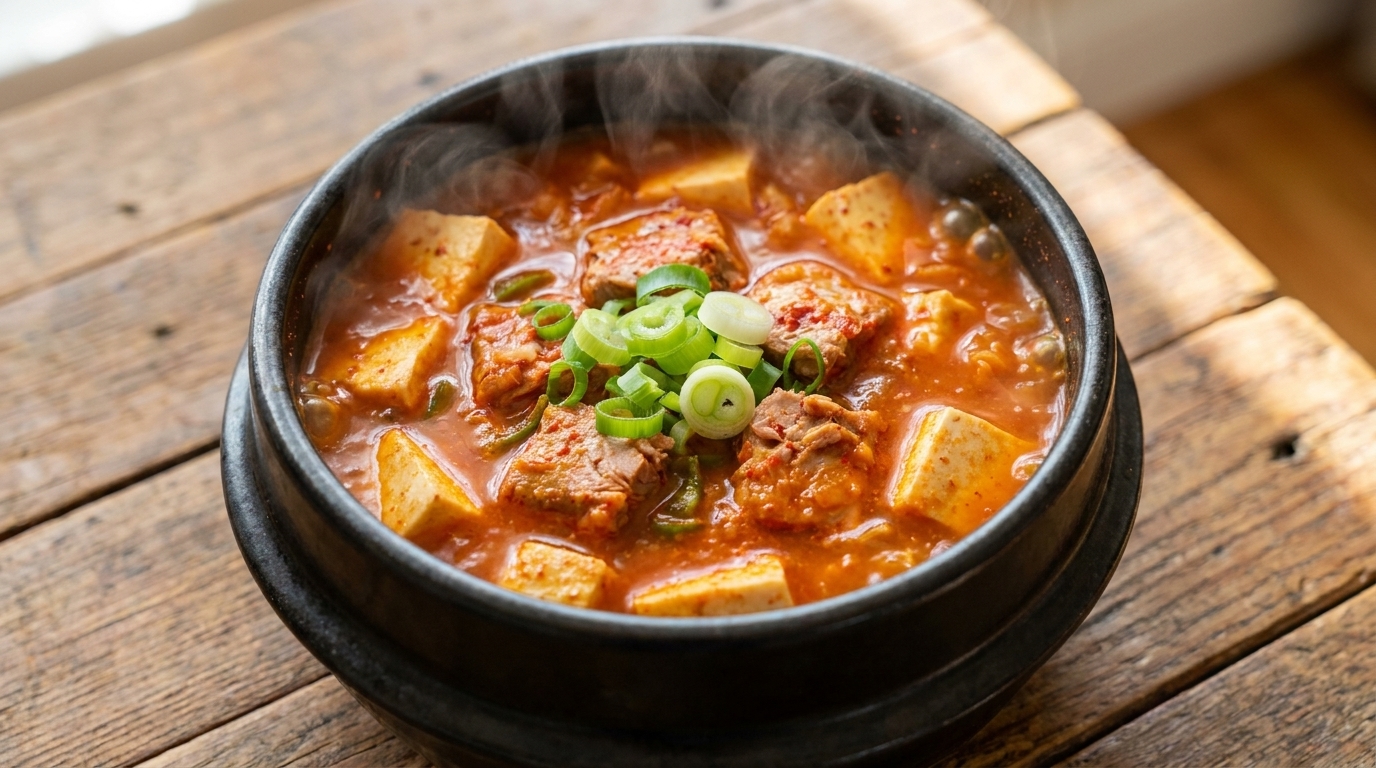
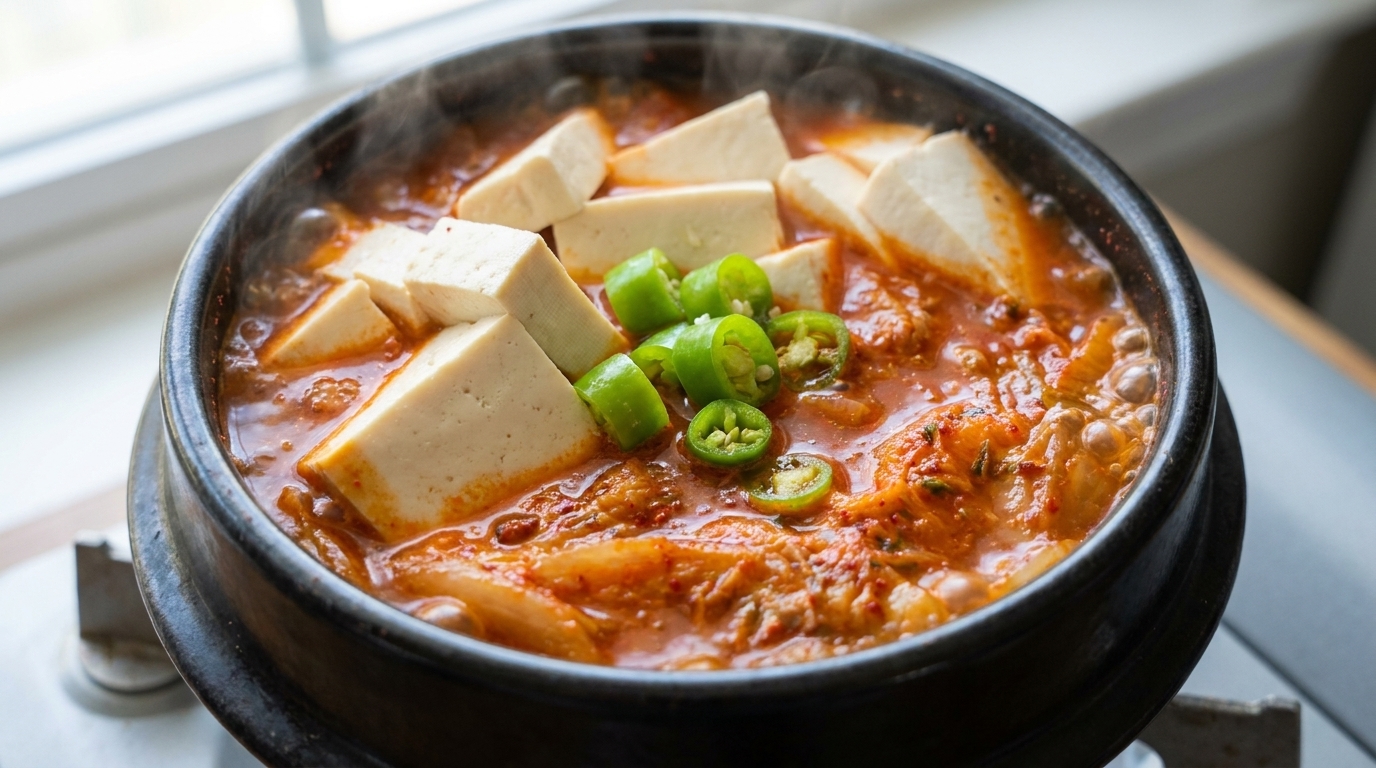
A pantry-friendly twist on a Korean staple, this Tuna Kimchi Stew uses savory canned tuna and aged kimchi to create a deeply flavorful, spicy one-pot meal.
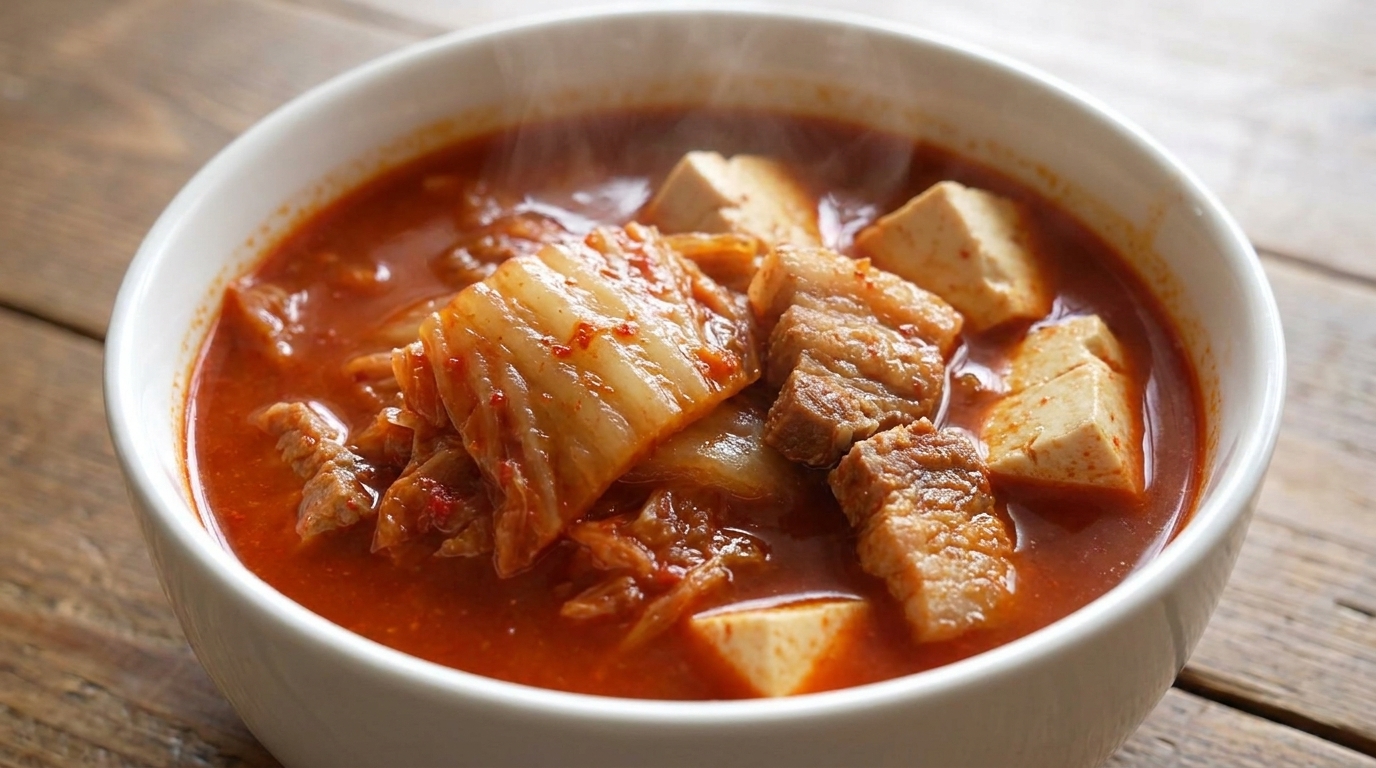
Kimchi-jjigae is the ultimate Korean comfort food, traditionally made with pork. This version, Chamchi Kimchi-jjigae, is a popular household shortcut that uses canned tuna for an instant boost of umami. It is fast, incredibly satisfying, and the perfect way to use up that jar of well-fermented, sour kimchi in your fridge.
Ingredients
- 1 can oil-packed tuna
- 200 g fermented kimchi, chopped
- 12 white onion
- 2 stalks scallions
- 1 tbsp sugar
- 1 tbsp soy sauce
- 2 tbsp Korean chili powder (gochugaru)
- 1 tbsp minced garlic
- 150 g firm tofu
- 500 ml water
- 1–2 green chilies
Instructions
- 1Slice the white onion
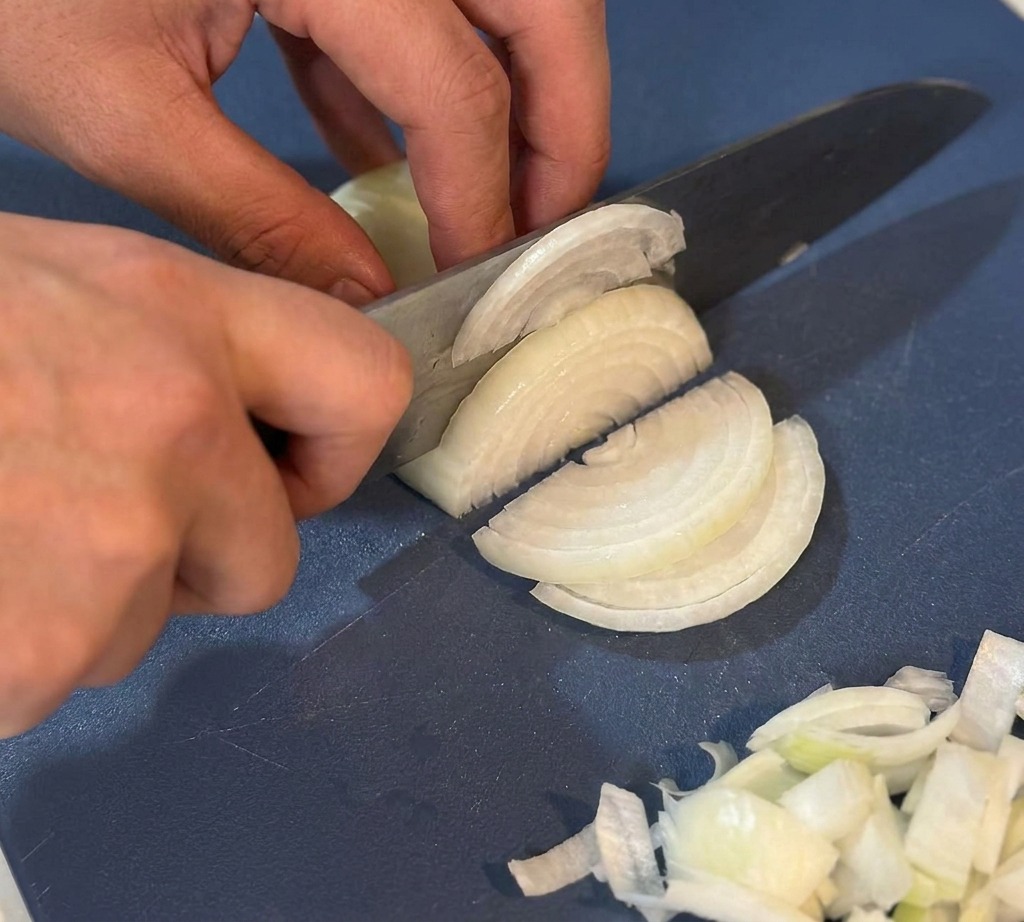
Take a fresh white onion and thinly slice it into uniform half moons. These slices will serve as a sweet aromatic base that softens and flavors the stew as it simmers.
Tip: Keep the root end intact while slicing to hold the onion layers together for safer and more even cuts. - 2Use the tuna oil for flavor
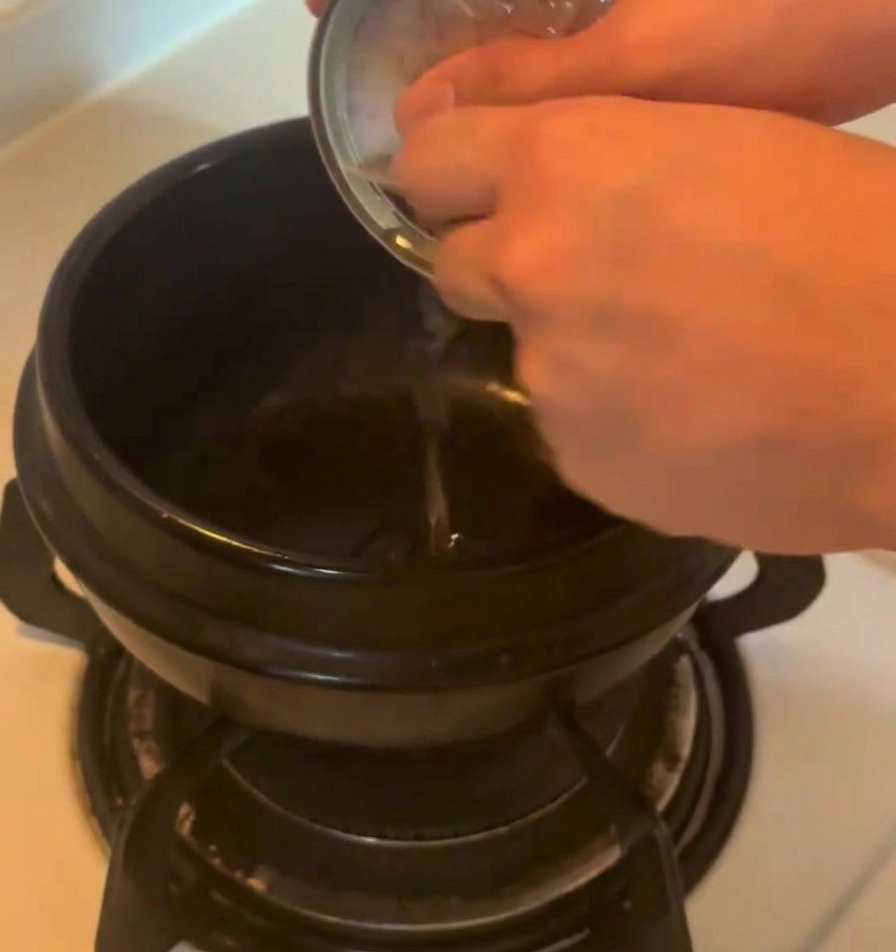
Open a can of oil-packed tuna and pour the liquid directly into your cooking pot. This oil is infused with the savory essence of the fish and acts as a flavorful starting point for sautéing your vegetables.
Tip: If using water-packed tuna, substitute this step with a tablespoon of neutral vegetable oil or sesame oil. - 3Sauté the aromatics with sugar
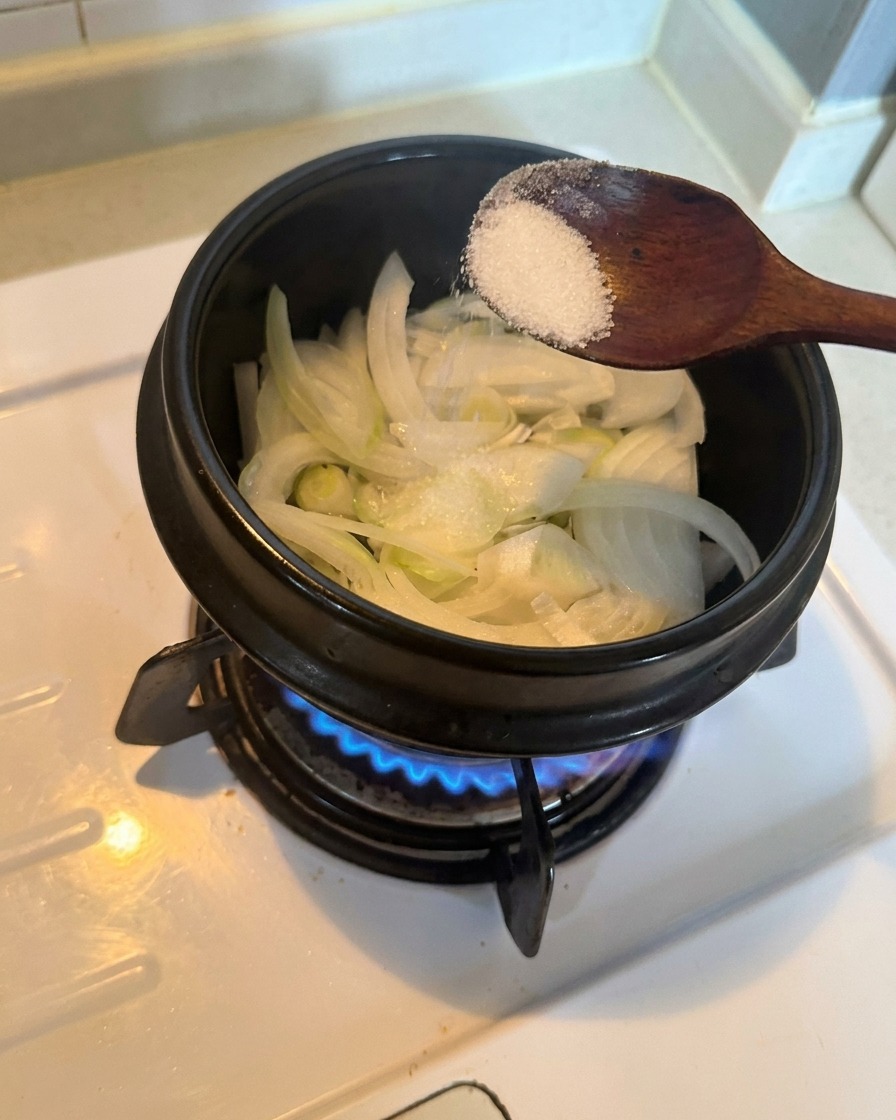
Add the sliced onions and scallions into the pot with the tuna oil. Sprinkle a spoonful of sugar over them and sauté over medium heat until fragrant. The sugar helps to balance the sharp acidity of the kimchi we will add next.
Tip: Stir-fry until the onions become translucent and slightly soft to release their natural sweetness. - 4Add the fermented kimchi
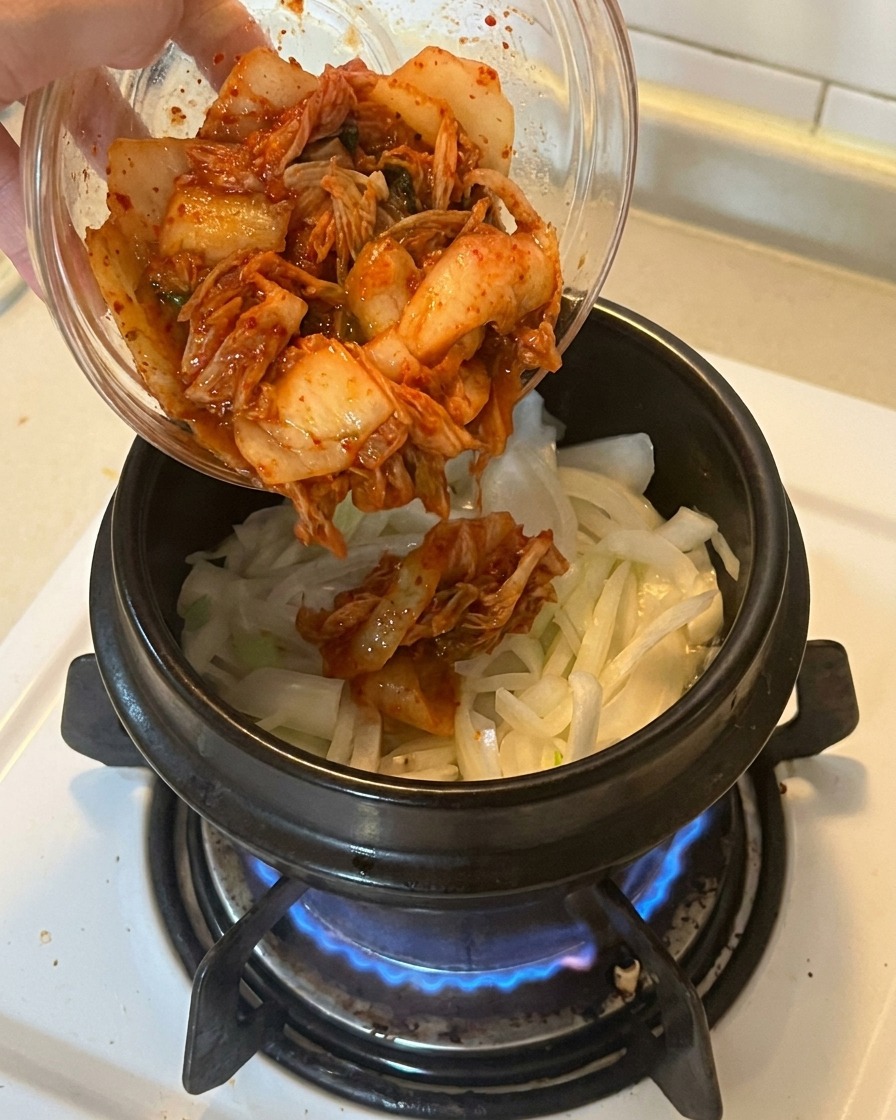
Introduce the chopped, well-fermented kimchi into the pot. Sauté the kimchi together with the onions for a few minutes; this step is crucial for developing the deep, complex flavors characteristic of a good Jjigae.
Tip: The older and sourer the kimchi, the better the stew will taste. Avoid using fresh, unfermented kimchi for this recipe. - 5Add the tuna flakes
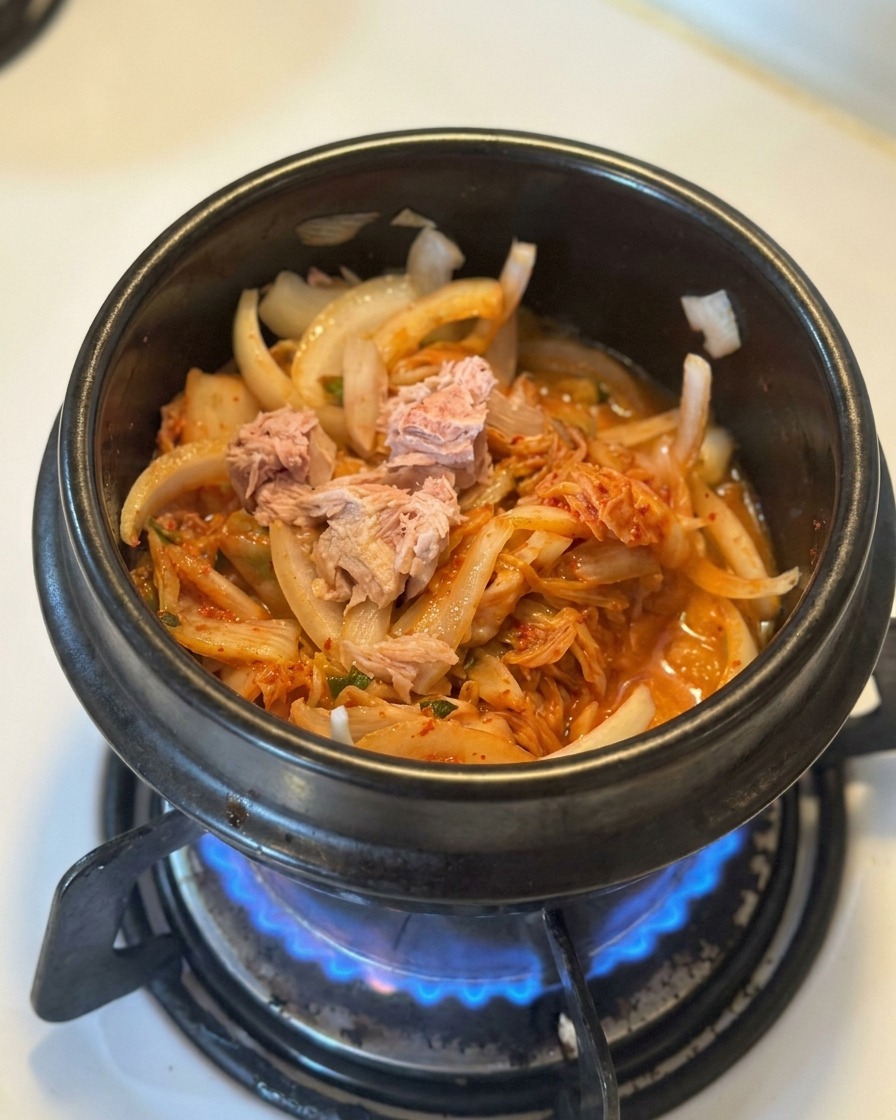
Add the tuna flakes from the can into the pot on top of the sautéed kimchi and onions. Try to keep the tuna in chunky pieces rather than breaking them down completely to ensure a heartier texture in every bite.
Tip: Gently fold the tuna in so it absorbs the flavors of the kimchi without disintegrating into the broth. - 6Season with soy sauce
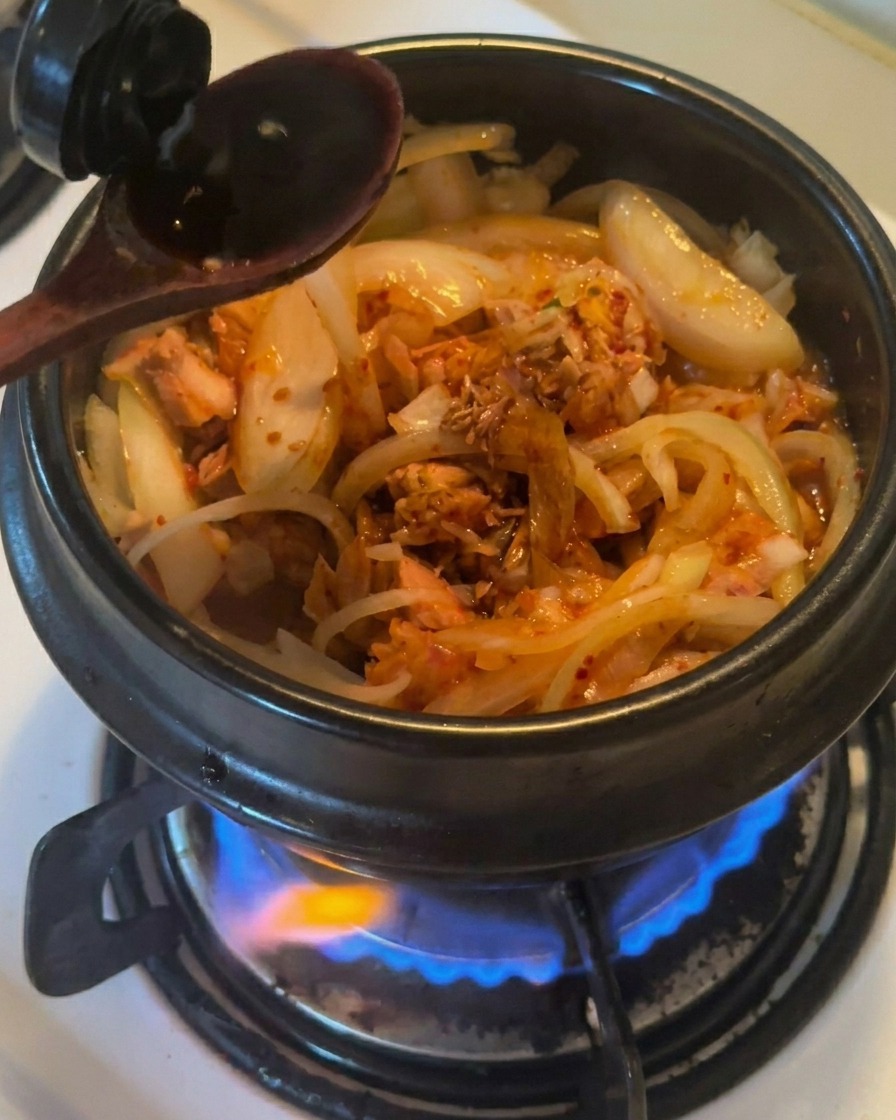
Pour one spoonful of soy sauce into the pot over the stir-fried tuna, kimchi, and aromatics. This adds a salty, savory depth and umami that balances the acidity of the fermented kimchi.
Tip: If your kimchi is very salty, start with half a spoonful of soy sauce and adjust to taste later. - 7Add Korean chili powder
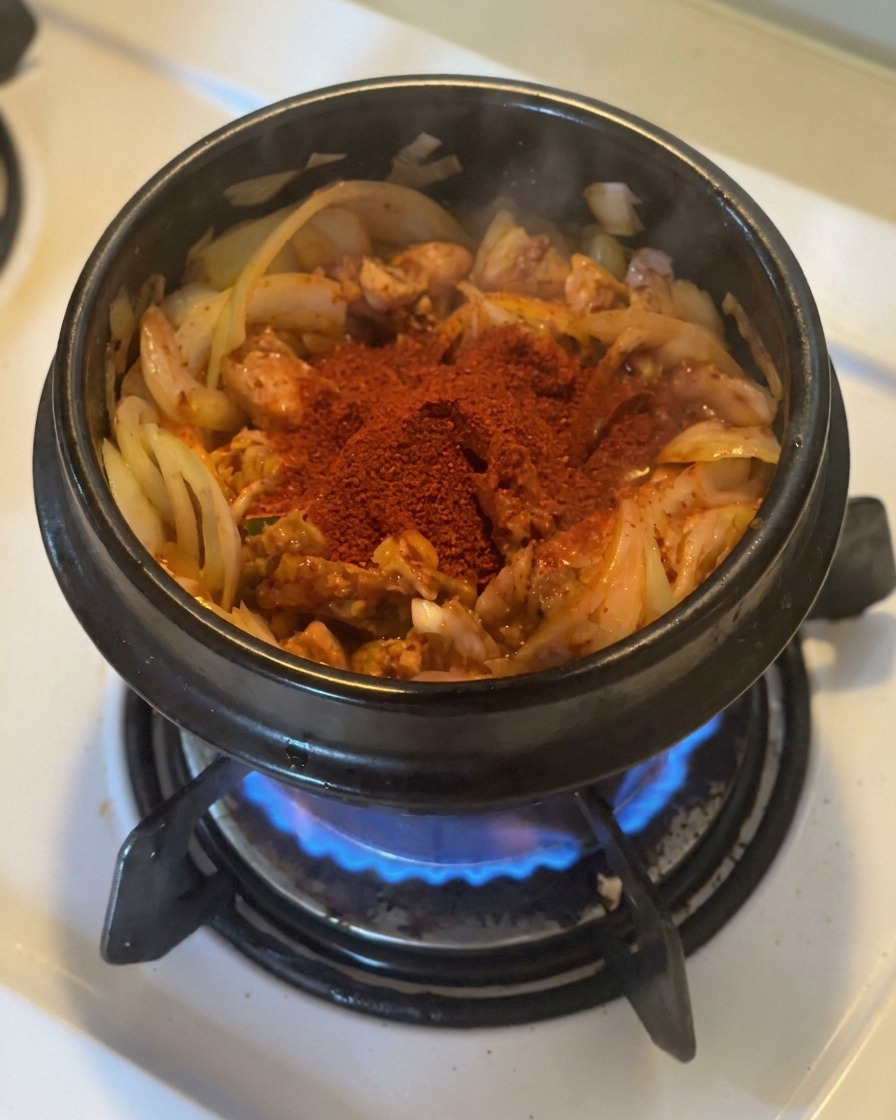
Add two spoonfuls of bright red gochugaru (Korean chili powder) to the pot. Stir-fry the powder briefly with the other ingredients to allow the heat to release the chili oils, which will give the stew a vibrant color and smoky heat.
Tip: Be careful not to burn the chili powder; stir-fry it for only about 30 seconds before moving to the next step. - 8Pour in the water
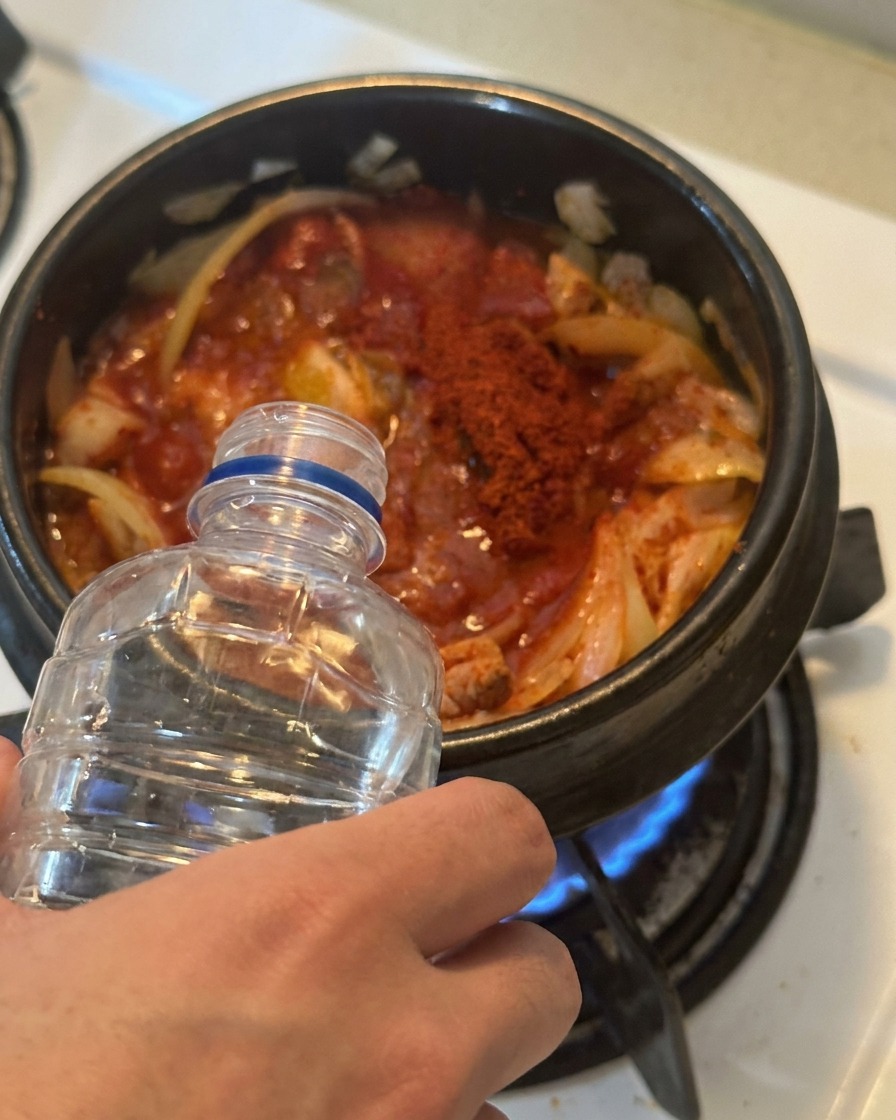
Pour enough clear water into the pot to submerge the ingredients. Bring the mixture to a vigorous boil to allow the flavors of the tuna, kimchi, and seasonings to meld together into a cohesive, spicy broth.
Tip: For a deeper flavor, you can use dashi stock or rice-wash water instead of plain water. - 9Infuse with minced garlic
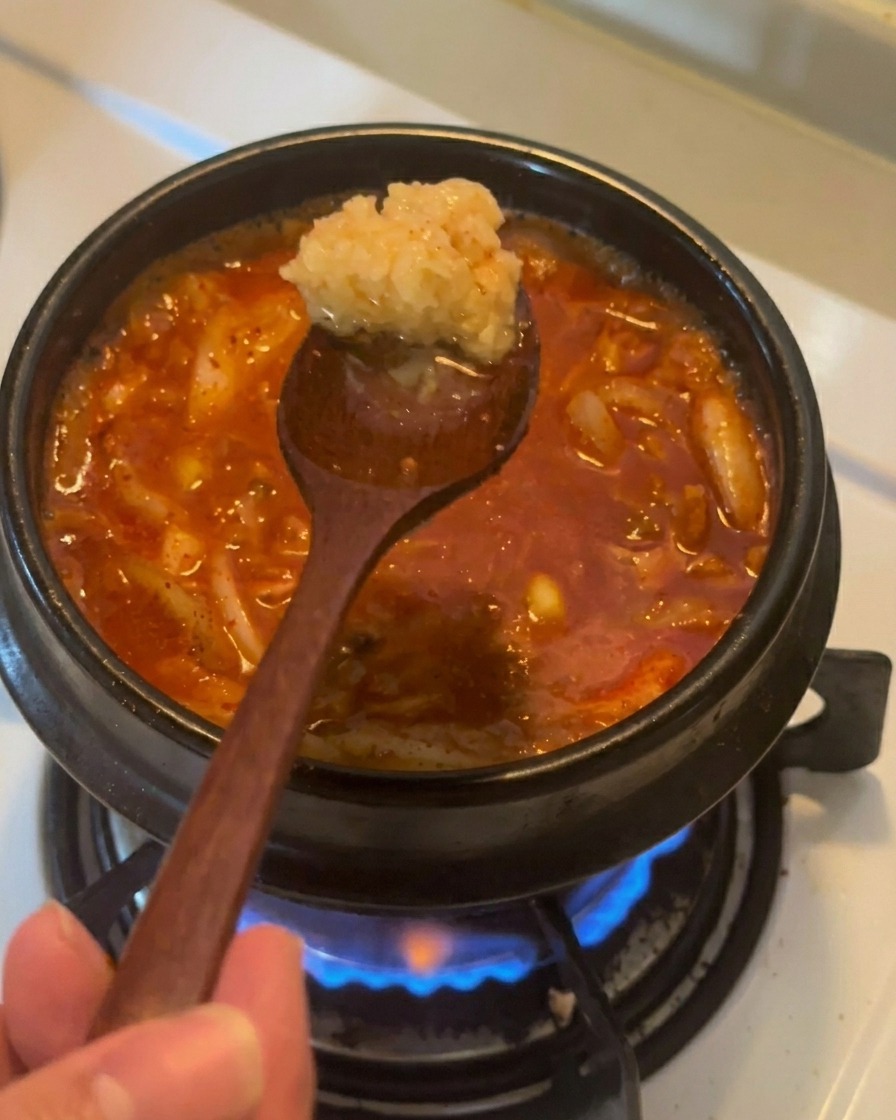
Once the stew is boiling, stir in one spoonful of minced garlic. Adding the garlic at this stage ensures its pungent aroma stays fresh and permeates the entire broth.
Tip: Freshly minced garlic provides a much stronger flavor than pre-minced jarred versions. - 10Add tofu and green chilies
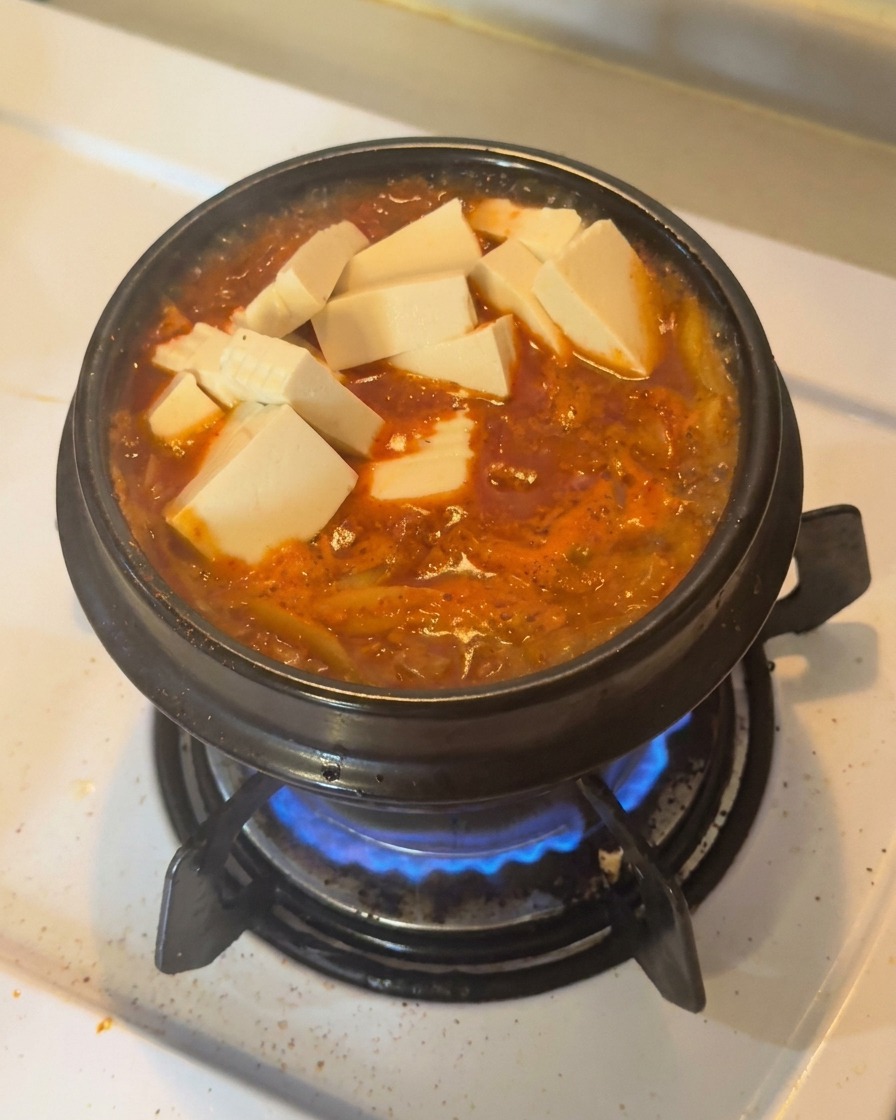
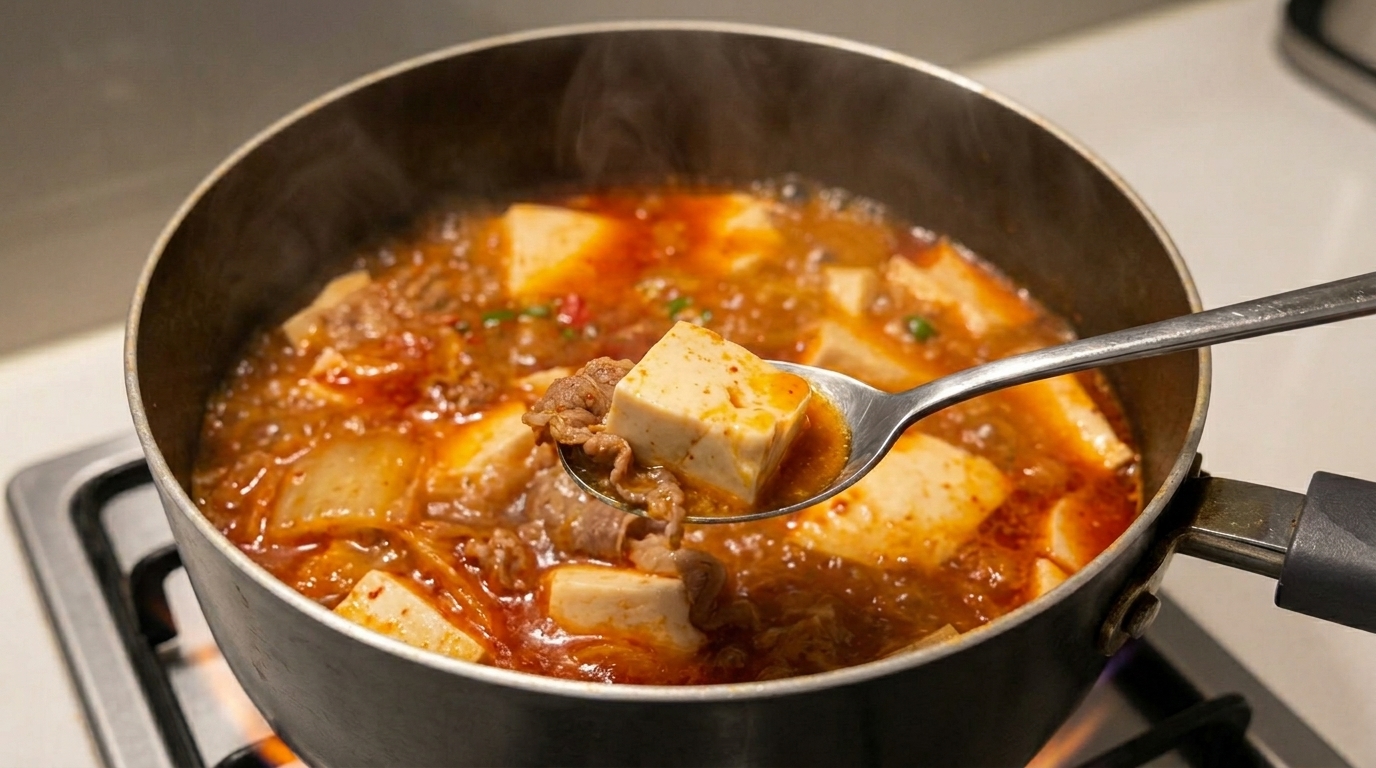
Gently place fresh white tofu cubes and sliced green chilies onto the surface of the bubbling stew. Simmer for an additional 30 seconds to heat the tofu through and allow the chilies to add a fresh, spicy kick to the finish.
Tip: Do not stir too vigorously after adding the tofu to prevent the delicate cubes from breaking apart.