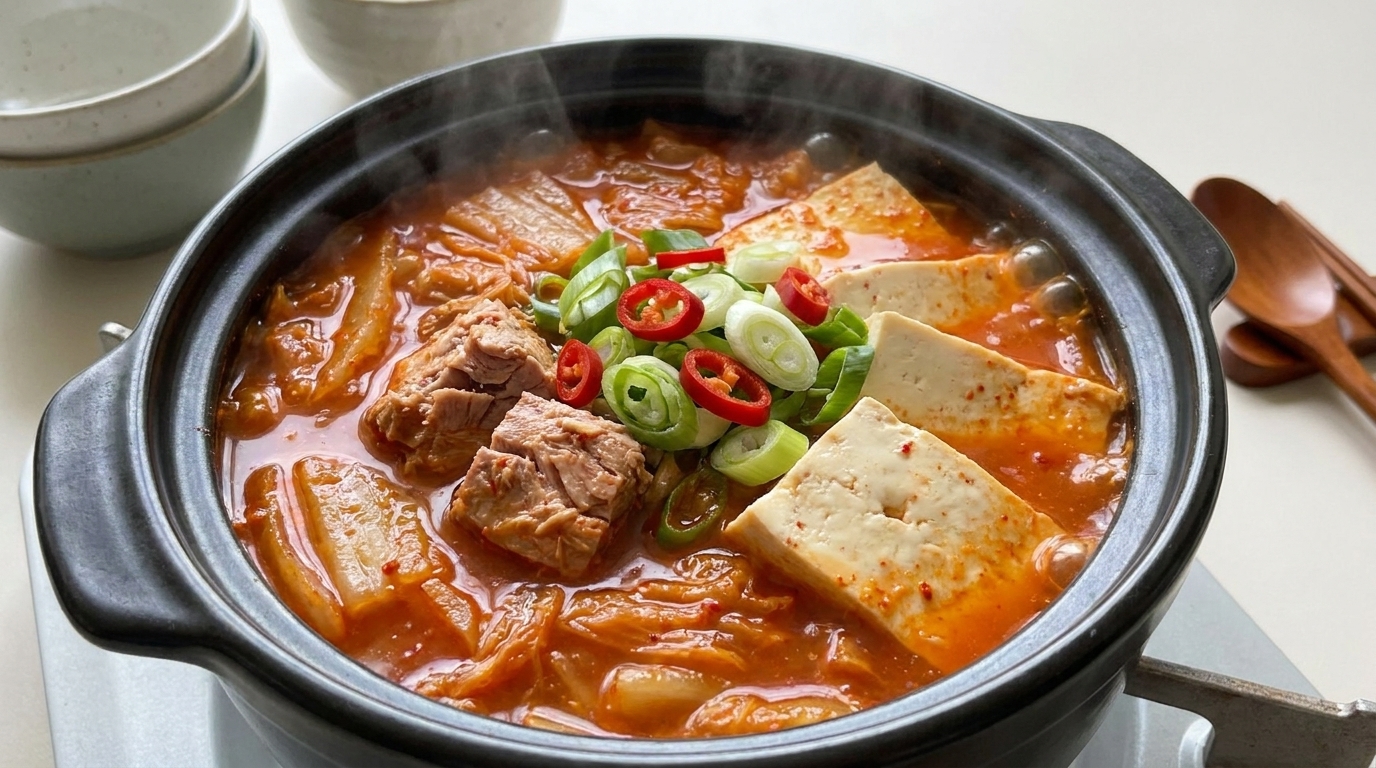
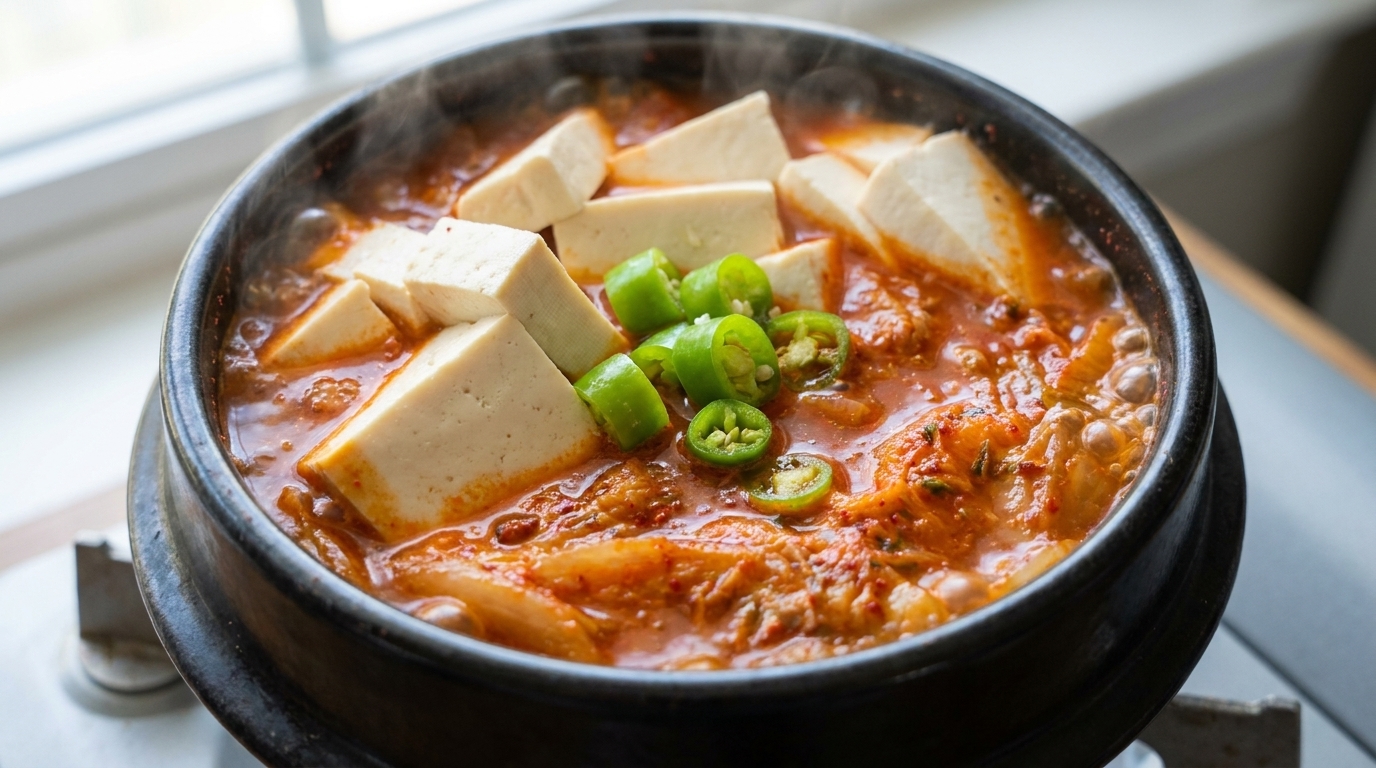
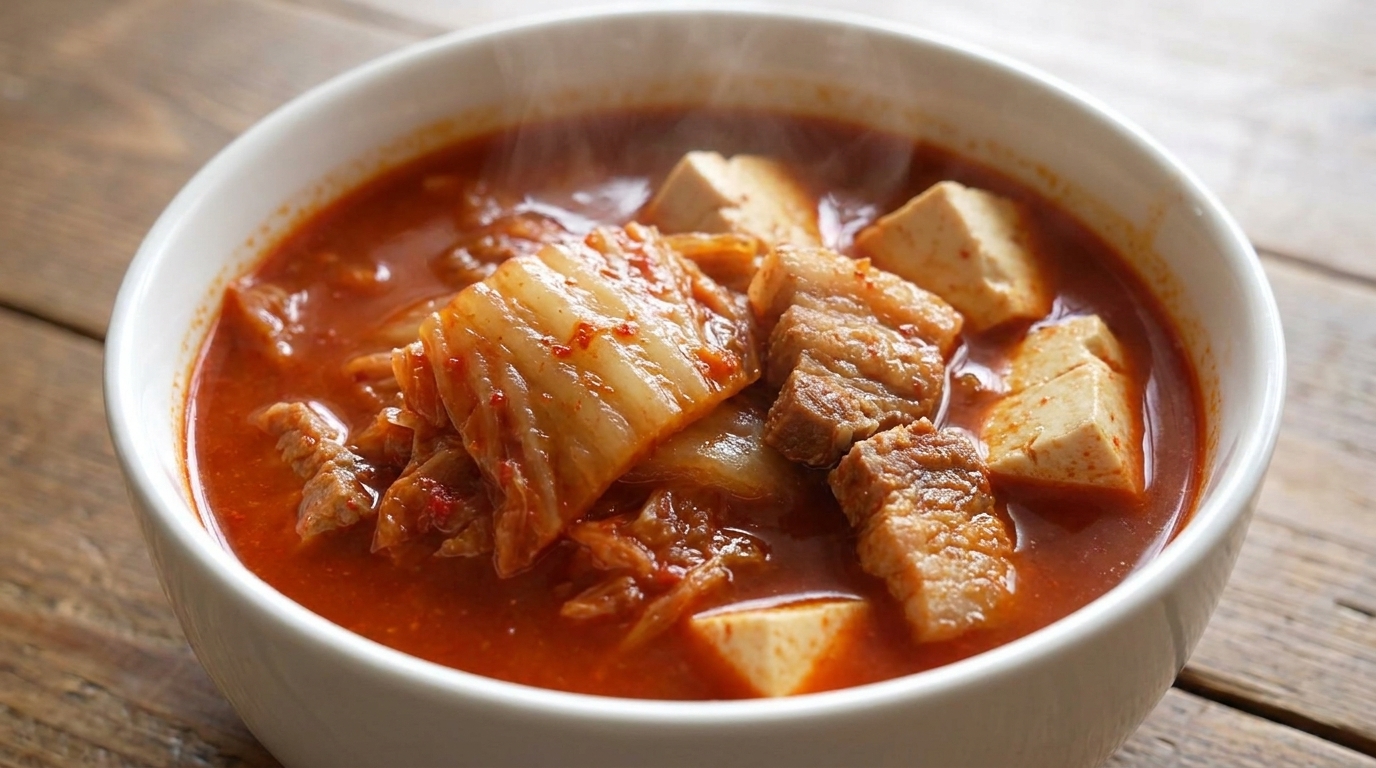
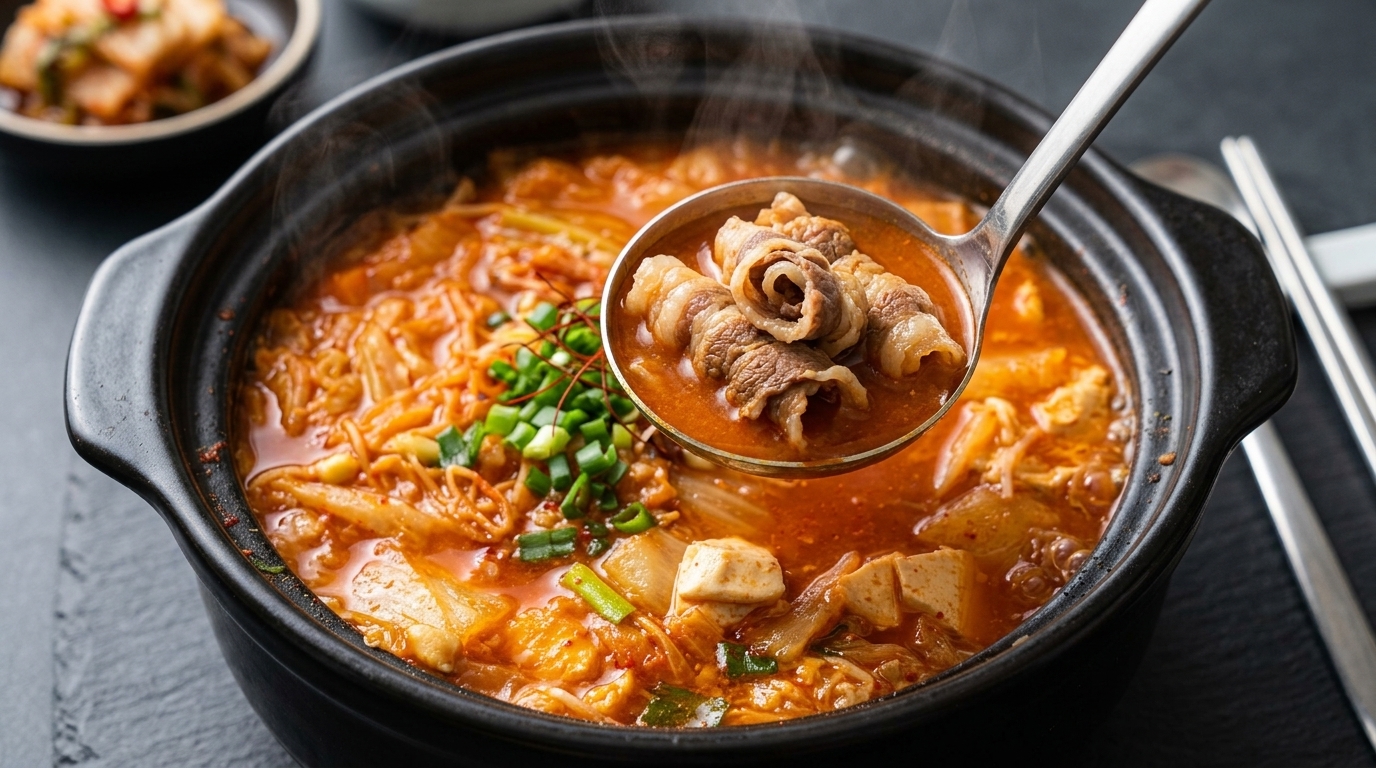
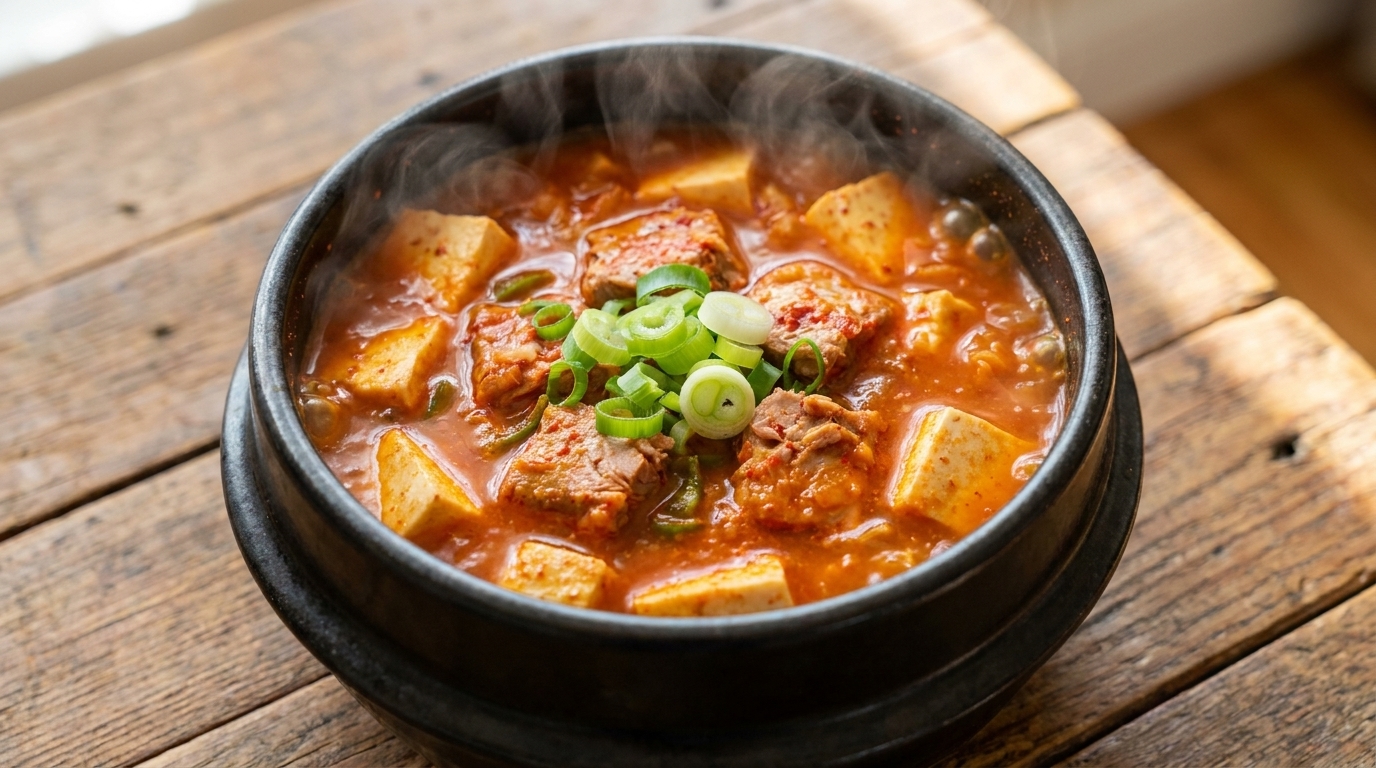
Tuna Kimchi Stew (Chamchi Kimchi Jjigae)
A pantry-staple powerhouse, this bubbling Korean stew combines sour aged kimchi and canned tuna in a rich broth thickened with starchy rice water and savory soybean paste.
Chamchi Kimchi Jjigae is the ultimate Korean comfort food, often prepared when fresh meat is unavailable but a soul-warming meal is needed. By stir-frying the kimchi before simmering and using starchy rice water instead of plain water, you transform humble canned tuna into a deeply complex, savory masterpiece.
Ingredients
- 200 g aged kimchi
- 1 tbsp cooking oil
- 500 ml rice water
- 13 tbsp Korean soybean paste (doenjang)
- 1 can tuna in oil
- 2 shiitake mushrooms
- 12 onion
- 2 stalks scallions
- 200 g firm tofu
- 1 tbsp soy sauce
- 1 tsp beef seasoning powder (dashida)
Instructions
- 1Prepare the kimchi
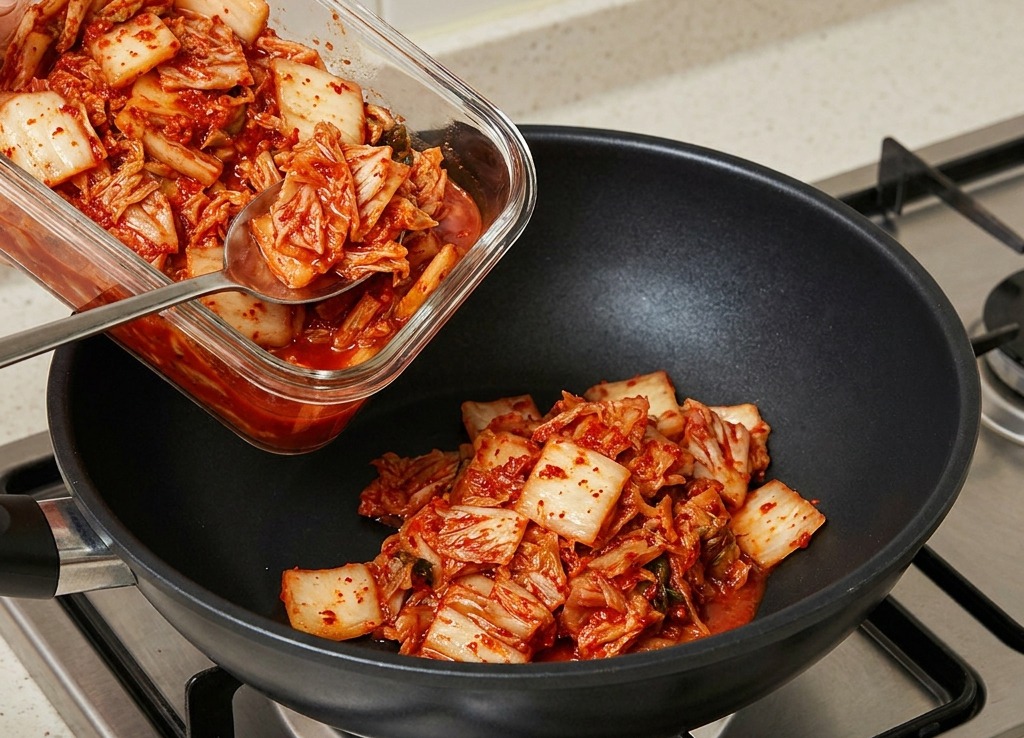
Add chopped fermented red cabbage kimchi to your heated cooking vessel. Well aged or sour kimchi provides the best flavor base because its fermentation adds a deep tang and complexity to the soup.
Tip: If your kimchi is too fresh you can add a tiny splash of vinegar to help mimic the necessary acidity. - 2Stir fry the base
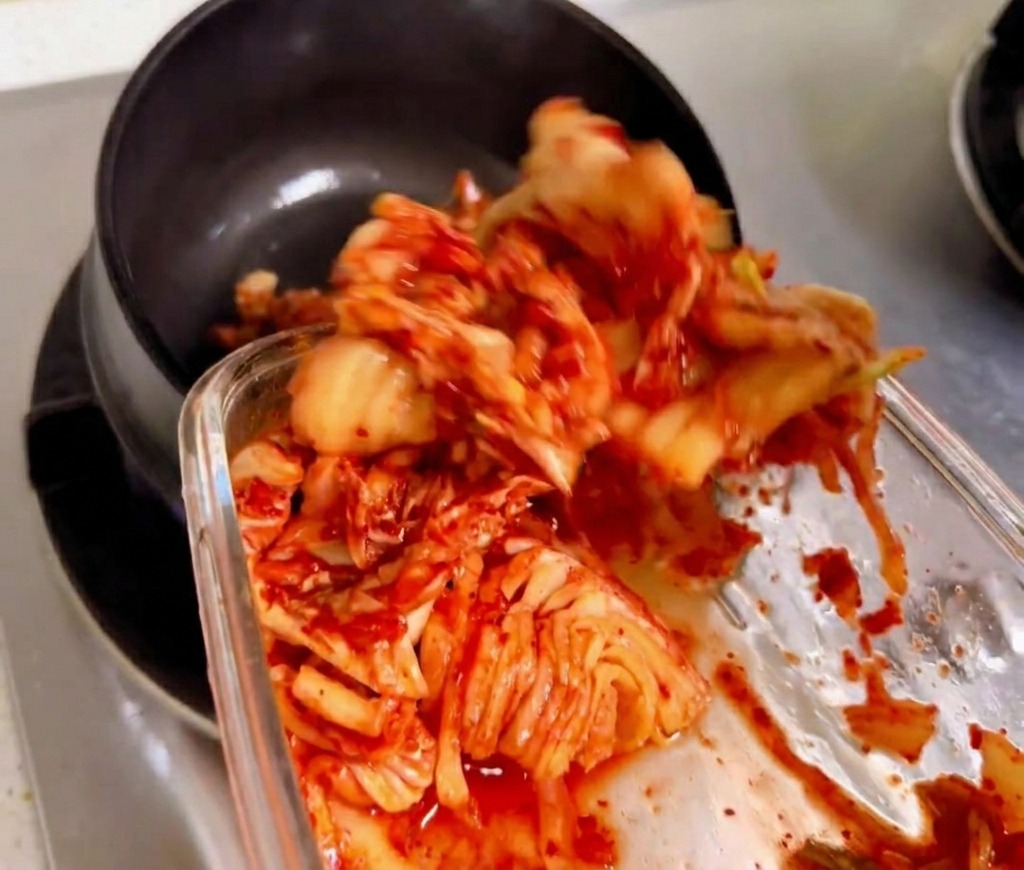
Heat a small amount of oil in a stone pot and stir fry the chopped kimchi until the edges begin to soften. This step is essential for developing a rich and smoky flavor profile before adding liquids.
Tip: Sautéing until the kimchi becomes slightly translucent is the secret to a deep and developed flavor. - 3Add the rice water
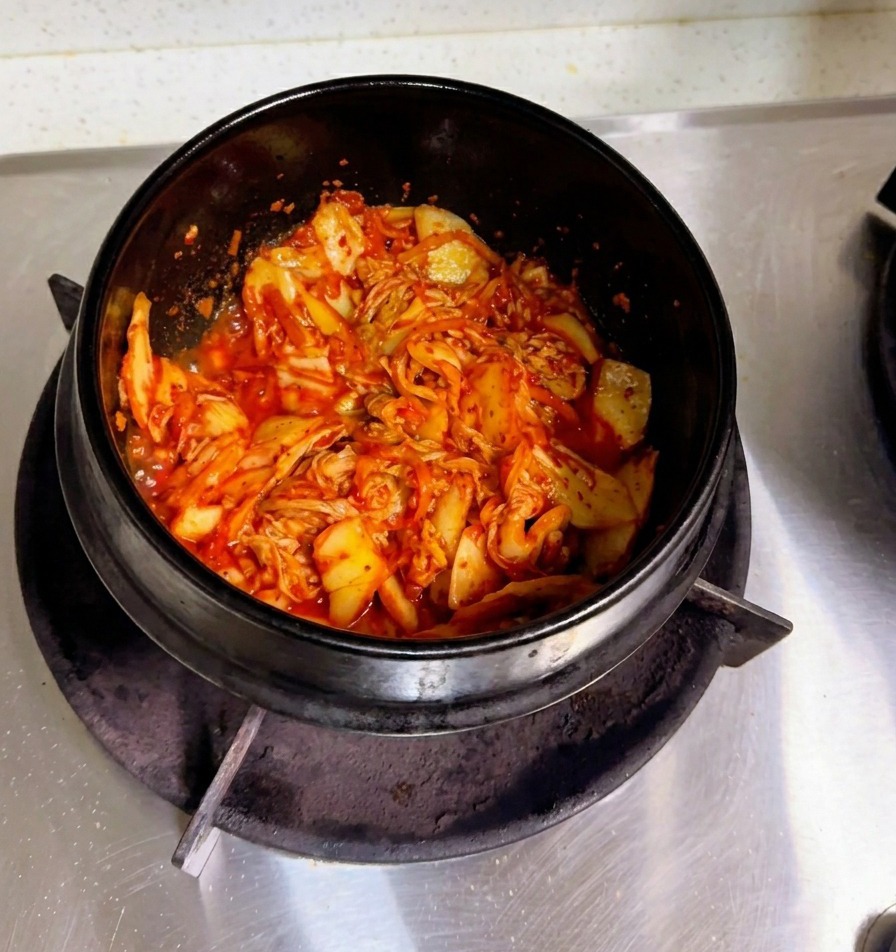
Pour starchy rice water over the stir fried kimchi. This liquid serves as a nutrient rich base that provides a velvety texture and helps bind the spicy flavors together.
Tip: Rice water is the starchy liquid from washing rice and it gives the broth a much richer mouthfeel than plain water. - 4Season with soybean paste
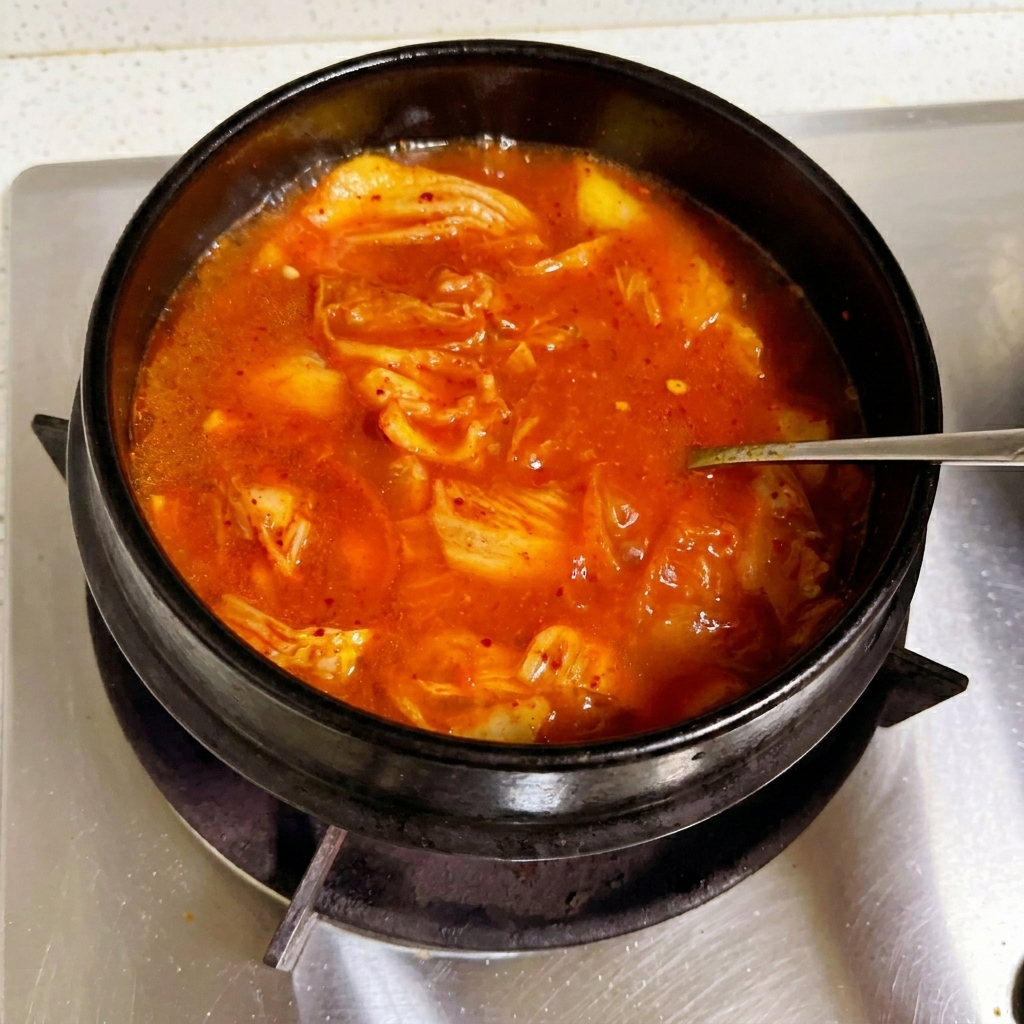
Add a small portion of Korean soybean paste to the liquid and stir well until it dissolves completely. This introduces a savory and nutty depth that complements the spicy broth.
Tip: Using a strainer to dissolve the paste can help ensure a perfectly smooth broth without any large chunks. - 5Add the canned tuna
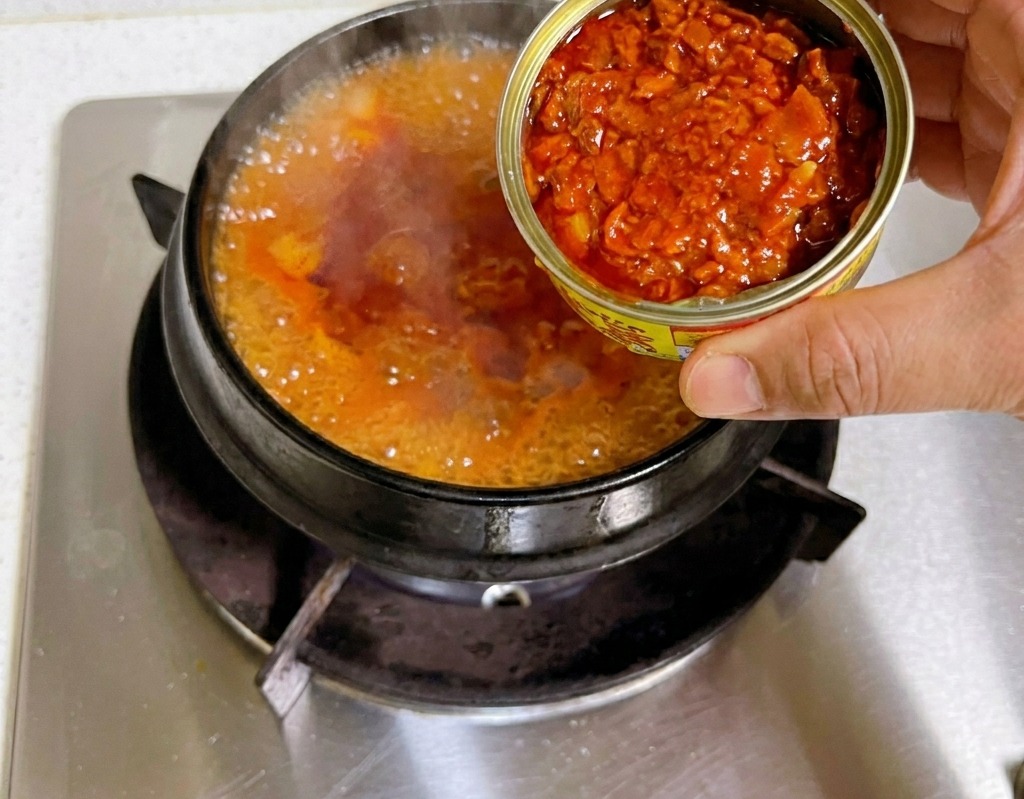
Add a whole can of tuna to the bubbling soup base. Make sure to include the oil or liquid from the can, as it is packed with flavor that will meld perfectly with the spicy kimchi broth. Allow it to simmer so the tuna chunks absorb the surrounding seasonings.
Tip: If you prefer chunky tuna, avoid stirring too vigorously after adding it to the pot so the pieces remain intact. - 6Add vegetables and tofu
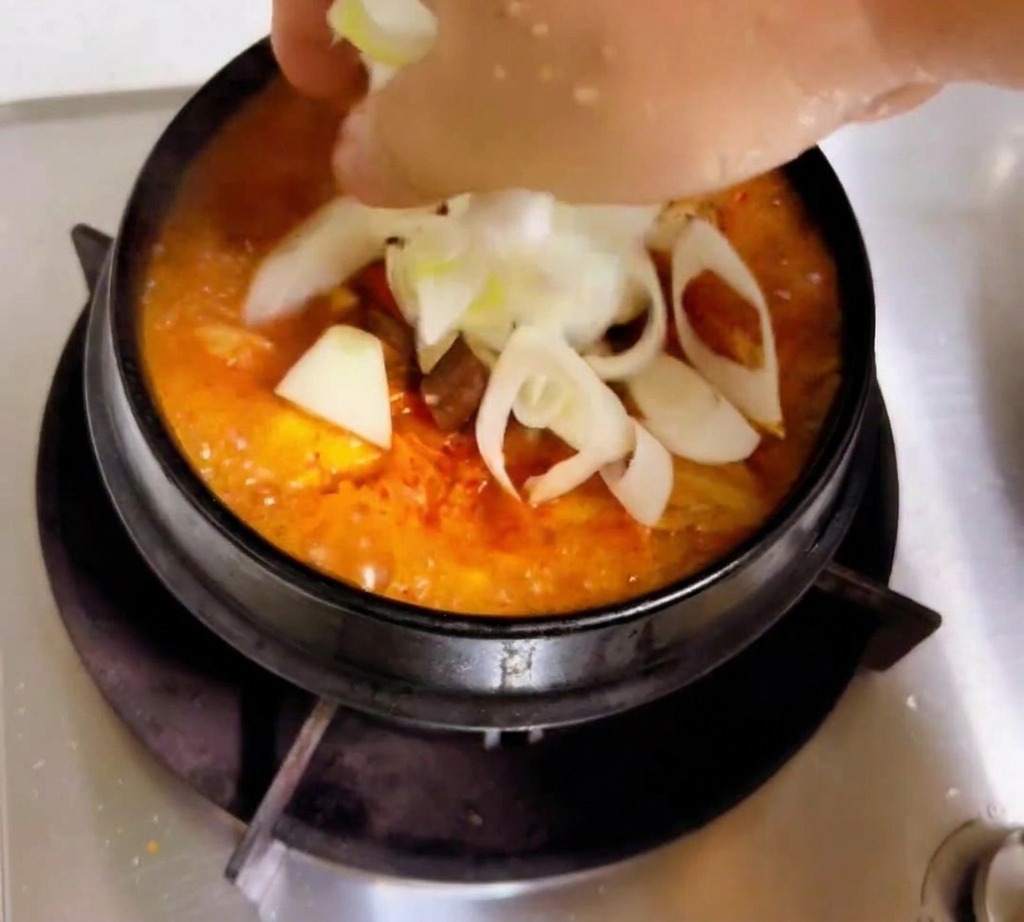
Once the tuna has simmered for several minutes, add sliced shiitake mushrooms, onions, and scallions into the bubbling pot. Carefully place cubes of fresh white tofu on top, nestling them into the spicy broth to absorb its flavors.
Tip: Tofu is very delicate; add it toward the end of the cooking process and avoid stirring too much to keep the cubes intact. - 7Season the stew
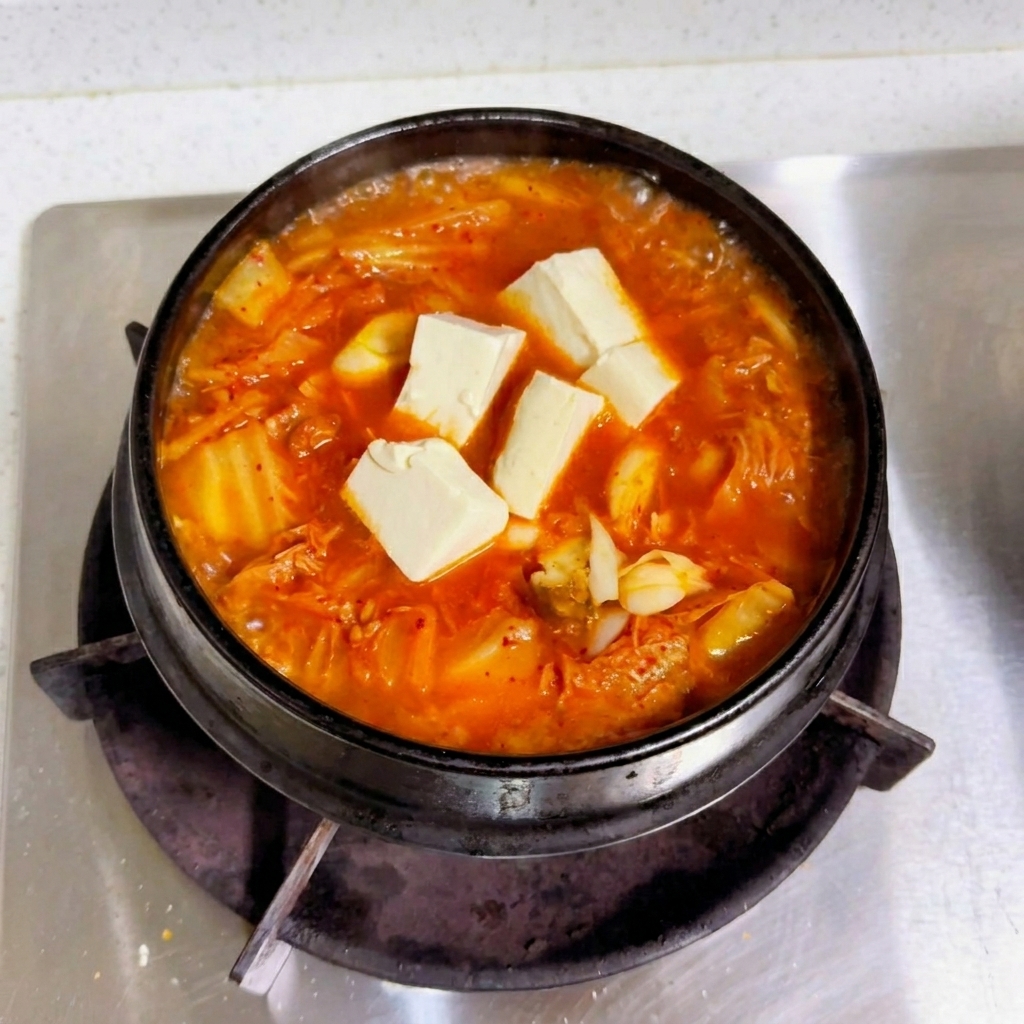
Enhance the depth of the broth by adding a splash of soy sauce and a sprinkle of beef seasoning powder. These additions highlight the savory notes of the tuna and kimchi without the need for extra salt.
Tip: Kimchi and canned tuna are naturally salty, so its always best to taste the broth first before adding more seasoning. - 8Simmer to perfection
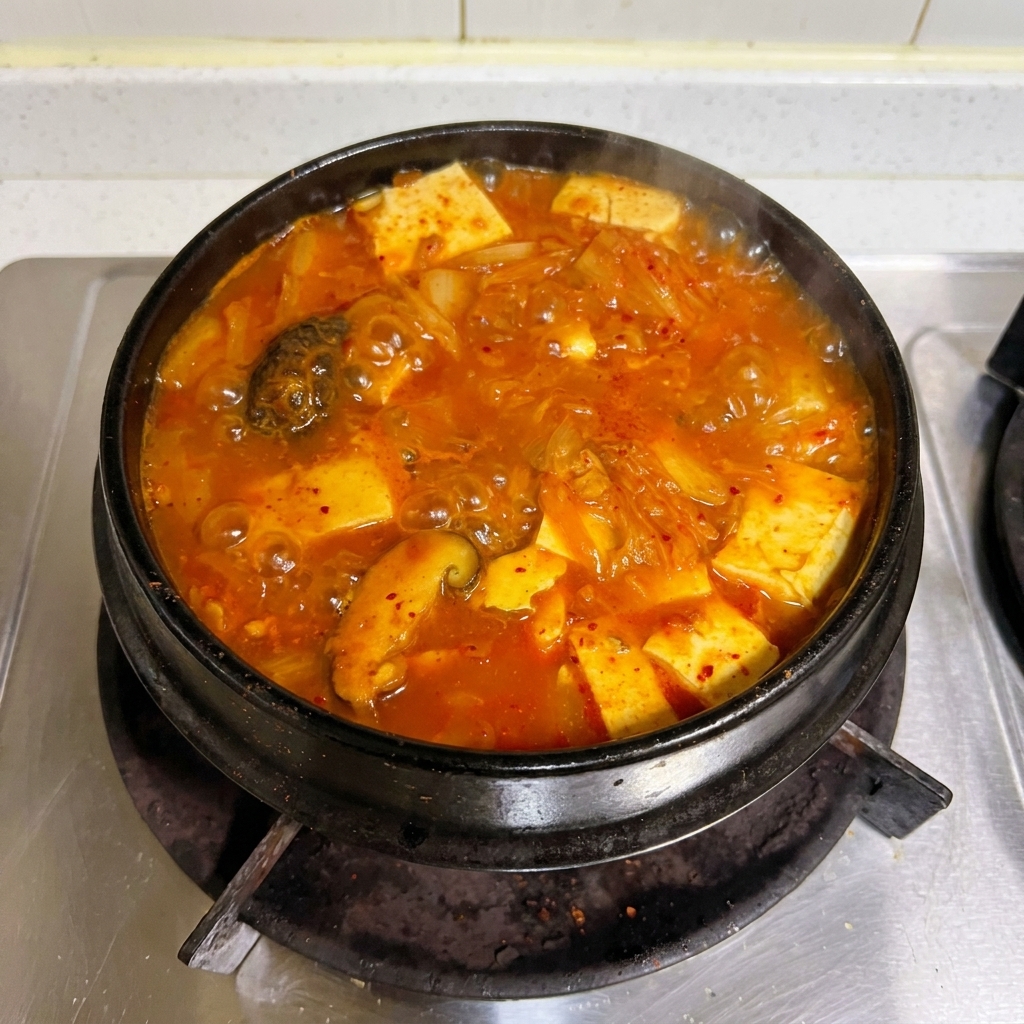
Allow the stew to simmer vigorously for about ten minutes. This extended cooking time ensures that the flavors from the fermented kimchi, tuna, and seasonings meld together into a balanced, spicy, and savory broth.
Tip: If the broth reduces too much, you can add a little more rice water to maintain the desired soup consistency.